
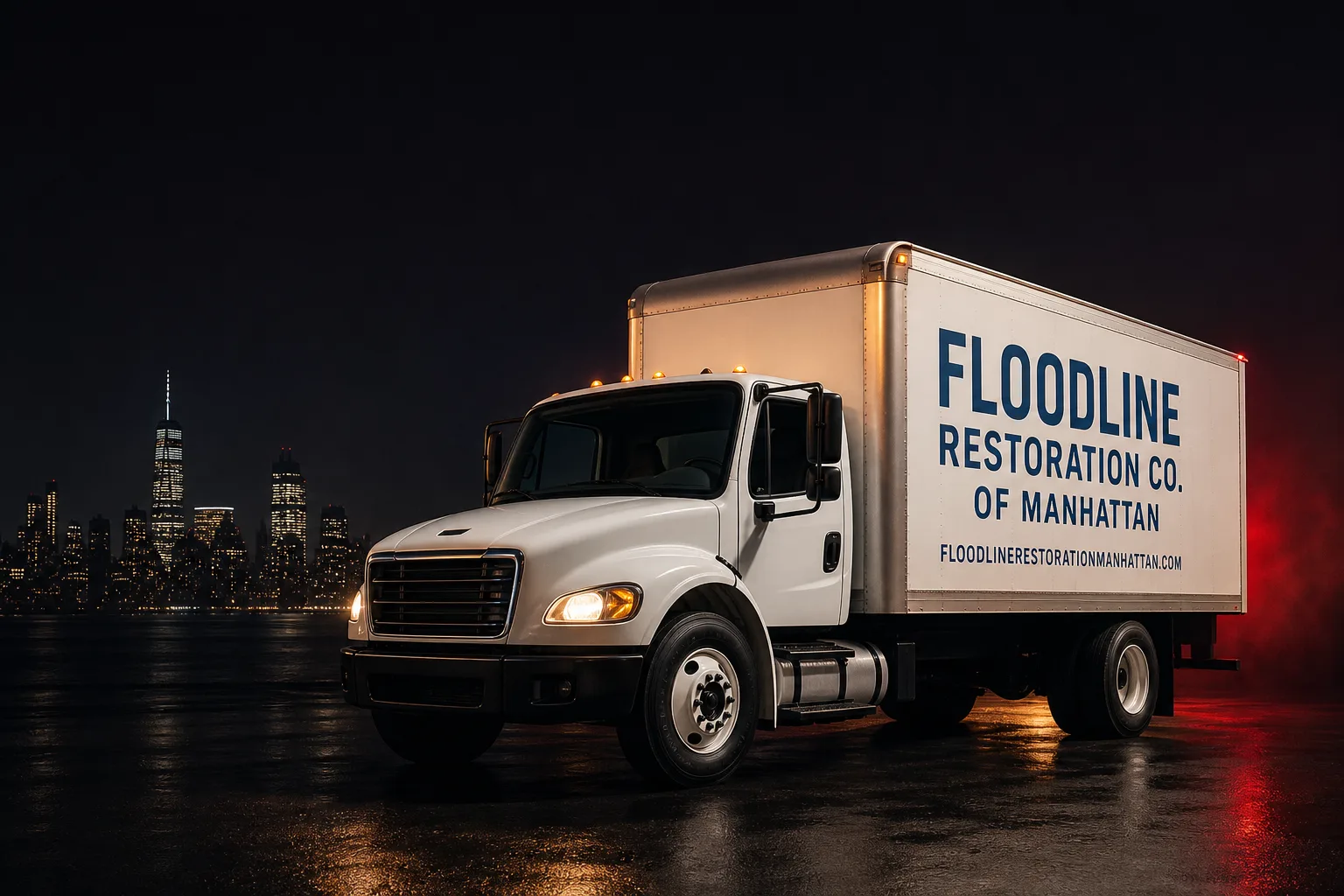
Free visual inspection and a written scope of work before any mitigation begins - photos, moisture readings, and drying logs go in your claim file
The scope we write is the scope we bill. Anything new gets shown to you, in writing, before we touch it.






 Before
 After
After Before
 After
After Before
 After
After24/7 Emergency Mold Remediation in East Flushing
Mold in an East Flushing basement starts colonizing within 24 to 48 hours of a water event, and homes along the Northern Boulevard corridor face a specific, compounding risk: sewage backflow that spreads through shared masonry party walls into the neighbor’s finished basement. If you’re seeing staining, smelling must, or standing water after a storm, call (917) 924-4221. A live dispatcher answers around the clock, and a crew can be on the way to East Flushing within 45 minutes to begin containment and moisture mapping before the spores travel further. We perform a free visual inspection, document everything for your insurer, and start mitigation the same visit when conditions warrant.
Understanding Mold Remediation Severity in East Flushing Properties
Not every mold call is the same, and in East Flushing the severity ladder is shaped by one local fact: most of the housing stock between Northern Boulevard and the Port Washington LIRR corridor is 1920s to 1940s brick semi-attached construction with finished basements and shared foundation walls. Light surface mold on a bathroom ceiling from poor venting is a cleaning problem. Mold behind baseboards after a Category 2 supply-line break is a containment problem. But a Category 3 sewage backup from the combined sewer system along Northern Boulevard is a full-stop biohazard event: fecal coliform, black water, and mold spores that migrate through wet masonry into the adjoining unit. We assess three things before recommending a scope: the category of water that caused the moisture, the extent of hyphal growth behind drywall and parging, and whether the shared party wall is transmitting moisture into a neighboring property. That dictates whether we run HEPA air scrubbers, full polyethylene containment, or simply targeted antimicrobial treatment and drying. In East Flushing, we default to the more conservative standard because the water table under Flushing Creek’s drainage basin keeps foundation block chronically damp, and air-drying alone won’t solve hydrostatic moisture.
Why East Flushing Property Owners Choose Floodline Restoration Co. of Manhattan
- 45-minute response commitment to East Flushing. We stage crews near the Flushing corridor so a dispatched team reaches you fast, not “sometime today.”
- A real person answers, 24/7. No automated system, no voicemail at 2 a.m. You speak to a live dispatcher who can authorize crew movement immediately.
- IICRC-certified remediation crews. Our technicians hold WRT and AMRT certifications and follow RIA and IFA standards for containment, air scrubbing, and clearance.
- Free visual inspection with a straight answer. We’ll tell you if it’s a cleaning job or a full remediation scope. No scare tactics, no inflated scope.
- Direct insurance billing, no messenger role for you. We document, estimate, and speak with your adjuster directly. You stay out of the paperwork loop.
- One crew from first extraction to finished drywall. No handoff to a different subcontractor mid-job. The team that dries your foundation is the team that rebuilds the wall.
Our Mold Remediation Process
Inspection & Assessment
We start with thermal imaging and hygrometer readings to map moisture behind drywall, in parged foundation walls, and across shared party walls. A visual inspection plus moisture map tells us whether this is surface mold or a concealed colony.
Extraction & Stabilization
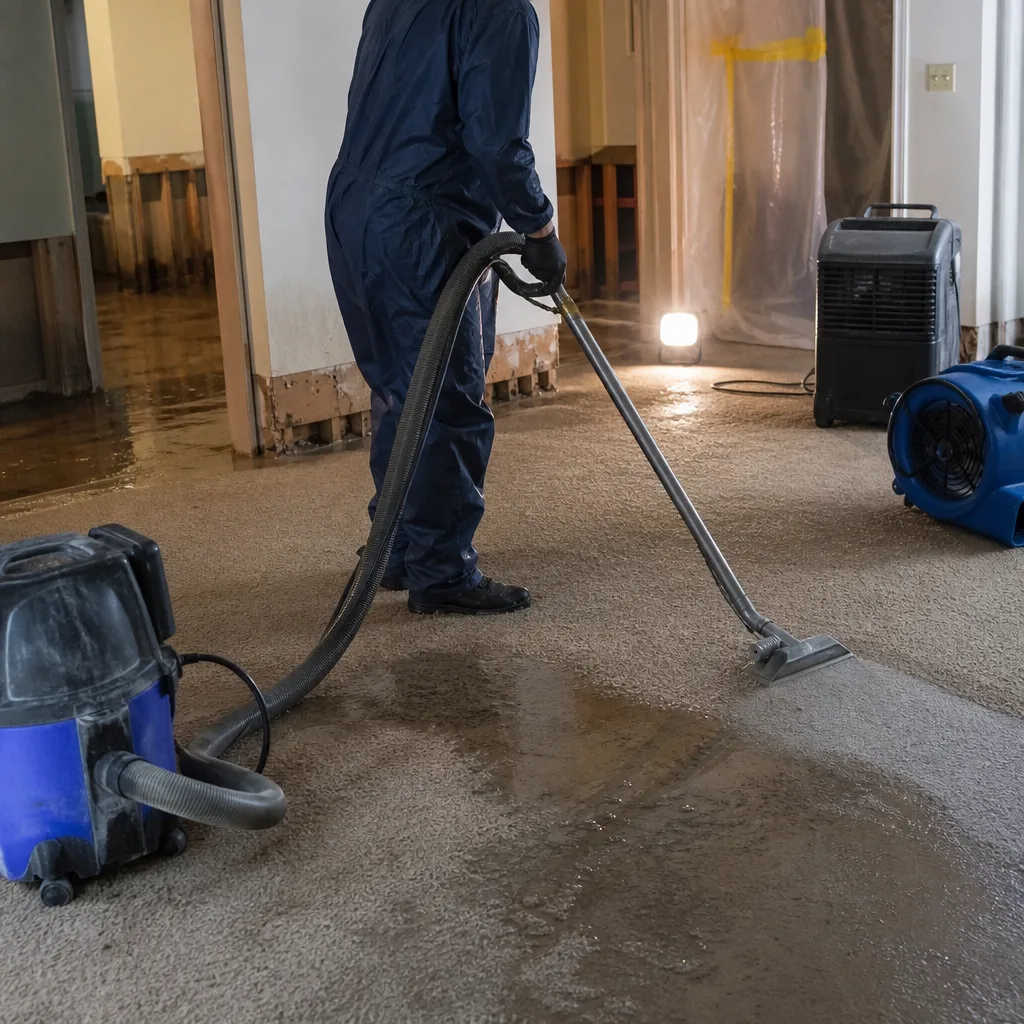
If standing water is present, we extract it immediately using truck-mounted and portable extraction units. In East Flushing’s semi-attached basements, that often means running parallel extraction in two units at once.
Drying & Dehumidification
We set Dri-Eaz dehumidifiers and Phoenix axial air movers, then log daily moisture readings until the dry standard is met. In this neighborhood, that also means checking the party wall for moisture migration from the neighbor’s side.
Cleaning & Sanitization
HEPA air scrubbers run during the entire containment phase. We remove saturated drywall and insulation under negative air pressure so spores don’t spread through the open wall cavity.
Antimicrobial Treatment
We apply EPA-registered antimicrobials to exposed framing and masonry. On East Flushing foundations, we pay particular attention to the parging and mortar joints where hydrostatic moisture keeps feeding fungal growth.
Repairs & Restoration
Once the moisture log shows dry, we rebuild: drywall, trim, paint, and any structural repairs to party wall penetrations. Done right, and backed in writing with the 90-Day Done Right Promise.
Need Emergency Mold Remediation in East Flushing Now?
Crews minutes away, answering live 24 hours a day. The sooner we start, the less it costs.
Working With Your Insurance Company
Mold claims in East Flushing get tangled fast, especially when a combined-sewer backup floods two attached homes through one party wall. Two policies, two adjusters, one source event. We document from the first hour: moisture readings, thermal images, room-by-room photos, and a line-item scope that matches IICRC standards. Our office speaks directly with your adjuster, so you don’t have to translate technical drying data into insurance language. If your carrier pushes back on mold coverage, our documentation shows causation: the Category 3 water event, the timeline of colonization, and the containment measures we’ve already run. Most East Flushing policies cover mold remediation only when it results from a covered peril, such as sudden pipe burst or sewer backup, and our paperwork gives the adjuster no room to argue the timeline.
What We Provide Your Insurer
- Thorough documentation of the loss
- Photos of all damage, room by room
- Moisture readings and drying logs
- A detailed, line-item scope of work
- Direct coordination with your carrier
Built for East Flushing’s Loss Calendar
East Flushing’s mold year follows a predictable rhythm, and it’s written into the neighborhood’s geography. January and February bring deep freezes that burst the galvanized and cast-iron supply lines still common in 1930s semi-attached homes, flooding finished basements with Category 2 water that soaks drywall and feeds mold behind baseboards before anyone notices. Spring thaw raises the already-shallow water table under the Flushing Creek drainage basin, forcing hydrostatic moisture through aging parging and mortar joints in foundation walls. Summer thunderstorms overwhelm the combined sewer mains along Northern Boulevard, sending sewage backflow into low-lying basements. And nor’easter season, from September through November, repeats the pattern: dozens of finished basements across East Flushing take on Category 3 water during each major storm. Ida’s remnants in 2021 were the worst in recent memory, but the pattern repeats every storm season. The homeowners who fare best are the ones who call before the musty smell becomes a colony.
Mold Remediation Across East Flushing’s Neighborhoods
East Flushing isn’t one homogenous grid. The blocks immediately south of Northern Boulevard, between 150th and 165th Streets, are dense rows of brick semi-attached homes where a single lateral backup frequently becomes a two-home mold problem. The finished basements here sit low relative to the combined sewer mains, so backflow hits them first. East of 164th Street toward the Flushing Creek freshwater wetlands, the water table runs even shallower, and we see chronic damp-wall mold in basements that have never flooded once; the moisture arrives through the foundation, not over it. Along the Port Washington LIRR corridor, vibration from passing trains has micro-cracked older parging, giving water new entry points. And on the residential blocks west of Kissena Park, detached 1920s brick homes still on original cast-iron laterals face a different failure mode: corroded sewer lines that collapse internally and send Category 3 water up through floor drains during peak rain. Each block has its own signature. Our crews know these routes, which is why we can dispatch to East Flushing in 45 minutes instead of reading a map.
Specialized Mold Remediation Services We Offer in East Flushing
Mold Inspection & Testing
We start with thermal imaging and moisture meters, not a lab bill. If surface sampling or air cassette testing is warranted, we’ll say so, but in most East Flushing basements the problem is visible once you open the wall. We identify the moisture source first: a cracked parging layer, a failed lateral, a shared party wall seeping from next door.
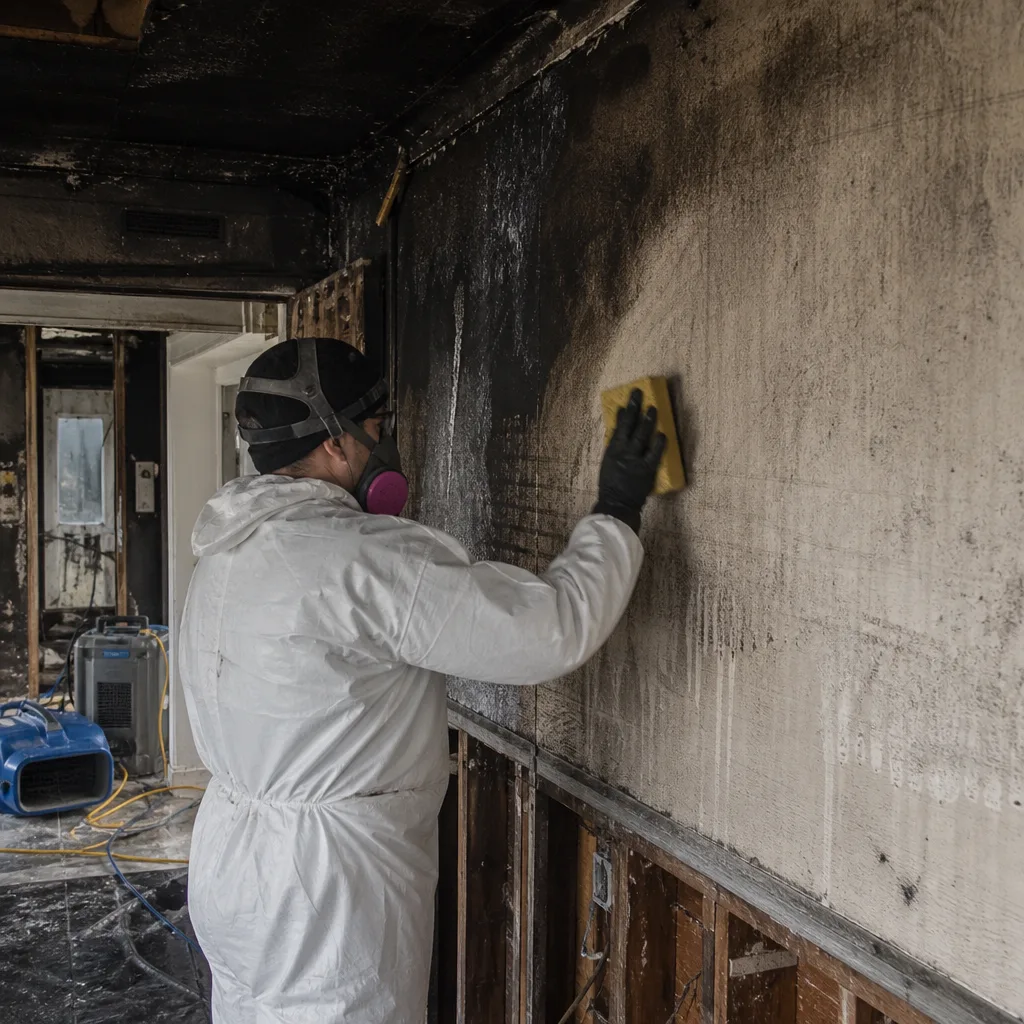
Mold Removal
Removal under containment, not spray-and-wipe. Our crews set negative air pressure with HEPA scrubbers, remove affected drywall and insulation, and bag contaminated material before it moves through the house. In semi-attached homes, we treat the party wall as a potential secondary source, not an afterthought.
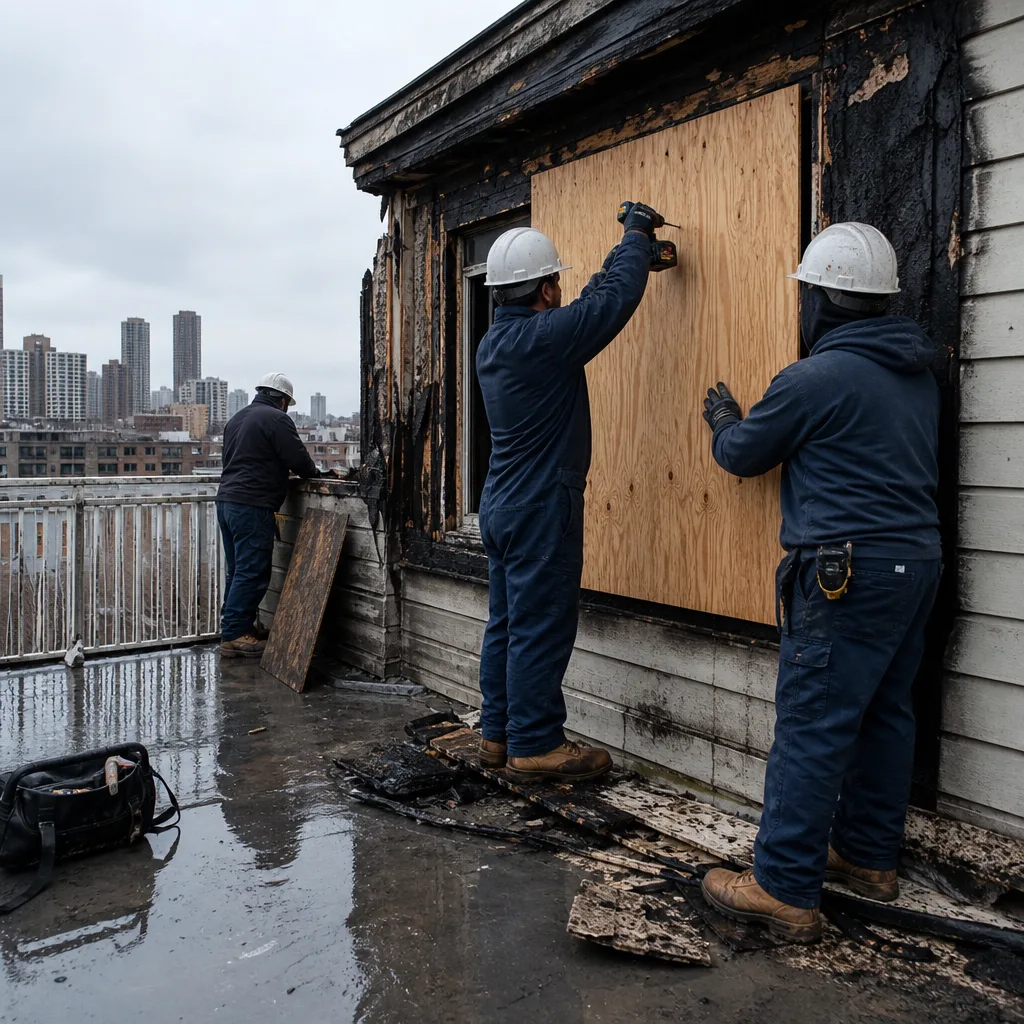
Black Mold Remediation
Stachybotrys chartarum, the “black mold” homeowners fear, thrives on chronically wet cellulose: drywall, ceiling tiles, fiberglass insulation backing. East Flushing’s repeated Category 3 events create exactly those conditions. We treat every black staining as potentially toxic, contain it accordingly, and run clearance air sampling before we lift containment.
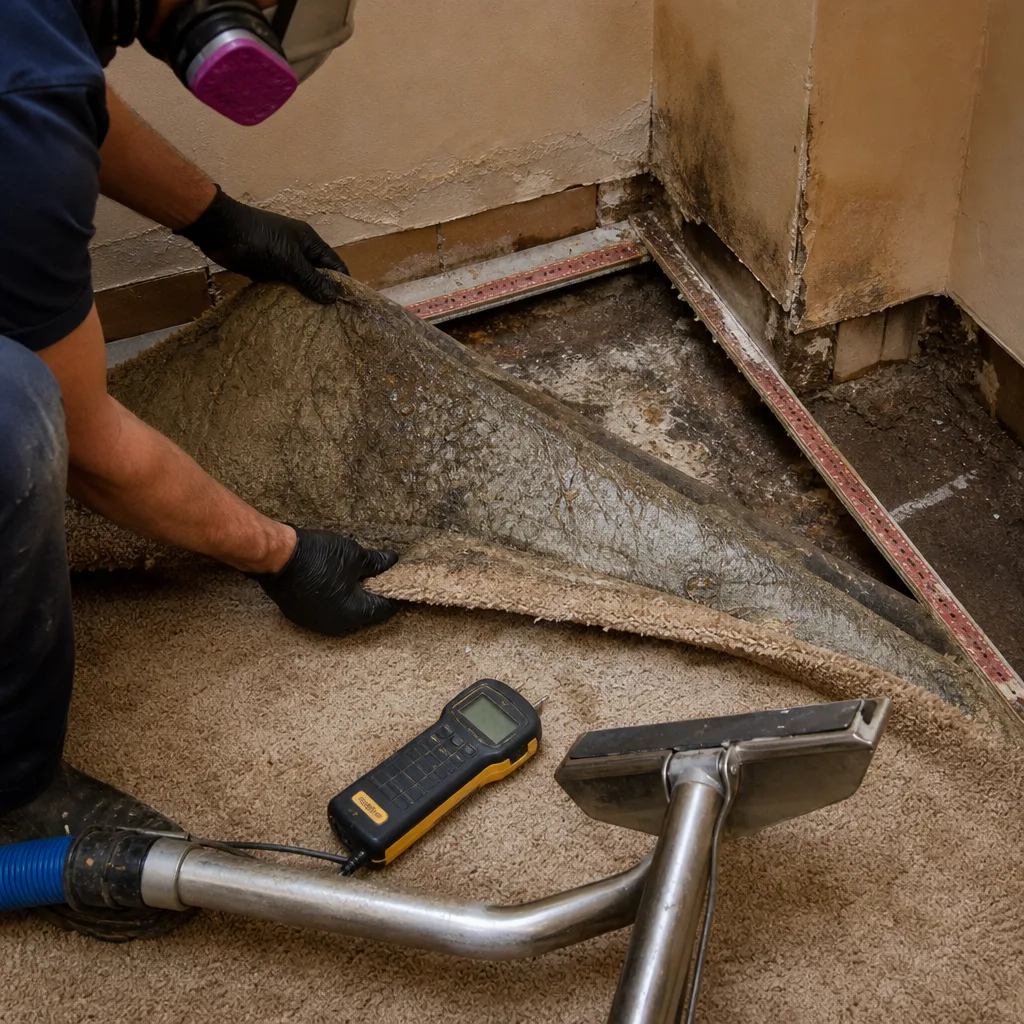
Air Quality Restoration
After physical removal, the air still carries spore load. We run HEPA air scrubbers throughout the remediation and post-remediation ventilation, then verify with air quality testing that spore counts in each unit match the outdoor baseline. This matters especially in attached homes where air moves through wall cavities.
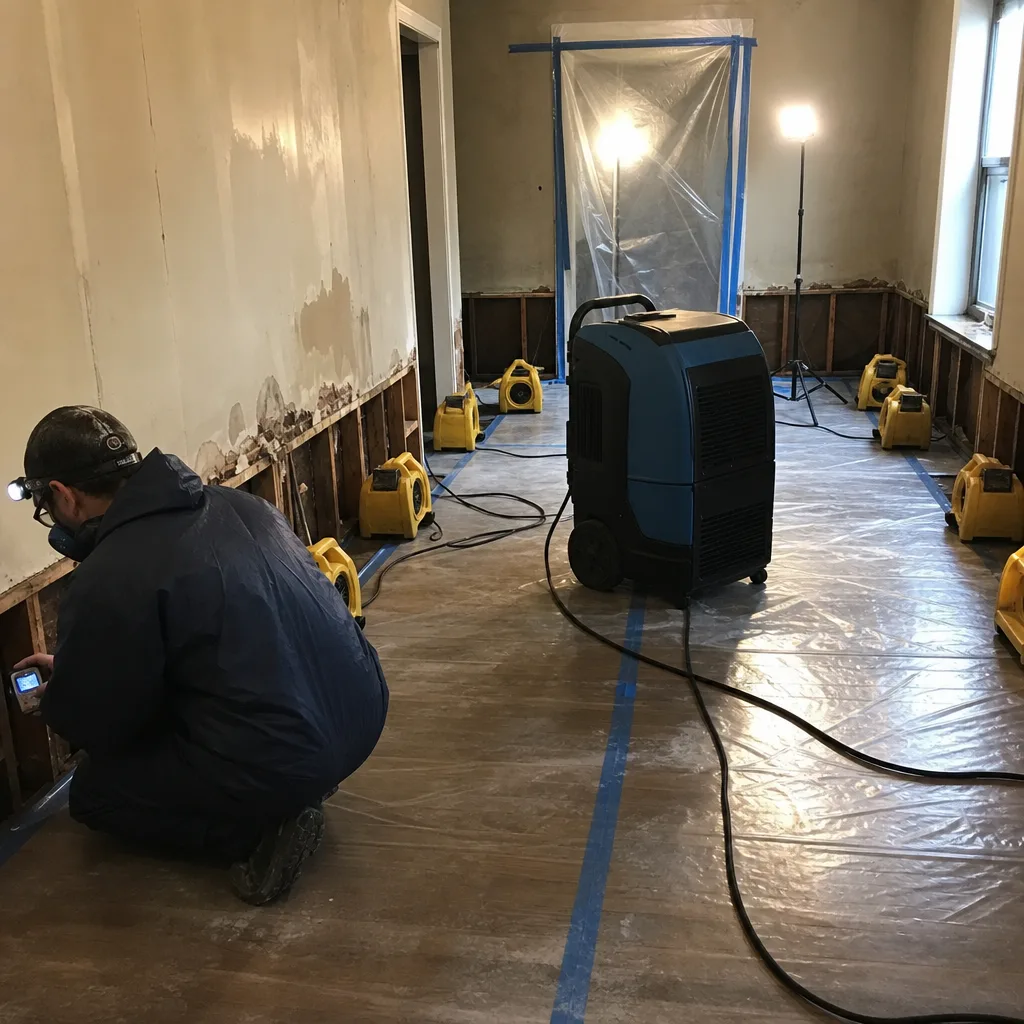
Crawl Space Treatment
Many East Flushing homes from the 1930s have partial crawl spaces under a rear addition. Chronic humidity there feeds mold on floor joists even without a flood. We install vapor barriers, seal foundation vents where appropriate, and treat exposed framing with antimicrobials to stop regrowth.
What happens when you call
- 1
A real person answersNo phone trees - you reach a local pro.
- 2
You get an upfront price rangeHonest numbers before anyone is dispatched.
- 3
A background-checked tech heads outLicensed & insured, dispatched right away.
- 4
You approve before work beginsNothing starts until you say go.
Mold Remediation Costs in East Flushing, NY
Honest numbers for East Flushing’s market, based on what we’ve actually scoped here. A small contained mold removal, one wall section in a bathroom, typically runs $450 to $900. Full basement mold remediation after a Category 2 pipe break runs $2,800 to $6,500, depending on square footage and how much drywall comes out. A Category 3 sewage-backup mold scope in a semi-attached home, where we’re setting containment in two basements and remediating both units, runs $8,000 to $18,000 or more. Moisture and humidity control with crawl space encapsulation runs $3,500 to $7,500. Mold inspection and air testing alone runs $350 to $700. What moves the price: whether the party wall is transmitting moisture, whether asbestos-containing materials are present in older drywall or flooring, and how much finished space has to be removed and rebuilt. If your policy covers the loss, direct insurance billing handles it; if not, we give you a written scope before work starts so there are no surprises on the bill. Call (917) 924-4221 for a free visual inspection and a firm number.
We Also Serve Cities Near East Flushing
Floodline Restoration Co. of Manhattan runs mold remediation crews through the full Flushing corridor. We serve East Flushing, Fairview, Harrison, East Bronx, and Hunts Point with the same 45-minute response commitment, live 24/7 dispatch, and 90-Day Done Right Promise. If your home is on the edge of East Flushing near any of these neighborhoods, you’re still in our response area.
Serving East Flushing, NY - Our Local Coverage Area
We’re based in the East Flushing area and know this community well. Use the map below to see our service coverage - if you’re nearby, we can almost certainly help.
East Flushing Mold Remediation Questions, Answered
After a Northern Boulevard sewer backup, how do you keep mold from spreading through the shared wall into my neighbor’s basement?
We treat the party wall as a live moisture path, not a barrier. After any Category 3 backup near Northern Boulevard, we set containment in both basements, open the shared wall from both sides, run HEPA air scrubbers in negative pressure, and take moisture readings in the masonry itself. Then we apply antimicrobials to the framing and parging before any drywall goes back. Skipping the neighbor’s side leaves hidden spores and moisture that regrow mold in weeks. Call (917) 924-4221 and we’ll coordinate access with the neighbor and both adjusters.
My East Flushing basement flooded with sewage during the last nor’easter. How soon can mold start, and do I need to test before you remove the drywall?
Mold colonization starts in 24 to 48 hours in the warm, wet conditions of a flooded East Flushing basement, faster if the water sat overnight. You don’t need to test before removal when the source is Category 3 sewage backup; the visual evidence and moisture readings are enough to justify immediate extraction, containment, and removal of affected drywall. We may run air clearance testing after remediation to verify spore counts. Call (917) 924-4221 now if water is still standing; every hour counts.
The finished basement in our semi-attached house has damp walls and a musty smell, but there’s no standing water. Is that mold from the high water table?
Very likely yes. East Flushing sits within the Flushing Creek drainage basin, and the water table here runs persistently shallow. Foundation block and parging in 1930s brick homes absorb that groundwater continuously, and the moisture feeds mold behind finished basement walls even with no flood event. The fix is not just painting over it: we map the moisture, remove the affected drywall, address the hydrostatic pressure with drainage or vapor barriers where possible, and dry the masonry before rebuilding. A free inspection with a moisture meter will show exactly where the water is coming in.
What’s the difference between Category 2 and Category 3 water, and why does it change how you remediate mold in East Flushing?
Category 2 is “grey water”: contaminated but not sewage, such as an overflowing washing machine or a supply-line break. Category 3 is “black water”: sewage, floodwater, or anything carrying fecal matter. In East Flushing, combined-sewer backflow along Northern Boulevard is Category 3. That changes remediation substantially: full PPE, polyethylene containment, HEPA air scrubbing, removal of all porous materials that touched the water, and antimicrobial treatment of structural wood and masonry. Treating Category 3 as grey water skips containment and spreads fecal mold spores through both units of a semi-attached home.
How do you keep mold out of the unfinished crawl space in a 1930s East Flushing brick home after a pipe burst?
First we extract the standing water and run dehumidifiers sized for the cubic footage of the crawl space, not the living area above. Then we check the floor joists and subfloor for moisture wicking; a burst pipe in a crawl space soaks the framing above even if the ground looks dry. We treat any mold on the joists with antimicrobials, install a vapor barrier over the soil to stop ongoing humidity, and take daily moisture readings until the wood reaches the dry standard. A 1930s crawl space also needs a check of the foundation vents; East Flushing’s humid summers make open vents a liability.
How fast can your crew actually reach East Flushing for a mold emergency?
Our commitment is 45 minutes from dispatch to arrival anywhere in East Flushing. We keep crews staged along the Flushing corridor, including response routes near Northern Boulevard and the LIRR tracks, so a team is minutes away, not driving from another borough. A live dispatcher answers at (917) 924-4221 around the clock and can have a crew moving immediately.
Will my insurance cover mold remediation in East Flushing after a sewer backup?
Most homeowners policies in New York cover mold remediation only when it results from a covered peril, and sewer backup is typically covered only if you carry a specific endorsement. We can’t promise your carrier will pay, but we document every step so your claim has the best chance. Photos, moisture logs, causation timeline, line-item scope: we provide all of it directly to your adjuster. If coverage is denied, we’ll give you a written scope at a fair price so you can decide how to proceed.
What should we do in the first 30 minutes after discovering mold or water in our East Flushing basement?
Shut off the water source if it’s a plumbing break. If it’s sewage backup, do not enter without boots and gloves. Turn off electricity to the basement if water has reached outlets. Move personal items from the wet area if safe to do so. Do not run a household fan, which spreads spores. Call (917) 924-4221. A live person picks up, and we’ll walk you through the next 30 minutes while the crew is on the way.
Written by Curt Bowman, Owner at Floodline Restoration Co. of Manhattan, serving East Flushing, NY.
Contact Floodline Restoration Co. of Manhattan for emergency mold remediation in East Flushing at (917) 924-4221. Free visual inspection. Direct insurance billing. Backed in writing by the 90-Day Done Right Promise. Current offers: $50 Off Any Repair Over $250, $89 Seasonal Tune-Up, and a 5% Senior & Veteran discount, always available.