
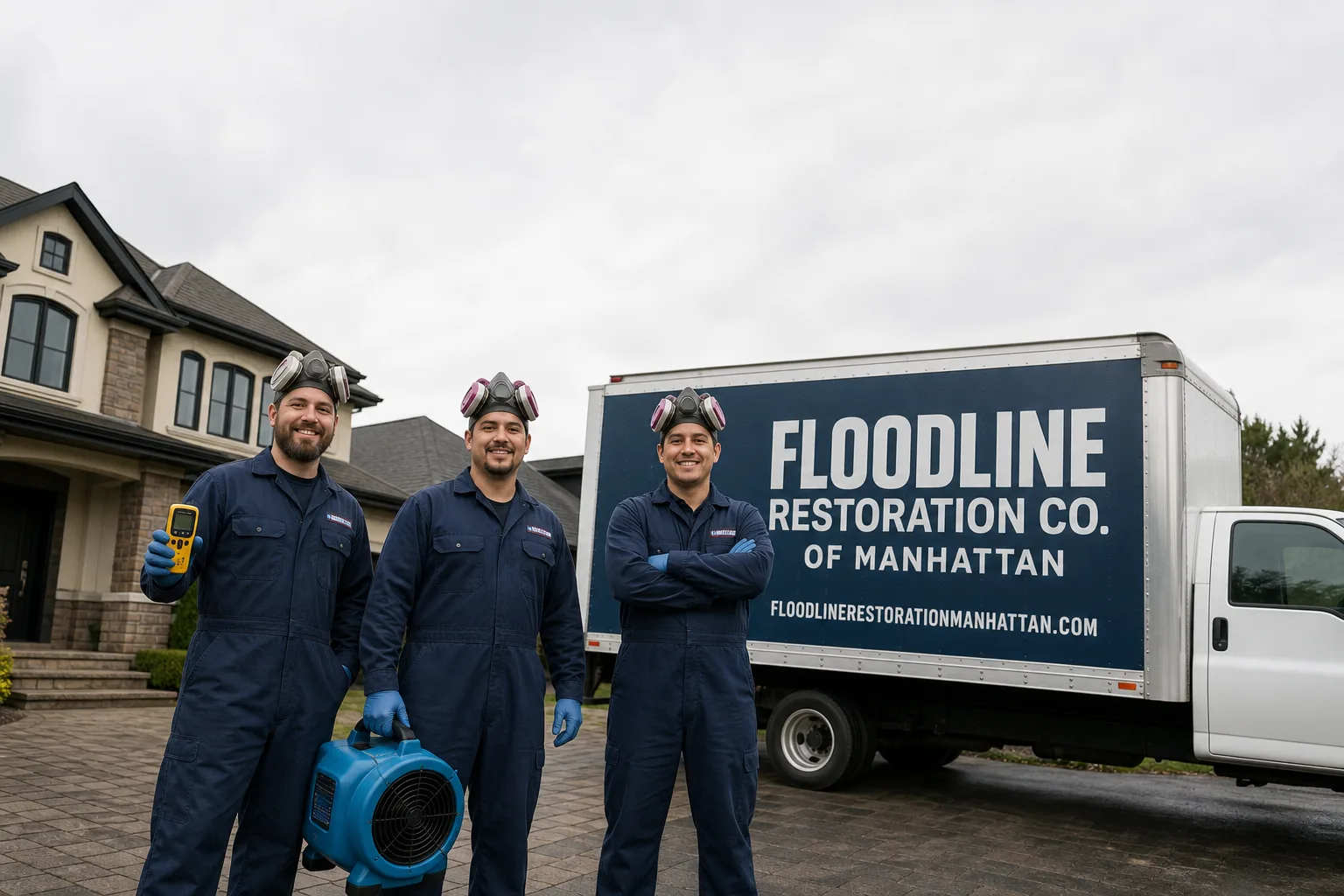
Free visual inspection and a written scope of work before any mitigation begins - photos, moisture readings, and drying logs go in your claim file
The scope we write is the scope we bill. Anything new gets shown to you, in writing, before we touch it.
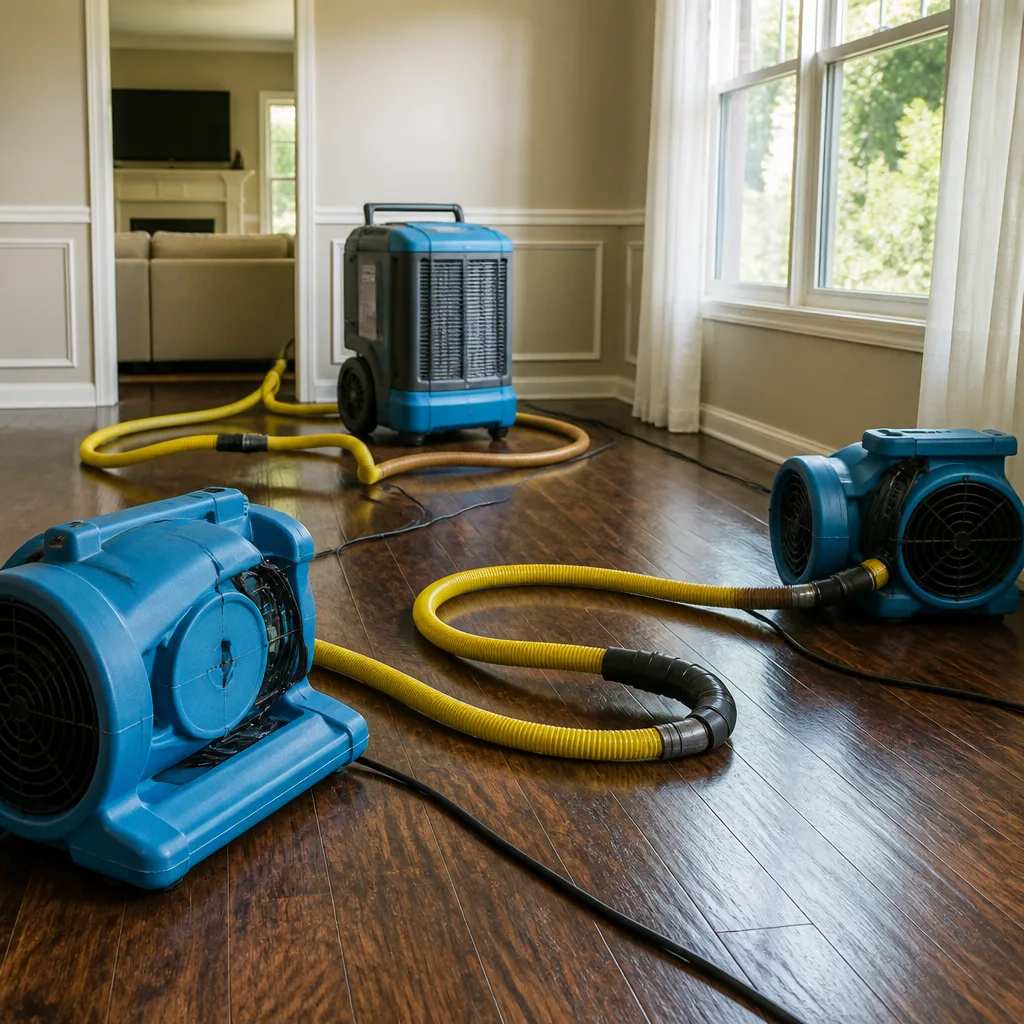
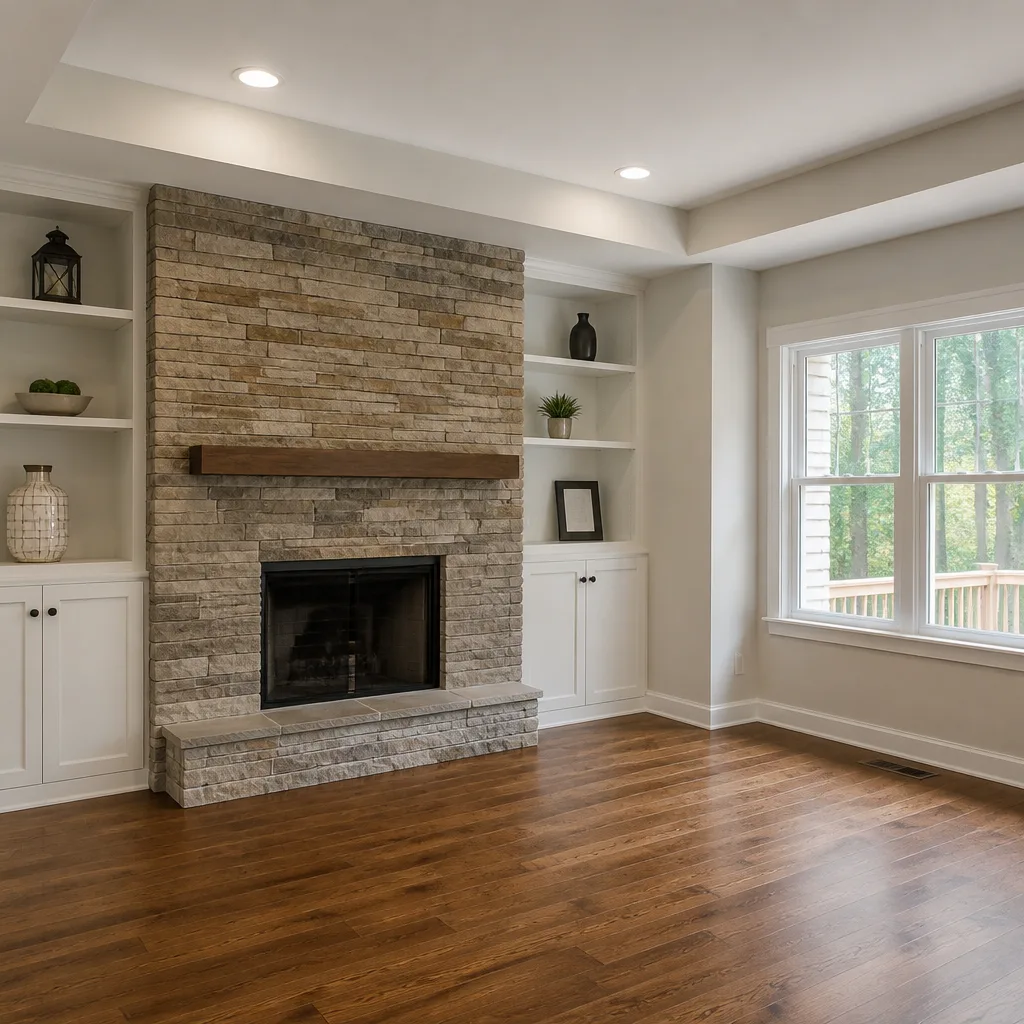
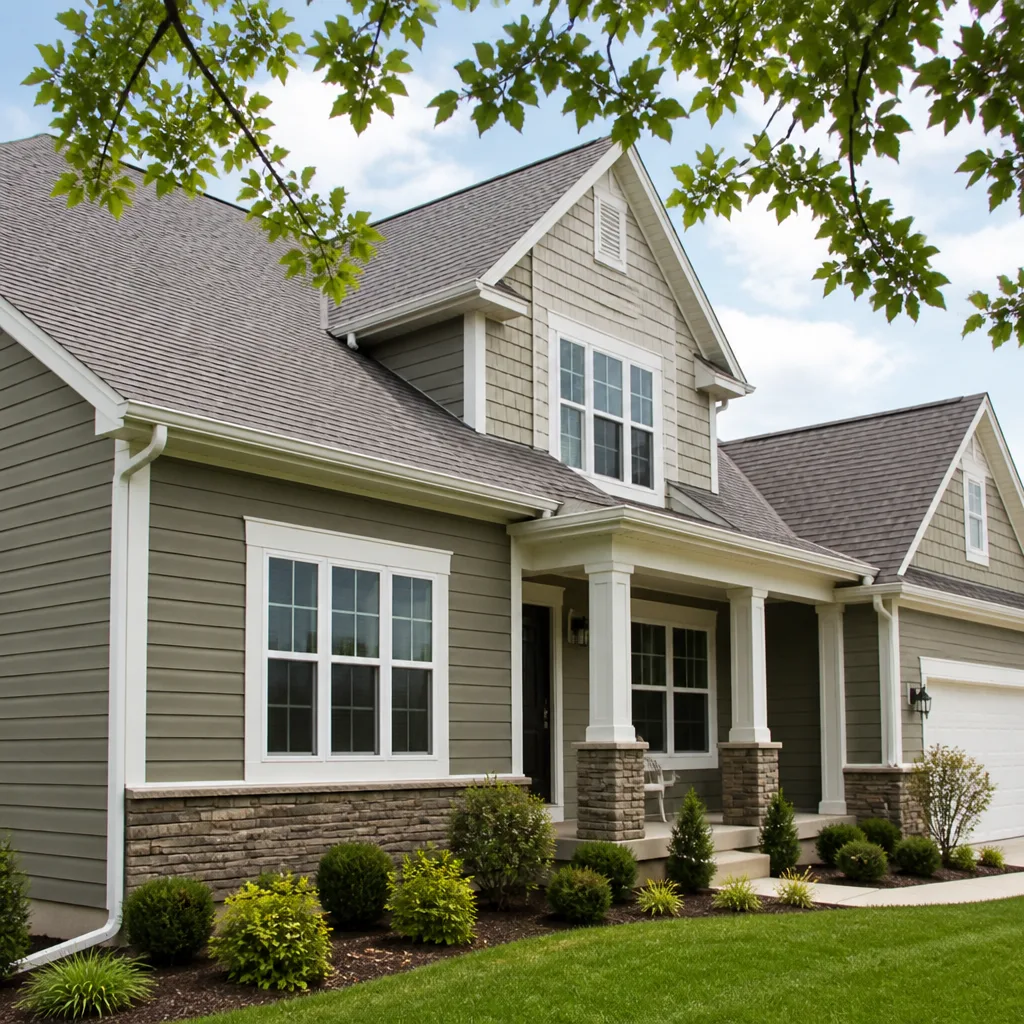
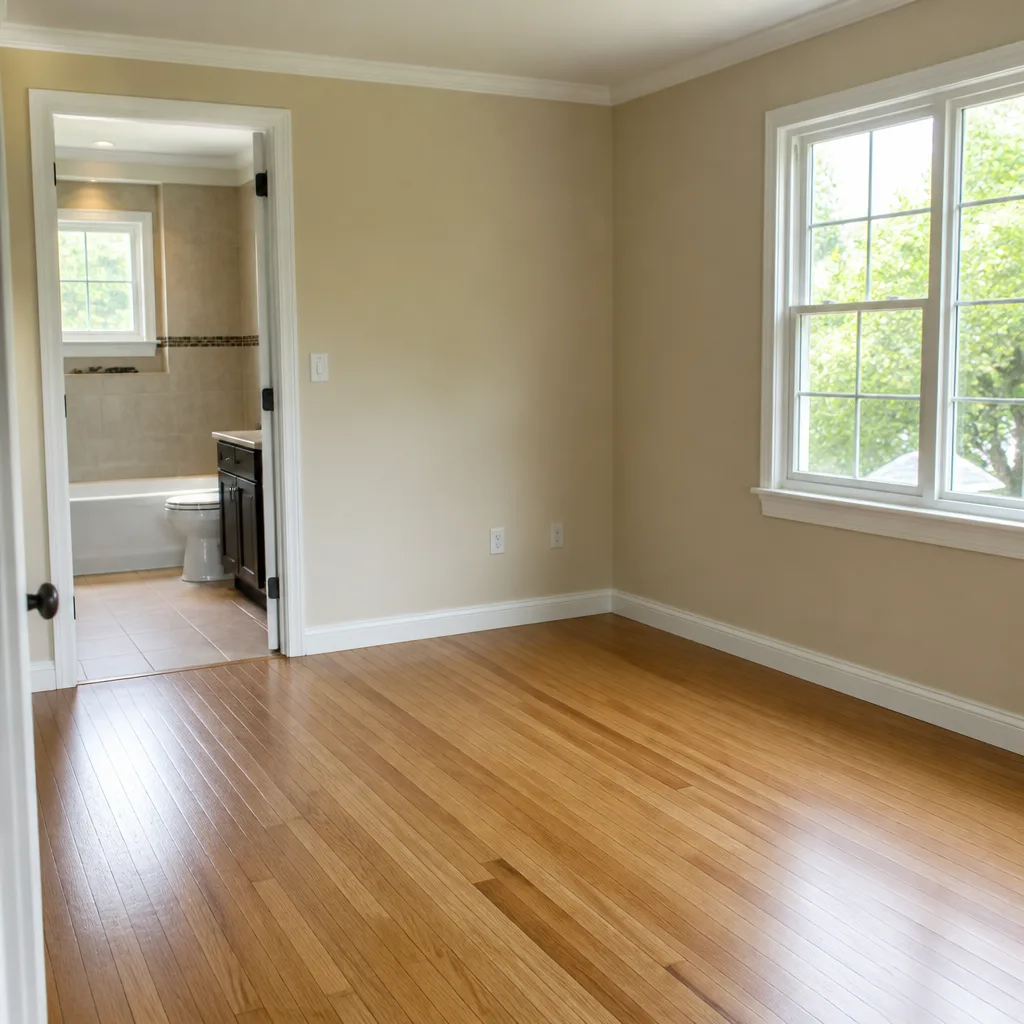
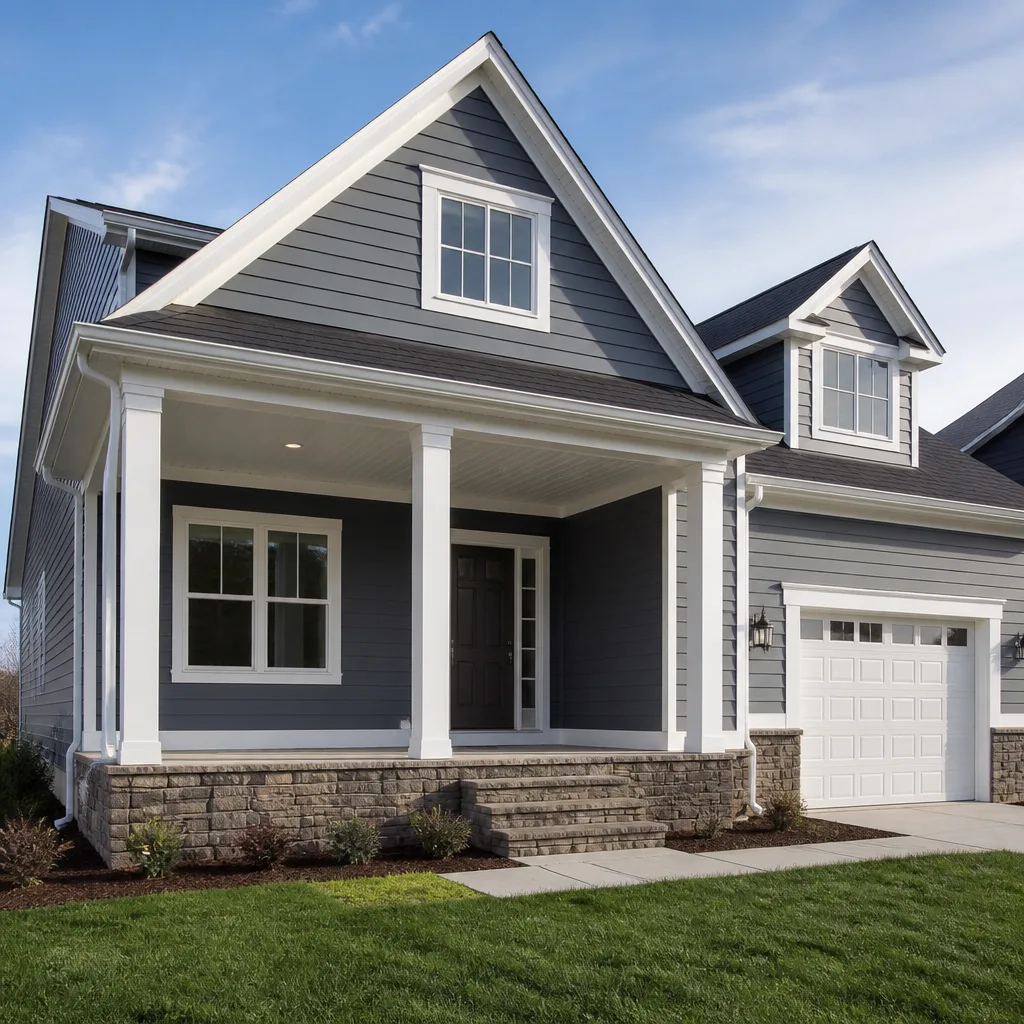
 Before
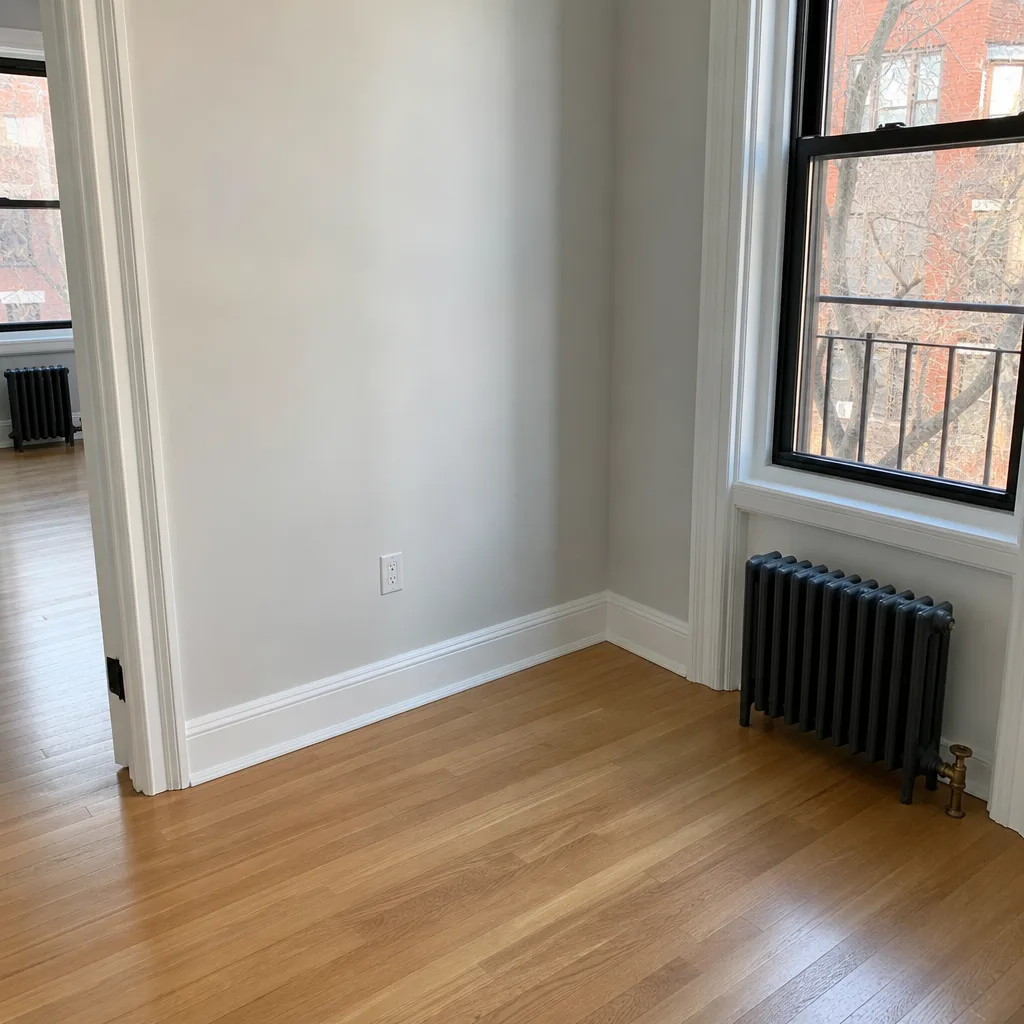 After
After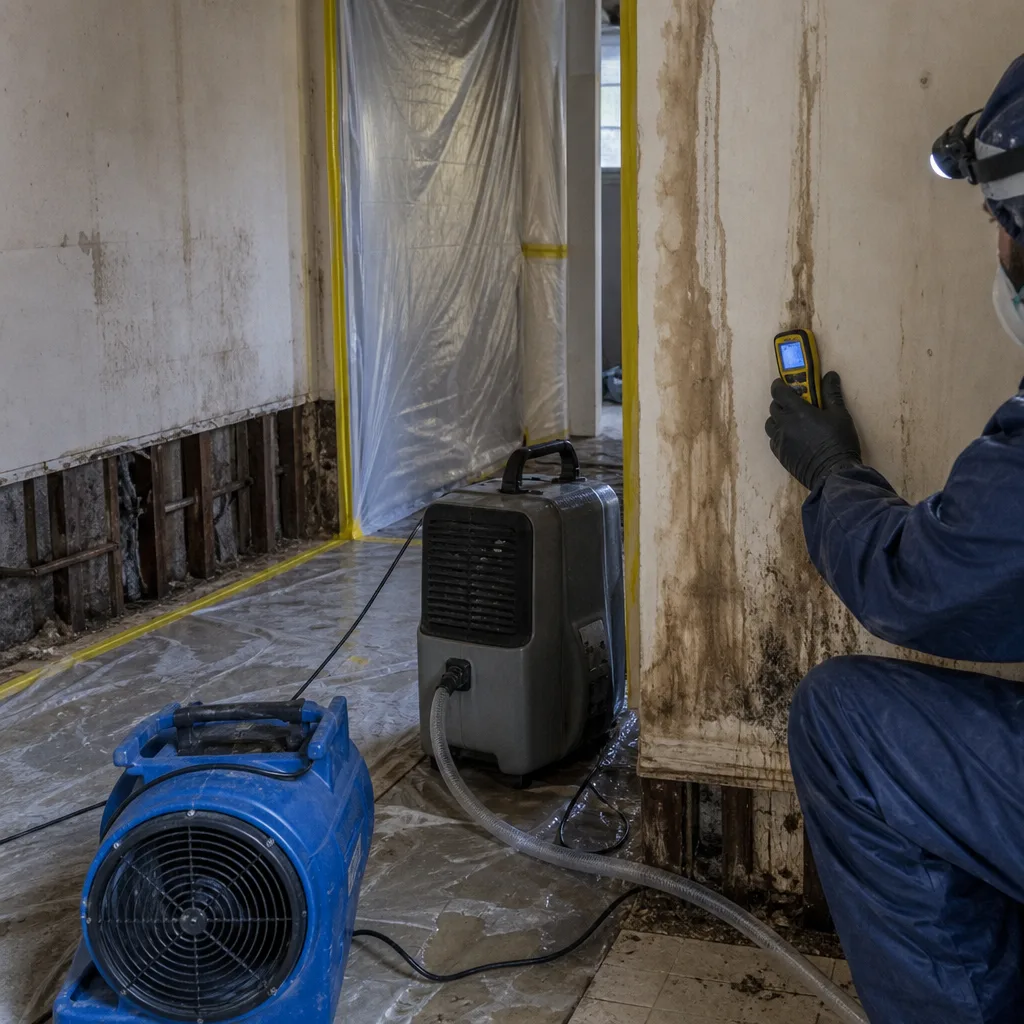 Before
 After
After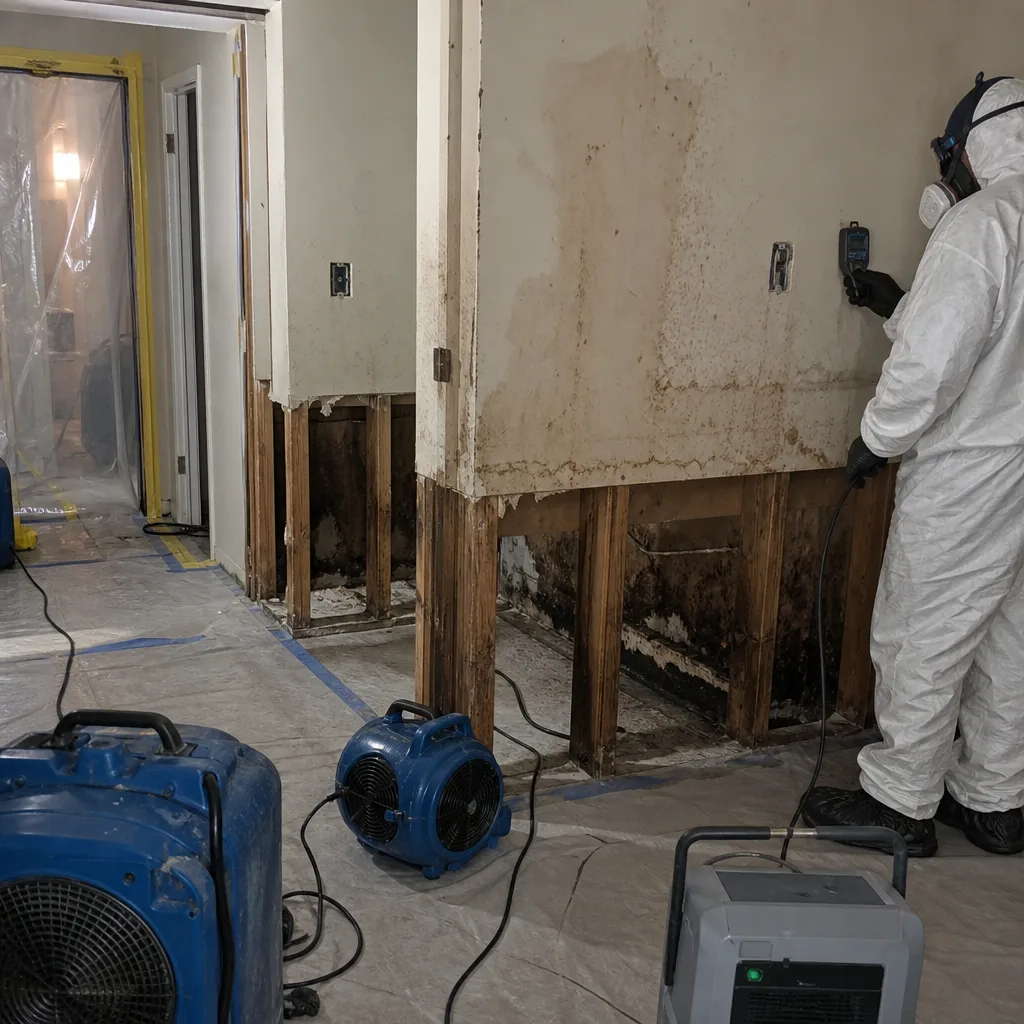 Before
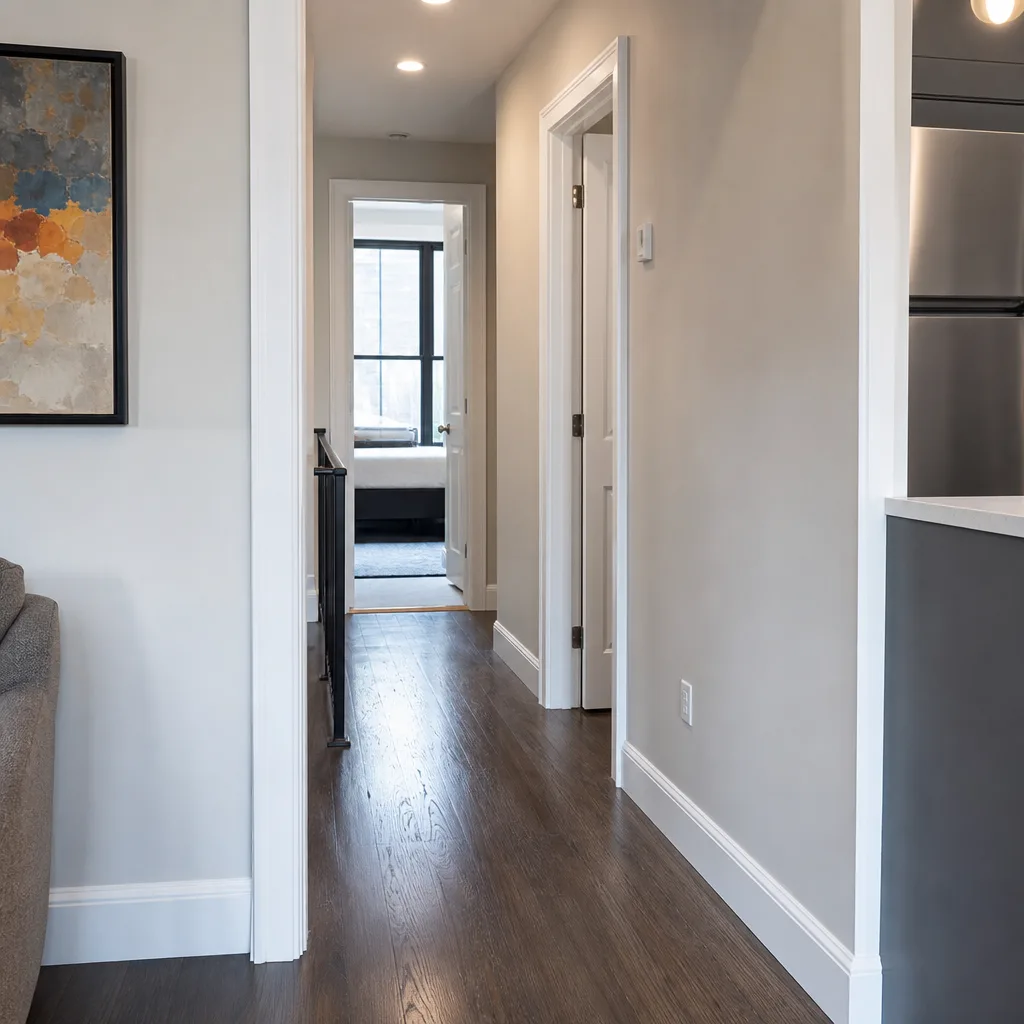 After
After24/7 Emergency Mold Remediation in Englewood
Mold doesn’t wait for business hours, and neither do we. If you’ve found black patches spreading across a basement wall in Englewood or you smell that unmistakable musty odor behind a finished room, call (917) 924-4221 right now. A real person answers, any hour, any day. We dispatch crews into Englewood immediately because we know that a mold colony that’s contained today is a repair bill that stays small. The first hour matters more than most people realize, especially in Englewood’s older homes where fieldstone foundations and clay soil mean water intrusion is often ongoing behind the wall. We’ll send a background-checked, uniformed technician for a free visual inspection. You’ll know what you’re dealing with before you spend a dollar.
Key takeaways for Englewood homeowners:
– Mold in Englewood is usually tied to water entry through aging foundations, not just humidity
– We answer live 24/7 and can have a certified crew in Englewood the same day
– Free visual inspection comes first, before any work or commitment
– Direct insurance billing means you’re not playing messenger with your carrier
– Every job is backed by the 90-Day Done Right Promise in writing
Understanding Mold Remediation Severity in Englewood Properties
Englewood’s housing stock presents a specific set of mold challenges that a generic remediation page won’t tell you about. Most homes here were built before 1950 with fieldstone or concrete-block foundations, original cast-iron drain lines, and no modern vapor barrier or waterproofing. That means moisture enters from below and behind, not just from a single pipe burst. When hydrostatic pressure builds in the clay-heavy soil surrounding these foundations, water gets pushed through every crack and mortar joint. It finds the dark, warm space behind finished drywall and feeds mold colonies that can spread for weeks before you ever see a spot.
We classify mold work by the water source that fed it. Category 1 water (clean supply line) creates one set of expectations. Category 3 water (sewage or groundwater that’s contacted soil) means the mold is contaminated with pathogens and the remediation scope changes significantly. In Englewood, basement seepage from foundation cracks is almost always Category 3 because it’s passed through the soil. That’s not just mold; it’s water carrying whatever lives in the ground. We use moisture mapping, thermal imaging, and air sampling to find every water path and every mold colony, including the ones you can’t see.
Why Englewood Property Owners Choose Floodline Restoration Co. of Manhattan
- 45-minute response commitment for Englewood calls. When you have active water feeding mold, every hour expands the colony. We move fast.
- 24/7 live answer, never an automated system. A dispatcher picks up at 2 a.m. and gets a crew moving, not a recorded greeting.
- IICRC-certified crews trained to AMRT (Applied Microbial Remediation Technician) standards. We don’t send a generalist to do a specialist’s job.
- Free visual inspection before any work begins. You see the problem and the scope before you sign anything.
- Direct insurance billing. We work with your carrier from the first hour and send documentation directly to your adjuster.
- One team from first inspection to final rebuild. No mid-job handoff, no inherited crew that doesn’t know your house.
Our Mold Remediation Process
Inspection & Assessment
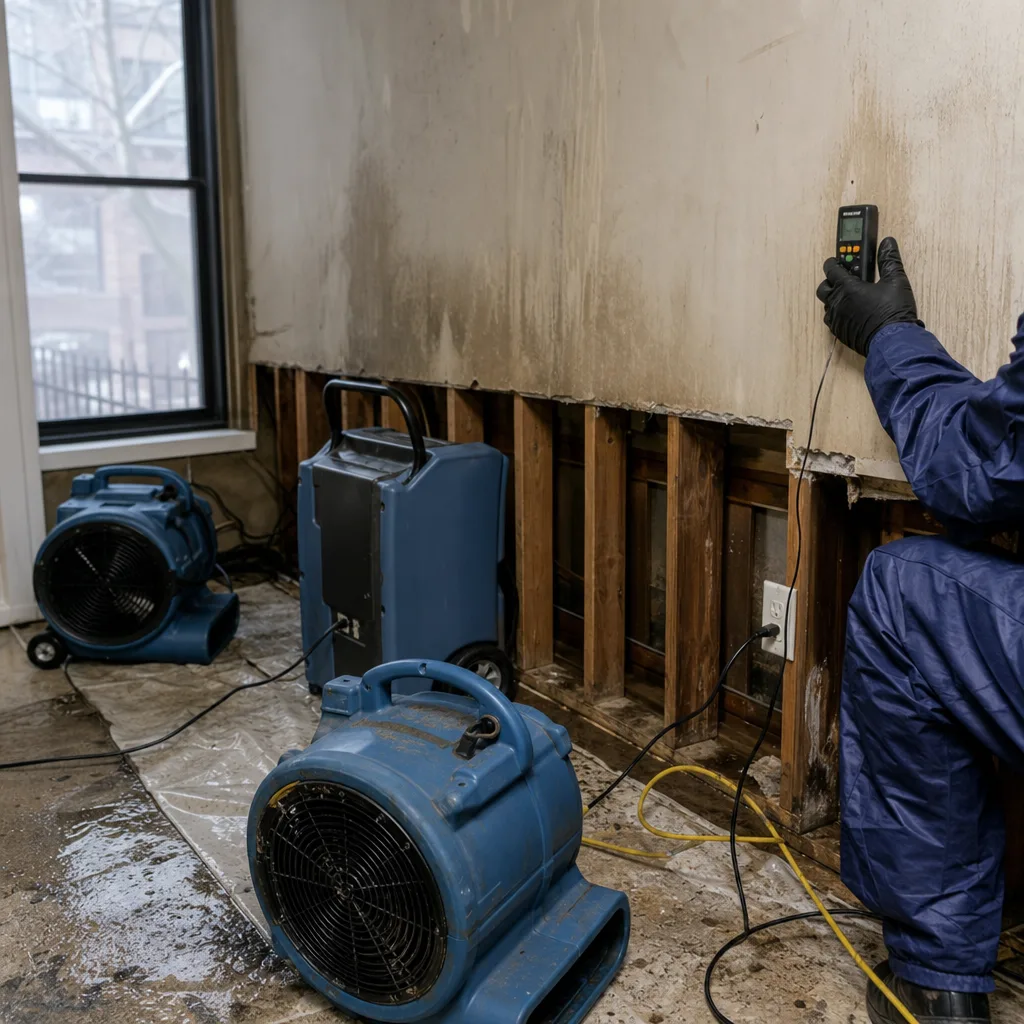
We start with thermal imaging and moisture meters to map exactly where water is entering and where mold is growing. In Englewood’s older homes, this usually reveals foundation seepage and compromised cast-iron lines as the source, not just surface humidity. You get a written scope before any work begins.
Containment & Source Control
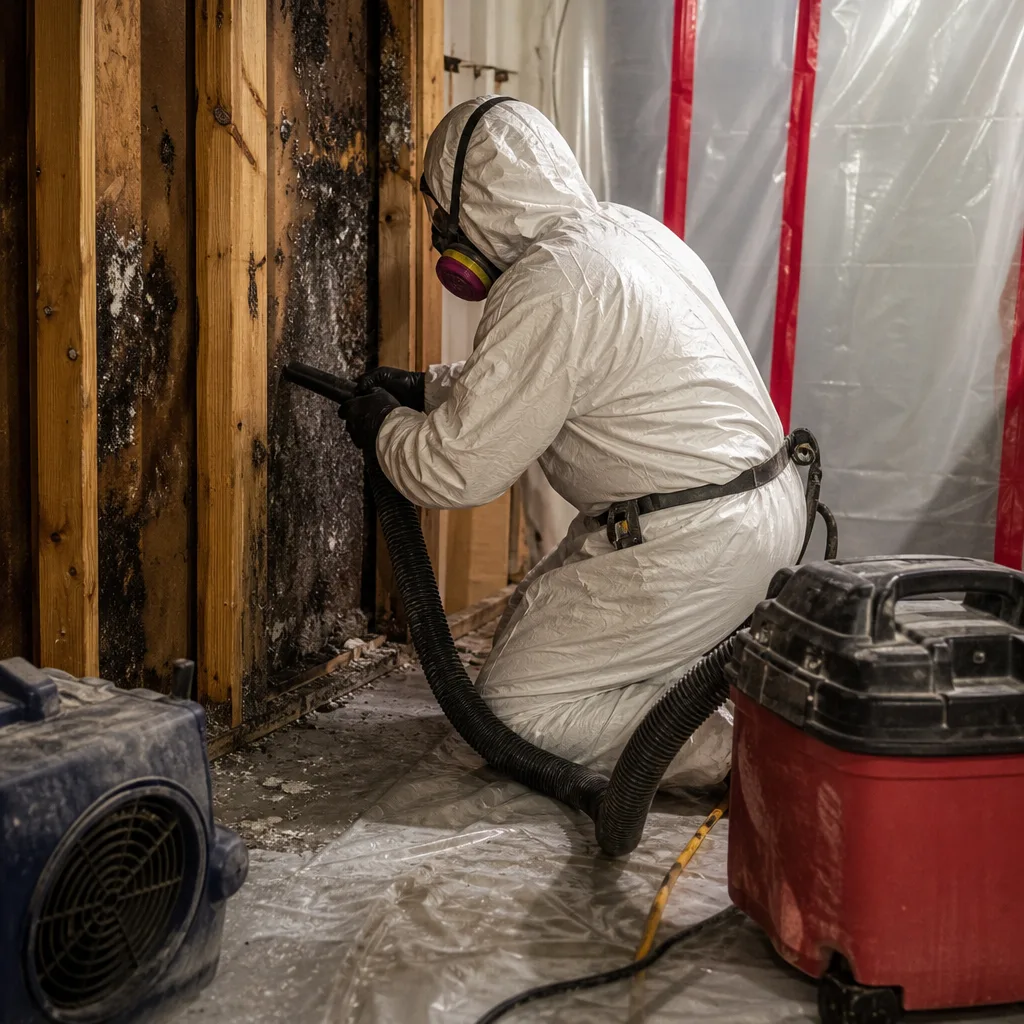
Before we touch anything, we seal the work area with 6-mil poly containment and run HEPA air scrubbers to create negative pressure. This prevents spores from spreading into clean rooms, especially in homes with 1960s finished additions you want to preserve. We also stop the water entry at its source.
Drying & Dehumidification
We set up Phoenix air movers and Dri-Eaz dehumidifiers, then begin daily moisture readings. In Englewood basements with stone foundations, this can take longer than in newer construction because the masonry itself holds water. We log every reading and share the drying log with you and your carrier.
Mold Removal & Material Disposal
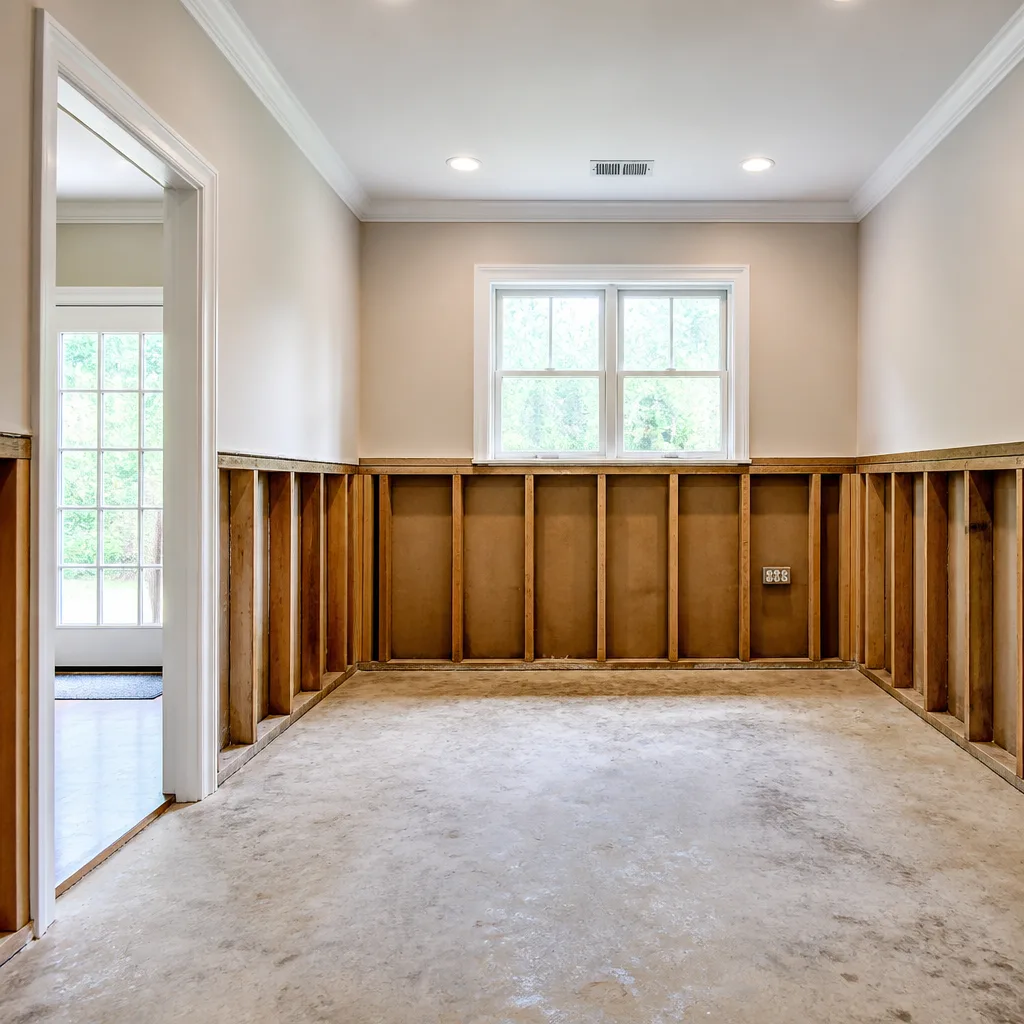
We cut out contaminated drywall, insulation, and any porous material that can’t be fully cleaned. In Englewood’s patchwork-of-repairs homes, we often find mold behind paneling or in the seam between old fieldstone and newer additions that had been silently growing for years.
Antimicrobial Treatment & HEPA Cleaning
All remaining framing and structural materials get treated with an EPA-registered antimicrobial. We HEPA-vacuum every surface inside containment, including wall cavities and floor joists. Air scrubbers run throughout this phase to capture airborne spores.
Clearance Testing & Reconstruction
We perform post-remediation verification using air sampling and surface swabs, comparing results to an outdoor baseline. Once we confirm the air is clean, we rebuild what we removed, including proper vapor barriers where needed. The job isn’t done until you have clean air readings in hand.
Need Emergency Mold Remediation in Englewood Now?
Crews minutes away, answering live 24 hours a day. The sooner we start, the less it costs.
Working With Your Insurance Company
Mold claims go smoother when documentation starts before the crew arrives. We photograph every square foot of the affected area in Englewood, log moisture readings from day one, and build a line-item scope that your adjuster can actually read. Then we send it directly to your carrier. You don’t have to interpret drying logs or argue about whether a wall needed to come out. We handle that conversation because we’ve had it hundreds of times. If the carrier wants to speak with someone who did the work, they talk to us. You focus on getting your house back to normal.
What We Provide Your Insurer
- Thorough documentation of the loss
- Photos of all damage, room by room
- Moisture readings and drying logs
- A detailed, line-item scope of work
- Direct coordination with your carrier
Built for Englewood’s Loss Calendar
Englewood’s mold season follows a predictable pattern, and knowing it helps you catch problems early. The cycle starts in late winter when nor’easters dump heavy wet snow, then a thaw sends meltwater straight into the clay soil surrounding fieldstone foundations. Hydrostatic pressure builds, and water forces its way through any crack or mortar joint it finds. That’s when we get the first wave of calls: homeowners finding damp carpet, musty smells, or visible mold along basement baseboards.
Spring brings more of the same as snowmelt continues and rain saturates already-waterlogged ground. The cast-iron drain lines in pre-WWII Englewood homes take another hit too, with small cracks leaking grey water behind finished walls. Summer thunderstorms can overwhelm old gutters and downspouts, dumping water against foundation walls. Fall is when homeowners finally get around to investigating that smell they noticed in May, by which time the colony has had months to expand. Knowing this calendar means we arrive already looking for the most likely failure points in your specific home.
Mold Remediation Across Englewood’s Neighborhoods
The historic district around the John G. Benson House and Englewood’s preserved pre-war homes keeps our crews busy with fieldstone basement work. These homes sit on the original 1930s foundations with no waterproofing, and the clay soil holds water against the stone like a sponge. Calls from Palisade Avenue to the north often involve homes built into the slope itself, where groundwater runs downhill straight into the foundation. The East Hill neighborhood, with its larger properties set back from the street, sees plenty of crawl space issues where moist earth under the house feeds mold into floor joists. And homes near the Flat Rock Brook Nature Center area, where the water table runs high, deal with chronic dampness that never quite dries between storms. Each area needs a slightly different approach, but the root cause is usually the same: water finding its way in, and mold taking advantage of it.
Specialized Mold Remediation Services We Offer in Englewood
Mold Inspection & Testing
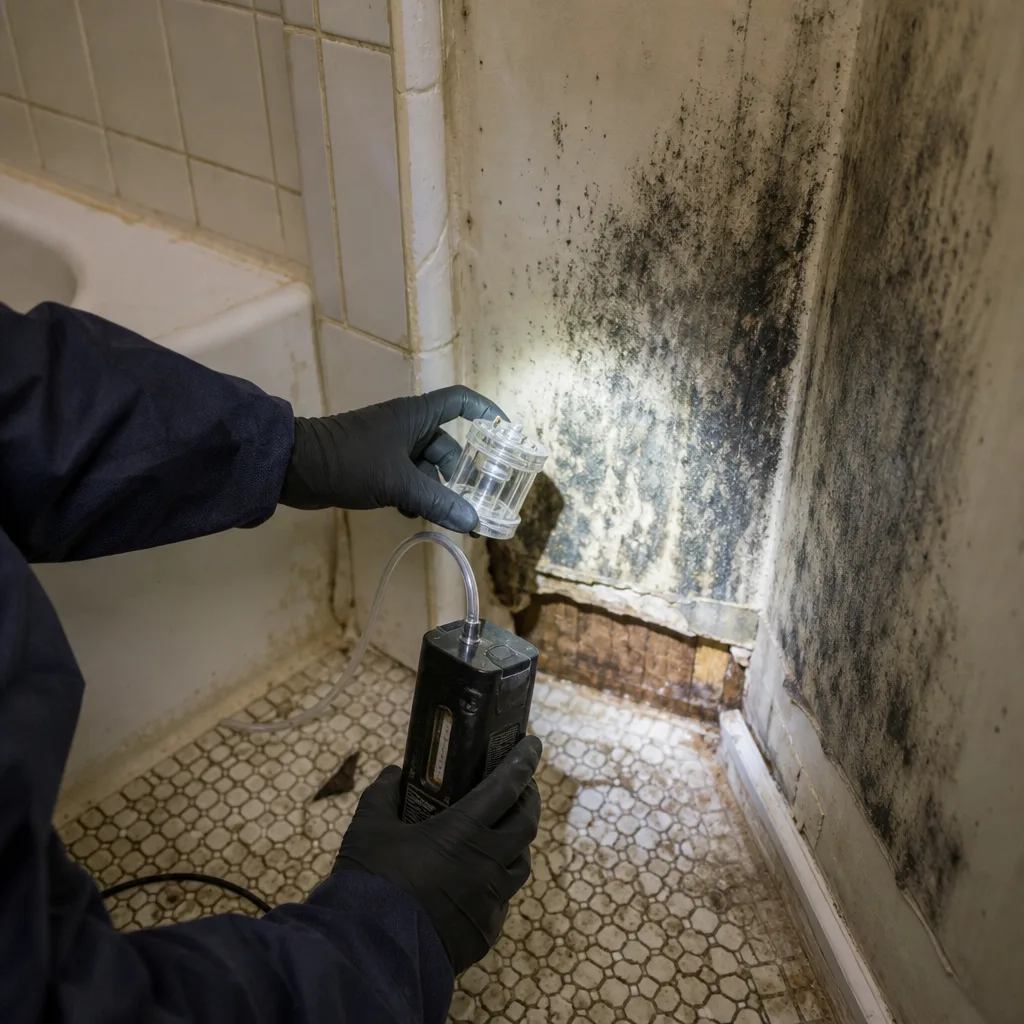
In Englewood’s pre-1950s homes, a visual inspection isn’t enough. We test air samples and surface swabs to identify the species and concentration of mold, then map moisture to find the water source feeding it. This tells us whether you’re dealing with a contained problem or a full-structure issue. Testing also gives you a baseline for proving the air is clean after remediation.
Mold Removal
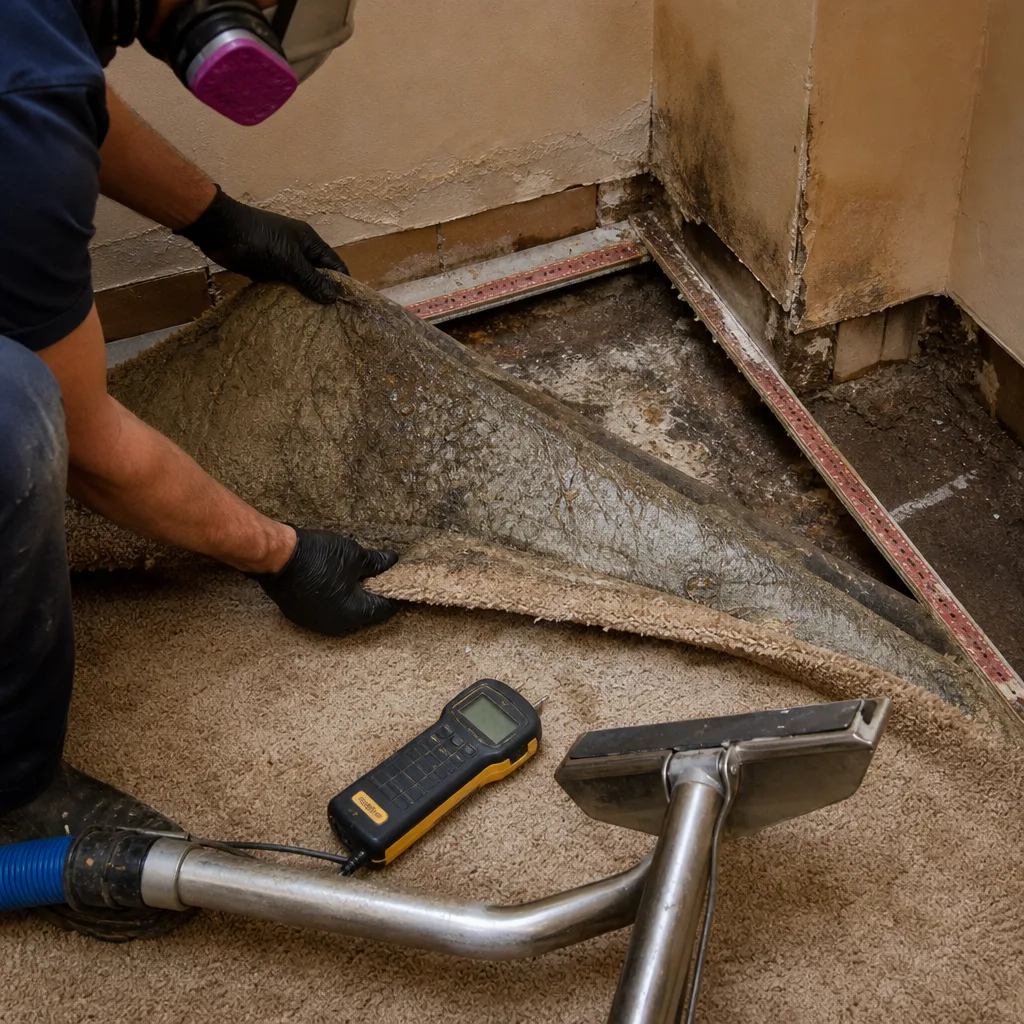
We remove contamination, not just visible spots. In Englewood, that often means cutting out drywall that looked fine on the surface but was housing mold inside the wall cavity, fed by a slow leak from a cracked cast-iron drain line. We contain, we remove, we treat, and we verify.
Black Mold Remediation
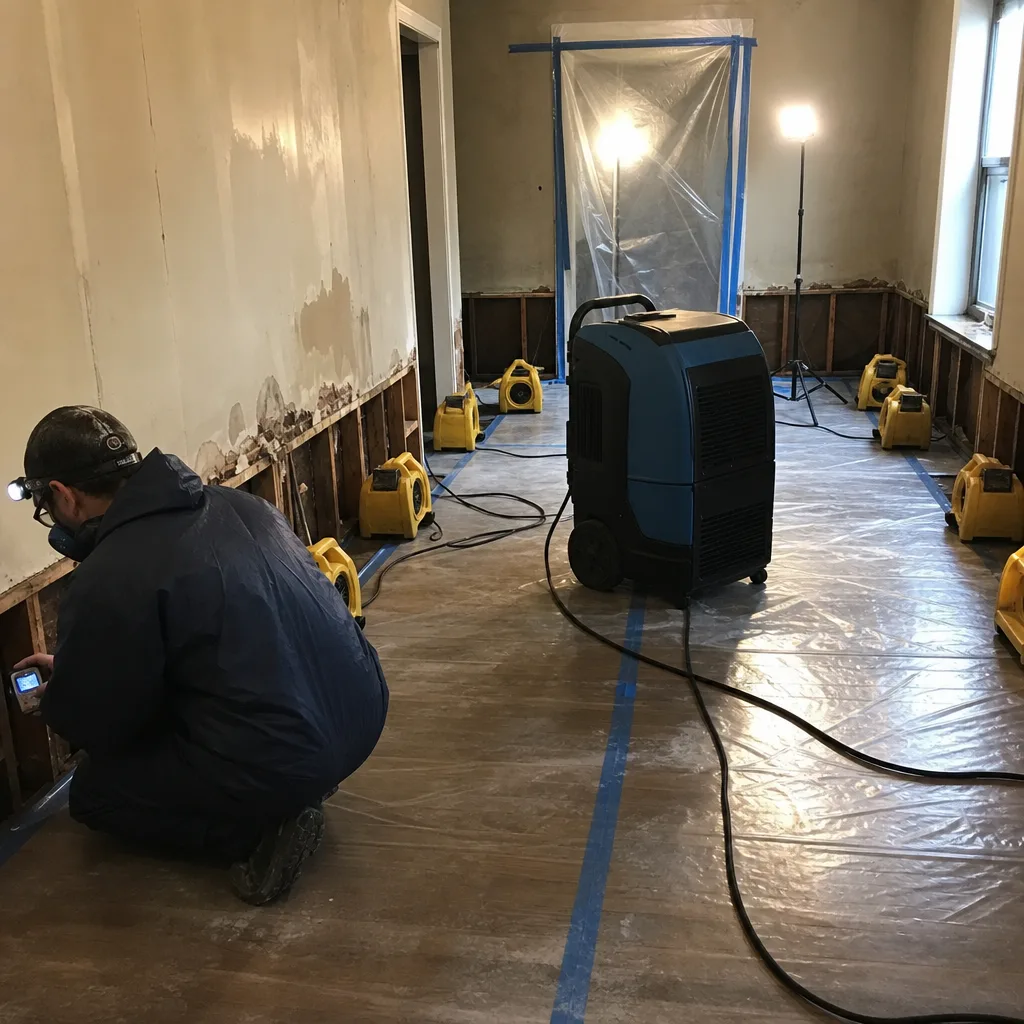
Stachybotrys chartarum, what most people call black mold, loves the consistently damp conditions found in Stone foundation Englewood basements. It requires full containment, specialized PPE, and careful removal because disturbing it releases spores. We have the training and equipment to handle it safely, and we’ll explain exactly what we’re doing and why.
Air Quality Restoration
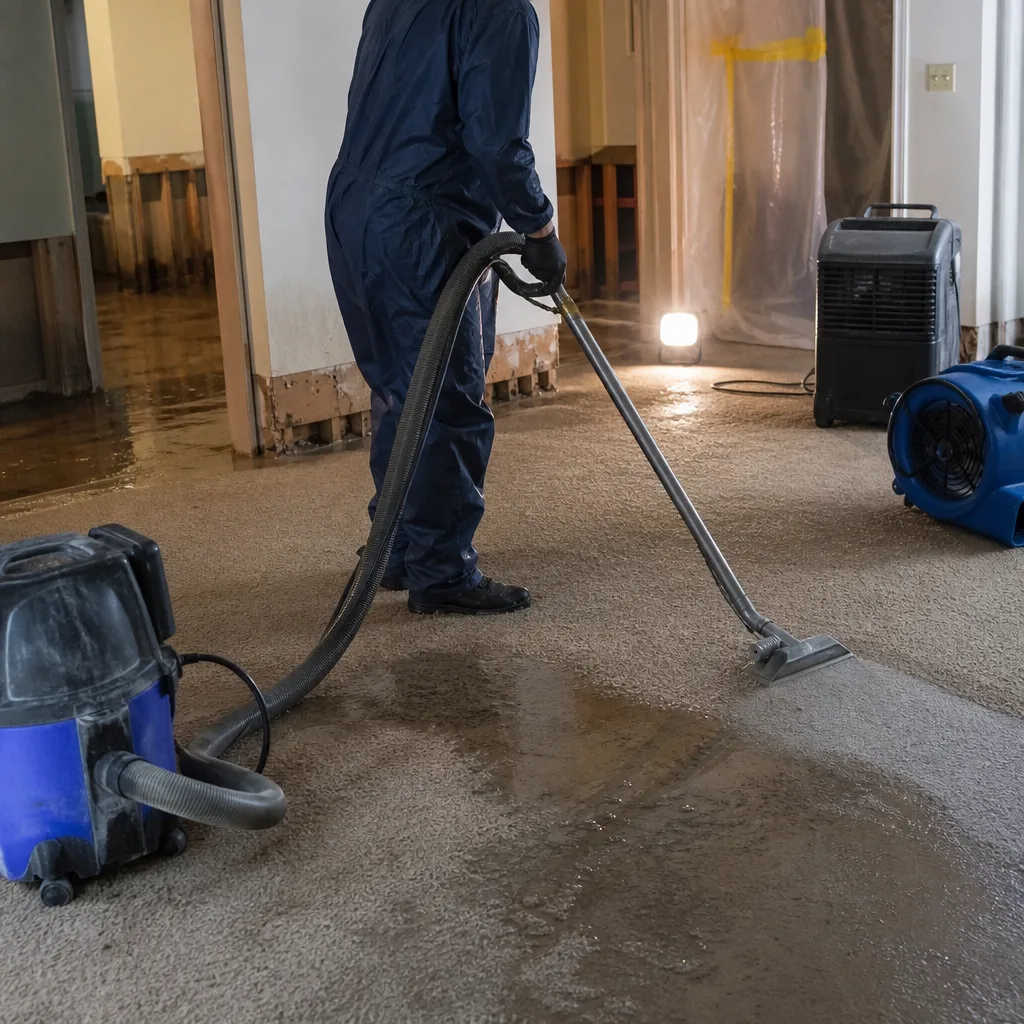
After mold remediation is complete, the air itself needs attention. We run HEPA air scrubbers throughout the job and perform post-remediation clearance testing to prove spore counts are back to normal. In Englewood homes with forced air systems, we also address ductwork that may have circulated spores into rooms far from the original colony.
Crawl Space Treatment
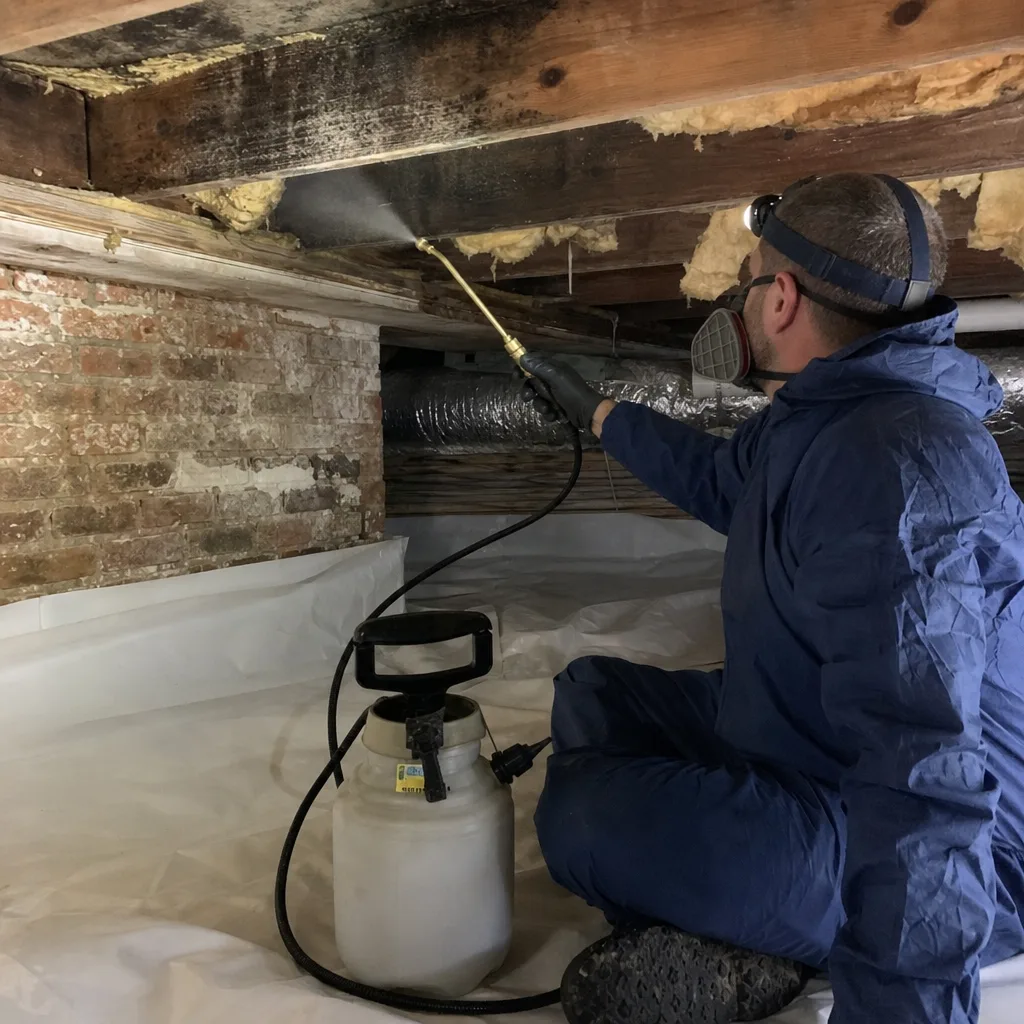
Many Englewood homes sit over dirt crawl spaces that were never sealed. Moisture from the ground rises into the floor joists, and mold follows. We treat the framing, install vapor barriers where possible, and advise on drainage solutions that keep the space dry going forward. It’s the difference between fixing mold and preventing it.
Moisture & Humidity Control
Mold remediation only lasts if the moisture stops. We help Englewood homeowners understand their specific water entry points, from hydrostatic pressure on fieldstone walls to undersized dehumidifiers in finished basements, and we recommend fixes that actually work for this soil and this housing stock.
What happens when you call
- 1
A real person answersNo phone trees - you reach a local pro.
- 2
You get an upfront price rangeHonest numbers before anyone is dispatched.
- 3
A background-checked tech heads outLicensed & insured, dispatched right away.
- 4
You approve before work beginsNothing starts until you say go.
Mold Remediation Costs in Englewood, NJ
Mold remediation in Englewood typically runs between $2,200 and $8,500, depending on how far the contamination has spread and what’s feeding it. A contained bathroom mold issue behind a leaking supply line might come in around $1,800 to $3,000. A basement wall where years of foundation seepage has soaked drywall, insulation, and framing can easily reach $6,000 to $12,000 because we’re removing and rebuilding, not just cleaning. Crawl space treatment with vapor barrier installation generally runs $3,500 to $7,500. Factors that move the price include the square footage affected, whether you need full containment with air scrubbers, how much material has to come out, and whether structural repairs to the foundation are required to stop the water at its source. Insurance covers mold remediation when it results from a covered water loss, like a burst pipe or storm seepage. Neglect, meaning the water problem went unaddressed for months, often isn’t covered. That’s why speed matters. Call (917) 924-4221 for a free inspection and a written scope with firm numbers before any work begins.
We Also Serve Cities Near Englewood
Our crews work throughout Bergen County. We’re in Englewood Cliffs for the same fieldstone foundation issues, Teaneck for its split-level walkouts, Tenafly for homes on sloped lots with drainage problems, and Leonia for its pre-war stock near Overpeck Creek. Wherever water finds a way in, we show up.
Serving Englewood, NJ - Our Local Coverage Area
We’re based in the Englewood area and know this community well. Use the map below to see our service coverage - if you’re nearby, we can almost certainly help.
Englewood Mold Remediation Questions, Answered
How quickly can mold start growing in an Englewood basement after a spring snowmelt seepage event?
Mold can begin growing within 24 to 48 hours after water enters a dark, warm space like an Englewood basement. The clay soil around fieldstone foundations keeps the area damp for weeks, which means the mold keeps feeding and spreading long after the initial seepage event. If you notice any dampness after a thaw, call us that day.
What does ‘Category 3 water’ mean for mold remediation in an Englewood home?
Category 3 water is grossly contaminated, meaning it’s carried soil, sewage, or other pathogens. In Englewood, basement seepage through fieldstone foundations is almost always Category 3 because the water has passed through the ground. Any mold fed by that water requires full containment, antimicrobial treatment, and careful disposal of contaminated materials.
Why does my Englewood basement need mold testing even after the visible mold is removed?
Visible mold is only part of the picture. In Englewood homes with finished basements and 1960s additions, mold often grows behind walls and under flooring where you can’t see it. Post-remediation clearance testing compares indoor air samples to an outdoor baseline, proving spore counts are back to normal before we rebuild. Without it, you don’t really know if the job is done. Call (917) 924-4221 and we’ll explain the testing process.
Can you inspect the crawl space under my Englewood home if it was built on a stone foundation without a vapor barrier?
Yes. We inspect crawl spaces all the time in Englewood, including homes with original stone foundations and no vapor barrier. We look for moisture wicking up from the soil, mold on floor joists, and signs that the foundation walls themselves are weeping. If we find problems, we’ll show you photos and give you a written scope before any work starts.
After you finish mold remediation in my Englewood house, how do you prove the air is safe to breathe?
We perform post-remediation verification using air sampling and spore trap analysis, comparing indoor spore counts to an outdoor baseline sample taken the same day. The lab results come back from a third-party analytical laboratory, and we give you the report. Clean air readings are your proof the job was done right. That’s part of the 90-Day Done Right Promise.
How fast can a mold remediation crew reach my Englewood home?
We commit to a 45-minute response for Englewood calls. A live dispatcher answers the phone, and a certified crew is on the road immediately. The faster we arrive, the less mold spreads and the smaller the repair bill. Our teams are stationed near Englewood and know these streets.
Does my homeowner’s insurance cover mold remediation in Englewood?
Most policies cover mold remediation when it results from a covered water loss, like a burst pipe or storm-related seepage, provided you reported the water damage promptly. Mold caused by long-term neglect or chronic seepage you didn’t address is often excluded. We document everything from the first hour and bill your carrier directly, so you’re not navigating the claim alone.
Should I stay in my Englewood home during mold remediation?
It depends on the extent of the contamination and your household’s health situation. For small contained areas, you can usually stay. For large-scale remediation, especially with black mold, we may recommend temporarily staying elsewhere while we complete containment and removal. We’ll give you a straight answer based on what we find during the free inspection.
Mold problems in Englewood don’t fix themselves, and they don’t get cheaper by waiting. If you’ve seen a spot, smelled a musty odor, or noticed dampness in your basement or crawl space, call Floodline Restoration Co. of Manhattan at (917) 924-4221. We’ll send a certified, background-checked technician for a free visual inspection. You’ll get straight answers, a written scope, and a plan that starts with stopping the water and ends with clean air readings. Done right and backed in writing, with the 90-Day Done Right Promise. Serving Englewood homeowners with the same crew from first inspection to final rebuild.
Written by Curt Bowman, Owner at Floodline Restoration Co. of Manhattan, serving Englewood since 2010.