
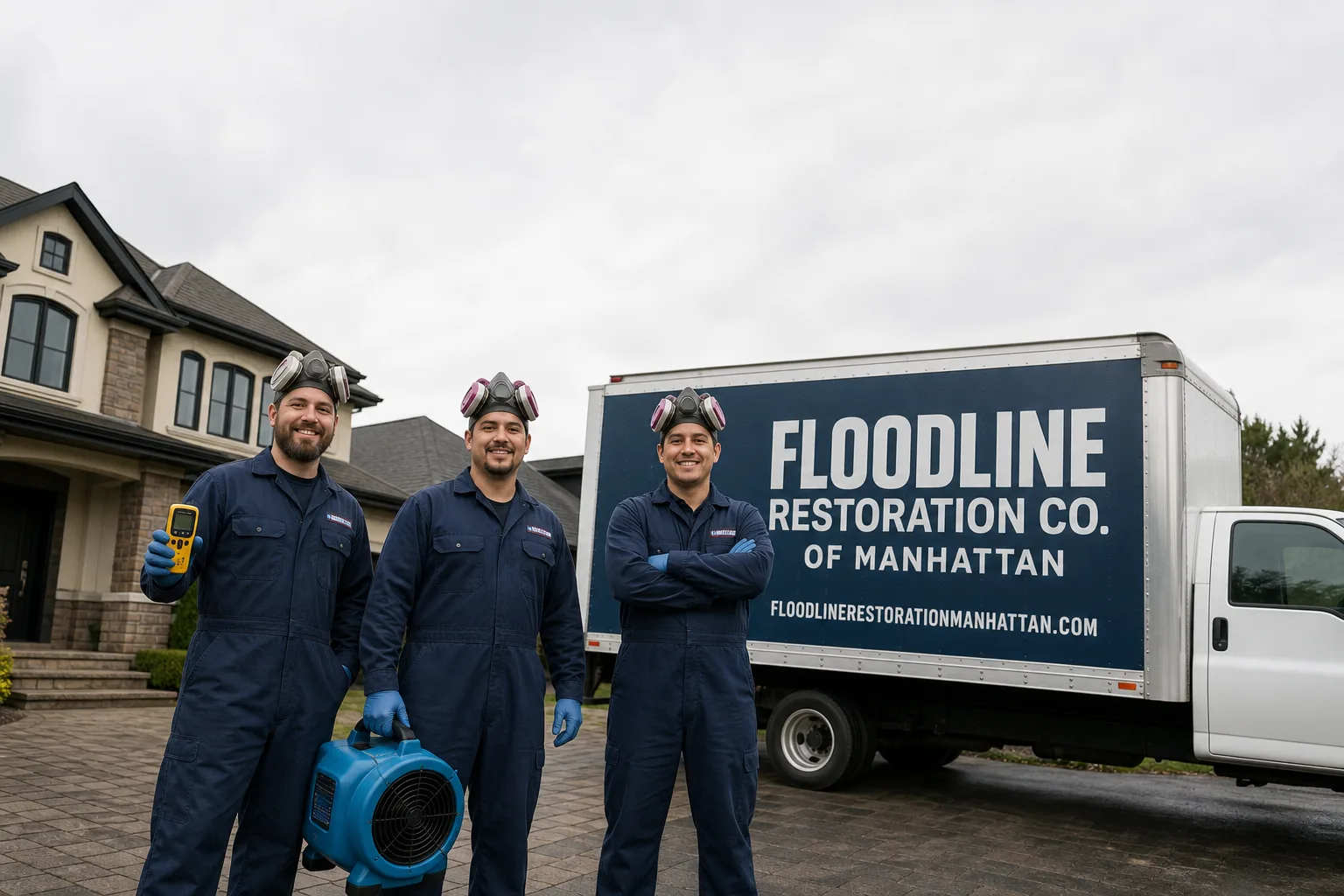
Free visual inspection and a written scope of work before any mitigation begins - photos, moisture readings, and drying logs go in your claim file
The scope we write is the scope we bill. Anything new gets shown to you, in writing, before we touch it.






 Before
 After
After Before
 After
After Before
 After
After24/7 Emergency Mold Remediation in Glen Cove
Mold remediation in Glen Cove typically runs $2,800-$6,500 for a contained removal in a single room, and discovery of hidden wall-cavity colonies in older homes near the harbor can push the scope higher. A live dispatcher answers at (917) 924-4221 around the clock, and our crews reach most Glen Cove addresses within 45 minutes for a free visual inspection. When mold is feeding on moisture inside a plaster-and-lath wall, every week of delay lets the colony spread behind the surface, where you can’t see it and it won’t dry on its own.
Most of the serious mold work we do in Glen Cove starts with a homeowner noticing a musty smell that won’t go away, or a dark stain bleeding through paint near a window or baseboard. By the time it’s visible, the colony underneath is usually larger than the stain. That’s why we treat every call as urgent, even when it’s not a flood. The sooner we open the cavity and map the moisture, the less gets torn out.
Understanding Mold Remediation Severity in Glen Cove Properties
Mold damage in Glen Cove doesn’t follow the same playbook as mold in a Levittown cape or a Jericho colonial. The city’s housing stock runs from late-Victorian worker cottages near Glen Street to Gold Coast-era estates with original plaster-on-wood-lath walls, no vapor barriers, and early clay tile drainage that still moves groundwater toward foundations. That matters because plaster and lath hold moisture differently than modern drywall. A plaster wall can feel dry to the touch on the surface while the lath strips behind it are still at 20% moisture content, feeding mold for months after the visible water is gone.
Severity classifications in this trade follow the square footage of active colonization: less than 10 square feet is a basic cleaning, 10-100 square feet requires containment and air scrubbing, and anything above 100 square feet is a full remediation with negative air pressure, HEPA filtration, and clearance testing. In Glen Cove’s older homes, we routinely escalate these categories because what started as a small patch on a plaster wall often extends through wall cavities that were never opened after Hurricane Sandy. A job that looks like a 3-square-foot cleanup becomes a 30-square-foot cavity remediation once the plaster is off.
Why Glen Cove Property Owners Choose Floodline Restoration Co. of Manhattan
- 45-minute response commitment. We dispatch from a live board, not a sales desk. When you call with active mold or standing water, a certified crew is on the road immediately.
- 24/7 live answer, every time. You get a person at 2 a.m., not a recording. No callbacks, no “leave a message.” You tell us what you see, and we tell you what happens next.
- IICRC-certified crews trained to RIA and IFA standards. Our technicians carry AMRT and WRT certifications and work in full containment with HEPA air scrubbers when the job calls for it.
- Free visual inspection before you commit. We walk the property, pull moisture readings, and give you a written scope before any work starts. No pressure, no upsell.
- Direct insurance billing. We document everything, bill your carrier directly, and you never play messenger between us and the adjuster.
- One team from extraction to reconstruction. The crew that opens the wall is the crew that dries it, treats it, and rebuilds it. No mid-job handoff and no inherited subcontractor.
Our Mold Remediation Process
Inspection & Assessment
We start with moisture mapping using thermal imaging and hygrometers, reading moisture content inside walls, under floors, and around windows. In Glen Cove’s plaster-and-lath homes, we pay particular attention to cavities that may have been missed after Sandy. You get a clear explanation of what’s wet, what’s mold, and what needs to come out.
Containment & Stabilization
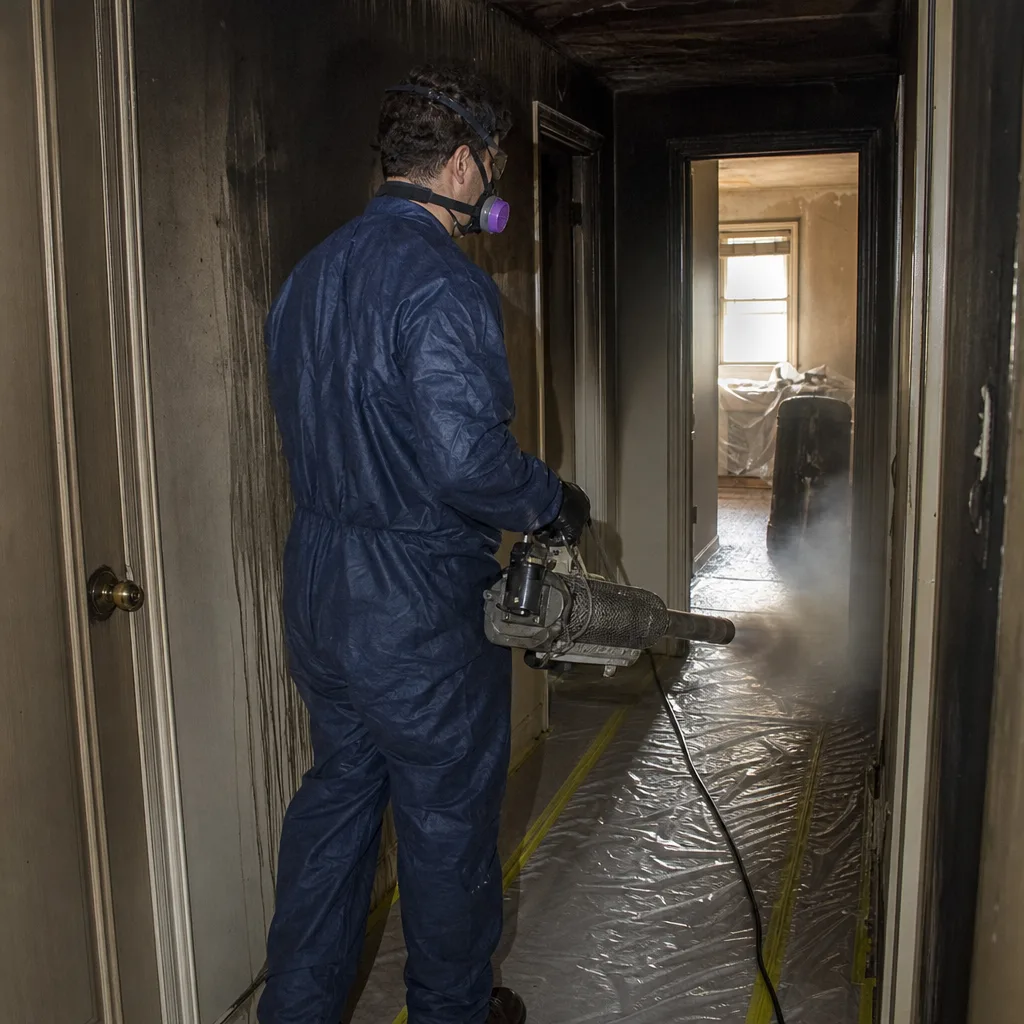
Before we disturb any colonized material, we seal the work area with 6-mil polyethylene and establish negative air pressure using HEPA-filtered air scrubbers. This prevents spores from migrating to clean rooms during removal. In occupied homes, we also isolate return air vents and, when needed, shut down HVAC circulation in the zone.
Air Scrubbing & Dehumidification
HEPA air scrubbers run continuously through the job, pulling spores and particulates out of the air while commercial dehumidifiers bring structural materials to the dry standard. We log daily readings until every affected surface is below 16% moisture content. Plaster and lath dry slower than drywall, so this phase often takes longer in older Glen Cove homes.
Removal & Cleaning
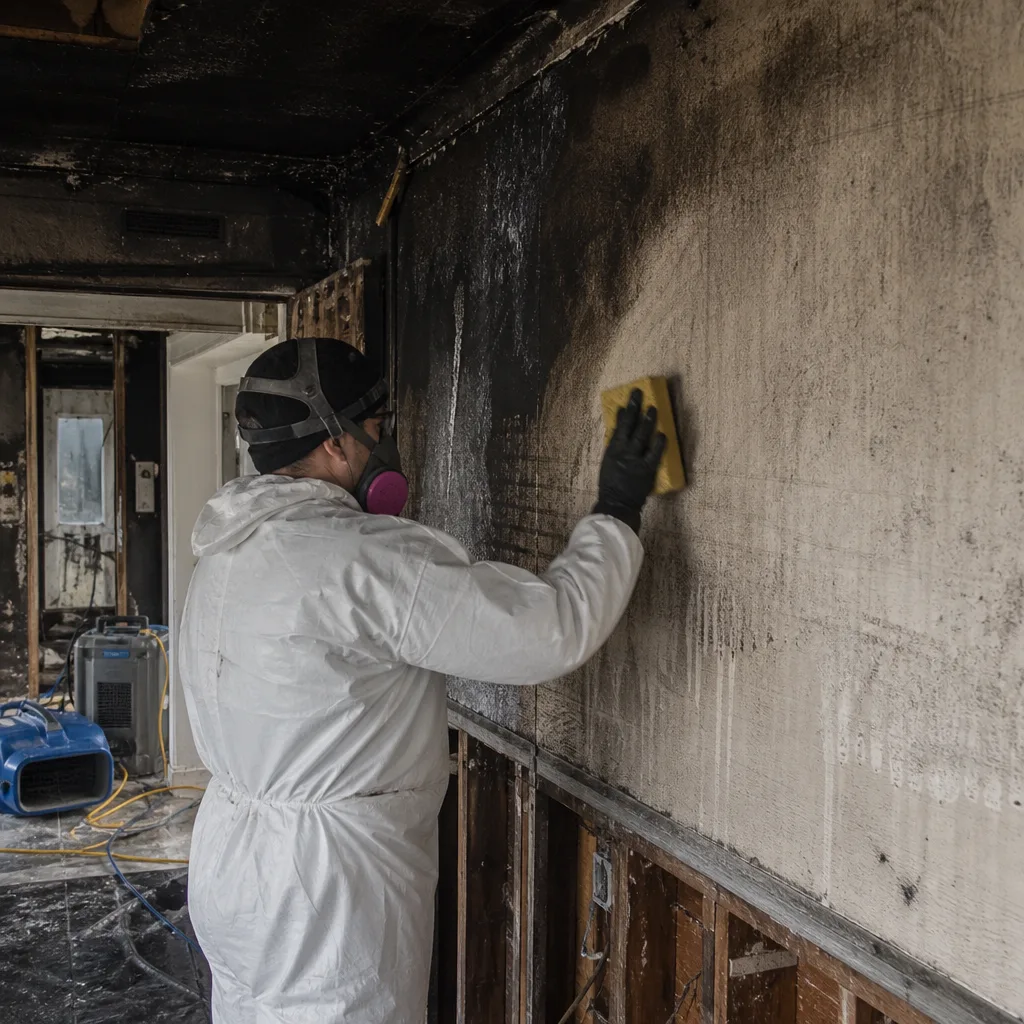
Colonized plaster, lath, insulation, and trim are removed under containment and double-bagged before leaving the work area. Remaining framing is wire-brushed, HEPA-vacuumed, and treated with an EPA-registered antimicrobial. Solid structural wood that’s sound but stained is kept; rotted or structurally compromised sections are cut out and replaced.
Air Quality Restoration
After the physical removal is complete, we run the air scrubbers for a final 24-48 hours, then pull post-remediation air samples if your project includes clearance testing. This gives you an independent, third-party lab result confirming spore counts are back to normal background levels for the area.
Repairs & Restoration
Once the structure is dry and the air is clean, the same crew rebuilds: new lath or drywall, insulation, trim, paint. We restore the room to pre-loss condition and hand you the moisture log, the photo record, and our 90-Day Done Right Promise in writing.
Need Emergency Mold Remediation in Glen Cove Now?
Crews minutes away, answering live 24 hours a day. The sooner we start, the less it costs.
Working With Your Insurance Company
Mold claims get scrutinized harder than almost any other water-related loss. Carriers want to know the mold was caused by a covered peril, that you acted promptly, and that the remediation scope matches what the damage actually required. Our documentation starts the first hour on site: photos of every affected surface before we touch anything, moisture readings from initial assessment through final dry standard, containment logs, and a line-item scope with clear causation language. We speak directly with your adjuster, send them the daily drying logs, and bill the carrier directly where coverage applies.
What We Provide Your Insurer
- Thorough documentation of the loss
- Photos of all damage, room by room
- Moisture readings and drying logs
- A detailed, line-item scope of work
- Direct coordination with your carrier
Built for Glen Cove’s Loss Calendar
Glen Cove’s mold calendar runs on two seasons. Nor’easter season, roughly October through March, drives wind-driven rain into the harbor-facing blocks off Landing Road and Shore Road, saturating plaster walls in homes that have absorbed storm water for decades. During Hurricane Sandy in 2012, dozens of properties in this corridor took on water that was never properly dried, and we still open walls today with colonies that date to that storm. The second season is summer, when Long Island humidity on harbor-adjacent blocks combines with no air conditioning in older homes to raise indoor dew points high enough that cool plaster walls sweat, feeding dormant mold spores. Properties near Hempstead Harbor also face a twice-daily tidal influence on groundwater that keeps basements and crawl spaces in a constant state of elevated moisture from spring through fall. This is not a one-flood, one-mold-loss market. It’s a chronic moisture environment built into the geography.
Mold Remediation Across Glen Cove’s Neighborhoods
The housing stock changes block by block in Glen Cove, and so does the mold pattern. Downtown near Glen Street and School Street, the densely built Victorian and early-20th-century worker cottages share party walls and shallow setbacks that keep wall cavities damp after rain, especially where original gutters have been pulled or brick pointing has opened up. The Landing Road corridor from the waterfront up toward Dosoris Lane bears the brunt of Hempstead Harbor storm surge, and we’ve done more cavity mold work in those blocks than anywhere else in Nassau County. Out in the Dosoris Park and J.P. Morgan-era estate section, the houses are larger, often with slate roofs, stone foundations, and uninsulated wall cavities where hidden mold can run for years behind paneling before anyone notices. On the north side near Crescent Beach and the Garvies Point area, crawl spaces sit close to the water table, and humidity-driven mold is constant even without a flood event. Each area needs a different moisture strategy, but the one constant across Glen Cove’s 11542 zip code is old plaster and lath that hides moisture longer than drywall ever will.
Specialized Mold Remediation Services We Offer in Glen Cove
Mold Inspection & Testing
When you can smell mold but can’t find it, or you’re buying a home near Hempstead Harbor and want to know what’s in the walls, we do full inspections with thermal imaging and moisture meters, then take air and surface samples analyzed by an independent lab. The report tells you what species are present, the spore counts, and whether the elevation is consistent with a hidden colony. In Glen Cove’s pre-war homes, we always check behind baseboards on harbor-facing walls and in cavities around original window frames.

Mold Removal
Removal means physical removal of colonized material under containment, not surface scrubbing. In plaster-and-lath construction, that usually means cutting out affected sections of plaster, removing and disposing of the lath strips, treating the exposed framing, and rebuilding. Surface cleaning without opening the cavity is how many Glen Cove homes end up with a second remediation two years later.
Black Mold Remediation
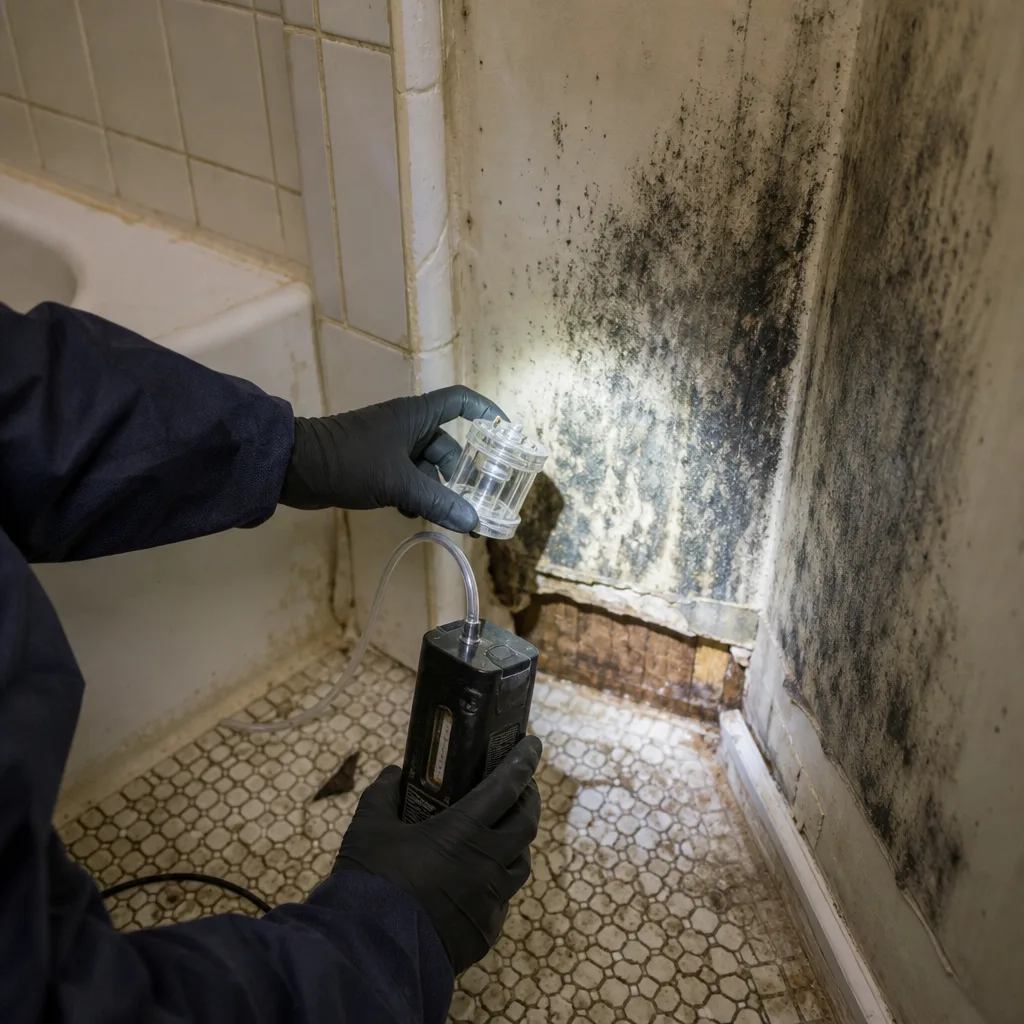
Stachybotrys chartarum, the black mold that makes headlines, grows on materials that stay wet for prolonged periods: wet plaster and lath, soaked drywall, saturated paper backing on insulation. It requires full containment, negative air pressure, HEPA air scrubbing, and proper personal protective equipment for every worker on site. In Glen Cove homes with a Sandy-related history of water intrusion, we treat any dark discoloration on a harbor-facing wall as a potential black mold situation until testing says otherwise.
Air Quality Restoration
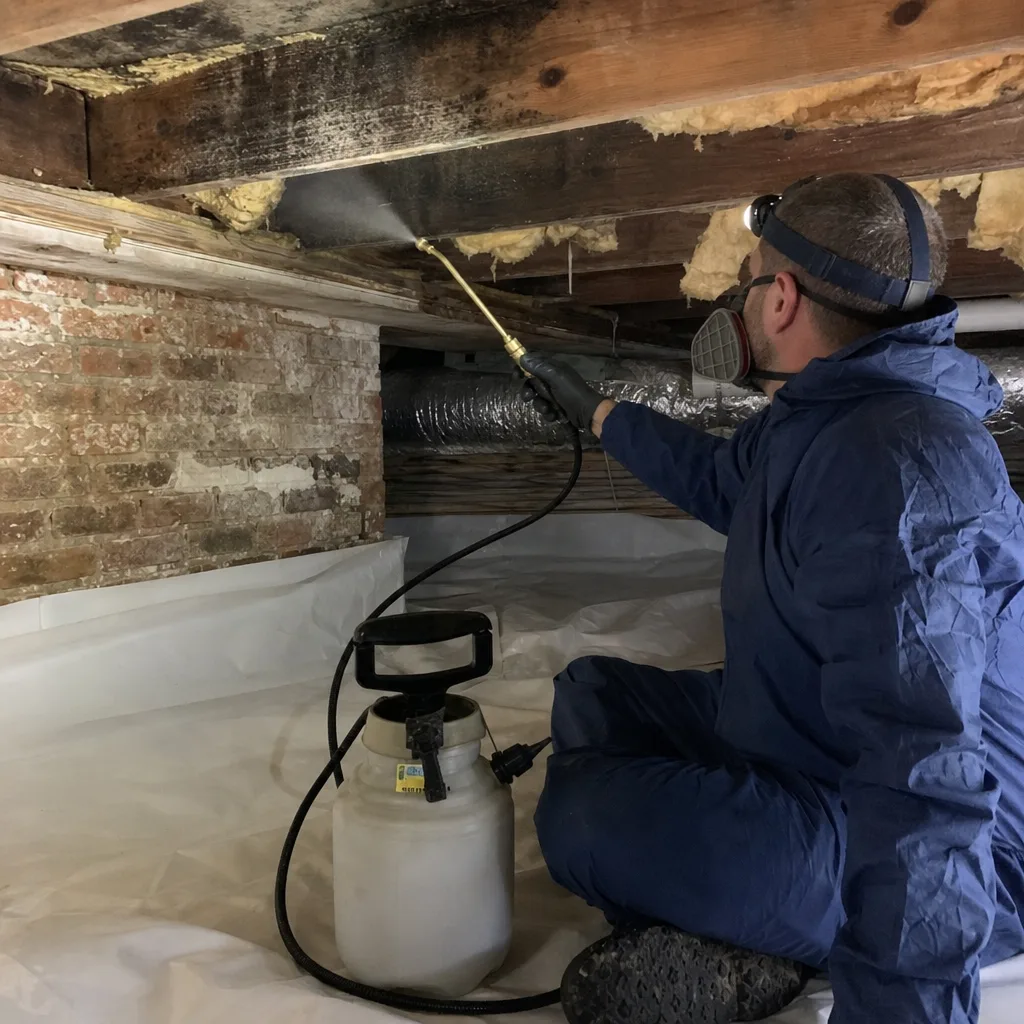
Mold remediation isn’t finished when the visible colony is gone. Spores that became airborne during the event remain in the air and settle into carpets, upholstery, and draperies. We run HEPA air scrubbers through the final phase of every job, and for homes with compromised occupants or persistent odor, we offer post-remediation clearance testing to verify the air is clean before occupancy returns.
Crawl Space Treatment
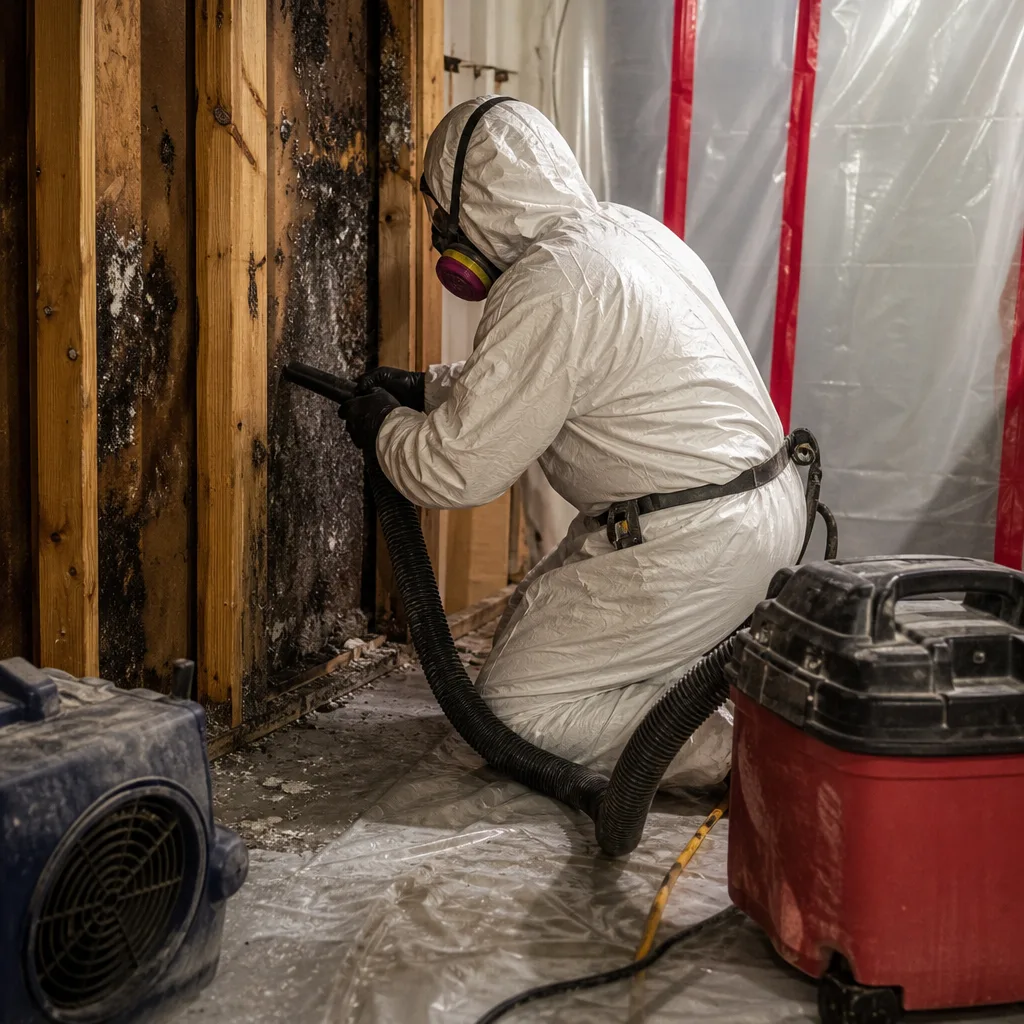
Glen Cove crawl spaces near the water table run damp year-round. We seal vapor barriers, install or repair drainage, and treat exposed framing with EPA-registered antimicrobial agents where mold is active. For crawl spaces that flood during nor’easter cycles, we often recommend adding a dehumidifier or a sump pump as part of the moisture-control plan.
Moisture & Humidity Control
In a home with no vapor barrier and original clay tile drainage, mold remediation without moisture correction is just cleaning a symptom. We measure indoor relative humidity, look at drainage patterns around the foundation, evaluate crawl space ventilation, and recommend specific changes: downspout extensions, regrading, vapor barrier installation, crawl space dehumidification, or ventilation improvements in attics and bathrooms. The goal is a house that dries itself, not one that gets re-mediated every few years.
What happens when you call
- 1
A real person answersNo phone trees - you reach a local pro.
- 2
You get an upfront price rangeHonest numbers before anyone is dispatched.
- 3
A background-checked tech heads outLicensed & insured, dispatched right away.
- 4
You approve before work beginsNothing starts until you say go.
Mold Remediation Costs in Glen Cove, NY
Mold remediation in Glen Cove runs wider than the Nassau County average because of the housing stock. A basic surface cleanup with containment in a single bathroom or closet generally lands between $1,800 and $3,200. Opening a plaster-and-lath wall cavity, removing the affected plaster and lath, treating framing, and rebuilding runs $3,500 to $7,500 per room, depending on cavity size and how far the colony traveled. Full black mold remediation with multiple rooms, containment, air scrubbing, and clearance testing in a larger home off Dosoris Lane can run $8,000 to $15,000 or more. The variables that move the price: whether the mold is in one cavity or several, whether the colony extends into floor or ceiling framing, whether asbestos or lead testing is required on pre-1978 materials, and whether structural replacement is needed. Insurance frequently covers mold remediation when the moisture source was a sudden, covered event like a burst pipe or storm damage. We’ll inspect free, tell you what we found, and give you a written scope with a firm price before any work begins.
We Also Serve Cities Near Glen Cove
Our Glen Cove crews work the whole North Shore corridor, including Glen Cove‘s neighboring communities. We regularly dispatch to Sea Cliff, Port Washington, Manhasset, and Great Neck. Same response commitment, same certified crews, same written guarantee.
Serving Glen Cove, NY - Our Local Coverage Area
We’re based in the Glen Cove area and know this community well. Use the map below to see our service coverage - if you’re nearby, we can almost certainly help.
Glen Cove Mold Remediation Questions, Answered
Why do mold problems keep returning in Glen Cove homes that were remediated after Hurricane Sandy?
Many post-Sandy remediations only addressed visible surface mold and never opened the plaster-and-lath wall cavities where water had wicked upward from flooded baseboards. The colonies behind the plaster were sealed in, and they reactivate whenever harbor humidity or a new storm reintroduces moisture. A proper Glen Cove remediation requires opening every cavity that touched flood water, moisture-mapping to verify drying, and rebuilding with materials that can actually dry.
How does Glen Cove’s location at the head of Hempstead Harbor change mold remediation compared to inland Nassau County?
Hempstead Harbor channels Long Island Sound storm energy directly into Glen Cove’s waterfront, so harbor-facing properties absorb wind-driven rain and storm surge at elevations inland towns never see. Add the twice-daily tidal influence on the local water table and you get chronic moisture in basements and crawl spaces that makes mold a recurring condition, not a one-time event. Remediation here has to include moisture control or it fails.
Can older Glen Cove homes with original plaster and clay tile drainage be properly dried after water damage?
Yes, but they dry slower and need more aggressive drying than drywall construction. Thick plaster holds moisture deep in the wall assembly, and clay tile drainage often introduces groundwater from below. We use professional-grade Dri-Eaz and Phoenix dehumidifiers with daily moisture readings to verify drying, and we don’t close the wall until the structural material is below the dry standard. Skimping on this phase is exactly how rebound mold starts.
What is the correct containment procedure for black mold removal in a Glen Cove Victorian near the downtown grid?
Full containment with 6-mil poly barriers, negative air pressure established by HEPA-filtered air scrubbers, and full PPE including respirators, gloves, and Tyvek suits for every worker. The work area is sealed from the rest of the house, and HVAC returns in the zone are blocked. Colonized plaster and lath are removed under containment, double-bagged, and disposed of properly. Post-remediation air sampling confirms the colony is gone.
After mold remediation in a Glen Cove home with no vapor barrier, how do we prevent recurrence during nor’easter season?
You fix the moisture path, not just the mold. That means checking exterior drainage, extending downspouts away from the foundation, regrading around harbor-facing walls, sealing any exterior cracks, and considering a crawl space dehumidifier or sump pump where the water table runs high. Our Moisture & Humidity Control service includes a written plan specific to your home’s exposure and construction.
How fast can you actually get to a mold job in Glen Cove?
Most Glen Cove addresses get a crew within 45 minutes of the call. We dispatch from a live board with people already staged across Nassau County. Call (917) 924-4221 and you’ll talk to a person, not a voicemail.
Will my insurance cover mold remediation in Glen Cove?
Coverage depends on the cause of the moisture. Sudden events like a burst pipe, a wind-driven nor’easter leak, or storm surge flooding are often covered. Long-term humidity or slow seepage is typically excluded. We document causation carefully and deal with your adjuster directly, sending photos, moisture logs, and our line-item scope. Call (917) 924-4221 and we’ll walk through what your policy likely covers.
Can we stay in the home during mold remediation?
For smaller contained jobs in one room, usually yes, though we advise staying out of the affected area and keeping the containment seals intact. For black mold or multi-room jobs with negative air pressure and heavy air scrubbing, we often recommend relocating for 48-72 hours until clearance testing confirms the air is clean. We’ll tell you honestly which situation applies to your home.
If you smell mold, see staining, or know your Glen Cove home took on water during Sandy or any nor’easter since, call (917) 924-4221. We’ll inspect for free, show you the moisture readings, and give you a written scope with a firm price. Done right, and backed in writing.
Written by Curt Bowman, Owner at Floodline Restoration Co. of Manhattan, serving Glen Cove since 2010.