
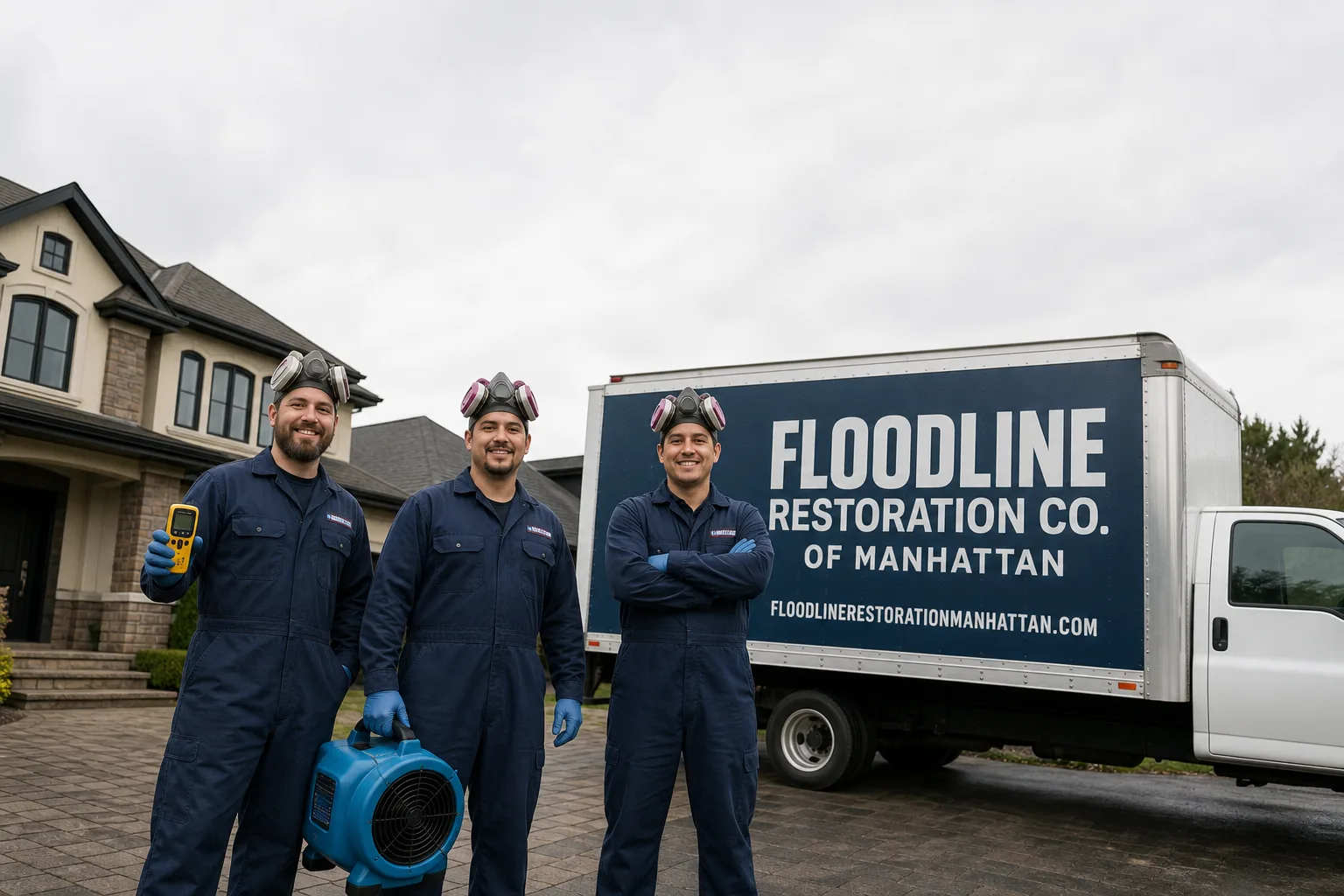
Free visual inspection and a written scope of work before any mitigation begins - photos, moisture readings, and drying logs go in your claim file
The scope we write is the scope we bill. Anything new gets shown to you, in writing, before we touch it.






 Before
 After
After Before
 After
After Before
 After
After24/7 Emergency Mold Remediation in Haverstraw
Mold remediation in Haverstraw typically runs $1,800-$4,600 for a contained room and $4,000-$12,000 for basement or crawl space work where masonry drying is required. Our crews respond inside 45 minutes for emergency calls, and we answer the phone with a person, not a recording, at every hour. If you’ve found mold in a brick row house or tenement near Haverstraw Bay, call (917) 924-4221 right now. The first hour matters because mold colonies double their footprint fast inside the thick plaster-and-lath walls common to Haverstraw’s 1880s-1920s housing stock.
We’ve been the crew Haverstraw property owners call when they need someone who understands this village’s masonry, not just mold in general. Our Mold Remediation team serves the full Haverstraw area, from the waterfront streets up through the hillside neighborhoods above the brick yards.
Understanding Mold Remediation Severity in Haverstraw Properties
Mold severity falls into three levels we assess before quoting any job. Level 1 is surface growth under 10 square feet, typically from condensation or a small plumbing leak. Level 2 runs 10 to 100 square feet and usually sits inside wall cavities, behind baseboards, or under plaster keys. Level 3 exceeds 100 square feet, involves porous masonry saturation, and requires full containment, negative air pressure, and clearance testing before anyone reoccupies the space.
Here’s what Haverstraw’s building stock changes. The village’s brick row houses and two-family flats were built from local Hudson River clay, a material that absorbs water like a sponge and releases it slowly. When floodwater from Haverstraw Bay or a burst supply line soaks into these party walls, moisture readings stay elevated for weeks, not days. We run into Level 3 conditions in Haverstraw basements and first floors where a wood-frame house in Nanuet or New City would stop at Level 2. The culprit is almost always the same: standard drying protocols pulled out too early because they were written for drywall and timber, not 12-inch-thick porous brick with original plaster over it.
The failure modes we see repeatedly in Haverstraw are these: contractors drying only the visible surface while moisture hides deep in the brick; skipping containment during demolition so spores from a hidden colony move into the attached row house next door; and assuming Category 3 floodwater will dry on the same timeline as a Category 1 clean water leak. It won’t.
Why Haverstraw Property Owners Choose Floodline Restoration Co. of Manhattan
- 45-minute response commitment - Our dispatch board tracks every Haverstraw call, and a certified crew reaches village addresses inside 45 minutes on emergency mold calls, with extraction running the same visit.
- 24/7 live answer, never an automated system - When you call at 2 a.m. because floodwater has been sitting in your basement since the tide came in, a person answers. That person dispatches a crew. No phone tree, no callback.
- IICRC-certified crews, trained to WRT and AMRT standards - Every technician on a Haverstraw mold job holds IICRC certification in Water Restoration and Applied Microbial Remediation, so the work meets the standard your insurer expects to see.
- Free visual inspection with moisture mapping - Before we quote anything, we map moisture through walls with Dri-Eaz infrared cameras and thermal imaging. You see the readings. You understand the scope.
- Direct insurance billing, no messenger role for you - Our team handles adjuster communication, line-item scopes, and billing directly with your carrier. You don’t carry paperwork between us and them.
- One team from first extraction to finished rebuild - The crew that reads the moisture map on day one handles daily readings, removes mold, dries the masonry, and rebuilds what needs rebuilding. No mid-job handoff to a different company.
Our Mold Remediation Process
Inspection & Assessment
We start with thermal imaging and moisture meters across every affected surface in your Haverstraw property. For brick row houses, we probe party walls specifically, because that’s where hidden moisture hides. You get a written scope showing exactly what we found and what we recommend, before any work begins.
Containment & Stabilization
We install 6-mil polyethylene containment barriers and run negative air machines with HEPA filtration before opening any wall or ceiling. In attached Haverstraw row houses, this step is non-negotiable: without it, spores from your wall move into your neighbor’s kitchen.
Drying & Dehumidification
This is where Haverstraw jobs differ from everywhere else. We run XPOWER air movers and Phoenix desiccant dehumidifiers on longer cycles than standard protocols call for, because Hudson River clay brick holds moisture for weeks. Daily moisture readings go into a log you and your insurer both receive.
Removal & Cleaning
We remove saturated plaster, baseboards, and any porous material that cannot be salvaged. Then we HEPA-vacuum, scrub surfaces with antimicrobial treatment, and treat the framing and brick behind them. We don’t paint over mold. We remove it.
Air Quality Restoration
After physical removal, we run HEPA air scrubbers for 24-48 hours minimum, then conduct post-remediation air sampling. Clearance testing is done by an independent lab, not by us, so you get an honest third-party result before we call the job done.
Repairs & Restoration
Our carpenters rebuild walls, ceilings, and floors to pre-loss condition. In Haverstraw, that often means matching plaster details or brick party wall finishes that a generic contractor would replace with drywall. We restore what was there, not a cheap approximation of it.
Need Emergency Mold Remediation in Haverstraw Now?
Crews minutes away, answering live 24 hours a day. The sooner we start, the less it costs.
Working With Your Insurance Company
Mold claims in Haverstraw get complicated fast because floodwater from Haverstraw Bay often falls under FEMA flood policies while a burst supply line falls under standard homeowners coverage. We’ve handled both. Our documentation package is built to satisfy adjusters on the first pass, and we speak to them directly so you don’t have to argue about whether a photo proves mold was pre-existing or storm-caused.
We photograph every affected surface before we touch anything, during removal, and after rebuild. Moisture readings go into a daily log with timestamps. Our scope of work is line-item detailed, using the same estimating format insurers expect. If your carrier needs more, we provide it. You don’t chase us. We’re already talking to them.
What We Provide Your Insurer
- Thorough documentation of the loss
- Photos of all damage, room by room
- Moisture readings and drying logs
- A detailed, line-item scope of work
- Direct coordination with your carrier
Built for Haverstraw’s Loss Calendar
Haverstraw’s mold season peaks in late summer and early fall, when Hudson River humidity sits high and the village’s low-lying streets stay damp after afternoon thunderstorms. But the real drivers of mold in this village are seasonal flood events and aging infrastructure. Winter freeze-thaw cycles stress the 100-year-old supply lines running through brick party walls, and a burst pipe in a January cold snap soaks a two-family flat’s shared wall before anyone notices the water running down Maple Avenue or Broadway.
Spring thaw brings basement seepage through the porous clay soil that underlies much of Haverstraw, and properties within the FEMA Special Flood Hazard Area along Haverstraw Bay face documented repeat inundation. Hurricane Sandy put village streets under water in 2012, and every nor’easter since has reminded residents why first-floor mold is a recurring problem here. Summer thunderstorms dump water faster than the village’s combined sewer system can carry it, backing up into basements on the uphill side of Route 9W. None of this is hypothetical. It’s the loss calendar Haverstraw property owners already live with.
Mold Remediation Across Haverstraw’s Neighborhoods
We respond across the village’s distinct pockets, and the building type changes the job. Along the waterfront streets off Railroad Avenue, where 19th-century brick tenements sit within sight of Haverstraw Bay, floodwater exposure is highest and basement mold is chronic. These properties need full crawl space and cellar treatment after every major storm, because the Hudson never fully lets the walls dry out.
Up the hill near Garnerville and the Route 9W corridor, we see more two-family flats and converted rowhouses where a leaking roof or failed flashing lets water run inside brick party walls for months before mold shows through the plaster. In the Maple Avenue and Broadway corridor, original 1910s-era row houses share walls with modern renovations, and we routinely find mold hidden behind drywall that was installed over old plaster without addressing the moisture behind it. The hillside streets above the old brick yards, including around the historic downtown off Main Street, add a different problem: surface water running downhill through yards and foundation seams during heavy rain, feeding crawl spaces and musty first floors.
Every one of these areas forces the same conclusion on us: Haverstraw mold work is masonry work. Anyone treating it like a suburban drywall job leaves the job wet.
Specialized Mold Remediation Services We Offer in Haverstraw
Mold Inspection & Testing
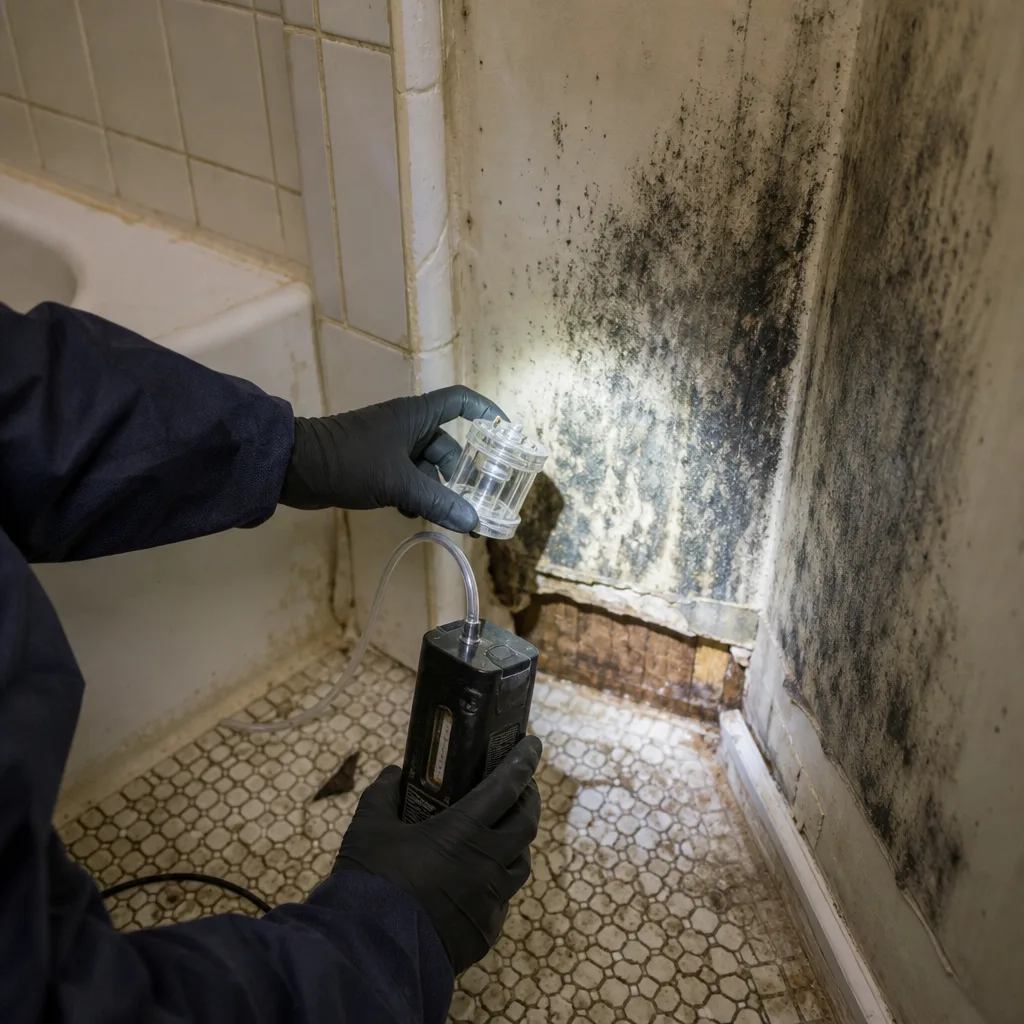
We inspect Haverstraw properties with moisture mapping, not just visual checks. That means thermal imaging through plaster walls, probing party walls for hidden saturation, and taking air or surface samples when you need a documented answer for an insurance claim or a real estate transaction. For brick row houses, we specifically check the party wall cavities and the top plate areas where roof leaks travel down inside the wall.

Black Mold Remediation
Stachybotrys and other toxigenic molds grow on cellulose materials that stay wet for weeks, which makes Haverstraw’s flood-prone brick basements a textbook environment. We contain the affected area before disturbing anything, run negative air, remove the contaminated material, and treat the framing and masonry behind it. Post-remediation air sampling is standard on black mold jobs, not an upsell.

Moisture & Humidity Control
Removing mold without fixing the moisture source means doing the job twice. In Haverstraw, that often means sealing foundation cracks, grading soil away from the foundation, installing crawl space encapsulation, or adding dehumidification where the Hudson River humidity keeps basements above 60% relative humidity all summer. We map the moisture first, then recommend exactly what will change the reading.

Air Quality Restoration
After mold removal, the air in your Haverstraw home still carries spores until it’s filtered and exchanged. We run HEPA air scrubbers for 24-48 hours minimum, and we can install whole-home filtration where recurring mold pressure from the river and the village’s humidity makes it worth doing once, correctly.
Crawl Space Treatment
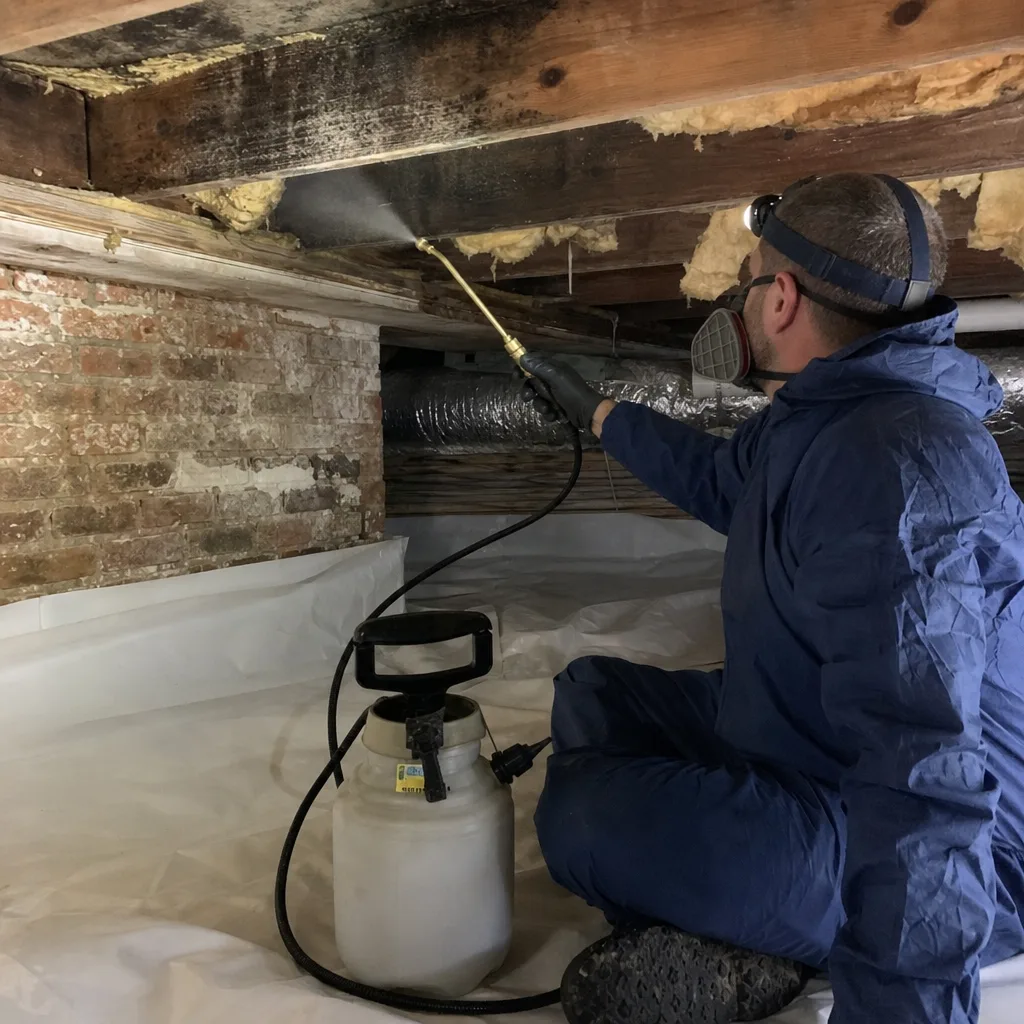
Crawl spaces under Haverstraw tenements and row houses are ground-contact, damp, and rarely visited. We treat them with containment, removal, surface treatment, and then encapsulation or vapor barrier installation so the space stops feeding mold into the floors above. If there’s standing water, we address drainage first.
What happens when you call
- 1
A real person answersNo phone trees - you reach a local pro.
- 2
You get an upfront price rangeHonest numbers before anyone is dispatched.
- 3
A background-checked tech heads outLicensed & insured, dispatched right away.
- 4
You approve before work beginsNothing starts until you say go.
Mold Remediation Costs in Haverstraw, NY
A straightforward Level 1 cleanup in a Haverstraw bathroom or closet, with containment, cleaning, and antimicrobial treatment, runs $1,800-$3,200. Level 2 work inside a wall cavity or behind a kitchen baseboard, including plaster removal, drying, and rebuild, typically lands between $3,500 and $7,000 depending on how much plaster must come out and how long the brick needs to dry. Full Level 3 basement or crawl space remediation in a Haverstraw brick row house runs $6,000-$15,000, with the higher end reflecting masonry drying time, party wall work, and post-remediation rebuild.
What moves the price is the material behind the mold. A wood-frame wall dries in days. A Hudson River clay brick wall holds moisture for weeks, and every extra day of dehumidifier runtime is a cost that shows up on the invoice. Plaster removal costs more than drywall removal. Party walls in attached row houses require containment on both sides of the work, which adds labor. The free inspection path is the only honest way to know your number: we map the moisture, show you the readings, and give you a written scope with a firm price before work starts. No quote after demolition. No surprises.
Call (917) 924-4221 for a free visual inspection and a written estimate.
We Also Serve Cities Near Haverstraw
Our crews cover Haverstraw and the surrounding Rockland County communities, including West Haverstraw, Thiells, Stony Point, and Congers. Same 45-minute response commitment, same IICRC-certified crews, same direct insurance billing.
Haverstraw Mold Remediation Questions, Answered
Why does mold keep coming back in my Haverstraw brick row house even after remediation?
Because someone removed the mold but didn’t dry the brick. Hudson River clay brick absorbs water deep into its pores, and standard drying times written for wood-frame construction pull the equipment before the masonry is below the dry standard. The mold regrows inside the wall, hidden behind the plaster, and shows up again in six months. Our process runs longer drying cycles on brick, with daily moisture readings proving the wall actually dried before we rebuild.
How does floodwater from Haverstraw Bay affect mold remediation differently than a clean water leak?
Floodwater from the bay is Category 3 water, meaning it carries sewage, river sediment, and bacteria. That changes the remediation protocol completely: more aggressive containment, more material removal, and antimicrobial treatment on every surface the water touched. It also means the brick walls in your Haverstraw row house need a much longer dry-out period than a clean pipe break would require. Your insurance coverage may also differ, so we document everything from the first hour.
Do I need to worry about hidden mold behind my plaster walls after a flood even if I don’t see any?
Yes. Haverstraw’s 1880s-1920s row houses and tenements have plaster-and-lath walls over brick that hide moisture for weeks after floodwater recedes. Mold grows behind that plaster, invisible from the living side, and by the time you see staining or smell it, the colony is already established. We use thermal imaging and moisture meters to find hidden saturation before we open anything, which is why we recommend an inspection after any flood event in the village, even a minor one.
What should I do first if I see black mold in my crawl space under a Haverstraw tenement?
Don’t disturb it, and don’t try to clean it with bleach. Disturbing black mold releases spores into the air and through the floor joists into the living space above. Call us at (917) 924-4221. We’ll inspect the crawl space, contain the area, and determine whether the moisture source is groundwater seepage, a plumbing leak, or humidity. The answer changes the fix, and a wrong guess means you pay for remediation twice.
Can you remediate mold in my Haverstraw home while I stay there?
For Level 1 and most Level 2 jobs, yes. We contain the work area with negative air pressure so spores don’t migrate, and you can stay in the rest of the house. For Level 3 jobs where we’re removing large amounts of contaminated plaster from multiple rooms or treating a full crawl space under a tenement, you’ll likely need to relocate for a few days. We’ll tell you honestly before work starts.
How fast can you actually get to my Haverstraw home?
Within 45 minutes on emergency calls. Our dispatch board tracks Haverstraw jobs specifically, and a live person answers the phone around the clock. We’re not a national franchise routing calls from a call center. The crew that picks up your job drives local.
Will my insurance cover mold remediation in Haverstraw?
It depends on the source. Mold from a sudden pipe break or storm damage that’s covered under your policy is often included, while mold from long-term seepage or pre-existing conditions is usually not. Floodwater mold may fall under your flood policy rather than your homeowners policy. We work directly with your adjuster, provide documentation in their preferred format, and bill your carrier directly where coverage applies.
Are your mold remediation technicians certified?
Yes. Every Floodline technician on mold work holds IICRC certification in Applied Microbial Remediation, and many also hold Water Restoration Technician certification. The crew that handles your Haverstraw job has been trained to IICRC, RIA, and IFA standards, and every tech is background-checked and uniformed. We don’t send subcontractors to mold jobs.
Serving Haverstraw, NY - Our Local Coverage Area
We’re based in the Haverstraw area and know this community well. Use the map below to see our service coverage - if you’re nearby, we can almost certainly help.
Why Haverstraw’s Brick and Clay Matter More Than the Mold Itself
Haverstraw’s brick row houses and tenements were built from locally quarried Hudson River clay during the village’s brick-manufacturing peak between 1880 and 1920. That clay is porous. It absorbs floodwater from Haverstraw Bay inundation and holds it against the interior plaster for weeks after the standing water is gone. A standard mold remediation company, working from protocols written for wood-frame suburban construction, pulls air movers and dehumidifiers when the drywall reads dry. In a Haverstraw row house, there’s no drywall to read. The moisture is in the brick, behind the plaster keys, inside the party wall, and it will rewet everything above it for as long as it stays saturated.
We learned this by doing the work wrong once, early on, and reading the moisture logs. Now we run Phoenix desiccant dehumidifiers on extended cycles and leave XPOWER air movers in place until the brick itself reads below the dry standard, not just the surface. That’s the difference between a mold job that stays done and one that comes back in the spring.
The geology underneath the village adds another layer. The Hudson River clay under much of Haverstraw is the same unstable material implicated in the 1906 landslide that reshaped the village. After any significant flood or soil saturation event, a competent restoration contractor should flag potential foundation settlement before committing to interior rebuild timelines. We check for signs of movement before we rebuild, and we tell you what we find. That’s the part of the job big franchise templates never mention, because they weren’t written for Haverstraw.
In a two-family flat on Maple Avenue built in 1910, we found mold behind original plaster walls after a Category 2 water loss from a burst supply line. Our moisture mapping with Dri-Eaz infrared cameras showed 32% moisture readings in the brick party wall. We contained the hallway, removed saturated plaster, and ran XPOWER air movers with Phoenix desiccant dehumidifiers for nine days, treating the framing with an antimicrobial before rebuilding to pre-loss condition. The homeowner’s neighbor never knew the wall was open. That’s how it should work in a row house.
For mold work in Haverstraw, call (917) 924-4221. We’re Floodline Restoration Co., and our Mold Remediation in Haverstraw crews answer live, every hour, every day. Free visual inspection. Written scope before work starts. Done right, and backed in writing.
Written by Curt Bowman, Owner at Floodline Restoration Co. of Manhattan, serving Haverstraw and Rockland County since 2010.