
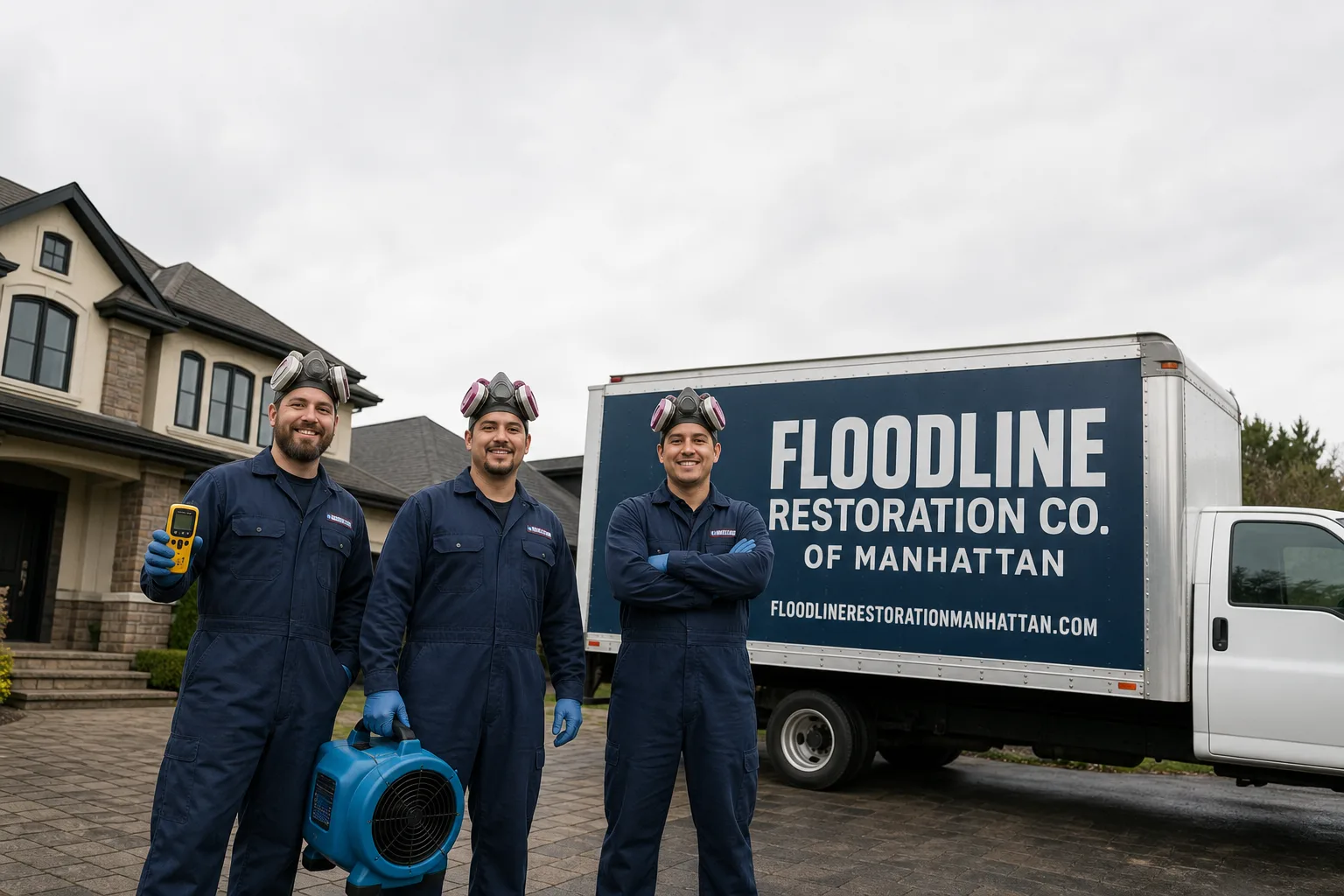
Free visual inspection and a written scope of work before any mitigation begins - photos, moisture readings, and drying logs go in your claim file
The scope we write is the scope we bill. Anything new gets shown to you, in writing, before we touch it.






 Before
 After
After Before
 After
After Before
 After
After24/7 Emergency Mold Remediation in Middle Village
Mold remediation in Middle Village typically runs $1,800-$6,400 depending on how far the colony has spread behind walls and whether the shared party wall is involved. Most jobs in the neighborhood’s semi-detached brick two-families take 3-7 days from containment to clearance testing. If you’re seeing black staining on basement drywall or smelling that musty odor that won’t leave, call (917) 924-4221 now. A live dispatcher answers at any hour, and we schedule a free visual inspection before the day is out.
Middle Village basements don’t forgive delay. The finished basement that flooded last night is feeding mold inside the drywall by morning. Our crews know the block-level patterns here: where the combined sewer backs up on 74th Street, which rows of houses still run original cast-iron stacks, and which party walls have wicked moisture before. Call us. We’ll be there when we say.
Understanding Mold Remediation Severity in Middle Village Properties
Not every mold job is the same, and in Middle Village the building stock dictates how serious a bloom gets. A 1954 semi-detached brick two-family with an original cast-iron drain stack and a finished basement is a different animal from a 1990s single-family in Jersey. Here’s what we mean.
When moisture sits against drywall or wood for more than 48-72 hours, mold spores that were dormant in building materials activate. The colony feeds, spreads, and sends spores airborne. In Middle Village, where most homes were built between 1940 and 1965, three factors compound the problem. First, finished basements are nearly universal, so a Category 1 clean-water leak from a failed galvanized supply line often soaks drywall, carpet pad, and studs behind wood paneling where nobody sees the growth for weeks. Second, original cast-iron stacks sweat in humid summers and crack with age, feeding slow leaks that keep a basement damp enough for mold even after the visible cleanup. Third, the shared brick party walls between attached units are porous. Moisture from one home’s leak wicks through brick and mortar into the neighbor’s side. By the time you see black staining on your side, the neighbor’s drywall is usually colonized too.
That’s why our process always starts with moisture mapping, not just visible inspection. We use thermal imaging and hygrometers to find the water source feeding the bloom. Containment with negative air and HEPA air scrubbing prevents spores from crossing into the adjoining unit. Clearance testing confirms the air is clean before we rebuild.
Why Middle Village Property Owners Choose Floodline Restoration Co. of Manhattan
- 45-minute response commitment across Middle Village. When you call, a crew is dispatched from our New York City office and reaches your block within the hour on most jobs.
- A live person answers, 24/7. No recorded menu. A dispatcher picks up at 2 a.m., asks the right questions, and sends a certified crew the same visit.
- IICRC-certified technicians. Our crews carry WRT, FSRT, and AMRT certifications and are background-checked, uniformed, and trained to RIA and IFA standards.
- Free visual inspection. We walk the basement, read moisture levels in the party wall, and tell you what needs treatment and what doesn’t. No obligation.
- Direct insurance billing. We bill the carrier directly, document everything, and coordinate with your adjuster so you never play messenger.
- One team, start to finish. Floodline Restoration Co. handles extraction, drying, remediation, and reconstruction with the same crew. No mid-job handoff, no inherited subcontractors.
Our Mold Remediation Process
Inspection & Assessment
We start with thermal imaging and moisture readings across the affected area, including the shared party wall. On a 74th Street job last August, this meant knocking on the neighbor’s door to take readings through their side of the wall. We document everything with photos from minute one.
Extraction / Stabilization
For water-fed mold, we stop the source first: remove standing water with truck-mounted extraction, cut off the failed supply line, or address the sweating cast-iron stack. The mold can’t be killed if the moisture keeps coming.
Drying & Dehumidification
We run professional-grade air movers and dehumidifiers, including Dri-Eaz and Phoenix units, with daily moisture readings logged until the dry standard is met. Those logs go to you and your insurer.
Cleaning & Sanitization
HEPA air scrubbers pull spores from the air while we remove affected drywall, insulation, and baseboards. Hard surfaces get antimicrobial treatment. In party-wall jobs, we treat both sides of the wall.
Containment & Specialty Treatment
Containment barriers seal the work area so spores don’t migrate through shared stairwells or doorways into the neighbor’s unit. For black mold or Category 3 water losses, we use full negative-air containment.
Repairs & Restoration
Once clearance testing confirms clean air, we rebuild: new drywall, new insulation, fresh paint. The same crew that pulled the wet material hangs the new. Done right, and backed in writing by our 90-Day Done Right Promise.
Need Emergency Mold Remediation in Middle Village Now?
Crews minutes away, answering live 24 hours a day. The sooner we start, the less it costs.
Working With Your Insurance Company
Mold claims get denied more often than they should because homeowners can’t prove the mold came from a covered water loss. We document from the first hour: photos of the affected rooms, moisture readings, drying logs, and a line-item scope of work that matches your carrier’s format. If your policy covers mold remediation, we bill directly and send everything to the adjuster. If it doesn’t, you’ll know exactly what you’re paying before we start. A square deal: no surprises on the bill.
In Middle Village, where two homeowners often share a party wall and two separate insurers are involved, our documentation matters twice. The neighbor’s adjuster needs the same evidence yours does. We provide it.
What We Provide Your Insurer
- Thorough documentation of the loss
- Photos of all damage, room by room
- Moisture readings and drying logs
- A detailed, line-item scope of work
- Direct coordination with your carrier
Built for Middle Village’s Loss Calendar
Middle Village sits inland in central Queens, so it escapes the coastal storm surge that hits Howard Beach. But the neighborhood has its own seasonal pattern of mold-causing water losses, and we’ve learned it block by block over the years.
January and February bring deep freezes that burst galvanized supply lines in uninsulated crawl spaces and exterior stair walls. The water runs for hours before anyone notices, and by the time the basement is pumped out, the drywall is saturated and mold is already starting.
Spring thaw pushes groundwater up through cracked foundations, especially in the older homes around Juniper Valley Park. Finished basements with wood paneling hide the seepage until the odor gives it away.
July and August are the worst. Middle Village’s combined sewer system dates back generations, and heavy convective thunderstorms overwhelm it. Sewage-laden Category 3 water backs up through floor drains into finished basements. That’s a black water loss: full containment, antimicrobial treatment, and often mold remediation within days if the drywall wasn’t pulled fast enough. Last August on 74th Street, our crew hit exactly this. We contained the basement, pulled affected drywall and insulation, ran air movers and dehumidifiers for five days, and treated both sides of the party wall, coordinating with two owners and two adjusters because the neighbor’s policy wouldn’t cover our scope of work without joint access.
November nor’easters drive wind-blown rain into brick facades, and over decades that moisture has saturated mortar joints, wicking through party walls and creating the slow, hidden mold problems we find when we open walls for a “small” basement job.
Mold Remediation Across Middle Village’s Neighborhoods
Middle Village isn’t one uniform grid. The blocks around Juniper Valley Park skew toward the 1940s brick two-families with original cast-iron stacks and finished basements. Jobs here almost always involve the party wall, and we schedule the neighbor’s access early because the wicking is predictable. Near Metropolitan Avenue, the commercial corridor, we see more mixed-use buildings where a restaurant or store’s slow plumbing leak migrates into the residential unit above. The Eliot Avenue corridor and the blocks east of St. John Cemetery have the same semi-detached housing stock, but many homes there still run on galvanized supply lines that fail at the threaded joints. Around Juniper Boulevard North and South, where properties back onto parkland, spring groundwater seepage is the familiar pattern, especially in basements finished with wood paneling that wicks moisture invisibly for months.
We know these blocks because we’ve worked them. When we scope a job on 74th Street, we know the neighbor’s finished basement is probably involved. When we work a 1958 two-family near Caldwell Avenue, we know the cast-iron stack is the first thing to check. That block-level familiarity means a faster, cheaper, and more complete job for you.
Specialized Mold Remediation Services We Offer in Middle Village
Mold Inspection & Testing
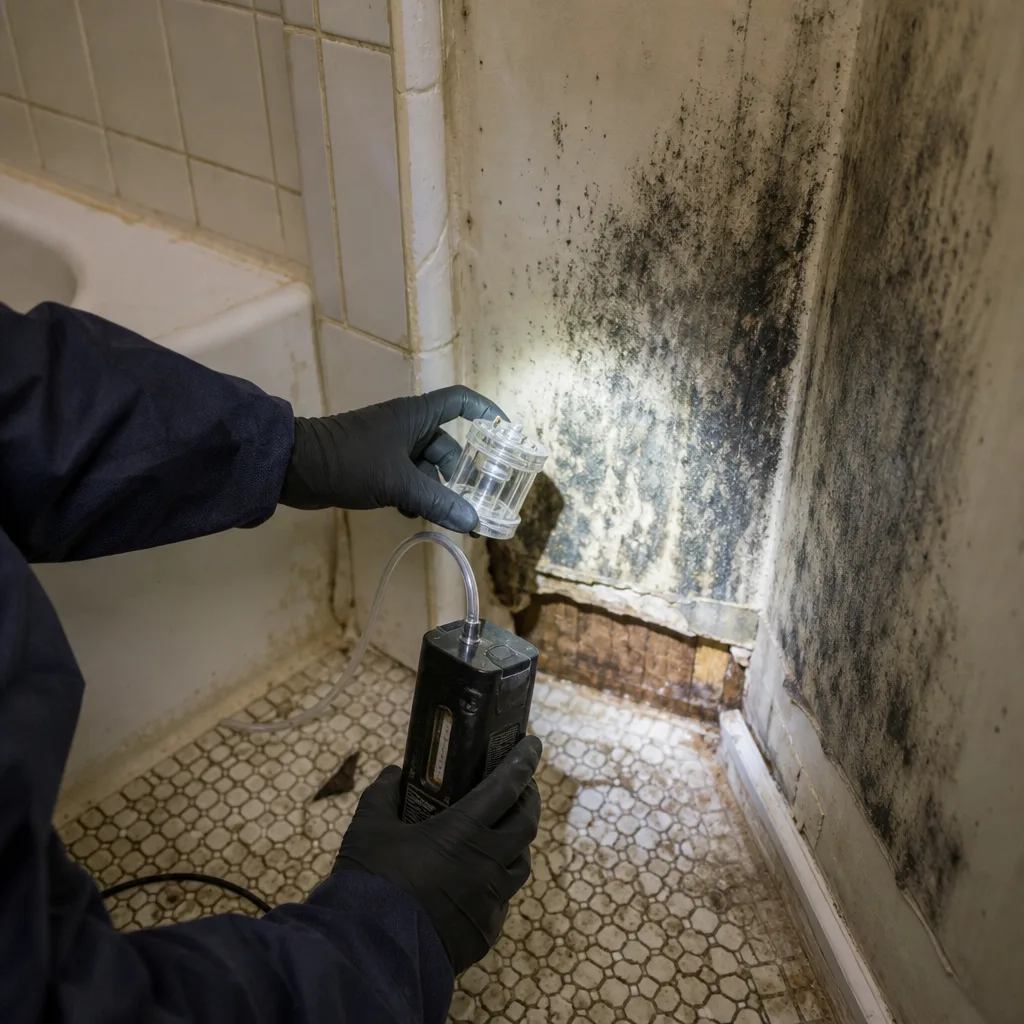
Not every dark stain is mold, and not every mold bloom needs full remediation. We inspect, test where it matters, and give you a straight answer. In Middle Village brick two-families, a proper inspection includes moisture readings through the party wall into the adjacent unit. Skipping that step is how mold “comes back” a month after cleanup. Inspection in Middle Village runs $250-$600 depending on the number of sample points.
Mold Removal
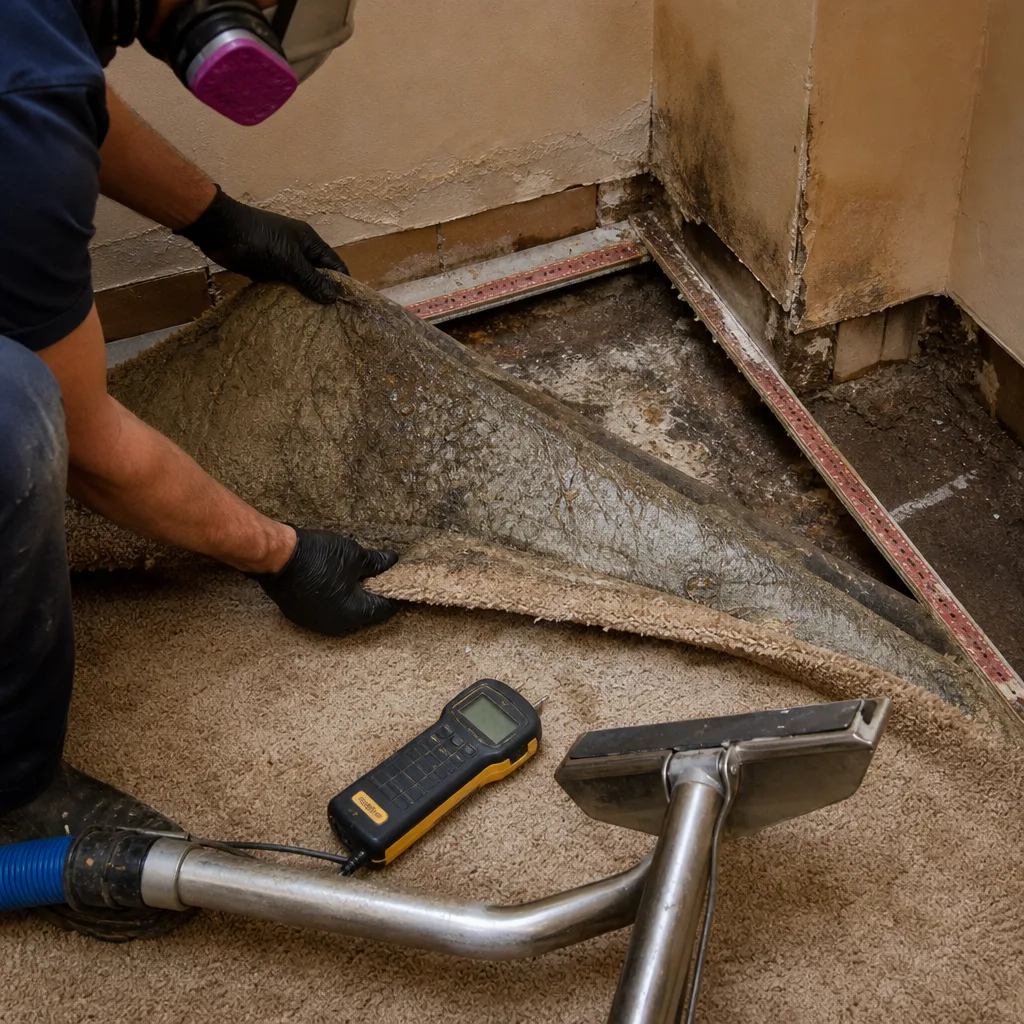
For colonies contained to a manageable area, we remove affected drywall, insulation, and baseboards, treat the framing, and rebuild. A single finished-basement wall job in Middle Village runs $1,800-$4,200. A full basement perimeter typically runs $4,500-$8,000. The shared party wall adds coordination but not always cost, if we get access early.
Black Mold Remediation
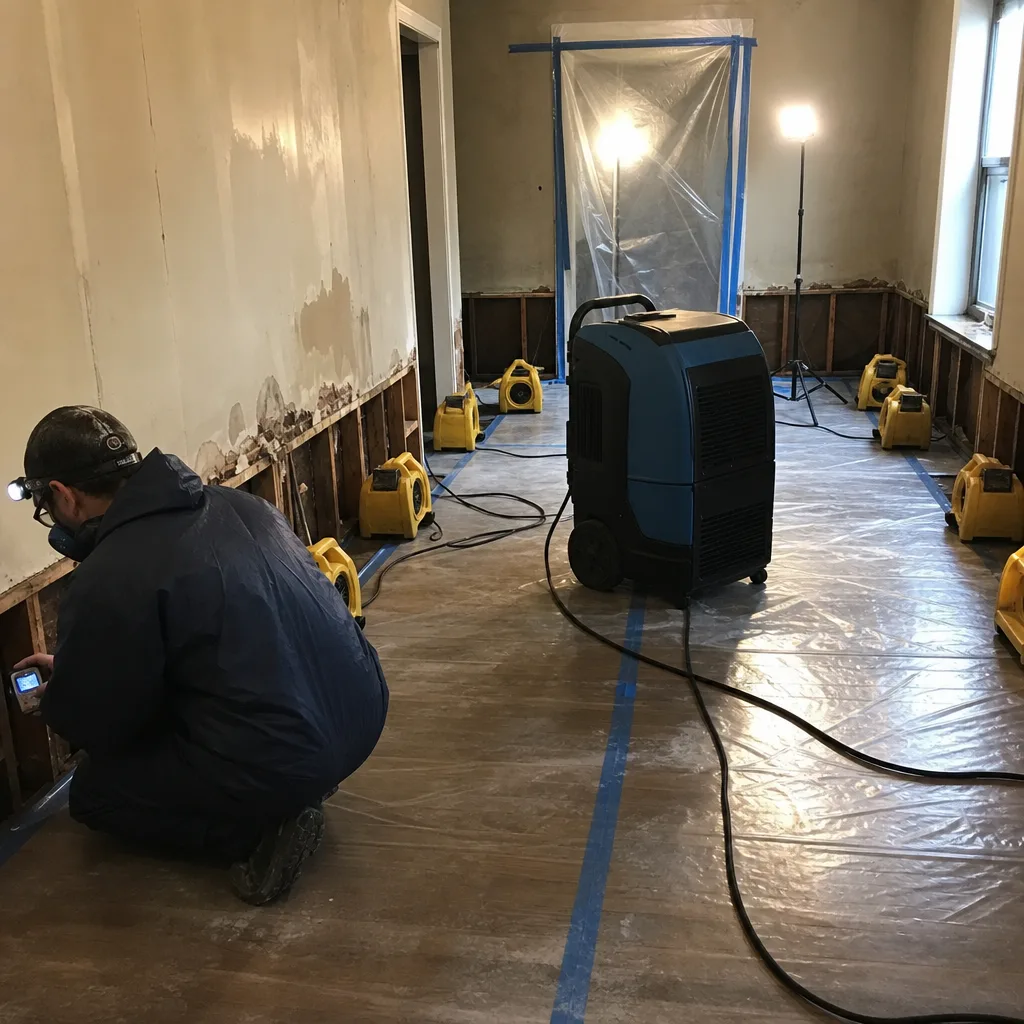
Stachybotrys, the black mold you read about, grows on chronically wet cellulose: drywall, carpet pad, insulation. In Middle Village’s finished basements, the typical culprit is a slow drip from an original cast-iron stack or a failed galvanized line behind baseboards. Black mold jobs require full containment, negative air, and clearance testing. Expect $3,500-$8,000 for a typical basement wall-to-ceiling case, more if both sides of the party wall are involved.
Air Quality Restoration
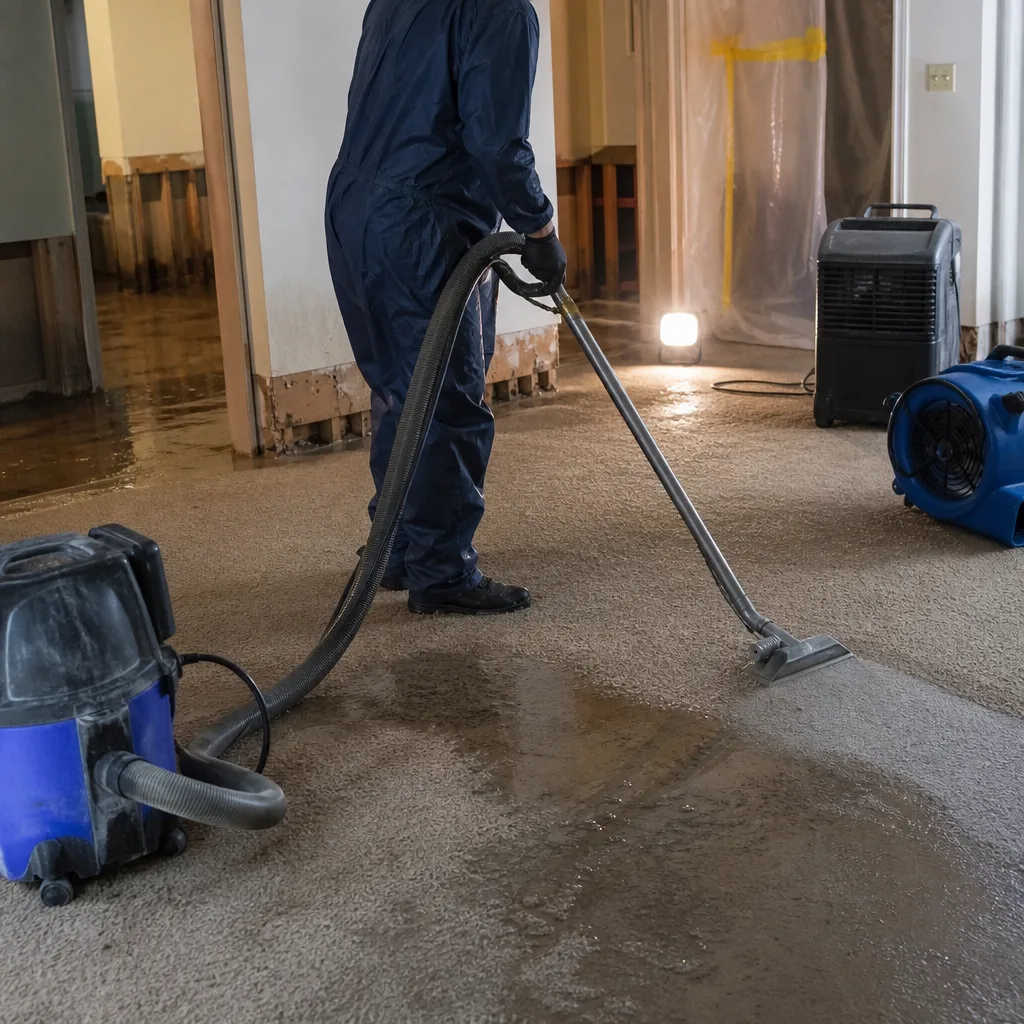
After the physical mold is removed, the air in the house still carries spores. We run HEPA air scrubbers and, where needed, whole-home air washing to bring spore counts down to accepted levels. In attached two-families, this often means treating the neighbor’s air as well, since the shared stairwell or doorway circulates air between units. Standalone air restoration in Middle Village typically runs $800-$2,200.
Crawl Space Treatment
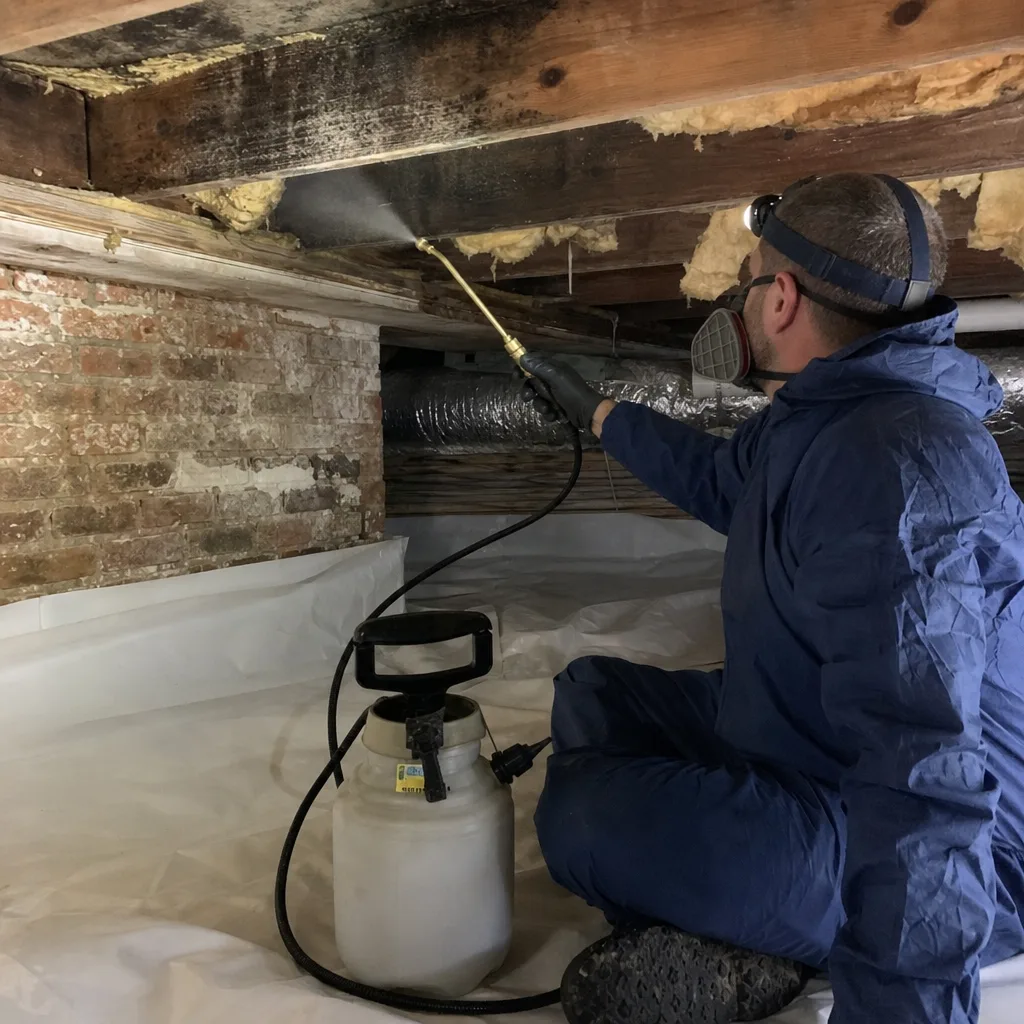
Homes in Middle Village with crawl spaces under a rear addition or porch often trap humid air against floor joists, breeding mold that creeps into the first floor. We dry the space, treat the joists, and where the homeowner wants it, install moisture barriers. Crawl space treatment runs $1,500-$4,000 depending on square footage and access.
What happens when you call
- 1
A real person answersNo phone trees - you reach a local pro.
- 2
You get an upfront price rangeHonest numbers before anyone is dispatched.
- 3
A background-checked tech heads outLicensed & insured, dispatched right away.
- 4
You approve before work beginsNothing starts until you say go.
Mold Remediation Costs in Middle Village, NY
Here’s what you should expect to pay in this market, not some national average. A targeted mold removal on one basement wall runs $1,800-$4,200. A full finished-basement remediation with containment and rebuild runs $4,500-$8,000. Black mold with the party wall involved runs $3,500-$8,000+, depending on how far the wicking spread. Crawl space treatment is $1,500-$4,000. Inspection and testing runs $250-$600.
What moves the price: whether the source is still active, how many linear feet of party wall is involved, whether the neighbor’s unit needs containment too, and whether Category 3 sewage water was in the mix. That last one can double the cost because of the containment and disposal requirements.
Insurance covers mold remediation only when it stems from a covered water loss and the policy includes mold coverage. Many Queens policies cap mold at $5,000-$10,000. We’ll tell you honestly what your policy covers after reviewing it, and we bill the carrier directly. The free visual inspection is the fastest path to a firm number. Call (917) 924-4221 and we’ll come look.
We Also Serve Cities Near Middle Village
Our Mold Remediation crews serve Middle Village and the surrounding blocks of Maspeth, Rego Park, Elmhurst, and Ridgewood daily. Wherever you are in this corner of Queens, the same certified team, the same 45-minute response commitment, and the same written 90-Day Done Right Promise apply. Mold Remediation in Middle Village keeps us in this neighborhood most days.
Serving Middle Village, NY - Our Local Coverage Area
We’re based in the Middle Village area and know this community well. Use the map below to see our service coverage - if you’re nearby, we can almost certainly help.
Middle Village Mold Remediation Questions, Answered
Why does mold in my finished basement return after I’ve bleached the drywall?
Because bleach kills surface mold but doesn’t reach the colony inside the drywall, and it doesn’t stop the moisture source feeding it. In Middle Village homes, that source is usually a sweating original cast-iron stack, a failed galvanized supply line, or moisture wicking through the shared party wall. Until the source is fixed and the affected drywall removed, the mold regrows within weeks. The fix is source removal, not surface cleaning. Call (917) 924-4221 for a free inspection.
Can you remediate my side of the shared wall if my neighbor won’t let you into their unit?
Yes. We can contain and treat your side of the wall, apply antimicrobial treatment to the exposed brick and framing, and install a moisture barrier before rebuilding. Untreated moisture on the neighbor’s side may eventually re-wick through, which is why we always try for joint access first. Most neighbors cooperate once they understand the situation. If not, we document what we did on your side so your insurer understands the scope. Call (917) 924-4221 for a straight answer on your specific wall.
How soon after a sewer backup should I call for mold remediation?
Immediately. Category 3 sewage water contains bacteria and nutrients that accelerate mold growth. In a finished Middle Village basement, mold can start colonizing drywall within 48-72 hours of the backup. If the drywall wasn’t pulled and the studs dried properly at the time of the backup, you should call for an inspection now, even if you don’t see mold. We’ll read moisture levels and tell you what’s happening behind the baseboards. Call (917) 924-4221.
What’s the difference between drying out a basement after a Category 1 clean water leak and a Category 3 sewage backup?
Category 1 water comes from a clean source, like a burst supply line. After extraction and drying, most materials can be saved. Category 3 water contains sewage. Every porous material it touched, drywall, carpet, insulation, baseboards, must be removed and disposed of. The framing needs antimicrobial treatment, and the work requires full containment. In Middle Village’s finished basements, Category 3 losses almost always involve the party wall, which extends the scope to the neighbor’s side. Call (917) 924-4221 for an assessment.
Does mold remediation in a semi-detached home require treating the neighbor’s unit too?
In most cases, yes. The shared brick party wall in Middle Village’s 1940s-1960s two-families is porous. Moisture from your side wicks through to the neighbor’s side, and mold follows. If we treat only your side, the neighbor’s moisture eventually re-wicks back, and the mold returns. We always recommend joint access for full treatment. If the neighbor refuses, we document and treat what we can on your side. Call (917) 924-4221 to discuss your specific wall.
How fast can someone actually get here?
We commit to a 45-minute response across Middle Village. Our crews are dispatched from our New York City office and know the neighborhood’s streets. A live dispatcher answers 24/7, and a certified crew reaches your block within the hour on most calls. The sooner we contain the mold, the smaller and cheaper the job. Call (917) 924-4221 now.
Will insurance cover mold remediation in Middle Village?
It depends on your policy and the source of the moisture. If the mold resulted from a sudden, covered water loss like a burst pipe, and your policy includes mold coverage, we bill your carrier directly and handle the documentation. Many Queens policies cap mold coverage between $5,000 and $10,000. We’ll review your policy honestly and tell you what’s covered before work starts. Call (917) 924-4221 with your policy in hand.
What should I do in the first 30 minutes after discovering mold?
Don’t disturb the area. Don’t wipe the wall, don’t run a fan, and don’t pull baseboards yourself. Disturbing mold sends spores airborne and spreads the contamination into other rooms and possibly the neighbor’s unit. Close the door to the affected area, keep children and pets away, and call (917) 924-4221. We’ll guide you from there.
Written by Curt Bowman, Owner at Floodline Restoration Co. of Manhattan, serving Middle Village and the surrounding neighborhoods with certified mold remediation crews.