
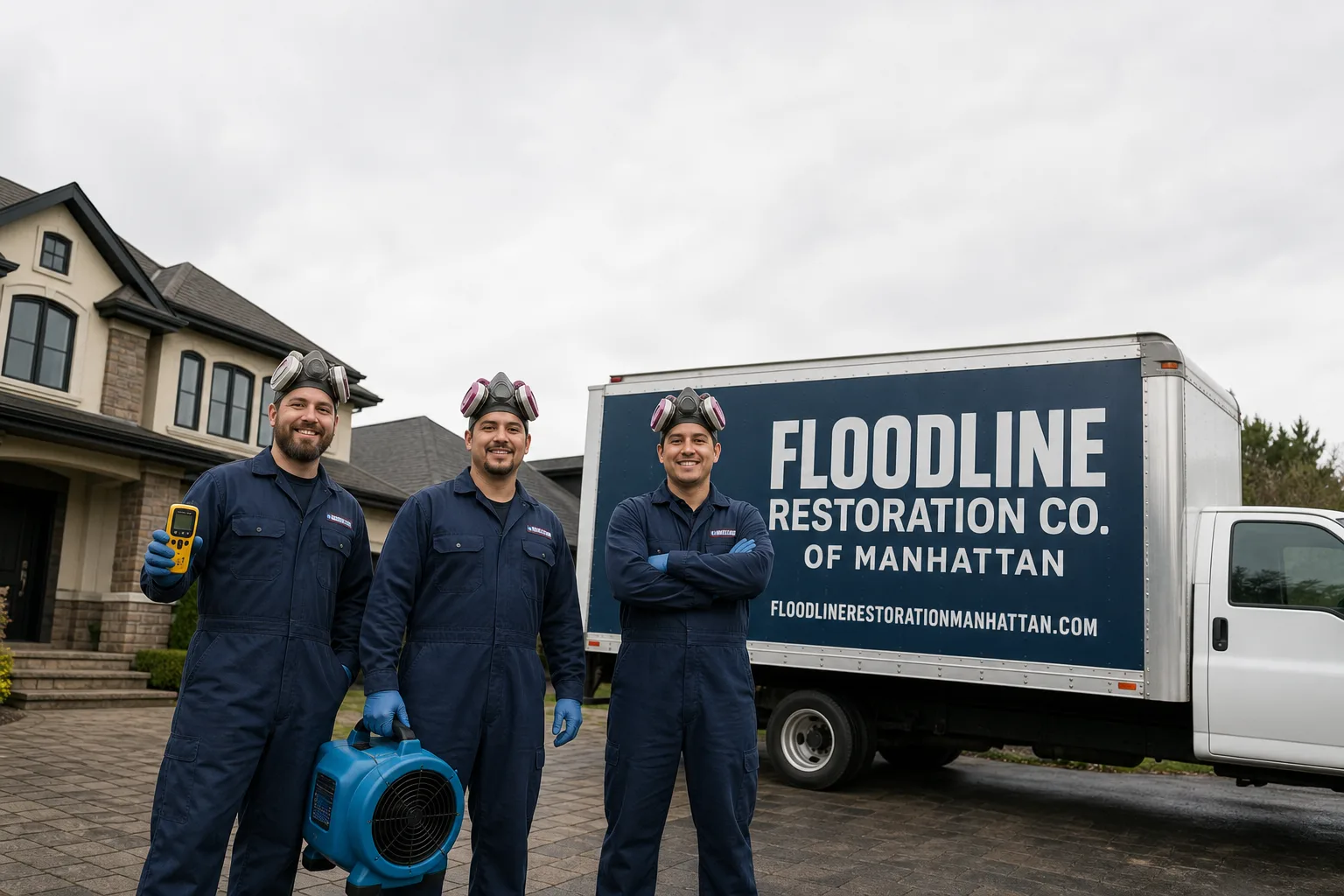
Free visual inspection and a written scope of work before any mitigation begins - photos, moisture readings, and drying logs go in your claim file
The scope we write is the scope we bill. Anything new gets shown to you, in writing, before we touch it.

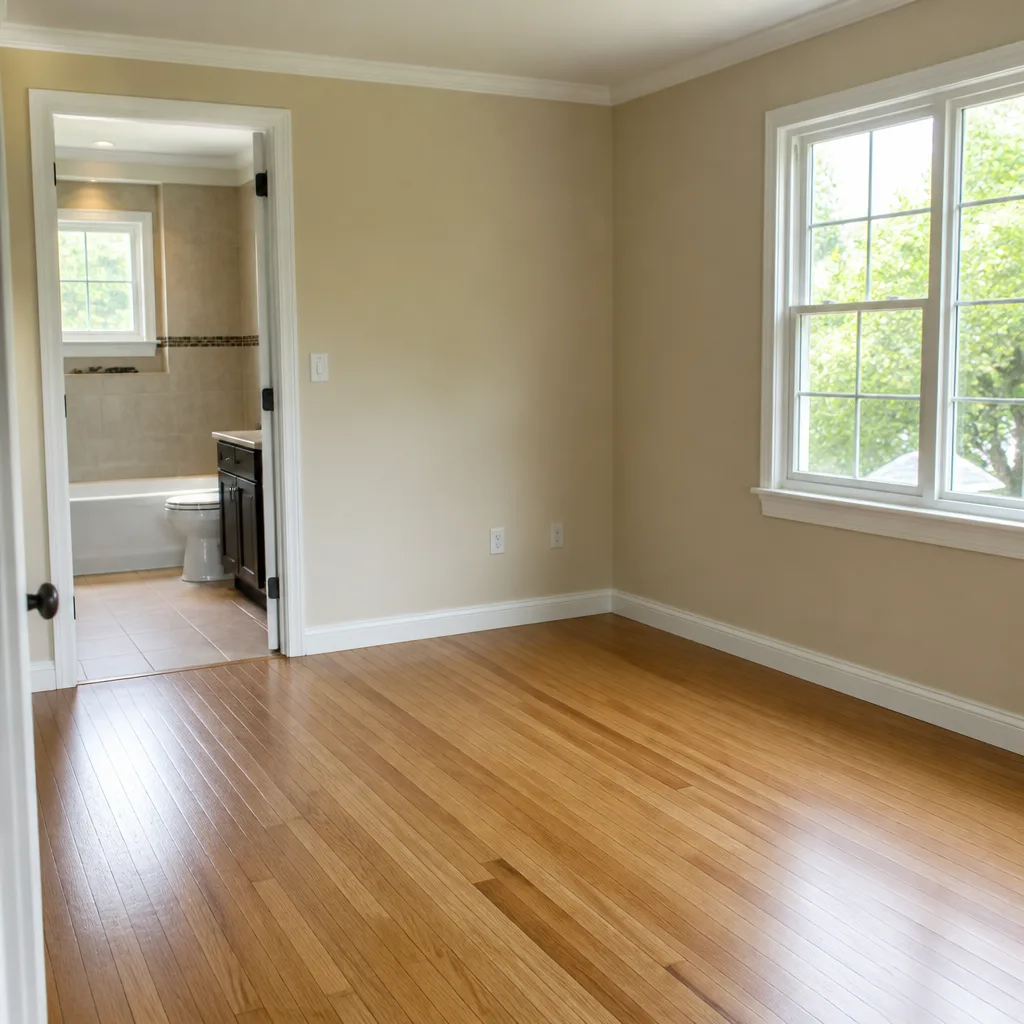
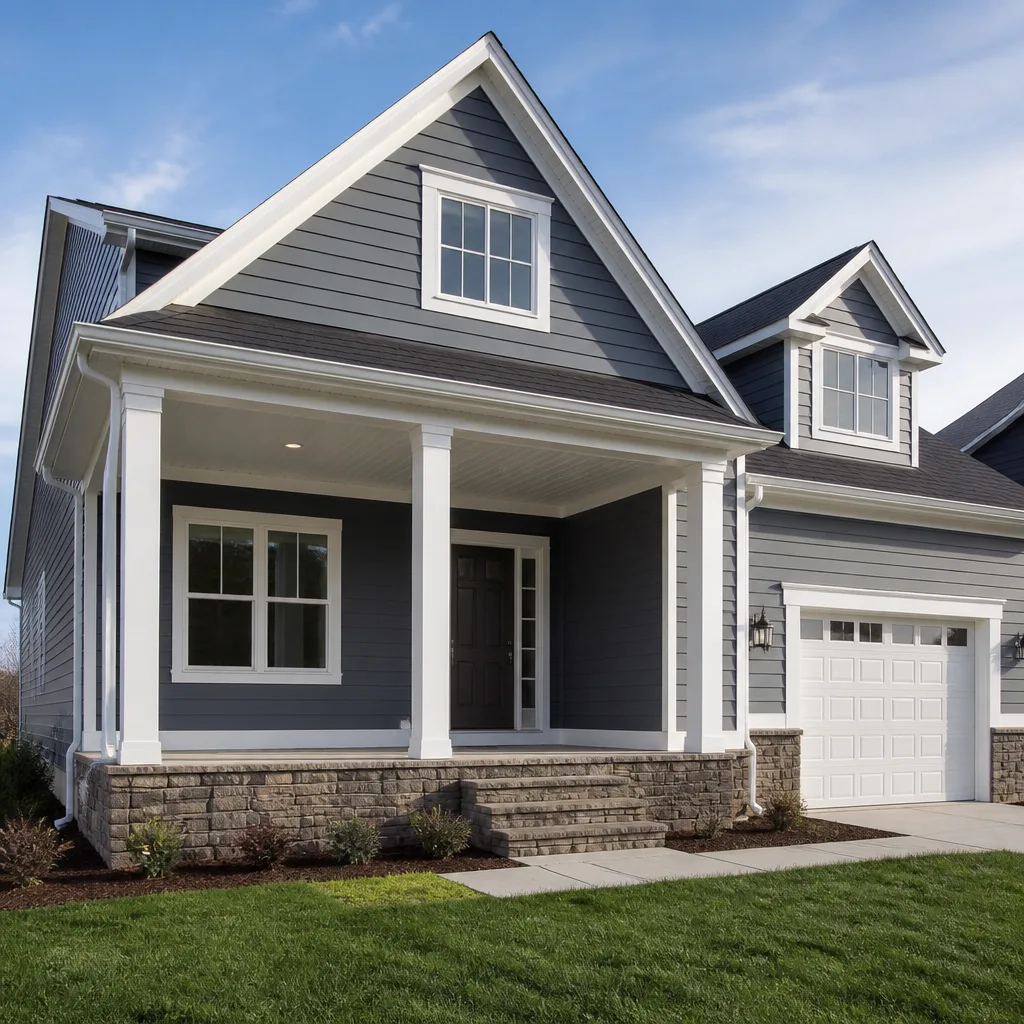
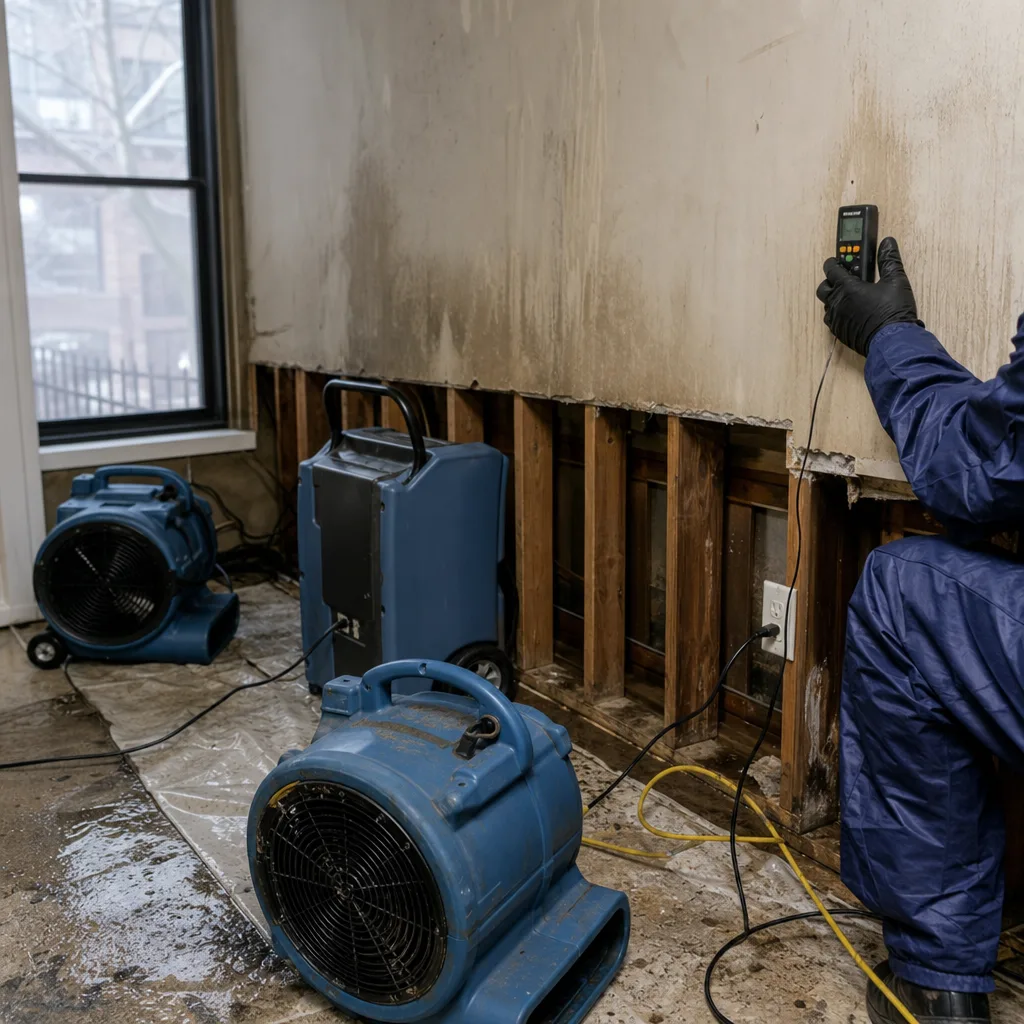 Before
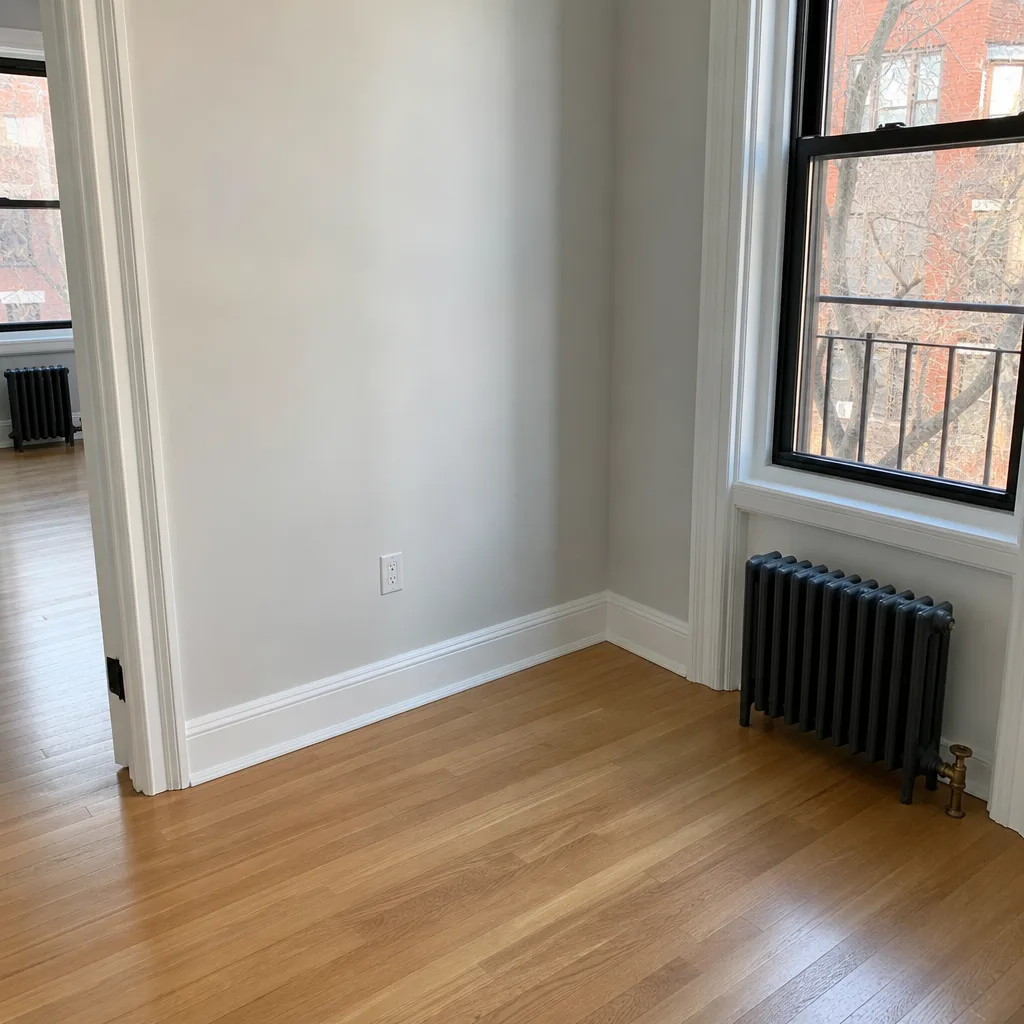 After
After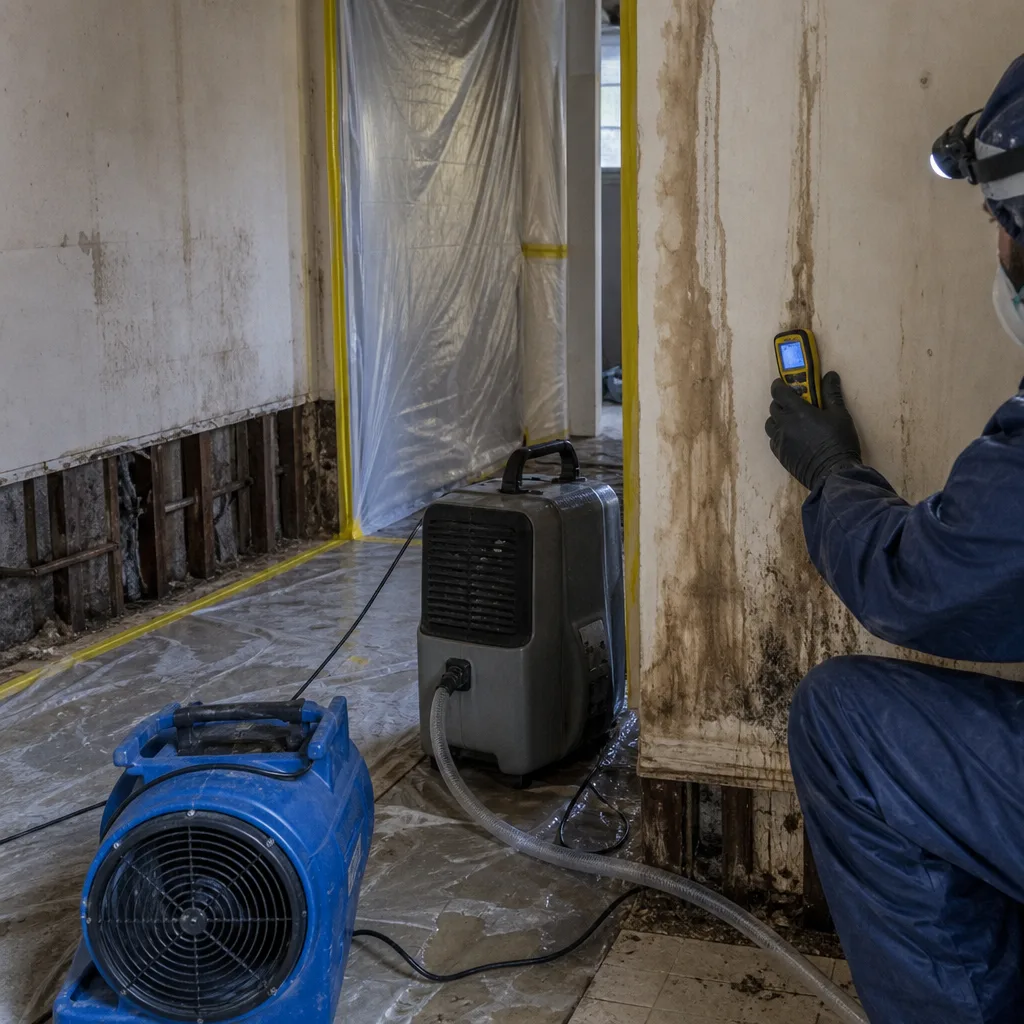 Before
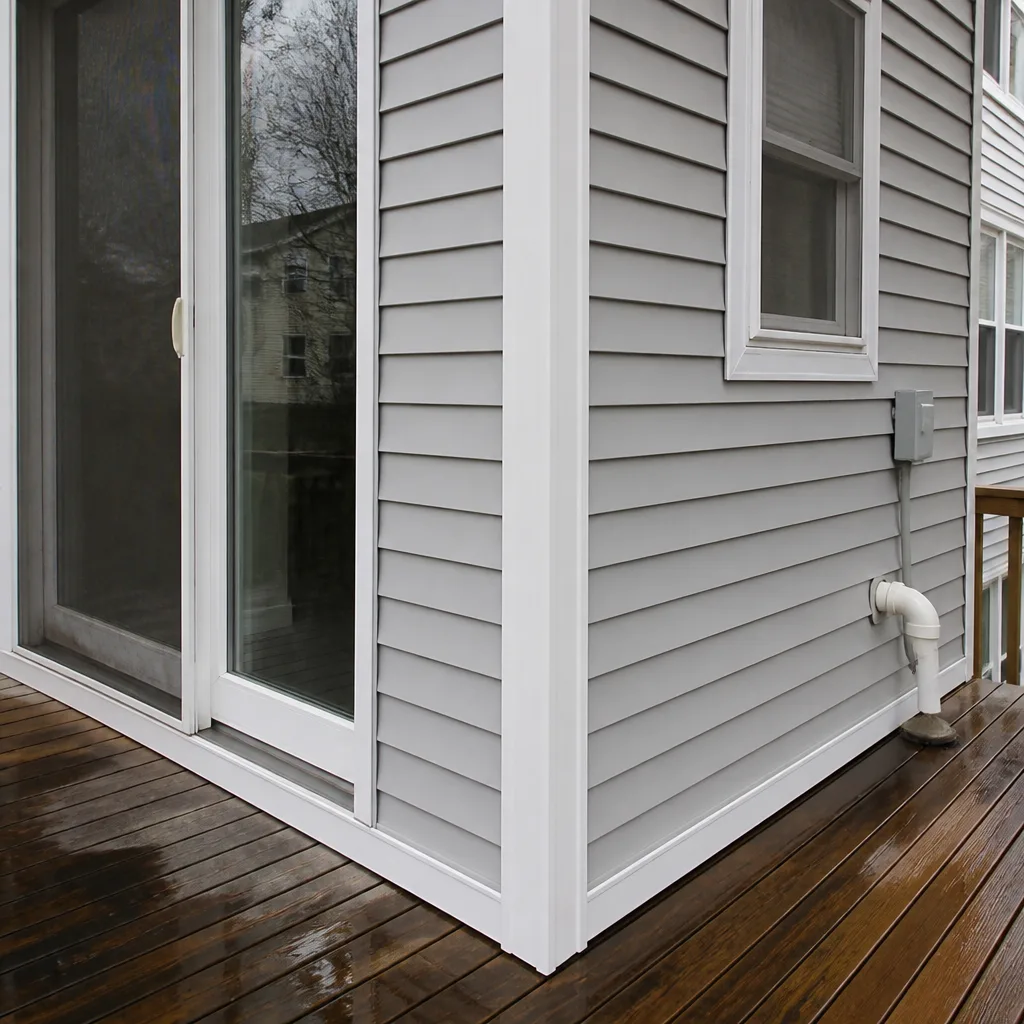 After
After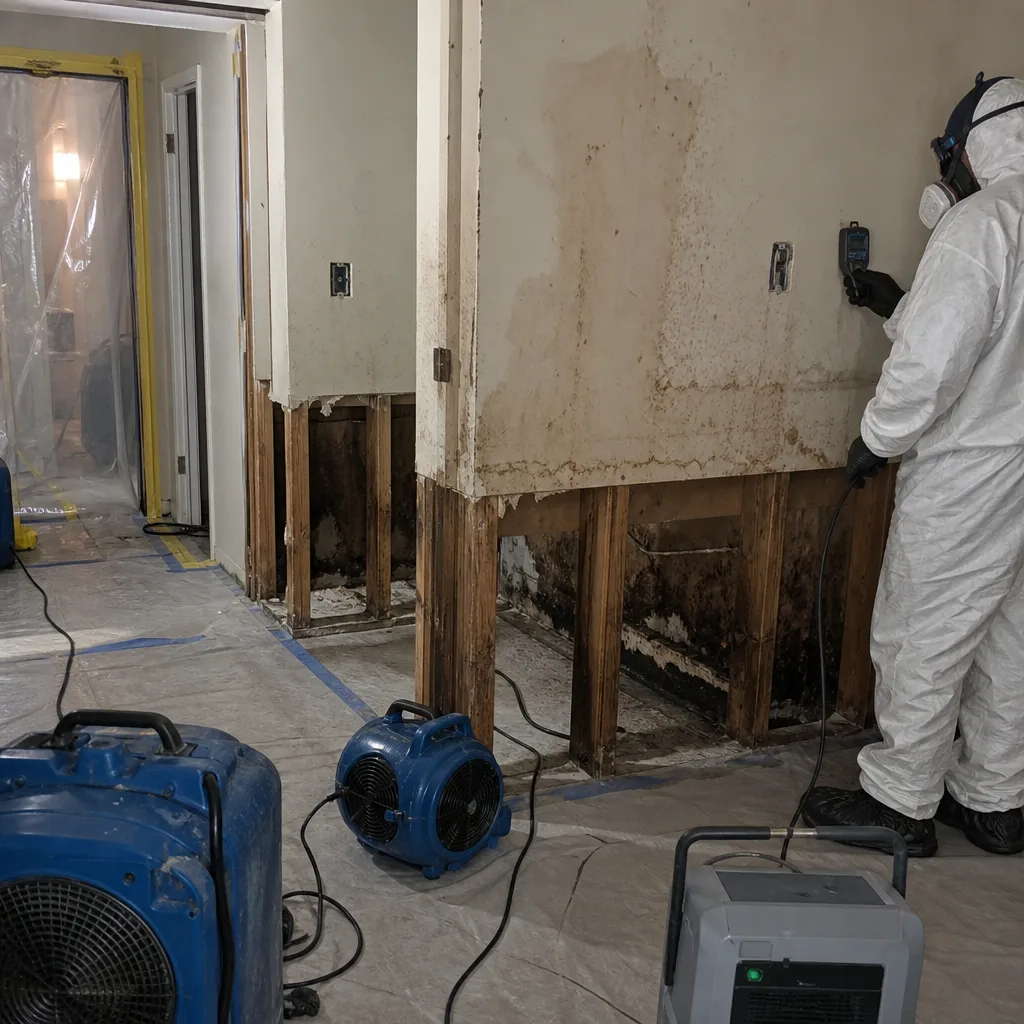 Before
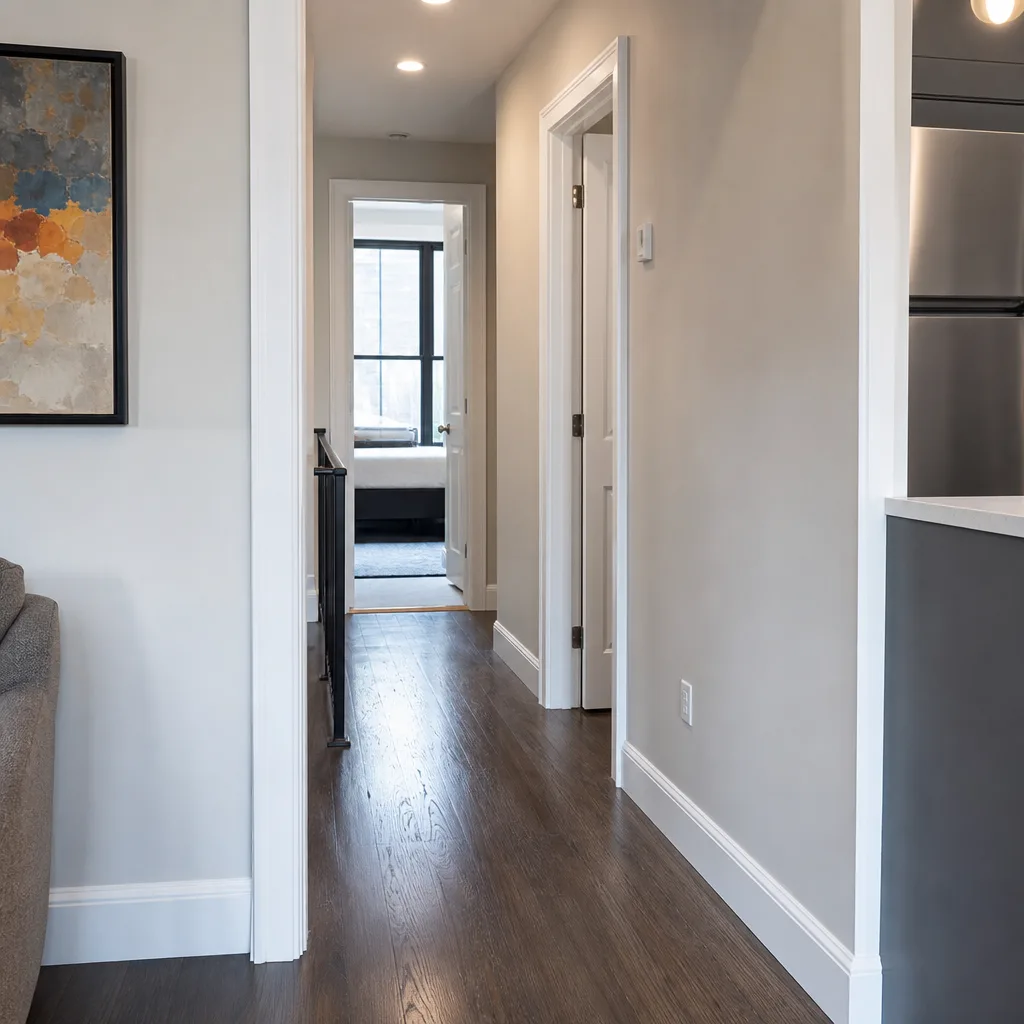 After
After24/7 Emergency Mold Remediation in Nyack
Mold in a Nyack home rarely announces itself politely. It starts as a musty smell behind a baseboard on Main Street, a dark bloom blooming silently inside a Cedar Hill closet, or the faint green shadow spreading across a basement wall after one too many river-humid summers. When you find it, you need a straight answer and a fast crew. Floodline Restoration Co. of Manhattan answers the phone at (917) 924-4221 around the clock, every day of the year, with a live dispatcher who can have a certified mold remediation team on the road to Nyack within 45 minutes. The first hour matters because mold colonizes exponentially in Nyack’s river-humidity climate: what starts as a square foot behind a bedroom wall becomes a room-wide problem inside a week. We come out, do a free visual inspection, and tell you exactly what you’re dealing with. Written scope before any work starts. No pressure, no drama.
Understanding Mold Remediation Severity in Nyack Properties
Mold remediation in Nyack means working inside walls that predate modern building codes by a century. Most of the village’s housing stock is late-Victorian and Edwardian wood-frame construction from the 1880s through the 1920s: horsehair plaster over old-growth Douglas fir lath, wide-plank floors, and foundation fieldstone that breathes river moisture year-round. In these homes, mold doesn’t sit on the surface like it does in drywall builds. It travels through plaster, follows the lath, and establishes inside wall cavities where only penetrating moisture meters and thermal imaging find it. This is why we never quote a Nyack job without first mapping the affected area with hygrometers and establishing a dry standard. Severity in Nyack breaks into three practical tiers: superficial surface growth (often on bathroom or window framing from condensation), colonized porous material (plaster, lath, insulation after a pipe leak or storm intrusion), and structural fungal growth that has moved into framing members. That third tier is the one that trips FEMA compliance thresholds. In a 1905 waterfront Victorian, a “small” mold patch often means the plaster below the flood line has been wicking river moisture since Sandy. You’re not just wiping down a wall; you’re stabilizing a structural material that may be regulated under floodplain code.
Why Nyack Property Owners Choose Floodline Restoration Co. of Manhattan
- 45-minute response commitment to Nyack addresses, not a “we’ll call you back” from a national franchise’s regional scheduler.
- Live answer, 24/7, from a person who knows Nyack’s blocks and can dispatch immediately. Never a recording. At 2 a.m. you talk to a dispatcher, not a voicemail.
- IICRC-certified crews trained to AMRT and WRT standards, uniformed and background-checked, with the documentation Nyack’s floodplain administrator expects.
- Free visual inspection on every call, with a written scope and line-item estimate before anything comes out of the wall.
- Direct insurance billing. We document everything the carrier needs from hour one, coordinate with your adjuster, and you never play messenger.
- Same certified crew from first inspection through final rebuild. No mid-job handoff, no “the mold team’s done, now wait for the carpentry team.”
Our Mold Remediation Process
Inspection & Assessment
We arrive with moisture meters, thermal imaging, and a clear nose for what’s behind the plaster. We map the full extent of the water source and mold growth, take baseline readings, and document pre-loss condition before a single tool touches the wall. In Nyack’s older homes, this step often uncovers hidden moisture in shared party walls or behind built-in cabinetry.
Stabilization & Source Control
The water source gets stopped first: a leaking supply line behind a bathroom on Upper Nyack, a roof penetration over a Cedar Hill bedroom, or basement seepage after a nor’easter. Without source control, remediation is just repainting. We stabilize the affected area and stop active moisture accumulation.
Containment & Air Filtration
Full poly containment with negative air pressure isolates the work zone. HEPA air scrubbers run continuously, filtering spores to 0.3 microns. In Nyack’s tight row-house settings, this containment design is critical: without it, disturbing a colonized plaster wall sends spores through shared stairwells and neighboring units.
Removal & Cleaning
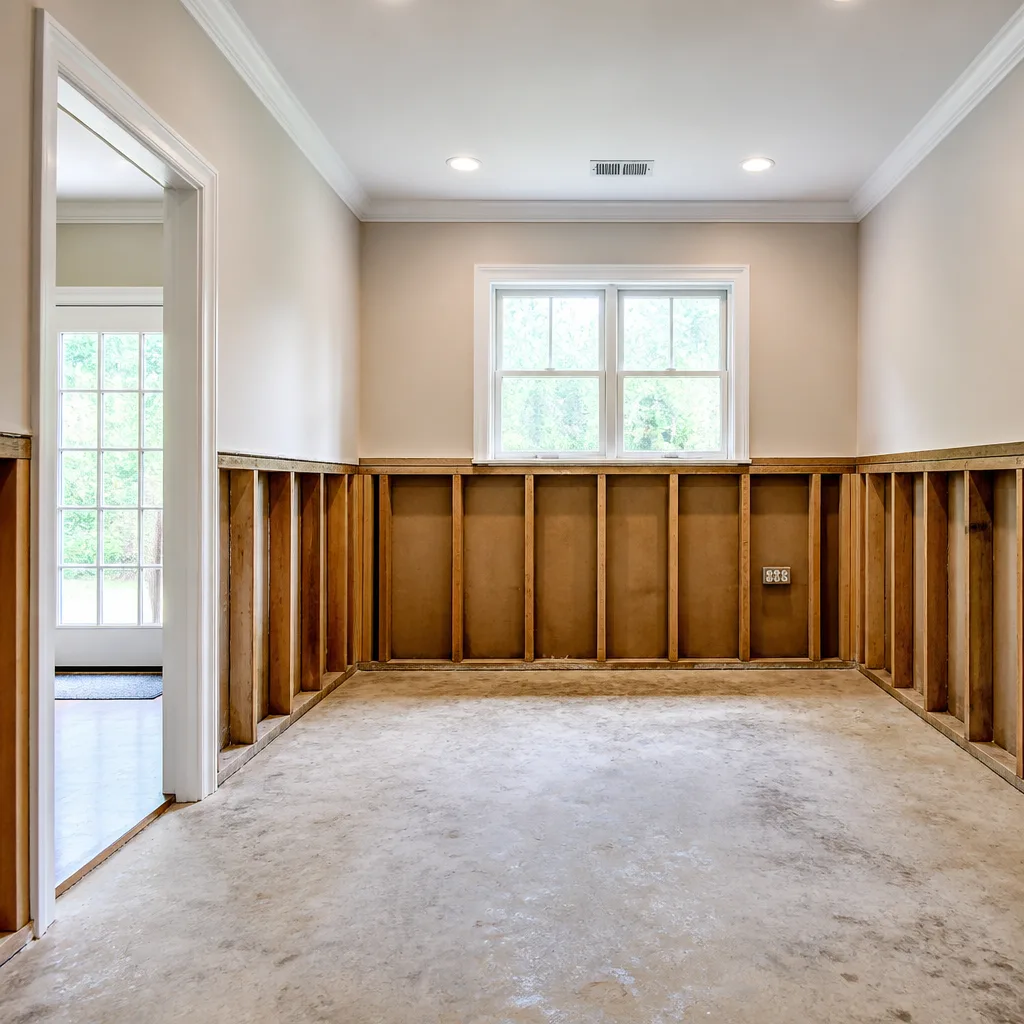
Colonized porous materials come out under controlled conditions. Non-porous surfaces get HEPA vacuumed, scrubbed with appropriate antimicrobial treatments, and dry-wiped. We photograph every layer we remove. Salvageable historic materials like wide-plank flooring are treated with drying protocols that preserve the original wood rather than tearing it out.
Drying & Dehumidification
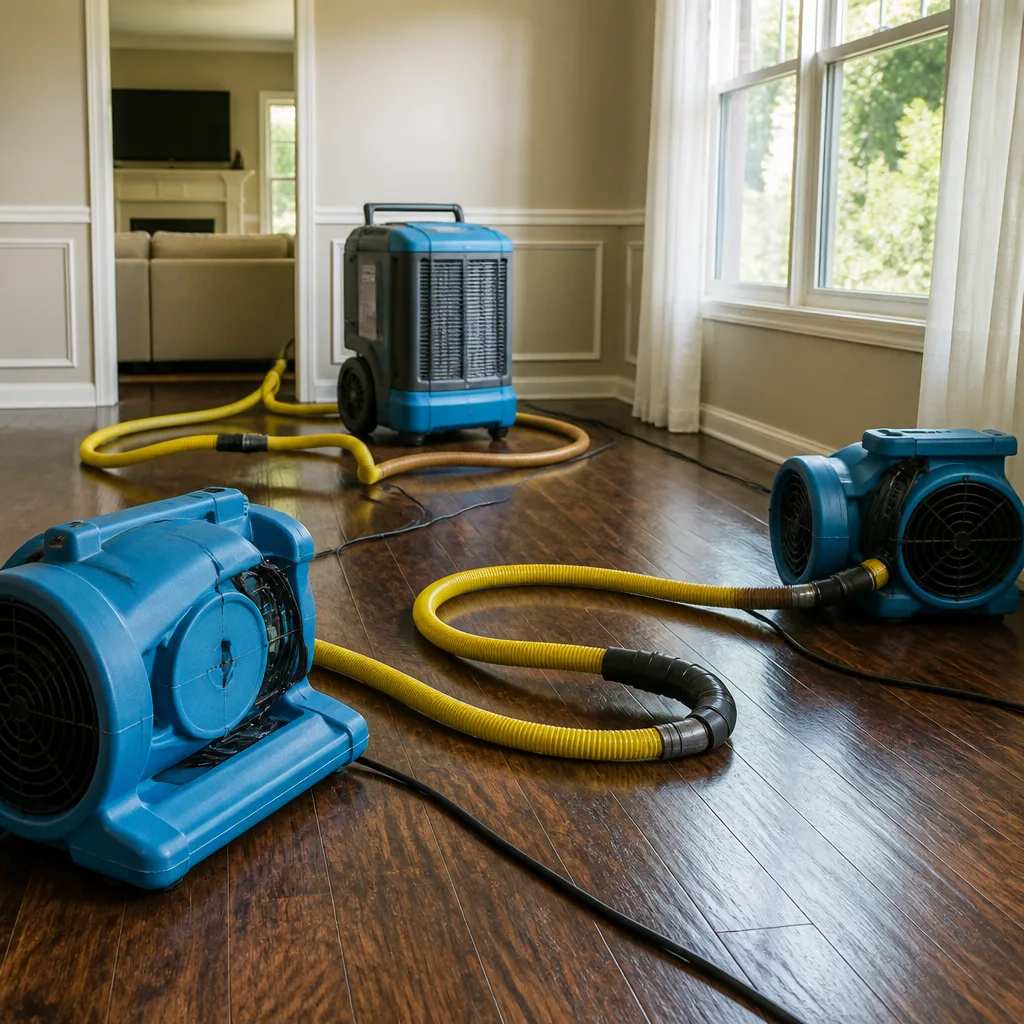
Professional-grade Dri-Eaz LGR dehumidifiers and XPOWER air movers run inside containment until every moisture reading hits the dry standard. In Nyack’s river-humidity microclimate, this means daily readings with penetrating meters, logged and shared with you and your carrier. We don’t guess at “dry.” We measure it.
Clearance & Restoration
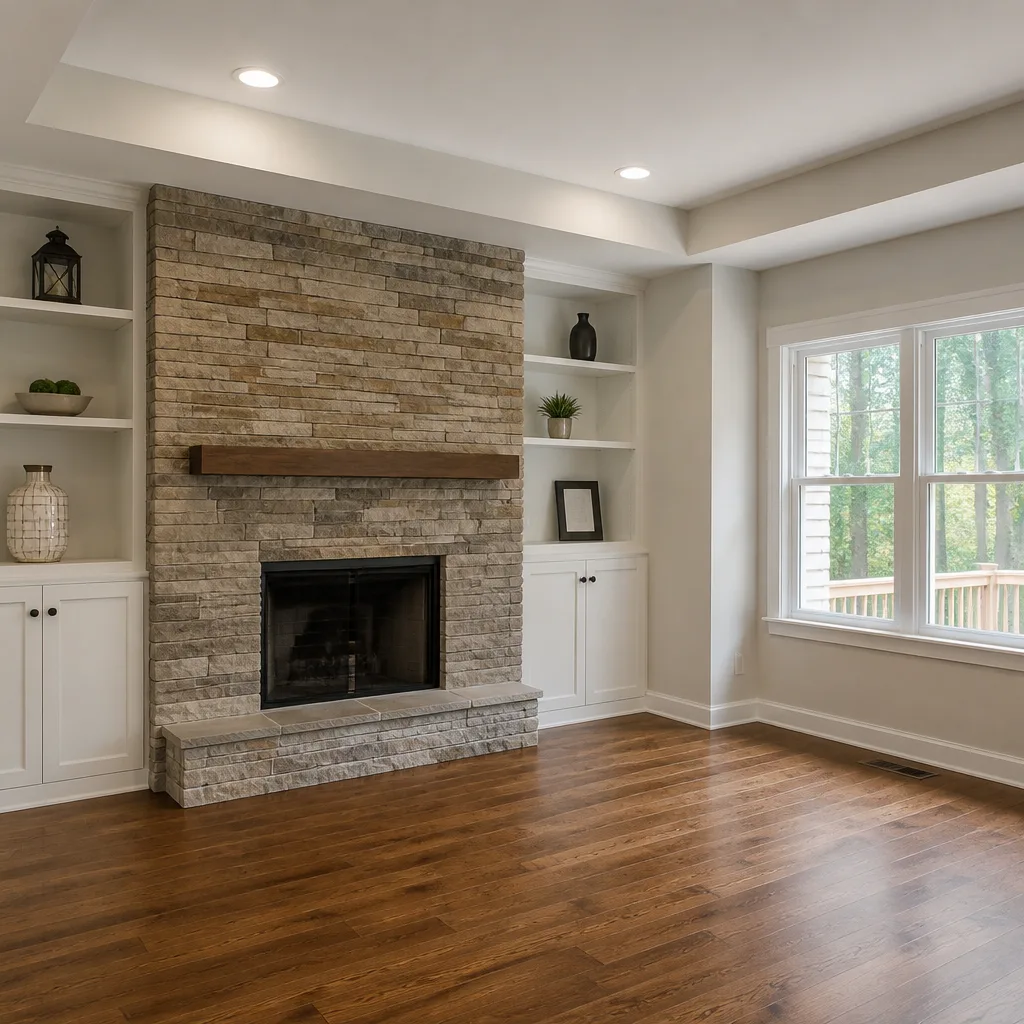
Post-remediation verification confirms the space is clean. If you’re opening walls, we rebuild to match: horsehair plaster repaired, original trim matched, Douglas fir framing sistered where needed. The same crew that opened the wall closes it. The moisture log goes in your hand, and the 90-Day Done Right Promise goes in writing.
Need Emergency Mold Remediation in Nyack Now?
Crews minutes away, answering live 24 hours a day. The sooner we start, the less it costs.
Working With Your Insurance Company
Insurance claims after a mold event in Nyack hinge on documentation. The carrier wants to know when the water started, what the moisture readings showed, and what was torn out and why. We produce that paper trail from the first hour of the first visit, because Curt Bowman built Floodline Restoration around a dispatch board and a documentation standard, not a sales desk. Your adjuster gets a clean, industry-standard estimate with line items they recognize, photos of every affected room, and daily drying logs that establish professional due diligence. If your policy covers the loss as a covered water event, we bill the carrier directly and coordinate with your adjuster so you’re not relaying paperwork. If the mold damage traces to a long-running leak or pre-existing condition, we tell you that honestly too, before you authorize anything.
What We Provide Your Insurer
- Thorough documentation of the loss from arrival to clearance
- Photos of all damage, room by room, behind walls and under floors
- Moisture readings and drying logs with dated, time-stamped entries
- A detailed, line-item scope of work using Xactimate-compatible estimates
- Direct coordination with your carrier and adjuster, start to finish
Built for Nyack’s Loss Calendar
Nyack’s mold season doesn’t follow a simple calendar. Here’s what actually happens through the year. January and February bring deep-freeze bursts on old supply lines in uninsulated crawl spaces beneath Victorians on Franklin Street and High Avenue. The leak is slow, the water wicks into plaster before anyone notices, and by spring the wall is colonized. March and April thaw triggers basement seepage in the hillside blocks above Route 9W, where runoff finds every fieldstone foundation crack that opened over winter. Summer’s humidity is the quiet multiplier: the Hudson River holds moisture against Nyack’s waterfront blocks, and homes that survived winter without a visible issue can bloom behind furniture by August. September and October bring nor’easter remnants that push storm surge up the narrowing Hudson valley into Nyack’s marina district and low-lying Main Street blocks, saturating crawl spaces and sill plates. Restoring a home after any of these events means respecting the village’s river-humidity baseline, not just pulling out wet material and hoping the fan does the rest.
Mold Remediation Across Nyack’s Neighborhoods
We know the blocks. Upper Nyack, along North Broadway and the quieter residential stretches, holds some of the village’s grandest Victorians, many with original plaster in large rooms that need careful air scrubbing and millwork protection during remediation. Downtown Nyack, around Main Street and the waterfront, mixes commercial storefronts with apartments above, and floodplain code is the dominant variable: work here routinely requires building department sign-off before tear-out. Cedar Hill and the hillside streets rising from the marina present tight alley-load access where row homes share party walls, meaning containment has to account for air movement into neighboring units. The blocks around Nyack College and the South Nyack border hold mid-century colonials and cape cods on slab or shallow basement foundations, where crawl space encapsulation and humidity control matter more than historic-material matching. Each area demands a different approach to the same mold problem. A remediation plan that works for a 1920s waterfront Victorian on Main Street is the wrong plan for a 1960s cape on a hillside block near Memorial Park.
Specialized Mold Remediation Services We Offer in Nyack
Mold Inspection & Testing
If you smell mold but can’t see it, or if your home has a history of water intrusion and you want a baseline before buying or selling, we run a full inspection using moisture mapping and air quality sampling where needed. In Nyack’s older homes, the source is frequently behind original plaster or under flooring, not visible on the surface. We find it and document it precisely, which matters enormously when a real estate transaction or floodplain determination is involved.
Mold Removal
Our Mold Remediation team removes colonized material under full containment, following IICRC protocols from first cut to final clearance. In Nyack’s Victorians, we prioritize saving what’s salvageable: original wide-plank floors, plaster crown molding, and period trim are all candidates for treatment rather than tear-out when the moisture readings support it.
Black Mold Remediation
Stachybotrys chartarum, the “black mold” homeowners fear, shows up in Nyack where water has sat for days or weeks under the right conditions: behind a slow pipe leak in a dark wall cavity, under a flood-soaked crawl space floor, inside a ceiling after a roof leak. We treat it with full containment, negative air pressure, HEPA filtration, and thorough removal of the colonized substrate. Then we fix the moisture source so it doesn’t return.
Air Quality Restoration
After mold is removed, the air in the home still carries spores until proper filtration and cleaning occur. We run HEPA air scrubbers throughout the affected zones, clean HVAC components where cross-contamination occurred, and establish clean-air clearance before reopening the space. This is especially important in Nyack’s tight, multi-story homes where a single contaminated room can circulate spores through a gravity-fed heating system into every other bedroom.
Crawl Space Treatment
Nyack’s hillside and waterfront homes often sit on damp crawl spaces that never fully dry. We assess ventilation, install vapor barriers and encapsulation systems where appropriate, treat visible fungal growth, and use Dri-Eaz and Phoenix dehumidification equipment to bring the relative humidity down to a target that starves mold. For a waterfront Victorian with a moist fieldstone crawl space, this is often the difference between yearly mold recurrences and a stable, dry home.
What happens when you call
- 1
A real person answersNo phone trees - you reach a local pro.
- 2
You get an upfront price rangeHonest numbers before anyone is dispatched.
- 3
A background-checked tech heads outLicensed & insured, dispatched right away.
- 4
You approve before work beginsNothing starts until you say go.
Mold Remediation Costs in Nyack, NY
A typical mold remediation project in Nyack runs between $1,500 and $6,500, depending on how far the growth has gone and what’s behind the wall. A straightforward bathroom ceiling spot with no structural damage usually lands around $800 to $1,300. A full-room remediation with containment, plaster removal, drying, and restoration work runs $3,000 to $6,000. Crawl space treatment with encapsulation ranges from $2,500 to $8,000 depending on square footage and existing drainage conditions. The variables: how long the moisture has been present, whether the mold has reached framing members, whether floodplain compliance triggers additional engineering, and whether historic materials need restoration rather than replacement. Most insurance policies cover mold remediation only when it results from a covered water event, like a burst pipe or storm damage. A pre-existing leak is often excluded. That’s why we do a free visual inspection first: you’ll know the scope, the line-item cost, and exactly what your insurer needs from us before we open a single wall. Call (917) 924-4221 for a free estimate.
We Also Serve Cities Near Nyack
Floodline Restoration Co. of Manhattan provides mold remediation across Rockland County’s river communities. If you’re in Nyack or nearby, we cover Valley Cottage, West Nyack, Blauvelt, and Piermont with the same 45-minute response commitment, the same certified crews, and the same written scope before any work starts.
Serving Nyack, NY - Our Local Coverage Area
We’re based in the Nyack area and know this community well. Use the map below to see our service coverage - if you’re nearby, we can almost certainly help.
Nyack Mold Remediation Questions, Answered
How does Nyack’s FEMA 50% Substantial Damage Rule affect my mold remediation project?
In Nyack’s FEMA AE flood zones, if the total cost of your restoration work (including mold remediation, structural repairs, and related work) exceeds 50% of your building’s pre-damage market value, the village’s floodplain administrator must enforce the Substantial Damage Rule, which triggers a full building compliance review. That can mean elevation, floodproofing, or other costly upgrades before interior work resumes. A contractor who doesn’t know this rule may start tear-out only to have the village stop work. We document everything from the first hour specifically to establish an accurate, compliant scope, and we coordinate with the floodplain administrator as part of the job. Call (917) 924-4221 if you have a waterfront property and need honest guidance.
Why is mold more aggressive in Nyack waterfront homes than inland Rockland County?
The Hudson River creates a persistently humid microclimate along Nyack’s shoreline, especially in the low-lying blocks near Main Street and the marina. This higher baseline humidity shortens the window for effective drying and accelerates mold colonization after any water event. A pipe leak in a Nyack baseline-relative-humidity of 65% colonizes faster than the same leak in a drier inland Rockland town at 40%. That’s why we use professional-grade Dri-Eaz and XPOWER equipment and run daily moisture readings until we hit the dry standard, not a calendar-day estimate. Call us and we’ll explain what your specific home needs.
Can you remediate mold in a tight alley-load Victorian without damaging original plaster?
Yes, in many cases. If the plaster is sound and the moisture source has been corrected, we can surface-treat, air-scrub, and dry the wall cavity using access points smaller than full tear-out. When plaster must come out, we cut clean lines, save the decorative trim, and match the repair to the original material rather than defaulting to drywall. Our crews have done this repeatedly in Nyack’s historic districts. It takes more time and patience, which is exactly what these homes require.
What should I do if I smell mold after a nor’easter but see no visible growth?
Call us for an inspection. A persistent musty odor after a storm almost always means water has entered a wall cavity, ceiling, or crawl space and is colonizing hidden material. In Nyack’s plaster-and-lath homes, the visible surface often shows nothing while the back side of the lath is covered. We’ll run moisture meters and thermal imaging to find the source, then give you a written plan. Don’t wait: in Nyack’s river-humidity climate, what’s hidden this week will be visible next month. Our inspection is free, and the advice is honest even if the answer is “you don’t need us yet.”
Does Nyack require mold remediation contractors to follow specific drying documentation?
Nyack’s building department and floodplain administrator don’t mandate a specific drying log format, but they do require proof that work was performed professionally, especially on flood-damaged properties where the 50% rule may apply. IICRC standards and insurance carriers both expect dated moisture readings, equipment placement logs, and a clear dry standard. We provide exactly that documentation on every job: daily logs with time-stamped readings, photos throughout the process, and a final moisture map. It’s the same standard we’d hand to an insurance adjuster, and it protects you if questions arise later.
How fast can you actually get to Nyack for a mold emergency?
Our dispatch team answers live, 24/7, and we commit to having a certified mold remediation crew on site in Nyack within 45 minutes of your call. We’re not a franchise with a regional scheduler who calls you back in two days. The number is (917) 924-4221. Call it at any hour and a person picks up, not an automated menu.
Will my insurance cover mold remediation in Nyack?
Coverage depends on the source of the moisture. If mold results from a covered water event, like a burst pipe or storm damage from a nor’easter, most policies cover the remediation and repair. If the mold traces to a long-running leak, condensation, or pre-existing humidity problems, the carrier typically denies the mold portion. We bill directly on covered claims and document everything your adjuster needs. On claims that get denied, we provide the dry log and photos showing professional due diligence, which sometimes changes the carrier’s decision. We’ll give you a straight answer after our free inspection.
Do I need full remediation or just a cleaning?
If the affected area is small (under about ten square feet), non-porous, and the moisture source is corrected, a thorough cleaning with proper antimicrobial treatment may be sufficient. But if the growth is on plaster, drywall, insulation, or has been there for more than a few days, the material itself is colonized and needs removal, not surface cleaning. In Nyack’s older construction, what looks like a “simple” bathroom ceiling spot often extends into the ceiling cavity above. We’ll assess during the free inspection and tell you honestly which path applies to your home.
Written by Curt Bowman, Owner at Floodline Restoration Co. of Manhattan, serving Nyack and the Hudson River communities.