
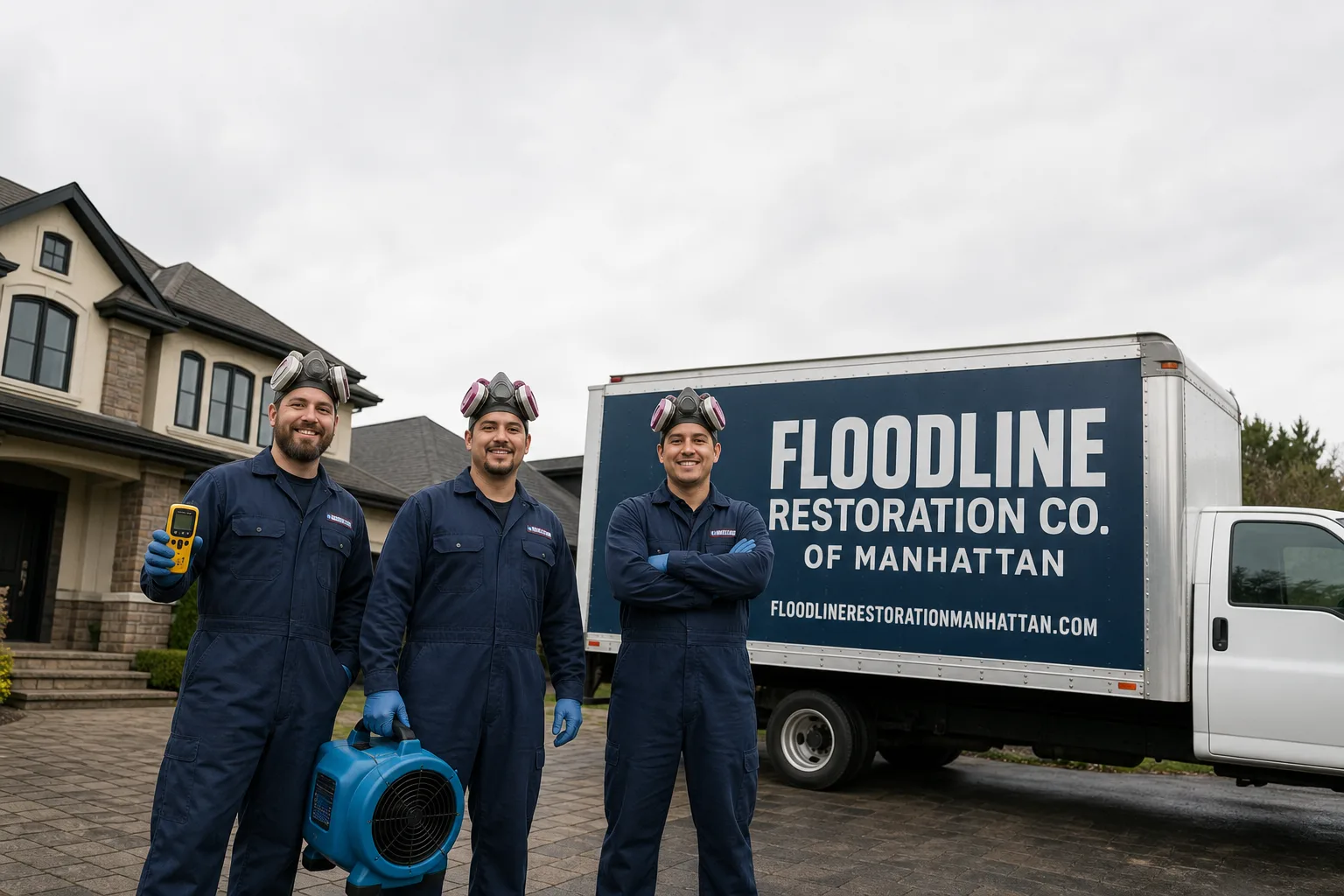
Free visual inspection and a written scope of work before any mitigation begins - photos, moisture readings, and drying logs go in your claim file
The scope we write is the scope we bill. Anything new gets shown to you, in writing, before we touch it.






 Before
 After
After Before
 After
After Before
 After
After24/7 Emergency Mold Remediation in Pelham
Mold doesn’t wait for business hours, and neither do we. If you’ve spotted dark staining on plaster walls, caught that musty smell in a finished basement, or had water intrusion anywhere in your Pelham home, call (917) 924-4221 right now. A live person answers at all hours, every day, and a mold remediation crew can be dispatched to your Pelham property immediately for a free visual inspection. The first hour matters: mold colonies double their footprint in 24 to 48 hours under the right conditions. The faster containment goes up, the less tear-out you face and the lower your final cost. In Pelham’s pre-war homes, where plaster-and-lath over old-growth timber moves moisture differently than drywall, that first hour matters even more.
Mold in Your Pelham Home? Call Now.
A live dispatcher answers 24/7. Free visual inspection, fast containment, written scope before work begins.
Understanding Mold Remediation Severity in Pelham Properties
We classify mold jobs by the square footage of visible growth, the water source behind it, and what the colony is feeding on. In Pelham, that third factor changes everything. A modern drywall wall wicks moisture quickly and dries quickly once air movers run. Plaster-and-lath over old-growth fir does not. The lath is porous. The plaster holds water deep in its gypsum channels. The framing timbers, denser than modern kiln-dried studs, retain moisture at 20% or higher long after the surface feels dry to the touch. So we moisture-map every pre-1940 Pelham basement with thermal imaging and penetrating meters before we ever lift a hammer. Category 1 water (clean supply leaks) and Category 3 water (sewage, storm surge, Hutchinson River overflow) both feed mold here, but Category 3 jobs require full containment, negative air pressure, and antimicrobial treatment on every affected surface. In Pelham, where many shore-adjacent streets sit in FEMA flood zones, Category 3 is more common than homeowners expect.
Why Pelham Property Owners Choose Floodline Restoration Co. of Manhattan
- 45-minute response commitment: We commit to having a crew on the road to your Pelham address within 45 minutes of your call, day or night.
- 24/7 live answer: A real dispatcher picks up the phone at 2 a.m. You’ll never reach a recording or a call center.
- IICRC-certified crews: Our technicians hold current IICRC certifications including AMRT (Applied Microbial Remediation Technician) and WRT (Water Damage Restoration Technician). They also train to RIA and IFA standards.
- Free visual inspection: We walk the affected space, take moisture readings, and tell you honestly whether you need full remediation or a targeted cleaning.
- Direct insurance billing: We bill your carrier directly and coordinate with your adjuster from first inspection through final clearance testing.
- One team from first cut to final coat: The same certified crew that sets containment handles drying, pack-out of period millwork where needed, and the rebuild. No mid-job handoff.
Our Mold Remediation Process
Inspection & Assessment
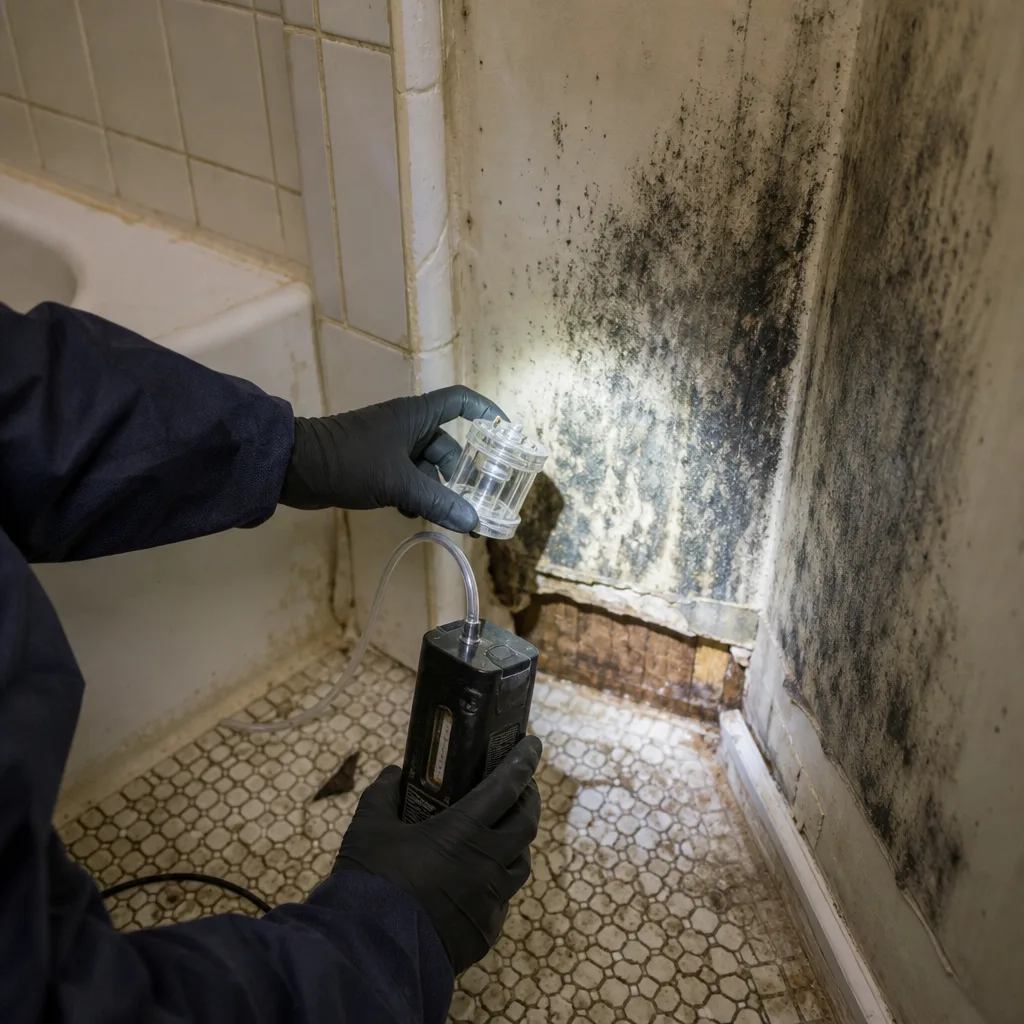
We begin with a full visual inspection of your Pelham home, then take moisture readings from walls, floors, and framing using penetrating meters and thermal imaging. If the water source is hidden, we check crawl spaces, behind built-ins, and under slabs before writing a single number down.
Containment Setup
Before we disturb any mold, we seal the work zone with 6-mil polyethylene and run HEPA-filtered negative air scrubbers. This keeps spores from migrating through your plaster walls into clean rooms and living spaces.
Source Correction
Mold returns if the water does. We trace and repair the source: a freeze-thaw crack in a foundation wall, a failed supply line, a crawl space with poor drainage, or a nor’easter surge path that needs better sealing.
Structural Drying
In Pelham’s plaster-and-lath homes, this is where patience matters. We run Dri-Eaz dehumidifiers and XPOWER air movers for as long as the moisture log says, not until the wall feels dry. Old-growth fir releases moisture slowly. Cutting this short is how mold comes back.
Antimicrobial Treatment & Cleaning
After drying hits the target standard, we treat affected surfaces with EPA-registered antimicrobials, HEPA-vacuum every surface, and clean the air inside the containment zone before we remove barriers.
Reconstruction & Clearance
We rebuild what was removed, sourcing period-appropriate materials for pre-war trim and millwork where needed. Then we run post-remediation verification: air samples and surface swabs sent to an independent lab. You get the written results.
Working With Your Insurance Company
Mold remediation is a covered loss in many Pelham homeowners’ policies, particularly when it follows a documented water event. The challenge with pre-war homes is proving that the drying was thorough enough. Adjusters know old plaster hides moisture. That’s why we document from the first hour: photos before we open anything, moisture readings throughout drying, a daily log of equipment runtime, and a line-item scope that shows exactly what was removed and why. For Pelham Manor properties in FEMA Special Flood Hazard Zones, we also coordinate NFIP (National Flood Insurance Program) claim documentation alongside your standard homeowner’s policy. You never play messenger between us and your carrier.
What We Provide Your Insurer
- Thorough documentation of the loss
- Photos of all damage, room by room
- Moisture readings and drying logs
- A detailed, line-item scope of work
- Direct coordination with your carrier
Built for Pelham’s Loss Calendar
Pelham’s mold season follows a predictable rhythm. December through March, the freeze-thaw cycle works on the village’s century-old supply lines and uninsulated crawl spaces, producing pipe bursts and slow seepage behind plaster walls where mold grows for weeks before it’s visible. March brings the spring thaw, when groundwater rises under Pelham Manor’s finished basements and finds every hairline crack in a 1920s foundation. June through September, afternoon thunderstorms dump fast rain on streets that drain toward the Hutchinson River corridor, and wind-driven rain finds window headers and rim joists. Then comes nor’easter season. Shore-adjacent streets in Pelham Manor take storm surge and wind-driven rain, and every surge event leaves behind Category 3 water in basements. After a nor’easter pushed storm surge into a Pelham Manor Colonial on the Hutchinson River corridor, our crew found black mold behind waterlogged plaster in the finished basement. We set up containment with negative air, used Dri-Eaz dehumidifiers and XPOWER air movers, and took moisture readings from the old-growth fir framing daily for two weeks before antimicrobial treatment and pack-out of period millwork. That’s the Pelham mold job in one paragraph.
Mold Remediation Across Pelham’s Neighborhoods
Pelham Manor’s shore-adjacent streets, particularly those along the Hutchinson River and near Shore Road, carry the highest flood-zone risk and the most complex mold jobs we see. These are larger Tudor and Colonial Revival homes with finished basements, built-ins, and period millwork that floods before the water rises in other parts of town. In the village center of Pelham, the housing shifts toward Victorian and early Colonial stock on smaller lots, where mold tends to start in crawl spaces and uninsulated service lines rather than flood events. Pelham Heights holds many of the oldest homes in the village, with stone foundations and dirt-floor cellars that never dry out on their own. The area along Wolfs Lane and the streets surrounding the train station sees basement seepage after any sustained rain. Wherever you live in Pelham, our crews know the building age, the foundation type, and the moisture patterns before they arrive, because we’ve been working these streets long enough to know them by name.
Specialized Mold Remediation Services We Offer in Pelham
Mold Inspection & Testing
Not every musty smell is a full colonization, and not every black spot is Stachybotrys. We inspect first, moisture-map the wall cavities, and test only where testing adds information. In Pelham, where sellers and buyers both worry about pre-war homes, we also provide the kind of documented inspection that real estate transactions require.
Mold Removal
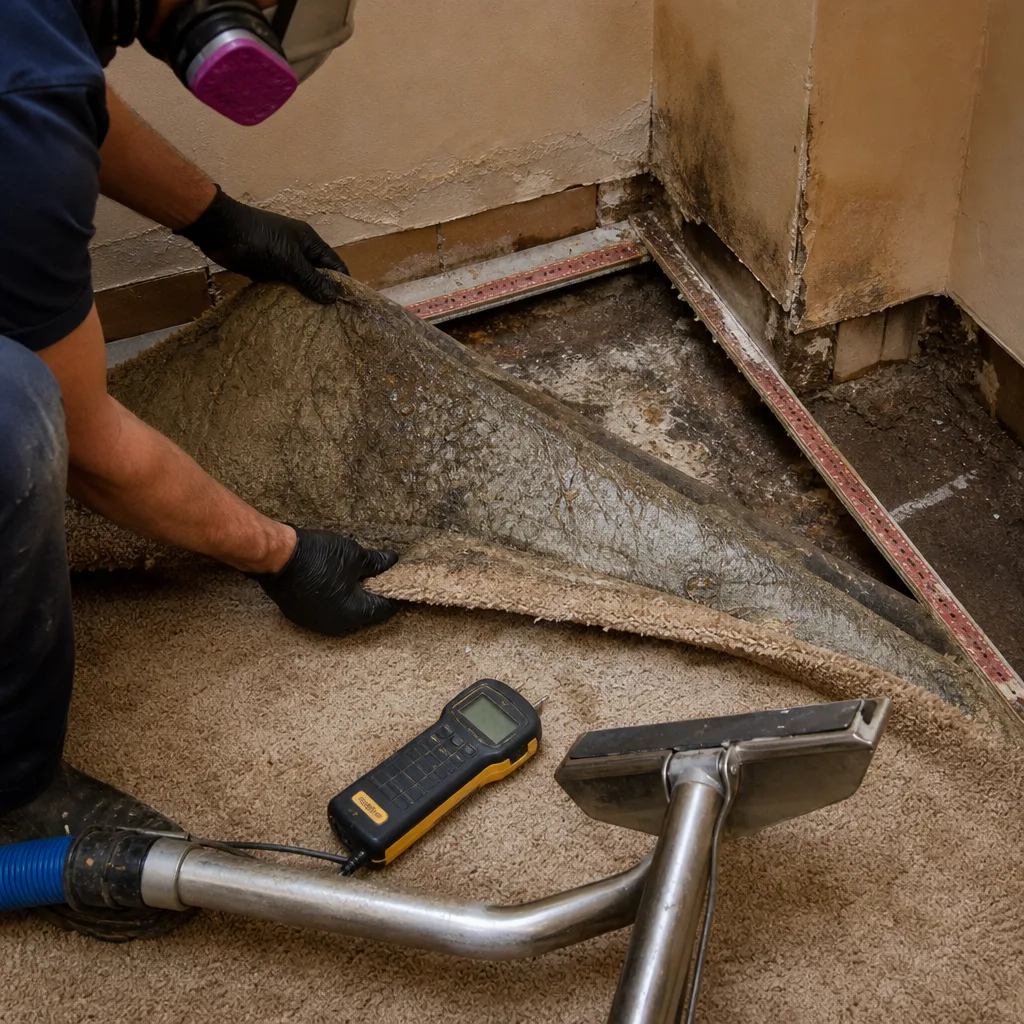
Removal in Pelham means cutting back plaster to expose the lath and framing beneath, removing affected material under containment, and getting to the water source. It’s slower than drywall tear-out and it has to be, because demolition in a pre-war home risks spreading spores through connected wall cavities and behind period trim.
Black Mold Remediation
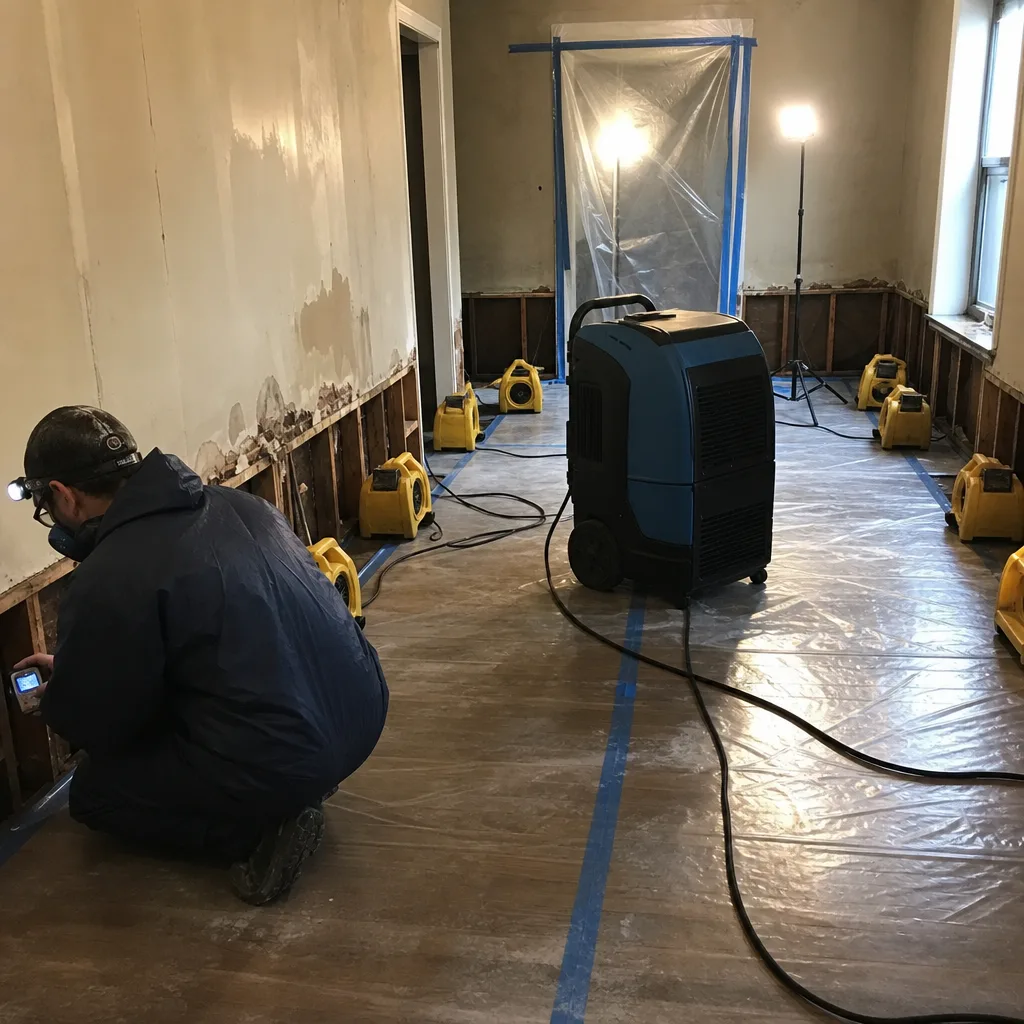
Black mold gets fear-driven attention, and in Pelham’s housing stock the concern is fair. Black mold behind plaster in a basement that flooded with Category 3 water means full containment, negative air, HEPA air scrubbing, and clearance testing before we rebuild. We treat every black mold job as if it’s the most dangerous thing in the house until the lab says otherwise.
Air Quality Restoration
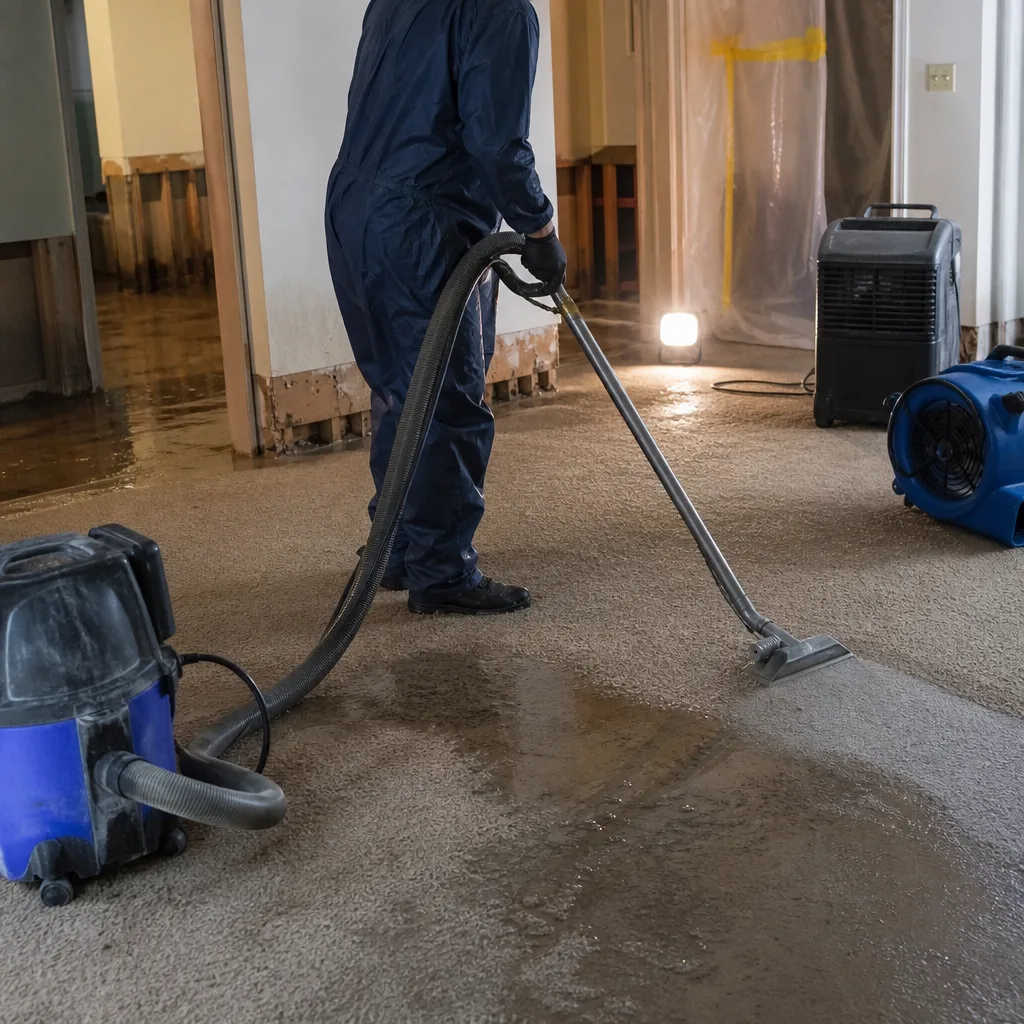
After physical removal, the air itself still carries spores. We run HEPA air scrubbers inside containment during the job and for a period after, then test the air in adjacent living spaces before we call the job done. For Pelham homeowners with allergies, asthma, or someone immunocompromised in the house, this step matters more than the demolition.
Crawl Space Treatment
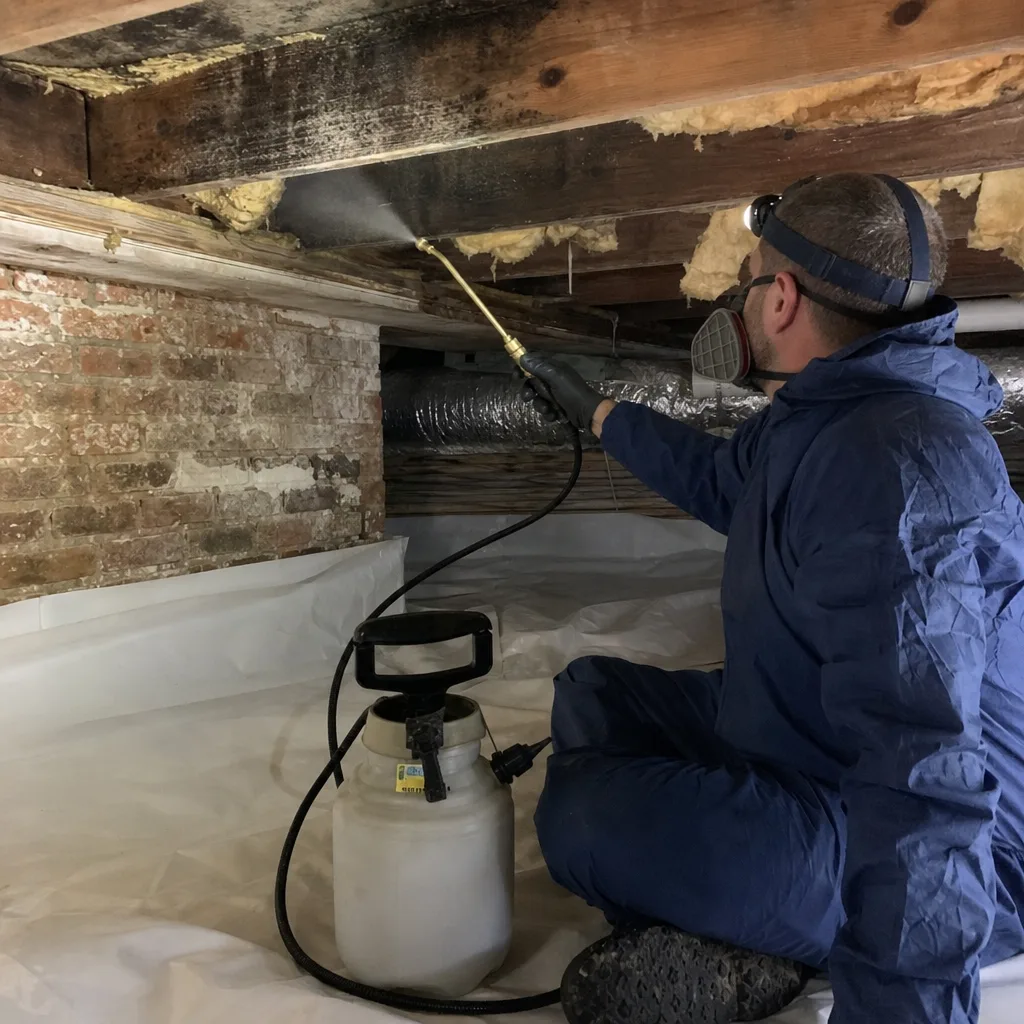
Most Pelham homes built before 1940 have crawl spaces, and most of those crawl spaces were never properly sealed or vented. Mold in crawl spaces travels upward into floor joists and, through stack effect, into living areas. We treat the crawl space itself: remove contaminated soil or insulation, address drainage, seal the space where appropriate, and install vapor barriers that actually hold.
What happens when you call
- 1
A real person answersNo phone trees - you reach a local pro.
- 2
You get an upfront price rangeHonest numbers before anyone is dispatched.
- 3
A background-checked tech heads outLicensed & insured, dispatched right away.
- 4
You approve before work beginsNothing starts until you say go.
Mold Remediation Costs in Pelham, NY
Mold remediation in Pelham runs higher than in newer Westchester suburbs because the work is slower. Expect the following ranges for this market:
- Mold inspection and air testing: $350-$650 for a typical pre-war home
- Spot mold treatment (10 square feet or less): $500-$1,200
- Full basement mold remediation, plaster-and-lath: $3,500-$9,000 depending on square footage and framing condition
- Crawl space mold treatment with vapor barrier: $2,000-$5,500
- Black mold remediation with containment and clearance testing: $5,000-$14,000 for typical Pelham basements
What moves the price: whether framing needs to be pulled, how much period millwork requires pack-out and storage, the depth of water damage behind the plaster, and whether the crawl space or foundation needs structural work before drying starts. Insurance covers more of this than most homeowners expect, especially when the mold followed a documented water event. The fastest path to a firm number is the free visual inspection: we walk the space, take moisture readings, and hand you a written scope before any work begins. Call (917) 924-4221 for an exact quote.
We Also Serve Cities Near Pelham
Our crews cover Pelham and the surrounding sound-shore communities, including New Rochelle, Mount Vernon, Bronxville, and Larchmont. If you’re anywhere in the lower Westchester corridor, we’re close enough to be on site quickly.
Serving Pelham, NY - Our Local Coverage Area
We’re based in the Pelham area and know this community well. Use the map below to see our service coverage - if you’re nearby, we can almost certainly help.
Pelham Mold Remediation Questions, Answered
How long does mold remediation take in a Pelham Tudor with plaster-and-lath walls?
Most Pelham plaster-and-lath mold jobs take 7 to 21 days, not the 3 to 5 days common in drywall homes. The drying phase alone on old-growth fir framing usually runs 10 to 14 days. Cutting it short is the single most common reason mold returns in pre-war homes.
Do I need a separate permit for mold remediation on a pre-1940 Pelham home?
Mold remediation itself typically requires no separate permit in Pelham, but structural demolition, electrical work, or reconstruction on a pre-1940 home falls under Westchester County building department review. We handle that paperwork as part of the job and coordinate with the village as needed.
What’s different about black mold remediation in Pelham Manor versus inland towns like Bronxville?
In Pelham Manor, black mold jobs are usually tied to Category 3 water from storm surge or Hutchinson River flooding, which means pathogen-level contamination protocols. Inland towns like Bronxville see more Category 1 supply-line breaks. The containment and antimicrobial treatment requirements are stricter when floodwater is the source.
How soon after a nor’easter should I call for mold inspection in Pelham?
Call the same day the water recedes. Mold starts establishing within 24 to 48 hours on wet materials. If storm surge reached your Pelham Manor basement, the water was Category 3, and waiting even a week means the difference between cleaning and full tear-out.
Will my period millwork need to be removed during mold remediation?
Sometimes yes. Baseboards, built-in cabinetry, and door casings that sit against water-exposed walls often need to come out for proper drying and treatment. We remove period millwork carefully, label every piece, store it off-site if needed, and reinstall or match it during reconstruction.
Can we stay in our home during mold remediation in Pelham?
For small, contained jobs in a single room, usually yes. For full basement jobs with black mold, containment, and negative air, we often recommend staying elsewhere for a few days, especially if anyone has respiratory concerns. We’ll give you an honest answer after the inspection.
Are your mold remediation crews actually certified for this work?
Yes. Our technicians hold IICRC AMRT (Applied Microbial Remediation Technician) and WRT (Water Damage Restoration Technician) certifications, and train to RIA and IFA standards. They’re background-checked, uniformed, and current on their training every year.
What should I do in the first 30 minutes after discovering mold in my Pelham home?
Do not disturb the mold. Do not wipe it, spray it with bleach, or run a fan near it. Close the door to the affected area, shut off HVAC if possible, keep people and pets away, and call (917) 924-4221. We’ll talk you through next steps and get a crew on the way.
One more thing worth saying plainly. Mold in a Pelham pre-war home is not a cosmetic problem. It’s a structural drying problem hidden behind plaster, a water-source problem in an old foundation, and an air-quality problem for the people living inside. We’ve been doing this work since 2010, led by Curt Bowman, and we back every job with the 90-Day Done Right Promise in writing. It’s the Keystone Standard: if it’s not done right, we make it right. No arguing, no paperwork battles. Call (917) 924-4221 for a free estimate today.
Written by Curt Bowman, Owner at Floodline Restoration Co., serving Pelham and lower Westchester since 2010.