

Free visual inspection and a written scope of work before any mitigation begins - photos, moisture readings, and drying logs go in your claim file
The scope we write is the scope we bill. Anything new gets shown to you, in writing, before we touch it.






 Before
 After
After Before
 After
After Before
 After
After24/7 Emergency Mold Remediation in Sands Point
Mold remediation in Sands Point typically costs $2,800-$7,500 for a contained basement or crawl space job, and our crews reach most village addresses within 45 minutes. If you’ve found mold after a nor’easter pushed saltwater into your foundation, or you smell that musty odor behind lath-and-plaster walls, call our Sands Point Storm & Disaster Restoration team at (917) 924-4221 right now. A live dispatcher answers, not a recording. The first hour matters because mold colonies double in size every 24 to 48 hours once moisture is present, and in Sands Point’s coastal air, the salt accelerates the damage to framing and finishes.
We’re Floodline Restoration Co. of Manhattan, and we’ve built our name on showing up fast, containing the problem, and not leaving until the job is done right. Free visual inspection. Written scope before work starts. One team from first assessment to rebuild.
Understanding Mold Remediation Severity in Sands Point Properties
Mold severity is a function of three things: how much water got in, how long it sat, and what kind of water it was. Sands Point’s Gold Coast estates, most built between 1910 and 1940, face a specific severity profile. A slow plumbing leak inside a Tudor Revival wall produces a contained mold pocket behind plaster. That’s often treatable with localized containment, HEPA air scrubbing, and targeted removal. But a nor’easter surge that pushes Long Island Sound water through a fieldstone or brick foundation is a different animal entirely. That’s Category 3 water, contaminated with salt, organics, and whatever the Sound carried. It saturates granite and brick, wicks upward through old-growth timber, and hides behind lath-and-plaster assemblies that don’t dry like modern drywall. We classify these as structurally involved remediations requiring full containment, antimicrobial treatment, and chemical salt neutralization on masonry before drying can finish. Most national franchises never see this severity level. Our crews on the North Shore see it every storm season.
Why Sands Point Property Owners Choose Floodline Restoration Co. of Manhattan
- 45-minute response commitment to Sands Point addresses, with live dispatch tracking the crew from the moment you hang up.
- 24/7 live answer, every single call. A real person picks up at 2 a.m. Not a phone tree, not a call center script.
- IICRC-certified crews trained to AMRT (Applied Microbial Remediation Technician) and WRT standards, with additional IFA coursework. Uniformed and background-checked on every job.
- Free visual inspection with moisture mapping and thermal imaging, so you know what you’re dealing with before you commit to anything.
- Direct insurance billing. We document from hour one and talk to your adjuster directly. You don’t play messenger.
- One team from extraction to reconstruction. The same certified crew that builds containment also rebuilds your plaster and millwork. No mid-job handoff.
Our Mold Remediation Process
Inspection & Assessment
We start with thermal imaging and moisture meters to map the full footprint of the mold, including what’s behind walls and under flooring. For Sands Point estates, we pay special attention to foundation masonry and the base of lath-and-plaster walls where salt wicking hides moisture the surface readings miss.
Containment & Stabilization
We build full containment with negative air pressure and HEPA filtration before we touch anything. In pre-1960 interiors, this is non-negotiable: spores that escape into original plaster, drapery, and period furnishings become a recurring air quality problem. We stabilize the area and stop the moisture source.
Drying & Dehumidification
We run Phoenix dehumidifiers, Dri-Eaz air movers, and Injectidry systems sized to the space. Lath-and-plaster walls don’t have the open cavities of modern drywall, so we use controlled low-grain refrigerant drying and log moisture readings from the wood lath itself, not just surface plaster.
Cleaning & Sanitization
HEPA vacuuming, antimicrobial treatment, and air scrubbing run continuously while we work. For saltwater intrusions, we apply chemistry that addresses the salt load, not just the mold. Skipping this step is why many Sands Point basements smell like the Sound again by spring.
Masonry Salt Neutralization
Granite and brick foundations wick residual salt for months after surface water is gone. We apply a masonry-specific neutralizer to stop efflorescence and moisture migration before any encapsulation or finishing work begins. This is the step that separates a one-time remediation from a recurring mold problem.
Repairs & Restoration
We rebuild what was removed. Period-appropriate plaster, salvaged millwork where possible, and finishes that match the original. Backed by our 90-Day Done Right Promise, in writing. If it’s not done right, we make it right. No arguing.
Need Emergency Mold Remediation in Sands Point Now?
Crews minutes away, answering live 24 hours a day. The sooner we start, the less it costs.
Working With Your Insurance Company
We’ve handled enough Sands Point storm claims to know how insurers think about mold. The key is documentation that starts in the first hour and builds a chain of evidence. We photograph every square foot before containment goes up, log moisture readings daily until the dry standard is met, and write line-item scopes in the format carriers expect. Our office talks to your adjuster directly, which means you’re not transcribing technical questions over voicemail at 9 p.m. When a question comes back about whether full remediation is warranted versus a cleaning, we have the data to answer it.
What We Provide Your Insurer
- Thorough documentation of the loss
- Photos of all damage, room by room
- Moisture readings and drying logs
- A detailed, line-item scope of work
- Direct coordination with your carrier
Built for Sands Point’s Loss Calendar
Mold in Sands Point doesn’t follow a single season. It follows the water. Winter brings frozen supply lines in unheated wings and carriage houses, where a slow thaw leak can go unnoticed for weeks inside a closed-up room. Spring is basement seepage season, when snowmelt and rising groundwater find their way through century-old foundations. Summer thunderstorms dump inches of rain in an hour, overwhelming the estate drainage systems that were designed for a different climate era. And then there’s nor’easter season, from late fall through early spring, when Sandy-scale surge events push Long Island Sound water across lawns on the east and west sides of the peninsula, into basements and crawl spaces that sit below the current flood line. For Sands Point homeowners, the mold risk is a year-round condition, not an event. The real question is whether the water that got in was fresh or salt, because salt changes the whole remediation timeline.
Mold Remediation Across Sands Point’s Neighborhoods
Response routes matter here. Homes along Middle Neck Road, running the spine of the peninsula from the gatehouse to the Sands Point Preserve, tend to be the larger Gold Coast estates with deep basements and fieldstone foundations. We position crews so a call from Middle Neck Road gets a truck rolling within the hour. The waterfront properties along Hicks Lane and Cow Neck Road sit closest to the Sound on both sides, and they take the worst of the surge, often requiring Biohazard & Crime Scene Cleanup in Sands Point when contamination is severe. Those jobs almost always involve saltwater, which means our masonry neutralization step is not optional. Over near the Village Club of Sands Point and the Guggenheim estate, the homes run older, with some of the most elaborate original millwork on the peninsula, so containment and air scrubbing get extra attention to protect those interiors. The smaller mid-century homes tucked off Hoffstot Lane and the western side of the village still face the same three-sided water exposure, just on a smaller footprint. Wherever you are in Sands Point, the mold problem usually starts at the foundation line.
Specialized Mold Remediation Services We Offer in Sands Point
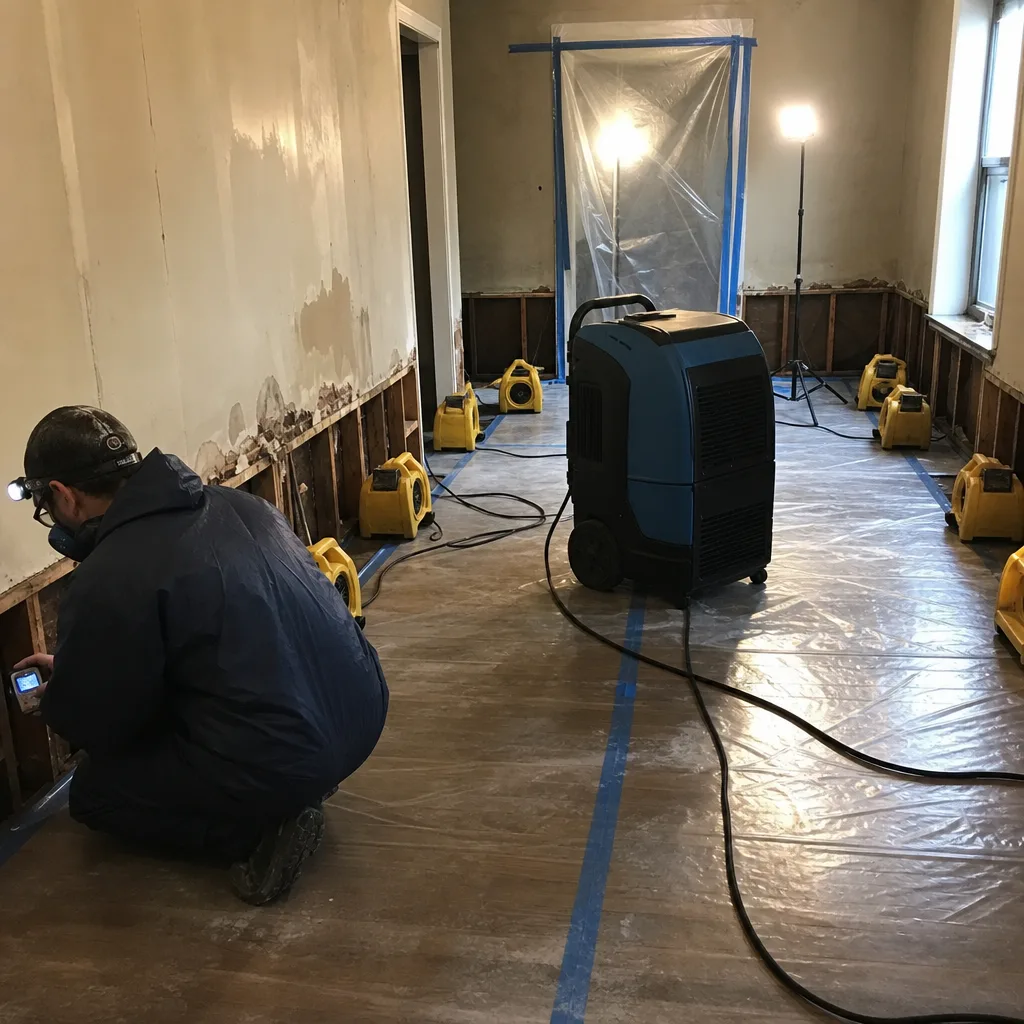
Mold Inspection & Testing
We start with thermal imaging and moisture mapping to find mold you can’t see, then collect air and surface samples where verification matters. In Sands Point’s older homes, we sample behind baseboards and inside the wall cavities where salt wicking hides active growth long after surface readings look normal.
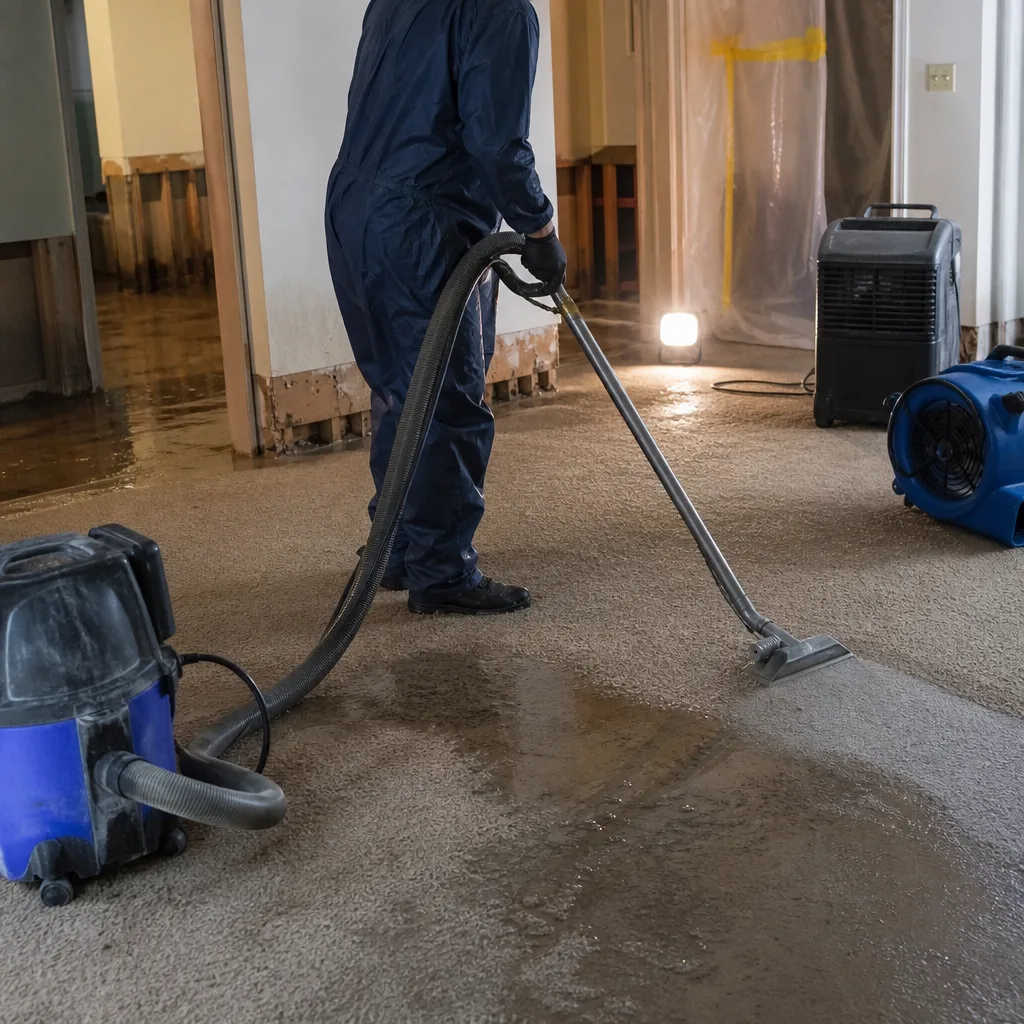
Mold Removal
Physical removal is the only real fix. We cut out compromised plaster, remove contaminated insulation and framing, and HEPA-vacuum every surface inside containment. On Gold Coast estates, we work around original millwork and period trim rather than demoing it, because the mold is rarely inside the good wood if we catch it early.
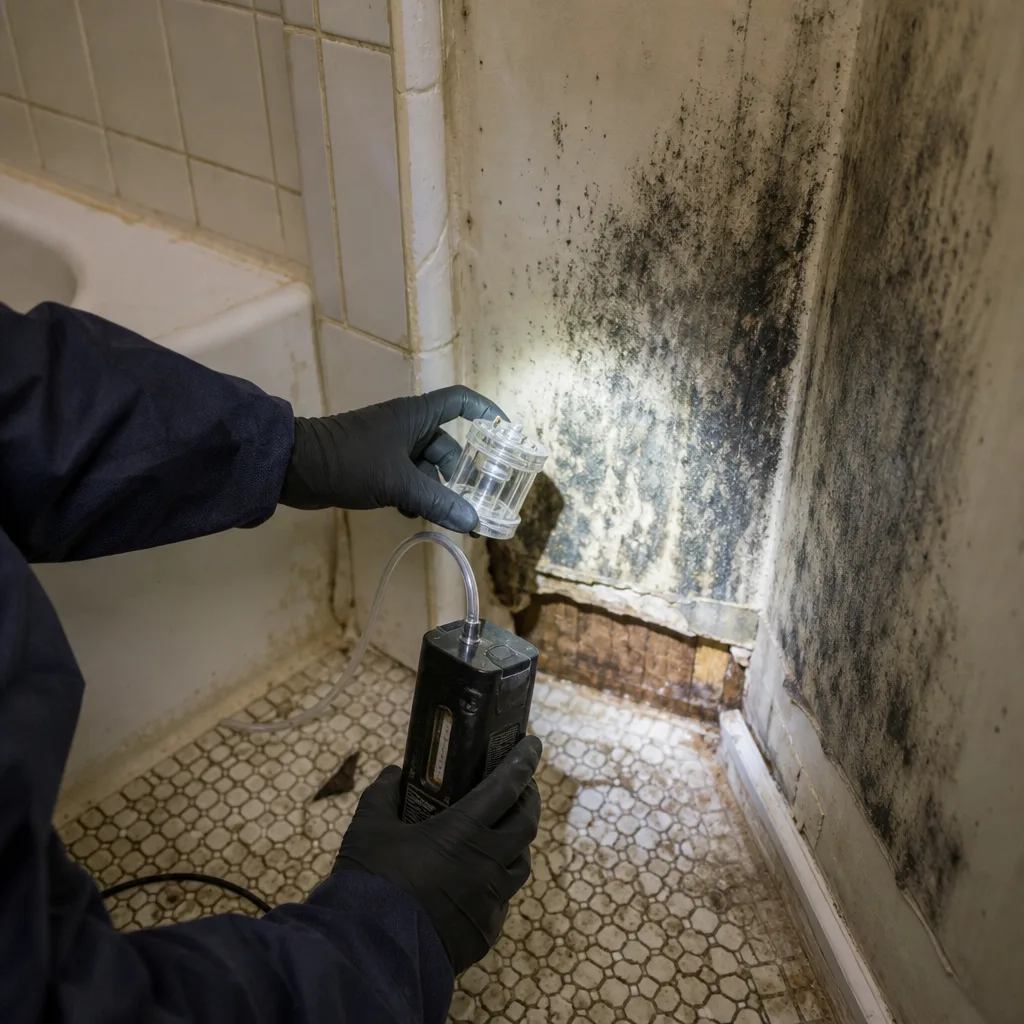
Black Mold Remediation
Stachybotrys and other toxigenic species are common in Sands Point basements that took saltwater and sat closed up. Full containment, negative air, and air scrubbing run the entire time we work. We treat it like what it is: a health hazard that requires the same rigor we’d bring to Sewage Cleanup in Sands Point.
Air Quality Restoration
After remediation, we run continuous HEPA air scrubbing and verify with clearance testing that spore counts are back to background levels. In pre-1960 homes with plaster walls and original drapery, this is the step that determines whether you’ll be calling us back in six months.
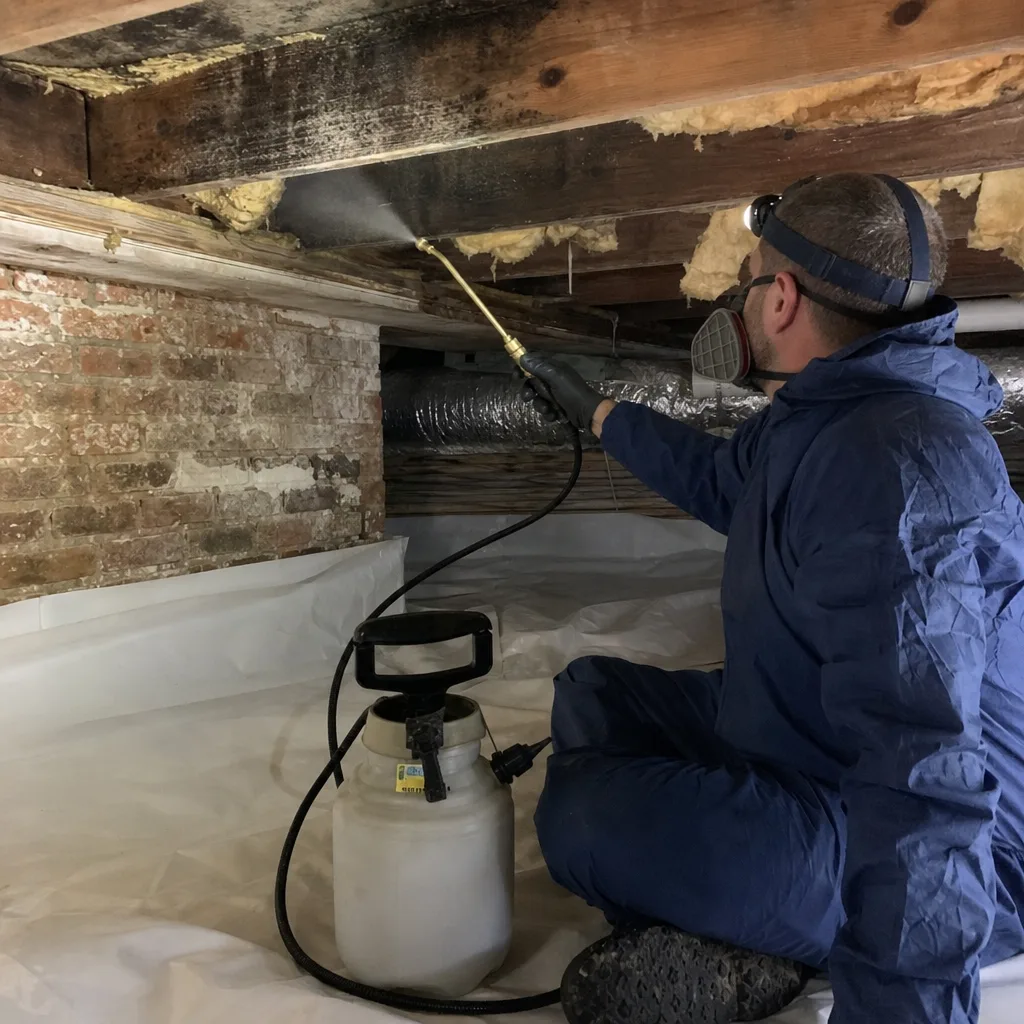
Crawl Space Treatment
Sands Point crawl spaces are the worst we see on the North Shore: shallow, damp, and sitting right at the water table. We remove contaminated soil, treat the structure, neutralize salt in the masonry, and install vapor barriers and dehumidification sized for the space. Done right, a treated crawl space stops feeding mold into the house above it.
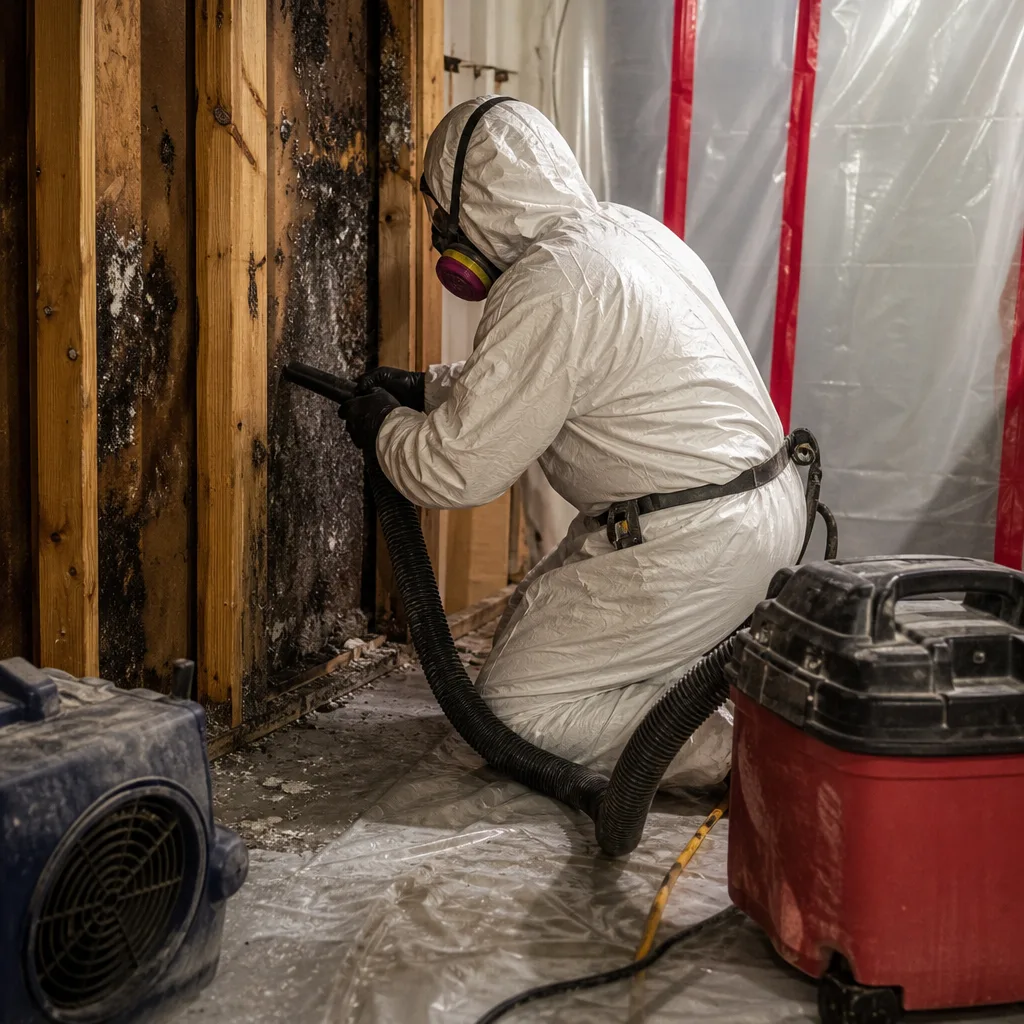
Moisture & Humidity Control
Mold is a moisture problem before it’s a mold problem. We address drainage, gutters, foundation grading, and interior humidity with real fixes: dehumidifiers, vapor barriers, and foundation treatments that stop water at the source. In Sands Point, where the Sound keeps ambient humidity high year-round, this is the long-term answer.
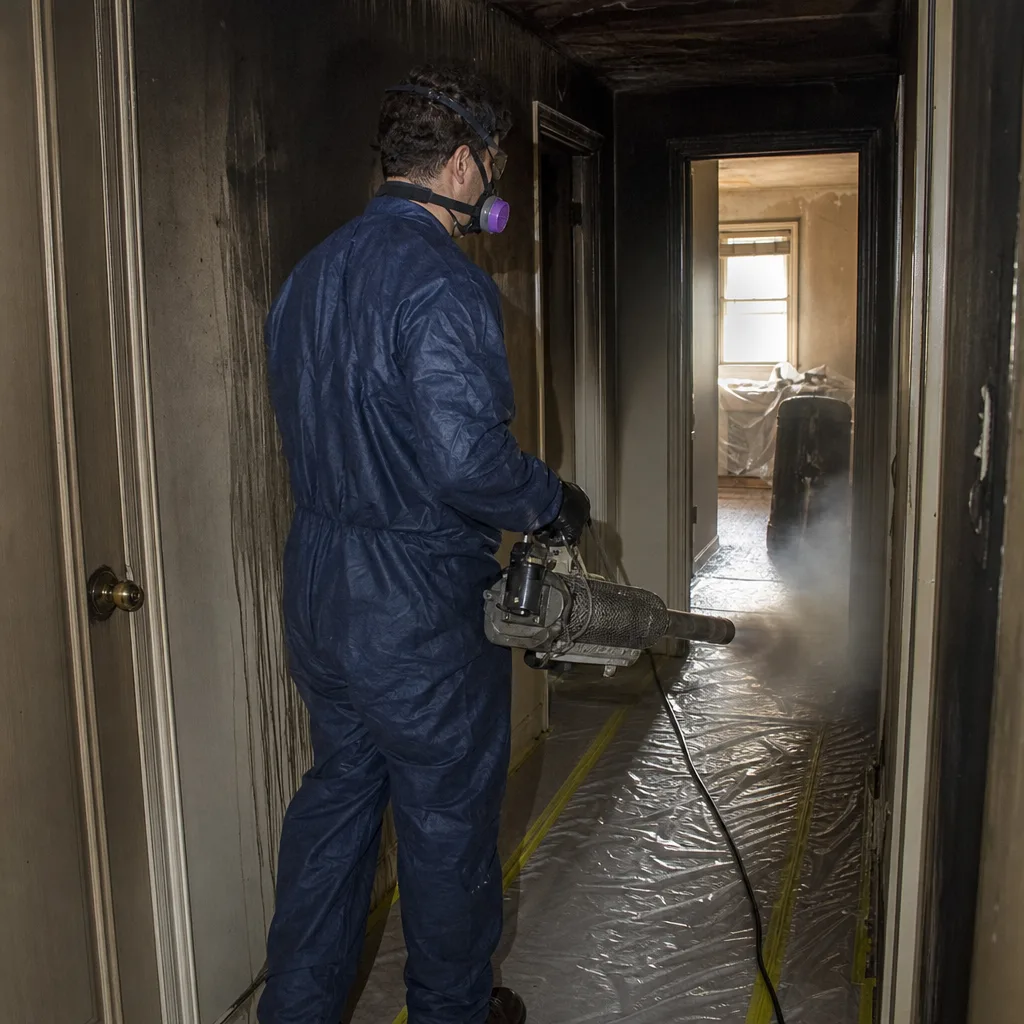
What happens when you call
- 1
A real person answersNo phone trees - you reach a local pro.
- 2
You get an upfront price rangeHonest numbers before anyone is dispatched.
- 3
A background-checked tech heads outLicensed & insured, dispatched right away.
- 4
You approve before work beginsNothing starts until you say go.
Mold Remediation Costs in Sands Point, NY
For Sands Point’s housing stock, a contained basement mold remediation on a typical estate home runs $3,200-$7,500. Crawl space treatment runs $2,200-$5,000 depending on square footage and salt contamination. Air quality restoration, including clearance testing, adds $600-$1,400. A basic localized closet or ceiling patch might come in around $1,800-$2,600. What moves the price in Sands Point: whether the mold is behind lath-and-plaster or open drywall, whether salt neutralization is required on the foundation, and whether original millwork needs removal and restoration. Insurance covers mold when it results from a covered peril, like a burst pipe or storm surge. Gradual leaks and long-standing humidity are usually out of pocket. The free visual inspection gets you a written scope with real numbers, so you know the cost before you commit. Call (917) 924-4221 for an exact quote.
We Also Serve Cities Near Sands Point
Our crews regularly respond to mold calls in Mold Remediation in Sands Point and the neighboring communities of Fairview, Harrison, East Bronx, and Hunts Point. Same 45-minute response commitment, same written scope before work starts, same Mold Remediation standards on every job.
Serving Sands Point, NY - Our Local Coverage Area
We’re based in the Sands Point area and know this community well. Use the map below to see our service coverage - if you’re nearby, we can almost certainly help.
Sands Point Mold Remediation Questions, Answered
Why does mold keep returning in Sands Point basements even after professional remediation?
In Sands Point, recurring mold is almost always salt. The granite and brick foundations common to the village’s estate homes wick residual saltwater for months after surface moisture reads dry. That salt pulls humidity from the air, keeps masonry damp, and feeds mold behind baseboards and wall cavities. If the previous contractor closed out the job without chemical salt neutralization, the mold comes back within a year because the moisture source was never actually stopped. We treat the salt before we finish drying, which is why our remediations hold.
Can the original lath-and-plaster walls in a Sands Point Gold Coast estate be saved after black mold contamination?
Often yes, if you catch it early. Lath-and-plaster is dense and traps moisture against the wood lath, which is where the mold grows. We can remove contaminated plaster from one side, treat the lath and framing, then rebuild with period-appropriate plaster rather than drywall. What you lose depends on how long the wall stayed wet. If the plaster keys are gone and the wall is crumbling, it has to come down. Get a free inspection and we’ll tell you straight what can be saved.
How does salt-laden air from Long Island Sound affect mold testing results in Sands Point?
Salt air holds more moisture against surfaces, which keeps indoor humidity higher and spore counts elevated even in a house with no active leak. Standard mold testing may register elevated background levels that aren’t from an active colony. That’s why we take comparative samples inside and outside, and pair testing with moisture mapping so we can distinguish ambient coastal conditions from a real problem inside your walls. Call (917) 924-4221 and we’ll explain the testing we recommend for your situation.
What is the correct order of operations for a saltwater mold remediation in a Sands Point estate crawl space?
First, contain the space and remove contaminated soil and debris. Second, extract remaining water and begin drying with dehumidifiers sized to the space. Third, apply antimicrobial treatment to all structural surfaces. Fourth, and this is the step most contractors skip, chemically neutralize the salt in the masonry foundation walls. Fifth, install a vapor barrier and, where the space allows, a dehumidifier. Doing encapsulation before salt neutralization seals the problem in. The salt keeps pulling moisture, and you’re redoing the job in a year.
Do historic Sands Point homes with old-growth timber framing require different mold remediation techniques than modern houses?
Yes. Old-growth Douglas fir and oak is denser than modern framing lumber, which means it holds moisture longer and dries slower. You can’t blast it with high-velocity air movers and call it done. We run controlled low-grain drying and take moisture readings from inside the timber, not just the surface. We also avoid chemical treatments that would stain or damage the wood. The timber in these homes is irreplaceable, and we treat it that way.
How fast can someone actually get here for a mold emergency in Sands Point?
Most Sands Point addresses have a crew on site within 45 minutes of your call. We answer live, 24 hours a day, and dispatch from trucks already stationed on the North Shore. Call (917) 924-4221 and we’ll confirm the crew’s ETA while you’re still on the line.
Will insurance cover mold remediation in Sands Point?
Insurance generally covers mold remediation when the mold results from a covered peril, like a burst pipe, a roof leak from storm damage, or documented water intrusion from a nor’easter. It typically doesn’t cover mold from long-standing humidity or a slow leak that went unreported. We document from the first hour and talk directly to your adjuster, so whether it’s covered or not, you’ll have a real answer and a written scope.
What should I do in the first 30 minutes after finding mold in my Sands Point home?
Don’t disturb it. Don’t open the wall, don’t scrub it, don’t run a box fan. Agitating the mold releases spores into the air, and in a closed-up estate interior, those spores settle into plaster, drapery, and furnishings. Close the door to the room if you can, shut down the HVAC if the mold is near a return vent, and call us. We’ll tell you over the phone what to do next, and a crew will be on the way.
Floodline Restoration Co. of Manhattan has been proud to serve local communities for over 42 years, with crews built around a dispatch board, not a sales desk. CurrWhite Bowman founded the company in 2010 on a simple idea: answer the phone with a person, show up when you say, and stand behind the work in writing. That idea is now the 90-Day Done Right Promise, our Keystone Standard. Every job gets it. No paperwork battles, no arguing.
Call (917) 924-4221 for a free estimate. A live dispatcher answers, 24 hours a day, every day of the year. We’ll be there when we say.
Written by Curt Bowman, Owner at Floodline Restoration Co. of Manhattan.