
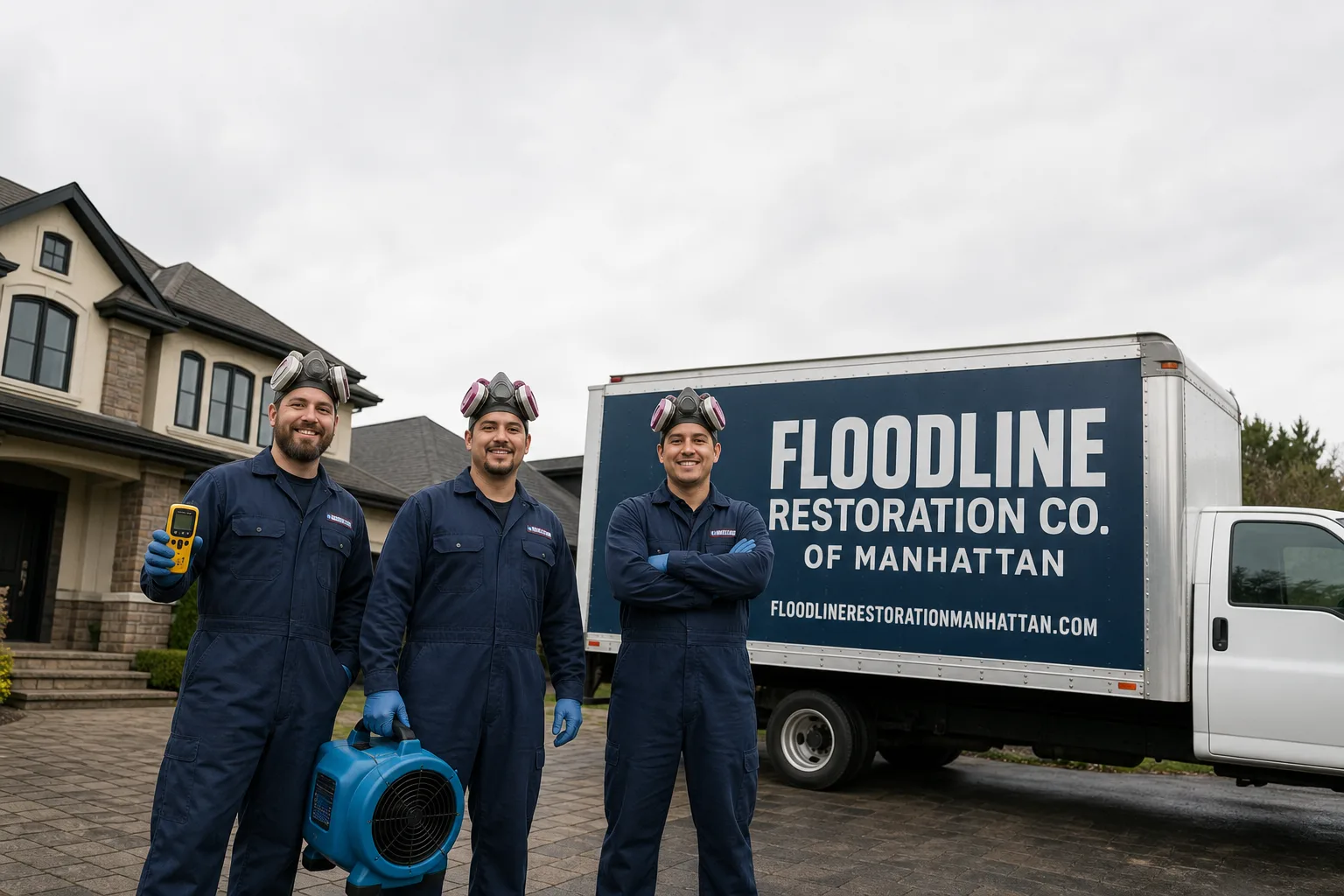
Free visual inspection and a written scope of work before any mitigation begins - photos, moisture readings, and drying logs go in your claim file
The scope we write is the scope we bill. Anything new gets shown to you, in writing, before we touch it.






 Before
 After
After Before
 After
After Before
 After
After24/7 Emergency Mold Remediation in South Ozone Park
Mold remediation in South Ozone Park usually starts with water, not mold. That’s the honest way to explain it. If you’ve got visible mold spreading across a basement wall off Rockaway Boulevard or that musty smell won’t leave a finished basement near Aqueduct Racetrack, call (917) 924-4221 right now. A live person answers, day or night. We dispatch crews into South Ozone Park within 45 minutes, do a free visual inspection, and tell you straight whether you need full remediation or a targeted cleaning. The first hour matters because mold colonies double fast in the humid air that sits over this low-lying part of Queens. Every hour you wait means more material to cut out. We’ll be there when we say.
Understanding Mold Remediation Severity in South Ozone Park Properties
Mold problems in South Ozone Park break into three severity levels, and the housing stock here dictates which one you’re facing. A surface-level issue, think light mildew on a bathroom ceiling or window sill, can often be cleaned and humidity-controlled without removing building materials. Moderate growth behind baseboards or inside wall cavities needs containment, HEPA air scrubbing, and removal of affected drywall or plaster. Severe colonization, the kind our crews regularly find in 1930s to 1950s brick row houses off 111th Avenue and 114th Street, means structural framing is involved. That requires full containment with negative air pressure, antimicrobial treatment on exposed framing, and post-remediation clearance testing to prove the air is actually clean. In finished basements throughout South Ozone Park, severity almost always ticks up once we open walls. The moisture that’s been trapped behind drywall since Sandy or the last big thunderstorm has had years to work into the joists.
Why South Ozone Park Property Owners Choose Floodline Restoration Co. of Manhattan
- 45-minute response commitment. We dispatch from our New York City office and crews reach South Ozone Park fast, with equipment loaded and ready to start extraction the same visit.
- 24/7 live answer. A real dispatcher picks up at two in the morning. Not a recording. You’ll never leave a message while mold keeps spreading.
- Certified, background-checked crews. Our technicians are trained to IICRC standards, including AMRT for mold remediation, plus RIA and IFA protocols. Uniformed, background-checked, and professional.
- Free visual inspection. We’ll assess the affected area, take moisture readings, and give you an honest recommendation. No charge, no obligation.
- Direct insurance billing. We coordinate with your adjuster and bill your carrier directly for covered losses. You don’t play messenger between us and them.
- One team, start to finish. The crew that sets containment handles daily moisture readings, removes affected material, and rebuilds what needs rebuilding. No handoffs, no inherited strangers.
Our Mold Remediation Process
Inspection & Assessment
We start with a full visual inspection and moisture mapping using thermal imaging and hygrometers. In South Ozone Park’s converted basement apartments and semi-detached homes, this means checking behind finished walls, under staircases, and along sill plates where groundwater wicks up.
Extraction/Stabilization
Mold here is almost always fed by an active water source. We stop it first, extracting standing water and addressing the leak or seepage point. If a high water table is pushing groundwater through the slab, we deal with that before containment goes up.
Drying & Dehumidification
Using Dri-Eaz dehumidifiers and Phoenix air movers, we pull moisture out of structural wood and concrete until daily readings hit the dry standard. In South Ozone Park’s humid summer air, this step is non-negotiable. Skipping it is why mold comes back.
Cleaning & Sanitization
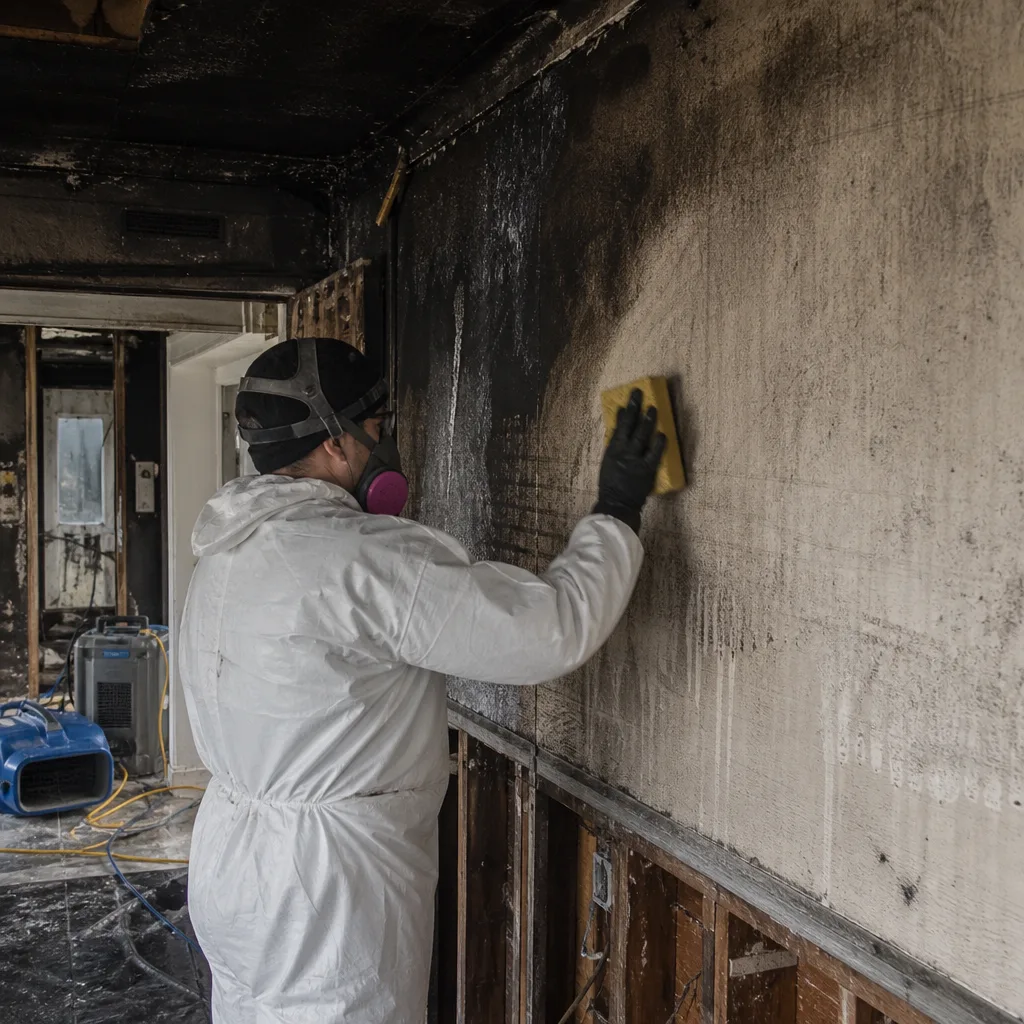
HEPA air scrubbers run continuously during the work to capture airborne spores. We HEPA-vacuum all affected surfaces and apply EPA-registered antimicrobial treatment where framing and concrete remain.
Specialty Treatment: Crawl Space & Air Quality
Crawl spaces in South Ozone Park brick homes are a particular problem. We seal, treat, and dehumidify these spaces to stop soil moisture from feeding mold above. Post-remediation air samples confirm spore counts return to normal background levels.
Repairs & Restoration
We rebuild what we remove, new drywall, trim, flooring, or full basement reconstruction for heavily affected homes. The same crew finishes the job, and the 90-Day Done Right Promise applies to all of it, in writing.
Need Emergency Mold Remediation in South Ozone Park Now?
Crews minutes away, answering live 24 hours a day. The sooner we start, the less it costs.
Working With Your Insurance Company
Mold claims in South Ozone Park almost always connect back to a covered water loss, a burst pipe, a storm surge, a sewer backup. That’s where our documentation process matters. From the first hour on site, we photograph everything, log moisture readings, and build the paper trail your adjuster needs to approve scope. We write estimates in industry-standard format, speak directly with the carrier, and push back when an initial settlement doesn’t match the damage we’ve documented. You never sit on hold with an 800 number trying to explain why remediation costs what it costs. Most South Ozone Park homeowners dealing with mold from a covered event get the work handled through their policy. We make sure that happens.
What We Provide Your Insurer
- Thorough documentation of the loss
- Photos of all damage, room by room
- Moisture readings and drying logs
- A detailed, line-item scope of work
- Direct coordination with your carrier
Built for South Ozone Park’s Loss Calendar
Mold doesn’t respect the calendar, but South Ozone Park’s geography gives it a pattern. January deep freezes burst supply lines in uninsulated 1940s basement walls, setting off a slow Category 1 water release that homeowners don’t catch for days. Spring thaw and steady March rain saturate the soil around foundations, and the high water table pushes water through floor slabs in basements from Baisley Pond Park to 130th Street. Summer thunderstorms drop two inches in an hour, overwhelming the flat, low-lying drainage and sending water over basement window wells. Then comes autumn nor’easter season, when storm surge off Jamaica Bay reminds everyone why this neighborhood sits in active FEMA flood zones. Each of these events is the opening chapter of a mold problem. We’ve built our scheduling, equipment, and staffing around being there for every one of them. The line the water left is where we start.
Mold Remediation Across South Ozone Park’s Neighborhoods
South Ozone Park’s housing patterns shape how mold presents. In the attached brick row houses off Rockaway Boulevard near Van Wyck Expressway, shared party walls mean moisture migrates laterally. A leak in one rowhouse can feed mold in the neighboring home’s wall cavity, which is why we scope jobs with the full structure in mind, not just one unit. Over near Baisley Pond Park and the blocks around 127th Street, homes sit closer to the water table and crawl spaces stay damp year-round. The two-family homes along 109th Avenue and 114th Street, many built in the 1930s and 1940s, often have finished basements that conceal active mold behind drywall for years. Meanwhile, houses bordering North Conduit Avenue deal with traffic vibration settling foundations, opening hairline cracks where groundwater intrudes. Whatever the block, these are brick homes with basements and a flood-zone ZIP code. The mold pattern is consistent. Hidden moisture, concealed growth, recurring returns.
Specialized Mold Remediation Services We Offer in South Ozone Park
Mold Inspection & Testing
We start with moisture mapping rather than guessing. Thermal imaging and hygrometers show us where water is hiding, even when no mold is visible. Air and surface sampling confirms what species is present and at what concentration. For South Ozone Park homes with finished basements, this is the only way to know if the Sandy-era dry-out left something behind the walls.
Mold Removal
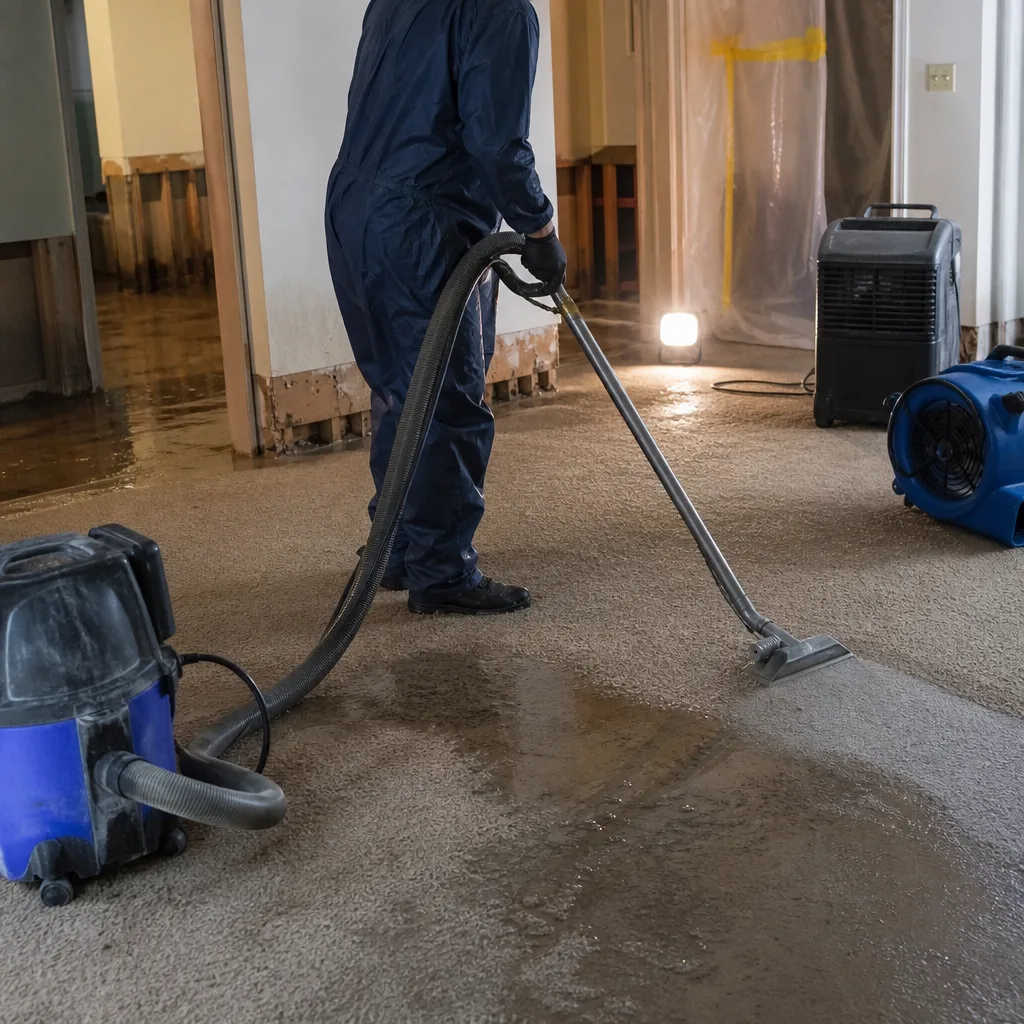
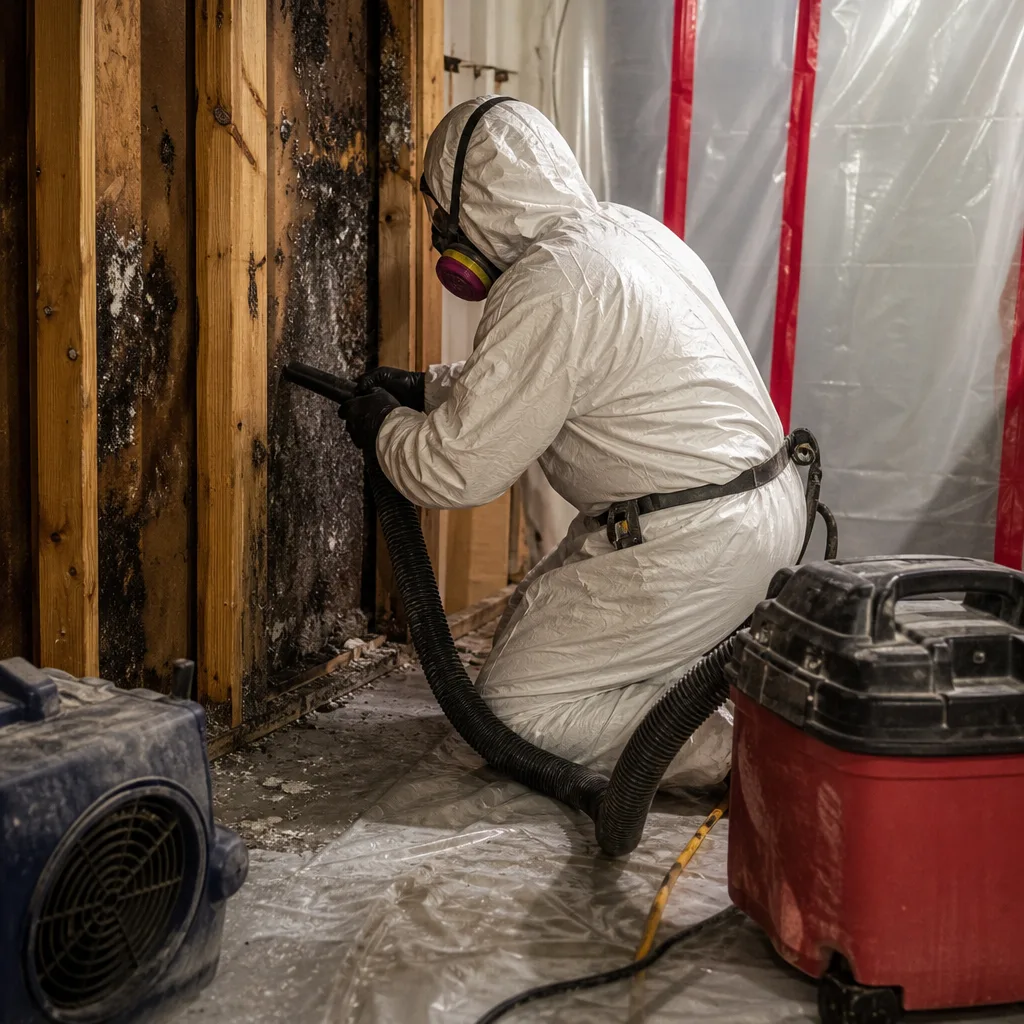
Removal means physically cutting out affected materials, not just wiping down surfaces. In South Ozone Park’s brick row houses, this typically means removing lower drywall sections, baseboards, and sometimes flooring where groundwater seepage has wicked up from the slab. We set containment first so spores don’t spread through the house during removal.
Black Mold Remediation
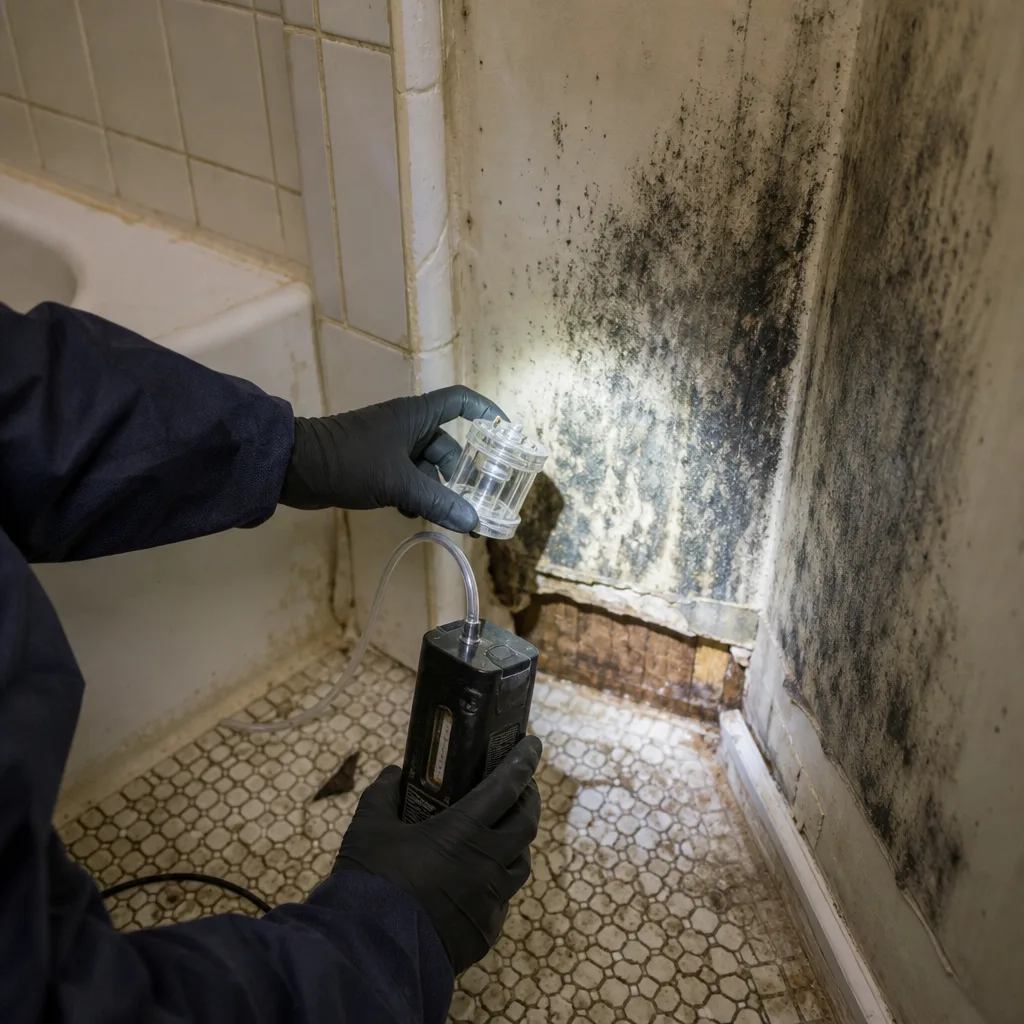
Stachybotrys, what homeowners call black mold, thrives on chronically wet cellulose like drywall, ceiling tiles, and wood. We see it regularly in South Ozone Park basements that were refinished without addressing the underlying water source. Full containment, HEPA air scrubbing, and antimicrobial treatment on structural members are standard procedure. This is not a job for a handyman with bleach.
Air Quality Restoration
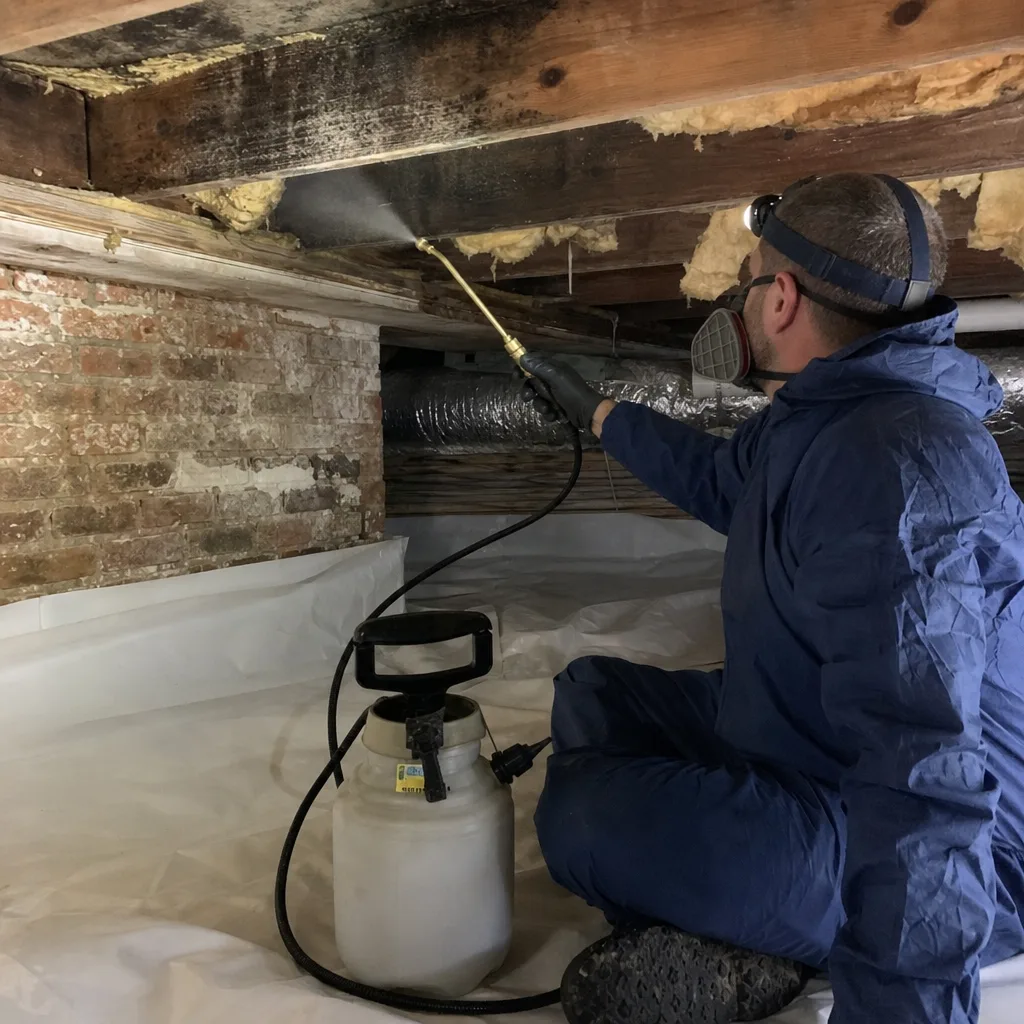
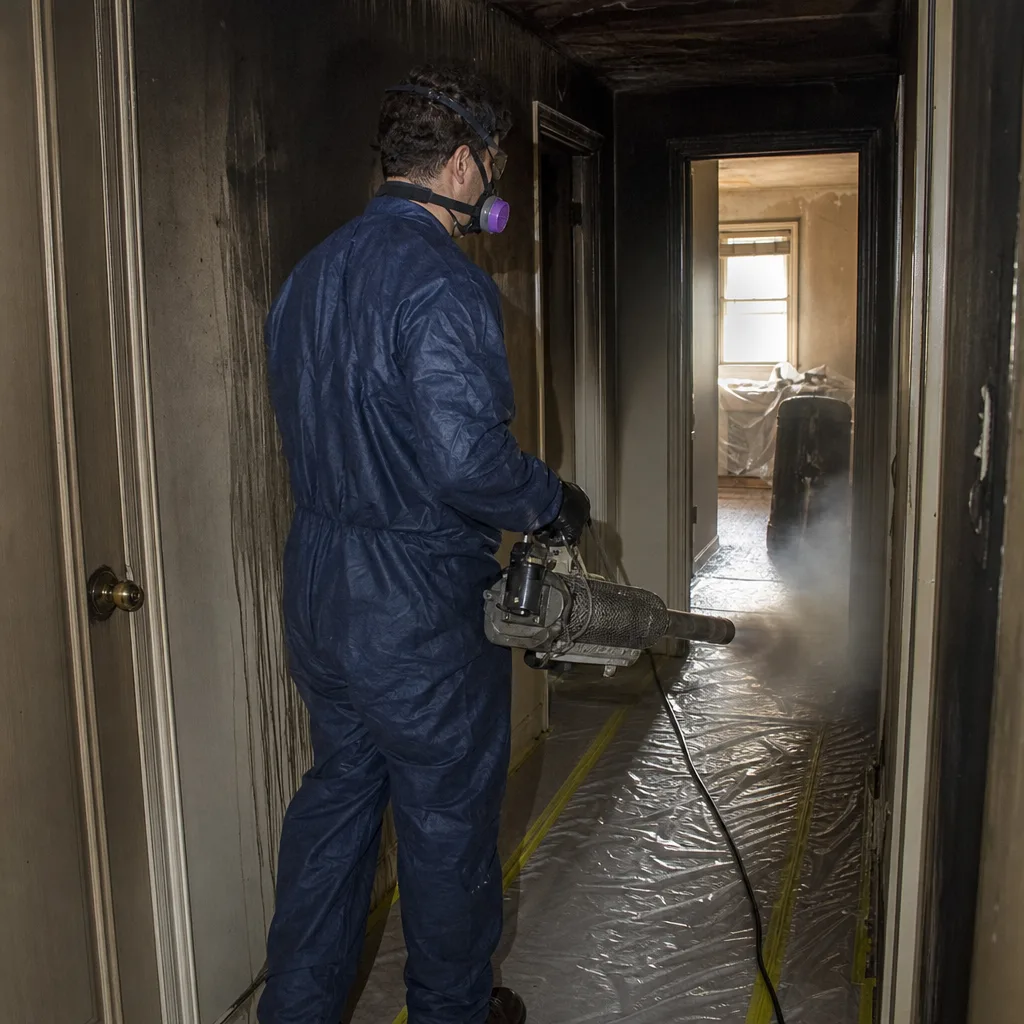
After physical removal, airborne spore counts can remain elevated for weeks. We run HEPA air scrubbers throughout remediation and perform post-remediation air testing to confirm counts have dropped to normal outdoor levels. For South Ozone Park homeowners with respiratory concerns, this verification is the difference between done and guesswork.
Crawl Space Treatment
Crawl spaces in South Ozone Park sit close to a high water table. Soil moisture evaporates upward into floor joists, feeding mold even with no visible water intrusion. We install vapor barriers, seal vents where appropriate, treat framing, and add dehumidification so the space stays dry. This is preventive work that stops mold from forming above.
Moisture & Humidity Control
South Ozone Park’s summer humidity runs high, and basements below grade never really dry on their own. We install and calibrate whole-space dehumidifiers, address drainage and grading issues, and recommend systems sized for the square footage. The goal is a basement that stays under 50 percent relative humidity year-round, which is the threshold where mold stops growing.
What happens when you call
- 1
A real person answersNo phone trees - you reach a local pro.
- 2
You get an upfront price rangeHonest numbers before anyone is dispatched.
- 3
A background-checked tech heads outLicensed & insured, dispatched right away.
- 4
You approve before work beginsNothing starts until you say go.
Mold Remediation Costs in South Ozone Park, NY
What does mold remediation cost in South Ozone Park? A straightforward contained removal in a small bathroom or laundry corner runs $1,200 to $2,800. A typical basement wall section with moderate mold behind drywall lands between $3,000 and $6,500, including containment, removal, antimicrobial treatment, and drying. Full basement remediation in a finished South Ozone Park two-family, where we’re cutting out drywall, flooring, and possibly treating structural joists, runs $8,000 to $18,000 or more depending on square footage and how far the moisture traveled. Your insurance policy often covers remediation when it’s tied to a covered water event like a burst pipe, storm surge, or sewer backup. If the mold is from a slow, unaddressed leak, that’s usually out of pocket. The free visual inspection gives you a firm number before we start anything. A written scope, agreed in advance. No surprises on the bill. Call (917) 924-4221 and we’ll map it out.
We Also Serve Cities Near South Ozone Park
Floodline Restoration Co. of Manhattan serves the full South Queens corridor. If you’re in South Richmond Hill, Howard Beach, Ozone Park, or Richmond Hill, the same 45-minute response commitment and 90-Day Done Right Promise apply. Call (917) 924-4221 and a live person will dispatch a crew to your block.
Serving South Ozone Park, NY - Our Local Coverage Area
We’re based in the South Ozone Park area and know this community well. Use the map below to see our service coverage - if you’re nearby, we can almost certainly help.
South Ozone Park Mold Remediation Questions, Answered
Why does mold keep coming back in South Ozone Park basements even after remediation?
Mold returns in South Ozone Park because the water source was never actually eliminated. The high water table under this flood-zone neighborhood pushes groundwater back through floor slabs and foundation cracks every time the ground saturates. If remediation removes the visible mold but doesn’t address the water entry point, drainage, humidity, and structural drying, new spores colonize within weeks. A proper job includes fixing the water problem first, and that’s what our team is built to handle.
Can I just dry out my South Ozone Park basement after a flood and skip mold remediation?
You can, but you’ll likely regret it. South Ozone Park’s humid air and high water table mean wet drywall and wood rarely dry fast enough to prevent colonization. Mold spores germinate in 24 to 48 hours on wet cellulose. If a basement floods from storm surge, a burst pipe, or groundwater seepage, drying alone doesn’t kill the colony starting inside the wall cavity. We recommend at minimum a professional moisture assessment. Call (917) 924-4221 for a free inspection.
Do I need containment for mold removal in a semi-detached South Ozone Park home?
Yes. In semi-detached and attached row houses, shared party walls mean airborne spores move through any gap in the structure. Proper containment with negative air pressure and HEPA air scrubbing prevents us from contaminating your living space or your neighbor’s home. For any job beyond a small surface patch, containment is not optional. The IICRC AMRT standard requires it, and so do we.
How do you find mold hidden behind finished basement walls after a Sandy-era DIY dry-out?
We use moisture mapping with thermal imaging and penetrating hygrometers. A thermal camera shows temperature differences in the wall that indicate dampness even when the surface feels dry. Moisture readings tell us what’s happening inside the wall cavity. On a call in the 1940s brick row houses off Rockaway Boulevard, our crew found a basement that had been pumped out and refinished after Sandy. Moisture mapping and moisture readings revealed hidden mold colonies behind plaster-and-lath walls and under floor joists; we set containment, removed the affected materials, and treated the framing with antimicrobial treatment before structural drying with Dri-Eaz dehumidifiers and air movers. That’s the only reliable way to know.
What type of equipment do you use for structural drying in humid South Ozone Park summers?
Dri-Eaz dehumidifiers (including LGR units for low-grain conditions), Phoenix air movers, and occasionally Injectidry systems for wall cavities and hard-to-reach spaces. In South Ozone Park’s summer humidity, low-grain refrigerant dehumidifiers are on every job. Cheap equipment can’t hit the dry standard here. We log daily readings and hand the moisture log to you and your insurer. Call (917) 924-4221 for an assessment.
How fast can you actually get to South Ozone Park for a mold emergency?
We commit to 45 minutes from dispatch for emergencies. Our New York City office coordinates crews specifically for South Ozone Park and the surrounding South Queens corridor. The dispatcher who answers at 3 a.m. already knows which crew is closest and what equipment is on their truck. No waiting for a call center to “page someone back.”
Will my homeowner’s insurance cover mold remediation in South Ozone Park?
Generally yes when the mold is the result of a covered water damage event, like a burst pipe, storm surge, sump pump failure, or sewer backup. The key is proving the connection between the water event and the mold. That’s what our documentation process handles: photos, moisture logs, and a line-item scope written to insurance industry standards. We coordinate directly with your adjuster so you don’t have to.
What should South Ozone Park homeowners do in the first 30 minutes after discovering mold?
Stop the water source if it’s still active, shut off the water main if it’s a pipe leak. Close the door to the affected area to contain airborne spores. Don’t run the central air, it can pull spores through the ductwork. Then call (917) 924-4221. A live person answers, and we’ll talk you through the next steps while a crew heads your way. The sooner we start, the less material gets cut out and the lower the final bill.
Mold remediation in South Ozone Park is a different job than it is on higher ground in Queens. The water table, the flood-zone geography, and the history of Sandy-era DIY dry-outs all stack the deck toward hidden colonies and recurring growth. We’ve built our process around that reality, with containment protocols, professional-grade drying equipment, and the documentation your insurer needs. Our Mold Remediation team handles everything from first inspection to final rebuild, and we stand behind the result with the 90-Day Done Right Promise. In writing. No arguing.
If you’re dealing with mold in South Ozone Park, call (917) 924-4221 today. A free visual inspection gives you a straight answer and a firm number. Done right, and backed in writing.
Written by Curt Bowman, Owner at Floodline Restoration Co. of Manhattan, serving South Ozone Park and the South Queens corridor with the 90-Day Done Right Promise.