

Free visual inspection and a written scope of work before any mitigation begins - photos, moisture readings, and drying logs go in your claim file
The scope we write is the scope we bill. Anything new gets shown to you, in writing, before we touch it.
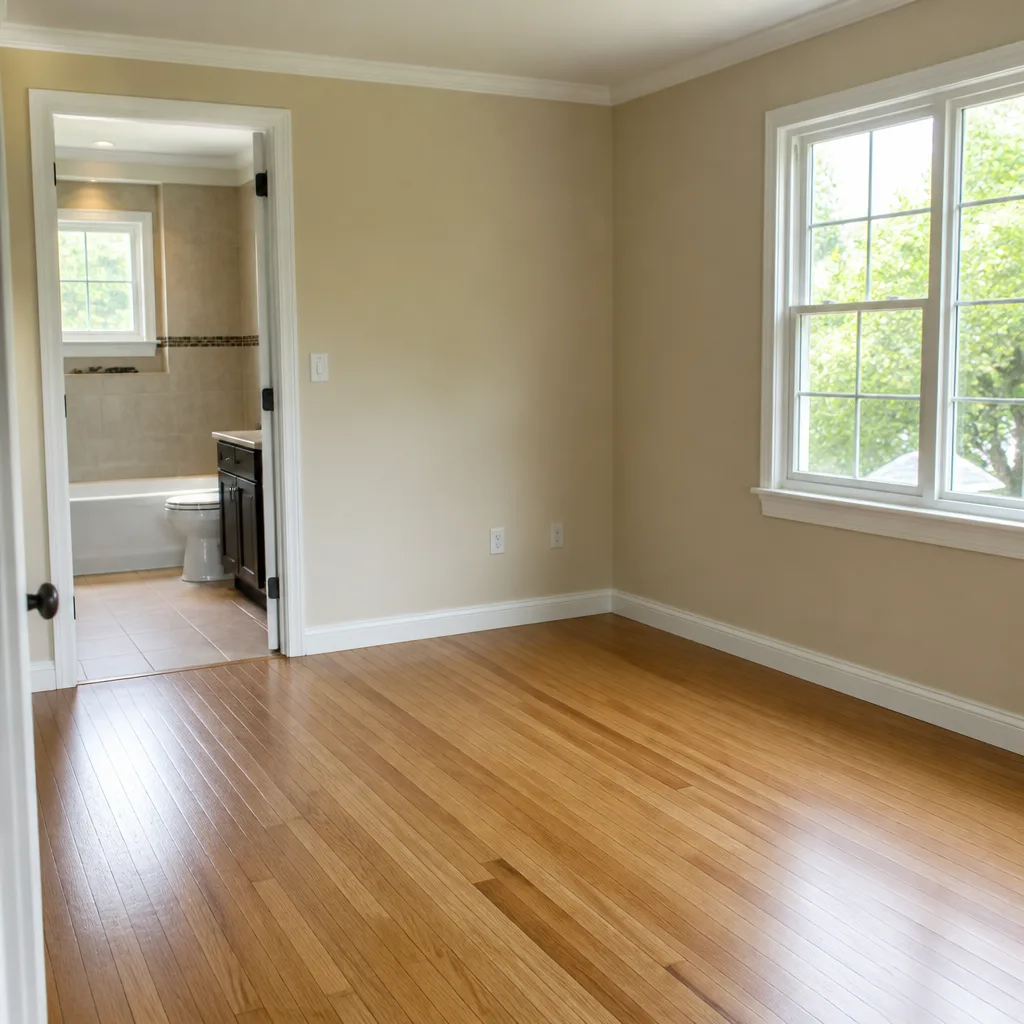
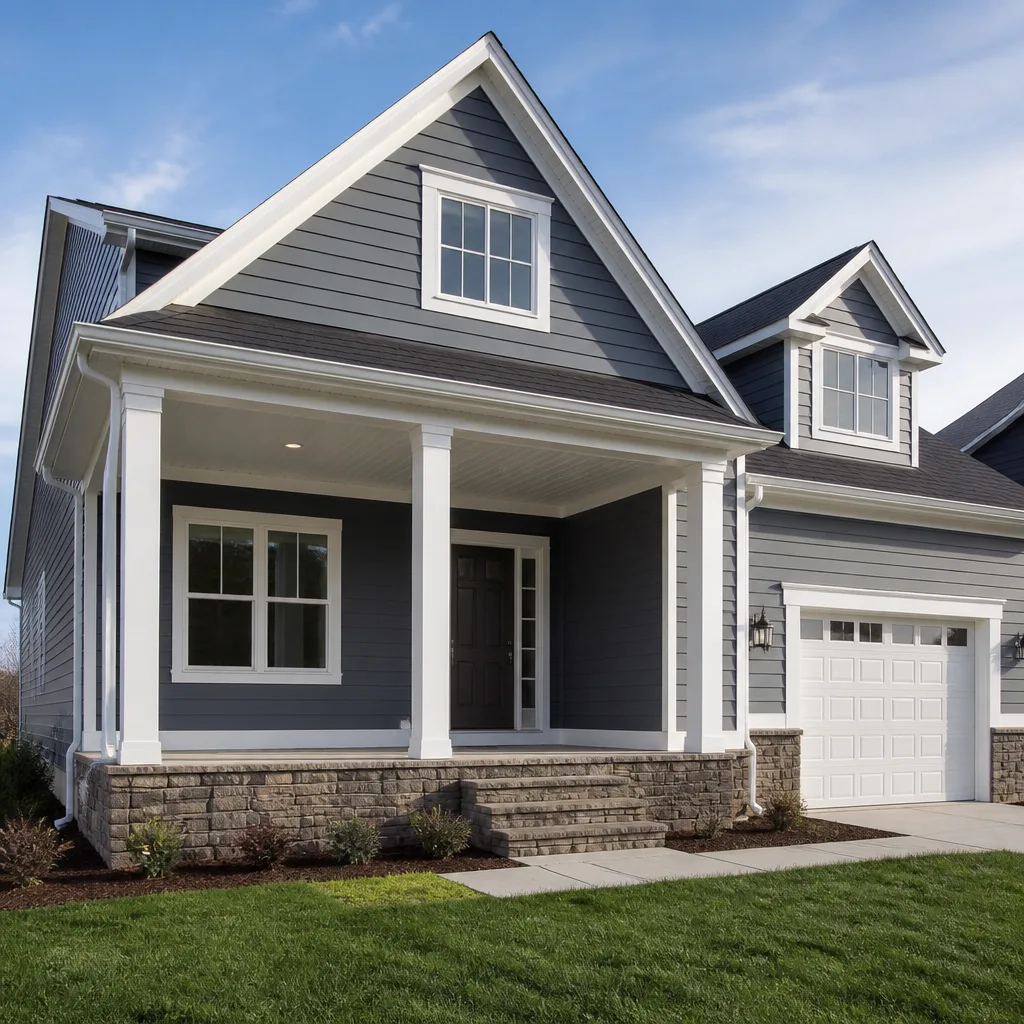
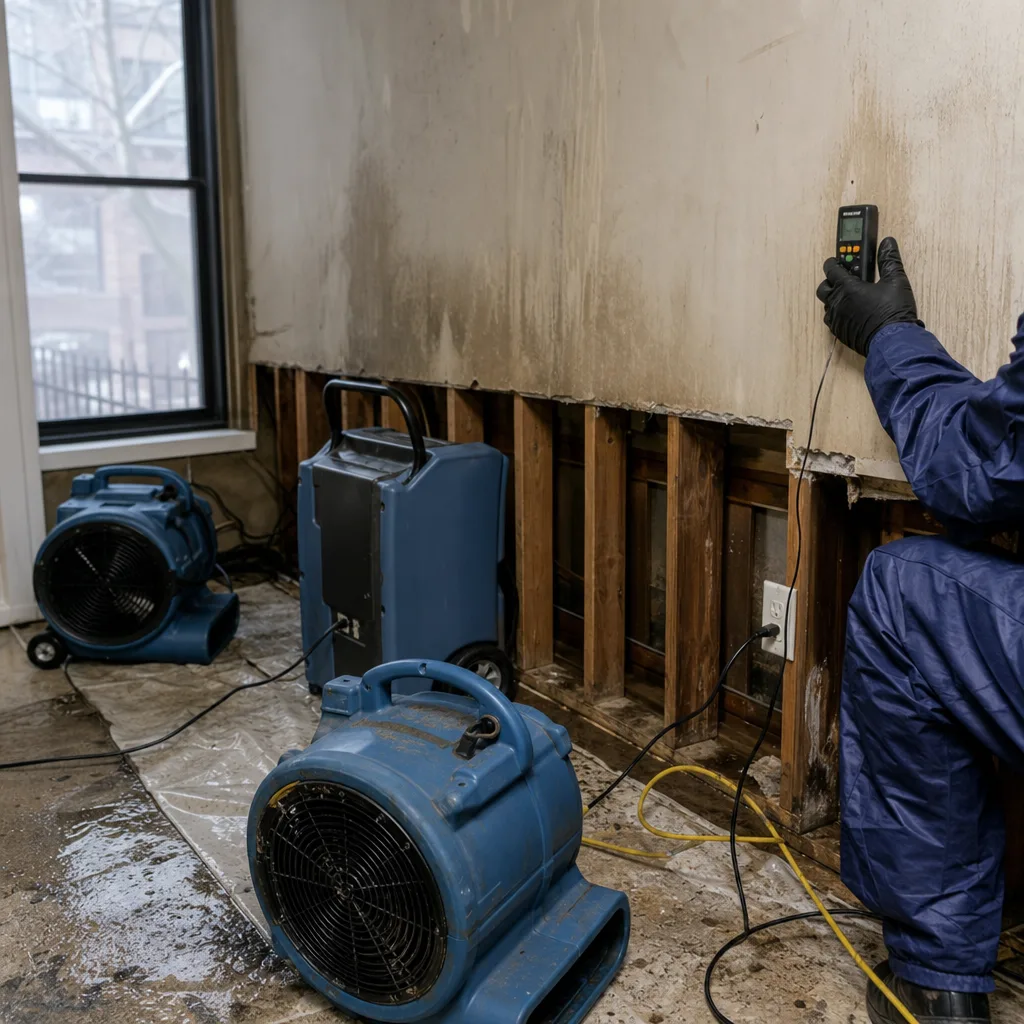 Before
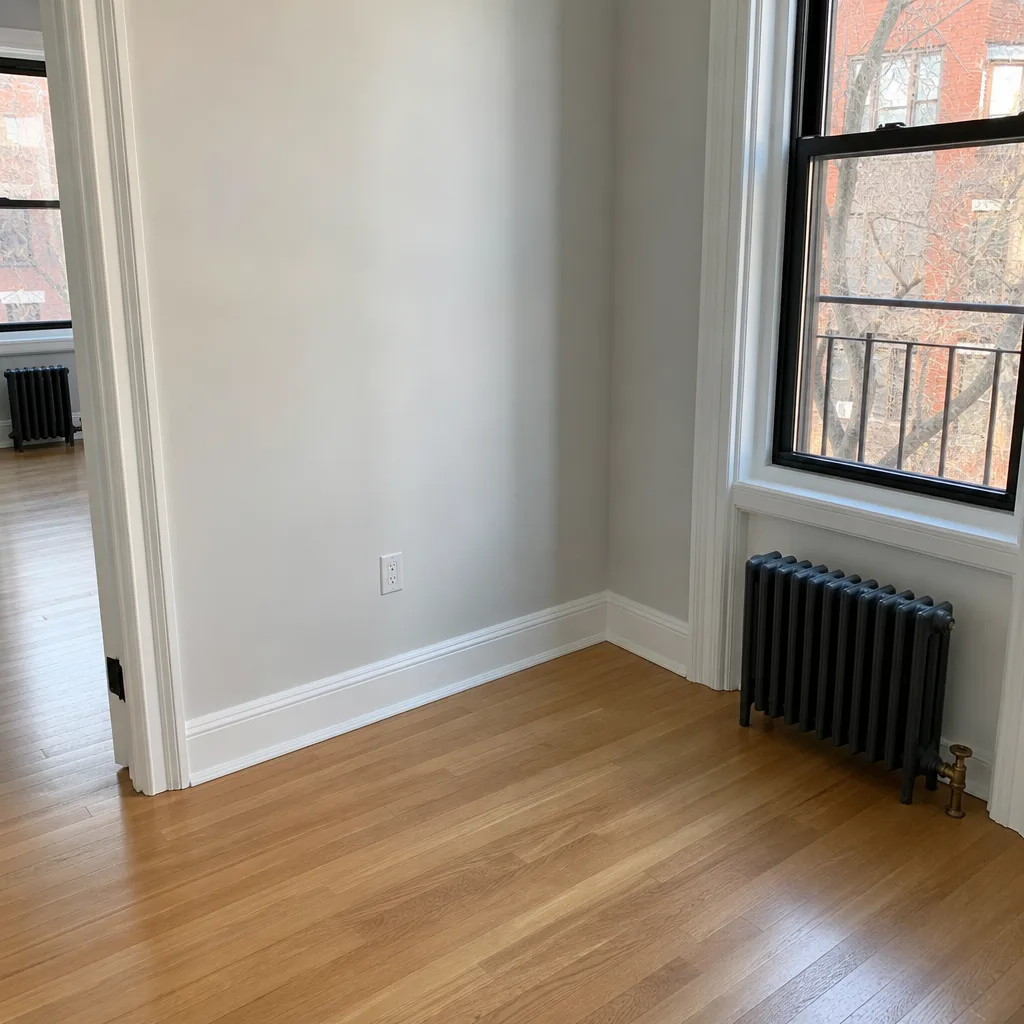 After
After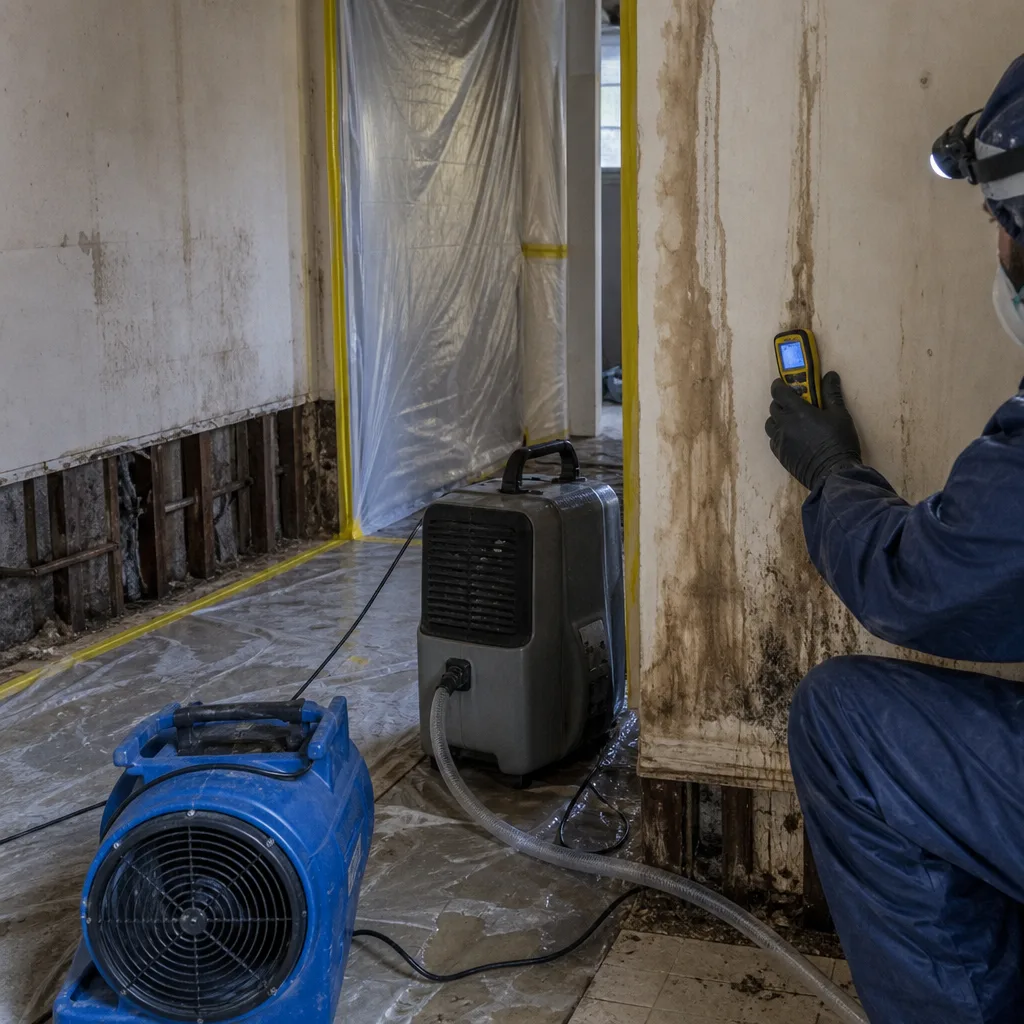 Before
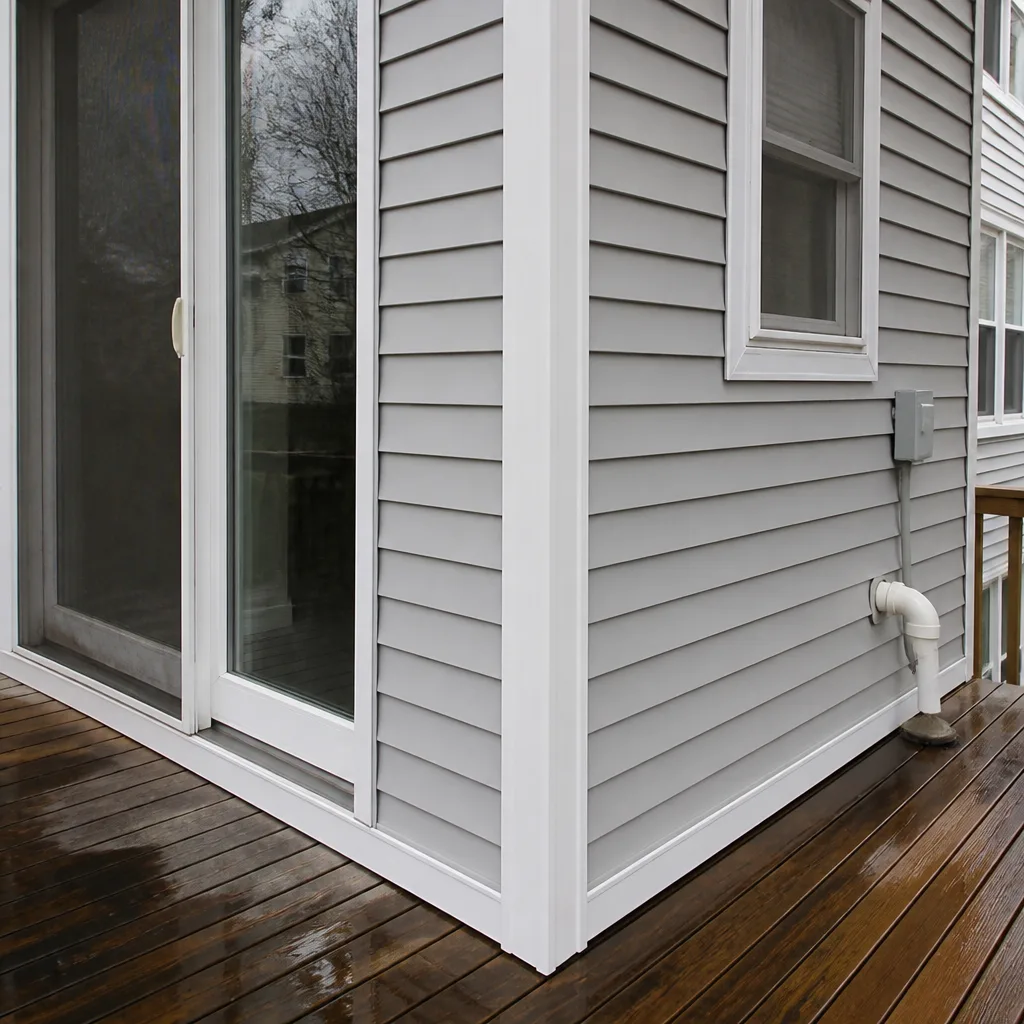 After
After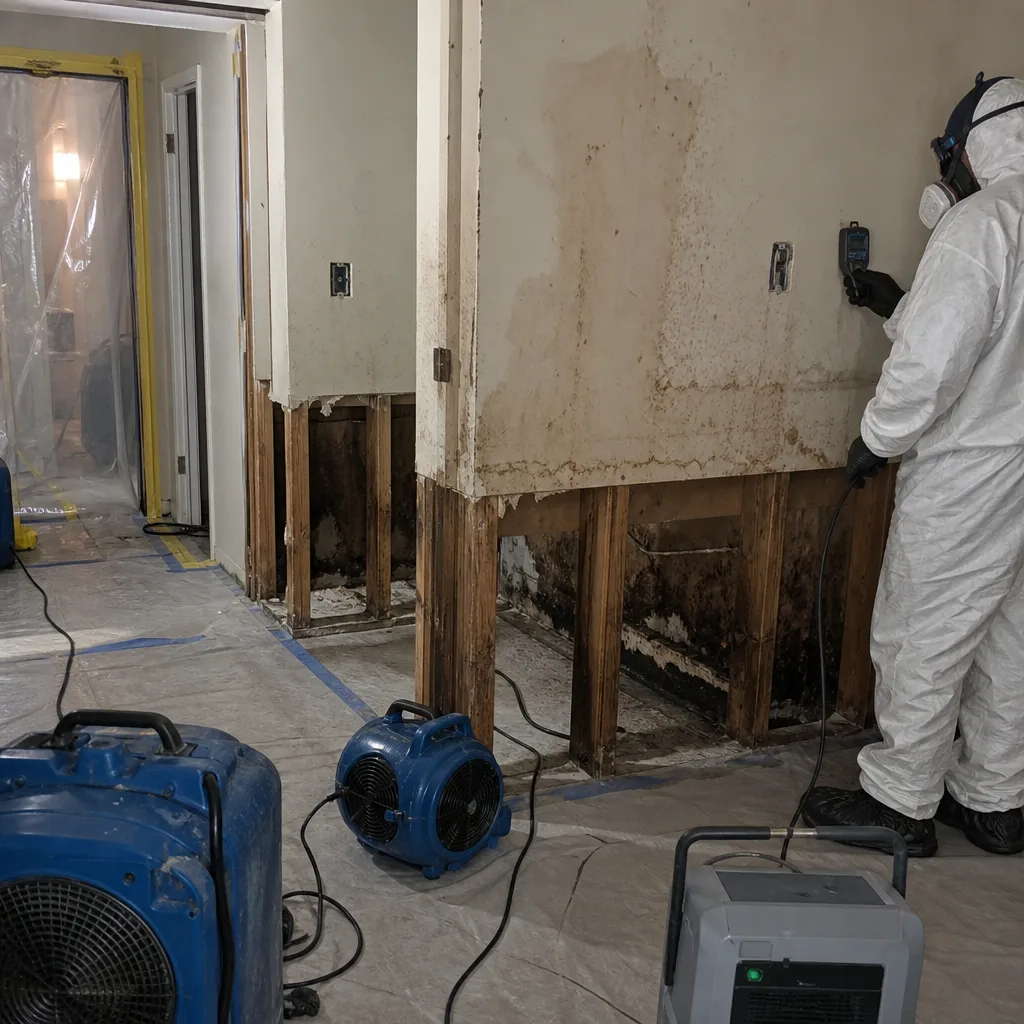 Before
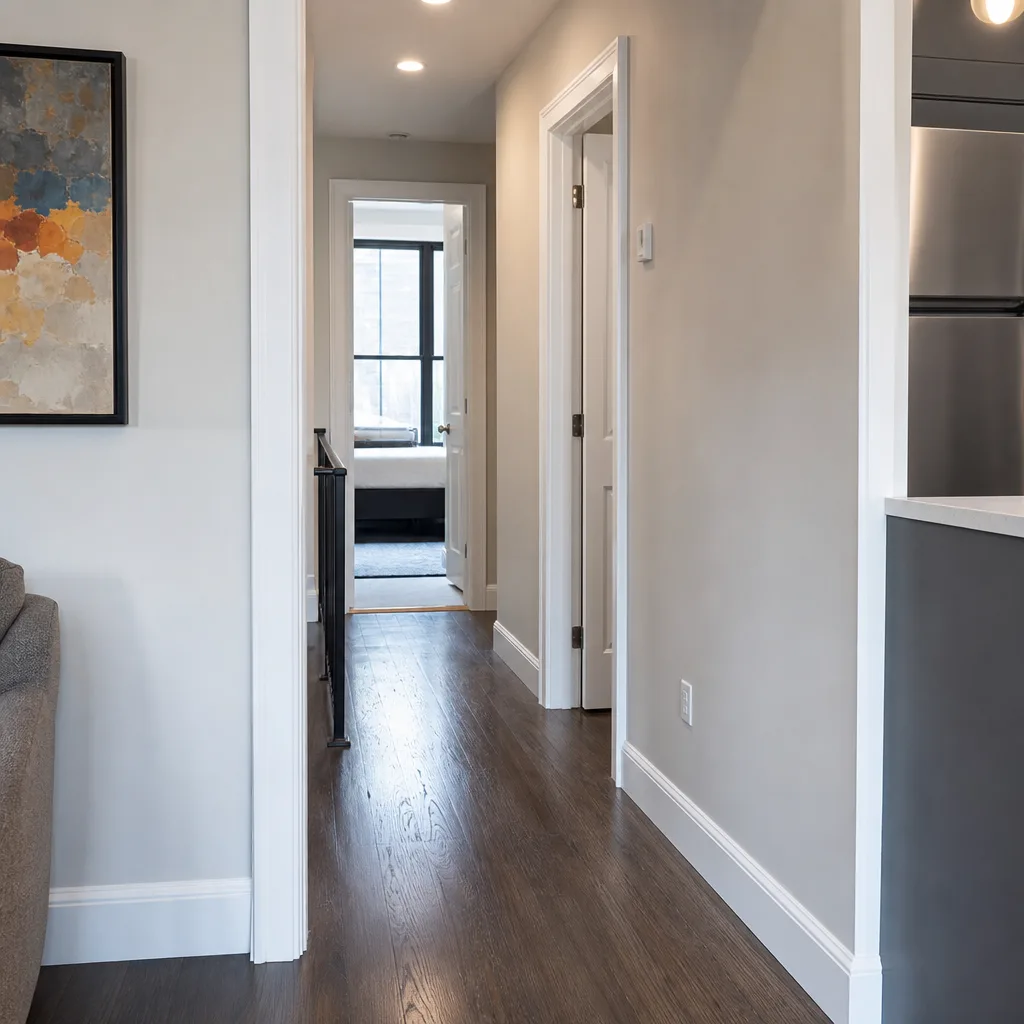 After
After24/7 Emergency Mold Remediation in St. Albans
Mold remediation in St. Albans means one thing above all: the mold you can’t see is the mold that will come back. In this neighborhood, decades of flooding, combined sewer backups, and post-Sandy drywall patches have left hidden colonies behind finished basement walls and inside shared row house party walls. When you call Floodline Restoration Co. at (917) 924-4221, a live dispatcher answers, not a recording, and a certified crew can be dispatched to your block within 45 minutes. We start with a free visual inspection, then probe deeper. Because in St. Albans, surface readings alone don’t tell the story. The first hour matters: mold that’s left undisturbed behind drywall keeps feeding on trapped moisture, spreading through stud cavities and into shared walls, and the longer it sits, the more it costs to correct. Call now and a real person will pick up. We’ll be there when we say.
Understanding Mold Remediation Severity in St. Albans Properties
Mold severity breaks down by water category and duration, and St. Albans’s housing stock makes this lesson unforgiving. Most basements here are full finished spaces in 1930s-1950s brick semi-detached or attached Cape Cod-style row houses. The walls are framed with wood studs against brick party walls, the floors over original concrete slabs, and the plumbing runs through original cast-iron lines that have been corroding since the Eisenhower administration. When a Category 3 sewage backup from the combined sewer wicks into drywall, that drywall is not just wet; it’s carrying bacteria and organic load that mold feeds on within 24 to 48 hours. Category 1 clean-water leaks from a supply line grow mold more slowly but still create the same cavity humidity problem behind finished surfaces. In St. Albans, the complication is the Sandy-era patchwork: drywall hung after 2012, never properly dried, now trapping moisture inside wall cavities where no one looks. We treat every St. Albans mold job as a concealed-mold investigation first, because in this neighborhood, what you can see is rarely the whole scope. Proper remediation requires containment with 6-mil poly, negative air pressure, HEPA air scrubbing, and clearance testing after removal, not a spray-and-paint approach.
Why St. Albans Property Owners Choose Floodline Restoration Co. of Manhattan
- 45-minute response commitment: We dispatch crews from within the St. Albans service area, so a certified technician is typically at your door within 45 minutes of your call, not sometime tomorrow.
- 24/7 live answer, always a person: Call (917) 924-4221 at 2 a.m. and a live dispatcher answers. No menus, no voicemail, no automated system.
- IICRC-certified mold crews: Our technicians hold IICRC AMRT and WRT certifications and follow RIA and IFA standards. They’re background-checked and uniformed.
- Free visual inspection with cavity probing: We don’t write scopes from a doorway. We probe behind baseboards, remove outlet covers, and inspect stud cavities before pricing anything.
- Direct insurance billing: We bill your carrier directly, provide photo documentation and moisture logs, and talk to your adjuster so you don’t have to play messenger.
- One team from first assessment to final clearance: The same crew that sets containment on day one runs daily moisture readings, treats the framing, and writes the clearance test at the end. No mid-job handoff to an unknown subcontractor.
Our Mold Remediation Process
Inspection & Assessment
We start with a free visual inspection and moisture mapping across all surfaces, including the stud cavities behind baseboards. In St. Albans, we probe behind finished drywall on every below-grade wall because hidden Sandy-era damage is common. Thermal imaging and hygrometers give us a full picture before we write a single line of scope.
Containment & Stabilization
Before removing anything, we seal the affected area with 6-mil poly and establish negative air pressure using HEPA-filtered air scrubbers. This prevents mold spores from migrating through the rest of your home during removal. If asbestos tile is present under old flooring, we coordinate abatement before any demolition begins.
Drying & Dehumidification
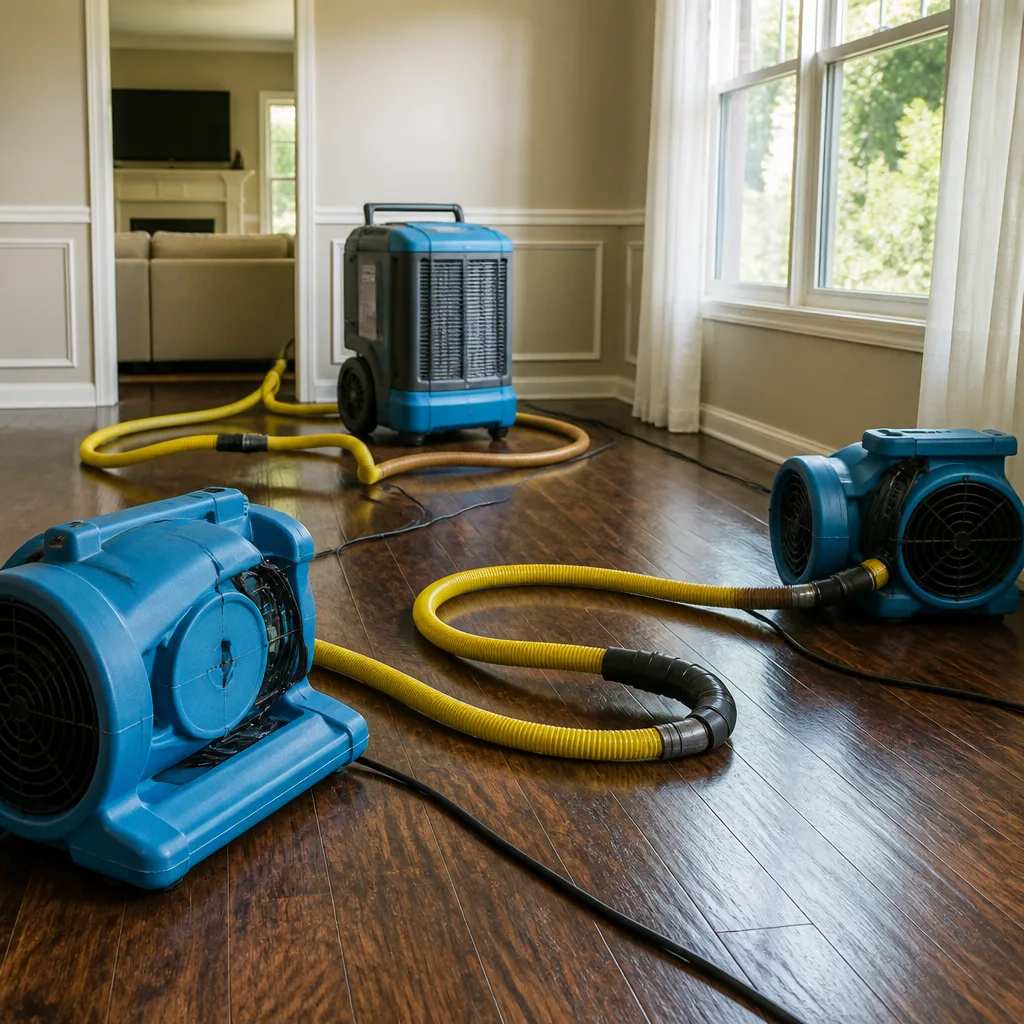
We use Dri-Eaz and Phoenix professional-grade dehumidifiers and air movers to pull moisture from stud cavities, concrete, and framing. Daily moisture readings are logged until your structure meets the dry standard, and that log goes to you and your carrier. In brick party walls, we account for trapped humidity between dwellings.
Cleaning & Mold Removal
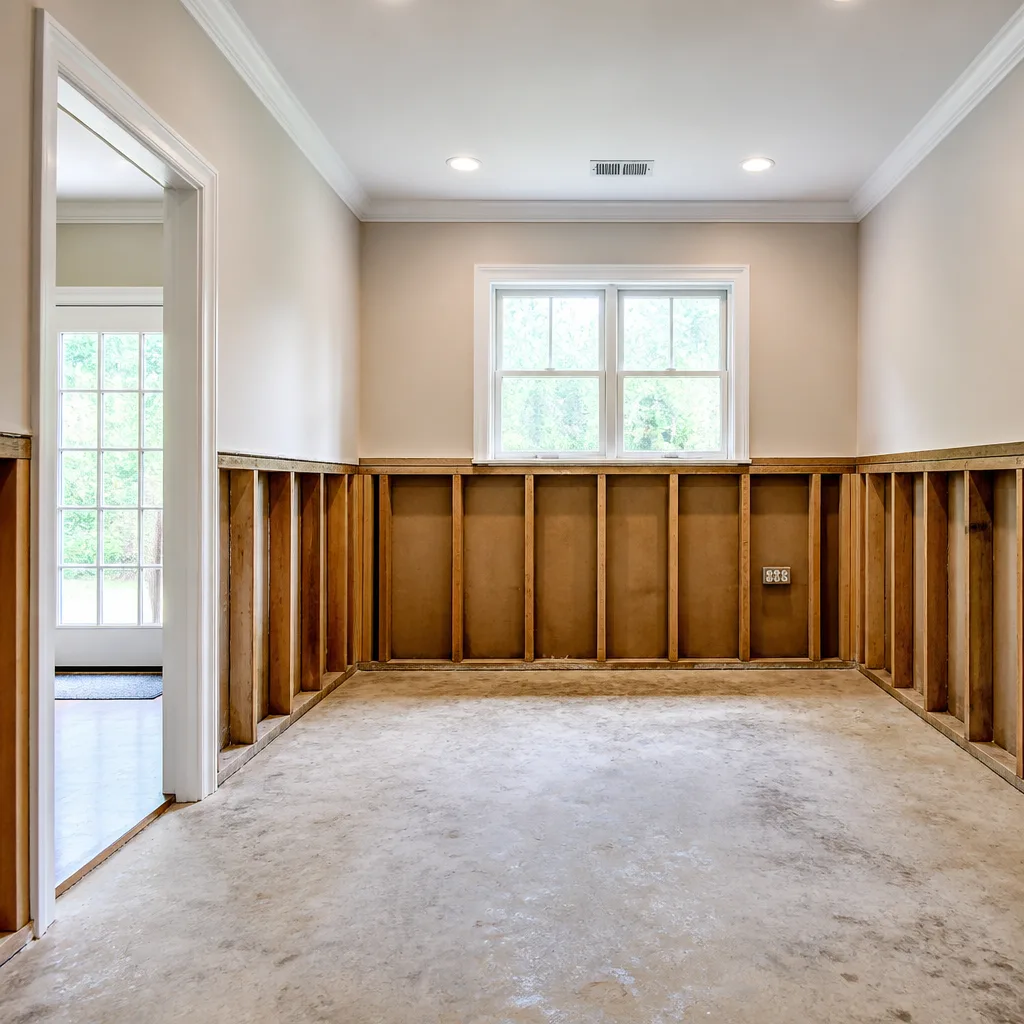
Mold-affected drywall is removed and bagged in sealed containment. Framing is HEPA-vacuumed, wire-brushed where needed, and treated with an antimicrobial solution. We do not skim-coat over mold; we remove the source, because in St. Albans, painting over mold means it will be back before the next heavy rain season.
Air Quality Restoration
After removal, HEPA air scrubbers run throughout the containment period and beyond to capture airborne spores. We take air samples before and after remediation, and we don’t clear a job until post-remediation verification confirms indoor spore counts are back to normal background levels.
Repairs & Restoration
We rebuild what we removed: new drywall, insulation, baseboards, and paint, installed to close the wall back up only after the framing is verified dry and treated. Because our crew handles remediation and reconstruction together, there’s no gap where moisture creeps back in between contractors.
Need Emergency Mold Remediation in St. Albans Now?
Crews minutes away, answering live 24 hours a day. The sooner we start, the less it costs.
Working With Your Insurance Company
Mold claims in St. Albans come with a hard reality: carriers will cover mold remediation when it stems from a covered water loss, and they’ll scrutinize every line item when it doesn’t. We’ve spent years learning how to present a mold claim so your carrier sees what we see. Documentation starts the hour we arrive: photos of every affected surface, moisture readings from inside cavities, air sample results, and a line-item scope tied to IICRC standards. Our team communicates with your adjuster directly, sends them the moisture logs, and handles the back-and-forth so you don’t spend your evenings on hold. We don’t inflate scopes and we don’t hide anything. A square deal: no surprises on the bill.
What We Provide Your Insurer
- Thorough documentation of the loss
- Photos of all damage, room by room
- Moisture readings and drying logs
- A detailed, line-item scope of work
- Direct coordination with your carrier
Built for St. Albans’s Loss Calendar
St. Albans sits in a low-lying drainage basin near the Jamaica Bay watershed, and that geography writes our call log. Winter deep freezes burst supply lines in unheated basements and exterior walls of the neighborhood’s brick row houses. Spring thaw pushes groundwater against foundation walls, finding every crack and weeping into finished basements that were never waterproofed. Summer thunderstorms overwhelm the combined sewer system, sending Category 3 sewage backflow up through floor drains on Linden Boulevard, Farmers Boulevard, and the side streets off Merrick Boulevard. Nor’easters in the fall and early winter drive storm surge through the sewer network, flooding basements miles from the coast. And after every event, the mold clock starts: 24 to 48 hours before spores colonize wet drywall in the warm, dark cavities of these old homes. We’ve built our dispatch around this calendar, and we keep HEPA scrubbers, dehumidifiers, and containment materials staged for St. Albans response year-round.
Mold Remediation Across St. Albans’s Neighborhoods
The blocks around the St. Albans LIRR station on Linden Boulevard carry some of the heaviest sewage-backup history in the neighborhood, because the sewer lines there are among the oldest and most frequently surcharged. We recently opened a finished basement on Linden Boulevard near the station where a Category 3 backup had wicked into drywall hung after Sandy but never structurally dried. We ran moisture mapping behind the baseboards, found readings above 25% in the stud cavities, and set up containment with HEPA air scrubbers before removing the drywall, treating the framing with an antimicrobial treatment, and drying the original cast-iron drain chase to pre-loss condition. The homeowner had no visible mold, but our probing saved them from a recurring bloom that had already returned twice since 2012. South toward Farmers Boulevard and the blocks around Baisley Pond Park, the water table sits higher, and we see more chronic humidity and crawl space mold than dramatic floods. East of Merrick Boulevard toward the Addisleigh Park historic district, the homes are often detached brick colonials with slightly better drainage, but the original cast-iron drain lines and flat lots still produce the same basement moisture problems. Up near Murdock Avenue and the higher ground toward Francis Lewis Boulevard, we see fewer sewer backups but more condensation-driven mold in finished basements that lack dehumidification. Each corridor has a signature failure pattern, and we read them before we write a scope.
Specialized Mold Remediation Services We Offer in St. Albans
Mold Inspection & Testing
In St. Albans, a mold inspection that only reads surface moisture is a wasted trip. We probe behind baseboards, pull outlet covers, and inspect stud cavities in every below-grade wall, because Sandy-era drywall patches hide mold behind finished surfaces all over this neighborhood. Air sampling and surface swabs are sent to an independent lab, and you get the results in plain language, not laboratory code.
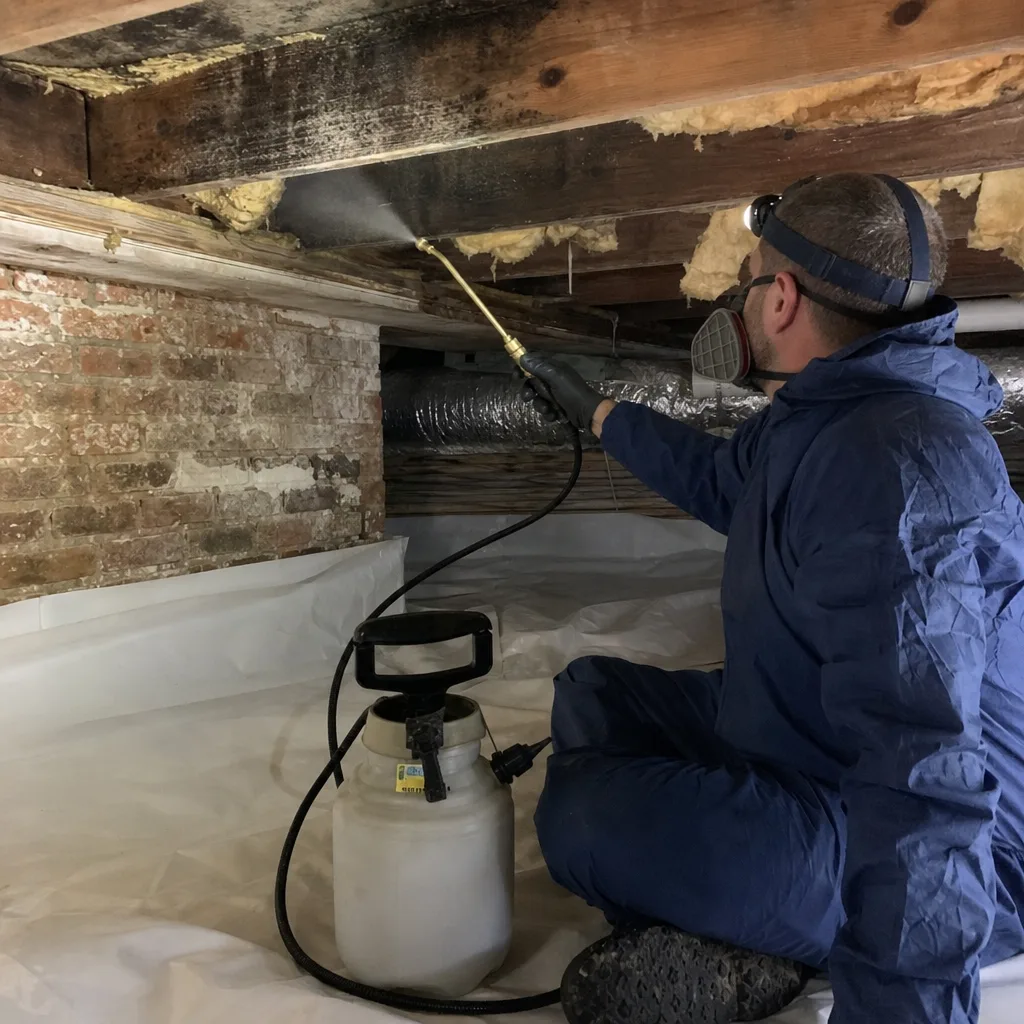
Mold Removal
We remove moldy drywall, insulation, and trim under full containment, not by spraying bleach and painting over it. The brick party walls common in St. Albans row houses trap humidity between dwellings, so we treat the framing and dry the cavity before we close it back up. A quick skim coat will fail here. Done right, and backed in writing.
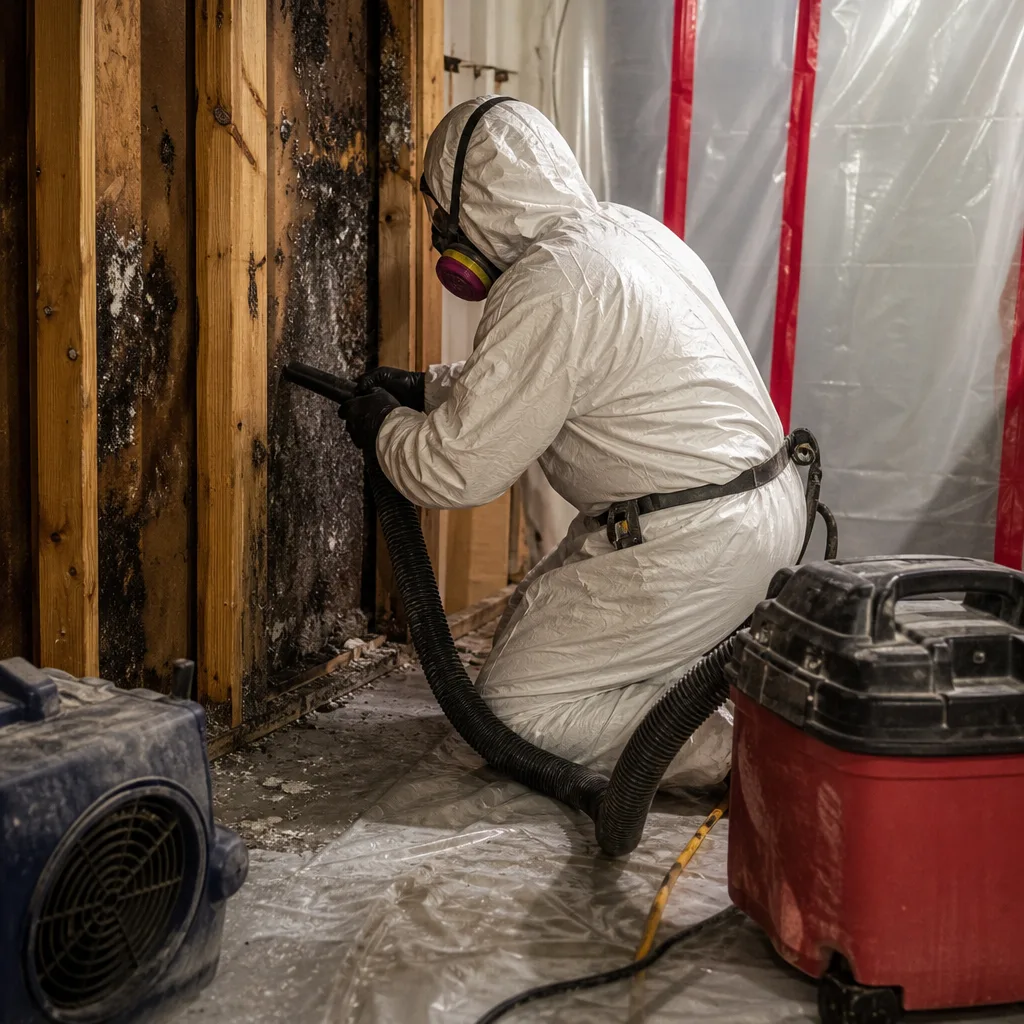
Black Mold Remediation
Black mold, or Stachybotrys, thrives on the cellulose in drywall that stays wet for more than a few days, which is exactly what happens after a sewer backup in a St. Albans basement. Black mold removal requires full containment, HEPA air scrubbing, and careful bagging of contaminated material to prevent cross-contamination. We handle it as a standard job with a strict protocol, not a panic situation, and we verify with post-remediation clearance testing.
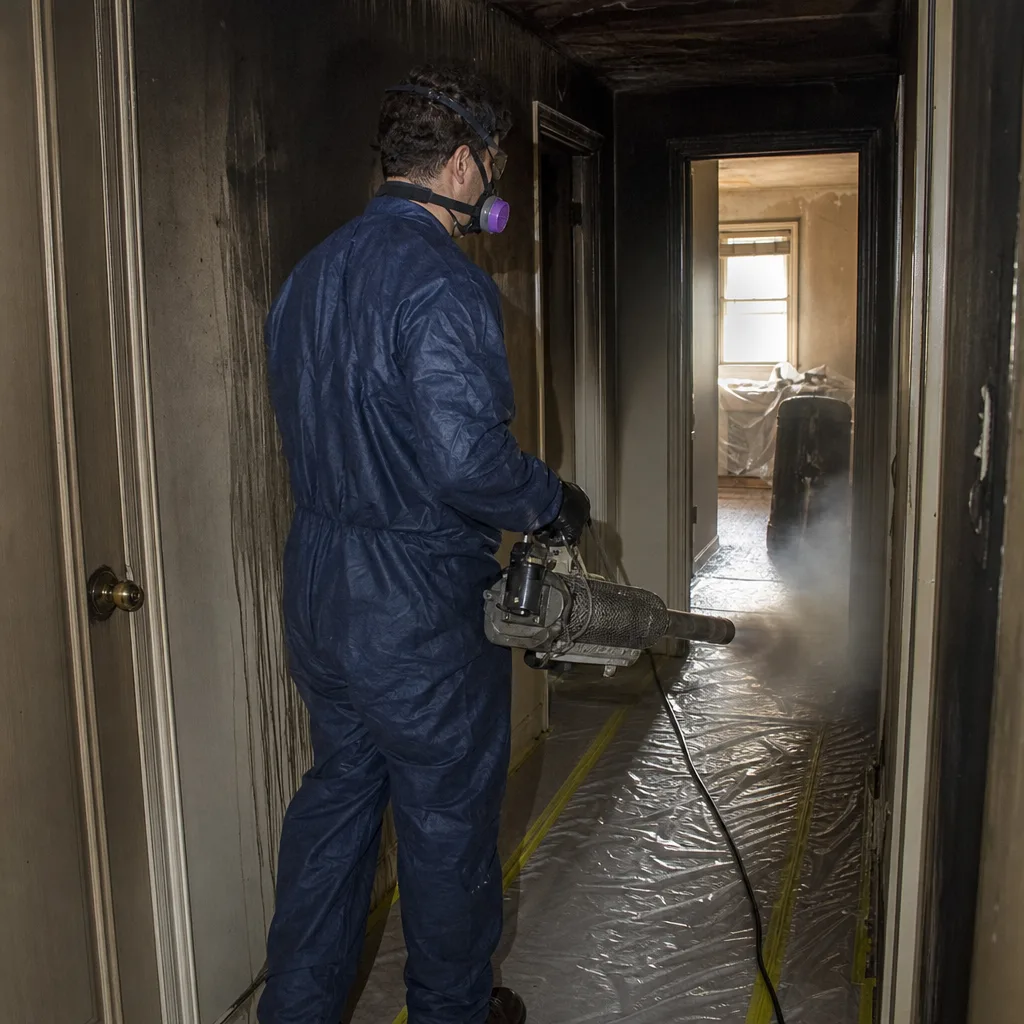
Air Quality Restoration
Mold spores travel. When we open a wall in one finished basement room, spores can circulate to the rest of the house through the HVAC system and return air. Our air quality restoration protocol runs HEPA scrubbers during and after removal, replaces affected filters, and includes before-and-after air sampling so you can see the improvement in writing.
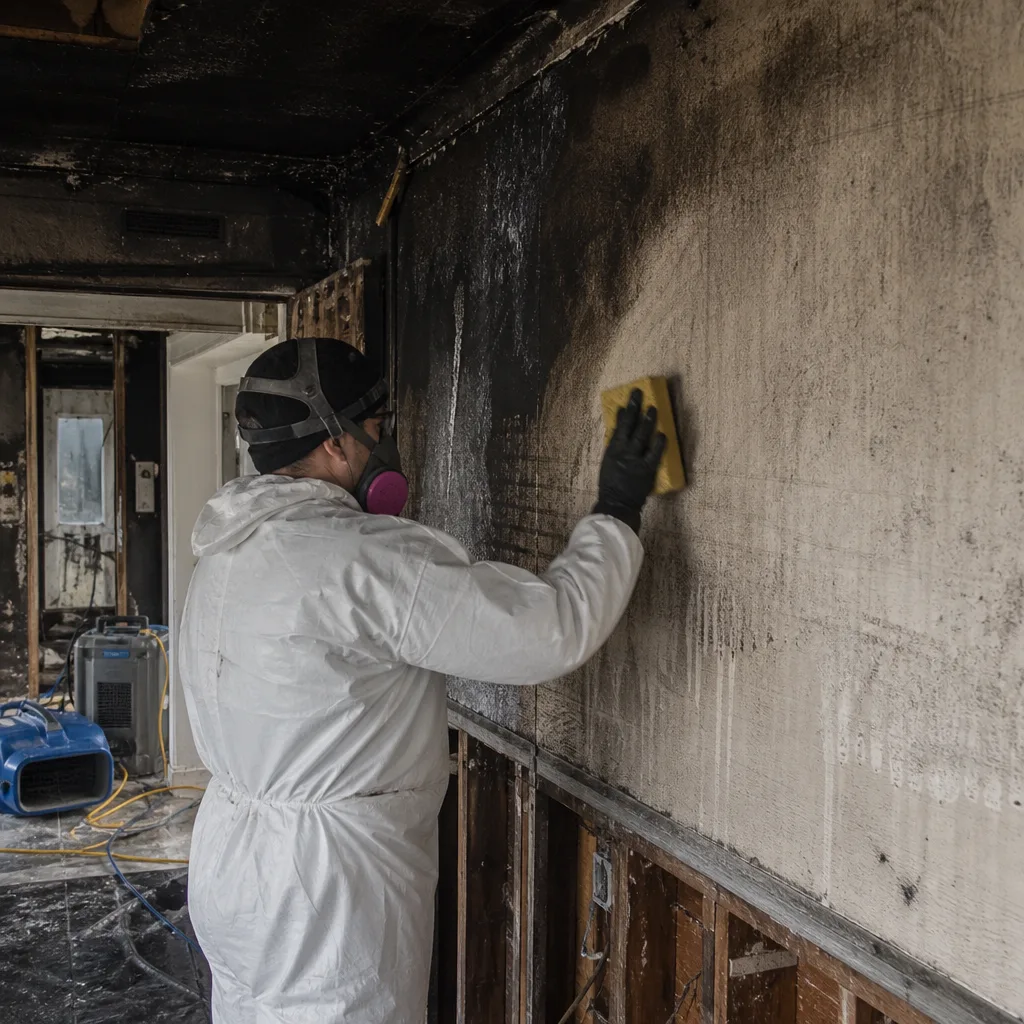
Crawl Space Treatment
Many St. Albans row houses have shallow crawl spaces under the rear addition or porch that never get inspected. High humidity and organic debris in these crawl spaces feed mold that then migrates upward into the living space. We install vapor barriers, address drainage, and treat the framing, and we pair it with moisture control so it doesn’t come back.
Moisture & Humidity Control
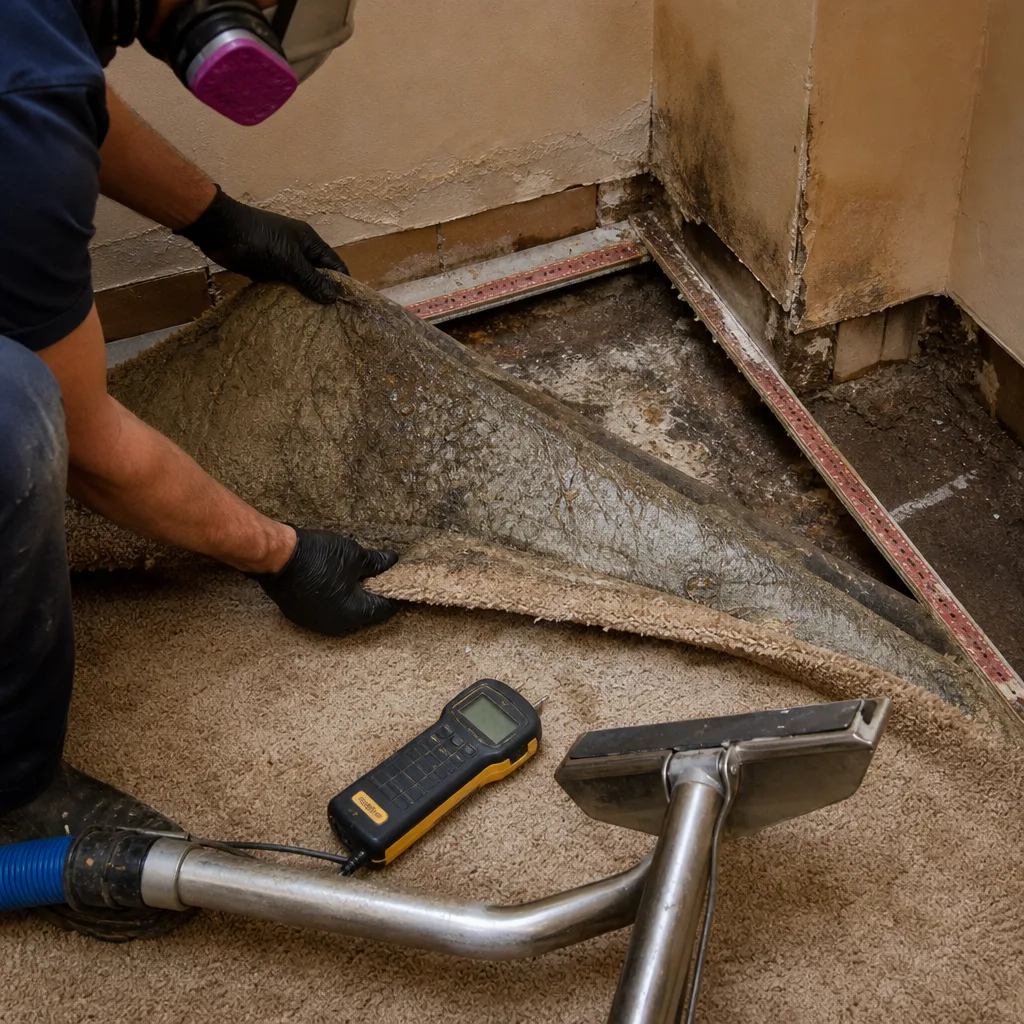
Mold in St. Albans is fundamentally a moisture problem. The neighborhood’s low-lying drainage basin and dense brick construction keep relative humidity high in basements year-round, even without a visible leak. We install dehumidification, improve drainage, and seal foundation penetrations, then verify with ongoing moisture readings. Humidity alone can grow mold in these basements, and the fix is structural, not cosmetic.
What happens when you call
- 1
A real person answersNo phone trees - you reach a local pro.
- 2
You get an upfront price rangeHonest numbers before anyone is dispatched.
- 3
A background-checked tech heads outLicensed & insured, dispatched right away.
- 4
You approve before work beginsNothing starts until you say go.
Mold Remediation Costs in St. Albans, NY
Mold remediation in St. Albans runs a wide range because every job starts with a different set of hidden conditions. A small contained job, like mold behind one bathroom wall under 30 square feet, typically runs $1,500 to $3,500. A full finished basement with sewage-driven mold, containment, drywall removal, and cavity treatment usually lands between $4,500 and $12,000. A whole-house mold problem involving multiple rooms, crawl space treatment, and HVAC cleaning can reach $15,000 to $25,000. What moves the price in St. Albans specifically: asbestos tile abatement on original basement floors, which is common in these 1930s-1950s homes and adds $2 to $5 per square foot to the job, and brick party wall drying, which takes longer and costs more than opening a standard interior wall. Insurance covers mold remediation when the mold results from a covered water loss like a supply line break or sewer backup. When it doesn’t, we give you a written line-item scope before work starts, so you know the total before we touch a wall. The free inspection is how you get a firm number instead of a guess. Call (917) 924-4221 and we’ll schedule it.
We Also Serve Cities Near St. Albans
We serve St. Albans and the surrounding southeast Queens neighborhoods. You’ll also find our crews responding to mold and water damage calls in Fairview, Harrison, East Bronx, and Hunts Point. The same live 24/7 dispatch covers all of them, and the same Mold Remediation standards apply everywhere we work. If you’re in a neighboring ZIP code, call us; if we can’t get there fast enough, we’ll tell you straight.
St. Albans Mold Remediation Questions, Answered
Why does mold keep coming back in my St. Albans basement even after the previous owner had it remediated?
Because in St. Albans, the previous remediation was almost certainly surface-only. The legacy of post-Sandy incomplete remediation is everywhere here: drywall that was hung after the 2012 flood, never properly dried, then painted over. Mold behind that drywall keeps feeding on trapped cavity moisture and re-blooms within months. The fix is cavity-probing: we open the wall, verify the framing is dry, treat it, and then close it up. If the moisture source isn’t addressed, no amount of surface cleaning will stop the cycle.
How do I know if the sewage backup in my basement is a Category 2 or Category 3 water loss, and does that change the mold remediation?
Category 2 is water with significant contamination, often from a backed-up washing machine or sump pump; Category 3 is grossly contaminated water from a sewer line, which is what most St. Albans combined sewer backups are. If the water rose from a floor drain after heavy rain, assume Category 3. It changes the remediation because Category 3 water carries pathogens into the drywall, and mold grows faster and more aggressively on that organic load. The affected drywall almost always comes out, not just gets dried. Call (917) 924-4221 and we’ll classify it on site.
Is it normal to find asbestos tile under old flooring in St. Albans basements, and how does that affect a mold job?
Yes, it’s very common. St. Albans’s 1930s-1950s homes frequently have 9×9 asbestos-containing floor tile under newer flooring. If we’re removing moldy drywall in a basement with that tile, and the tile area will be disturbed, abatement has to happen first, by law. Skipping it is a code violation and a health hazard, because mold remediation stirs dust that can carry friable asbestos fibers. We coordinate abatement before we start demolition, and we fold that cost into the written scope so there are no surprises.
Will high humidity alone grow mold in a St. Albans basement without any visible leak?
Yes. St. Albans’s low-lying drainage basin and brick row house construction keep basement relative humidity above 60% for much of the year, and mold starts colonizing at 55 to 60% RH. You don’t need a leak. A finished basement with no dehumidification will grow mold on drywall, carpet, and stored boxes simply from ambient moisture in the air. The fix is moisture control: dehumidification sized for the space, drainage improvements where possible, and sealing against soil moisture intrusion.
What’s the difference between the mold remediation method used in St. Albans versus a dry inland neighborhood?
Here, we probe behind every finished surface on below-grade walls before writing a scope. In a dry inland basement, a surface moisture reading and visible inspection are often enough. In St. Albans, the post-Sandy drywall patches mean mold is frequently concealed where no visible sign exists, and the brick party walls trap humidity that surface meters miss. We also assume Category 3 water history in most finished basements, which changes how aggressively we treat framing and how much drywall we remove. It’s a more cautious, more thorough protocol, and it’s the only one that keeps mold from coming back in this neighborhood.
How fast can someone actually get to my St. Albans home for a mold problem?
Within 45 minutes, in most cases. We dispatch crews from the St. Albans service area, not from a central depot across the city, and our live dispatcher routes the nearest certified technician to your block. Call (917) 924-4221 any hour, any day. A real person answers and tells you exactly when we’ll arrive.
How long does mold remediation take in a typical St. Albans basement?
A contained, single-room mold remediation job in a St. Albans basement typically takes 3 to 5 days from containment setup to clearance testing. That includes drywall removal, cavity drying, antimicrobial treatment, and air scrubbing. Larger jobs involving multiple rooms, brick party wall drying, or asbestos abatement can run 7 to 14 days. We give you a schedule in the written scope before we start, and we keep daily moisture logs so you can see the drying progress yourself.
Can I stay in my home during mold remediation?
In most cases, yes. We set up full containment with negative air pressure and HEPA air scrubbers that isolate the work area from the rest of the house. If the mold contamination is extensive and the HVAC system is involved, we may recommend staying elsewhere for a few days, but we’ll tell you that honestly on the first visit. Most St. Albans homeowners stay home and simply avoid the contained area.
What should I do in the first 30 minutes after I find mold or a water leak in my St. Albans basement?
Don’t disturb the mold, don’t run fans pointed at it, and don’t rip out drywall. Turn off the water source if it’s a leak. If there’s standing sewage water, stay out of the area and shut off electricity to that zone if you can do so safely. Then call (917) 924-4221. The sooner we get moisture mapping and containment in place, the less it costs to fix. The first 30 minutes are about not making it worse.
Serving St. Albans, NY - Our Local Coverage Area
We’re based in the St. Albans area and know this community well. Use the map below to see our service coverage - if you’re nearby, we can almost certainly help.
We Stand Behind Every St. Albans Job
Floodline Restoration Co. has been answering every call with a live person since 2010. Curt Bowman built this company around a dispatch board, not a sales desk, and that’s why you get a straight answer and a written guarantee, not a pitch. Every mold remediation job we do in St. Albans carries the 90-Day Done Right Promise, our Keystone Standard, in writing. If it’s not done right, we make it right. No arguing, no paperwork battles. We train our own technicians to IICRC, RIA, and IFA standards, run Dri-Eaz and Phoenix equipment on every job, and hand you the moisture log when the dry standard is met. We’ll be there when we say. Done right, and backed in writing.
Call (917) 924-4221 for a free mold inspection and a written, no-surprise estimate. A live person answers now.
Written by Curt Bowman, Owner at Floodline Restoration Co., serving St. Albans with mold remediation, water damage restoration, and full reconstruction since 2010.