

Free visual inspection and a written scope of work before any mitigation begins - photos, moisture readings, and drying logs go in your claim file
The scope we write is the scope we bill. Anything new gets shown to you, in writing, before we touch it.






 Before
 After
After Before
 After
After Before
 After
After24/7 Emergency Mold Remediation in Thomaston
Mold remediation in Thomaston costs $1,800 to $6,500 for most basements and crawl spaces, with black mold jobs in finished basements running higher. We answer live around the clock at (917) 924-4221. When you call about mold, a real person picks up, not a recording. We dispatch a crew to Thomaston the same visit, set containment, and start pulling moisture out before the damage spreads into plaster walls and old-growth framing.
The first hour matters more here than in most places. Thomaston’s pre-war homes hold water differently than modern construction. Original plaster-on-lath drinks moisture and hides it for weeks. By the time you smell it, the colony has usually been growing for a while. That’s why we send a certified tech with a thermal imager and hygrometer on the first visit, not just a salesman with a clipboard.
Understanding Mold Remediation Severity in Thomaston Properties
Mold grows where water lingers. In Thomaston, the water that lingers usually comes from two sources: nor’easter storm surge through backed-up clay-tile drain systems, and the peninsula’s perpetually high groundwater table. Both push moisture into 1920s and 1930s homes built with plaster-on-lath walls, stone foundations, and old-growth timber framing. When Category 3 water sits against those materials, mold gets established inside wall cavities long before you see it on the surface.
We classify mold work by how far the water traveled and how long it sat. A surface bloom on a concrete wall is straightforward: HEPA vacuuming, antimicrobial treatment, done. A colony that wicked up behind original plaster through a lath key system is different. That requires containment, negative air pressure, moisture mapping to find the full path of the water, and often structural drying with a system like Injectidry to pull moisture from behind irreplaceable period walls. Skip the containment and you just blow spores into adjacent rooms. Skip the moisture mapping and you treat the symptom while the source keeps feeding new growth. Thomaston’s older colonials and Tudors hide moisture well. A “dry to the touch” basement slab can still be at 98% relative humidity underneath, feeding mold under finished oak floors.
Why Thomaston Property Owners Choose Floodline Restoration Co. of Manhattan
- 45-minute response commitment. When you call from Thomaston, we give you a real arrival window and we meet it. Crews stage out of the metro office and know the Northern Boulevard and Community Drive corridors well.
- 24/7 live answer, always a person. A dispatcher answers at 2 a.m., not a voicemail. You’ll speak to someone who can actually send help, not take a message.
- IICRC-certified crews, including AMRT. Our technicians carry Applied Microbial Remediation Technician certification alongside WRT and FSRT. That matters when mold has colonized plaster and framing.
- Free visual inspection with moisture mapping. We walk the basement, take readings, and show you what we found. No charge for the assessment, and no scare tactics.
- Direct insurance billing. We document everything from hour one, build a line-item scope, and communicate with your adjuster directly. You don’t play messenger.
- One crew from containment to reconstruction. We don’t finish mold removal and hand you to another contractor for the rebuild. The same certified team handles it all, so nothing gets lost between handoffs.
Our Mold Remediation Process
Inspection & Assessment
We start with a thorough walk-through, thermal imaging, and moisture readings throughout the affected space. In Thomaston, that means checking the stone foundation and the base of plaster walls where wicking shows up. You get a written scope before any work begins.
Containment & Air Filtration
We seal off the work area with 6-mil poly barriers and run HEPA air scrubbers to establish negative air pressure. This stops spores from moving upstairs into living areas. For older homes with open floor plans, we adjust containment design to fit the actual room layout.
Source Removal
Rather than guessing, we remove the water source feeding the mold. That could be a broken drain tile, groundwater seepage, or a failed foundation coating. Removing the moisture source is the only way mold remediation lasts. Then we remove contaminated porous materials like drywall, insulation, carpet.
Structural Drying & Dehumidification
We run professional-grade Dri-Eaz dehumidifiers and Phoenix and XPOWER air movers to dry the structure to IICRC standards. For plaster walls and old-growth wood, we use Injectidry to pull moisture from behind surfaces without tearing them out. We log daily readings and hand you the moisture log.
Cleaning & Antimicrobial Treatment
All affected surfaces get HEPA vacuuming, wire brushing where needed, and antimicrobial treatment rated for the materials involved. For period millwork and original plaster, we use treatments that don’t damage finishes.
Clearance Testing & Restoration
After treatment, we verify the mold is gone with post-remediation clearance testing. Then we repair or rebuild what was removed. That could mean matching period plaster, sourcing reclaimed flooring, or rebuilding a finished basement. The 90-Day Done Right Promise applies to every step of this.
Need Emergency Mold Remediation in Thomaston Now?
Crews minutes away, answering live 24 hours a day. The sooner we start, the less it costs.
Working With Your Insurance Company
Mold claims are where insurance carriers push back the most. We’ve handled hundreds of them across the Great Neck peninsula, and we know what adjusters need to see. From the first hour on site, we document everything: before photos, during photos, moisture readings, containment setup, and the full drying log. That paper trail is what turns a denied claim into a paid one. We build estimates using industry-standard pricing software, submit them directly to your adjuster, and communicate with the carrier so you don’t have to. When your policy covers mold remediation as a result of a covered water event, we make sure the numbers hold up to scrutiny. When it doesn’t, we tell you straight and give you an honest price for the work. Curt Bowman built Floodline on a simple principle: a square deal, no surprises on the bill.
What We Provide Your Insurer
- Thorough documentation of the loss
- Photos of all damage, room by room
- Moisture readings and drying logs
- A detailed, line-item scope of work
- Direct coordination with your carrier
Built for Thomaston’s Loss Calendar
Thomaston’s mold season is different from inland Nassau County. You live on a peninsula. Little Neck Bay sits to the west, Manhasset Bay to the east, and when a nor’easter winds up, it drives wind and rain straight into your village. The storms come back week after week during winter, each one testing those 1930s clay-tile drains a little more.
The calendar goes like this: January and February bring storms that push groundwater up and send Category 3 water backward through aging drain tiles into finished basements. March and April thaw saturates the ground, and that’s when we find the mold that’s been quietly growing behind plaster since January. July and August humidity sits on the peninsula, and crawl spaces under colonials collect condensation that feeds mold in floor framing nobody sees until the musty smell gives it away. September and October tropical systems can turn a standard rain into a basement flood. The point is this: Thomaston doesn’t get one mold season. It gets mold opportunities all year, and the homes most at risk are the same beautiful pre-war structures that make the village what it is.
Mold Remediation Across Thomaston’s Neighborhoods
Thomaston is a small village, but the mold problems differ from street to street. Up along Northern Boulevard, the 1920s Tudors sit close to the road with finished basements that flood when the storm drains back up. Those homes often have home offices and high-end mechanicals in the basement, so a mold call there involves protecting fixtures and electronics as much as treating walls.
Over by the Little Neck Bay side, homes sit lower and closer to the water table. Basements there run damp year-round, and we see mold under finished floors where a vapor barrier was never installed or has failed. The pre-war colonials along Community Drive and the side streets off it often have original stone foundations with parged coatings that crack and let moisture in. Those walls wick water up behind plaster, and mold grows in the wall cavity before it ever reaches the surface. And the homes backed toward Udalls Cove deal with marshy ground that never fully dries. Crawl spaces there need continuous dehumidification, not just a one-time treatment.
Specialized Mold Remediation Services We Offer in Thomaston
Mold Inspection & Testing
We start with a visual inspection, thermal imaging, and moisture readings across every surface. In Thomaston’s older homes, that means checking where plaster meets the foundation and where floor joists enter masonry pockets. If testing is needed, we use accredited labs and give you a plain-English explanation of the results. No fear-mongering, just facts and a scope.
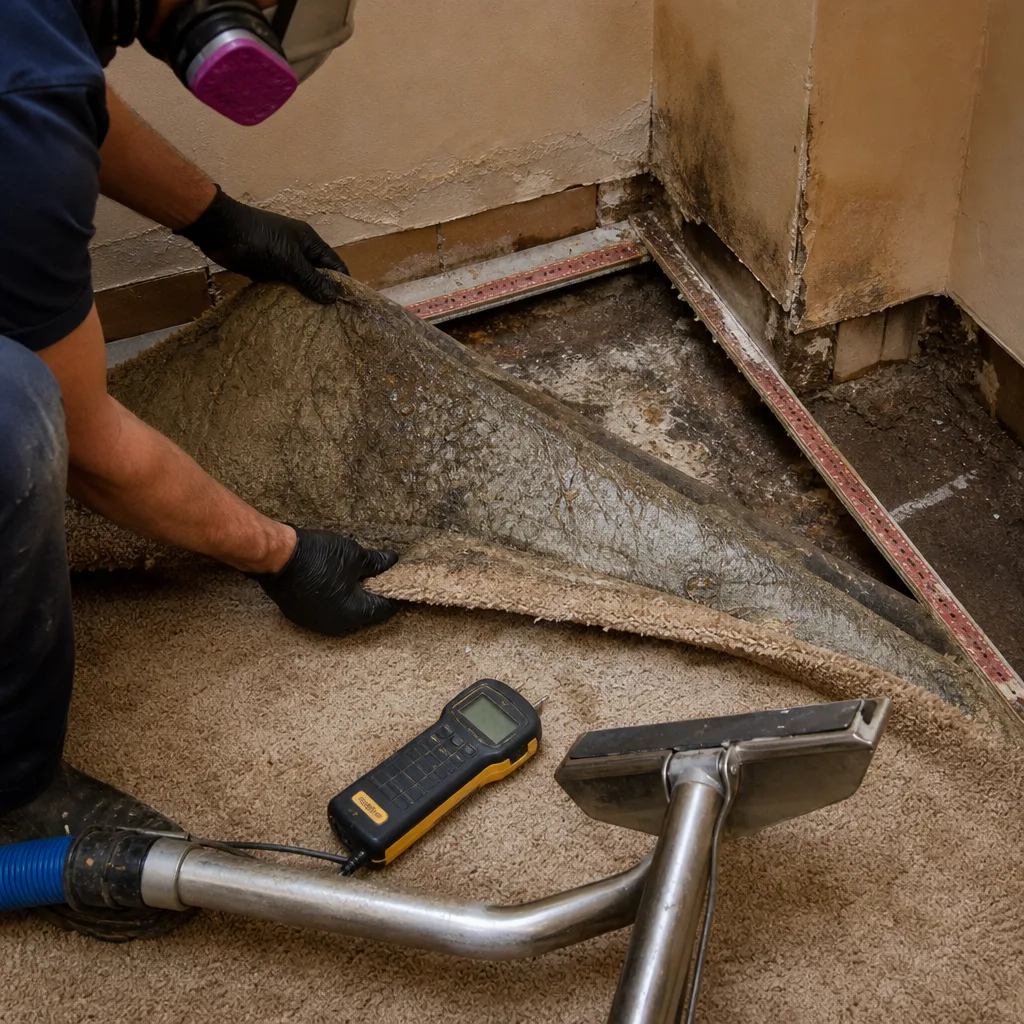
Mold Removal
Removal means physically taking out the contaminated material. For modern drywall that’s straightforward. For original plaster in a 1930s Tudor on Northern Boulevard, it’s surgical. We cut out only what must go, preserve what can be saved, and treat the surfaces beneath. Then we document everything for your carrier.
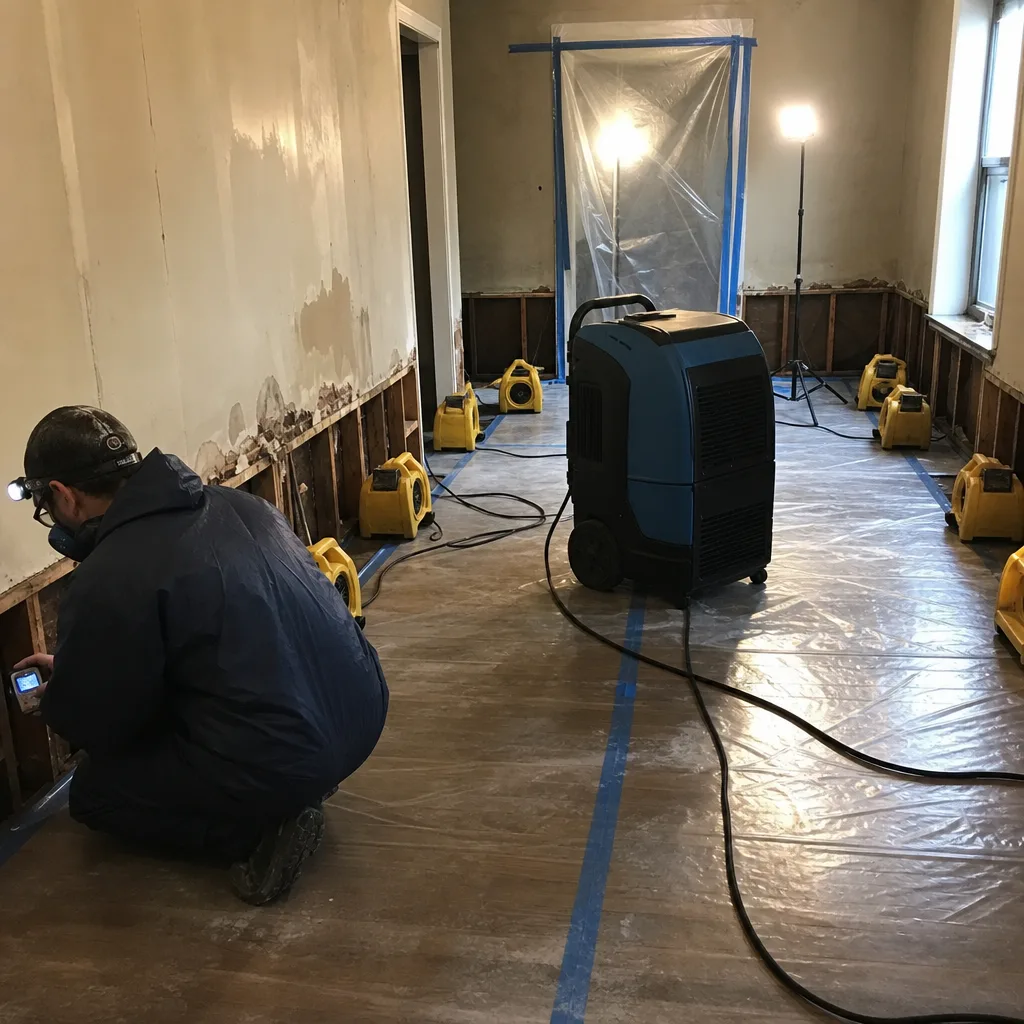
Black Mold Remediation
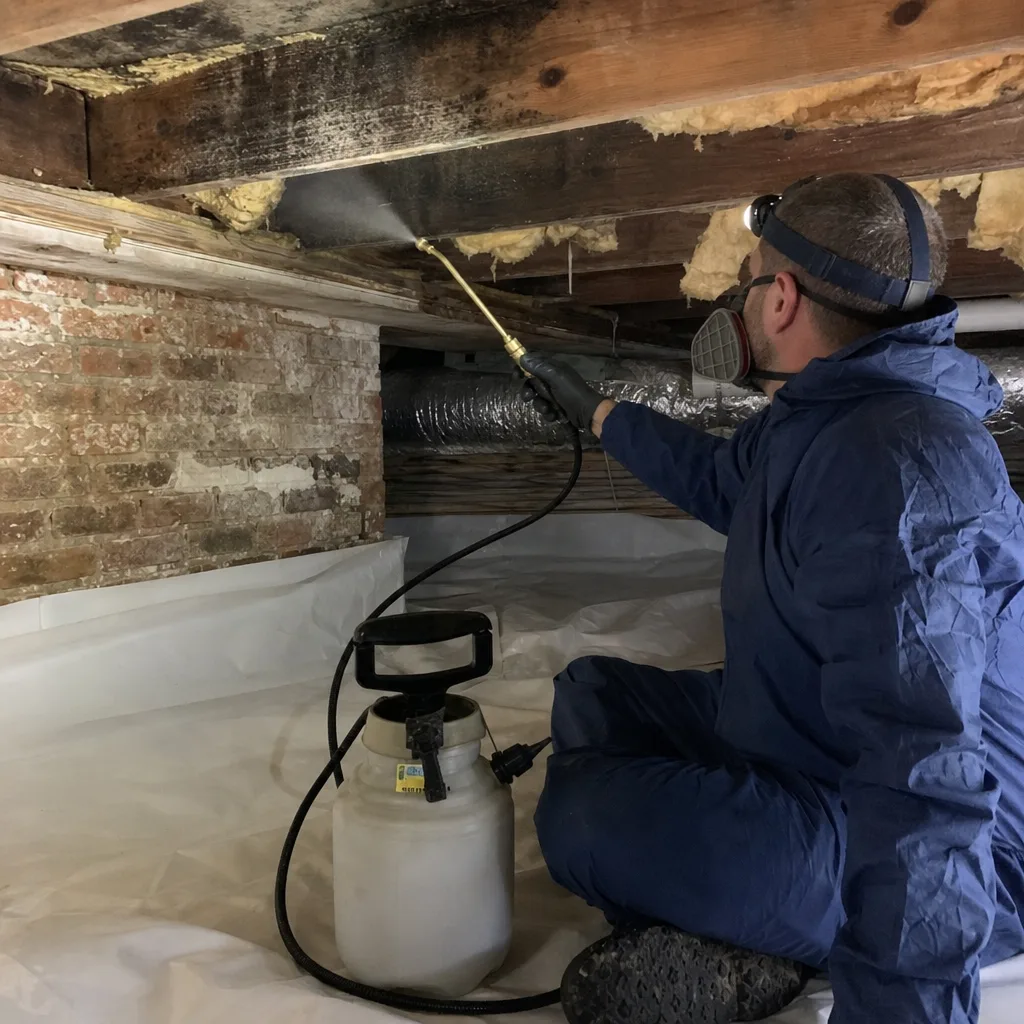
Stachybotrys chartarum, the “black mold” you hear about, shows up in Thomaston basements that took Category 3 water from backed-up drains. It feeds on cellulose: drywall paper, wood framing, the back side of plaster lath. We set full containment, run negative air, remove affected material, and treat the framing. Then we verify with clearance testing. This isn’t a bleach job; it’s a controlled demolition with safety protocols.
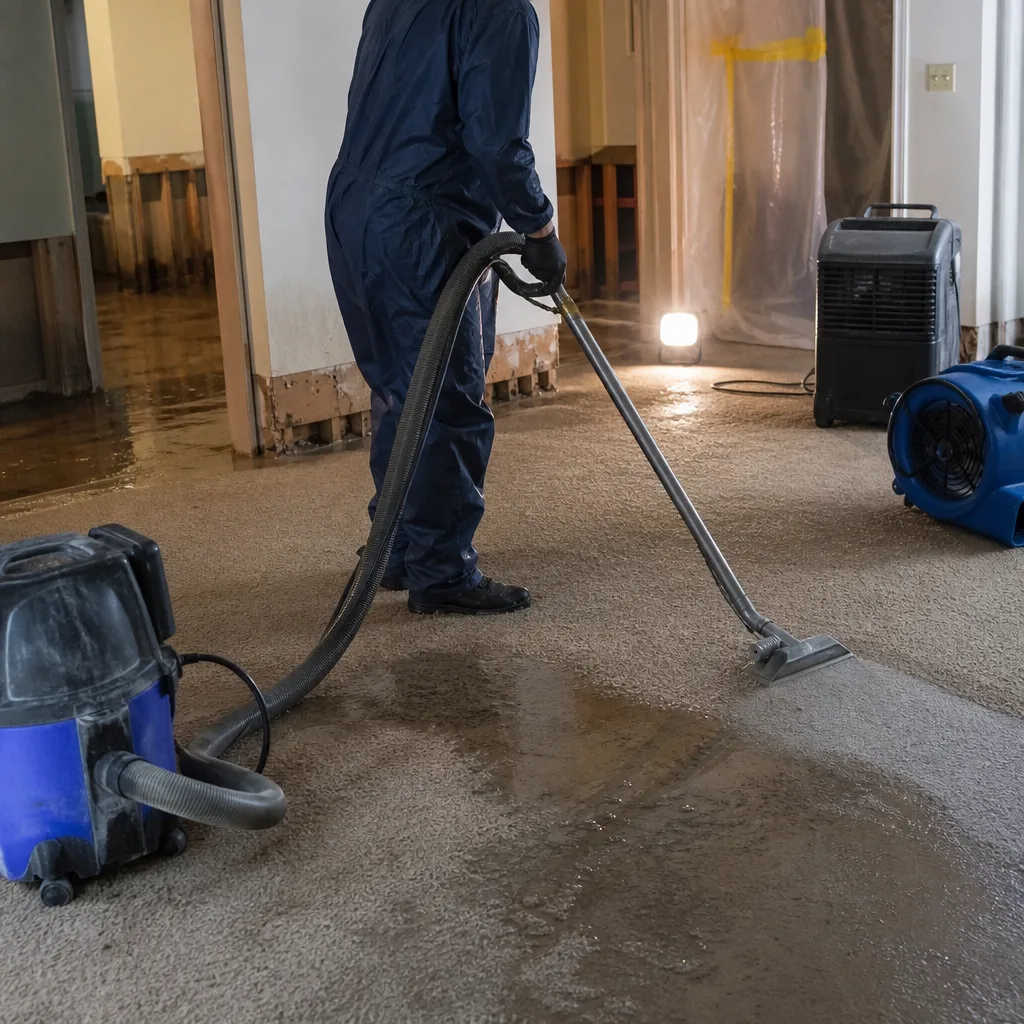
Air Quality Restoration
Mold releases spores into the air, and those spores settle in ducts, carpet, curtains. After the source is removed, we run HEPA air scrubbers and fog the affected areas to drop the spore count. We also check your HVAC for mold in the ductwork, which is a common follow-up issue in the older colonials around Thomaston.
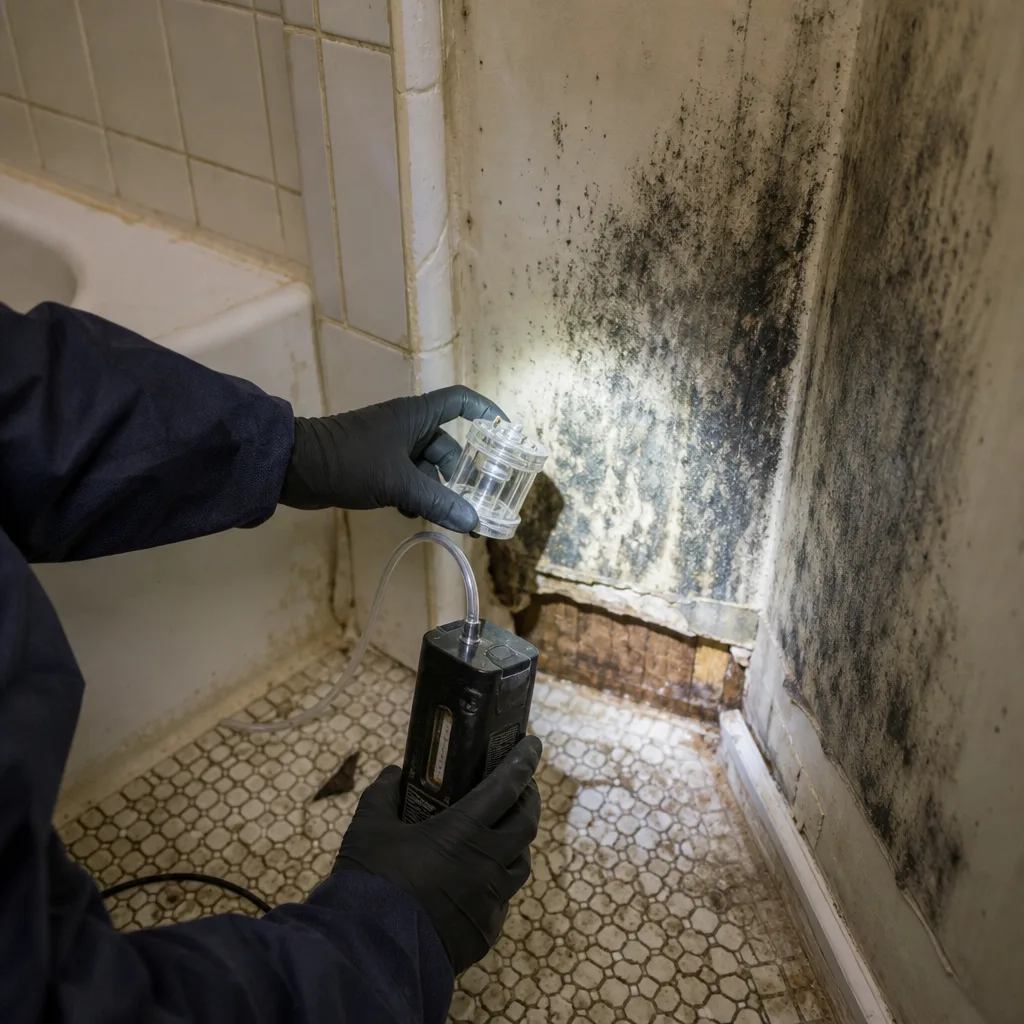
Crawl Space Treatment
Unsealed crawl spaces are mold farms. The ground stays damp, warm air condenses on cool joist ends, and before long the floor framing is growing mold you can’t see. We seal the crawl space, install proper vapor barriers, and treat the framing. For homes near Udalls Cove, this is the single best prevention you can buy.
What happens when you call
- 1
A real person answersNo phone trees - you reach a local pro.
- 2
You get an upfront price rangeHonest numbers before anyone is dispatched.
- 3
A background-checked tech heads outLicensed & insured, dispatched right away.
- 4
You approve before work beginsNothing starts until you say go.
Mold Remediation Costs in Thomaston, NY
A straight mold removal in an unfinished Thomaston basement typically runs $1,800 to $3,500. When the job involves finished basements, containment across stairwells, and preserving original plaster, the range moves to $4,000 to $6,500. Black mold in a finished space with built-ins and mechanicals can push toward $8,000 or more. What moves the price: how far the water traveled, how long it sat, whether the clay-tile drains need repair, and whether period materials like plaster and millwork can be saved. Our inspection is free, and you get a line-item scope before any work starts. That way there’s no surprise at the end.
We Also Serve Cities Near Thomaston
Our crews work throughout the peninsula and the surrounding area, including mold remediation in Thomaston and Mold Remediation service across Fairview, Harrison, East Bronx, and Hunts Point. Same-day dispatch, same live answer, same written guarantee.
Thomaston Mold Remediation Questions, Answered
Why does mold keep returning in my Thomaston basement even after I’ve bleached the walls?
Bleach kills surface mold but doesn’t remove the moisture source, and it doesn’t penetrate porous materials like plaster, concrete, or wood. In Thomaston, the moisture source is usually a clay-tile drain backing up or groundwater wicking through the foundation. Until that’s fixed, the mold just regrows behind the surface. Call us for a free visual inspection and we’ll find the actual source.
My home’s basement flooded with nor’easter water from the clay-tile drain backup. Is that category 3 water, and what does that mean for mold?
Yes. Water that backs up through drain tiles is Category 3, meaning it contains sewage, soil bacteria, and whatever was in the drain system. That’s a contamination issue, not just a drying issue. Anything porous that got wet needs removal or professional cleaning, and mold prevention starts with treating the affected surfaces and framing immediately. Call (917) 924-4221 and we’ll start today.
Can mold remediation actually preserve my 1930s plaster walls instead of having them replaced with drywall?
Yes, in most cases. We use Injectidry to pull moisture out of wall cavities without opening up the plaster, and we treat the surfaces with materials compatible with lime and gypsum plaster. We only tear out what’s already failing. If your walls are sound, we save them. If they’re crumbling, we match the texture and profile with period-appropriate materials.
My colonial’s crawl space smells musty every summer in Thomaston, do I have mold under my hardwood floors?
Likely yes. Unsealed crawl spaces on the peninsula collect condensation that feeds mold in the floor framing. The mustiness is the giveaway. We’ll inspect the crawl space, check moisture levels in the framing, and give you a straight answer and a plan. Sometimes it’s as simple as sealing the crawl space and installing a vapor barrier; sometimes the framing needs treatment.
How fast does mold grow in a Thomaston basement after a nor’easter? I can’t get a crew in until next week.
Mold starts growing within 24 to 48 hours on wet organic material. In a warm finished basement, it’s faster. Don’t wait until next week. Call us now at (917) 924-4221 and we’ll have a crew out to start drying today. The difference between a $3,000 job and a $9,000 job is often just a few days of waiting.
How long does mold remediation take in a typical Thomaston home?
Most jobs take 3 to 7 days for the remediation itself, depending on how far the mold spread and whether period materials need preservation. Structural drying adds time if the plaster and framing are wet. We give you a timeline in your written scope before work starts, and we stick to it.
Can we stay in our home during mold remediation?
Usually yes for contained areas. We seal off the work area with negative air pressure and HEPA filtration, so the rest of the house stays separate. If you have respiratory conditions or the mold is in your HVAC system, we’ll discuss whether temporary relocation makes sense. We don’t make that call for you; we give you the facts and let you decide.
What should I do in the first 30 minutes after I discover mold in my Thomaston home?
Turn off the water source if there’s an active leak. Turn off your HVAC fan so you don’t circulate spores through the house. Don’t disturb the mold by scrubbing or touching it. Call us at (917) 924-4221. We’ll walk you through what to leave alone and what to shut off while the crew is on the way. The first call should be to us, not to a handyman with a bleach bottle.
Serving Thomaston, NY - Our Local Coverage Area
We’re based in the Thomaston area and know this community well. Use the map below to see our service coverage - if you’re nearby, we can almost certainly help.
Mold Remediation Built Around Thomaston’s Groundwater Problem
Here’s what the national franchises don’t tell you because they don’t know it: Thomaston sits on a peninsula with a water table that rises and falls with the bays. The pre-war homes were built with clay-tile drain systems that worked fine for a few decades. Then they aged. Now when a nor’easter drives storm surge up through the system, the tiles back up and push Category 3 water into finished basements. That water wicks up into original plaster-on-lath walls, and by the time you see the black staining, the mold has been growing behind the plaster for weeks.
On a 1920s Tudor just off Northern Boulevard, our crew found black mold climbing behind original plaster-on-lath in a partially finished basement after a nor’easter overwhelmed the home’s antique clay-tile drains. We set containment around the entire stairwell, pulled category 3 water with our Dri-Eaz truck mount, and used moisture mapping to track rising damp through the stone foundation. Then we performed structural drying with Injectidry to save the old-growth oak joists instead of tearing out the original millwork. That job took five days and we never opened a single plaster wall that could be saved. That’s the kind of work Thomaston’s homes demand.
The problem isn’t just the water. It’s what the water touches. Original plaster, old-growth Douglas fir framing, period millwork, irreplaceable hardwood floors. A cut-and-replace contractor will gut it all and hang drywall, and you’ll lose the character that makes a Thomaston home a Thomaston home. We do the opposite. We treat the mold, dry the structure, preserve what can be preserved, and only remove what’s beyond saving. That’s mold remediation for this village, not for a generic bedroom community.
Call (917) 924-4221 for a free visual inspection and a written scope. We answer live, 24 hours a day, and we’ll be there when we say.
Written by Curt Bowman, Owner at Floodline Restoration Co. of Manhattan, serving Thomaston and the Great Neck peninsula for over 42 years.