

Free visual inspection and a written scope of work before any mitigation begins - photos, moisture readings, and drying logs go in your claim file
The scope we write is the scope we bill. Anything new gets shown to you, in writing, before we touch it.






 Before
 After
After Before
 After
After Before
 After
After24/7 Emergency Mold Remediation in Throggs Neck
Mold remediation in Throggs Neck typically costs between $1,800 and $6,500 depending on how far the growth has spread through finished basement framing, and our crews can usually be on site within 45 minutes of your call. If you’re seeing dark staining on baseboards, smelling musty air near a basement wall, or peeling paint that won’t stay down, call (917) 924-4221 right now and a live dispatcher will answer. Every hour that passes with trapped moisture behind drywall is another hour mold keeps feeding.
Floodline Restoration Co. of Manhattan answers the phone with a person at two in the morning. We dispatch background-checked, uniformed technicians into Throggs Neck the same visit, run a free visual inspection, and give you a straight answer about whether you’re dealing with surface staining or a wall-cavity problem that needs containment.
Understanding Mold Remediation Severity in Throggs Neck Properties
Mold severity in Throggs Neck splits into three practical levels. A Category 1 job is surface growth: mold on finished drywall from condensation or a minor leak, typically under 10 square feet, no containment needed. Category 2 is hidden growth inside wall cavities or under flooring, where moisture has wicked into framing and feeding colonies you can’t see yet. Category 3 is the one we see too often after tidal flooding: saturated base plates, wet insulation, and framing that absorbed brackish water and was re-drywalled before it ever hit the dry standard.
What makes Throggs Neck different from inland Bronx neighborhoods is the water itself. Category 3 black water from East River storm surge carries salt, sewage, and harbor bacteria. Once that water soaks into 1940s and 1950s Douglas fir framing, simple air-scrubbing won’t fix it. The framing needs antimicrobial treatment, moisture readings logged daily until the wood drops below 16% moisture content, and HEPA air scrubbing with negative air containment before any new drywall goes up. Skip one of those steps and the mold comes back inside six months.
Why Throggs Neck Property Owners Choose Floodline Restoration Co. of Manhattan
- 45-minute response commitment: Our Throggs Neck crews stage in the southeast Bronx, not across the river, so we reach Harding Park, Locust Point, and Edgewater Park faster than most Manhattan-based competitors.
- 24/7 live answer, always a person: No automated phone tree. A live dispatcher picks up at 2 a.m. and starts the dispatch board right then.
- IICRC-certified remediation crews: Our technicians hold AMRT and WRT certifications, which means they’ve trained specifically in applied microbial remediation and water damage restoration.
- Free visual inspection: Before any work starts, we walk the property with you and point out exactly what we’re seeing, including moisture readings from the walls.
- Direct insurance billing with NFIP experience: We’ve handled FEMA flood claims and Increased Cost of Compliance paperwork for Throggs Neck homeowners. You don’t shuttle forms between us and your adjuster.
- One team from first cut to final coat: The same crew that sets containment handles daily moisture readings, framing treatment, re-drywall, and finish work. No mid-job handoff to a crew you’ve never met.
Our Mold Remediation Process
We follow the same discipline on every Throggs Neck job, whether it’s a small bathroom wall or a full finished basement after a nor’easter. The goal is a structure that tests clean and stays clean.
Inspection & Assessment
We start with a visual walkthrough and thermal imaging to find moisture trapped behind drywall. In Throggs Neck basements, we pay special attention to base plates near the foundation line and any wall that took water from the floor up. We document everything before touching anything.
Containment & Source Control
For Category 2 and 3 jobs, we set 6-mil polyethylene containment and run HEPA air scrubbers to create negative air pressure. This keeps mold spores from migrating into living space while we work. We also stop the water source first, whether that’s a failed sump pump, a foundation crack, or standing water in a crawl space.
Drying & Dehumidification
We place Dri-Eaz dehumidifiers and Phoenix air movers based on a moisture map we build from hygrometer readings. On Throggs Neck jobs with saltwater intrusion, we monitor daily until wood framing reads under 16% moisture content. The drying log goes to you and your carrier.
Cleaning & Antimicrobial Treatment
We HEPA-vacuum affected framing, remove contaminated insulation and drywall, and apply an EPA-registered antimicrobial to the wood surfaces. In salt-damaged areas like Harding Park bungalows, we also check sill plates and anchor bolts for corrosion before anyone thinks about re-drywall.
Specialty Treatment for Mold Remediation
For Throggs Neck, that means crawl space treatment with moisture barriers and dehumidifier sizing, air quality restoration with post-remediation verification samples, and humidity control plans for finished basements that sit below grade on a tidal peninsula.
Repairs & Restoration
We re-drywall, finish, and paint only after the dry standard is met and logged. Then we hand you the moisture log and the 90-Day Done Right Promise in writing. If it’s not done right, we make it right. No argument.
Need Emergency Mold Remediation in Throggs Neck Now?
Crews minutes away, answering live 24 hours a day. The sooner we start, the less it costs.
Working With Your Insurance Company
Mold remediation in Throggs Neck often sits inside a flood claim, and that changes how the paperwork moves. We’ve worked directly with NFIP adjusters, FEMA Elevation Certificate requirements, and ICC claims enough to know what your carrier needs to approve the scope without stalling. From the first hour, we photograph every affected wall, log every moisture reading, and write a line-item scope that matches industry-standard estimating software.
You won’t be the messenger. Our team talks to your adjuster directly, explains why saltwater-damaged sill plates are a structural repair rather than a cosmetic one, and keeps the claim moving. That matters in Throggs Neck, where flood zone documentation can make or break a mold claim’s approval.
What We Provide Your Insurer
- Thorough documentation of the loss from day one
- Photos of all damage, room by room, before containment
- Moisture readings and daily drying logs
- A detailed, line-item scope of work
- Direct coordination with your carrier
Built for Throggs Neck’s Loss Calendar
Throggs Neck runs on a coastal loss calendar that real estate agents never mention. January and February bring deep-freeze bursts to supply lines in 1940s homes where original copper meets modern PEX without proper transitions. March and April thaw saturates the ground around foundations on Pennyfield Avenue and Schurz Avenue, pushing groundwater into finished basements that were never waterproofed for a peninsula water table.
Summer nor’easters and late-season hurricanes funnel storm surge up the East River and into Throggs Neck Bay, flooding streets near the waterfront and pushing Category 3 black water into basements in Edgewater Park and Locust Point. Then comes the quiet damage: October and November bring wind-driven rain against east-facing walls, which soaks through aging brick and original mortar, feeding mold behind basement walls for weeks before anyone opens the door and smells it. The salt air never takes a season off. It keeps corroding exposed fasteners, electrical panels, and HVAC housings all year.
Mold Remediation Across Throggs Neck’s Neighborhoods
Harding Park is the most mold-prone enclave in Throggs Neck, and we don’t say that lightly. Those 1920s and 1930s bungalows sit on a low-lying spit with crawl spaces that hold 80% or higher relative humidity for months after a nor’easter. Original wood framing inches from the water line never dries out on its own. It needs mechanical dehumidification and, often, sill plate replacement before re-drywall.
Edgewater Park and Locust Point, over by Throggs Neck Boulevard, are packed with post-WWII one and two-families with finished basements. The failure pattern there is re-drywalled flood damage. A prior owner took flood water, the basement got new drywall too fast, and now the wall cavities are feeding mold nobody can see. Along East Tremont Avenue near the commercial corridor, we see more tenant-occupied two-families where the upstairs owner never knows the downstairs unit had a slow leak until the mold smell drifts upstairs.
Near the Throgs Neck Bridge approach and the water along Eastchester Bay, wind-driven rain attacks east and southeast walls. Homes on Reeve Place and Hollywood Avenue with original casement windows and no storm windows see water intrusion at the sill line every winter. The mold starts there, behind the drywall, and grows inward.
Specialized Mold Remediation Services We Offer in Throggs Neck
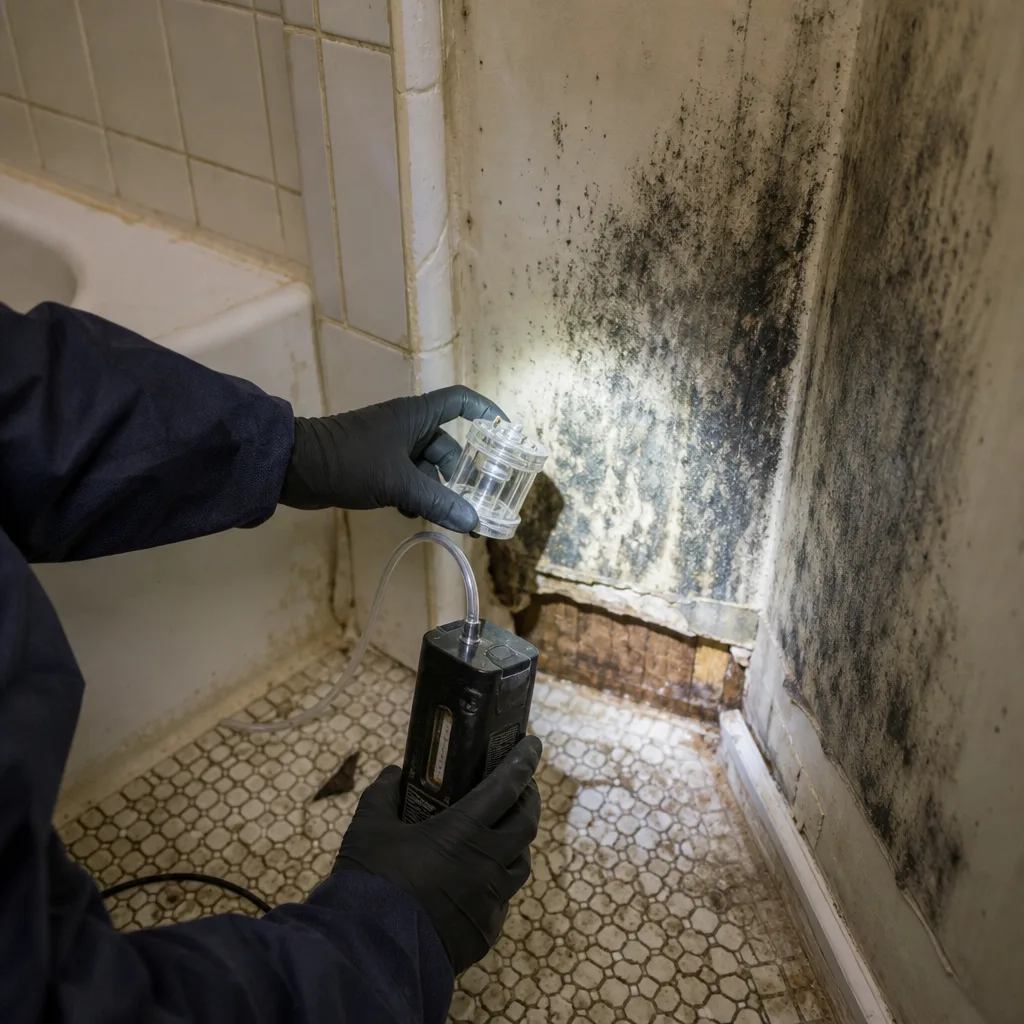
Mold Inspection & Testing
Before any remediation, you need to know what’s actually there. We run visual inspections with thermal imaging and, when the job calls for it, air and surface sampling sent to a certified lab. In Throggs Neck, we always check base plates and sill framing first because that’s where brackish water hides.
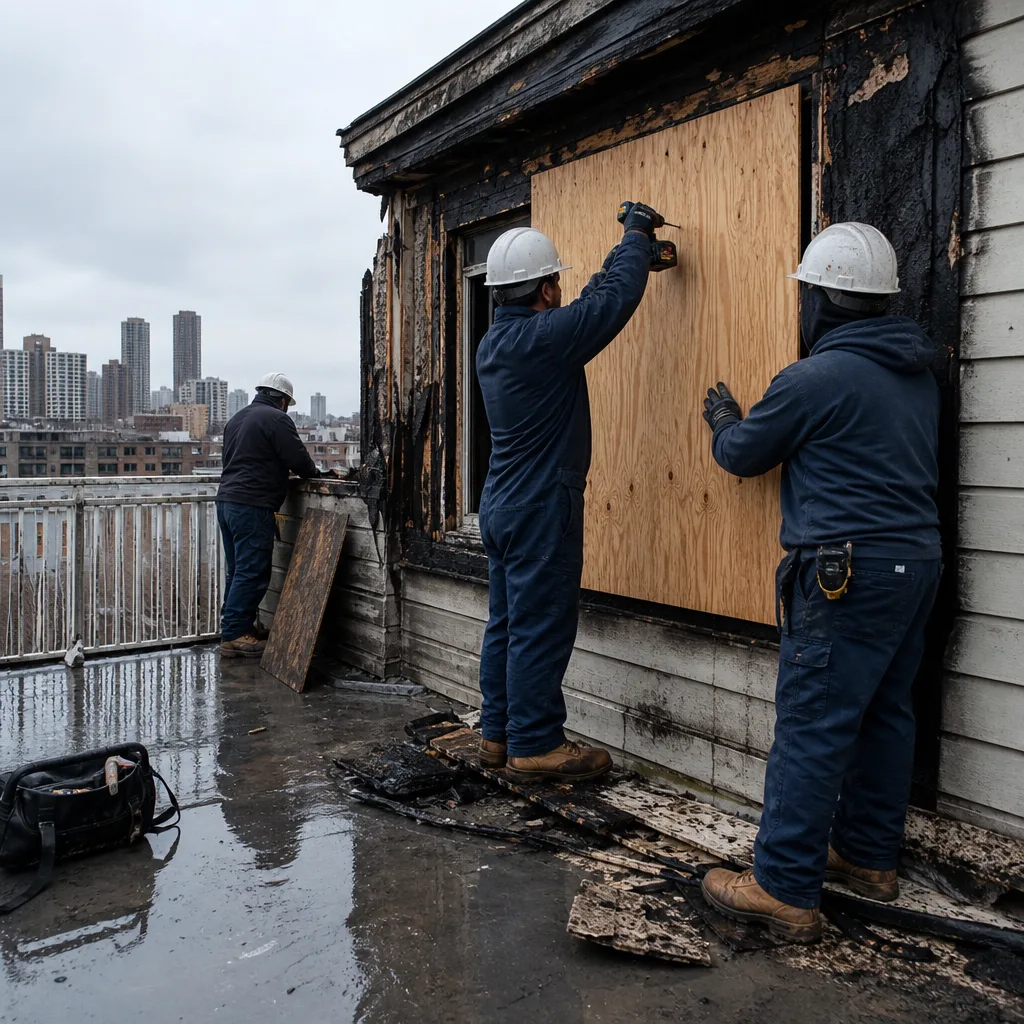
Mold Removal
We remove mold the way the IICRC teaches and the way Throggs Neck’s housing stock demands: containment, HEPA vacuuming, antimicrobial treatment, and careful removal of contaminated materials. We don’t paint over mold. That’s a guarantee.
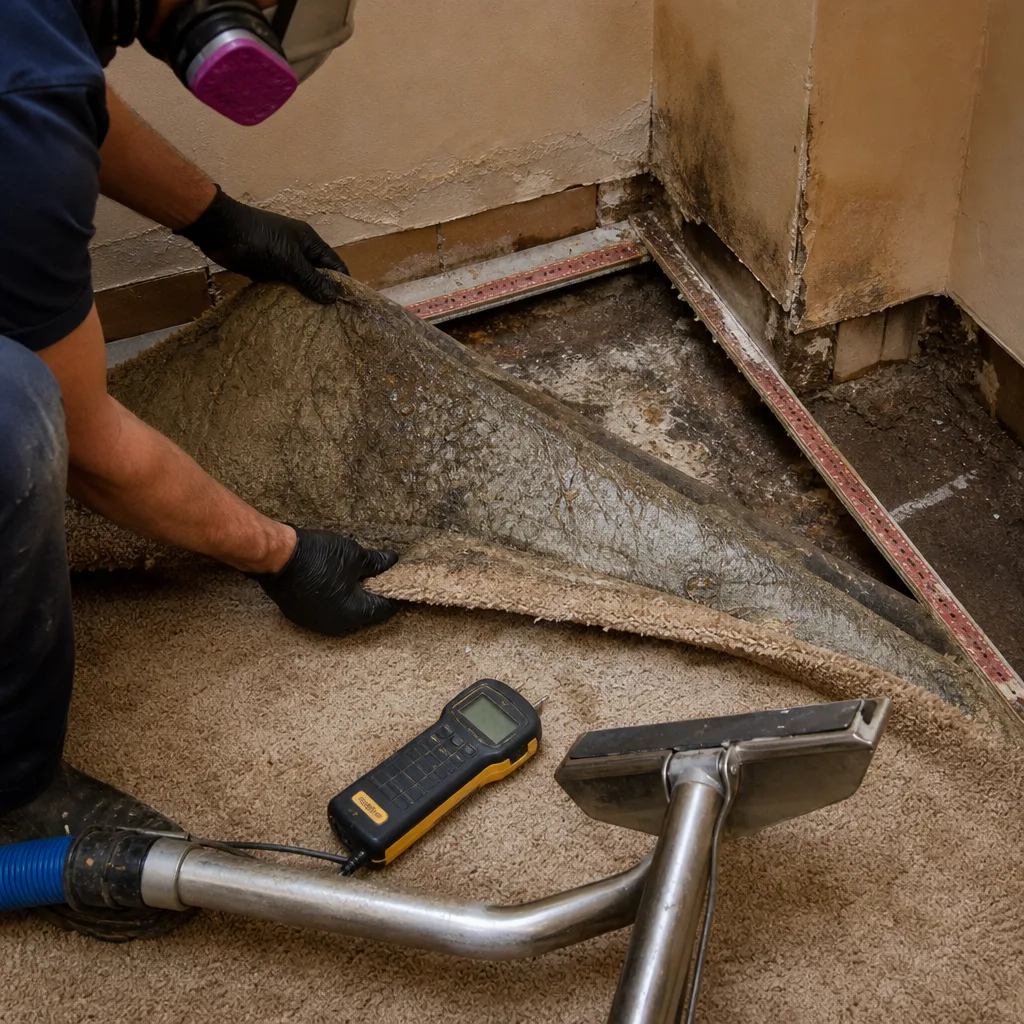
Black Mold Remediation
Stachybotrys, the “black mold” homeowners worry about, loves drywall that stayed wet too long. We treat every black mold job as a Category 2 or 3 containment job, run HEPA air scrubbing during the entire removal, and verify with post-remediation sampling before we close the walls.
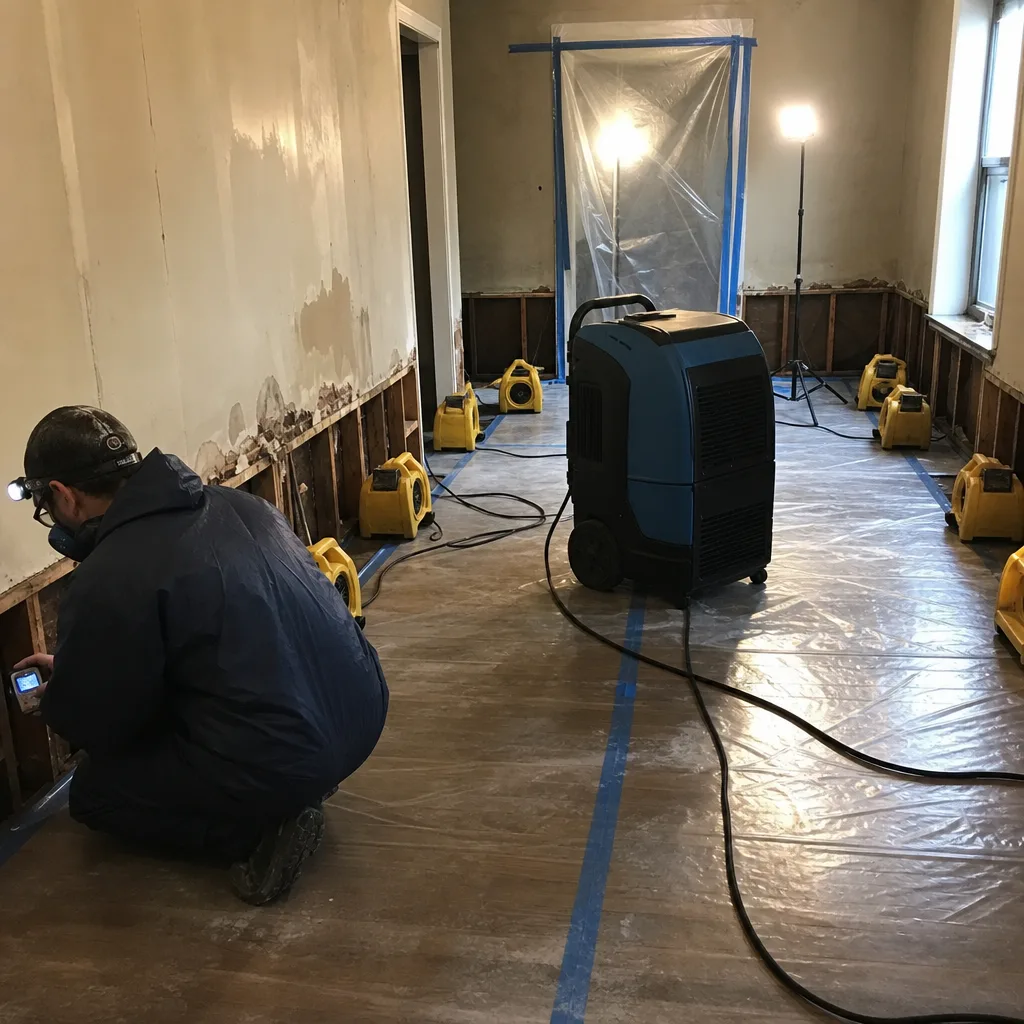
Air Quality Restoration
Mold in wall cavities releases spores into the air you breathe long before you see it on drywall. We run HEPA air scrubbers during remediation and afterward to bring airborne spore counts back to normal outdoor levels. For Throggs Neck basements that flood repeatedly, we recommend permanent dehumidification sized to the square footage.
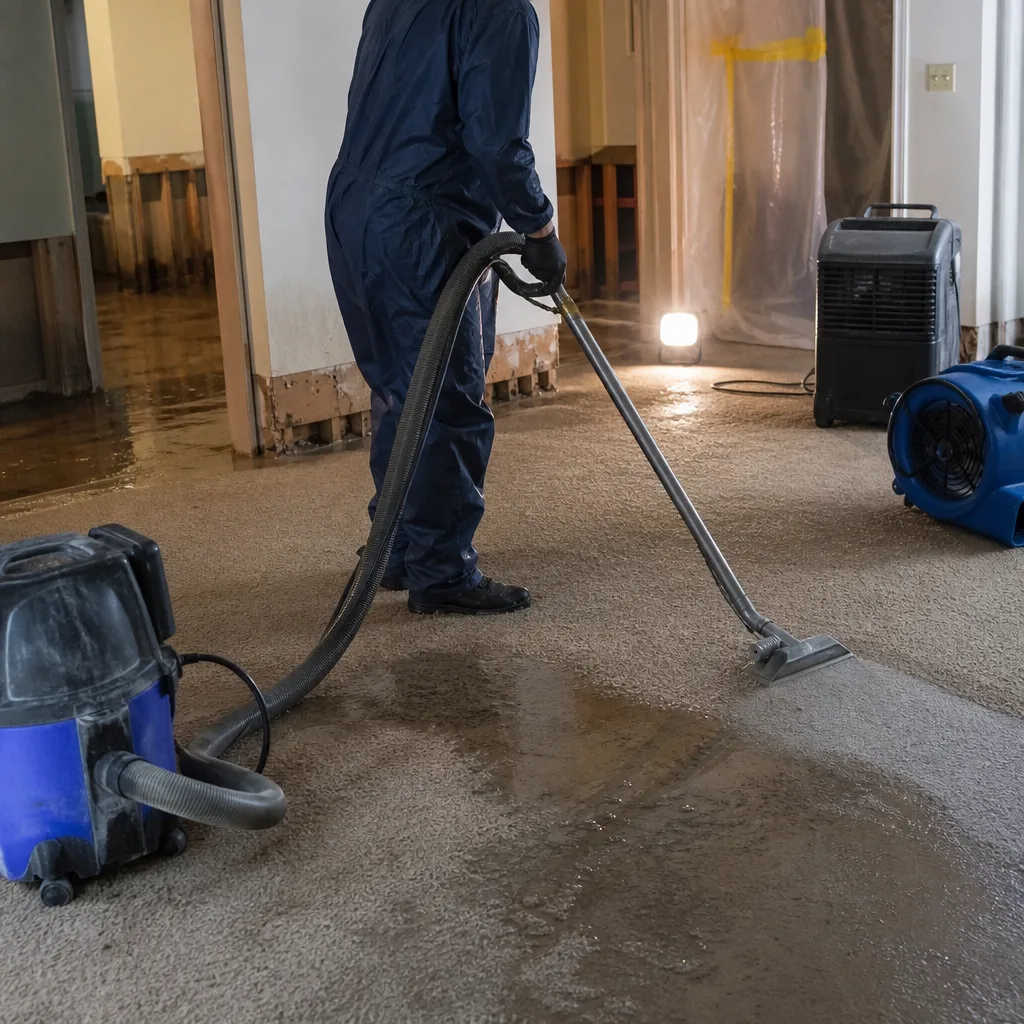
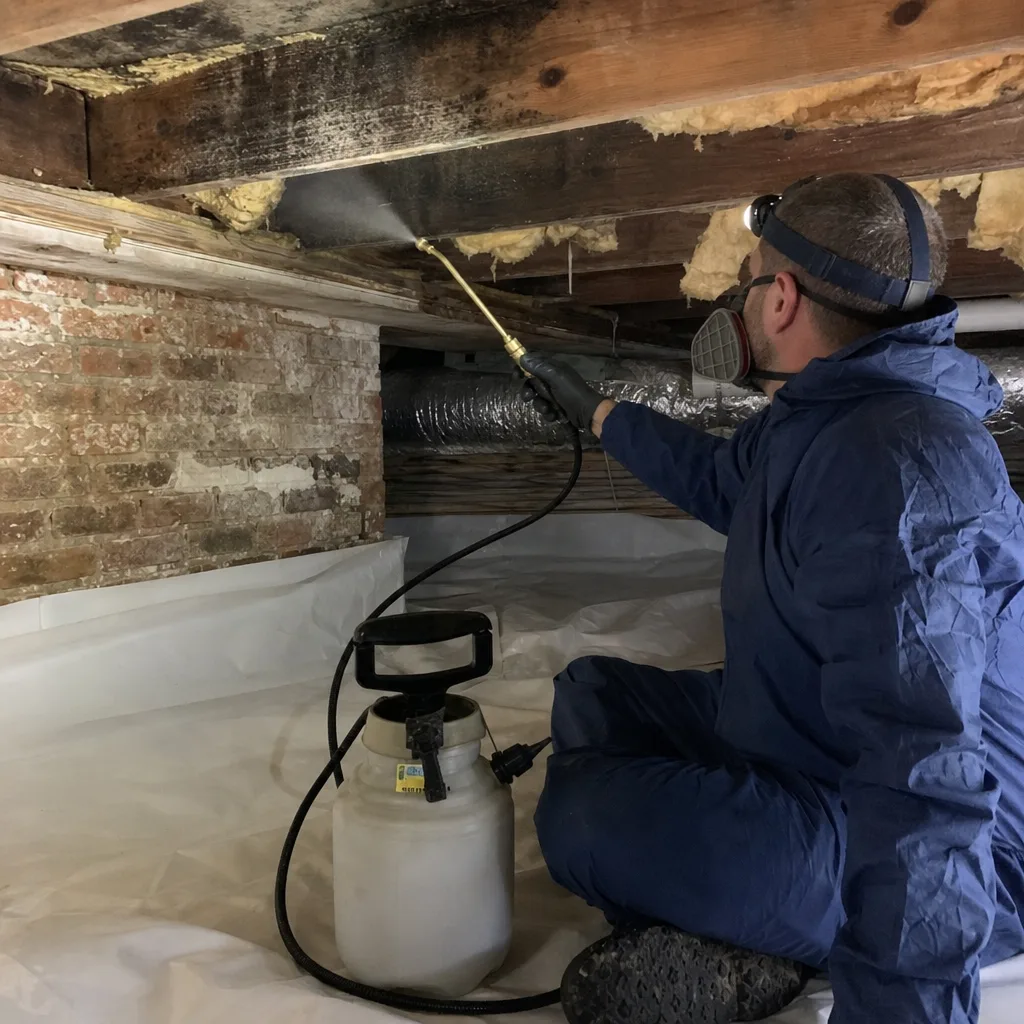
Crawl Space Treatment
Harding Park bungalows and a lot of the older homes along the water have crawl spaces that were never engineered for modern storm water. We install vapor barriers, treat exposed wood framing with antimicrobial, and set dehumidifiers to hold the relative humidity under 60%. That’s the only way to stop mold from blooming in the same spot every spring.
Moisture & Humidity Control
Salt air plus a finished basement below grade means your walls are always pulling in moisture. We install and size dehumidifiers, fix grading around the foundation, and repair the drainage issues that feed mold. This is prevention, not just cleanup.
What happens when you call
- 1
A real person answersNo phone trees - you reach a local pro.
- 2
You get an upfront price rangeHonest numbers before anyone is dispatched.
- 3
A background-checked tech heads outLicensed & insured, dispatched right away.
- 4
You approve before work beginsNothing starts until you say go.
Mold Remediation Costs in Throggs Neck, NY
A typical mold remediation job in Throggs Neck runs $1,800 to $4,200 for a contained area up to 100 square feet, like a single basement wall or a bathroom. Full finished basement remediation after floodwater intrusion usually lands between $4,000 and $8,500 depending on how much drywall comes out and whether framing needs treatment. Crawl space treatment in Harding Park-style bungalows runs $2,500 to $6,000 when you factor vapor barrier, dehumidification, and wood treatment.
The variables are square footage of containment, how much material needs removal, whether silted or salt-damaged framing requires structural repair, and whether post-remediation air sampling is required. Mold Inspection & Testing alone runs $300 to $600 in Throggs Neck. When the job ties to a flood claim under NFIP, our direct insurance billing means your out-of-pocket depends on your coverage, but the free visual inspection tells you what you’re facing before any check is written. Call (917) 924-4221 and we’ll give you a straight answer.
We Also Serve Cities Near Throggs Neck
Floodline Restoration Co. of Manhattan runs crews throughout the southeast Bronx and up into lower Westchester. If your property is in Fairview, Harrison, East Bronx, or Hunts Point, the same certified team serves you. Call (917) 924-4221 and a live dispatcher tells you exactly when a crew can reach your door.
Serving Throggs Neck, NY - Our Local Coverage Area
We’re based in the Throggs Neck area and know this community well. Use the map below to see our service coverage - if you’re nearby, we can almost certainly help.
Throggs Neck Mold Remediation Questions, Answered
Our Throggs Neck basement flooded with brackish water during the last nor’easter-how soon can mold start in the drywall and what category of water does it fall under?
Mold can begin colonizing wet drywall within 24 to 48 hours, and brackish storm surge from the East River or Throggs Neck Bay is classified as Category 3 water, the most contaminated category. That means the drywall, insulation, and any porous material the water touched need containment and removal rather than simple drying. Call (917) 924-4221 as soon as you see water; the faster we start extraction and drying, the less material gets cut out.
Why do older Throggs Neck bungalows in Harding Park have recurring mold even after a previous ‘remediation’ company dried the basement?
Most likely because the previous crew dried the floor and set drywall before the framing actually hit the dry standard. Original 1920s and 1930s wood framing in Harding Park absorbs brackish water deep into the grain, and a floor-level fan won’t pull moisture out of a sill plate. We’ve opened walls where the sill plates crumbled under moisture readings. Full remediation there means replacing salt-damaged wood, treating what remains, and running containment with daily moisture logs until it tests dry.
What does a realistic mold remediation scope of work include for a Throggs Neck finished basement exposed to tidal floodwater?
A real scope for a flooded finished basement includes full containment, HEPA air scrubbing, removal of all water-contacted drywall and insulation up to the flood line, antimicrobial treatment of exposed framing, daily drying logs until wood reads under 16% moisture, post-remediation air sampling, and re-drywall only after the dry standard is met. Anything less than that is a partial job. Ask any contractor for their written scope before they start cutting.
Does the salt air around Throggs Neck make mold problems worse or cause different damage than inland Bronx homes?
Salt air accelerates corrosion in fasteners, electrical panels, and HVAC housings, and when saltwater floods a basement, the water carries chlorides into the wood framing. That causes a different failure mode than freshwater flood damage: wood that looks dry on the surface can hold brackish moisture deep in the grain, corrode anchor bolts, and feed mold for years. Inland Bronx homes don’t have this problem to anywhere near the same degree.
My Throggs Neck home is in a FEMA AE flood zone-does mold remediation affect my flood claim or need special documentation?
Mold remediation tied to a flood claim needs the same documentation your NFIP adjuster expects for any covered damage: photos from day one, moisture readings before and after drying, a line-item scope, and proof the dry standard was met. In AE and VE zones, we also document for any Increased Cost of Compliance or Elevation Certificate issues your property may have. We send that paperwork directly to your carrier so you don’t have to.
How fast can a mold remediation crew actually reach Throggs Neck?
We commit to a 45-minute response for emergency jobs in Throggs Neck. Our crews stage in the southeast Bronx, not across the river, so we reach Harding Park, Locust Point, and Edgewater Park faster than most Manhattan-based companies. The dispatcher on the phone confirms the ETA when you call (917) 924-4221.
Can we stay in our Throggs Neck home during mold remediation?
For small, contained jobs under 10 square feet, most homeowners stay in place with containment separating the work area. For full basement jobs with Category 3 water or black mold, we may recommend leaving the area where containment runs until air sampling clears. We give you a straight answer after the initial inspection.
What certifications do your Throggs Neck mold remediation technicians hold?
Our technicians are background-checked, uniformed, and certified to IICRC standards, specifically AMRT for applied microbial remediation and WRT for water damage restoration. They train to RIA and IFA standards as well. You’ll know who’s in your home and what they’re qualified to do.
Written by Curt Bowman, Owner at Floodline Restoration Co. of Manhattan, serving Throggs Neck homeowners since 2010.