
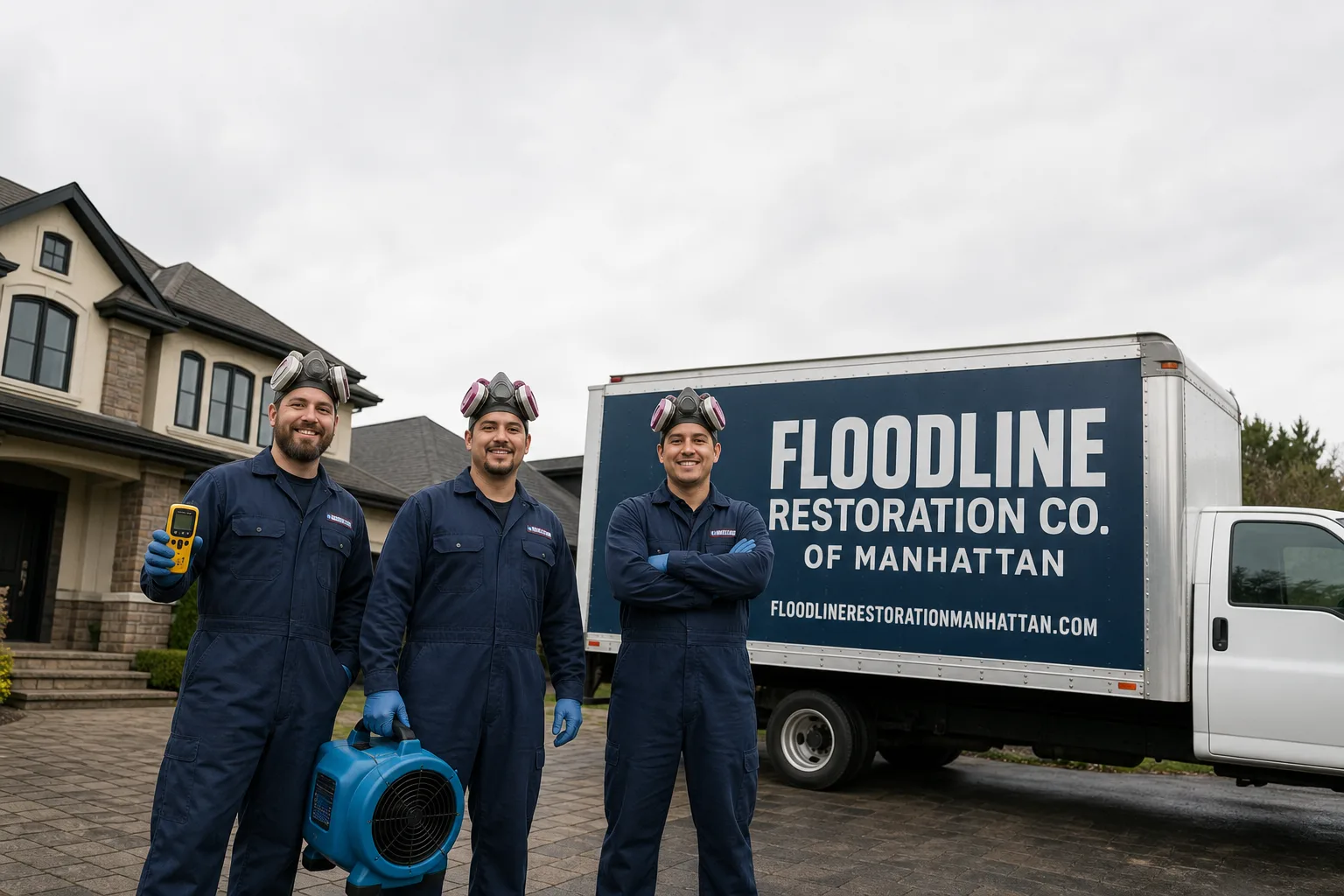
Free visual inspection and a written scope of work before any mitigation begins - photos, moisture readings, and drying logs go in your claim file
The scope we write is the scope we bill. Anything new gets shown to you, in writing, before we touch it.






 Before
 After
After Before
 After
After Before
 After
After24/7 Emergency Mold Remediation in Tribeca
Mold remediation in Tribeca typically runs $1,800 to $12,000 depending on how far the growth has spread behind walls and under flooring, and most contained jobs are finished within five to seven days. If you’re seeing black staining along baseboards near a former loading dock entrance or smelling must in a converted warehouse loft, call Floodline Restoration Co. of Manhattan at (917) 924-4221 right now. A certified crew reaches most Tribeca addresses within 45 minutes, and a real person answers the phone at 2 a.m. because we know what a Hudson Street basement smells like after a nor’easter backs storm water through a below-grade entry.
We’ve been answering emergency calls in New York City for over 42 years as a brand, and in Tribeca specifically, the moisture problems are different from any other neighborhood we serve. The first hour matters because spore colonies double every 24 to 48 hours inside materials like the century-old timber and plaster common in this neighborhood. Every minute that passes means more demolition later. We dispatch immediately, not after a callback.
Understanding Mold Remediation Severity in Tribeca Properties
Mold remediation severity breaks down into three practical levels, and Tribeca’s building stock pushes jobs toward the higher end faster than almost anywhere else in Manhattan. Level one is surface growth: visible staining on drywall, plaster, or trim, usually from a slow plumbing leak or condensation. Level two is colonized porous material, where mold has penetrated drywall, insulation, or the wide-plank subfloors typical of converted 19th-century warehouse lofts. Level three is hidden systemic growth, and this is the one we see most often in Tribeca. Water that entered during Hurricane Sandy or a more recent nor’easter settled into 24-inch-thick unreinforced masonry party walls, and those walls hold moisture for weeks or months at a time.
Containment is not optional in Tribeca, partly because open-plan floor-throughs of 3,000 to 5,000 square feet mean airborne spores travel from a ground-floor bathroom to a gallery-hung art wall in minutes. We run HEPA air scrubbers and negative air pressure on every job, and we moisture-map behind original wide-plank subfloors before we decide what gets dried versus what comes out. Clearance testing happens before we remove containment, never after we’ve already packed up. The thick brick and heavy timber that give these lofts their character are also what hide mold from a surface-only inspection.
Key takeaways:
- Most Tribeca mold problems start as water problems: storm surge, a failed former loading dock seal, or a plumbing leak inside a 150-year-old wall.
- You can’t see the worst of it. Unreinforced masonry walls and heavy timber beams hold moisture deep inside.
- Surface cleaning without moisture verification is the number one reason mold returns in this neighborhood.
Why Tribeca Property Owners Choose Floodline Restoration Co. of Manhattan
- 45-minute response commitment: Our Tribeca crews are staged near West Street and Canal Street for exactly this reason. We tell you when we’ll be there, and we are.
- 24/7 live answer, always a person: No automated phone tree at 3 a.m. A live dispatcher picks up and a certified crew is moving before you hang up.
- IICRC-certified crews: Our technicians hold WRT, FSRT, and AMRT certifications. Mold is not a side job for us; it’s a discipline with standards.
- Free visual inspection: We’ll look before we quote. No charge to assess, no pressure to sign anything on the spot.
- Direct insurance billing: We talk to your adjuster, send the photos, send the moisture logs. You don’t carry messages between us and the carrier.
- One team, start to finish: Extraction, drying, remediation, and rebuild happen with the same crew. No mid-job handoff to a subcontractor you’ve never met.
Our Mold Remediation Process
1. Inspection & Assessment
We start with thermal imaging and hygrometer readings across the affected area, not a visual once-over. In Tribeca, that means checking behind original wide-plank subfloors and inside masonry party walls where moisture hides for weeks. We map the full extent before touching anything, then give you a written scope.
2. Containment & Source Control
We stop the water source: a failed former loading-dock seal, a leaking pipe inside a thick wall, whatever is feeding the growth. Then we seal the affected area with 6-mil polyethylene and run negative air pressure so spores don’t spread through an open loft.
3. Drying & Dehumidification
Dri-Eaz LGR dehumidifiers and Phoenix AirMax air movers get placed based on the moisture map, not a guess. We take daily readings and log them until the dry standard is met. In masonry-heavy Tribeca buildings, this often takes longer than a drywall-framed apartment uptown, and we plan for that.
4. Cleaning & Sanitization
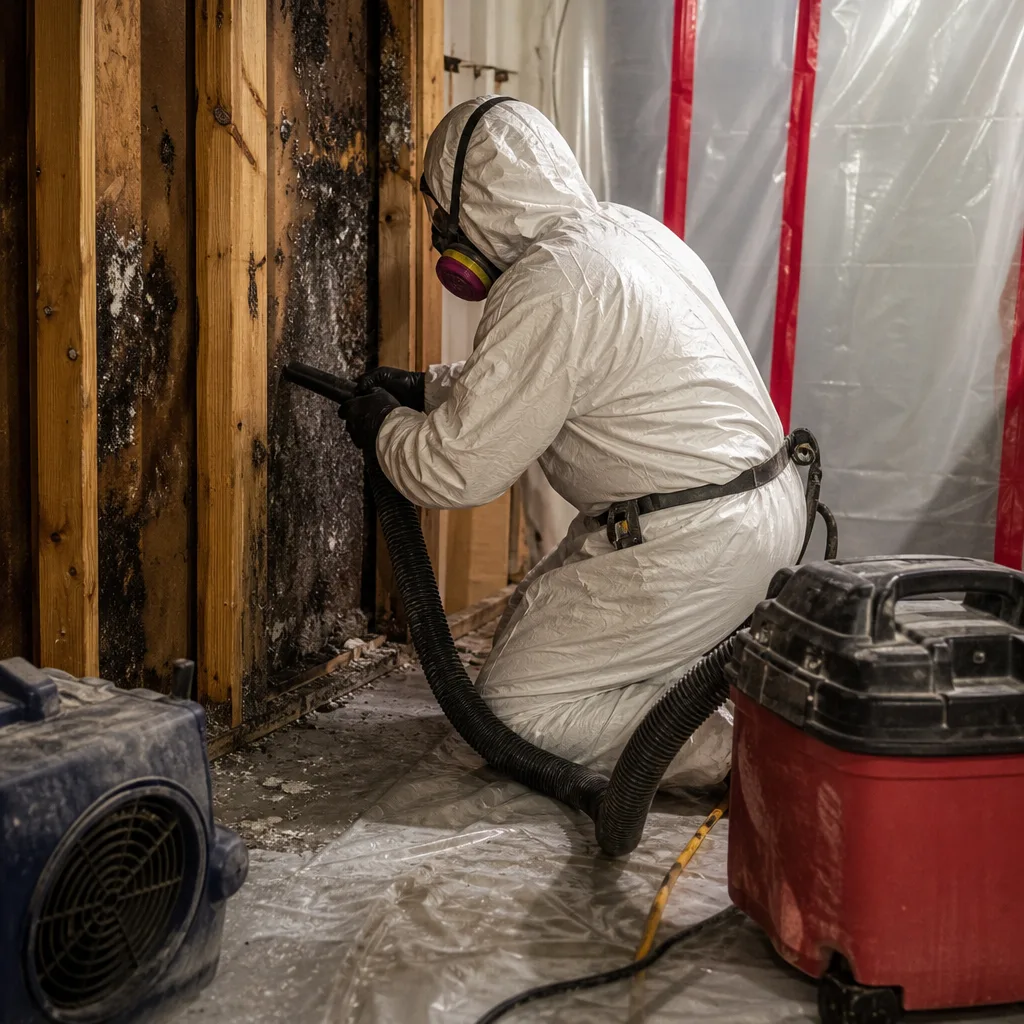
HEPA vacuuming of all surfaces, antimicrobial treatment on framing and masonry, and air scrubbing throughout the contained area. We’re working around your $80,000 kitchen and your art, not just blasting through. Pack-out happens with care when finishes need protection.
5. Specialty Treatment for Mold Remediation
For Tribeca lofts, this means treating the unreinforced brick party walls and 19th-century heavy timber that standard remediation companies skip. We check moisture content inside those materials before, during, and after drying, because a party wall at 20% moisture will re-grow mold in a month no matter how clean the drywall looks.
6. Repairs & Restoration
After clearance testing passes, we rebuild what came out: drywall, plaster, flooring, lower cabinetry, trim. Same crew, same standards, and the 90-Day Done Right Promise in your hands in writing when we finish.
Need Emergency Mold Remediation in Tribeca Now?
Crews minutes away, answering live 24 hours a day. The sooner we start, the less it costs.
Working With Your Insurance Company
Insurance claims in Tribeca carry an extra layer of complexity because so many buildings here are co-ops and condos with their own master policies, and because storm surge damage falls under different coverage than a burst pipe. We handle it the same way either way: documentation from the first hour, industry-standard line-item estimates, and direct communication with your adjuster. You shouldn’t have to translate moisture readings to a claims department. That’s our job.
On a recent basement-level live-work loft on Hudson Street, our crew was called after a nor’easter back-flowed street water through a former loading-dock entrance set inches above the sidewalk. Using a Dri-Eaz LGR 7000XLi dehumidifier and Phoenix AirMax air movers, we established containment and ran moisture readings that showed water had wicked 10 feet up an unreinforced brick party wall. After pack-out of gallery-hung artwork and a custom walnut kitchen’s lower cabinetry, we removed saturated plaster, applied an IICRC-approved antimicrobial treatment, and left drying logs showing the wall returned to pre-loss condition in 12 days, even though the building’s original timber beams read 99% RH for the first week.
What We Provide Your Insurer
- Thorough documentation of the loss
- Photos of all damage, room by room
- Moisture readings and drying logs
- A detailed, line-item scope of work
- Direct coordination with your carrier
Built for Tribeca’s Loss Calendar
Tribeca’s mold problems follow a predictable seasonal pattern, and it’s tied to the neighborhood’s geography. Late summer and early fall bring hurricane remnants and coastal storms that push water up from the Hudson River and back-flow through below-grade former loading docks. That’s when we see Category 3 water in ground-floor lobbies and basement-level live-work units along Greenwich Street, Hudson Street, and West Broadway. The masonry walls absorb it, and mold shows up two to four weeks later.
Winter brings a different trigger: freeze-thaw cycles working against 150-year-old supply lines inside uninsulated masonry. A slow pinhole leak behind a party wall goes unnoticed for weeks, feeding mold behind plaster and original wide-plank subfloors. Spring’s thaw and heavy rains raise groundwater against century-old rubble-stone foundations that were never waterproofed by modern standards. By the time a Tribeca homeowner sees the first dark staining, the colony has usually been growing for three to six weeks. That’s not an exaggeration. It’s what the moisture maps show us.
Mold Remediation Across Tribeca’s Neighborhoods
Tribeca isn’t uniform. Different blocks have different building DNA, and that changes how we approach the work. The stretch from Chambers Street south to Vesey Street holds some of the oldest cast-iron-fronted warehouses in the neighborhood, buildings where the party walls are full-thickness brick and the subfloors are original 19th-century lumber. Remediation there means treating masonry and timber, not just drywall. We route crews through West Street, Greenwich Street, and Church Street depending on the address, and we know which buildings have below-grade loading docks versus raised ground floors.
Over near Washington Market Park and the blocks around Greenwich and Harrison Streets, you find mixed building stock: older mercantile buildings next to more recent mid-rise residential. The older buildings share the same thick-wall moisture retention problem, while the newer ones sometimes hide mold behind modern finishes layered over original structural systems. Around Duane and Reade Streets, many ground floors are now retail or restaurant spaces with residential lofts above. Secondary water damage from a commercial space below travels up through shared structural members, and we’ve mapped mold growth that originated in a restaurant ceiling and colonized a residential subfloor above it. Every block has its own signature. We know them because we work them weekly.
Specialized Mold Remediation Services We Offer in Tribeca
Mold Inspection & Testing
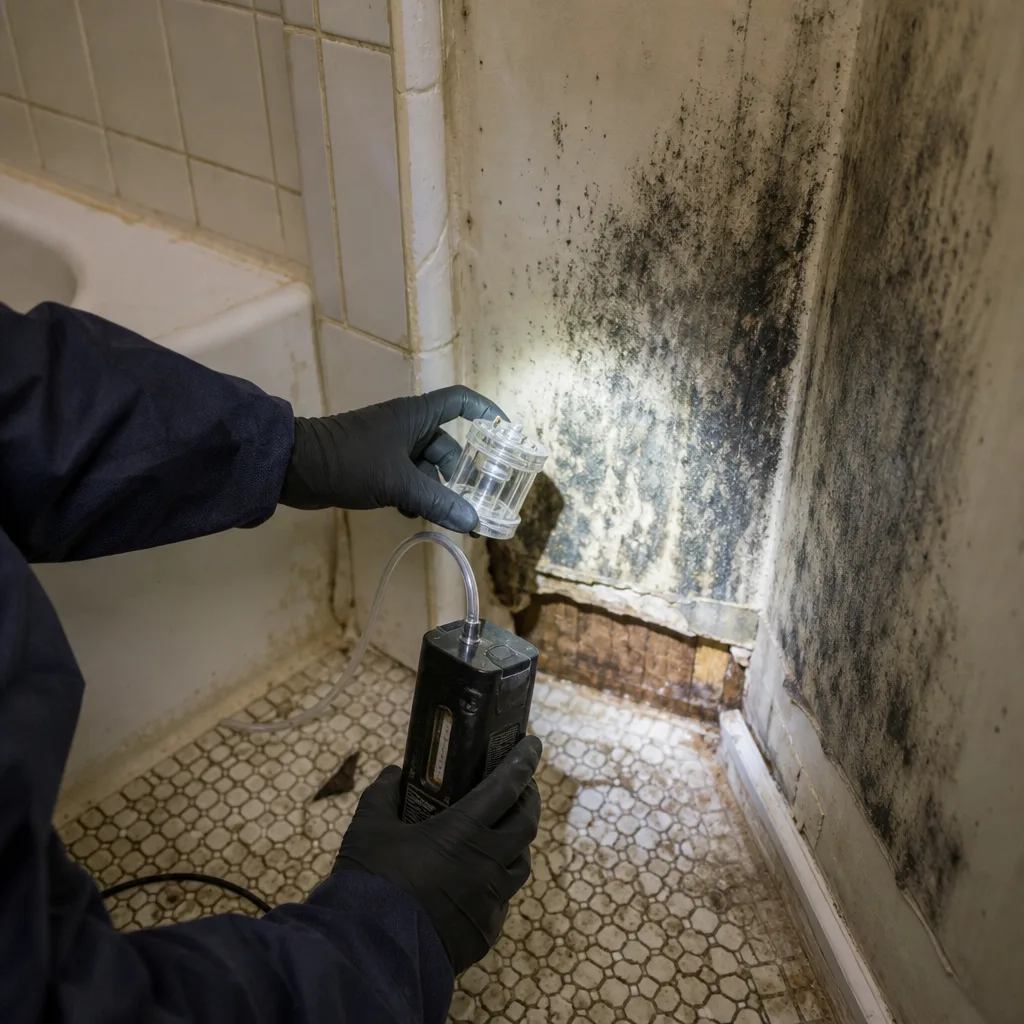
A proper mold inspection in Tribeca includes moisture readings inside the building’s masonry walls and subfloor cavities, not just air samples from a single room. We use thermal imaging to find cold spots behind original brick and heavy timber where condensation breeds growth. You get a written report that tells you what’s growing, where, and how bad it is before anyone recommends remediation.
Mold Removal
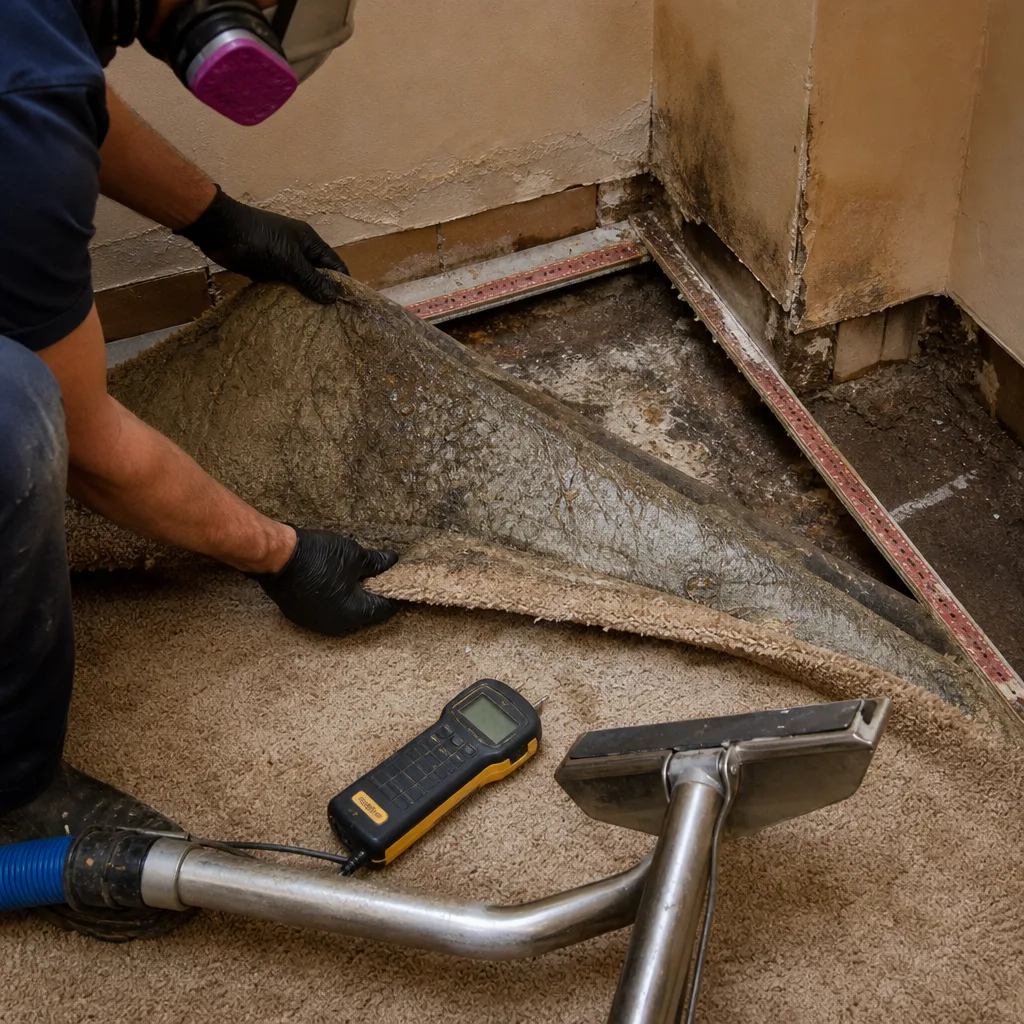
Physical removal of colonized materials, done under containment, with HEPA air scrubbing running throughout. In Tribeca lofts this often means removing lower drywall sections, plaster, and saturated subfloor boards without damaging the 150-year-old structural members beneath them. We protect custom finishes, artwork, and furniture with pack-out and polyethylene shielding before demolition starts.
Black Mold Remediation
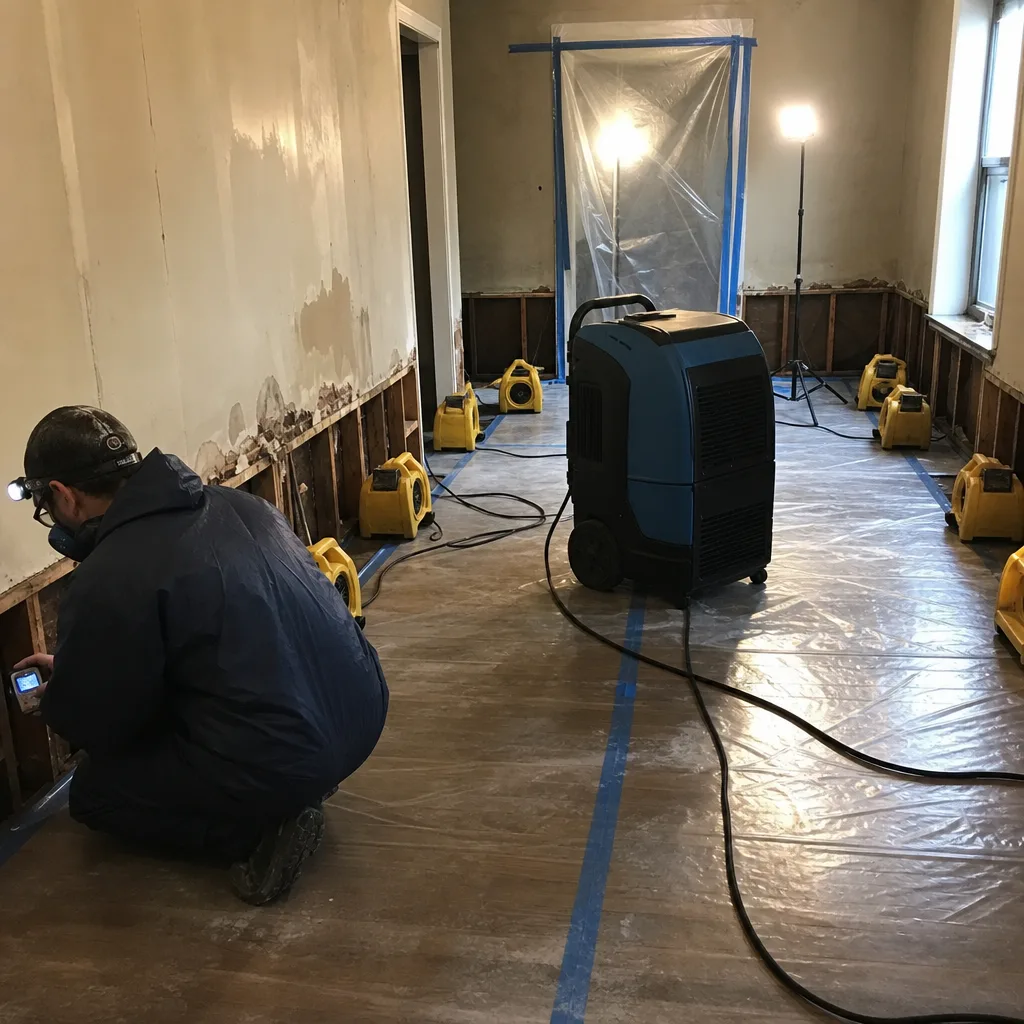
Stachybotrys chartarum, the one people call black mold, thrives on cellulose materials that have stayed wet for a long time: drywall paper, wood subfloors, old plaster lath. Tribeca’s flood history means we see it more in ground-floor and basement units than anywhere else. Full containment, HEPA vacuuming, antimicrobial treatment on all adjacent surfaces, and clearance testing before anyone re-enters without a respirator.
Air Quality Restoration
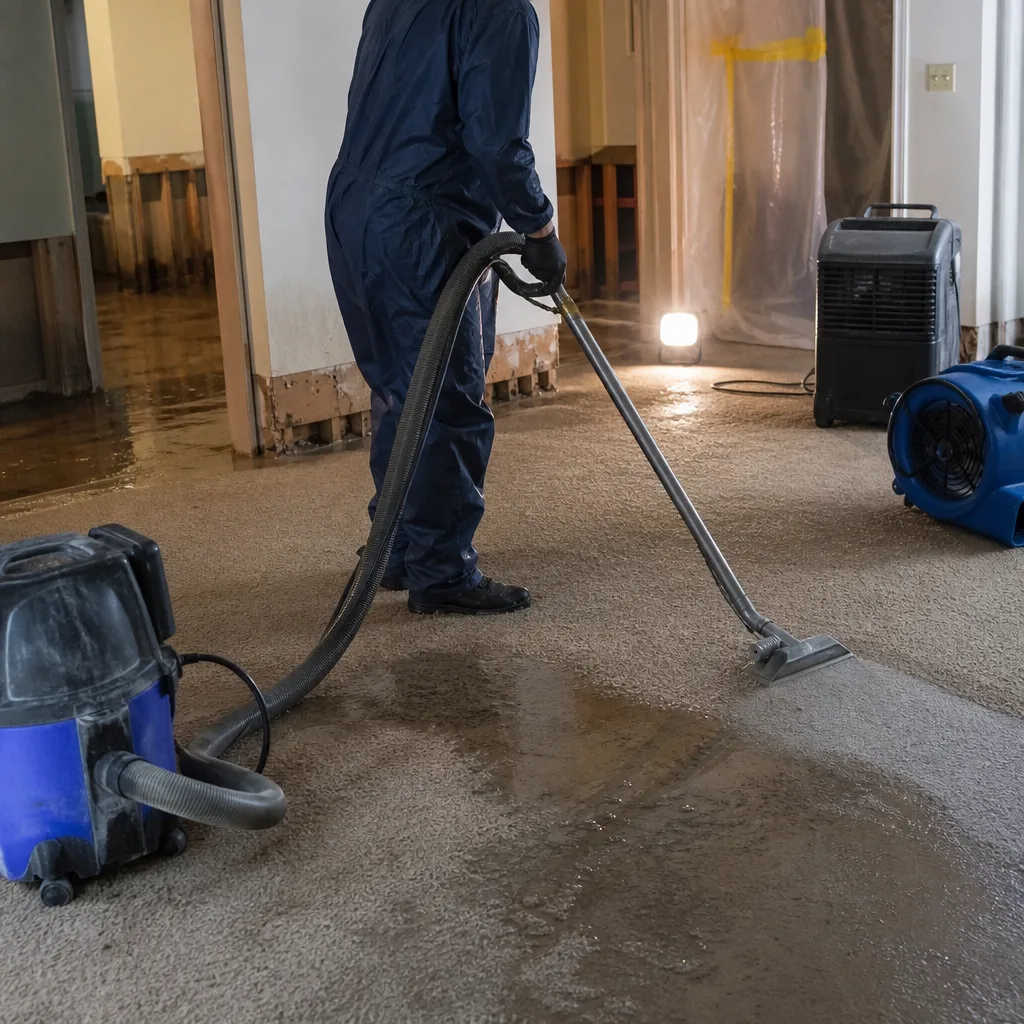
After the visible mold is gone, the air still carries spores that settled on textiles, upholstery, and art. We run HEPA air scrubbers for days, not hours, and in the open-plan spaces of Tribeca’s warehouse conversions, we set up airflow patterns that push clean air through every corner. Post-remediation air samples confirm spore counts return to outdoor baseline levels.
Crawl Space Treatment
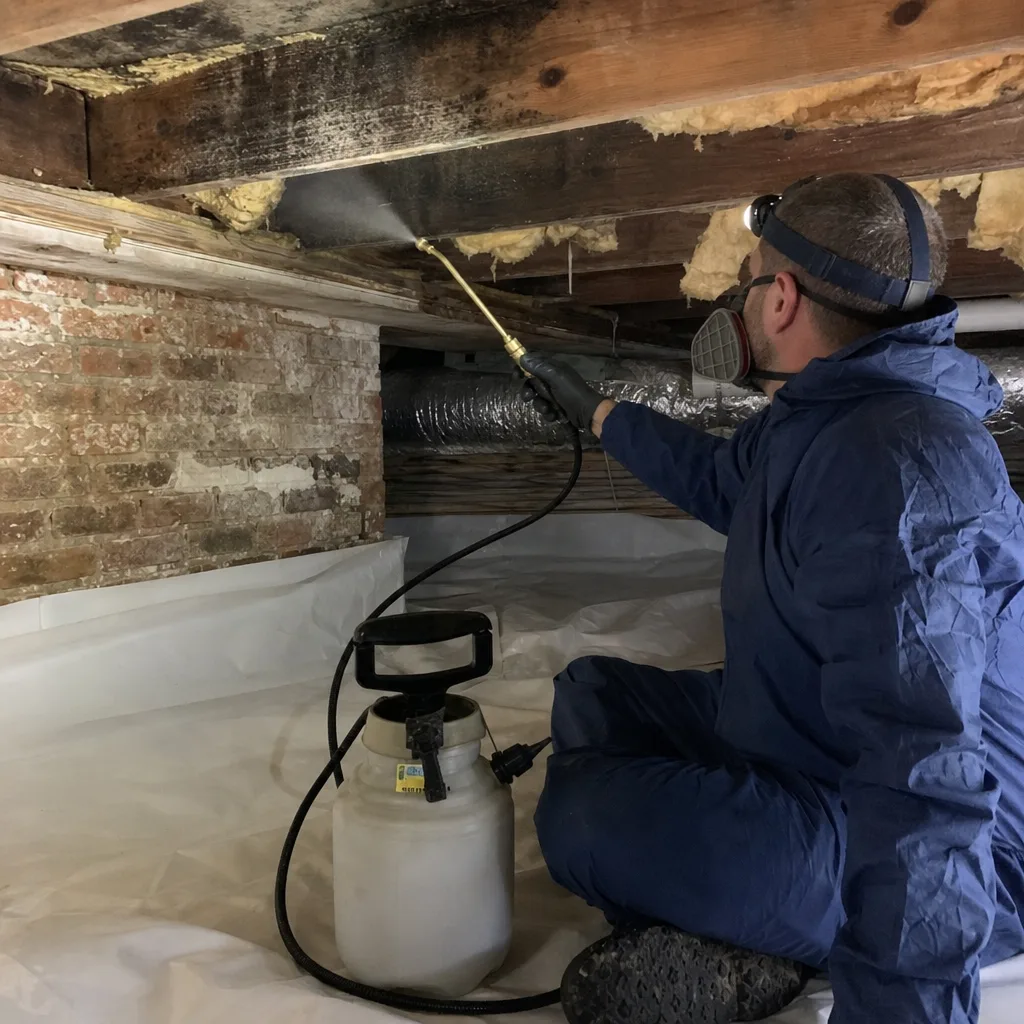
Many Tribeca ground-floor and basement units have shallow crawl spaces or subfloor cavities above old loading docks and vaults. These spaces trap moisture from below-grade masonry and never dry on their own. We treat them with antimicrobial applications, install vapor barriers where appropriate, and set dehumidifiers sized for the space’s actual cubic footage, not a generic square-footage guess.
Moisture & Humidity Control
Mold prevention in Tribeca is a moisture control problem. The neighborhood’s masonry-heavy buildings absorb water from storm events and release it slowly into living spaces for weeks afterward. We install dehumidifier systems, improve ventilation in subfloor and basement spaces, and seal former loading-dock entries and below-grade penetrations that keep letting water back in. Without moisture control, remediation is a temporary fix.
What happens when you call
- 1
A real person answersNo phone trees - you reach a local pro.
- 2
You get an upfront price rangeHonest numbers before anyone is dispatched.
- 3
A background-checked tech heads outLicensed & insured, dispatched right away.
- 4
You approve before work beginsNothing starts until you say go.
Mold Remediation Costs in Tribeca, NY
Mold inspection and testing in Tribeca typically runs $300 to $700 depending on the number of air samples and moisture readings required. A contained mold removal in a single bathroom or small bedroom usually lands between $1,800 and $4,500. A full floor-through loft with growth behind multiple walls, subfloor saturation, and pack-out of art and furniture runs $8,000 to $12,000 or more when reconstruction is included. Crawl space treatment under a ground-floor Tribeca unit runs $1,500 to $4,000 depending on square footage and access.
What moves the price: how far water wicked into masonry party walls, whether the subfloor is original wide-plank (more cost to dry and treat than modern plywood), and whether custom finishes require pack-out. Insurance covers most storm-related mold remediation when the water event was sudden and covered. A slow leak that went unnoticed for months is a different claim picture. We’ll do a free visual inspection, give you a written scope, and go over every line before you decide. Call (917) 924-4221 and we’ll come look.
We Also Serve Cities Near Tribeca
Floodline Restoration Co. of Manhattan covers mold remediation needs across lower Manhattan and the surrounding areas, including Tribeca itself, plus Fairview, Harrison, East Bronx, and Hunts Point. If you’re in one of those areas and need a certified Mold Remediation crew, we’ll be there fast.
Tribeca Mold Remediation Questions, Answered
How does mold remediation in a Tribeca loft differ from a newer high-rise apartment uptown?
In a Tribeca loft, the structure itself is the difference. Newer high-rises have steel or concrete framing with drywall over it. A converted 19th-century warehouse has unreinforced brick party walls, heavy timber beams, and original wide-plank subfloors that absorb and hold water for weeks. Remediation here means moisture-mapping inside masonry, not just checking drywall surfaces. Uptown jobs often finish in three days. A thorough Tribeca job on a saturated masonry wall can run 10 to 14 days because that wall doesn’t give up its water quickly, no matter how many air movers you point at it.
Hurricane Sandy flooded our Tribeca ground-floor lobby years ago-could mold still be a problem now?
Yes, and we find it more often than you’d expect. Sandy’s surge pushed Category 3 water into ground floors, basements, and below-grade loading docks throughout Tribeca. Many buildings were remediated quickly and incompletely. Moisture trapped inside 24-inch-thick masonry party walls takes months or years to fully release, and if the wall wasn’t dried to standard and treated, mold can be growing invisibly behind the plaster right now. We’ve done inspections in buildings where the Sandy water was worse than anyone admitted, and the mold had been colonizing for over a decade before anyone tested for it.
Can you remediate a mold problem in a Tribeca loft without damaging our $80,000 custom kitchen or art collection?
Our standard protocol includes pack-out of art and valuables before any demolition starts. We use polyethylene containment, negative air pressure, and HEPA filtration to keep spores off your finishes and textiles. Custom cabinetry gets wrapped and protected; lower sections that must come out get carefully removed and replaced by our own carpenters, not a subcontracted crew. We’ve worked around gallery-hung artwork, $80,000 kitchens, and museum-quality furniture in Tribeca lofts without a single damage claim. The 90-Day Done Right Promise covers the result in writing.
Our basement has a former loading dock that floods during heavy rain. How do we prevent mold from returning after remediation?
The loading dock is the problem, not the mold. If water keeps entering through a below-grade former dock seal every time it rains, no amount of remediation will hold. We remediate first, then solve the entry point: sealing the dock penetration, installing a backflow preventer if needed, grading the exterior threshold, and setting up perimeter drainage where the building allows. The mold didn’t cause the flooding. The flooding caused the mold. Fix the water path and the mold doesn’t come back.
How do you determine what can be dried versus what must come out after a Tribeca storm flood?
IICRC standards and moisture readings guide every call. Porous materials that absorbed Category 3 water, like drywall, insulation, and carpet, get removed. Solid masonry walls and heavy timber, when structurally sound, can be dried in place, but only if we can verify the moisture content drops to the dry standard within a reasonable window. If a timber beam reads 99% RH after a week of professional drying, it’s too far gone and we tell you that honestly. We never dry contaminated materials just to save on demolition costs. That’s how mold comes back.
How fast can someone actually get to our Tribeca building when there’s a mold emergency?
Most Tribeca addresses get a crew on site within 45 minutes of your call. We stage equipment and personnel near the neighborhood because we work here constantly. A live dispatcher answers 24/7, not a recording, and you’ll know who’s coming and when. In an active water event that’s feeding mold, speed changes the scope dramatically. Call (917) 924-4221 and we’re on the way.
Are your Tribeca mold crews certified?
Yes. Our technicians carry IICRC certifications including WRT (Water Damage Restoration Technician), FSRT (Fire and Smoke Restoration Technician), and AMRT (Applied Microbial Remediation Technician). They’re trained to RIA and IFA standards as well, background-checked, uniformed, and they work under the direct supervision of a project manager who’s been doing restoration work for years. You’ll know everyone who enters your home, and they’ll know their job.
What should I do in the first 30 minutes after discovering mold in my Tribeca home?
Don’t touch it. Don’t scrub it, don’t paint over it, and don’t run a box fan near it. Disturbing mold releases spores into the air, and in an open-plan loft those spores travel far. Turn off the HVAC if the growth is near a return duct. Close the door to the affected area if possible. If there’s standing water, shut off the water supply. Then call us at (917) 924-4221. We’ll walk you through the next hour on the phone while a crew is dispatched to your building.
Serving Tribeca, NY - Our Local Coverage Area
We’re based in the Tribeca area and know this community well. Use the map below to see our service coverage - if you’re nearby, we can almost certainly help.
Contact Floodline Restoration Co. of Manhattan for Mold Remediation in Tribeca
You don’t need to know which dehumidifier to use or whether your party wall is above 20% moisture. You need a crew that does. Call (917) 924-4221 for a free visual inspection and a written scope before any work starts. We answer live, 24 hours a day, and we serve Tribeca with crews who know this neighborhood’s buildings better than most of its residents. Done right, and backed in writing. That’s the whole deal.
Written by the team at Floodline Restoration Co. of Manhattan. Founded by Curt Bowman in 2010, we’ve built our name in this city by treating every home like it’s our own: the Keystone Standard, every time.