
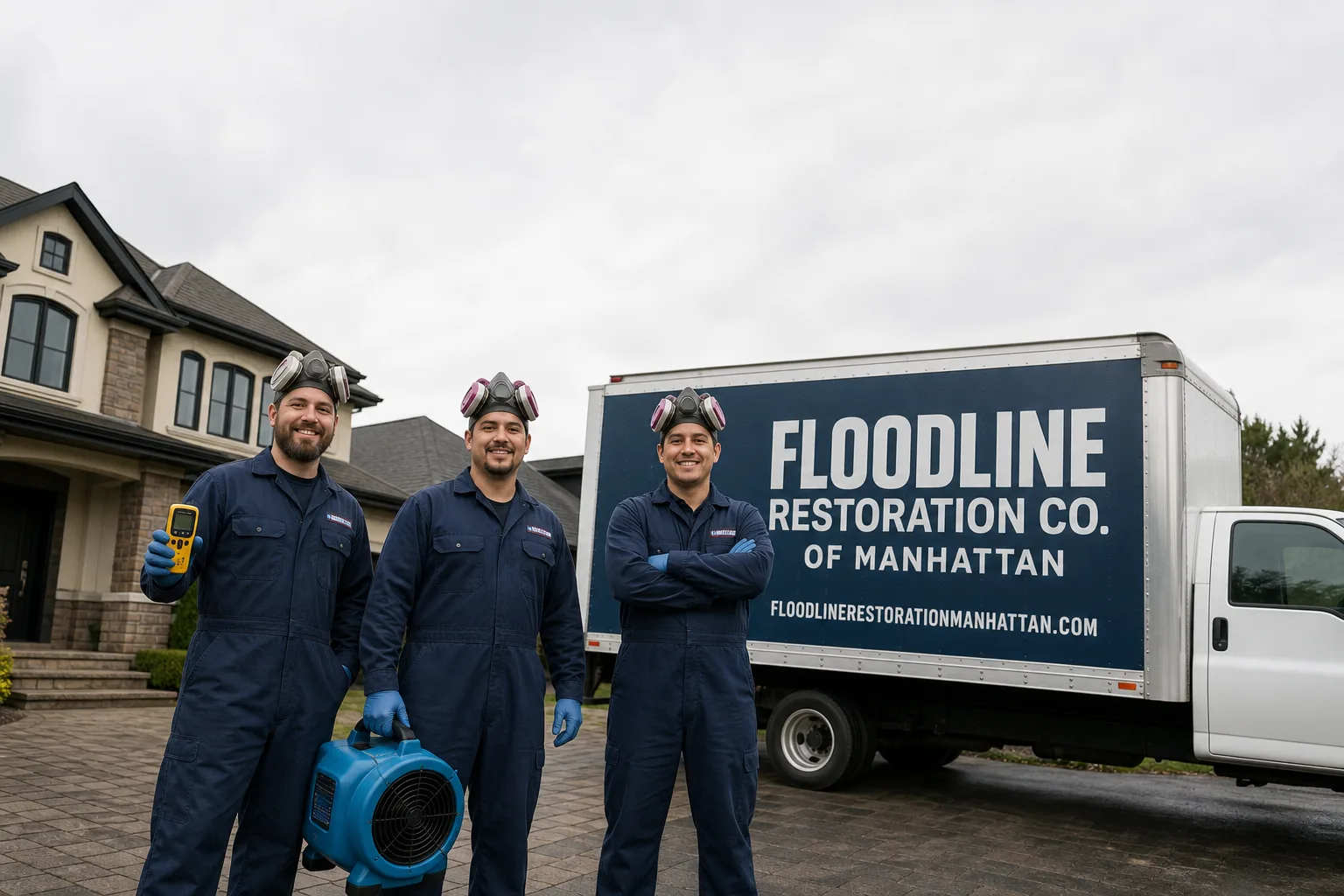
Free visual inspection and a written scope of work before any mitigation begins - photos, moisture readings, and drying logs go in your claim file
The scope we write is the scope we bill. Anything new gets shown to you, in writing, before we touch it.






 Before
 After
After Before
 After
After Before
 After
After24/7 Emergency Mold Remediation in Yonkers
Mold remediation in Yonkers typically costs $1,800-$6,500 depending on containment needs, affected square footage, and whether structural materials require replacement. Most jobs in pre-war brick buildings run higher because original plaster and lath almost always hold more moisture than the surface shows. If you’re seeing visible mold, a musty smell, or water staining on ceilings or baseboards, call (917) 924-4221 now. We answer live around the clock and dispatch crews into every Yonkers neighborhood, from Getty Square to Crestwood, within 45 minutes.
Mold doesn’t wait. In a damp Yonkers basement after a storm, colonies establish in 24-48 hours. Colonization behind plaster takes longer to show, which is why the first hour after water intrusion matters. Our Mold Remediation team arrives with moisture meters, thermal imaging, and HEPA air scrubbers to find what you can’t see. The free visual inspection tells us whether you’re looking at surface cleaning or full containment. Either way, you’ll know exactly what we found before any work begins.
Understanding Mold Remediation Severity in Yonkers Properties
Not all mold jobs are equal. In Yonkers, severity usually tracks the age of the building and the source of the water. A small pipe leak behind a kitchen cabinet in a 1990s condo near Ridge Hill is a surface cleanup with minor drywall removal. A category 3 sewer backup into the basement of a pre-1920 tenement on South Broadway is a different job entirely: full containment, negative air pressure, antimicrobial treatment of framing, and often structural repair of sill plates and floor joists.
We classify every job before touching a wall. Surface mold on non-porous materials gets HEPA vacuuming and antimicrobial wiping. Mold that penetrates drywall, plaster, or insulation requires removal of the affected material. Mold behind original plaster and lath, common along the Saw Mill River corridor, frequently extends far beyond the visible stain because the plaster keys hold moisture against the lath for decades after the original wetting event. We use moisture mapping to trace the true boundary, not the visible edge. Clearance testing after remediation confirms spore counts return to normal background levels for Yonkers, not just “looks clean.”
Why Yonkers Property Owners Choose Floodline Restoration Co. of Manhattan
- 45-minute response commitment across Yonkers. Our dispatch board tracks the nearest certified crew and we commit to wheels rolling within 45 minutes of your call, day or night.
- A live person answers, every time. No automated system, no call-back queue. You reach a dispatcher who knows Yonkers neighborhoods and can tell you exactly when the crew arrives.
- IICRC-certified crews trained to AMRT and WRT standards. Applied Microbial Remediation Technician and Water Restoration Technician credentials mean our people understand contained airflow, spore suppression, and structural drying protocols.
- Free visual inspection with moisture readings. We don’t charge to look. We bring meters, check hidden cavities, and give you a written scope before any work starts.
- Direct insurance billing. We document from the first hour, write industry-standard estimates, and talk to your adjuster directly. You never carry messages between your carrier and our crew.
- One team from first extraction to finished rebuild. No mid-job handoff, no inherited crew that never saw the original damage. The certified technicians who open your walls are the same people who close them.
Our Mold Remediation Process
Inspection & Assessment
We start with moisture mapping across affected surfaces and concealed cavities. Thermal imaging finds temperature anomalies behind plaster and drywall. We classify the water source, identify the mold type visually, and write a line-item scope that tells you exactly what gets removed, what gets treated, and what gets replaced.
Containment & Stabilization
Before any material moves, we seal the work area with 6-mil polyethylene and establish negative air pressure with HEPA-filtered air scrubbers. This keeps spores from migrating through attached row houses and shared hallways, which matters in Yonkers’s dense pre-war multi-family buildings.
Drying & Dehumidification
Using Dri-Eaz and Phoenix dehumidifiers plus XPOWER air movers, we dry affected framing and cavities to the established dry standard. In old masonry buildings, we monitor daily with penetrating and non-penetrating meters because brick and plaster release moisture slowly and hide dampness at depth.
Cleaning & Sanitization
HEPA vacuuming removes settled spores from surfaces. We apply EPA-registered antimicrobial treatments to framing, floor plates, and any salvaged materials. In crawl spaces under Yonkers rowhouses, we treat floor joists and soil-contact surfaces where humidity drives chronic mold cycles.
Source Correction & Moisture Control
Mold returns if the water does. We identify the source, whether it’s a cast-iron drain backing up, a foundation crack admitting groundwater, or a basement with no vapor barrier. We install dehumidification where warranted, seal foundation penetrations, and correct grading so water stops entering the first place.
Repairs & Restoration
After clearance testing confirms spore counts are back to normal, we rebuild what we removed. Drywall, plaster repair, insulation, sill plates, flooring. The same crew that read the moisture map on day one returns your Yonkers property to clean, pre-loss condition. And we stand behind the work in writing.
Need Emergency Mold Remediation in Yonkers Now?
Crews minutes away, answering live 24 hours a day. The sooner we start, the less it costs.
Working With Your Insurance Company
Most Yonkers homeowners discover that mold coverage hinges on the cause. A sudden pipe burst that triggers mold is typically covered. Long-term seepage through a foundation crack, or mold from years of basement humidity, usually isn’t. What matters is how the loss is documented and presented. We photograph everything from the first hour, log moisture readings daily, and write estimates in the format carriers expect. Our team talks directly with your adjuster, answers their questions, and keeps the claim moving without you relaying messages.
What We Provide Your Insurer
- Thorough documentation of the loss
- Photos of all damage, room by room
- Moisture readings and drying logs
- A detailed, line-item scope of work
- Direct coordination with your carrier
Built for Yonkers’s Loss Calendar
Yonkers mold problems follow a pattern tied to the Saw Mill River, the housing stock, and the seasons. January and February bring deep freezes that crack aging supply lines in exterior walls of pre-1940 brick buildings, dumping water inside enclosed cavities where mold starts before anyone notices. March and April thaw the ground and saturate it with snowmelt, pushing groundwater through foundation cracks in low-lying blocks around Getty Square and Nodine Hill. Summer thunderstorms overwhelm the buried Saw Mill River culvert and send category 2 and 3 water back through floor drains and cast-iron waste lines in the urban core. Fall nor’easters drive wind-driven rain into aging masonry and flashing failures on rooftops along the hudson-facing slopes.
Each season produces a signature loss. Winter pipe bursts cause hidden mold behind plaster. Spring seepage breeds mold in basements and crawl spaces that look dry by June but re-bloom by August. Summer sewer backups need immediate extraction and antimicrobial treatment. Fall roof leaks stain ceilings and breed attic mold that spreads down wall cavities. Knowing Yonkers’s calendar means we show up with the right equipment and the right expectations, same as the neighbors who’ve dealt with this for generations.
Mold Remediation Across Yonkers’s Neighborhoods
Getty Square and Larkin Plaza sit directly over the buried Saw Mill River culvert. The buildings there, mostly pre-1920 brick tenements and attached row houses, take on water from below during heavy rain, and the mold we find is usually hidden behind multiple generations of prior repairs. South Broadway’s older apartment blocks share party walls, which means a pipe burst in one unit sends water through four others before anyone opens a ceiling. Containment and communication with neighboring units is part of every job we run there.
Park Hill and Southwest Yonkers have the same pre-war brick construction but steeper grades, so surface water moves fast and finds basement entries. Crestwood and the eastern plateau neighborhoods trend toward post-1960 single-family homes, where mold usually follows roof leaks, attic condensation, or finished basements with no moisture barrier. The common thread is that Yonkers’s housing stock hides water. Plaster walls, original lath, cast-iron drains, and decades of undocumented repairs mean mold that looks minor is frequently worse than it appears. We’ve learned to assume the damage extends further than the stain, and we scope accordingly.
Specialized Mold Remediation Services We Offer in Yonkers
Mold Inspection & Testing
Before any removal begins, we map moisture, identify the water source, and document all visible growth. When testing is requested, we take air and surface samples and send them to an independent lab. For Yonkers homeowners near the Saw Mill River culvert, we check concealed cavities and framing behind plaster because surface readings often miss what’s happening at depth.
Mold Removal
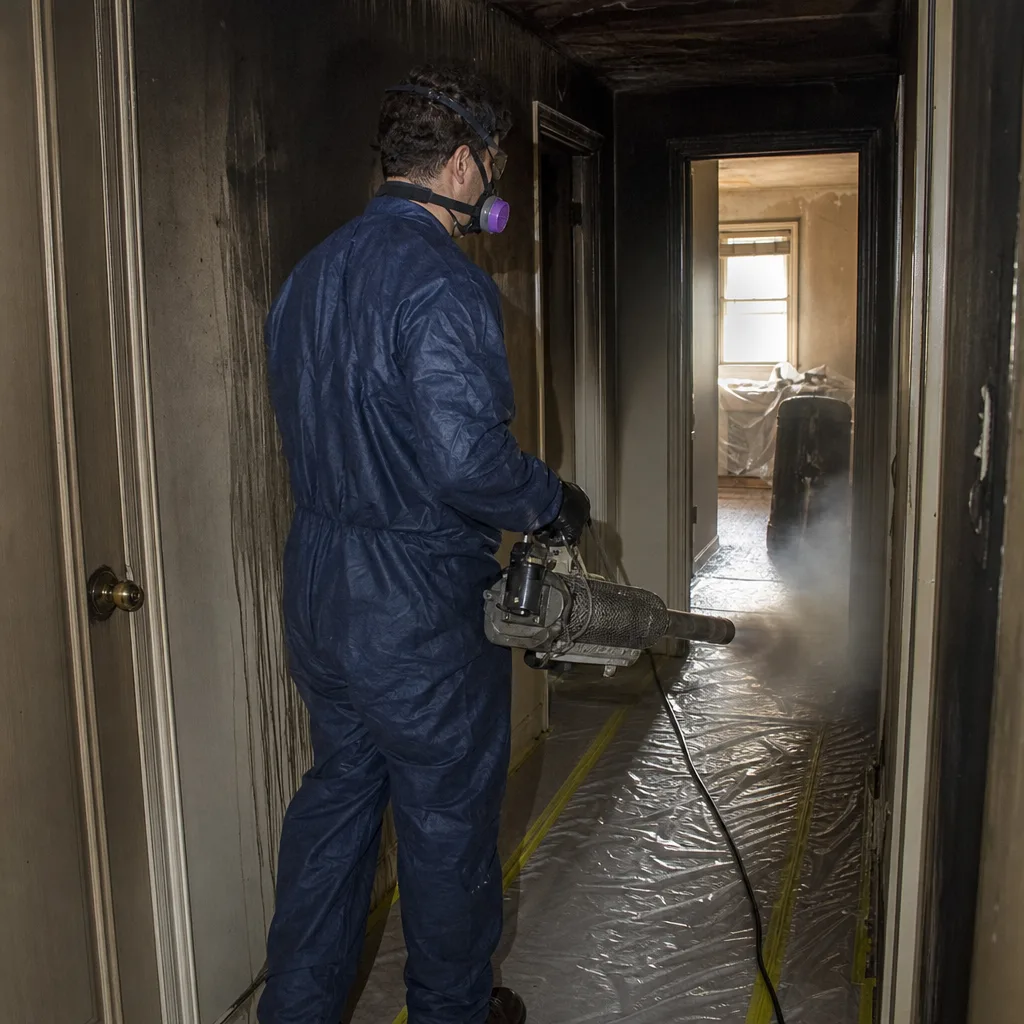
We remove mold from drywall, plaster, framing, insulation, flooring, and contents. In attached Yonkers row houses, we contain the work area under negative air pressure so spores don’t travel through shared walls or common hallways. Every removal ends with a clearance check and a written scope of what was removed and why.
Black Mold Remediation
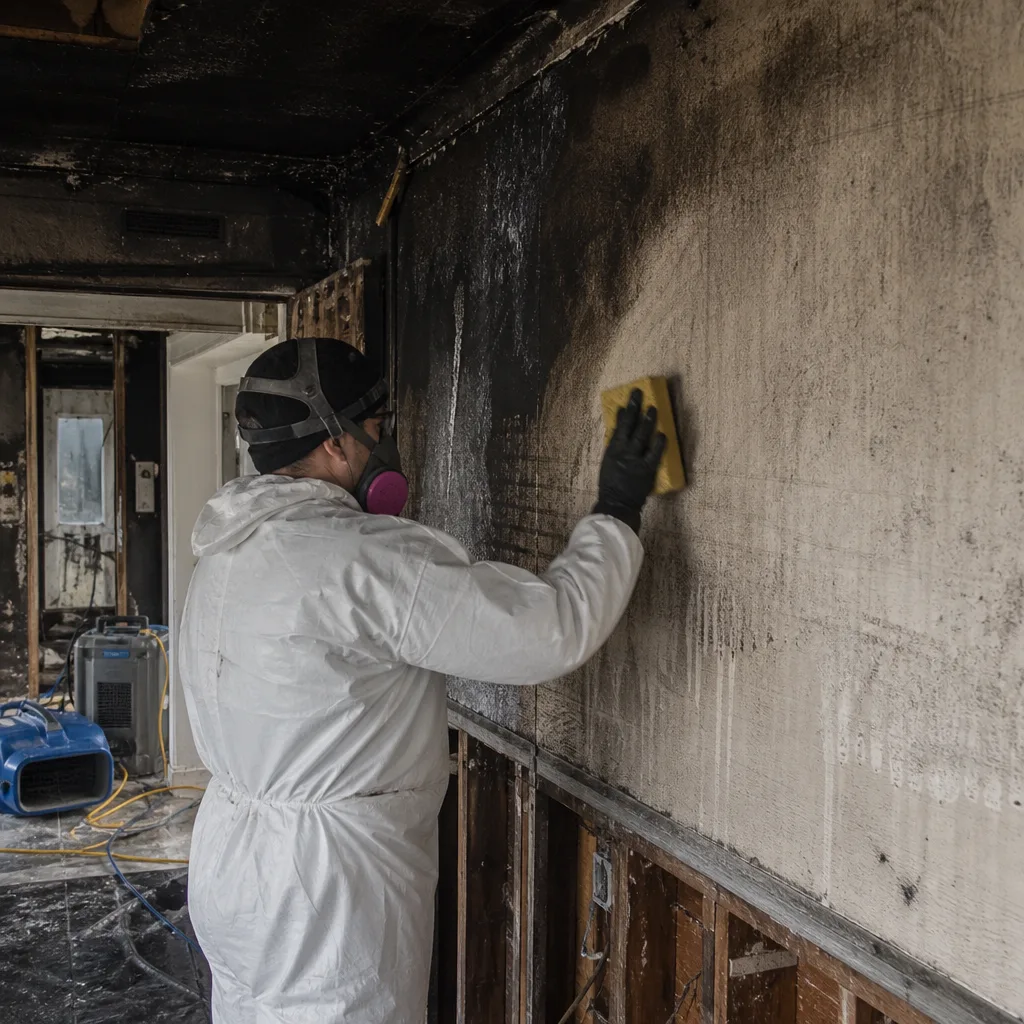
Stachybotrys chartarum, the species most people mean by black mold, grows on materials that have stayed wet for days or longer. It’s common in Yonkers basements where cast-iron drains backed up and water sat behind finished walls. We treat black mold with full containment, controlled demolition of saturated materials, antimicrobial application to structural framing, and clearance testing before rebuild.
Air Quality Restoration
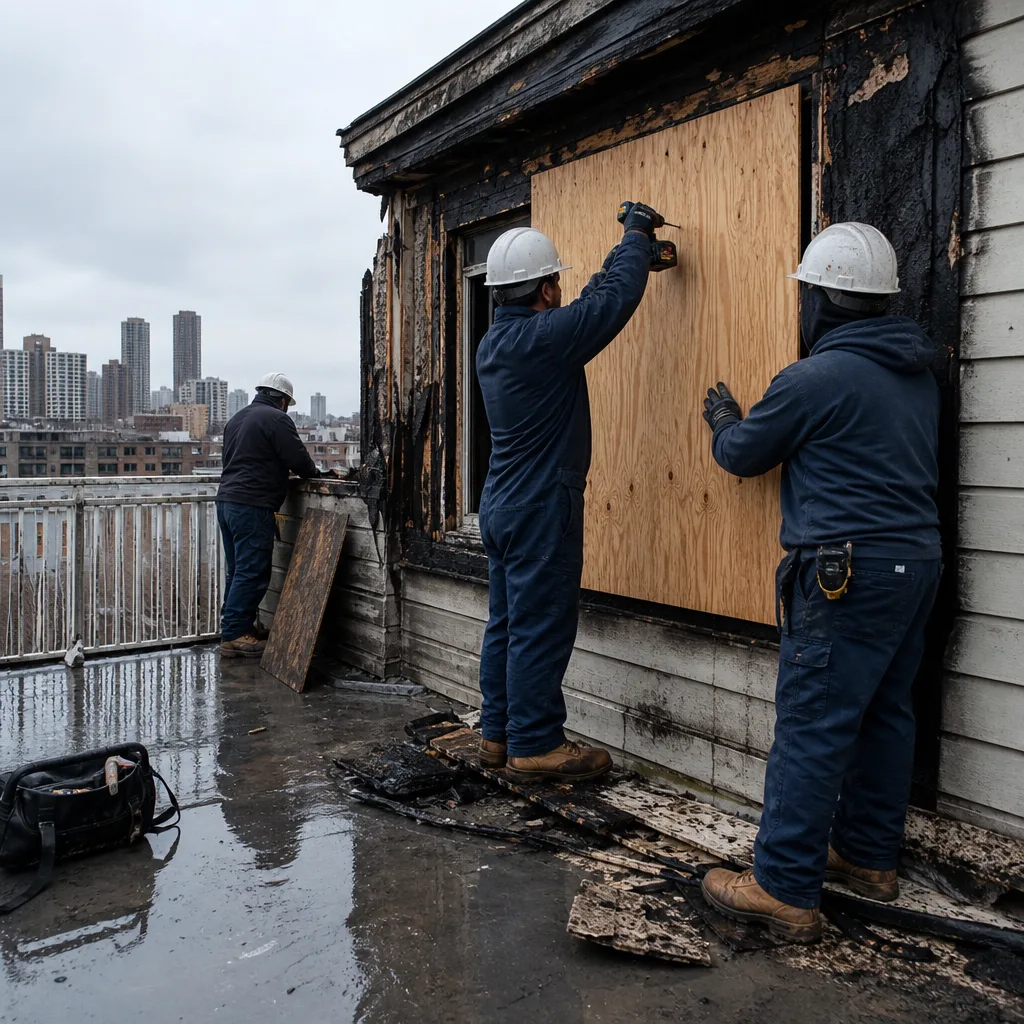
After remediation, we run HEPA air scrubbers to pull residual spores from the air. For homeowners sensitive to airborne particulates, we can also clean HVAC ducts and replace filters so the system doesn’t recirculate spores through the house. This matters in older Yonkers buildings where forced-air retrofits share duct runs between floors.
Crawl Space Treatment
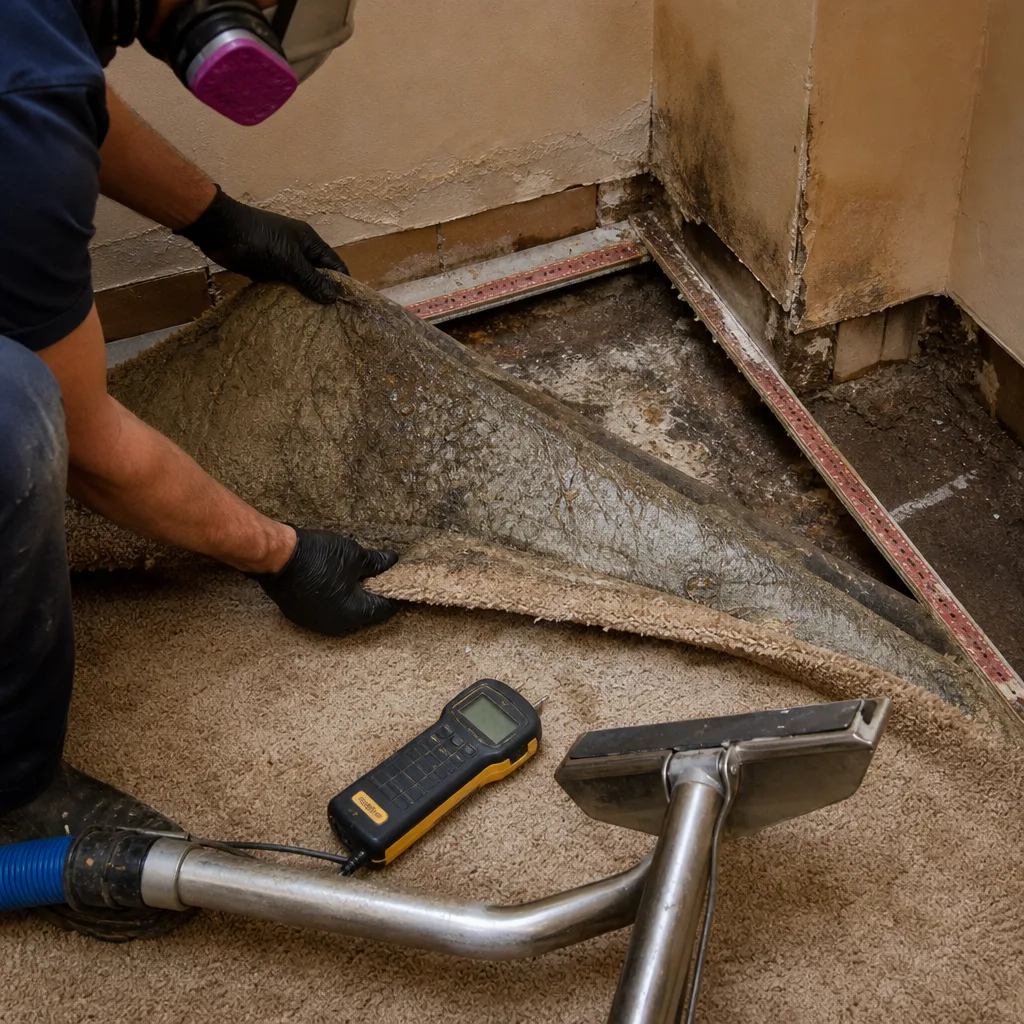
Many pre-war Yonkers rowhouses have dirt-floor crawl spaces that never dry out. The soil releases moisture into the floor joists above, and mold cycles repeat every summer. We treat with fungicidal coatings, install vapor barriers, and add dehumidification where the space allows. The goal is to break the annual cycle, not just postpone it.
Moisture & Humidity Control
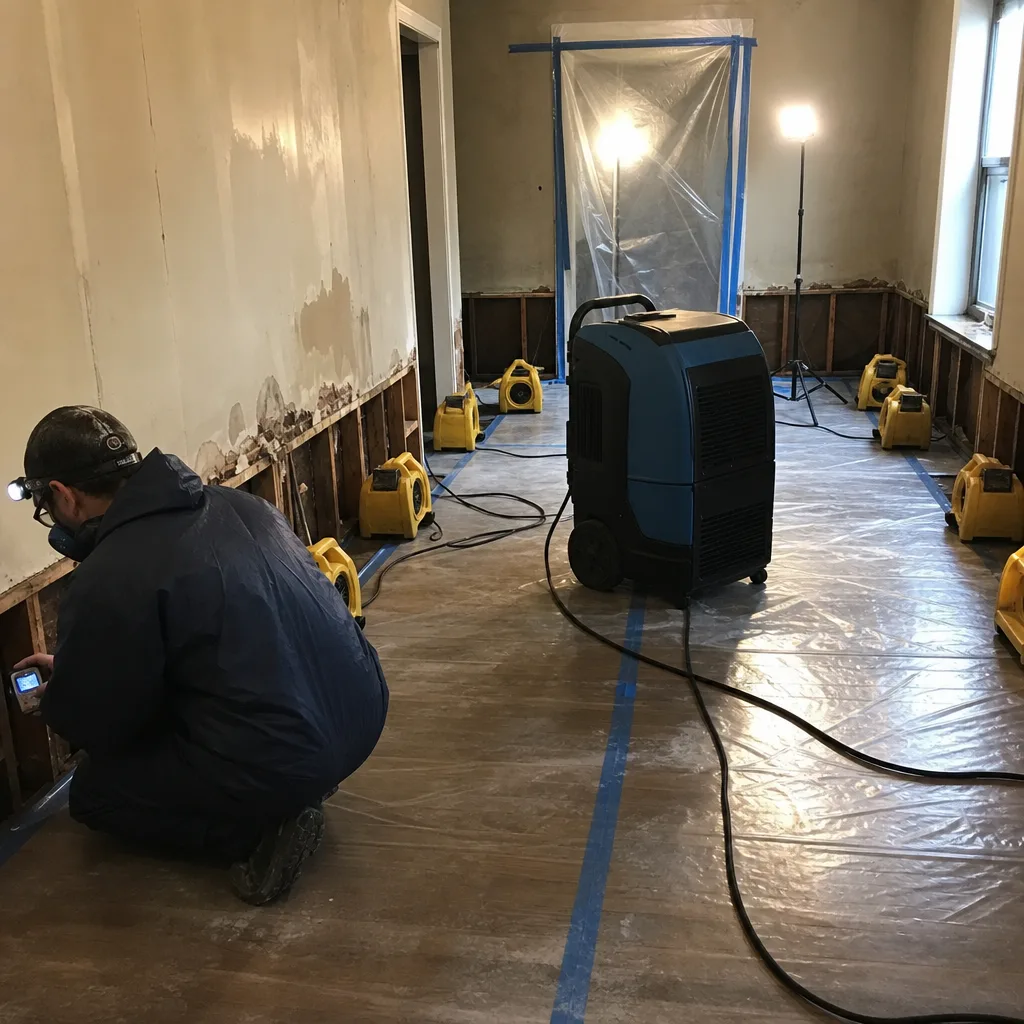
In Yonkers’s pre-war masonry buildings, chronic basement humidity often feeds mold even without a flood. We install crawl space encapsulation, basement dehumidifiers, and drainage corrections that address the humidity source. If the building over the Saw Mill River culvert carries persistent ground moisture, we design around it instead of fighting it.
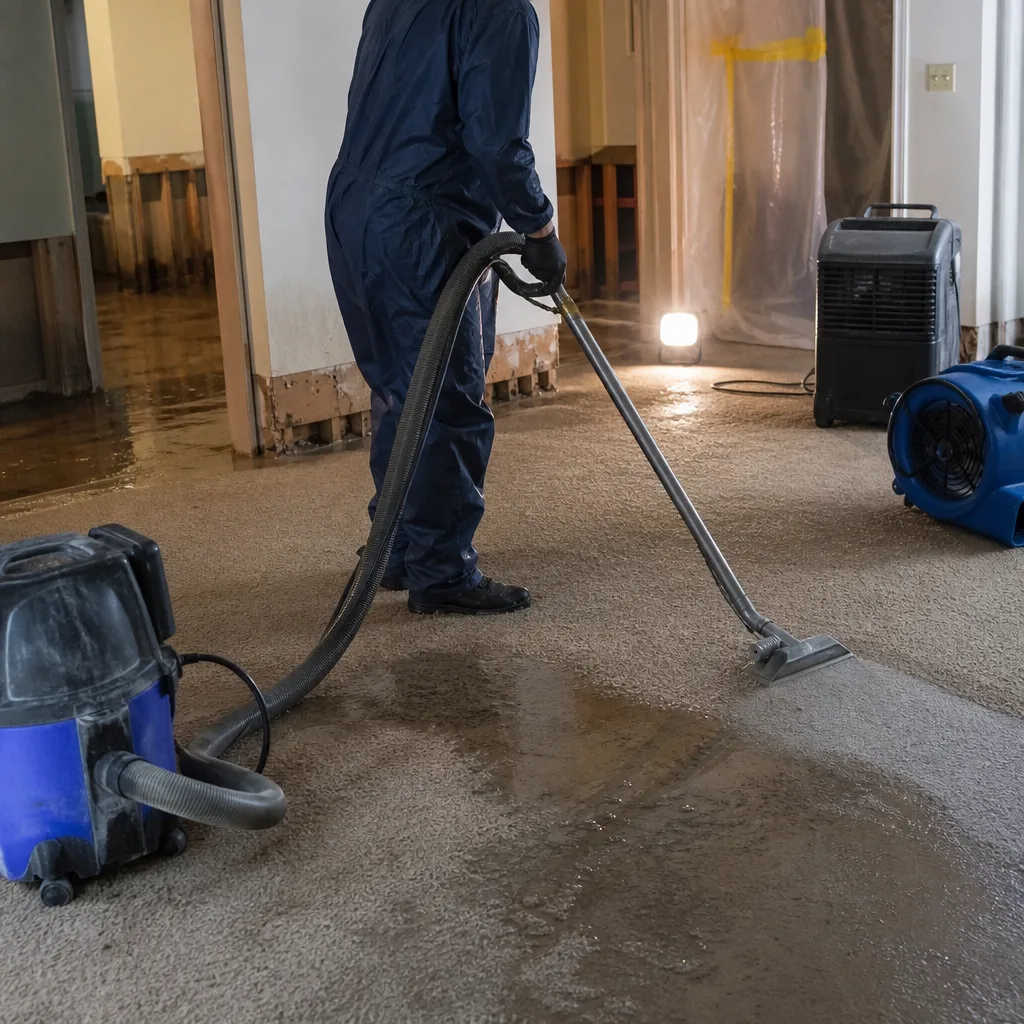
What happens when you call
- 1
A real person answersNo phone trees - you reach a local pro.
- 2
You get an upfront price rangeHonest numbers before anyone is dispatched.
- 3
A background-checked tech heads outLicensed & insured, dispatched right away.
- 4
You approve before work beginsNothing starts until you say go.
Mold Remediation Costs in Yonkers, NY
Here’s what we see across Yonkers’s market. Surface mold cleanup on drywall or ceilings runs $800-$1,800. Mold behind finished basement walls requiring containment and removal sits at $2,500-$5,000. A full basement remediation after a category 3 sewer backup in a pre-war building with structural repairs starts around $6,000 and can exceed $12,000 depending on framing replacement and finish work. Crawl space treatment runs $1,800-$4,500 including vapor barrier and antimicrobial application.
What moves the price is what’s hidden. Plaster and lath removal costs more than drywall. Sill plate replacement costs more than surface cleaning. Clearance testing adds a few hundred dollars and is worth it on any job you’ll claim through insurance or ever sell the house afterward. We prefer to inspect first, give you a firm written scope, and let you decide. Some jobs are insurance-covered; many are not. The free visual inspection answers that question without obligation.
We Also Serve Cities Near Yonkers
Our crews run the same routes through Bronxville, Tuckahoe, Mount Vernon, and Eastchester. Different housing stock, same standard: live answer, 45-minute response, written scope, and the 90-Day Done Right Promise on every job. If you’re in one of those towns and dealing with mold, call the same number: (917) 924-4221.
Yonkers Mold Remediation Questions, Answered
Why does mold keep returning in my Yonkers basement after a flood near Getty Square?
Mold returns near Getty Square because the buried Saw Mill River culvert keeps groundwater and sewer backups pressing into old brick basements long after the visible water recedes, and the original plaster and lath hold moisture at depth that surface drying never reaches. The fix starts with finding the depth of moisture penetration, not just the visible stain.
How fast does mold grow in a pre-war Yonkers apartment after a pipe burst?
In the humid, closed cavities of a pre-war Yonkers apartment, mold colonies begin in 24-48 hours, and behind plaster walls they can spread for weeks before any surface stain appears. Extraction and structural drying in the first day matters more than antimicrobial application afterward.
Does Yonkers’s buried Saw Mill River affect mold remediation inside my building, even if I’m not in the flood zone?
Yes, buildings within several blocks of the buried culvert often show elevated basement and ground-floor humidity from hydrostatic pressure and sewer backflow even when no flood reaches the street. We map moisture in the slab and lower walls before scoping a job so we treat the humidity source, not just the resulting mold.
Why do you need containment during mold removal in an attached Yonkers row house?
Attached row houses share party walls, floor cavities, and sometimes joist bays between units. Without sealed containment and negative air pressure, mold spores released during removal travel through those shared spaces into neighboring homes and your own upper floors.
What is class 3 water, and why does it matter for mold cleanup in a Yonkers cellar?
Class 3 water contains sewage, bacteria, and organic matter, the kind of water that backs up through cast-iron drains during a Saw Mill River surge. It requires not just drying but antimicrobial treatment of everything it touched, and it leaves behind the organic material that feeds mold for years if not properly removed.
How quickly can you get to a Yonkers address?
We commit to a 45-minute response time within Yonkers. A live dispatcher takes your call, identifies the nearest available crew, and gives you a real arrival window. Call (917) 924-4221 and you’ll talk to a person, not a recording.
Will my insurance cover mold remediation in Yonkers?
Coverage depends on the cause. Sudden and accidental water events like a burst pipe are usually covered. Long-term seepage, high basement humidity, or mold from a slow drain leak often fall outside standard policies. We document every job from the first hour and speak directly with your adjuster to establish what your policy actually covers.
What should I do in the first 30 minutes after discovering mold or water damage in Yonkers?
Call (917) 924-4221. Shut off the water source if you can do so safely. Don’t run fans, which spread spores. Don’t open walls. Take photos if you can. Then let our crew take over with containment and moisture mapping while the damage is still small enough to control.
Serving Yonkers, NY - Our Local Coverage Area
We’re based in the Yonkers area and know this community well. Use the map below to see our service coverage - if you’re nearby, we can almost certainly help.
Get a Free Mold Inspection in Yonkers
If you suspect mold in your Yonkers home, call (917) 924-4221. We’ll send a certified crew to inspect, map moisture, and give you a written scope before any work begins. The inspection is free. The answer is honest. And if we do the work, the 90-Day Done Right Promise stands behind every bit of it, in writing, no arguing. Curt Bowman runs this company the way it’s been run from the start: answer the phone, show up when we say, do the job right. Call today, and you’ll get a live person on the line. Day or night.
Written by Curt Bowman, Owner at Floodline Restoration Co. of Manhattan.