
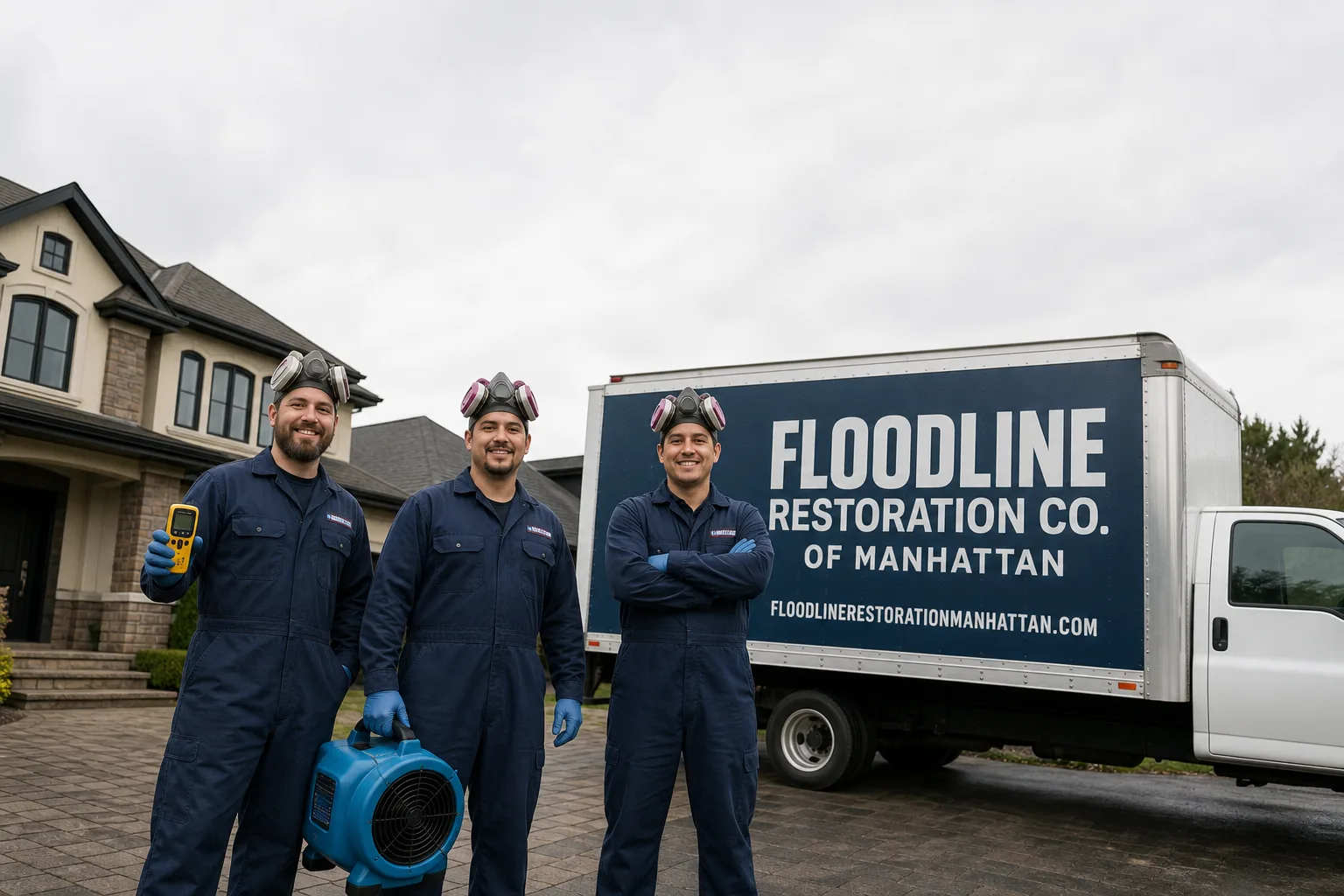
Free visual inspection and a written scope of work before any mitigation begins - photos, moisture readings, and drying logs go in your claim file
The scope we write is the scope we bill. Anything new gets shown to you, in writing, before we touch it.






 Before
 After
After Before
 After
After Before
 After
After24/7 Emergency Reconstruction & Cleanup in Little Ferry
Reconstruction and cleanup in Little Ferry after a flood, storm, or fire typically starts with emergency stabilization, and our crews can be on-site within 45 minutes of your call to (917) 924-4221. A live dispatcher answers at any hour, every day. The first hour matters because saltwater and sewage wick upward through drywall and subflooring fast in the borough’s low-lying homes, and what starts as a three-foot flood line becomes a full wall-cavity tear-out by morning.
Floodline Restoration Co. of Manhattan serves Little Ferry property owners with one team from first extraction to finished rebuild. No mid-job handoff. No separate contractor for drywall. The line the water left is where we start, and the work doesn’t stop until the trim is painted and the final moisture reading is logged. Call (917) 924-4221 any time, day or night, for a free visual inspection.
Understanding Reconstruction & Cleanup Severity in Little Ferry Properties
Little Ferry’s housing stock – post-WWII Cape Cods, ranches, and small split-levels built mostly between the 1940s and 1960s – sits on lots with minimal elevation above grade. Many have crawl spaces or shallow basements that act as collection basins when the Hackensack River backs up. That means water intrusion here is rarely clean Category 1 water. It’s Category 3: saltwater, river sediment, and whatever the tidal surge carried in. The protocol shifts from simple drying to full containment, antimicrobial treatment, and often removal of the bottom four feet of drywall.
We moisture-map every affected surface with thermal imaging and hygrometers before we touch a wall. In Little Ferry specifically, we’re looking for layered damage: a 2024 nor’easter intrusion sitting on top of a partially remediated 2012 Sandy flood line. Pulling back a baseboard often reveals the older, darker stain below. That’s not a surprise to us. It’s the standard call in this borough, and it changes the scope of reconstruction every time.
Why Little Ferry Property Owners Choose Floodline Restoration Co. of Manhattan
- 45-minute on-site response commitment. We dispatch crews from the metro area directly into Little Ferry, not from across the state. When a tidal surge backs up into your street, every hour counts.
- 24/7 live answer, never an automated system. Call (917) 924-4221 at two in the morning and a real dispatcher picks up. You won’t leave a message and wait for a callback.
- IICRC-certified crews. Our technicians carry WRT, FSRT, and AMRT certifications and work to IICRC, RIA, and IFA standards. They’re background-checked and uniformed on every job.
- Free visual inspection with a written scope. Before any work starts, you get a line-item scope in writing. No surprises on the bill, no upselling after we open the wall.
- Direct insurance billing. We bill your carrier directly and coordinate with your adjuster. You never play messenger between us and the insurance company.
- One team from extraction to reconstruction. The same certified crew that reads the moisture map on day one handles daily readings, rebuilds the drywall, and hands you the finished room.
Our Reconstruction & Cleanup Process
1. Inspection & Assessment
We walk the property room by room, documenting visible damage and using thermal imaging to find moisture you can’t see. In Little Ferry, we specifically check for prior flood lines and saltwater wicking behind baseboards. You get a written scope of work before equipment comes off the truck.
2. Extraction & Stabilization
Standing water comes out first. We use truck-mounted extraction units and submersible pumps, then stabilize the structure. Doors that took wind or surge damage get secured or boarded, and unsalvageable materials are cut and bagged for disposal.
3. Drying & Dehumidification
Dri-Eaz dehumidifiers and Phoenix air movers go in, positioned based on the moisture map. We take daily readings and log them. The dry standard is a number, not an opinion, and we don’t stop until every affected cavity hits it.
4. Cleaning & Sanitization
HEPA air scrubbers run during and after tear-out. Surfaces are cleaned with antimicrobial treatments, especially where Category 3 saltwater contacted framing or subfloor. Carpet and upholstery that can be saved go through hot-water extraction and deodorization.
5. Specialty Treatment for Reconstruction
This is where Little Ferry’s needs diverge from inland towns. Wind-rated door replacement, impact glazing, and reinforcement of tracks and jambs happen here. We also re-hang drywall after treating wall cavities that absorbed saltwater years ago and sat silently until now.
6. Repairs & Restoration
Full reconstruction – drywall, flooring, trim, paint, door hardware. The same crew that tore out your wall builds it back. The final day includes a moisture log in your hands and the 90-Day Done Right Promise in writing.
Need Emergency Reconstruction & Cleanup in Little Ferry Now?
Crews minutes away, answering live 24 hours a day. The sooner we start, the less it costs.
Working With Your Insurance Company
Insurance claims in Little Ferry are rarely simple. Many homeowners still carry FEMA Write-Your-Own flood policies from Sandy, and adjusters need documentation that holds up when the claim is reviewed. We photograph every room before, during, and after tear-out. Moisture readings are logged daily and handed to your carrier. When a wall shows a 2012 flood line beneath a 2025 intrusion, we document both, because the adjuster needs to see the layered history.
Floodline Restoration Co. coordinates directly with your adjuster. If a second opinion is needed on scope, we walk the property together. Our line-item scope uses industry-standard pricing, and we bill your carrier directly whenever the policy allows. You stay informed. You don’t get dragged into back-and-forth.
What We Provide Your Insurer
- Thorough documentation of the loss
- Photos of all damage, room by room
- Moisture readings and drying logs
- A detailed, line-item scope of work
- Direct coordination with your carrier
Built for Little Ferry’s Loss Calendar
Little Ferry doesn’t have a quiet season the way inland Bergen County towns do. Late summer and early fall bring hurricane remnants and nor’easters that push the Hackensack River over its banks and into the borough’s streets. King tides in autumn and spring can back up storm drains on Washington Avenue and Route 46 without a drop of rain, leaving a few inches of brackish water in garages and crawl spaces. Winter adds the freeze-thaw cycle: ice dams on the low-slope roofs of 1950s ranches and frozen supply lines in uninsulated crawl spaces.
Spring is sneaky. Snowmelt from the Meadowlands combines with heavy rainfall, and homes that dried out fine in February suddenly show dampness along foundation walls. By June, humidity traps moisture inside wall cavities, and that’s when mold complaints spike. We see the same seasonality every year, and we schedule our Little Ferry crews and equipment inventory around it.
Reconstruction & Cleanup Across Little Ferry’s Neighborhoods
Homes off Mehrhof Road in the central part of the borough are mostly post-war ranches and split-levels with shallow basements. Flood events here tend to be knee-deep and contaminated, requiring full crawl space and basement tear-outs. Closer to Route 46 and the eastern edge of the borough, properties sit nearer the Hackensack River and its wetlands. Saltwater intrusion in this corridor demands aggressive stainless-steel fastener replacement during reconstruction, because standard drywall screws in framing begin corroding within a year or two of exposure to a tidal surge.
The streets around Washington Avenue and Liberty Street include a mix of original 1940s construction and post-Sandy elevations. Elevated homes have fewer first-floor intrusion problems, but the wind exposure on those raised structures is higher, and their exterior doors and sliding glass tracks take more abuse during nor’easters. Over near Teterboro’s boundary, commercial and light-industrial properties sit close to the wetlands, and their larger door openings and loading bays face the same wind-driven rain and flooding pressures as residential homes. Little Ferry’s two main ZIP code areas, 07643 and 07644, don’t change how we respond, but the building vintage on a given block definitely changes how we reconstruct.
Specialized Reconstruction & Cleanup Services We Offer in Little Ferry
Full-Service Reconstruction
When saltwater from the Hackensack River wicks into wall cavities and subflooring, total reconstruction is the standard path in Little Ferry. We handle framing repair, insulation replacement, drywall hanging and finishing, painting, and trim work, all with one certified crew. The rebuild is planned around the damage found, not a generic template, and the work is covered by the 90-Day Done Right Promise in writing.
Drywall & Flooring Repair
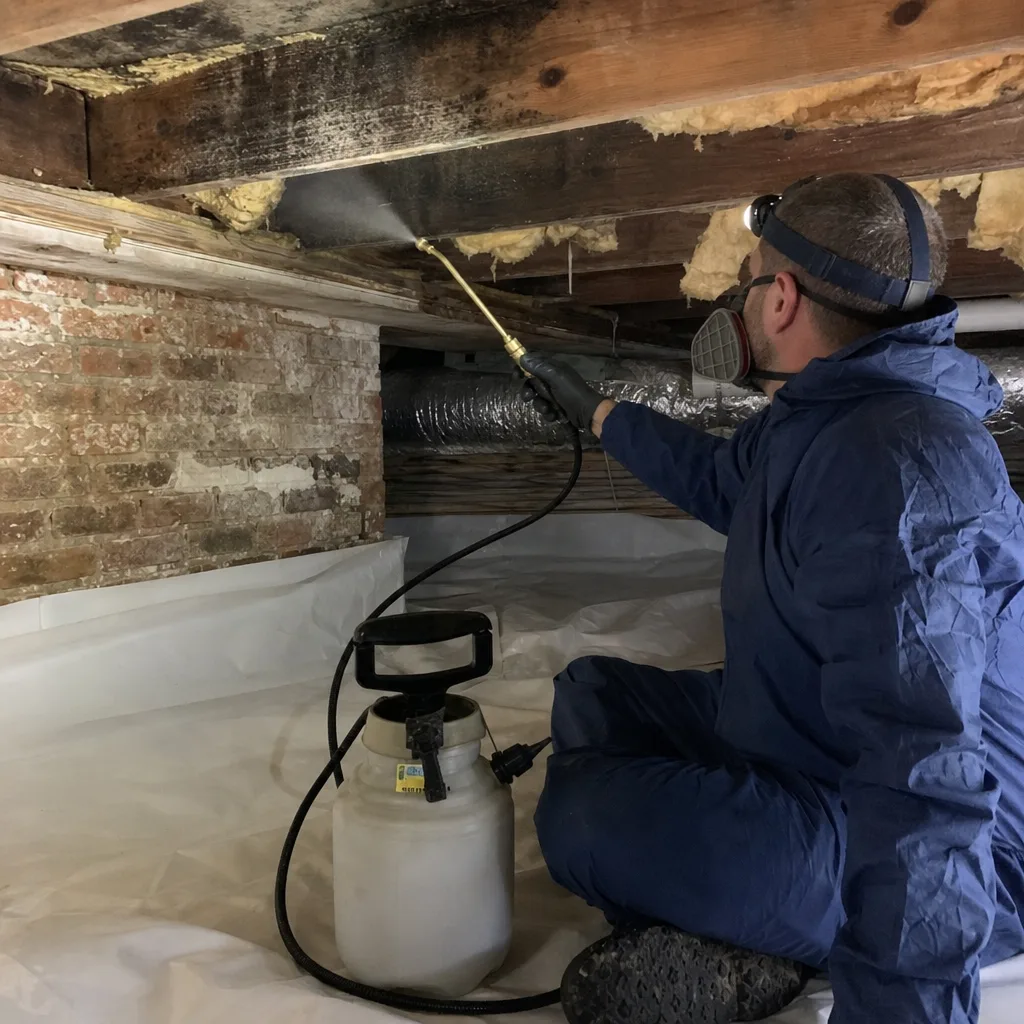
A flood line at eighteen inches usually means cutting drywall at four feet, because water wicks upward well past the visible stain. In Little Ferry homes with original 1950s subflooring, we often replace the bottom layer entirely, since saltwater-soaked plywood delaminates over time and hides conditions that fail inspections later. We match existing flooring materials where possible and document the entire repair for your insurer.
Contents Restoration & Pack-Out
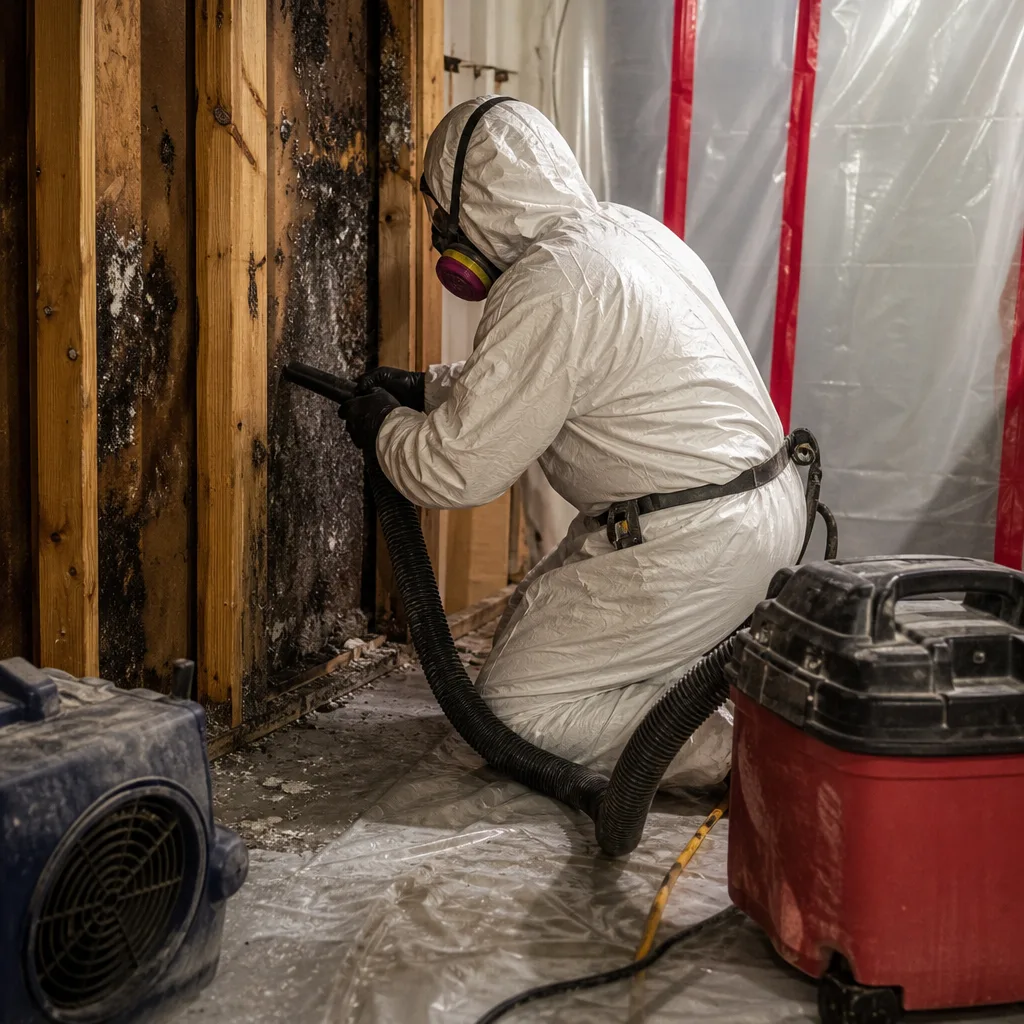
Furniture and belongings that can be saved get moved out for cleaning, while unsalvageable items are documented and listed for your claim. In Little Ferry’s older homes, pack-outs often reveal hidden water damage behind furniture that had been against the wall for decades. We photograph everything before anything is moved, so the adjuster sees exactly what happened.
Carpet & Upholstery Cleaning
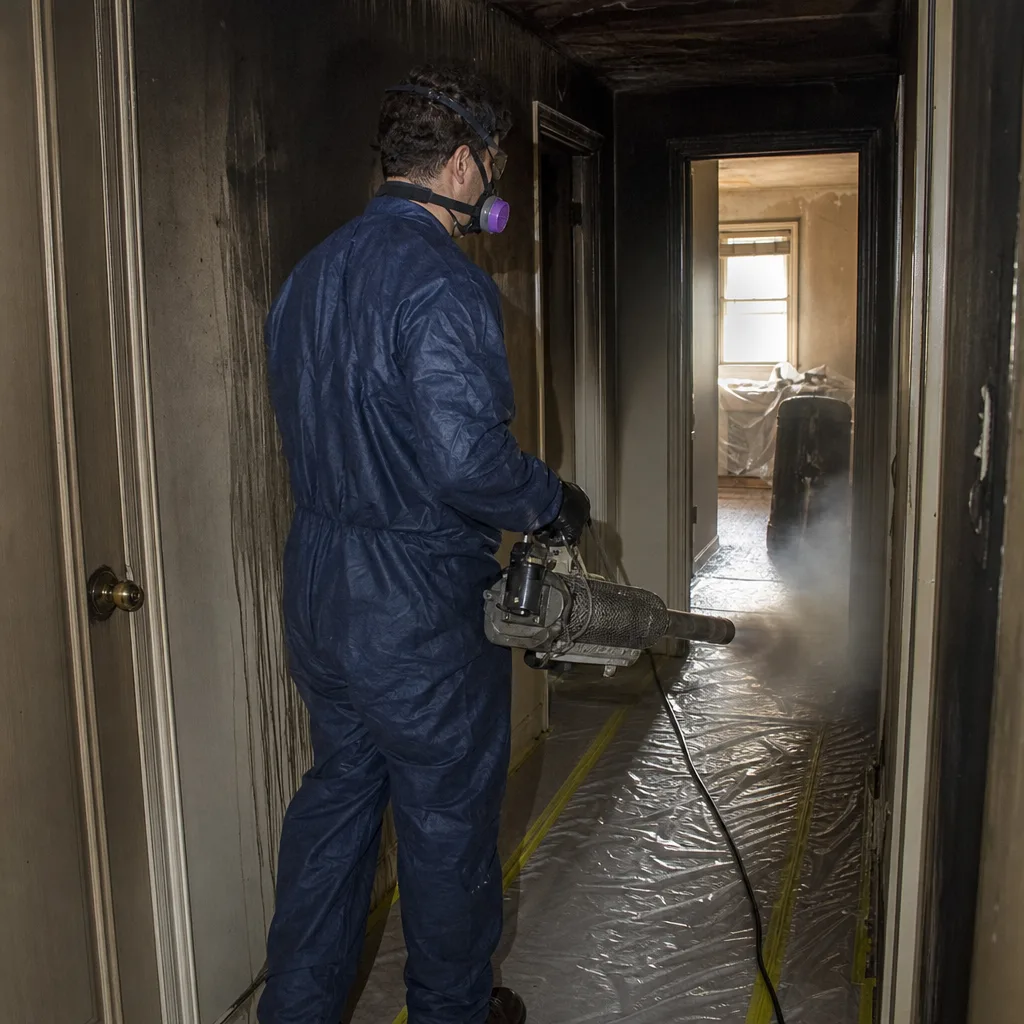
After a flood or sewage backup, carpet and upholstery need more than surface cleaning. We run hot-water extraction with antimicrobial treatments, then dry the items with forced air and dehumidification. In Little Ferry’s humid months, inadequate drying leads to musty conditions and delayed mold growth, so we monitor moisture in fabrics until they reach the dry standard.
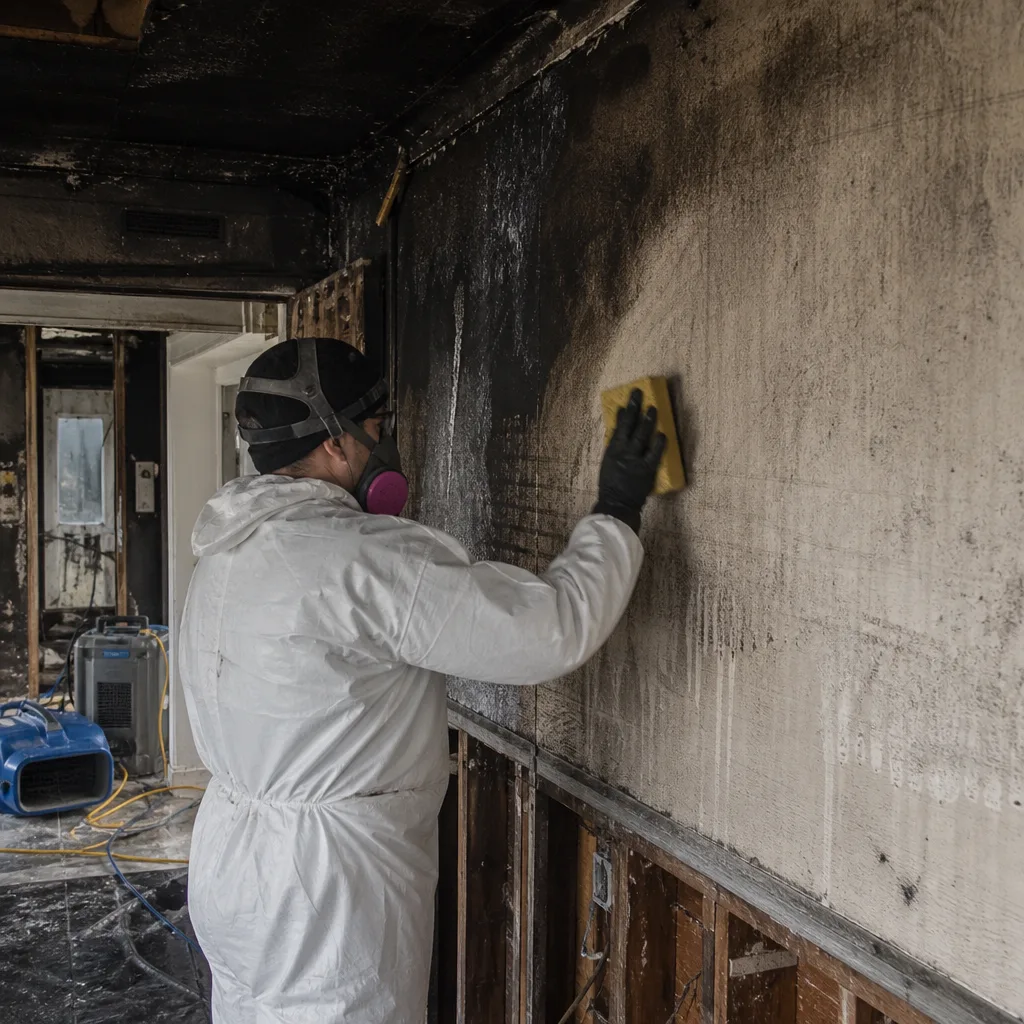
Post-Construction Cleanup
After reconstruction, the job isn’t done until the dust is gone. We remove construction debris, HEPA-vacuum surfaces, clean windows and trim, and leave the home ready for occupancy. In Little Ferry, post-construction cleanup on flood-damaged homes includes checking that FEMA compliance documentation is complete, because the permit close-out often hinges on it.
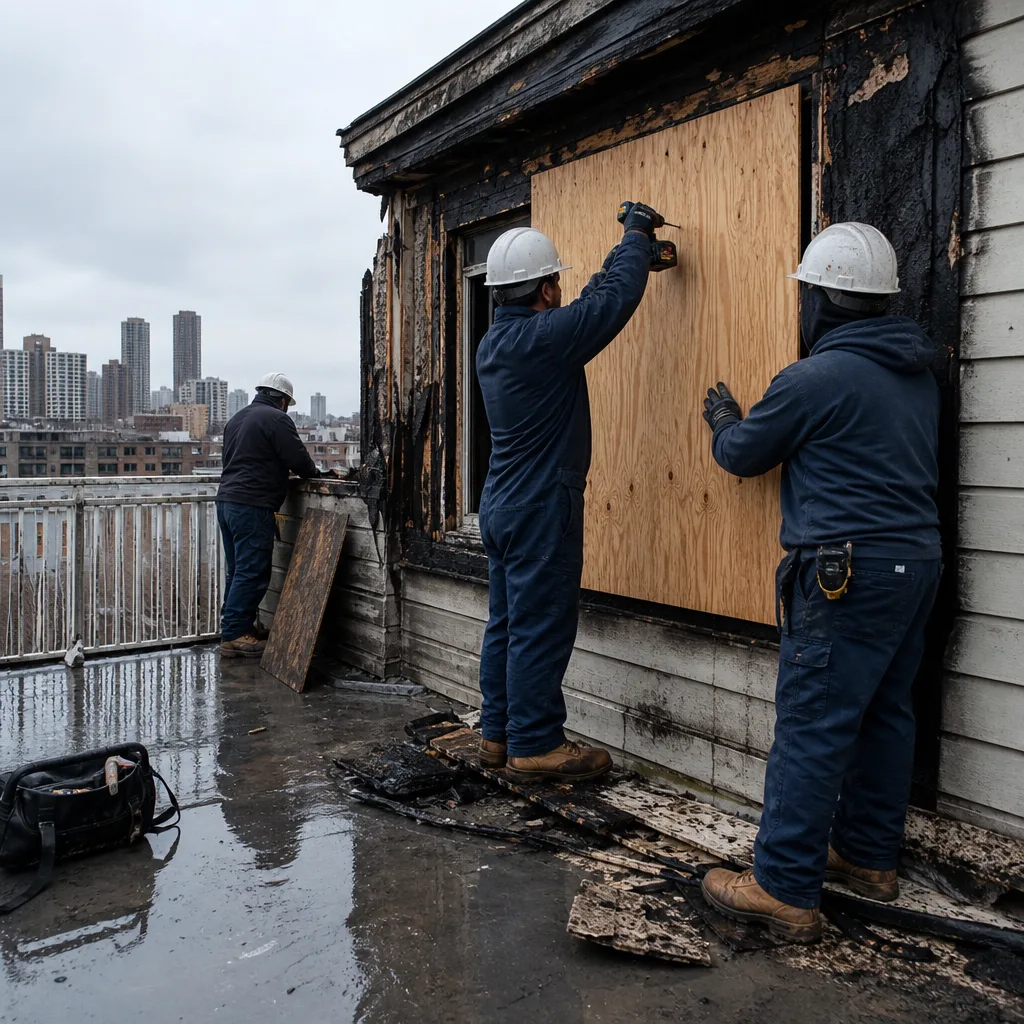
What happens when you call
- 1
A real person answersNo phone trees - you reach a local pro.
- 2
You get an upfront price rangeHonest numbers before anyone is dispatched.
- 3
A background-checked tech heads outLicensed & insured, dispatched right away.
- 4
You approve before work beginsNothing starts until you say go.
Reconstruction & Cleanup Costs in Little Ferry, NJ
A typical full-service reconstruction and cleanup in Little Ferry runs $4,800 to $18,000 depending on the size of the affected area, the category of water involved, and whether the damage includes structural framing. Drywall and flooring repair alone typically falls between $2,200 and $7,500. Contents pack-out and cleaning usually adds $900 to $3,400. Carpet and upholstery cleaning runs $400 to $1,200 per room. Post-construction cleanup starts around $600 for a single room and scales with square footage.
The biggest variable in Little Ferry is hidden prior damage. When a “new” flood reveals a 2012 saltwater line that was never properly remediated, the scope expands, and so does the cost. That’s why the free visual inspection matters: we walk the property, document suspected damage, and give you a written scope before any work begins. If insurance covers the loss, we bill the carrier directly and handle adjuster coordination.
We Also Serve Cities Near Little Ferry
Our crews respond throughout the Hackensack Meadowlands corridor, including South Hackensack, Ridgefield Park, Moonachie, and Teterboro. If you have a water damage or storm question and you’re not in Little Ferry proper, call anyway. We’ll tell you honestly whether we can get there in the window you need.
Little Ferry Reconstruction & Cleanup Questions, Answered
After a nor’easter in Little Ferry, how soon do we need to replace a wind-damaged door before mold starts in the wall cavity?
Mold can begin colonizing a wet wall cavity within 48 to 72 hours, especially during Little Ferry’s humid months when the tidal air keeps humidity high. If a nor’easter peeled back a door and rain or surge water got inside the wall, the cavity needs to be opened, dried, and treated. Replacing only the door without addressing the cavity behind it means mold will bloom inside the wall even after the exterior is sealed. Call (917) 924-4221 for a free visual inspection and a written plan.
What wind rating should a replacement door have on a Little Ferry house near the Hackensack River?
Homes in Little Ferry’s flood zone and near the riverfront should carry doors rated for at least 110 to 120 mph wind loads, with impact-rated glazing if the door has glass panels. The borough’s building department and FEMA flood insurance requirements both push toward wind-rated assemblies, not standard box-store doors. The exact rating depends on your home’s elevation, exposure, and distance from the river. We review local code expectations as part of the scope before installation.
If a hurricane bent the track or panel on our sliding glass door, can it be repaired or does the whole door need replacement before the next storm?
Bent tracks often mean the door frame itself is compromised, and a patched panel on a warped track will fail the next time a nor’easter pushes wind-driven rain against it. In most Little Ferry homes, especially those within sight of the Hackensack River, a bent sliding door track means full assembly replacement with a wind-rated system. We assess the track, rollers, frame, and glazing before recommending repair versus replacement, and we document everything for your insurance claim.
How do we document hidden saltwater damage from a previous flood for our Little Ferry reconstruction claim?
Hidden saltwater damage needs to be photographed before it’s disturbed, then documented again as layers are removed. We photo-document every cut line, show the older flood stain below the newer one, and log moisture readings from the affected materials. For FEMA Write-Your-Own flood claims, the documentation trail matters more than the repair itself. We provide the full package – photos, moisture logs, material samples, and a written narrative – directly to your adjuster.
After a Little Ferry flood, what gets packed out versus dried in place when saltwater has wicked into the walls?
Saltwater is Category 3 water, which means anything porous that it touched generally cannot be dried in place and reused. Drywall, insulation, and particleboard go. Solid framing can often be dried and treated, but it must be monitored with daily moisture readings until it hits the dry standard. Contents like furniture and clothing get packed out for cleaning and restoration. Upholstered items that absorbed Category 3 water are usually documented as unsalvageable for the claim.
How fast can you actually get to Little Ferry for an emergency reconstruction call?
Our commitment is 45 minutes from your call to on-site arrival within the Little Ferry area. We dispatch locally from the metro region, not from a distant branch office, so the clock starts when you hang up. Call (917) 924-4221 and a live dispatcher confirms the address and crew assignment immediately.
Will insurance cover reconstruction and cleanup after a flood on the Hackensack River in Little Ferry?
Standard homeowners insurance does not cover flood damage from rising water, which includes the Hackensack River backing up into Little Ferry streets. National Flood Insurance Program policies, including FEMA Write-Your-Own policies, are what cover flood losses. We work directly with flood insurance adjusters and know how to document claims so the full scope is recognized. For wind damage from a nor’easter, standard homeowners policies typically apply. We help you sort out which policy responds and bill accordingly.
What should I do in the first 30 minutes after discovering a flood or storm door failure in Little Ferry?
Turn off electricity to any affected area if you can do so safely, move valuables and documents out of the water, and call us at (917) 924-4221. Don’t run fans or try to dry it yourself, especially with saltwater – that spreads contaminated moisture into unaffected areas. Take photos from multiple angles before anything is moved. Then wait for our crew; the documented condition at the start matters for your claim.
Serving Little Ferry, NJ - Our Local Coverage Area
We’re based in the Little Ferry area and know this community well. Use the map below to see our service coverage - if you’re nearby, we can almost certainly help.
Why Wind-Rated Doors and Reconstruction Go Together in Little Ferry
Little Ferry sits at near-sea-level elevation directly against the tidal Hackensack River, and that changes what “reconstruction” means here. A home in an inland town rebuilds with standard doors and moves on. A home in Little Ferry rebuilds with wind-rated and impact-rated door assemblies because FEMA flood insurance discounts often depend on those upgrades, and the next nor’easter is not a hypothetical. The borough’s building department expects wind-rated replacement doors when a claim-triggered rebuild is underway. It’s not an upsell. It’s code.
After a nor’easter peeled back a patio door on a 1950s ranch off Mehrhof Road, our crew installed a wind-rated replacement door with reinforced track and impact glazing, then re-hung the existing drywall after treating the saltwater-wet wall cavity with antimicrobial and running structural drying with Dri-Eaz dehumidifiers until moisture readings matched pre-loss condition. That’s the work. Not just a door swap. Not just drywall. The whole assembly, done right and documented for the carrier.
Hidden saltwater damage is the other thing that makes Little Ferry different. A door might get replaced after a storm, but the wall cavity behind it still holds dampness from a 2012 surge that was never properly opened and dried. When we tear out for a new wind-rated door, we check the surrounding cavity. If saltwater-stained framing is still present, we treat it, dry it, and document it for the claim. That’s the playbook for this borough, and it’s why Reconstruction & Cleanup here requires a company that knows what to look for, not someone who only replaces what got wet this time.
Floodline Restoration Co. of Manhattan serves Little Ferry with one team, one scope, and a written promise on every job. Curt Bowman founded this company in 2010 around a dispatch board, not a sales desk, and we still answer the phone with a live person at any hour. Customers who call us get the 90-Day Done Right Promise in writing, direct insurance billing, and no argument if something isn’t right. Senior and veteran customers receive 5% off, always. There’s a $50 discount on any repair over $250, and an $89 seasonal tune-up for your home’s vulnerable entry points. No fine print. No surprises.
If you’re standing in a wet living room in Little Ferry right now, or staring at a door that won’t close after last night’s storm, call (917) 924-4221. We’ll be there when we say. We’ll document everything, write the scope, and do the work so you never have to think about it again.
Written by Curt Bowman, Owner at Floodline Restoration Co., serving Little Ferry, NJ and the surrounding Meadowlands.