
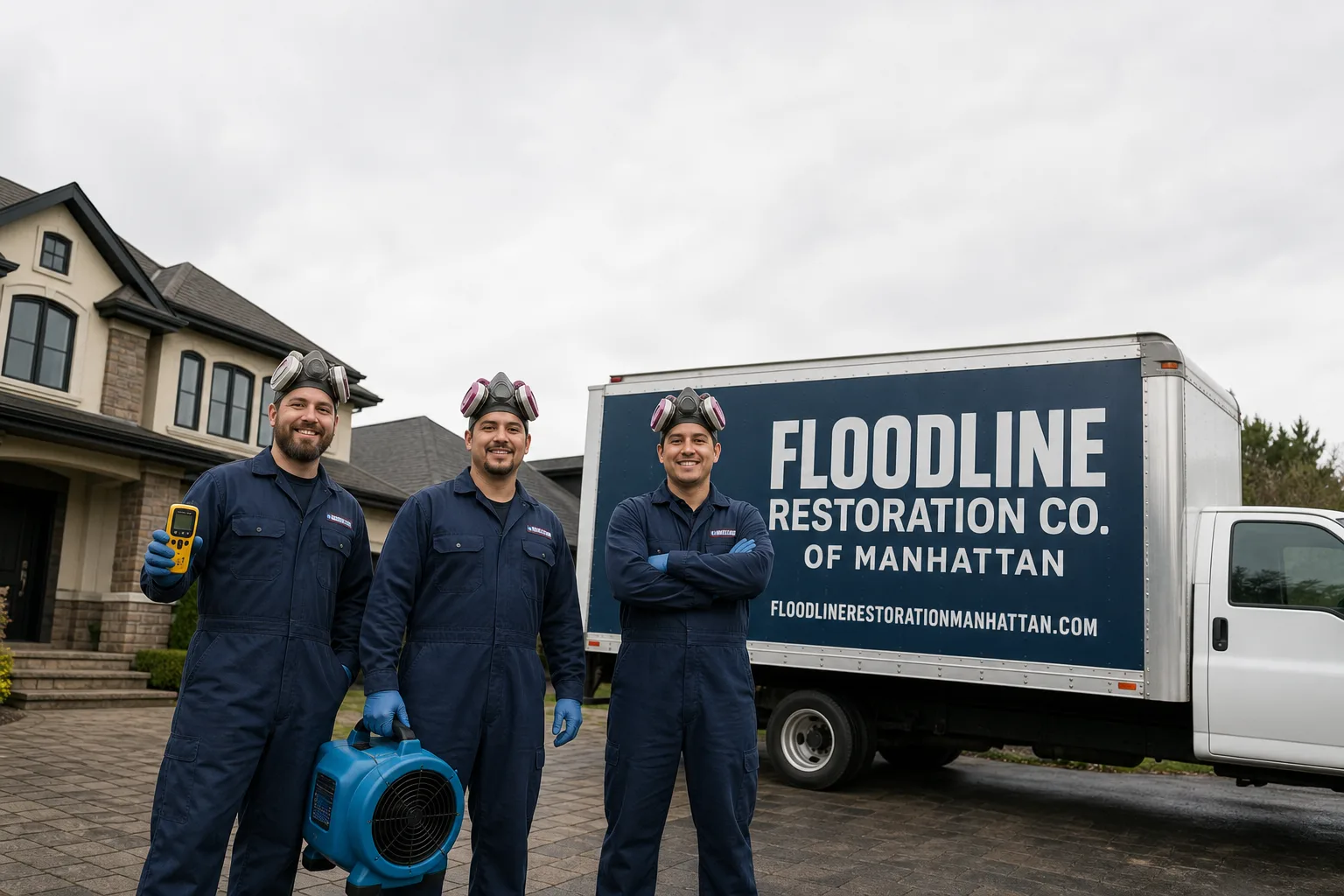
Free visual inspection and a written scope of work before any mitigation begins - photos, moisture readings, and drying logs go in your claim file
The scope we write is the scope we bill. Anything new gets shown to you, in writing, before we touch it.






 Before
 After
After Before
 After
After Before
 After
After24/7 Emergency Reconstruction & Cleanup in Queens Village
A sewage backup or fire in Queens Village rarely stays on one side of the wall. The shared masonry party walls between the brick twins here mean a category 3 flood or smoke migration becomes a two-home problem fast. That’s why our crews answer live at (917) 924-4221 around the clock and reach most Queens Village addresses within 45 minutes. We start with a free visual inspection, map the moisture or soot path, and begin extraction or stabilization the same visit. Every hour of delay in an attached home lets water or smoke travel further through open wall cavities and the un-flashed wythe between units. We’re not a service that hands you off to a different crew mid-job. Our Reconstruction & Cleanup team stays on through the final coat of paint and the last moisture log entry.
Understanding Reconstruction & Cleanup Severity in Queens Village Properties
Queens Village homes, mostly attached brick Tudors and Colonial Revivals built between 1925 and 1955, hide damage longer than newer construction. Plaster-over-lath walls absorb water slowly and release it slower still. A supply line that let go on the second floor of a 1930s twin may not show staining for five days, by which time the joist bays and party wall cavities are saturated. We classify the loss before we touch a stud. Category 1 water, clean from a supply line, becomes category 2 within 48 hours as bacteria counts rise. Category 3 is black water: sewage, storm backup from the combined sewer, groundwater from the glacial till that sits under eastern Queens. That requires hard containment, HEPA air scrubbing, and antimicrobial treatment, not just a mop and a dehumidifier. Fire losses here carry their own severity scale: synthetic soot from 1950s vinyl tile and laminated paneling is oilier and more corrosive than wood soot from original oak floors. We read these signals on the first inspection because reconstruction scope depends entirely on what the building is made of and how long the damage sat before the call.
Why Queens Village Property Owners Choose Floodline Restoration Co. of Manhattan
- 45-minute response, on the record. When you call our dispatch line from Queens Village at any hour, a live person logs the address and a crew rolls. We give you a window and we hit it.
- A person answers. Always. No phone tree, no “press 2 for emergencies.” At 2 a.m. on a Sunday, a dispatcher picks up and starts the clock.
- IICRC-certified crews. Our technicians hold WRT, FSRT, and AMRT certifications. Background-checked, uniformed, and trained to read a moisture map, not just run a fan.
- Free visual inspection. Before we quote a dollar, we walk the loss with you and show you what we’re seeing. No obligation, no pressure.
- Direct insurance billing. We document from hour one, bill your carrier directly, and talk to your adjuster so you don’t have to translate between trades.
- One team, start to finish. Extraction, drying, drywall, flooring, paint. The same crew that pulls the water hangs the new rock. No handoff, no inherited subs.
Our Reconstruction & Cleanup Process
Inspection & Assessment
We arrive, walk the property, and map the loss. Thermal imaging and penetrating moisture meters read through plaster and brick. If it’s a sewage backup, we classify the water on the spot. You get a written scope before any work starts.
Extraction & Stabilization
Truck-mounted pumps and extraction wands pull standing water within the first hour. For fire losses, we seal soot and odor at the source. The goal is stopping the damage where it sits, not letting it push deeper into the party wall or floor system.
Drying & Dehumidification
Dri-Eaz and Phoenix dehumidifiers, XPOWER air movers, and Injectidry systems ran on a moisture map. We take daily readings and log them. In a 1930s plaster twin, drying takes patience: plaster releases moisture slowly, and the shared masonry wall dries from both sides only if both units cooperate.
Cleaning & Sanitization
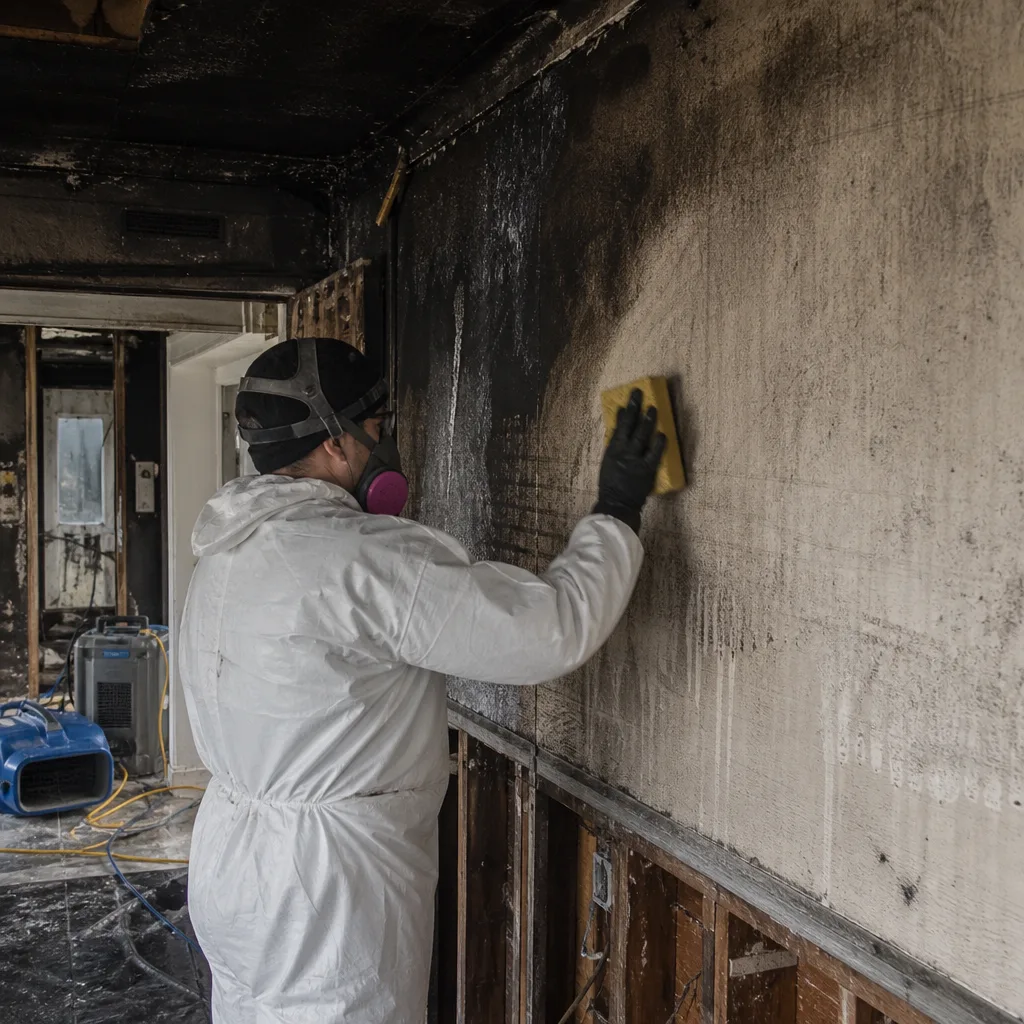
Category 3 water from the combined sewer gets full containment, disposal of porous materials, and antimicrobial treatment on every stud face and sill plate. Fire losses get chemical sponge work on frame finishes and HEPA vacuuming on every surface. This is the step that keeps the job from coming back as mold or odor.
Party Wall & Structural Treatment
Here’s where Queens Village work differs. We inspect the shared wythe for lateral moisture, inject drying or sealant as needed, and document everything for both carriers. If your neighbor’s side shows staining, we log it, photograph it, and coordinate the claim so attribution doesn’t turn into a standoff.
Repairs & Restoration
Drywall, plaster matching, flooring, paint, trim. We rebuild to pre-loss condition, matching original plaster texture on 1930s walls and matching original hardwood where floors come out. The 90-Day Done Right Promise covers it, in writing, no arguments.
Need Emergency Reconstruction & Cleanup in Queens Village Now?
Crews minutes away, answering live 24 hours a day. The sooner we start, the less it costs.
Working With Your Insurance Company
Insurance claims in Queens Village reconstruction work get complicated when two carriers are involved, which happens on nearly every attached-home loss. We’ve handled hundreds of party-wall claims and we know what adjusters need: a moisture log from day one, photos of every affected surface, a line-item scope that separates pre-loss condition from required rebuild. We send that documentation to your carrier and your neighbor’s carrier, and we talk to both adjusters directly. You don’t play messenger. If your policy covers the loss, we bill the carrier directly. If it’s out-of-pocket, you’ll know the exact number before we start, not after.
What We Provide Your Insurer
- Thorough documentation of the loss
- Photos of all damage, room by room
- Moisture readings and drying logs
- A detailed, line-item scope of work
- Direct coordination with your carrier
Built for Queens Village’s Loss Calendar
January and February bring the deep freezes that split supply lines in unheated basements and the wall cavities behind kitchens on the north side of 1930s twins. The thaw that follows reveals the damage, usually as a slow stain spreading up from the baseboard or a soft spot under the kitchen floor. Spring in eastern Queens means nor’easter season, and the combined sewer system that serves Queens Village backs up under heavy rain, pushing category 3 water into finished basements along 211th Street, 89th Avenue, and the blocks radiating off Springfield Boulevard. Summer brings the convective storms that dump two inches in an hour, overwhelming the glacial till substrate that drains poorly here at baseline. Fall is quieter, but that’s when we see the accumulated effects: dry rot in joist ends, mold behind paneling that got damp six months earlier, party-wall staining that was never properly dried. The calendar matters because the damage type dictates the reconstruction scope, and the scope dictates the insurance claim.
Reconstruction & Cleanup Across Queens Village’s Neighborhoods
The housing stock of Queens Village shifts block by block, and our crews know the patterns. South of Jamaica Avenue, the homes skew older: brick Tudors from the mid-1920s with intricate trim work and original oak floors that we match, board by board, when flood cuts force floor work. Around Hillside Avenue and 220th Street, the semidetached twins sit on smaller lots, which means tighter access for equipment staging and often a shared driveway that both homeowners need kept clear. The blocks east toward the Bellerose border hold more 1950s Colonial Revivals with finished basements that flooders hit and homeowners finished in paneling that soaks up category 3 water like a sponge. Along Springfield Boulevard, the lots run deeper and the homes are more likely to have been added onto over the decades, which means cut-up floor plans and ductwork runs that carry smoke farther in a kitchen fire. Each area changes how we stage, how we dry, and how long reconstruction takes.
Specialized Reconstruction & Cleanup Services We Offer in Queens Village
Full-Service Reconstruction
We rebuild what the water or fire took: framing, drywall, plaster, flooring, cabinetry, paint. For larger structures, we also provide Queens Village Commercial Restoration. On a 1930s Tudor in Queens Village, that means matching original plaster texture and the exact profile of original trim, not slapping up standard drywall and caulking the gaps. We carry the job from first demo to final walkthrough with the same certified crew.
Contents Restoration & Pack-Out
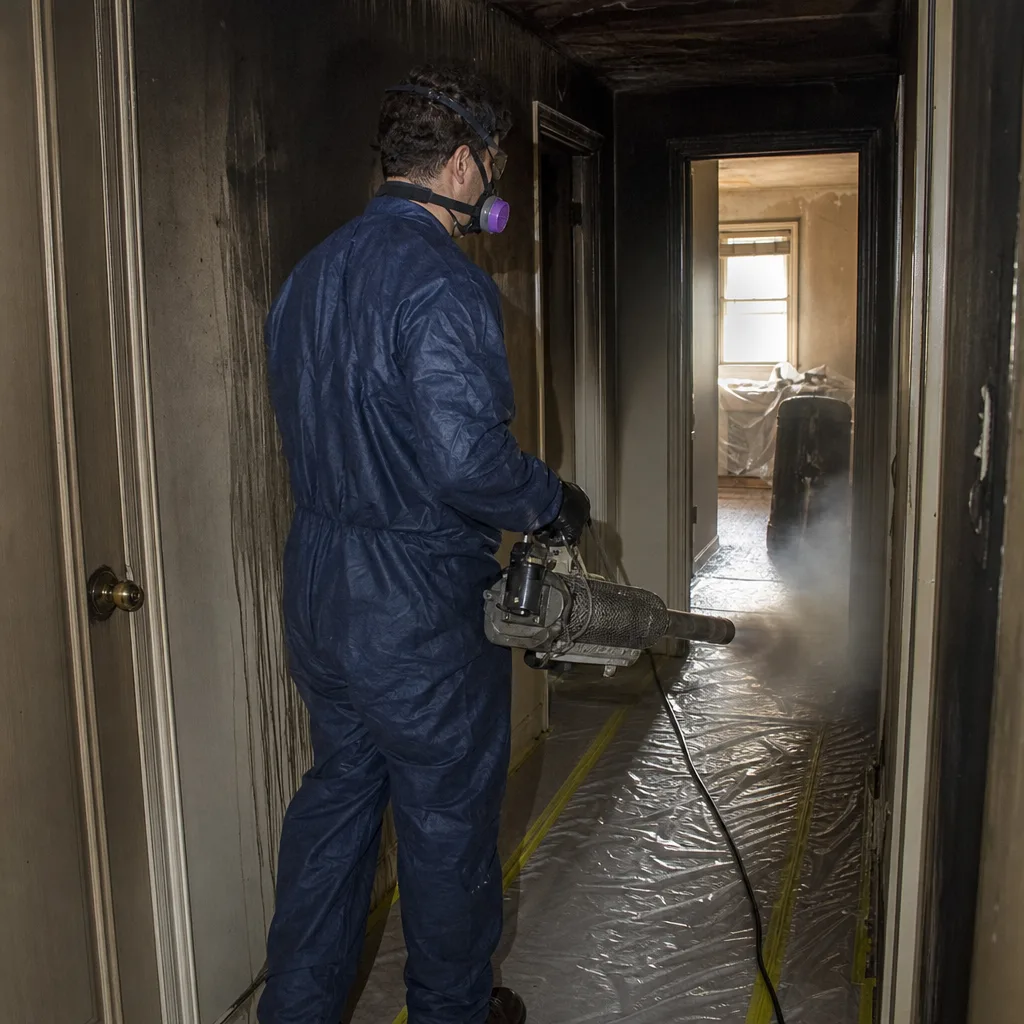
When a basement floods or a fire smokes out a living room, the furniture and personal property need attention too. We pack out affected contents, clean and restore what’s salvageable, store it properly, and bring it back when the rebuild is done. In homes where three generations of belongings share a finished basement, this step matters as much as the structural work.
Insurance Claim Documentation
The paperwork makes or breaks a party-wall claim. We photograph before, during, and after, log every moisture reading, and produce a scope of work your adjuster can read without calling an expert. For two-property, two-policy jobs, we prepare parallel documentation streams so both carriers see the same facts.
Drywall & Flooring Repair
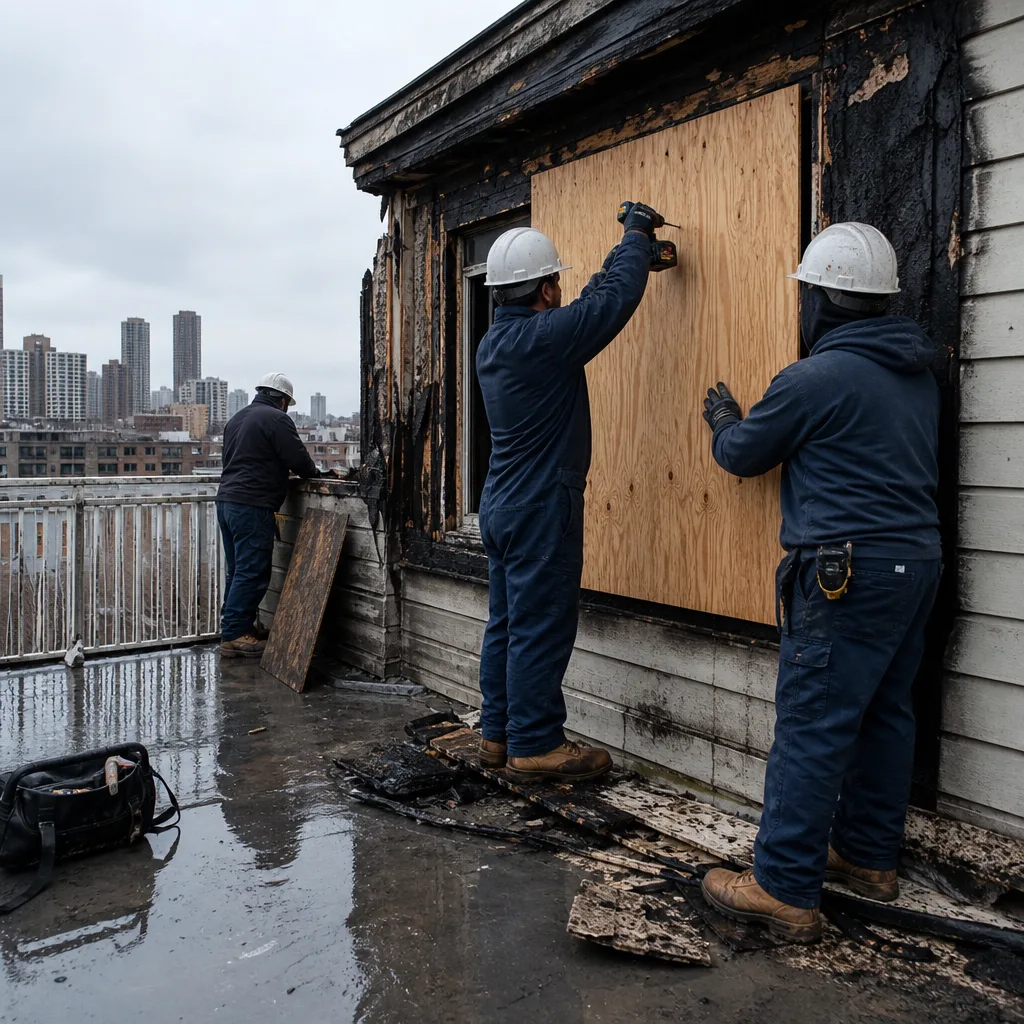
Water wicks up drywall and under flooring fast. We cut flood cuts at the right height, not a guess, replace insulation, and match flooring to the original. In Queens Village, that often means sourcing oak strip flooring to match 1930s-era widths and stain grades.
Carpet & Upholstery Cleaning
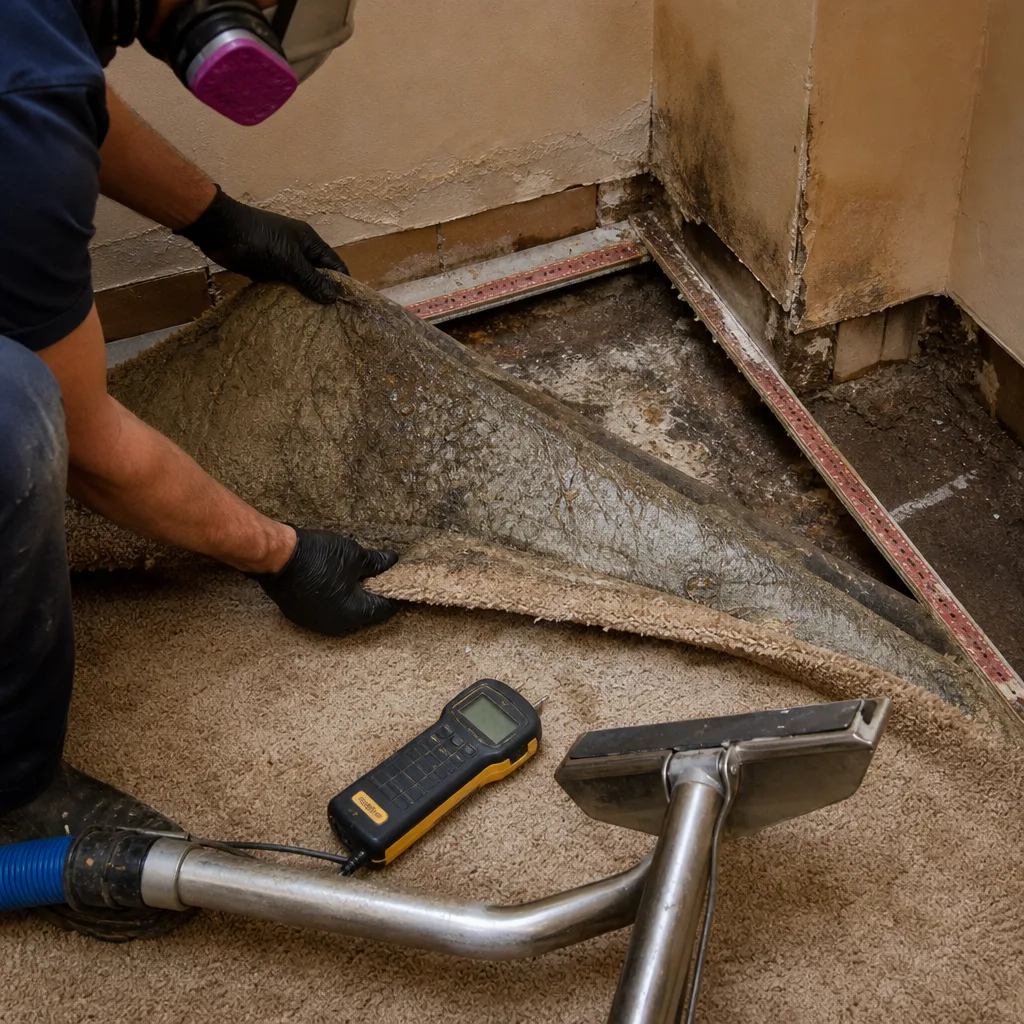
After a small loss or as part of a larger reconstruction, we deep-clean carpets and upholstery using professional extraction equipment. For category 3 water, carpet and pad usually come out entirely; for category 1, we can often save it with proper drying and sanitization.
Post-Construction Cleanup
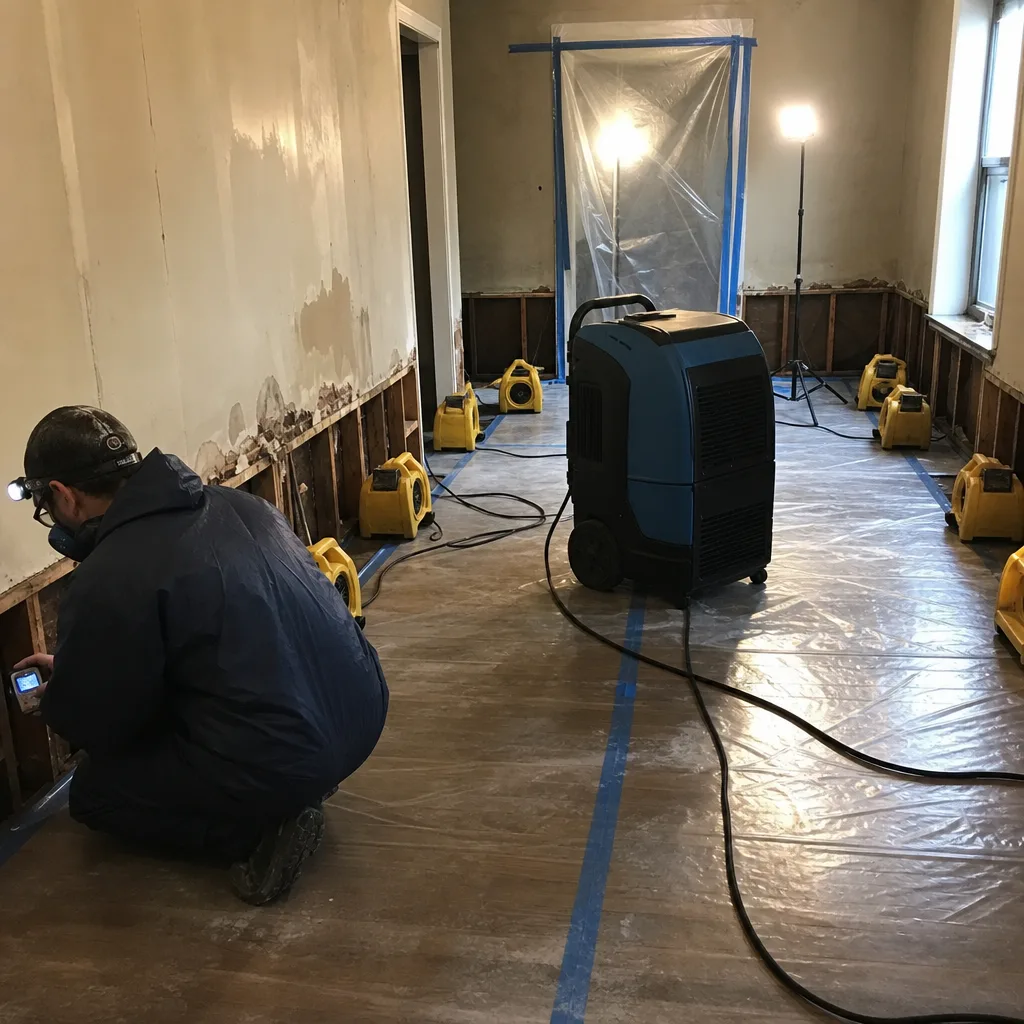
Reconstruction leaves dust in places you wouldn’t expect: inside ductwork, behind radiators, on top of door casings. We finish every reconstruction job with a full post-construction clean, HEPA-vacuuming surfaces and changing out furnace filters so the air you breathe at the end is as clean as the walls look.
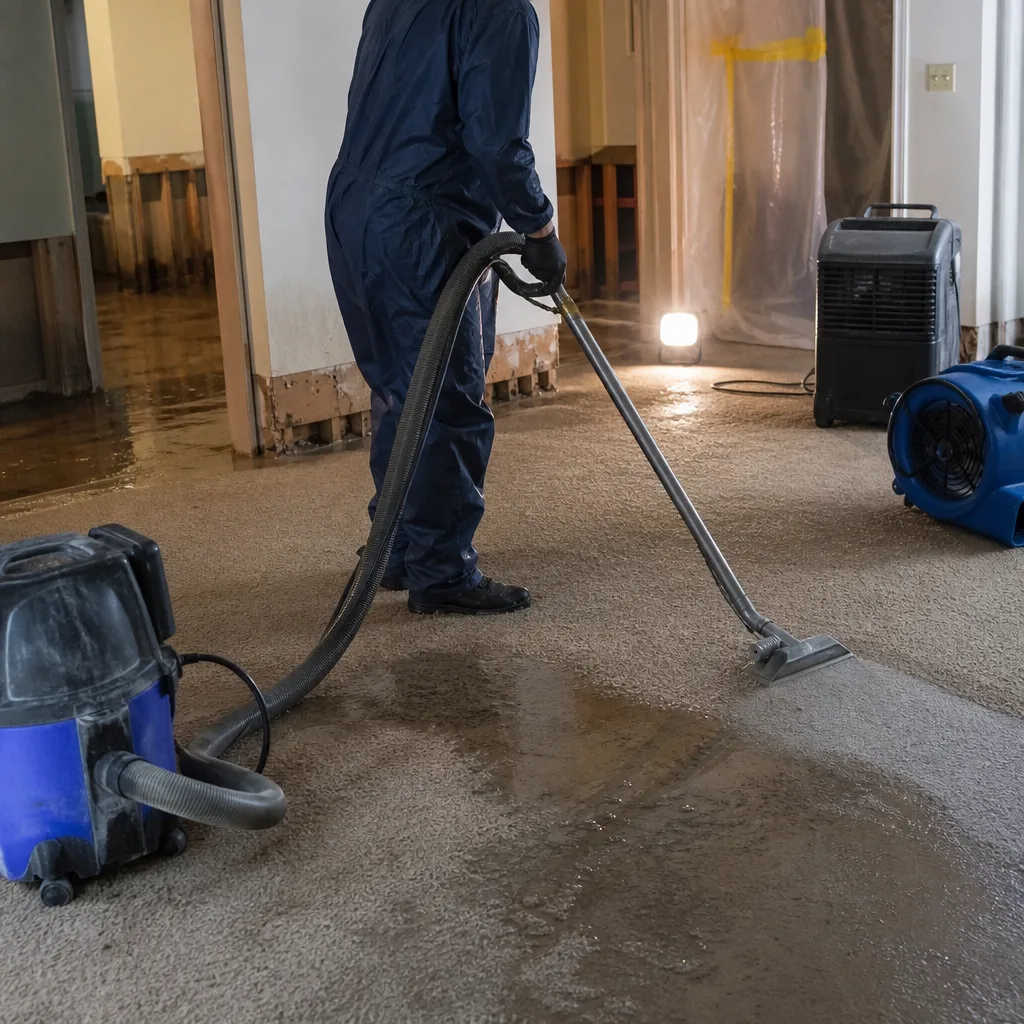
What happens when you call
- 1
A real person answersNo phone trees - you reach a local pro.
- 2
You get an upfront price rangeHonest numbers before anyone is dispatched.
- 3
A background-checked tech heads outLicensed & insured, dispatched right away.
- 4
You approve before work beginsNothing starts until you say go.
Reconstruction & Cleanup Costs in Queens Village, NY
Reconstruction pricing in Queens Village tracks the age and attachment of the housing stock. A straightforward category 1 water loss in a 1950s Colonial Revival, where drywall comes out and goes back, typically runs $3,500 to $8,000 including drying and rebuild. A sewage backup in a finished basement climbs fast: containment, disposal of contaminated materials, antimicrobial treatment, and reconstruction of a paneled room with flooring can land between $12,000 and $28,000 depending on square footage and how much of the original finish can be saved. Party-wall claims add another layer: if both sides need drying and the neighbor’s carrier is involved, total job costs across two policies often reach $20,000 to $45,000, but each carrier pays its own portion. The free inspection locks a firm number before work starts. If insurance covers the loss, you’re paying your deductible, not the scope of work.
We Also Serve Cities Near Queens Village
Our crews cover Queens Village and the surrounding communities of Queens Village, Oakland Gardens, Hollis, Bellerose, and Floral Park. Same live dispatch, same 45-minute response target, same certified crews.
Queens Village Reconstruction & Cleanup Questions, Answered
Why does water from my Queens Village semi-detached twin show up on my neighbor’s wall, and how do you handle that for reconstruction?
The shared masonry party wall between your homes acts as a wick. Water from a roof leak, ice dam, or plumbing failure on your side travels laterally through the un-flashed wythe and appears as staining on your neighbor’s wall weeks later. We trace the source with moisture mapping, document that your side is drying correctly, and coordinate with both carriers so reconstruction on each side is scoped and billed to the right policy.
Can you reconstruct the original plaster walls in my 1930s Queens Village Tudor without replacing them with drywall?
Yes. We match original plaster texture and thickness on 1930s-era walls, using a lime-based topcoat where the original calls for it. Drywall is faster and cheaper, but on a Tudor with original character, the pre-loss condition is plaster, and our scope reflects that. Call (917) 924-4221 for an inspection and a written scope.
What’s different about cleaning up a basement sewage backup in Queens Village compared to a neighborhood with newer homes?
Three things: the combined sewer that serves eastern Queens backs up under storm load, the finished basements in 1925-1955 homes often have original materials like vinyl tile and wood paneling that absorb category 3 water, and the attached construction means the contamination can spread into the party wall. That requires full containment, not just a wet vac. We run HEPA air scrubbers, remove porous materials, and apply antimicrobial treatment to every framing member.
How do you handle a reconstruction job where the water damage spanned two attached homes with different insurance companies?
We’ve done this dozens of times in Queens Village. Each side gets its own moisture log, photo set, and line-item scope. We talk to both adjusters directly and make sure neither carrier disputes the other’s claim. The goal is that your side of the wall is dry, verified, and rebuilt to your pre-loss condition, and your neighbor’s side gets the same treatment without you two fighting over attribution.
My finished basement in Queens Village has original 1950s vinyl tile that got wet. Can you restore the tile or does it all need to come out?
Depends on the water class. Category 1 water from a supply line often allows us to dry the tile in place with Injectidry and air movers. Category 3 water from the sewer saturates the tile and the mastic beneath it, and that tile comes out as contaminated material. We’ll tell you which one you have during the free inspection.
How fast can you actually get to a Queens Village address?
Most calls get a crew on site within 45 minutes. Live dispatch means no waiting on a call-back. If you’re standing in a basement full of sewage water at midnight, call (917) 924-4221 and we’ll be there before the water wicks further into the walls.
Will my insurance cover reconstruction after a Queens Village sewage backup?
Most homeowner policies cover sudden and accidental discharge from a sewer or drain, but coverage depends on your specific policy and endorsements. We document everything from hour one and bill your carrier directly. If a claim is denied, you’ll know the out-of-pocket number before we start, not after.
What should I do in the first 30 minutes after a pipe bursts or a sewer backs up?
Shut off the water at the main if it’s a supply line. Kill power to the affected area if water is near outlets or the panel. Don’t walk through standing water in a basement where electricity may be live. Then call us at (917) 924-4221. We’ll talk you through what to leave alone and what to move, and a crew will be on the way.
Serving Queens Village, NY - Our Local Coverage Area
We’re based in the Queens Village area and know this community well. Use the map below to see our service coverage - if you’re nearby, we can almost certainly help.
The Party Wall Problem in Queens Village
No other neighborhood we serve teaches contractors the party wall lesson faster than Queens Village. The semi-detached brick twins that dominate the blocks from Jamaica Avenue north to Hillside Avenue share a masonry wall that was built before waterproofing membranes and drainage planes were standard practice. Bricks and mortar are both porous. When water gets into that wall from a roof leak, a burst pipe inside a stud bay, or an ice dam backing up under the eaves, the wall doesn’t just get wet on one side. It wicks. The water moves laterally through the brick and lime mortar, sometimes traveling six or eight feet from the actual source, and when it reaches the neighbor’s side, it shows up as a stain, a soft spot, or a musty smell. That’s when the phone calls start. The neighbor thinks your pipe flooded their wall. Your carrier says it’s pre-existing. Their carrier says it’s your responsibility. Meanwhile, the wall is still wet, and mold is setting up shop in the cavity. We’ve seen this exact dispute on nearly every attached-home job we’ve run in Queens Village. Our approach is simple: we prove your side of the wall is dry with documented moisture readings, we identify where the water actually entered, and we provide both carriers with the same facts. On a Tudor twin near Hillside Avenue and 220th Street, our crew responded to a basement sewage backup from the combined sewer system: category 3 water had flooded a finished basement with original 1950s wood paneling and vinyl tile. We set up containment, extracted standing water with truck-mounted pumps, performed moisture mapping and structural drying with Dri-Eaz dehumidifiers and air movers, then removed and replaced drywall and flooring before applying antimicrobial treatment. The neighbor’s side showed staining on the shared party wall from lateral wicking, requiring separate containment and after-hours drying logs to satisfy both carriers. It took longer. It cost more. But the wall was dry, both claims paid, and the relationship next door survived.
Written by Curt Bowman, Owner at Floodline Restoration Co. of Manhattan, serving Queens Village with Reconstruction & Cleanup since 2010.
If you’re facing water, fire, or sewage damage in Queens Village, call (917) 924-4221 now for a free estimate and a crew that will be there when we say. We stand behind every job, in writing, for 90 days. That’s the deal.