
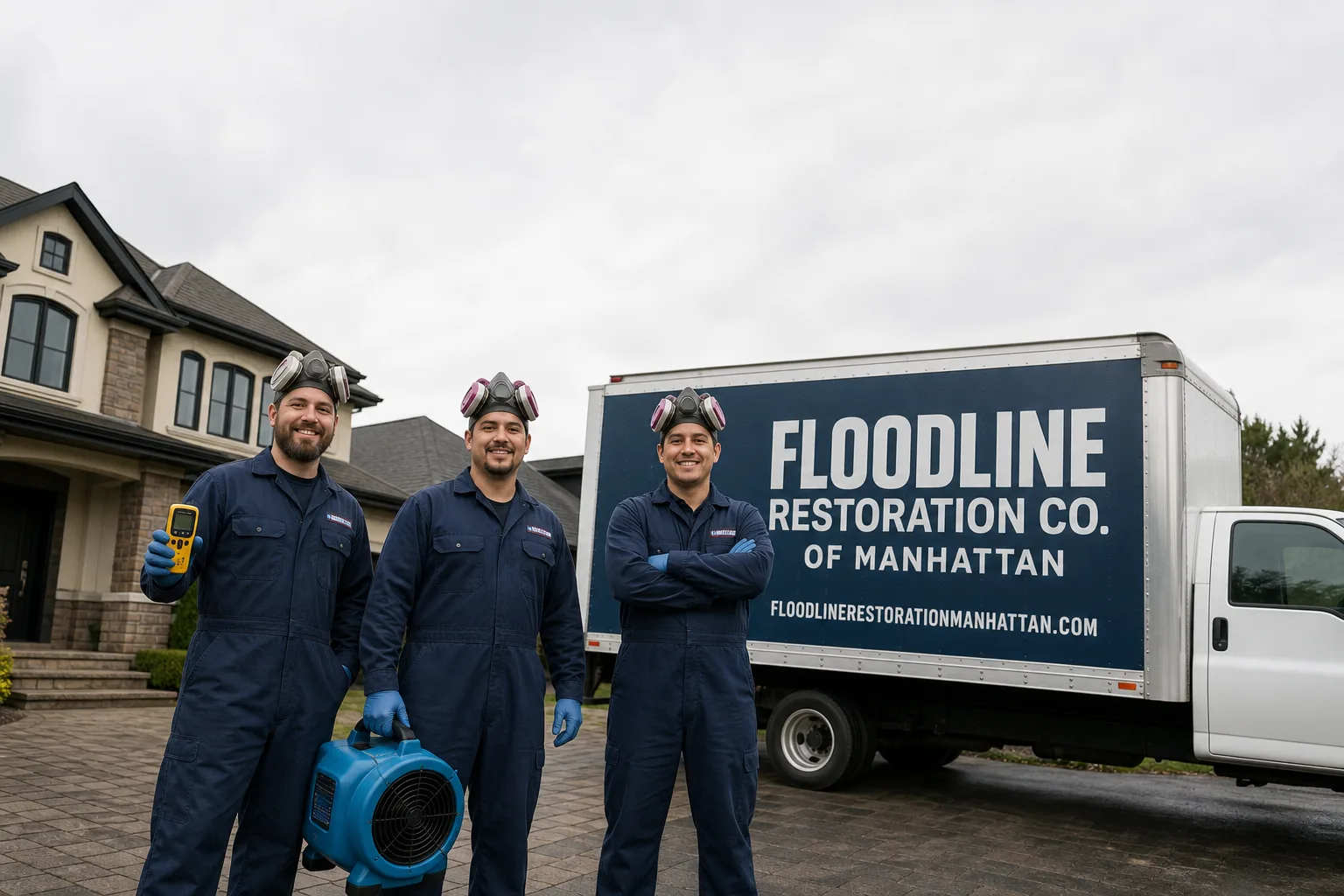
Free visual inspection and a written scope of work before any mitigation begins - photos, moisture readings, and drying logs go in your claim file
The scope we write is the scope we bill. Anything new gets shown to you, in writing, before we touch it.






 Before
 After
After Before
 After
After Before
 After
After24/7 Emergency Reconstruction & Cleanup in Whitestone
Reconstruction and cleanup in Whitestone after a flood, fire, or storm usually falls into two buckets: the work you can see, and the damage already spreading behind walls and under flooring. Our crews answer live around the clock at (917) 924-4221 and can be on the ground in Whitestone fast, because the difference between drying a basement on day one and rebuilding it on day ten is measured in thousands of dollars. We do a free visual inspection first, walk you through what we find, and put a written scope in your hands before any work starts. That matters on this narrow peninsula, where groundwater and salt air turn ordinary reconstruction into something inland crews rarely plan for.
Understanding Reconstruction & Cleanup Severity in Whitestone Properties
Whitestone’s housing stock was largely built between 1930 and 1960: brick Colonials, Cape Cods, and Tudors with full or partial basements sitting on uncoated block or poured concrete. Those pre-modern foundation materials were never designed to hold back the elevated water table that comes with living between the East River and Little Neck Bay. Moisture mapping on these basement walls routinely shows hydrostatic intrusion, meaning water pushed through the concrete by groundwater pressure, even when no rainfall touched the neighborhood. That intrusion is Category 1 or Category 2 water on day one. Left unaddressed, it becomes Category 3 contamination as it picks up sewage, soil, and sediment, and the drywall wicks it upward into framing cavities. Structural drying with Dri-Eaz dehumidifiers and air movers restores the moisture balance, but only if we get inside before mold colonization begins.
Why Whitestone Property Owners Choose Floodline Restoration Co. of Manhattan
- 45-minute response commitment: A live dispatcher confirms a crew and a route the moment you call, so you’re never waiting on a callback.
- 24/7 live answer: A real person picks up at 2 a.m. during a nor’easter, not a voice menu. That’s the standard, not the exception.
- IICRC-certified crews: Our technicians hold WRT, FSRT, and AMRT certifications and follow IICRC, RIA, and IFA standards on every job.
- Free visual inspection: We assess the damage, explain the severity level in plain language, and give you a written scope before any equipment comes off the truck.
- Direct insurance billing: We coordinate with your adjuster and bill the carrier directly, so you’re never paying out of pocket while paperwork clears.
- One team from extraction to reconstruction: The same crew that reads the moisture map on day one handles daily readings, rebuilds the walls, and hands you the 90-Day Done Right Promise in writing.
Our Reconstruction & Cleanup Process
Inspection & Assessment
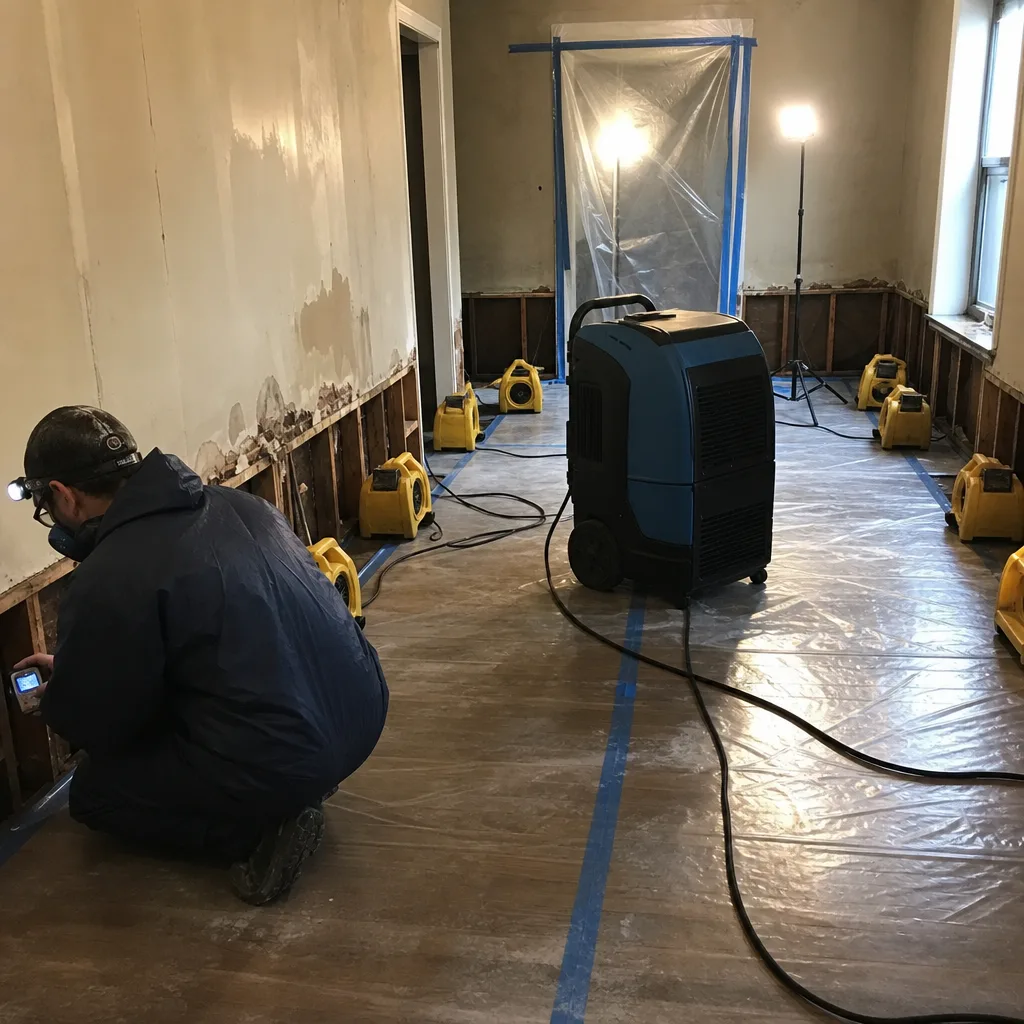
We start with thermal imaging cameras and hygrometers to map moisture behind drywall, under flooring, and inside framing cavities. Whitestone’s groundwater patterns mean we check foundation walls even when the visible water line never touched them. You get a written scope and a straight answer on what needs drying, what needs removal, and what can stay.
Extraction & Stabilization
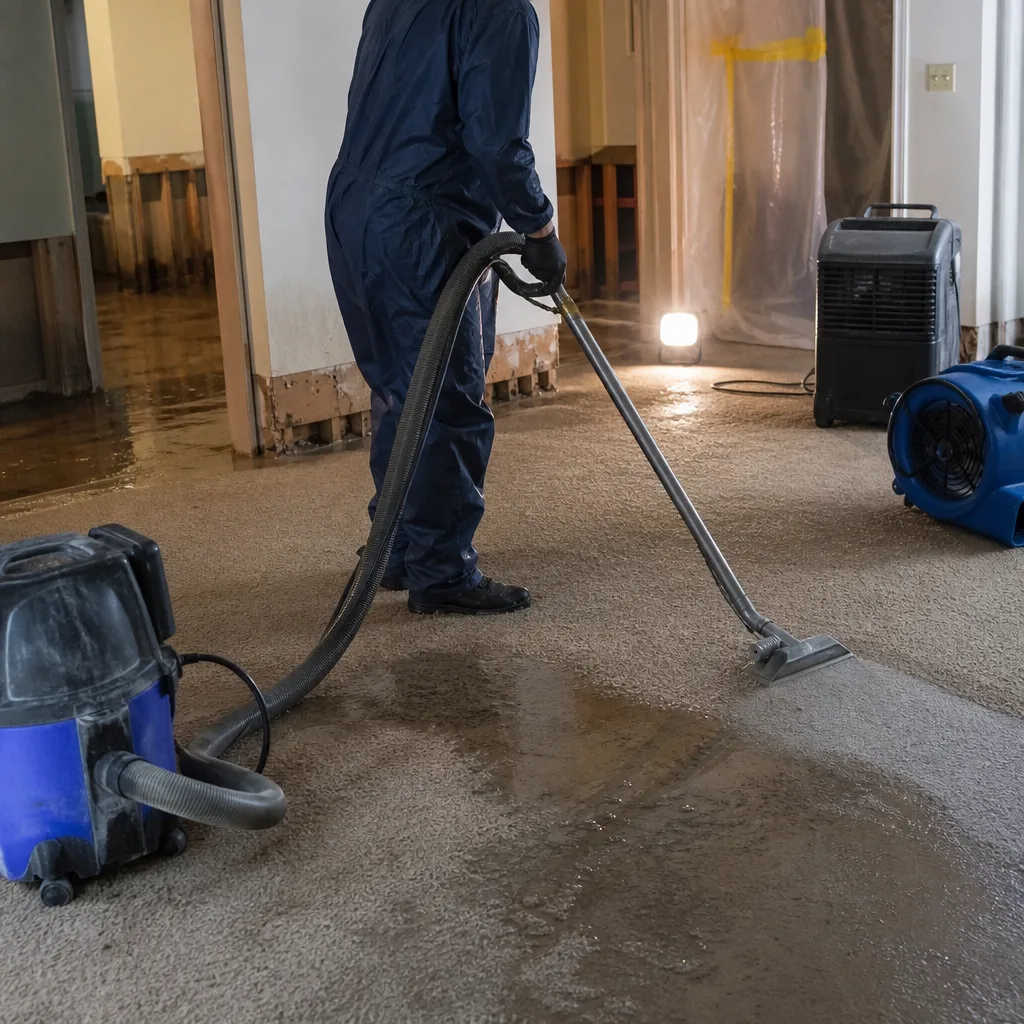
Standing water comes out with truck-mounted extraction units and submersible pumps. We remove waterlogged materials that can’t be saved: saturated drywall, carpet padding, and baseboards that are already wicking. The goal is to stop the spread before mold has a chance.
Drying & Dehumidification
Professional-grade Dri-Eaz dehumidifiers, Phoenix air movers, and XPOWER ventilation equipment run continuously, with airflow directed into wall cavities and under floors. We log daily moisture readings until the structure hits the dry standard, and we hand that log to you and your carrier.
Cleaning & Sanitization
Affected surfaces get HEPA vacuuming and antimicrobial treatment. Contents that can be restored are cleaned and documented; contents too far gone are catalogued for your claim. We contain the work area with negative air so dust and debris don’t spread through the rest of the house.
Contents Restoration & Pack-Out
Furniture, clothing, and personal items get packed out, inventoried, and cleaned or restored off-site when needed. In Whitestone basements with category 2 or 3 water, we recommend pack-out early, because saving contents is cheaper than replacing them and your adjuster will want the inventory.
Repairs & Restoration
The same crew that dried the structure now rebuilds it: new drywall, flooring, trim, and paint. Because we handle reconstruction alongside cleanup, there’s no mid-job handoff to a subcontractor you’ve never met. Every job carries the 90-Day Done Right Promise in writing.
Need Emergency Reconstruction & Cleanup in Whitestone Now?
Crews minutes away, answering live 24 hours a day. The sooner we start, the less it costs.
Working With Your Insurance Company
We document from the first hour. Photos of every affected room, moisture readings before and after drying, line-item scopes, and the full drying log go directly to your adjuster. We speak the language carriers expect: IICRC standards, industry-standard pricing software, and photo documentation that shows exactly what was wet, how wet, and what we did about it. We handle adjuster communication directly, so you’re not relaying messages between your insurance company and a contractor. When the claim covers reconstruction, we bill the carrier directly and keep you informed of what’s approved, what’s staged, and what’s left to finish.
What We Provide Your Insurer
- Thorough documentation of the loss
- Photos of all damage, room by room
- Moisture readings and drying logs
- A detailed, line-item scope of work
- Direct coordination with your carrier
Built for Whitestone’s Loss Calendar
Whitestone’s reconstruction calls follow a rhythm tied to weather patterns most Queens neighborhoods never feel. Nor’easters from October through March push storm surge up Little Neck Bay and the East River, and those coastal storms deliver three problems at once: wind-driven rain against the facade, tidal surge into basements, and sewer backflow from overwhelmed city mains. January deep freezes burst supply lines in 1930s and 1940s Colonials where original copper plumbing has outlived its useful life. Spring thaw raises the water table before a single drop of rain falls, and homeowners near the Bay Terrace shoreline and the old Whitestone waterfront see moisture wick upward through uncoated foundation block. Summer thunderstorms flash-flood low-lying streets faster than storm drains can handle. Each season produces a different loss pattern, and our crews read them all.
Reconstruction & Cleanup Across Whitestone’s Neighborhoods
Response routes in Whitestone matter, because the peninsula’s geography means different blocks fail differently. Streets closest to the East River, especially around the older homes off 154th Street descending toward the waterfront, see tidal and groundwater intrusion that has little to do with rainfall totals. Properties near Little Neck Bay and Francis Lewis Park contend with the same coastal source but often add wind-driven salt-spray corrosion on exterior hardware and fasteners. The older brick Colonials and Capes concentrated around the Whitestone Lanes area and east of 14th Avenue sit on basements built before vapor barriers existed, so hydrostatic pressure is a chronic baseline condition. Homes along Cross Island Parkway’s western edge face a different problem: drainage from the elevated roadway directing stormwater toward foundations during heavy rain. None of this is academic. It determines where we set containment, how long structural drying runs, and whether garage-door hardware needs galvanized replacements when we rebuild.
Specialized Reconstruction & Cleanup Services We Offer in Whitestone
Full-Service Reconstruction
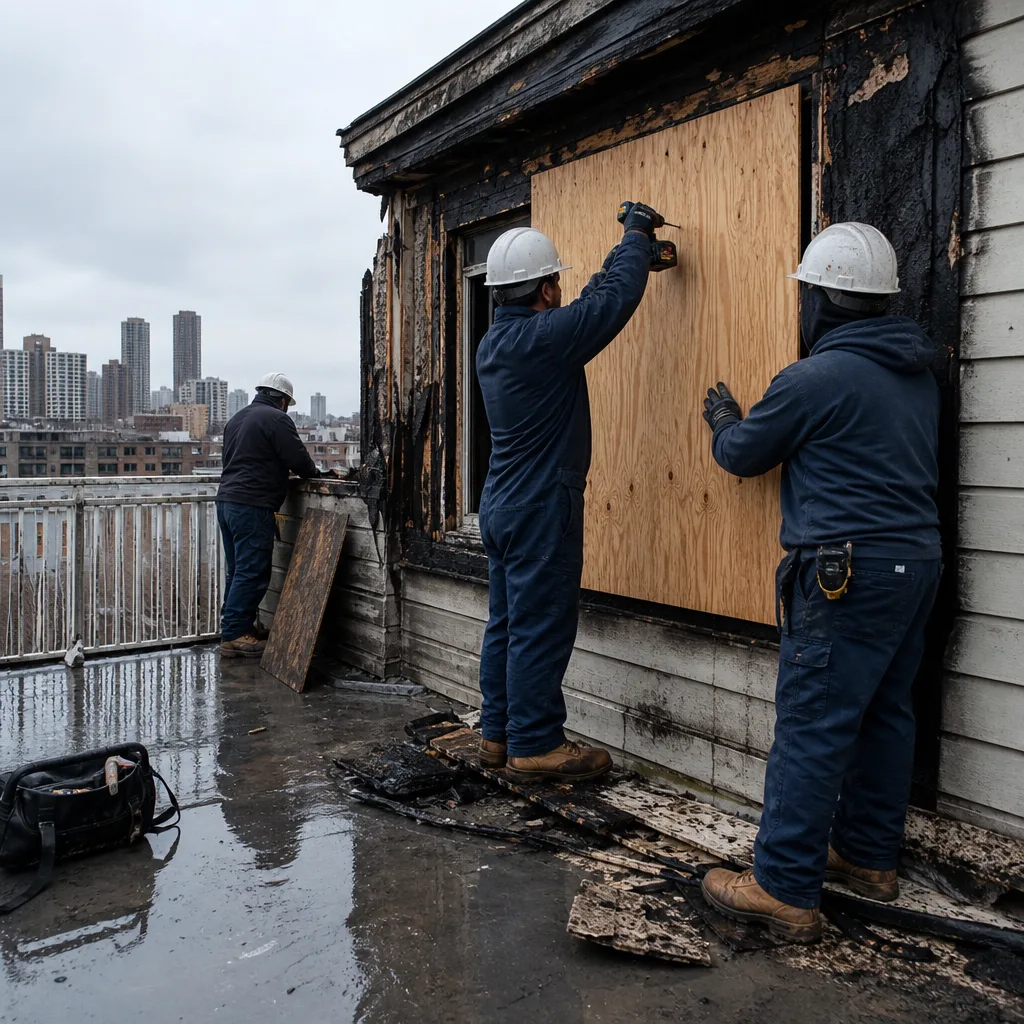
Reconstruction in Whitestone means more than hanging new drywall. It means accounting for the coastal environment before materials go back in. We rebuild with moisture-resistant drywall in basements, pressure-treated plates where framing meets concrete, and galvanized or coated hardware in garages where salt air rusts standard springs and hinges years early. The work is scoped in writing, scheduled in phases, and finished by the same crew that started the job.
Drywall & Flooring Repair
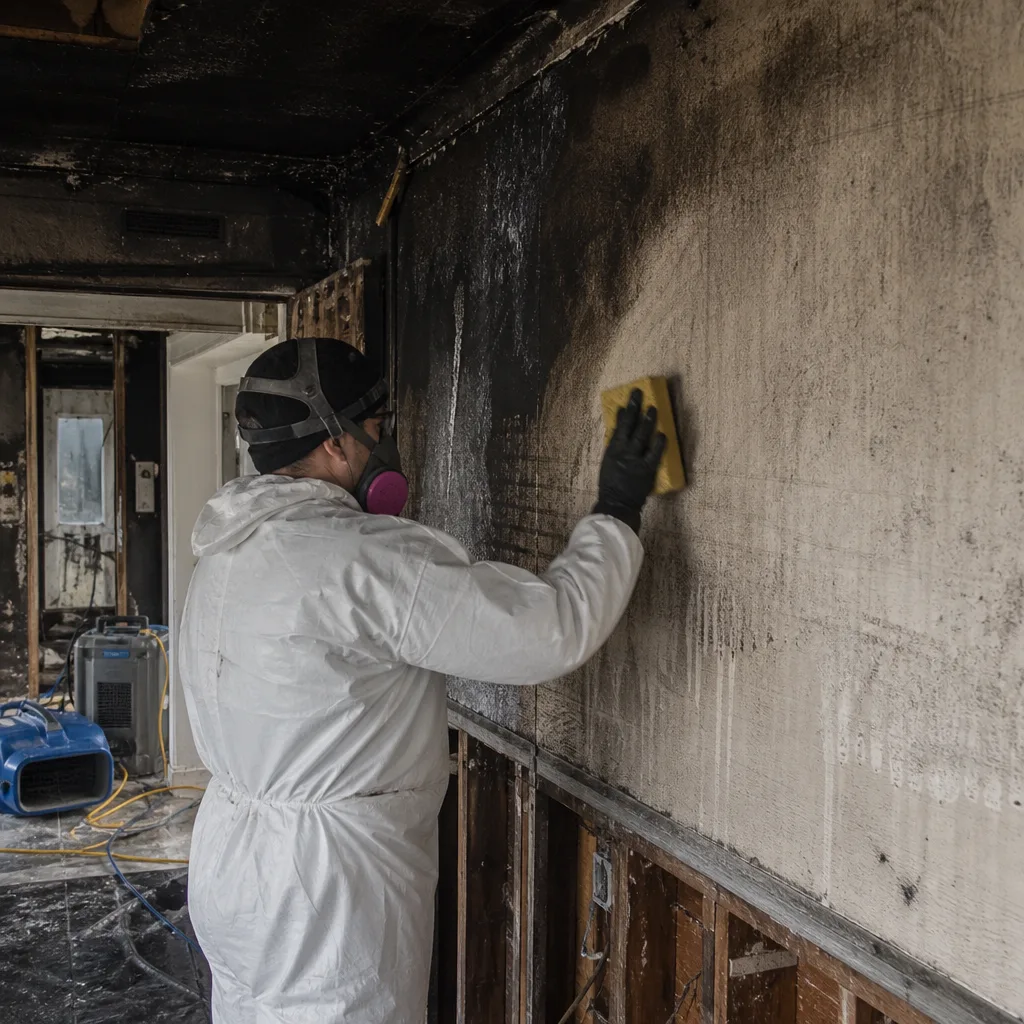
Pre-1950 brick Colonials and Capes in Whitestone hide a problem inland contractors miss: hydrostatic pressure forces moisture through uncoated block foundation walls even after we’ve dried the room. We delay drywall reinstallation until moisture mapping confirms the substrate is stable, then replace flooring with materials suited to a high-water-table basement. Rushing that step means redoing the work in a year.
Contents Restoration & Pack-Out
Flooded basements in Whitestone hold a lifetime of stored belongings: furniture, photo albums, tools, seasonal decoration. We pack items out, inventory each piece for your carrier, and restore what’s salvageable using professional cleaning methods and our contents processing facility. Items beyond recovery are documented for replacement value. Faster pack-out means fewer total losses and a smaller claim.
Carpet & Upholstery Cleaning
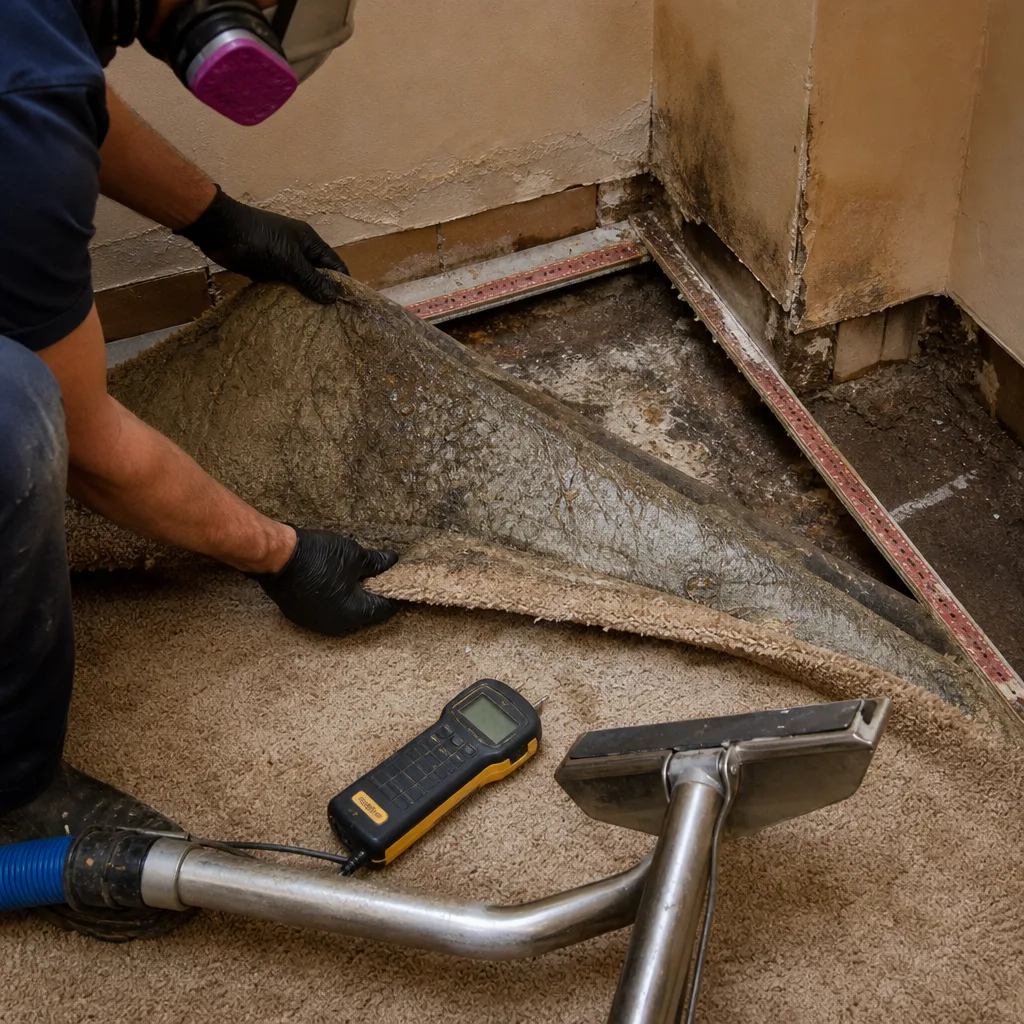
Water damage doesn’t always require replacement. Category 1 water from a burst supply line can often be extracted from carpet and upholstery, then cleaned, deodorized, and dried in place with professional equipment. Category 2 or 3 water changes the math, and we’ll tell you straight when replacement is the only right answer for a Whitestone basement that took storm surge.
Post-Construction Cleanup
After walls are rebuilt and floors are replaced, we do a full HEPA cleanup: dust containment, surface cleaning, and final air scrubbing. Whitestone homeowners often tell us they didn’t expect the dust from reconstruction to spread through the house. We run negative air and containment during the whole project, then clean the finished space until it’s ready to live in.
What happens when you call
- 1
A real person answersNo phone trees - you reach a local pro.
- 2
You get an upfront price rangeHonest numbers before anyone is dispatched.
- 3
A background-checked tech heads outLicensed & insured, dispatched right away.
- 4
You approve before work beginsNothing starts until you say go.
Reconstruction & Cleanup Costs in Whitestone, NY
Reconstruction and cleanup pricing in Whitestone reflects the neighborhood’s age and coastal exposure. Drywall and flooring repair after a basement flood typically runs $2,500-$6,000 for a standard finished basement, depending on square footage and how much framing needs replacement. Full basement reconstruction after a nor’easter surge, including new drywall, flooring, trim, and paint, usually lands between $8,000 and $18,000. Contents pack-out and restoration adds $1,500-$4,000 depending on volume. Garage hardware replacement with galvanized springs, coated hinges, and nylon rollers runs $300-$700 as part of a larger reconstruction scope. Insurance typically covers most of these costs when the loss is sudden and accidental; groundwater intrusion without a covered event is often out of pocket. A free visual inspection gets you a firm number before any work begins. Call (917) 924-4221 for a written estimate.
We Also Serve Cities Near Whitestone
Our crews serve Whitestone and the surrounding Queens communities, including Whitestone‘s neighbors: Flushing, Bayside, College Point, and Fresh Meadows. If you’re nearby and dealing with reconstruction or cleanup, the same live dispatchers and certified technicians cover your area. Our Reconstruction & Cleanup team handles the full scope from first extraction to finished rebuild, every phase.
Serving Whitestone, NY - Our Local Coverage Area
We’re based in the Whitestone area and know this community well. Use the map below to see our service coverage - if you’re nearby, we can almost certainly help.
Whitestone Reconstruction & Cleanup Questions, Answered
How does Whitestone’s coastal location change the way you dry out basements after a storm?
Whitestone’s peninsula setting between the East River and Little Neck Bay means basements often take on groundwater through hydrostatic pressure rather than stormwater through a window or door, so we dry differently and longer. We place Dri-Eaz dehumidifiers and Phoenix air movers in wall cavities and behind baseboards, monitor moisture daily, and don’t reinstall drywall until readings prove the substrate is stable. Coastal groundwater keeps wicking for days after the storm passes.
What kind of garage door hardware do you install in Whitestone to handle salt air?
We specify galvanized or coated springs, stainless hinges, nylon rollers, and corrosion-resistant fasteners for Whitestone garage doors. Standard steel hardware rusts years early in this salt-air environment, and a rusted spring under tension is a genuine safety hazard. If your garage door hardware is part of the reconstruction scope, we install the right materials the first time.
Can you restore contents and pack out items during reconstruction if a Whitestone basement floods with category 2 water?
Yes. We pack out salvageable items, inventory everything for your insurance claim, and clean and restore what’s worth saving. Category 2 water carries contaminants that require professional cleaning and sanitization before items can return to the home. Faster pack-out reduces total losses, so call us the same day if you can.
How quickly can mold start growing behind baseboards in a Whitestone home after a nor’easter, and what should a homeowner do?
Mold colonization can begin within 48 to 72 hours in ideal conditions, and Whitestone’s groundwater-influenced basements provide exactly those conditions. A homeowner on storm day can have moisture behind baseboard trim by day five with no visible standing water. The right move is to call a certified restoration team the moment you suspect water, so we can moisture-map and dry before mold gets a foothold.
Why do I need moisture mapping before replacing drywall in a 1950s Cape Cod near the Whitestone waterfront?
Moisture mapping shows whether water has moved into wall cavities and framing where you can’t see it. Replacing drywall without mapping can seal damp framing inside the wall assembly, which leads to hidden mold and structural rot. On a 1950s Cape Cod near the Whitestone waterfront, tidal groundwater can be present even when the drywall looks dry, so mapping is the only honest way to know the wall is ready for new material.
How fast can someone actually get here for a Whitestone emergency?
We commit to 45 minutes from dispatch for emergency calls in Whitestone. Live dispatchers coordinate routes around the peninsula’s corridors including 14th Avenue, Cross Island Parkway, and 154th Street, and our crews carry the equipment needed to start extraction on the first visit. The goal is always to have water coming out and air movers running the same day you call.
Will insurance cover the full cost of reconstruction and cleanup in Whitestone?
Most sudden and accidental losses, like a burst pipe or a storm-surge flood under a covered policy, include reconstruction and cleanup. Groundwater intrusion without a covered event often falls outside standard coverage. We document everything from the first hour and communicate directly with your adjuster, so you know where the claim stands before work proceeds.
What should I do in the first 30 minutes after flood damage in Whitestone?
Call (917) 924-4221 first. Turn off the water supply if the source is a burst pipe, shut off electricity to the affected area if you can do so safely, and avoid entering standing water that may have contacted electrical outlets. Don’t move wet contents through the house and don’t start pulling drywall yourself. Our free visual inspection and moisture mapping tell you exactly what needs to happen next.
Written by Curt Bowman, Owner at Floodline Restoration Co. of Manhattan, serving Whitestone and the surrounding Queens communities.