

Free visual inspection and a written scope of work before any mitigation begins - photos, moisture readings, and drying logs go in your claim file
The scope we write is the scope we bill. Anything new gets shown to you, in writing, before we touch it.






 Before
 After
After Before
 After
After Before
 After
After24/7 Emergency Sanitization Services in Little Italy
Sanitization services in Little Italy typically cost $350-$1,200 per unit and can usually be started the same day you call. We answer the phone around the clock, and a background-checked crew can be at your door within 45 minutes to assess contamination, set containment, and stop the spread before it crosses into shared wall cavities. Call (917) 924-4221 now if you’re facing a sewage backup, post-illness contamination, or a water loss that’s sat longer than 48 hours. The first hour determines how far bacteria and mold spores travel through a tenement’s horsehair plaster and tin ceilings.
What happens when you call
- 1
A real person answersNo phone trees - you reach a local pro.
- 2
You get an upfront price rangeHonest numbers before anyone is dispatched.
- 3
A background-checked tech heads outLicensed & insured, dispatched right away.
- 4
You approve before work beginsNothing starts until you say go.
Understanding Sanitization Services Severity in Little Italy Properties
Sanitization work in Little Italy rarely starts with a clean slate. The neighborhood’s tenements, most built between the 1880s and 1920s, carry horsehair-bound plaster, tin ceilings, cast-iron soil stacks, and continuous masonry party walls that connect one apartment to the next. When a shared stack backs up or a neighboring unit loses water, contamination travels through those wall cavities before anyone sees it. By the time we arrive, we’re often dealing with category 2 grey water that’s already aged into category 3 black water, meaning it carries sewage, bacteria, and the risk of serious illness.
The severity scale matters here more than in newer construction. A category 1 clean-water loss from a supply line is straightforward if we reach it within 24 hours. A category 2 loss, think washing machine overflow or sump failure, requires antimicrobial treatment and careful drying. A category 3 loss, raw sewage from a shared cast-iron stack, demands full containment, removal of saturated plaster, and aggressive disinfection of exposed framing. In Little Italy’s older buildings, we almost always assume the worst category until moisture mapping proves otherwise. Horsehair plaster hides moisture for weeks. Tin ceilings trap it against the lath above. The smell tells you something’s wrong before the stain does.
Why Little Italy Property Owners Choose Floodline Restoration Co. of Manhattan
- 45-minute response commitment: When you call, a crew is dispatched immediately. We reach Little Italy addresses fast because we stage equipment locally and know the Mulberry, Mott, and Elizabeth Street corridors without GPS hesitation.
- 24/7 live answer: A real person picks up at 2 a.m., not a recording. You’ll speak to a dispatcher who knows the difference between a category 2 and category 3 loss and can get the right equipment rolling.
- IICRC-certified crews: Our technicians hold WRT and AMRT certifications, trained to the standards that matter for Sewage Cleanup and Biohazard work, not a generic cleaning crew in a branded van.
- Free visual inspection: We assess the loss, identify the contamination category, and give you a written scope before any work begins. No pressure, no obligation.
- Direct insurance billing: We bill your carrier directly and coordinate with the adjuster, so you’re not playing messenger between us and the insurance company.
- One team from start to finish: The same certified crew that sets containment handles daily moisture readings, sanitization, and any reconstruction. No mid-job handoff to a subcontractor you’ve never met.
Our Sanitization Services Process
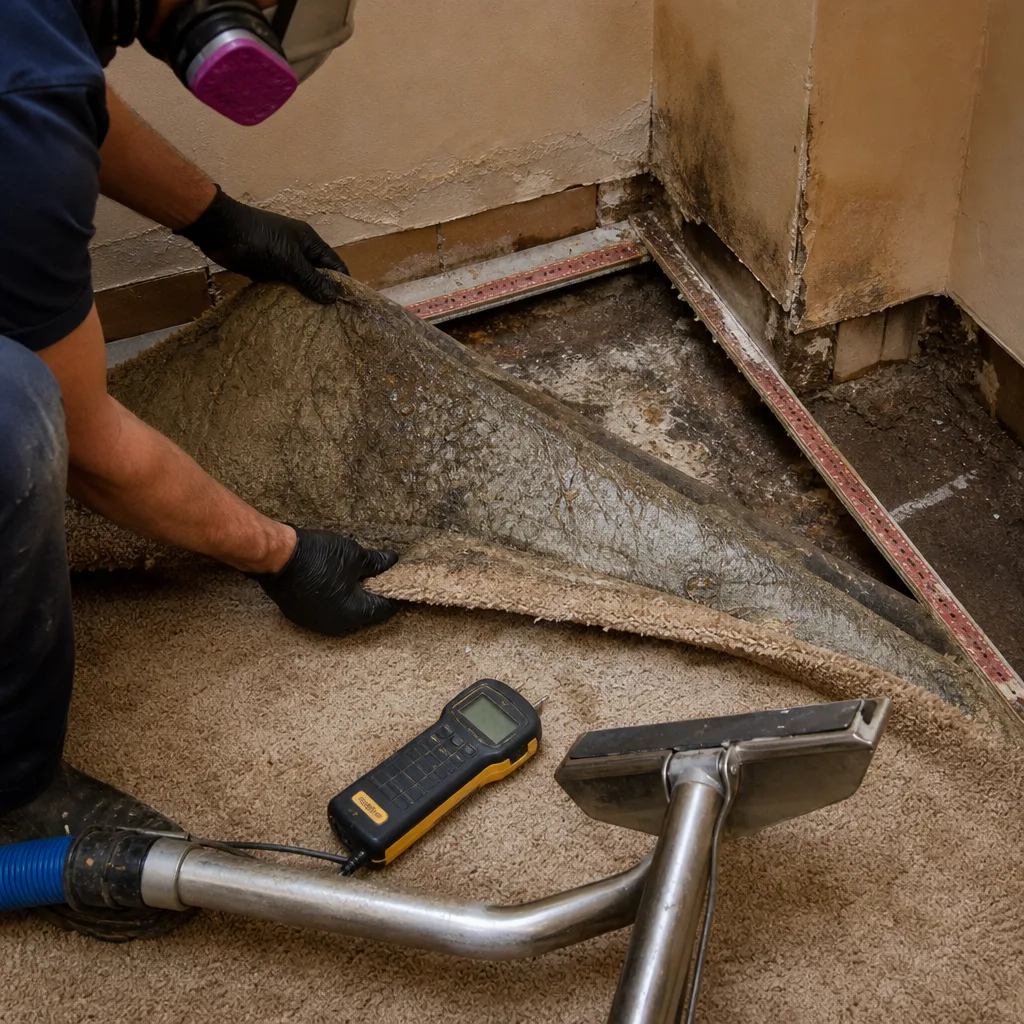
Inspection & Assessment
We arrive, listen to what you’ve seen and smelled, then run moisture mapping with Dri-Eaz thermal imaging across affected walls, floors, and shared party-wall cavities. We identify the contamination category, check for asbestos and lead paint in pre-1978 surfaces, and mark the containment boundary.
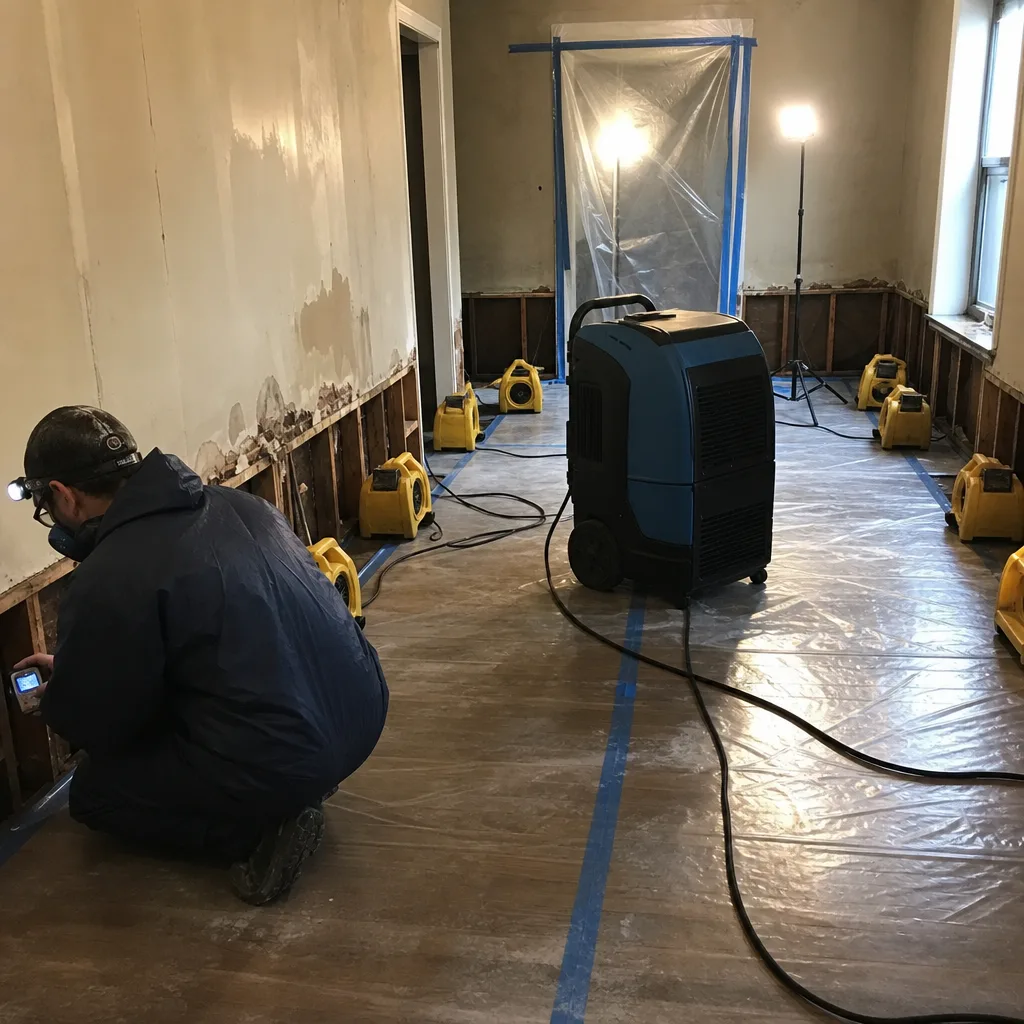
Extraction & Stabilization
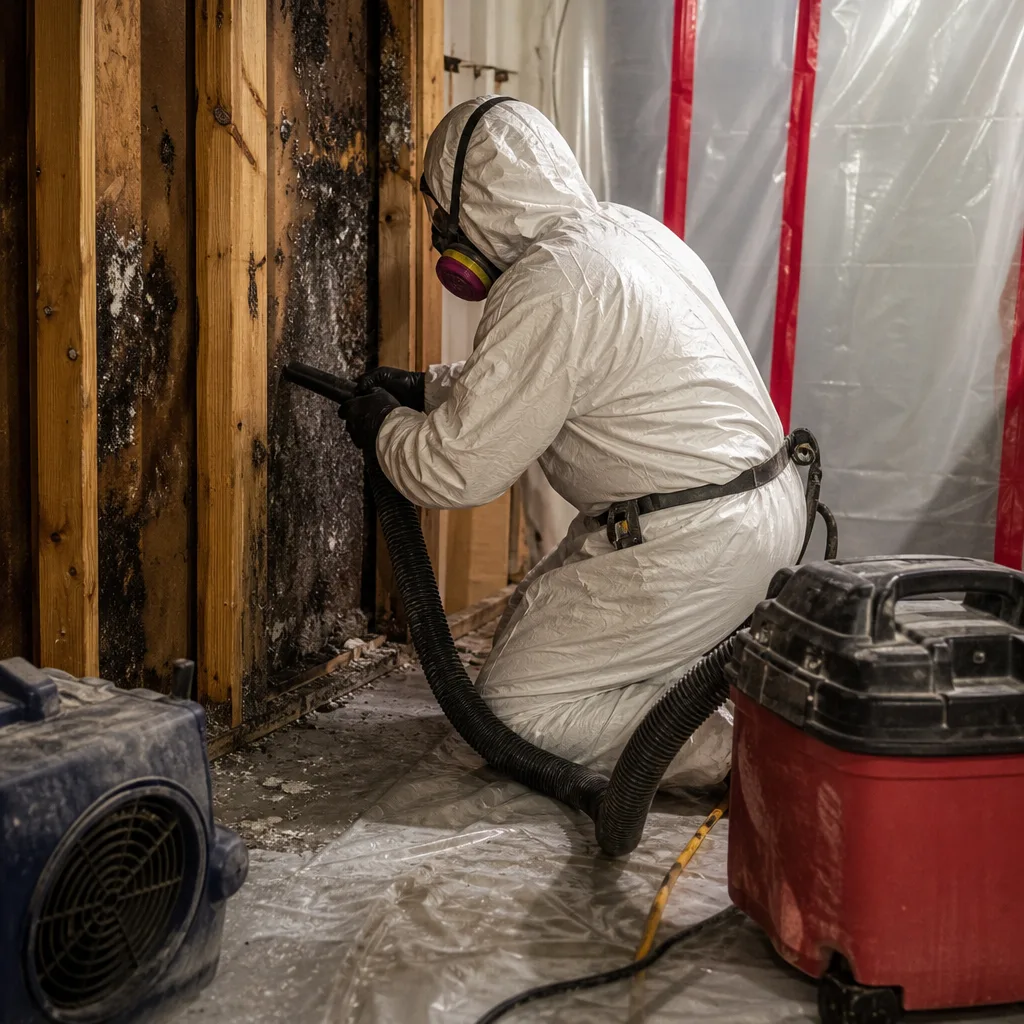
Standing water and saturated materials are removed immediately. For category 3 losses, we cut out unsalvageable lath and plaster, bag it under negative air pressure, and stabilize the structure so contamination stops spreading.
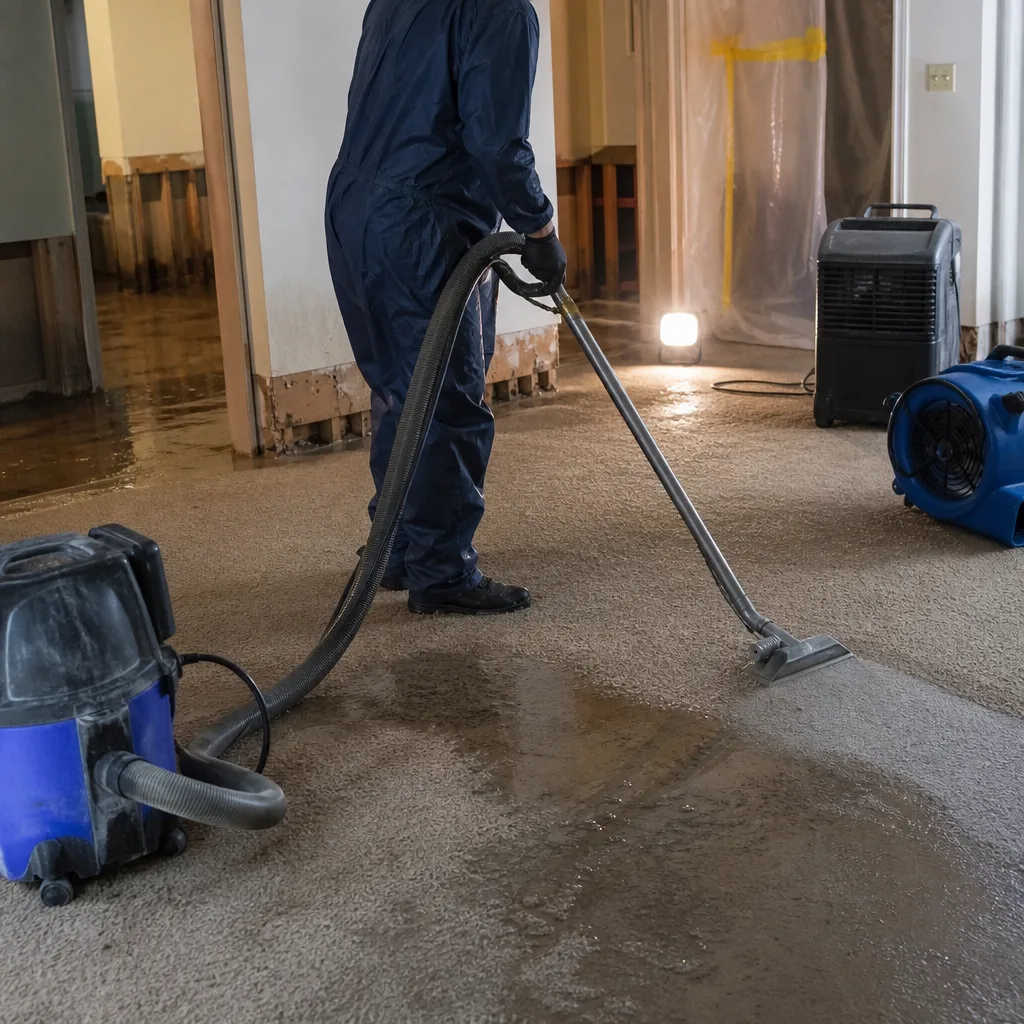
Drying & Dehumidification
Commercial-grade Phoenix and Dri-Eaz air movers and dehumidifiers go in, sized to the cubic footage of the affected rooms. We log daily moisture readings against a dry standard and hand that log to you and your carrier.
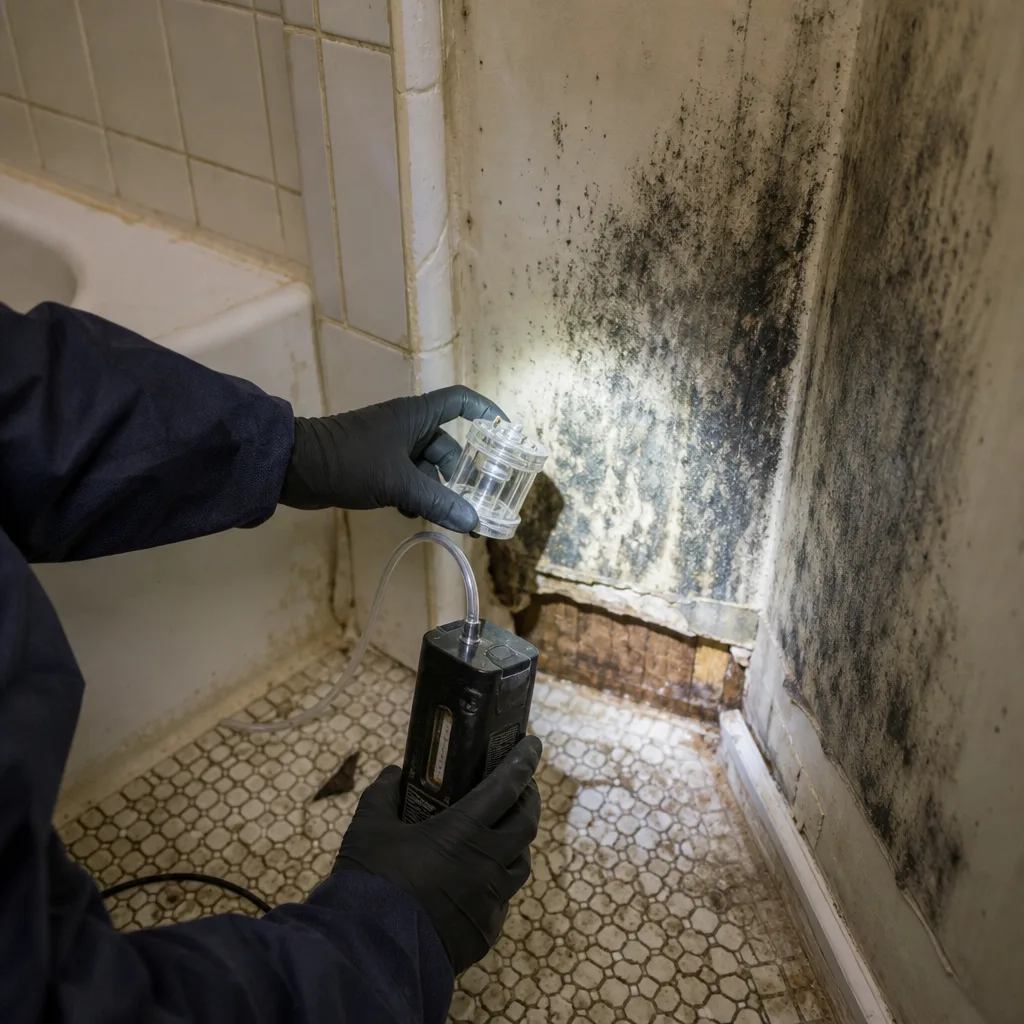
Cleaning & Sanitization
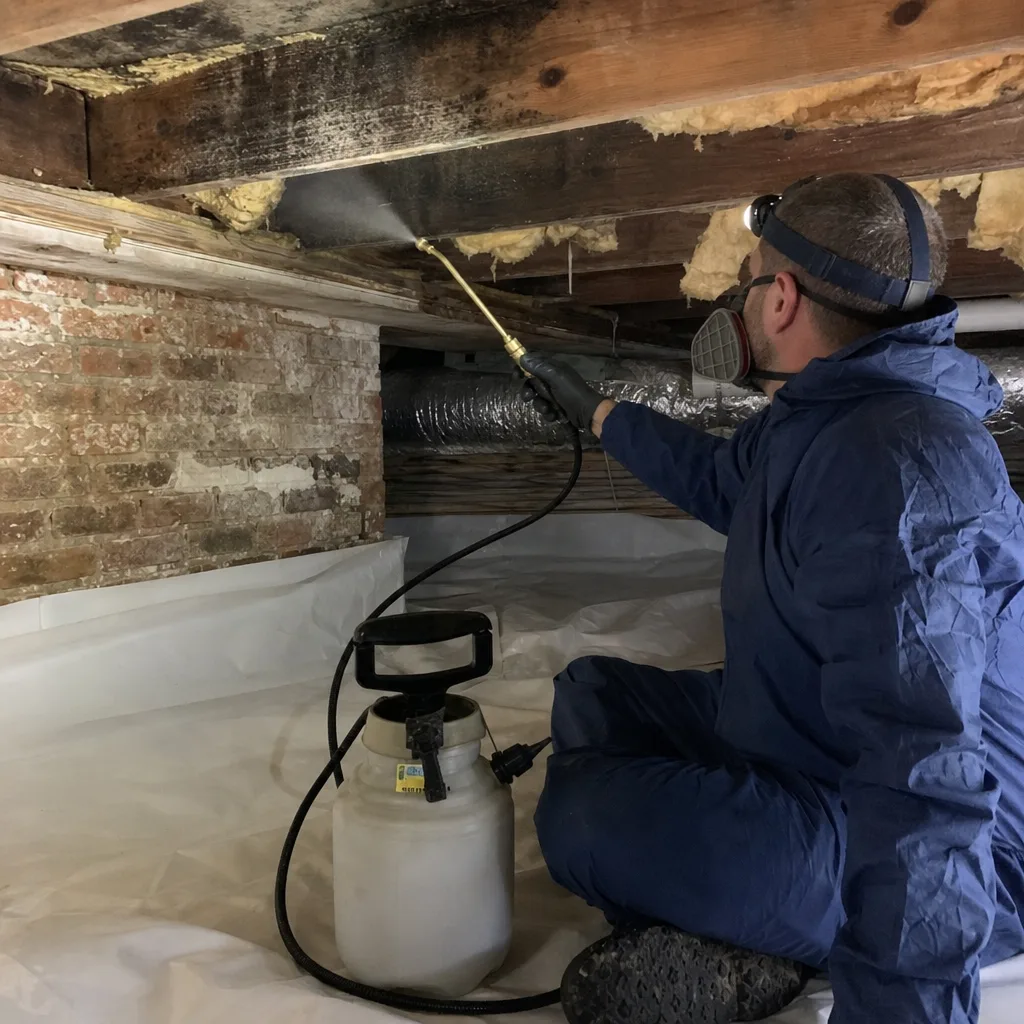
HEPA air scrubbers run continuously to capture airborne spores and bacteria. We apply IICRC-standard antimicrobial treatments to exposed framing, studs, and any salvageable surfaces.
Commercial-Grade Fogging
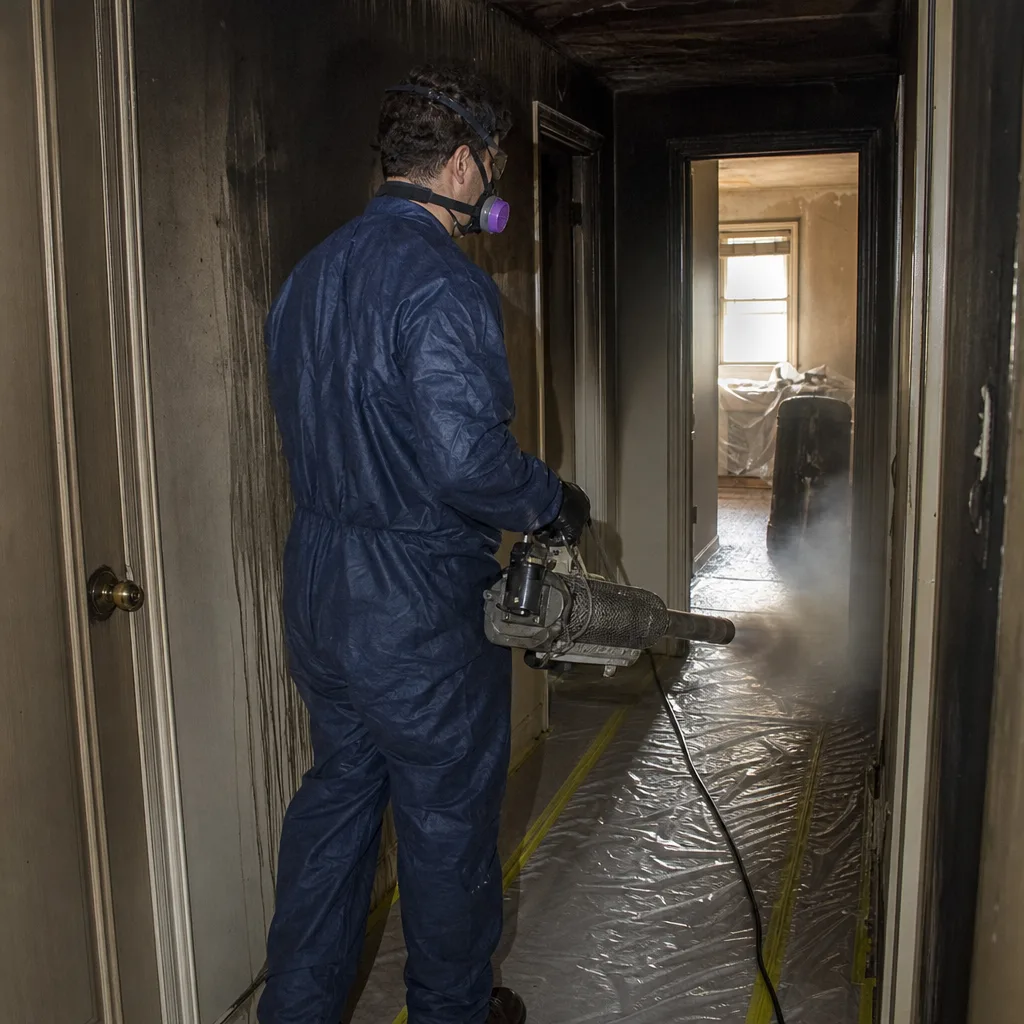
XPOWER thermal foggers push a disinfecting mist into wall cavities, behind tin ceilings, and through floor joist bays where wipes and sprays can’t reach. This is how we treat contamination inside shared masonry walls without opening every stud bay.
Repairs & Restoration
Once surfaces pass clearance testing, we rebuild what we removed. Plaster patching, new tin ceiling panels, lath repair, and finishing work happen under the same crew with the same standards applied on day one.
Need Emergency Sanitization Services in Little Italy Now?
Crews minutes away, answering live 24 hours a day. The sooner we start, the less it costs.
Working With Your Insurance Company
Most sanitization work in Little Italy involves a carrier, and the strongest position you can be in is having documentation from the first hour. We photograph every surface before we touch it, log moisture readings daily, and provide a line-item scope of work that matches what adjusters expect to see. We’ve handled claims where two landlords’ policies were both involved because contamination crossed a shared masonry party wall, and our documentation kept each carrier clear on what their policyholder owed for. We coordinate directly with your adjuster, send photos and readings the same day, and handle the back-and-forth so you don’t have to.
What We Provide Your Insurer
- Thorough documentation of the loss
- Photos of all damage, room by room
- Moisture readings and drying logs
- A detailed, line-item scope of work
- Direct coordination with your carrier
Built for Little Italy’s Loss Calendar
Little Italy’s sanitization calls follow a pattern that anyone who’s lived here twenty years will recognize. January and February bring deep freezes that split supply lines in unheated tenement basements, sending clean water through old mortar and into wall cavities where it sits long enough to grow mold before anyone notices the dampness. Spring thaw and heavy rains exploit the neighborhood’s aging tar-and-gravel flat roofs, which pond water and leak slowly through cast-iron soil stack penetrations, wetting plaster ceilings across multiple floors. Summer thunderstorms, the kind that hit lower Manhattan hard and fast, overwhelm the combined sewer system, and that’s when shared cast-iron stacks back up into ground-floor units. September brings the Feast of San Gennaro, and while it’s not a weather event, the eleven-day Mulberry Street closure means any sanitization work scheduled in late summer has to account for street-use permits and offsite staging. Nor’easters in late fall push wind-blown rain through deteriorating mortar joints and brownstone parapets, and that water travels inside party walls, showing up as musty odors weeks after the storm passed. Each season has its own failure mode, and sanitization work here accounts for all of them.
Sanitization Services Across Little Italy’s Neighborhoods
Little Italy is compact, but the building stock shifts block by block, and so does the sanitization work. Along Mulberry Street, the heart of the neighborhood, the oldest tenements sit shoulder to shoulder with shared masonry party walls, and a loss in one building often means checking the neighbor’s wall cavity for moisture before we sign off. We run thermal imaging on both sides of the party wall as standard practice there. Mott Street has a similar density but adds more storefront-and-apartment mixed use, so sanitization frequently involves food-service spaces above and below residential units, which changes containment strategy and air scrubber placement. Elizabeth Street carries a run of pre-1910 walk-ups where cast-iron soil stacks are original and fragile, meaning we’re often treating sewage contamination that originated in a stack leak behind a kitchen wall. Over toward Broome Street and the northern edge of the neighborhood, the building mix runs younger but still pre-war, and we see more supply-line failures and fewer shared-stack issues. Grand Street cuts through the center as the main commercial corridor, and any sanitization job there means working around active businesses, tight sidewalk space, and delivery traffic, so we schedule containment setup early morning or after close. Each block has its own rhythm, and the crews who work Little Italy regularly know them.
Specialized Sanitization Services We Offer in Little Italy
Virus & Bacteria Decontamination
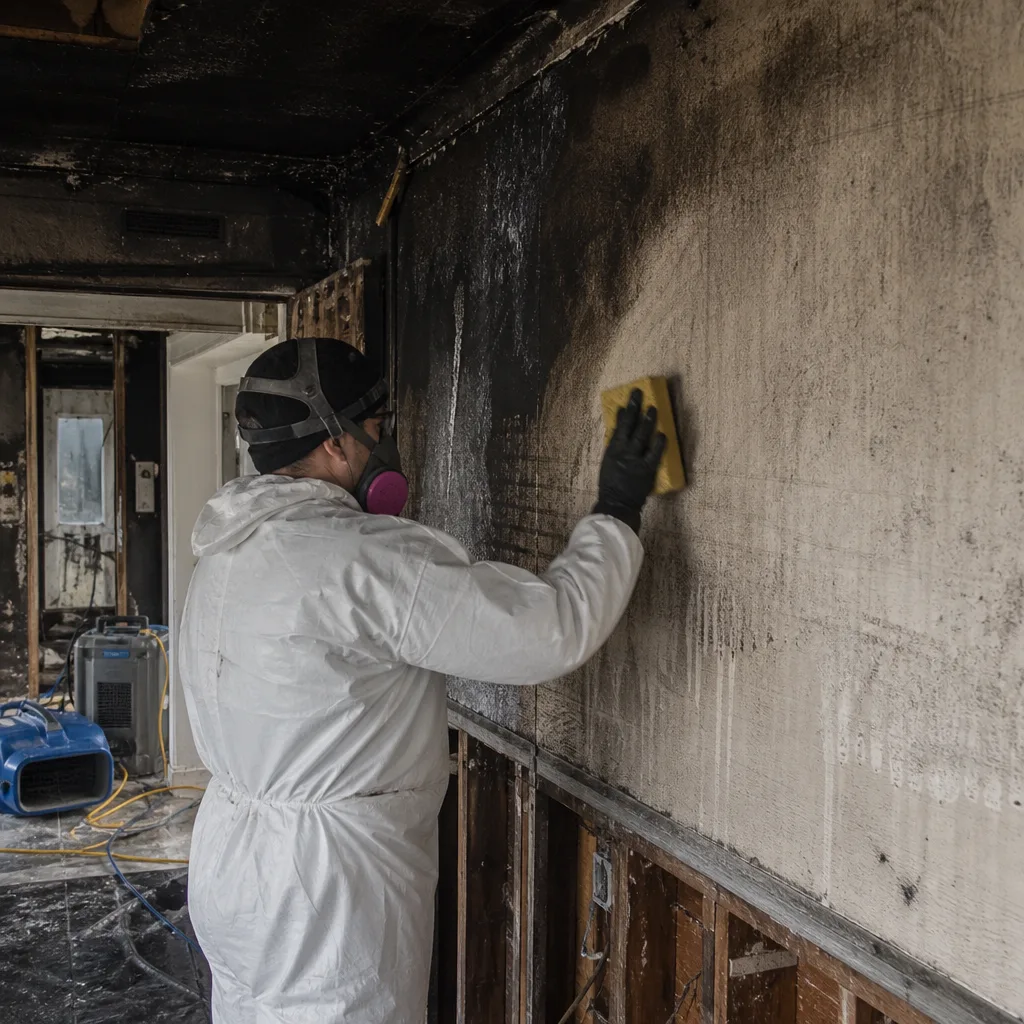
Post-illness cleanup in a Little Italy tenement isn’t just wiping down surfaces. We treat the unit as a contamination zone, using HEPA filtration and antimicrobial application on every high-touch surface, then fogging wall cavities and duct runs to reach what wipes can’t. This matters in buildings where fresh air doesn’t move well through horsehair plaster and sealed old windows.
Commercial-Grade Fogging
Fogging is the only way to reach contamination inside a shared masonry wall cavity without opening the wall. We use XPOWER thermal foggers to create a disinfecting mist that penetrates lath, plaster keys, and joist bays. In a Mulberry Street tenement where a neighboring unit’s loss wicked through the party wall, fogging treats the interstitial space that no wipe or spray can touch.
Odor Neutralization
Old buildings hold onto smells the way new construction doesn’t. Tin ceilings trap odor molecules against the decking above. Horsehair plaster absorbs whatever was in the air for decades. Our odor neutralization sequence pairs HEPA air scrubbing with targeted fogging and, where needed, removal of saturated plaster that’s holding the smell. We don’t mask odors with fragrance; we remove the source.
Our Sanitization Services team handles deep disinfection, virus and bacteria decontamination, air duct sanitization, and post-illness cleanup for single units and whole tenement buildings.
Sanitization Services Costs in Little Italy, NY
Most sanitization jobs in Little Italy run between $350 and $1,200 per affected room or unit, depending on the contamination category and how far it’s traveled. A category 2 grey-water loss in one bathroom typically runs $400-$700 for extraction, drying, and antimicrobial treatment. A category 3 black-water backup from a shared soil stack usually lands between $900 and $2,500 per unit because it means removing lath and plaster, running containment with negative air pressure, and fogging wall cavities. Post-illness virus and bacteria decontamination for a one-bedroom unit generally runs $350-$650. Odor neutralization after a loss averages $300-$550 per room. What moves the price: whether asbestos or lead paint requires abatement before sanitization can start, how many floors the containment has to span, and whether the Feast of San Gennaro blackout affects staging. The free inspection gives you a written scope with firm numbers before you commit, and we bill your carrier directly when the loss is covered. Call (917) 924-4221 and we’ll tell you what it’ll cost, in writing, before work starts.
We Also Serve Cities Near Little Italy
Our crews also handle sanitization work in Fairview, Harrison, East Bronx, and Hunts Point. If your building sits just outside the neighborhood boundaries, we can still reach you quickly with the same certified team and equipment. For a full look at what we do across the area, see Sanitization Services in Little Italy.
Serving Little Italy, NY - Our Local Coverage Area
We’re based in the Little Italy area and know this community well. Use the map below to see our service coverage - if you’re nearby, we can almost certainly help.
Little Italy Sanitization Services Questions, Answered
How do you handle sanitization when a water loss in a Little Italy tenement crosses a shared masonry party wall and affects a neighboring landlord’s unit?
We identify where the water traveled through the party wall using thermal imaging and moisture meters, then set containment on both sides of the wall so airborne contamination can’t spread further. Each landlord’s unit is documented separately with its own photos, moisture readings, and scope of work, and we coordinate directly with each carrier so neither policyholder gets stuck explaining the other side’s damage. Call (917) 924-4221 and we’ll map the loss on day one.
Can you fog for viruses and bacteria in a pre-1920s tenement without disturbing lead paint or asbestos?
Yes. Before any fogging, we check for lead paint and asbestos in the affected areas. If either is present and the surfaces are intact, we use containment and adjust our approach so fogging doesn’t disturb those materials. If the contamination requires opening walls with regulated materials, we bring in the abatement protocol first, then sanitize. Call (917) 924-4221 and we’ll tell you what your building’s materials require.
How do you schedule sanitization work around the Feast of San Gennaro when Mulberry Street is closed to staging?
We build the Feast of San Gennaro closure into our late-summer planning. During those eleven days, we stage drying equipment and debris removal from rear courtyards, side alleys, or offsite, and we schedule containment setup for early morning before the street fills. If you’re facing an emergency during the closure, call (917) 924-4221 and we’ll work the logistics the same day.
What’s the difference between sanitizing a category 2 grey-water loss and a category 3 black-water loss in an old Little Italy building with shared soil stacks?
A category 2 loss is contaminated but not sewage, think washing machine overflow or sink backup. It requires antimicrobial treatment and controlled drying. A category 3 loss carries sewage or other grossly contaminated material, and in an old building that means cast-iron soil stack backups, shared drain line failures, or toilet overflows. Category 3 demands full containment, removal of saturated plaster and lath, disposal under negative air pressure, and aggressive disinfection of exposed framing. We treat every category 3 loss as a serious health risk. Call (917) 924-4221 if you’re unsure what category you’re dealing with.
Do you use air movers and dehumidification differently in a 1880s tenement with horsehair plaster and tin ceilings?
Yes. Horsehair plaster holds moisture longer than drywall, so our drying plans in Little Italy run longer and use more aggressive equipment. Tin ceilings create dead air space above them, so we direct airflow to break that pocket and install dehumidifiers sized to the room’s cubic footage plus the wall cavity. Daily moisture readings tell us when the plaster actually reached the dry standard, not just when the air feels dry. Call (917) 924-4221 and we’ll explain what your specific unit needs.
How fast can a crew actually get to a Little Italy address?
We commit to 45 minutes for addresses in Little Italy. Crews are staged locally and know the Mulberry, Mott, Elizabeth, and Grand Street corridors without relying on GPS. If you’re calling after a sewage backup or a flood that’s been sitting overnight, call (917) 924-4221 now, and a certified crew will be rolling before you hang up.
Will insurance cover sanitization in a pre-war building with asbestos or lead paint?
Most homeowner and landlord policies cover sanitization work when the cause is sudden and accidental, like a burst pipe or sewage backup. If asbestos or lead abatement is required before sanitization can proceed, that portion may fall under a separate coverage or require a supplemental claim. We provide the documentation and photos your adjuster needs to make that call, and we handle the direct coordination. Call (917) 924-4221 and we’ll help you understand your policy’s position.
What should I do in the first 30 minutes after a sewage backup or water loss?
Call (917) 924-4221 first. Then shut off the water supply if you can reach it safely, and keep people and pets away from the affected area. Don’t run fans from the hardware store, don’t attempt to remove contaminated materials yourself, and don’t wait to see if it dries on its own, especially in an old tenement where moisture hides in wall cavities. The sooner containment starts, the less demolition and cost you’re looking at.
Written by Curt Bowman, Owner at Floodline Restoration Co. of Manhattan, serving Little Italy.
Why Little Italy Chooses Floodline Restoration Co. of Manhattan
We set the standard for sanitization services in Little Italy.
Documented for Your Claim
Every job is photographed before, during and after, with moisture logs where they apply. We hand the full file to your adjuster and bill your insurance directly - you are never the one relaying it.
Licensed & Insured
Fully certified technicians who meet all local and state licensing requirements.
Upfront Pricing
No hidden fees, no surprises. You approve the price before any work begins.
Guaranteed Work
Every repair and installation is backed by our workmanship warranty and satisfaction guarantee.
How It Works in Little Italy
Getting your sanitization services handled is simple and fast.
Call or Request a Free Estimate
Tell us about your sanitization services needs and we provide an upfront, transparent quote - no obligation, no hidden fees.
Licensed Technician Dispatched
A background-checked, certified technician arrives in Little Italy - typically within 30-60 minutes, with parts stocked on the truck.
Problem Solved, Guaranteed
We complete the job to your full satisfaction, backed by our warranty and 100% satisfaction guarantee.
What happens when you call
- 1A real person answersNo phone trees - talk to a local sanitization services pro.
- 2You get an upfront price rangeHonest numbers before anyone is dispatched. No surprises.
- 3We come out and measureLicensed & insured, at a time that suits you - the visit and the quote are both free.
- 4You get the price in writingLine-itemed, yours to keep, and nothing starts until you say go.
What Little Italy Customers Say
Trusted by homeowners across Little Italy and surrounding areas.
"We had a musty smell in the hall closet for months. He tested first, found the leak inside the wall, sealed the area off with plastic before opening anything, and put the whole scope in writing before asking for a signature."
"Another company told me the whole attic needed mold remediation at a terrifying price. These guys tested, showed me it was surface growth on one sheet of plywood, and charged me for a cleaning instead. That kind of honesty buys a customer for life."
"Second property they have dried out for us. Same process both times, meter readings logged on every visit and the log handed over at the end. Our adjuster said it was the cleanest file he had seen all year."
Our Work in Little Italy
A look at recent damage restoration projects across Little Italy and surrounding areas.
Ready for Sanitization Services in Little Italy?
Call now for a free estimate - or request one below. Licensed, insured, and here with fast after-hours help in Little Italy.
(917) 924-4221Request a Free Estimate in Little Italy
Tell us about your sanitization services needs - we'll respond within the hour.