
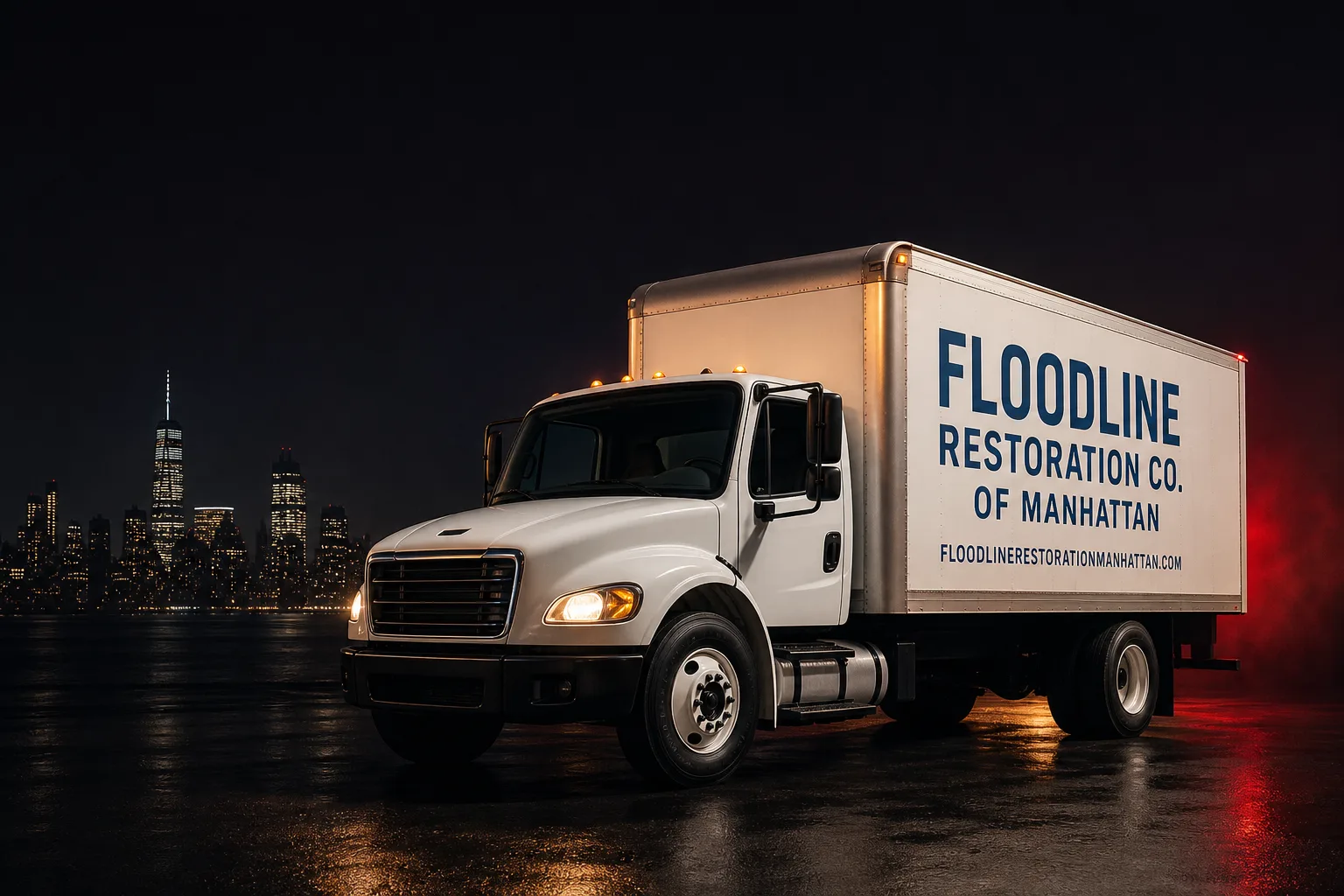
Free visual inspection and a written scope of work before any mitigation begins - photos, moisture readings, and drying logs go in your claim file
The scope we write is the scope we bill. Anything new gets shown to you, in writing, before we touch it.






 Before
 After
After Before
 After
After Before
 After
After24/7 Emergency Sewage Cleanup in Bushwick
Sewage backup in Bushwick needs immediate attention, not a waiting game. Our crews reach Bushwick blocks like those around Myrtle Avenue, Stanhope Street, and the Jefferson Street stop within roughly 45 minutes of your call, day or night. Reach a live dispatcher at (917) 924-4221 any hour, and we’ll have a certified team at your door. The first hour matters because Category 3 water, the trade term for sewage, moves through old masonry walls and under slab floors faster than most homeowners realize. By the time you smell it, contamination has usually traveled well beyond the visible stain.
Every inspection starts free. We walk the property, trace moisture with thermal imaging, and give you a plainspoken scope before any work begins. No pressure, no overselling. Just a square deal and a written plan.
Understanding Sewage Cleanup Severity in Bushwick Properties
Sewage cleanup is not a mop-and-bleach job. Category 3 water carries bacteria, viruses, and parasites that require full extraction, containment, and structural drying under IICRC standards. In Bushwick, the severity splits three ways depending on what your building is made of. A pre-war brick tenement on Wilson Avenue with original lath-and-plaster walls absorbs black water into porous plaster and lathe channels, often contaminating wall cavities far beyond the visible stain. A 1980s HUD-era replacement building on a concrete slab lets sewage wick under walls through unsealed pipe penetrations, spreading into adjacent units before anyone realizes. A converted factory loft around Flushing Avenue with an open concrete floor can channel contaminated water along industrial-era drain lines that were never properly capped.
Moisture mapping is the only way to know where contamination actually stopped. We use thermal imaging, hygrometers, and moisture probes to establish the full boundary of the affected area, then set up HEPA-filtered containment so airborne pathogens stay put. The goal is not just drying the surface. It’s restoring the building to a pre-loss moisture condition and documenting that with readings your insurer can verify.
Why Bushwick Property Owners Choose Floodline Restoration Co. of Manhattan
- A real person answers, 24/7. Live dispatch, not a recording, not an answering service. At 2 a.m. you reach a person who can send a crew to Bushwick immediately.
- Roughly 45-minute response commitment. Crews are staged for Brooklyn dispatch and know the fastest routes from the Manhattan office to Bushwick, avoiding chronic bottlenecks on Myrtle and Broadway during morning and evening build-up.
- IICRC-certified technicians. Our crews hold WRT, FSRT, and AMRT certifications through the IICRC and RIA, and trained to IFA standards. The certs matter when Category 3 water is on site.
- Free visual inspection and written scope. Before any work starts, you get a line-item plan. You approve it, we execute it.
- Direct insurance billing. We bill your carrier directly and coordinate with your adjuster from the first evidence photos to the final drying log. You never play messenger.
- One crew, start to finish. Extraction, drying, sanitization, and rebuild are handled by the same Floodline team. No mid-job handoff, no inherited subcontractors.
Our Sewage Cleanup Process
Inspection & Assessment
We arrive on site, identify the source of the backup, and map the contamination using thermal imaging and moisture probes. On Bushwick tenement blocks, this includes checking adjacent units because shared stacks and party walls let sewage travel sideways fast.
Extraction & Stabilization
Black water is extracted using truck-mounted and portable extraction units. We stop active water movement first, because every hour of continued seepage expands the contaminated area and the cost.
Containment & Source Control
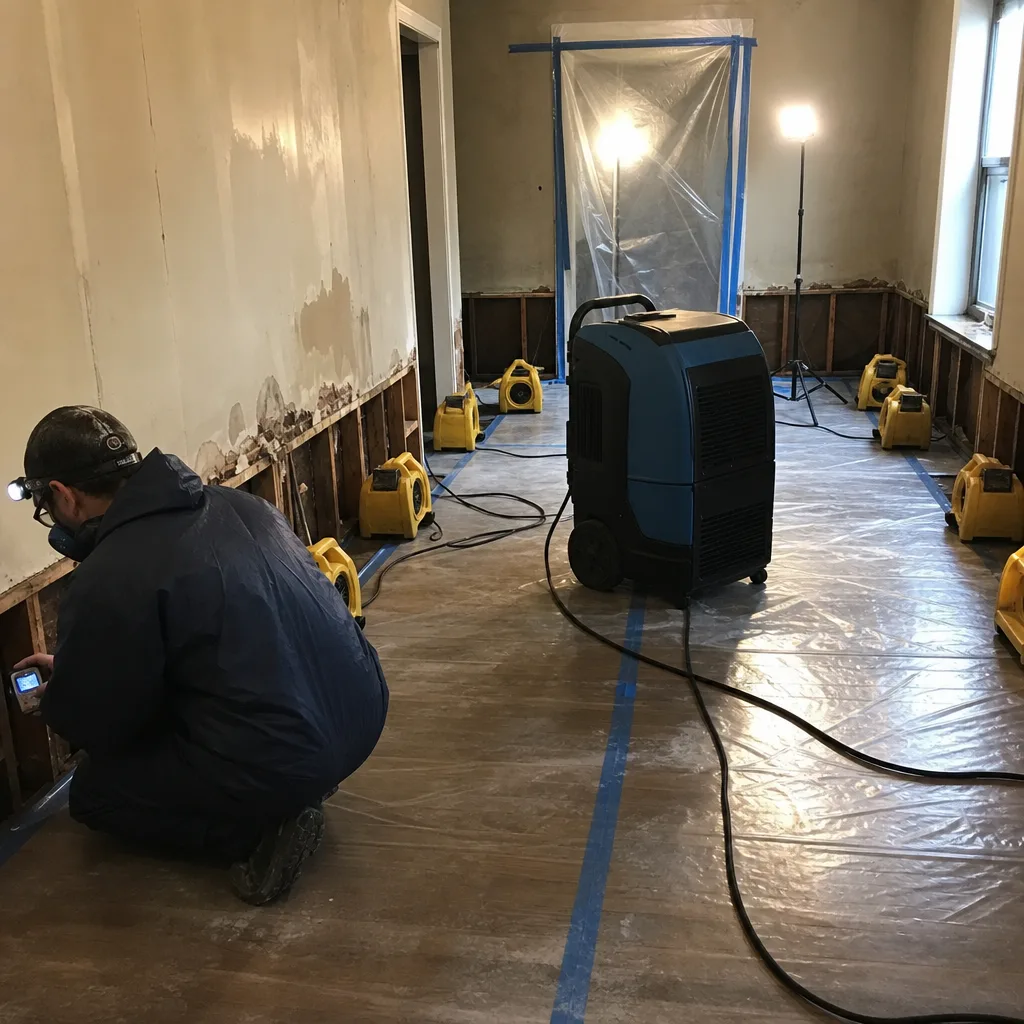
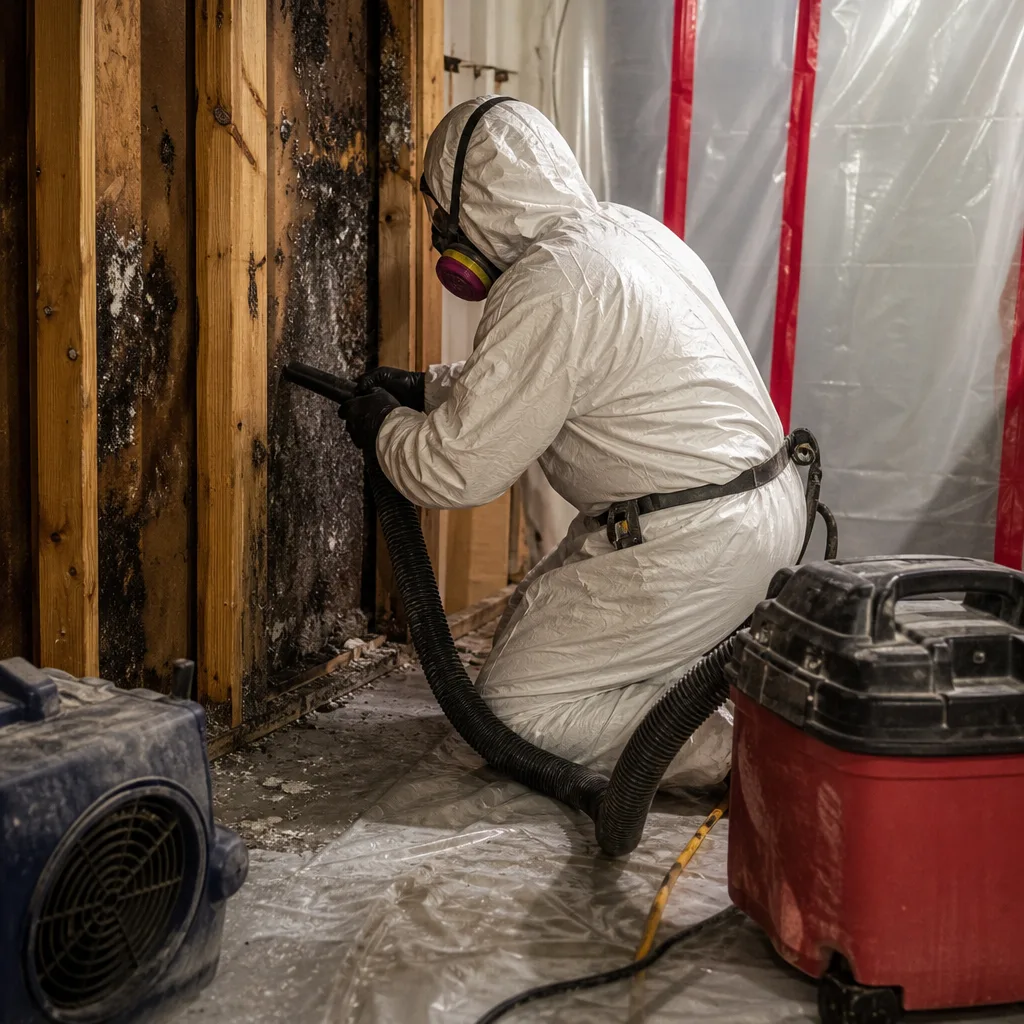
We set up HEPA-filtered containment barriers and negative air pressure to keep airborne contaminants from spreading into clean rooms. Then we install air movers and dehumidifiers, selecting equipment based on the construction type, including Dri-Eaz dehumidifiers and XPOWER air movers for tight pre-war rooms.
Removal of Contaminated Materials
Saturated drywall, fiberglass insulation, and carpet are cut out and bagged for disposal. In Bushwick pre-war buildings, this often means removing lath-and-plaster sections that have wicked contaminated water well above the visible line.
Sanitization & Disinfection
All affected structural surfaces are cleaned with hospital-grade antimicrobial treatment. We treat inside wall cavities, subfloor voids, and crawl spaces, not just the surfaces you can see.
Drying, Verification & Rebuild
Daily moisture readings are logged until the structure hits the dry standard. Then we handle repairs, from drywall and flooring to baseboards and paint. One team, one standard, and the 90-Day Done Right Promise in writing.
Need Emergency Sewage Cleanup in Bushwick Now?
Crews minutes away, answering live 24 hours a day. The sooner we start, the less it costs.
Working With Your Insurance Company
Sewage backup claims get denied or underpaid when the documentation is thin. That’s not how we work. From the first hour on site, we photograph every affected room, log moisture readings, and build a line-item scope that follows the same format insurers expect. When you call Floodline, we send everything directly to your adjuster. You do not need to translate anything. We handle the back-and-forth, and we bill the carrier directly so you aren’t floating a five-figure cleanup on a credit card.
The best thing you can do before we arrive is take a few wide shots of the visible damage on your phone. Then step back and let us build the case.
What We Provide Your Insurer
- Thorough documentation of the loss
- Photos of all damage, room by room
- Moisture readings and drying logs
- A detailed, line-item scope of work
- Direct coordination with your carrier
Built for Bushwick’s Loss Calendar
Bushwick’s sewage problems do not spread themselves evenly across the year. January deep freezes are rough on the neighborhood’s oldest cast-iron and galvanized waste lines. When a century-old stack contracts in single-digit temperatures and a joint lets go, the result is raw sewage behind walls on multiple floors. February brings the same freeze-thaw cycle that hammers the brick and mortar on the pre-war tenements, compounding the issue. Spring thaw saturates the ground, which raises the water table around shallow foundations and puts pressure on old basement drains and cracked sewer laterals from under the slab.
Summer thunderstorms dump enough water in an hour to overwhelm Bushwick’s combined storm and sanitary sewers along major corridors like Broadway and Knickerbocker Avenue. When the municipal system backs up, the lowest fixture in your building becomes the relief point. A basement toilet or floor drain is the usual spot. Fall nor’easters add wind-driven rain that finds every loose mortar joint and cracked parapet, and the resulting interior water damage often compounds an existing slow sewage seep. Knowing the season tells us what to expect before we open a wall.
Sewage Cleanup Across Bushwick’s Neighborhoods
Bushwick is not one building type, and it is not one sewage problem. Around the Jefferson Street stop and the blocks near Maria Hernandez Park, you’re mostly dealing with 1880s-to-1920s brick tenements with original cast-iron stacks and shared waste lines. A backup in one apartment on the second floor regularly shows up in the apartment below it, because the chase walls are continuous and the plaster wicks. Crews know to inspect two floors up and two floors down from the visible stain on these blocks.
Over near Irving Square Park and along Halsey Street, many of the original buildings burned in the 1977 fires and were replaced with HUD-era buildings on concrete slabs. Sewage backs up into these buildings through floor drains that share lines with neighboring properties. The slab keeps water from draining down, so it spreads horizontally under partition walls. You often see contamination in a hallway or bedroom with no visible pipe anywhere near it.
The converted factories and warehouses along Flushing Avenue and near the Morgan Avenue stop create their own set of problems. These buildings were never framed out for residential plumbing. Waste lines run through open concrete floors with penetrations that were cut decades ago and never sealed. When a shared ejector pump fails, black water follows those old cuts into crawl spaces and under stairways, exactly like the Flushing Avenue loft job described above. It requires aggressive extraction, containment, and drying because the concrete holds moisture a long time. Call (917) 924-4221 if you’ve got a backup in any of these blocks.
Specialized Sewage Cleanup Services We Offer in Bushwick
Sewage Backup Cleanup
When a blocked waste line forces sewage back through a floor drain, toilet, or tub in Bushwick, we respond with extraction, containment, and drying in one visit. We inspect the full path of contamination, not just the source. In tenements on blocks like Eldert Street or Grove Street, that means checking the unit below and the chase wall behind the bathroom.
Toilet Overflow Cleanup
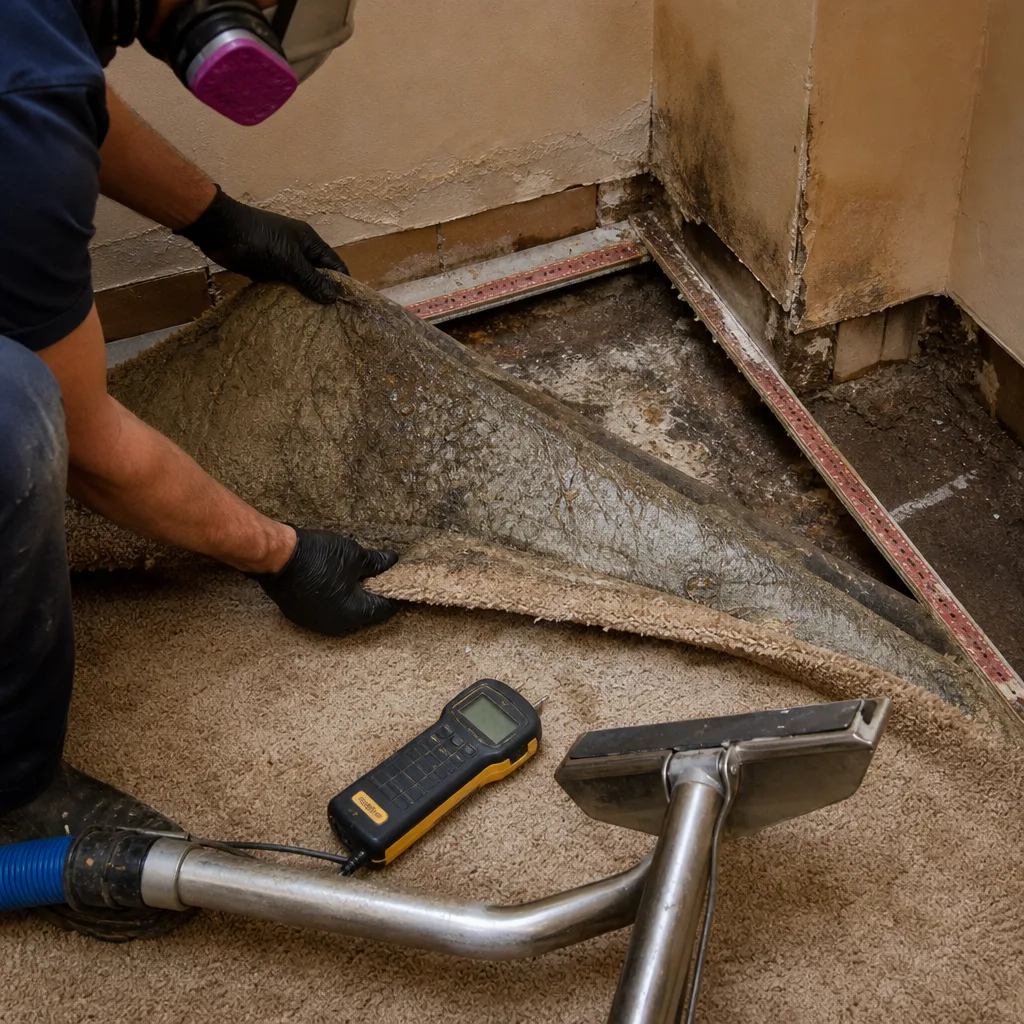
A clogged toilet in a Bushwick pre-war apartment can overflow fast and wick into the lath-and-plaster walls before the tenant sees it. We extract the standing water, remove saturated wall material, and sanitize the full affected cavity. In HUD-era buildings, we check the slab penetrations under the toilet flange, which is a common cross-unit pathway.
Septic Failure Cleanup
Most of Bushwick is on municipal sewer, but a few older properties and some former industrial sites still have private septic or holding systems. When they fail, raw sewage surfaces in basements or yards. We handle extraction and decontamination, then coordinate with your plumber on the system repair. If you need a plumber recommendation, we can point you to someone local.
Black Water Extraction
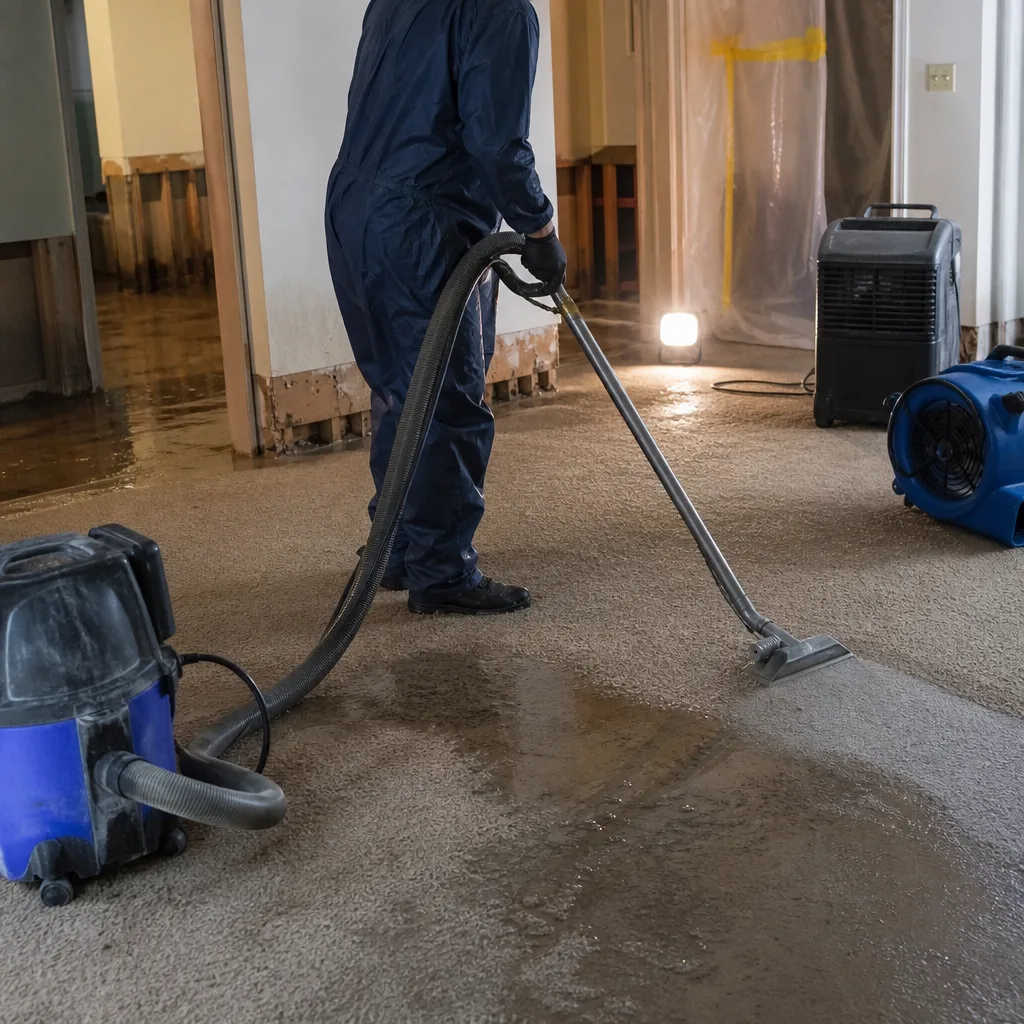
Black water is the most contaminated category of water, and it is what we handle most on sewage calls. We use truck-mounted extraction for large volumes and portable units for tight spaces like Bushwick basement stairwells. All extracted water is disposed of per DEP requirements, and all affected surfaces are treated with antimicrobials before drying starts.
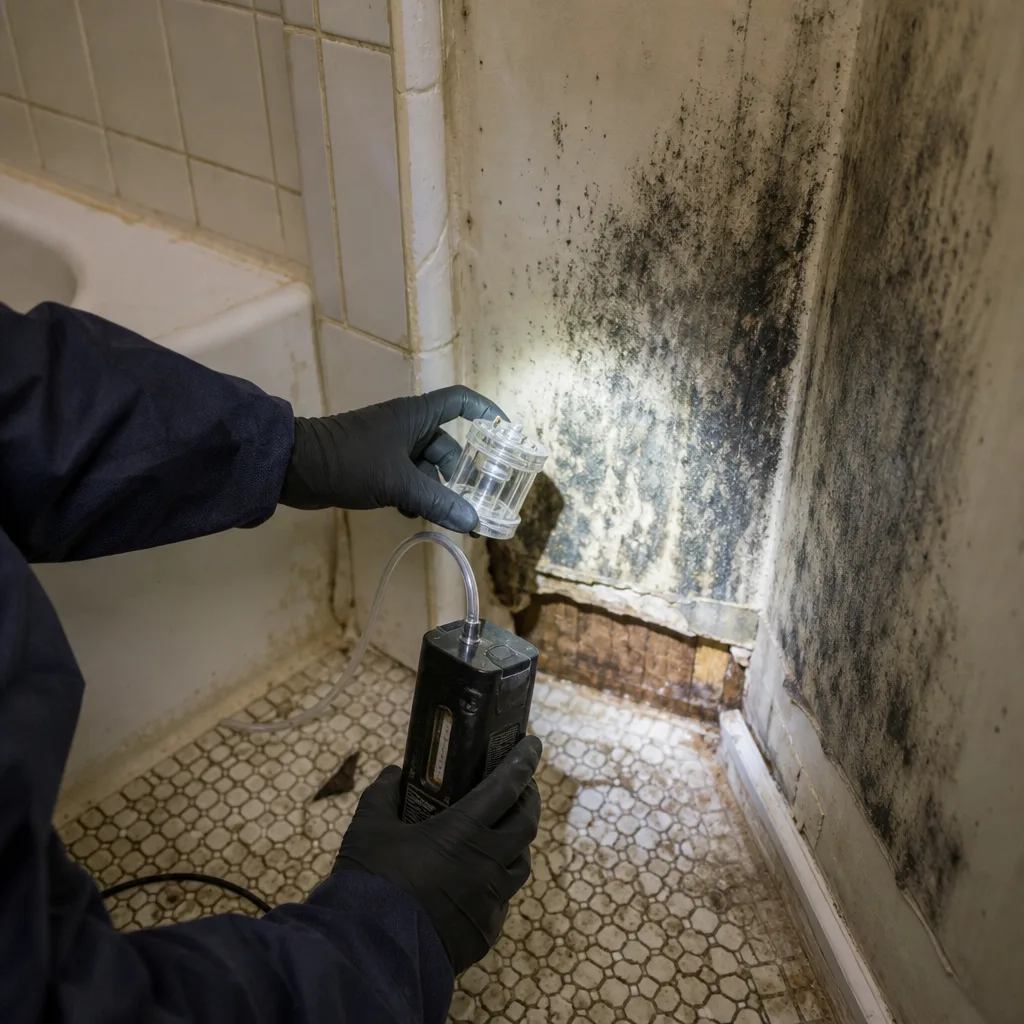
Sanitization & Disinfection
After extraction and removal, we apply hospital-grade disinfectant to every structural surface that was exposed. In Bushwick, that frequently includes structural framing inside lath-and-plaster walls, subfloor joists under a rotted bathroom floor, and concrete slabs in converted lofts. We treat the concealed spaces because that is where pathogens linger.
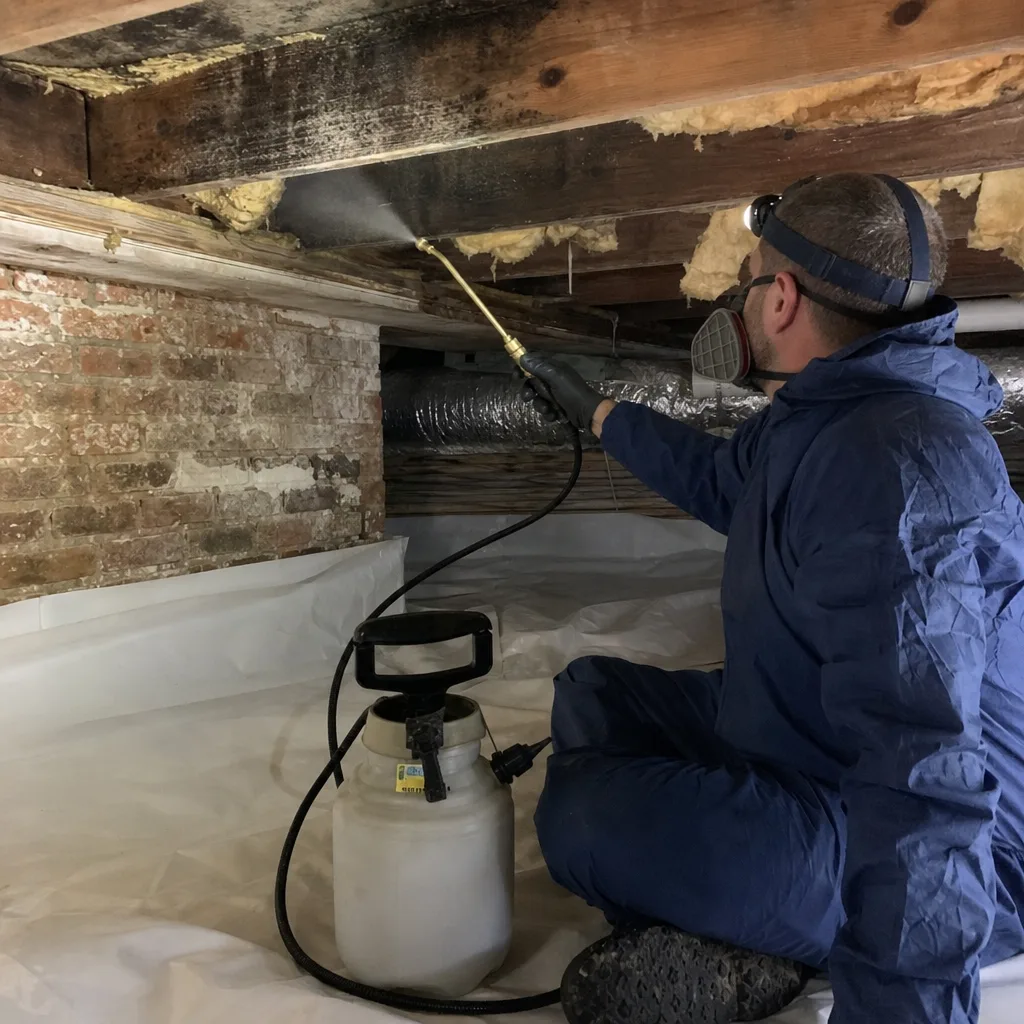
Crawl Space Sewage Removal
Crawl spaces under Bushwick’s older buildings are rarely easy to access, but sewage finds them. Our crew removes contaminated standing water, cuts out saturated insulation, treats the soil and framing, and dries the space with dehumidifiers and air movers. We document the whole process for your insurer, including photos of every corner we reached.
What happens when you call
- 1
A real person answersNo phone trees - you reach a local pro.
- 2
You get an upfront price rangeHonest numbers before anyone is dispatched.
- 3
A background-checked tech heads outLicensed & insured, dispatched right away.
- 4
You approve before work beginsNothing starts until you say go.
Sewage Cleanup Costs in Bushwick, NY
A straightforward toilet overflow cleanup in Bushwick, caught quickly and confined to a bathroom, typically runs $800 to $1,600. A moderate sewage backup affecting one room with wall and flooring removal lands around $1,800 to $3,500. A full black water extraction in a converted loft or pre-war tenement, with multiple rooms, containment, and structural drying, commonly falls between $5,000 and $11,000, and crawl space work on top can add $1,500 to $4,000 depending on access and contamination depth.
What moves the price is the building type. Pre-war lath-and-plaster removal costs more than drywall because the material is heavier, the labor is slower, and asbestos testing often comes into play. Slab-on-grade buildings in Bushwick’s 1980s stock can cost less to open up but more to dry because concrete holds moisture. Insurance covers most sewage backup events when the cause is sudden and accidental, and we bill the carrier directly. If you’re facing a backup now, the fastest way to a firm number is a free inspection. Call (917) 924-4221 and we’ll get you a written scope today.
We Also Serve Cities Near Bushwick
Our crews cover Bushwick and the surrounding blocks regularly. We also provide Sewage Cleanup in Fairview, Harrison, East Bronx, and Hunts Point, with the same 24/7 live dispatch and the same one-team-from-start-to-finish standard. If you’re on the Bushwick border and not sure whether we cover your block, call us.
Serving Bushwick, NY - Our Local Coverage Area
We’re based in the Bushwick area and know this community well. Use the map below to see our service coverage - if you’re nearby, we can almost certainly help.
Bushwick Sewage Cleanup Questions, Answered
Why does sewage backup spread faster through Bushwick tenement walls than through newer construction?
Bushwick’s pre-war tenements were built with continuous lath-and-plaster wall cavities and no moisture barriers, so Category 3 water travels through the wall chase vertically and horizontally. The plaster acts like a wick, pulling contaminated water upward and sideways, and the shared waste stacks create open channels between units. Newer construction has drywall, vapor barriers, and isolated plumbing chases that slow the spread.
What are the asbestos and lead paint risks during sewage cleanup in Bushwick’s pre-war buildings?
Original plaster in Bushwick’s pre-war buildings commonly contains asbestos, and layers of old paint contain lead. When sewage saturates that plaster and we have to cut it out, NYC DEP abatement rules can be triggered. We test before removal, and if hazardous materials are present, we coordinate the required abatement work within the same project, so you don’t have to hire a second contractor.
Do converted Bushwick factory lofts need a different sewage cleanup approach than tenements?
Yes. Factory conversions have concrete slabs, unsealed pipe penetrations, and industrial floor drains that were never capped. Sewage runs along the concrete and under partition walls, not down through them. Extraction and drying require more aggressive dehumidification and often crawl space access under raised floors. Tenements, by contrast, need wall cavity work and shared-stack inspection.
How quickly can mold start in a Bushwick tenement after a sewage backup?
In the humid summer months, mold can begin colonizing inside a warm, wet wall cavity within 24 to 48 hours. Pre-war tenement interiors are exactly the kind of warm, still, moist environment mold needs. We set up drying equipment on the first visit to get ahead of that clock, because once mold is established, the scope and the cost both grow. Call (917) 924-4221 and we’ll get air movers running the same day.
Should a 1980s Bushwick building with frequent sewage backups repair the old cast-iron line or replace it?
If the building backs up more than once a year, patching the line is usually throwing money at a symptom. Old cast-iron waste lines scale, crack, and sag over time. We can camera the line during or after cleanup to show you the actual condition, then give you an honest recommendation. Some HUD-era Bushwick buildings need full replacement, often with trenchless options that avoid tearing up the slab.
How fast can a crew actually reach my Bushwick address?
In normal conditions, roughly 45 minutes from dispatch. Our Manhattan office coordinates crews across the Williamsburg Bridge and up through Bushwick via Flushing Avenue or Myrtle Avenue, depending on traffic. We keep a live dispatch board, not a call center, so the person on the phone knows exactly where the nearest crew is.
Will my insurance cover sewage backup cleanup in Bushwick?
Most homeowners policies cover sudden and accidental sewage backup, but only if you report it promptly and document the loss. We start documentation on the first visit, bill your carrier directly, and coordinate with your adjuster. If your policy has a back-up endorsement limit, we’ll tell you early so there are no surprises on the back end.
What should I do in the first 30 minutes while I wait for your crew?
Shut off the water to the affected fixture if you can do so safely, keep people and pets out of the affected area, and take photos with your phone. Do not flush toilets or run water in sinks. Do not attempt to clean standing sewage yourself. The contamination risk is real, and the insurance documentation is cleaner if the full area is left intact for our inspection.
Written by Curt Bowman, Owner at Floodline Restoration Co. of Manhattan, serving Bushwick and the surrounding Brooklyn blocks.