
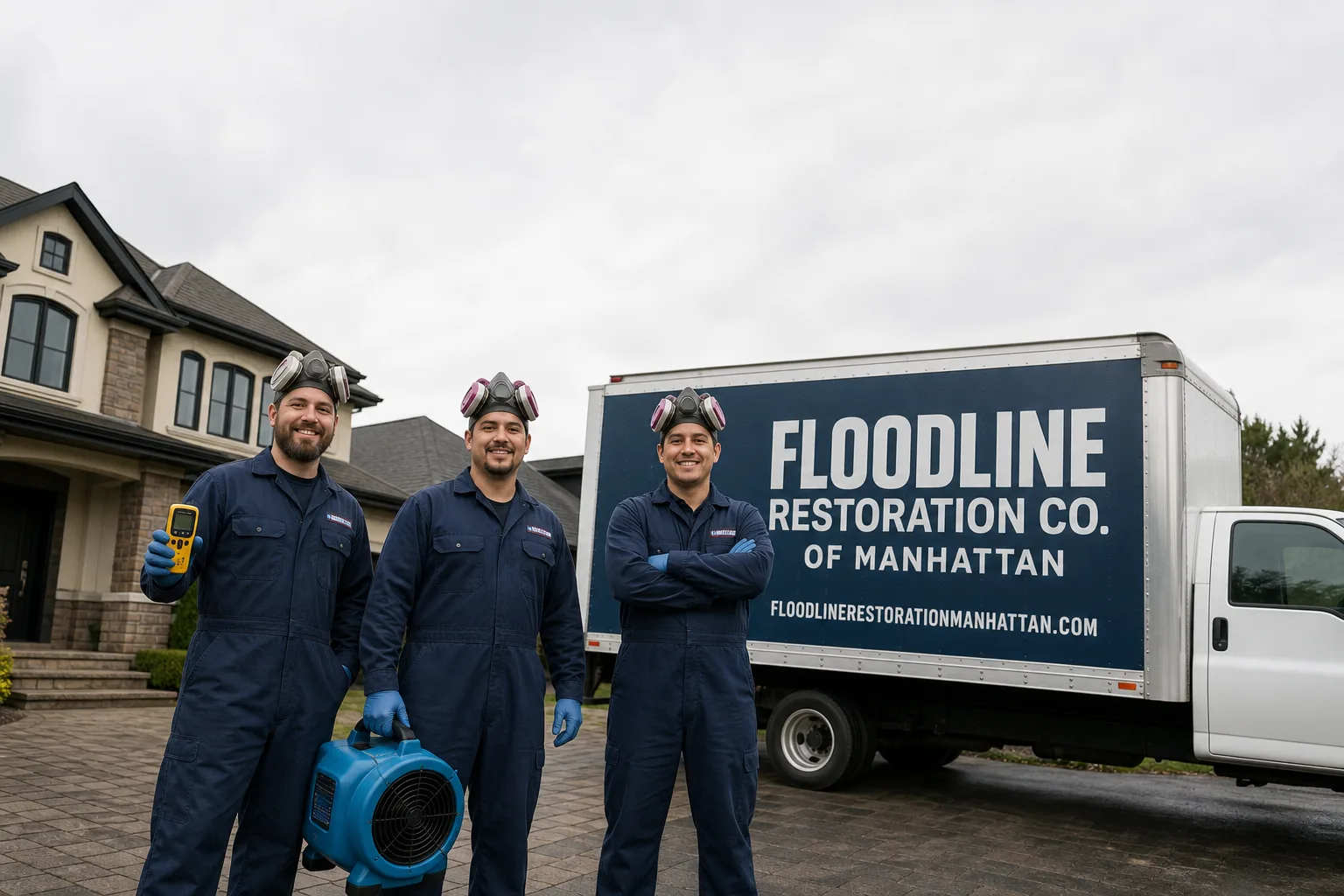
Free visual inspection and a written scope of work before any mitigation begins - photos, moisture readings, and drying logs go in your claim file
The scope we write is the scope we bill. Anything new gets shown to you, in writing, before we touch it.
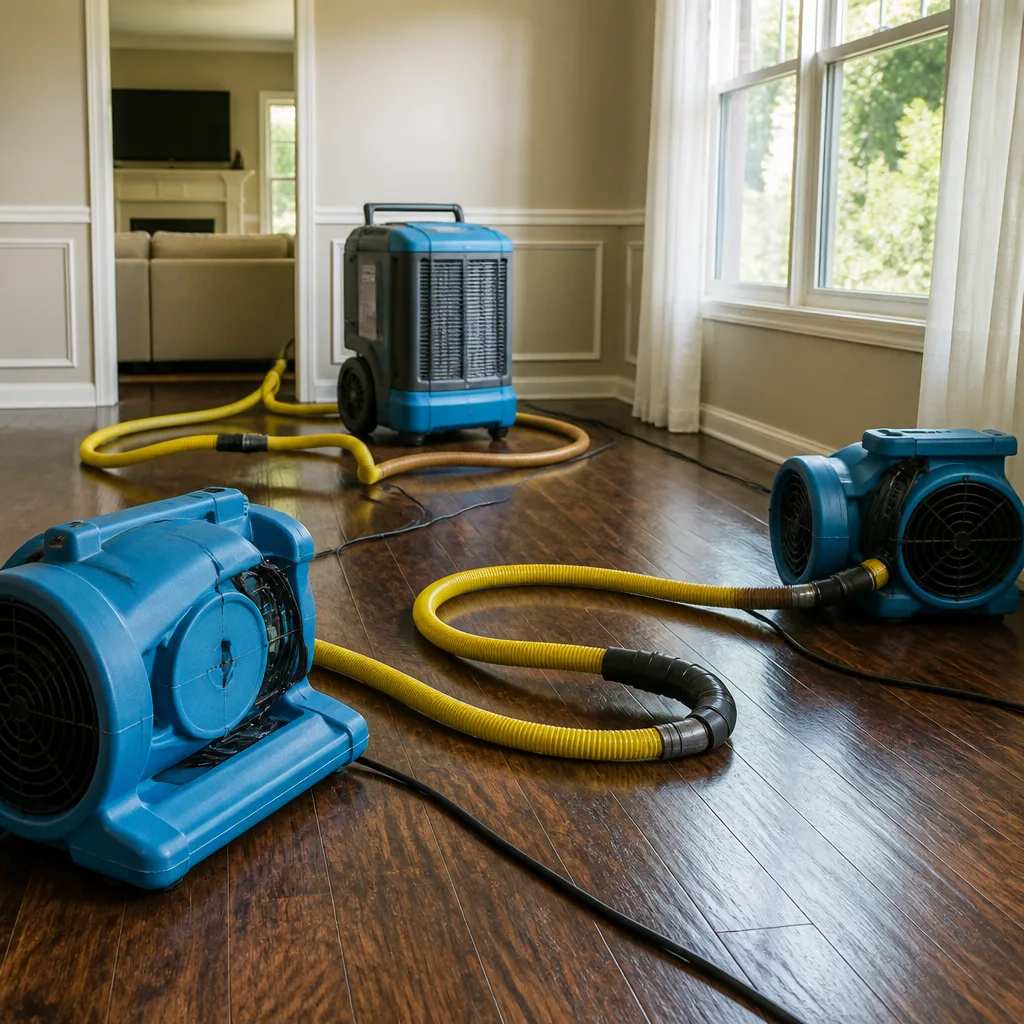
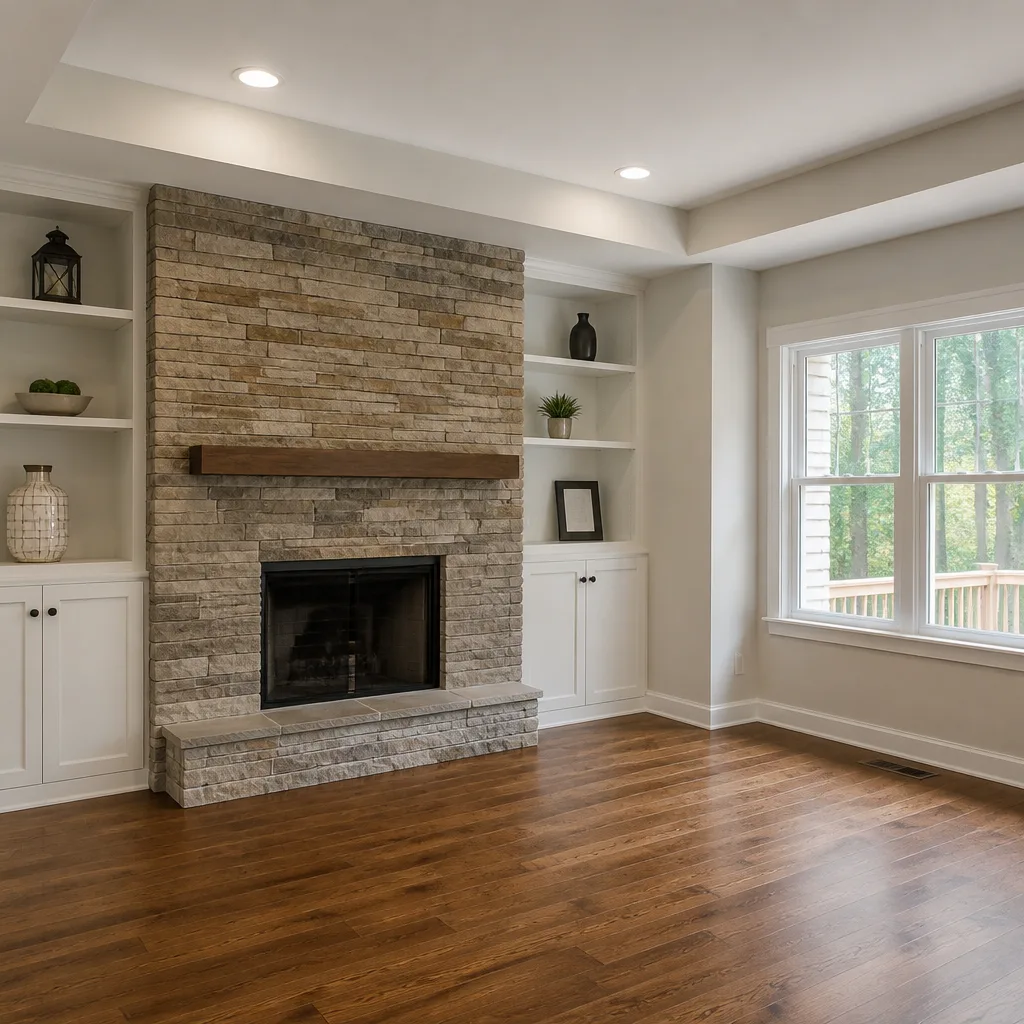
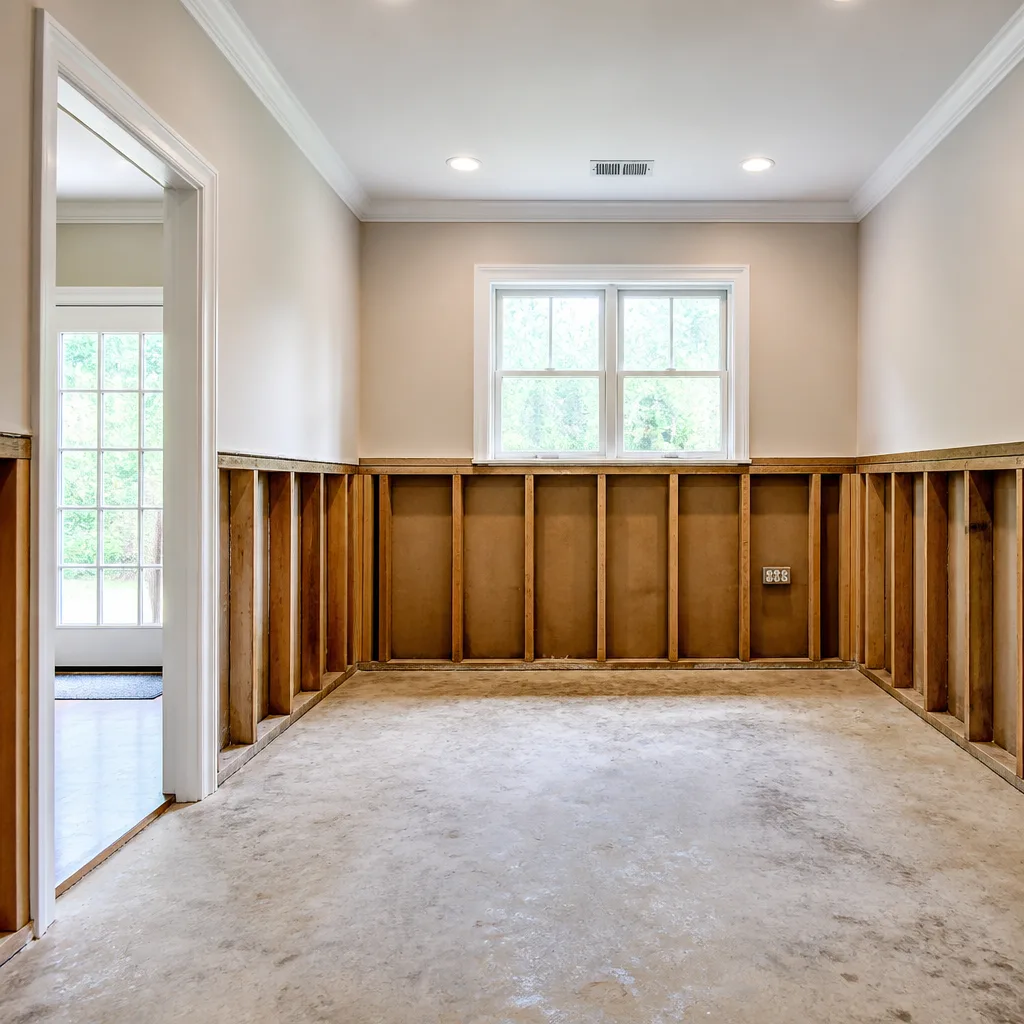

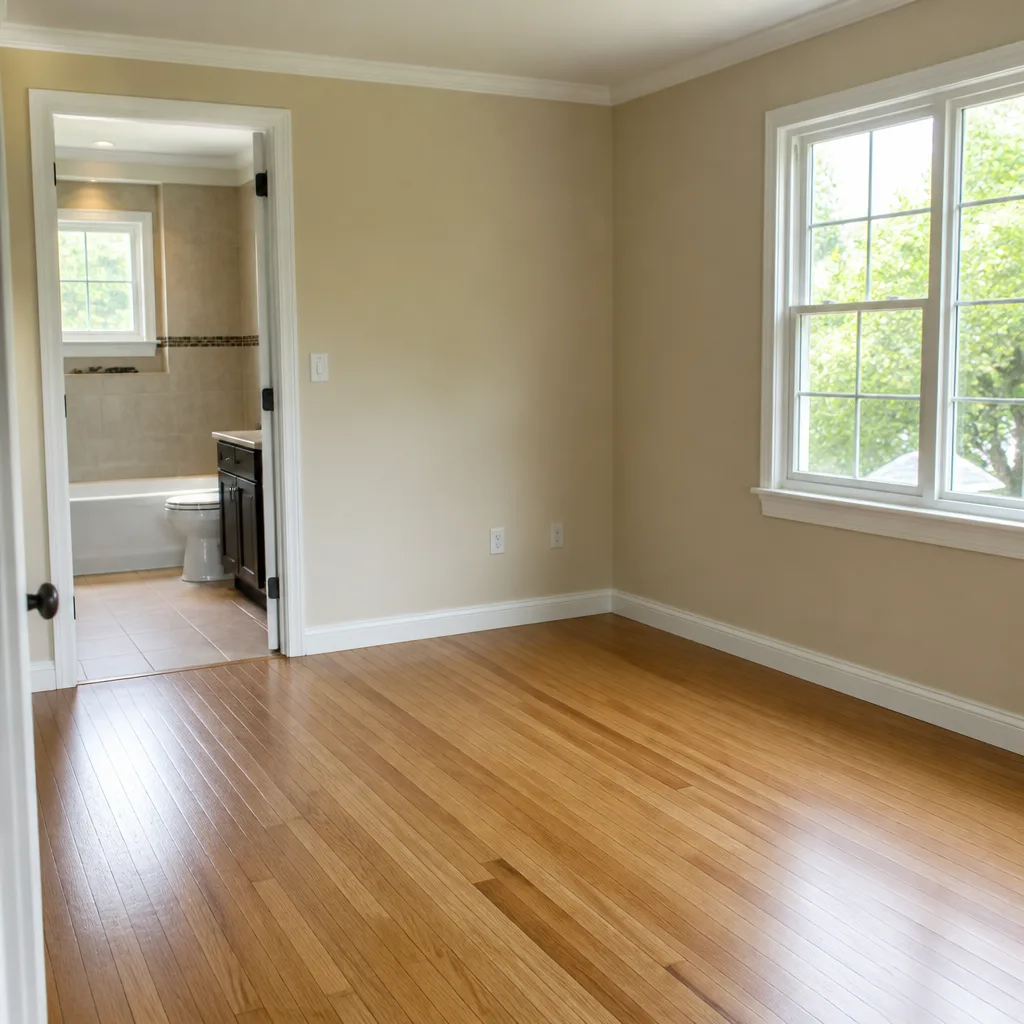
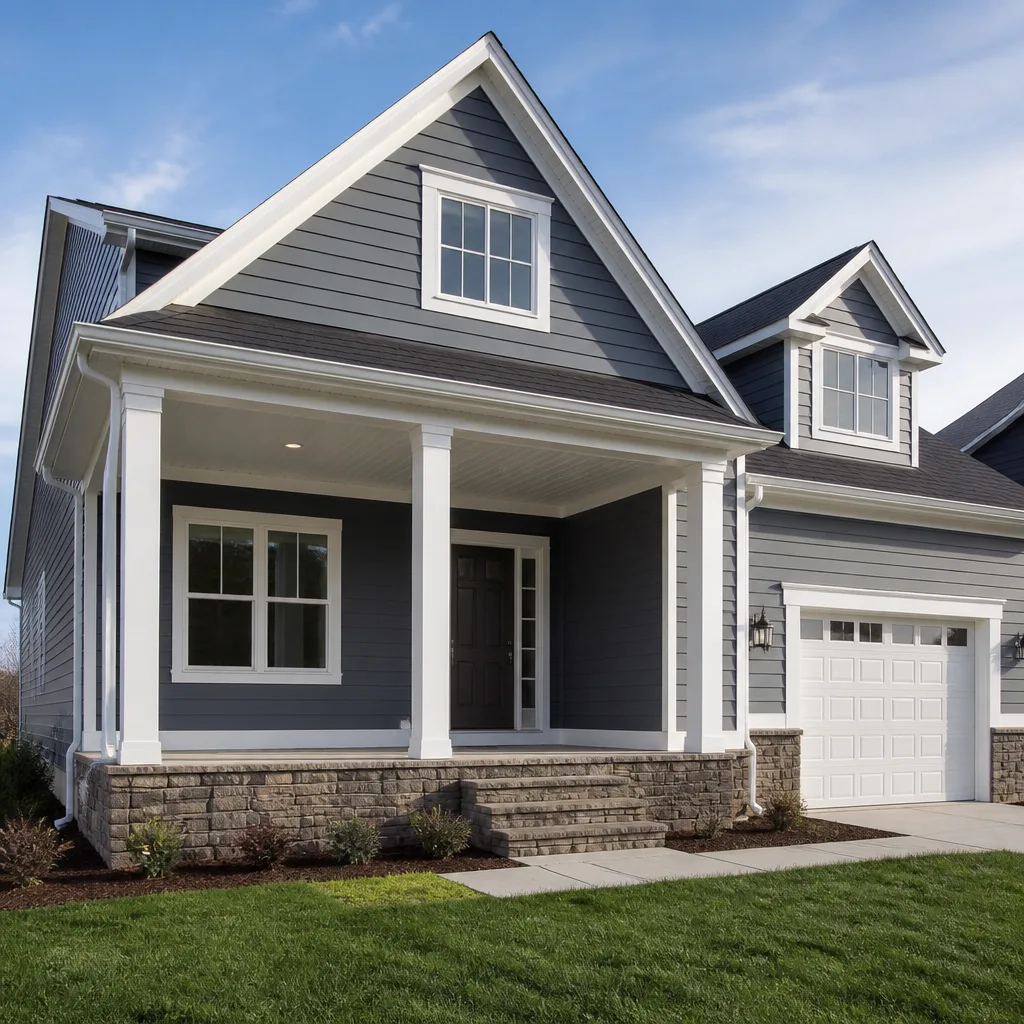
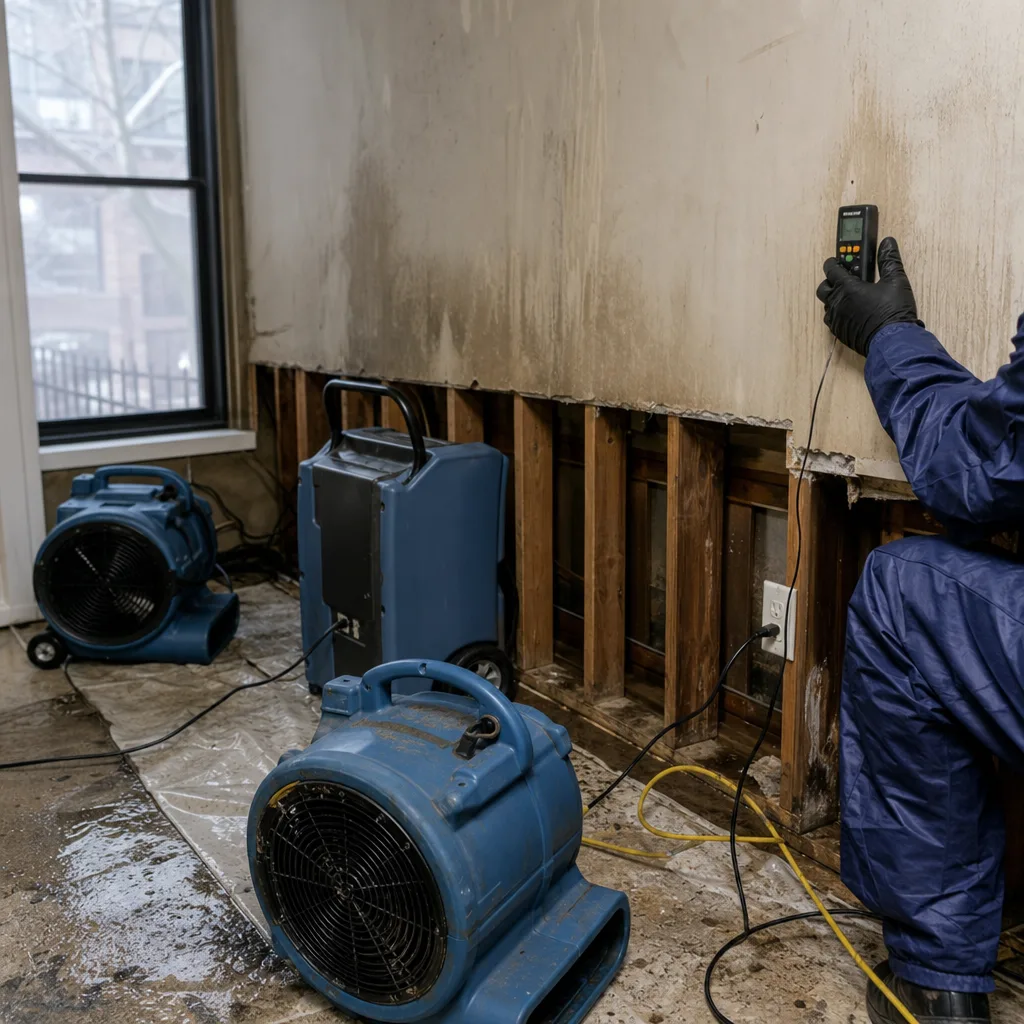 Before
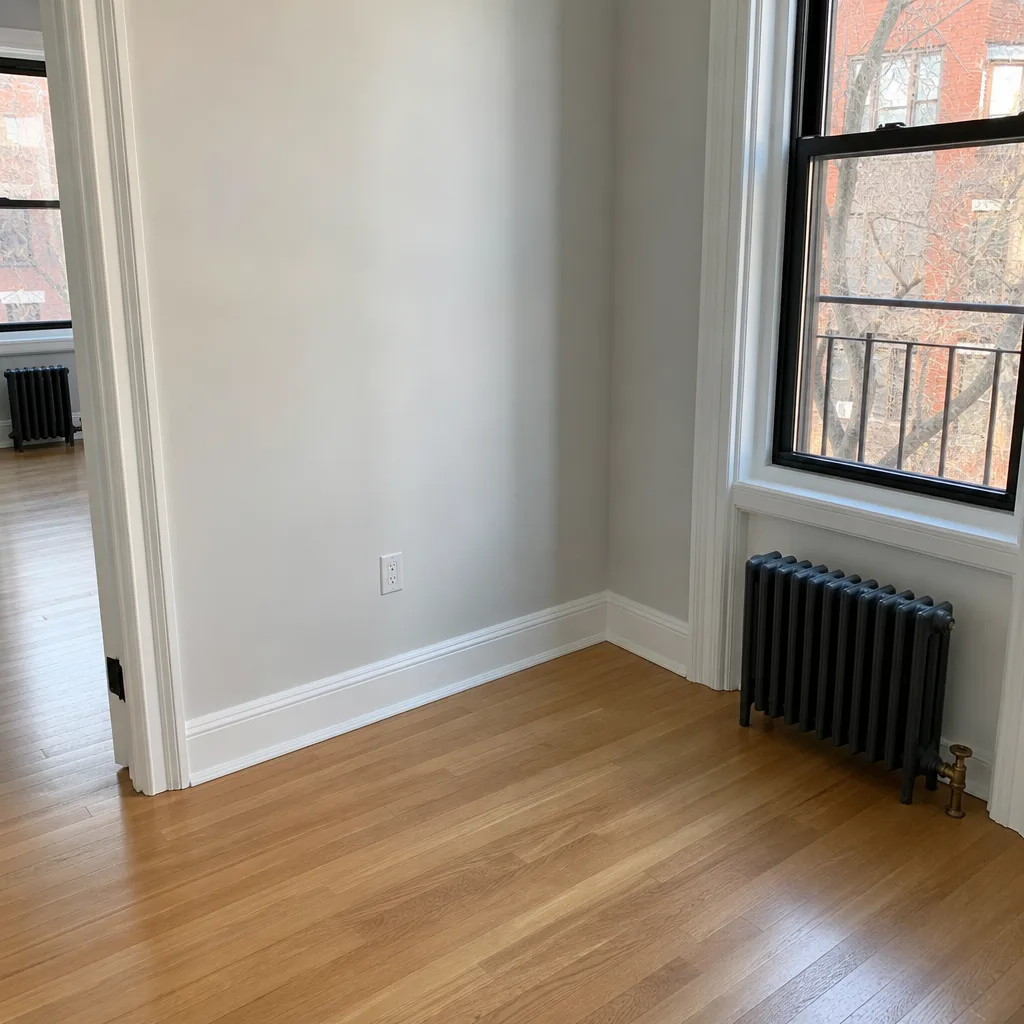 After
After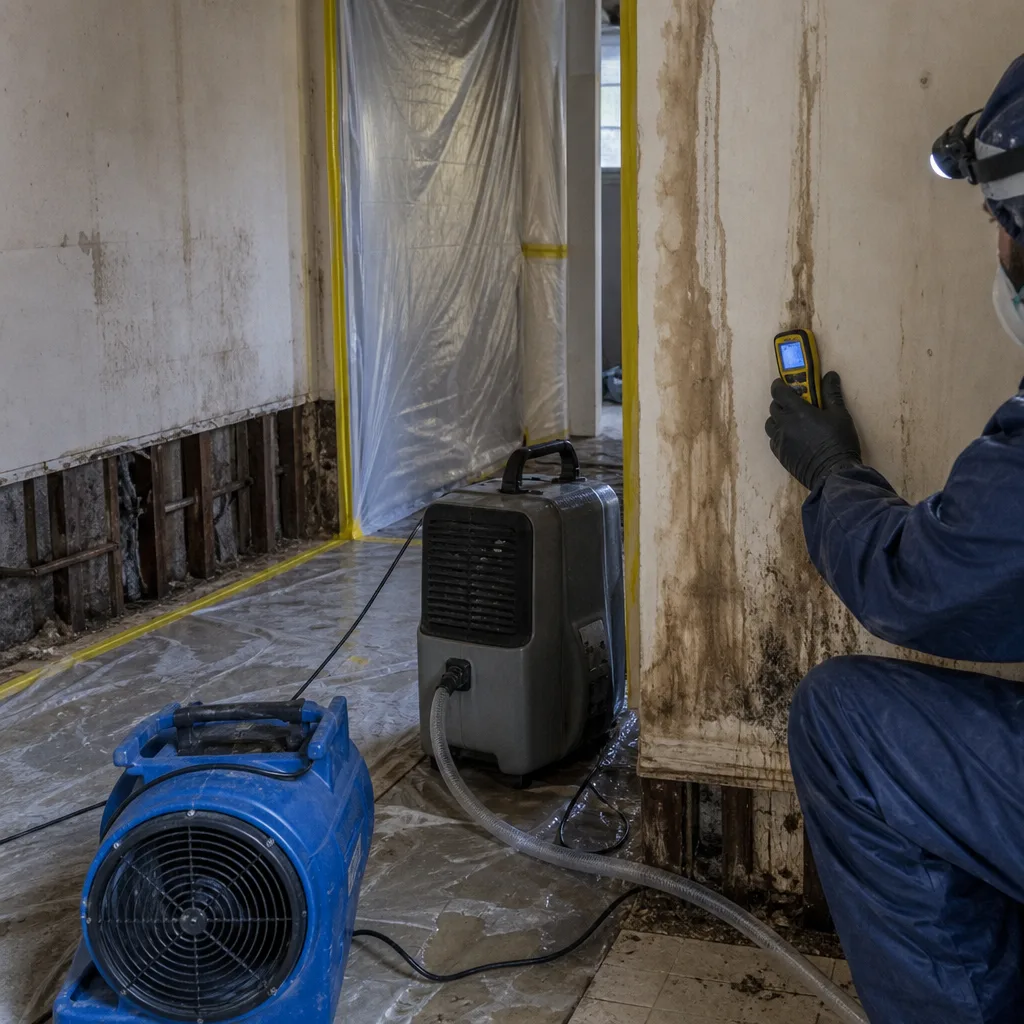 Before
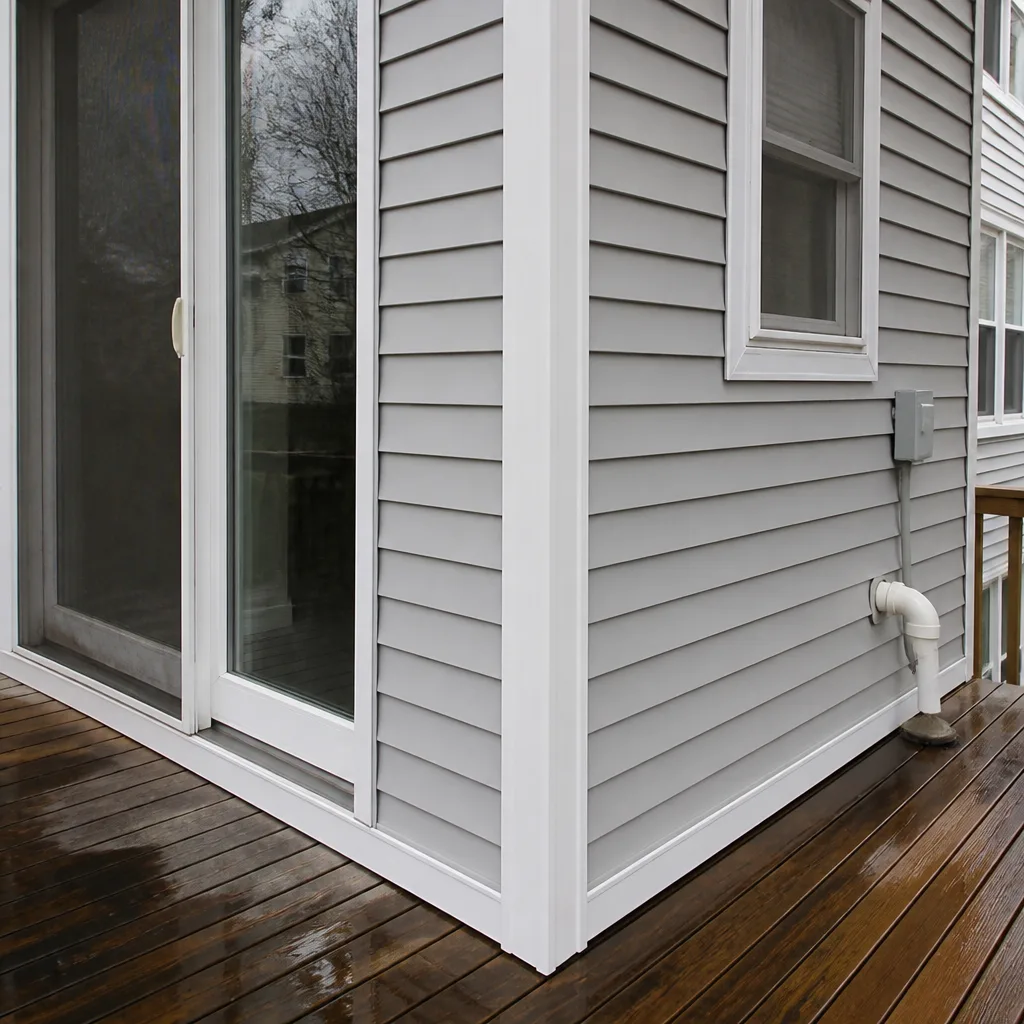 After
After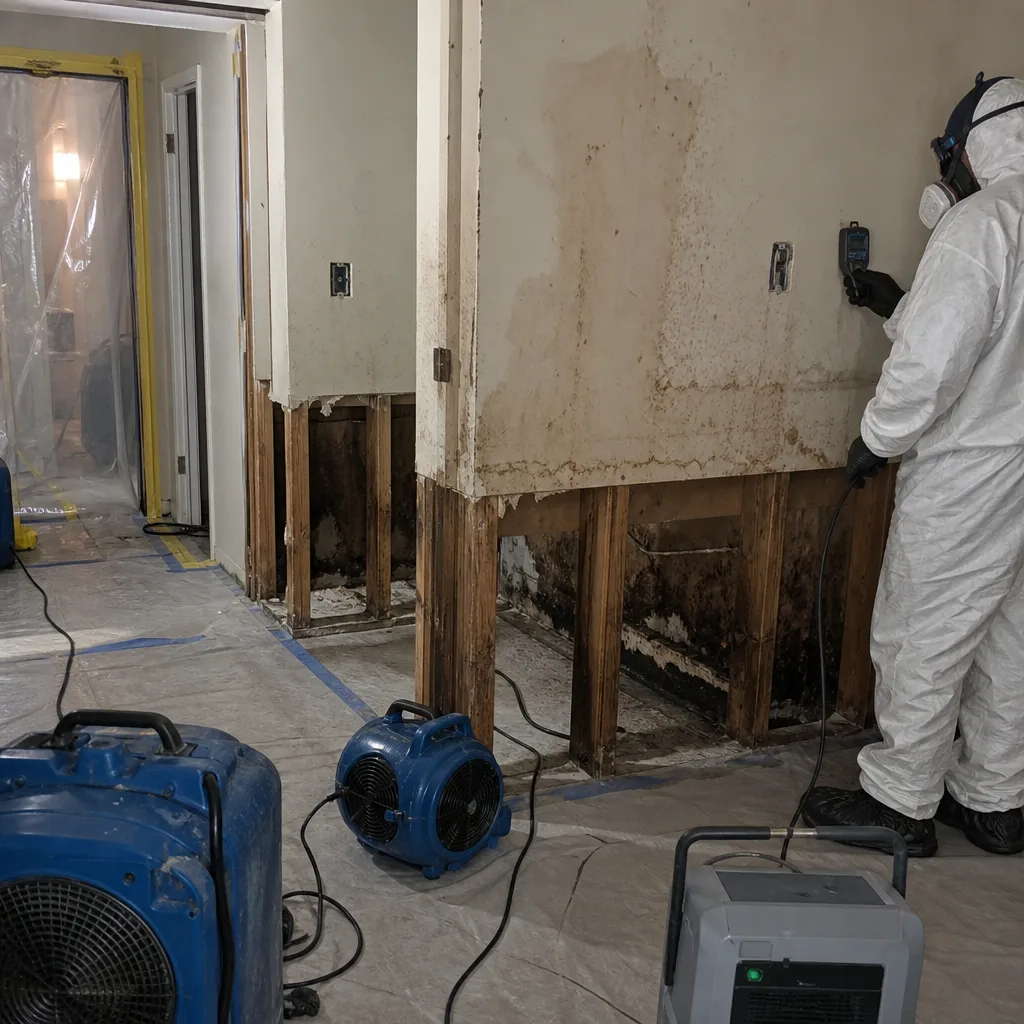 Before
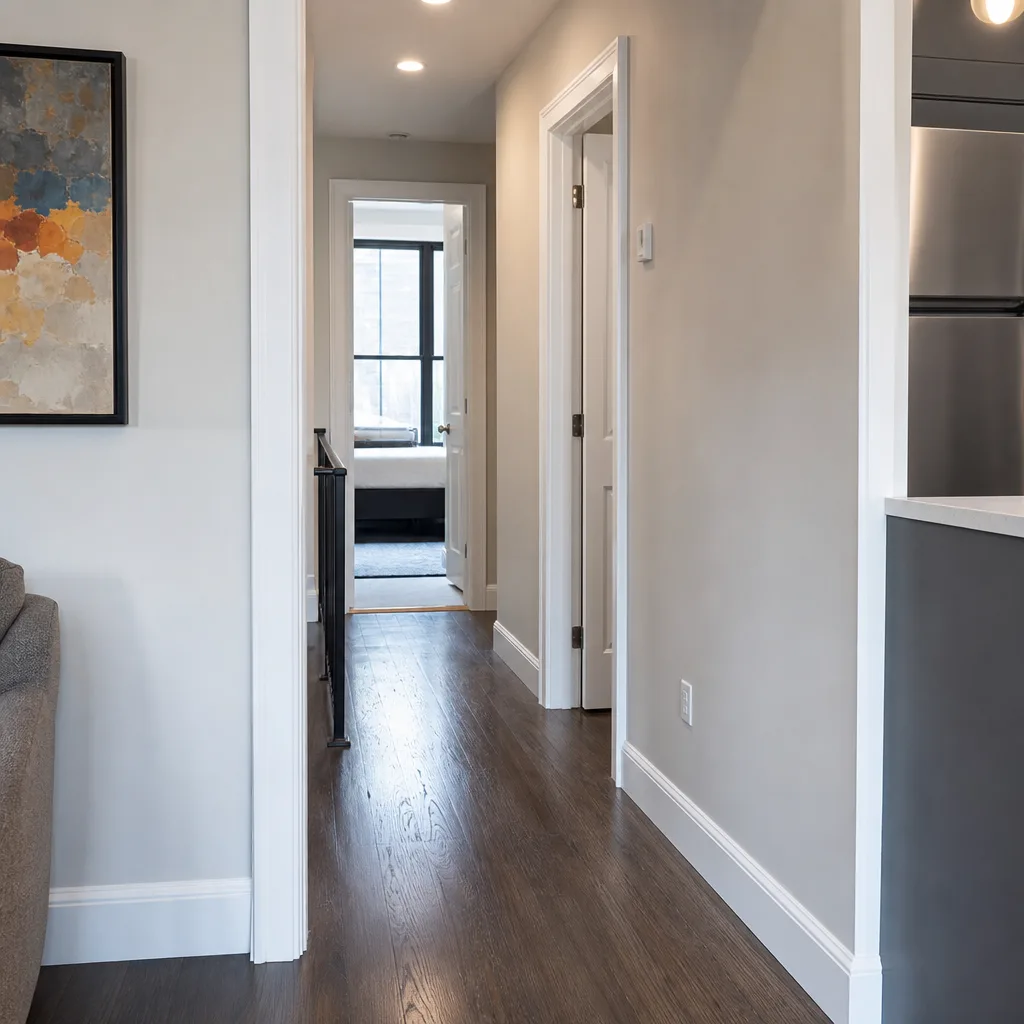 After
After24/7 Emergency Sewage Cleanup in Fair Lawn
Sewage backup in a Fair Lawn basement is a Category 3 contamination event that requires immediate professional extraction, not a mop and bucket. When raw sewage pools in a home along Morlot Avenue or anywhere near the Passaic River flood plain, the 24-hour window matters more here than almost anywhere in Bergen County. Floodline Restoration Co. answers live around the clock at (917) 924-4221, dispatches certified crews into Fair Lawn within 45 minutes, and starts black water extraction on the first visit. Every hour sewage sits in a basement, pathogens multiply, porous surfaces absorb contamination, and a $1,800 cleanup becomes a $9,000 reconstruction. Call now and a real person picks up, not a recording.
Understanding Sewage Cleanup Severity in Fair Lawn Properties
All sewage is Category 3 water under IICRC classification: grossly contaminated with pathogens, bacteria, and viruses. But Fair Lawn’s specific geography makes routine backups worse than the same volume of water in neighboring towns. The borough’s post-WWII housing stock, built between 1945 and 1965, runs heavily to Cape Cods and split-levels with original cast-iron drain lines. Those 70-year-old pipes crack under hydrostatic pressure when the Passaic River rises, and the flat topography plus clay-heavy soil near the river means standing water lingers for days. A toilet overflow in a Glen Rock colonial might be a contained bathroom event. The same failure in a Morlot Avenue basement, where ground saturation keeps the water table high, turns into a full-contamination scenario before a homeowner even realizes the sump pump failed.
We classify on arrival, moisture-map every affected surface with thermal imaging, and track drying with hygrometers until the dry standard is met and logged. In Fair Lawn specifically, we assume every basement in a flood-prone zone contains porous concrete that’s been absorbing moisture for decades. That changes the remediation protocol: we treat walls, not just floors.
Why Fair Lawn Property Owners Choose Floodline Restoration Co. of Manhattan
- 45-minute response commitment to Fair Lawn. A live dispatcher confirms a crew at 2 a.m. the same way we do at noon. We’re not routing trucks from an hour away; we stage near the borough so extraction starts fast.
- A real person answers, 24/7. No automated system, no “leave a message.” The phone rings, a dispatcher picks up, a certified technician is on the line within minutes.
- IICRC-certified crews. Our technicians carry WRT and AMRT certifications, meaning they’re trained in both water damage restoration and applied microbial remediation. Sewage jobs require both.
- Free visual inspection. We walk the crawl space, check the drain cleanout, test the moisture in walls, and hand you a written scope before any work starts. No obligation.
- Direct insurance billing. Floodline communicates with your adjuster, submits the line-item estimate, and gets paid directly by the carrier whenever your policy covers the loss.
- One team from extraction to rebuild. No handoff to a subcontractor after the water’s out. The same uniformed, background-checked crew that extracts the sewage handles drying, antimicrobial treatment, and reconstruction.
Our Sewage Cleanup Process
Inspection & Assessment
We arrive, identify the source (cracked cast-iron, sump failure, river backflow), classify the water, and moisture-map every surface. In Fair Lawn basements, we check floor drains and wall cavities where Category 3 water hides long after the visible puddle is gone.
Extraction & Stabilization
Commercial-grade pumps and truck-mounted extractors pull standing black water. We also remove saturated porous materials (carpet, padding, drywall cut 18 inches above the water line) which cannot be salvaged once contaminated with sewage.
Drying & Dehumidification
Dri-Eaz dehumidifiers and XPOWER air movers run continuously, with daily moisture readings logged. Fair Lawn’s clay-heavy soil keeps basement walls damp, so we hold equipment longer here than in towns with better drainage.
Cleaning & Sanitization
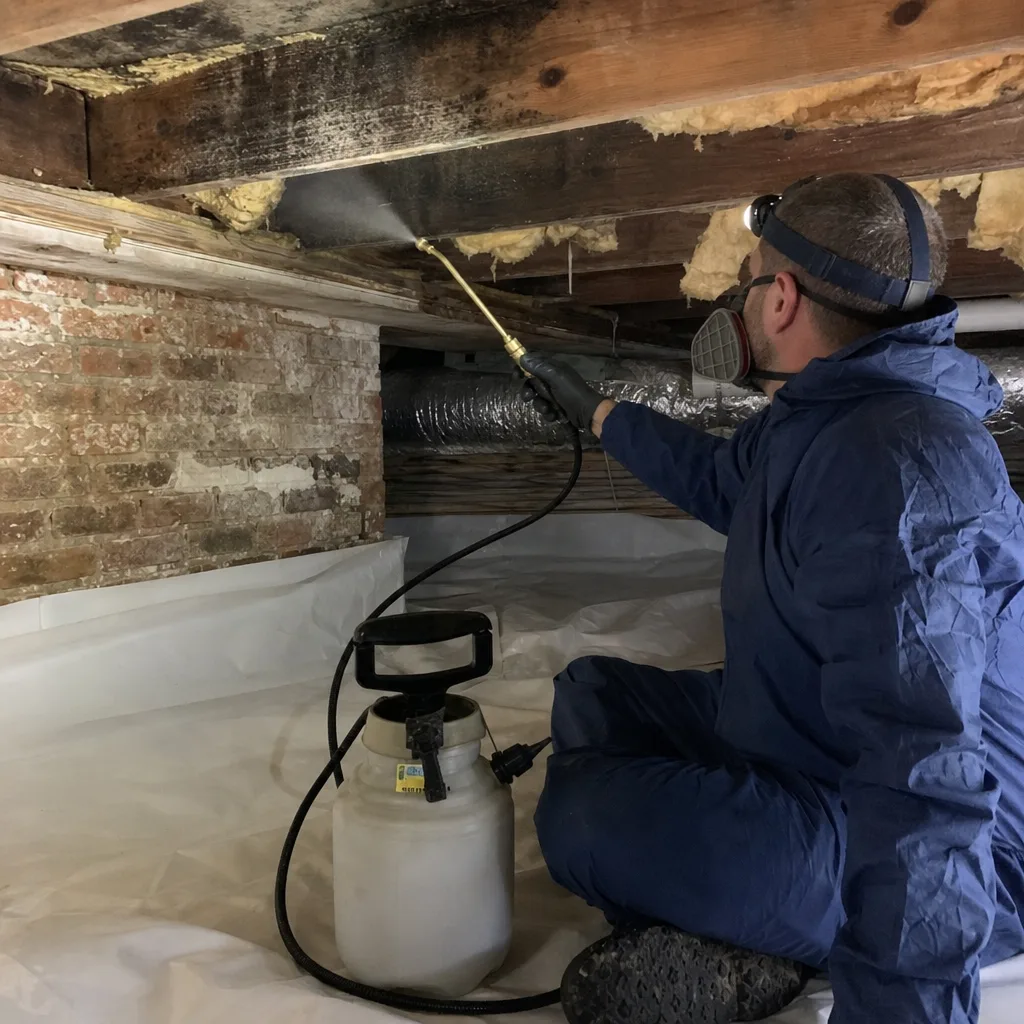
EPA-registered antimicrobial agents are applied to every surface that came into contact with Category 3 water, including studs, concrete, and the bottom of floor joists. This is where demolition-only contractors fail: visible sewage gone, pathogens still alive in porous material.
Containment & Air Scrubbing
HEPA air scrubbers run during remediation to capture airborne pathogens stirred up by extraction and demolition. We contain the affected area with negative air pressure so spores and bacteria don’t migrate to living spaces.
Repairs & Restoration
Floodline rebuilds what was removed: drywall, flooring, trim, and any damaged plumbing. The same crew handles it start to finish, and the whole job carries the 90-Day Done Right Promise in writing.
Need Emergency Sewage Cleanup in Fair Lawn Now?
Crews minutes away, answering live 24 hours a day. The sooner we start, the less it costs.
Working With Your Insurance Company
Sewage backup coverage in Fair Lawn depends on your policy. Standard homeowners insurance typically excludes sewer backup unless you bought an endorsement, but Floodline handles the claim either way. We photograph every affected room before touching anything, document the source with clear notes (“cracked cast-iron drain line at floor drain, Passaic backflow event”), and submit an industry-standard line-item estimate your adjuster can read. When the carrier wants a second opinion, our technician speaks with them directly. You don’t play messenger. Curt Bowman founded this company in 2010 around a dispatch board, not a sales desk, and that means we document claims the way adjusters actually want them documented: specific, dated, and complete.
What We Provide Your Insurer
- Thorough documentation of the loss
- Photos of all damage, room by room
- Moisture readings and drying logs
- A detailed, line-item scope of work
- Direct coordination with your carrier
Built for Fair Lawn’s Loss Calendar
Fair Lawn’s sewage losses follow a pattern we’ve learned over hundreds of jobs. December through March, nor’easters hammer the Passaic River basin, and river backflow pushes groundwater up through aging floor drains and cracks in cast-iron lines. That’s the season for black water in basements off Morlot Avenue and throughout the flood plain. Spring snowmelt compounds it: saturated ground from the winter freeze-thaw cycles meets storm surge, and sump pumps that ran fine in November fail in March under double load. Summer brings a different threat, thunderstorms that dump two inches in an hour on flat, clay-heavy terrain, overwhelming municipal storm drains and sending street-level sewage into lower-level bathrooms. We don’t schedule around Fair Lawn’s weather. We staff around it, with crews positioned for the borough’s specific flood pattern so that when the river crests, extraction starts the same day.
Sewage Cleanup Across Fair Lawn’s Neighborhoods
The neighborhoods hugging the Passaic, particularly around Morlot Avenue and the industrial corridor east of the tracks, sit lowest and flood first. Homes there are disproportionately post-war Cape Cods and split-levels with full basements, and those basements are the catch basin when the river rises. We’ve worked the same blocks on Morlot multiple times in a single winter, because once a cast-iron line cracks, it doesn’t heal. Radburn, with its planned garden-city layout and older housing stock, brings tighter access issues: narrow lanes, mature trees close to foundations, and basements that haven’t seen a full gut renovation in sixty years. The Promenade corridor near Broadway and the Route 208 interchange runs to brick-faced colonials where basement bathrooms sit below grade, meaning a failed ejector pump sends sewage up through the shower pan instead of down the drain. And the neighborhoods north of Fair Lawn Avenue, toward the border with Elmwood Park, share the same clay-heavy soil but often sit a few feet higher; their losses tend to come from aging sump pumps and original drain tiles rather than direct river water. Each zone needs a different extraction and drying plan, and our crews know the difference without being told.
Specialized Sewage Cleanup Services We Offer in Fair Lawn
Sewage Backup Cleanup
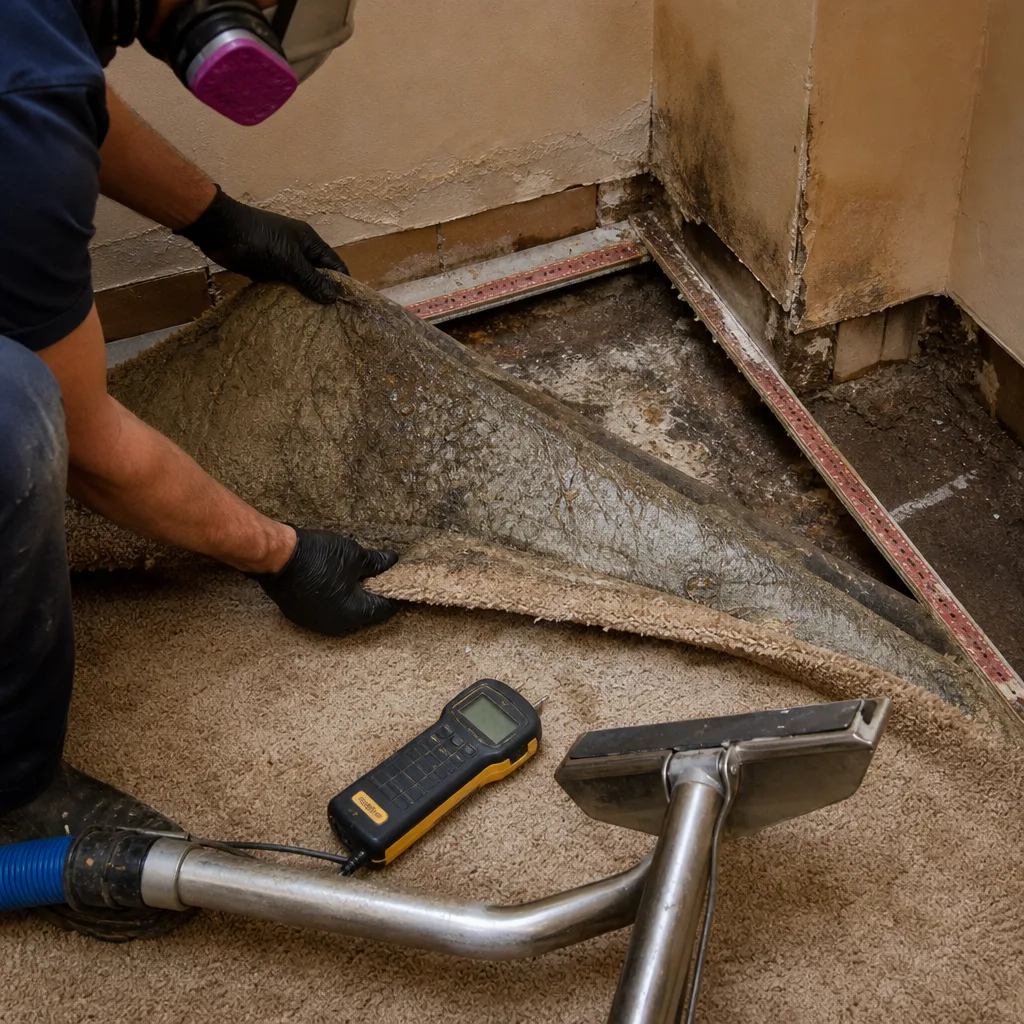
When a floor drain in a Morlot Avenue basement starts pushing water up instead of taking it down, that’s backflow, not a clog. We extract, contain, and treat the full affected area, including wall cavities and the bottom six inches of drywall that got wet. Fair Lawn homes with original cast-iron lines are the most frequent callers.
Black Water Extraction
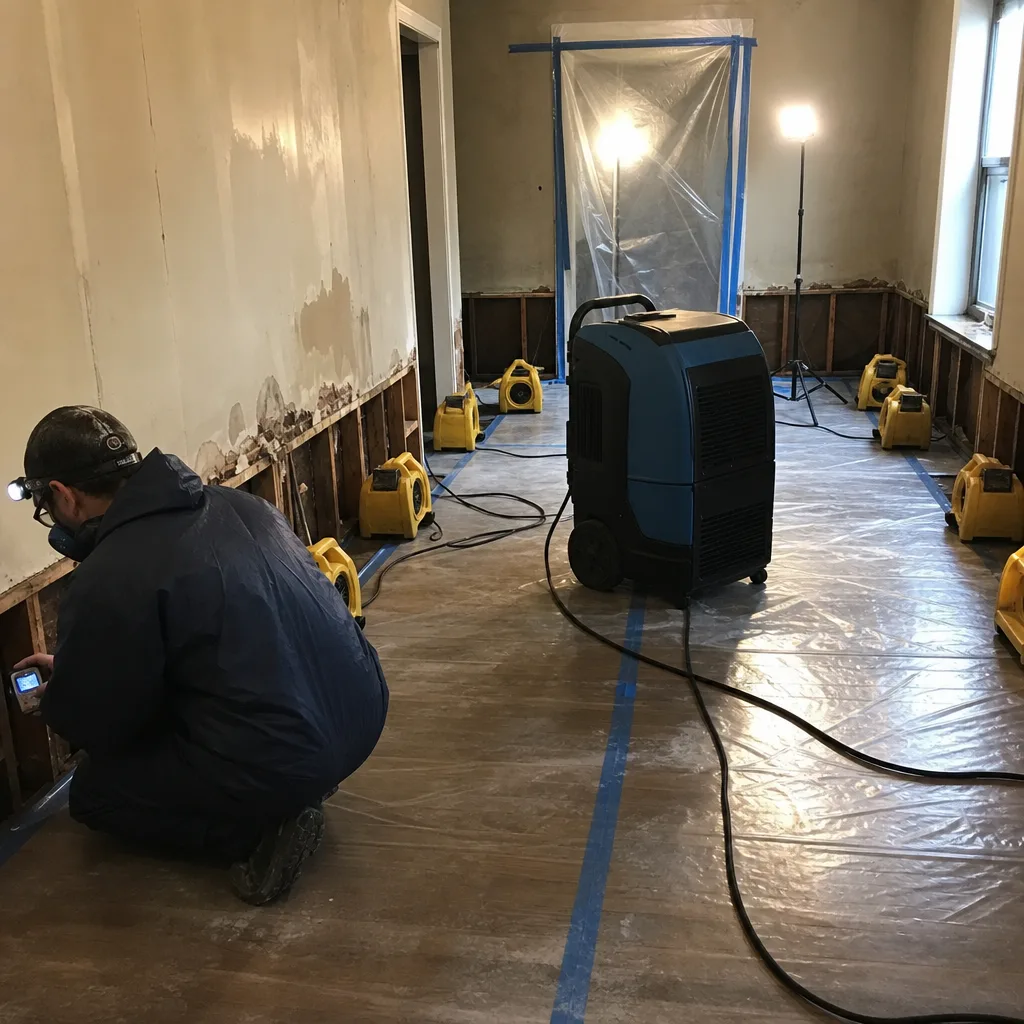
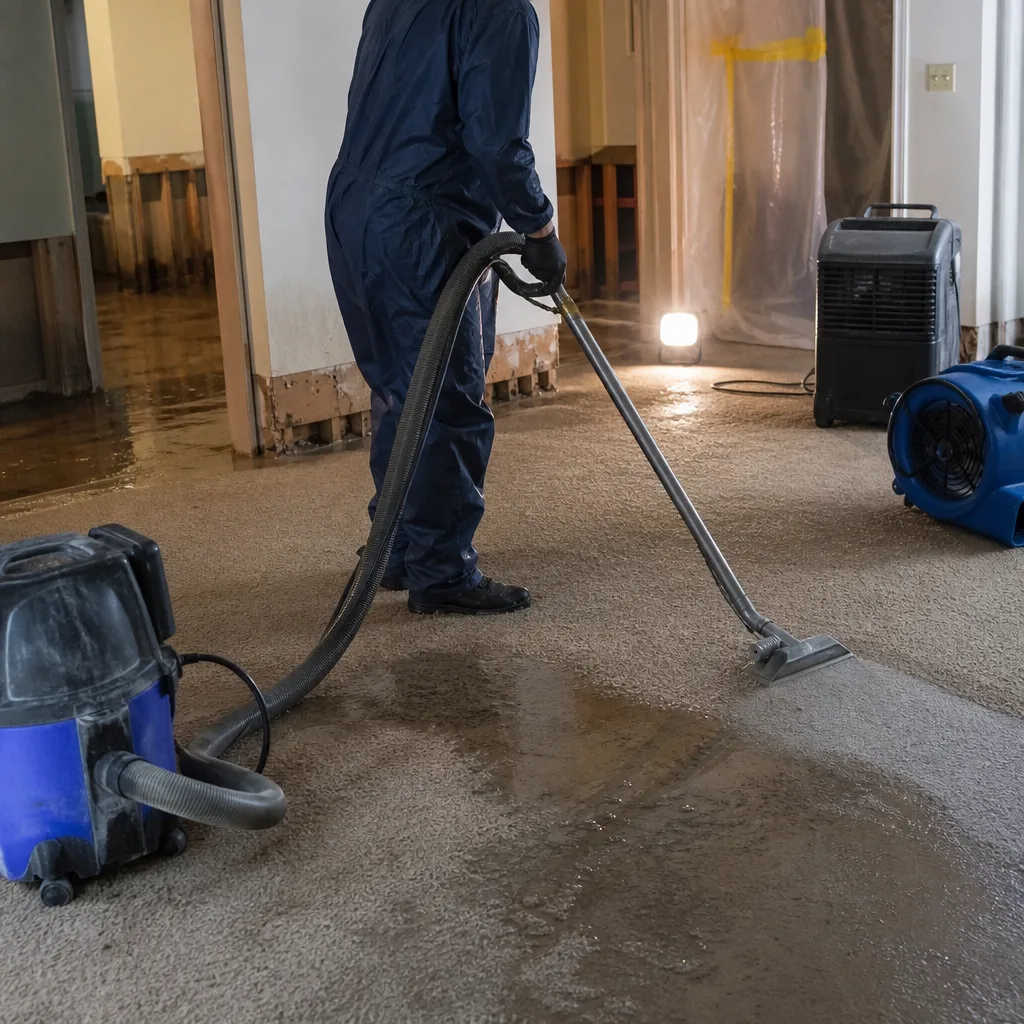
Category 3 water requires commercial extraction, not a shop vac. We run truck-mounted extractors and submersible pumps sized for full basements, then bring in Dri-Eaz dehumidifiers and XPOWER air movers only after full containment is set. In Fair Lawn’s flat, slow-draining terrain, holding the equipment longer isn’t optional; it’s the only way to hit the dry standard.
Sanitization & Disinfection
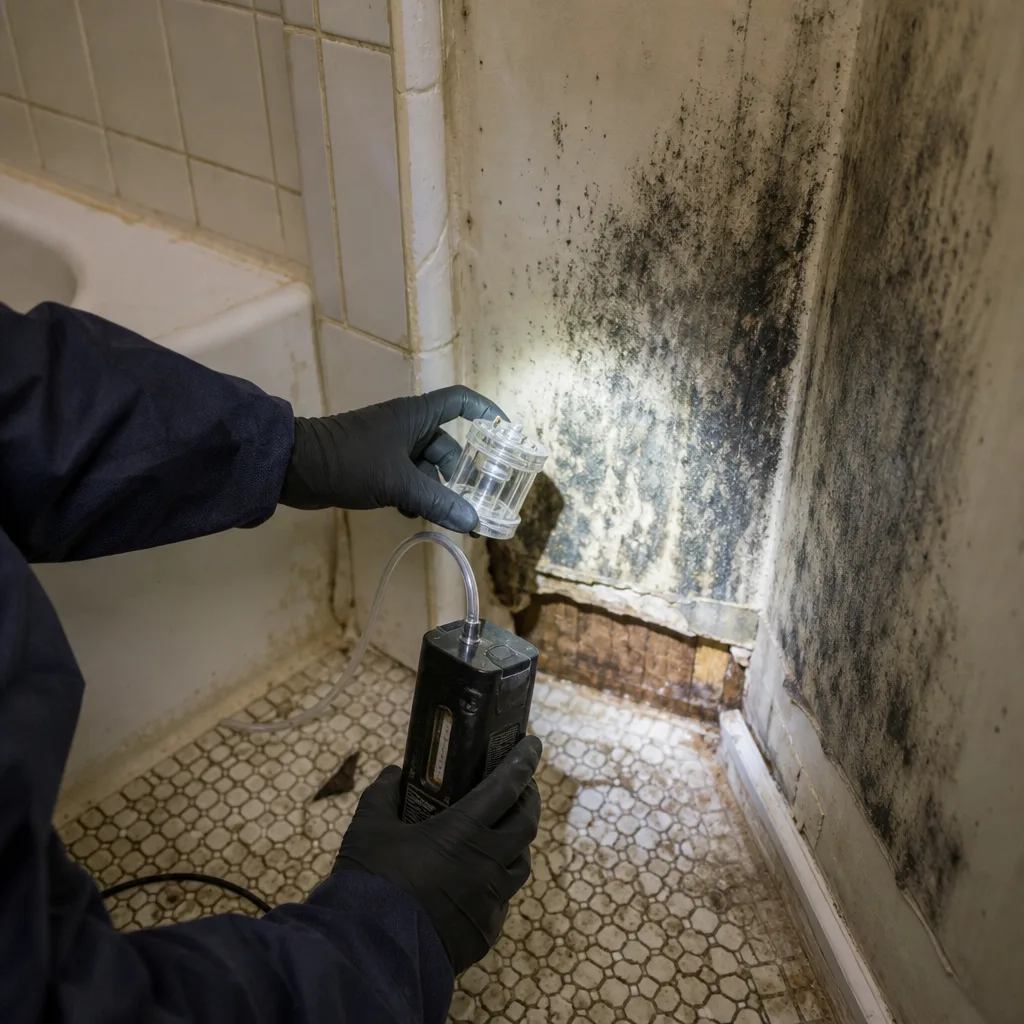
Extraction alone leaves pathogens embedded in porous concrete, wood studs, and insulation. We apply EPA-registered antimicrobials to every surface the sewage touched, then verify with ATP testing on high-contact areas. A demolition-only contractor will gut your basement and leave the contamination. We don’t.
Sewage Backup Cleanup in Crawl Spaces
Older Fair Lawn homes with crawl spaces instead of full basements present a worse contamination problem: limited access, trapped humidity, and sewage pooling under floor joists. We carry low-profile extraction equipment and run air scrubbers with flexible ducting to pull contaminants out of spaces too tight for a person to work comfortably. The timber doesn’t get skipped just because it’s hard to reach.
Toilet Overflow and Septic Failure Cleanup
A toilet overflow in a Radburn split-level bathroom may look contained, but the sewage travels under tile, into the subfloor, and down into ceiling cavities below. We treat the affected room plus everything beneath it, which is where half-hearted cleanups fail. Septic failures on the borough’s remaining non-sewered lots carry the same protocol with a wider perimeter.
What happens when you call
- 1
A real person answersNo phone trees - you reach a local pro.
- 2
You get an upfront price rangeHonest numbers before anyone is dispatched.
- 3
A background-checked tech heads outLicensed & insured, dispatched right away.
- 4
You approve before work beginsNothing starts until you say go.
Sewage Cleanup Costs in Fair Lawn, NJ
A sewage backup cleanup in Fair Lawn runs between $1,800 and $5,200 for a contained basement event with extraction, drying, and antimicrobial treatment. Full black water remediation in a finished basement, meaning drywall removal, flooring replacement, and structural drying, lands between $6,000 and $14,000 depending on square footage and how long the sewage sat. Crawl space sewage removal runs $3,200 to $7,500 because access is harder and we often have to remove and replace insulation. Toilet overflow cleanup limited to one bathroom typically runs $1,100 to $2,800. What moves the price: how far the sewage traveled, what materials absorbed it, whether mold started (which is why speed matters), and whether your policy covers sewer backup. We’ll inspect free, hand you a written scope with firm numbers, and bill your carrier directly when coverage applies. No surprises, no pressure, no numbers that move after the work starts. That’s the square deal we’ve built this company on since Curt Bowman founded it in 2010.
We Also Serve Cities Near Fair Lawn
Floodline Restoration Co. handles Sewage Cleanup in Elmwood Park, Saddle Brook, Paramus, Rochelle Park, and the surrounding Bergen County communities. Our crews are staged for the Passaic River corridor, so response times across the area stay tight even during a multi-town flood event. When you call (917) 924-4221, you reach a live dispatcher who knows exactly which crew is nearest to Fair Lawn right now.
Fair Lawn Sewage Cleanup Questions, Answered
How fast should I act after a sewage backup in a Fair Lawn basement near the Passaic River?
You have 24 hours before sewage in a flooded Fair Lawn basement begins a serious mold cycle, and flat, clay-heavy terrain near the river means the water won’t drain on its own. Call (917) 924-4221 immediately. Our crew arrives within 45 minutes, extracts the same visit, and starts containment before pathogens can spread through the HVAC system.
Do Fair Lawn homes with original cast-iron drain lines face a higher sewage backup risk?
Yes. Post-war Cape Cods and split-levels built between 1945 and 1965 commonly still have original cast-iron drain lines, which crack under the hydrostatic pressure from Passaic River backflow. Once cracked, they push black water up through floor drains during every heavy rain event, not just major floods. We inspect the line during every sewage job and document the source for your insurance claim.
Can you sanitize a crawl space after a septic failure without tearing out the whole floor?
Usually yes. We pull contaminated insulation, extract standing sewage, apply antimicrobial treatment to the joists and subfloor, then run HEPA air scrubbers with ducting into the tight spaces. Tearing out flooring above is only necessary when sewage saturated the subfloor long enough to delaminate or warp it. The free inspection tells us which path applies.
Why does a flooded basement near Morlot Avenue need structural drying when the water was only sewer backup?
Because sewage saturates porous concrete and wood the same way clean water does, but with worse consequences. Fair Lawn’s high water table keeps basement walls damp long after visible water is gone, and antimicrobial treatment works best on dry surfaces. If we skip structural drying, the walls stay wet, mold starts inside the stud cavities, and the contamination returns. We dry first, treat, then leave equipment running with daily moisture logs until the dry standard is met.
What does a full sewage cleanup scope of work include for a Fair Lawn split-level with a basement bathroom?
Extraction of all standing Category 3 water, removal of contaminated porous materials (carpet, padding, drywall cut above the water line), antimicrobial treatment of all remaining surfaces, structural drying with Dri-Eaz dehumidifiers and XPOWER air movers, HEPA air scrubbing during remediation, and reconstruction of everything removed. Plus a written moisture log and the 90-Day Done Right Promise.
How much faster is Floodline compared to other Fair Lawn restoration companies?
We commit to 45 minutes from your call to a crew rolling into Fair Lawn, and we answer the phone with a live person 24 hours a day. Most competing companies route through a call center and arrive the next morning. In a Category 3 sewage event, that overnight gap is the difference between a $2,000 cleanup and a $9,000 mold remediation plus rebuild.
Will my Fair Lawn homeowners insurance cover sewage backup?
Standard policies usually exclude sewer backup unless you carry a specific endorsement. Flooding from Passaic River overflow is typically separate from that. We can’t tell you your exact coverage, but our team reads your policy with you during the free inspection, documents everything the way your carrier requires, and bills directly when you’re covered. If you’re out of pocket, we give you a firm written scope before any work starts.
Can we stay in the house during sewage cleanup?
In most smaller containment jobs, yes, as long as we’ve sealed the affected area with negative air pressure. For full basements with Category 3 water, we recommend vacating until extraction, drying, and antimicrobial treatment are complete, which typically takes 3 to 5 days. We’ll tell you straight either way during the assessment.
Serving Fair Lawn, NJ - Our Local Coverage Area
We’re based in the Fair Lawn area and know this community well. Use the map below to see our service coverage - if you’re nearby, we can almost certainly help.
Fair Lawn’s River Problem Is Our Specialty
Fair Lawn sits directly along the Passaic River flood plain, and low-lying neighborhoods near Morlot Avenue are in FEMA-designated Special Flood Hazard Areas. That’s not a technicality. It means when the river rises, groundwater pushes up through floor drains and cracked cast-iron lines, and black water sits in basements for days because the flat topography and clay-heavy soil won’t let it drain. Neighboring towns dry out. Fair Lawn stays wet. A Category 2 spill becomes Category 3 black water almost overnight, which is why the 24-hour mitigation window is tighter here than anywhere else in Bergen County. We built our Fair Lawn response plan around that reality: crews staged close, extraction equipment sized for full basements, drying protocols that run longer, and antimicrobial treatment that accounts for the high water table. The line the water left is where we start. We’ll be there when we say.
Written by Curt Bowman, Owner at Floodline Restoration Co. of Manhattan, serving Fair Lawn and surrounding Bergen County communities.