
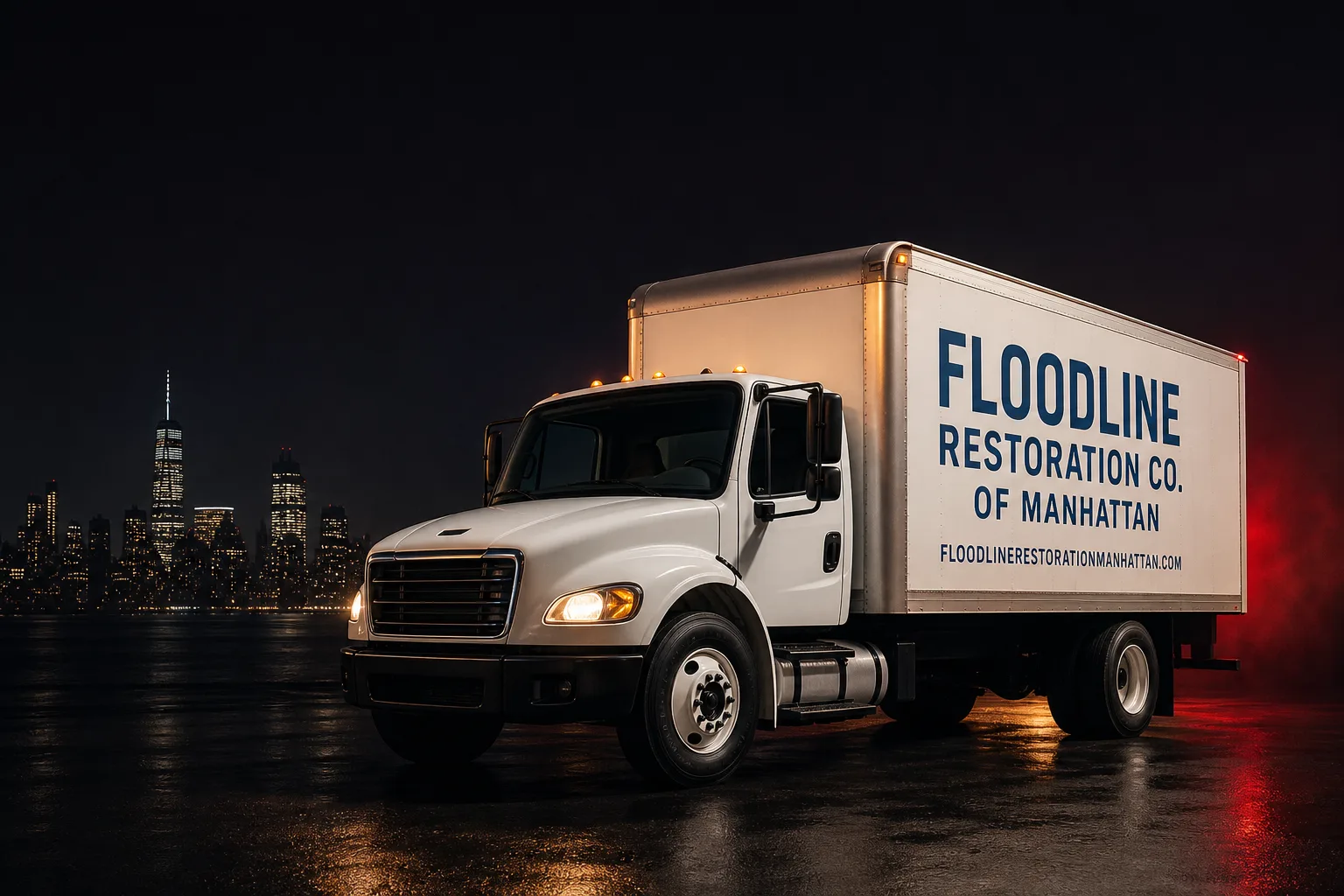
Free visual inspection and a written scope of work before any mitigation begins - photos, moisture readings, and drying logs go in your claim file
The scope we write is the scope we bill. Anything new gets shown to you, in writing, before we touch it.






 Before
 After
After Before
 After
After Before
 After
After24/7 Emergency Sewage Cleanup in Garment District
A sewage backup in the Garment District can flood a showroom floor in under ten minutes. The century-old waste lines under these pre-war lofts fail without warning, and when they do, the black water reaching your inventory is a Category 3 biohazard that requires professional extraction, not a mop and bucket. Our crews answer live at (917) 924-4221 around the clock and can be on site in the Garment District within 45 minutes of your call. The first hour determines whether you lose fabric samples or save them. Every minute sewage sits in contact with hardwood floors, drywall, and textile inventory, the damage compounds and the restoration cost climbs.
Understanding Sewage Cleanup Severity in Garment District Properties
We classify water damage by its contamination level. Category 1 is clean water from a supply line. Category 2 carries significant contamination, often from washing machine discharge or sump pump failures. Category 3, what our crews most often deal with in the Garment District, is grossly contaminated black water: raw sewage, toilet backflow, and anything from a failed cast-iron waste line. Category 3 water contains bacteria, viruses, and parasites that pose real health risks. In pre-war loft buildings, the problem compounds quickly because open floor plates let sewage travel laterally before it finds the vertical pathways. We use moisture mapping with thermal imaging and hygrometers to find where the contamination has migrated behind walls and under flooring, because what you can see on the surface is almost never the full story in a 1920s building with original plaster and layered subfloors. The IICRC standard for sewage is clear: materials that cannot be properly sanitized get removed. No shortcuts.
Why Garment District Property Owners Choose Floodline Restoration Co. of Manhattan
- 45-minute response commitment. When you call with a sewage backup, our Garment District crew is dispatched immediately and typically arrives within 45 minutes. The clock matters.
- 24/7 live answer, never an automated system. A real person picks up at two in the morning. You talk to someone who can dispatch a crew, not a recording that tells you to leave a message.
- IICRC-certified technicians. Our crews hold WRT, FSRT, and AMRT certifications. They know what Category 3 water does to century-old pine subfloors and how to dry them without warping.
- Free visual inspection. Before any work begins, we walk the affected area with you, answer questions, and give you a straight read on what needs to happen.
- Direct insurance billing. We bill your carrier directly and handle adjuster communication. You don’t play messenger.
- One team from extraction to reconstruction. The same Floodline crew that extracts the sewage dries the space and rebuilds what was removed. No mid-job handoff to a crew you’ve never met.
Our Sewage Cleanup Process
Inspection & Assessment
We arrive with thermal imaging cameras and moisture meters to map the full extent of the contamination. In a Garment District loft, that means checking floor drains, wet columns, and the basement-level areas where sewage pools first. We document everything for your insurance claim from minute one.
Extraction & Stabilization
Our crews run professional-grade Dri-Eaz and Phoenix extraction units to remove standing black water quickly. We remove saturated materials that cannot be salvaged, including carpet, padding, and sections of drywall that have absorbed sewage. On West 38th and 39th Streets, we’re often working around showroom fixtures and inventory that need immediate relocation.
Drying & Dehumidification
High-volume air movers and LGR dehumidifiers go in once extraction is complete. In the Garment District’s dense loft buildings, natural airflow is minimal, so we rely on mechanical drying with daily moisture readings logged until we hit the dry standard. You get the drying log. So does your carrier.
Cleaning & Sanitization
Every affected surface gets cleaned with EPA-registered antimicrobials. Hard surfaces get physically scrubbed, not sprayed and forgotten. For showroom spaces, we run HEPA air scrubbers to pull airborne contaminants out of the air before buyers or staff return.
Textile & Materials Pack-Out
When fabric, garments, or paper patterns are affected, we coordinate emergency pack-out to a climate-controlled facility for cleaning and restoration. This is where our Sewage Cleanup team earns its keep in the Garment District: salvage decisions happen fast, and they’re documented for the adjuster.
Repairs & Restoration
Once the space is dry and sanitized, the same crew rebuilds walls, floors, and built-ins to pre-loss condition. No new contractor, no fresh estimate, no finger-pointing. That’s the Keystone Standard, in writing.
Need Emergency Sewage Cleanup in Garment District Now?
Crews minutes away, answering live 24 hours a day. The sooner we start, the less it costs.
Working With Your Insurance Company
Sewage backup claims in the Garment District often hinge on documentation. Most commercial policies cover sudden and accidental discharge, but carriers need proof of what happened, when it happened, and exactly what was damaged. We start documenting the moment we arrive: photos of the source, the spread, the affected inventory, and the moisture readings before any drying begins. Our team communicates directly with your adjuster using industry-standard estimates and line-item scopes, so you don’t spend your week on the phone. After 42 years of restoration work, we’ve learned that a well-documented claim gets paid faster. Curt Bowman built Floodline around one principle: do the paperwork right and the restoration right, and there’s nothing left to argue about.
What We Provide Your Insurer
- Thorough documentation of the loss
- Photos of all damage, room by room
- Moisture readings and drying logs
- A detailed, line-item scope of work
- Direct coordination with your carrier
Built for Garment District’s Loss Calendar
January and February bring hard freezes that crack the exterior-facing vent pipes and older steam condensate lines running through Garment District lofts. When the thaw comes in March, the sewage backup often surfaces first in basement packing and shipping rooms, where the lowest drains are. Spring brings a smaller but steady stream of failures as the freeze-thaw cycle works on the cast-iron waste stacks. Summer in the Garment District is quieter for sewage work, but heavy July thunderstorms can overwhelm the neighborhood’s combined sewer system and push black water back through floor drains in sub-grade basements. September is New York Fashion Week: any water loss that week means all-hands, around-the-clock extraction and drying, because a showroom that misses buyer appointments loses the season. Then the cycle repeats with the next hard freeze.
Sewage Cleanup Across Garment District’s Neighborhoods
The Garment District runs roughly from West 34th to West 41st Streets, between Fifth and Ninth Avenues, and every block has its own character when it comes to sewage failures. Along Seventh Avenue, also called Fashion Avenue, the showroom-heavy buildings from West 35th to West 39th sit above some of the oldest cast-iron waste lines in the district, and backups here tend to hit multiple floors because the vertical stacks serve large open floor plates. Around the West 36th Street corridor near Eighth Avenue, we see more backflow from the historic sewers under the street, especially in sub-grade storage basements. The side streets off Herald Square, near West 34th and Broadway, have smaller 10-to-12-story loft buildings with galvanized branch lines that corrode from the inside; those failures often start as slow drips behind plaster walls that go unnoticed for weeks. North toward West 40th and 41st, the buildings are a mix of converted manufacturing lofts and newer commercial towers, and the sewage failures there often involve transitions between old waste lines and newer PVC, where settlement has pulled joints apart. When we say we know the Garment District, we mean we know which buildings have wet columns and which basements flood first.
Specialized Sewage Cleanup Services We Offer in Garment District
Sewage Backup Cleanup
When a cast-iron waste elbow gives way three floors up, the backup shows up fast in the showrooms below. We contain, extract, and sanitize before irreplaceable fabric samples become landfill. Our teams work in occupied showroom buildings weekly during the winter months.
Toilet Overflow Cleanup
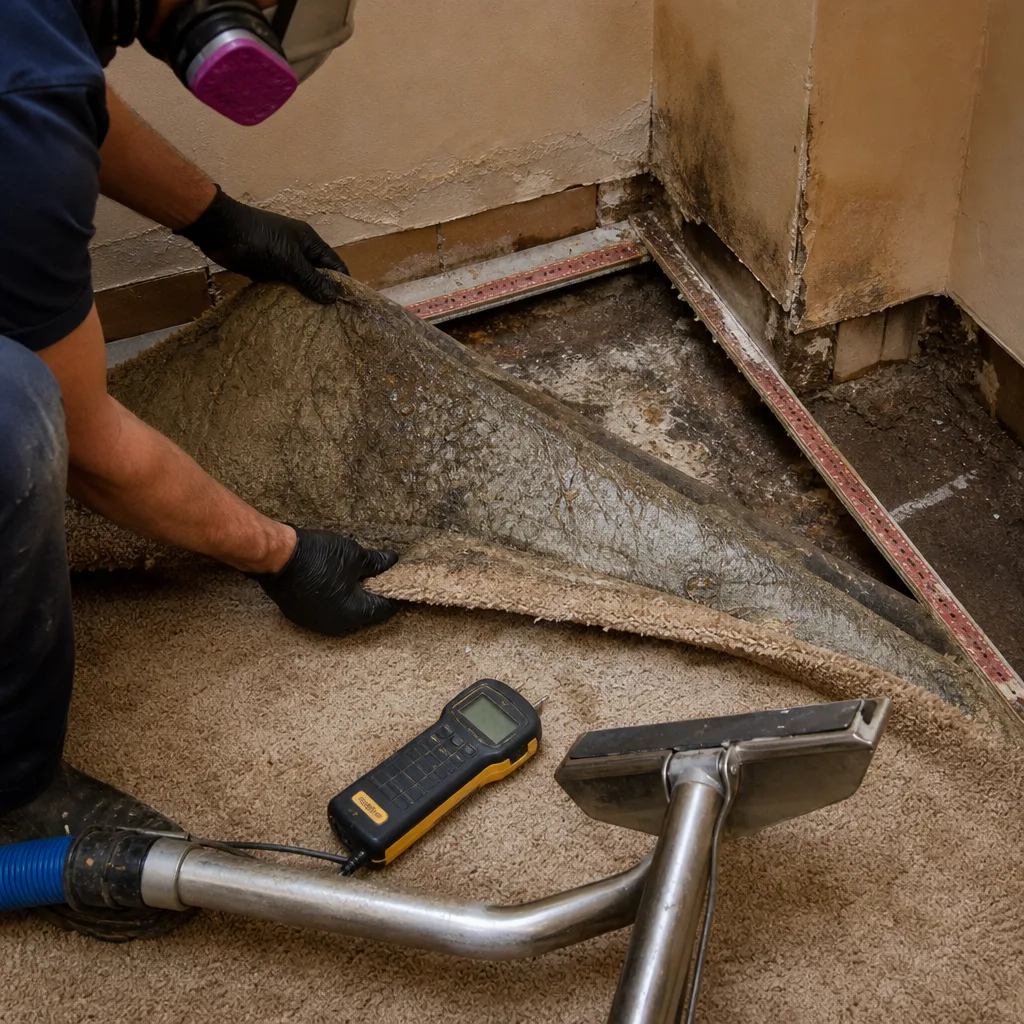
A clogged toilet on the 12th floor of a Garment District loft can send water down through eleven floors before anyone notices. We respond fast, extract the standing water, remove contaminated materials, and set drying equipment with containment so neighboring showrooms stay open.
Black Water Extraction
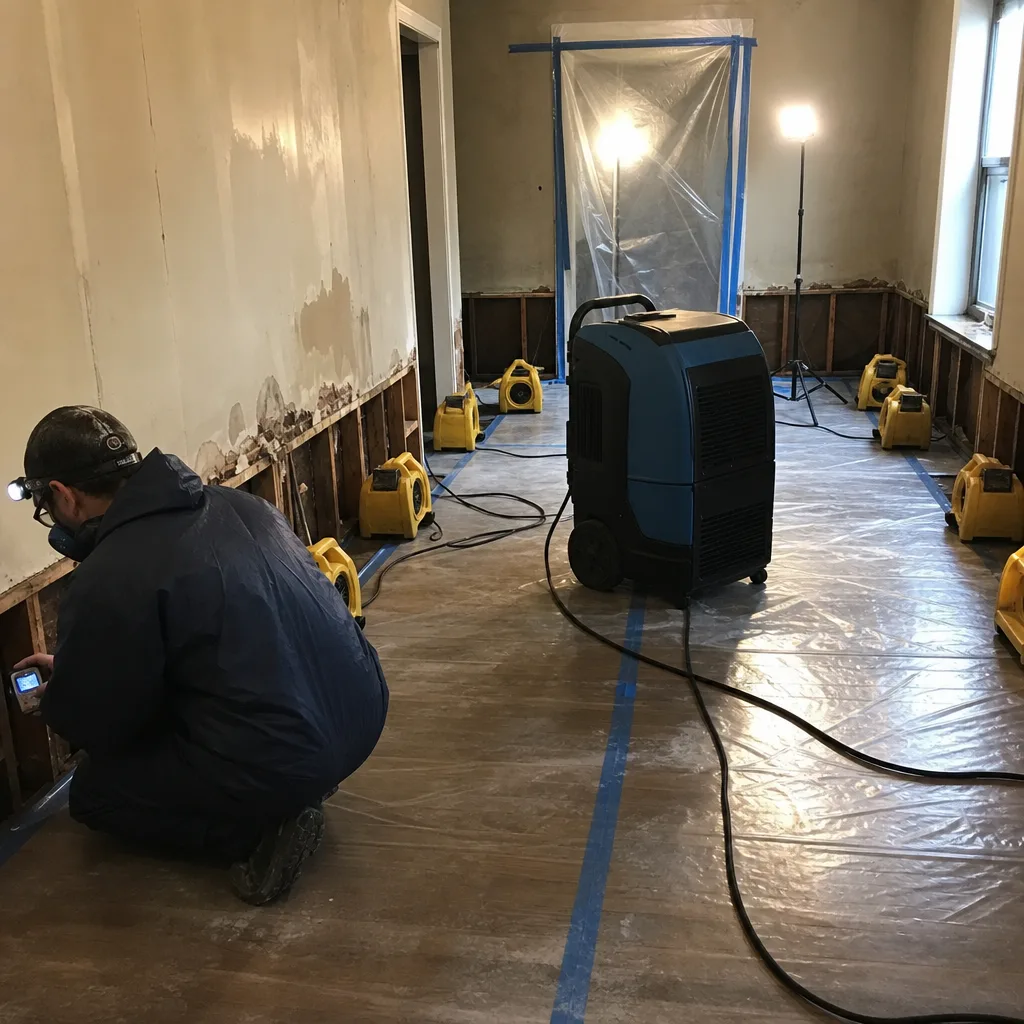
This is the heavy work. Raw sewage pooling in a basement corridor or showroom floor requires industrial extraction, proper PPE, and immediate containment. We run negative air pressure and extraction simultaneously, so airborne contaminants don’t spread to unaffected showroom space. Our Dri-Eaz extraction units move hundreds of gallons per hour, but the real skill is knowing where the sewage went that you can’t see.
Sanitization & Disinfection
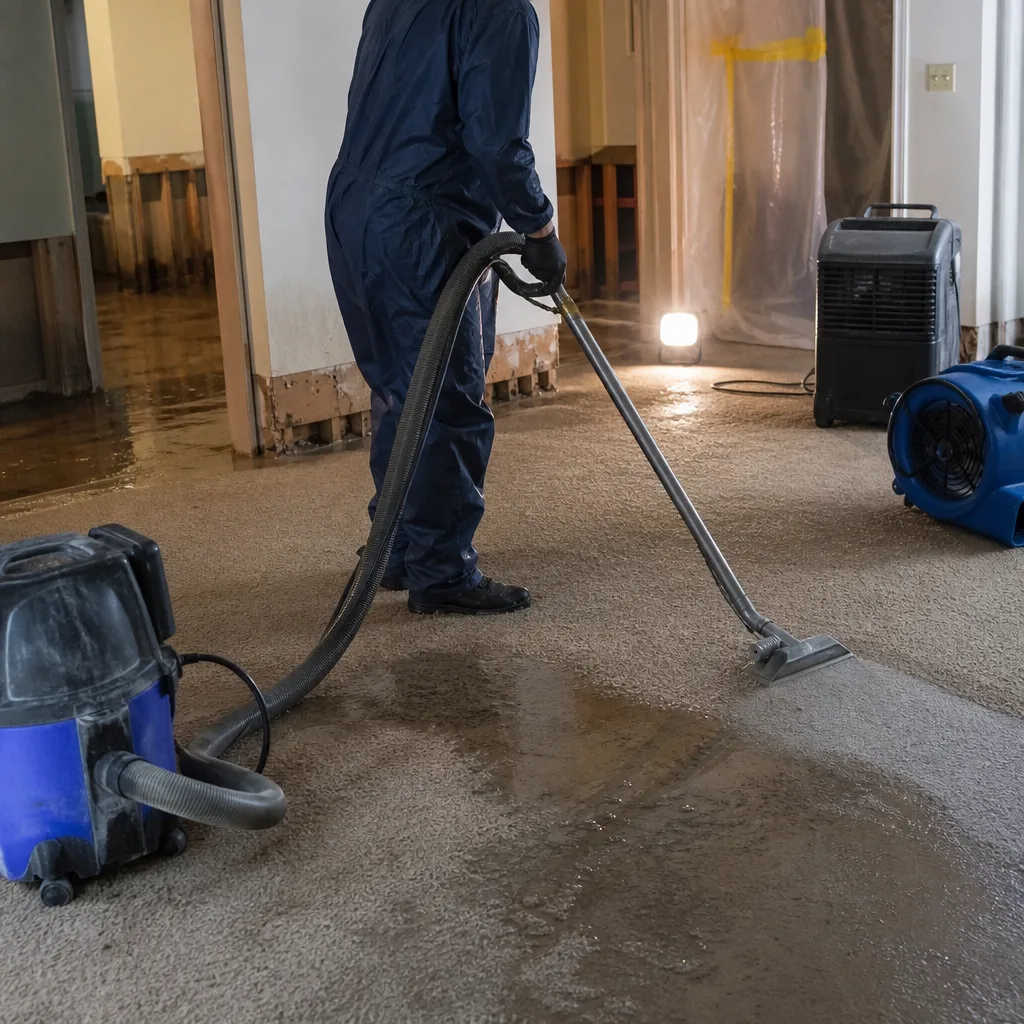
After the black water is gone, every affected surface gets treated with EPA-registered antimicrobial solutions. We physically scrub, not just spray. For showroom spaces that house fabric and garments, we run HEPA air scrubbers until air quality is verified, because you can’t sell a silk blouse that smells like a sewer.
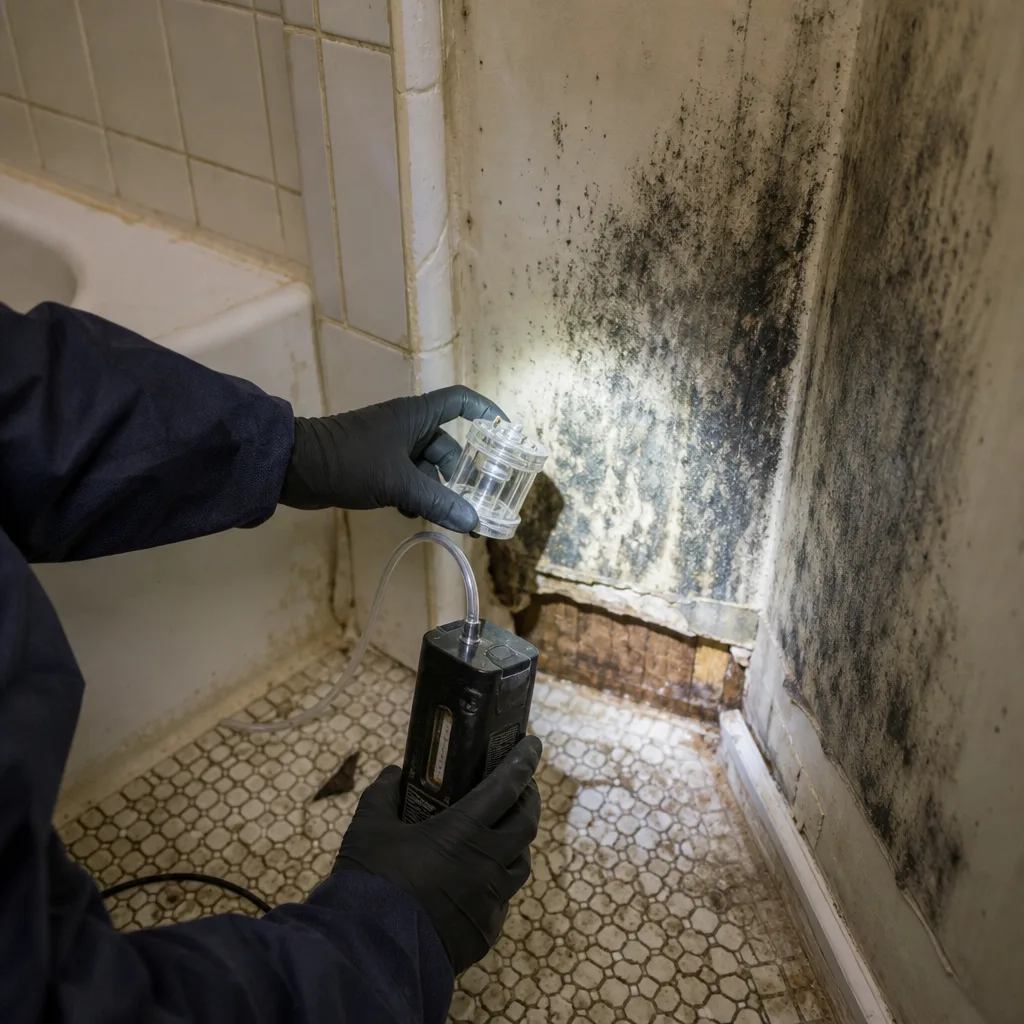
Septic Failure Cleanup
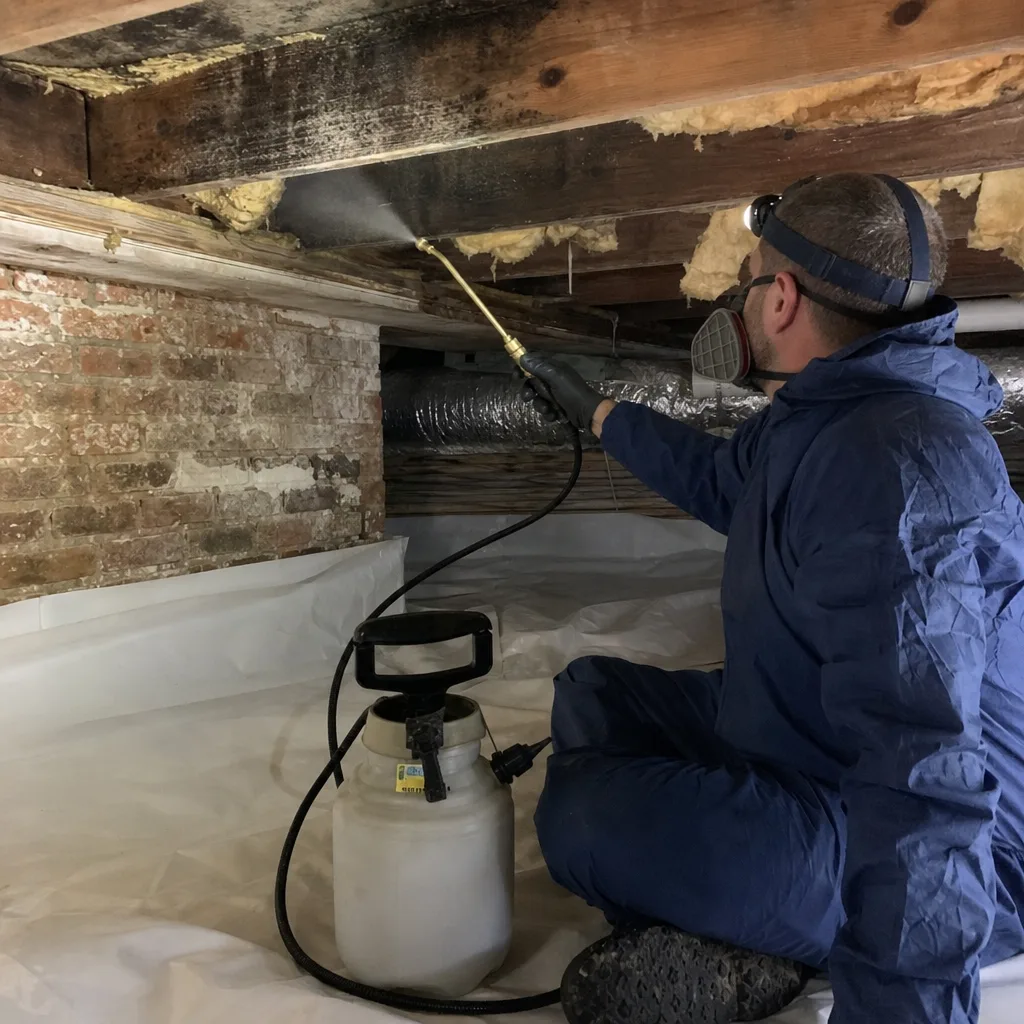
Less common in the Garment District proper, but some older buildings on the district’s edges still have septic or cesspool systems that predate the city sewer connections. When those fail, the cleanup requires the same black water protocol plus soil remediation. We handle it all, and we document it for the carrier.
What happens when you call
- 1
A real person answersNo phone trees - you reach a local pro.
- 2
You get an upfront price rangeHonest numbers before anyone is dispatched.
- 3
A background-checked tech heads outLicensed & insured, dispatched right away.
- 4
You approve before work beginsNothing starts until you say go.
Sewage Cleanup Costs in Garment District, NY
A sewage backup in the Garment District typically runs anywhere from $1,800 to $6,500 for extraction, sanitization, and structural drying, depending on how far the contamination spread and how many showrooms are affected. A contained toilet overflow limited to one bathroom might run $900 to $1,800. A black water loss that cascades through multiple floors of a pre-war loft can exceed $15,000 when you factor in textile pack-out, drywall removal, floor drying, and antimicrobial treatment. The big swing factors are square footage affected, whether fabric inventory needs emergency relocation, and whether the building’s original hardwood or built-ins require special drying. We give you a written scope before any work starts, with a straight number. No surprises on the bill, and we bill your carrier directly.
We Also Serve Cities Near Garment District
Floodline Restoration Co. of Manhattan handles sewage cleanup and full restoration work across the surrounding area, including Fairview, Harrison, East Bronx, and Hunts Point. If you’re near the Garment District and dealing with water, fire, mold, or storm damage, call the same number and talk to the same live dispatch team.
Garment District Sewage Cleanup Questions, Answered
How quickly can mold start growing on drywall after a sewage backup in a Garment District loft?
Mold can begin growing within 24 to 48 hours in a heated Manhattan loft building, which is why extraction and drying equipment should be running the same day as the loss. In the Garment District’s steam-heated pre-war buildings, indoor temperatures in the 70s and high humidity from sewage create ideal mold conditions. We set containment and start drying immediately to stop it.
Do we need to evict showroom staff during sewage cleanup, or can they keep working while you dry?
During active black water extraction and the first 24 hours of drying, anyone not wearing PPE should stay out of the affected area. We build containment barriers with negative air pressure so unaffected showroom floors can keep operating. Once sanitization is complete and air scrubbers have run, staff can typically return to the space while structural drying continues in contained zones.
What happens if a sewage backup soaks bolts of fabric or finished garments in our showroom?
Contaminated textiles need immediate pack-out to a facility with textile cleaning capabilities, not just a dry cleaner down the street. We coordinate that move and document the inventory for your insurance claim. Some natural fibers like silk and wool can be restored if treated within hours; synthetics respond better to aggressive washing. Time is the enemy, which is why we treat textile salvage as an emergency within the emergency.
Are older cast-iron waste lines in Garment District buildings more likely to fail than modern PVC?
Yes, significantly. Cast-iron waste stacks from the 1910s through 1940s corrode from the inside out, and a joint that looks solid from the outside can have the wall thickness of an eggshell. When pressure hits, the weak joint fails. Modern PVC doesn’t corrode and is far more forgiving. We can’t rebuild your building’s plumbing, but we can identify the failure pattern and document it for your property management so repairs address the root cause.
How does the fashion calendar affect sewage cleanup timing in the Garment District?
A water loss the week before New York Fashion Week is a different job than one in mid-August. Showrooms have buyer appointments scheduled weeks in advance, and a missed appointment can mean a lost season’s orders. We adjust to that reality: around market weeks, we run multiple crews, extend hours, and compress the drying schedule with additional equipment so you’re back open when your buyers walk in.
How fast can you actually get to a sewage backup in the Garment District?
Typically 45 minutes or less from your call. Our dispatch operates from the New York City office and crews are stationed to serve the Garment District directly. Call (917) 924-4221 and a live person answers, gathers your address, and starts the dispatch. We’ve been on site inside 30 minutes for showroom buildings along Seventh Avenue.
Will my insurance cover sewage backup cleanup in a commercial loft building?
Most commercial property policies cover sudden and accidental sewage discharge, but coverage details vary widely. Some policies have specific sewage backup endorsements with dollar caps. We provide the documentation, photos, moisture logs, and line-item scope your carrier needs to process the claim, and we communicate with the adjuster directly so the claim moves faster.
What should I do in the first 30 minutes after discovering a sewage backup?
Stop using all water in the building, shut off electrical power to the affected area if you can safely reach the panel, keep people away from the black water, and call us at (917) 924-4221. Don’t run HVAC systems, don’t try to push water toward drains, and don’t move contaminated materials through clean showroom space. Document what you can with photos from a safe distance, then let our crew handle the rest.
Serving Garment District, NY - Our Local Coverage Area
We’re based in the Garment District area and know this community well. Use the map below to see our service coverage - if you’re nearby, we can almost certainly help.
The Pre-War Loft Sewage Playbook: Why the Garment District Is Different
Nowhere else in Manhattan has this density of irreplaceable inventory sitting directly above century-old sewer infrastructure. The Garment District’s 10-to-20-story loft buildings were built between 1910 and 1940, and their cast-iron and galvanized waste lines were sized for light manufacturing, not for the water-intensive showroom operations that occupy those floors today. A single backflow in a basement can flood multiple showrooms within minutes. When we respond to a sewage loss on West 38th Street, we’re not just extracting water; we’re making salvage decisions about bolts of silk that cost $40 a yard wholesale. That’s the information-gain playbook for this neighborhood: you can’t treat a Garment District backup like a suburban basement flood.
Last February, we were called to a Class A loft on West 38th Street after a 4-inch cast-iron waste line split during a hard freeze. Raw sewage from the uppermost floors had already cascaded through two showrooms and into a basement sample archive, soaking bolts of silk and wool. Our crew set up containment and negative air before beginning black water extraction, then used moisture mapping and drying logs to track the drying of the original hardwood floors and built-in shelving. Within 72 hours, we had the affected rooms back to pre-loss condition using air movers and dehumidifiers, and the showroom was able to open for its scheduled buyer appointments.
That’s the work. It’s not glamorous. It’s what this neighborhood requires when the plumbing finally gives out. Call (917) 924-4221 and you’ll get a live person who knows the Garment District, knows the buildings on your block, and knows exactly what to do next. Estimates are free. The inspection is free. The certainty you’ll get from talking to a real crew is worth the call.
Written by Curt Bowman, Owner at Floodline Restoration Co. of Manhattan, founded 2010.