
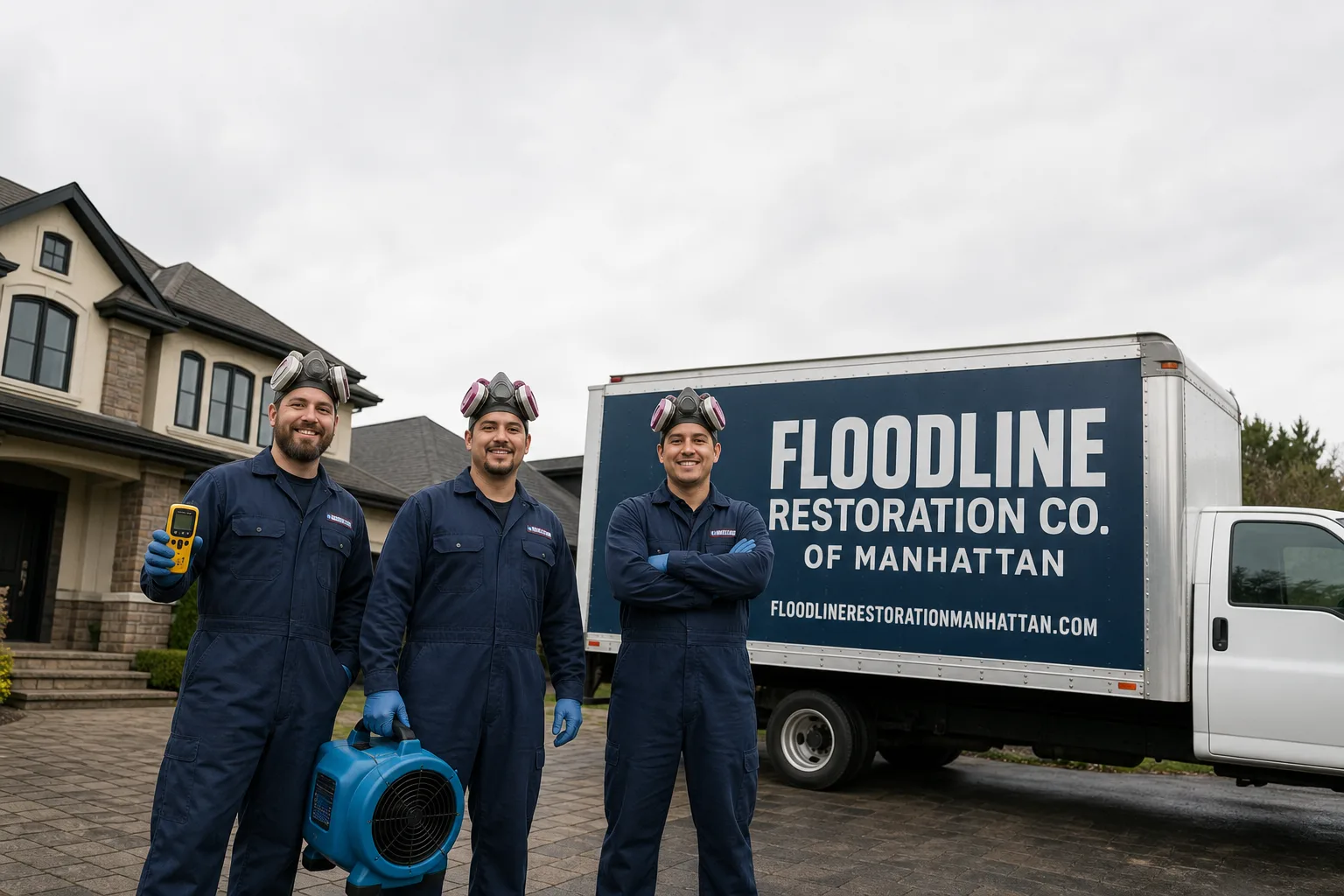
Free visual inspection and a written scope of work before any mitigation begins - photos, moisture readings, and drying logs go in your claim file
The scope we write is the scope we bill. Anything new gets shown to you, in writing, before we touch it.






 Before
 After
After Before
 After
After Before
 After
After24/7 Emergency Sewage Cleanup in Lawrence
When a sewage backup hits a Lawrence home, the clock starts immediately. Black water from a failed ejector pump or backed-up lateral is Category 3 water, carrying bacteria, viruses, and whatever else the sewer line was carrying. It soaks into plaster, hardwood, and masonry fast, and every hour it sits, the damage spreads deeper and the restoration bill climbs higher. Our crews answer live at (917) 924-4221 and we dispatch into Lawrence within 45 minutes, not next morning. The first visit includes a free visual inspection, a moisture map, and a written plan. Extraction usually starts that same visit.
Key Takeaways
- Lawrence’s saltwater flood history makes every sewage backup a Category 3 contamination event, not a routine plumbing fix.
- Most Lawrence sewage backups cost $1,800-$4,600 to clean and dry properly, with reconstruction billed separately when custom finishes are involved.
- We answer live 24/7 and dispatch crews into Lawrence within 45 minutes for emergencies.
- We bill your carrier directly and handle adjuster communication from the first moisture reading to the final scope.
- The 90-Day Done Right Promise covers every phase, in writing, with no argument if something isn’t right.
Understanding Sewage Cleanup Severity in Lawrence Properties
Not every sewage event is the same, and Lawrence’s housing stock makes severity calls more complicated than in newer inland suburbs. A toilet overflow that stays on tile and gets cleaned within the hour is one thing. A backed-up main that pushes black water through three rooms of 1930s parquet is another entirely. We classify by water category, affected materials, and saturation depth. In Lawrence, where many homes sit on masonry foundations and plaster-and-lath walls, Category 3 water wicks upward through old plaster far beyond the visible spill line. Salt-laden groundwater from Jamaica Bay accelerates corrosion in cast-iron laterals and brass traps. That means what looks like a contained backup may have already compromised the structural drying profile of the slab and the lower wall cavities. Our techs use thermal imaging and penetrating moisture meters from Dri-Eaz to map what you can’t see. The reading on day one drives every decision after.
Why Lawrence Property Owners Choose Floodline Restoration Co. of Manhattan
- 45-minute response commitment in Lawrence. A live dispatcher takes your call, confirms the address, and a crew rolls. We don’t route you to voicemail at 2 a.m.
- Live answer, every hour, every day. No phone tree. No “leave a message and we’ll call back.” A person picks up, takes the details, and starts dispatch.
- IICRC-certified crews, trained to WRT and AMRT standards. That’s Water Restoration Technician and Applied Microbial Remediation Technician. The certification matters when the water is Category 3.
- Free visual inspection with every emergency call. Before we touch anything, you get eyes on the damage and a straight explanation of what we found and what it needs.
- Direct insurance billing. We deal with your adjuster. You don’t carry paperwork between carriers and contractors. That’s our job.
- One crew from extraction to reconstruction. The same certified techs who extract the black water run containment, log daily moisture readings, and rebuild the custom millwork when it’s time. No mid-job handoff to a crew you’ve never met.
Floodline Restoration Co. was founded in 2010 by Curt Bowman, built around a dispatch board, not a sales desk. Our crews are background-checked, uniformed, and trained to IICRC, RIA, and IFA standards for our Commercial Restoration in Lawrence. We use Phoenix and Dri-Eaz equipment on every job, and we stand behind the work with the 90-Day Done Right Promise in writing. If it isn’t done right, we make it right. No paperwork battles, no arguing. That’s the Keystone Standard, and it’s in every contract we hand a Lawrence homeowner.
Our Sewage Cleanup Process
Inspection & Assessment
We arrive, walk the affected space, and take moisture readings from flooring, walls, and sub-surfaces. The goal is to find the true edge of contamination, not just the visible spill. In Lawrence homes with plaster-and-lath, this often means opening small inspection ports at the base of walls where Category 3 water has wicked upward.
Extraction & Stabilization
Black water comes out first. We use truck-mounted or portable extraction units to pull standing sewage, then stabilize the area with secondary extraction from saturated carpet, padding, and subfloor cavities. If the backup involves an ejector pump failure, we assess the pump and backwater valve before we start drying.
Drying & Dehumidification
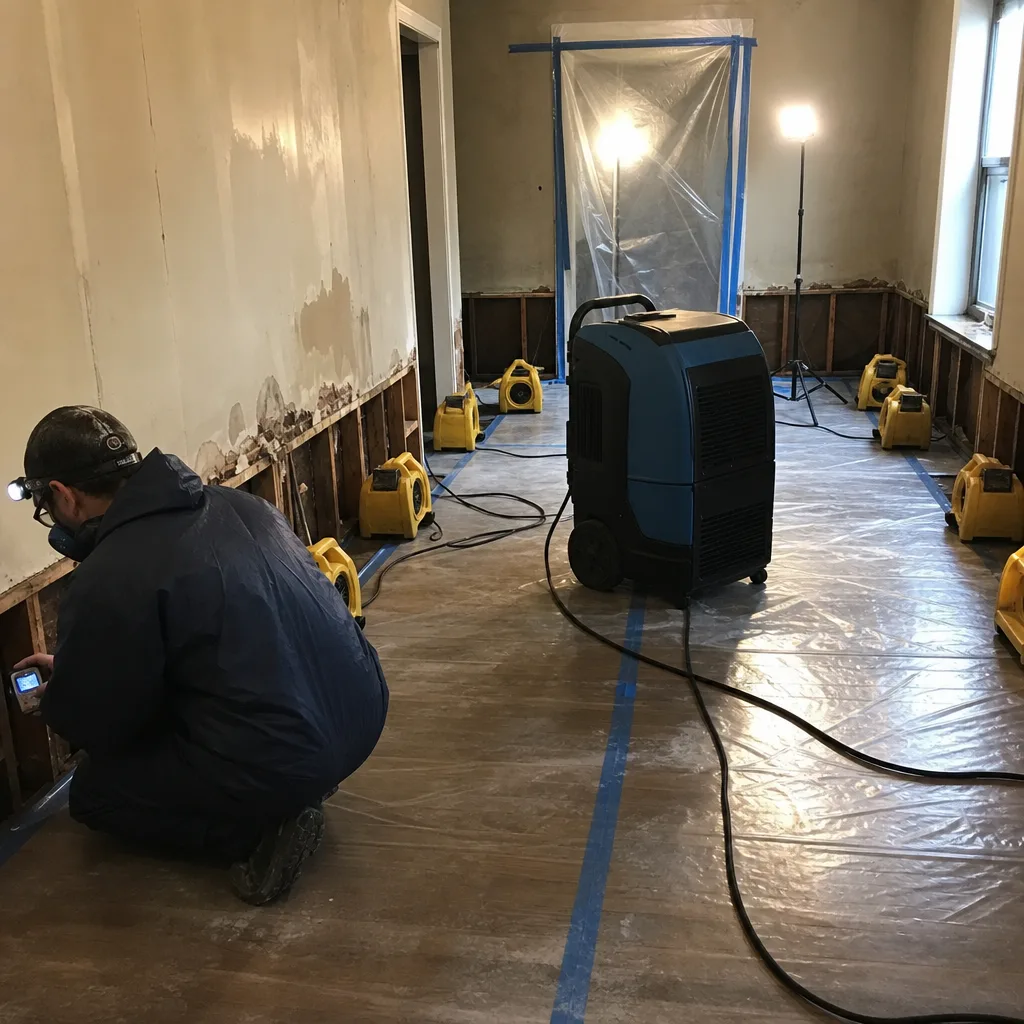
For sewage, drying is not the first step in decontamination, but it follows within hours of extraction. We set heavy-duty dehumidifiers and HEPA-filtered air movers, taking daily moisture readings until sub-surfaces hit the dry standard. In Lawrence masonry basements, this phase often runs longer than in framed suburban basements because concrete and brick release moisture slowly.
Cleaning & Sanitization
Every affected surface gets cleaned with EPA-registered antimicrobials during Sanitization Services in Lawrence, using products appropriate for Category 3 contamination. We also address salt contamination where groundwater or storm surge was involved. Salt is corrosive and hygroscopic. It attracts moisture and attacks metals, which means a surface that looks clean can still corrode from within if the salt isn’t neutralized.
Salt-Specific Treatment for Lawrence Homes
Lawrence sits between Jamaica Bay and the Atlantic. Salt-laden groundwater and storm surge leave chloride residue in porous materials long after the water is gone. We treat affected masonry, cast-iron, and finished wood surfaces for salt-specific corrosion. This step does not exist on standard restoration checklists, and skipping it is the most common failure mode we see in this village.
Repairs & Restoration
The same crew rebuilds what was removed. For Lawrence’s older homes, that can mean custom millwork, plaster patching, parquet flooring replacement, and matching original profiles. Salvage material gets documented before removal so the rebuild matches what was there, not just what’s available at the supply house.
Need Emergency Sewage Cleanup in Lawrence Now?
Crews minutes away, answering live 24 hours a day. The sooner we start, the less it costs.
Working With Your Insurance Company
We’ve handled sewage claims in Lawrence long enough to know how adjusters in this market read a loss. The question is always the same: was the damage mitigated promptly and documented properly? We document from the first hour. Photos of every room, moisture readings before and after extraction, daily drying logs, and a line-item scope of work that matches IICRC standards. Our team communicates directly with your adjuster, so you don’t have to explain why a Category 3 loss in a 1930s Tudor costs more than a freshwater pipe burst in a 1990s colonial. The saltwater factor is real, and we document it. That’s the difference between a claim that gets approved and one that gets nickel-and-dimed.
What We Provide Your Insurer
- Thorough documentation of the loss
- Photos of all damage, room by room
- Moisture readings and drying logs
- A detailed, line-item scope of work
- Direct coordination with your carrier
Current standing offers available to Lawrence homeowners: $50 Off Any Repair Over $250, $89 Seasonal Tune-Up, and the Senior & Veteran 5% Discount (always applied). These don’t expire and they stack when applicable.
Built for Lawrence’s Loss Calendar
Lawrence doesn’t have one sewage season. It has several. Nor’easter season from late fall through early spring pushes storm surge into Jamaica Bay and saturates the low-lying ground around Rockaway Turnpike and Central Avenue. When the bay rises, the sewer laterals that drain this village back up more often. Heavy rainfall in the spring and fall compounds it because the village sits so close to sea level that storm drains have nowhere to push water when the tide is high. Summer brings sudden thunderstorms and the occasional tropical system spinning up the Atlantic coast. Each one stresses the same aging ejector pumps, backwater valves, and cast-iron laterals in Lawrence’s 1920s-to-1960s housing stock. A pump fails during a nor’easter, the backup isn’t fresh water, and suddenly a finished basement with parquet and custom millwork is a Category 3 salt-contaminated site. That’s the call we get most often along Broadway and the streets running north toward the bay. The pattern repeats every season.
Sewage Cleanup Across Lawrence’s Neighborhoods
Lawrence’s housing stock shifts as you move across the village. The streets north of the Lawrence Yacht Club are dominated by substantial 1920s and 1930s Tudors and colonials with full masonry basements and older cast-iron sewer laterals. Those homes are the most vulnerable to salt-corroded main lines and below-grade sewage backups, and the cleanup requires longer structural drying because the masonry absorbs contaminated water. Over near Rockaway Turnpike, homes run a bit newer, often 1940s to 1960s, with slab foundations or shallow basements, which means water spreads horizontally rather than down into a deep crawl space. Between Central Avenue and the southern edge of the village, larger estates sit on generous lots, and those homes tend to have high-end finishes throughout the lower levels, so restoration means material-matching custom hardwoods and millwork, not standard drywall. The blocks around the Long Island Rail Road station carry a mix of older and newer construction, and we see more ejector pump failures there because many yards sit close to the water table and pumps run constantly. A Sewage Cleanup job in Lawrence means reading the house, not just the spill.
Specialized Sewage Cleanup Services We Offer in Lawrence
Sewage Backup Cleanup
A backed-up main or lateral is the most common emergency we handle in Lawrence. The defining factor here is that the water entering the home often carries salt, which changes the remediation path entirely. We treat every backup in this village as presumptively salt-contaminated until moisture and corrosion testing says otherwise.
Toilet Overflow Cleanup
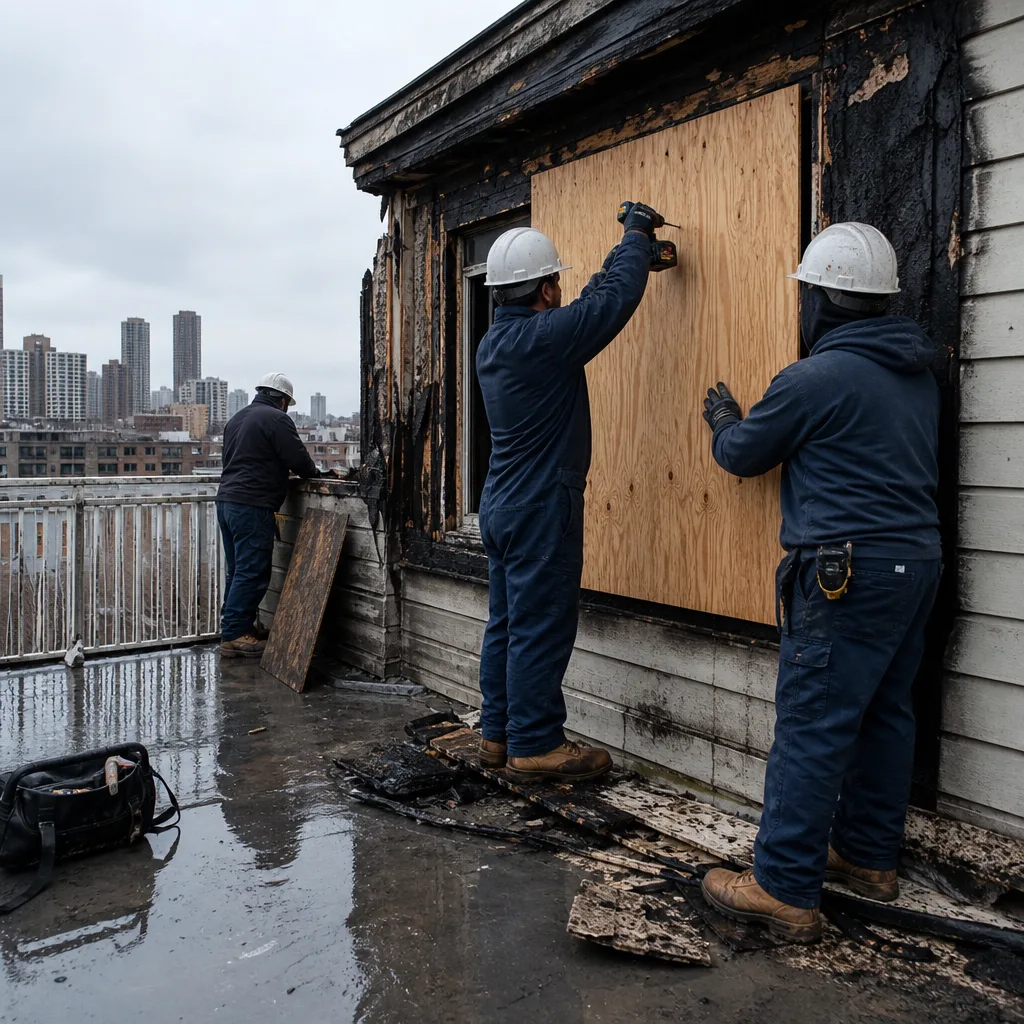
Even a bathroom-contained overflow is Category 3 water, but when it spills from a second-floor bath in an older Lawrence home, it travels down through plaster ceilings, hardwood subfloors, and custom trim. Our crews open walls, map the water, and dry the structure down to the dry standard before putting anything back.
Septic Failure Cleanup
Lawrence has a mix of sewer and septic systems, and the older homes on larger lots with septic fields face a different failure mode: saturated drain fields during high-water events push effluent back toward the house. The contamination is sewage, and the fix is not just pumping, it’s the full Category 3 restoration process.
Black Water Extraction
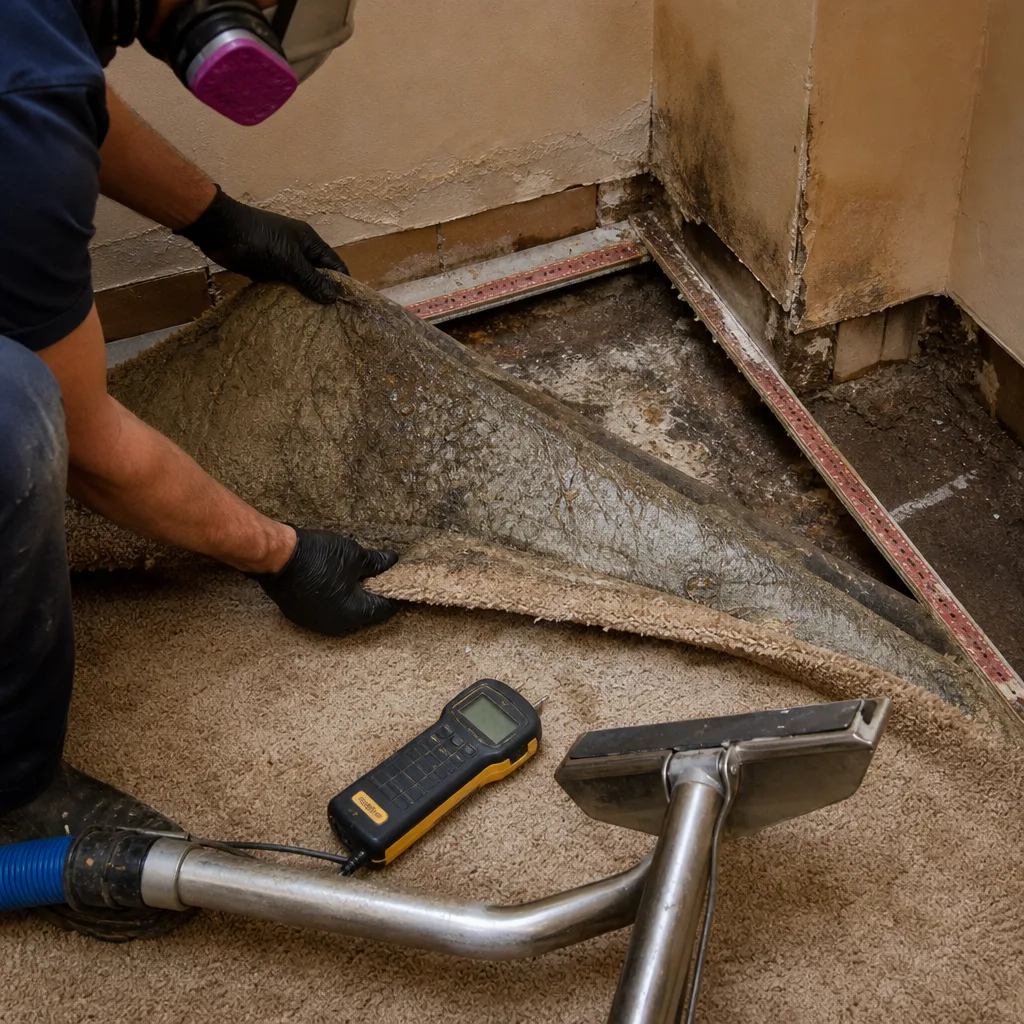
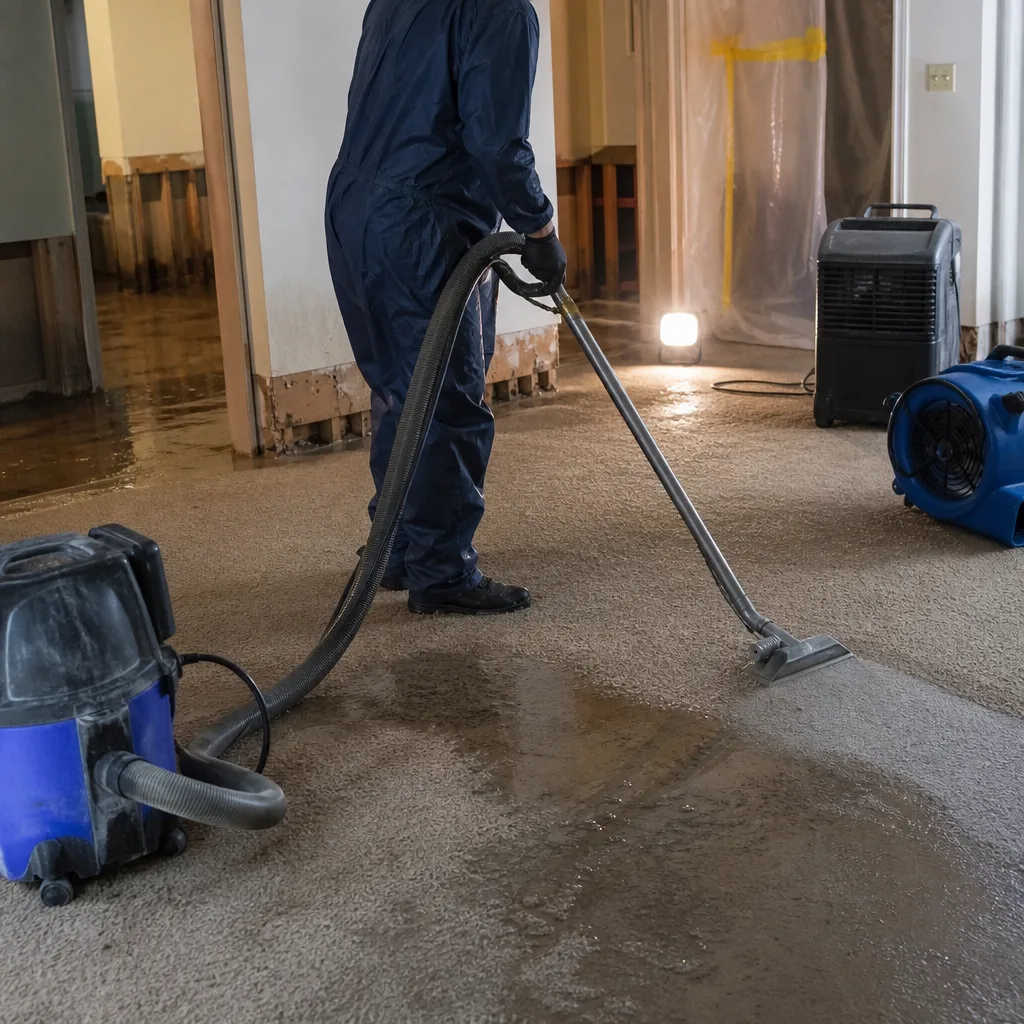
Black water extraction in Lawrence means more than pulling standing water. It means removing contaminated water from carpets, underlayment, subfloor cavities, and the spaces beneath baseboards. We use extraction units built for dense, debris-laden water, and we don’t leave wet material behind that will keep wicking contamination into the structure.
Sanitization & Disinfection
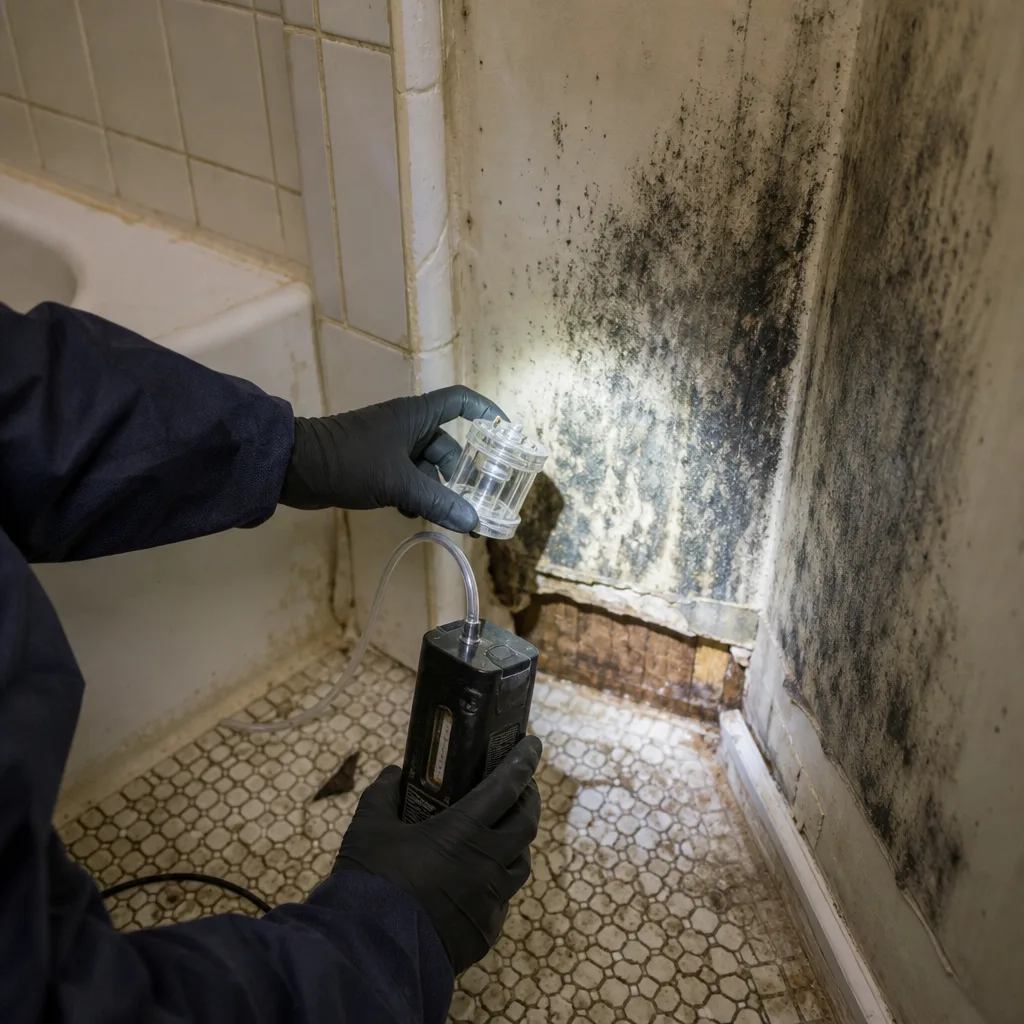
After the water is out, every affected surface gets treated with EPA-registered antimicrobials. We also neutralize salt residue from groundwater or storm surge because salt left in masonry and wood accelerates corrosion and re-attracts moisture. This step is what separates a Lawrence-appropriate sewage cleanup from a generic one.
Crawl Space Sewage Removal
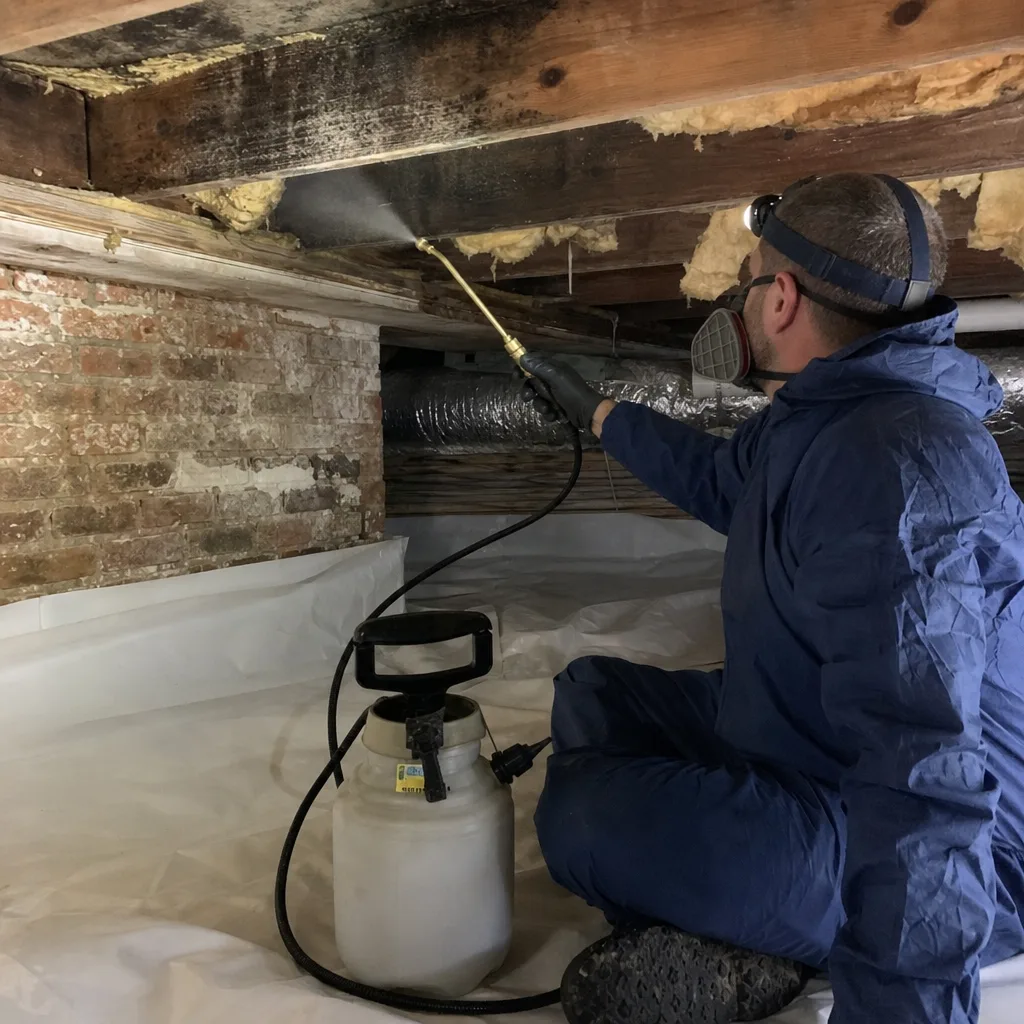
Homes with crawl spaces near the bay see a distinct problem: sewage water gets under the house and saturates the soil, the subfloor insulation, and the joists. We extract, remove contaminated insulation, treat the soil and framing, and dry the space with HEPA air movers so it doesn’t turn into a mold incubator.
What happens when you call
- 1
A real person answersNo phone trees - you reach a local pro.
- 2
You get an upfront price rangeHonest numbers before anyone is dispatched.
- 3
A background-checked tech heads outLicensed & insured, dispatched right away.
- 4
You approve before work beginsNothing starts until you say go.
Sewage Cleanup Costs in Lawrence, NY
Straight numbers for a Lawrence sewage cleanup: a contained bathroom overflow that stays on tile runs $750-$1,400. A basement backup with carpet, pad, and drywall affected typically runs $1,800-$3,200. A full Category 3 loss through multiple rooms with custom flooring and millwork runs $3,500-$6,000+, with reconstruction billed separately if original materials need to be matched. Salt-specific decontamination adds $350-$900 depending on the affected area, and it’s non-negotiable in this village because skipping it guarantees corrosion returns within a year. What moves the price: how far the water traveled, what it saturated, whether plaster-and-lath walls need to be opened, and whether masonry slab drying is required. The free visual inspection gives you a firm scope in writing before any work starts, and direct insurance billing means the adjuster sees the same line items you do. Call (917) 924-4221 for an exact quote. Estimates are free.
We Also Serve Cities Near Lawrence
Floodline Restoration Co. crews respond across the Five Towns and the surrounding South Shore. In addition to Lawrence, we provide 24/7 sewage cleanup in Cedarhurst, Inwood, Far Rockaway, and Woodmere. If you’re a homeowner in one of those communities, the same live dispatch, 45-minute response, and 90-Day Done Right Promise apply.
Lawrence Sewage Cleanup Questions, Answered
How does Lawrence’s tidal flooding affect sewage backup severity compared to inland towns?
Lawrence’s position between Jamaica Bay and the Atlantic means sewage backups here often carry saltwater, which is more corrosive to cast-iron pipes, brass traps, and electrical components than freshwater. Inland towns don’t face chloride-laden groundwater pushing into sewer laterals during tidal surges. Every sewage event in Lawrence gets treated as salt-affected unless testing proves otherwise, because salt accelerates material failure long after the visible water is gone.
What special precautions do your techs take for sewage cleanup in Lawrence homes with plaster-and-lath walls?
Plaster-and-lath wicks Category 3 water up to four feet above the visible spill line, hiding contamination behind original crown molding and baseboards. We open small inspection ports at the base of affected walls, map the moisture with penetrating meters, and run drying and decontamination behind the plaster rather than assuming the surface tells the full story. This is slower and more invasive, but it’s the only way to avoid a hidden contamination pocket that turns into mold months later.
Can carpeting in a Lawrence basement be saved after a sewage backup, or does it always need replacement?
Carpet and carpet pad contaminated by Category 3 water are almost always removed and discarded. Pad is never salvageable. Carpet itself is porous, traps pathogens in the backing, and cannot be sanitized to a standard anyone in your family should trust. The exception is a tiny, immediately cleaned spill on a non-porous surface, but for any real sewage backup, carpet comes out. Hard surface flooring can sometimes be dried and refinished, depending on material and saturation depth.
Why do Lawrence homes with masonry foundations need longer structural drying after sewage extraction?
Concrete, brick, and stone absorb contaminated water slowly and release it even more slowly. A framed basement dries in hours. A Lawrence masonry foundation may hold moisture for a week or more after extraction, especially below grade where evaporation is limited. We take daily moisture readings and keep dehumidifiers running until the masonry meets the dry standard. Pulling equipment too early is the most common cause of recurring odor and hidden contamination in this village’s older homes.
What does your crew do to protect custom hardwoods and millwork during sewage cleanup in Lawrence estates?
We photograph and measure every original finish before removal. Hardwood parquet, custom built-ins, and millwork are documented, painstakingly removed, and either dried and refinished or matched by profile for replacement. The goal is that the room reads the same as it did before the loss, not that it gets replaced with something close enough from a big-box catalog. Our same crew does the rebuild, so the person who removed your original crown molding is the person who puts it back.
How fast can you actually get to a Lawrence address for a sewage backup?
We commit to 45 minutes for emergency dispatch in Lawrence. A live dispatcher answers, takes your address, and the nearest crew rolls. We’ve been serving this village long enough to know the shortcuts from Rockaway Turnpike to Central Avenue and the side streets off Broadway. Extraction is running the same visit in most cases, which matters because every hour of standing sewage pushes contamination deeper into plaster, hardwood, and masonry.
Does homeowners insurance cover sewage backup cleanup in Lawrence?
Standard policies typically cover sudden and accidental sewage backup from an internal failure like a broken pipe or a failed ejector pump. Damage from rising groundwater or exterior flooding usually requires separate flood insurance or a sewer backup endorsement. We’ve handled claim documentation for both scenarios in Lawrence, and we coordinate directly with your adjuster so the coverage question gets answered from the actual scope of the loss, not a generic policy summary.
What should I do in the first 30 minutes after discovering a sewage backup in my Lawrence home?
Turn off electricity to the affected area if you can do so safely from a dry location. Keep children, pets, and anyone with respiratory conditions away. Don’t flush toilets or run water, which pushes more waste into the backup. Don’t try to clean it yourself with a shop vac or household cleaners; Category 3 water requires professional extraction and antimicrobial treatment. Call (917) 924-4221 and we’ll be headed your way.
Serving Lawrence, NY - Our Local Coverage Area
We’re based in the Lawrence area and know this community well. Use the map below to see our service coverage - if you’re nearby, we can almost certainly help.
Half a Century of Salt, Sewage, and the Right Way to Fix It
Lawrence sits on a low-lying peninsula squeezed between Jamaica Bay to the north and Atlantic barrier beaches to the south. Much of the village is under 10 feet above sea level. Hurricane Sandy put large sections under storm surge in 2012, and every major nor’easter since has reminded homeowners that sewage and saltwater are intertwined here. The dual exposure means floodwaters can push from the bay side and the ocean side at once, trapping the community between two sources of water and dramatically slowing drainage. Saltwater corrodes cast-iron laterals, brass traps, and electrical systems far faster than the freshwater floods inland towns deal with. Post-Sandy, the Nassau County AHJ and insurance adjusters working this area adopted a strict standard: any wiring below the first-floor ceiling with saltwater exposure is treated as failed and replaced, not remediated. That standard still governs re-opening permits today, and it shapes how we scope every sewage loss in Lawrence. If the water in your basement is sewage, and the sewage is salt-laden, the remediation path is different. Not slightly different. Fundamentally different. We treat it that way from the first moisture reading.
In a 1930s Tudor on a street just north of the Lawrence Yacht Club, our techs found a sewage backup that had pushed black water through three rooms of original parquet flooring. The home’s cast-iron main had been weakened by decades of salt-laden groundwater. We cut out and packed out the saturated oak, ran containment with HEPA air movers from Dri-Eaz, and took moisture readings down to under 12% before rebuilding the custom millwork to match the pre-loss profile. That job didn’t happen in a generic suburb. It happened in Lawrence, where salt, age, and high-end finishes collide in the same basement. That’s the job we’re built for.
If you’re dealing with a sewage backup in Lawrence, call (917) 924-4221. A live person answers. A crew shows up. And the work gets done right, backed in writing by the 90-Day Done Right Promise.
Written by Curt Bowman, Owner at Floodline Restoration Co. of Manhattan, serving Lawrence, NY.