
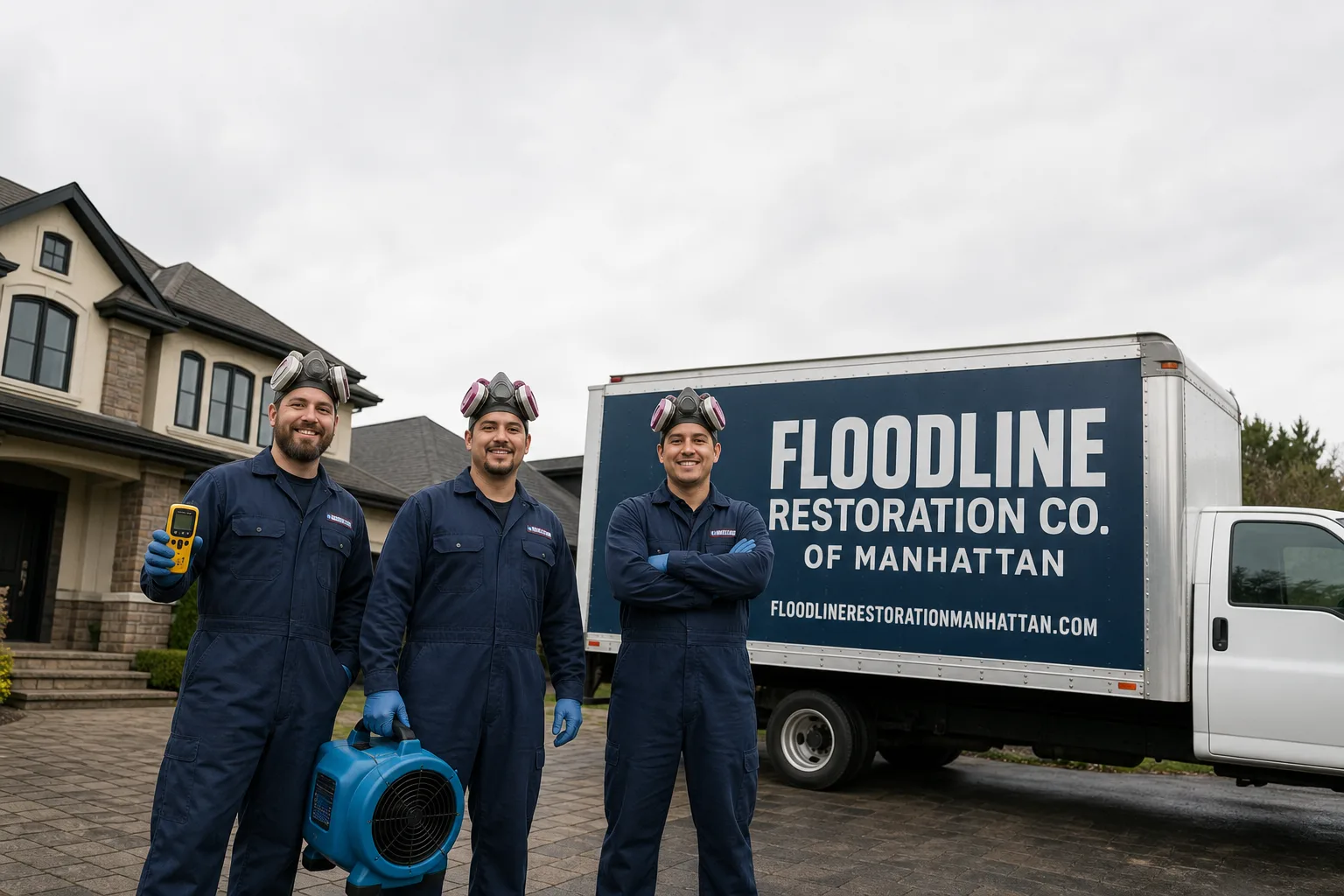
Free visual inspection and a written scope of work before any mitigation begins - photos, moisture readings, and drying logs go in your claim file
The scope we write is the scope we bill. Anything new gets shown to you, in writing, before we touch it.






 Before
 After
After Before
 After
After Before
 After
After24/7 Emergency Sewage Cleanup in Montrose
A sewage backup in Montrose is a category 3 water event, and the first hour determines how much of your home can be saved. Our crews reach properties throughout the Montrose area with extraction equipment running the same visit, not the next day. Call (917) 924-4221 now and a live dispatcher answers at any hour. You won’t get a recording. You’ll get a background-checked technician dispatched toward your address while you’re still on the line.
Raw sewage carries bacteria, viruses, and parasites that move fast through porous materials. In Montrose’s older homes, where converted bungalows and mid-century ranches sit close to the Hudson’s water table, that contamination finds its way into crawl spaces and wall cavities within hours. The sooner extraction starts, the less demolition you face. We’ve handled backups off River Road at two in the morning and had the sewage extracted before sunrise.
Understanding Sewage Cleanup Severity in Montrose Properties
Sewage cleanup operates on a three-category water classification system, and Montrose homes present a specific challenge: many of them sit too close to the groundwater line for standard drying timelines to work. Category 3 water, what the industry calls black water, contains pathogens from human waste, and it demands full containment, antimicrobial treatment, and often removal of affected drywall, insulation, and flooring. No amount of household bleach fixes a category 3 event. The material that soaks up sewage gets cut out and bagged.
Montrose’s housing stock makes this more complicated than a typical Westchester job. The seasonal riverfront bungalows along River Road and the surrounding streets were built as warm-weather retreats in the 1930s through 1950s, then converted to year-round homes. Their foundations are shallow. Their crawl spaces are minimally waterproofed. When a sewage line backs up into one of these structures, the black water doesn’t pool on a concrete slab. It seeps into dirt floors and vapor-permeable foundation walls, where moisture mapping often shows saturation extending far beyond the visible spill. That’s why our techs run moisture meters and thermal imaging before we quote a single dollar. The visible mess in a Montrose crawl space is usually half the story.
Why Montrose Property Owners Choose Floodline Restoration Co. of Manhattan
- 45-minute response commitment. We dispatch crews from the Montrose area with a stated arrival window, and we hold ourselves to it. Emergencies on River Road, near the VA campus, or up by the Cortlandt border get the same speed.
- A live person answers, 24 hours a day. No phone trees, no callbacks. The dispatcher who picks up at 2 a.m. is the same one who routes the truck.
- IICRC-certified crews. Our technicians train to the IICRC standards for water restoration, applied microbial remediation, and structural drying. They carry the certification, not just the title.
- Free visual inspection. Before any scope is written, we look. You get a clear assessment, not a sales pitch.
- Direct insurance billing. We coordinate with your carrier, provide the documentation they need, and bill them directly where coverage applies.
- One team from extraction to rebuild. Sewage cleanups often end with removed drywall and flooring. The same crew that extracts the black water is certified to rebuild what came out.
Our Sewage Cleanup Process
Inspection & Assessment
We trace the source, classify the water, and map moisture throughout the affected area using hygrometers and thermal imaging. In Montrose’s converted bungalows, this means checking crawl spaces and foundation walls even when the visible spill is in a bathroom or utility room.
Extraction & Stabilization
Category 3 water is pumped out using truck-mounted extraction units, then the affected materials are removed. Carpet, pad, and drywall that absorbed sewage are cut out and bagged on site to stop cross-contamination.
Drying & Dehumidification
Here’s where Montrose jobs differ from inland work. The Hudson River’s persistent humidity slows evaporation, so our crews run extended dehumidification cycles with Phoenix and Dri-Eaz units, most jobs in converted seasonal structures require additional drying days beyond standard protocols.
Cleaning & Sanitization
We apply EPA-registered antimicrobials to all affected structural surfaces. This step kills the pathogens black water leaves behind, and it’s the difference between a cleanup and a recurring odor problem.
Crawl Space Sewage Removal
For Montrose homes with dirt-floor crawl spaces, we remove contaminated soil, install or replace vapor barriers where needed, and run air scrubbers with HEPA filtration until air quality readings return to normal.
Repairs & Restoration
The same crew that extracted the sewage replaces the drywall, flooring, and insulation. You don’t wait for a second contractor. The job is finished under the 90-Day Done Right Promise.
Need Emergency Sewage Cleanup in Montrose Now?
Crews minutes away, answering live 24 hours a day. The sooner we start, the less it costs.
Working With Your Insurance Company
Montrose homeowners filing a sewage claim need documentation that holds up to adjuster scrutiny. We’ve handled enough Hudson Valley claims to know what carriers ask for, and what they push back on. From the first hour on site, we photograph every affected area, log moisture readings, and build a line-item scope that matches industry-standard estimating software your adjuster already knows. The homeowner never plays messenger. We talk to the carrier directly, answer their questions, and bill them where your policy covers the loss.
What We Provide Your Insurer
- Thorough documentation of the loss
- Photos of all damage, room by room
- Moisture readings and drying logs
- A detailed, line-item scope of work
- Direct coordination with your carrier
Built for Montrose’s Loss Calendar
Montrose sees sewage losses on a schedule that follows the Hudson Valley’s seasons. January and February bring freeze-thaw cycles that crack older foundation walls and shift aging waste lines, reopening paths for groundwater and septic seepage. March rains saturate soil already swollen from snowmelt, which pushes water into shallow, minimally waterproofed foundations and overwhelms older septic fields. Summer thunderstorm downpours overwhelm municipal storm drains near the riverfront and force backups through basement floor drains in mid-century homes. Nor’easters in the fall and early winter bring the hardest hits: tidal surge along the Hudson pushes river water into the same gravity-fed waste systems, and converted seasonal bungalows near the River Road corridor take on category 3 water through every crack and seam.
We plan around this calendar. Our crews know which Montrose streets flood first, which septic systems were installed before current setback rules, and which homes need ground-vapor barriers after a storm, not just dehumidifiers. That local knowledge cuts days off a drying timeline and thousands of dollars off the final bill when it’s applied from the first hour.
Sewage Cleanup Across Montrose’s Neighborhoods
The neighborhoods along Route 9A and down toward the river each present a different version of the same problem. Homes in the River Road corridor, the converted seasonal bungalows closest to the water, are the most vulnerable to post-storm sewage backups because their shallow foundations sit nearly at the water table. We regularly find crawl spaces here with soil moisture readings equivalent to a standing-water event weeks after a nor’easter. The streets around the Montrose VA campus and up toward Cortlandt Manor lean toward mid-century ranches with cast iron waste lines now past their service life. Those pipes crack at the joints after sixty years of Hudson freeze-thaw cycles, and the result is a slow seep that homeowners smell before they see. In the hillier sections toward Buchanan and the Stony Point border, gravity-fed septic systems installed decades ago back up during heavy rain when the soil reaches saturation. Each area needs a different drying protocol, and we adjust accordingly.
One field note from our own work: we pulled a category 3 black-water backup out of a converted seasonal bungalow off River Road after a nor’easter overwhelmed its legacy septic field. Our techs ran moisture mapping and found the crawl space still registering near-saturation soil moisture two weeks after the storm. We set containment, extracted the sewage, and ran air movers and dehumidifiers for five extra days before applying antimicrobial treatment and documenting drying logs to restore pre-loss condition. That’s the Montrose difference: standard drying timelines don’t hold this close to the river.
Specialized Sewage Cleanup Services We Offer in Montrose
Sewage Backup Cleanup
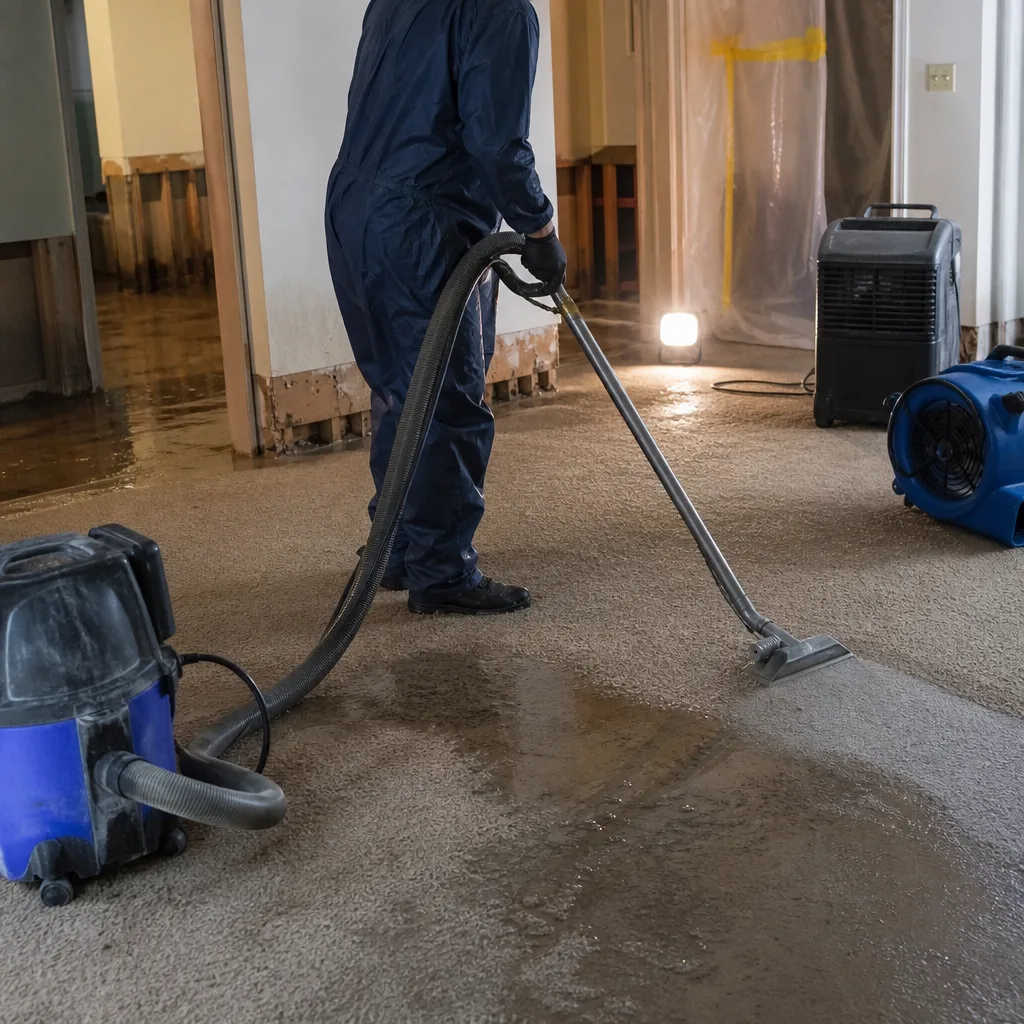
A sewage backup in a Montrose basement or crawl space is the most common call we get after heavy rain. We extract the black water, remove contaminated materials, and sanitize every affected structural surface. The key here is speed: the 48-hour mold window in Montrose’s humid river air is closer to 36 hours, so we prioritize same-visit extraction on every backup call.
Toilet Overflow Cleanup
Overflow from a toilet can be category 2 or category 3 water depending on what came up. We classify it on site, then extract, sanitize, and dry accordingly. In older Montrose homes with tile over wood subfloors, we check for water that tracked under the flooring and into the joist bays below.
Septic Failure Cleanup
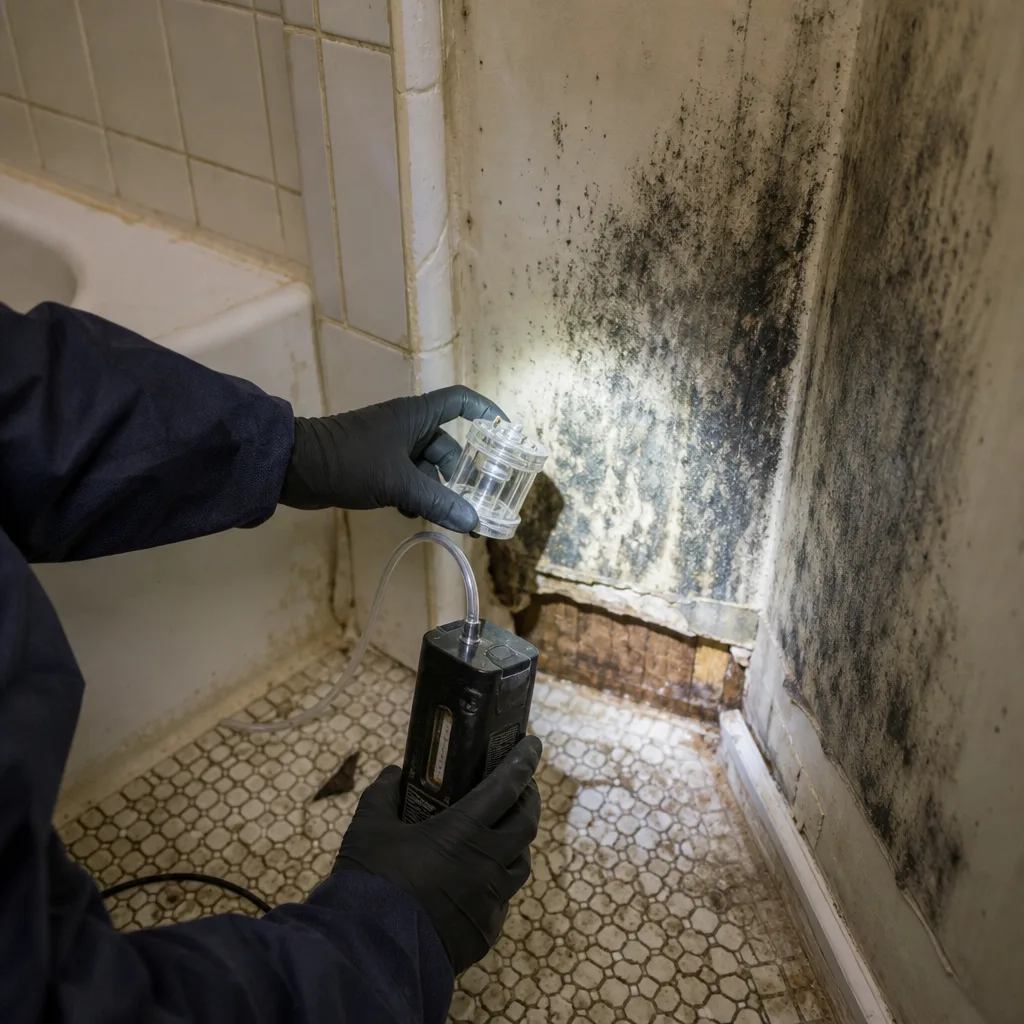
Legacy septic fields under Montrose’s converted cottages fail during saturated-soil conditions. When a septic system backs up, the sewage doesn’t always surface in one spot. We trace the migration path with moisture mapping, extract what surfaced, and coordinate with septic contractors where the field itself needs repair.
Black Water Extraction
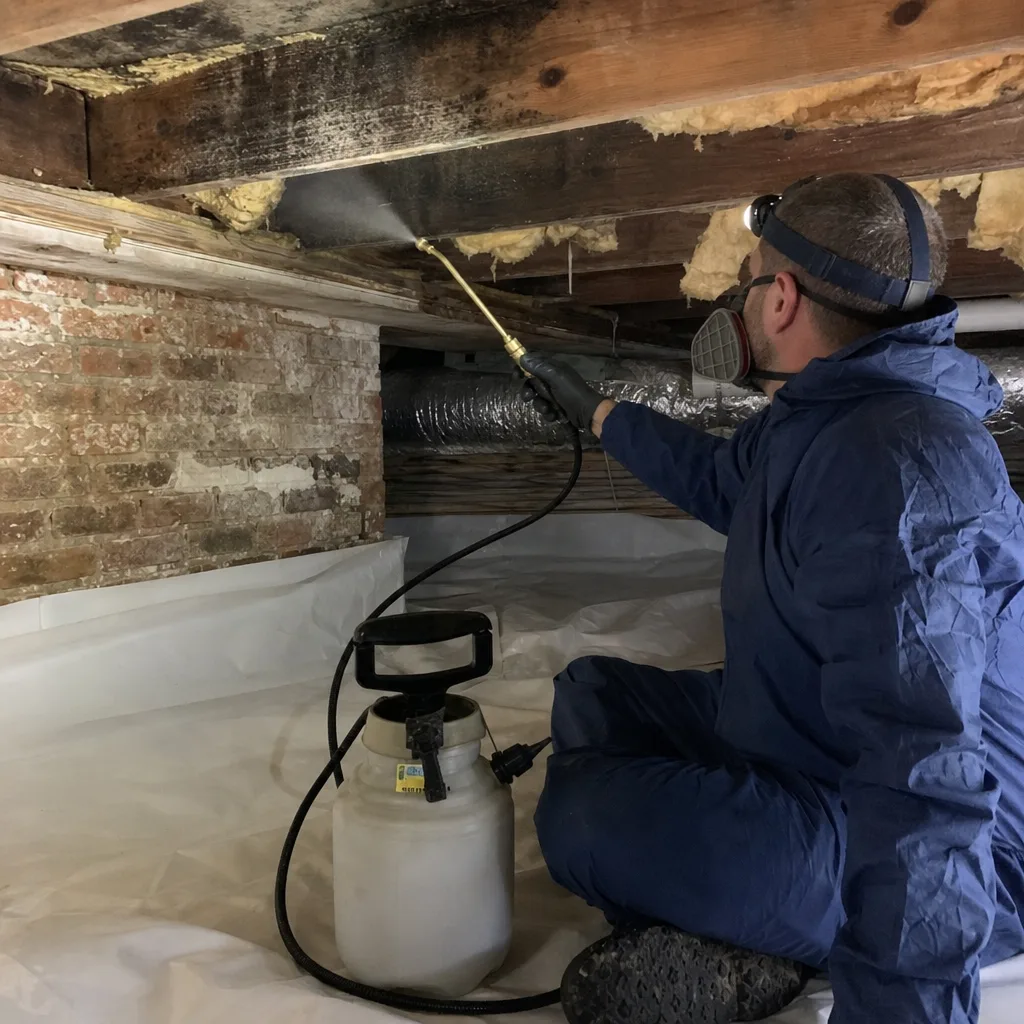
Category 3 black water demands full protective gear, containment barriers, and negative air pressure where contamination has spread. Our crews handle it the same way a hospital environmental team would, with HEPA air scrubbers running through the extraction and drying phases.
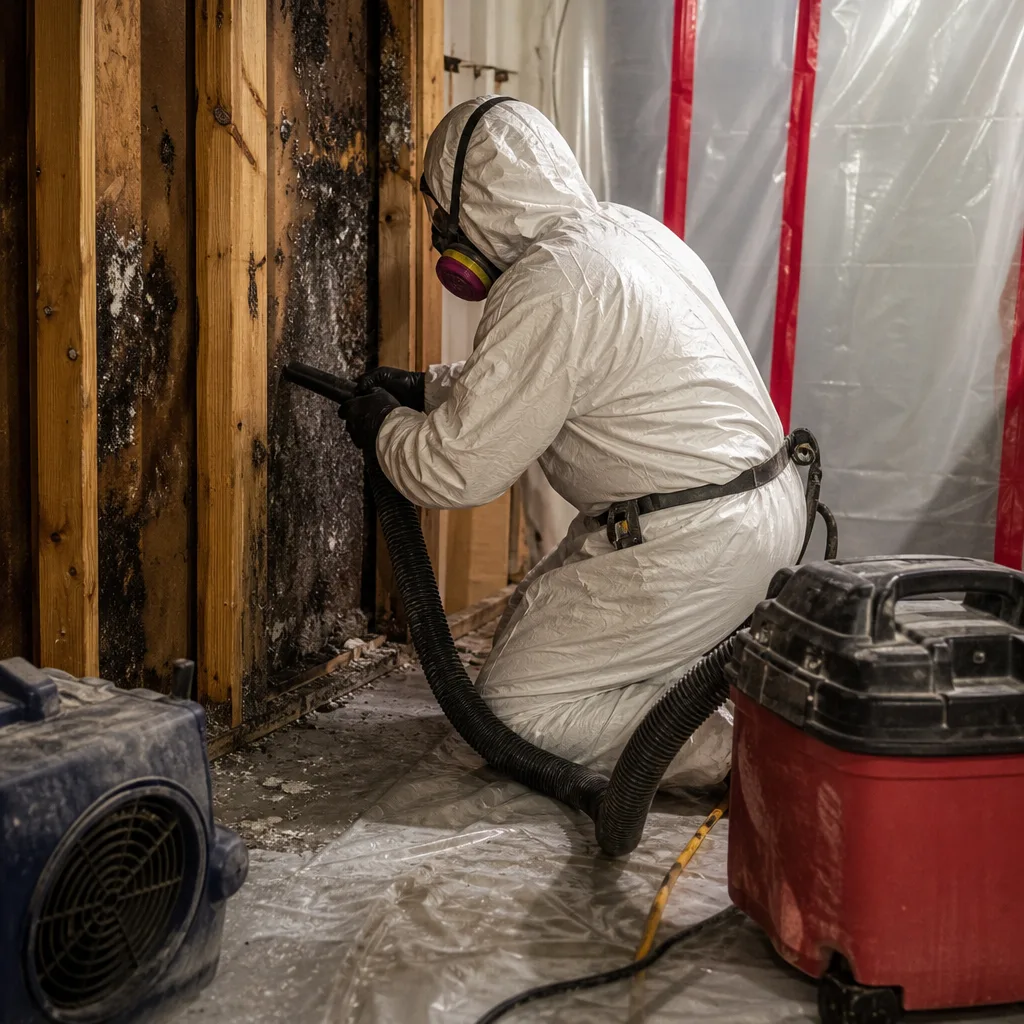
Sanitization & Disinfection
After sewage is extracted, the surfaces it touched still carry live bacteria. We apply EPA-registered antimicrobials to structural wood, concrete, and hard surfaces, then verify results with post-treatment testing. This is the step that prevents the smell from coming back months later.
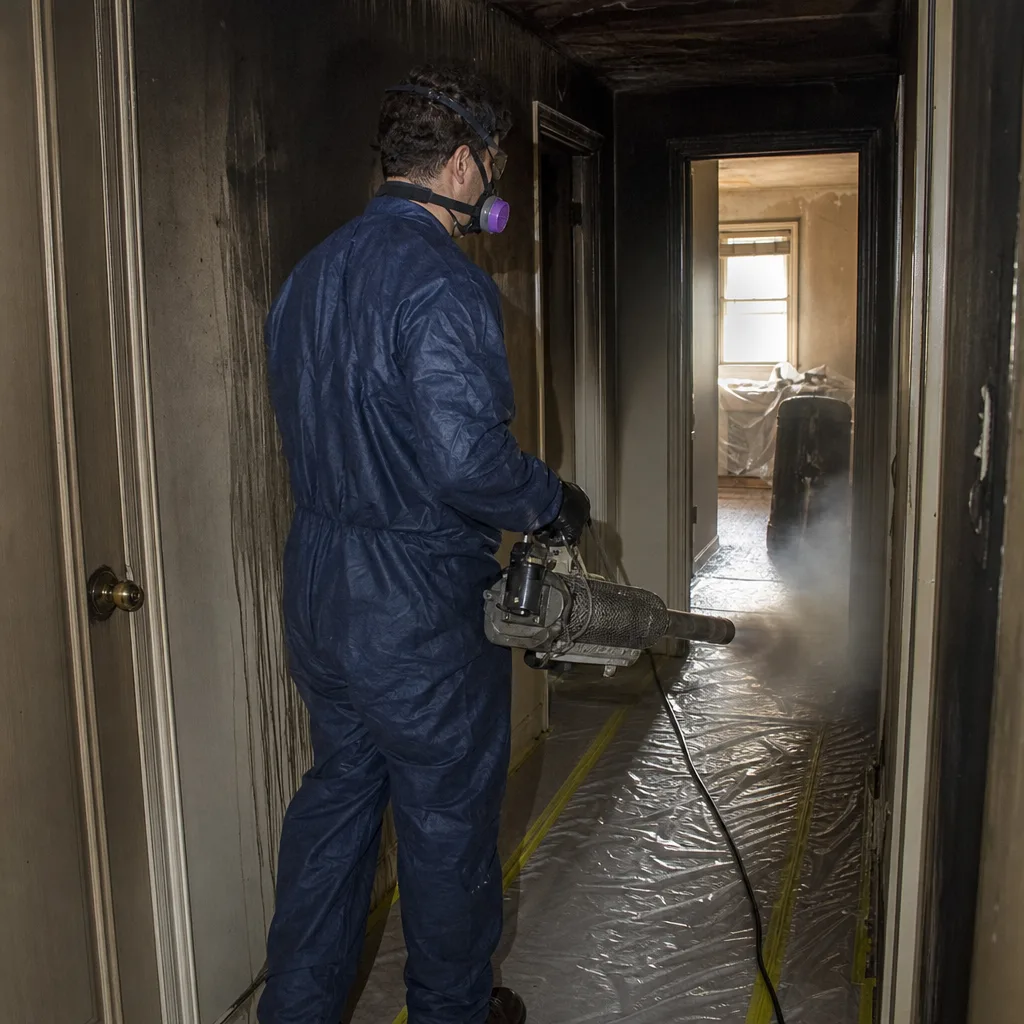
Crawl Space Sewage Removal
Montrose’s dirt-floor crawl spaces are the hardest hit and the most overlooked. Contaminated soil comes out, ground-vapor barriers go in, and dehumidification runs until the wood above reaches its dry standard. Skipping this step is why some Montrose homes get mold outbreaks eight weeks after a “completed” cleanup.
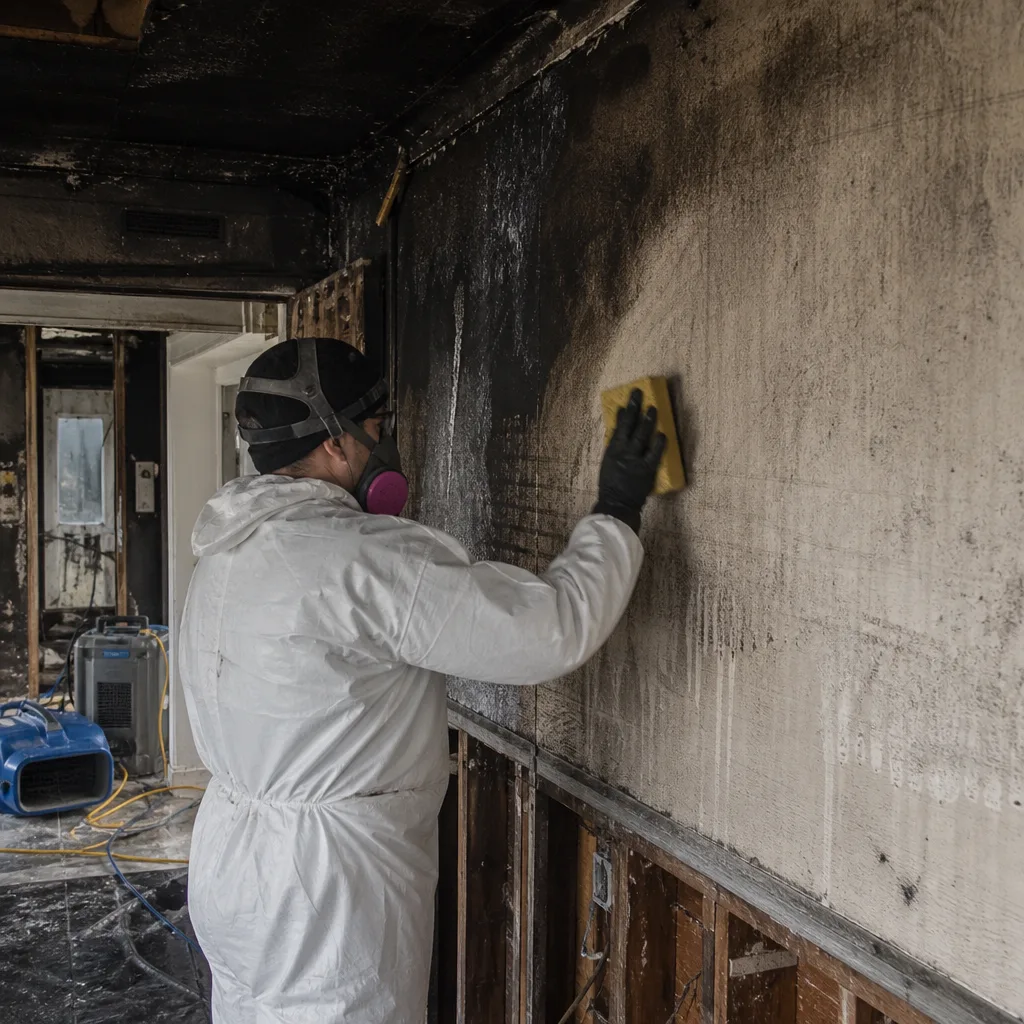
What happens when you call
- 1
A real person answersNo phone trees - you reach a local pro.
- 2
You get an upfront price rangeHonest numbers before anyone is dispatched.
- 3
A background-checked tech heads outLicensed & insured, dispatched right away.
- 4
You approve before work beginsNothing starts until you say go.
Sewage Cleanup Costs in Montrose, NY
Sewage cleanup in Montrose typically runs between $1,800 and $6,500 depending on what the black water touched and how far it traveled. A contained toilet overflow in a single bathroom with tile floors often lands near the lower end, around $1,800 to $2,800. A full basement backup with drywall removal, insulation replacement, and extended drying in one of the older riverfront homes runs higher, commonly $4,000 to $6,500. Crawl space work adds cost because of the soil removal and vapor barrier installation: expect an additional $1,500 to $3,000 when the crawl space is involved.
What moves the price: how much porous material absorbed sewage, whether the crawl space is affected, how long the water sat before extraction started, and whether drying runs extended due to river humidity. Insurance coverage varies by policy; many Montrose homeowners have sewage backup coverage as an endorsement, and we handle that billing directly. For an exact number, call (917) 924-4221 and we’ll provide a free visual inspection with a written scope before any work starts.
We Also Serve Cities Near Montrose
Our crews respond throughout the Hudson River corridor in northern Westchester and Rockland County. That includes Montrose proper, along with Buchanan, Verplanck, Stony Point, and Peekskill. The same certified team, the same equipment, and the same 24/7 live dispatch cover the entire area.
Serving Montrose, NY - Our Local Coverage Area
We’re based in the Montrose area and know this community well. Use the map below to see our service coverage - if you’re nearby, we can almost certainly help.
Montrose Sewage Cleanup Questions, Answered
Why does sewage cleanup in Montrose riverfront bungalows take longer than in inland Westchester homes?
Because the Hudson River’s water table sits unusually close to grade, so crawl spaces and shallow foundations stay damp long after the visible spill is gone. This forces extended dehumidification and often ground-vapor barrier installation. Converted seasonal bungalows were never built for year-round moisture loads, so their sub-structures hold groundwater vapor longer than purpose-built homes a few miles inland.
How do you handle a septic failure under a converted seasonal cottage on River Road without tearing out the whole floor?
First we locate the migration path with thermal imaging and moisture meters, because sewage doesn’t always surface where the pipe failed. If the contamination is contained to a crawl space or a single joist bay, we open only that section, extract, sanitize, and dry in place. Full floor removal is only necessary when the black water spread across a large area or saturated the subfloor beyond the dry standard.
What does the category of water have to do with sewage cleanup in Montrose?
Category 1 is clean water, category 2 is contaminated, and category 3 carries sewage, bacteria, and pathogens. In Montrose, river flooding can push category 1 river water into a home and turn it category 3 within hours because it picks up whatever it passes through. The classification determines whether we extract and dry, or extract, remove materials, and run full antimicrobial treatment.
Does the Hudson River fog in Montrose make sewage odor linger after cleanup?
Yes. The persistent fog and high relative humidity near the river keep porous materials damp longer, and damp wood holds odor molecules. Our drying protocols in Montrose run longer than inland jobs specifically to pull moisture out of studs, subfloors, and masonry, which is the only way to fully eliminate odor. Post-treatment air testing confirms it’s gone before we close the permit.
Can you sanitize a Montrose crawl space after a toilet overflow without replacing the ground cover?
Only if the ground cover is an intact vapor barrier. If sewage pooled on a poly vapor barrier, we can sanitize the surface and replace the affected section. But if the home has a dirt floor with no barrier, or an old barrier that’s torn, the contaminated soil comes out and a new barrier goes in. Partial replacement under a converted cottage usually costs less than a full crawl space remediation.
How fast can someone actually get to Montrose for a sewage backup?
We commit to 45-minute response within the Montrose area. Our dispatch is live 24 hours a day, every day. A real person answers at (917) 924-4221, takes your address, and routes a crew immediately. Most sewage extractions in Montrose begin within two hours of the first call.
Is sewage cleanup covered by homeowner’s insurance in Montrose?
It depends on your policy. Standard homeowners policies often exclude sewage backup unless you’ve added a specific endorsement, which many Montrose homeowners carry because of the river corridor’s flood history. We provide the documentation and estimate your carrier needs and bill them directly where coverage applies. You won’t be left translating between us and your adjuster.
What should I do in the first 30 minutes after a sewage backup in Montrose?
Turn off the water if you can reach the shutoff safely, keep people and pets out of the affected area, and call us at (917) 924-4221. Don’t flush toilet, don’t run the washing machine, and don’t attempt to clean the sewage yourself. Category 3 water carries pathogens that require protective equipment and professional-grade antimicrobials. The first hour determines how much gets cut out versus saved.
If you’re facing a sewage backup in Montrose, call (917) 924-4221 now. We’ll answer live, dispatch a certified crew to your address, and give you a straight answer about what needs to happen next. The estimate is free, the scope is written before work starts, and the work is backed in writing by the 90-Day Done Right Promise. That’s the Keystone Standard: Krafted right, Every time, Your home first, Standing behind it.
Written by Curt Bowman, Owner at Floodline Restoration Co. of Manhattan, serving Montrose and the Hudson River corridor since 2010.