
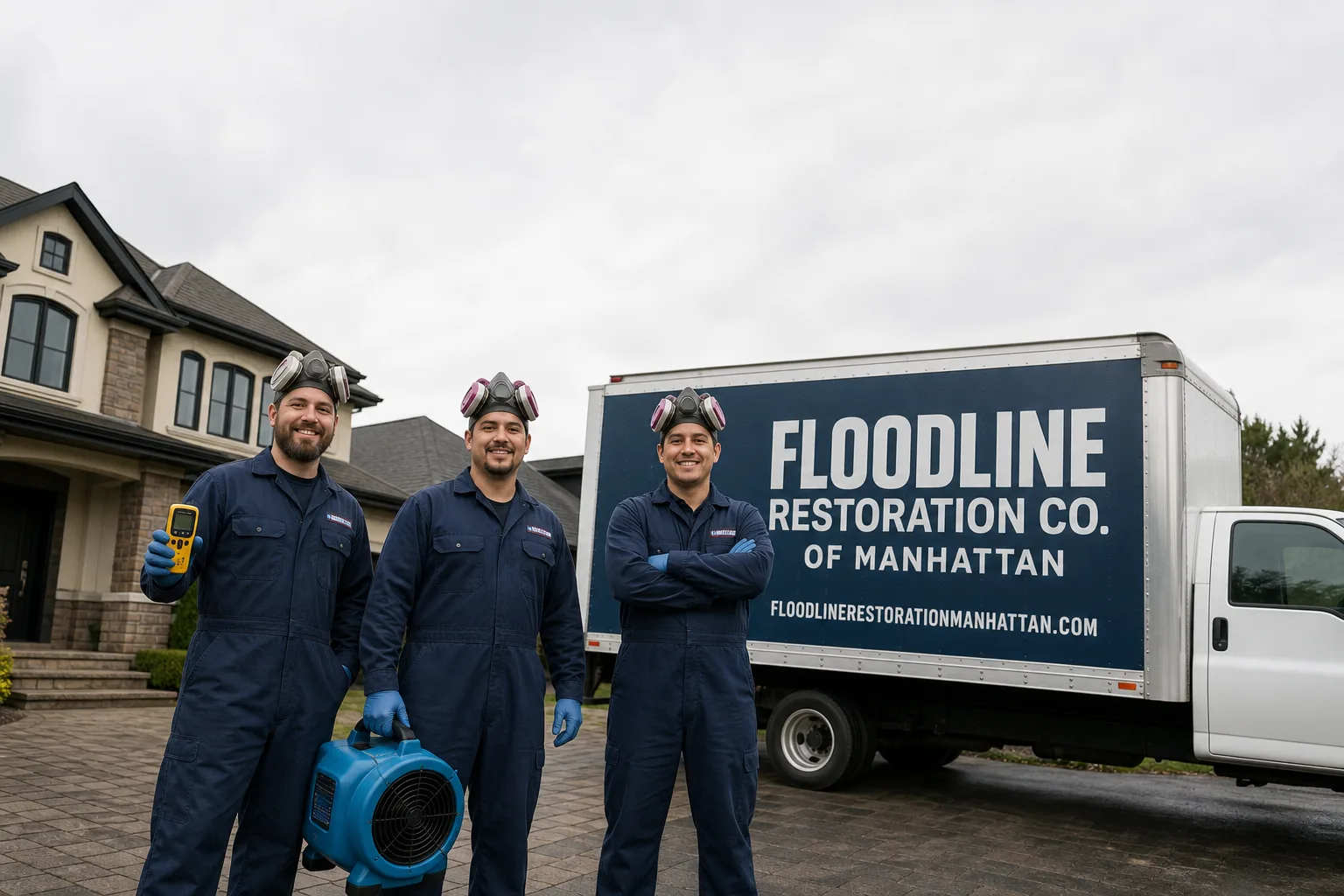
Free visual inspection and a written scope of work before any mitigation begins - photos, moisture readings, and drying logs go in your claim file
The scope we write is the scope we bill. Anything new gets shown to you, in writing, before we touch it.






 Before
 After
After Before
 After
After Before
 After
After24/7 Emergency Sewage Cleanup in Pleasantville
Sewage cleanup in Pleasantville typically costs $1,800-$4,600 for a contained basement backup, and a certified crew can be on-site inside 45 minutes when you call (917) 924-4221. Category 3 water carries bacteria, viruses, and parasites that turn porous materials into a health risk within hours, not days. Our live dispatchers answer around the clock. We don’t route calls through a call center in another state. A real person picks up, confirms your address, and sends a crew toward Pleasantville immediately. The first hour matters because sewage wicks into plaster, subflooring, and the rubble-stone walls common near the train station, spreading contamination beyond what you can see. What starts as a toilet overflow on Washington Avenue becomes a basement-wide remediation project by the time moisture reaches the lath. Call now. We’ll give you a straight answer and a free visual inspection before any work begins.
Understanding Sewage Cleanup Severity in Pleasantville Properties
Not all water damage is the same, and Pleasantville’s building stock makes the distinction critical. Category 1 water is clean, from a supply line or faucet. Category 2 carries some contamination, like washing machine discharge. Category 3, what we see in sewage backups and toilet overflows, is grossly contaminated. It contains fecal matter, pathogens, and whatever was in the line. In a modern drywall house, Category 3 cleanup means cutting out soaked drywall, disposing of it, and treating the framing. In a 1920s center-hall colonial on Bedford Road, the same event means something different. Horsehair plaster absorbs sewage water and holds it against lath and studs. Rubble-stone foundations wick contamination upward slowly, hiding it behind paneling or finished walls for months. Moisture mapping with thermal imaging and penetrating meters finds what a visual inspection misses. That’s why our crews treat every sewage call in Pleasantville’s older core as a potential full containment job until proven otherwise. The construction itself extends the scope. It’s not upsell. It’s what the walls actually do.
Why Pleasantville Property Owners Choose Floodline Restoration Co. of Manhattan
- 45-minute response commitment to Pleasantville. Our dispatch board tracks the nearest available crew. When you call, a truck moves within minutes, not hours. The clock on sewage contamination starts at the moment of the backup.
- A live person answers, 24/7. No automated system. No “leave a message and we’ll get back to you Monday.” At 2 a.m. on a February night with a basement full of sewage, you speak to a dispatcher who can send help.
- IICRC-certified technicians. Our crews hold WRT and ASD certifications, trained to the standards that matter for Category 3 water: containment, antimicrobial treatment, and clearance. They’re background-checked and uniformed before they ever walk through your door.
- Free visual inspection with a written scope. We document what we find, show you photos, and put the work in writing before we start. You approve the scope. No one starts swinging hammers without your signature.
- Direct insurance billing. We document the loss from the first hour, communicate with your adjuster, and bill the carrier directly. You’re not ferrying paperwork between us and the insurance company.
- One team from first extraction to finished rebuild. Floodline handles the whole job. The crew that extracts the sewage is the same crew that dries, treats, and rebuilds. No mid-job handoff to a subcontractor you’ve never met.
Our Sewage Cleanup Process
Inspection & Assessment
We trace the source of the backup, identify the category of water, and map moisture through walls and flooring. In Pleasantville’s older homes, this includes checking for hidden wicking behind plaster and inside wall cavities. You get a written scope with line-item pricing.
Extraction & Stabilization
We remove standing sewage using truck-mounted extraction equipment and submersible pumps. Contaminated porous materials, like carpet, padding, and soaked insulation, are bagged and removed for disposal. The goal is to stop contamination from spreading.
Drying & Dehumidification
Dri-Eaz and Phoenix air movers and dehumidifiers run continuously until hygrometer readings confirm the structure is dry. We don’t trust a surface that feels dry. We trust the numbers, logged daily, shared with you and your carrier.
Cleaning & Sanitization
Hard surfaces are cleaned with antimicrobial solutions and HEPA-vacuumed. Contaminated framing and masonry are treated. We use containment barriers and negative air pressure to prevent cross-contamination to clean areas of your home.
Specialty Treatment for Legacy Construction
Rubble-stone walls, plaster-and-lath, and balloon-frame cavities get specific attention. We remove saturated horsehair plaster, treat behind finish surfaces, and document what we found with photos and moisture readings. This step is where Pleasantville jobs differ from newer construction.
Repairs & Restoration
Once the structure meets the dry standard, we rebuild what was removed. Drywall, plaster, flooring, trim. The same crew handles it. The job ends with a clean, finished space and a moisture log in your hands, backed by the 90-Day Done Right Promise.
Need Emergency Sewage Cleanup in Pleasantville Now?
Crews minutes away, answering live 24 hours a day. The sooner we start, the less it costs.
Working With Your Insurance Company
Most Pleasantville homeowners have never filed a sewage backup claim before, and the process shouldn’t be a second job. That’s why we handle it directly. From the first hour, we photograph every affected area, log moisture readings, and document what we remove and why. We write our estimates in the same format carriers expect, using industry-standard line items. When your adjuster calls, we talk to them. We answer their questions, send the documentation, and confirm the scope. You don’t carry messages. If the carrier asks for verification, we provide the drying logs and photos that support every dollar on the invoice. Direct billing means the carrier pays us the covered portion directly. You pay your deductible, and we keep the paperwork moving.
What We Provide Your Insurer
- Thorough documentation of the loss
- Photos of all damage, room by room
- Moisture readings and drying logs
- A detailed, line-item scope of work
- Direct coordination with your carrier
Built for Pleasantville’s Loss Calendar
Pleasantville’s sewage backup calls follow the calendar in predictable ways. January and February bring deep freezes that crack the old cast-iron and galvanized lines running through unheated crawl spaces and exterior walls. When the temperature drops below 20 degrees for a week, the ground shifts and old pipes snap. March and April bring the thaw and spring rains, when the Saw Mill River watershed pushes groundwater up around foundations and into septic fields in the older sections of the village. A saturated field backs up the line. Summer thunderstorms dump two inches of rain in an hour, overwhelming the village’s older combined sewer sections and sending water back into basements through floor drains. Fall brings nor’easter remnants that saturate the ground before winter freezes it solid. The pattern matters because the fix is different in each season, but in every one of them, the first call should be to a crew that understands what Pleasantville’s older houses do to sewage water. That’s us.
Sewage Cleanup Across Pleasantville’s Neighborhoods
Sewage cleanup in Pleasantville means different things depending on where you live. On Washington Avenue and the streets nearest the Metro-North station, we’re working inside 1920s center-hall colonials with rubble-stone basements. Water wicks into stone and hides contamination. Across Bedford Road and the hillside streets running up from the village center, the homes shift to pre-WWII bungalows with fieldstone foundations and narrow stairwells that make equipment staging a puzzle. Over near the Saw Mill River Parkway corridor, we see more split-level and raised-ranch homes from the 1950s and 60s, but the original cast-iron sewer lines are just as old and just as prone to failure. Up in the neighborhoods around Pleasantville High School, the lots are larger, the septic systems are older, and a failed leach field means a different kind of sewage problem entirely. None of these are textbook jobs, because none of these houses are textbook houses. Our crews know the routes, the building eras, and what to look for before the first hour is up.
Specialized Sewage Cleanup Services We Offer in Pleasantville
Sewage Backup Cleanup
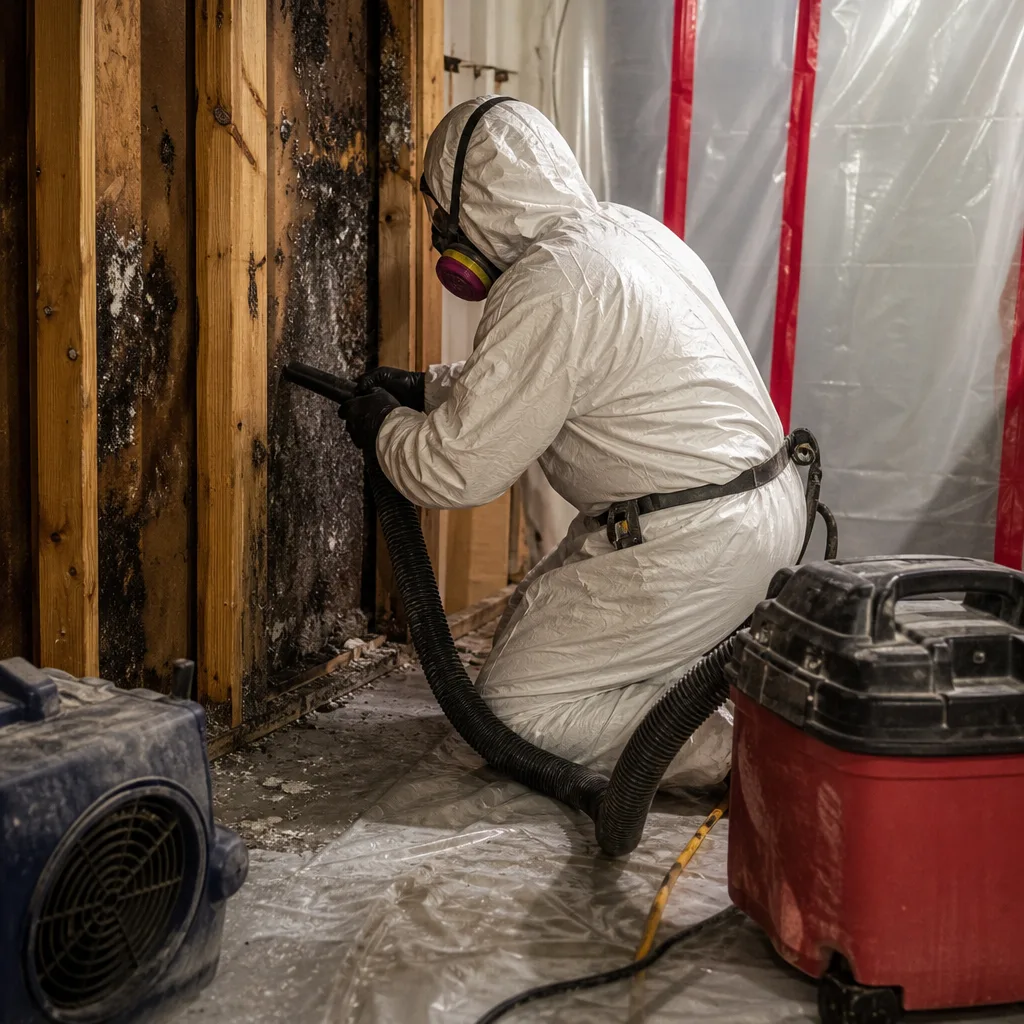
A floor drain that suddenly fills with sewage is the most common call we get from Pleasantville basements. Older clay and cast-iron lines fail without warning, and the contents of the line come up where you least expect it. We extract, contain, and treat the affected area, then dry the structure to standard.
Toilet Overflow Cleanup
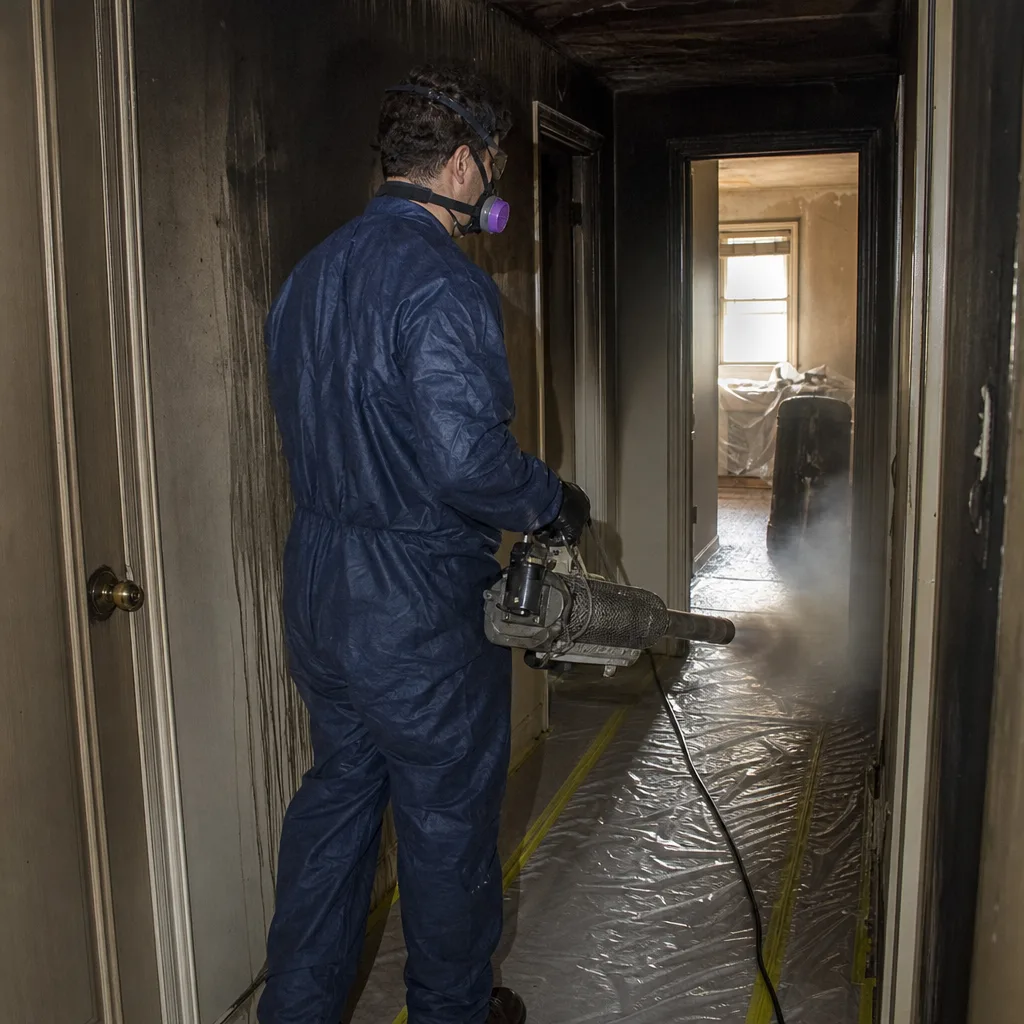
A toilet overflow on a first floor in a balloon-frame colonial is never just a bathroom problem. Sewage water drops through wall cavities to the basement, soaking plaster, lath, and subflooring along the way. We trace the water path, not just the spot you saw it first.
Septic Failure Cleanup
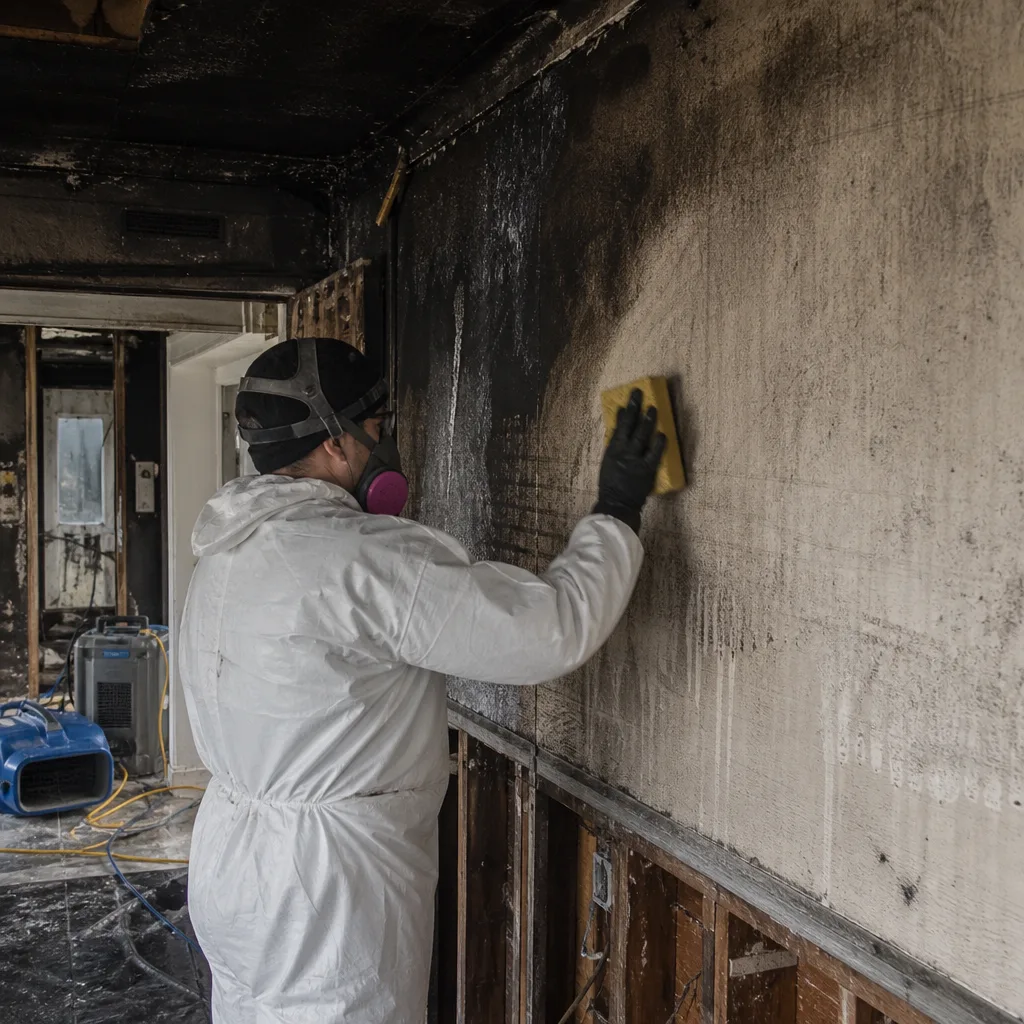
Homes in the larger-lot sections of Pleasantville, especially off Bedford Road and near the upper reaches of the village, still run on septic systems. When the leach field fails, sewage surfaces in the yard and backs up through the drains. We handle the interior remediation and coordinate with your septic contractor.
Black Water Extraction
Category 3 water requires full PPE, containment, and careful disposal. We use truck-mounted extraction to pull standing sewage fast, then remove contaminated porous materials. The sooner extraction happens, the smaller the final scope. That’s why dispatch is live 24/7 and crews head toward Pleasantville immediately.
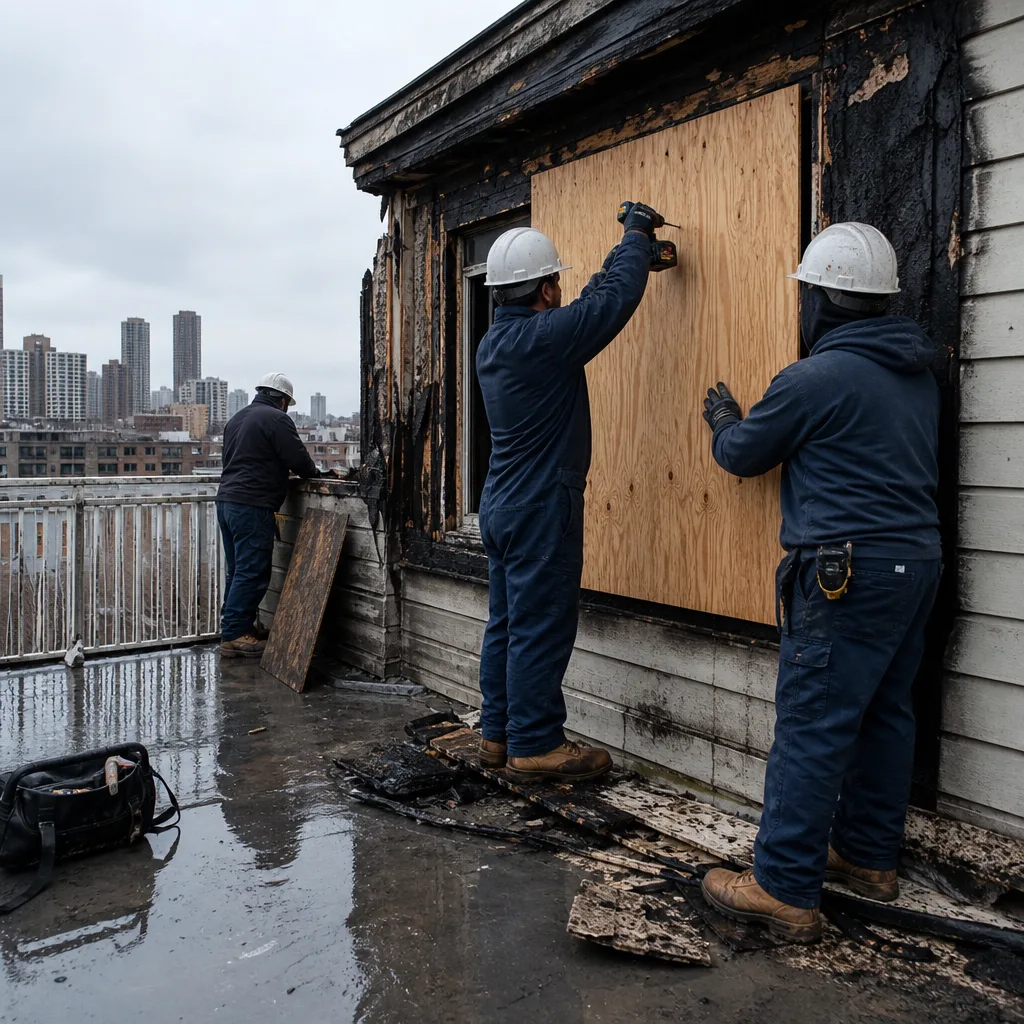
Sanitization & Disinfection
Extraction is only the first step. After contaminated materials are removed, we apply hospital-grade antimicrobials to affected framing, masonry, and hard surfaces. HEPA air scrubbers run throughout the job. On legacy plaster walls near the train station, we treat behind the finish surface, not just in front of it.
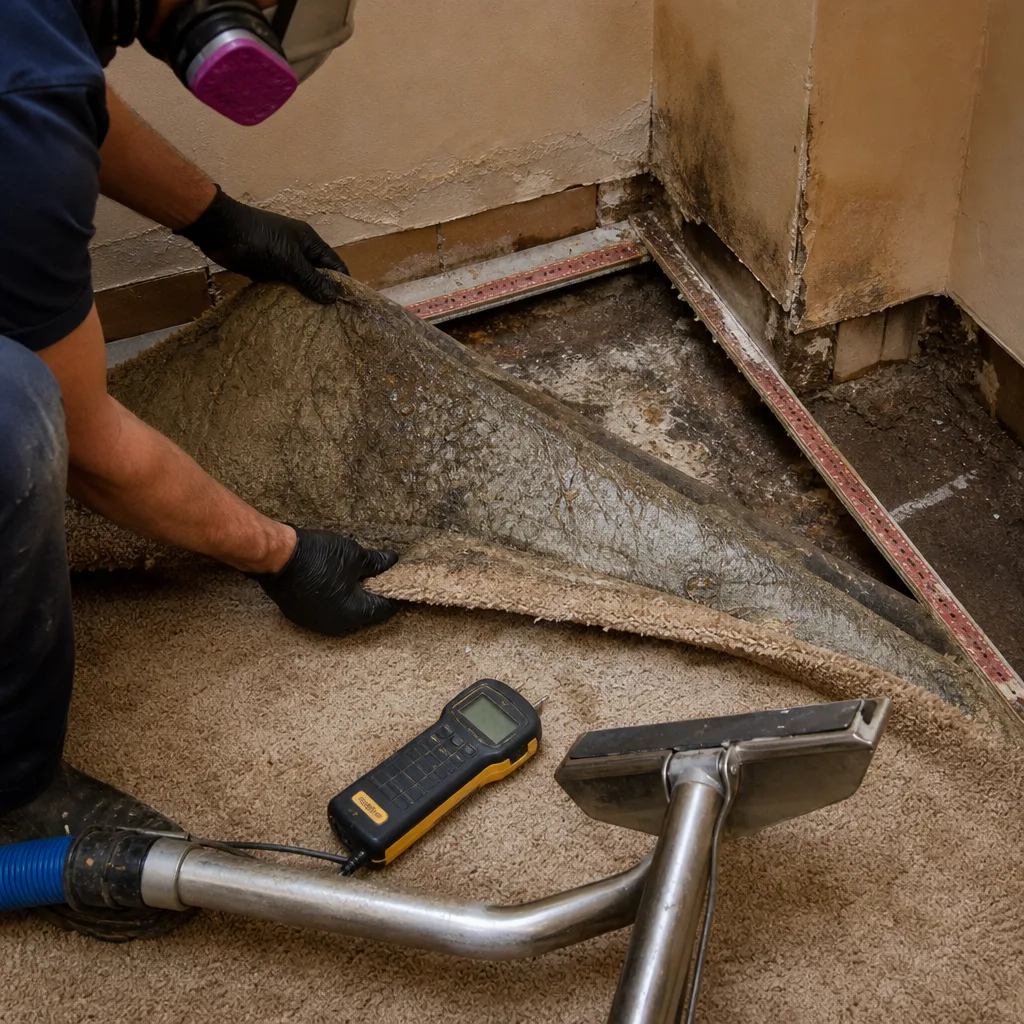
Crawl Space Sewage Removal
Pleasantville’s older homes often have shallow crawl spaces with barely enough clearance to move. A sewage line break under the house fills that space with Category 3 water. We use low-profile extraction equipment and containment to remove contamination without pulling up the floor above unless the damage warrants it.
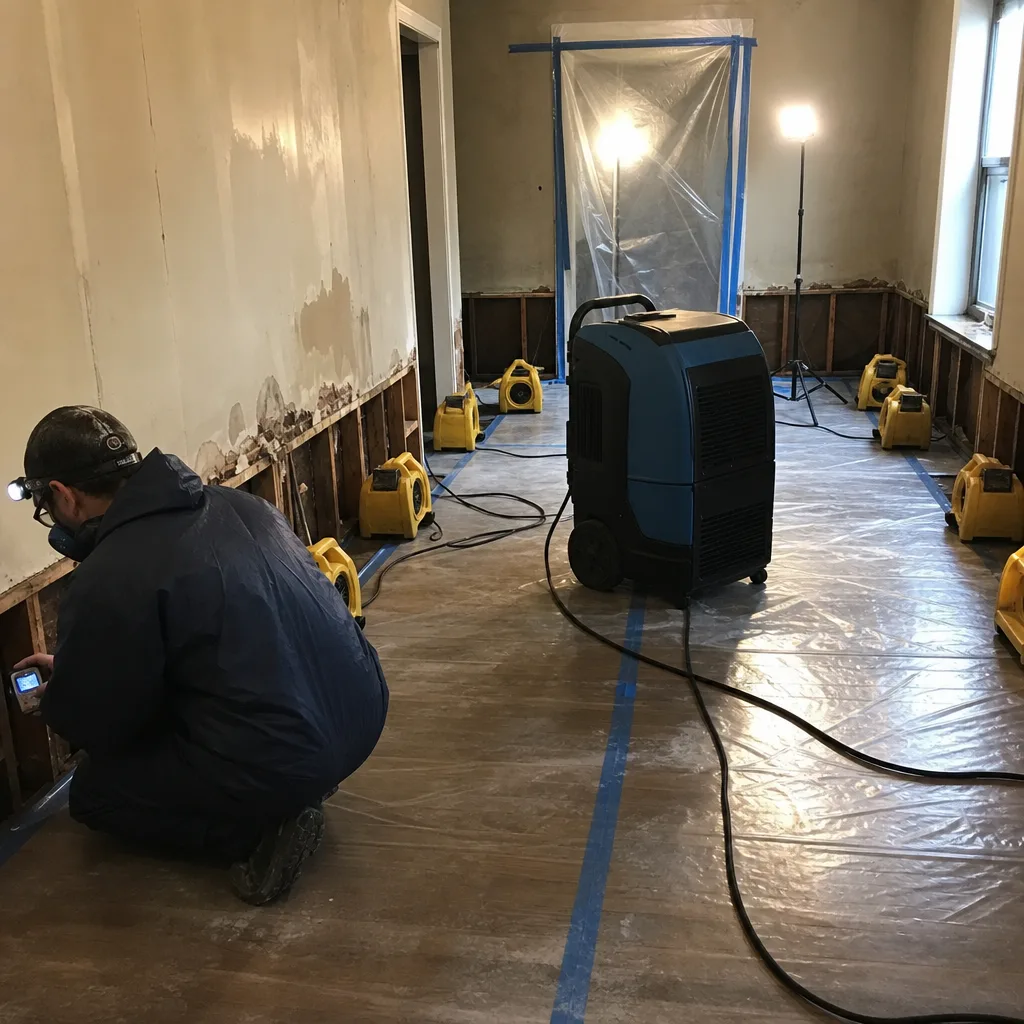
What happens when you call
- 1
A real person answersNo phone trees - you reach a local pro.
- 2
You get an upfront price rangeHonest numbers before anyone is dispatched.
- 3
A background-checked tech heads outLicensed & insured, dispatched right away.
- 4
You approve before work beginsNothing starts until you say go.
Sewage Cleanup Costs in Pleasantville, NY
Sewage cleanup in Pleasantville runs a real range. A contained toilet overflow with fast response typically costs $1,800-$3,200 when flooring is tile and walls are modern. A basement-wide backup in an older colonial, where plaster walls and rubble-stone foundations are involved, runs $3,800-$6,500 once you account for containment, plaster removal, structural drying, and antimicrobial treatment. Crawl space sewage removal adds another $800-$2,000 depending on access and how much contaminated insulation and vapor barrier must be removed. These are honest numbers, and they’re what we quote on site after a free visual inspection. What moves the price most in Pleasantville is the age of the house. A 1926 colonial with original plaster costs more to remediate than a 1980s split-level, because plaster holds water longer and the foundation wicks contamination farther. Insurance often covers the majority when the backup came from an interior line failure. We bill the carrier directly. You pay your deductible, and we finish the job to the dry standard with a moisture log in your hands.
We Also Serve Cities Near Pleasantville
Floodline Restoration Co. of Manhattan serves Pleasantville and the surrounding communities, including Thornwood, Hawthorne, Chappaqua, and Briarcliff Manor. If you live near the Pleasantville border, we can reach you just as quickly. Same crew. Same standards. Same live answer at 2 a.m.
Pleasantville Sewage Cleanup Questions, Answered
How fast can you reach a sewage backup in Pleasantville?
We commit to a 45-minute response within Pleasantville. Our live dispatcher confirms your address and routes the nearest available certified crew. In most cases, extraction starts on the first visit, not the next day.
Will my insurance cover sewage cleanup in Pleasantville?
Most homeowners policies cover sewage backup from an interior line failure, though coverage depends on your policy and the cause. We document the loss from the first hour, talk to your adjuster directly, and bill the carrier for the covered portion. Call (917) 924-4221 and we’ll walk through what to expect.
Do I need full cleanup or just a cleaning after a small sewage backup?
In Pleasantville’s older homes, we recommend a professional assessment even for small backups. Sewage water wicks into plaster, subflooring, and stone foundations quickly. What looks like a mop-up can hide contamination behind finished surfaces, where mold blooms within 48 hours. A free visual inspection answers the question with facts, not guesses.
Why does sewage cleanup in Pleasantville’s older homes almost always include mold remediation, even if the backup was cleaned up quickly?
Because the materials hold water. Horsehair plaster, lath, and rubble stone absorb sewage water and dry much slower than modern drywall and concrete block. Mold growth starts as soon as the spores meet sustained moisture. By the time you see staining on the surface, contamination behind the wall is already established. We budget for antimicrobial treatment automatically on any Category 3 call from the older sections of Pleasantville.
What does ‘category 3 water’ mean for a sewage backup in a Pleasantville colonial with original plaster walls?
Category 3 water is grossly contaminated and unsafe for contact. In a home with original plaster walls, that water saturates the plaster, the lath behind it, and often the studs. Removing all of those layers is usually required. It means a bigger scope than a drywall house, and it means full containment during the work. We’ll show you exactly what we found with photos and moisture readings.
How does balloon-frame construction in Pleasantville’s commuter-era homes affect sewage cleanup after a toilet overflow on the first floor?
Balloon framing means the wall cavities run continuously from the basement to the attic with no fire blocks or horizontal breaks. Sewage water from a first-floor bathroom travels straight down those cavities, contaminating subflooring, wall studs, and the basement ceiling below. We have to open walls at multiple levels to find the full water path. It’s a known failure mode in Pleasantville’s pre-WWII housing stock, and we plan for it on every call.
Why do Pleasantville homes near the Saw Mill River need a different approach to crawl space sewage removal than newer construction in neighboring towns?
The water table is higher and the soil holds moisture longer near the Saw Mill River watershed. Crawl spaces in that part of Pleasantville stay damp year-round, which means sewage contamination spreads faster and lingers longer. We use stronger containment and more aggressive drying standards than a dry, newer crawl space in a neighboring town would need.
What hidden sewage damage is most common in Pleasantville basements with rubble-stone walls?
Wicking. Rubble-stone walls soak up sewage water like a sponge and hold it behind paneling, framed walls, or even just paint. Standard surface moisture readings miss it. We use penetrating meters and thermal imaging to see into the wall, and we almost always find contamination farther along the wall than the visible stain suggests. It’s the single biggest reason Pleasantville sewage jobs grow after the initial inspection.
Why Local Knowledge Matters More Than You Think
Here’s what we’ve learned doing Sewage Cleanup in Pleasantville. We responded to a sewage backup on Washington Avenue in a 1920s center-hall colonial where a failed cast-iron main line had pushed category 3 water across the original plaster-and-lath basement. Our crew set up full containment, performed water extraction with truck-mounted Dri-Eaz equipment, and removed saturated horsehair plaster from the rubble-stone foundation walls before applying antimicrobial treatment and installing drying logs. The scope of work grew 40% once moisture mapping revealed hidden wicking behind finish surfaces. That’s what makes Pleasantville different. A national franchise with a generic playbook would have extracted the standing water, sprayed the surface, and handed you an invoice for a job that wasn’t done. In Pleasantville’s oldest commuter-era homes near the train station, those stone walls hide contamination for months. Our crews have learned to budget for full containment and antimicrobial treatment automatically on any Category 3 call from that part of the village, not because we want to sell more work, but because we know what the walls do. That’s information you can’t get from a website template. It comes from doing the work here, over and over, and standing behind it with the 90-Day Done Right Promise. We’ve been doing this since Curt Bowman founded Floodline Restoration Co. in 2010, built around a dispatch board, not a sales desk. The line the water left is where we start. We finish the job whole, document everything, and hand you a moisture log and a written guarantee before we leave.
Written by Curt Bowman, Owner at Floodline Restoration Co. of Manhattan, serving Pleasantville and the surrounding communities.
Serving Pleasantville, NY - Our Local Coverage Area
We’re based in the Pleasantville area and know this community well. Use the map below to see our service coverage - if you’re nearby, we can almost certainly help.
Call Floodline Restoration Co. of Manhattan for Sewage Cleanup in Pleasantville
If you have sewage backing up in your Pleasantville home right now, call (917) 924-4221. A live person answers. A certified crew heads your way. We’ll give you a free visual inspection and a written scope before any work starts. We bill your insurance carrier directly, and we finish the job with a moisture log in your hands and a 90-Day Done Right Promise in writing. Done right, and backed in writing. That’s the whole offer.