
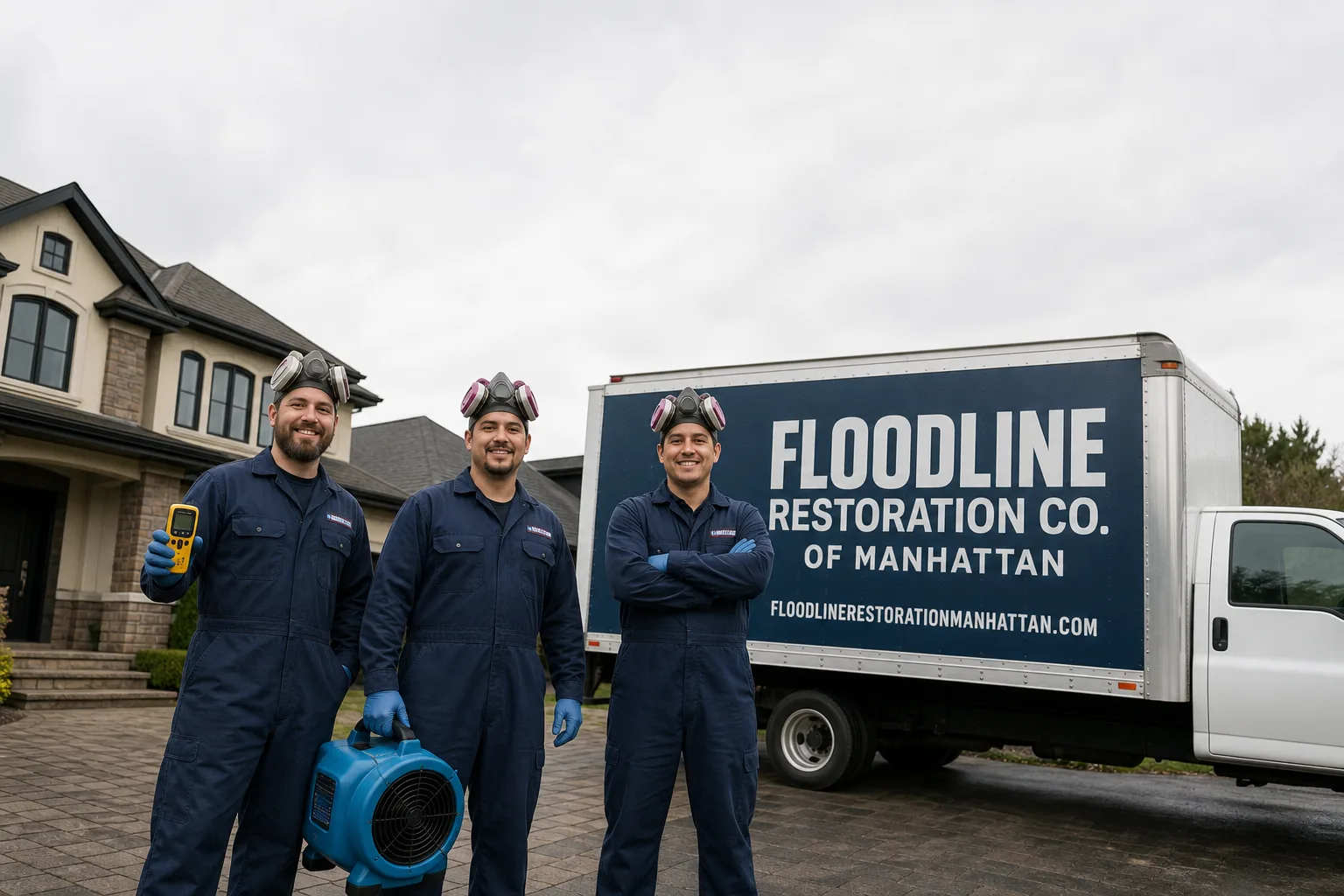
Free visual inspection and a written scope of work before any mitigation begins - photos, moisture readings, and drying logs go in your claim file
The scope we write is the scope we bill. Anything new gets shown to you, in writing, before we touch it.






 Before
 After
After Before
 After
After Before
 After
After24/7 Emergency Sewage Cleanup in Westwood
A sewage backup in Westwood is a Category 3 water event, the most dangerous classification, and it needs extraction within hours to keep bacteria from moving into wall cavities, framing, and your home’s air. We answer live at (917) 924-4221, every hour of every day, and can have a certified crew at your door in Westwood in about 45 minutes. The first hour matters: raw sewage doubles its bacterial load every 20 to 30 minutes in warm basement air, and the longer it sits, the more flooring, drywall, and insulation get cut out and replaced.
Our dispatch is a person, not a recording. You’ll speak to someone who can tell you what to do in the next 30 minutes while the crew is rolling. The visual inspection is free, and we hand you a written scope before any work begins, so you know exactly what you’re paying for and why. We’ve been doing this work long enough to know that a sewage backup at 2 a.m. in a 1960s colonial off Arthur Kill Road is not the same job as a toilet overflow in a newer raised ranch. Westwood’s housing stock has its own failure patterns, and we plan for them before we ever ring the bell.
Understanding Sewage Cleanup Severity in Westwood Properties
To be direct: sewage cleanup in Westwood is almost never a mop-and-disinfect job. Most of the neighborhood’s 1950s to 1970s colonials and cape cods sit on original cast-iron or galvanized drain lines. Those pipes are 50 to 70 years old now. The cast iron rusts from the inside out, the galvanized builds scale until the diameter shrinks, and both fail in the same predictable ways: slow drains that become regular backups, sewage surfacing in basement floor drains during heavy rain, or sudden black water pushing up through a toilet on a Sunday morning. When that happens, the water is Category 3 by definition: it contains pathogens, fecal matter, and whatever else was in the municipal line. That changes everything about the cleanup.
Category 2, or gray water, comes from washing machines, dishwashers, or clean toilet overflows without waste. It can be cleaned and dried in place in many situations. Category 3, or black water, requires removal of affected porous materials. Carpet, padding, drywall up to 12 or 18 inches above the waterline, insulation, and sometimes base cabinets all come out. In Westwood basements with original paneling over block walls, we often find sewage wicked behind the paneling into fiberglass batts, which then feed moisture into the sill plate. Our technicians use moisture meters and thermal imaging to map that hidden migration before we finalize the cut list. This is the difference between a cleanup that holds and one that blooms mold in six weeks.
Why Westwood Property Owners Choose Floodline Restoration Co. of Manhattan
- 45-minute response commitment. Our Westwood dispatch corridor is built around the routes down Arthur Kill Road and through the neighborhoods off Tanglewood Drive, so crews are never far.
- A live person answers, 24/7. Two in the morning, a holiday, during a nor’easter: a dispatcher picks up. Not a routing tree. A person who can deploy a crew while you’re still on the phone.
- IICRC-certified technicians. Our lead techs carry WRT (Water Damage Restoration Technician) and ASD (Applied Structural Drying) certifications, with AMRT (Applied Microbial Remediation Technician) on every sewage job.
- Free visual inspection. We look before we quote. You get a written scope of work and a firm price. No hourly open-ended billing on a sewage loss.
- Direct insurance billing. We bill your carrier directly and send them the full documentation package. You don’t carry paper between us and your adjuster.
- One team from extraction to reconstruction. The crew that pulls the sewage out is the crew that dries, sanitizes, and rebuilds. No handoff, no new faces mid-job, one name accountable for the result.
Our Sewage Cleanup Process
Inspection & Assessment
We locate the source, trace the water path with thermal imaging and moisture meters, and classify the loss. In Westwood we also check for the telltale signs of cast-iron or galvanized drain failure: rust blooms at cleanouts, weeping joints, and slow-draining floor drains. You get a written scope before we open walls or pull flooring.
Extraction & Stabilization
We remove standing sewage with truck-mounted extractors, then stabilize the structure. For basements with finished drywall and paneling, this is where the demolition scope gets finalized. Anything porous that absorbed black water comes out the same day. Gloves, full PPE, and containment barriers are in place before extraction begins.
Drying & Dehumidification
After extraction, we set air movers and Dri-Eaz or Phoenix dehumidifiers, directed by the moisture map we built during assessment. We log readings every four hours, not daily. The dry standard is the number, and we pursue it until every meter reads dry in every affected material.
Cleaning & Sanitization
We apply EPA-registered antimicrobials to every surface the sewage touched or the air could have carried bacteria to, then HEPA-vacuum and air-scrub the space. In Westwood basements with exposed block foundation walls, we pay particular attention to efflorescence and spalled block, where sewage-contaminated moisture lingers.
Specialty Treatment: Cast-Iron & Galvanized Drain Line Assessment
On this page’s topic, the specialty is source control. We inspect the drain line that failed. If the original cast-iron or galvanized pipe is compromised, we scope it and recommend a code-compliant replacement section: PVC for waste lines, with a proper cleanout installed. No sewage cleanup holds if the pipe that caused it is still failing.
Repairs & Restoration
We rebuild what we cut out: new drywall, insulation, flooring, trim. The same crew, the same workmanship standard. Before we close the walls, you get a moisture log showing the entire loss dried to standard, and we walk the final scope with you in person.
Need Emergency Sewage Cleanup in Westwood Now?
Crews minutes away, answering live 24 hours a day. The sooner we start, the less it costs.
Working With Your Insurance Company
Sewage backup claims in Westwood are not always straightforward. A standard homeowners policy covers sudden and accidental discharge from a drain, but coverage for water that enters through foundation walls or floor drains during a flood depends on whether you carry a separate flood policy. That distinction is a documentation problem, and we handle it from the first hour. Our crew photographs the source of the water, the height of the waterline, the pipe condition where the failure occurred, and every affected room before demo starts. We document what we remove and why, with photographs and a line-item scope that matches the exact language adjusters and FEMA reviewers expect to see.
We work directly with your carrier. Your adjuster gets our documentation package, our moisture logs, and our scope of work without you driving it across town. When questions come up, we answer them. When supplements are needed because hidden damage surfaced after demo, we write them with the evidence attached. Curt Bowman founded this company on the principle that a restoration firm should make an insurance claim easier, not harder, and that’s how we run every Westwood sewage loss.
What We Provide Your Insurer
- Thorough documentation of the loss
- Photos of all damage, room by room
- Moisture readings and drying logs
- A detailed, line-item scope of work
- Direct coordination with your carrier
Built for Westwood’s Loss Calendar
Westwood’s sewage cleanup calls follow a seasonal rhythm, and it’s set by the geography and the housing stock. Late winter and early spring bring freeze-thaw cycles that stress the unwaterproofed block foundation walls on the older colonials. Water finds its way in, and when the ground is saturated, the floor drains in those basements are sitting at the level of the water table. A heavy spring rain loads the municipal sewer line, and the original cast-iron laterals under Tanglewood Drive and the streets off Arthur Kill Road back up. That’s when we get the calls: black water in the basement, the drain cover kicked off, and a family upstairs wondering how bad it is.
Late summer brings the thunderstorm season, and with it, flash flooding that overwhelms the combined sewer outfalls near the Arthur Kill. Autumn’s nor’easters push storm surge up the Kill and into the tidal flood corridor that Westwood sits in. Each of these events produces the same outcome in different volumes: storm water and raw sewage in basements that were never waterproofed to modern code. We plan for this calendar. Extra extraction equipment stays staged during storm warnings. Our dispatch board tracks the forecast. When the phone rings, we already know what we’re likely walking into.
Sewage Cleanup Across Westwood’s Neighborhoods
The streets off Arthur Kill Road, including Tanglewood Drive and the cul-de-sacs that run east toward the creek, hold the highest concentration of original 1950s and 1960s colonials. These homes have full basements, many partially finished, and the drain lines are almost always the original cast-iron. When they back up, the sewage comes up through the floor drain and spreads across concrete or tile before finding carpet or drywall. We know these floor plans. We know where the cleanouts are, and we know which houses were raised after Sandy and which ones still sit at original grade.
The cape cods clustered around the western edge of Westwood, closer to the Kill, are the most exposed to storm-surge groundwater. Their basements are shallow, their foundations are block, and after 50 years of freeze-thaw, the parging is gone and the block faces are spalled. Sewage-contaminated water enters through the cove joint as much as through the pipes. We carry a different extraction plan for these homes: pressure washing the block, antimicrobial treatment on the masonry, and often an extended drying period because the block itself holds moisture. The newer raised ranches and split-levels sprinkled through the neighborhood have their own patterns too: shorter run times, faster dryouts, but still the same Category 3 contamination when a sump fails or a toilet line splits. Every part of Westwood has a signature, and we read it when we walk in.
Specialized Sewage Cleanup Services We Offer in Westwood
Sewage Backup Cleanup
The most common call in Westwood, and it’s almost always tied to the original cast-iron or galvanized lateral under the front yard or the basement slab. We extract the sewage, cut the affected drywall and flooring, dry the space to standard, and assess the pipe that failed. If the backup is caused by pipe failure rather than municipal surcharge, we’ll show you the camera scope and recommend the replacement before we rebuild.
Black Water Extraction
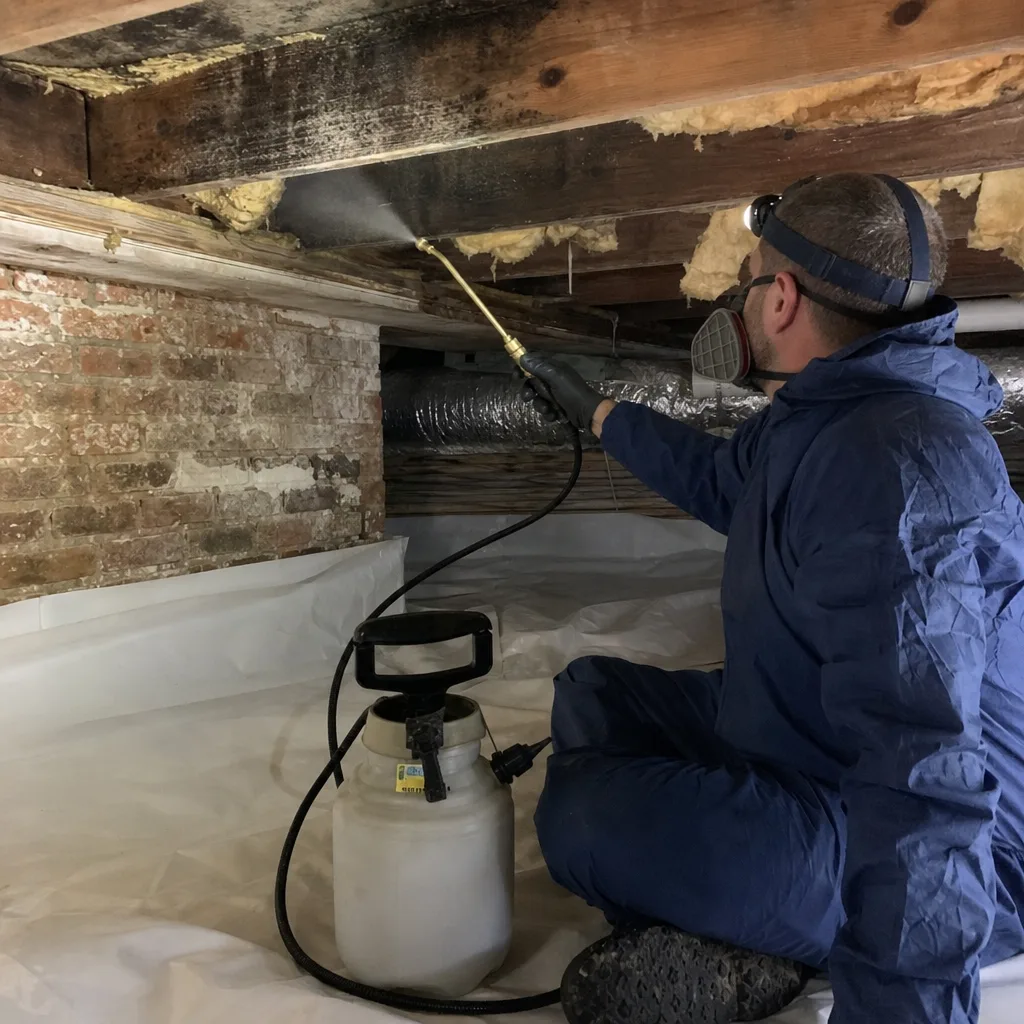
This is the extraction stage, performed with truck-mounted equipment and full PPE. In Westwood, black water extraction often runs into contamination that has wicked behind paneling and into fiberglass insulation. We remove all of it. Every square foot of affected material comes out the same day, because leaving any of it means you’re re-doing the job in a year.
Crawl Space Sewage Removal
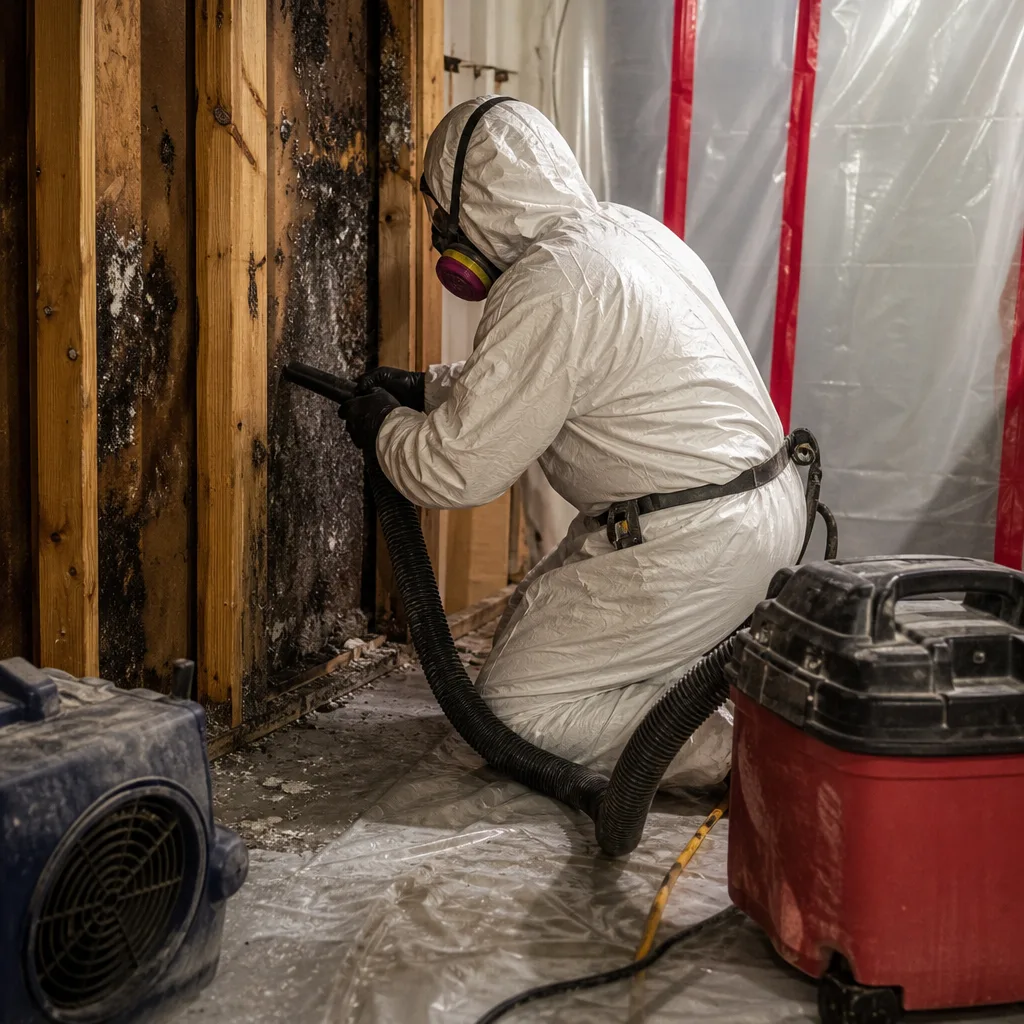
Some of the older Westwood capes have crawl spaces rather than full basements, and a broken waste line under the house turns that crawl space into a biohazard. We access, extract, remove contaminated soil and vapor barrier, sanitize the space, and then address the pipe itself. Crawl space sewage is a job most restoration firms won’t touch because it’s dark, tight, and dirty. We do it the same way we’d do a basement: documented, dried, and done right.
Sanitization & Disinfection
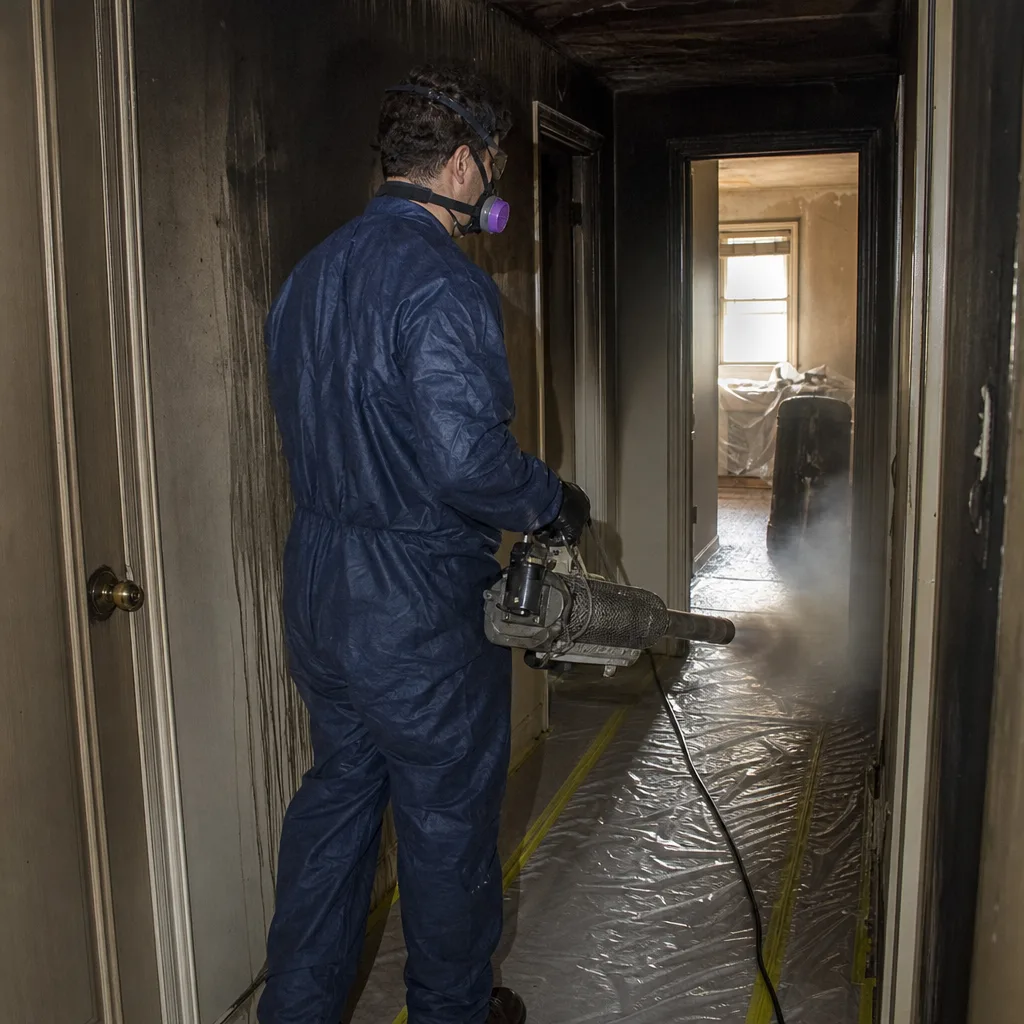
Antimicrobial application, HEPA air scrubbing, and full surface decontamination after sewage removal. On Westwood jobs, this step includes treating the exposed block foundation and the framing cavities because the tidal-corridor humidity means anything left damp stays damp longer. We leave the space ready for rebuilding, not just smelling clean.
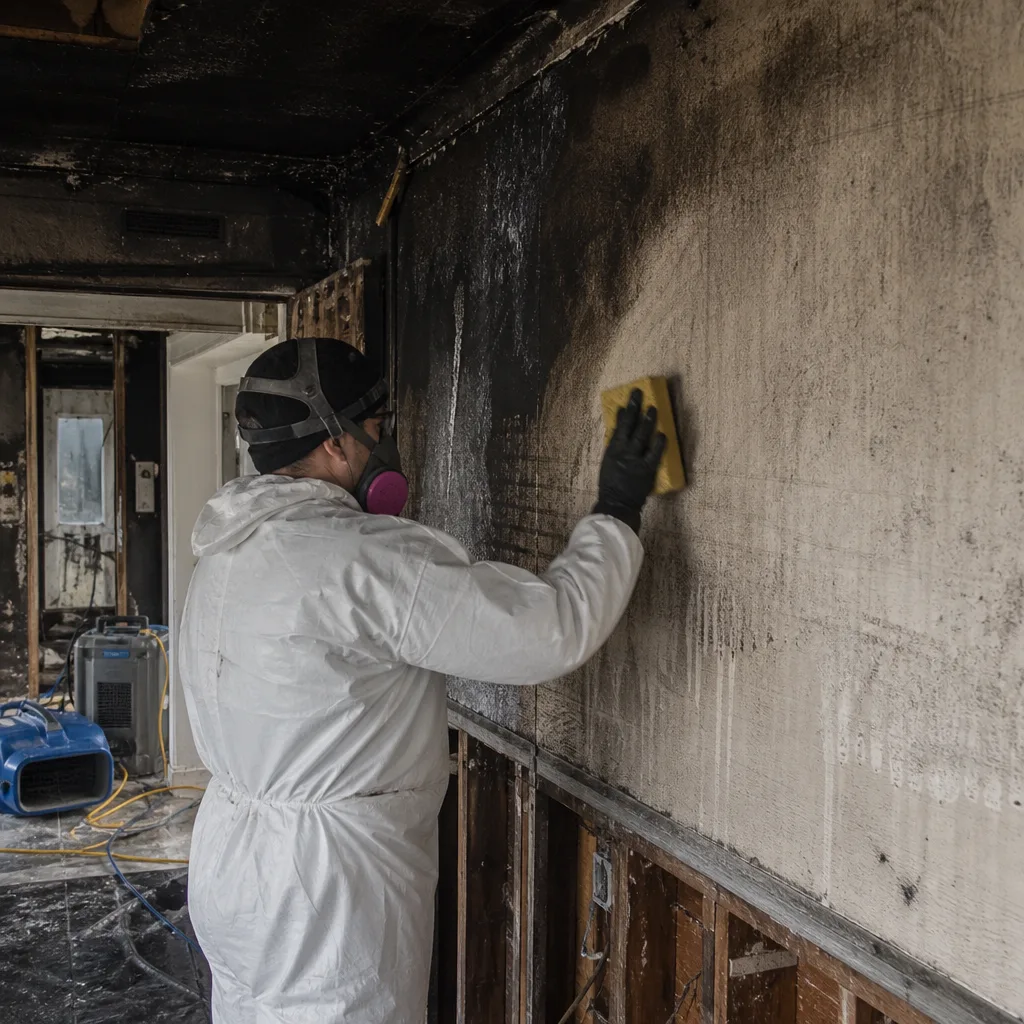
Septic Failure Cleanup
A portion of Westwood homes still run on septic, especially the older properties near the creek. When a septic field fails, the result is sewage surfacing in the yard and backing into the house. We handle the interior cleanup and coordinate with a licensed septic contractor for the field work, so you’re not juggling two crews and two bills while your basement sits wet.
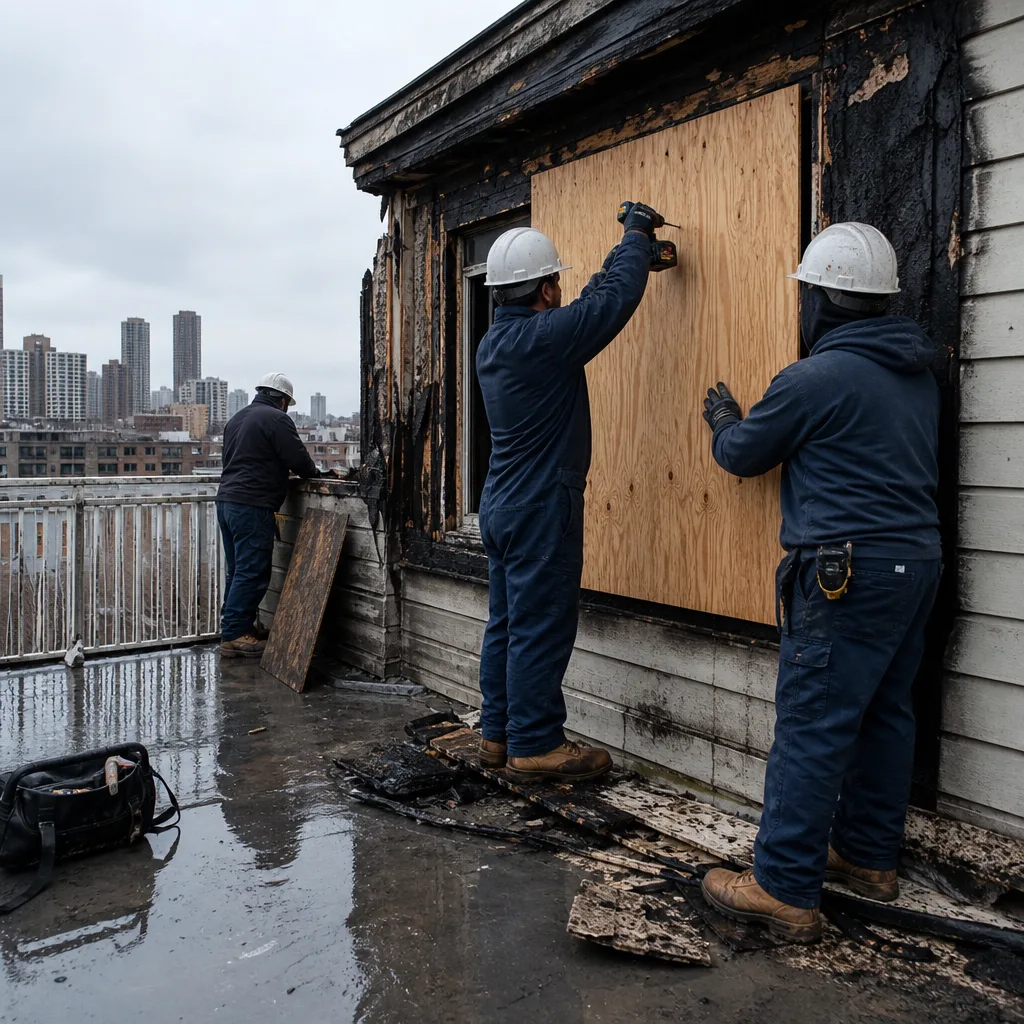
Toilet Overflow Cleanup
Toilet overflows in Westwood homes run from the simple (a clog caught early, Category 2 water, clean and dry) to the severe (waste water that ran through the bathroom floor into the joist bays for hours before anyone noticed). We classify the water correctly, so you don’t pay for a full Category 3 remediation when a focused drying job is the right answer. And when it is Category 3, we act accordingly.
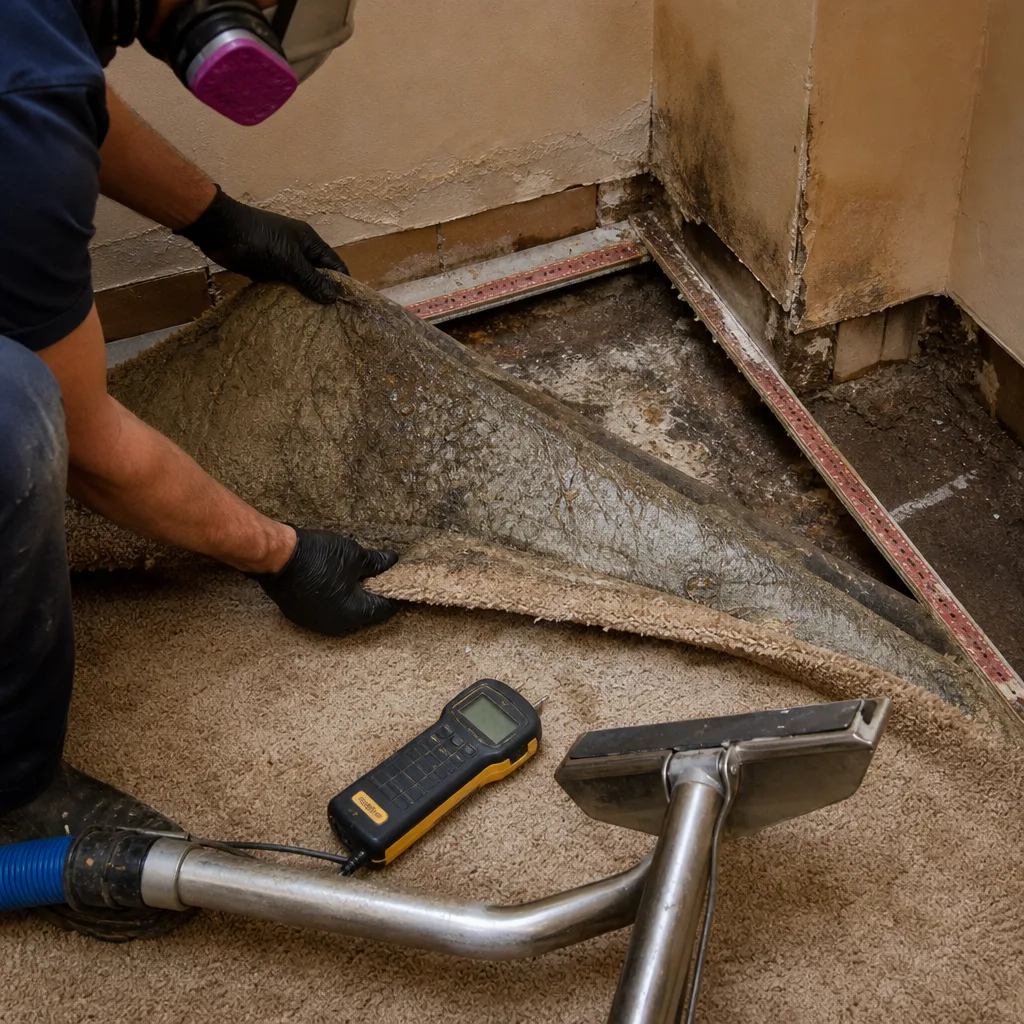
What happens when you call
- 1
A real person answersNo phone trees - you reach a local pro.
- 2
You get an upfront price rangeHonest numbers before anyone is dispatched.
- 3
A background-checked tech heads outLicensed & insured, dispatched right away.
- 4
You approve before work beginsNothing starts until you say go.
Sewage Cleanup Costs in Westwood, NJ
A straightforward sewage backup cleanup in Westwood, where the water is contained to an unfinished concrete basement floor and we’re looking at extraction, sanitization, and drying, typically runs $1,800 to $3,200. Once finished areas are involved, drywall comes out, flooring gets pulled, and insulation gets replaced: $4,000 to $8,500 is the normal range for a partially finished basement hit by Category 3 water. A full basement finish-out with pipe replacement, full dry-out, and rebuild can reach $12,000 to $18,000, especially if the original drain line needs replacement.
What moves the price: how long the sewage sat before extraction, how far it migrated, whether the water entered through the slab or the walls, and what the demolition cuts. Insurance typically covers the cleanup and direct damage, but not always the pipe repair itself. We walk through every line item before work starts, so you know what’s covered, what’s out of pocket, and what the final number will look like. The free visual inspection is the path to a firm number. Call (917) 924-4221 and we’ll come look.
We Also Serve Cities Near Westwood
Our crews serve the entire Westwood area and the surrounding towns, including Harrington Park, Hillsdale, Park Ridge, and Norwood. If you’re nearby, the same 45-minute response commitment applies, and the same crew handles the job from first extraction to final walkthrough.
Westwood Sewage Cleanup Questions, Answered
Does a sewage backup in Westwood count as flood damage under FEMA for insurance?
No, a sewage backup is not automatically a FEMA flood loss. If the sewage came up through drains or backed up from a municipal line, it’s typically a sewer backup or drain overflow claim under your homeowners policy. If the water entered because of storm surge or rising groundwater from the Arthur Kill during a flood event, it may be covered by a separate NFIP flood policy. We document the source, the water height, and the pathway, so your adjuster sees exactly what happened and which policy applies.
How does Westwood’s freeze-thaw cycle make sewage cleanup more expensive?
Freeze-thaw stress on unwaterproofed block foundations creates cracks and spalling at the cove joint, the seam where the wall meets the floor. When a sewage backup happens in winter or early spring, the contaminated water enters those cracks and wicks into the block itself. Cleaning masonry is slower and more labor-intensive than cleaning a sealed floor, and we often have to pressure-wash and treat the block before drying even starts. That’s an added step most homes in inland areas don’t face.
Do I need an elevation certificate before you start sewage cleanup in Westwood?
No. You don’t need an elevation certificate for us to start extraction and cleanup. But if your home is in a FEMA flood zone and you’re carrying ICC coverage or planning a future flood claim, having your current elevation documented and referenced in the restoration scope can matter. We work with Westwood homeowners who post-Sandy enrolled in ICC coverage, and we make sure the scope of work is written to the elevation and floodproofing triggers your coverage requires. We can start immediately while you pull that documentation.
Why are original cast-iron drain lines in Westwood colonials more prone to sewage backups?
Cast-iron drain pipe rusts from the inside after about 40 to 50 years, especially in a tidal corridor where ground moisture and salt air accelerate corrosion. The interior surface becomes rough, catches debris, and eventually collapses or cracks. Galvanized steel pipe builds internal scale until the pipe diameter shrinks to a fraction of its original size. The 1950s and 1960s colonials in Westwood are now 50 to 70 years old, so the original lines are reaching the end of service life. One heavy rain event pushes the municipal sewer to capacity, and the weak original line is the first to fail.
What’s the difference between Category 2 and Category 3 water in a Westwood basement backup?
Category 2, or gray water, contains significant contamination but no raw sewage. It comes from washing machine overflows, dishwasher discharges, or a clean toilet overflow. Category 2 can often be dried in place with proper antimicrobial treatment. Category 3, or black water, contains raw sewage, pathogens, and fecal matter. In a Westwood basement where the floor drain backs up during a storm, that’s Category 3. Porous materials that absorbed it, including carpet, drywall, and insulation, get removed. The distinction determines the entire scope and cost.
How fast can you actually get to a sewage backup in Westwood?
Our commitment is 45 minutes from your call to a crew at your door in Westwood. We stage equipment for the neighborhood’s storm season and keep crews on rotation through the freeze-thaw months. The dispatcher who answers at (917) 924-4221 can tell you, in real time, where the nearest crew is and when they’ll arrive.
Can we stay in the house during sewage cleanup in Westwood?
It depends on the size of the affected area and whether the HVAC system has circulated contaminated air. For a contained basement backup with containment barriers and negative air pressure set up, you can usually stay upstairs. For a whole-floor contamination or sewage that entered the ductwork, we’ll recommend temporary relocation while the work proceeds. We tell you the truth on the first visit, not after we’ve already started.
What should I do in the first 30 minutes after a sewage backup in Westwood?
Turn off the power to the affected area if you can do so safely, and keep everyone, including pets, away from the water. Don’t flush toilets or run water down drains in the house. Don’t try to extract the sewage yourself with a shop vac: the aerosolized bacteria are a respiratory hazard, and the water is Category 3. Call (917) 924-4221. We’ll talk you through shutoff procedures while the crew is en route. The faster we’re on scene, the smaller the demo scope and the lower the final cost.
Serving Westwood, NJ - Our Local Coverage Area
We’re based in the Westwood area and know this community well. Use the map below to see our service coverage - if you’re nearby, we can almost certainly help.
Contact Floodline Restoration Co. of Manhattan for Sewage Cleanup in Westwood
If you’ve got sewage backing up into your Westwood home right now, call (917) 924-4221. A live person answers, a crew is dispatched, and we’re at your door in about 45 minutes. If you’re looking for a firm quote before the next storm hits, the visual inspection is free, and the scope we write is firm. You get the 90-Day Done Right Promise in writing: if it’s not done right, we make it right, no arguing, no paperwork battles. The line the water left is where we start, and we stand behind the result.
Written by Curt Bowman, Owner at Floodline Restoration Co. of Manhattan, serving Westwood, NJ.