
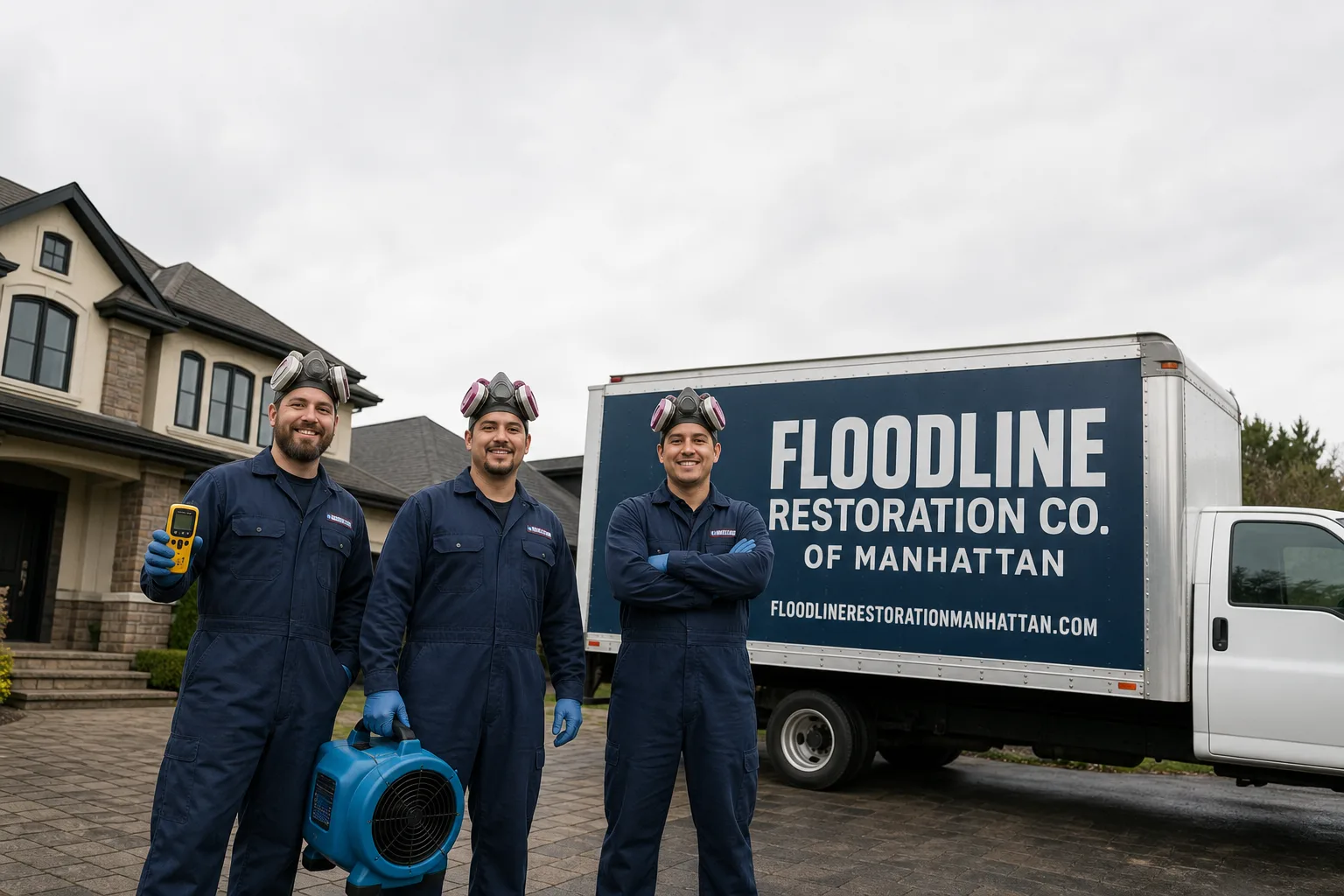
Free visual inspection and a written scope of work before any mitigation begins - photos, moisture readings, and drying logs go in your claim file
The scope we write is the scope we bill. Anything new gets shown to you, in writing, before we touch it.






 Before
 After
After Before
 After
After Before
 After
After24/7 Emergency Storm & Disaster Restoration in Bellerose Terrace
Storm damage in Bellerose Terrace moves fast, and so do we. A live dispatcher answers at (917) 924-4221 around the clock, every day of the year, and a certified crew can be rolling toward your street inside the hour. The first hour after a nor’easter or a burst pipe matters most: water that sits in a 1950s basement with original plaster-on-lath walls and cast-iron drains doesn’t wait politely for morning. If a tree limb has opened your roof on a block off Jamaica Avenue, or hydrostatic pressure has pushed water up through the basement floor, we’ll get a crew there for a free visual inspection, stabilize the property, and give you a written scope before any work starts. That’s the whole job, from first extraction to finished rebuild, handled by one Floodline Restoration Co. of Manhattan team. No message machine, no call center runaround. A person picks up. We’ll be there when we say.
Understanding Storm & Disaster Restoration Severity in Bellerose Terrace Properties
Storm restoration severity in Bellerose Terrace runs on a different track than most places because the housing stock is nearly all post-WWII Cape Cods and small brick-clad colonials from the late 1940s through the early 1960s. Many of those homes still carry plaster-on-lath walls and original cast-iron drain stacks. When a nor’easter drives Category 2 water through a parged concrete block basement floor, that water doesn’t just sit on the surface. It wicks into the plaster, hides behind baseboards, and travels into wall cavities where the only way to find it is moisture mapping with thermal imaging. We classify the water on arrival: Category 1 is clean, Category 2 carries biological or chemical contaminants, Category 3 is black water, usually from sewage or prolonged standing floodwater. In Bellerose Terrace, a Category 2 loss ignored for 48 hours can easily become Category 3. Structural drying here is not a fan-and-hope situation. It requires metered readings, daily logs, and a dry standard documented to the Town of Hempstead inspector’s satisfaction. Severity isn’t just how deep the water was. It’s how long it sat, what it touched, and whether the original building materials are still worth keeping.
Why Bellerose Terrace Property Owners Choose Floodline Restoration Co. of Manhattan
- 45-minute response commitment across Bellerose Terrace. Live dispatch means a crew is on the road immediately, not after a callback window. We know the shortcut down Jamaica Avenue and the side streets off it.
- 24/7 live answer, a real person every time. Curt Bowman built this company around a dispatch board, not a sales desk. Call at 2 a.m. and a person answers. Always.
- IICRC-certified crews, WRT and ASD codes. Technicians are trained to IICRC, RIA, and IFA standards, and they carry the WRT and ASD certifications needed for water restoration and structural drying. Background-checked and uniformed on every job.
- Free visual inspection, no obligation. A crew walks the loss with you, explains what they see, and puts a written scope in your hand before any work starts. You decide what happens next.
- Direct insurance billing. We bill your carrier directly and coordinate with the adjuster. You never play messenger between Floodline and the insurance company.
- One team from extraction to reconstruction. The same crew that reads the moisture map on day one handles daily readings, hands the log to you and your carrier, and rebuilds what needs rebuilding. No mid-job handoff.
Our Storm & Disaster Restoration Process
Inspection & Assessment
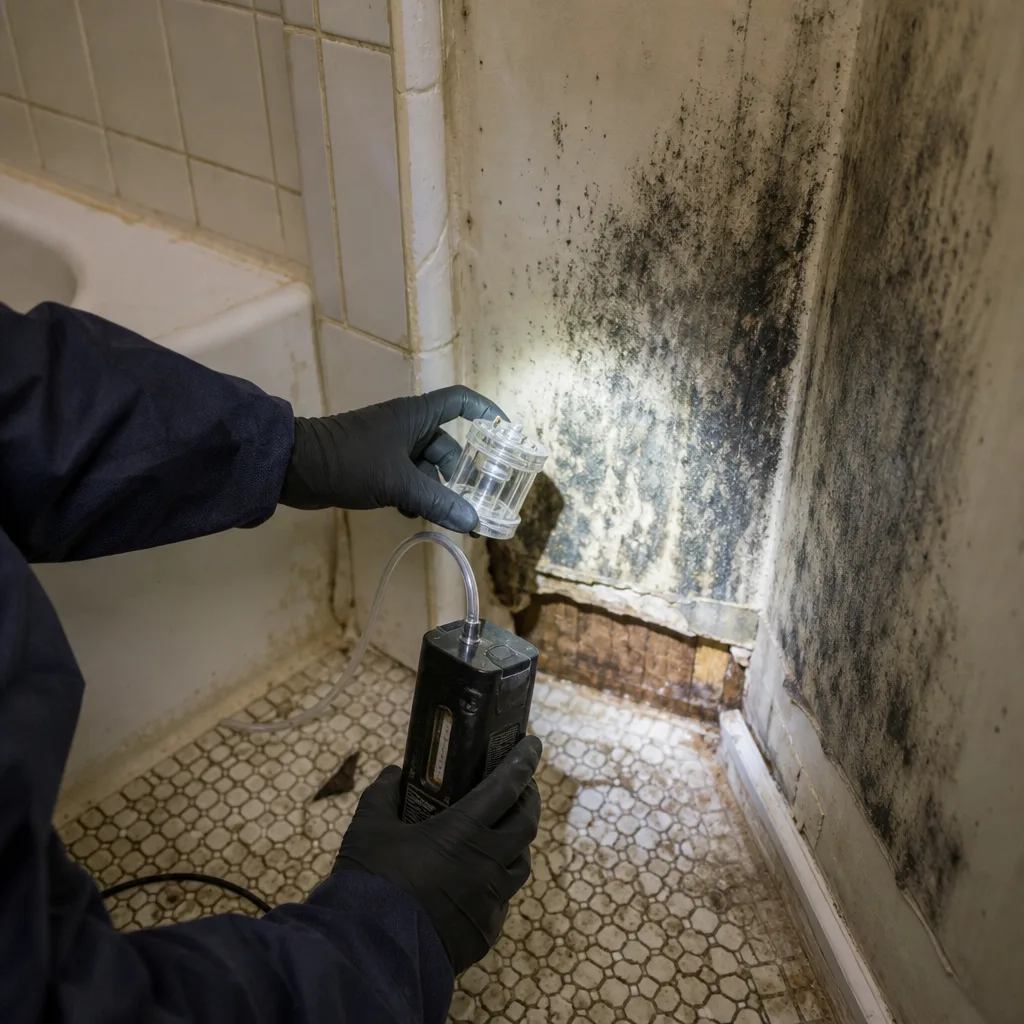
The crew walks the property room by room, inside and out. We map the full loss with thermal imaging and hygrometers, identify the water category, and document pre-loss condition for your Town of Hempstead file. This is where we find the hidden migration paths that plaster-on-lath walls and cast-iron drains create.
Extraction & Stabilization
Standing water comes out first, using truck-mounted and portable extraction units. If the roof or a wall is compromised, we board up and tarp immediately. The goal is to stop the loss from growing before it gets worse.
Drying & Dehumidification
Professional-grade Dri-Eaz and Phoenix air movers and dehumidifiers go in, placed according to a documented drying chamber plan. Daily moisture readings track progress until the dry standard is met. We hand you and your carrier the log.
Cleaning & Sanitization
All affected surfaces are cleaned and sanitized with antimicrobial agents appropriate to the water category. HEPA air scrubbers run where necessary to control airborne contaminants during the process.
Storm-Specific Treatment
For Bellerose Terrace storm losses, this means addressing the hydrostatic pressure issue, not just its symptoms. We evaluate the exterior drainage, grade, and the condition of drain tile or sump systems. If water pushed up through the floor, we document the source and scope the fix so it doesn’t return next season.
Repairs & Restoration
We rebuild what needs rebuilding, from drywall and framing to flooring and finishes. Nassau County energy and mechanical codes apply, and our scopes are written to pass Town of Hempstead inspection. The 90-Day Done Right Promise covers the work in writing.
Need Emergency Storm & Disaster Restoration in Bellerose Terrace Now?
Crews minutes away, answering live 24 hours a day. The sooner we start, the less it costs.
Working With Your Insurance Company
Insurance claims after a Bellerose Terrace storm are not a side conversation, they’re the main event. Most storm losses here are covered, but carriers want proof: proof of what happened, proof of what it costs to fix, proof that the drying was done to standard. We document from the first hour, with room-by-room photos, moisture readings, and a line-item scope that speaks the carrier’s language. Our team communicates directly with your adjuster and handles the back-and-forth. No homeowner gets handed a stack of forms and told to figure it out. The 90-Day Done Right Promise, our Keystone Standard, stays in effect throughout. If something isn’t done right, we make it right. That’s in writing, no arguing.
What We Provide Your Insurer
- Thorough documentation of the loss
- Photos of all damage, room by room
- Moisture readings and drying logs
- A detailed, line-item scope of work
- Direct coordination with your carrier
Built for Bellerose Terrace’s Loss Calendar
Bellerose Terrace takes its storm losses in seasons, and each season has its own flavor. January deep freezes burst copper supply lines in the uninsulated crawl spaces of those 1950s Capes, flooding kitchens and finished basement rooms before anyone notices. March and April thaw the Hempstead Plain’s clay-heavy till, and the near-flat glacial outwash topography means the water table rises and pushes groundwater up through the older parged concrete block basement floors. Summer thunderstorm flash floods arrive fast and hit the same low-lying blocks off Jamaica Avenue hardest. Then autumn nor’easters sweep in, driving wind-driven rain through aging roofs and siding, overwhelming the shallow Nassau County drainage that has struggled since Hurricane Sandy compromised infrastructure across this corridor. A restoration company that works Bellerose Terrace regularly knows the calendar. We pre-position crews when the National Weather Service calls for heavy rain. We know which blocks flood first. That’s not marketing, it’s local knowledge accumulated by the same crews returning to the same streets, year after year.
Storm & Disaster Restoration Across Bellerose Terrace’s Neighborhoods
Bellerose Terrace is small, just a few blocks, but the loss patterns shift block by block. The homes along Jamaica Avenue and its immediate side streets, close to the commercial corridor, tend to be earliest in the flood queue, with shallow lots and older drain connections that back up quickly in a nor’easter. The blocks tucked behind the Bellerose Terrace Long Island Rail Road station, toward the Nassau County border, sit slightly higher on the marginal glacial till and typically see more wind damage than standing water, though the oldest homes there carry original roofs and flashing that wind-driven rain exploits. The south end of the community, nearest the Cross Island Parkway, catches the worst of the surface runoff from the parkway’s impervious surface, and those basements, with their original parged block and aging perimeter drains, show the repeat-event hydrostatic flooding pattern that defines this community. The boundary blocks along the Queens line are the trickiest. Homes there look identical to homes across the street in Bellerose, Queens, but the permits run through Town of Hempstead, not NYC DOB. Our Storm & Disaster Restoration crews know the difference. We write every scope for the Nassau County system from the first hour.
Specialized Storm & Disaster Restoration Services We Offer in Bellerose Terrace
Flood Damage Restoration
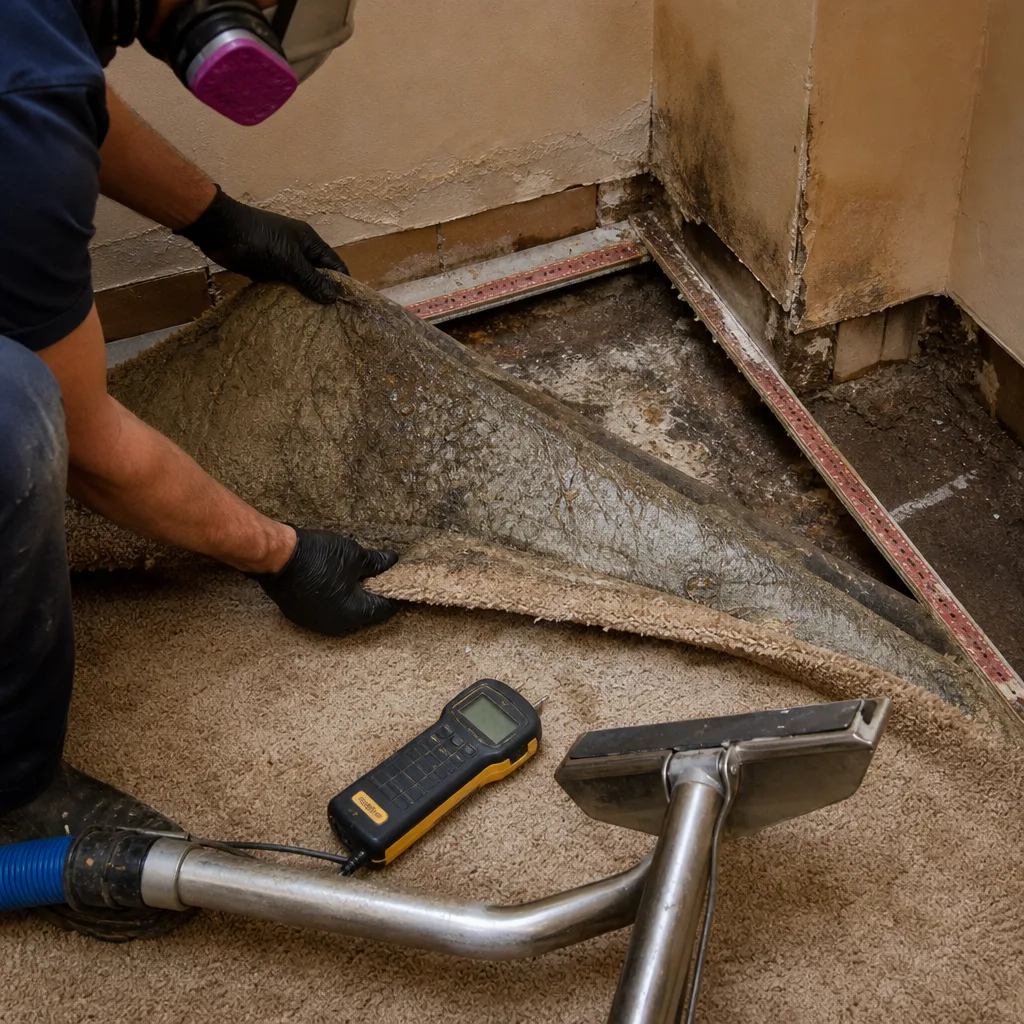
When the water rises, whether from a nor’easter or a broken supply line, we extract, map, dry, and rebuild. In Bellerose Terrace, that means handling the hydrostatic pressure that pushes water up through basement floors, not just the water that came in through a window. Our moisture mapping follows the water behind plaster-on-lath walls and inside the original cast-iron drain stacks, where the hidden damage lives. Dri-Eaz and Phoenix equipment runs until the dry standard is met and the log is ready for your Town of Hempstead inspector.
Emergency Board-Up
A broken window or a storm-damaged door on a block off Jamaica Avenue turns into an open invitation if left overnight. We secure openings with plywood and fasteners rated for the wind loads this corridor sees in a nor’easter. Board-up is a stopgap, not a repair, but it buys you the days needed to scope the full restoration properly.
Debris Removal
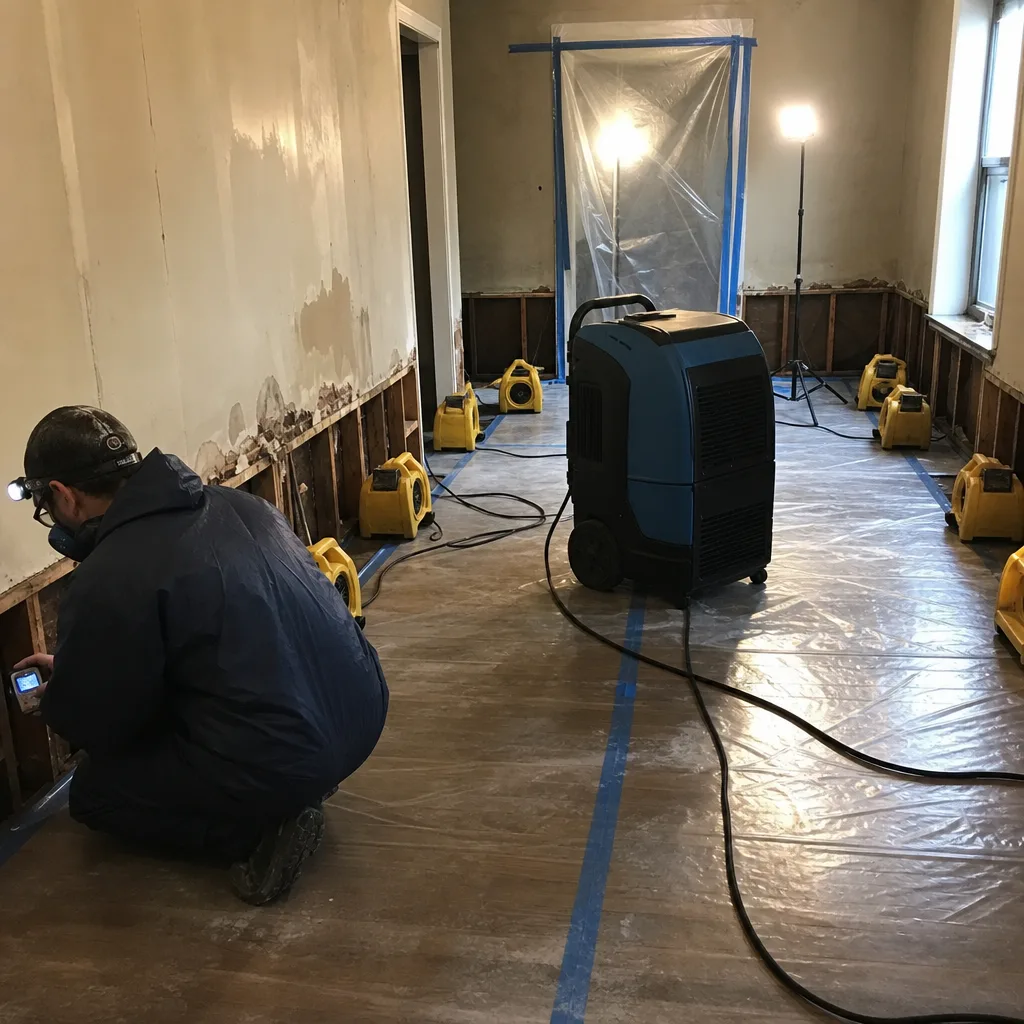
Fallen tree limbs, stripped shingles, soaked insulation, ruined drywall: storm debris in Bellerose Terrace has to go before drying can start. We remove it, classify it for your insurance documentation, and dispose of it per Nassau County rules. This is not a job for a trash bag. It’s a documented, insured step in the restoration scope.
Roof Tarping
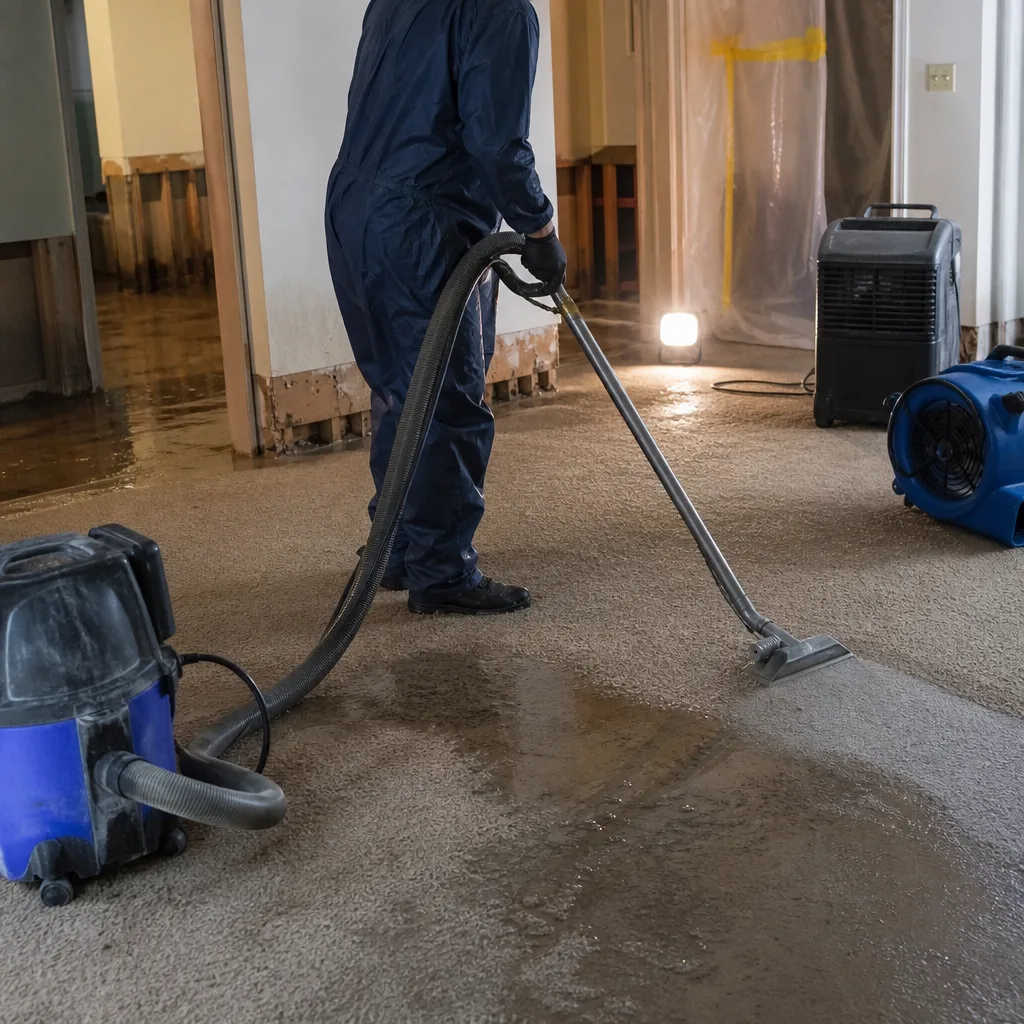
A tarp keeps the water out while the full roof repair waits. In Bellerose Terrace, where a large share of homes still carry original or near-original roofing on 1950s and 1960s construction, a tarp properly secured against Long Island wind is the difference between a contained loss and a cascading interior flood. We tarp for weather, not for looks, and the tarp stays until the rebuild is scheduled.
What happens when you call
- 1
A real person answersNo phone trees - you reach a local pro.
- 2
You get an upfront price rangeHonest numbers before anyone is dispatched.
- 3
A background-checked tech heads outLicensed & insured, dispatched right away.
- 4
You approve before work beginsNothing starts until you say go.
Storm & Disaster Restoration Costs in Bellerose Terrace, NY
Straight numbers. Emergency water extraction and structural drying in Bellerose Terrace typically runs $3,200 to $7,800 depending on the square footage affected, the water category, and whether walls need opening for plaster-on-lath drying. Emergency board-up usually lands between $450 and $1,200 depending on openings and materials. Roof tarping runs $400 to $900 for a standard Cape Cod roof. Debris removal is charged by the cubic yard and disposal class, typically $500 to $1,800 on a moderate nor’easter loss. Full reconstruction, where framing and finishes are replaced to Nassau County code, runs $18,000 to $55,000 and up depending on the extent. What moves the price: whether the cast-iron drain stacks are involved, whether the hydrostatic source needs exterior drainage work, and whether the water reached Category 3. Insurance covers most of this, and we bill your carrier directly. The free visual inspection gets you a firm, line-item scope before you commit. Call (917) 924-4221 for an exact quote. Estimates are free.
We Also Serve Cities Near Bellerose Terrace
Our crews cover the surrounding area with the same live dispatch and same 90-Day Done Right Promise. We work regularly in Bellerose Terrace, plus nearby Fairview, Harrison, East Bronx, and Hunts Point. Storm losses don’t respect municipal boundaries, and neither does our response.
Serving Bellerose Terrace, NY - Our Local Coverage Area
We’re based in the Bellerose Terrace area and know this community well. Use the map below to see our service coverage - if you’re nearby, we can almost certainly help.
Bellerose Terrace Storm & Disaster Restoration Questions, Answered
Why did my Bellerose Terrace neighbor in Queens get a permit approved with NYC DOB codes, but my restoration crew needs a Town of Hempstead permit?
Bellerose Terrace is unincorporated Nassau County territory, which means structural restoration permits run through the Town of Hempstead Building Department in Hempstead village, not NYC DOB, even though the homes look identical to those across the county line in Bellerose, Queens. Your neighbor’s Queens-side contractor filed under NYC construction codes, which apply west of the county line. Your side of the street is Nassau County, and inspectors enforce Nassau County energy and mechanical codes. A contractor who assumes Queens rules apply on your side will get a stop-work order mid-mitigation. Call (917) 924-4221 before any contractor starts and we’ll explain it plainly.
Can I just dry out my Bellerose Terrace basement myself after a nor’easter, or do I need a restoration company for the Town of Hempstead permit?
You can dry a minor Category 1 incident yourself if the water was clean and the affected area is small, but Bellerose Terrace basements rarely stay minor. Hydrostatic pressure pushing water up through a parged concrete floor carries contaminants from the soil, pushing the water toward Category 2 or 3. And if your insurance claim requires reconstruction, the Town of Hempstead inspector will want a documented moisture log from a certified restoration company, with daily readings and a dry standard met. A homeowner with a shop vac and a box fan doesn’t produce that log. Call (917) 924-4221 for a free visual inspection and we’ll tell you honestly whether yours is a DIY job or a restoration claim.
How does the near-flat Hempstead Plain topography cause Bellerose Terrace basements to flood repeatedly, even from a moderate storm?
The Hempstead Plain underneath Bellerose Terrace is nearly flat glacial outwash with clay-heavy till that drains poorly. When the shallow Nassau County water table rises, from heavy rain or a nor’easter, the water has no place to go but up. Hydrostatic pressure pushes groundwater through the older parged concrete block basement floors common to the 1950s Capes here. This has been a repeat-event pattern since Hurricane Sandy, and it means restoration scopes that just dry the basement without addressing the exterior drainage and the water table issue will see the same flood return within a season. Call (917) 924-4221 for an assessment that includes the hydrostatic source.
What does a Town of Hempstead inspector look for in a storm restoration drying log for a Bellerose Terrace basement?
A Town of Hempstead inspector reviews the drying log for daily moisture readings showing a downward trend, the dry standard achieved for each affected material, the equipment used and placement, and pre-loss condition documentation. They want proof that the plaster-on-lath walls and original building materials were either dried to standard or removed and replaced to Nassau County code. A log that stops after extraction or skips wall-cavity readings will fail inspection. We document every reading, hand the log to you and your carrier, and write the scope to pass Town of Hempstead review the first time. Call (917) 924-4221 with questions.
My Bellerose Terrace home was built in the 1950s with original plaster-on-lath. Why did my restoration quote include opening walls even though only the basement flooded?
Plaster-on-lath walls are water’s favorite hiding place. When a Bellerose Terrace basement floods, the water wicks up through the plaster and travels behind baseboards into wall cavities, especially around the original cast-iron drain stacks, which are often weeping behind the masonry. If we don’t open those walls and inspect, a Category 1 loss becomes a Category 3 black water event and a mold problem within 48 hours. The quote includes opening walls because that’s where the hidden damage is in a house of this era. The line the water left is where we start. Call (917) 924-4221 and we’ll walk you through the moisture map.
How fast can a crew actually get to my Bellerose Terrace home?
Our response commitment is 45 minutes from your call to a crew rolling toward your address. Bellerose Terrace is compact, a few minutes from our New York City dispatch office, and the live dispatcher at (917) 924-4221 sends the nearest certified crew immediately. Standing water and open roof penetrations get worse with every hour, so the math is simple: the sooner we start, the less it costs and the less we have to rebuild.
Will my insurance cover storm restoration in Bellerose Terrace?
Most homeowners policies cover storm damage, including nor’easter wind damage, water from a storm-created opening, and burst pipes. The nuance is the cause: rising groundwater is frequently excluded from standard policies, which is why the hydrostatic pressure pattern here matters so much in scoping. If you’re not sure which category your loss falls into, don’t guess. Call (917) 924-4221 and we’ll document the loss properly from the first hour and coordinate directly with your adjuster.
What should I do in the first 30 minutes after storm damage in Bellerose Terrace?
Call (917) 924-4221, then take photos of the damage from a safe distance while you wait. Don’t enter standing water if the power is on or if it came up through the basement floor, in Bellerose Terrace that water is likely Category 2 or worse. If a roof penetration exists, don’t climb up. If a window or door is broken, keep children and pets away from the glass. Our crew arrives, secures the property, and starts documenting. The first 30 minutes set the tone for the whole claim, and a live dispatcher is standing by now.
Written by Curt Bowman, Owner at Floodline Restoration Co. of Manhattan, serving Bellerose Terrace with storm restoration, flood damage cleanup, and full rebuild since 2010.