
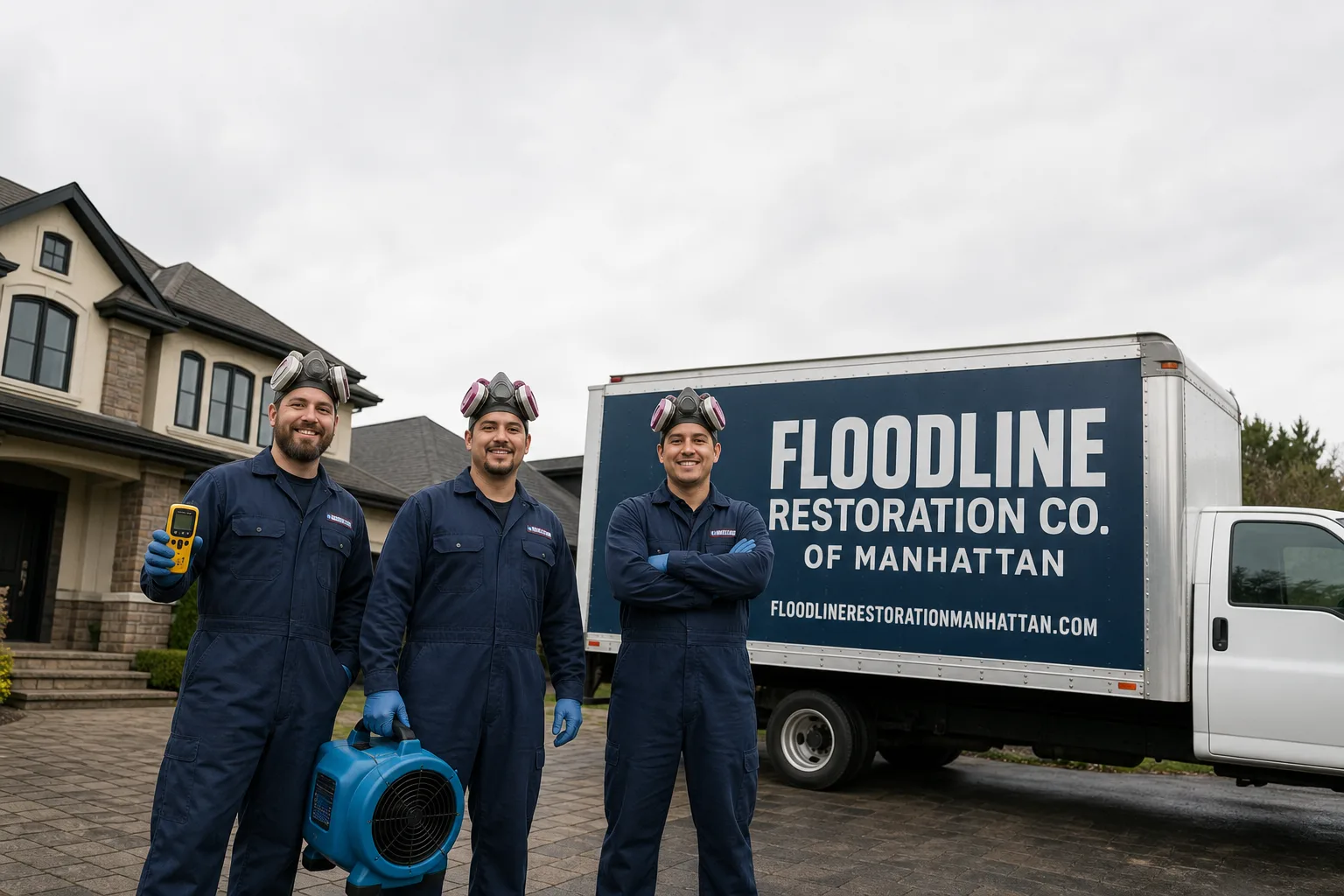
Free visual inspection and a written scope of work before any mitigation begins - photos, moisture readings, and drying logs go in your claim file
The scope we write is the scope we bill. Anything new gets shown to you, in writing, before we touch it.
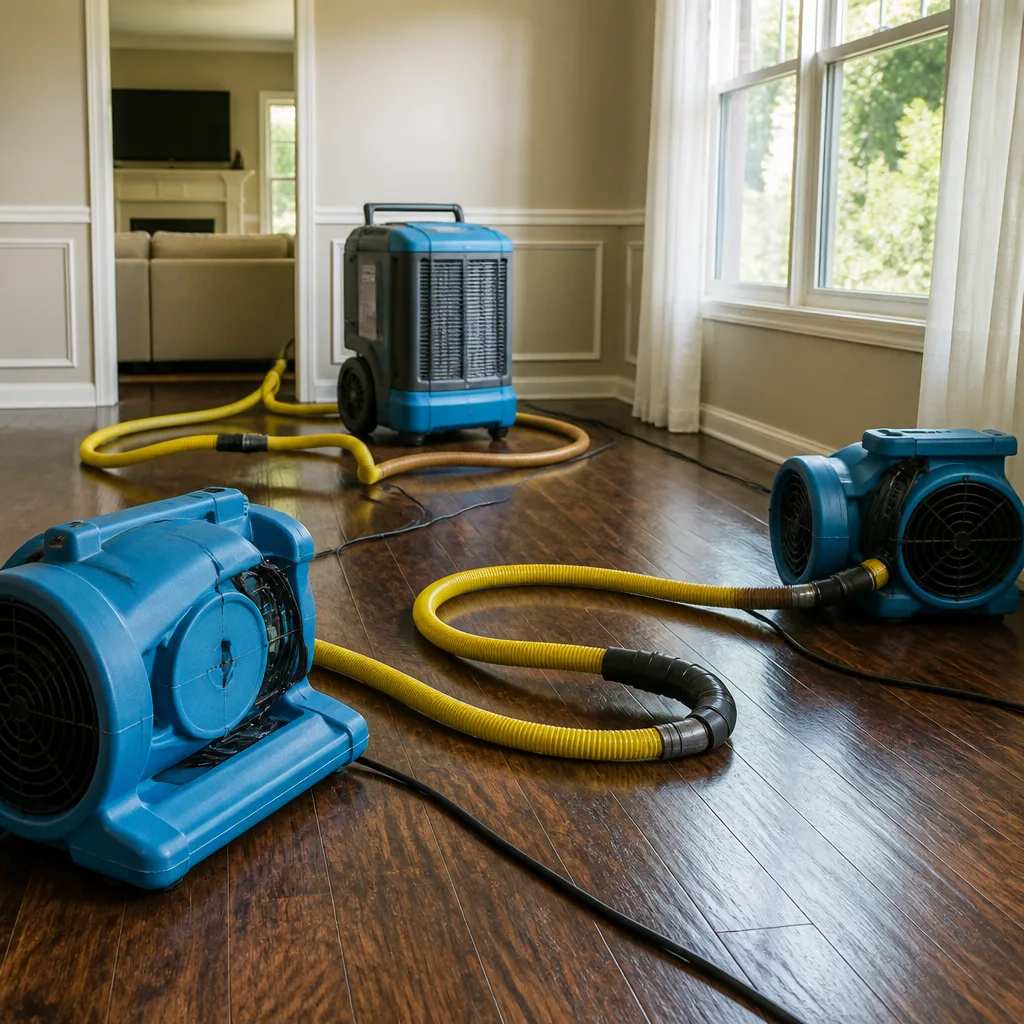
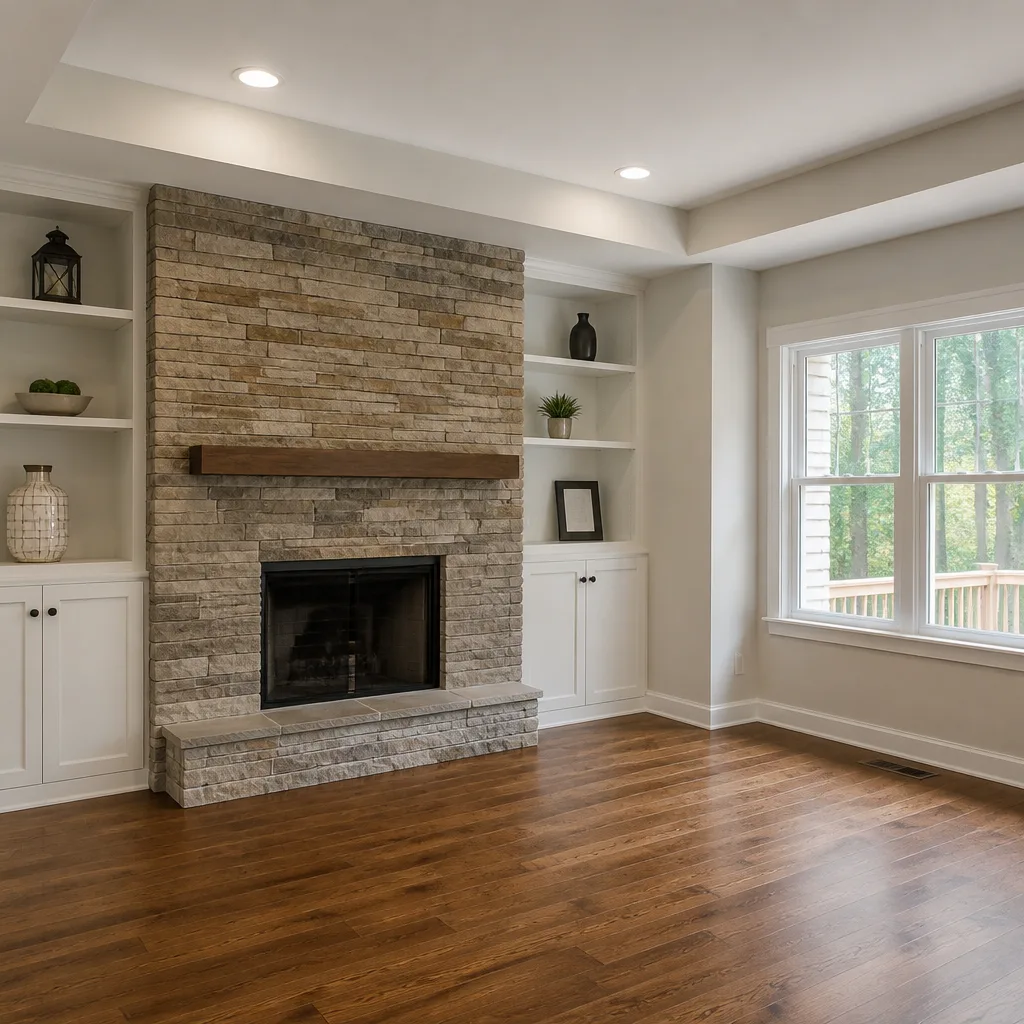
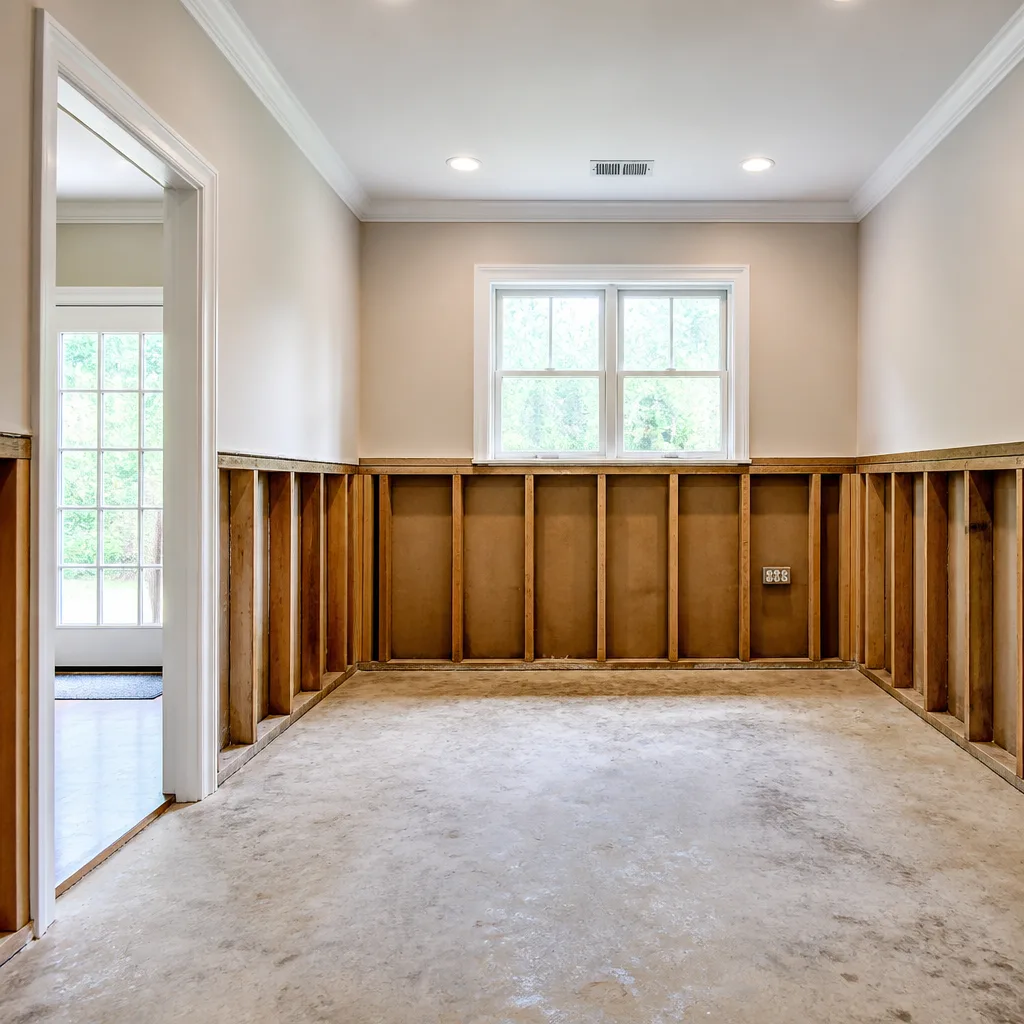

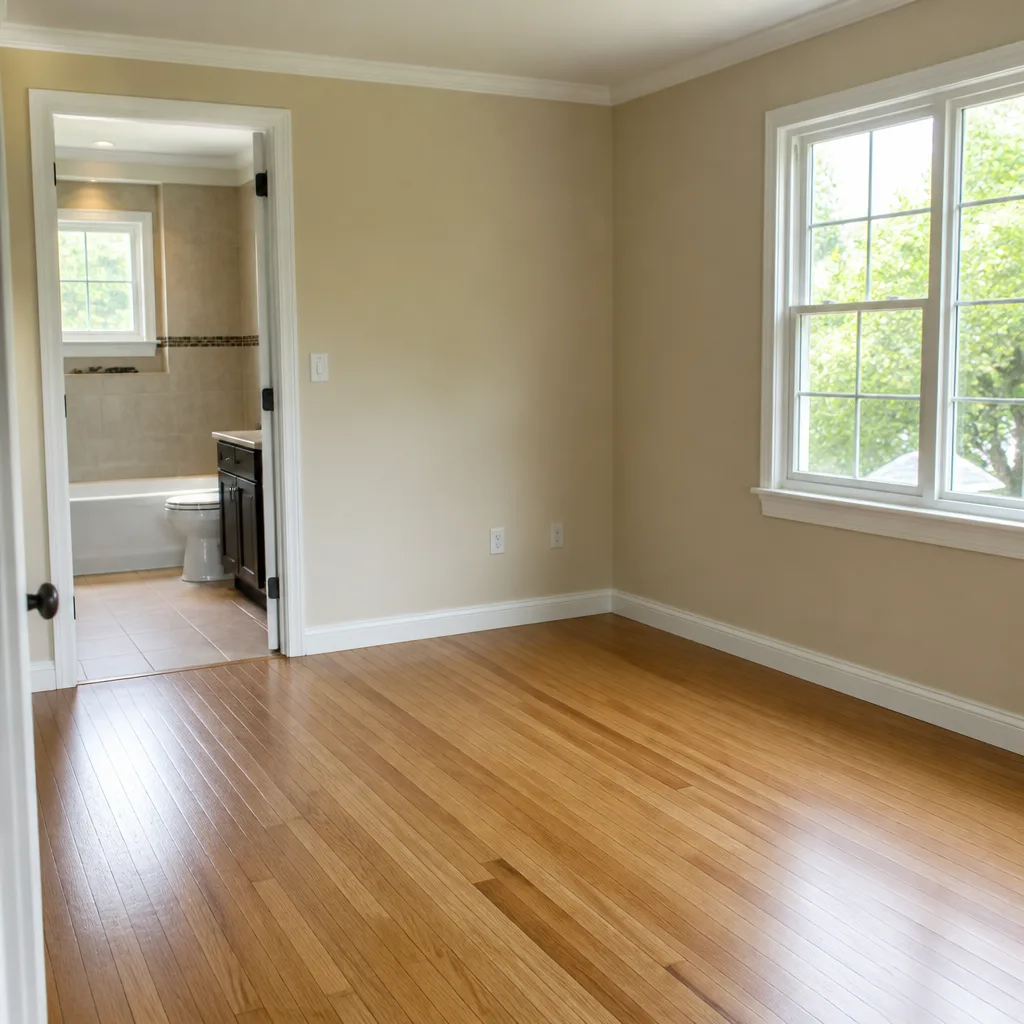
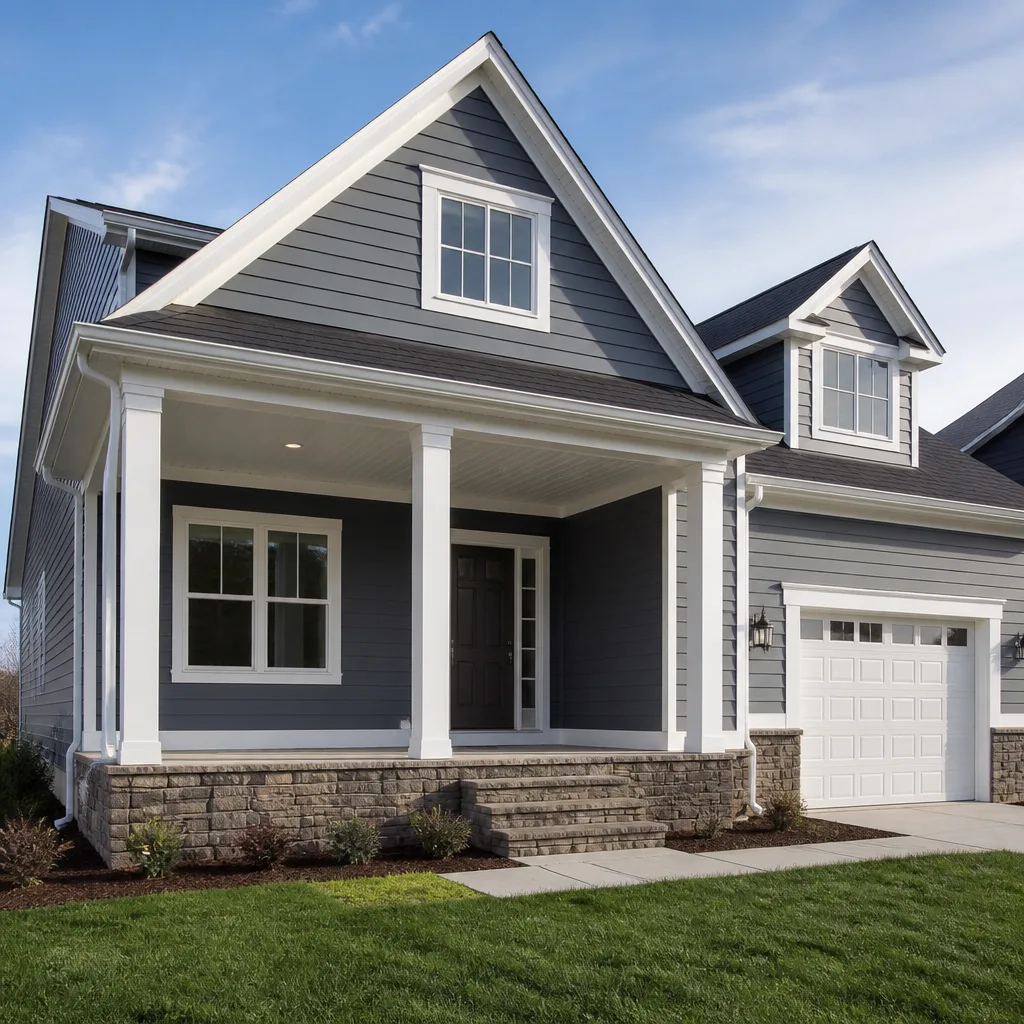
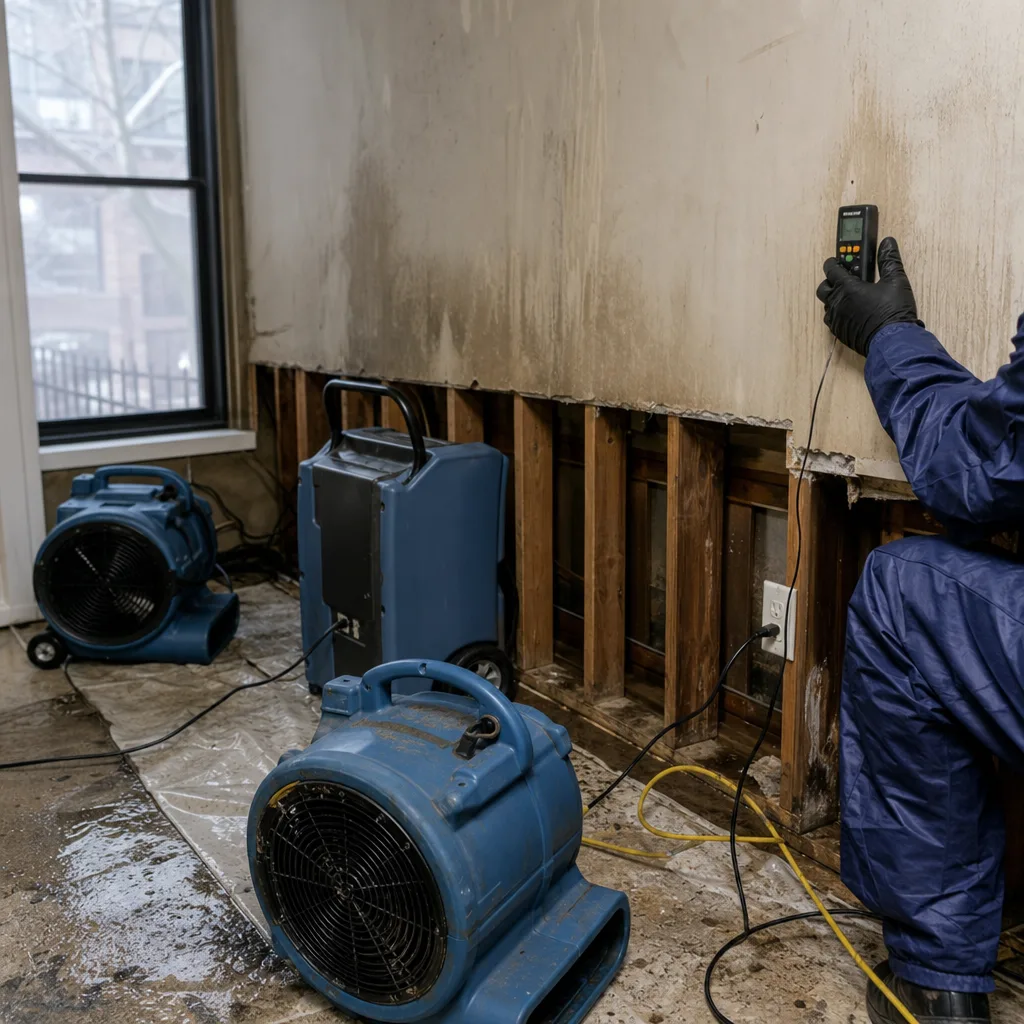 Before
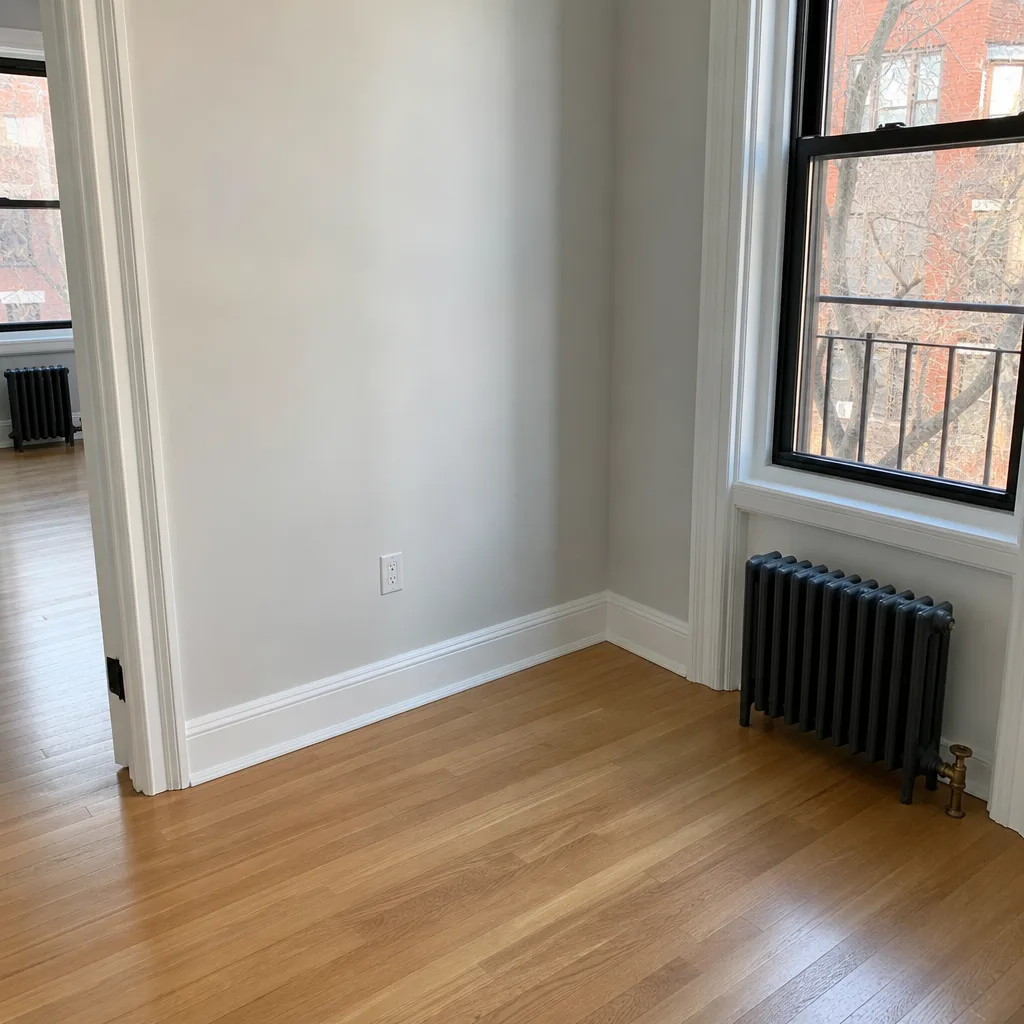 After
After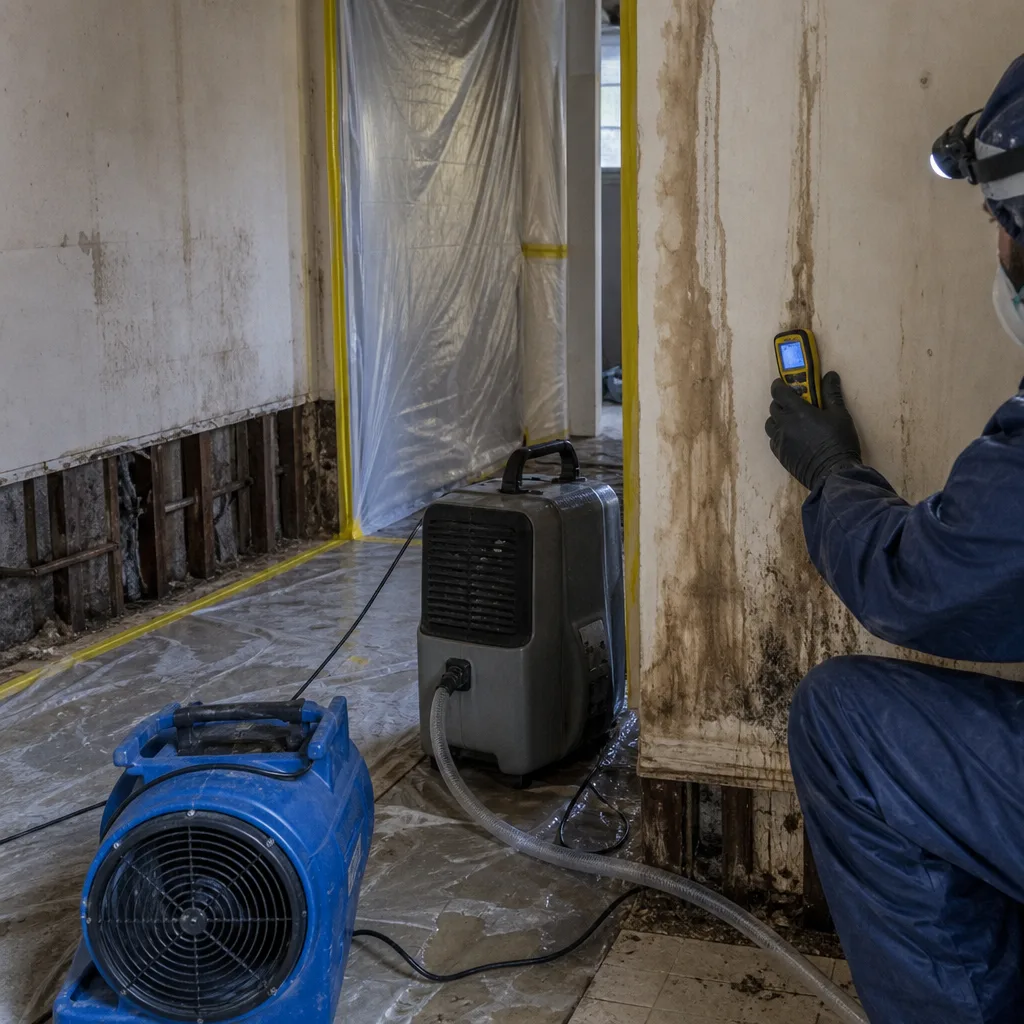 Before
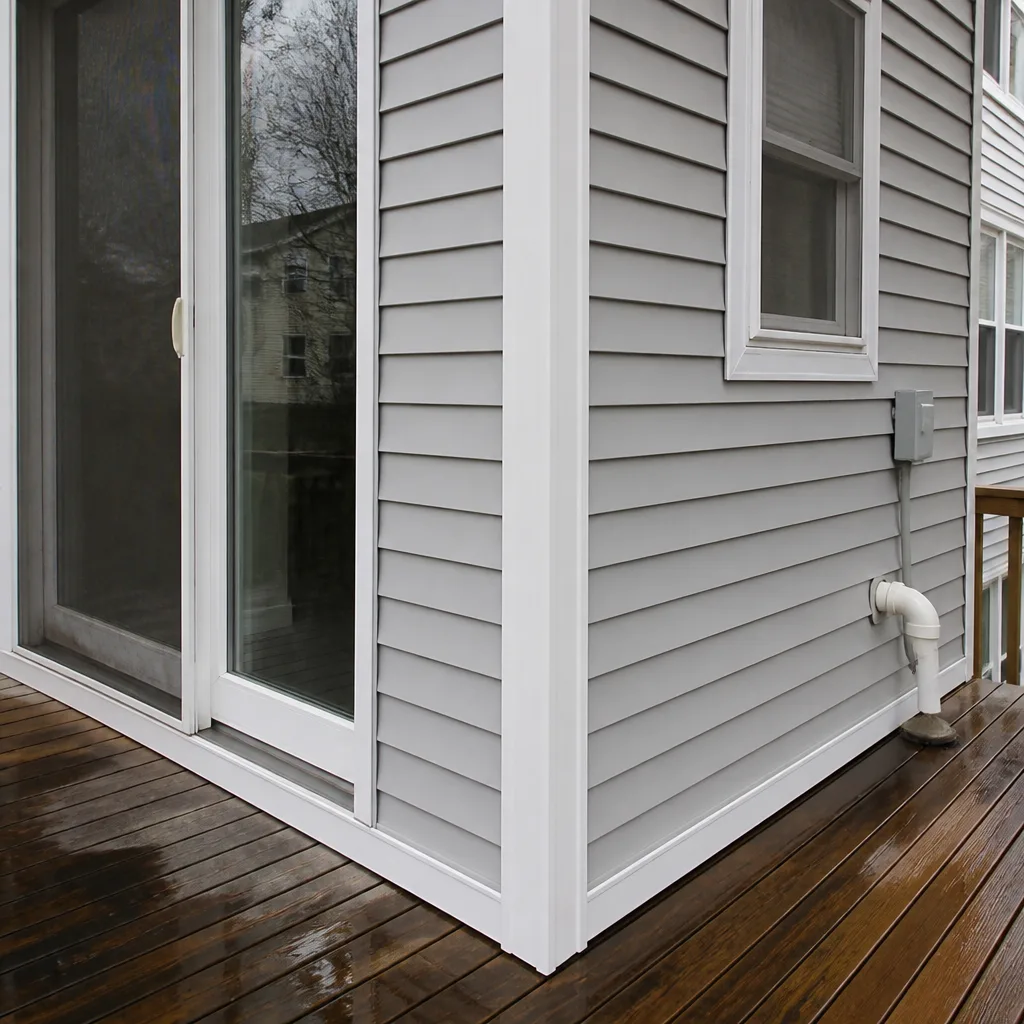 After
After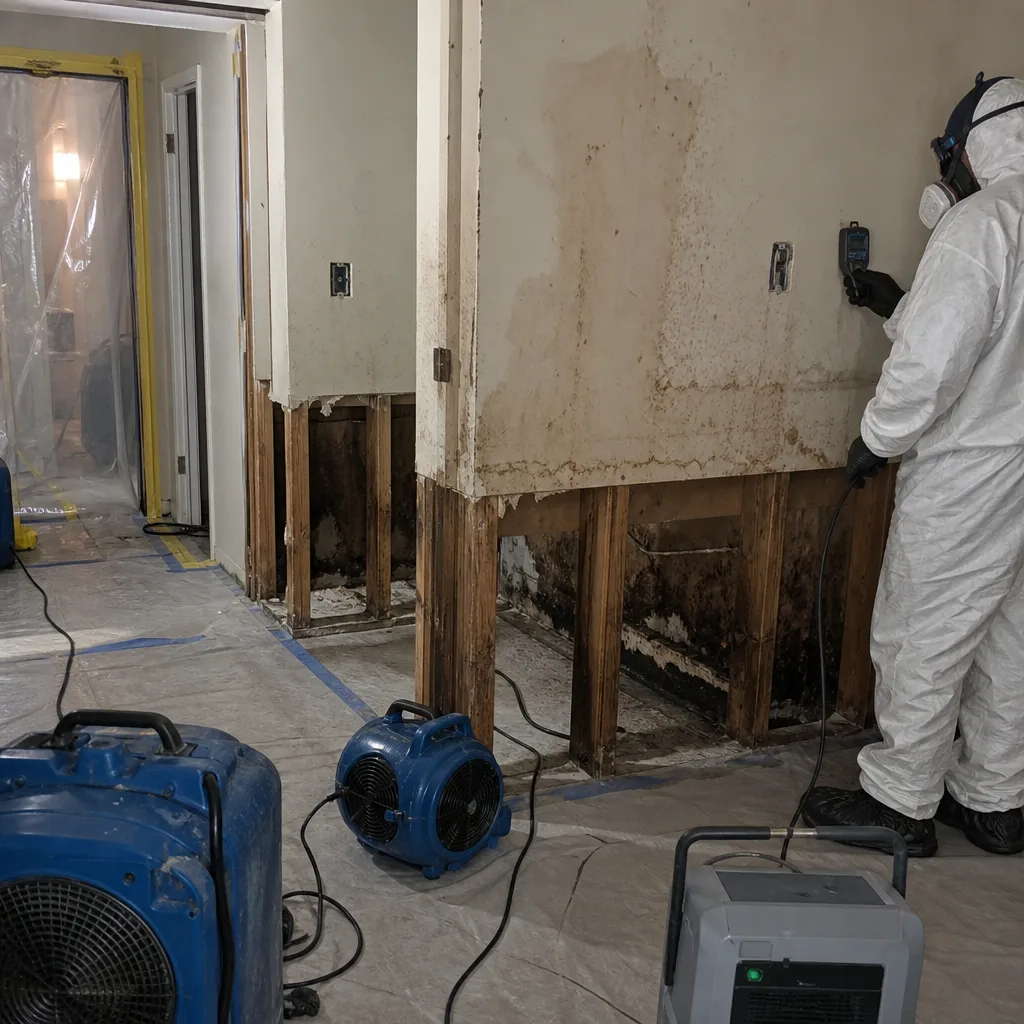 Before
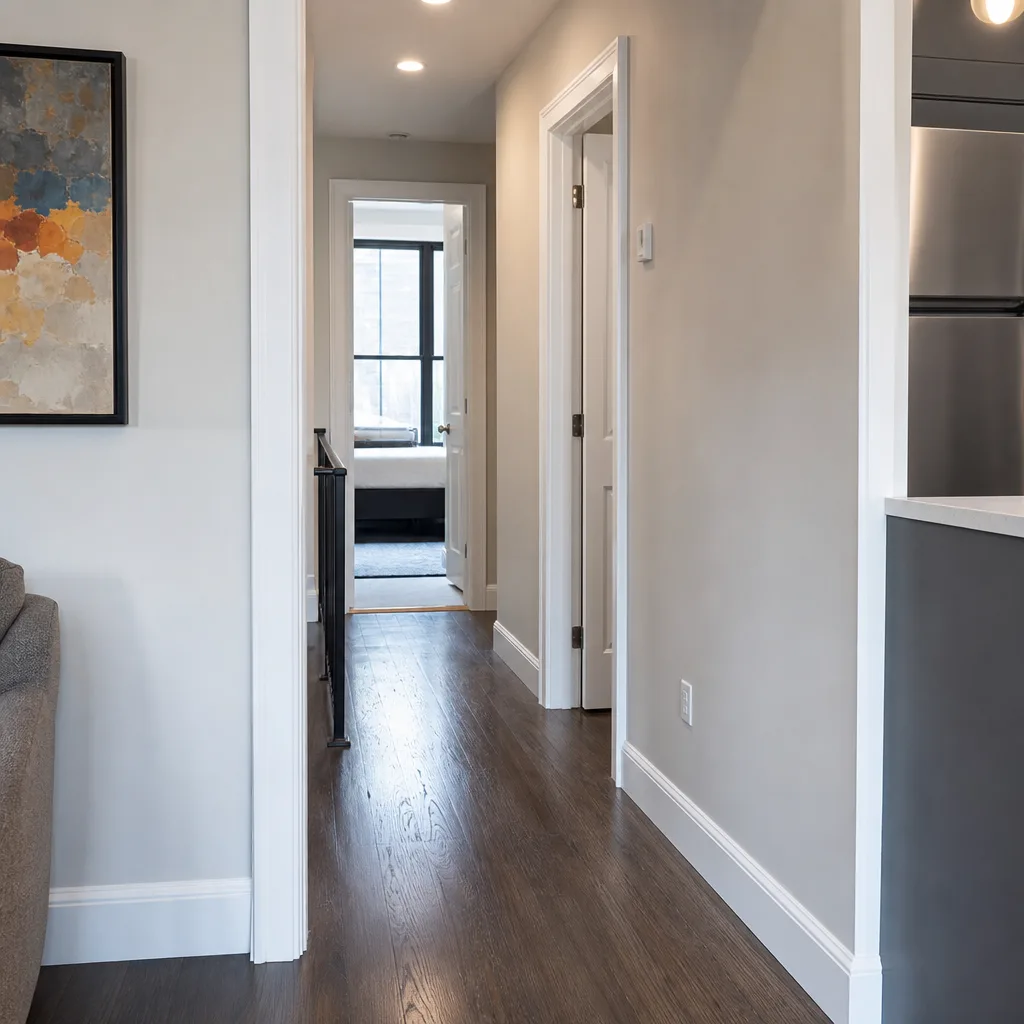 After
After24/7 Emergency Storm & Disaster Restoration in Demarest
Storm and disaster restoration in Demarest typically runs $1,400-$9,500 depending on the scope, and the first crew can usually reach your property within 45 minutes of your call. That speed matters more here than in most Bergen County towns, because water moving down the sloped lots off Hardenburgh Avenue and Knickerbocker Road finds its way into pre-code foundations fast. Call (917) 924-4221 any hour, day or night, and a live person answers. Not a recording. A dispatcher who knows Demarest’s streets and can put a crew on the road immediately.
The first hour after a nor’easter, a flash thunderstorm, or a burst supply line is when the damage is smallest and the salvage window is widest. Wet plaster, finished basement carpet, and old-growth trim all respond better when extraction starts the same visit. Our Storm & Disaster Restoration team arrives with professional-grade moving air and dehumidification equipment on the truck, so we’re not walking your wet basement, taking notes, and coming back tomorrow. We start pulling water out while the assessment is still underway.
Understanding Storm & Disaster Restoration Severity in Demarest Properties
Demarest’s housing stock changes the math on storm damage. The Colonials, Tudors, and Capes built between 1930 and 1965 along Hardenburgh Avenue, Brookside Avenue, and County Road sit on deep, sloping lots with full basements. When heavy rain hits those hillsides, runoff channels directly toward foundations that predate modern drainage codes. That means one storm event frequently produces simultaneous roof damage, siding intrusion, and basement water on the same property, a multi-system loss profile that flat-lot suburbs a few miles east rarely see.
Water in a Demarest basement is rarely clean. Snowmelt and storm runoff carry silt, lawn chemicals, and whatever the rain picked up off the street. That lands in Category 2 or Category 3 water territory, which changes how we set containment, what we throw out, and how aggressively we dry. Moisture mapping with thermal imaging tells us where water traveled behind built-in cabinetry and finished walls, because on these older homes, water hides. The fieldstone or poured-concrete foundation walls common on 1940s and 1950s builds wick moisture upward, and clay-heavy Bergen County soil holds water against the exterior for weeks after the rain stops.
Why Demarest Property Owners Choose Floodline Restoration Co. of Manhattan
- 45-minute response commitment. Crews are dispatched from within reach of Demarest, and we’ll be there when we say. No window, no all-day wait.
- 24/7 live answer. A person picks up the phone at 2 a.m. during a winter nor’easter. Never an automated system, never a callback list.
- IICRC-certified crews. Our technicians hold WRT and FSRT certifications and work to RIA and IFA standards, so the drying plan is built on readings, not guesses.
- Free visual inspection. Before any work begins, we walk the damage with you, explain what we’re seeing, and put the scope in writing.
- Direct insurance billing. We document everything, coordinate with your adjuster, and bill the carrier directly. You’re not the messenger.
- One team from extraction to reconstruction. The same certified crew that reads the moisture map on day one handles daily readings and rebuilds the finished basement. No mid-job handoff.
Our Storm & Disaster Restoration Process
Inspection & Assessment
We walk every affected room with thermal imaging and moisture meters. On Demarest’s older homes, that means checking behind built-ins and along foundation walls where water hides. You get a written scope before any demolition starts.
Extraction & Stabilization
Standing water comes out first, using truck-mounted extraction where access allows. Same-visit roof tarping and emergency board-up stop additional water from entering while we work the interior.
Drying & Dehumidification
Professional-grade Dri-Eaz and Phoenix air movers and dehumidifiers are placed based on the moisture map, not scattered evenly. Daily readings are logged and shared with you and your carrier until the dry standard is met.
Cleaning & Sanitization
Category 2 and 3 water demands antimicrobial treatment and HEPA air scrubbing. We contain the affected area so contaminants don’t migrate into the rest of the house.
Specialty Treatment
Original plaster walls, old-growth oak trim, and natural stone need slower drying and material matching that national franchises skip. We dry to preserve, not to gut.
Repairs & Restoration
The same crew rebuilds what was opened up. Plaster patched, trim matched, floors refinished, and the 90-Day Done Right Promise in writing before we leave.
Need Emergency Storm & Disaster Restoration in Demarest Now?
Crews minutes away, answering live 24 hours a day. The sooner we start, the less it costs.
Working With Your Insurance Company
Insurance is in the room on nearly every Demarest storm loss, and the claim is only as good as the documentation behind it. We build the file from the first hour: photos of every affected room before anything moves, moisture readings from the moment extraction starts, and a line-item scope written in industry-standard format. Your adjuster gets all of it directly, and we talk to them, not through you. Demarest homeowners with high-value finished basements and contents like wine cellars and home offices need documentation that matches the real cost of restoring period materials. We provide that.
What We Provide Your Insurer
- Thorough documentation of the loss
- Photos of all damage, room by room
- Moisture readings and drying logs
- A detailed, line-item scope of work
- Direct coordination with your carrier
Built for Demarest’s Loss Calendar
Demarest’s storm damage follows a seasonal rhythm, and the houses here make each season worse than it would be on flat ground. January and February bring deep freezes where temperatures oscillate around 32°F, bursting supply lines in garage-adjacent walls and poorly insulated crawl spaces. Those bursts, left for a day while the homeowner is out, flood finished basements with Category 1 water that becomes Category 2 as it sits. Ice damming is the other winter signature: the steep roof pitches on Tudor and Colonial homes hold snow, and repeated freeze-thaw cycles force meltwater under shingles and into roof valleys.
Spring is basement season. Snowmelt combined with clay-heavy soils on hillside lots overwhelms waterproofing built decades before current drainage codes. We see foundations weeping for two or three weeks after the last snow is gone. Summer brings thunderstorm flash flooding, where a single downpour pours off the ridge and finds every pre-code crack in a fieldstone foundation. Fall nor’easters bring it all at once: wind damage to siding, roof valleys failing, and basements flooding in the same event.
Storm & Disaster Restoration Across Demarest’s Neighborhoods
The loss patterns shift block by block in Demarest. Homes along Hardenburgh Avenue and the ridge streets that branch off it, Morningside Avenue, Piermont Road, and County Road, sit on the steepest grades, where runoff pressure against foundations is highest. These are the properties where one storm produces basement water, roof damage, and siding intrusion at the same time. The finished basements here, many with wine storage, home offices, and original plaster walls, carry contents losses that can rival the structure itself.
Closer to Demarest’s center, the lots level out somewhat, but the housing stock is older. Capes and early Colonials from the 1940s have crawl spaces and shallow foundations that channel water differently, pooling under the house and pushing moisture up through hardwood floors. Near the Demarest Nature Center and the wooded parcels along the borough’s eastern edge, mature trees mean wind damage is a bigger part of every storm story, branches through roofs and siding, and gutter systems clogged with leaf litter that send water over the fascia and down the walls.
Specialized Storm & Disaster Restoration Services We Offer in Demarest
Storm Damage Cleanup
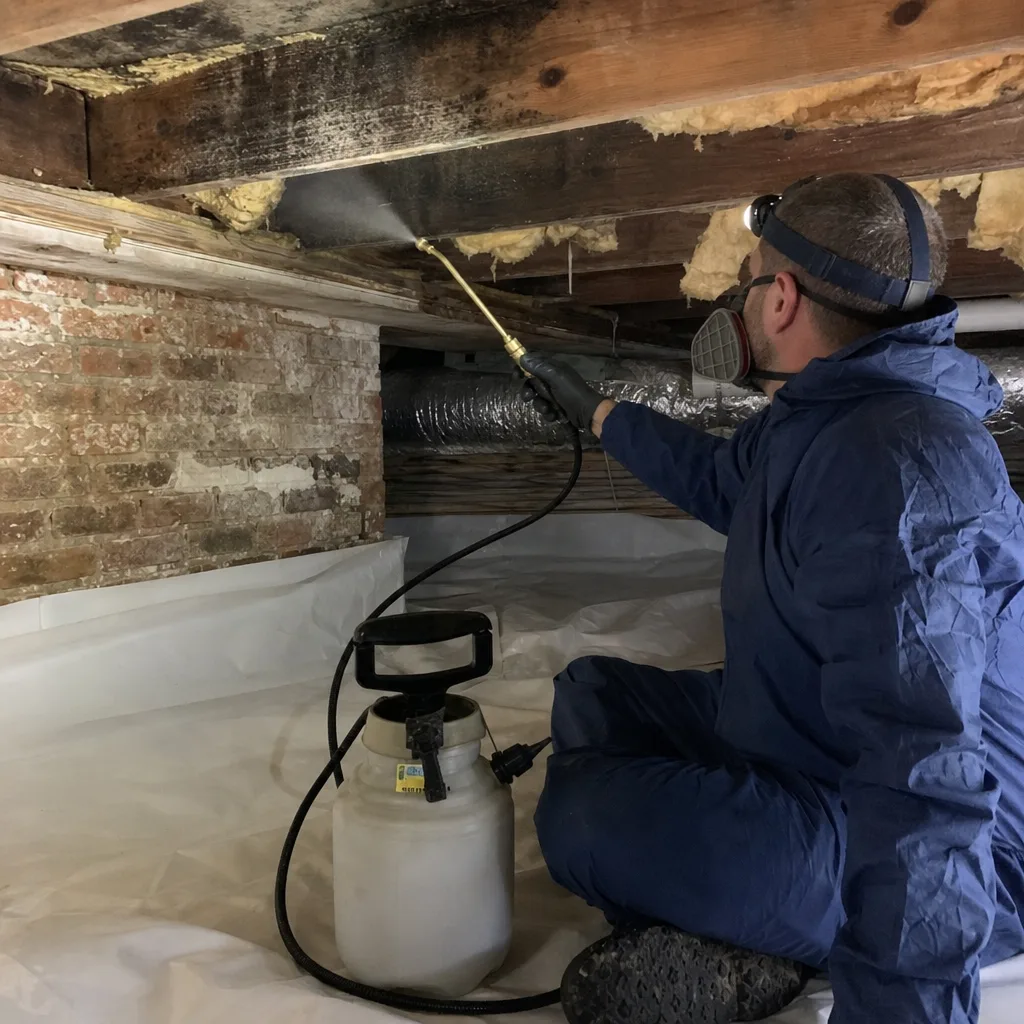
After wind and water move through, the mess is part of the damage. We haul out storm debris, remove wet drywall and insulation, and clear the affected areas so drying equipment can do its job. On Demarest’s finished basements, that means careful removal around original trim and built-ins, not a gut-and-go approach.
Flood Damage Restoration
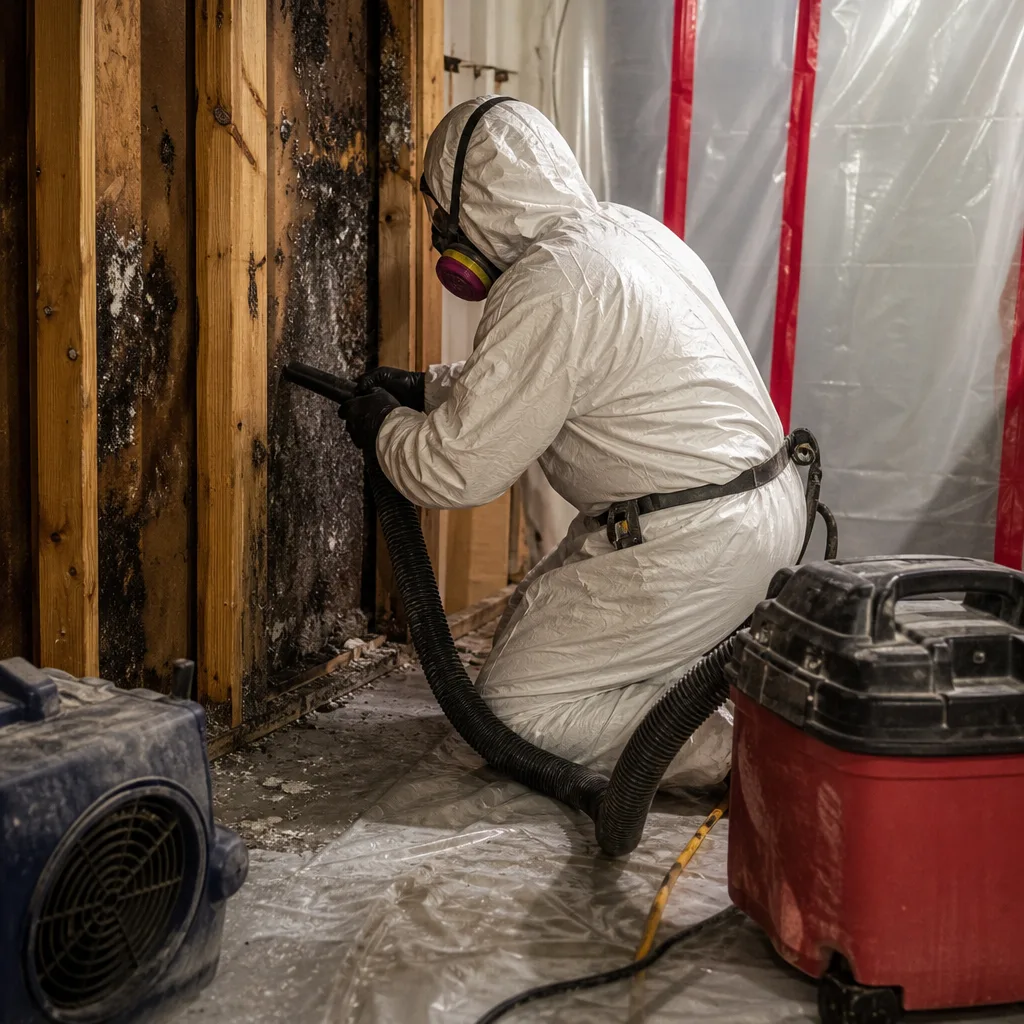
Basement water is the dominant loss in Demarest, and it’s rarely clean water. We classify the water category on arrival, extract, set containment where needed, and dry to a written standard. The clay-heavy soils here mean exterior water keeps pressing against the foundation while we work, so drying plans account for that ongoing moisture load.
Emergency Board-Up
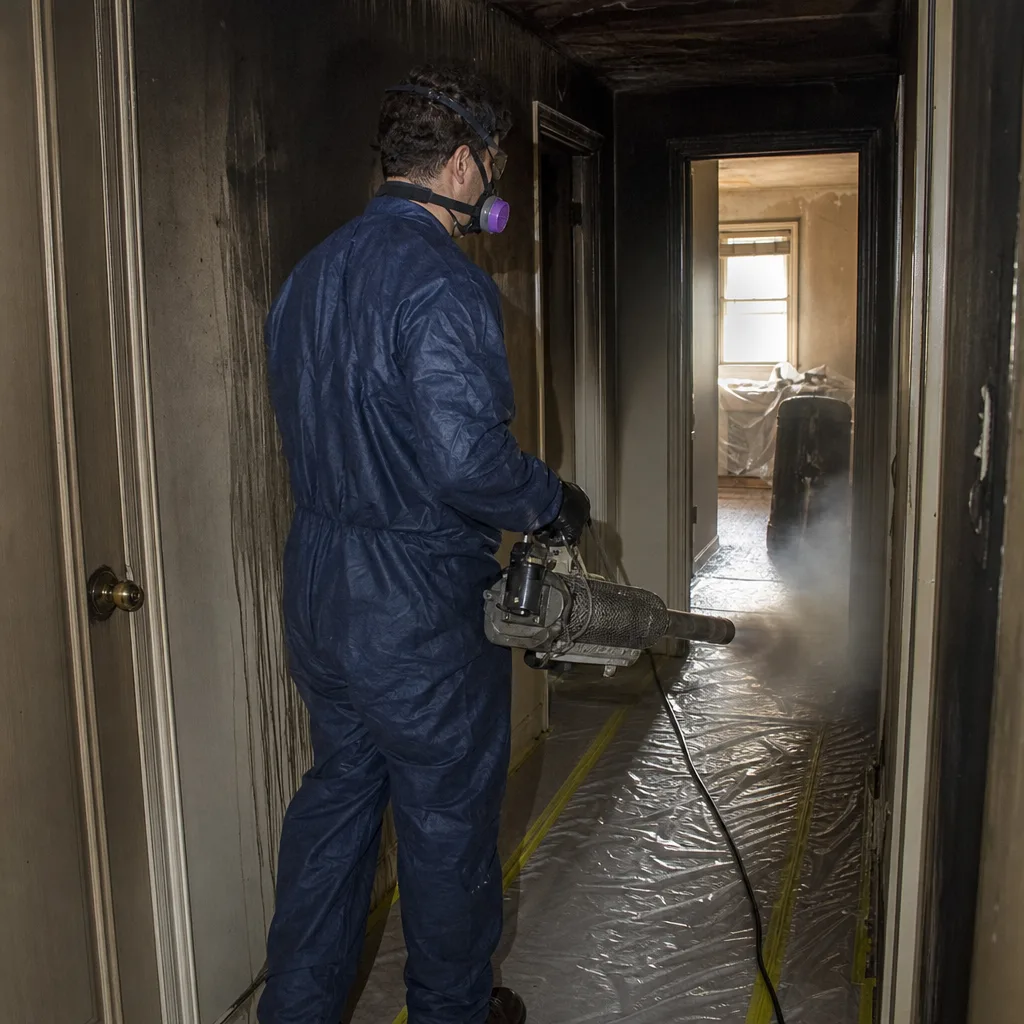
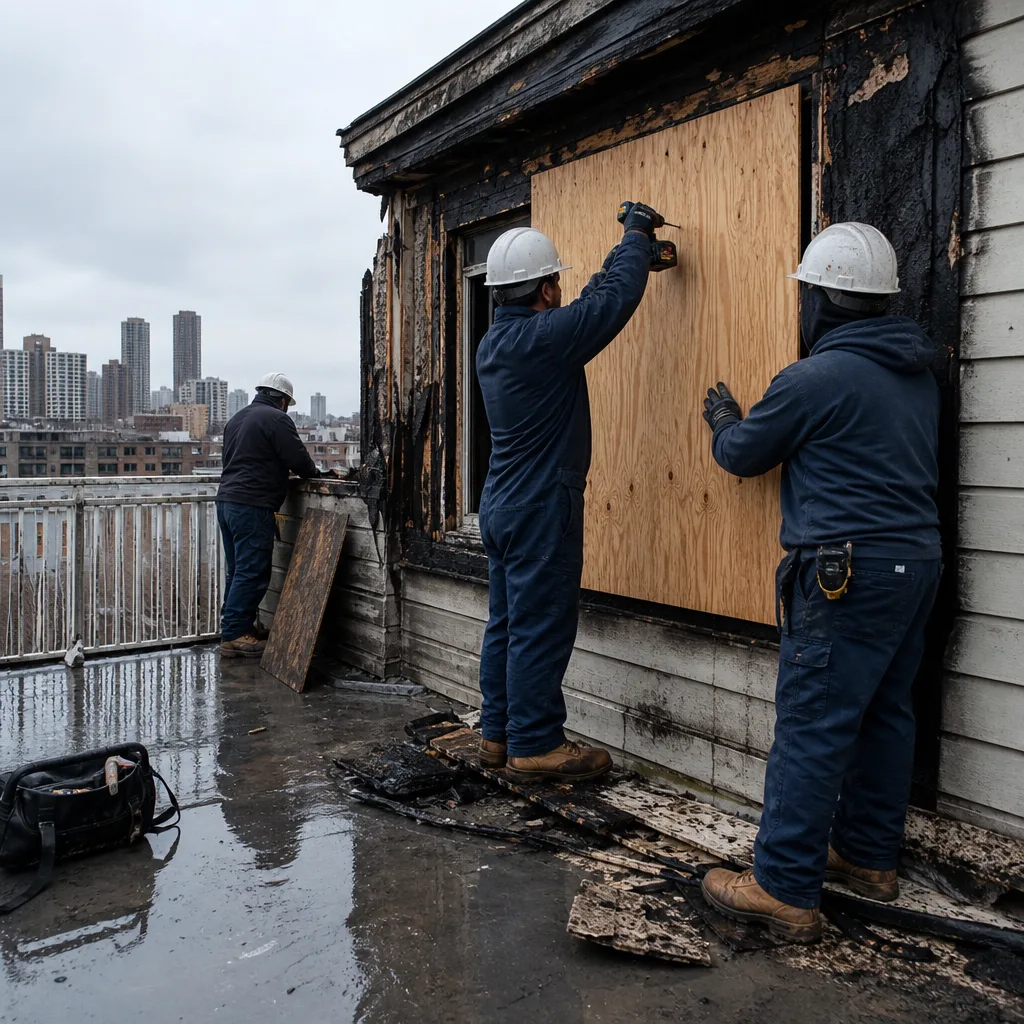
Broken windows, failing doors, and storm-battered openings get secured the same visit. On Demarest’s older homes, we board up carefully around original window casings and door frames so the board-up doesn’t cause more damage than it prevents.
Roof Tarping
The steep pitches on Tudor and Colonial roofs make tarping here a two-person ladder job, not a one-man scramble. We anchor tarps to hold through the next system, which matters on ridge lots where wind gusts funnel up the slope. Fragile original slate gets extra care.
Debris Removal
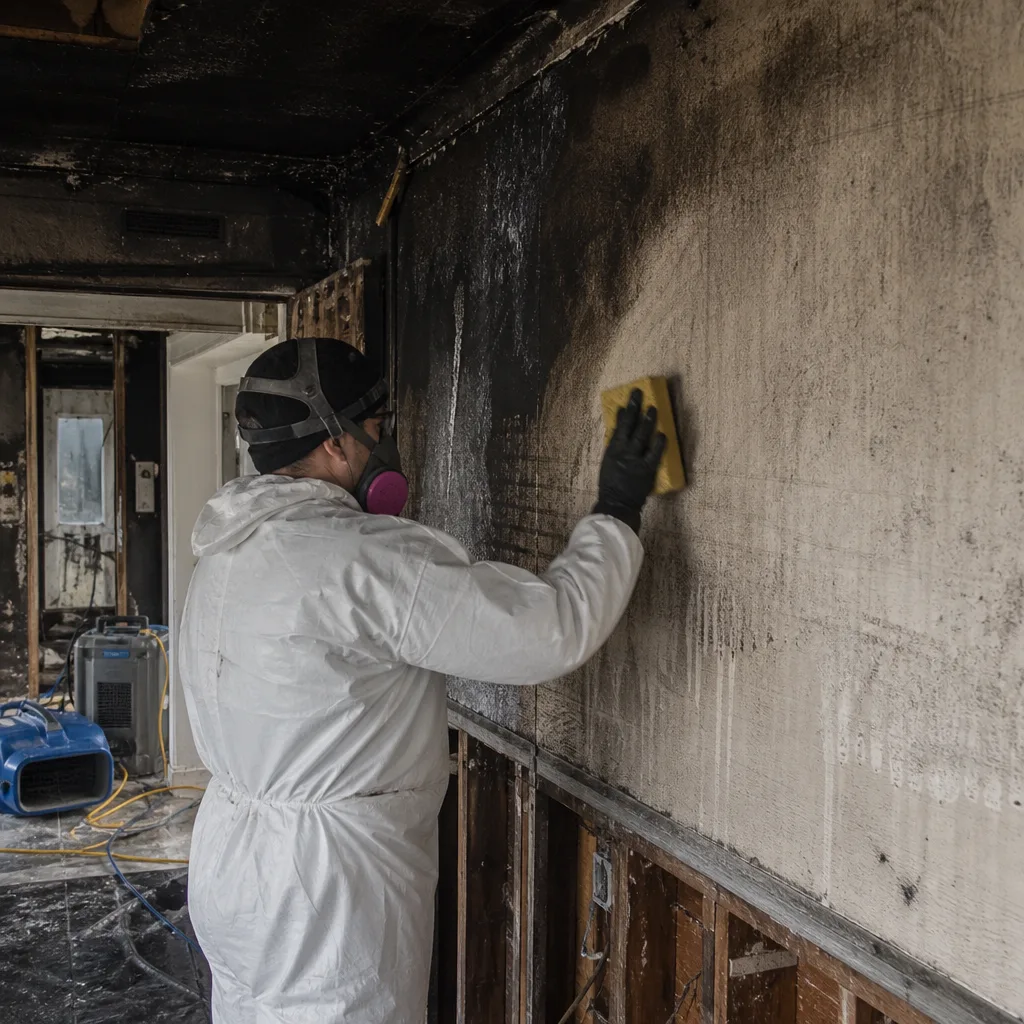
Downed branches, gutter debris, and storm scatter come off the property before it becomes a drainage problem. On wooded lots near the borough’s eastern edge, this is often the first step before we can even see the full damage picture.
What happens when you call
- 1
A real person answersNo phone trees - you reach a local pro.
- 2
You get an upfront price rangeHonest numbers before anyone is dispatched.
- 3
A background-checked tech heads outLicensed & insured, dispatched right away.
- 4
You approve before work beginsNothing starts until you say go.
Storm & Disaster Restoration Costs in Demarest, NJ
Storm damage restoration in Demarest runs a wide range because the houses do. A straightforward basement extraction with drying on a small unfinished basement might run $1,400-$3,200. A finished basement with Category 3 water, containment, pack-out, and structural drying typically lands between $4,500-$9,500. Roof tarping as a standalone emergency service runs $450-$1,200 depending on pitch and accessibility. Emergency board-up for a single opening is $350-$800.
What moves the number in Demarest specifically is materials. Restoring original plaster costs more than hanging drywall, and matching old-growth oak trim means sourcing and milling, not a trip to the lumberyard. Insurance typically covers storm-related water damage, but every policy differs on roof replacement, code upgrades, and contents. The free inspection is how you get a firm number instead of a call-center guess. Call (917) 924-4221 and we’ll walk the property, explain what we see, and put the scope in writing before any work starts.
We Also Serve Cities Near Demarest
Our crews regularly work in Demarest and the surrounding Bergen County communities, including Cresskill, Closter, Haworth, and Alpine. The housing stock and loss profiles change slightly town to town, but the same certified crews and the same written guarantee apply.
Demarest Storm & Disaster Restoration Questions, Answered
Our 1950s Colonial in Demarest has simultaneous basement water and roof damage from a nor’easter. Can you restore original plaster and old-growth trim without gutting the rooms?
Yes, and that’s the standard we work to on Demarest’s older homes. Plaster can often be dried in place and repaired rather than demolished, and old-growth trim responds to careful drying and refinishing. The key is slower structural drying with daily moisture readings so we know when the material has reached dry standard without being pushed too hard. Call (917) 924-4221 for an on-site look at your specific walls.
What category of water is typical in Demarest basement floods after heavy rain?
Most storm runoff in Demarest is Category 2 or Category 3 water. It picks up soil, lawn chemicals, and street debris as it moves down sloped lots toward your foundation. That means containment, antimicrobial treatment, and disposal of saturated porous materials are part of the scope, not add-ons.
How quickly can mold start on wet plaster walls in a Demarest Tudor after a roof leak?
Mold can colonize within 24-48 hours on wet plaster, especially in the warm, humid months. Removing water quickly is the single best mold prevention, which is why same-visit extraction and drying equipment placement matter so much. If materials have already been wet beyond 48 hours, we include HEPA air scrubbing and antimicrobial treatment in the scope.
Do you pack out contents from finished basements on sloped lots off Hardenburgh Avenue, or dry in place?
Both, depending on what was affected and how. We pack out high-value contents, wine collections, artwork, and documents, to a secure storage facility when they’re at risk. Furniture and built-ins that can be dried in place stay where they are, with air movers positioned specifically to dry the structure around them. The decision is made room by room, based on the moisture map and the material.
Can you tarp a steep-pitched Tudor roof in Demarest during a winter storm even if the original slate is fragile?
Yes. We use ridge-anchored tarps and ladder teams trained for steep pitches, and we work around fragile slate rather than over it. The tarp is temporary protection until a permanent repair can be scoped, and we photograph the installation for your insurance file.
How fast can you actually get to a storm damage call in Demarest?
Our response commitment is 45 minutes for emergency storm calls in Demarest. The dispatch team tracks crew locations in real time, and because we serve northern Bergen County regularly, someone is usually close by. The live dispatcher gives you a straight answer when you call, not a four-hour window.
Will my insurance cover storm damage restoration, and who deals with the adjuster?
Most homeowner policies cover storm-related water and wind damage, though specifics on roof replacement and code upgrades vary by carrier. We document everything from the first hour, provide industry-standard estimates and moisture logs, and coordinate directly with your adjuster. You’re not the go-between, and our direct insurance billing means the claim is paid the way the policy intends.
What should I do in the first 30 minutes after I discover storm damage in my Demarest home?
Call us. Then, if it’s safe to do so, shut off water to the affected area and move small valuables to higher ground. Don’t enter standing water if electrical outlets or appliances are submerged. Don’t start tearing out wet drywall or carpet yourself, because your policy covers professional mitigation and early DIY removal can complicate a claim. Call (917) 924-4221 and we’ll walk you through the next step on the phone while the crew is rolling.
Serving Demarest, NJ - Our Local Coverage Area
We’re based in the Demarest area and know this community well. Use the map below to see our service coverage - if you’re nearby, we can almost certainly help.
Storm & Disaster Restoration in Demarest, Done Right
Demarest’s older homes demand a restoration company that treats a 1948 Tudor off Hardenburgh Avenue differently than a 1990s split-level in Cresskill. The sloped lots, the pre-code foundations, the original plaster and old-growth trim, the finished basements full of things that cannot be replaced, all of it changes how the work should be done. Last March, we responded to a 1948 Tudor off Hardenburgh Avenue after a nor’easter: snowmelt overwhelmed the fieldstone basement, while ice damming tore off a roof valley, sending Category 3 water across the finished basement’s plaster walls and old-growth oak trim. Our crew ran moisture mapping across all three levels, set containment, and coordinated pack-out of a wine cellar and home office while structural drying with Dri-Eaz and Phoenix equipment brought the plaster back to pre-loss condition, no unnecessary tear-out of the original plaster or stone.
Floodline Restoration Co. has been doing this work since 2010, and Curt Bowman built the company around a dispatch board, not a sales desk. Every job receives the 90-Day Done Right Promise in writing: if it’s not done right, we make it right, no arguing. The same certified, background-checked crew handles extraction, drying, and rebuild. And when you call at any hour of the night, a live person answers. Call (917) 924-4221 for a free estimate, and we’ll start with a straight answer.
Written by Curt Bowman, Owner at Floodline Restoration Co., serving Demarest and northern Bergen County since 2010.