
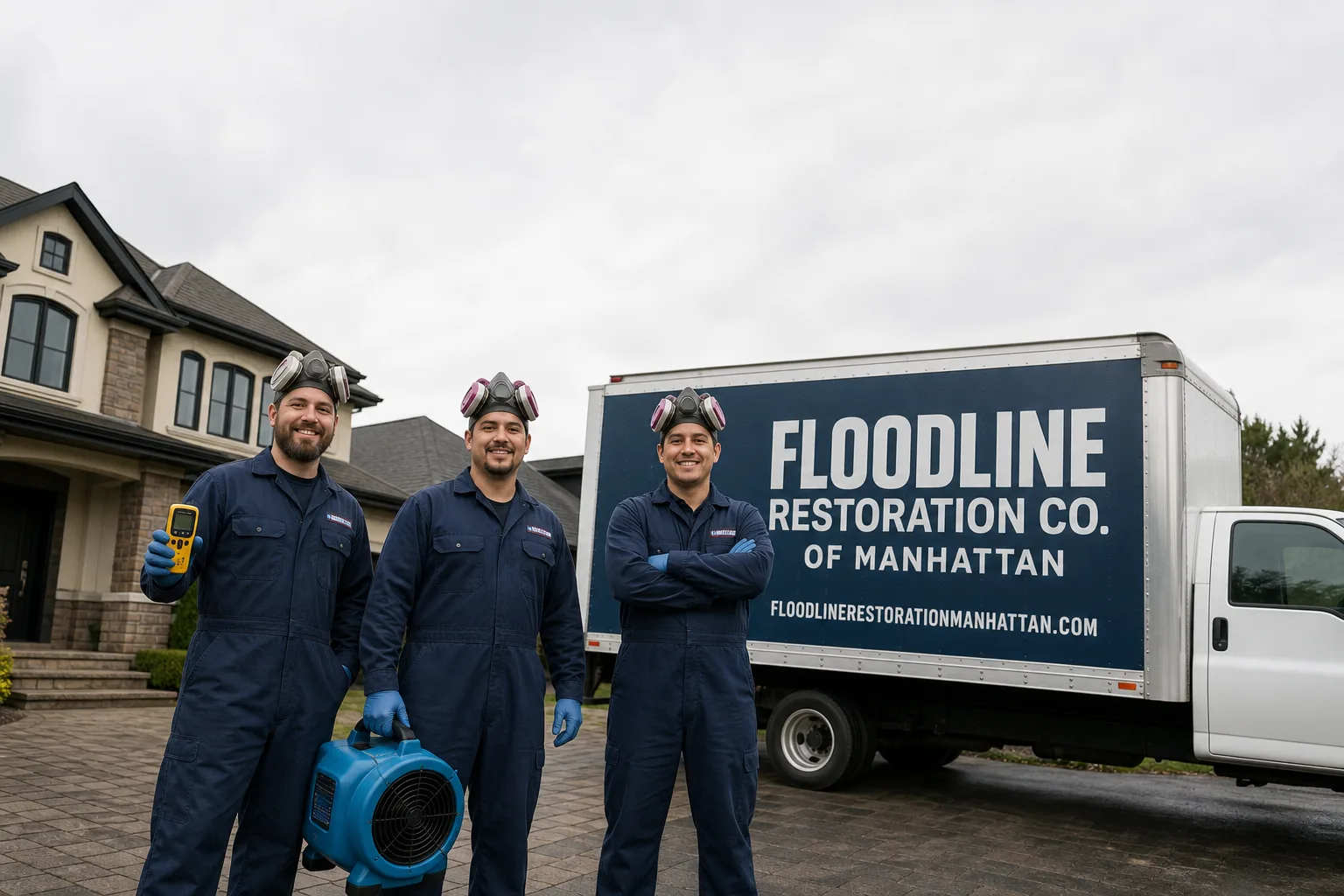
Free visual inspection and a written scope of work before any mitigation begins - photos, moisture readings, and drying logs go in your claim file
The scope we write is the scope we bill. Anything new gets shown to you, in writing, before we touch it.






 Before
 After
After Before
 After
After Before
 After
After24/7 Emergency Storm & Disaster Restoration in Edgewater
When a nor’easter pushes Hudson surge into a riverside basement or a falling limb opens your roof on River Road, you need a crew that answers live and moves fast. Storm & Disaster Restoration in Edgewater means addressing river-borne contamination, pre-war framing, and tidal back-flooding, not just pumping out water. We answer the phone at (917) 924-4221 around the clock and dispatch crews from our New York City office into Edgewater within 45 minutes. The first hour after a storm breach determines whether you’re facing dry-out or a full Category 3 black-water remediation plus rebuild. Call now; a live dispatcher picks up, not a recording.
Understanding Storm & Disaster Restoration Severity in Edgewater Properties
Storm damage in Edgewater rarely stops at clean water. When the Hudson backs through a combined sewer overflow during heavy rain, the water entering basements carries coliform, fuel residue, and silt, which classifies it as Category 3. That designation changes everything: containment is mandatory, porous materials must be cut out rather than dried, and antimicrobial treatment goes beyond routine sanitizing. The pre-WWII wood-frame and stone homes along the corridor complicate the work further. Balloon-frame walls wick river moisture upward behind plaster, hiding damage that a superficial reading misses. Unlined stone foundations admit brackish groundwater during tidal push, re-wetting dried framing if moisture mapping does not address the sub-slab zone. Our teams use Dri-Eaz and Phoenix equipment with thermal imaging and hydrostatic checks to follow the water column, not just the puddle. A dried surface with a wet sill plate is still a mold factory. Edgewater’s housing stock demands a restoration approach that reads the building, not just the floor.
Why Edgewater Property Owners Choose Floodline Restoration Co. of Manhattan
- 45-minute response commitment: We reach most Edgewater streets, from the riverfront to the cliff side, within 45 minutes of your call, 24 hours a day.
- Live answer, every hour: A dispatcher answers the phone at 2 a.m. No automated system, no “leave a message.” Curt Bowman built this company on live dispatch.
- Certified crews with the right codes: Our technicians hold IICRC WRT and FSRT certifications, with additional training from RIA and IFA standards. They know what Category 3 water does to a pre-war basement.
- Free visual inspection: We walk the damage with you, point to what we see, and hand you a written scope before any work begins.
- Direct insurance billing: We deal with the adjuster, the paperwork, and the photos. You do not play messenger.
- One team, start to finish: Extraction, drying, board-up, tarping, and the rebuild are done by the same certified crew with the same moisture log.
Our Storm & Disaster Restoration Process
Inspection & Assessment
We arrive, walk the property, and identify the water category, structural compromise, and any hazardous conditions like compromised electrical or roof instability. Thermal imaging and moisture meters map the full extent before we touch a wall.
Extraction & Stabilization
For storm flooding, we pump out water, remove silt and debris, and immediately stabilize openings. Emergency board-up and roof tarping on flooded homes happens in this step, often the same visit.
Drying & Dehumidification
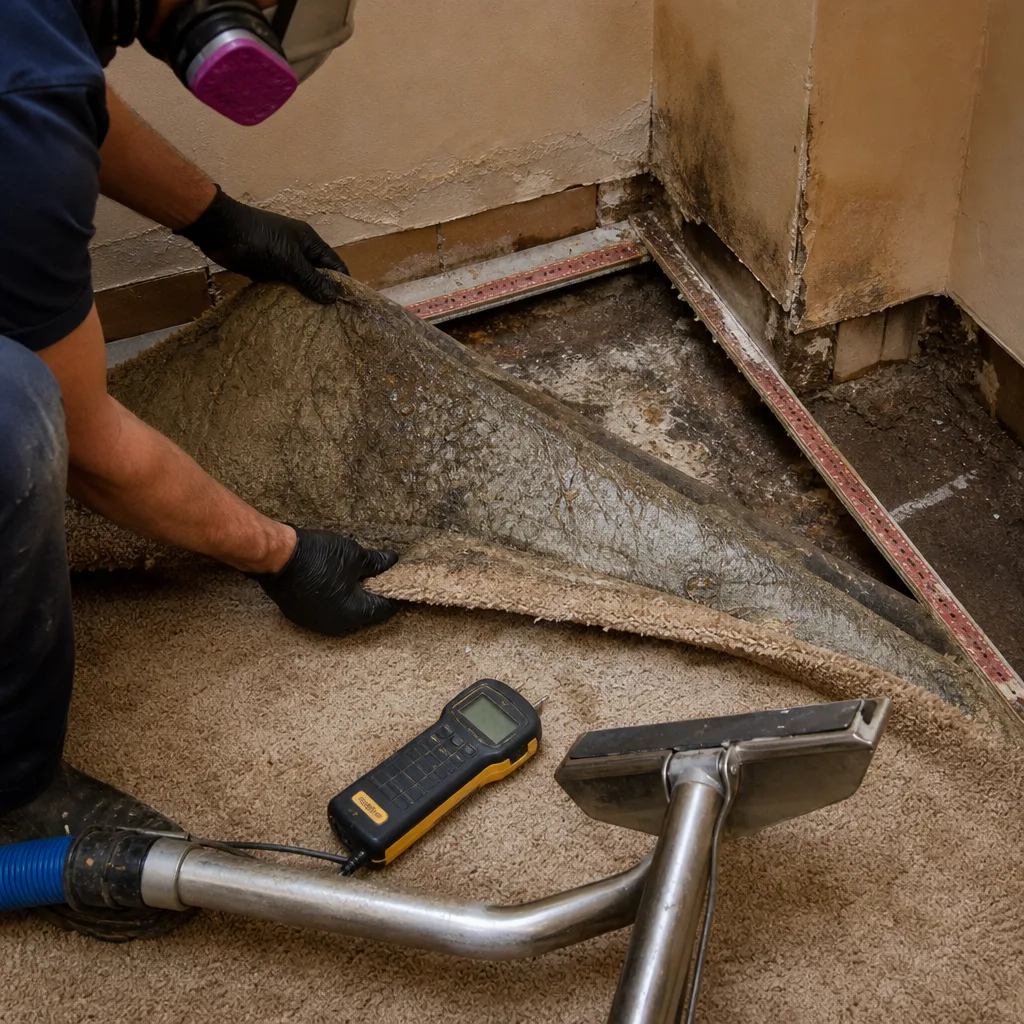
Dri-Eaz and Phoenix air movers paired with LGR dehumidifiers pull moisture from framing, plaster, and subfloor. Daily moisture readings log the progress until the dry standard is met, not just when the floor looks dry.
Cleaning & Sanitization
Since Hudson floodwater carries sewage and fuel residue, we apply antimicrobial treatment to every affected surface including the sill plate. HEPA air scrubbers run during the process to control airborne contaminants.
Containment & Specialized Treatment
Category 3 water requires full containment. We set plastic barriers, run negative air pressure, and use Injectidry systems in wall cavities and under flooring where moisture hides.
Repairs & Restoration
The same crew that pulled the water handles the rebuild: drywall, plaster repair, trim, flooring, and any structural work. One moisture log, one accountable team, one 90-Day Done Right Promise in your hands at the end.
Need Emergency Storm & Disaster Restoration in Edgewater Now?
Crews minutes away, answering live 24 hours a day. The sooner we start, the less it costs.
Working With Your Insurance Company
Storm and flood claims are where homeowners get burned by fine print. We have handled enough Edgewater adjusters to know what documentation gets a claim approved without delay. From the first hour, we photograph every affected room, log moisture readings daily, and build a line-item scope that insurance carriers recognize. Our dispatch and scheduling are coordinated from our New York City office, which means our claims team talks directly to your adjuster so you are not forwarding emails at midnight. The 90-Day Done Right Promise stays in force regardless of how the claim is settled. We stand behind the work, in writing, with no argument.
What We Provide Your Insurer
- Thorough documentation of the loss
- Photos of all damage, room by room
- Moisture readings and drying logs
- A detailed, line-item scope of work
- Direct coordination with your carrier
Built for Edgewater’s Loss Calendar
Edgewater’s storm damage follows the river’s moods. From late November through March, freeze-thaw cycling on older low-pitched roofs drives ice dams that send water behind fascia and into plaster walls. January deep freezes burst supply lines in uninsulated exterior walls of pre-war houses along River Road. Spring thaw and heavy rain saturate the ground until unlined stone foundations admit water through the floor system. Summer thunderstorms dump enough water in 30 minutes to overwhelm the combined sewer system, pushing Category 3 water into riverside basements. Nor’easters in autumn and winter drive tidal levels on the Hudson several feet above normal, flooding lower streets near the shoreline. The river valley’s topography funnels wind that accelerates corrosion on garage-door hardware, rusting torsion springs until they snap during the next cold snap. Every season here produces a different loss pattern. Our crews have seen all of them.
Storm & Disaster Restoration Across Edgewater’s Neighborhoods
Response routes shape how fast we reach each corner of Edgewater. Along River Road and the shoreline streets, homes sit at or below flood elevation, and the call is almost always black-water extraction with full containment. On the cliff side near the Palisades, wind-driven debris and roof damage dominate after storms; tarping has to hold against gusts that whip up the river valley. The pre-war wood-frame blocks north of the commercial corridor hold older balloon-frame houses where moisture wicks upward and hides mold behind plaster. Around the newer mid-rise and high-rise buildings on the waterfront, garage-door hardware corrodes measurably faster from salt air, and snapped torsion springs leave storm-damaged openings unsecured. Each of these pockets of Edgewater gets the same 45-minute target and the same written scope, but the failure mode dictates the approach.
Specialized Storm & Disaster Restoration Services We Offer in Edgewater
Storm Damage Cleanup
After a nor’easter, the damage is rarely a single issue. We clear fallen debris, stabilize openings, and assess water intrusion all in one visit. Homes along River Road often have wind-driven rain behind siding that never showed before the storm. We find it with thermal imaging and dry it before mold has a chance to develop.
Flood Damage Restoration
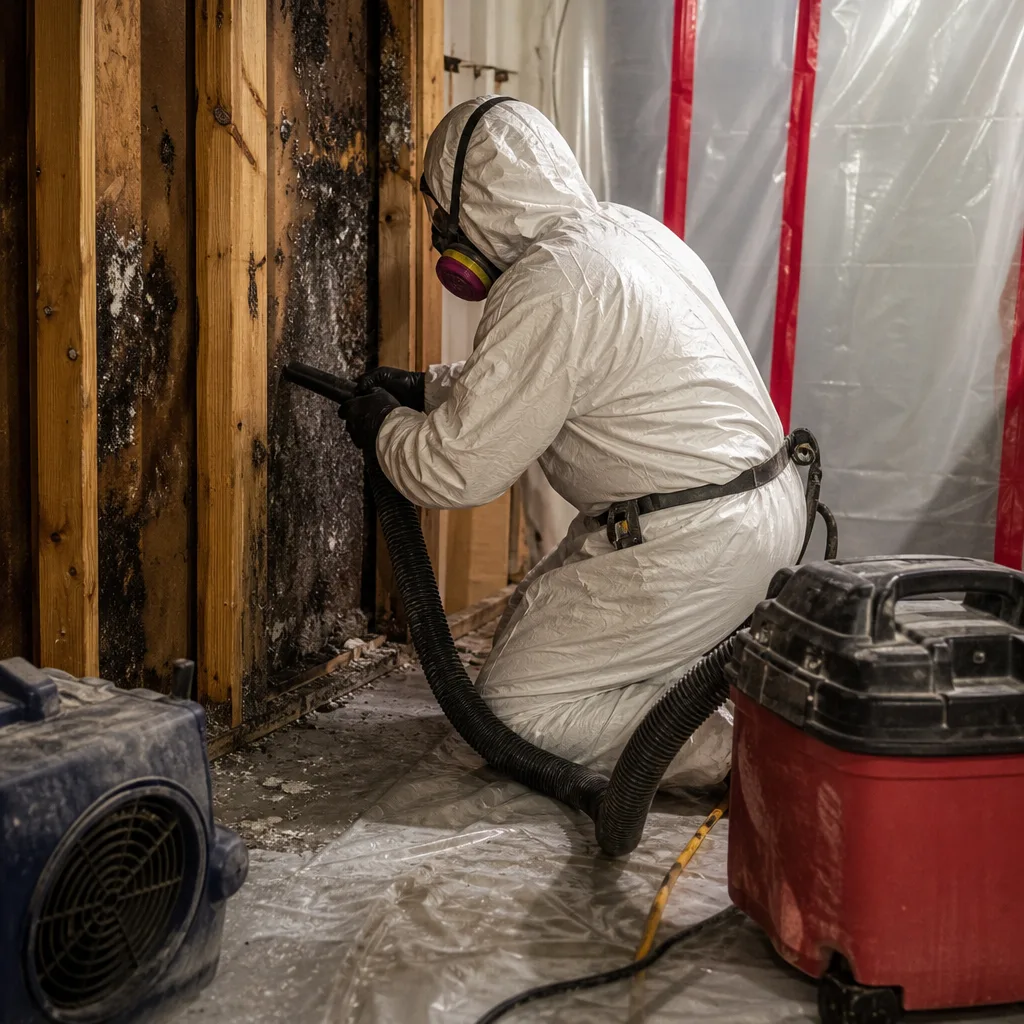
When the Hudson backs into an Edgewater basement, this is not a mop job. Combined sewer overflow contaminates the water before it reaches your floor. We pump, contain, cut drywall and plaster to the correct height, and run daily moisture readings until the structure meets the dry standard. The same crew handles the rebuild.
Emergency Board-Up
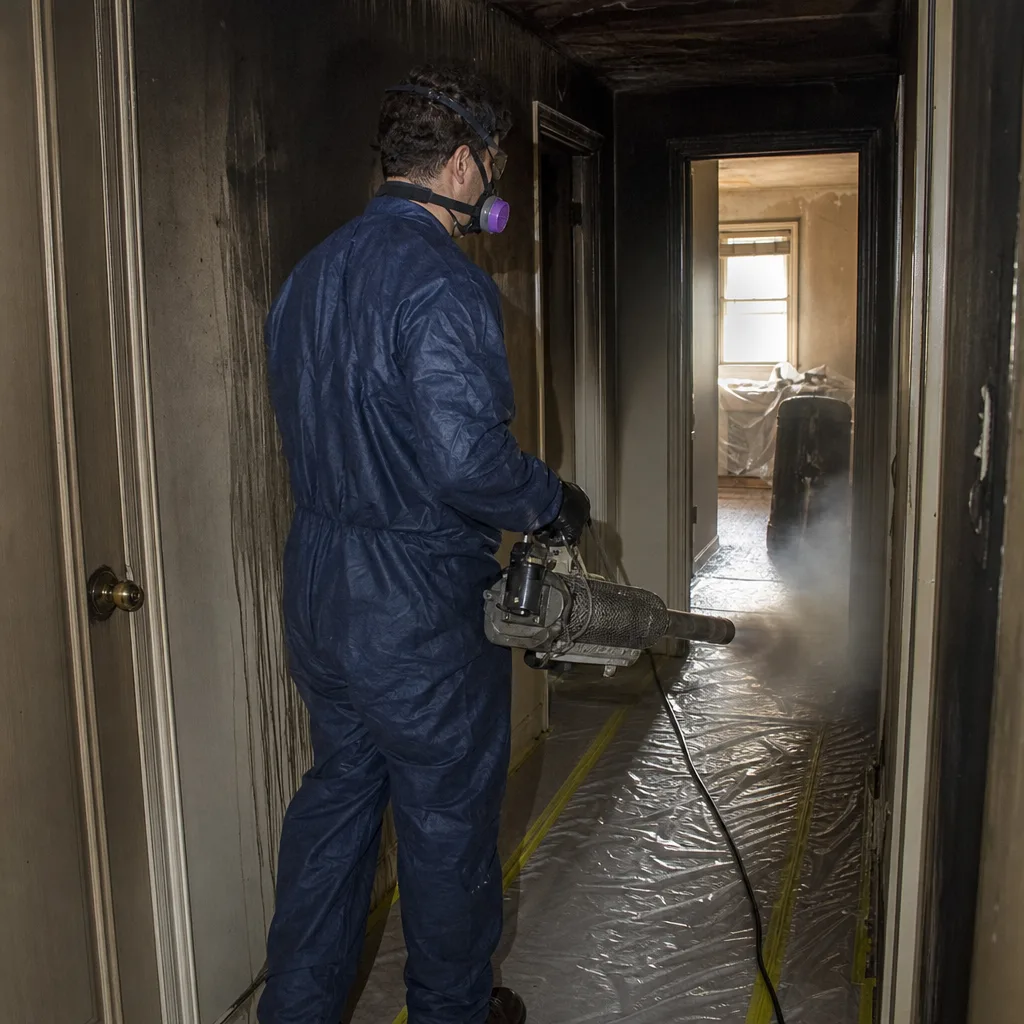
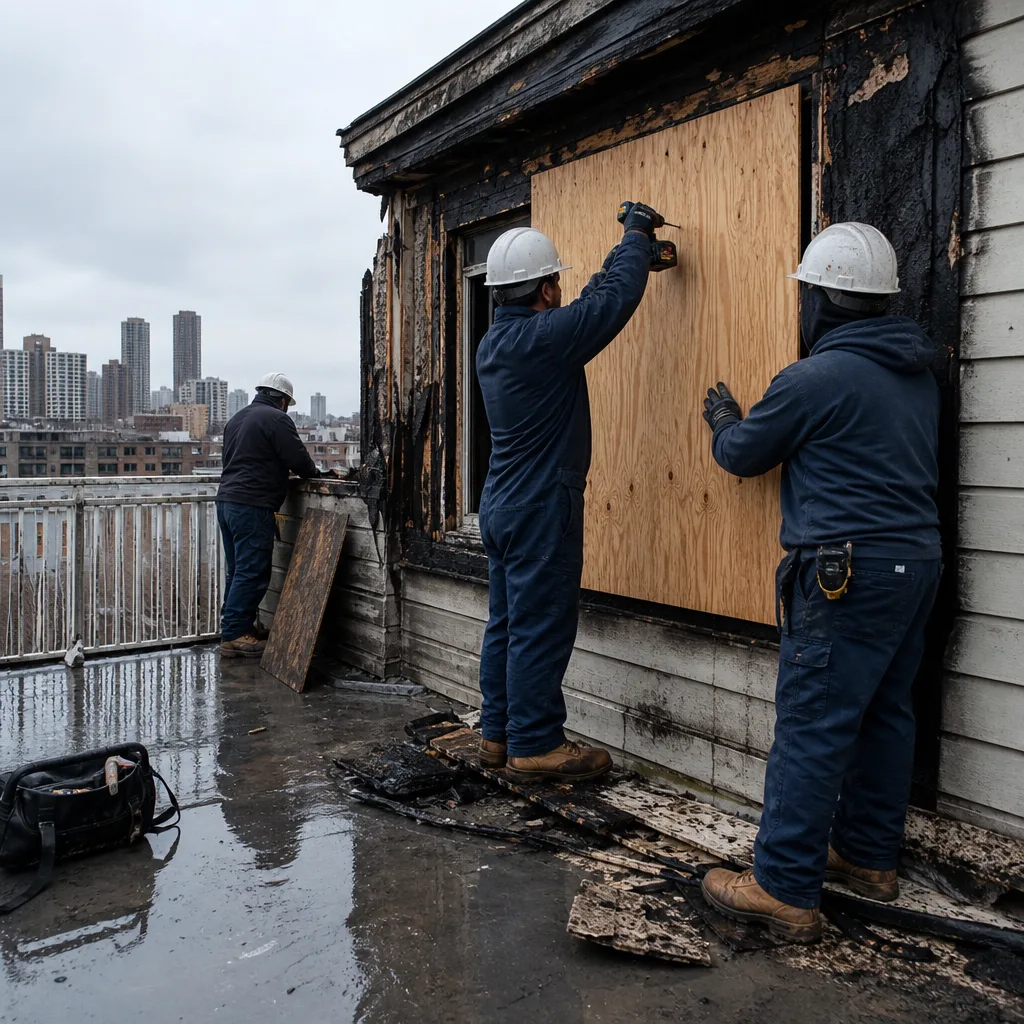
A broken window or storm-bowed door on a riverside property leaves the home open to weather and intrusion. We board up with lumber and fasteners rated for sustained wind, not just a cosmetic nail job. Board-up is included as part of the same visit when we also handle extraction or tarping, which keeps the whole job under one scope.
Roof Tarping
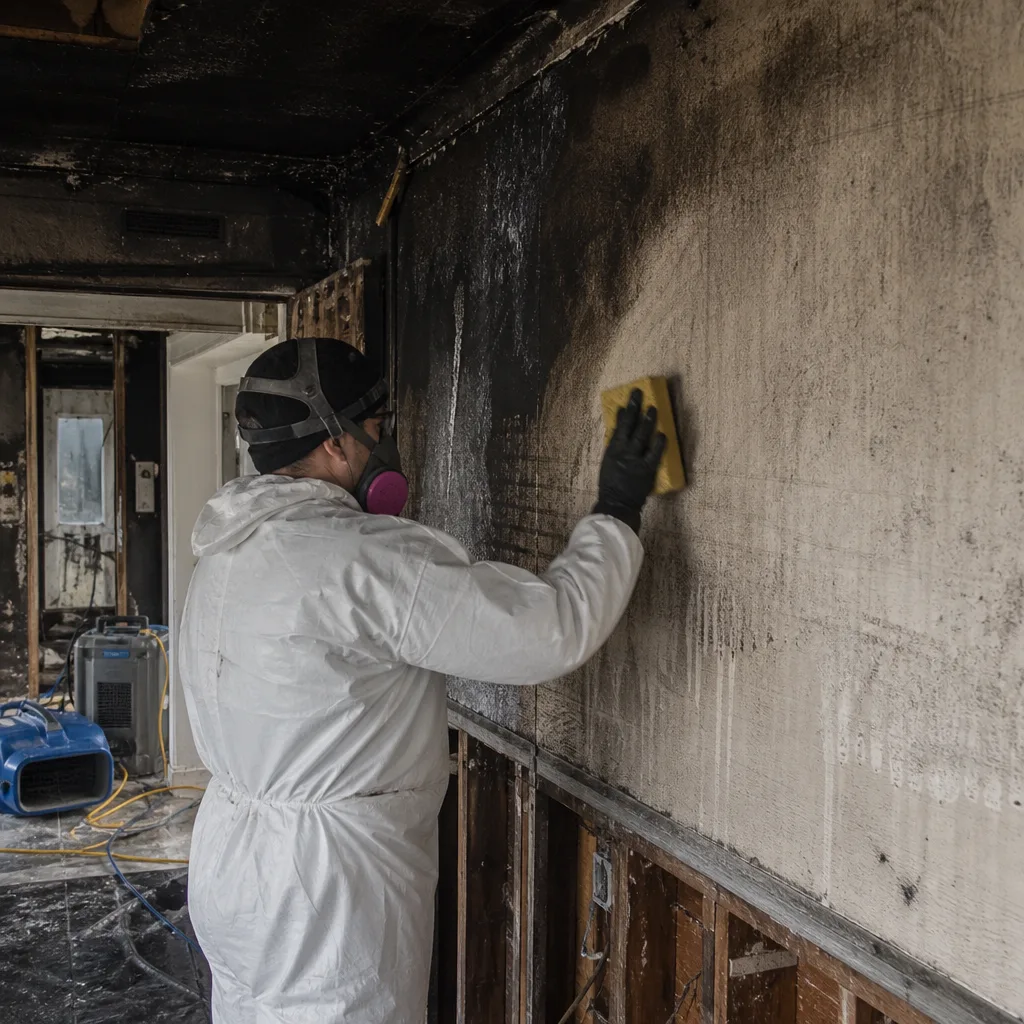
Wind-driven branches and ice dams tear older roof coverings fast in Edgewater. We tarp to hold against nor’easter gusts, not just patch until morning. The fix stays watertight until permanent roofing is scheduled. Tarping plus interior drying is standard for any storm where water entered through the roof.
Debris Removal
Storm debris around a flooded home is more than an eyesore; it holds moisture against the foundation and blocks drainage. We haul it away as part of the restoration scope. If the piles sit against a rubble foundation, removing them is part of keeping groundwater out during the next high-water event.
What happens when you call
- 1
A real person answersNo phone trees - you reach a local pro.
- 2
You get an upfront price rangeHonest numbers before anyone is dispatched.
- 3
A background-checked tech heads outLicensed & insured, dispatched right away.
- 4
You approve before work beginsNothing starts until you say go.
Storm & Disaster Restoration Costs in Edgewater, NJ
Storm restoration costs in Edgewater reflect the river’s contamination risk and the age of the housing stock. A typical Category 1 water extraction on a slab foundation runs $1,800 to $3,500. Category 3 black-water remediation in a riverside basement with containment, antimicrobial treatment, and cut-out of drywall and insulation typically runs $4,500 to $11,000 depending on square footage and how far moisture traveled up balloon-frame walls. Emergency board-up runs $350 to $900 per opening, roof tarping $650 to $1,800 including fastening for wind load. Debris removal typically adds $300 to $1,200. Insurance covers most storm-related losses, and we bill directly. For any Edgewater property owner, the free visual inspection is the fastest way to a firm, written number. Call (917) 924-4221 and we will walk it with you before quoting anything.
We Also Serve Cities Near Edgewater
Our crews cover Edgewater and the surrounding Hudson River corridor, including Cliffside Park, Fort Lee, Ridgefield, and Palisades Park. Same live answer, same 45-minute response target, same written scope and 90-Day Done Right Promise.
Edgewater Storm & Disaster Restoration Questions, Answered
How does Edgewater’s nearness to the Hudson change the category of floodwater after a storm?
The Hudson’s tidal surge carries combined sewer overflow from upstream municipalities, which routinely tests positive for coliform bacteria. That automatically classifies the water as Category 3 black water, which mandates full containment, cut-out of porous materials, and antimicrobial treatment, even if the water looks clear on arrival.
Do riverside homes in Edgewater with rubble foundations need different drying after a storm surge?
Yes. Unlined stone and rubble foundations admit brackish groundwater through the floor system and lower walls. Standard above-floor drying misses it. We run sub-slab checks and moisture mapping through the sill plate; otherwise dried framing gets re-wetted during the next tidal push.
What causes the garage-door hardware failures during Edgewater nor’easters?
Salt air from the Hudson accelerates corrosion on torsion springs, hinges, rollers, and chains. When a nor’easter hits, rusted springs snap during freeze-thaw cycles, leaving the opening unsecured on exactly the homes that need board-up most. We replace with galvanized or coated springs, stainless hardware, and nylon rollers to slow the failure cycle.
Why do older wood-frame houses near the river need longer structural drying times after a storm?
Pre-war balloon-frame construction in Edgewater uses full-length wall studs with no fire stops, so water travels vertically and wicks into plaster from behind. That hidden moisture extends drying timelines beyond what slab-on-grade or newer stick-built homes require. We plan for the longer window and log daily readings until the dry standard is met, not until the floor looks dry.
How quickly does mold begin in a flooded Edgewater basement, and what does that change for cleanup?
Mold begins within 48 to 72 hours in the humid conditions the Hudson Valley holds after storms. If the basement sat flooded overnight or longer, full containment and air scrubbing are required, not just a cleaning. The 48-hour window is the reason we commit to a 45-minute response and same-visit extraction.
How fast can you actually get to an Edgewater home during a storm?
Our target is 45 minutes from your call to arrival at most Edgewater addresses. Live dispatch runs around the clock. During a nor’easter, when every restoration company is busy, call (917) 924-4221 and a person answers, not a recording.
Will my insurance cover storm flood damage in Edgewater?
Most homeowner policies cover storm-related water damage, but flood-specific coverage depends on your policy and whether the loss involved river surge. We photograph room by room from the first hour, provide daily moisture logs, and talk directly with your adjuster, so you are not stuck arguing the claim alone.
What should I do in the first 30 minutes after a storm floods my Edgewater basement?
Shut off power at the breaker if the panel is safe to reach, do not wade into the water, and call us at (917) 924-4221. Hudson floodwater carries sewage and fuel residue, so assume it is black water until proven otherwise. Fast extraction and containment are what keep mold and structural damage from expanding.
Key Takeaways for Edgewater Homeowners
- Hudson floodwater is Category 3 black water due to combined sewer overflow, so full containment and antimicrobial treatment are mandatory, not optional.
- Rubble and unlined stone foundations require sub-slab moisture mapping, or the next tidal push re-wets what you just dried.
- Garage-door hardware on riverside homes corrodes faster from salt air; snapped springs leave openings unsecured exactly when you need board-up.
- Pre-war balloon-frame walls hide moisture behind plaster; drying must continue until daily readings hit pre-loss condition.
- Floodline Restoration Co. of Manhattan, led by Curt Bowman, handles every phase from extraction to rebuild with one certified crew and the 90-Day Done Right Promise in writing.
Serving Edgewater, NJ - Our Local Coverage Area
We’re based in the Edgewater area and know this community well. Use the map below to see our service coverage - if you’re nearby, we can almost certainly help.
The Line the Water Left Is Where We Start
We do not hand off a storm loss to a subcontracted builder. The same background-checked, uniformed crew that pumps the Category 3 water out of your Edgewater basement also rebuilds the walls, sets the baseboard, and hands you the moisture log at the end. Led by Curt Bowman, Floodline Restoration Co. of Manhattan has held to a simple operating rule since the beginning: answer the phone with a person, do the job right, and stand behind it in writing. Call (917) 924-4221 for a free estimate. Our Storm & Disaster Restoration team is ready for the next nor’easter, high tide, or deep freeze. For everything we do in Storm & Disaster Restoration in Edgewater, the 90-Day Done Right Promise goes with it. Done right, and backed in writing.
Written by Curt Bowman, Owner at Floodline Restoration Co. of Manhattan.