

Free visual inspection and a written scope of work before any mitigation begins - photos, moisture readings, and drying logs go in your claim file
The scope we write is the scope we bill. Anything new gets shown to you, in writing, before we touch it.






 Before
 After
After Before
 After
After Before
 After
After24/7 Emergency Storm & Disaster Restoration in Great Neck Plaza
Storm damage in Great Neck Plaza doesn’t wait for business hours, and neither do we. A nor’easter pushing surge up Manhasset Bay and Little Neck Bay can flood a Middle Neck Road basement in under an hour. When you call (917) 924-4221, a live dispatcher answers immediately, any time of day or night, and a certified crew is dispatched into the village right away. We perform a free visual inspection, start extraction the same visit, and document everything from the first hour so your insurance claim has the evidence it needs. The first hour matters because bay water carries contaminants that begin degrading building materials fast.
Understanding Storm & Disaster Restoration Severity in Great Neck Plaza Properties
Great Neck Plaza’s building stock skews heavily toward 1920s-1940s brick apartment buildings and mixed-use structures along Middle Neck Road and the village center. That matters when water enters, because these buildings share basement utility rooms, original cast-iron drain lines, and masonry walls that absorb moisture differently than modern construction. Storm restoration here almost always involves Category 2 or Category 3 water, not the clean Category 1 water from a municipal pipe break. Category 2 contains significant contamination; Category 3, the “black water” classification, means the water carries sewage, chemicals, or bay-borne pathogens. In Great Neck Plaza, storm surge and nor’easter flooding routinely force Category 3 protocols: containment barriers, HEPA air scrubbing, antimicrobial treatment, and longer structural drying timelines. Moisture mapping with thermal imaging shows us what the eye can’t: water wicked into brick, trapped behind plaster, hidden under original wood flooring. Cutting corners on Category 3 work isn’t an option, and any contractor who treats a bay-flooded basement like a clean-water spill is under-scoping the job.
Why Great Neck Plaza Property Owners Choose Floodline Restoration Co. of Manhattan
- 45-minute response commitment – our crews are dispatched from the metro New York office and reach the village fast, with extraction running the same visit.
- 24/7 live answer – a real person picks up the phone at 2 a.m., not a recording, not a callback service. Ever.
- IICRC-certified crews – trained to WRT, FSRT, and AMRT standards, plus RIA and IFA protocols, so Category 3 flood work is handled correctly from the first hour.
- Free visual inspection – we assess before we recommend, and you get a written scope before any work begins. No pressure, no upsell.
- Direct insurance billing – we communicate with your adjuster, provide the documentation they need, and bill the carrier directly when coverage applies.
- One team from extraction to reconstruction – the same certified crew that reads the moisture map on day one handles daily readings and rebuilds what needs rebuilding. No mid-job handoff.
Our Storm & Disaster Restoration Process
Inspection & Assessment
We walk the entire property, not just the visibly wet area. Thermal imaging and hygrometers map moisture in walls, floors, and shared basement spaces. You get a written scope and a straight answer on severity before we touch anything.
Extraction & Stabilization
Standing water is removed with truck-mounted extractors and submersible pumps. For bay intrusion, we set up Category 3 containment zones immediately so contaminated water can’t migrate into clean areas. Emergency board-up and roof tarping happen the same visit when structural openings exist.
Drying & Dehumidification
Professional-grade Dri-Eaz and Phoenix air movers and dehumidifiers go in that day. We take daily moisture readings and adjust equipment placement until the dry standard is met, not before. The drying log is shared with you and your carrier.
Cleaning & Sanitization
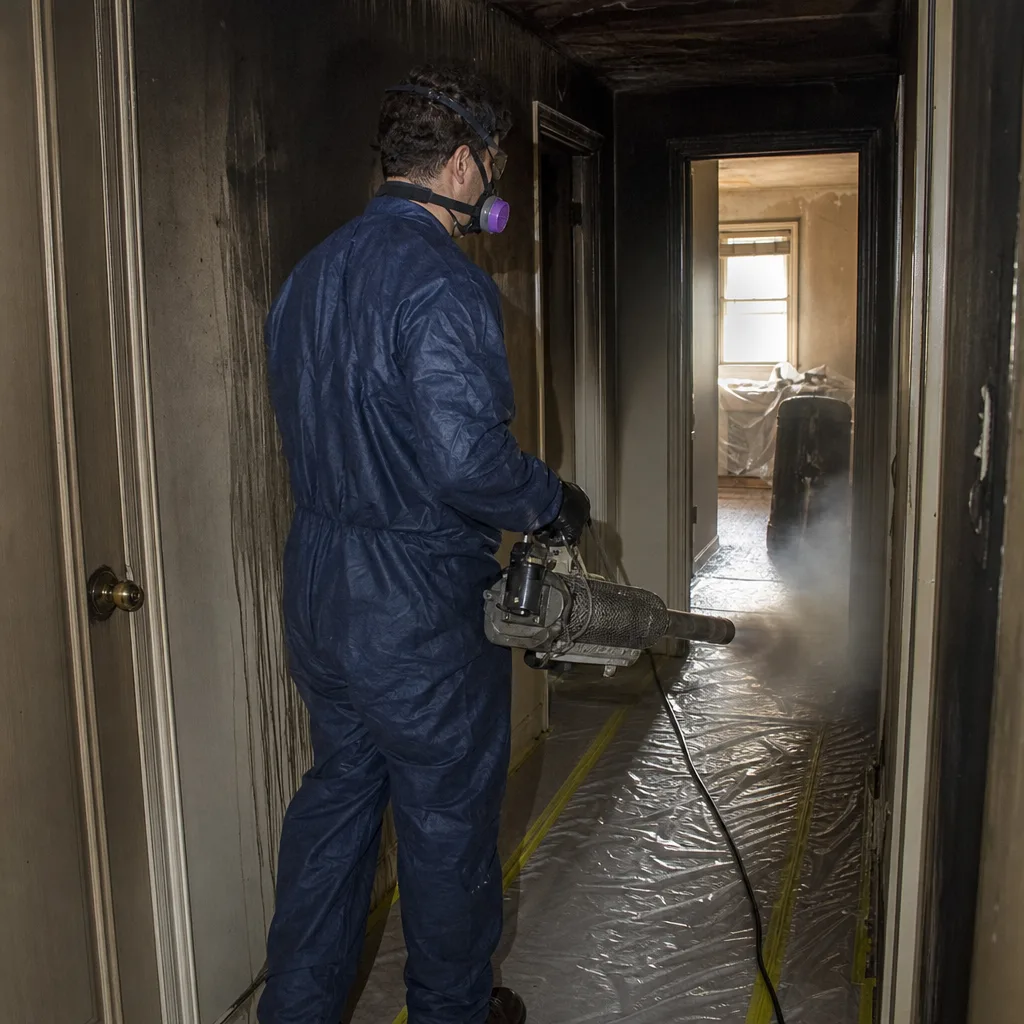
Category 3 water requires antimicrobial treatment on every affected surface. We HEPA-vacuum, scrub, and sanitize, then run an air scrubber to pull remaining particulates from the air. This is non-negotiable on bay-flooded basement work in Great Neck Plaza.
Storm-Specific Treatment
For Great Neck Plaza properties, this means addressing the freeze-thaw mortar deterioration and cast-iron drain failures that let water in repeatedly. We identify secondary moisture paths so the same storm doesn’t cause the same damage next season.
Repairs & Restoration
We rebuild what the water took: drywall, flooring, trim, mechanical room components. Because the same crew handled mitigation and drying, the rebuild starts from an accurate moisture baseline, which prevents the hidden-mold callbacks that plague multi-contractor jobs.
Need Emergency Storm & Disaster Restoration in Great Neck Plaza Now?
Crews minutes away, answering live 24 hours a day. The sooner we start, the less it costs.
Working With Your Insurance Company
Storm and flood claims in Great Neck Plaza get complicated when multiple tenant units share one basement, or when the damage event is a nor’easter that involves both storm surge and wind-driven rain. We’ve handled enough of these to know what insurers require: documentation from the first hour, defensible moisture readings, and a scope that quotes the right protocols for Category 3 water, not a generic clean-water cleanup. Our team coordinates directly with your adjuster, answers their questions, and provides the documentation trail they need to process the claim. You don’t act as messenger between us and the carrier, and the bill doesn’t surprise you at the end. If coverage applies, we bill the carrier directly.
What We Provide Your Insurer
- Thorough documentation of the loss
- Photos of all damage, room by room
- Moisture readings and drying logs
- A detailed, line-item scope of work
- Direct coordination with your carrier
Built for Great Neck Plaza’s Loss Calendar
Great Neck Plaza doesn’t get one storm season; it gets a rolling calendar of water events. January and February bring the freeze-thaw cycles that crack cast-iron drain lines and split supply pipes in the original 1920s-1940s basement mechanical rooms on Middle Neck Road. When those pipes go, the water pools in shared basements and seeps into adjoining tenant storage areas. March and April bring nor’easter season: storm surge pushed up Manhasset Bay from the west and Little Neck Bay from the east traps low-elevation blocks between two flood fronts, and the bay-contaminated groundwater rises through slab cracks and floor drains. Summer thunderstorms hit fast, overwhelming aging storm drains in the village core and sending sheet flow into below-grade entryways. And early autumn tropical remnants bring sustained wind that peels flashing and tests old roofs on the pre-war mixed-use buildings. Our crews know this calendar, and we stage equipment accordingly so Great Neck Plaza homeowners get the same response speed in February as they do in August.
Storm & Disaster Restoration Across Great Neck Plaza’s Neighborhoods
The village center around Middle Neck Road is our most frequent response corridor, and for good reason. Those 1920s-1940s mixed-use buildings share basement utility rooms and original cast-iron drain lines, so a single backup on one line becomes a multi-unit water event within hours. We know the building layouts, where the mechanical rooms sit, and how moisture travels through original brick party walls. Over near the Manhasset Bay side of the peninsula, low-slung apartment buildings catch surge from the western approach, with basements that take on bay water through floor drains and slab cracks before the streets even show ponding. On the Little Neck Bay side, nor’easter wind-driven rain presses against older windows and door frames, sending water behind plaster and into sill cavities that out-of-area crews often miss. Up along the commercial strips on Middle Neck and Grace Avenue, mixed-use buildings face a different problem: street-level retail bays get wet while the residential units above stay dry, which splits the claim between commercial and residential coverage and makes clear documentation essential from day one. We serve all of it: the village core, the bay-front blocks, the multi-unit brick apartments, and the commercial-residential mixed-uses across Great Neck Plaza.
Specialized Storm & Disaster Restoration Services We Offer in Great Neck Plaza
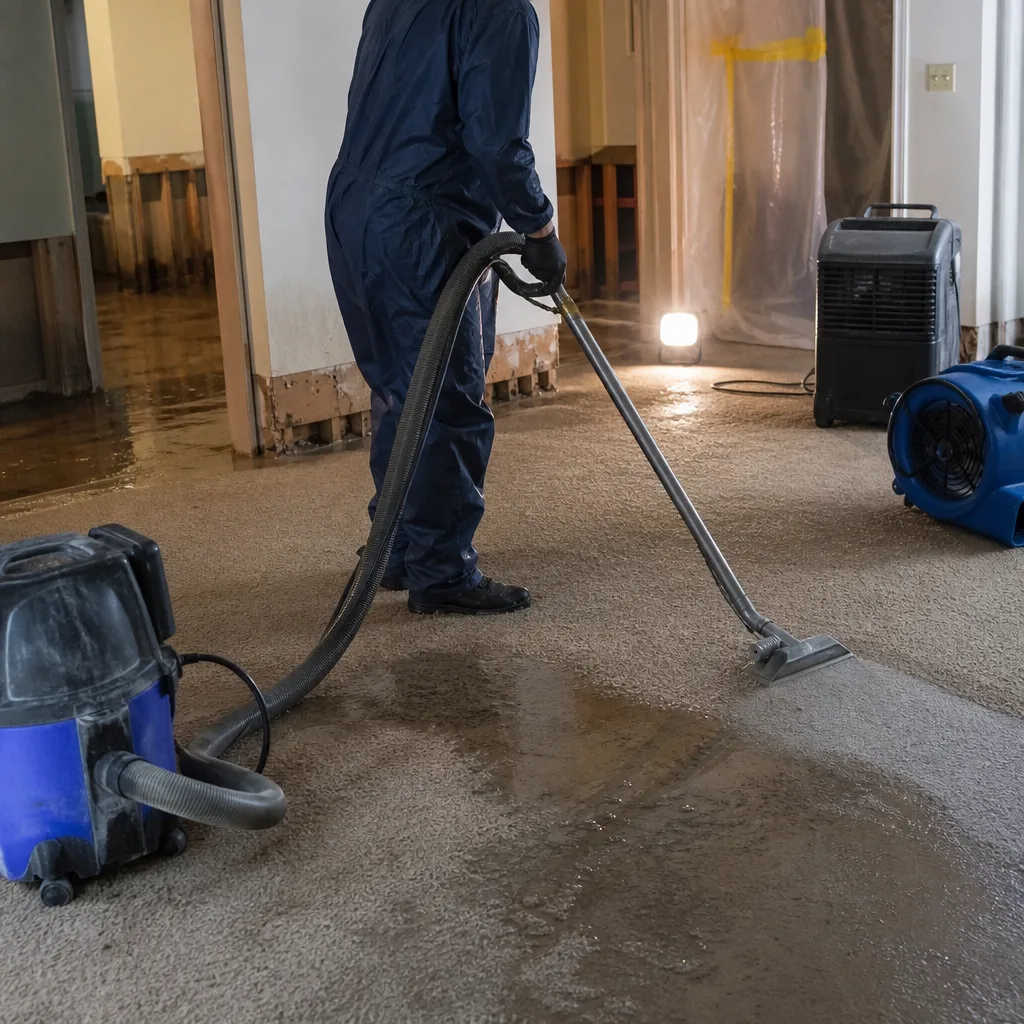
Flood Damage Restoration
Bay-surge flooding in Great Neck Plaza is a different animal from inland basement seepage. Manhasset Bay and Little Neck Bay push contaminated water into below-grade spaces from two directions, which means Category 3 protocols are standard on these jobs, not the exception. We run containment, HEPA air scrubbing, antimicrobial treatment, and structural drying with daily moisture logs until the dry standard is met, then rebuild what the water destroyed.
Emergency Board-Up
When a nor’easter blows out a storefront window on Middle Neck Road or rips a doorframe off a pre-war apartment building, the opening invites looters, animals, and more weather. We board up the same day we’re called, using plywood cut to fit and secured so the building is protected until permanent repairs are scheduled. For Great Neck Plaza’s mixed-use buildings, that means securing both the street-level commercial bay and any residential entry points affected.
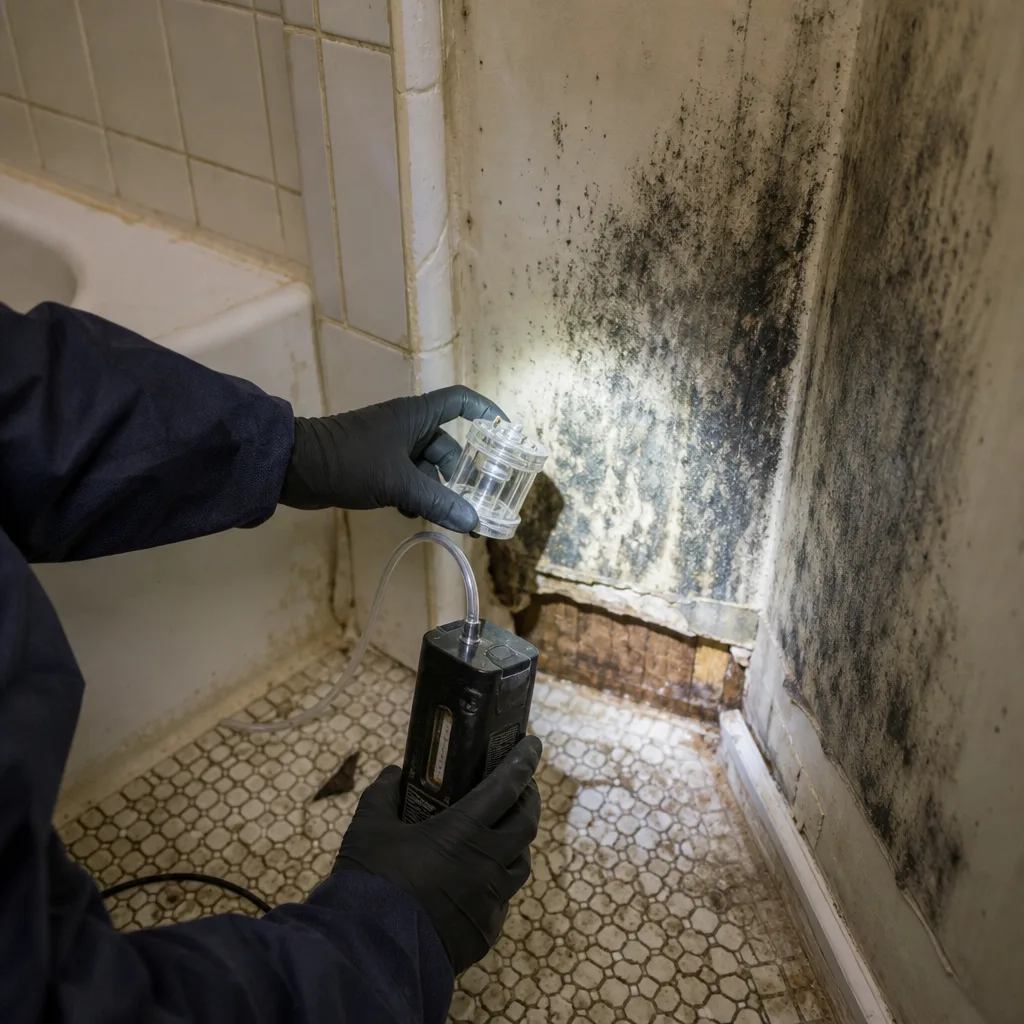
Storm Damage Cleanup
After wind and water pass through, the village’s older brick buildings hold debris, wet insulation, and mud throughout basement and ground-floor spaces. Our crews remove the damaged material, clean what can be saved, and prepare the structure for drying and repairs. We handle the full debris removal from the property, not just the first layer, so homeowners aren’t left with a half-finished job and a pile of wet drywall at the curb.
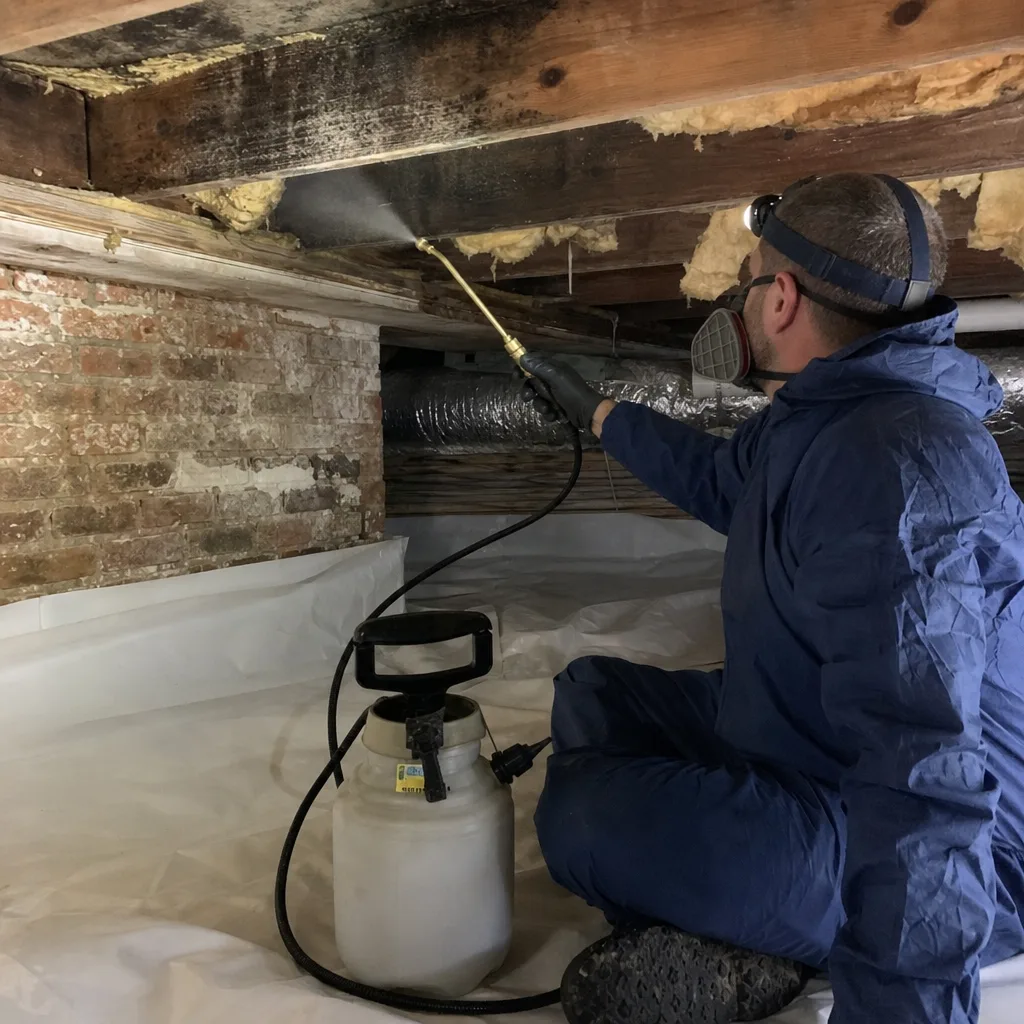
Roof Tarping
Pre-war roofs on Great Neck Plaza’s mixed-use buildings are aging, and a storm that lifts flashing or tears a membrane can open a direct path for water into attic spaces and shared stairwells. We tarp the damaged section the same visit we assess it, securing the tarp against the wind that’s still blowing, so the interior stays dry while permanent roof work is scheduled.
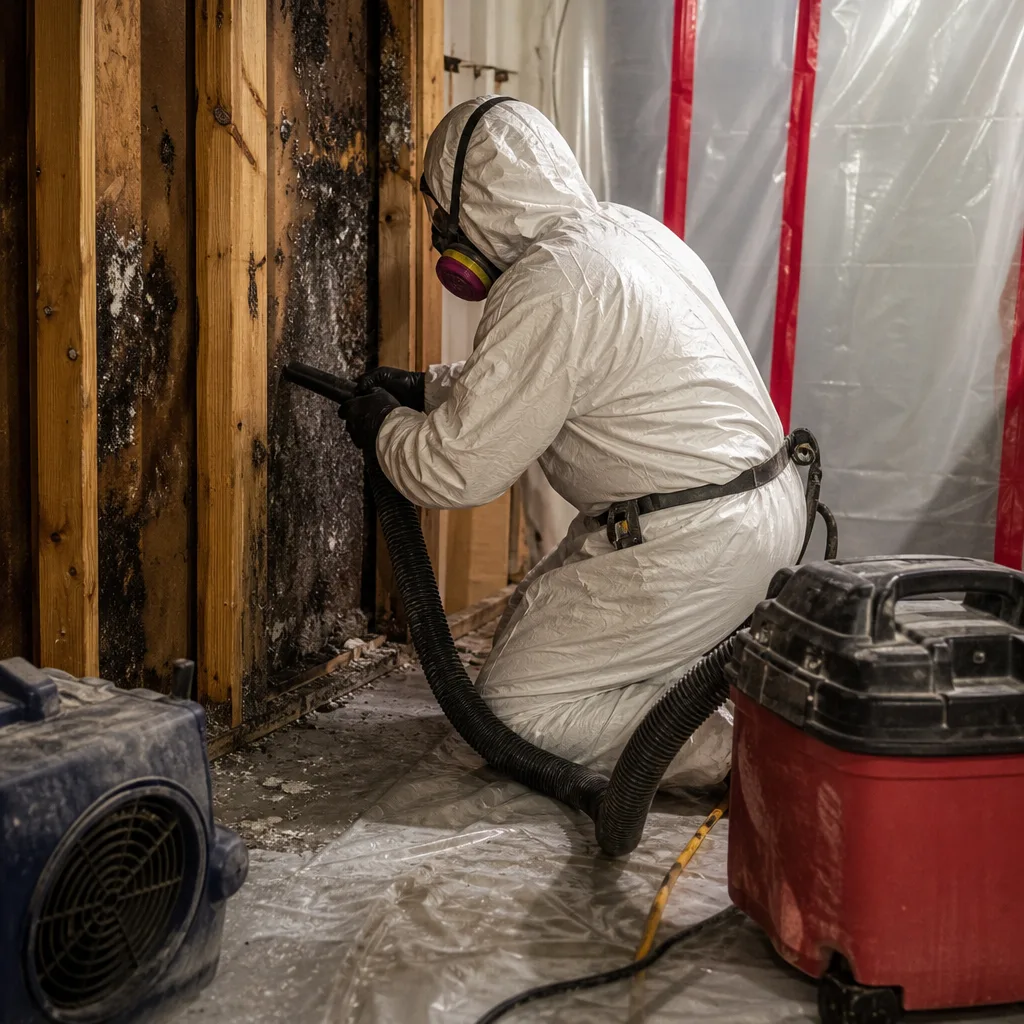
Debris Removal
Storm debris around Great Neck Plaza includes downed limbs from the mature trees along residential side streets, wind-blown architectural debris from aging facades, and flood-deposited silt and mud in basements. We remove it all, including the waterlogged building materials that have to come out before drying can begin, and we haul it off the property.
What happens when you call
- 1
A real person answersNo phone trees - you reach a local pro.
- 2
You get an upfront price rangeHonest numbers before anyone is dispatched.
- 3
A background-checked tech heads outLicensed & insured, dispatched right away.
- 4
You approve before work beginsNothing starts until you say go.
Storm & Disaster Restoration Costs in Great Neck Plaza, NY
What does storm restoration actually cost in Great Neck Plaza? Here are the honest ranges we’ve seen in this market. Flood damage restoration on a typical shared-basement room in one of the village’s older brick apartment buildings runs $3,500 to $12,000, depending on how far the Category 3 water traveled and whether multi-unit containment was required. Emergency board-up for a single storefront opening on Middle Neck Road typically runs $400 to $900. Roof tarping on a pre-war mixed-use building usually lands between $800 and $2,200, driven by roof pitch and access. Storm damage cleanup and debris removal for a standard residential basement runs $1,500 to $5,000. What moves the price: Category 3 vs Category 1 water classification, the number of affected tenant units, whether asbestos or lead paint are present in the original finishes, and how quickly extraction began. Insurance covers most storm and flood damage when the policy includes the right endorsements. We give you a free visual inspection and a written scope before any work starts, so you know the number up front. Call (917) 924-4221 for a firm quote.
We Also Serve Cities Near Great Neck Plaza
Our crews regularly respond to storm and flood losses in Fairview, Harrison, East Bronx, and Hunts Point. If your property is in one of these neighboring communities, call the same number: (917) 924-4221. We dispatch into Great Neck Plaza and the surrounding area every day.
Great Neck Plaza Storm & Disaster Restoration Questions, Answered
How do I know if the water in my Great Neck Plaza basement is Category 3 and not just clean tap water?
If the water came from outside, it’s almost certainly Category 3. Nor’easter and storm surge water that rises from Manhasset Bay or Little Neck Bay, or that backs up through floor drains in the village’s original cast-iron lines, carries sewage, soil, and bay-borne pathogens. Clean municipal water from a burst supply line is the only common Category 1 source. Our inspection determines the category using the IICRC standard, and we treat Category 3 accordingly: containment, antimicrobial treatment, and full air scrubbing. If you’re unsure, call us before you touch the water.
Why does a nor’easter flood my Great Neck Plaza basement from both sides of the building?
Great Neck Plaza sits on a peninsula with Manhasset Bay to the west and Little Neck Bay to the east. During a nor’easter, storm surge pushes inland from both bays simultaneously, trapping the village’s low-elevation blocks between two flood fronts. Water rises through slab cracks, floor drains, and around the original footings of the 1920s-1940s buildings. It’s not one intrusion point; it’s multiple. That’s why our moisture mapping covers the entire basement footprint, not just the visible puddle.
Can you handle water damage that spreads from the shared basement into multiple tenant units in older Great Neck Plaza apartment buildings?
We do this regularly. Shared basement mechanical rooms and original cast-iron drain lines mean water from one intrusion point can migrate into multiple tenant storage areas, utility rooms, and ground-floor units. We set containment per affected area, coordinate with the building owner and each tenant’s carrier, and document moisture readings and drying progress per unit. The drying log becomes the record that keeps the claim organized and defensible.
What does the 24-to-48-hour mold window mean for a Great Neck Plaza flood?
Mold begins colonizing wet building materials within 24 to 48 hours in the warm, humid conditions that follow a storm. In Great Neck Plaza’s older brick buildings, that window is shorter than you’d think because the masonry holds moisture and the original plaster and wood finishes wick water upward. Extraction and drying need to start the same day to beat the window. The longer water sits, the more extensive the remediation becomes, and the more expensive the claim.
Do I need special drying logs for an insurance claim after a Great Neck Plaza storm?
Yes, if you want the claim processed smoothly. Insurers in this market expect daily moisture readings, a drying chart that shows progress toward the dry standard, and photo documentation from before, during, and after mitigation. We generate all of it automatically and share it with your carrier directly. For multi-unit buildings, per-unit logs are essential because different spaces dry at different rates. We handle that too.
How fast can someone actually get to my Great Neck Plaza property after I call?
Our commitment is a 45-minute response window for the Great Neck Plaza area. A live dispatcher answers (917) 924-4221 immediately, confirms your address, and sends a certified crew from the metro New York office. Extraction starts the same visit. We don’t put you on a callback list or ask you to leave a message.
Are your Great Neck Plaza crews certified for coastal flood work?
Every technician is background-checked, uniformed, and trained to IICRC, RIA, and IFA standards, including the WRT, FSRT, and AMRT designations. That matters here because Great Neck Plaza’s storm damage is predominantly Category 3 bay water, not clean-water pipe breaks. The certifications mean our crews know how to run containment, HEPA air scrubbing, and antimicrobial treatment correctly the first time.
What should I do in the first 30 minutes after water enters my Great Neck Plaza building?
Call (917) 924-4221. Then, if it’s safe, shut off electricity to the affected area at the breaker panel. Don’t enter standing bay water; it carries contaminants. Don’t use a household vacuum to extract the water. Don’t open walls or lift flooring; you risk spreading contaminated moisture into clean areas. Keep people and pets out of the wet zone until our crew arrives. The sooner we start extraction and drying, the less damage spreads and the faster you’re back to normal.
Serving Great Neck Plaza, NY - Our Local Coverage Area
We’re based in the Great Neck Plaza area and know this community well. Use the map below to see our service coverage - if you’re nearby, we can almost certainly help.
The Coastal Flood Protocol Great Neck Plaza Property Owners Need
Here’s the truth most storm restoration pages won’t tell you about Great Neck Plaza: the village’s location at the neck of a peninsula means basement floods during nor’easters are not clean-water events. Manhasset Bay sits to the west; Little Neck Bay sits to the east. When a storm pushes surge inland from both directions, the low-elevation blocks around Middle Neck Road and the village center get hit from two fronts. Water enters through floor drains, slab cracks, and the original cast-iron lines in those 1920s-1940s basements, and that water carries whatever the bays carry. Superstorm Sandy demonstrated this in 2012, flooding basements throughout the village core, and recurring nor’easters continue to push brackish, contaminated water into the same structures every season.
In Great Neck Plaza, restoration crews regularly encounter Category 3 bay-contaminated groundwater in below-grade spaces, not just clean municipal water breaks. That single fact changes everything about the job: containment protocols, antimicrobial treatment, air scrubbing, and longer dry-out timelines. Out-of-area contractors who don’t know the peninsula under-scope these jobs based on the modest street-level appearance of the building. They apply Category 1 clean-water drying, miss the contamination, and leave mold and pathogens in the basement walls. We don’t. We’ve built our Great Neck Plaza response around the coastal reality, and our Storm & Disaster Restoration team applies the correct Category 3 protocol on every bay-flooded job from the first hour.
After a late-winter nor’easter pushed surge up both Manhasset Bay and Little Neck Bay, our crew was called to an eight-unit brick apartment building on Middle Neck Road. We found the shared basement’s original cast-iron drain lines backing up with contaminated bay water, with moisture readings above 30% in the mechanical room and adjoining storage. Using IICRC Category 3 containment, air movers, and structural drying, we completed mitigation and documented every step in drying logs, restoring the space to pre-loss condition before mold could take hold. That’s what Great Neck Plaza flood work actually looks like when it’s done right.
The freeze-thaw cycle adds another layer. Nassau County winters crack the mortar in those original brick buildings and burst the aging supply lines running through shared basements. When that happens in February and then a nor’easter hits in March, the water has two paths in: the pipe break and the surge. A thorough inspection addresses both, not just the one that’s making the puddle. We map moisture across the entire shared basement, not just the visible wet spot. We check the original cast-iron drain lines. We trace the mortar joints. That’s how you prevent the callback three weeks later when hidden moisture finally shows itself.
If you own property in Great Neck Plaza, you need a restoration contractor who understands coastal flood protocols, multi-unit insurance coordination, and the aging building stock of this specific village. That’s what we deliver. One team, from the first hour of extraction to the final day of reconstruction, with the documentation your carrier needs. Done right, and backed in writing by the 90-Day Done Right Promise.
Written by Curt Bowman, Owner at Floodline Restoration Co. of Manhattan, serving Great Neck Plaza and the surrounding communities for over 42 years.