
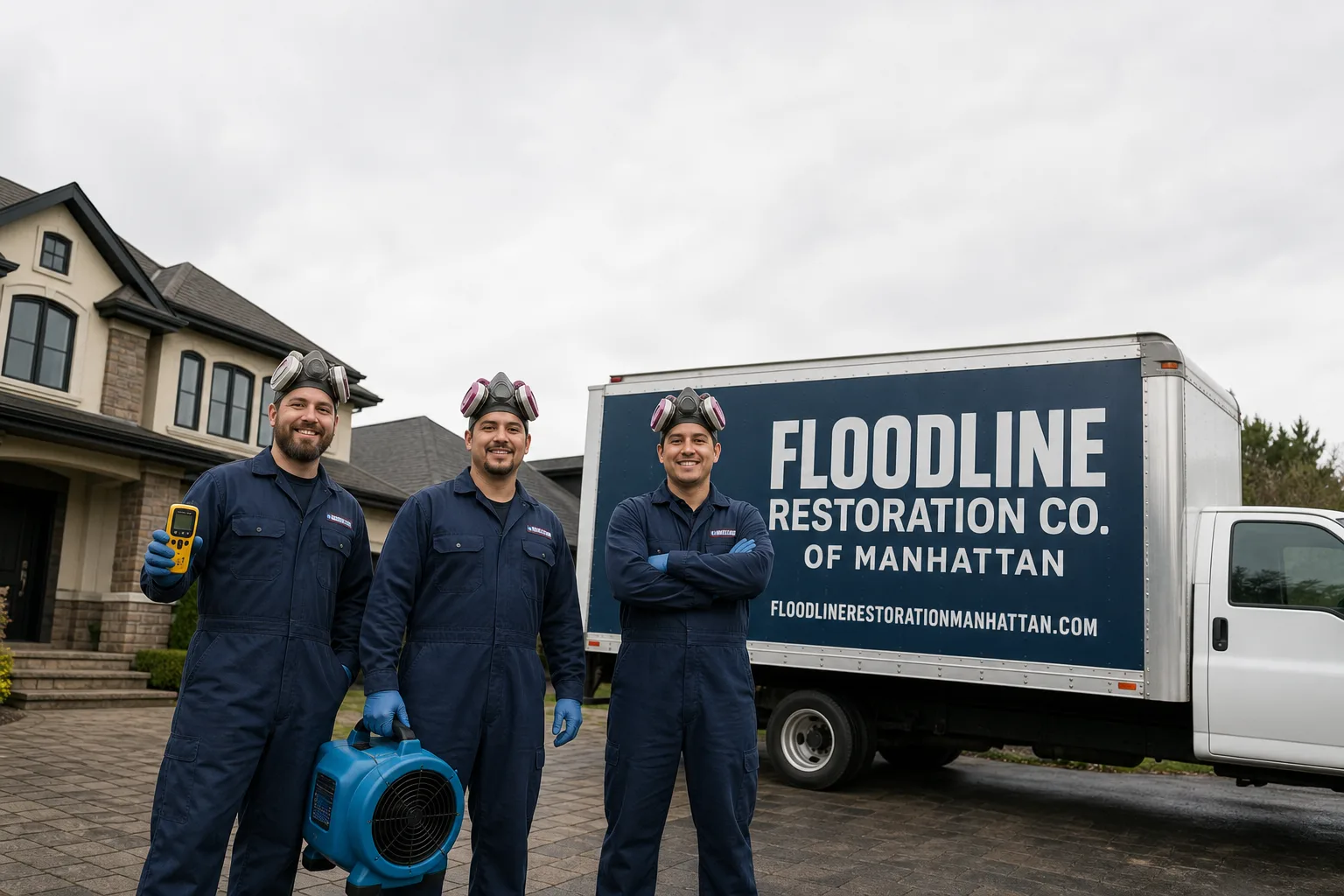
Free visual inspection and a written scope of work before any mitigation begins - photos, moisture readings, and drying logs go in your claim file
The scope we write is the scope we bill. Anything new gets shown to you, in writing, before we touch it.






 Before
 After
After Before
 After
After Before
 After
After24/7 Emergency Storm & Disaster Restoration in Harlem
Storm damage in Harlem moves fast. Water finds the path of least resistance through pre-war plaster, cast iron stacks, and shared party walls, so a roof tear on West 125th becomes a three-unit problem by morning. Floodline Restoration Co. of Manhattan answers live at (917) 924-4221 around the clock, every day, and our certified crews dispatch into Harlem the moment you call. We start with a free visual inspection, get extraction running the same visit, and document everything for your carrier before the scope expands. The first hour decides whether a storm leak becomes a plumbing repair or a full structural drying job. When water’s already inside a brownstone’s cavities, waiting isn’t neutral. It’s spreading.
Understanding Storm & Disaster Restoration Severity in Harlem Properties
Most Harlem buildings were framed before moisture barriers, before modern drywall, and before anyone thought about how water travels through a six-story tenement. The plaster-and-lathe wall assemblies common in brownstones from Strivers’ Row to Hamilton Heights act like sponges: they absorb water deeply, hide it for weeks, and release it slowly. That changes how we classify a loss. Category 1 water, clean supply-line leakage, becomes Category 2 or 3 within 48 to 72 hours of sitting inside a warm, dark plaster cavity. Our crews use thermal imaging and penetrating moisture meters to read what’s behind the surface, then map drying chambers accordingly. In pre-war construction, a wall that feels dry to the palm can still read 28 to 34 percent moisture content at the stud line. We don’t pull equipment because the paint feels dry. We pull it because the moisture log says the cavity met the drying standard.
Party walls complicate every loss in Harlem. When a five-story walkup on West 135th takes water on the top floor, that water doesn’t respect the property line. It travels down inside the shared masonry wall and surfaces in the building next door. One loss, six owners, two co-op boards, three insurance adjusters. We’ve run this response enough times to know that the first moisture map has to include every adjacent unit, not just the one that called.
Why Harlem Property Owners Choose Floodline Restoration Co. of Manhattan
- 45-minute response commitment into Harlem - crews stationed and dispatched for Manhattan’s grid, with a live person on the line at (917) 924-4221 at two in the morning, not an answering service.
- 24/7 live answer, every call - Curt Bowman built the company around a dispatch board in 2010. The person who answers at 3 a.m. can send a crew. That’s still true.
- IICRC-certified crews, including WRT and ASD certifications - the specific water and applied structural drying credentials that matter when plaster cavities and party walls are involved, not just a generic “trained tech.”
- Free visual inspection with a written scope before work starts - you see the line-item plan, the moisture readings, and the drying strategy before we touch a wall.
- Direct insurance billing, managed for you - we photograph, log, and communicate with your adjuster, so you don’t carry the paperwork burden between us and the carrier.
- One team from first extraction to finished rebuild - no mid-job handoff to a sub, no new crew learning your building on day seven. The same certified team that maps the moisture on day one rebuilds what the water destroyed.
Our Storm & Disaster Restoration Process
Inspection & Assessment
We arrive, walk the affected areas with you, and run non-invasive moisture mapping on every surface including party walls and floor cavities. For Harlem’s pre-1980 buildings, we flag any surface that may require Local Law 55 mold protocol or lead and asbestos testing before we open a wall.
Extraction & Stabilization
Standing water comes out first, using truck-mounted and portable extraction units matched to the access constraints of walkups and brownstone stoop entries. We stabilize exposed structural elements and install emergency board-up or roof tarping where wind or debris opened the building envelope.
Drying & Dehumidification
Professional-grade Dri-Eaz and Phoenix dehumidifiers paired with high-volume air movers create calculated drying chambers. On plaster-and-lathe assemblies, we use Injectidry panel systems to pull moisture from inside wall cavities without tearing out original plaster.
Cleaning & Sanitization
Category 2 and 3 water requires antimicrobial treatment and surface cleaning across every affected area. HEPA air scrubbers run during containment and cleaning to capture particulates, especially in buildings where shared air pathways move mold spores between units.
Specialty Treatment for Storm Losses
Storm damage to Harlem’s flat brownstone roofs means ice dam mitigation, membrane patching, and tarping anchored for freeze-thaw cycles. For interior losses, we address rust staining from steam systems, hidden saturation behind plaster, and water that migrated through party-wall chases.
Repairs & Restoration
Once the drying log hits the target moisture standard, we rebuild. Plaster repair, painted finishes, flooring, millwork, and structural work done by the same crew that has been reading the walls since day one. Your 90-Day Done Right Promise is in writing before we leave.
Need Emergency Storm & Disaster Restoration in Harlem Now?
Crews minutes away, answering live 24 hours a day. The sooner we start, the less it costs.
Working With Your Insurance Company
We handle carriers the way we handle water: systematically, from the first hour. That means photo documentation of every affected surface before we move anything, room-by-room moisture readings uploaded to a drying log your adjuster can review, and a line-item scope of work with no vague descriptions. Our team has spent years building claim files for Harlem’s co-op boards, condo associations, and private homeowners, so we know what a pre-war building’s claim needs to survive carrier scrutiny. When the scope expands because hidden saturation is found behind a party wall, we document the change against pre-loss condition, photograph the evidence, and communicate directly with the adjuster. You have enough to manage after a storm. Playing messenger between a restoration crew and an insurance desk should not be your job.
What We Provide Your Insurer
- Thorough documentation of the loss
- Photos of all damage, room by room
- Moisture readings and drying logs
- A detailed, line-item scope of work
- Direct coordination with your carrier
Built for Harlem’s Loss Calendar
Harlem’s storm season is not one season. It’s a rolling calendar of failures tied to the age and systems of the buildings themselves. January’s deep freezes burst the original galvanized supply lines that still run through dozens of brownstones between West 116th and West 145th. February’s freeze-thaw cycles split the flat roofing membranes on tenements and open ice dam leaks that drip for weeks before anyone sees a stain. Spring thaw pushes groundwater into basement vaults and coal chutes that were never waterproofed. Summer thunderstorms drop an inch of rain in forty minutes, and the combined sewer system backs up through floor drains in garden-level apartments. Autumn nor’easters rip parapet caps and scupper flashing, opening the top floor to wind-driven rain. We schedule our crews, our equipment, and our drying capacity around this calendar because it repeats every year. The building stock doesn’t change. The failures don’t either.
Storm & Disaster Restoration Across Harlem’s Neighborhoods
Central Harlem’s brownstone rows between Lenox Avenue and Adam Clayton Powell Jr. Boulevard have steep stoops, vaulted sidewalks, and cast iron supply lines that snap in January. When a front parlor fireplace wall takes water there, it usually means opening the plaster and running Injectidry panels for days, not hours. Hamilton Heights and Sugar Hill hold some of the most intact late-19th century row houses in Manhattan, with original one-pipe steam systems that flood interiors when a radiator vent fails on the fourth floor and sends rusty water down inside the walls to the parlor. East Harlem’s tenement stock along Pleasant Avenue and East 116th Street sees storm water come up through basement drains during combined sewer overflows, bringing Category 3 water into mechanical rooms and storage areas. West Harlem and Manhattanville, with their mix of pre-war walkups and newer construction near City College, get wind-driven rain through old window lintels and parapet joints. Each area has its own failure pattern, and our response routes reflect that.
Specialized Storm & Disaster Restoration Services We Offer in Harlem
Storm Damage Cleanup
Wind-blown debris, broken glazing, saturated carpet, and water migration through plaster walls. We remove damaged materials, stabilize what can be saved, and set drying equipment against the specific moisture profile of your Harlem building. Cleanup leads directly into the drying log and the written scope that protects your claim.
Flood Damage Restoration
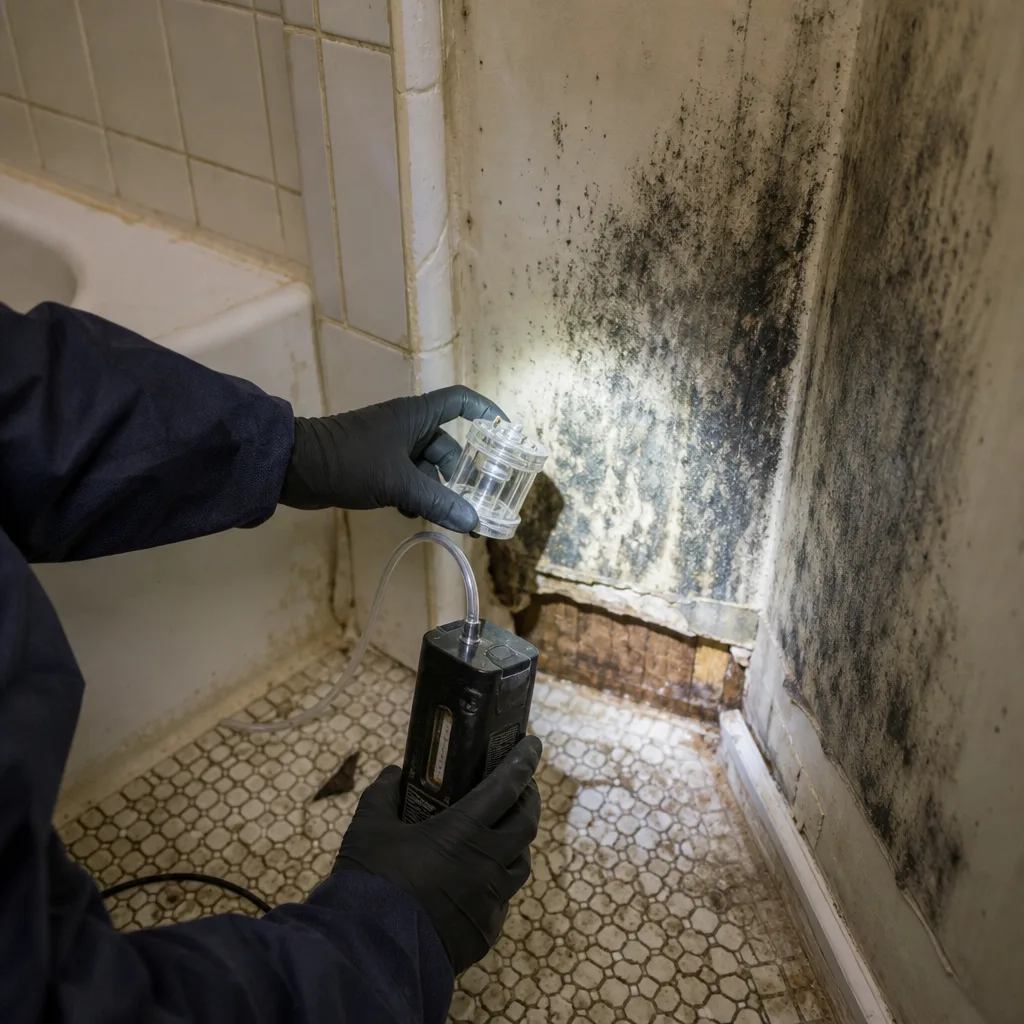
When the floodline in a garden-level Harlem apartment sits at eighteen inches, the water is Category 3 and the wall cavities are already holding water you can’t see. We extract, build containment, run air scrubbers, and dry the cavities with panel systems before rebuilding. One-pipe steam floods are different: the water is clean but rusty, the damage is hidden, and the saturation typically spans two to three stud bays before a tenant reports it. We map first, then treat.
Emergency Board-Up
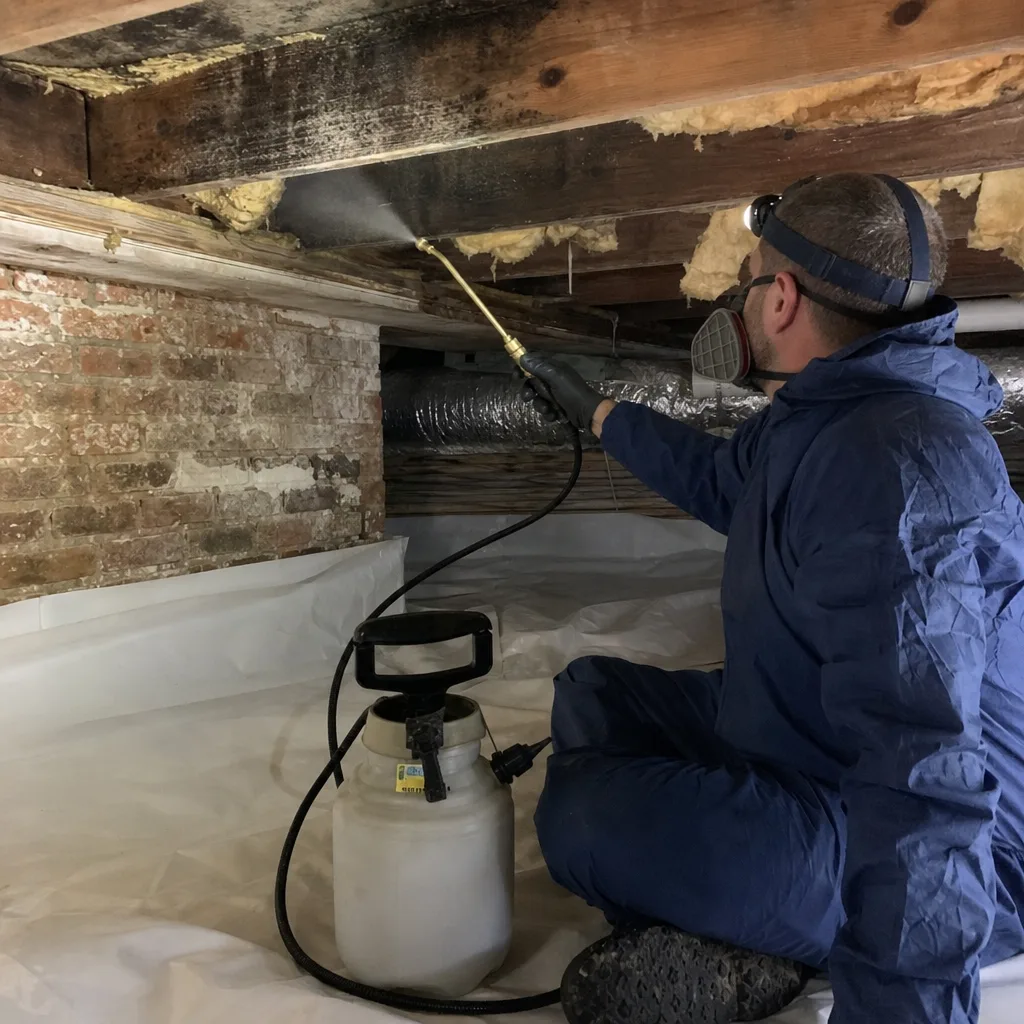
Broken windows, forced-entry damage, or structural compromise after a storm leaves your property exposed. We board up properly, with frame-to-opening fit and weather sealing, not a sheet of plywood over a hole. For Harlem’s public-facing storefronts along 125th Street, that means securing the full storefront assembly, not just the broken pane.
Roof Tarping
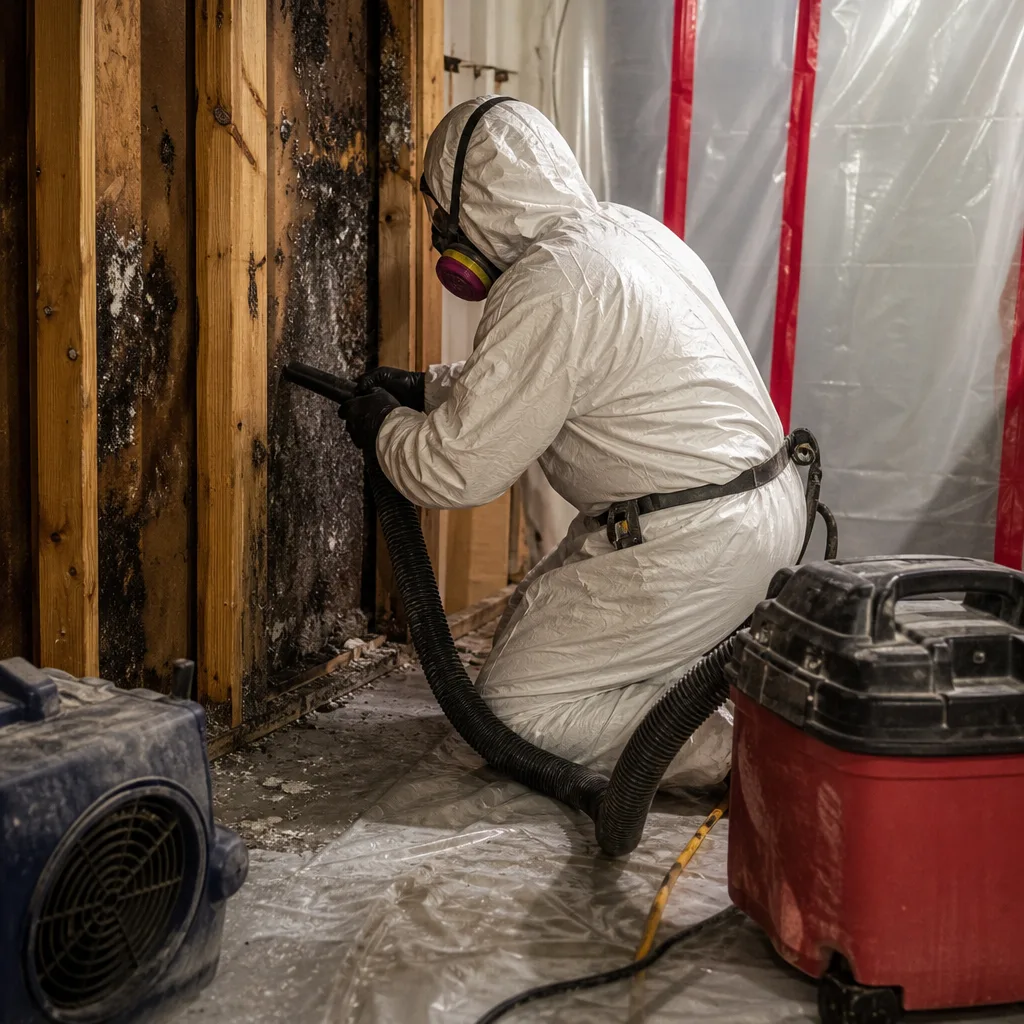
Flat roofs don’t shed water. They hold it. A tarp on a brownstone roof has to be anchored against wind uplift and sealed at the parapet so ice dams can’t get under the edge. Our roof tarping for Harlem’s low-slope membranes accounts for repeated freeze-thaw cycles that turn a slack tarp into a new leak source within weeks. We’ve seen exactly that happen with pop-up contractors who don’t know how a flat roof behaves in Manhattan winters.
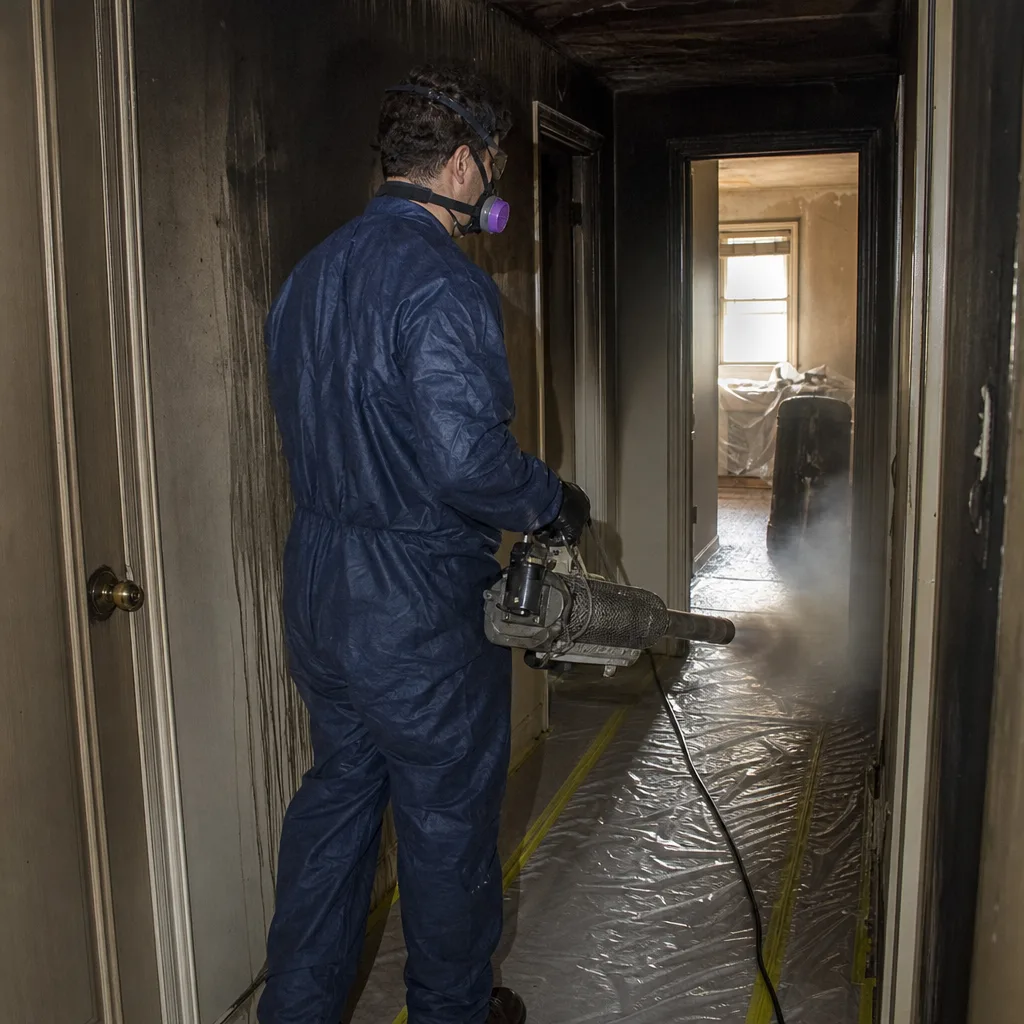
Debris Removal
Storm debris from roof failures, parapet collapses, or interior wall openings has to go, and it has to go before it traps moisture against remaining surfaces. We haul, clean, and document every load for the carrier. On upper-floor walkups, that means safe removal through narrow stairwells without dragging contaminated material through unaffected units.
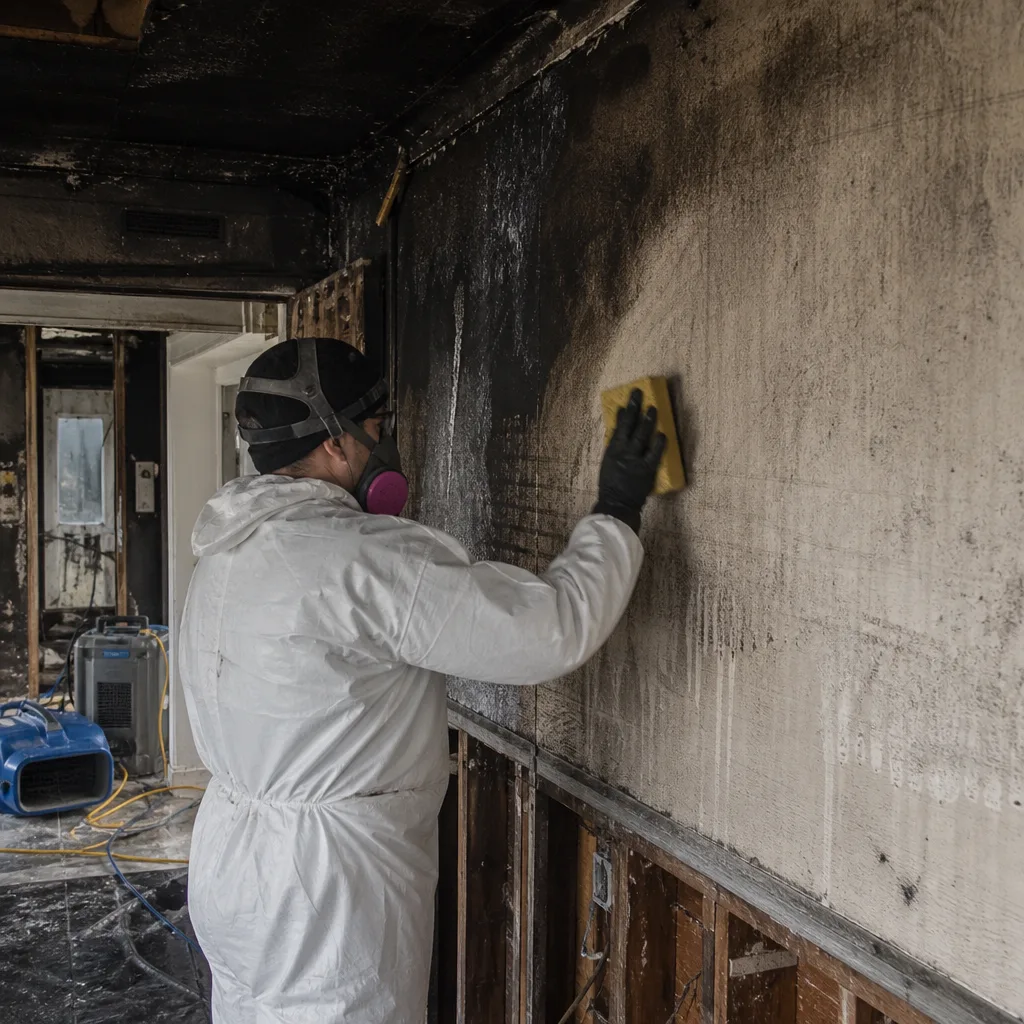
What happens when you call
- 1
A real person answersNo phone trees - you reach a local pro.
- 2
You get an upfront price rangeHonest numbers before anyone is dispatched.
- 3
A background-checked tech heads outLicensed & insured, dispatched right away.
- 4
You approve before work beginsNothing starts until you say go.
Storm & Disaster Restoration Costs in Harlem, NY
Storm damage restoration in Harlem runs a wide range because the building stock does. A simple Category 1 water extraction from a burst supply line in a two-unit brownstone typically runs $2,800 to $5,400 including drying and basic plaster repair. A Category 3 backup from the combined sewer into a garden-level apartment, with full containment, HEPA scrubbing, cavity drying, and wall rebuild, usually runs $9,000 to $26,000 depending on unit count and party-wall saturation. Roof tarping on a flat brownstone roof runs $850 to $2,200 depending on parapet condition and wind anchoring needs. Emergency board-up for a broken storefront or window runs $450 to $1,600. The biggest cost driver in Harlem is always hidden saturation behind plaster and the Local Law 55 mold protocol that comes with any pre-1980 building. That’s why our free visual inspection includes a written scope before work starts, so you know what the real number is before a wall gets opened. Call (917) 924-4221 for an exact quote, no obligation.
We Also Serve Cities Near Harlem
Our crews respond across the Upper Manhattan and Bronx border corridor, including Fairview, Harrison, East Bronx, and Hunts Point. Same dispatch, same certified crews, same written scope policy whether the call comes from a brownstone on Strivers’ Row or a six-story walkup off the Grand Concourse.
Serving Harlem, NY - Our Local Coverage Area
We’re based in the Harlem area and know this community well. Use the map below to see our service coverage - if you’re nearby, we can almost certainly help.
Harlem Storm & Disaster Restoration Questions, Answered
Why does water damage in a Harlem brownstone often involve multiple apartment units even when only one unit flooded?
Shared party walls, stacked plumbing chases, and continuous plaster assemblies mean water moves between units inside the structure itself. A leak in one unit’s ceiling is often inside the neighbor’s wall before anyone sees it. That’s why we moisture-map every party wall and adjacent unit on the first visit, not just the room that called. Call (917) 924-4221 and we’ll map the whole building envelope, not just the visible damage.
Do I need to worry about lead or asbestos during storm damage restoration in a Harlem tenement?
Yes, if the building is pre-1980, and nearly all of Harlem’s walkups and brownstones are. Opening walls or disturbing plaster triggers NYC Local Law 1 lead testing and asbestos survey requirements. Any restoration firm that skips this protocol risks a stop-work order from the city. We handle testing and compliance as part of the written scope before a single wall is opened. Call us for a free assessment of what your building actually requires.
How does a one-pipe steam system turn a minor storm leak into hidden flood damage in a Harlem walkup?
One-pipe steam systems hold water in radiators and pitch pipes. When a vent fails or a pipe settles, water finds the low point, often inside a wall cavity. The water sits in the plaster with no visible staining until the cavity is saturated across multiple stud bays. We find this pattern constantly during moisture mapping on pre-war buildings. It’s why a “small leak” often becomes a multi-room drying project. Call (917) 924-4221 and we’ll trace the actual water path before it spreads further.
What is the correct water category for a Harlem basement flood after a combined sewer overflow, and how does that change the restoration scope?
Combined sewer overflow water is Category 3, the most contaminated classification. It contains sewage, street runoff, and biological contaminants. That means full containment, HEPA air scrubbing, antimicrobial treatment, and disposal of porous materials like carpet, drywall, and insulation that absorbed Category 3 water. It’s not a cleanup. It’s a controlled remediation. We carry the IICRC certifications and the experience to run it properly in Harlem’s below-grade spaces.
Why do roof tarping jobs on Harlem flat roofs require a different approach than on sloped suburban roofs?
Flat roofs hold water, so the tarp must be secured against ponding, wind uplift, and ice dam formation along the parapet. A sloped roof sheds water. A flat Harlem roof membrane, if breached, feeds water into the building for days until it’s sealed. We anchor tarps at the parapet and slope them to drain, because the freeze-thaw cycle in Manhattan winters will exploit any slack or gap. It’s a repair we’ve refined on hundreds of Harlem brownstone roofs.
How fast can you actually get to a storm damage call in Harlem?
We commit to a 45-minute response time into the Harlem area for emergency storm losses. That means a live dispatcher at (917) 924-4221, an assigned crew, and equipment rolling. For non-emergency inspections, we schedule same-day or next-day based on the severity of the loss. Call us now and we’ll tell you exactly when the crew arrives.
How long does drying and remediation take in a pre-war Harlem building?
Plaster-and-lathe walls dry significantly slower than modern drywall. A Category 1 loss with moderate saturation typically takes 3 to 5 days. Hidden cavity saturation behind party walls can extend drying to 7 to 10 days. We log daily moisture readings and show you the numbers as they drop, so you’re not waiting on a vague promise. The drying log is yours, and the carrier gets a copy.
Can we stay in our Harlem apartment during storm restoration?
For Category 1 water with localized damage, typically yes. For Category 3 losses, sewage backups, or large-scale structural drying, we may recommend temporary relocation, especially with children or elderly residents. We’ll tell you honestly, in writing, what the safety conditions are, and we’ll document the affected area so your carrier has the information to cover additional living expenses if applicable.
Written by Curt Bowman, Owner at Floodline Restoration Co. of Manhattan, serving Harlem and the Upper Manhattan corridor with certified restoration crews and live 24/7 dispatch.