
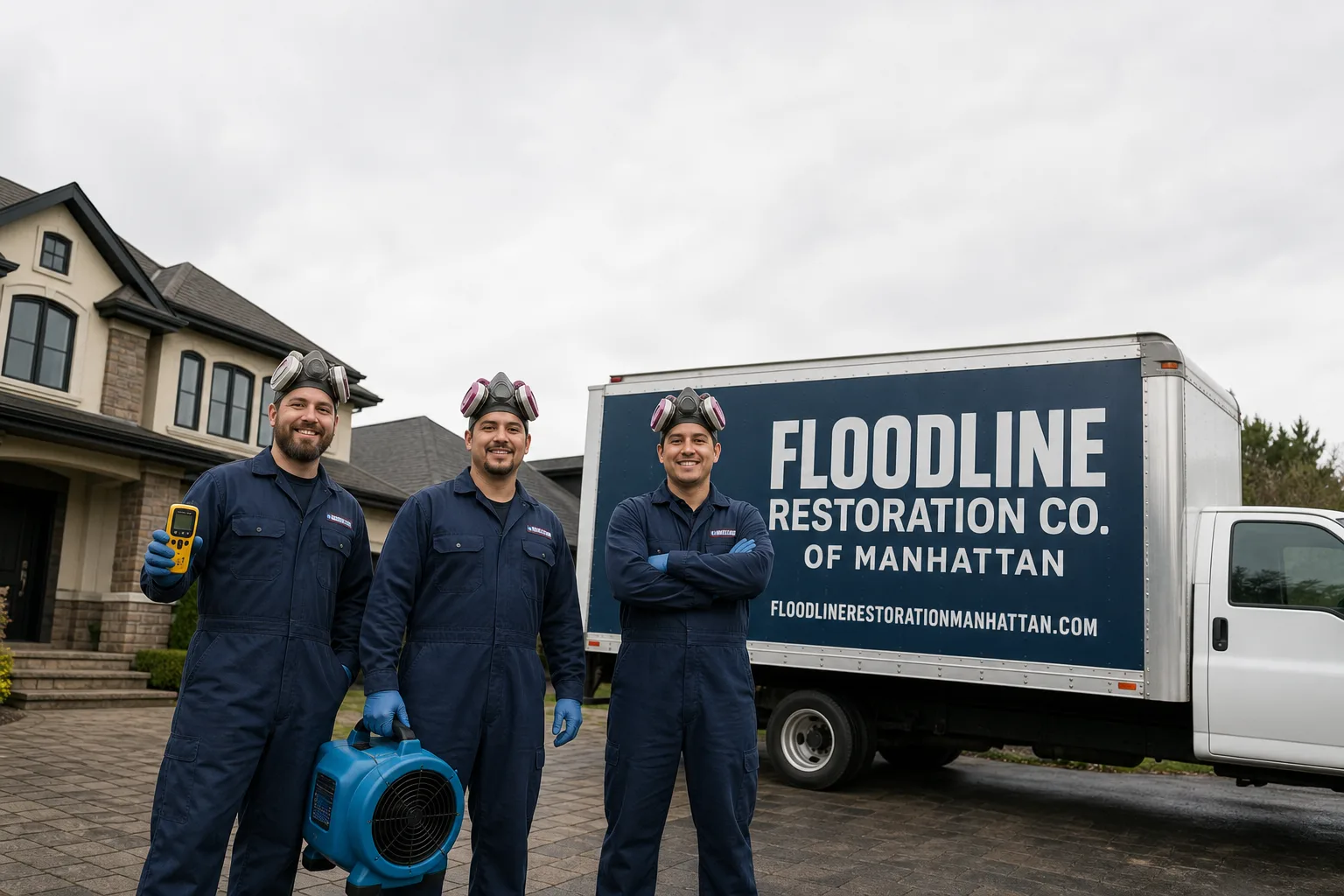
Free visual inspection and a written scope of work before any mitigation begins - photos, moisture readings, and drying logs go in your claim file
The scope we write is the scope we bill. Anything new gets shown to you, in writing, before we touch it.






 Before
 After
After Before
 After
After Before
 After
After24/7 Emergency Storm & Disaster Restoration in Hawthorne
Storm damage in Hawthorne doesn’t wait for business hours, and neither do we. If a nor’easter has just pushed a tree through your roof or sent groundwater into your split-level’s basement, call (917) 924-4221 right now. A live dispatcher answers, not a recording, and a certified crew can be on site in Hawthorne within the hour. The first sixty minutes after storm water enters a 1950s Cape Cod or ranch determines whether you’re facing a cleanup or a rebuild. Our Storm & Disaster Restoration team starts extraction the same visit, with a free visual inspection and a written scope before any work begins.
Understanding Storm & Disaster Restoration Severity in Hawthorne Properties
Not all storm water is the same. Category 1 water comes from a broken supply line or falling rain before it touches the ground. Category 2 water, what we see most often in Hawthorne basements after a heavy rain event, carries contaminants from soil and foundation seepage. Category 3 water, the kind that arrives when the Saw Mill River’s drainage corridor backs up into a lower-lying street, contains sewage and requires full containment with HEPA air scrubbing before drying even starts. Hawthorne’s post-WWII concrete-block basements complicate this further: once water migrates behind a block wall, efflorescence forms and drying requires low-profile air movers positioned to force air through wall cavities, not just across the floor. We saw this repeatedly after Ida in 2021, when hillside basements on streets feeding toward the Saw Mill held standing water for days because the original 1950s waterproofing had long since failed against sustained uphill groundwater pressure.
Why Hawthorne Property Owners Choose Floodline Restoration Co. of Manhattan
- 45-minute response commitment: We dispatch crews from nearby so a certified team reaches Hawthorne streets fast, with extraction equipment running the same visit.
- 24/7 live answer: A real person picks up at 2 a.m. during a January freeze-burst or an Ida-style storm. You’ll never be routed to a voicemail box while water rises.
- IICRC-certified crews: Our technicians hold WRT, FSRT, and AMRT certifications, so the moisture mapping and structural drying are done to an auditable standard.
- Free visual inspection: Before any bill is discussed, we walk the property, photograph the damage, and hand you a written scope with no obligation.
- Direct insurance billing: We bill your carrier directly and coordinate with your adjuster, so you’re never the messenger between us and the insurance company.
- One team from extraction to reconstruction: The same certified crew that reads the moisture map on day one handles daily drying logs and rebuilds what needs rebuilding. No handoff, no inherited subcontractor.
Our Storm & Disaster Restoration Process
Inspection & Assessment
We walk every affected room with thermal imaging and moisture meters, then map the full extent of water migration. In Hawthorne’s older colonials, this includes checking plaster walls and knob-and-tube wiring before any equipment is placed.
Extraction & Stabilization
Our crews run truck-mounted and portable extractors sized for the tight clearances in Hawthorne’s split-level basements. We also handle emergency board-up and roof tarping immediately to stop additional water entry.
Drying & Dehumidification
We set Dri-Eaz and Phoenix dehumidifiers with low-profile air movers, taking daily hygrometer readings. Drying logs are logged and shared with you and your adjuster until the dry standard is met.
Cleaning & Sanitization
Because Hawthorne sits inside the NYC DEP watershed buffer for the Kensico Reservoir, we use only compliant antimicrobials and cleaning agents. No chemical shortcuts that would violate DEP restrictions.
Storm-Specific Specialty Treatment
For wind-driven rain through a tarped roof or Category 2 basement seepage, we apply targeted antimicrobial treatment and odor control that meets watershed compliance standards set for this part of Westchester.
Repairs & Restoration
Our carpenters rebuild what needs rebuilding, from drywall to trim to flooring. The same crew that handled extraction finishes the job, so the work is cohesive and the scope never gets handed off.
Need Emergency Storm & Disaster Restoration in Hawthorne Now?
Crews minutes away, answering live 24 hours a day. The sooner we start, the less it costs.
Working With Your Insurance Company
Storm damage claims in Hawthorne move faster when documentation starts in the first hour. We photograph every affected room before a single piece of equipment is placed, then generate a line-item scope using industry-standard estimating software that your adjuster recognizes. When your carrier pushes back on a drying day or a rebuild line, we communicate with them directly and supply the evidence: dated photos, hygrometer readings, and a moisture log showing exactly when each surface hit its dry standard. You still own the claim, but you don’t have to argue it alone.
What We Provide Your Insurer
- Thorough documentation of the loss
- Photos of all damage, room by room
- Moisture readings and drying logs
- A detailed, line-item scope of work
- Direct coordination with your carrier
Built for Hawthorne’s Loss Calendar
Hawthorne’s storm damage arrives on a predictable rhythm. January and February bring deep freezes that split supply lines in the concrete-block basements of post-WWII ranches and split-levels, then thaw cycles drive ice damming under the eaves of 1950s Cape Cods. March and April turn hillside groundwater pressure into basement seepage that a sump pump alone can’t stop, because the block foundations stay saturated for days after the rain event. Summer brings thunderstorm flash flooding through the lower-lying streets feeding the Saw Mill River corridor, and autumn transitions into nor’easter season, when wind-driven rain finds every compromised roof and window flashing. This is the pattern we’ve learned from working Hawthorne streets. It’s not a mystery. It’s a calendar, and we build our response around it.
Storm & Disaster Restoration Across Hawthorne’s Neighborhoods
Response routes differ meaningfully across this hamlet. Along Elwood Avenue and the streets climbing west toward the Kensico Reservoir, groundwater pressure against hillside foundations is the recurring story, with basements seeping days after rain stops because the terrain itself keeps pushing water against block walls. In the streets running east toward the Saw Mill River Parkway and the drainage corridor, street-level flooding and sump overflows dominate after heavy downpours. The older turn-of-the-century colonials near the Mount Pleasant border present their own challenges: plaster walls that hide moisture until damage is extensive, and wiring that must be assessed before drying equipment goes in. On the tighter alley-load driveways behind 1950s Capes, a standard truck-mounted extractor can’t reach the back door, so our crews run portable extraction setups designed for exactly these clearances. A storm response in Hawthorne isn’t one playbook. It’s reading the street.
Specialized Storm & Disaster Restoration Services We Offer in Hawthorne
Storm Damage Cleanup
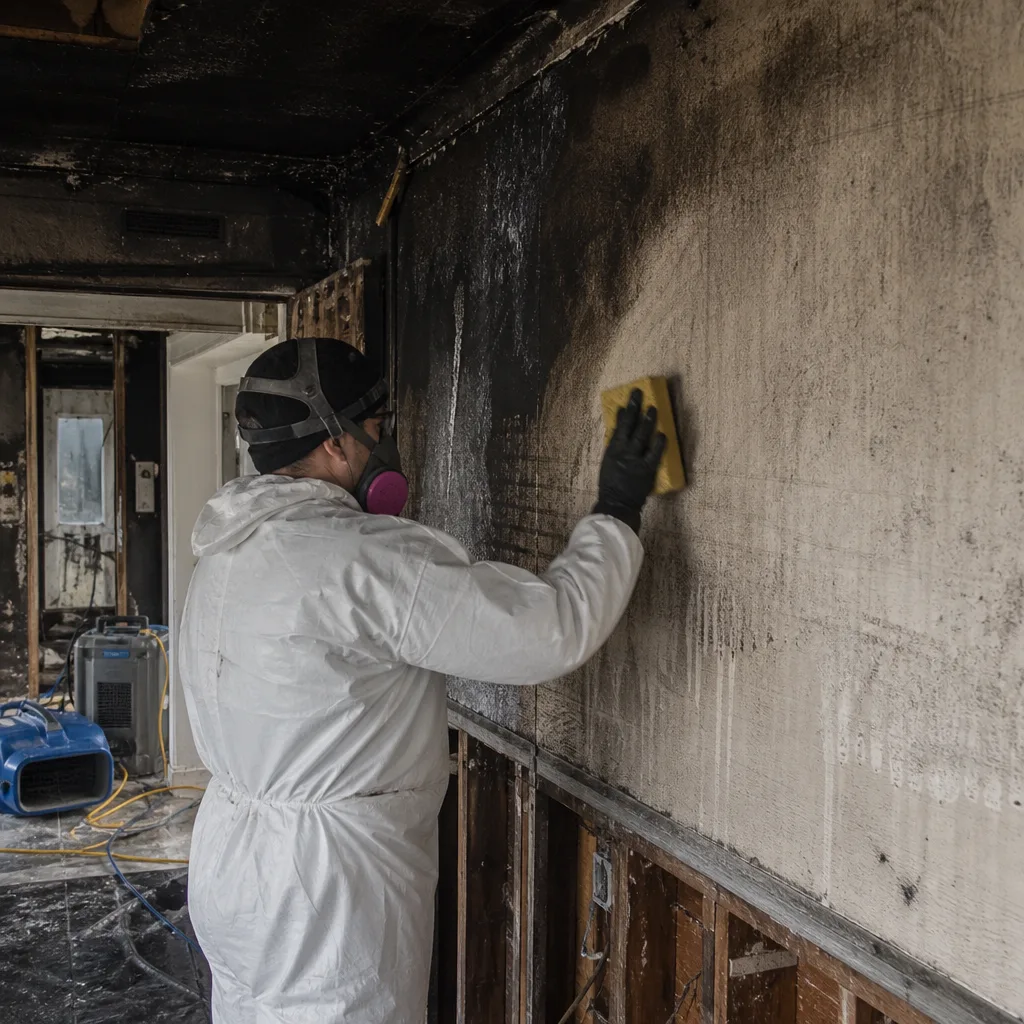
After a nor’easter or a summer microburst, Hawthorne properties need fast debris clearing and water control before secondary damage sets in. We remove saturated drywall, buckled flooring, and storm-deposited debris, then set drying equipment sized to the room. Every job uses DEP-compliant cleaning agents because of the hamlet’s position inside the watershed buffer.
Flood Damage Restoration
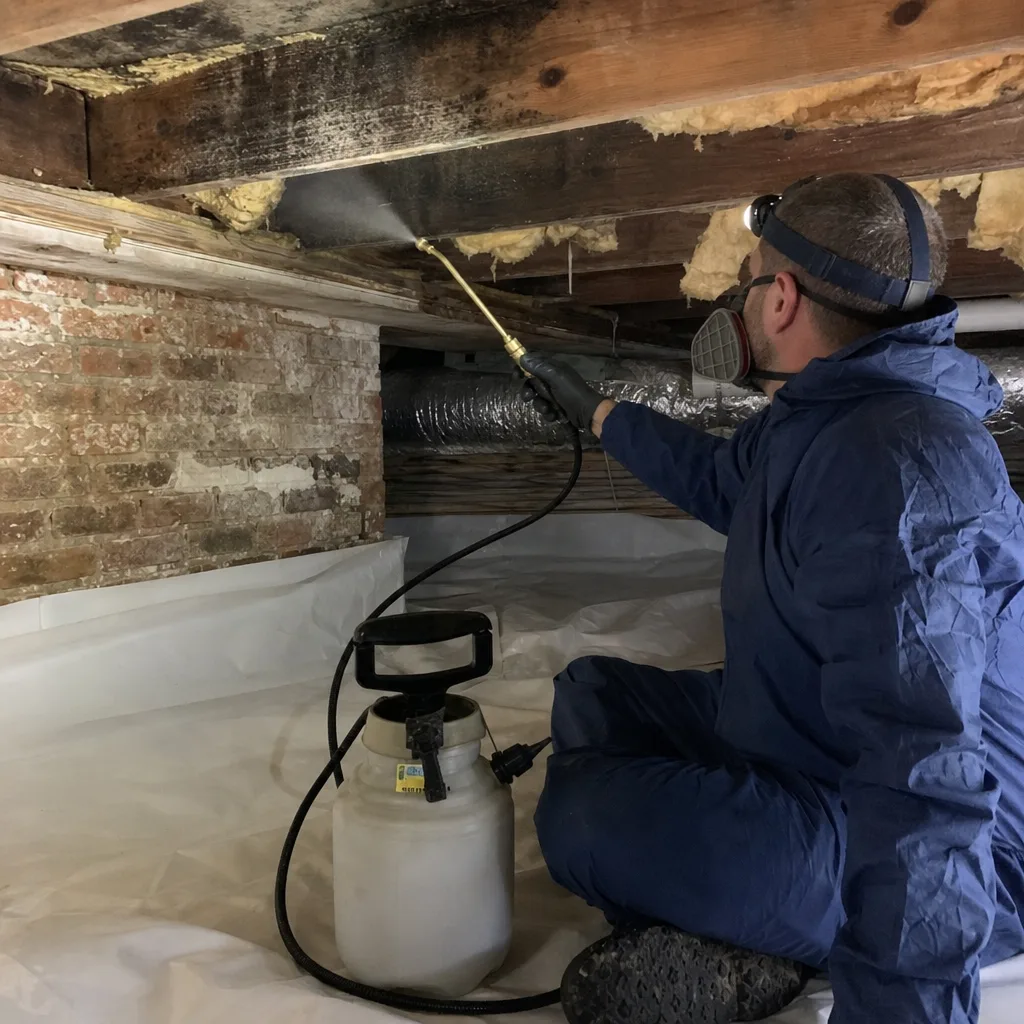
When the Saw Mill drainage corridor backs up or a hillside basement takes groundwater, we handle extraction, structural drying, and rebuild. In Hawthorne’s concrete-block basements, this means running low-profile air movers that force air through wall cavities where moisture hides. The moisture log goes to you and your carrier, every day, until the dry standard is met.
Emergency Board-Up
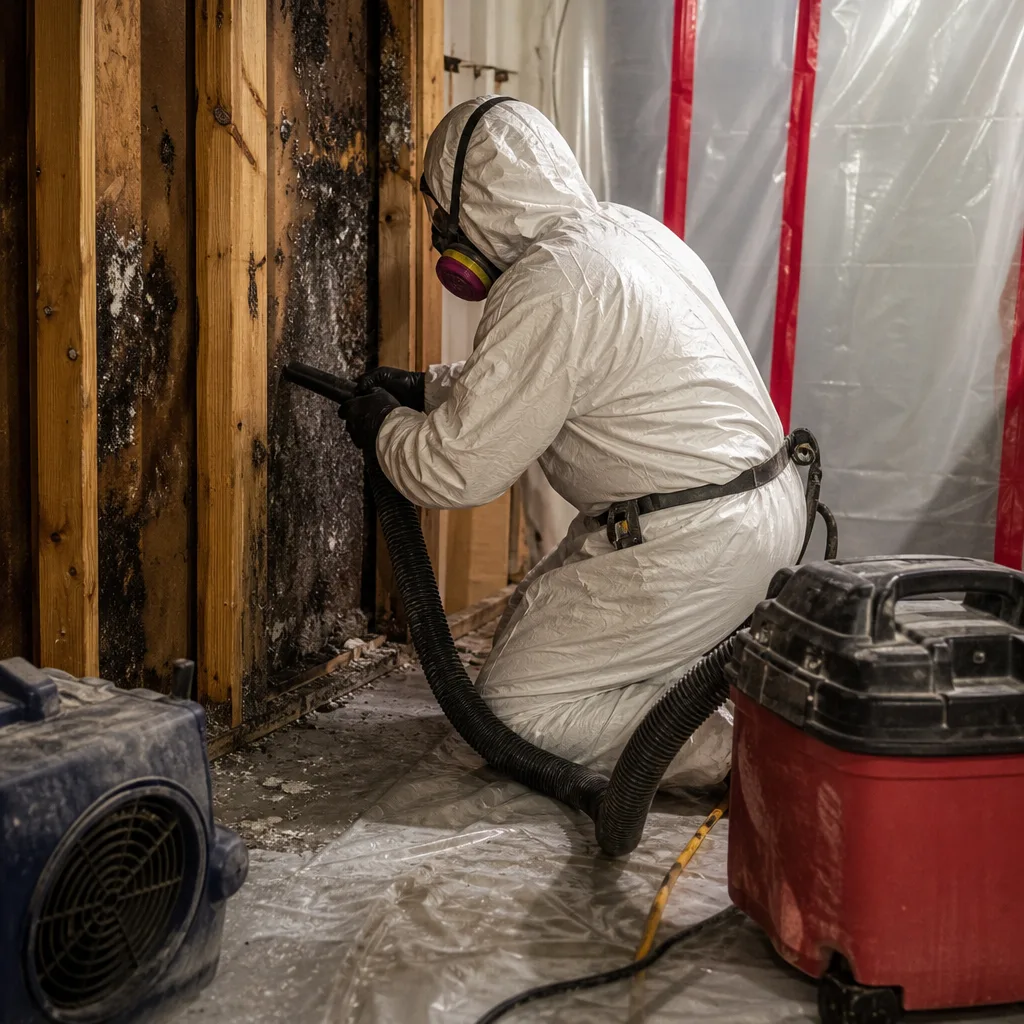
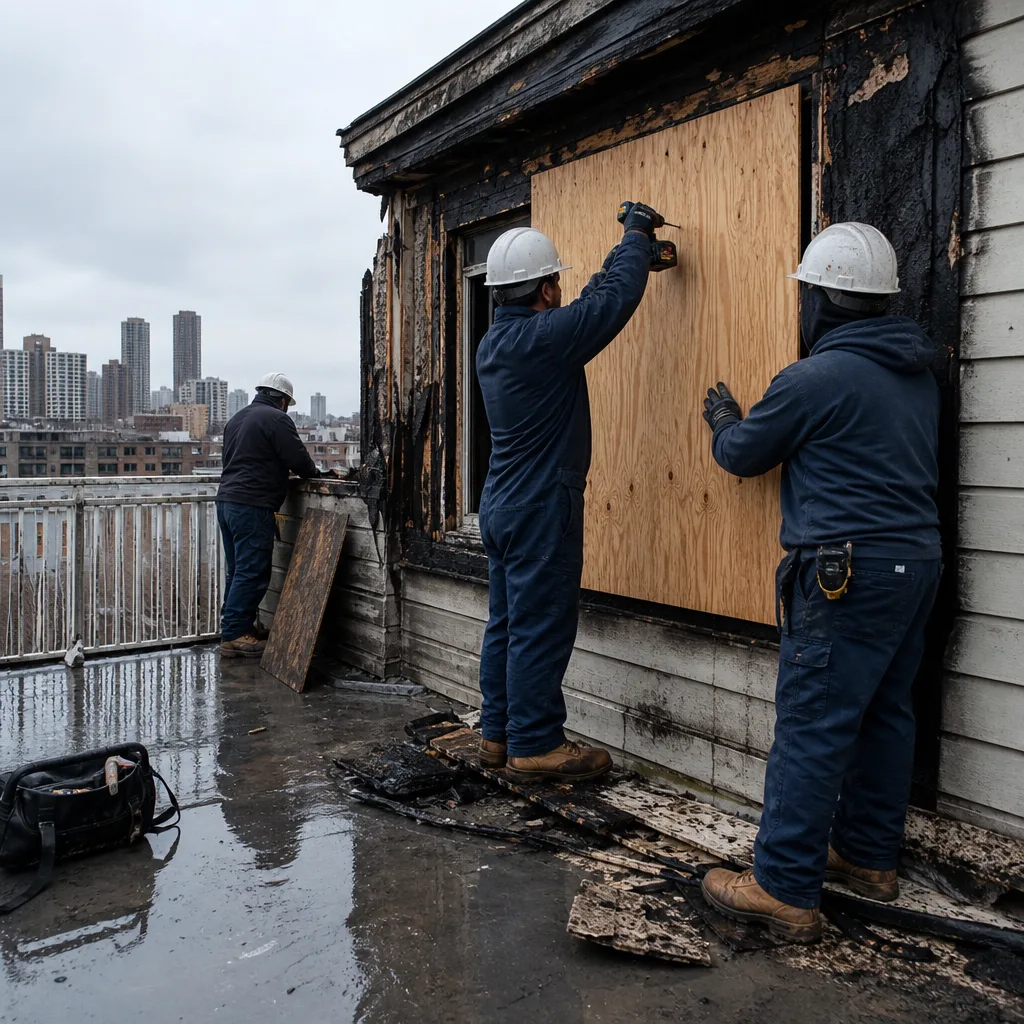
A broken window or a storm-damaged door in Hawthorne is an invitation for further water, animals, and theft. We board up securely the same visit, with plywood cut to fit the property’s typical Cape Cod and ranch window sizes. This is not a temporary patch; it’s a stabilized opening that holds until permanent glazing arrives.
Roof Tarping
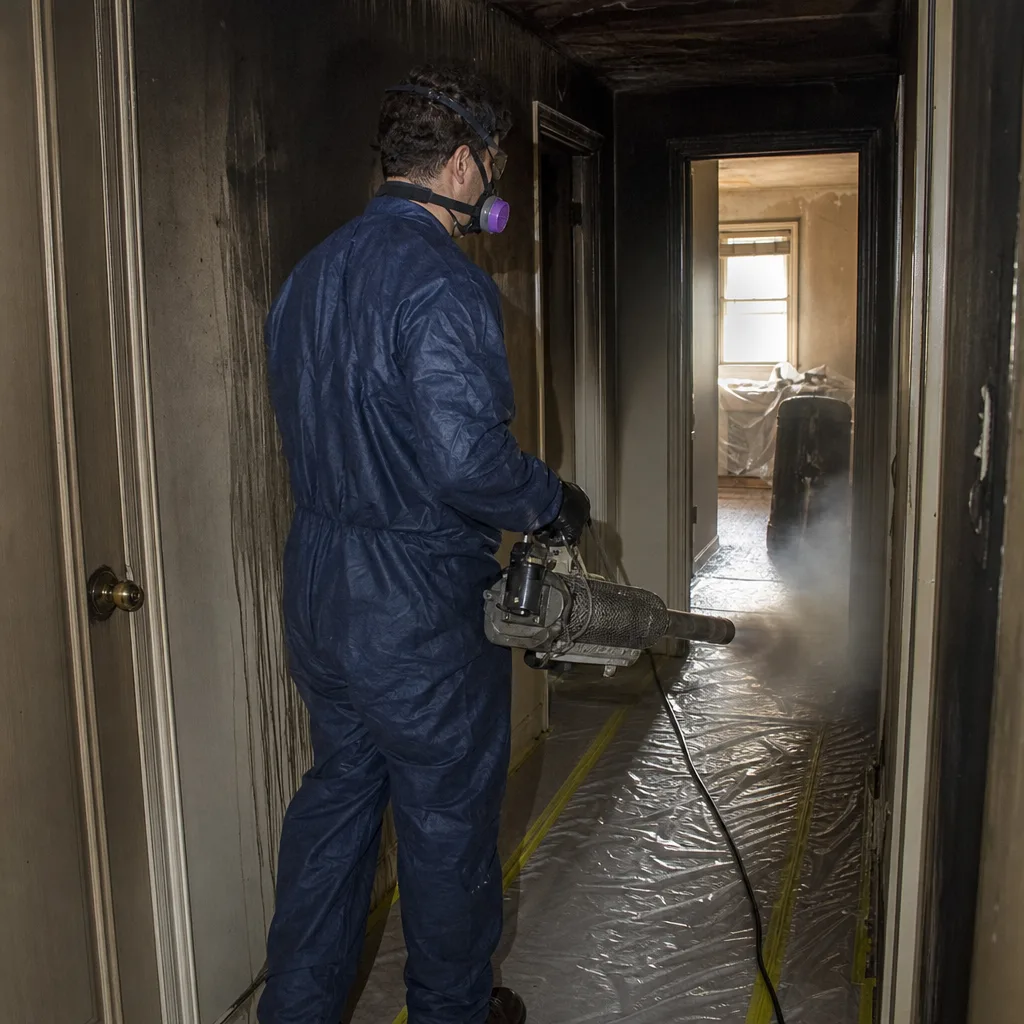
Wind-driven rain entering through a compromised Hawthorne roof will ruin ceilings, insulation, and wiring within hours. We tarp the damaged section same-day, using fasteners that hold against the valley winds that funnel through the Saw Mill corridor. It buys you time to get a full roof scope from your adjuster without further interior damage.
Debris Removal
Branches, shingles, and storm-carried material across a Hawthorne yard can damage siding and obstruct drainage. We clear the debris, then inspect the exterior for vulnerabilities the storm exposed. It’s the same visit, so you’re not scheduling a second company to finish what the storm started.
What happens when you call
- 1
A real person answersNo phone trees - you reach a local pro.
- 2
You get an upfront price rangeHonest numbers before anyone is dispatched.
- 3
A background-checked tech heads outLicensed & insured, dispatched right away.
- 4
You approve before work beginsNothing starts until you say go.
Storm & Disaster Restoration Costs in Hawthorne, NY
A typical basement extraction and drying job in Hawthorne runs $2,800-$5,400, depending on square footage, water category, and whether containment is required. Emergency board-up for a single window or door runs $350-$700, while a roof tarp job on a Cape Cod typically lands between $450 and $900. Debris removal after a storm on a standard Hawthorne lot runs $400-$1,200. What moves the price: whether the water is Category 2 or Category 3, how long it sat before we arrived, and whether the property’s concrete-block foundation requires wall-cavity drying. Insurance usually covers most of a covered storm loss after the deductible; water that seeped in through a foundation crack may be excluded unless you have seepage coverage. The free visual inspection we offer in Hawthorne answers this quickly, with a written scope you can take straight to your adjuster.
We Also Serve Cities Near Hawthorne
Our crews regularly work across Hawthorne and the surrounding Westchester hamlets and villages, including Thornwood, Valhalla, Pleasantville, and Tarrytown. If you’re in one of those areas and a storm just came through, the same live dispatch, same certified crews, and same 90-Day Done Right Promise apply.
Serving Hawthorne, NY - Our Local Coverage Area
We’re based in the Hawthorne area and know this community well. Use the map below to see our service coverage - if you’re nearby, we can almost certainly help.
Hawthorne Storm & Disaster Restoration Questions, Answered
Does Hawthorne’s location in the NYC DEP watershed affect what chemicals can be used during storm restoration?
Yes. Hawthorne sits inside the NYC DEP watershed protection buffer for the Kensico Reservoir, which means certain biocides and chemical drying agents commonly used in nearby White Plains or Yonkers are restricted here. We use only DEP-compliant antimicrobials and moisture-management approaches on every storm job in Hawthorne.
Why do basements on Hawthorne’s hillside streets seep after heavy rain even when the sump pump works?
The sump pump only handles water that reaches the pit. On hillside streets, sustained groundwater pressure pushes against the block foundation itself, and water enters through cracks and mortar joints that a sump can’t address. The block stays saturated for days after a rain event, so seepage continues long after the storm passes unless exterior drainage is addressed.
How quickly can mold start on wet drywall in Hawthorne’s older colonials and ranches?
Mold colonization begins within 24 to 48 hours on wet drywall, especially in the warm, humid weeks of Hawthorne’s late spring and summer. In the plaster-walled colonials, the timeline is similar but the damage hides longer because plaster holds moisture internally. This is why we prioritize same-visit extraction, not next-day scheduling.
What kind of water is considered Category 2 vs. Category 3 in a storm that floods my Hawthorne basement?
Storm water that entered from ground seepage or through a foundation crack is typically Category 2, meaning it carried soil and contaminants but not sewage. If the Saw Mill corridor backing up pushed street drainage or a sewer line into your basement, that’s Category 3, which requires full containment, HEPA air scrubbing, and disposal of porous materials. The difference changes both the drying plan and the cost.
Can your team work in the tight spaces of Hawthorne’s older split-levels without damaging the structure?
Yes. Our crews run low-profile air movers and compact dehumidifiers sized for the 30-inch clearances common around Hawthorne furnaces and under split-level staircases. We completed a hillside split-level job where the Dri-Eaz containment fit exactly into that clearance, with daily moisture readings logged against the pre-loss condition.
How fast can a crew actually get to my Hawthorne address during a major storm?
We commit to a 45-minute response for emergency calls from Hawthorne. During region-wide events like nor’easters, demand is heavy, but our dispatch board tracks nearby crews and prioritizes properties with active water entry. A live person answers the phone and tells you exactly when the team will arrive.
Will my insurance cover storm damage restoration in Hawthorne?
Most storm-related losses that entered through a roof breach, broken window, or sudden pipe freeze are covered under standard homeowners policies after your deductible. Seepage through a foundation crack may require a specific endorsement. We provide photo documentation and drying logs directly to your adjuster, and we bill the carrier directly so the claim moves without you carrying paperwork back and forth.
What should I do in the first 30 minutes after storm water enters my Hawthorne home?
Call us at (917) 924-4221. Then, if you can do so safely, shut off electricity to the affected area and move small valuables to higher ground. Don’t walk through standing water if you suspect it may be Category 3. Take photos from a dry spot. The faster extraction starts, the less drywall and flooring you lose.
One More Thing Hawthorne Property Owners Should Know
On a hillside street feeding the Saw Mill River corridor, our crew responded to a nor’easter that had driven groundwater against a 1960s split-level’s concrete-block foundation. The basement showed efflorescence and Category 2 water migration. We ran moisture mapping and installed a Dri-Eaz containment with low-profile air movers sized for the 30-inch clearance around the furnace. With sustained uphill pressure, we counseled the homeowner on exterior drainage before final structural drying logs documented pre-loss condition. That conversation about what happens after the drying ends is the difference between a job done and a job done right. It’s what the 90-Day Done Right Promise means in practice: if the seepage returns within ninety days because exterior drainage wasn’t addressed, we make it right. In writing. No arguing.
Call (917) 924-4221 for a free estimate. A live person answers, day or night, and a certified Storm & Disaster Restoration crew can be on its way to your Hawthorne property within the hour.
Written by Curt Bowman, Owner at Floodline Restoration Co. of Manhattan, serving Hawthorne with storm and disaster restoration for over 42 years of combined team experience.