
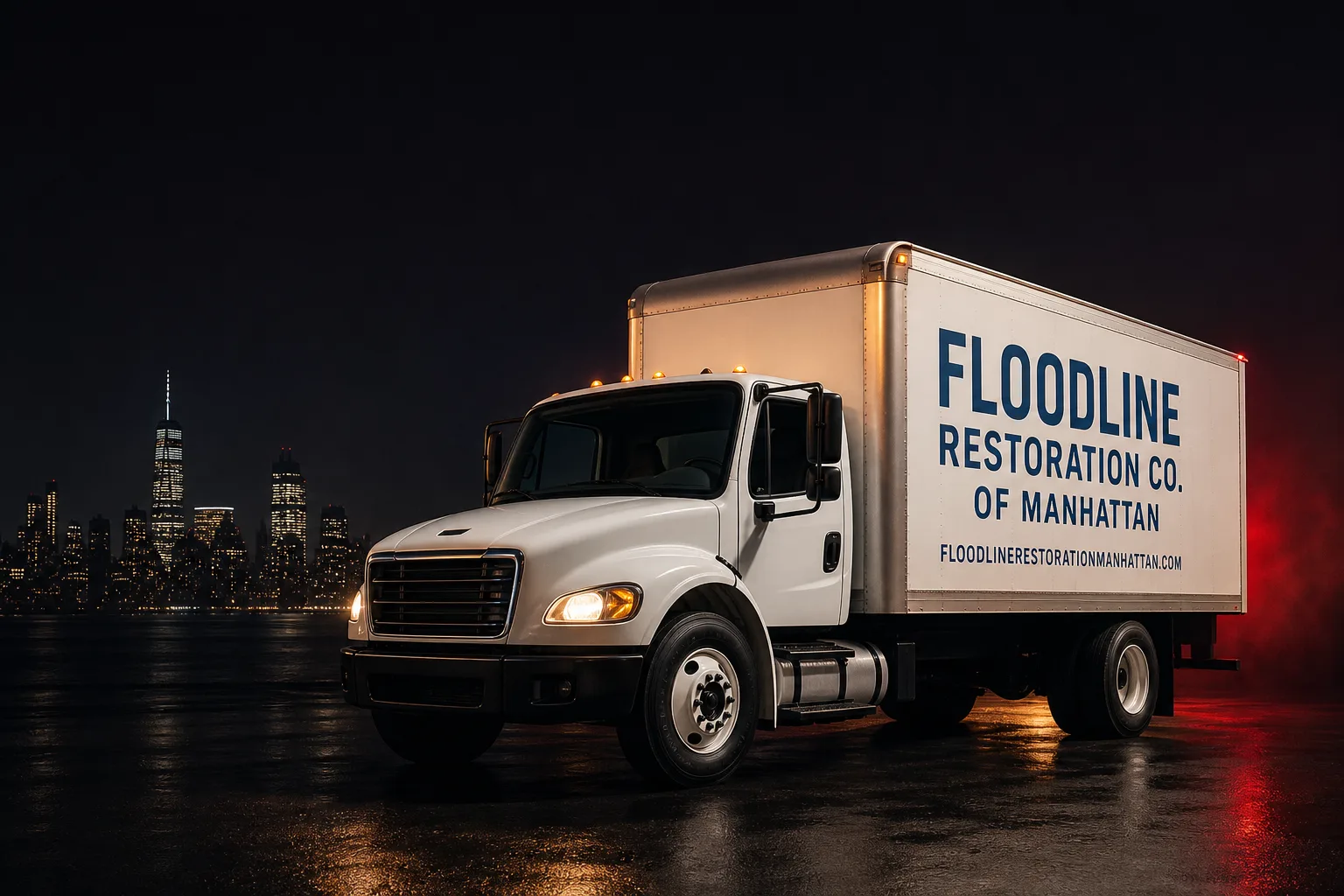
Free visual inspection and a written scope of work before any mitigation begins - photos, moisture readings, and drying logs go in your claim file
The scope we write is the scope we bill. Anything new gets shown to you, in writing, before we touch it.






 Before
 After
After Before
 After
After Before
 After
After24/7 Emergency Storm & Disaster Restoration in Hell’s Kitchen
Storm and disaster restoration in Hell’s Kitchen typically costs between $3,200 and $11,800 for a multi-room water extraction and structural drying scope, with fire-related restoration running $6,500 to $24,000 depending on how far smoke and water traveled through the building. We answer the phone live at (917) 924-4221 twenty-four hours a day, and a certified crew can reach most Hell’s Kitchen blocks within 45 minutes. The first hour after a steam pipe bursts or a nor’easter drives water through a roof matters because Hell’s Kitchen’s pre-war wood-joist construction wicks moisture laterally through unlined chases before you can see the stain spreading across your ceiling.
If you’re standing in a flooded apartment on West 46th or watching water pool in a restaurant kitchen off 9th Avenue, call us now. We’ll walk you through the first 30 minutes on the phone while a dispatched crew is already moving toward you. Free visual inspection, honest scope of work, and a written guarantee. Every minute you wait, category 1 water from a clean pipe rupture drifts toward category 3.
Understanding Storm & Disaster Restoration Severity in Hell’s Kitchen Properties
Water damage in Hell’s Kitchen doesn’t behave the way it does in newer construction. The neighborhood’s 5-to-6-story tenements, most built between the 1890s and 1920s, have original wood-joist floors and unlined interior pipe chases. That means water from a single ruptured steam supply line on the third floor can travel through the joist bays, soak the plaster on two floors below, and saturate the ground-floor restaurant ceiling before anyone realizes the extent of the loss. Moisture mapping with thermal imaging and hygrometers tells us where the water actually went, not just where you can see it. We don’t guess. We read the moisture map and work from that.
Category 1 water is clean supply-line water. Category 2 carries contaminants like steam condensate or dishwasher discharge. Category 3 is grossly contaminated, the kind you get from sewer backup or street flooding that breached a basement. In Hell’s Kitchen, category 1 turns category 2 and often category 3 faster than in most neighborhoods because the building’s own radiator heat accelerates mold colonization. Once the heat from a steam system pushes moisture into original plaster and lath, the effective drying window compresses to 24 to 36 hours before remediation scope expands and costs climb. That’s the real severity clock here. Not days. Hours.
Fire damage carries its own layering. A kitchen grease fire on Restaurant Row doesn’t just leave soot. The sprinkler system and hose lines put hundreds of gallons of water through the same wood-joist bays, and smoke migrates through unsealed pipe chases into apartments two floors up. Soot residue on original brick requires different treatment than soot on drywall. This mixed-use vertical damage pattern is the defining feature of storm and disaster restoration in this neighborhood.
Why Hell’s Kitchen Property Owners Choose Floodline Restoration Co. of Manhattan
- 45-minute response commitment: When you call (917) 924-4221, a live dispatcher confirms your address and sends the nearest certified crew. We don’t put you on hold or route you to a call center.
- 24/7 live answer, always a person: At 2 a.m. during a January freeze, you’ll speak to a dispatcher who knows Hell’s Kitchen’s blocks, not a recording telling you to leave a message.
- IICRC-certified crews: Our technicians hold WRT, FSRT, and AMRT certifications and train on the same pre-war building stock we work in daily. You get a uniformed, background-checked crew that knows tenement construction.
- Free visual inspection: Before we write any scope, we walk the loss with you, explain the moisture map, and show you exactly what needs to happen. No charge, no obligation.
- Direct insurance billing: Floodline Restoration Co. communicates directly with your adjuster, submits photo documentation and line-item estimates, and keeps you out of the middle of the paper trail.
- One team from extraction to reconstruction: The same crew that sets containment and runs drying logs handles the rebuild. No mid-job handoff to a subcontractor who’s never seen your building.
Floodline Restoration Co. of Manhattan was founded in 2010 by Curt Bowman and built around a dispatch board, not a sales desk. We’ve been serving New York City property owners for over 42 years through our teams, and every job carries the 90-Day Done Right Promise. Known internally as the Keystone Standard, it’s a written guarantee: if it’s not done right, we make it right, with no paperwork battles and no arguing. We stand behind it.
Our Storm & Disaster Restoration Process
Inspection & Assessment
A certified technician walks the loss with you, identifies all water categories and soot types, and maps moisture with thermal imaging and hygrometers. We find what you can’t see yet and explain it in plain language before any work starts.
Extraction & Stabilization
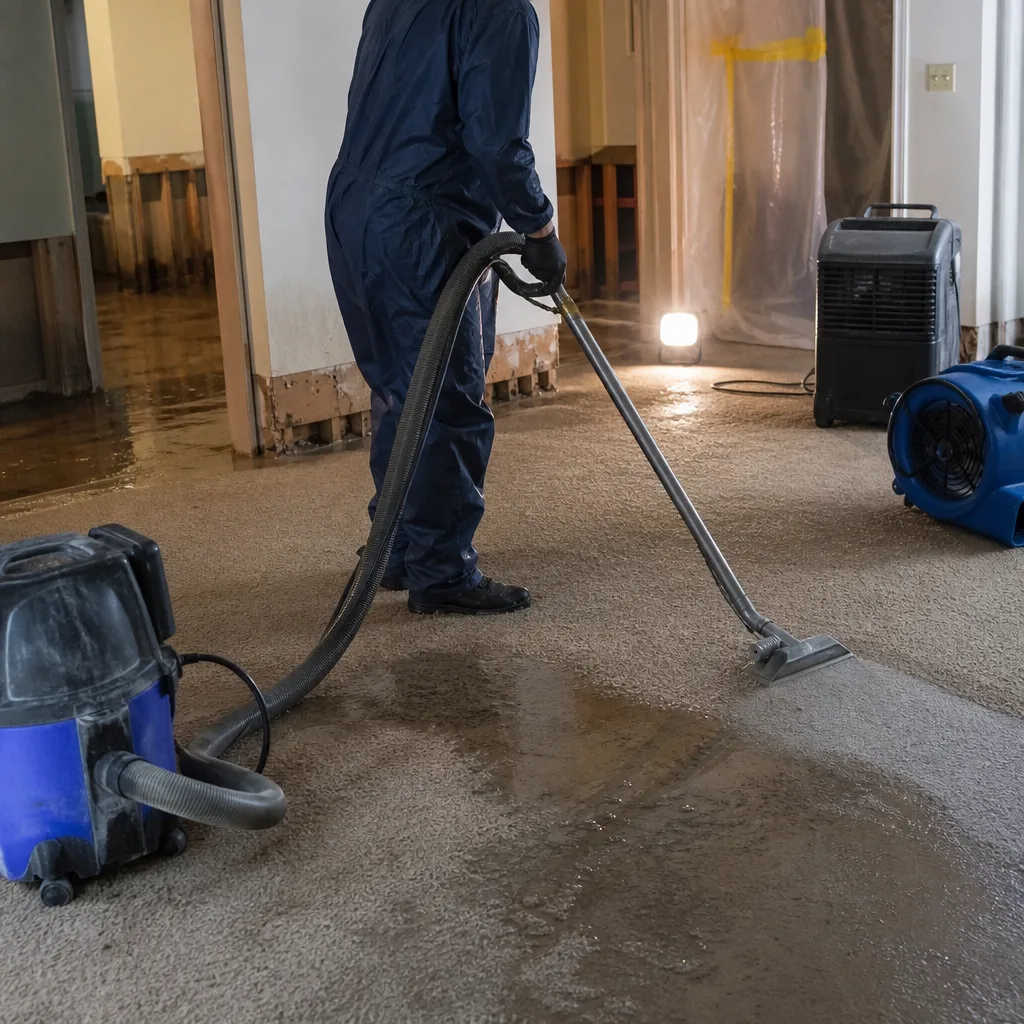
We pull standing water immediately with truck-mounted extraction units and portable extractors. If a roof opening or broken window is involved, we board up and tarp on the same visit so no more water gets in.
Drying & Dehumidification
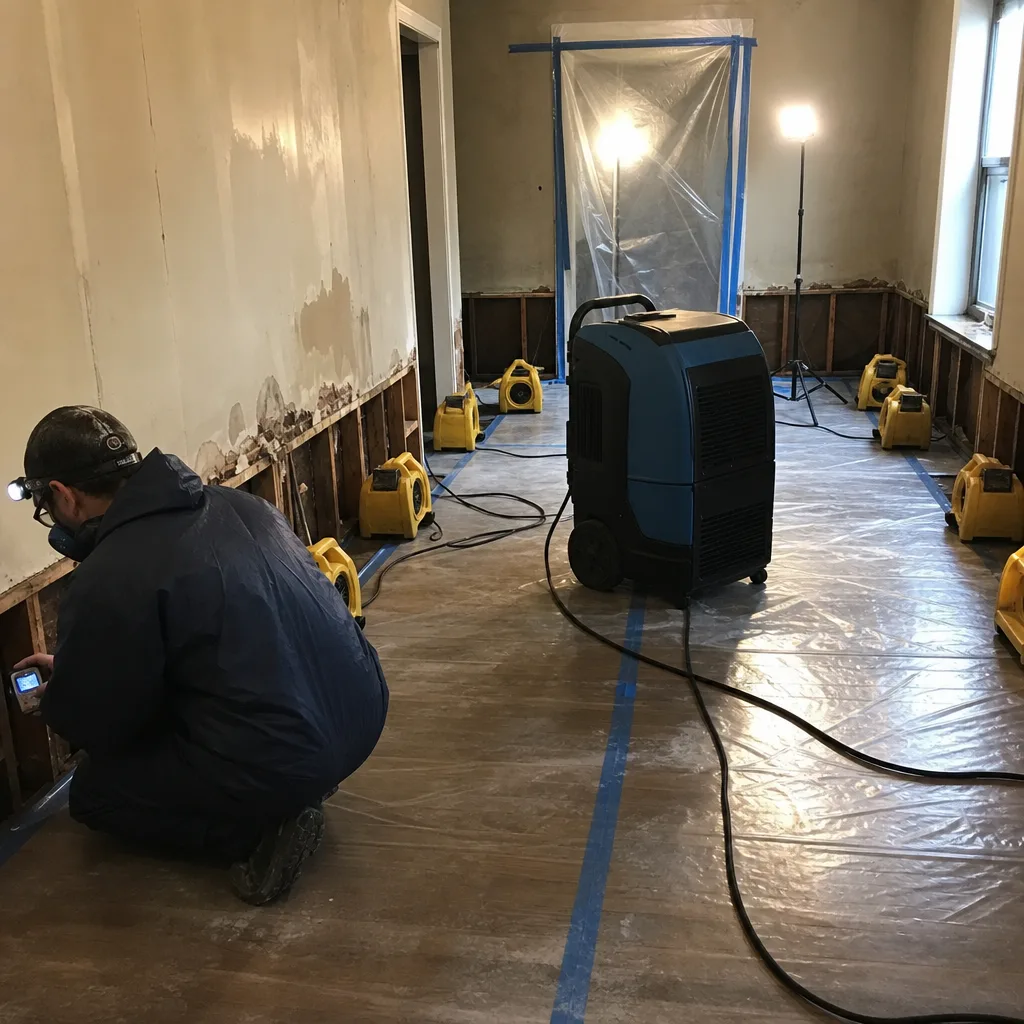
Dri-Eaz, Phoenix, and B-Air air movers and dehumidifiers are placed according to the moisture map, not scattered at random. Daily readings are logged until the dry standard is met, and the log goes to you and your insurer.
Cleaning & Sanitization
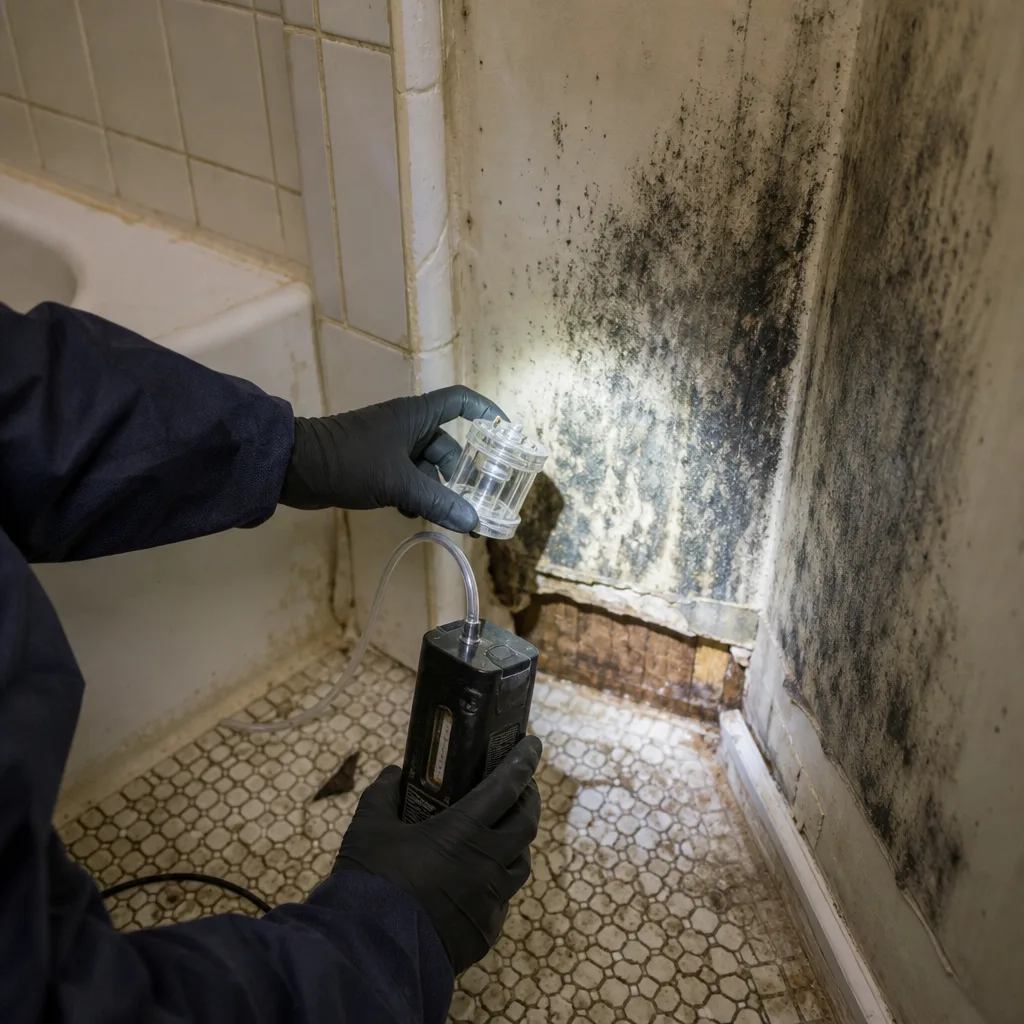
HEPA air scrubbers clean the air while we address contamination on surfaces. In Hell’s Kitchen’s older buildings, plaster and lath often need antimicrobial treatment before drying finishes, because the material holds moisture longer than drywall.
Specialty Treatment
For sewer backup in basement restaurants or storm flooding that breached street level, we run category 3 protocols: containment, removal of saturated porous materials, and disinfectant application on all affected food-contact and prep surfaces.
Repairs & Restoration
We rebuild what was removed, from drywall and plaster to flooring and paint, and we do it with the same crew that handled the emergency. When we hand you the keys, the job is finished, not handed off.
Need Emergency Storm & Disaster Restoration in Hell’s Kitchen Now?
Crews minutes away, answering live 24 hours a day. The sooner we start, the less it costs.
Working With Your Insurance Company
Insurance claim handling in storm and disaster restoration turns on what you can document from the first hour. We photograph every affected room before anything is moved, record moisture readings at each stage, and build a line-item scope that matches your carrier’s standard. Our team communicates directly with your adjuster, which means you don’t have to carry messages between Floodline Restoration Co. and the insurance desk. Most importantly, we don’t inflate scope to pad a claim, and we don’t cut corners to fit a lowball. The written scope we agree on before work starts is the scope we follow.
What We Provide Your Insurer
- Thorough documentation of the loss
- Photos of all damage, room by room
- Moisture readings and drying logs
- A detailed, line-item scope of work
- Direct coordination with your carrier
Built for Hell’s Kitchen’s Loss Calendar
Storm and disaster restoration in Hell’s Kitchen follows a seasonal rhythm that’s specific to this neighborhood’s weather and building stock. January and February bring deep freezes that hit the uninsulated exterior pipe chases in pre-war tenements hardest. When a steam supply line or water supply pipe fails during a hard freeze, the building’s radiator heat pushes moisture into plaster and wood joists immediately, and the clock toward mold starts while the pipe is still leaking. Spring thaw brings basement seepage and the first signs of roof damage from winter ice. By April, we’re tarping roofs where freeze-thaw cycles opened new seams in aging parapets.
Summer thunderstorm season is different. Hell’s Kitchen sits close to the Hudson River and has an almost entirely impervious streetscape, which means intense rain events overwhelm combined sewer lines. That translates to sewer backup in basement-level units and restaurant prep areas, especially along 9th Avenue. Fall brings nor’easters with wind-driven rain that finds every weakness in a 1920s parapet or flashing seam. The pattern is consistent: the older the building and the closer to the river, the more likely a routine storm becomes a restoration claim.
One local pattern deserves its own warning. When a restaurant kitchen fire on the ground floor triggers a retrofitted sprinkler head, water flows freely through original, unblocked wood-joist bays into second- and third-floor residential apartments. This is the scenario our crews encounter repeatedly on blocks like West 46th and along 9th Avenue, where a seemingly contained commercial event routinely becomes a multi-unit residential claim by the time our first truck arrives. You can’t stop the sprinkler system from doing its job, but you can start extraction before the water migrates further.
Storm & Disaster Restoration Across Hell’s Kitchen’s Neighborhoods
Hell’s Kitchen isn’t one uniform grid. The loss patterns vary by block, and our crews know the difference. Along Restaurant Row on West 46th Street between 8th and 9th Avenues, ground-floor commercial kitchen fires and burst plumbing lines dominate, with water and soot traveling vertically through original wood-joist bays into residential units above. The 9th Avenue corridor, home to the International Food District, runs the same mixed-use vertical damage pattern block after block, with basement prep areas that are also the low point for sewer backup during summer storms.
West of 10th Avenue, closer to the Hudson River, the older tenement stock tends to have more wind exposure, which means roof tarping and emergency board-up calls spike with every nor’easter. Blocks east of 8th Avenue see fewer ground-floor commercial spaces but the same aging plumbing infrastructure, so frozen pipe bursts and steam line ruptures are the dominant winter pattern. The residential side streets between 44th and 53rd Street have some of the oldest unlined pipe chases in the neighborhood, and that’s where a third-floor pipe failure most often becomes a second- and first-floor restoration claim.
We also respond regularly to the basement-level units and converted ground-floor commercial spaces throughout the 10036 and 10019 zip codes. These are the first places to flood during an intense rain event, and they are almost always the last places to dry if extraction doesn’t start immediately.
Specialized Storm & Disaster Restoration Services We Offer in Hell’s Kitchen
Storm Damage Cleanup
Wind-driven rain through a failing parapet or a broken skylight on a pre-war tenement saturates plaster ceilings and wood joists quickly. We remove the wet materials, dry the structure, and treat for mold before it colonizes. In Hell’s Kitchen’s older buildings, the plaster itself often can’t be saved once it’s soaked beyond the 24-to-36-hour window.
Emergency Board-Up
Broken windows and compromised doors on ground-floor commercial spaces or upper residential units need board-up immediately, both to stop further water entry and to secure the building. Our crews carry plywood, fasteners, and the right tools to secure openings on the same visit. A tarp on a rotting parapet corner won’t hold against Hudson River wind unless it’s fastened properly, and that’s the failure we see most often from handyman work.
Flood Damage Restoration
Storm flooding and sewer backup in basement-level Hell’s Kitchen units require category 3 water protocols: containment, removal of saturated porous materials, and disinfection. We run the same Dri-Eaz, Phoenix, and XPOWER equipment on these jobs and keep drying logs until the dry standard is met.
Roof Tarping
The parapets on 1920s tenements are the weakest point in any wind event. We tarp roof openings with fasteners that hold against river wind, not just folded edges and hope. When a tarp fails at the corners, water re-enters the building and re-wets ceilings that were already drying, doubling the cost and the timeline.
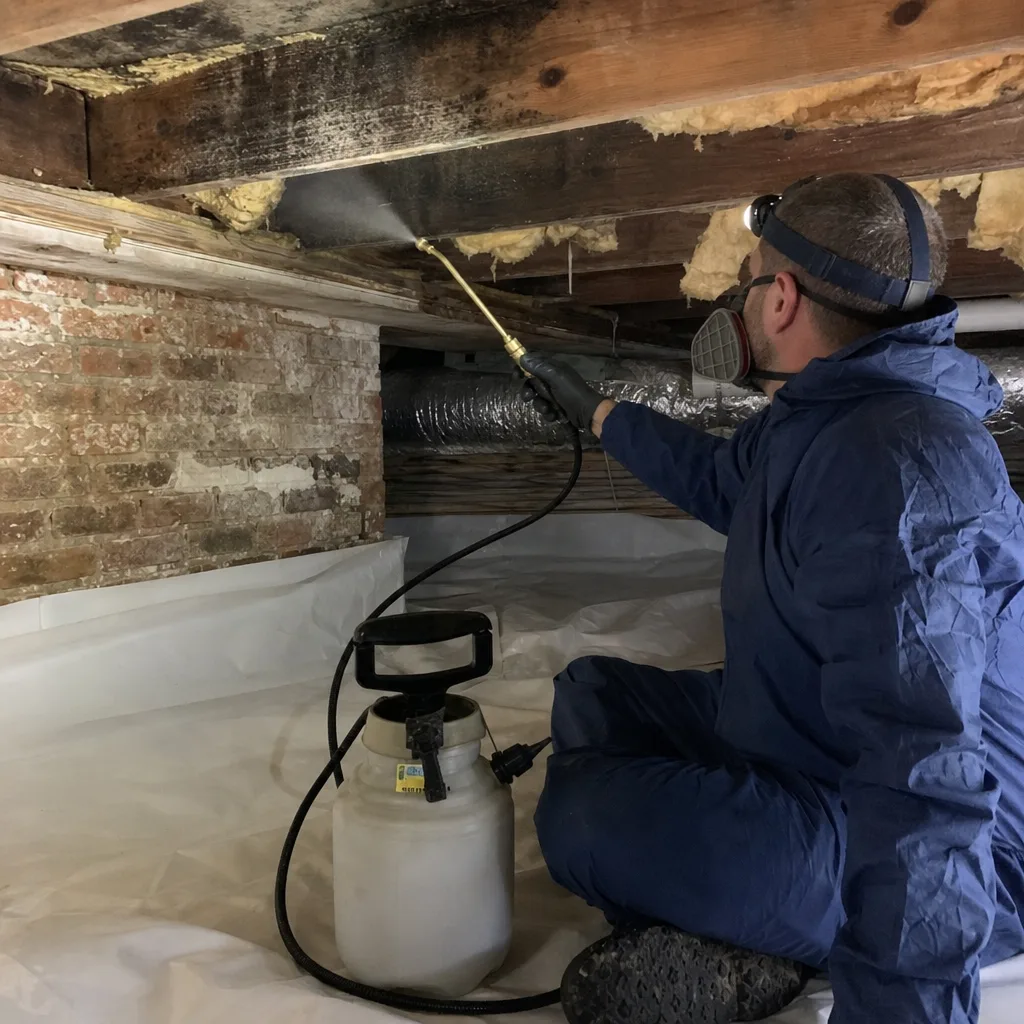
Debris Removal
Fallen brick, broken glass, and storm-blown debris on sidewalks and rooftops need to come out before they cause more damage. We remove it safely, document it for your carrier, and move on to the structural work.
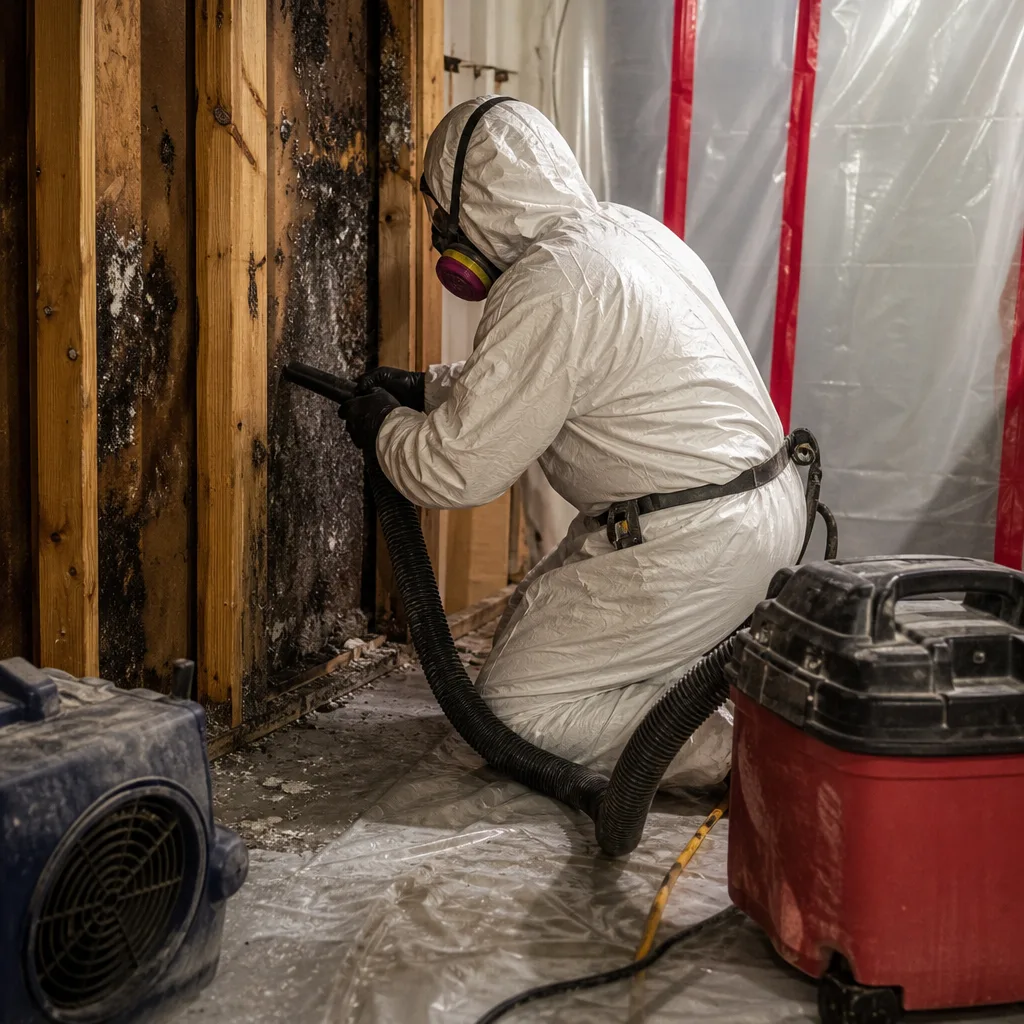
Wind Damage Repair
Nor’easter winds peel back flashing, tear open old roof seams, and push water into exterior walls. We repair the damage at the source, then address the interior drying and restoration.
What happens when you call
- 1
A real person answersNo phone trees - you reach a local pro.
- 2
You get an upfront price rangeHonest numbers before anyone is dispatched.
- 3
A background-checked tech heads outLicensed & insured, dispatched right away.
- 4
You approve before work beginsNothing starts until you say go.
Storm & Disaster Restoration Costs in Hell’s Kitchen, NY
A standard water extraction and structural drying job in a Hell’s Kitchen apartment, the kind you’d expect after a burst steam pipe or a storm-driven roof leak, typically runs $3,200 to $5,800 when it’s caught within the first 24 hours. If the water has traveled through multiple floors and soaked plaster and joists, that range moves to $7,500 to $11,800. Fire damage restoration on a mixed-use building, where soot and water spread through multiple units, starts around $6,500 for a contained kitchen fire and can reach $24,000 or more for a full multi-floor restoration.
Emergency board-up and roof tarping alone usually runs $450 to $1,100 depending on access and the size of the opening. These numbers are Hell’s Kitchen’s market. Pre-war buildings with original plaster and lath cost more to dry than modern drywall construction because the materials hold water longer and often require antimicrobial treatment or removal. Insurance typically covers storm and fire damage, less your deductible, but it matters who handles the claim. We work directly with your adjuster and bill the carrier directly. You never front the money and wait for reimbursement. Call (917) 924-4221 for a free visual inspection and a written scope before any work starts. Estimates are free.
We Also Serve Cities Near Hell’s Kitchen
Our crews regularly respond across the neighboring area, including Fairview, Harrison, East Bronx, and Hunts Point. If your property sits in one of these nearby communities, the same live dispatch and 45-minute response commitment applies. Call (917) 924-4221 and a real person will answer.
Hell’s Kitchen Storm & Disaster Restoration Questions, Answered
Why does a kitchen fire on 9th Avenue almost always become a third-floor apartment flood?
Because the sprinkler system and fire hoses put hundreds of gallons of water through original unblocked wood-joist bays into the apartments directly above. The water travels laterally through the joist bays and vertically through unsealed pipe chases before the fire department finishes rolling hoses. That’s why we treat every commercial kitchen fire on 9th Avenue as a multi-floor restoration claim from the moment we arrive. Call (917) 924-4221 if you’re living above a restaurant fire, and we’ll start moisture mapping on every floor, not just the kitchen.
How fast do we need to start water extraction after a steam pipe burst on a Hell’s Kitchen block?
Within the first 24 to 36 hours, because the building’s own radiator heat compresses the mold colonization window. A steam supply line rupture inside an uninsulated exterior chase feeds category 2 water through wood-joist bays, and every hour of delay widens the affected area and the remediation scope. Call us at (917) 924-4221 and extraction can be running the same visit, because our dispatchers are live around the clock.
Is category 3 water common in Hell’s Kitchen storm flooding, or is it mostly clean rain?
In basement-level units and restaurant prep areas near the Hudson River, category 3 is common during intense summer rain events because the neighborhood’s impervious streetscape overwhelms combined sewer lines. That means sewer backup mixed with storm water, and it requires containment, removal of saturated porous materials, and disinfection, not just drying. Call (917) 924-4221 and we’ll identify the water category on the first visit.
Do older Hell’s Kitchen tenements need roof tarping differently than newer Midtown buildings?
Yes. The 1920s-era parapets on Hell’s Kitchen tenements are the weakest point in any wind event, and a tarp folded over the edge without proper corner fastening will peel back when Hudson River wind hits it. That re-wets ceilings that were already drying and doubles the restoration cost. We tarp with fasteners that hold against river wind. Call (917) 924-4221 for emergency tarping before the next rain comes.
Can we dry out a restaurant kitchen after a sewer backup without closing the whole dining room?
Sometimes, if the contamination is contained to the prep area and the dining room floor stayed dry, but food-contact surfaces and prep tables saturated with category 3 water require full pack-out and disinfection. Skipping that step means a full gut-out later. We’ll give you an honest read on the first visit and tell you exactly what can be saved. Call (917) 924-4221 for a free visual inspection.
How long does structural drying take in a pre-war Hell’s Kitchen building?
Most pre-war plaster and lath structures in Hell’s Kitchen take three to five days to reach the dry standard, depending on how far the water traveled and whether the radiator heat has been pushing moisture through the bays. We log daily readings with hygrometers and give the moisture log to you and your carrier. The dry standard is a number, not a guess, and we meet it before we rebuild.
Can we stay in our apartment during storm damage restoration?
In many cases, yes, especially when containment is set on the affected floor and HEPA air scrubbers are running. If the water was category 3 or the fire damage involved significant soot migration, we’ll recommend temporary relocation for your health. We’ll give you a straight answer on the first visit, not a worst-case scenario. Call (917) 924-4221 and we’ll walk you through it.
What should we do in the first 30 minutes after storm water or a pipe burst?
Shut off the water main if you safely can, move valuables out of the water path, and call (917) 924-4221. Do not try to remove saturated plaster yourself, and don’t wait to see how far the stain spreads. In Hell’s Kitchen’s wood-joist buildings, the water is already moving laterally before you see any damage. The first call is the one that matters.
Serving Hell’s Kitchen, NY - Our Local Coverage Area
We’re based in the Hell’s Kitchen area and know this community well. Use the map below to see our service coverage - if you’re nearby, we can almost certainly help.
Built for Hell’s Kitchen, Not a Franchise Template
Every block in this neighborhood has a different loss profile, but the common thread is the pre-war construction underneath. Our crews know how water moves through original wood-joist bays, what a rotting parapet means for tarping, and why a ground-floor kitchen fire on Restaurant Row becomes a third-floor apartment claim. We’re not a national franchise dispatching from another state. We’re Storm & Disaster Restoration crews who work in Hell’s Kitchen daily, and we answer the phone with a person.
When you call Storm & Disaster Restoration in Hell’s Kitchen through Floodline Restoration Co. of Manhattan, you get a live dispatcher, a certified crew in 45 minutes or less, and a written 90-Day Done Right Promise on every job. Curt Bowman founded this company around a dispatch board, not a sales desk, and that’s how it still runs. Call (917) 924-4221 for a free estimate. We’ll be there when we say.
Written by Curt Bowman, Owner at Floodline Restoration Co. of Manhattan, serving Hell’s Kitchen and New York City since 2010.