
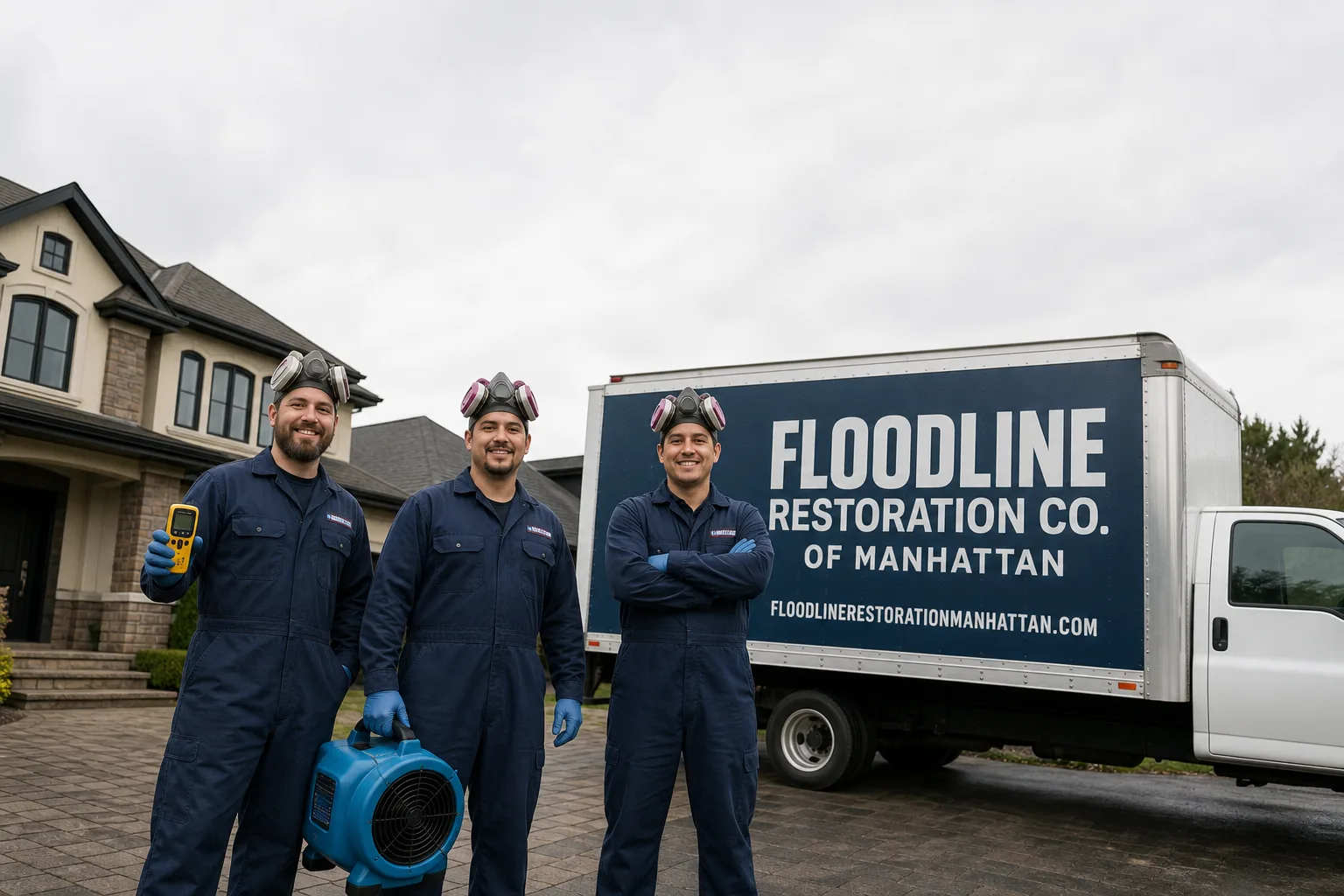
Free visual inspection and a written scope of work before any mitigation begins - photos, moisture readings, and drying logs go in your claim file
The scope we write is the scope we bill. Anything new gets shown to you, in writing, before we touch it.






 Before
 After
After Before
 After
After Before
 After
After24/7 Emergency Storm & Disaster Restoration in Lawrence
Storm damage in Lawrence doesn’t keep business hours, and neither do we. Our crews are on call around the clock, with a live dispatcher answering at (917) 924-4221 any hour, any day. When a nor’easter pushes saltwater over the bulkheads or a hurricane track lines up with Jamaica Bay, the first hour determines whether you’re drying hardwood or replacing it. We’ll get a certified crew to your Lawrence home fast, run a free visual inspection, and start extraction on the same visit. The line the water left is where we start.
We cover every phase of Storm & Disaster Restoration in Lawrence, from emergency board-up and roof tarping to structural drying and rebuild. One team handles it all, so you never get handed off to a second crew that’s never seen your walls.
Understanding Storm & Disaster Restoration Severity in Lawrence Properties
Storm damage in Lawrence carries a severity signature most restoration companies don’t read correctly. The village sits on a low-lying peninsula between Jamaica Bay to the north and Atlantic barrier beaches to the south. That means floodwaters here are typically Category 3: saltwater carrying sewage, fuel, marine sediment, and the kind of aggressive dissolved solids that freshwater systems never deliver. Moisture mapping behind plaster-and-lath walls shows saltwater migrates differently than freshwater, wicking higher into masonry and corroding metals at a rate that surprises crews trained only on inland jobs.
Lawrence’s housing stock compounds the problem. The majority of homes were built between the 1920s and 1960s: Tudor revivals, colonials, and large estates with plaster walls, masonry foundations, and early-generation wiring. Plaster absorbs and holds flood moisture for weeks, and hidden cavities behind it go unread without thermal imaging and in-wall probes. We log daily readings until the dry standard is met, not until the surface looks dry. Salt-compromised wiring below the first-floor ceiling is presumptively failed in this area, which we’ll explain below.
Why Lawrence Property Owners Choose Floodline Restoration Co. of Manhattan
- 45-minute response commitment to Lawrence. We know the fastest routes from the Far Rockaway corridor and Rockaway Turnpike, and we dispatch local crews immediately.
- A live person answers, 24/7. No answering service, no callback queue. You’ll speak to a dispatcher at two in the morning, not a recording.
- IICRC-certified crews, including WRT and FSRT certification. Our technicians train to the standards that matter for saltwater flood work and fire residue, not a checklist.
- Free visual inspection with no obligation. We’ll walk the damage, tell you what needs doing, and put the scope in writing before work begins.
- Direct insurance billing. We bill your carrier directly and send documentation adjusters actually accept in Nassau County.
- One crew from extraction to rebuild. The same team that reads the moisture map on day one rebuilds the walls on day thirty.
Founded in 2010 by Curt Bowman, Floodline Restoration Co. has built its name on a simple standard: done right, and backed in writing. Our 90-Day Done Right Promise, the Keystone Standard, is in every contract. If it’s not right, we make it right. No arguing.
Our Storm & Disaster Restoration Process
Inspection & Assessment
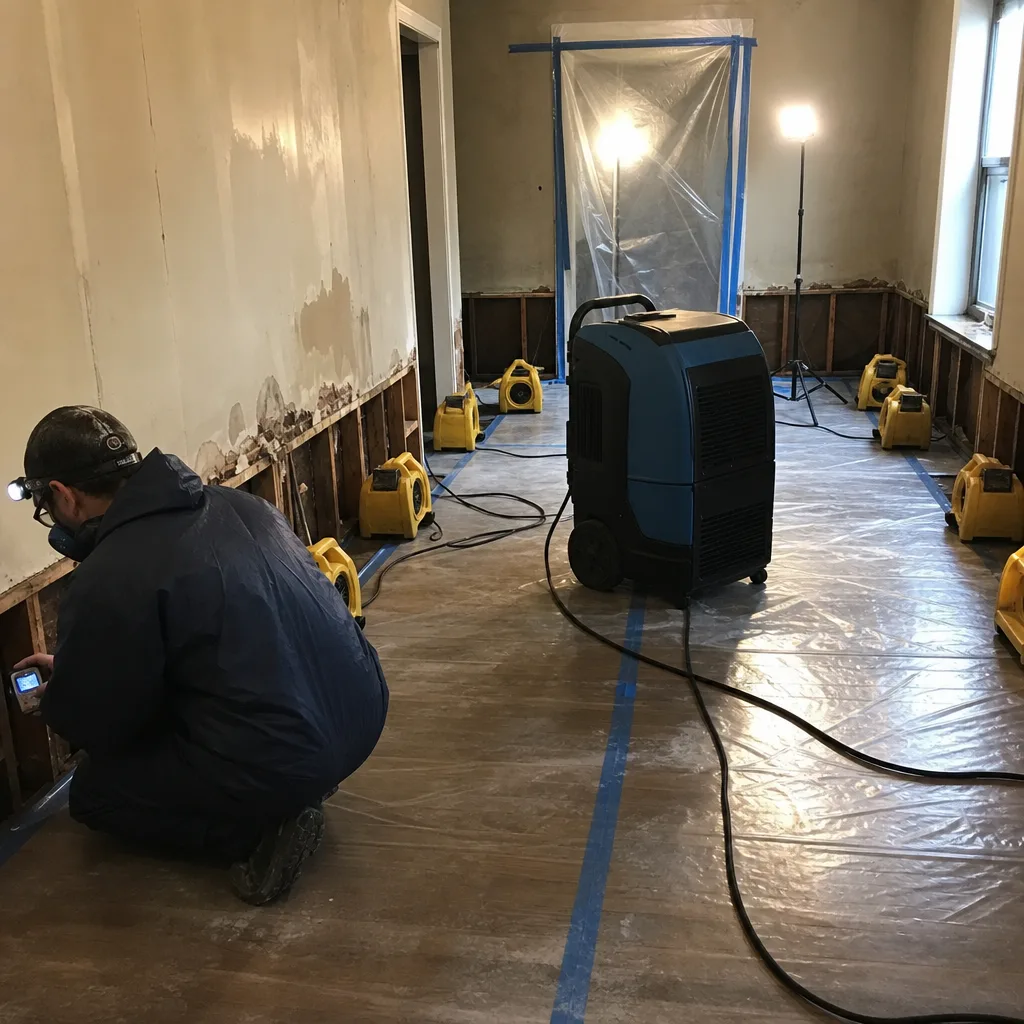
We map the full extent of damage with thermal imaging and moisture probes, reading behind plaster, under floors, and inside wall cavities. For Lawrence homes, we identify saltwater exposure zones and flag any wiring that may fall under post-Sandy replacement standards.
Extraction & Stabilization
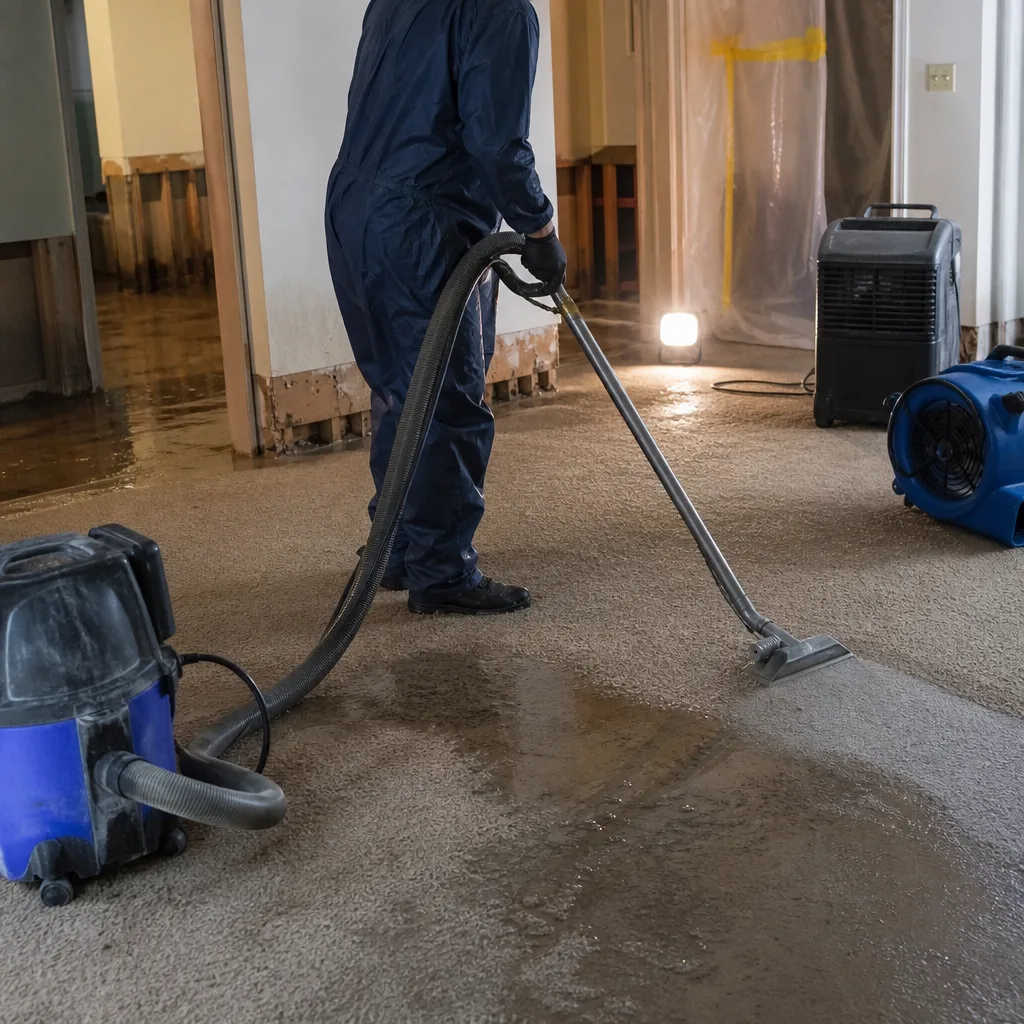
Standing water comes out first using truck-mounted extraction units, then we board up openings, tarp roof damage, and secure the structure against further weather. In Lawrence’s dual-bay exposure, stabilization has to happen fast because the next tide or squall is never far.
Drying & Dehumidification
We run Dri-Eaz, Phoenix, XPOWER, and B-Air air movers and dehumidifiers inside a calculated drying chamber. For plaster and masonry homes, we extend drying times and log daily moisture readings until the dry standard is met, not the visible surface.
Cleaning & Sanitization
Salt residue, sewage contaminants, and storm debris are removed with professional-grade cleaning systems and HEPA air scrubbing. We treat surfaces with antimicrobials appropriate to the category of water involved.
Saltwater-Specific Treatment
This step is unique to coastal storm work. We flush salt from structural cavities where possible, assess corrosion on fasteners and framing, and document any electrical components that require replacement per Nassau County AHJ standards. Salt is chemically different from freshwater damage; your restoration plan has to reflect that.
Repairs & Restoration
We rebuild what the storm took: drywall, plaster, flooring, trim, millwork, and electrical. For Lawrence’s older homes, we match materials to the original character, not just the square footage. The same crew that extracted the water finishes the rebuild.
Need Emergency Storm & Disaster Restoration in Lawrence Now?
Crews minutes away, answering live 24 hours a day. The sooner we start, the less it costs.
Working With Your Insurance Company
Storm damage claims in Lawrence move faster when the documentation is built the right way from the first hour. We photograph everything before we move anything, log moisture readings daily, and write line-item scopes that match the exact format Nassau County adjusters expect. You won’t play messenger between our team and your carrier. We bill directly, we talk to your adjuster directly, and we hand you a written scope before any work starts. That’s a square deal: no surprises on the bill.
What We Provide Your Insurer
- Thorough documentation of the loss
- Photos of all damage, room by room
- Moisture readings and drying logs
- A detailed, line-item scope of work
- Direct coordination with your carrier
Built for Lawrence’s Loss Calendar
Lawrence’s storm damage season isn’t a single storm; it’s a calendar of recurring exposure. January deep freezes burst supply lines in older homes along Broadway and Central Avenue, sending freshwater through plaster ceilings. Spring thaw and heavy rain back up storm drains along Rockaway Turnpike, pushing Category 2 water into basements and crawlspaces. Summer brings thunderstorm flash flooding when torrential rain meets the peninsula’s near-sea-level elevation, leaving little margin for drainage. And from late summer through fall, nor’easters and hurricane tracks line up on Jamaica Bay, driving Category 3 saltwater over bulkheads and into first floors.
Every one of those events needs a different restoration approach. A January pipe burst in a plaster-walled colonial is a freshwater job; a September storm surge into the same house is saltwater chemistry. Our crews train for both, and our equipment list reflects it.
Storm & Disaster Restoration Across Lawrence’s Neighborhoods
Lawrence’s neighborhoods each present a different restoration profile. The Rockaway Turnpike corridor, with its mix of 1930s Tudors and larger post-war colonials, sees the worst of the surge when Jamaica Bay overtops, and those homes’ masonry foundations absorb saltwater that wicks upward for days. The Broadway and Central Avenue streets, further from the bay but still under 10 feet elevation, contend with storm-drain backup and wind-driven rain forcing water under entry doors. In the village’s estate section near the Lawrence Yacht & Country Club, large homes with custom millwork, parquet floors, and plaster crown molding demand material-matched restoration rather than standard replacement. And the homes east of the Far Rockaway line, closer to the Atlantic exposure, take direct wind and rain on east-facing elevations, leading to siding loss, roof damage, and window intrusion.
We know the routes. We know which blocks drain slowly after a nor’easter and which basements hold water for days. That’s not something a franchise template can teach; it comes from running jobs in Lawrence and standing behind the work.
Specialized Storm & Disaster Restoration Services We Offer in Lawrence
Flood Damage Restoration
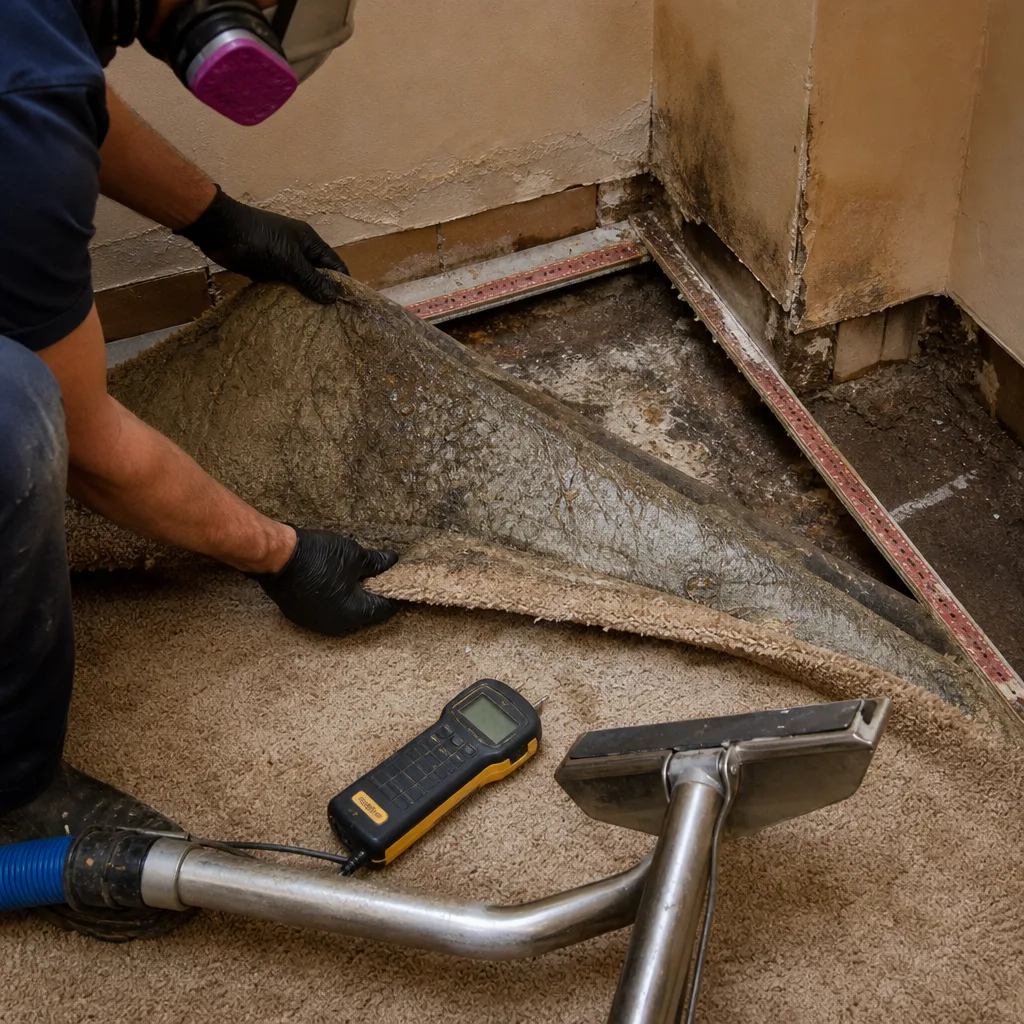
Saltwater flood restoration in Lawrence is different from freshwater work, and we treat it that way from the first hour. We extract using truck-mounted systems, map moisture behind plaster and masonry, and account for salt’s aggressive corrosion of fasteners, framing hardware, and electrical systems. In Lawrence’s Rockaway Turnpike corridor, our crew stabilized a 1930s Tudor after a nor’easter pushed a Category 3 storm surge over the bulkheads. We ran a Dri-Eaz structural drying system inside a full containment barrier, mapped moisture behind the plaster-and-lath, and coordinated pack-out of custom millwork before the salt-tainted wiring was flagged for replacement per Nassau County AHJ standards.
Storm Damage Cleanup
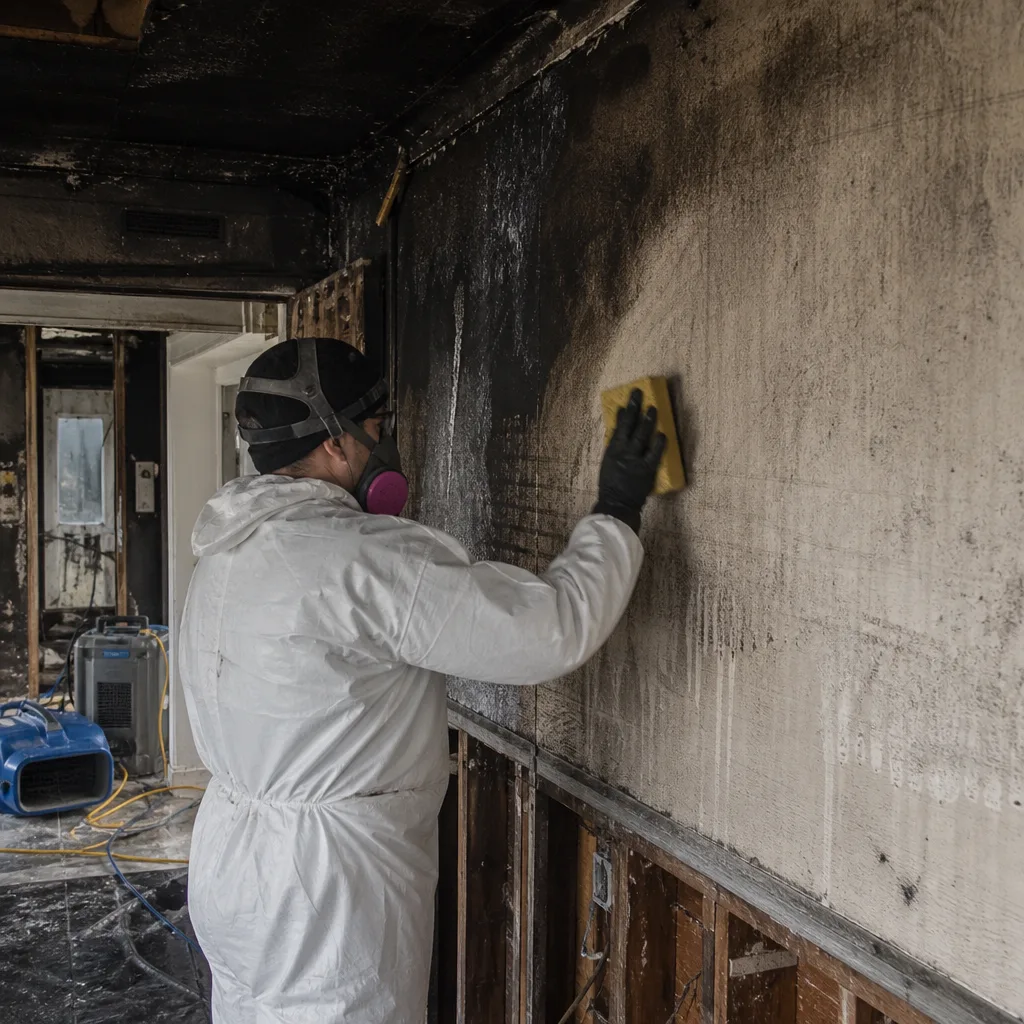
Downed limbs, wind-blown debris, and scattered building material are the visible aftermath of every Lawrence storm. We clear the site, document what was damaged versus what blew in, and prepare the property for restoration. No debris leaves the property until your adjuster has a chance to see it documented, and we handle the disposal.
Emergency Board-Up
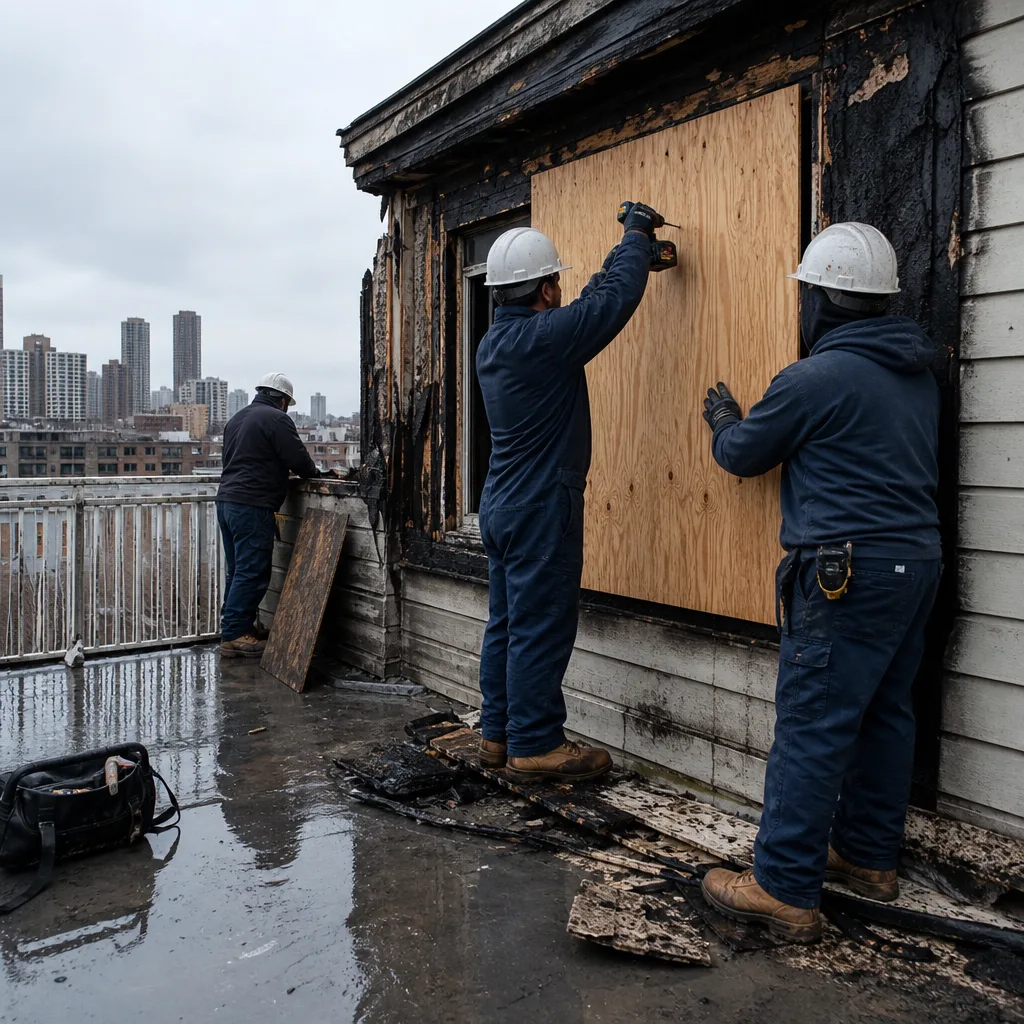
A broken window or breached door on a Lawrence winter night is an open invitation to more damage. We board up securely, using materials that won’t further mar your trim or siding, and we do it fast. Security is part of restoration: a home left open to the next storm or to unauthorized entry only compounds the loss.
Roof Tarping
Wind damage to Lawrence roofs requires immediate water control. We tarp damaged sections using professional-grade materials and fastening methods that hold through the next nor’easter, not just until morning. A tarp that blows off in the next storm doubles your damage.
Debris Removal
Storm debris in Lawrence can be heavy, mixed, and sometimes hazardous: shingles, broken glass, soaked insulation, and salt-laden sediment. We remove it safely, separate what can be salvaged from what can’t, and haul it away. You don’t lift a thing.
What happens when you call
- 1
A real person answersNo phone trees - you reach a local pro.
- 2
You get an upfront price rangeHonest numbers before anyone is dispatched.
- 3
A background-checked tech heads outLicensed & insured, dispatched right away.
- 4
You approve before work beginsNothing starts until you say go.
Storm & Disaster Restoration Costs in Lawrence, NY
In Lawrence, emergency board-up and roof tarping typically runs $450 to $1,200 depending on the number of openings and roof sections affected. Flood extraction and initial drying for a first-floor event in a standard colonial usually falls between $3,500 and $8,500, with the higher end reflecting saltwater complexity and plaster construction. Full restoration including rebuild, material matching, and electrical replacement often lands between $18,000 and $65,000 for a serious surge event, though every job gets scoped in writing before we start. Insurance covers most coastal storm claims under standard homeowners policies, with flood insurance applying to surge events. The free visual inspection is the fastest path to a firm number: call (917) 924-4221 and we’ll walk the property before any work is authorized.
We Also Serve Cities Near Lawrence
Our crews respond daily across the Five Towns and surrounding communities: Lawrence, Cedarhurst, Woodmere, Inwood, and Far Rockaway. If you’re nearby and watching water rise, call. We’ll be there when we say.
Serving Lawrence, NY - Our Local Coverage Area
We’re based in the Lawrence area and know this community well. Use the map below to see our service coverage - if you’re nearby, we can almost certainly help.
Lawrence Storm & Disaster Restoration Questions, Answered
How does saltwater storm surge from Jamaica Bay differ from freshwater flooding in Lawrence?
Saltwater is chemically aggressive: it corrodes metals, accelerates rot in framing, and leaves conductive residue in electrical systems long after visible water is gone. Freshwater floods can often be dried and cleaned, but saltwater intrusion in Lawrence requires flushing, corrosion assessment, and often replacement of wiring and connectors below the waterline. Our crews treat every Jamaica Bay surge as a saltwater event by default.
What’s the maximum time before mold growth starts in a Lawrence flood-damaged home?
Mold colonization typically begins within 24 to 48 hours in Lawrence’s humid coastal climate, especially in the slow-draining basements and crawlspaces common across the village. Salt residue can slow some species slightly, but the warmth and moisture accelerate others. The first 24 hours are the critical window for extraction and drying equipment running. Call (917) 924-4221 as soon as water enters.
Do I need to remove custom millwork or plaster crown molding after a flood in Lawrence?
Not automatically. In many of Lawrence’s older homes, plaster and custom millwork can be saved through targeted structural drying rather than automatic demo. We use in-wall moisture probes and thermal imaging to determine what’s actually saturated, then dry strategically. Where material is genuinely too damaged, we match it to the original profile and finish rather than swapping in standard off-the-shelf trim.
Why does Lawrence’s geography make structural drying slower than inland areas?
Lawrence sits on a low-lying peninsula between Jamaica Bay and the Atlantic, with much of the village under 10 feet elevation. Storm surge can push water in from both sides, trapping it and slowing natural drainage. High humidity off the water slows evaporation, and masonry foundations retain moisture for weeks. We extend drying schedules and run daily moisture readings until the dry standard is met, not until the surface feels dry.
What’s the category of floodwater that typically hits Lawrence homes during nor’easters?
Nor’easter surge into Lawrence is typically Category 3: water carrying sewage, marine sediment, fuel, and salt. It’s the most hazardous classification under IICRC standards, requiring full containment, professional PPE, and aggressive decontamination. This is not a mop-and-fan job, and it should never be treated as one.
How fast can a crew actually get to my Lawrence home?
We commit to a 45-minute response window for Lawrence. Dispatch and scheduling are coordinated from our New York City office, and crews serving Lawrence locally are routed from the nearest assignment. A live person answers at (917) 924-4221 and starts the dispatch immediately.
Will my insurance cover saltwater storm surge damage in Lawrence?
Standard homeowners policies cover wind-driven rain and most storm damage, but flood surge from Jamaica Bay or the Atlantic requires a separate flood policy, typically through FEMA’s NFIP. We document every loss thoroughly, coordinate directly with your adjuster, and provide the line-item scope and photos insurers need. Whatever your coverage, we bill direct so you’re not out of pocket for the work.
What should I do in the first 30 minutes after storm water enters my Lawrence home?
Call us at (917) 924-4221 first. Do not enter standing water, especially in basements where the water may be energized by salt-compromised wiring or submerged appliances. If safe, shut off power at the main breaker. Take photos of the damage before anything moves, then leave the water alone. Extraction should start the same visit, and the sooner we’re running equipment, the less you lose.
Storm damage in Lawrence is a race against saltwater chemistry and the next tide, but it’s also a test of who you hire. We’re the company that starts at the floodline and doesn’t leave until the rebuild is done and the walls are dry. If you’re watching water rise on a Lawrence street tonight, call (917) 924-4221. We’ll answer live, and we’ll be there when we say.
Written by Curt Bowman, Owner at Floodline Restoration Co., serving Lawrence and the Five Towns since our founding in 2010.