
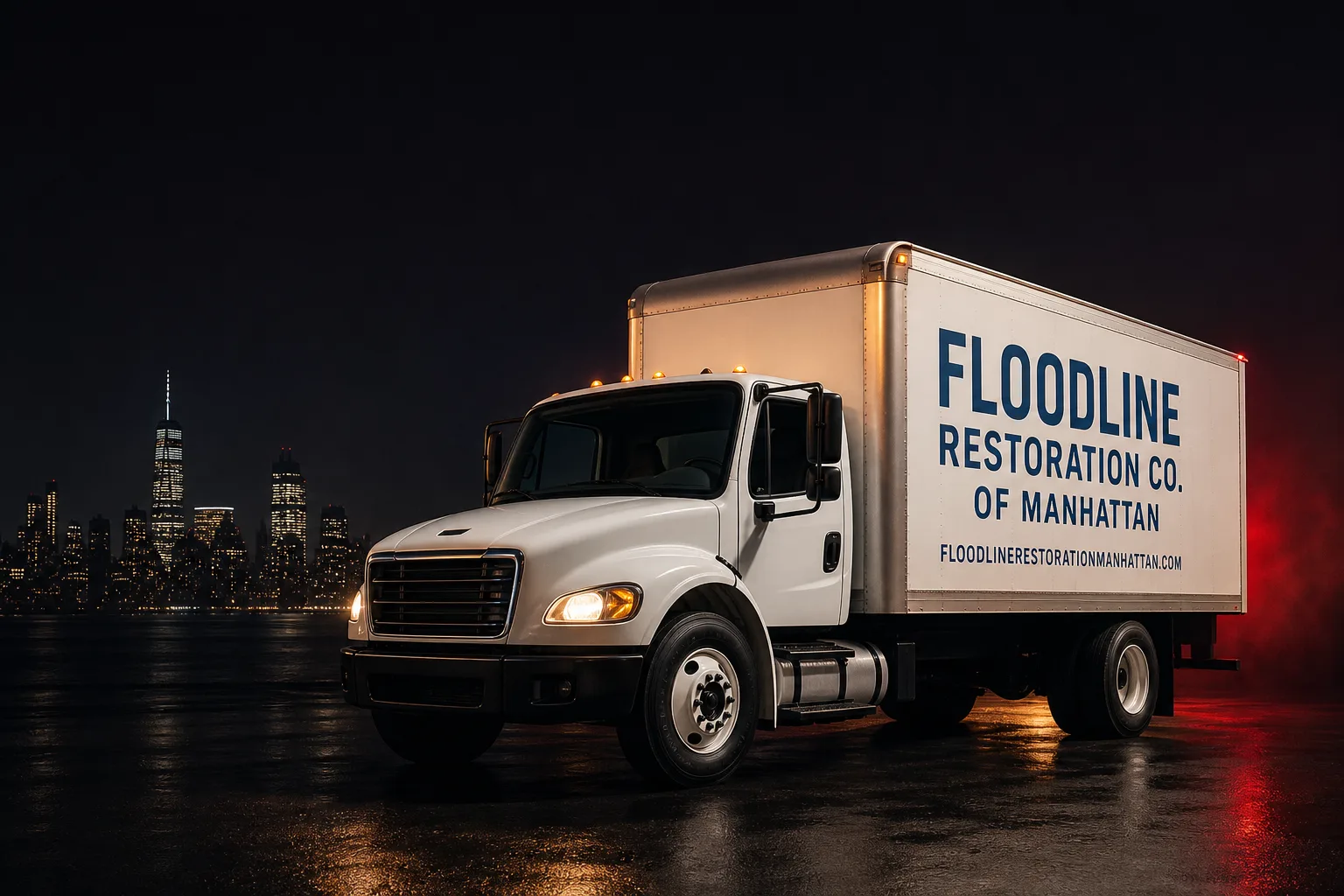
Free visual inspection and a written scope of work before any mitigation begins - photos, moisture readings, and drying logs go in your claim file
The scope we write is the scope we bill. Anything new gets shown to you, in writing, before we touch it.






 Before
 After
After Before
 After
After Before
 After
After24/7 Emergency Storm & Disaster Restoration in Murray Hill
Storm damage in Murray Hill moves fast. A cracked drain stack on the 2nd Avenue tunnel corridor can fill three stacked bathrooms before a co-op board even replies to an email. Our Storm & Disaster Restoration crews are on call around the clock, and a live person answers at (917) 924-4221 no matter the hour. We dispatch directly into Murray Hill, not from a call center in another state, so extraction usually begins within 45 minutes of your call. The first hour determines whether you’re drying plaster or replacing it. We know this building stock. We know these boards. We’ll be there when we say.
Understanding Storm & Disaster Restoration Severity in Murray Hill Properties
Water damage in Murray Hill rarely stays in one apartment. The neighborhood’s prewar towers, built mostly between 1910 and 1945, stack 12 to 20 floors of units above cast-iron drain stacks and original steam risers. When a nor’easter drives rain into a failed roof membrane or a freeze cracks a supply line on the 14th floor, gravity does the rest. Category 2 water, which carries detergent, soil, or storm runoff, needs extraction, antimicrobial treatment, and accelerated drying within 24 to 48 hours before mold takes hold. Category 3 water, meaning sewage or floodwater from outside, requires containment, removal of affected porous materials, and disinfection. In Murray Hill’s tight service corridors and shared riser closets, moisture wicks through plaster and into neighboring units faster than in wood-frame construction. Our crews run Phoenix air movers and Dri-Eaz dehumidifiers with daily moisture readings logged until the dry standard is met, because without controlling humidity in those shared chases, you’re just drying half the stack while the other half keeps feeding water back in.
Why Murray Hill Property Owners Choose Floodline Restoration Co. of Manhattan
- 45-minute response commitment. A live dispatcher confirms the crew’s route to your Murray Hill building the moment you hang up, and extraction is running on the same visit.
- 24/7 live answer, never an automated system. At 2 a.m. during a February freeze, a person picks up. Not a recording. We’ve kept our dispatch board staffed that way since Curt Bowman founded the company in 2010.
- IICRC-certified crews. Our water restoration technicians hold WRT and ASD certifications, and our mold work is done under AMRT protocols. You can ask for credentials at the door; uniformed, background-checked techs carry them.
- Free visual inspection. Before any work begins, we walk the loss with you or your building super and explain exactly what we see, in plain words. No charge, no obligation.
- Direct insurance billing. We work with your carrier from the first photo to the final line item, so you’re not playing messenger between an adjuster and a crew.
- One team from extraction to reconstruction. The same Floodline Restoration Co. crew that reads the moisture map on day one rebuilds what needs rebuilding. No mid-job handoff to a subcontractor you’ve never met.
Our Storm & Disaster Restoration Process
Inspection & Assessment
We arrive, map the moisture, and identify the water category and source. Thermal imaging shows what’s wet behind plaster and under finished flooring before we touch a wall.
Extraction & Stabilization
Truck-mounted and portable extraction units pull standing water from floors, slab pockets, and lower-floor cavities. We stabilize any structural hazard, including wet ceilings and sagging plaster.
Drying & Dehumidification
Phoenix, Dri-Eaz, and XPOWER air movers plus Injectidry floor mats run continuously, with daily hygrometer readings logged until the dry standard is met and documented for your carrier.
Cleaning & Sanitization
Affected surfaces are treated with professional-grade antimicrobials. Category 3 water means porous material removal, full disinfection, and HEPA air scrubbing while we work.
Storm-Specific Treatment
For storm-driven losses, we address roof tarping, emergency board-up, and debris clearance alongside interior drying. A failed roof membrane in a Murray Hill tower means water travels from the roof deck to the lobby unless we stop it at the source.
Repairs & Restoration
We rebuild what we removed: plaster, flooring, cabinetry, paint. Every job closes with a written moisture log and the 90-Day Done Right Promise in your hands.
Need Emergency Storm & Disaster Restoration in Murray Hill Now?
Crews minutes away, answering live 24 hours a day. The sooner we start, the less it costs.
Working With Your Insurance Company
Most storm and water losses in Murray Hill trigger an insurance claim, and the process works better when documentation starts the first hour. We photograph every room, log moisture readings daily, and write a line-item scope of work that speaks your carrier’s language: code-compliant, industry-standard, and dated. You don’t carry paperwork back and forth. Our team communicates with the adjuster directly, meets them on site when needed, and answers their questions with the moisture log and drying documentation. The goal is a claim that closes without you fighting over what was wet and what wasn’t. For a square deal, that means a written scope agreed before work starts, not a surprise bill after the crew leaves.
What We Provide Your Insurer
- Thorough documentation of the loss
- Photos of all damage, room by room
- Moisture readings and drying logs
- A detailed, line-item scope of work
- Direct coordination with your carrier
Built for Murray Hill’s Loss Calendar
Murray Hill’s storm damage season runs on two tracks. The first is winter. Late-winter freeze-thaw cycles stress the aging pipe joints common in the neighborhood’s prewar buildings, producing a recurring spike in burst-pipe calls from February through March. A supply line that survived thirty winters lets go in the thirty-first, usually at 4 a.m. The second is the summer thunderstorm season and fall nor’easters. The neighborhood’s eastern avenues sit close enough to the East River that intense rain events regularly overwhelm the combined sewer system, producing basement and sub-basement backups in older buildings along 2nd and 3rd Avenues. We staff our dispatch board for both rhythms: more crews staged for interior freeze losses in late winter, more roof and exterior response during storm season. That’s not marketing. That’s a schedule built on forty-two years of watching the same buildings leak.
Storm & Disaster Restoration Across Murray Hill’s Neighborhoods
The 2nd and 3rd Avenue corridor between 36th and 38th Streets sits directly above and adjacent to the Queens-Midtown Tunnel approach. Local supers know the pattern: chronic heavy-vehicle vibration from tunnel traffic accelerates joint failures in aging cast-iron drain stacks. Sewer-backup and slow-drain water intrusion calls are disproportionately frequent on those blocks compared to quieter cross streets just half a block away. We responded to a late-night water intrusion in a prewar co-op on 37th Street near 3rd Avenue, where tunnel-traffic vibration had cracked a cast-iron waste stack. Our crew set up containment in the tight service corridor, extracted category 2 water from three stacked bathrooms, and ran Phoenix air movers with Injectidry floor drying mats until moisture readings returned to pre-loss condition. East toward the river, buildings face wind-driven rain off the East River during nor’easters, which pushes water into older window frames and roof edges. Along Park and Madison Avenues, the larger prewar doorman buildings often have deeper basements with sub-basement mechanical rooms, where sump failures and sewer backups pool before anyone notices. Each corridor has its own failure signature, and we read them the way an old mechanic reads an engine.
Specialized Storm & Disaster Restoration Services We Offer in Murray Hill
Flood Damage Restoration
Apartment floods in Murray Hill’s prewar towers demand more than a wet vac. Our crew extracts from finished floors, slab pockets, and the shared riser closets where moisture hides, then runs professional-grade air movers and dehumidifiers until the dry standard is met. We coordinate with your building super or management company from the first hour, because access in a doorman building means approvals, not just a key.
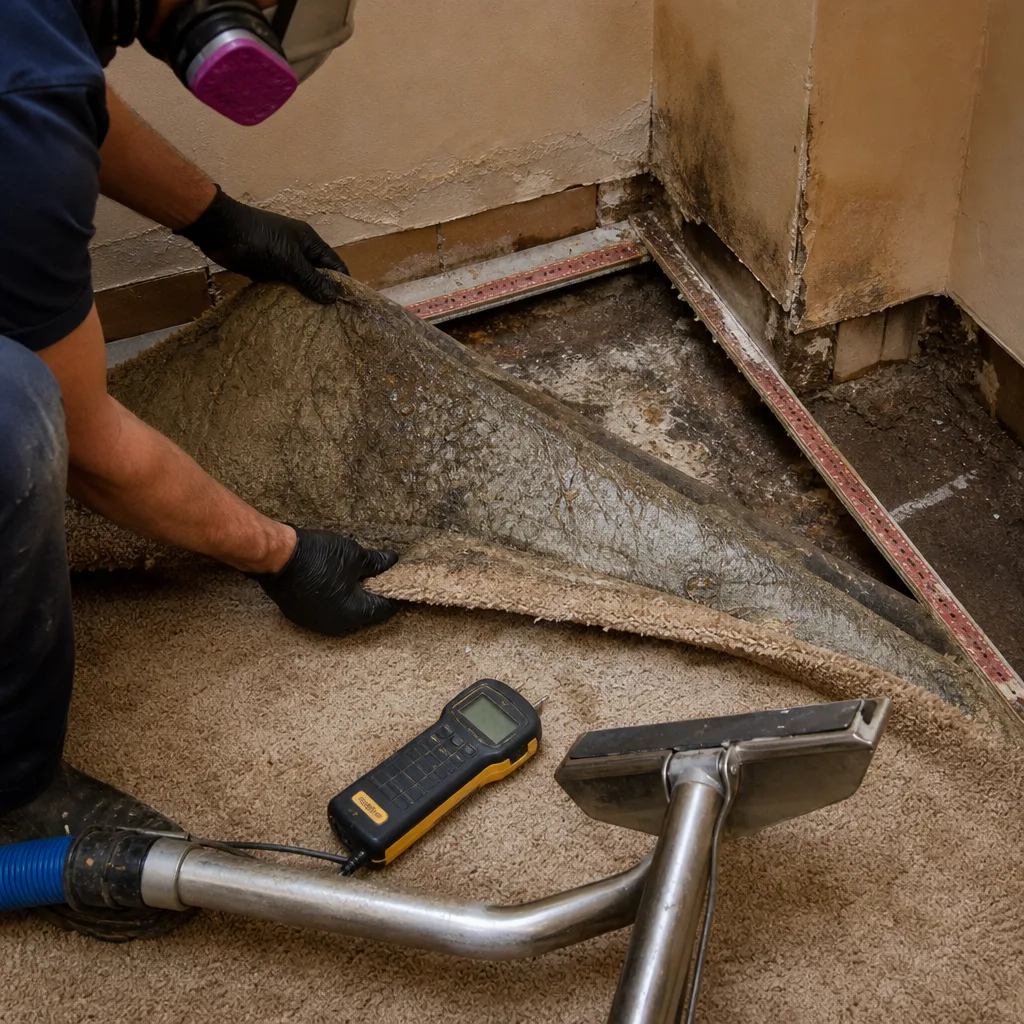
Storm Damage Cleanup
When a nor’easter blows out a window or a roof membrane fails mid-storm, water and debris spread fast. We clear the debris, stabilize the opening, and begin interior drying. For 12th-floor losses, that means securing what’s exposed and protecting lower floors from what’s coming down through the chase.
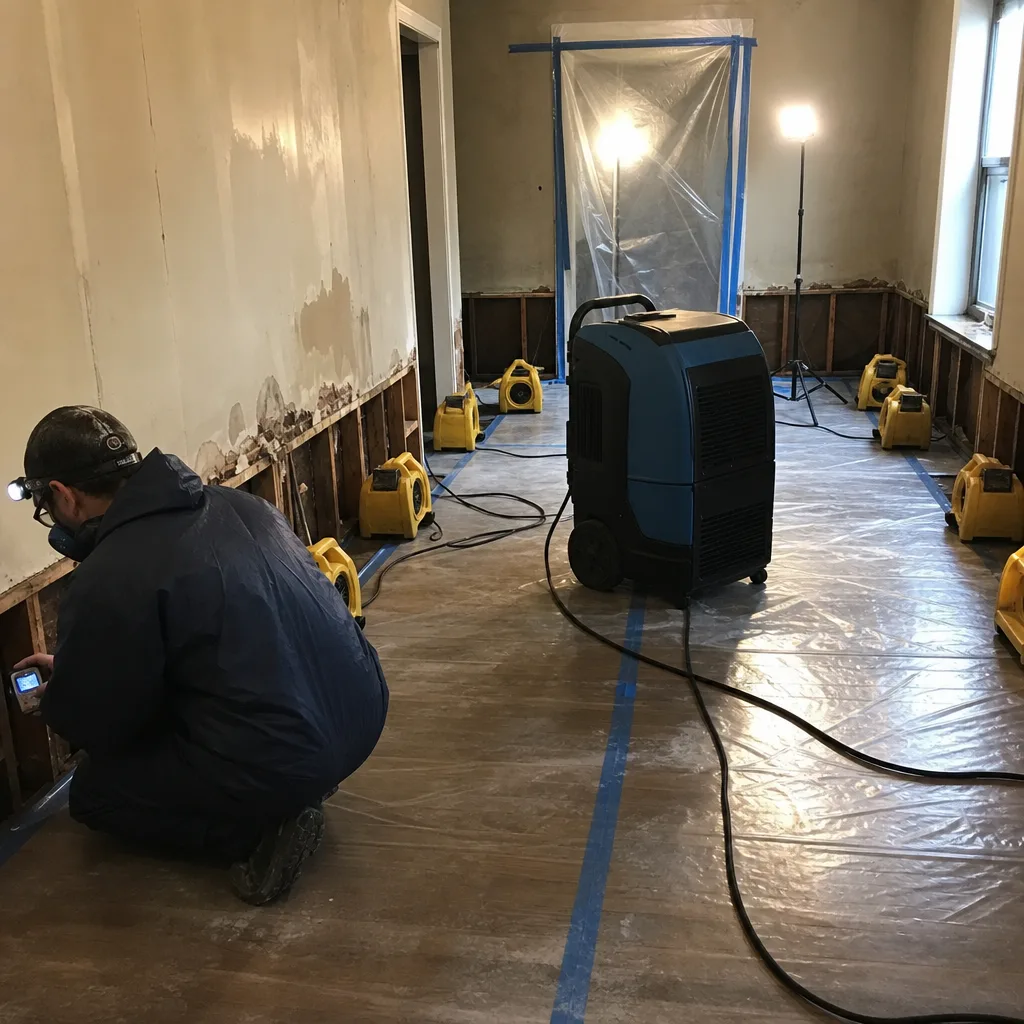
Emergency Board-Up
Storm-shattered windows on a Murray Hill avenue need same-day board-up, both for security and to keep rain out. We size the opening, secure it, and document it for your carrier with photos before work proceeds.
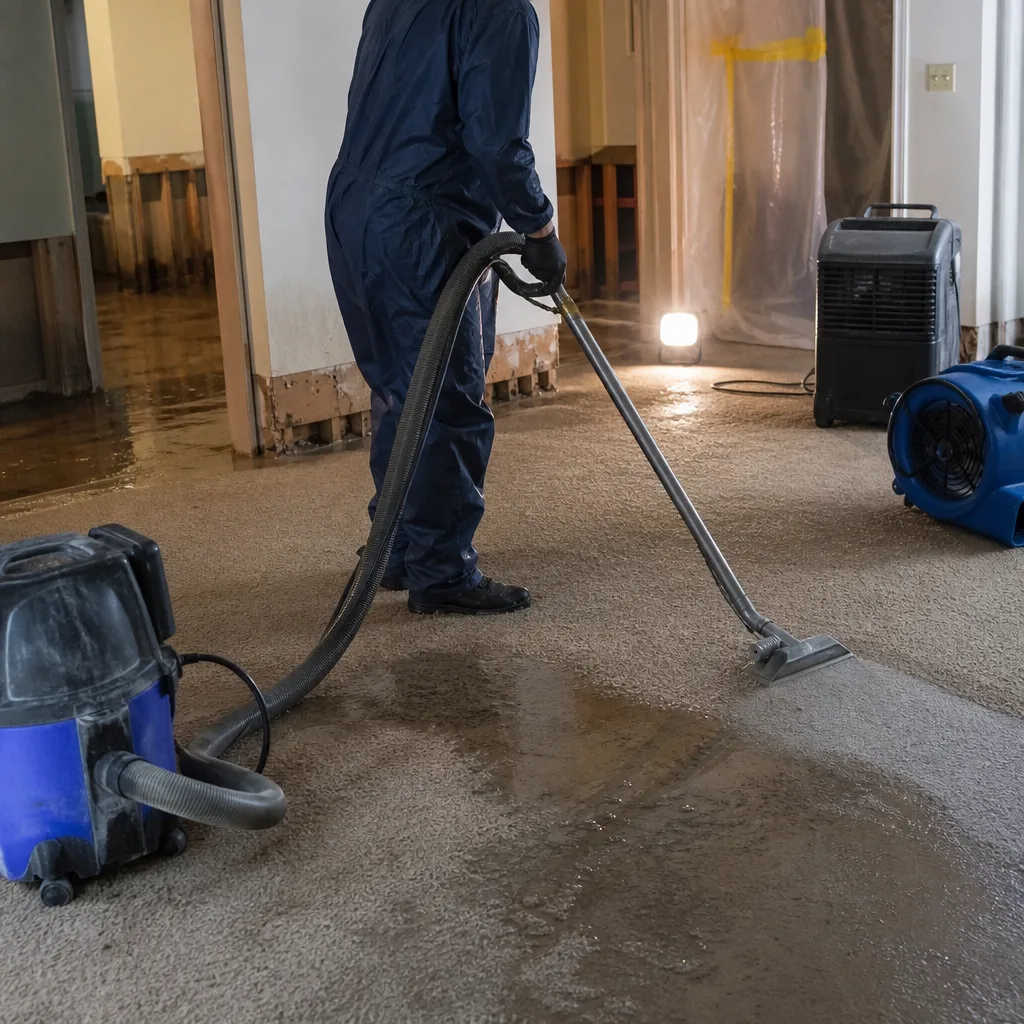
Roof Tarping
Prewar flat roofs and older membrane systems fail during heavy rain and wind. We tarp the affected section, stop the water at the source, and then begin interior drying below. A roof tarp is temporary; the drying plan below it is what saves the plaster.
Debris Removal
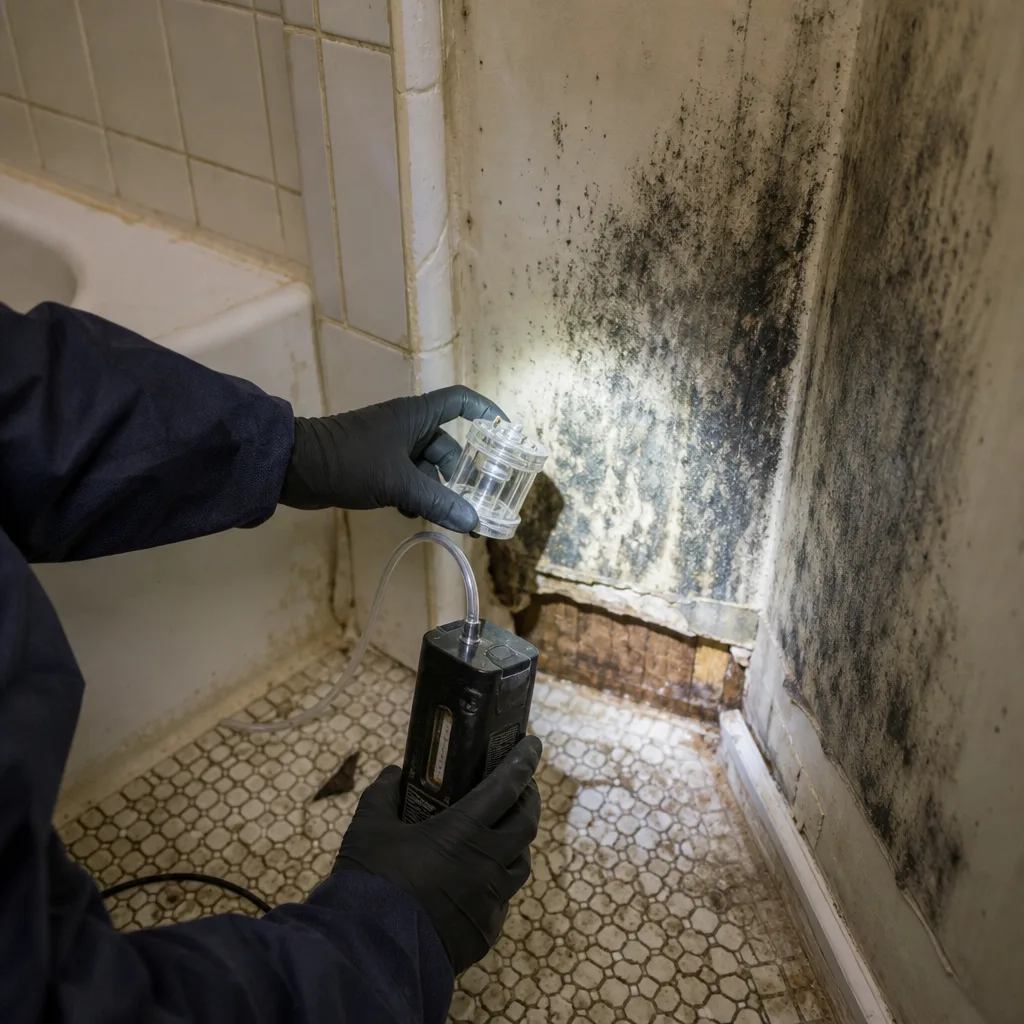
Storm debris in a high-rise means wet plaster, ruined flooring, and sometimes ruined furniture you don’t want back. We remove it, haul it, and document everything for your claim. The debris of a Murray Hill water loss is heavy; you want a crew that respects the elevator and the building’s corridors while moving it.
What happens when you call
- 1
A real person answersNo phone trees - you reach a local pro.
- 2
You get an upfront price rangeHonest numbers before anyone is dispatched.
- 3
A background-checked tech heads outLicensed & insured, dispatched right away.
- 4
You approve before work beginsNothing starts until you say go.
Storm & Disaster Restoration Costs in Murray Hill, NY
A typical flood damage restoration in a Murray Hill apartment runs $2,800-$7,500 depending on how many rooms are wet and how far the water traveled through shared chases. Emergency board-up for a storm-broken window runs $350-$800 depending on access and the opening size. Roof tarping typically runs $600-$1,400 for a standard Murray Hill roof section, with emergency response adding urgency cost but also stopping interior damage, which is the expensive part. Debris removal for a water loss runs $500-$2,000 depending on volume and haul weight. The biggest price movers are water category, how many floors the water passed through, and whether you caught it before mold set. Insurance covers most storm and sudden-water losses; the co-op or building policy often covers the chase and stack, while your own policy covers your unit’s interior. Call (917) 924-4221 for a free visual inspection and a written, line-item estimate. No surprises on the bill.
We Also Serve Cities Near Murray Hill
Our crews respond to storm and flood losses in Fairview, Harrison, East Bronx, and Hunts Point. The same IICRC-certified technicians, the same professional-grade equipment, the same 24/7 live answer. If you’re in Murray Hill proper or just north of the tunnel approach, you’re in our service area. We stand behind the work wherever we hang our gear.
Serving Murray Hill, NY - Our Local Coverage Area
We’re based in the Murray Hill area and know this community well. Use the map below to see our service coverage - if you’re nearby, we can almost certainly help.
Murray Hill Storm & Disaster Restoration Questions, Answered
Why do sewer backups happen so often on 2nd and 3rd Avenues in Murray Hill, and how does that affect restoration?
Buildings on the 2nd and 3rd Avenue corridor between 36th and 38th Streets sit directly above the Queens-Midtown Tunnel approach, and the chronic heavy-vehicle vibration accelerates joint failures in aging cast-iron drain stacks. When a joint gives way, sewage backs up through the stack and into lower-floor fixtures. Restoration in that condition means treating the water as Category 3, removing affected porous materials, containing the area, and disinfecting with professional-grade antimicrobials, not just extracting and drying.
Can you work in a Murray Hill co-op without a board meeting or shareholder vote?
Yes. Emergency water extraction and stabilization don’t require board approval; we coordinate directly with the building super or management company and begin work the same visit. Rebuild and finish work usually follows the co-op’s alteration agreement, and we’ll walk that process with you. We’ve worked with the property managers and boards across Murray Hill’s prewar towers often enough that we know the paperwork before it’s printed.
How do you dry a multi-story water loss in a prewar Murray Hill tower without demoing all the plaster?
We use thermal imaging to map exactly which plaster walls and ceilings are wet, then cut access where it’s needed and dry in place with Injectidry floor mats, Phoenix air movers, and Dri-Eaz dehumidifiers. Controlling humidity in the shared riser closets and service corridors is the key; otherwise moisture wicks into adjacent units and you’re chasing it for weeks. Daily moisture readings tell us when the dry standard is met, and we log every reading for your carrier.
What’s the difference between water categories in a Murray Hill apartment flood?
Category 1 is clean water from a supply line. Category 2 carries dirt or detergent, like an overflowing sink or a washing machine discharge. Category 3 is sewage or outside floodwater, and it requires containment, porous material removal, and disinfection. The category changes how we scope the job, and in Murray Hill’s stacked vertical drains, what starts as Category 2 in one bathroom often becomes Category 3 by the time it reaches the apartment below. We identify the category on inspection and write the scope accordingly.
How do you handle debris removal from a high-rise Murray Hill apartment with no freight elevator?
We move debris through the service entrances and passenger elevators with floor protection and scheduled access windows. Wet drywall and plaster are heavy, and in a prewar building with a narrow elevator cab, the haul takes longer and costs more than a ground-floor job. We build that time into the written scope so the bill doesn’t surprise you later. Our crews do the heavy lifting; you don’t touch a bag.
How fast can someone actually get to my Murray Hill apartment?
A crew is usually on site within 45 minutes of your call. A live dispatcher confirms the route while you’re still on the phone, and our Manhattan-dispatch office keeps trucks and equipment staged for Murray Hill’s prewar building stock. Night, weekend, storm, freeze: the answer is a person, not a recording. Call (917) 924-4221 and we’ll be there when we say.
Will insurance cover storm and flood damage in a Murray Hill co-op or rental?
Storm and sudden interior water losses are typically covered by your own unit-owner or renter’s policy; the building’s master policy usually covers the chase, stack, and common areas. We work directly with your carrier from the first photo, log every reading, and write a line-item scope in their format. You don’t play messenger between your adjuster and our crew. When a claim involves both your policy and the building’s, we coordinate both sides so the work doesn’t stall over paperwork.
What should I do in the first 30 minutes after I notice water coming in?
Shut off the water source if you can safely reach it. Move small items out of the water’s path. Call (917) 924-4221. Don’t run fans or household dehumidifiers on standing water; that spreads moisture and can aerosolize contaminants. In a Murray Hill high-rise, the water is probably already on its way down through the chase, so the faster you call, the less of the building gets wet. We’ll walk you through the next steps on the phone while the crew is rolling.
Written by Curt Bowman, Owner at Floodline Restoration Co. of Manhattan, serving Murray Hill and the surrounding boroughs since 2010.