
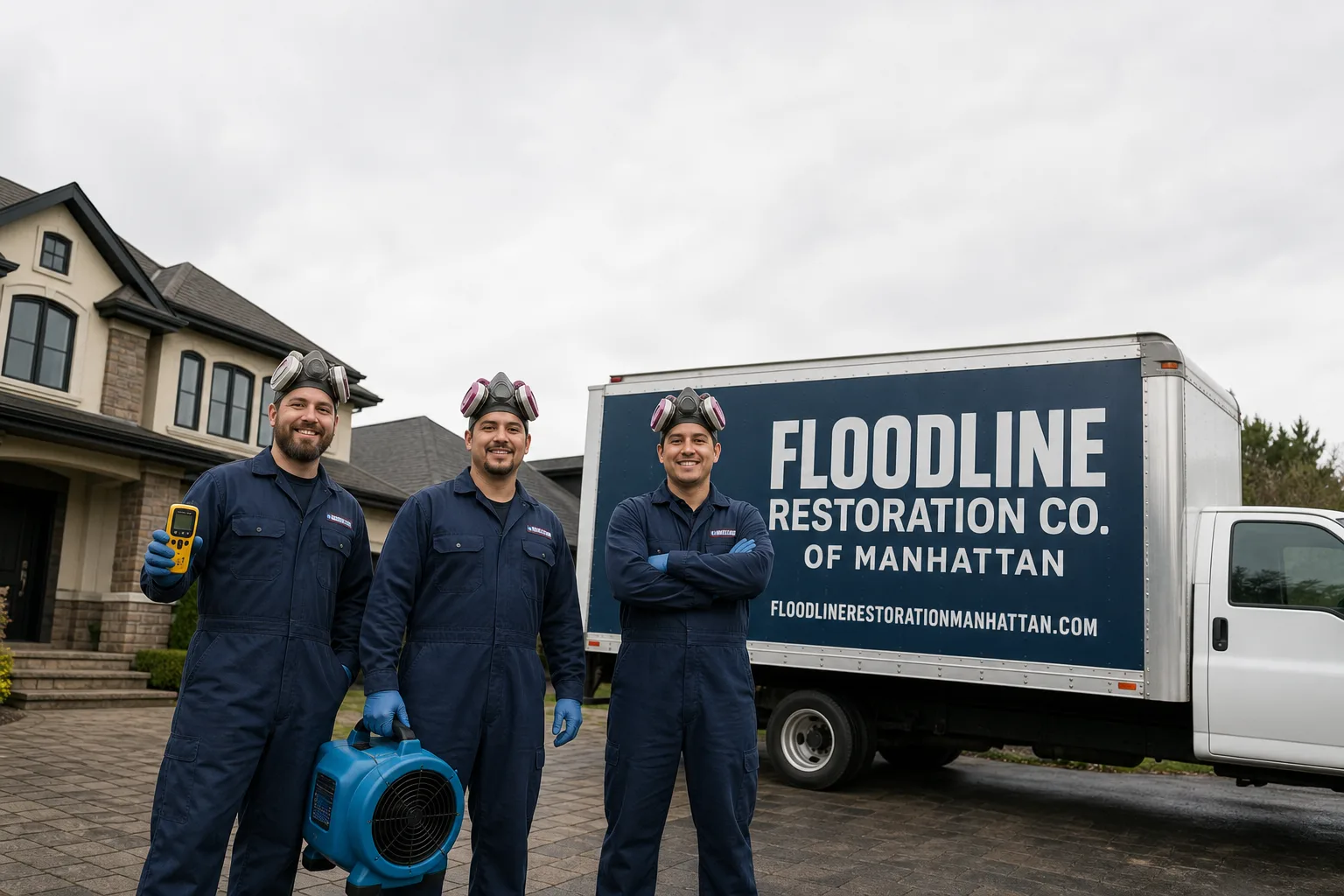
Free visual inspection and a written scope of work before any mitigation begins - photos, moisture readings, and drying logs go in your claim file
The scope we write is the scope we bill. Anything new gets shown to you, in writing, before we touch it.






 Before
 After
After Before
 After
After Before
 After
After24/7 Emergency Storm & Disaster Restoration in New Rochelle
Storm and disaster restoration in New Rochelle starts with a call to a live person at (917) 924-4221, any hour of any day. When wind rips a section of roof off a North End colonial or Long Island Sound surge pushes saltwater into a Davenport Neck basement, the first hour sets the scope of the entire job. Our dispatchers answer 24/7, no recordings, and a certified crew gets moving toward your street right away. We begin with a free visual inspection so you know exactly what you’re dealing with before any equipment comes off the truck. Saltwater intrusion, in particular, does not wait. What starts as a wet basement becomes a corrosion and mold problem in wall cavities within days if extraction and drying don’t happen immediately. We serve all of New Rochelle, from the coastal South End to the northern reaches near the Hutchinson River Parkway.
Understanding Storm & Disaster Restoration Severity in New Rochelle Properties
Storm damage in New Rochelle rarely presents as one clean problem. A nor’easter that pushes Category 3 water, meaning water carrying sewage, salt, and debris, into a pre-WWII home creates three simultaneous jobs: extraction, structural drying, and corrosion control. The city’s balloon-frame Victorians and Colonial Revivals hide water in lath-and-plaster cavities that modern moisture mapping on drywall would miss entirely. Water travels along original wood framing, wicks upward through horsehair plaster, and settles in sill plates behind original trim. Saltwater makes it worse. Salt residue left in those cavities keeps pulling atmospheric moisture long after the surfaces feel dry, which is why our crews run daily moisture readings with thermal imaging and hygrometers until the structural dry standard is met, not until the wall feels dry to the touch. Multi-unit brick buildings along North Avenue and Main Street present a different challenge: roof failures migrate through floor assemblies and into neighboring units before anyone sees a stain, which means the scope you think you have at hour one is often a fraction of what the moisture map shows by day two.
Why New Rochelle Property Owners Choose Floodline Restoration Co. of Manhattan
- 45-minute response commitment. Our New Rochelle crews dispatch from the local area, not from a far-off regional office, so equipment arrives fast when storm surge or wind damage is spreading.
- 24/7 live answer, always a person. A live dispatcher picks up at 2 a.m. during a nor’easter, takes your address, and starts the process. No automated trees, no “leave a message.”
- IICRC-certified crews. Our technicians carry WRT, ASD, and FSRT certifications and have handled New Rochelle coastal flooding enough times to know exactly what saltwater does in a pre-war house.
- Free visual inspection. Before any work begins, we walk the property, document everything, and give you a straight read on what needs to happen. No obligation, no pressure.
- Direct insurance billing. You should not be the messenger between our team and your carrier. We bill directly and handle adjuster communication from day one.
- One team, start to finish. Extraction, drying, board-up, and rebuild are handled by the same certified crew. No mid-job handoff to a subcontractor you’ve never met.
Our Storm & Disaster Restoration Process
Inspection & Assessment
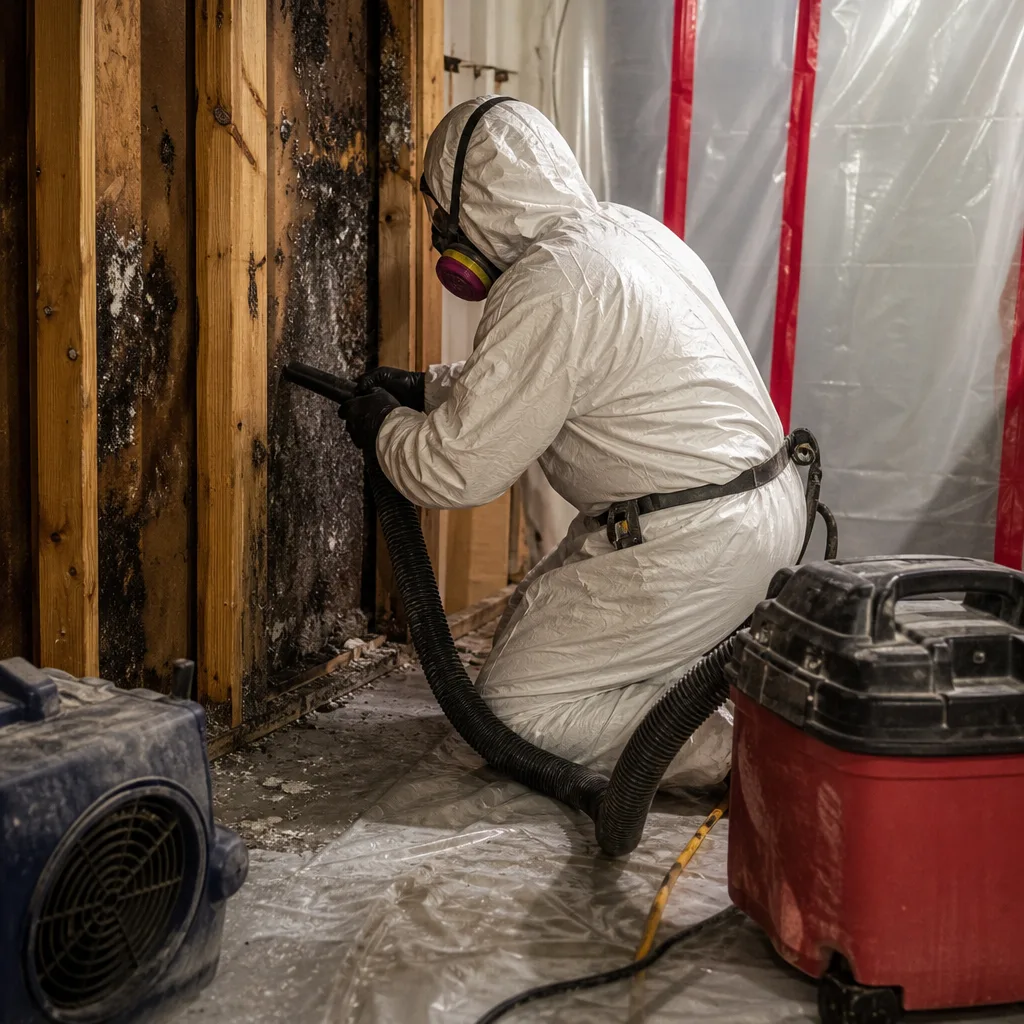
We arrive, walk the property inside and out, and document every affected surface with photos and thermal imaging. Moisture mapping identifies hidden water in wall cavities, subfloors, and sill plates before we move a single piece of equipment.
Extraction & Stabilization
Standing water comes out first using truck-mounted and portable extraction units. If storm damage has opened the envelope, we board up windows and tarp compromised roof sections the same visit to stop additional water entry.
Drying & Dehumidification
Dri-Eaz and Phoenix air movers plus XPOWER and B-Air dehumidifiers go in, positioned according to the moisture map. Daily readings are logged until the structure meets the dry standard, and you get a copy of that log for your claim.
Cleaning & Sanitization
Every salvaged surface gets cleaned and treated with antimicrobial agents appropriate to the water category. For Category 3 storm surge, that means aggressive treatment of wall cavities and subfloor spaces where salt and contaminants hide.
Corrosion Control & Specialty Treatment
In New Rochelle’s coastal zones, salt corrosion on garage-door hardware, fasteners, and structural connectors is a recurring failure. We inspect, treat, and replace corroded components before they become a follow-up claim.
Repairs & Restoration
The same crew that pulled water and dried the structure now rebuilds drywall, trim, flooring, and the garage-door system as needed, so you don’t wait on a separate contractor to arrive and relearn the job from scratch.
Need Emergency Storm & Disaster Restoration in New Rochelle Now?
Crews minutes away, answering live 24 hours a day. The sooner we start, the less it costs.
Working With Your Insurance Company
The fastest way to slow a claim is a scattered paper trail. That’s why our documentation starts the moment we arrive in New Rochelle: every wet surface, every corroded component, every moisture reading, every piece of damaged material. Industry-standard estimating software produces a line-item scope your adjuster can read without translation. If your adjuster scheduled a visit, we walk the property with them, point out what the moisture map shows, and answer questions directly. You’re copied on everything, but you’re never the go-between. On a Davenport Neck saltwater claim, the documentation we provide is often the difference between a partial payout for visible damage and a full settlement that covers the hidden cavity work and hardware replacement the salt actually causes.
What We Provide Your Insurer
- Thorough documentation of the loss
- Photos of all damage, room by room
- Moisture readings and drying logs
- A detailed, line-item scope of work
- Direct coordination with your carrier
Built for New Rochelle’s Loss Calendar
New Rochelle takes storm-related losses in predictable waves, and knowing the calendar changes how we staff and stock trucks. January and February bring deep freezes that burst supply lines in the city’s older stock; the same freeze-thaw cycles send ice dams forming on under-insulated pre-war rooflines, forcing water under shingles and into soffits. March and April snowmelt plus spring rains reveal basement seepage in low-lying blocks near the Sound, particularly around Davenport Neck and the South End. Summer brings sudden thunderstorms capable of flash-flooding neighborhoods along the Hutchinson River corridor, where older storm drains back up against heavy rain. Then comes autumn: nor’easter season, when storm surge pushes saltwater into coastal basements and wind takes down trees across North Avenue and Pelham Road. Every one of those calls gets the same response: a live answer, a fast truck, and a written scope before work begins.
Storm & Disaster Restoration Across New Rochelle’s Neighborhoods
The damage pattern in Davenport Neck and the South End looks different from what we see in the North End or around Wykagyl, and our crews learn those differences by working them repeatedly. On Davenport Neck, saltwater surge into basements and crawlspaces is the recurring signature, and the same low-lying properties cycle through claims after nearly every major nor’easter. FEMA flood-map addresses repeat. We know which foundation walls and which basement stairwells flood first, because we have dried them before. In the South End, mid-rise brick buildings and tightly packed older homes mean water migrates sideways as well as downward, moving through party walls and floor assemblies before surfacing two units away from the original leak. Around the Wykagyl and Beechmont areas, older colonials with original windows and wood siding take wind damage differently: soffits pry loose, flashing fails, and water drives under shingles at roof edges. Along North Avenue near Iona University, student-rental stock in older frames means storm response often has to coordinate around packed schedules and property managers, but damage itself follows the same pattern: water in, moisture hidden, time working against the homeowner.
Specialized Storm & Disaster Restoration Services We Offer in New Rochelle
Storm Damage Cleanup
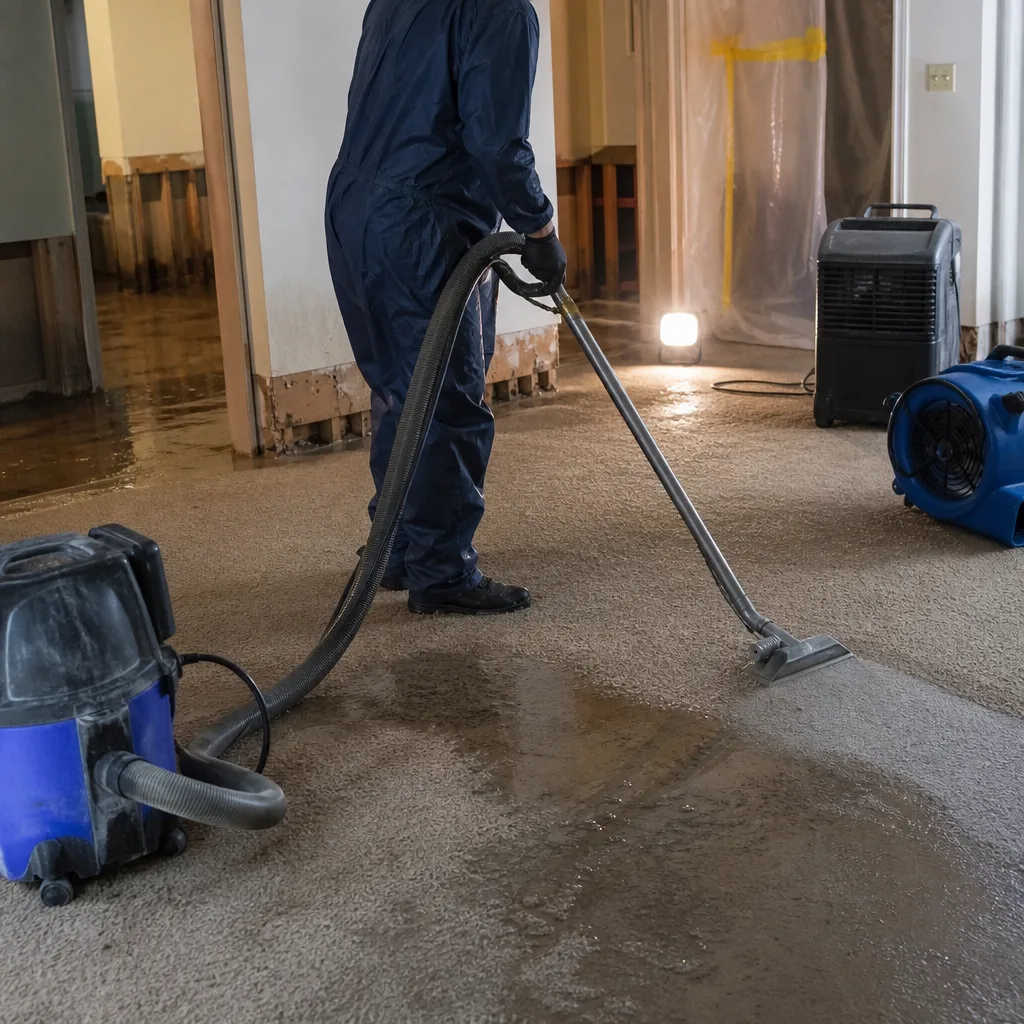
After a nor’easter or summer thunderstorm, New Rochelle properties need more than a mop-up. Our Storm & Disaster Restoration team removes debris, extracts water, and documents every affected surface before hidden damage becomes a claim problem. Salt residue from coastal surge gets specific attention, because it keeps working on your structure long after the visible water is gone.
Flood Damage Restoration
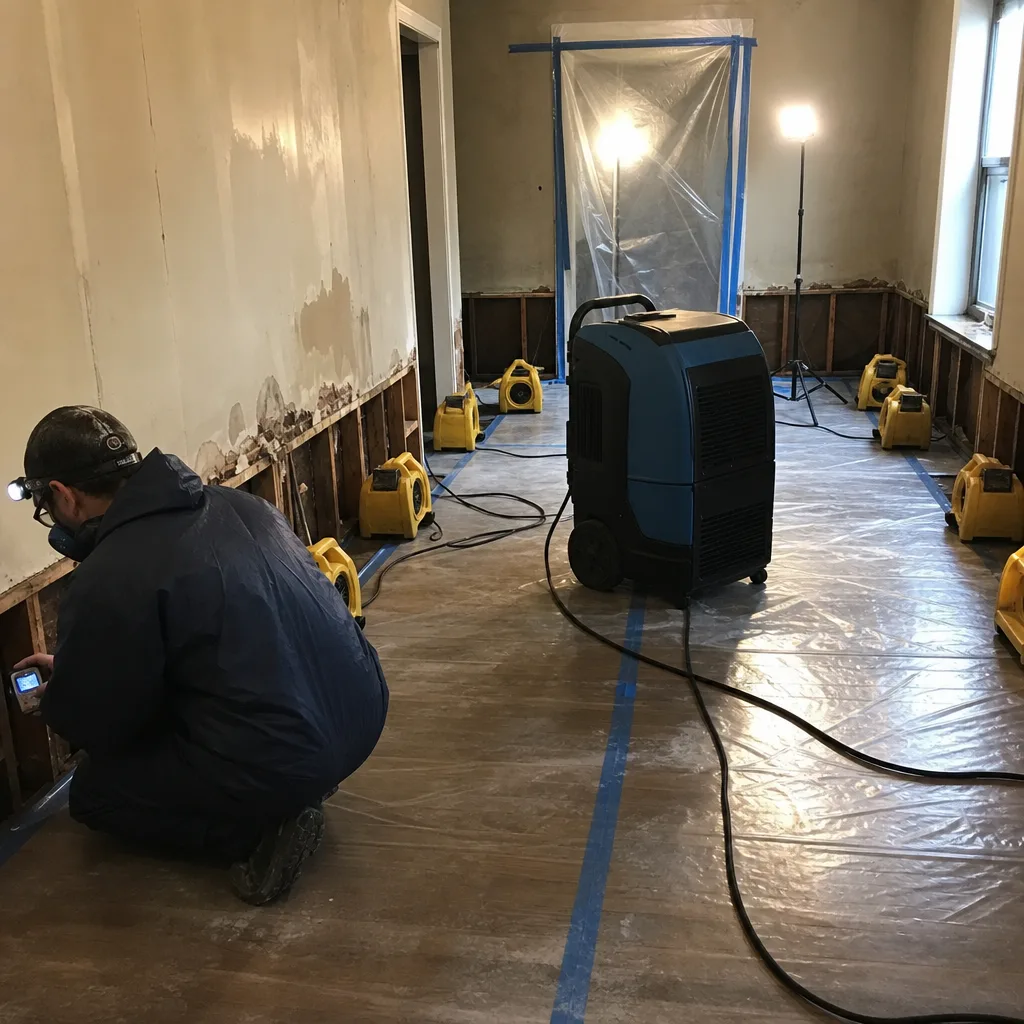
Flood water in New Rochelle is rarely clean water. Storm surge from Long Island Sound carries salt, sediment, and contaminants, and we treat it as Category 3 from the moment we arrive. Extraction, antimicrobial treatment, and structural drying run on a documented schedule, with daily moisture readings until the structure actually hits the dry standard, not just the surface.
Emergency Board-Up
When wind takes out a window or a tree comes through a roofline, an open house is an invitation for more damage. We board and tarp the same visit, so the storm stops doing new work while restoration begins. For coastal New Rochelle, a properly secured envelope also means salt spray stops entering wall cavities during the drying window.
Roof Tarping
A compromised roof over a pre-war New Rochelle home is a race against your own framing. We tarp damaged roof sections fast, with attention to the flashing points and edges where wind-driven rain already found its way in. Temporary, but done so it holds until permanent repair.
Debris Removal
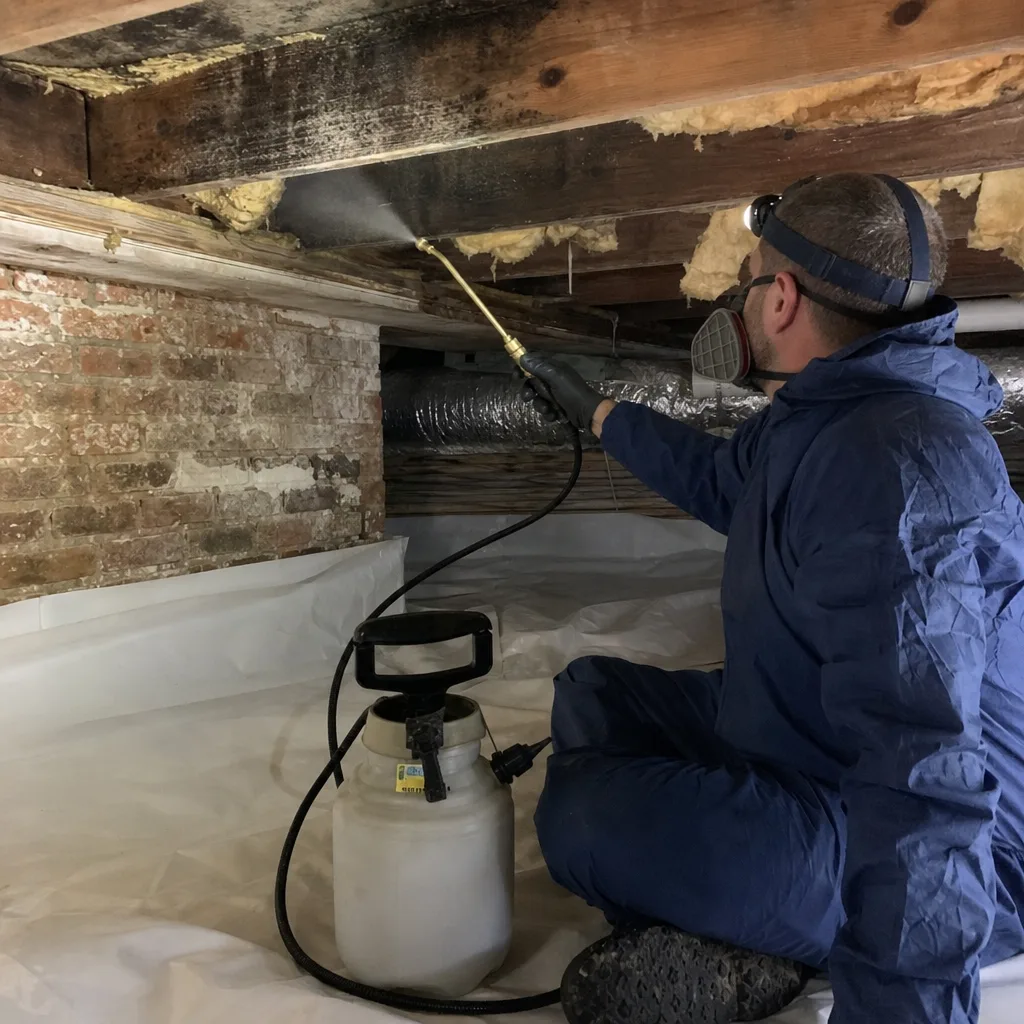
Fallen limbs, torn siding, ruined insulation, soaked drywall, all of it has to go before drying can actually work. We remove and haul storm debris as part of the job, and we document what came out, which matters when your carrier needs to verify loss.
For storm response anywhere in the city, New Rochelle homeowners can reach a live dispatcher any hour at (917) 924-4221.
What happens when you call
- 1
A real person answersNo phone trees - you reach a local pro.
- 2
You get an upfront price rangeHonest numbers before anyone is dispatched.
- 3
A background-checked tech heads outLicensed & insured, dispatched right away.
- 4
You approve before work beginsNothing starts until you say go.
Storm & Disaster Restoration Costs in New Rochelle, NY
Storm damage costs in New Rochelle track the severity of the water category and the age of the structure, not some arbitrary square-footage formula. Emergency water extraction and drying after a basement surge generally runs $2,800 to $6,500 depending on how much square footage went wet and whether cavity drying is required. Board-up and roof tarping after wind damage typically lands between $450 and $1,400 while a full coastal surge restoration on a Davenport Neck basement, including Category 3 treatment, structural drying, and finish rebuild, often runs $8,000 to $22,000. Salt corrosion repair on garage-door hardware and opening systems runs $350 to $900 when caught early, before track replacement becomes necessary. Insurance covers most storm-related losses when documentation is solid, and our direct-billing setup means you’re not floating thousands in out-of-pocket while the claim processes. The free visual inspection gives you a firm, written scope before any work starts, so you can see exactly what the job will cost and why.
We Also Serve Cities Near New Rochelle
Storm damage doesn’t respect municipal boundaries. We serve homeowners across Pelham, Larchmont, Mount Vernon, and Eastchester with the same 24/7 live dispatch and same certified crews serving New Rochelle. If the storm hit your street, we’re already working your area.
Serving New Rochelle, NY - Our Local Coverage Area
We’re based in the New Rochelle area and know this community well. Use the map below to see our service coverage - if you’re nearby, we can almost certainly help.
New Rochelle Storm & Disaster Restoration Questions, Answered
Why does saltwater flooding in New Rochelle’s South End cause mold weeks after the water is gone?
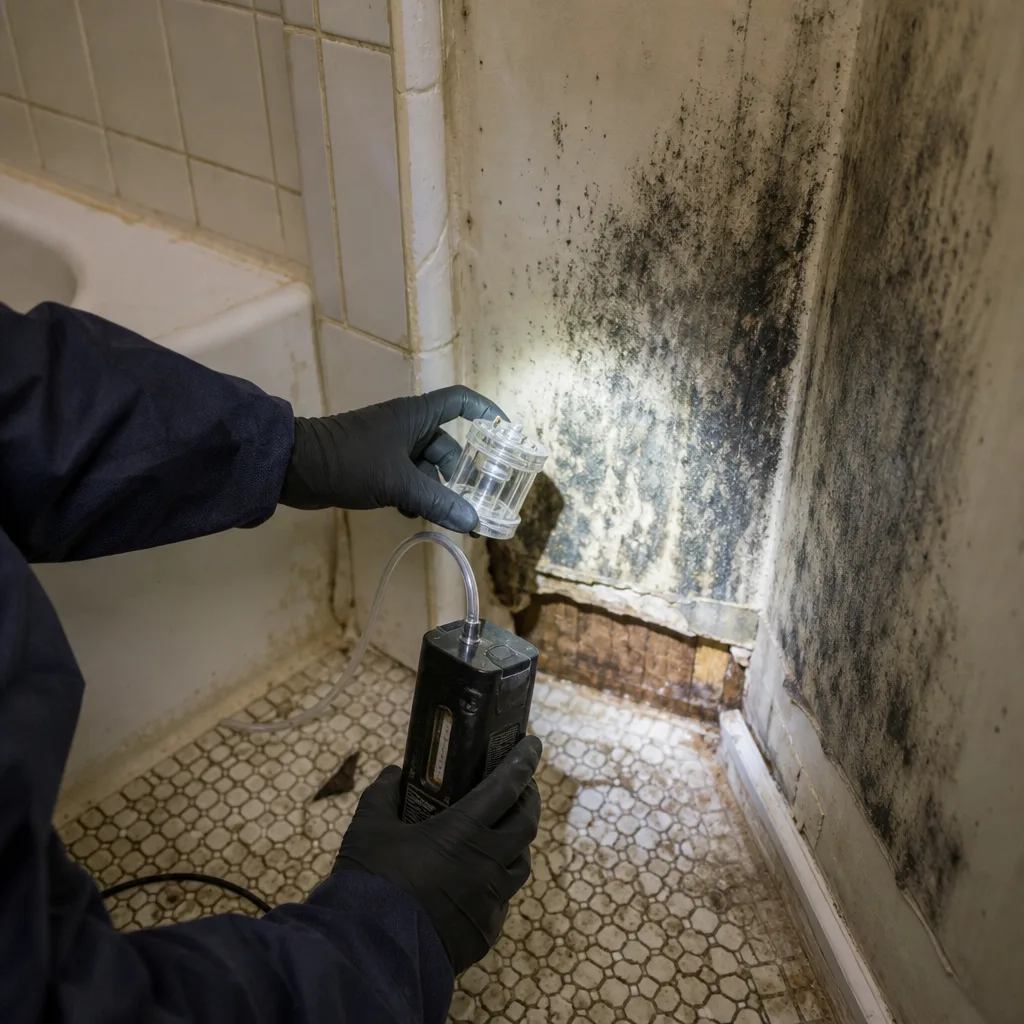
Saltwater leaves salt residue behind in wall cavities and subfloors, and that salt is hygroscopic, it pulls atmospheric moisture back into the material long after extraction. The cavity may dry on day one, then re-absorb moisture from the air by day ten, which is exactly the kind of hidden wetness that feeds mold. Our drying protocols account for salt by running extended cavity drying with daily moisture readings until the log shows the structure hitting and holding the dry standard.
How often should coastal New Rochelle homeowners inspect garage-door hardware for salt corrosion?
In Davenport Neck, the South End, and anywhere within a half-mile of the shoreline, we recommend a corrosion inspection every spring and fall. Salt air attacks springs, hinges, rollers, tracks, and opener chains year-round, and after a surge event you should inspect immediately, not next season. Galvanized or coated springs, stainless hardware, and nylon rollers extend life substantially.
What does ‘Category 3 water’ mean for a New Rochelle basement flood from storm surge?
Category 3 water is grossly contaminated water carrying sewage, salt, chemicals, or debris; storm surge from Long Island Sound qualifies. It means the water and any porous material it touched, including drywall, insulation, carpet, and subflooring, must be removed and replaced, and the cavity must be treated with antimicrobial agents before rebuild. Cleaning alone is not enough for Category 3.
Why do pre-WWII New Rochelle homes need longer structural drying after a nor’easter?
Balloon-frame construction with original plaster and wood lath creates cavities that hold water far longer than modern drywall assemblies. Water wicks upward through continuous stud bays and settles in sill plates and behind trim, where surface readings won’t detect it. Longer drying cycles with daily moisture logs are the only way to confirm the inside of the cavity actually dried, not just the face of the wall.
How do restoration techs use FEMA flood maps on New Rochelle’s Davenport Neck to speed up response?
FEMA flood maps identify addresses that sit in high-risk surge zones, and in New Rochelle those addresses repeat on nearly every claim list after a major nor’easter. Knowing which basements, crawlspaces, and foundation walls flooded before means we can pre-stage the right equipment and arrive already aware of which spots will need the longest drying time. That local memory shortens every part of the job, from first extraction to final moisture reading.
How fast can a crew actually get to my New Rochelle home during a storm?
In most cases a certified crew arrives within 45 minutes of your call. Our dispatchers know New Rochelle’s streets and response routes, and crews stage in the area when major storm events are forecast, so we’re not driving from another county while water keeps rising in your basement. Call (917) 924-4221 and a live person confirms your address immediately.
Will my insurance cover storm surge and wind damage restoration in New Rochelle?
Most homeowners’ policies cover wind damage, and flood coverage through FEMA’s NFIP or a private carrier typically covers storm surge, though deductibles and limits vary widely by zone. What makes the difference in payout is documentation: photos, moisture logs, line-item scopes, and proof of Category 3 conditions. We provide all of that directly to your adjuster and bill the carrier directly.
What should I do in the first 30 minutes after storm water enters my New Rochelle home?
Shut off power to affected areas if you can do so safely, move valuables and electronics above water, and call (917) 924-4221. Do not enter standing water in a basement if the power is on or if fuel, sewage, or debris is present. The clock on structural damage starts the moment water enters, and saltwater starts corroding hardware and wicking into cavities immediately.
Written by Curt Bowman, Owner at Floodline Restoration Co. of Manhattan, serving New Rochelle and Westchester County since 2010.