

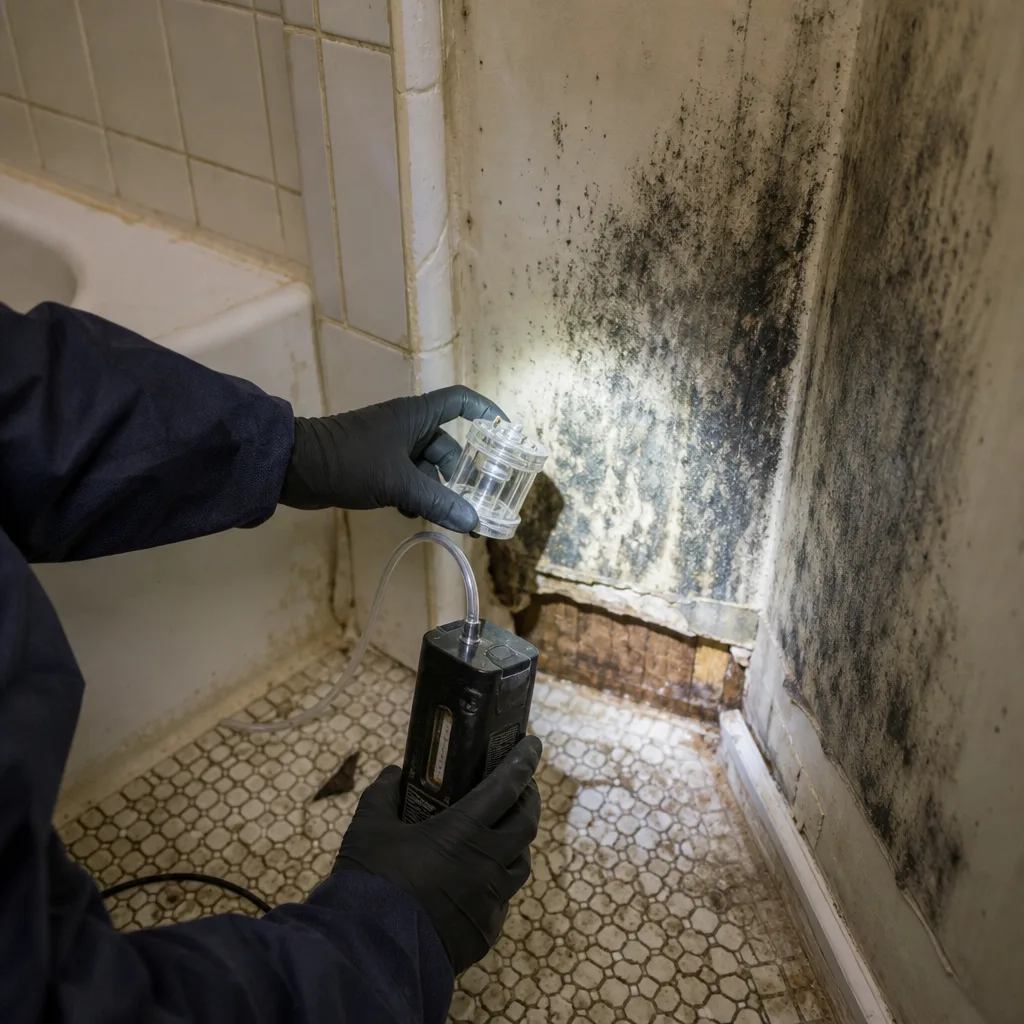
Free visual inspection and a written scope of work before any mitigation begins - photos, moisture readings, and drying logs go in your claim file
The scope we write is the scope we bill. Anything new gets shown to you, in writing, before we touch it.






 Before
 After
After Before
 After
After Before
 After
After24/7 Emergency Storm & Disaster Restoration in New Square
Storm damage in New Square doesn’t wait for business hours, and neither do we. A live dispatcher answers (917) 924-4221 at any hour, every day of the year. When a nor’easter tears roofing off Clinton Avenue or a summer thunderstorm pushes water through a basement wall on Washington Avenue, our crews are dispatched immediately and arrive ready to tarp, board up, extract, and stabilize. The first hour after a storm decides whether you’re facing a cleanup or a rebuild. We’ll be there when we say.
Understanding Storm & Disaster Restoration Severity in New Square Properties
New Square’s attached and semi-attached housing stock, built largely between the 1960s and 1990s, behaves differently in a storm than a detached suburban home. Shared party walls mean wind-driven rain entering one unit migrates horizontally into the next within hours, not days. Flat and low-slope roofs, common throughout the village, pond water during heavy downpours and fail at membrane seams or around old flashing. We classify water by category on arrival: Category 1 is clean water from a broken supply line or rain entering through a tarped opening; Category 2 carries contaminants from a sump overflow or washing machine; Category 3 is sewage or floodwater from outside. Storm damage frequently starts as Category 1 and degrades to Category 2 or 3 within 48 hours, especially in New Square’s tightly built rows where humidity and shared cavities slow drying. Moisture mapping with thermal imaging and hygrometers tells us which walls, joists, and subfloors are wet. That map, not guesswork, drives the drying plan.
Why New Square Property Owners Choose Floodline Restoration Co. of Manhattan
- 45-minute response commitment: We dispatch crews the moment you call, and we hold ourselves to a 45-minute arrival window anywhere in New Square.
- 24/7 live answer: A real person picks up at 2 a.m., not a recording. No answering service menus, no callbacks promised for the next morning.
- IICRC-certified crews: Your technicians hold WRT, FSRT, and AMRT certifications. They’re background-checked, uniformed, and trained to IICRC, RIA, and IFA standards.
- Free visual inspection: We walk the property, document the damage, and give you a straight written scope before any work starts.
- Direct insurance billing: We bill your carrier directly and keep the paperwork between us and the adjuster. You don’t play messenger.
- One team from extraction to reconstruction: The same crew that tarps your roof Tuesday rebuilds the ceiling Friday. No mid-job handoff, no inherited subs.
Our Storm & Disaster Restoration Process
Inspection & Assessment
We arrive, walk the full property, and map every affected area. Thermal imaging finds water you can’t see. You get a written scope and a firm price before we touch anything.
Extraction & Stabilization
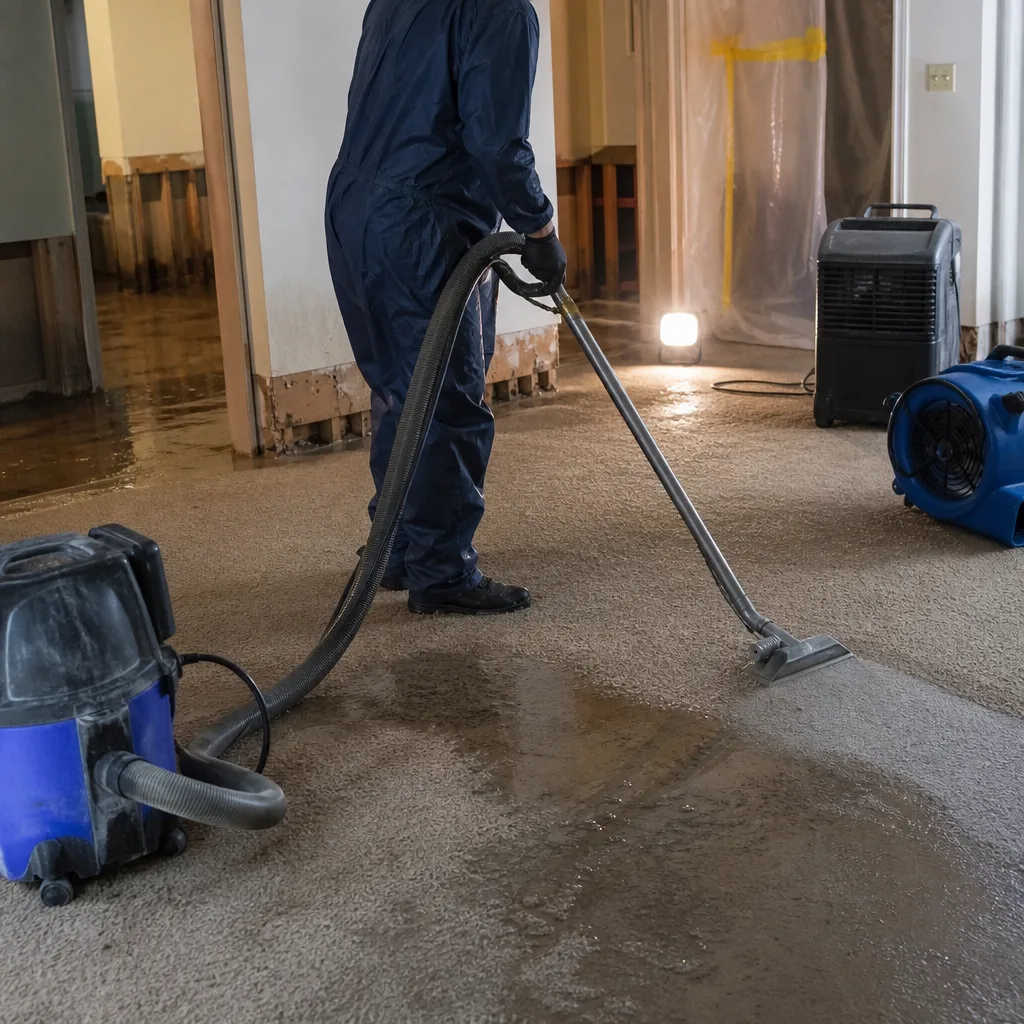
Standing water comes out first with truck-mounted and portable extraction units. Roofs get tarped, windows boarded, and structural hazards stabilized the same visit.
Drying & Dehumidification
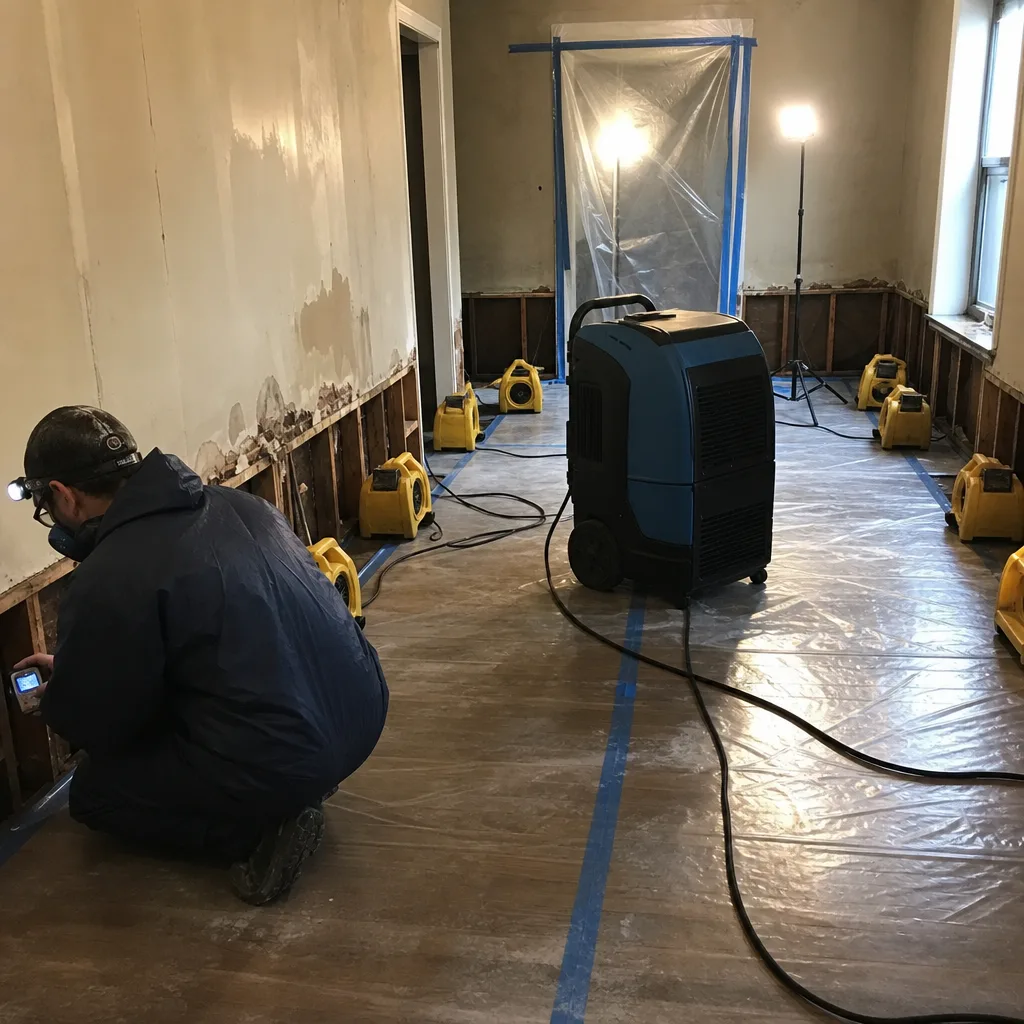
Dri-Eaz and Phoenix dehumidifiers and XPOWER air movers are placed per the moisture map. Daily readings are logged until the dry standard is met, and the log goes to you and your carrier.
Cleaning & Sanitization
Surfaces are cleaned with appropriate antimicrobials, HEPA-filtered air scrubbers run where needed, and salvageable contents are treated. No shortcuts on category 2 or 3 water.
Storm-Specific Stabilization
Wind-damaged doors get reinforced, roof membranes get properly sealed or replaced, and any compromised openings are secured against the next system already forecast.
Repairs & Restoration
Drywall, flooring, trim, roofing, and paint go back to pre-loss condition. The 90-Day Done Right Promise covers the work in writing.
Need Emergency Storm & Disaster Restoration in New Square Now?
Crews minutes away, answering live 24 hours a day. The sooner we start, the less it costs.
Working With Your Insurance Company
Storm and wind damage claims make up some of the messiest adjuster negotiations we see, because damage is often hidden behind walls or under roofing that looks fine from the street. We document from the first hour: photos room by room, moisture readings, drying logs, and a line-item scope with equipment counts and daily readings. Your adjuster gets the same documentation we’d want if the claim were ours. We talk to the carrier directly so you’re not stuck translating between a restoration crew and a claims desk. Storm damage coverage varies by policy, particularly for wind-driven rain versus flood, so call early and let us help you build the file before the adjuster arrives.
What We Provide Your Insurer
- Thorough documentation of the loss
- Photos of all damage, room by room
- Moisture readings and drying logs
- A detailed, line-item scope of work
- Direct coordination with your carrier
Built for New Square’s Loss Calendar
New Square’s storm season runs twelve months, but the losses cluster in a predictable rhythm. January and February bring the deep freezes: supply lines in 1960s-era attached homes burst inside party walls and basement utility rooms, flooding two or three units at once. March nor’easters are the roof killers, with high sustained winds peeling flat-roof membranes and sending tree limbs through windows along Clinton Avenue and Washington Avenue. April and May thaw brings groundwater and basement seepage as snowmelt concentrates in the Ramapo valley’s stormwater paths. July and August thunderstorms dump an inch an hour, overwhelming flat-roof drains and flooding low-lying basements. Autumn hurricane remnants from Irene and Sandy’s memory still drive basement flooding in the village’s lower blocks. The pattern is familiar to every long-time homeowner here. The fix doesn’t have to be frantic.
Storm & Disaster Restoration Across New Square’s Neighborhoods
New Square is small, barely one square mile, but its blocks differ in how they fail. The older attached rows along Clinton Avenue and Washington Avenue, built in the 1960s and early 1970s, share unbroken roof decks and party walls with minimal fire or moisture separation. A wind event that lifts roofing at one address almost always involves the neighbor’s ceiling by morning. The denser multi-family blocks around the center of the village have aging flat roofs with original flashing, and we routinely see ponding water and membrane splits after heavy rain. The lower-lying blocks toward the village’s eastern edge collect stormwater runoff from uphill, and their basements flood first in any sustained downpour. Homes with mid-century plumbing everywhere in the village share a common failure mode: corroded supply lines behind walls, which burst during freeze-thaw cycles and run water through shared cavities into attached units. Our crews know these streets by name and by failure pattern, which means our Storm & Disaster Restoration team arrives already knowing where to look.
Specialized Storm & Disaster Restoration Services We Offer in New Square
Storm Damage Cleanup
When a storm passes through New Square, what’s left behind is our job to remove. We clear fallen tree limbs, damaged roofing material, soaked drywall, and storm debris. We work around the village’s Shabbat schedule, pre-staging what needs to be staged and returning as soon as work is permitted.
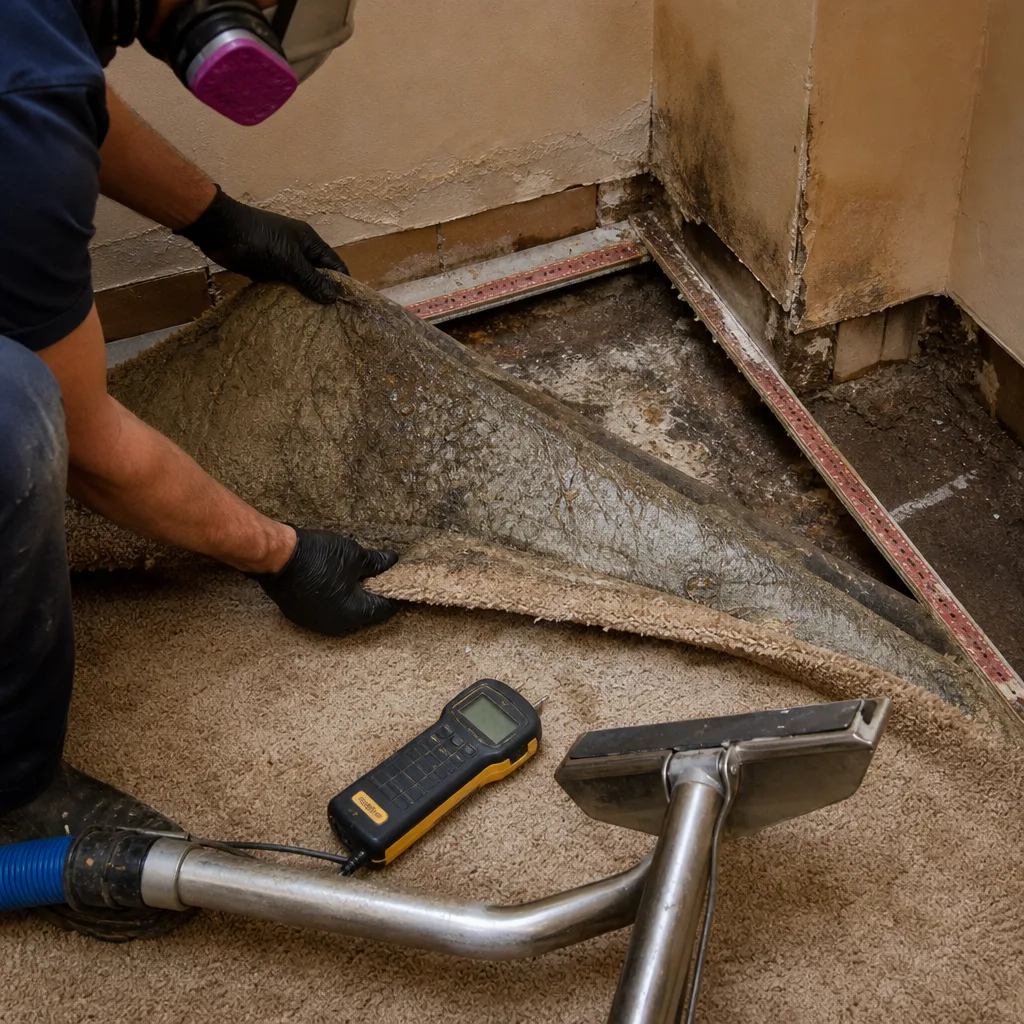
Flood Damage Restoration
Basement flooding from stormwater runoff is a recurring reality in New Square’s low-lying blocks. We extract, dry, sanitize, and restore those spaces with moisture readings logged daily. The same crew handles the rebuild when drywall and flooring need to come out.
Emergency Board-Up
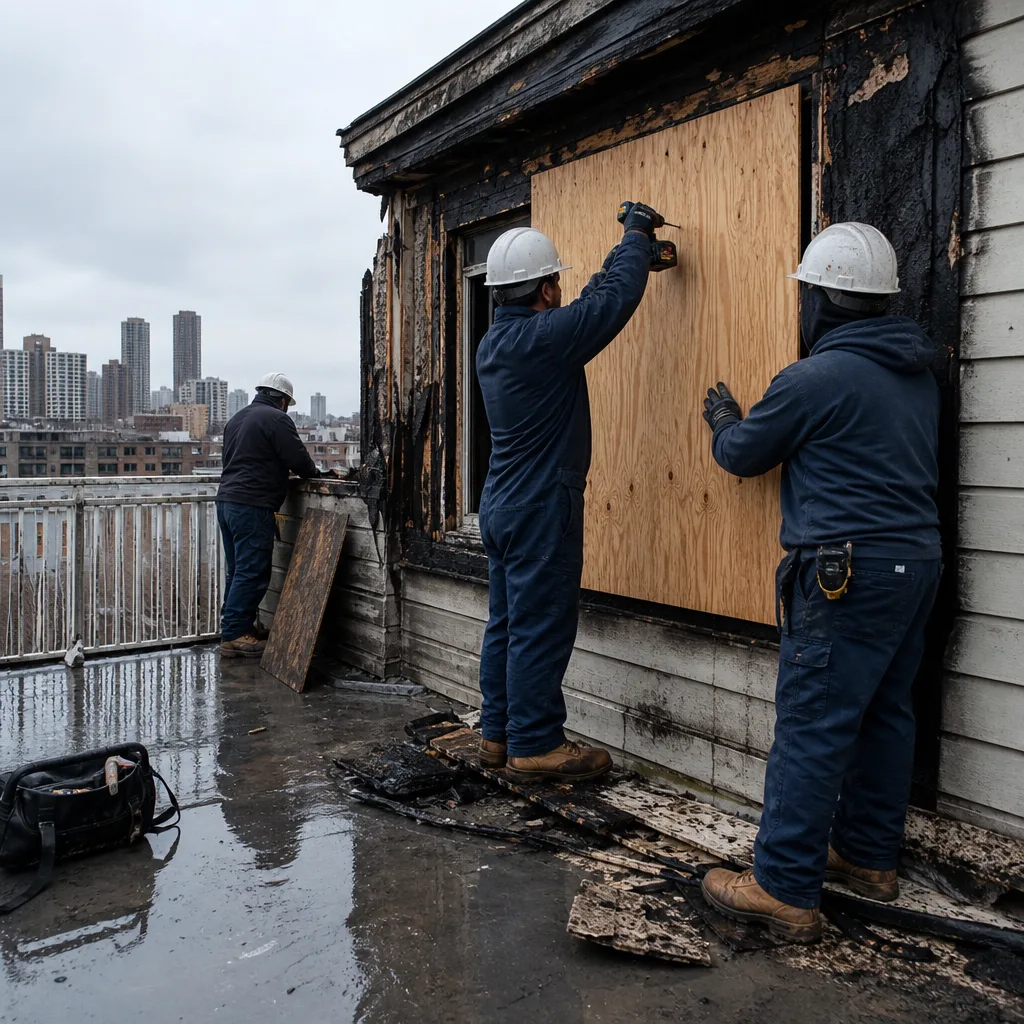
A shattered window or breached door on a Friday afternoon can’t wait until Sunday. When the timing allows and urgency demands it, we work with the block’s gabbai and, where necessary, secure a rabbinical ruling on pikuach nefesh to continue emergency mitigation during Shabbat. Windows get boarded properly, doors secured, and openings weather-tight.
Roof Tarping
A standard blue tarp on a low-slope New Square roof is a temporary patch at best and a liability at worst if the next nor’easter catches it. We secure tarps with wind-rated fastening and check the existing membrane for seam failures. When the weather clears, we replace what storm winds tore off.
Debris Removal
Downed trees, torn roofing, and storm-blown debris get cleared and hauled. We work with your carrier on debris removal coverage and keep the property safe for family and neighbors in the meantime.
What happens when you call
- 1
A real person answersNo phone trees - you reach a local pro.
- 2
You get an upfront price rangeHonest numbers before anyone is dispatched.
- 3
A background-checked tech heads outLicensed & insured, dispatched right away.
- 4
You approve before work beginsNothing starts until you say go.
Storm & Disaster Restoration Costs in New Square, NY
Storm damage restoration in New Square runs on a wide range because every loss is different, but here’s what we see in this market. Emergency board-up of a shattered window typically runs $350-$850 depending on the opening and how many are involved. Roof tarping on a low-slope New Square roof runs $800-$1,600 for a standard residential deck, with the low end being a simple single-roof penetration and the high end a fully peeled membrane requiring staging. Full water extraction and drying after a basement flood typically lands between $2,500 and $6,500 when the water is category 1 or 2 and caught within the first day. Wind damage repair with drywall replacement and repainting runs $3,500-$12,000 depending on rooms affected and finish grade. The biggest cost driver is time: a Friday storm that gets mitigated before Shabbat costs a fraction of one left sitting until Sunday. Call (917) 924-4221 and we’ll inspect free, then hand you a firm written scope before anything starts. No surprises on the bill.
We Also Serve Cities Near New Square
Floodline Restoration Co. of Manhattan serves Storm & Disaster Restoration in New Square and the surrounding communities of Fairview, Harrison, East Bronx, and Hunts Point. If you’re nearby and watching water rise, call. The same live dispatcher picks up.
New Square Storm & Disaster Restoration Questions, Answered
If a storm hits New Square on a Friday afternoon, can Floodline Restoration legally enter a home on Shabbat to start water extraction?
Yes, in genuine emergencies. New Square’s Skverer Hasidic community observes a strict prohibition on secular work from Friday sundown through Saturday night, and this applies to contractors. But Jewish law makes a clear exception for pikuach nefesh, the preservation of life, and for preventing the kind of building-wide damage that threatens the structural safety of a home. When a storm breaches a roof or floods a basement on a Friday afternoon, our crew works with the block’s gabbai to secure a rabbinical ruling on urgency. If the ruling permits, we continue emergency mitigation during Shabbat: extraction, tarping, board-up, and setting drying equipment. If not, we pre-stage everything needed and return the moment Shabbat ends Saturday night. Either way, we never assume. We ask. Call (917) 924-4221 and we’ll coordinate from the first hour.
What wind rating should a replacement entry door have to survive New Square’s nor’easter season?
For New Square’s attached housing stock and the village’s exposure to March nor’easters bringing sustained winds of 50-60 mph with higher gusts, we recommend a minimum wind load rating of 90 mph for entry doors and 110 mph for doors with direct southern or western exposure across open parking areas. Beyond the rating, installation matters more than the sticker: an improperly anchored frame will pull free at half its rated load. We install and reinforce doors to stay put. Call (917) 924-4221 and we’ll assess your existing door before the next system forms.
How quickly does water from a neighbor’s burst pipe migrate through New Square’s shared party walls?
In New Square’s 1960s through 1990s attached rows, water from a burst supply line in one unit reaches the adjacent unit’s drywall within 2 to 6 hours when the breach is inside a shared wall cavity. The absence of meaningful fire or moisture breaks between most party walls means the water travels through framing, insulation, and baseboard gaps until it finds the path of least resistance, often in the neighboring basement or first-floor wall. Within 24 hours, three attached homes can show elevated moisture readings. That’s why we send crews the moment the call comes in, not the next morning. Free inspection at (917) 924-4221.
Does Floodline Restoration need to obtain any special village permit before performing emergency board-up or roof tarping in New Square?
For true emergency mitigation, board-up and roof tarping in New Square do not require advance village permits, and delaying mitigation while paperwork clears would be irresponsible when a home is open to weather. For permanent repairs, New Square follows Rockland County building code requirements, and our team handles the permit path with the village as part of the reconstruction scope. The emergency work happens now; the permits happen concurrently. If you’re unsure whether your situation is an emergency, call (917) 924-4221 and we’ll tell you straight.
After a storm knocks down a tree onto a New Square home, what does a proper scope of work include to restore pre-loss condition?
A proper scope after a tree strike includes emergency structural stabilization, tree and debris removal, tarping or board-up of the breach, extraction of any water that entered, structural drying with daily moisture logs, then reconstruction of framing, sheathing, roofing, drywall, insulation, and finishes as needed. The scope should be line-item and specific, with equipment counts and durations. That’s the standard we write for every New Square job, and the 90-Day Done Right Promise covers the finished work in writing. Call (917) 924-4221 for a free visual inspection.
How fast can a crew actually reach New Square in a storm emergency?
We commit to a 45-minute arrival window anywhere in New Square, including during active storm events. Our dispatchers coordinate crews based on real-time location, and New Square’s compact footprint works in your favor. When the March nor’easter hit Clinton Avenue, our crew was on site within the hour, tarping the exposed roof deck before Shabbat began. When you call, the clock starts. Call (917) 924-4221.
Will my insurance cover storm and flood damage, and who deals with my adjuster?
Storm and wind damage is generally covered under a standard homeowners policy. Flooding from rising groundwater or overflowing storm drains typically requires separate flood coverage. The distinction matters, and we document the loss so your carrier can see exactly what happened and when. We bill your carrier directly and coordinate with your adjuster ourselves. You don’t sit on hold with a claims desk. Call (917) 924-4221 and we’ll help you build the file from the first hour.
What should I do in the first 30 minutes after storm damage in New Square?
Call (917) 924-4221 first. Then, if safe, shut off power to affected areas, move valuables and family photos to dry ground, and document what you can with your phone. Do not enter standing water if the power is still connected. Do not pull soaked drywall or carpeting yourself, because your adjuster needs to see the loss in place. Let our crew arrive, document, and start mitigation while the damage is still fresh. Call now: (917) 924-4221.
Wind-Resistant Doors and Roof Systems in New Square: What Actually Holds
New Square’s storm losses are rarely dramatic, single-house catastrophes. They’re structural, recurring, and tied to age. The village’s housing stock was built fast, and its flat roofs and older entry doors were not designed for today’s nor’easter cycle. Every year we see the same sequence: a March system pushes 50-plus-mph gusts across the Ramapo valley, finds a weak seam or an old door frame, and turns a small breach into a water extraction project that spans two or three attached homes. The fix is not a heavier tarp. It’s understanding how wind pressure acts on a low-slope roof, how a properly rated door anchors to framing, and how a small opening becomes a Category 2 water event when wind-driven rain gets behind siding and sheathing.
After a March nor’easter tore a section of flat roofing off an attached row on Clinton Avenue, our crew arrived within the hour to tarp the exposed deck and set up containment on two adjacent units whose shared party walls were already showing moisture readings above 40%. We coordinated with the block’s gabbai to stage our Dri-Eaz dehumidifiers and air movers before Shabbat began, then returned Saturday night to complete structural drying and replace the wind-damaged roof membrane. The work held through the next system because the membrane was sealed to the deck, not just glued at the edge.
When we replace an entry door in New Square, we talk about the wind load rating and the anchoring, not just the color. An old door frame nailed to a 1960s jamb will pull free at a fraction of its rated wind load. We install with proper through-bolts, reinforced jambs, and weatherstripping that survives repeated nor’easter cycles. A square deal: you know the rating, you know the anchoring, and the 90-Day Done Right Promise covers it in writing.
Shabbat, Pikuach Nefesh, and Restoration Work in New Square
This is the part of restoration work in New Square that no national franchise’s template covers, and it’s why we keep a live dispatcher who knows the village. New Square’s Skverer Hasidic community observes Shabbat from Friday sundown through Saturday night, and secular work of any kind is prohibited. A storm that hits Friday afternoon creates a genuine dilemma: the home is breached, water is moving through shared walls, and entry for mitigation would violate the community’s most fundamental practice. A company that shows up anyway and starts cutting drywall will find itself unwelcome on the entire block, and rightly so.
The right approach is not to ignore the restriction or to walk away. It’s to ask. In cases of pikuach nefesh, where life or serious structural danger is at stake, Jewish law permits and even requires the urgent work to continue. A flooded basement with live electrical circuits, a breached roof over a sleeping family, a gas line exposed by falling tree limbs, these are not conveniences. They’re emergencies. We coordinate with the block’s gabbai, secure a rabbinical ruling when the situation calls for it, and proceed with exactly the mitigation needed to protect life and property. Everything else waits until Saturday night. Using a standard tarp on a Friday without checking wind ratings means it peels off during the next system and re-floods the interior; using a male-only crew in a home where only women are present during a holiday violates local religious protocol and halts the job. We’ve learned this by doing the work here, block by block.
Because the village is so tightly built and socially interconnected, a single mold discovery or sewage backup in one attached row of homes can cascade into three or four neighboring units simultaneously. And because community trust travels entirely through word-of-mouth within a close-knit Yiddish-speaking network, a restoration crew that respects religious protocols will receive referrals across an entire block within days of finishing one job. That’s how we’ve built our reputation in New Square. One job done right on Clinton Avenue becomes three calls from Washington Avenue by the following week.
The Keystone Standard: Our 90-Day Done Right Promise
Every job we complete in New Square carries the same written guarantee: if it’s not done right, we make it right, no arguing, no paperwork battles, for 90 days after completion. We call it the Keystone Standard because it’s the load-bearing piece of everything else we do. It’s tied to our K.E.Y.S. values code: Krafted right, Every time, Your home first, Standing behind it. If your tarp fails, your door pulls loose, your drywall cracks, or your drying job leaves a musty smell behind, we return and fix it. In writing. That’s been our standard since Curt Bowman founded this company in 2010, and it’s the standard we hold on every New Square job, from a single window board-up to a full roof replacement after a nor’easter.
Serving New Square, NY - Our Local Coverage Area
We’re based in the New Square area and know this community well. Use the map below to see our service coverage - if you’re nearby, we can almost certainly help.
A Storm Hits New Square on a Friday: What Actually Happens Next
Here is the sequence we recommend to every homeowner in New Square, and it applies whether the storm hits Friday at 3 p.m. or Tuesday at midnight. You call (917) 924-4221. The live dispatcher asks where you are, what you’re seeing, and whether anyone is hurt. If it’s before Shabbat, a crew is dispatched immediately. If it’s during Shabbat, we assess urgency, coordinate with the gabbai if needed, and either secure a pikuach nefesh ruling to proceed or stage equipment and personnel to begin the moment Shabbat ends. Either way, the first steps are the same: stabilize the opening with board-up or tarping, extract standing water, set drying equipment, and document everything for your carrier. A square deal, done right, and backed in writing. That’s the Floodline way, and it’s been the way we’ve worked in New Square since the first storm we answered here.
Call (917) 924-4221 now for a free visual inspection and an honest written scope. Storm damage in New Square does not improve by waiting. The line the water left is where we start.
Written by Curt Bowman, Owner at Floodline Restoration Co. of Manhattan, serving New Square and the surrounding communities.