
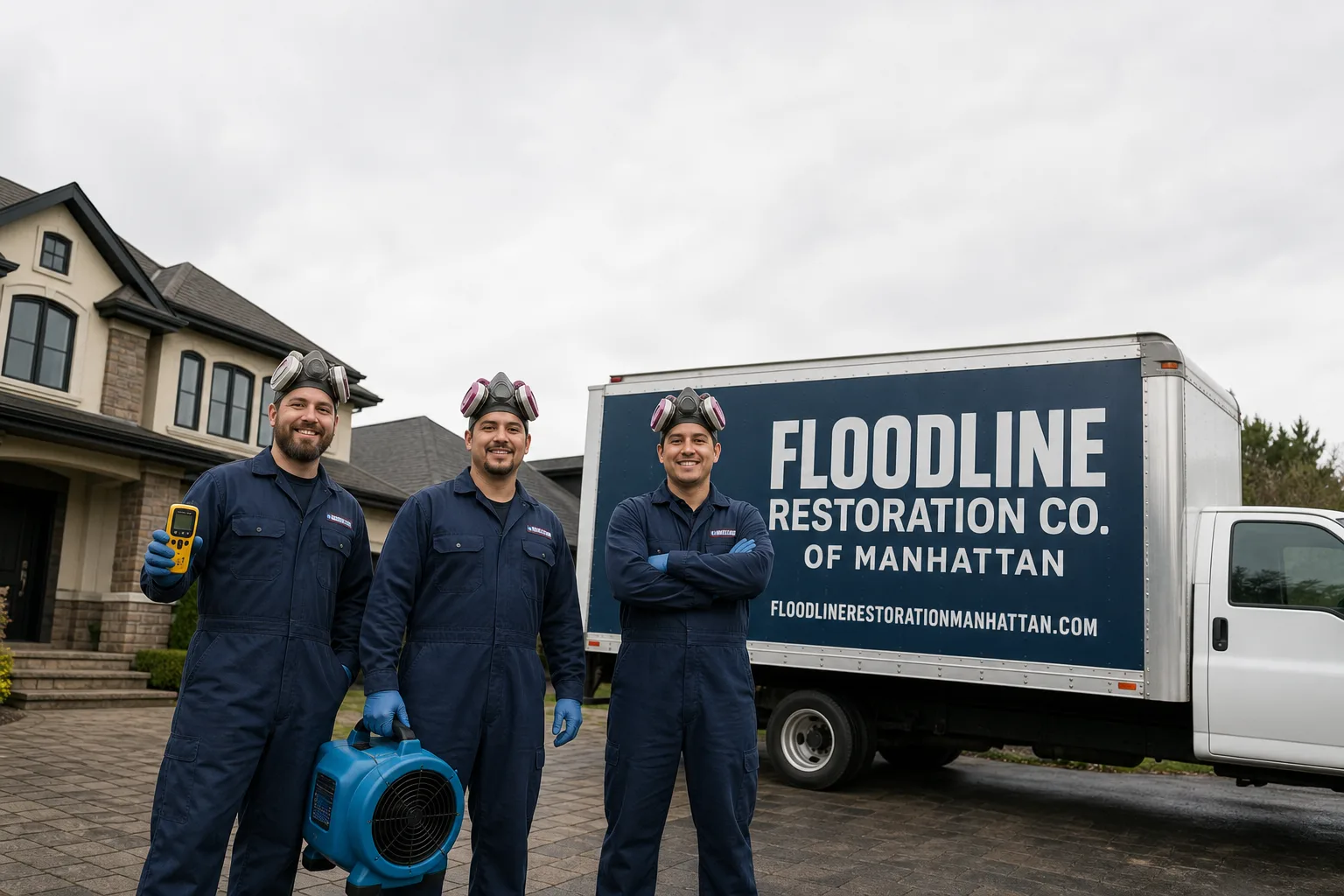
Free visual inspection and a written scope of work before any mitigation begins - photos, moisture readings, and drying logs go in your claim file
The scope we write is the scope we bill. Anything new gets shown to you, in writing, before we touch it.






 Before
 After
After Before
 After
After Before
 After
After24/7 Emergency Storm & Disaster Restoration in Park Avenue
Storm damage on Park Avenue moves fast, and the constraints here move slower. A wind-blown terrace door can leave a $12M unit open to the elements while the co-op board’s managing agent reviews whether a same-day crew is even allowed in the service elevator. That’s the reality we work within every day. Floodline Restoration Co. of Manhattan answers live 24/7 at (917) 924-4221, and our crews stage near Park Avenue so that when the call comes at 2 a.m., we’re already coordinating with your building’s staff, not leaving a message. The first hour after a storm matters because Category 1 water soaks into lath-and-plaster walls fast, and once it reaches the thick masonry behind them, drying takes days longer than any wood-frame building. We arrive, we assess, and we stabilize before the board’s 8 a.m. service window even opens.
Understanding Storm & Disaster Restoration Severity in Park Avenue Properties
Storm damage in Park Avenue’s pre-war co-op towers rarely announces itself as a single failure. Wind-blown rain enters through failed terrace flashing or a bowed penthouse door, then travels along cast-iron drain stacks and steam-heat risers that run inside partition walls. By the time you see the water mark, it has likely moved through multiple cavities. We classify the water the moment we arrive. Category 1 starts clean, but once it passes through aged plaster, insulation, and decades of building materials, it degrades fast. If wind-driven rain sat for more than 48 hours, we treat it as Category 2 and run antimicrobial treatment on the affected lath-and-plaster, because hidden mold in those wall cavities is a real threat. Moisture mapping with thermal imaging and hygrometers tells us what the eye misses. Behind Park Avenue’s thick limestone and brick, readings stay elevated for days longer than in newer construction, which means equipment can’t come out early just because the surface feels dry. Structural drying here is a patient process, and patience is what prevents a repeat loss six months later.
Why Park Avenue Property Owners Choose Floodline Restoration Co. of Manhattan
- 45-minute response commitment. Our crews stage near Park Avenue because we know that every minute a failed terrace door stays open, water moves deeper into the unit and into the units below it.
- 24/7 live answer, never an automated system. A dispatcher picks up at 2 a.m., asks the right questions, and starts coordinating with your building’s staff before the first truck rolls.
- IICRC-certified crews trained to WRT, FSRT, and AMRT standards. Certifications matter when the job involves moisture in pre-war masonry and hidden wall cavities. Background-checked, uniformed technicians only.
- Free visual inspection. We look before we quote, and we write the scope down so you know exactly what you’re approving before a single fan is placed.
- Direct insurance billing. Floodline Restoration Co. of Manhattan handles the carrier directly. You never play messenger between us and your adjuster.
- One team from extraction to reconstruction. The same certified crew that sets the drying plan runs the daily moisture readings, hands you the log, and rebuilds what needs rebuilding. No mid-job handoff, no inherited crew.
Our Storm & Disaster Restoration Process
Inspection & Assessment
We arrive with thermal imaging cameras, hygrometers, and moisture meters. We map every affected surface, identify the water category, and document the loss for your carrier. The written scope comes before any work begins.
Extraction & Stabilization
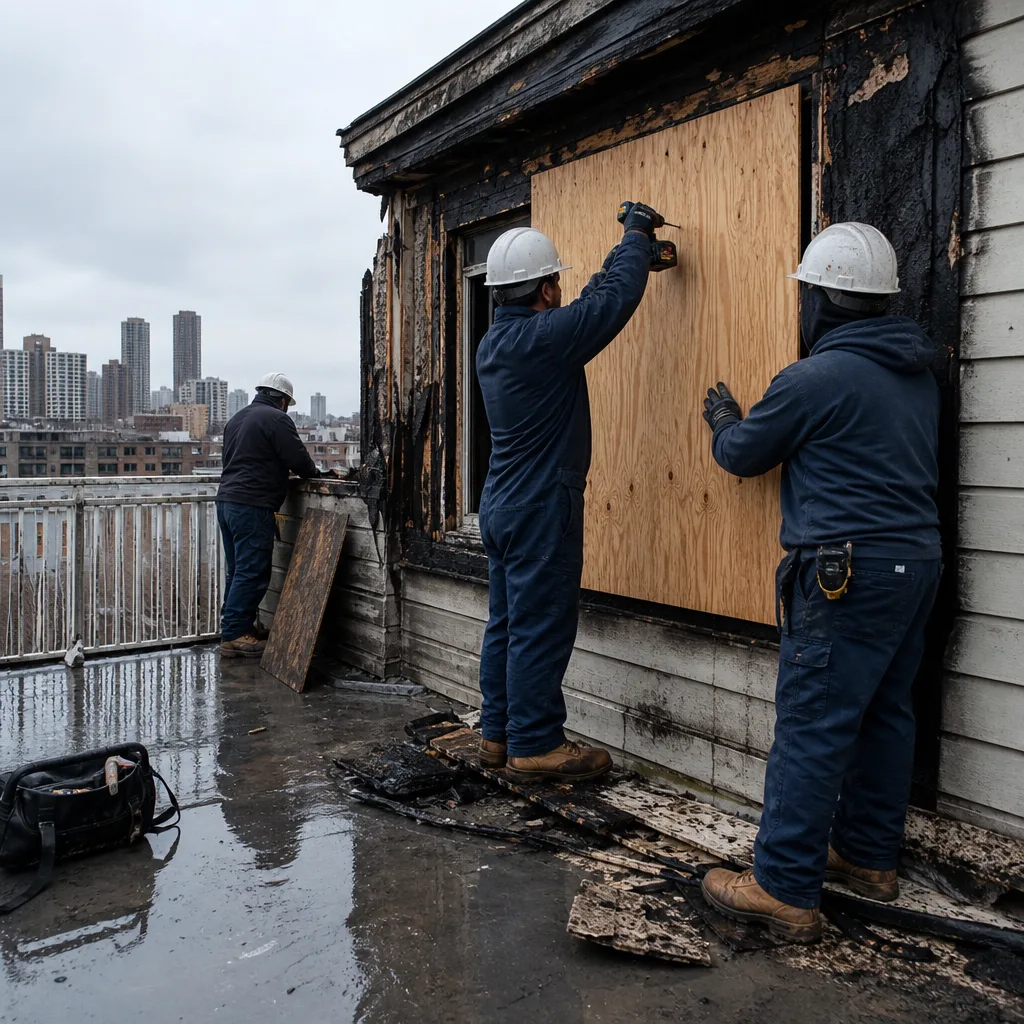
Standing water comes out first with truck-mounted extraction, then emergency board-up and roof tarping seal the envelope. We stabilize before we dry, because Park Avenue units can’t be left open while we debate the plan.
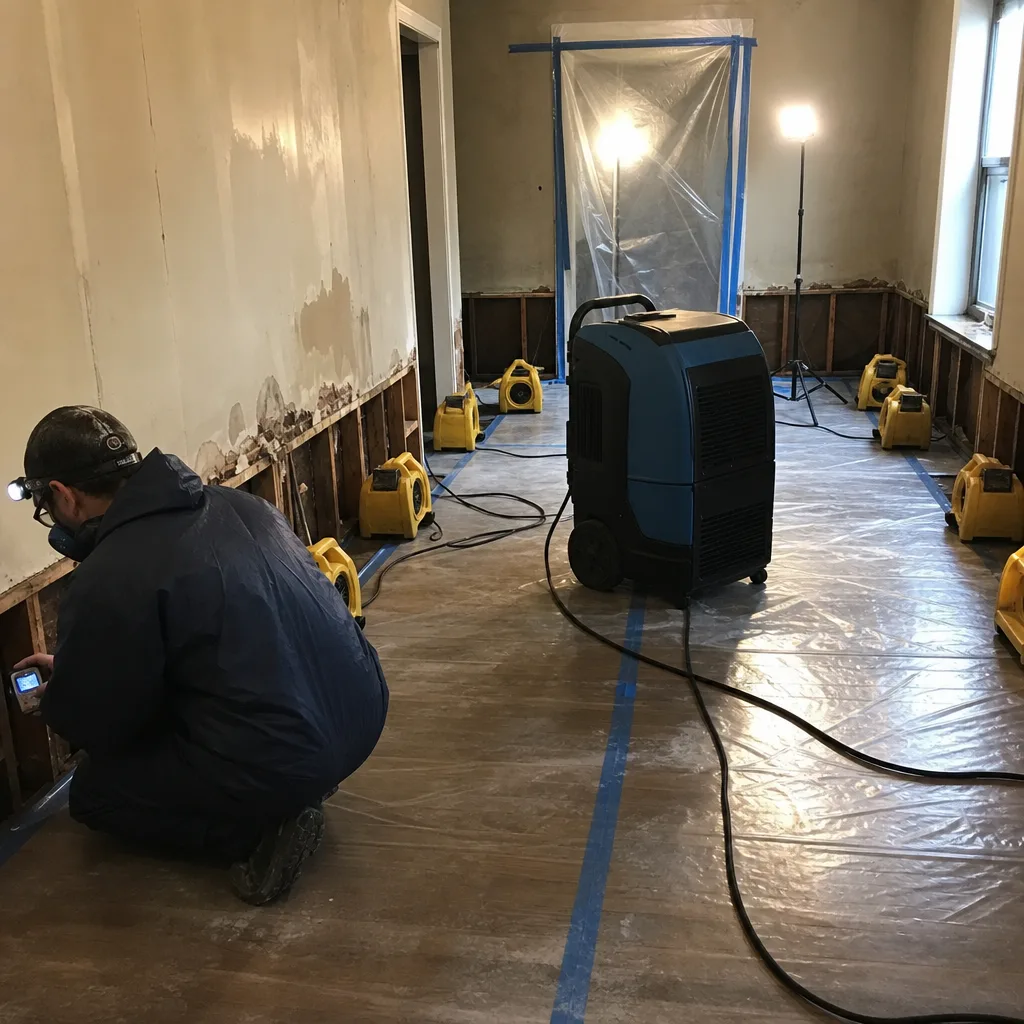
Drying & Dehumidification
Dri-Eaz and Phoenix dehumidifiers paired with XPOWER air movers run continuously. Daily moisture readings are logged until the dry standard is met, and those logs go to you and your adjuster.
Cleaning & Sanitization
HEPA air scrubbers run throughout the affected space. Hard surfaces are cleaned and antimicrobial treatment is applied where Category 2 or 3 water contacted building materials. This step matters most in Park Avenue’s aged lath-and-plaster walls.
Wind-Damage & Facade-Specific Treatment
Bowed doors, failed flashing, and compromised terrace membranes get specialty treatment. We document wind-load damage for structural review and coordinate with the building’s engineer where permits or board approvals are required.
Repairs & Restoration
Rebuilding happens after the dry standard is met. Custom finishes, book-matched marble, hand-painted murals. We match materials and workmanship, then stand behind it with the 90-Day Done Right Promise in writing.
Need Emergency Storm & Disaster Restoration in Park Avenue Now?
Crews minutes away, answering live 24 hours a day. The sooner we start, the less it costs.
Working With Your Insurance Company
The insurance conversation on Park Avenue is different from most places because the building’s policy, your unit-owner policy, and the co-op board all have a stake in the loss. We document everything from the first hour: photos room by room, moisture readings day by day, and a line-item scope that follows industry-standard estimating software your carrier recognizes. Our team communicates directly with your adjuster, so you don’t carry messages between parties. The goal is a claim that processes cleanly because the documentation is thorough enough that nobody has to argue about what happened. We’ve handled enough Park Avenue losses to know what carriers look for, and we build the file accordingly.
What We Provide Your Insurer
- Thorough documentation of the loss
- Photos of all damage, room by room
- Moisture readings and drying logs
- A detailed, line-item scope of work
- Direct coordination with your carrier
Built for Park Avenue’s Loss Calendar
Park Avenue’s storm season has a rhythm, and we plan around it. January deep freezes stress the cast-iron supply lines and steam-heat risers that run through these 1920s-era towers, and when a fitting lets go, pressurized hot water can saturate three to six stacked apartments within minutes. Spring thaw brings seepage through aging limestone facades, because the freeze-thaw cycle opens hairline cracks that water finds its way through. Summer thunderstorms routinely overwhelm the buildings’ original 1920s-era roof drainage designs, flooding setback penthouse terraces and channeling water into top-floor units. Nor’easters hit hardest between September and March, and that’s when we see the wind-load failures: bowed terrace doors, failed perimeter flashing, and compromised roof membranes. Every one of these losses runs straight into the same fundamental constraint: Park Avenue boards require notice, service-elevator windows close at 5 p.m., and skilled trades can’t work in occupied units after hours. The only way around it is preparation before the storm, and fast stabilization once it passes.
Storm & Disaster Restoration Across Park Avenue’s Neighborhoods
Park Avenue runs the length of Manhattan’s Upper East Side, and the storm response patterns shift as you move along it. In the low 60s and upper 50s, the pre-war co-ops sit shoulder to shoulder with modern towers, and the older buildings’ aging terrace membranes fail most often at setback penthouse levels. Around Park Avenue in the 70s and 80s, the classic limestone towers share aging cast-iron stacks across entire columns of units, which means a single terrace leak on the 14th floor can show up as water in three apartments below. The blocks near Grand Central at Park Avenue South mix older co-ops with commercial penthouse conversions, and wind-driven rain there moves through flat-roof structures differently than through the sloped rooflines further uptown. East-west cross streets like 72nd, 79th, and 86th become response corridors for us, because that’s where the service entrances and loading docks sit, and every board has a different rule about which entrance a restoration crew can use. We know the buildings, the managing agents, and the doormen who run the service elevators. That local knowledge saves hours when a unit is open to the weather.
Specialized Storm & Disaster Restoration Services We Offer in Park Avenue
Storm Damage Cleanup
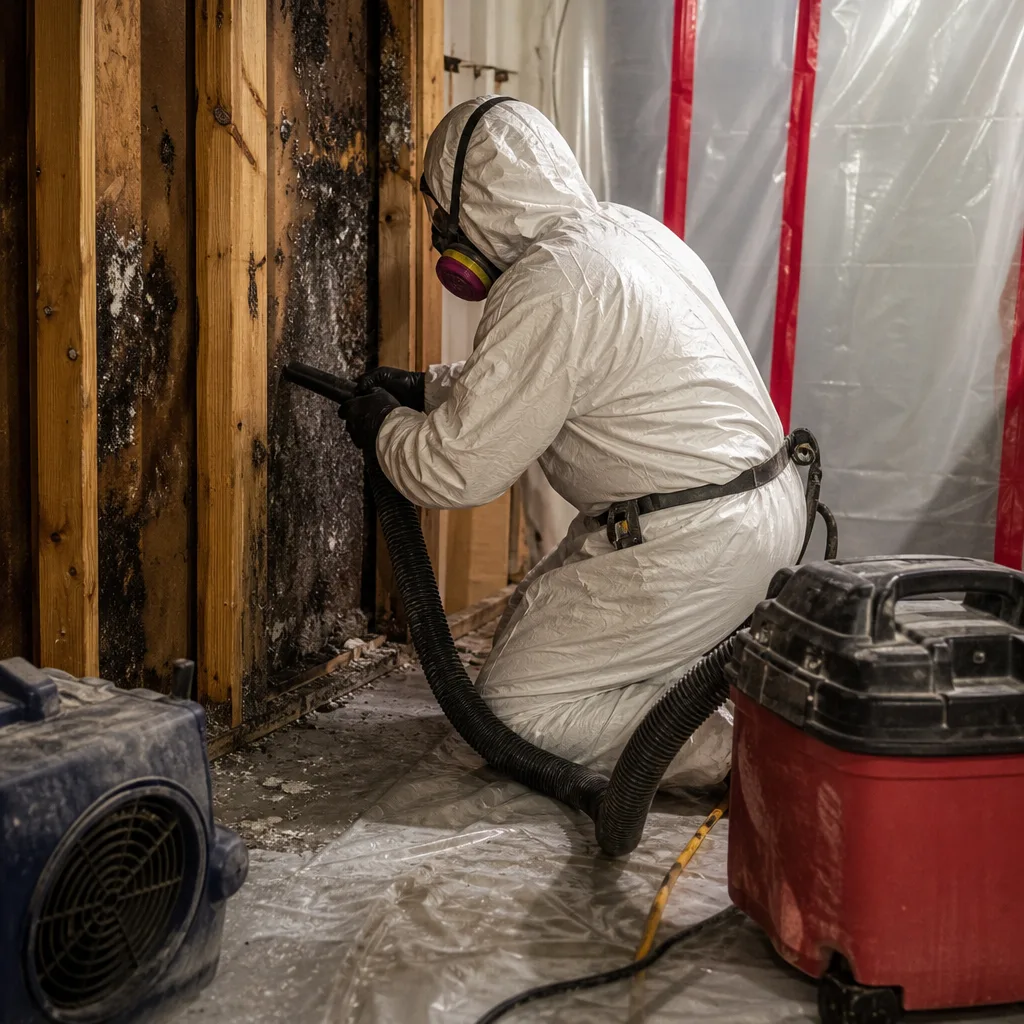
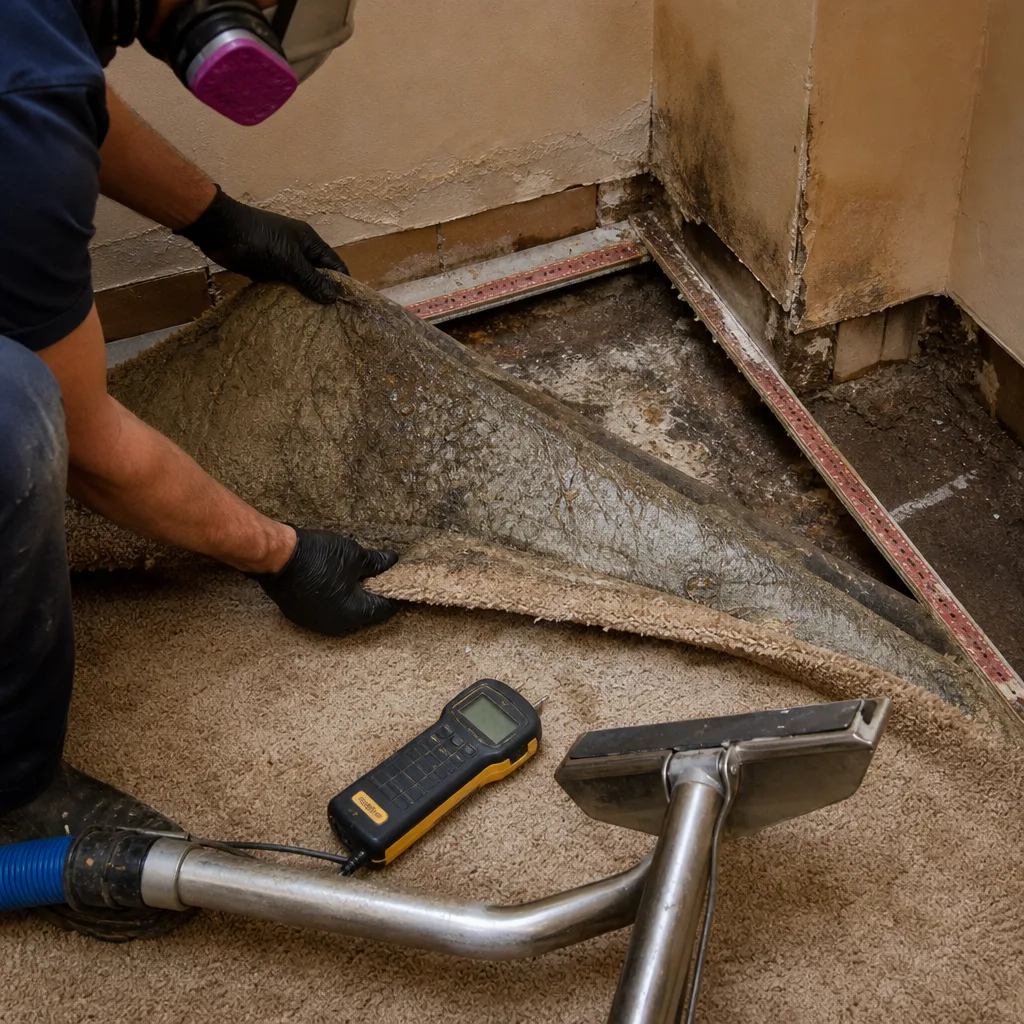
After a storm passes, the cleanup is about more than standing water. We remove saturated materials, contain the affected areas, and run HEPA air scrubbing to keep particulates from spreading into unaffected rooms. In Park Avenue’s pre-war units, cleanup has to account for lath-and-plaster walls that hold moisture longer than drywall ever would, so we map moisture extending beyond the visible water mark before we declare a room clean.
Flood Damage Restoration
Flooding from a failed roof membrane or a wind-blown rain intrusion behaves differently in a 1920s co-op than in a suburban house. Water that enters at the penthouse level can travel down through wall cavities, steam-heat risers, and cast-iron drain stacks before it shows up as a stain on a ceiling three floors down. Our moisture mapping and structural drying plan accounts for the entire path, not just where the water pooled.
Emergency Board-Up
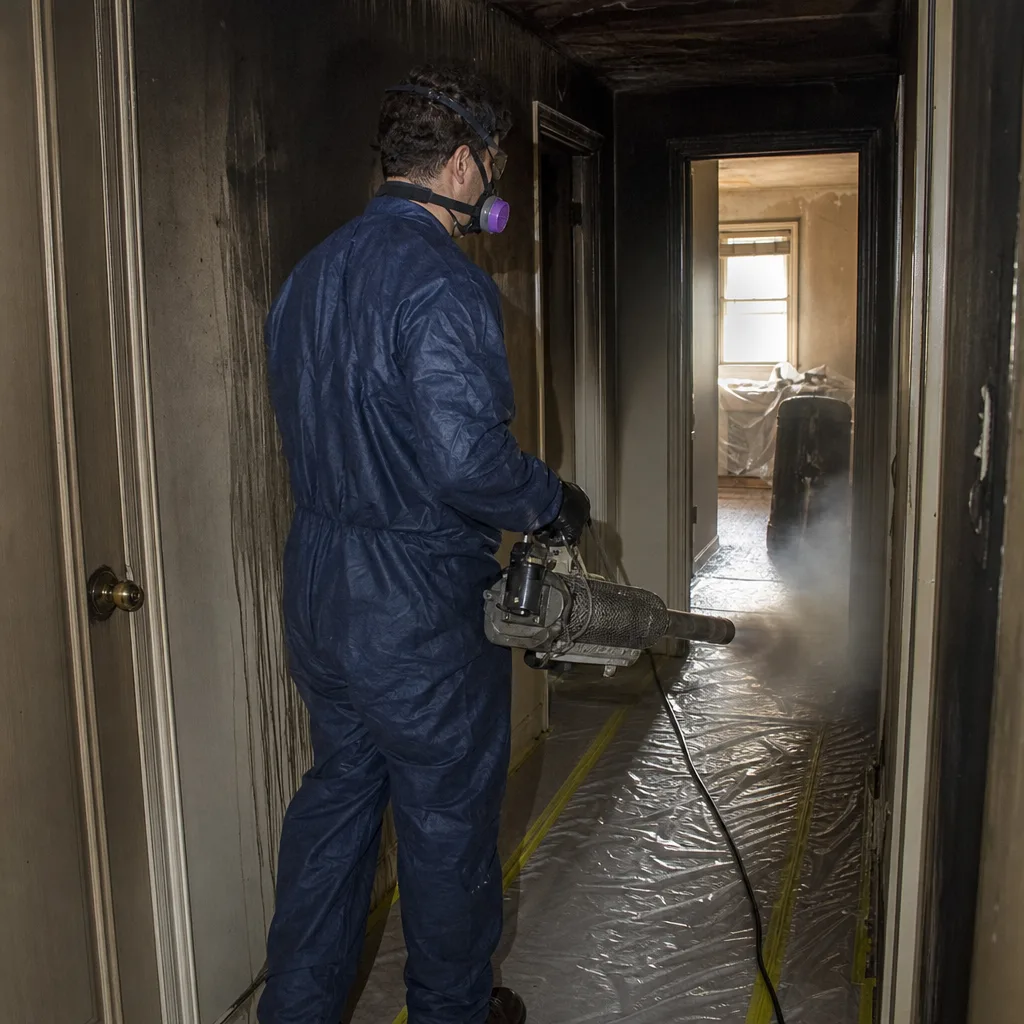
When a wind-blown window or bowed terrace door leaves a Park Avenue unit exposed overnight, the board-up has to happen fast and it has to hold against the next storm front moving in. We seal the opening with weather-rated materials that protect the interior from further wind-driven rain, and we coordinate with the building’s superintendent so the board-up doesn’t block fire egress or violate the co-op’s rules for exterior appearance. The board-up buys time for the real repair, but on Park Avenue it has to be done right the first time, because the board won’t approve a second attempt.
Roof Tarping
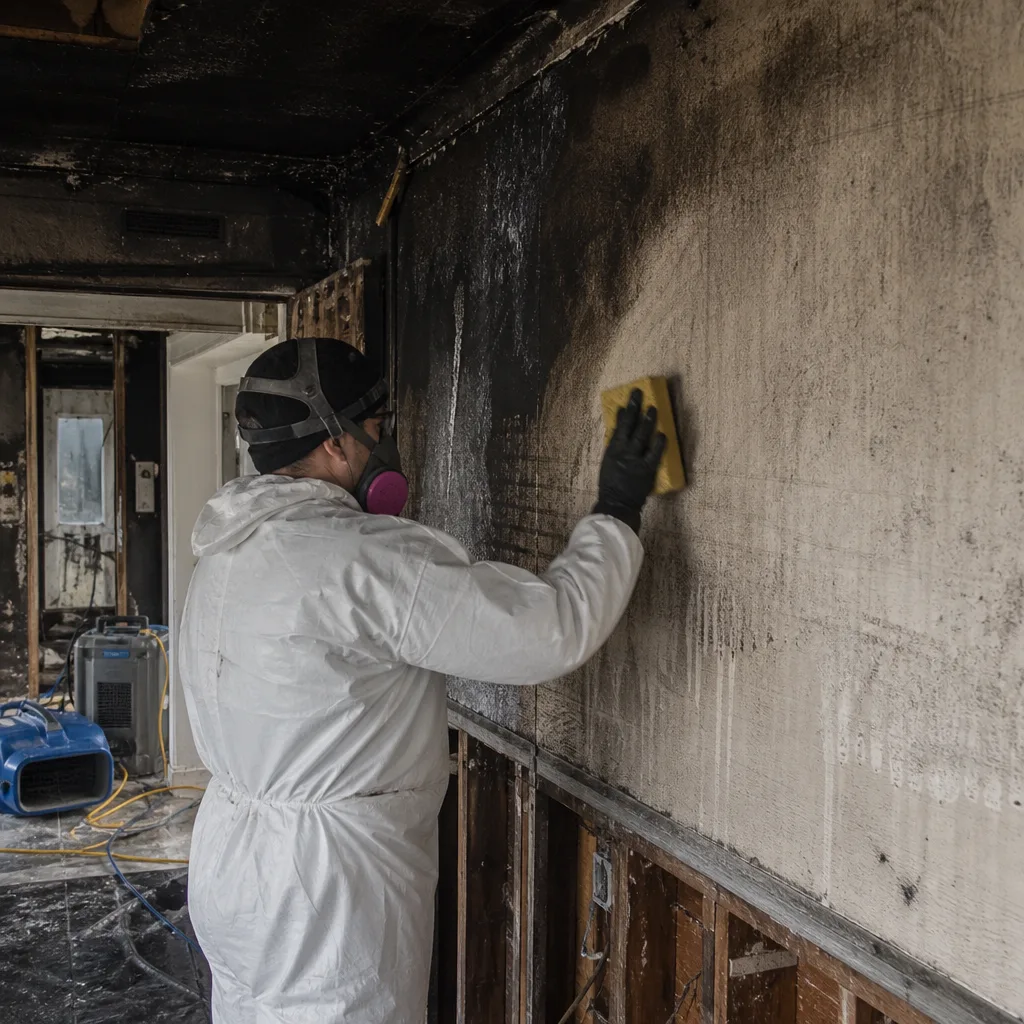
Roof tarping on Park Avenue isn’t a simple matter of throwing a tarp over a leak. Setback penthouse terraces, original 1920s-era drainage designs, and aging waterproofing membranes all complicate the work. We install temporary roofing that channels water away from the penetration, not around it, and we document the tarping for the board’s managing agent so there’s a written record of what was done and when. The tarp is temporary. The documentation is not.
Debris Removal
Storm debris on Park Avenue comes in two forms: what the wind leaves behind on terraces and rooftops, and what falls inside when windows or doors fail. We remove both, and we do it on a schedule the building approves, because debris sitting in a service elevator or a lobby isn’t something a Park Avenue co-op tolerates for long. Where debris removal reveals structural damage, we photograph it and add it to the loss file for your carrier.
Wind Damage Repair
Wind-load failures on Park Avenue are rarely as simple as a broken pane. A bowed terrace door can hold its frame while the perimeter flashing behind it fails, letting Category 1 water pour into a $12M unit with hand-painted ceiling murals. We assess the entire assembly, not just the visible damage, and we repair the flashing, the frame, and the surrounding masonry so the next storm doesn’t find the same opening. For pre-loss work, wind-rated door reinforcement is the single best investment a Park Avenue penthouse owner can make, because it prevents the damage from happening in the first place.
What happens when you call
- 1
A real person answersNo phone trees - you reach a local pro.
- 2
You get an upfront price rangeHonest numbers before anyone is dispatched.
- 3
A background-checked tech heads outLicensed & insured, dispatched right away.
- 4
You approve before work beginsNothing starts until you say go.
Storm & Disaster Restoration Costs in Park Avenue, NY
Storm restoration in Park Avenue runs higher than most of Manhattan, and the reasons are structural. A typical emergency board-up after a wind-blown window failure runs $400-$900, depending on the size of the opening and whether the building’s super has to coordinate a service elevator outside normal hours. Roof tarping on a setback penthouse typically lands between $800-$2,200, because accessing the roof through the building’s interior often requires board approval and a scheduled window. Water extraction and structural drying after storm intrusion into lath-and-plaster walls runs $3,500-$9,000 for a single high-value unit, with the range driven by how far the moisture traveled through wall cavities and whether custom finishes need protection in place. Wind damage repair to a failing terrace door assembly, including perimeter flashing, runs $2,000-$6,000. Most Park Avenue policies cover storm damage, but co-op buildings often have subrogation clauses that make documentation essential. The free visual inspection builds a written scope before you commit to anything, and the price on paper is the price you pay. No surprises on the bill, and we stand behind the work with the 90-Day Done Right Promise.
We Also Serve Cities Near Park Avenue
While this page is built for Park Avenue, our crews also respond to storm and disaster calls in Fairview, Harrison, East Bronx, and Hunts Point. The building types change, the boards are different, but the standard stays the same: live dispatch, written scopes, direct insurance billing, and the 90-Day Done Right Promise on every job.
Serving Park Avenue, NY - Our Local Coverage Area
We’re based in the Park Avenue area and know this community well. Use the map below to see our service coverage - if you’re nearby, we can almost certainly help.
Park Avenue Storm & Disaster Restoration Questions, Answered
How do Park Avenue co-op boards typically handle approval for emergency storm board-up when a wind-damaged door leaves a unit exposed overnight?
Most Park Avenue boards have an emergency provision that allows immediate stabilization when a unit is actively exposed to the elements, but the work still has to go through the managing agent, not around them. We call the super directly, explain the exposure, and begin drafting the board-up while the approval moves through the managing agent’s emergency contacts. Waiting for a full board vote is not an option when a terrace door is bowed and rain is coming. Call (917) 924-4221 and we’ll handle the coordination.
Why do wind-rated door failures on Park Avenue penthouses often cause water damage even when the door itself stays intact?
The door holds, but the perimeter flashing behind it fails under wind load, and that’s where the water gets in. We see this constantly on setback penthouse terraces: the impact-rated frame is still solid, the flashing has pulled away from the masonry, and Category 1 water is running into the unit behind the wall. The repair has to address the entire assembly, not just the visible door.
What is the drying timeline for a Park Avenue pre-war apartment after storm water intrusion through a failed roof membrane?
Plan for 4 to 7 days of active drying behind Park Avenue’s thick limestone and brick, and sometimes longer if water moved through lath-and-plaster wall cavities into shared riser chases. The masonry slows evaporation, and we don’t pull equipment early based on how the surface feels. Daily moisture readings drive the schedule, and the drying log goes to you and your adjuster.
Can a Park Avenue building’s shared steam-heat risers complicate storm restoration, even if the storm damage is from wind or rain?
Yes. The risers run inside partition walls and belong to the co-op corporation, not to any individual owner. If storm water moves into a wall cavity and reaches a riser, the restoration now involves the building’s infrastructure, which brings the managing agent and board counsel into the conversation. We scope for this from the first moisture mapping, because discovering it later delays everything.
What should a Park Avenue resident do immediately after a storm blows out a window or door on a high floor?
Call us at (917) 924-4221 first, then call your managing agent. Move valuables away from the opening, close interior doors to contain the air movement, and don’t attempt to board up a high-floor opening yourself, especially on a terrace where wind load is a real hazard. We’ll stabilize the opening, document everything for your carrier, and coordinate with the building’s staff so the repair window is scheduled properly.
How fast can a crew actually reach a Park Avenue unit after a storm-related emergency?
Our 45-minute response commitment applies across Park Avenue, though building access can add time depending on the service elevator schedule and whether the board requires notice. We dispatch the moment you call, and our team starts coordinating with the building’s staff in parallel, so the crew is waiting at the service entrance when the elevator is ready. The extraction isn’t delayed by paperwork.
Will my insurance cover wind-driven rain intrusion into a Park Avenue apartment?
Most unit-owner policies cover storm water intrusion, but Park Avenue claims often involve the building’s policy as well, and the two carriers have to sort out responsibility. We document everything in a format both carriers recognize, and we communicate directly with your adjuster. The goal is a claim that processes without you acting as the messenger between us, the managing agent, and the insurance company.
Are Floodline Restoration Co. technicians certified for storm restoration work in pre-war buildings?
Yes. Our technicians are background-checked, uniformed, and certified to IICRC, RIA, and IFA standards, including WRT, FSRT, and AMRT certifications. The training matters most on Park Avenue because pre-war lath-and-plaster, masonry construction, and shared building systems demand a different approach than drywall and wood framing.
When a storm hits Park Avenue, the difference between a contained loss and a building-wide event comes down to how fast the right crew gets through the service entrance and how well they understand what they’re looking at once they’re inside. Floodline Restoration Co. of Manhattan has been doing this work long enough to know that the pre-war towers along Park Avenue don’t forgive shortcuts. The board approval process, the 8 a.m.-5 p.m. service windows, the shared risers, the irreplaceable finishes. All of it shapes the job from the first phone call to the final drying log.
Call (917) 924-4221 for a free estimate. Live dispatch answers around the clock, and the 90-Day Done Right Promise comes in writing on every job. Done right, and backed in writing.
Written by Curt Bowman, Owner at Floodline Restoration Co. of Manhattan. Curt founded the company in 2010 and has guided storm restoration work across New York City’s most demanding buildings ever since.