
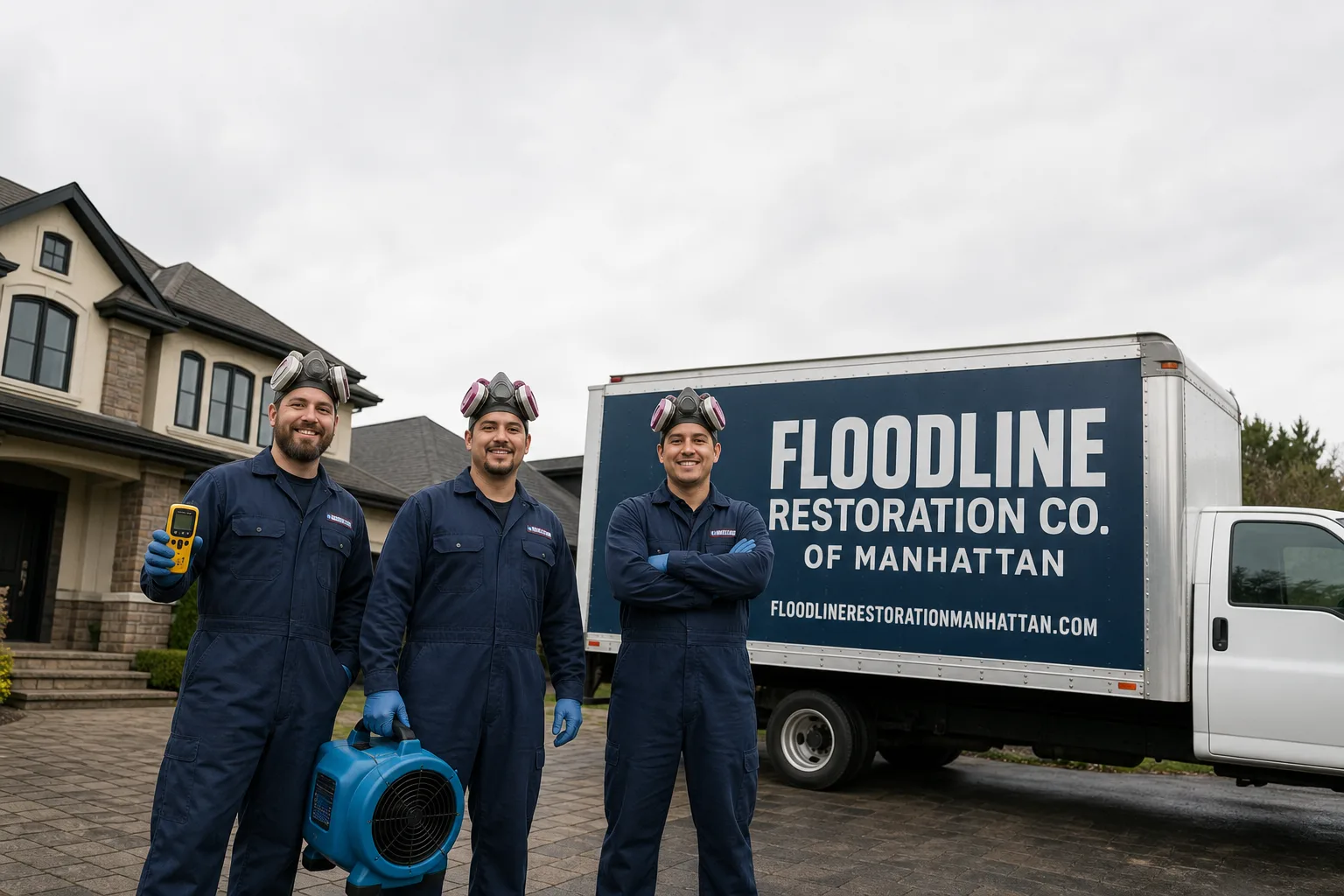
Free visual inspection and a written scope of work before any mitigation begins - photos, moisture readings, and drying logs go in your claim file
The scope we write is the scope we bill. Anything new gets shown to you, in writing, before we touch it.
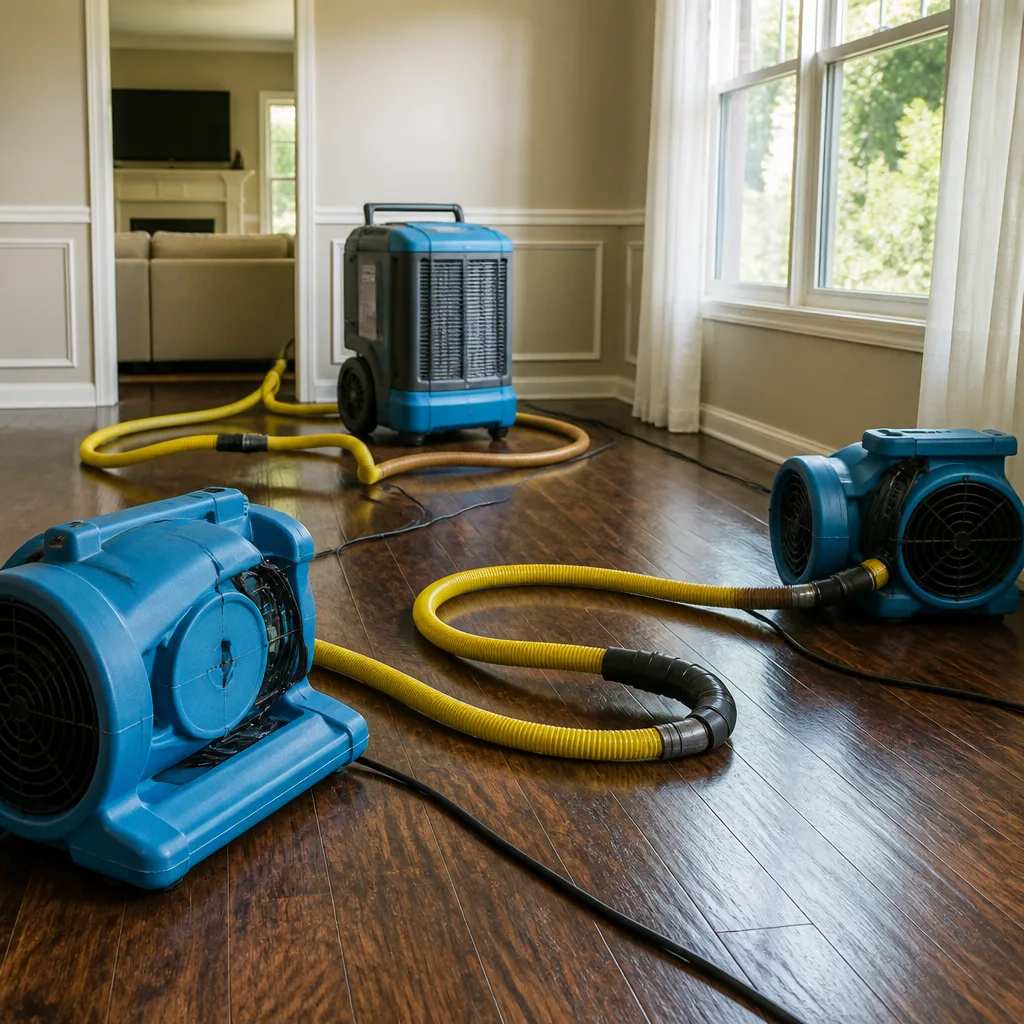
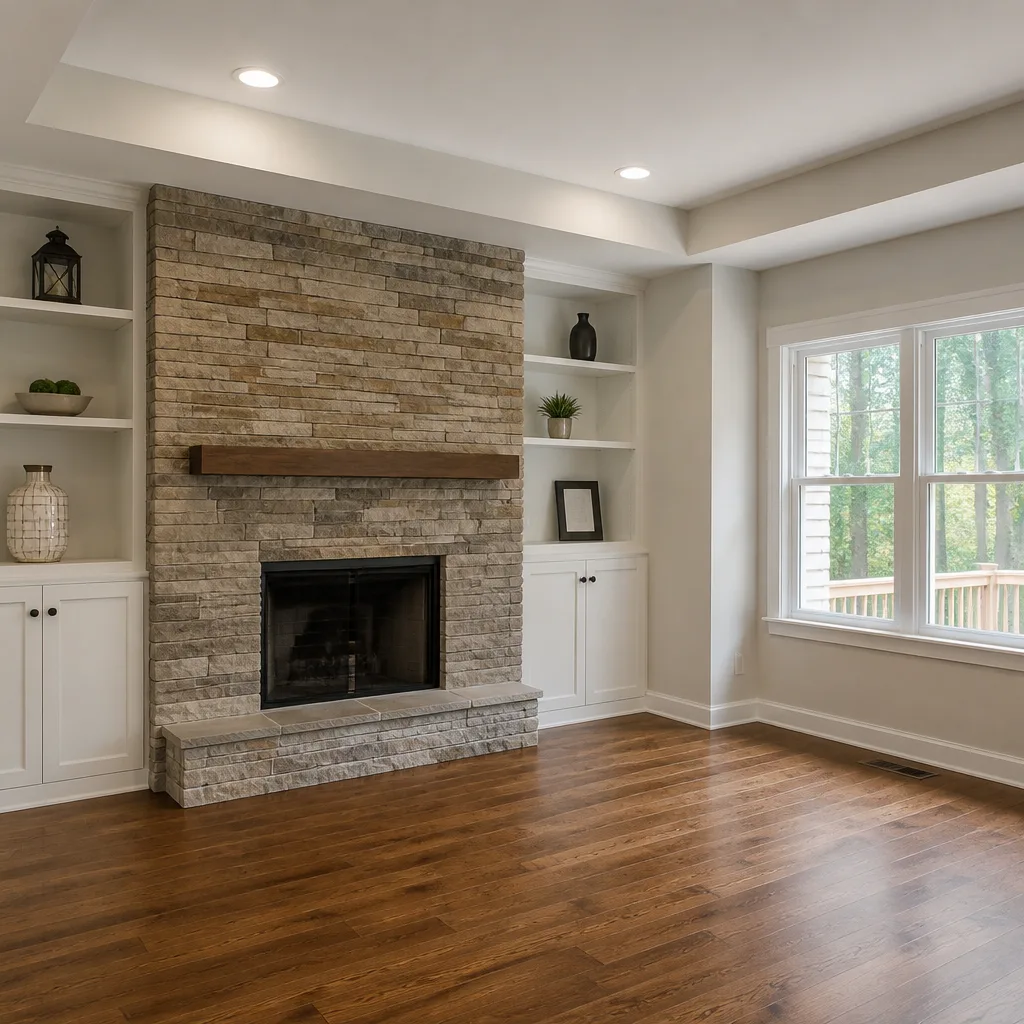
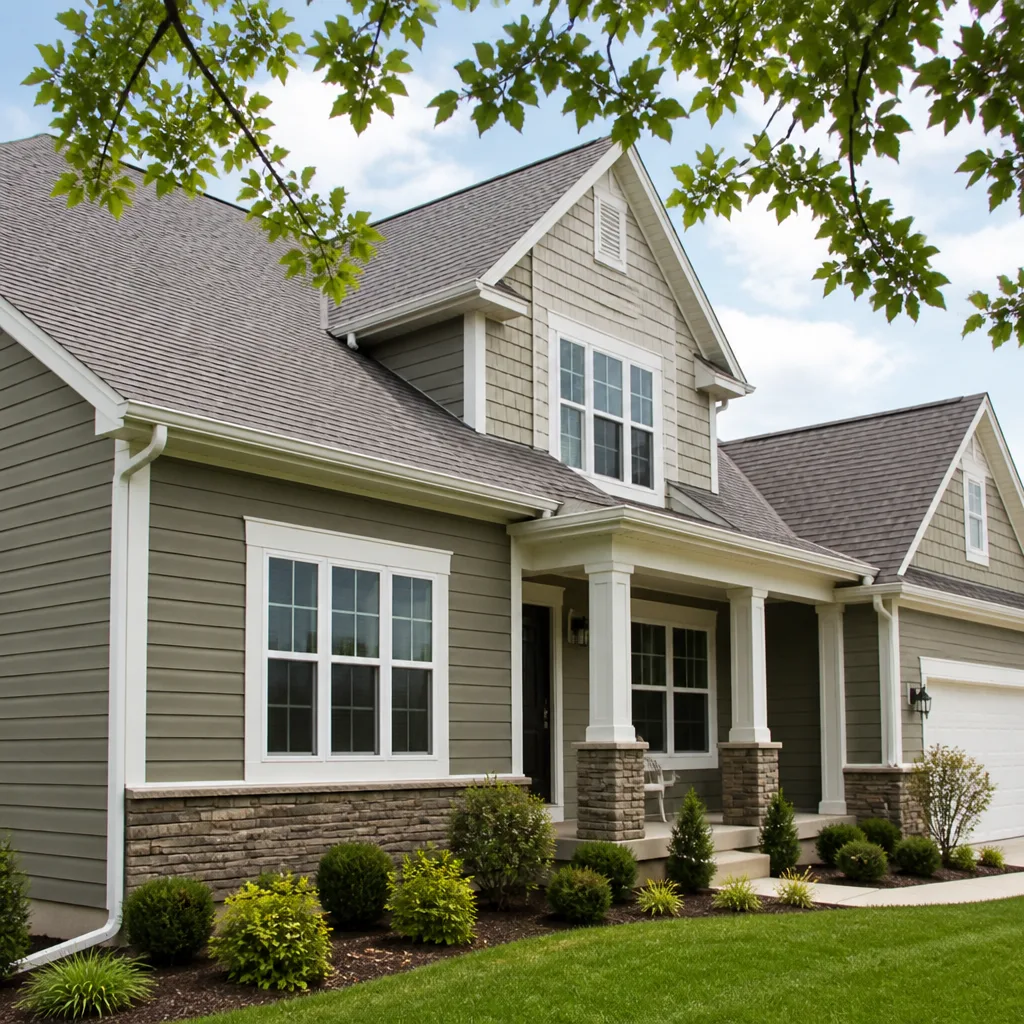
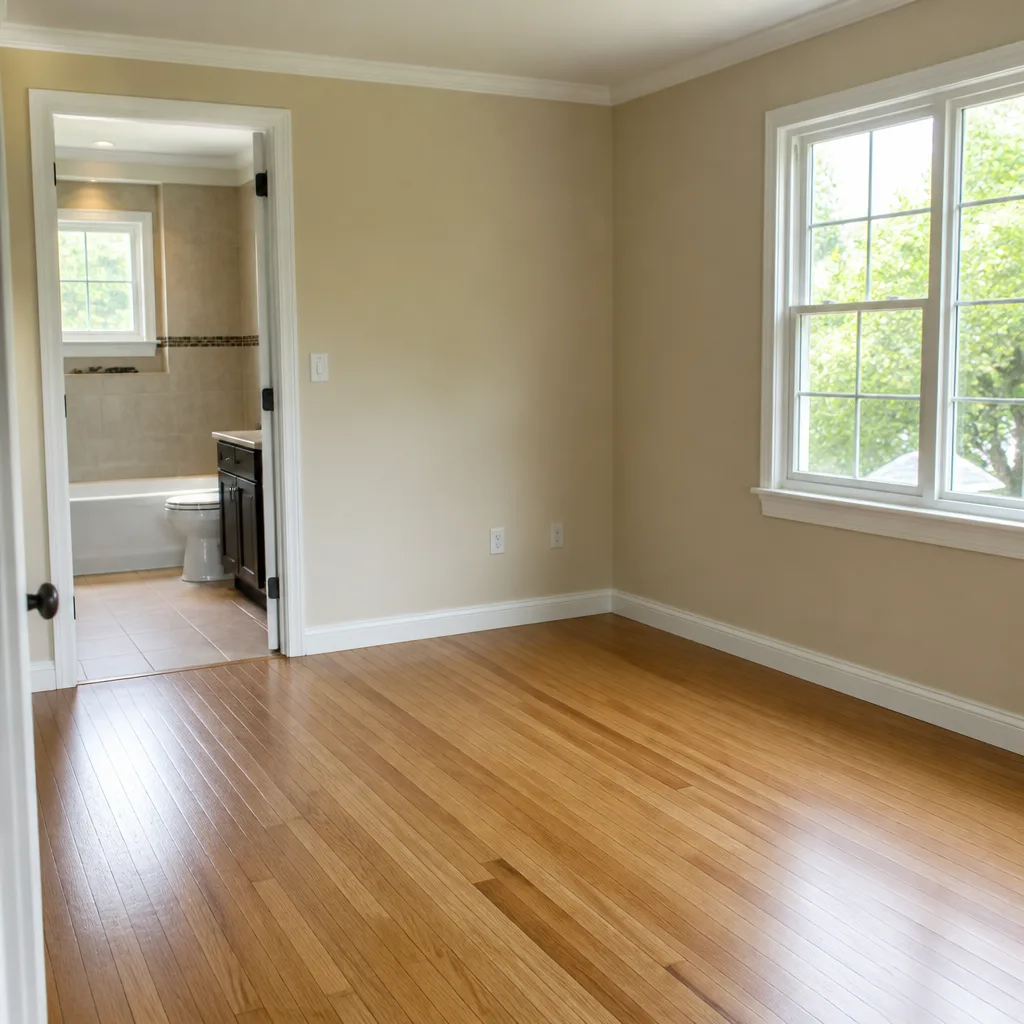
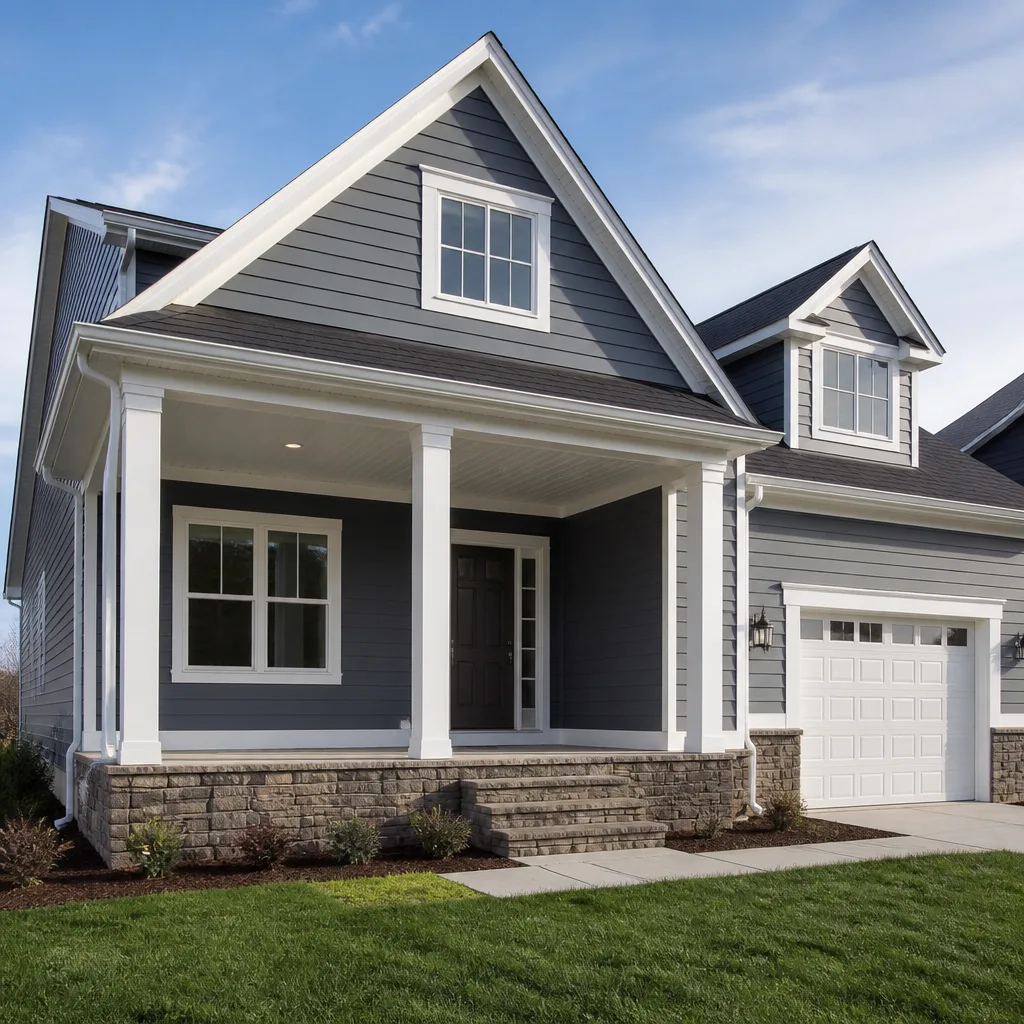
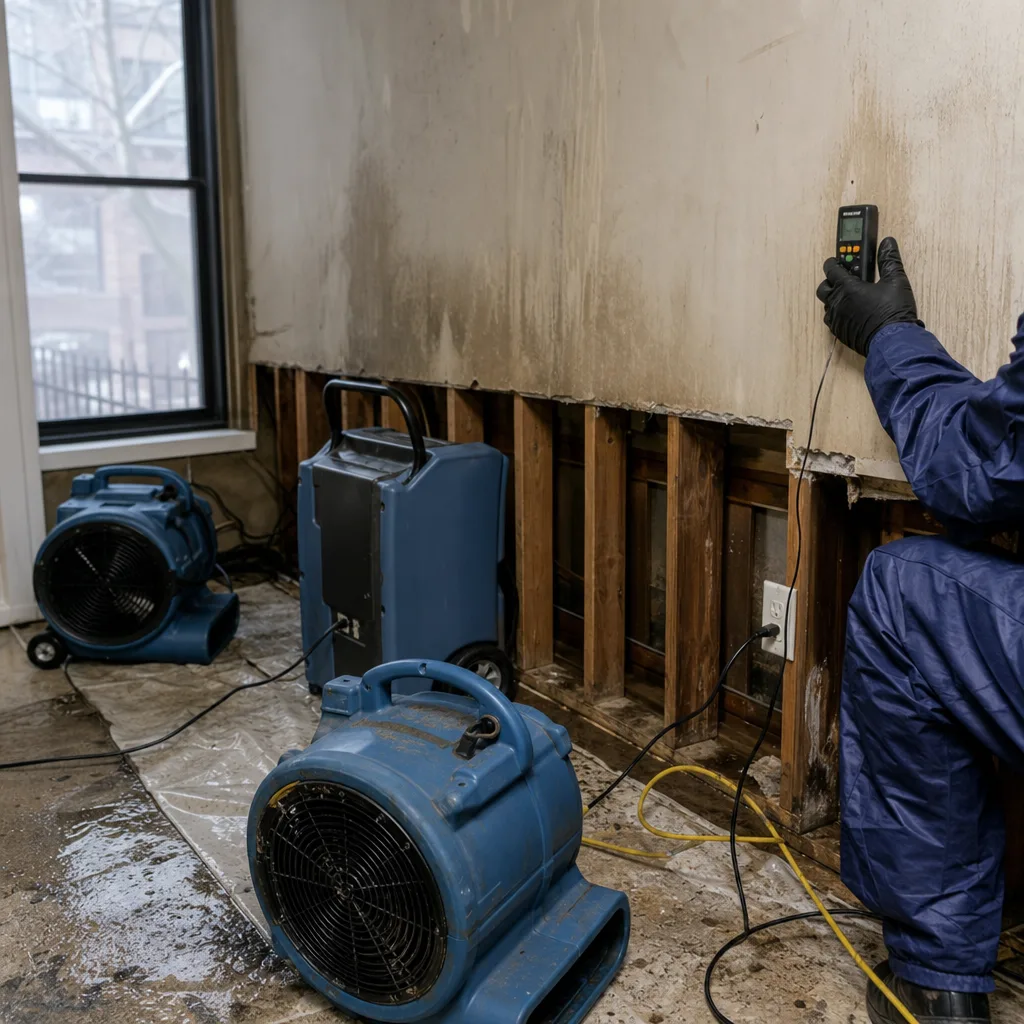 Before
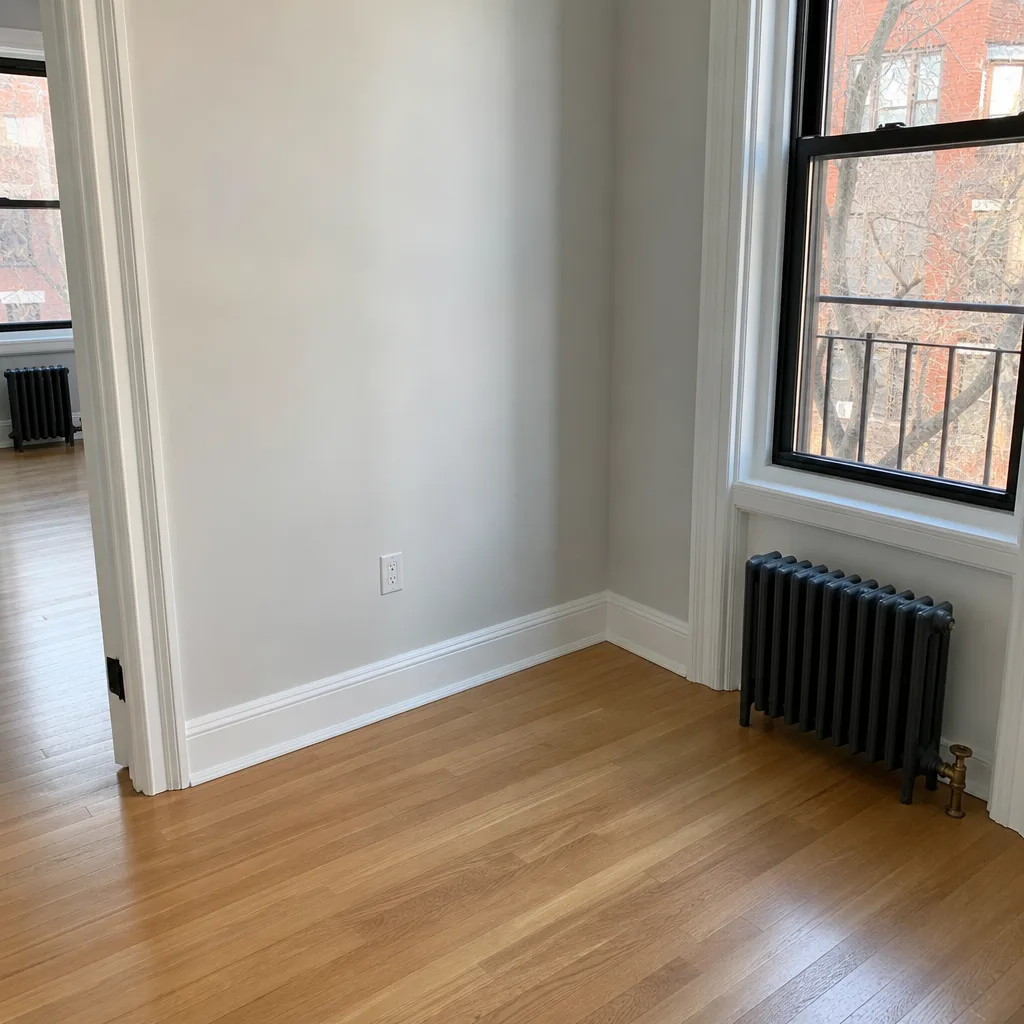 After
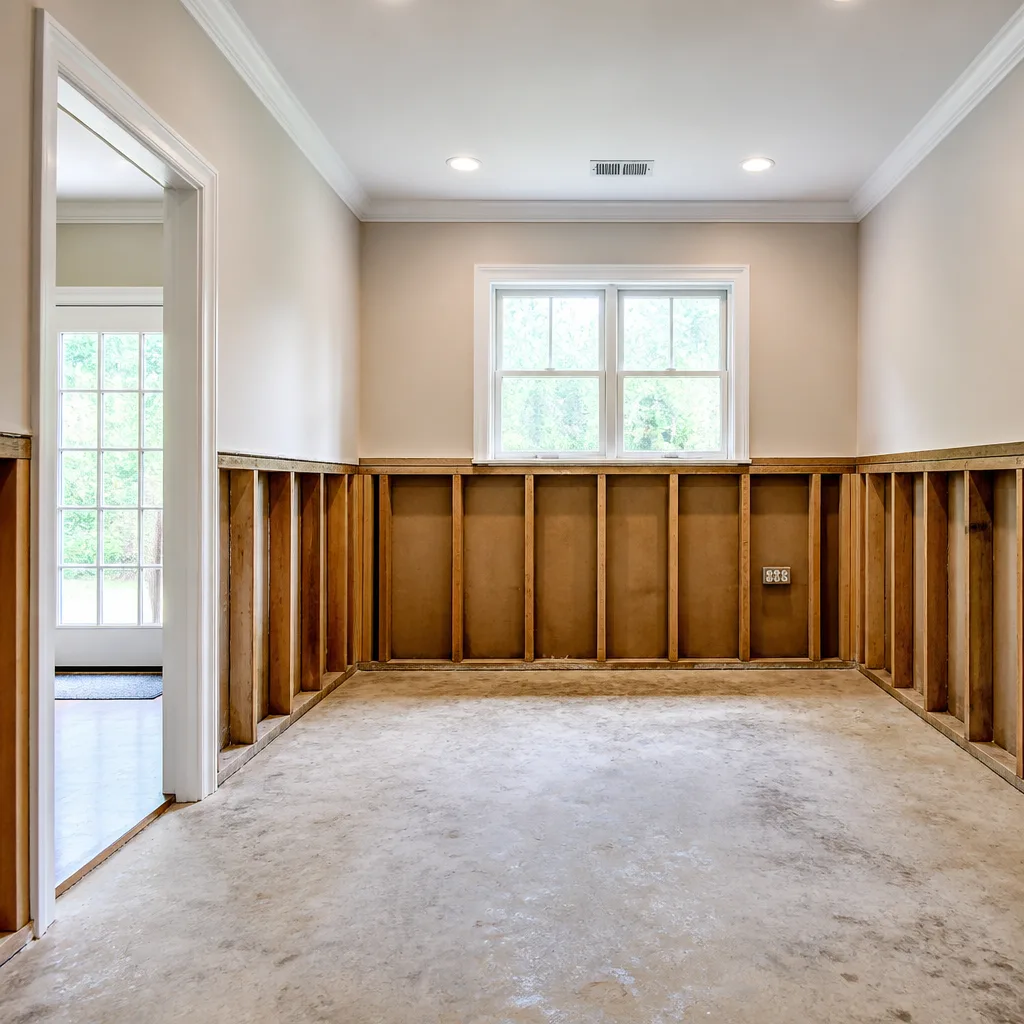
After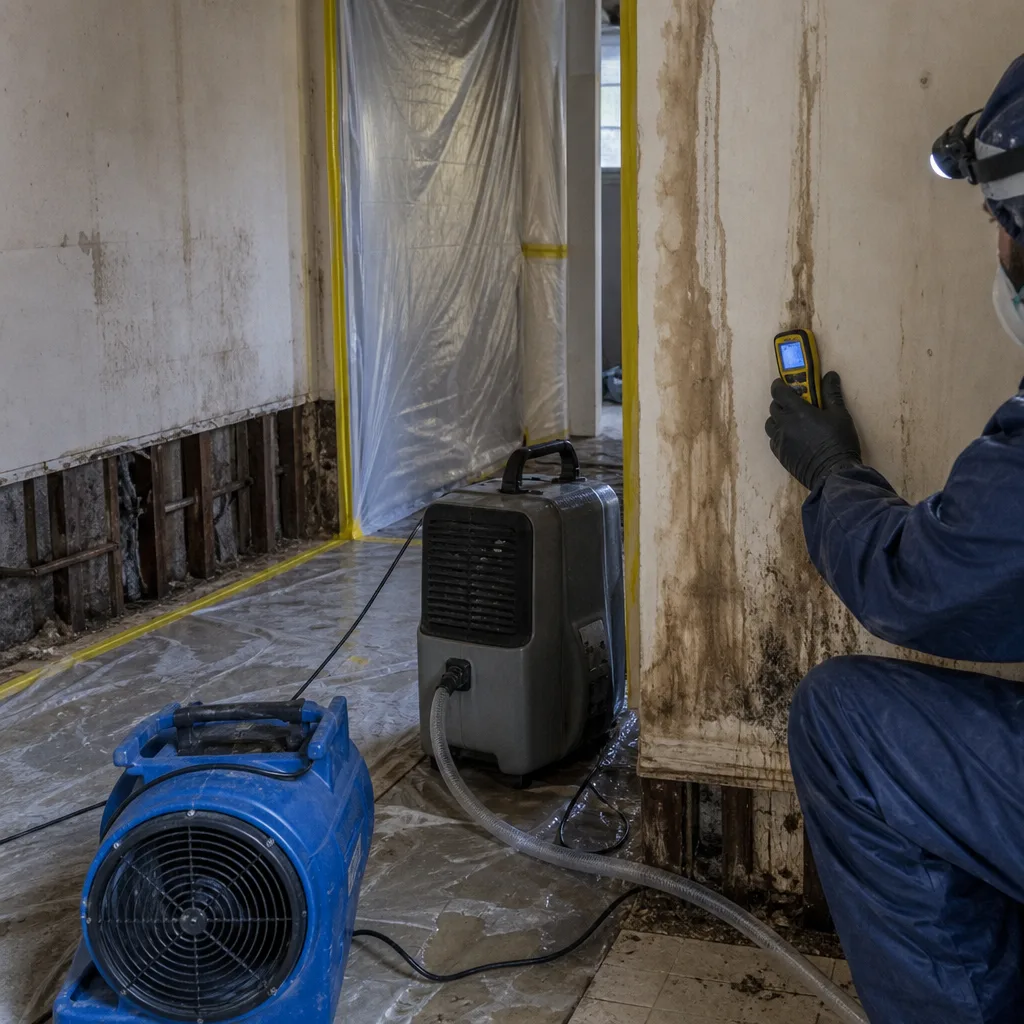 Before
 After
After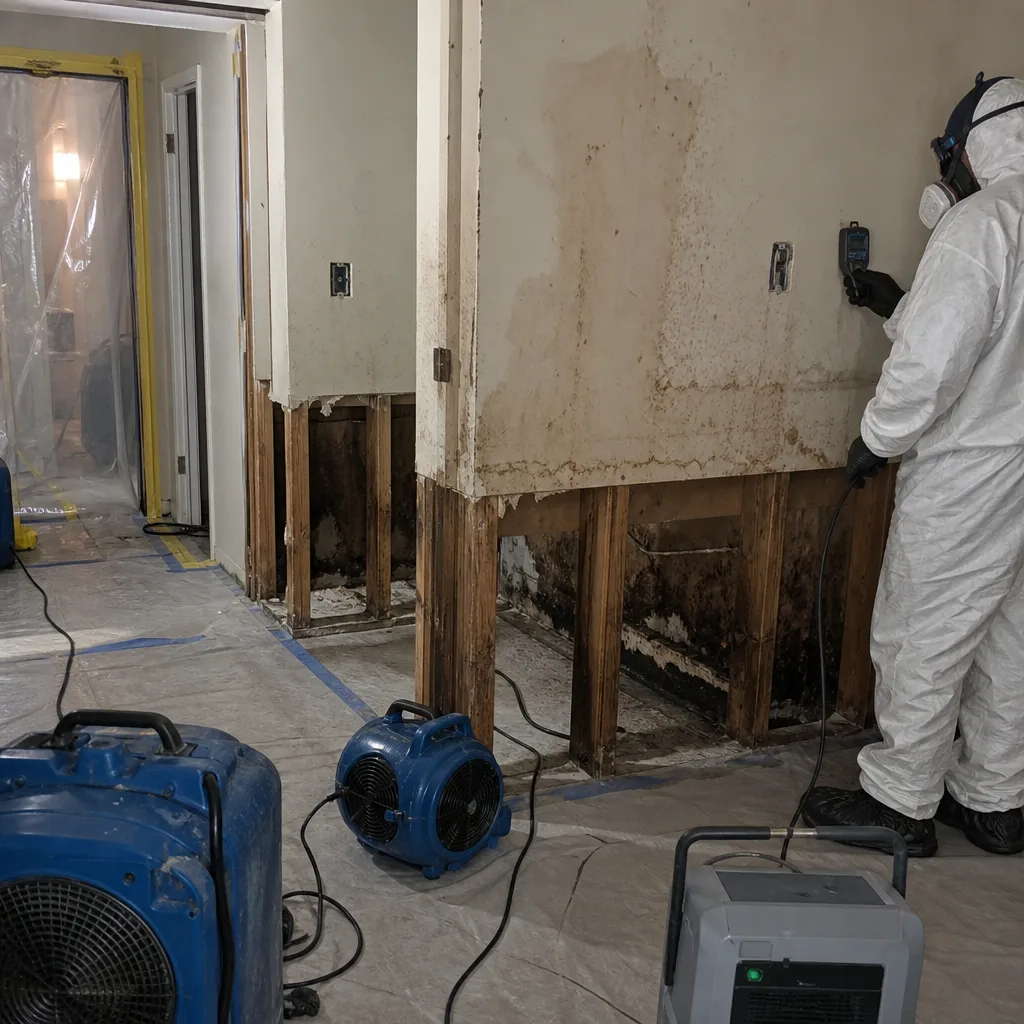 Before
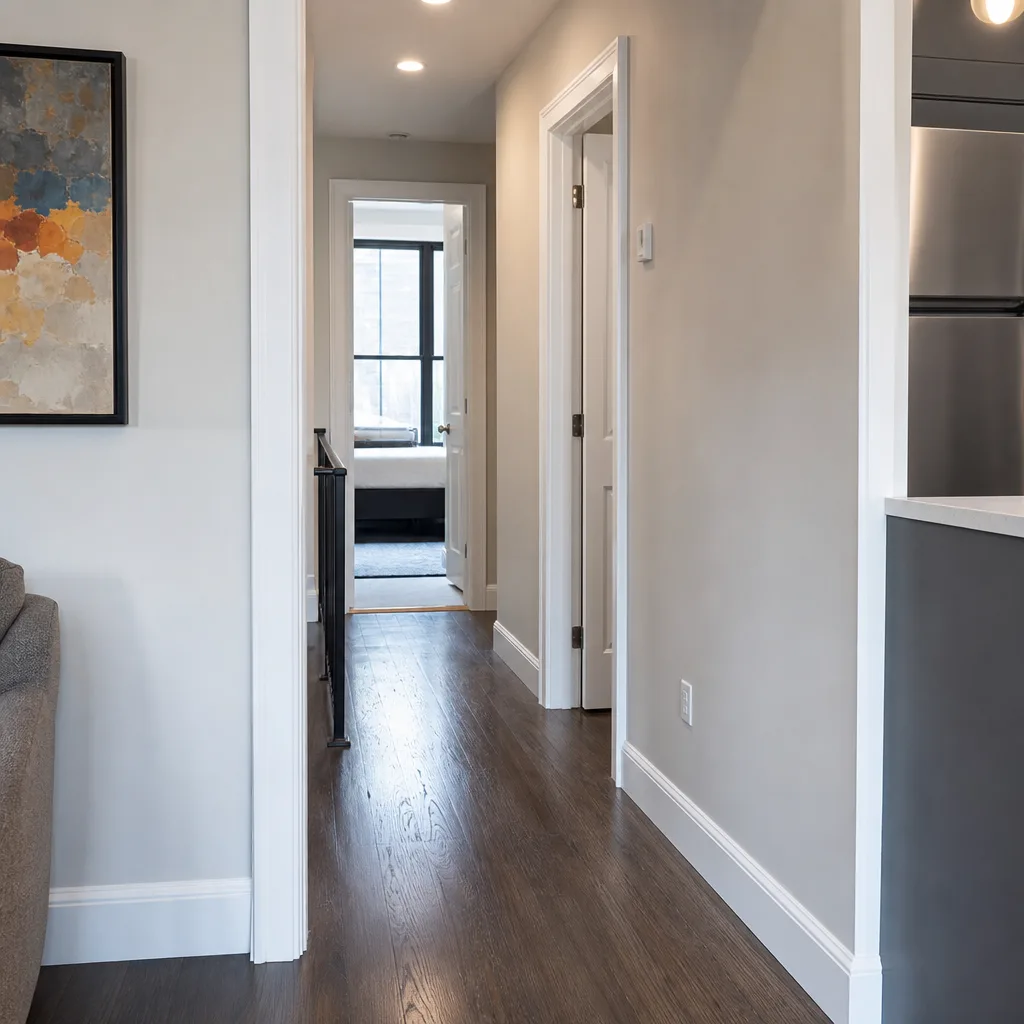 After
After24/7 Emergency Storm & Disaster Restoration in Piermont
Storm damage in Piermont moves fast, and the first call you make determines how much of your home survives the next 48 hours. Our crews answer live at (917) 924-4221 around the clock, every day of the year. When a nor’easter drives Hudson water over Ferdon Avenue or a wind gust tears a river-facing door off its hinges on Paradise Avenue, we dispatch certified technicians into the village immediately. The first hour matters because Piermont’s geography gives water almost nowhere to go once it rises over street level.
We arrive, assess the full extent of the damage with a free visual inspection, and start extraction the same visit. No answering service. No callback queue. A live dispatcher picks up at 2 a.m. and a crew reaches your Piermont property with professional-grade equipment already loaded. That’s how Storm & Disaster Restoration should work: fast, honest, and backed in writing.
Understanding Storm & Disaster Restoration Severity in Piermont Properties
Piermont homes are not like inland Rockland County houses. They sit on a narrow strip of land between the tidal Hudson and the Palisades escarpment, many of them 19th-century Victorians and vernacular cottages built on stone or rubble-mortar foundations at near-tidal elevation. Those foundations wick moisture chronically. They were never designed for modern waterproofing standards, and the village’s compressed geography left little room for grading water away from foundation walls.
When storm water enters a Piermont crawlspace, it is rarely clean. The Piermont Pier and adjacent marsh create a partial containment basin during nor’easters and hurricane events. Once water rises over street level, it has limited escape routes and stands far longer than in open-shoreline towns. That standing water picks up whatever it touches: road runoff, marsh sediment, sewage from overwhelmed municipal lines. Restoration crews working Piermont jobs routinely classify what they find as Category 3 water, the most contaminated classification in the trade. That classification dictates everything downstream: full cut-out of saturated material, antimicrobial treatment, containment set-up, and aggressive structural drying with moisture mapping. Skipping any step in an old Victorian crawlspace invites mold colonization inside 48 to 72 hours.
We read the moisture map on day one. We take daily readings until the dry standard is met. We hand the log to you and your carrier. That is the only way to prove the job is actually done, not just dry on the surface.
Why Piermont Property Owners Choose Floodline Restoration Co. of Manhattan
- 45-minute response commitment: When you call from Piermont, we commit to having a crew en route within 45 minutes. Storm water does not wait, and neither do we.
- 24/7 live answer, never an automated system: A real dispatcher answers at (917) 924-4221 at any hour. No phone tree. No “leave a message.” Floodline Restoration Co. of Manhattan was built around a dispatch board, not a sales desk.
- IICRC-certified crews: Our technicians hold IICRC WRT, FSRT, and AMRT certifications and train to RIA and IFA standards. Background-checked and uniformed on every job.
- Free visual inspection: We walk your Piermont property, document what we find, and give you a written scope before any work begins. You decide. We do not pressure.
- Direct insurance billing: We bill your carrier directly and coordinate with your adjuster. You never play messenger between Floodline and the insurance company.
- One team from extraction to reconstruction: The same crew that reads the moisture map on day one handles daily readings, rebuilds what needs rebuilding, and stands behind the result in writing.
Our Storm & Disaster Restoration Process
Inspection & Assessment
We arrive at your Piermont property, document the damage, and classify the water category. Thermal imaging and hygrometers tell us where moisture is hidden in walls, floors, and crawlspaces. You get a clear picture of the scope before any work begins.
Extraction & Stabilization
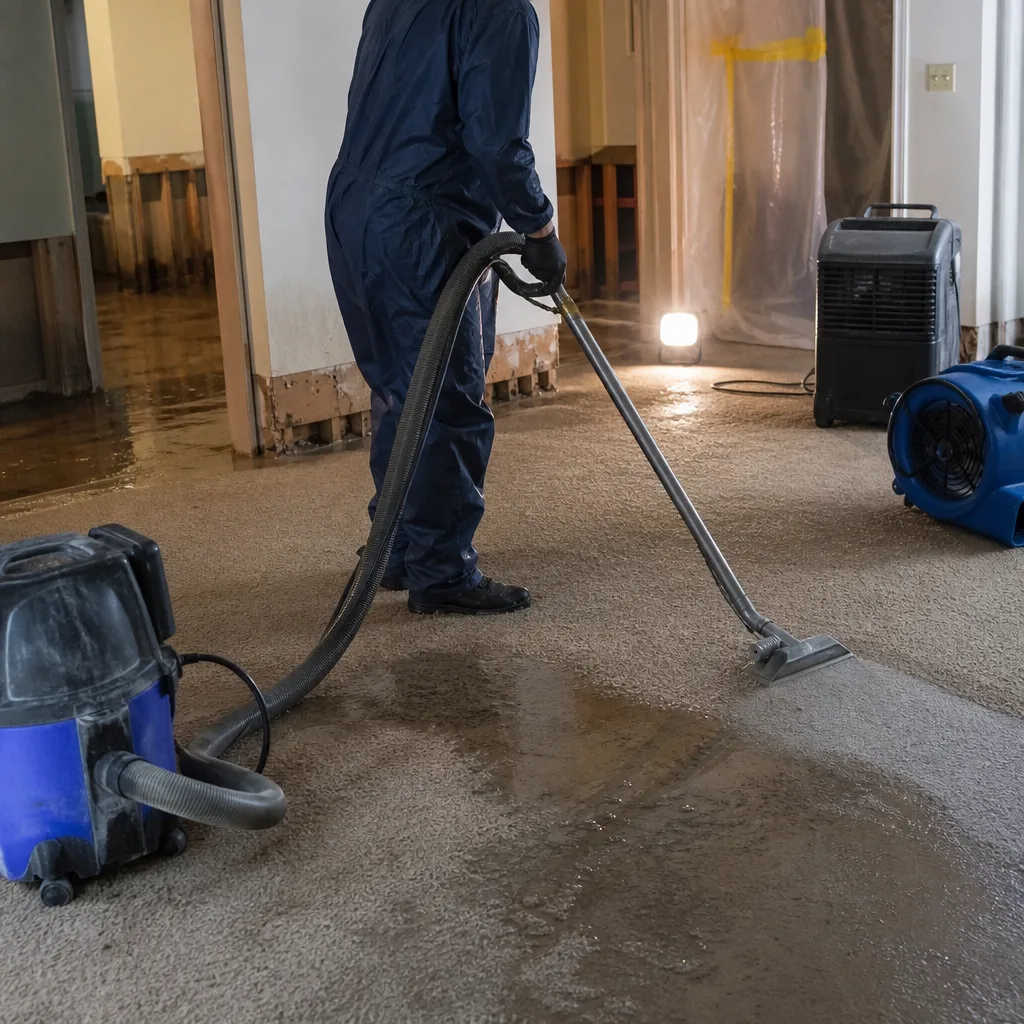
We remove standing water with truck-mounted extraction units and stabilize the structure. For wind-damaged homes, this includes emergency board-up and roof tarping to stop further water intrusion. The goal is simple: stop the bleeding.
Drying & Dehumidification
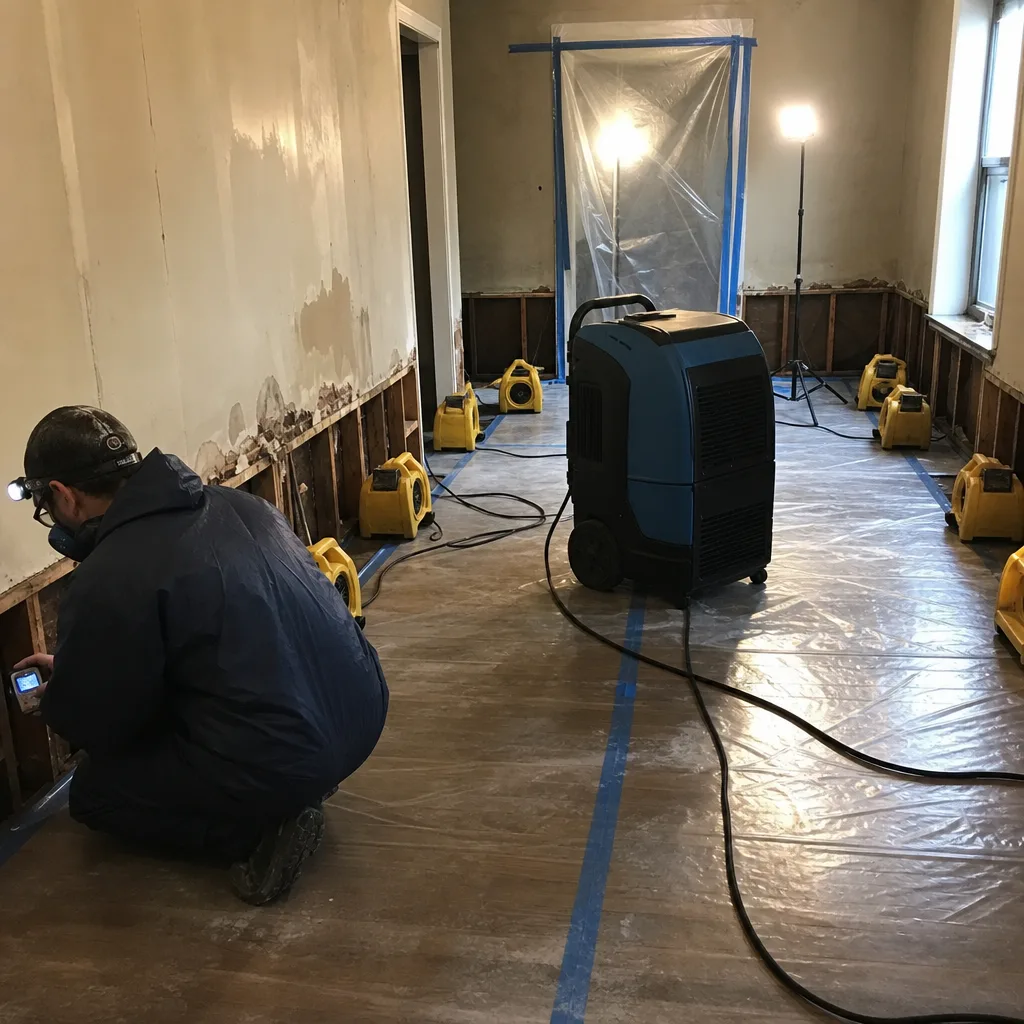
Dri-Eaz dehumidifiers and XPOWER air movers go in under containment. We run moisture mapping daily and log every reading until the dry standard is met. In Piermont’s high water table, this takes longer than inland jobs and we do not cut corners.
Cleaning & Sanitization
HEPA air scrubbers clear the air. Antimicrobial treatments go on wicking stone foundations and any surface that touched Category 3 water. We clean what can be saved and cut out what cannot.
Wind Damage & Structural Repair
Storm-damaged entry doors get replaced or reinforced to wind-rated standards. Track and panel damage on garage systems gets assessed against local code. Loose flashing and damaged roof sections get secured or rebuilt.
Repairs & Restoration
We rebuild what needs rebuilding, from drywall to flooring to full basement refinishing. The same certified crew sees it through. No hand-offs. No inherited subcontractors. No surprises on the bill.
Need Emergency Storm & Disaster Restoration in Piermont Now?
Crews minutes away, answering live 24 hours a day. The sooner we start, the less it costs.
Working With Your Insurance Company
Storm damage claims in Piermont involve nuance. Flood damage from tidal surge is one type of claim. Wind-driven intrusion through a failed door is another. Our team documents everything from the first hour so your carrier has what it needs to process the claim without delay. We have handled hundreds of Hudson Valley storm losses and know what adjusters look for: photos of every affected room, moisture readings taken before and after drying, clear classification of water categories, and a line-item scope that matches industry-standard estimating software.
Curt Bowman founded Floodline Restoration Co. in 2010 specifically to fix the broken hand-off between restoration and insurance. Direct billing means you sign the authorization, we do the work, and the carrier pays us directly per the approved scope. You stay informed. You never play messenger.
What We Provide Your Insurer
- Thorough documentation of the loss
- Photos of all damage, room by room
- Moisture readings and drying logs
- A detailed, line-item scope of work
- Direct coordination with your carrier
Built for Piermont’s Loss Calendar
Storm damage in Piermont follows a seasonal rhythm, and we plan for it year-round. January brings deep freezes that burst supply lines in uninsulated crawlspaces under those old Victorian cottages. The spring thaw sends snowmelt and heavy rain down the Palisades escarpment, which channels surface runoff directly into the village’s low-lying streets and basements. Summer thunderstorms drop inches of rain in an hour, overwhelming the village’s drainage capacity and pushing water into foundations already saturated from spring. Then come the nor’easters, from September through March, driving tidal Hudson surge up against the shoreline and pressing storm water through every vulnerable opening.
Each season creates a different failure mode. Frozen pipes need extraction and structural drying. Spring runoff demands foundation-focused moisture management. Summer flash floods require rapid Category 2 or 3 classification and aggressive cut-out. Nor’easter wind damage demands emergency board-up and roof tarping before water intrusion compounds. We know Piermont’s calendar because we work it every year.
Storm & Disaster Restoration Across Piermont’s Neighborhoods
Piermont is small, but its storm damage patterns vary block by block. River-facing homes along Paradise Avenue and Ferdon Avenue take the brunt of tidal surge and wind-driven water. These are the properties where a failed entry door during a nor’easter gust can pressurize the interior and push Hudson water through the entire ground floor. In a Victorian cottage on Paradise Avenue, our crew mitigated a Category 3 storm-surge intrusion that had pushed Hudson water through a wind-failed entry door, leaving the original rubble-mortar crawlspace wet for days. Using Dri-Eaz dehumidifiers and XPOWER air movers, we ran moisture mapping and structural drying under a containment set, then performed antimicrobial treatment on the wicking stone foundation to reach pre-loss condition before the extended mold colonization window closed.
Homes closer to the Palisades base, along Piermont Avenue and the side streets climbing toward the 10968 corridor, deal less with tidal surge and more with escarpment runoff. After heavy rain, water sheets down the cliff and finds the path of least resistance, which is usually a century-old foundation wall. These properties need drainage-focused mitigation and chronic moisture management. The stretch near the Piermont Pier and the marsh deals with standing water that lingers for days after a moderate storm. Crawlspaces there routinely hide Category 3 contamination even after events that would cause only minor damage a few miles north in Nyack.
We know the response routes through Piermont by heart. From the river side to the cliff side, from the pier to the Sparkill border, our crews know which streets flood first, which foundations hold moisture longest, and which homes need wind-rated reinforcement before the next storm.
Specialized Storm & Disaster Restoration Services We Offer in Piermont
Storm Damage Cleanup
After a nor’easter or hurricane, Piermont homes need immediate debris removal, water extraction, and structural assessment. We clear fallen limbs and storm debris from access points, extract standing water, and document every affected area for your insurance claim. The same crew that cleans up also handles the rebuild, so nothing gets lost between teams.
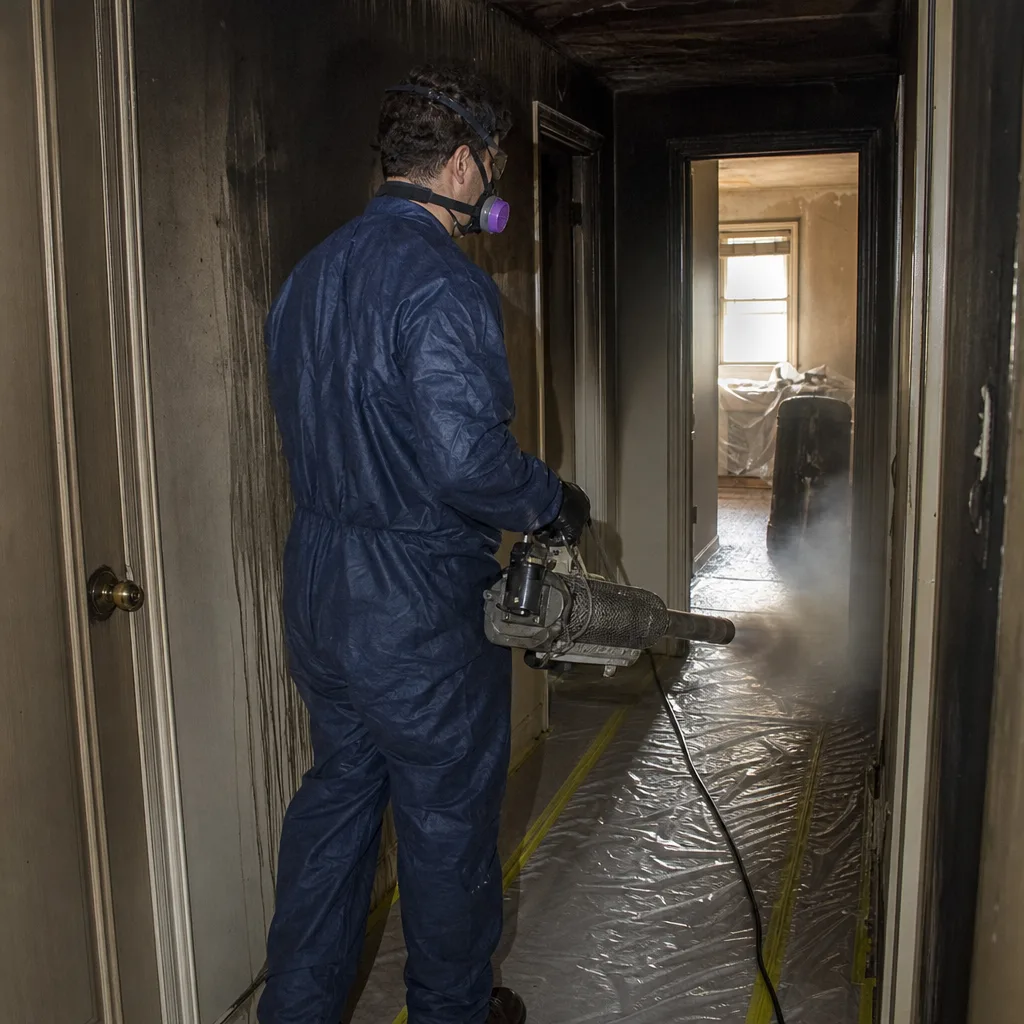
Flood Damage Restoration
Piermont’s dual flooding threat, tidal surge from the Hudson and runoff from the Palisades, means flood damage here is rarely a single-source event. We classify the water correctly, extract it completely, and dry the structure to the dry standard with daily moisture logs. For Category 3 events, we cut out saturated material and treat wicking foundations with antimicrobials. Done right, and backed in writing.
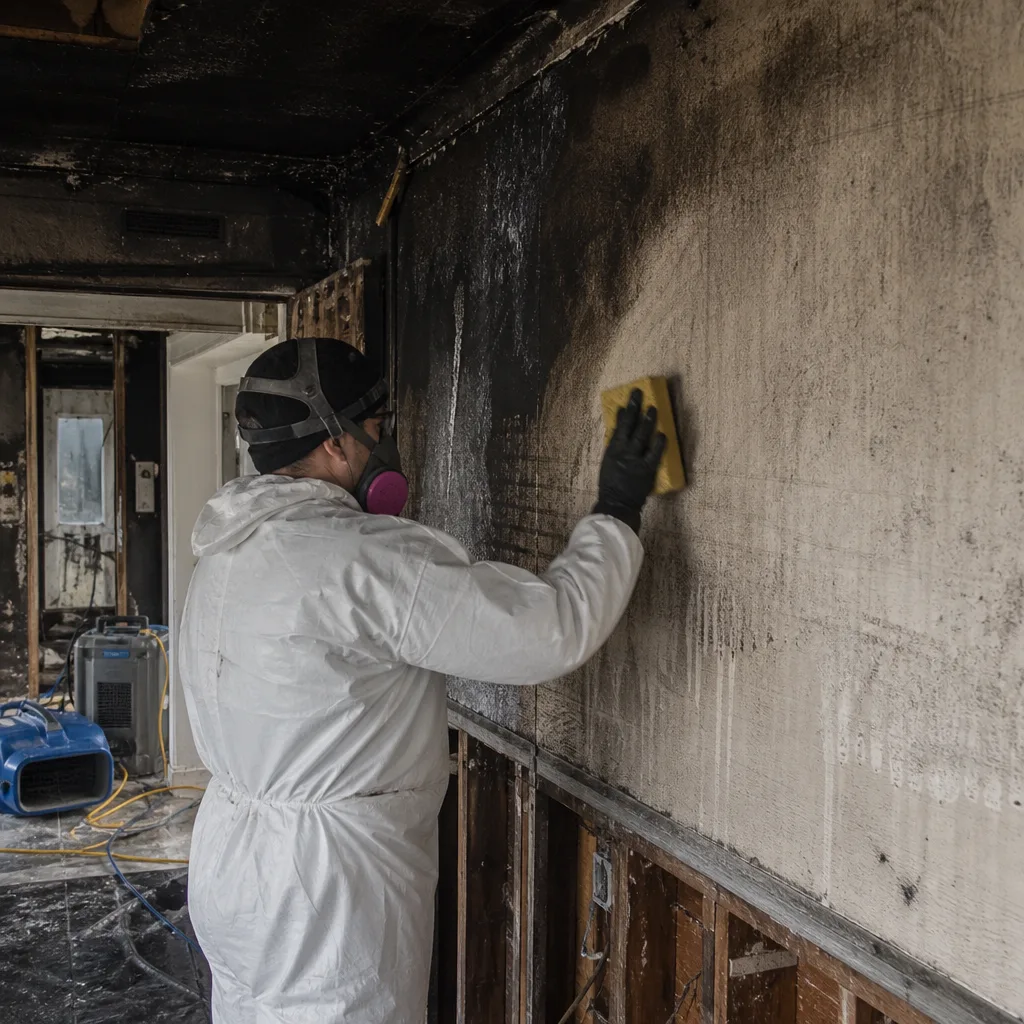
Emergency Board-Up
When wind tears a door or window off a Piermont riverfront home, the interior is exposed to the next storm. We board up openings with weather-rated materials within hours of your call, securing the property against further water intrusion and unauthorized access. Board-up is temporary. It buys time for a proper repair, which we handle as part of the full restoration.
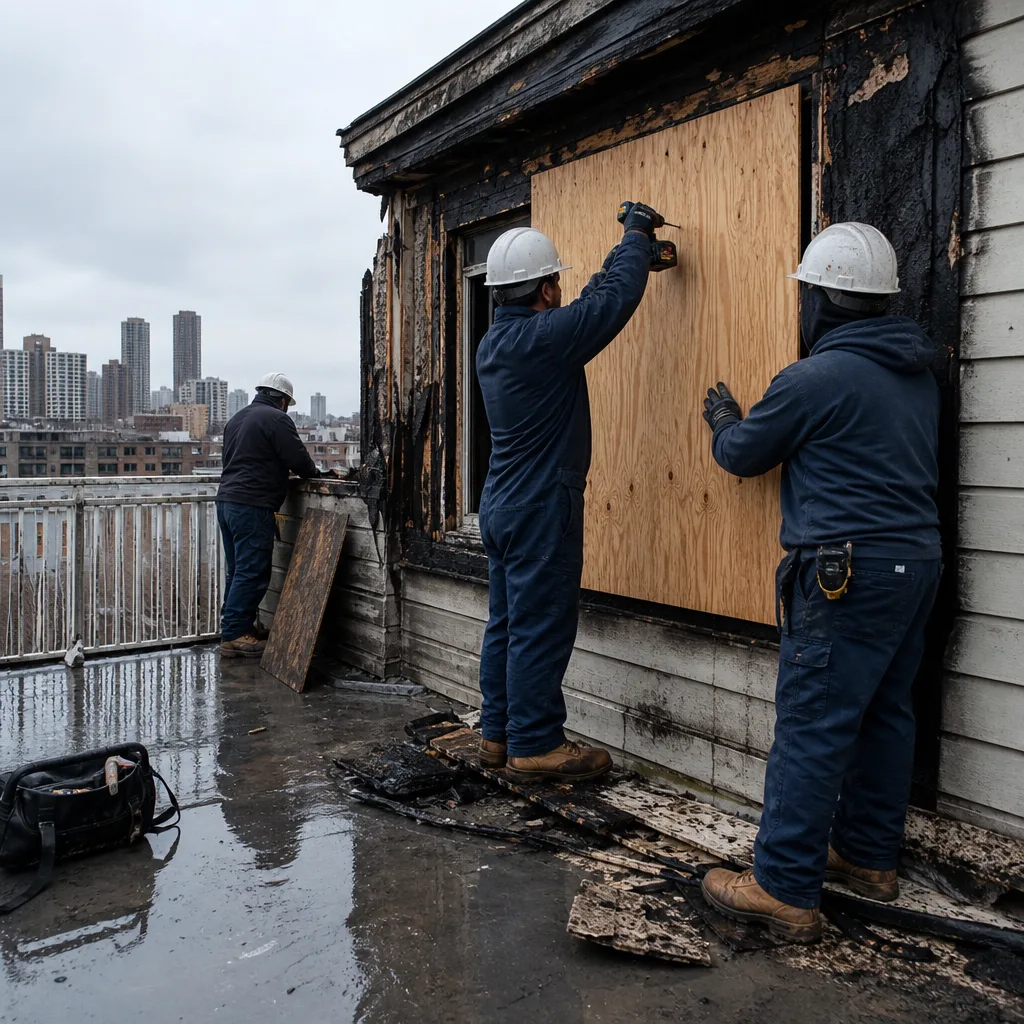
Roof Tarping
Wind damage to Piermont roofs often starts along the eaves and ridge lines, where nor’easter gusts find purchase. We tarp damaged roof sections to stop active water intrusion, then assess the full scope of repair. Tarping is not a fix, it is a stopgap, and we treat it that way.
Debris Removal
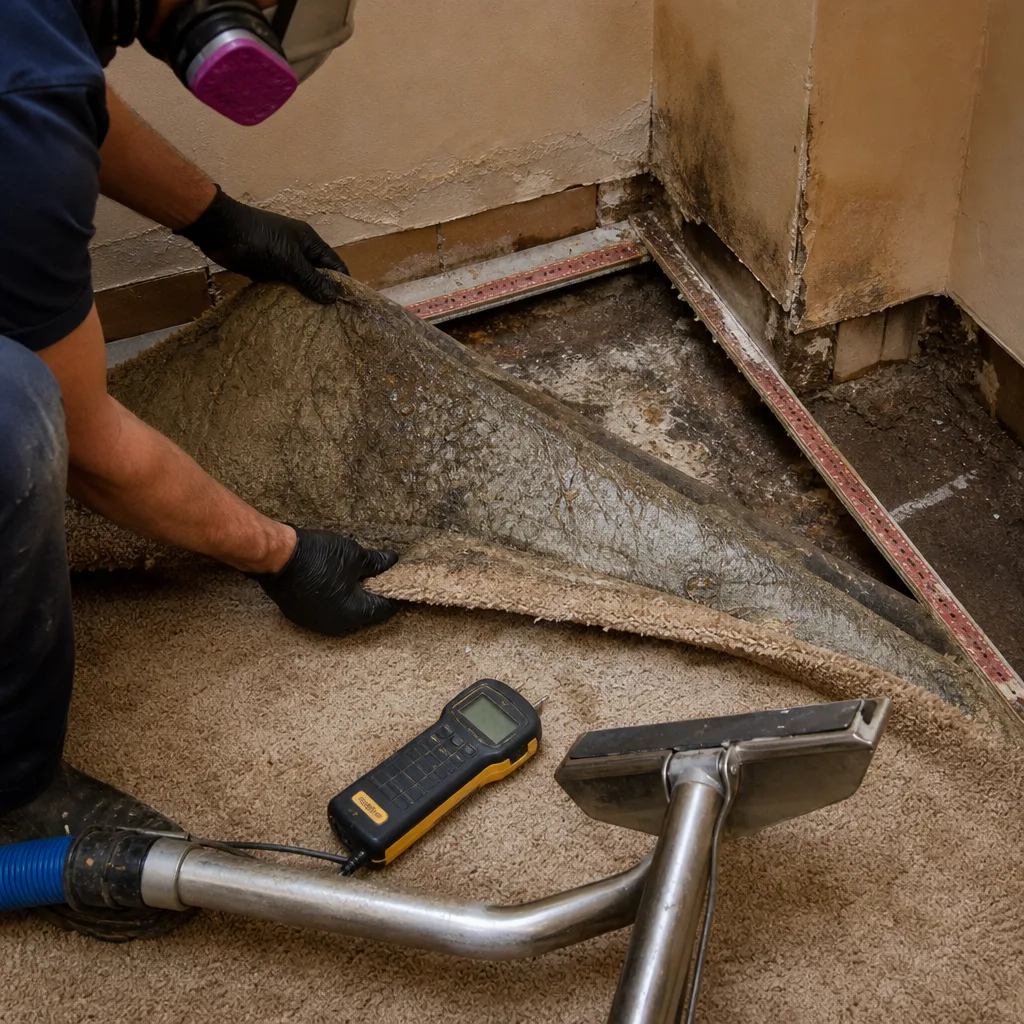
Storm debris in Piermont ranges from downed branches along Piermont Avenue to construction materials scattered by wind. We clear access paths, remove debris from yards and foundations, and document everything for your claim. The job is not done until the property is safe to walk.
Wind Damage Repair
Wind-rated door reinforcement matters on river-facing Piermont homes. A standard replacement door may meet code but fail in the next nor’easter. We assess what failed, why it failed, and what reinforcement the opening needs to hold. Post-storm track and panel damage on garage systems gets the same scrutiny.
What happens when you call
- 1
A real person answersNo phone trees - you reach a local pro.
- 2
You get an upfront price rangeHonest numbers before anyone is dispatched.
- 3
A background-checked tech heads outLicensed & insured, dispatched right away.
- 4
You approve before work beginsNothing starts until you say go.
Storm & Disaster Restoration Costs in Piermont, NY
Here is what Piermont homeowners should expect to pay. Emergency board-up and roof tarping runs $350 to $800 depending on the number of openings and roof sections. Flood water extraction from a single-story basement starts around $1,200 and typically lands between $2,500 and $6,000 for a full Category 2 or 3 event with cut-out and antimicrobial treatment. Wind damage repair on an entry door runs $800 to $2,500, while full replacement with wind-rated reinforcement can reach $4,000 or more. Complete storm restoration on a Piermont Victorian, from extraction through rebuild, commonly runs $15,000 to $45,000 when Category 3 water and structural damage are involved.
What moves the price: water category, square footage affected, whether the foundation is rubble-mortar (it wicks longer and needs more drying time), and the extent of wind damage. Insurance covers much of this when the loss is a covered peril. Flood damage from tidal surge may require a separate flood policy, which many Piermont homeowners carry because of the village’s FEMA flood zone status. We walk you through what is covered and what is not during the free inspection, then put the scope in writing before work starts.
Call (917) 924-4221 for an exact quote. Estimates are free, and the senior and veteran 5% discount always applies to those who qualify.
We Also Serve Cities Near Piermont
Floodline Restoration Co. of Manhattan provides Storm & Disaster Restoration throughout the lower Hudson Valley. In addition to Piermont, our crews serve Sparkill, Tappan, Orangeburg, and Blauvelt with the same 24/7 live dispatch, certified technicians, and written 90-Day Done Right Promise.
Serving Piermont, NY - Our Local Coverage Area
We’re based in the Piermont area and know this community well. Use the map below to see our service coverage - if you’re nearby, we can almost certainly help.
Piermont Storm & Disaster Restoration Questions, Answered
Why does Piermont require a different storm restoration approach than Nyack for the same Category 2 water event?
Piermont sits between the tidal Hudson and the Palisades escarpment, so storm water arrives from two directions at once, and the pier-and-marsh basin holds standing water much longer than open-shoreline towns like Nyack. A Category 2 event in Piermont often behaves like a Category 3 event two days later because contaminants concentrate in the standing water and the high water table keeps foundations saturated. Our crews classify accordingly and treat Piermont crawlspaces with more aggressive cut-out and antimicrobial protocols than inland jobs require.
Do storm-damaged entry doors on Piermont riverfront homes need anything beyond standard replacement?
Yes. River-facing homes on streets like Paradise Avenue and Ferdon Avenue take direct nor’easter wind loads. A standard replacement door may meet minimum code but fail again in the next storm. We assess each opening for wind-rated reinforcement, proper weather sealing, and threshold height relative to flood elevation. The goal is not just a new door, but a door that holds.
What does a post-storm track and panel damage inspection look like on a Piermont Victorian?
We inspect the entire track system, panel alignment, rollers, and mounting hardware for wind-related distortion. Victorian-era garage bays and carriage doors often have non-standard framing that complicates modern track replacement. Thermal imaging helps us spot gaps where wind-driven water may have entered around the system. The inspection gives you a written scope with photos, ready for your insurer.
Do I need a local permit for wind-rated door reinforcement after a storm in Piermont?
In most cases, replacing a door in an existing opening does not require a Village of Piermont building permit, but structural reinforcement that alters framing may trigger a permit requirement. We check the current local code before work begins and handle the paperwork if a permit is needed. The scope we give you in writing includes any permit requirements.
How long can standing storm water sit in a Piermont crawlspace before Category 3 contamination and mold become unavoidable?
Mold colonization typically begins within 48 to 72 hours in the warm, humid conditions Piermont crawlspaces maintain. Category 3 classification depends on the source, but storm water that has mixed with marsh sediment or sewage is Category 3 from the first hour. We recommend calling (917) 924-4221 immediately when water enters a crawlspace. The sooner extraction starts, the less material we have to cut out.
How fast can someone actually get to Piermont?
We commit to having a crew en route within 45 minutes of your call. Piermont is inside our core service area, and our dispatch coordinates from the New York City office so crews reach the village quickly. A live person answers at (917) 924-4221 at any hour, every day.
Will insurance cover storm restoration in Piermont?
Most wind and rain damage is covered under standard homeowners policies. Flood damage from tidal Hudson surge may require a separate flood policy, which many Piermont homeowners carry because the village sits within a FEMA Special Flood Hazard Area. We document everything, bill your carrier directly, and coordinate with your adjuster so you know what is covered before work begins.
What should I do in the first 30 minutes after storm water enters my Piermont home?
Call us at (917) 924-4221. Then, if it is safe, turn off electricity to affected areas and move valuables to higher ground. Do not enter standing water, especially in a crawlspace, because Category 3 contamination carries serious health risks. Do not attempt to run household fans or a shop vac. Professional extraction and drying are what prevent a moderate event from becoming a gut job.
Written by Curt Bowman, Owner at Floodline Restoration Co. of Manhattan, serving Piermont and the lower Hudson Valley.