
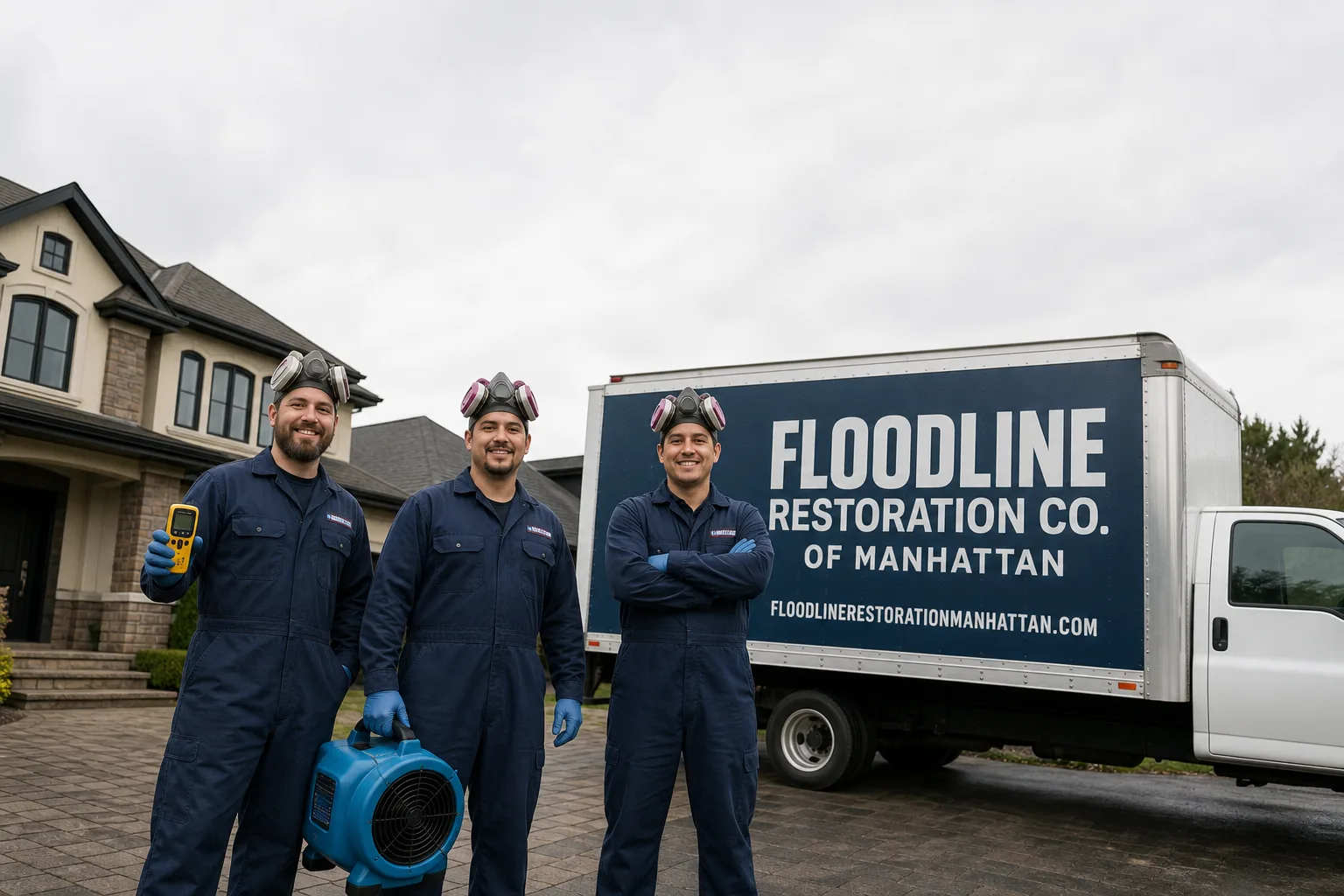
Free visual inspection and a written scope of work before any mitigation begins - photos, moisture readings, and drying logs go in your claim file
The scope we write is the scope we bill. Anything new gets shown to you, in writing, before we touch it.






 Before
 After
After Before
 After
After Before
 After
After24/7 Emergency Storm & Disaster Restoration in Rochelle Park
Storm and disaster restoration in Rochelle Park starts with speed. When the Saddle River spills over or a nor’easter punches through Bergen County, water moves fast. We answer live, 24/7, and dispatch crews into Rochelle Park immediately. Call (917) 924-4221 the moment you see water where it shouldn’t be. The first hour after storm intrusion determines how much drywall, flooring, and framing survives. Water in a slab ranch on thin clay soil doesn’t just sit there. It wicks through Sheetrock, seeps under base plates, and saturates whatever’s beneath the finish floor. Free visual assessment, no obligation, and we’ll be there when we say.
Understanding Storm & Disaster Restoration Severity in Rochelle Park Properties
Storm damage severity in Rochelle Park follows predictable patterns, driven by the borough’s building stock. Most homes here are mid-century ranches and capes on slab or shallow crawl foundations. Category 1 water means clean supply-line or rainwater before it touches building materials. Category 2 carries contaminants. Category 3, the norm in Saddle River overflow, is sewage-laced, bacteria-heavy water that requires removal, not drying in place. Moisture mapping across slab edges and shallow crawl spaces tells us where water migrated before it becomes visible. Structural drying in clay-heavy soil takes longer than in the sandier towns to the east. We set drying chambers based on that reality, not on a national playbook. A Category 3 flood event in a 1954 cape with original gypsum board means that board gets cut, not dried. There’s a difference between saving a wall and pretending it’s salvageable, and our crews are trained to know it.
Why Rochelle Park Property Owners Choose Floodline Restoration Co. of Manhattan
- 45-minute response commitment: The dispatch board shows us exactly where our nearest crew is. We get someone rolling toward Rochelle Park within 45 minutes of your call, day or night.
- 24/7 live answer, never an automated system: A real person picks up the phone at 3 a.m. No call tree, no voicemail, no “press 2 for dispatch.”
- IICRC-certified crews: Our technicians hold WRT, FSRT, and AMRT certifications. When asbestos or mold protocols apply, the right crew shows up the first time.
- Free visual inspection: We look at the damage, verify what you’re dealing with, and give you a written scope before any work starts. No pressure, no obligation.
- Direct insurance billing: We coordinate with your carrier, provide the photos and drying logs they require, and bill them directly for covered work.
- One team, extraction to reconstruction: Our Storm & Disaster Restoration crew doesn’t pass your job to a subcontractor. The same certified team runs the moisture map on day one and hangs the new drywall at the end.
Our Storm & Disaster Restoration Process
Inspection & Assessment
We map moisture across slab edges, crawl spaces, and wall cavities using thermal imaging and hygrometers. We check for the original 9-inch VAT asbestos tile before we touch anything. We write the scope and explain it in plain English.
Extraction & Stabilization
Submersible pumps and truck-mounted extraction units pull standing water out. If the storm opened a roof section, we board up and tarp before interior work. Flood cuts are marked and made where Category 3 water touched gypsum.
Drying & Dehumidification
Dri-Eaz and Phoenix air movers and dehumidifiers go in. Daily moisture readings get logged and shared with you and your carrier. We don’t remove equipment until the dry standard is met, not the clock.
Cleaning & Sanitization
Antimicrobial treatments applied to affected framing. HEPA air scrubbers run to capture airborne particulate. We document every phase with photos and written logs.
Asbestos & Environmental Protocols
If testing confirms original VAT tile or vermiculite insulation, we set containment and coordinate certified abatement per NJ DEP rules. The permit chain with Bergen County Health Department gets handled in the right sequence.
Repairs & Restoration
We rebuild what the storm took. Drywall, flooring, trim, insulation, paint. The line the water left is where we start, and we work until the room looks like it never happened.
Need Emergency Storm & Disaster Restoration in Rochelle Park Now?
Crews minutes away, answering live 24 hours a day. The sooner we start, the less it costs.
Working With Your Insurance Company
Insurance companies move faster when the documentation is complete from the first hour. That’s what we provide. From the moment we arrive in Rochelle Park, we photograph every affected room, log moisture readings daily, and write a line-item scope that matches the carrier’s format. We talk to your adjuster directly so you don’t have to translate restoration terminology into insurance language. If the carrier disputes a line item, we walk them through it with photos and readings. You shouldn’t be the messenger between your restoration crew and your insurance company. That’s our job, and we’ve been doing it for long enough that the adjusters know our documentation is thorough.
What We Provide Your Insurer
- Thorough documentation of the loss
- Photos of all damage, room by room
- Moisture readings and drying logs
- A detailed, line-item scope of work
- Direct coordination with your carrier
Built for Rochelle Park’s Loss Calendar
Rochelle Park’s storm damage peaks come in predictable waves. Late summer and early fall bring the remnants of tropical systems. The 2021 Ida remnants overwhelmed the borough’s storm drains, sending Saddle River water into finished basements from Rochelle Avenue to West Passaic Street. Those basements stayed flooded for days, not hours, because Bergen County’s clay-heavy glacial soils simply don’t drain fast. Winter brings freeze-thaw cycles that crack supply lines in shallow slab foundations and push groundwater up through crawl spaces during January thaws. Spring rains saturate already-heavy soil and find every hairline crack in a 1950s foundation wall. Summer thunderstorms hit fast and hard, with wind damage to older roofs and siding. We schedule around this calendar because we’ve been answering calls through all of it. The pattern is consistent: older slab homes, tight lot spacing, and water that doesn’t leave on its own.
Storm & Disaster Restoration Across Rochelle Park’s Neighborhoods
Rochelle Park is small, about one square mile, but the storm response shifts block by block. Homes along West Passaic Street and the western edge of the borough sit closest to the Saddle River and take the first floodwater. Those streets see more Category 3 intrusion, more frequent sewage-laced backups, and more repeated damage across storm seasons. The central residential grid around Rochelle Avenue and Railroad Avenue, built in the immediate post-war rush, is dense with slab ranches on very tight lots. Shared grading means one house’s flooded yard pushes water into the neighbor’s crawl space. On the eastern side near the Garden State Parkway, we see more wind-driven roof damage and siding loss during nor’easters. The original one-piece and early sectional garage doors on those 1950s capes are far past their service life. Storm wind pries a corner loose and suddenly the garage interior is exposed. Each neighborhood in Rochelle Park presents a different first call, and our crews know the difference before they arrive.
Specialized Storm & Disaster Restoration Services We Offer in Rochelle Park
Flood Damage Restoration
Flood water in Rochelle Park means Saddle River overflow or storm drain backup. Both are Category 3. We test for asbestos in the original tile before pulling anything, remove the contaminated water and saturated material, and run structural drying until the moisture meter says done. Clay soil slow-drains, so we extend drying times here compared to sandier towns.
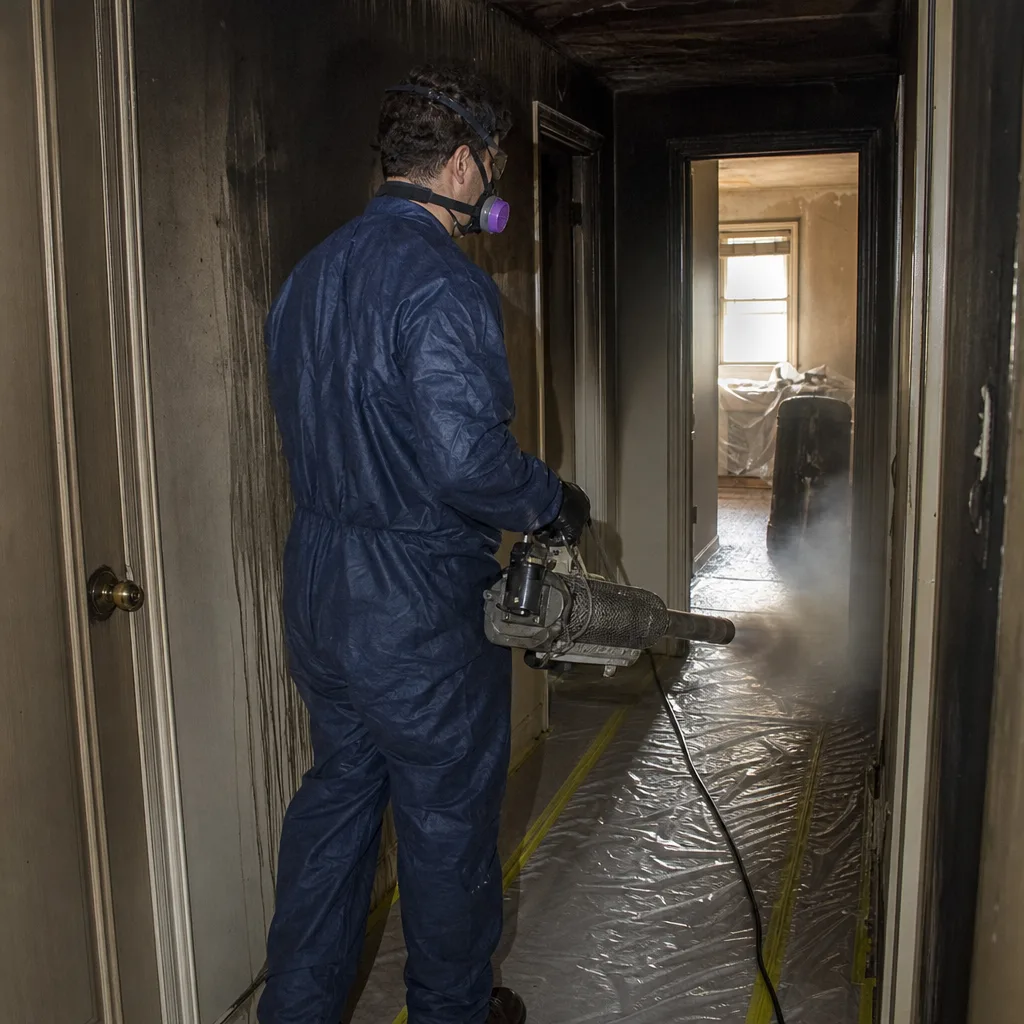
Emergency Board-Up
When storm wind blows out a window or peels a roof section, the house sits open to the next round of rain. We board up and tarp fast in Rochelle Park, every day of the year. It’s temporary security that stops the damage from doubling overnight.
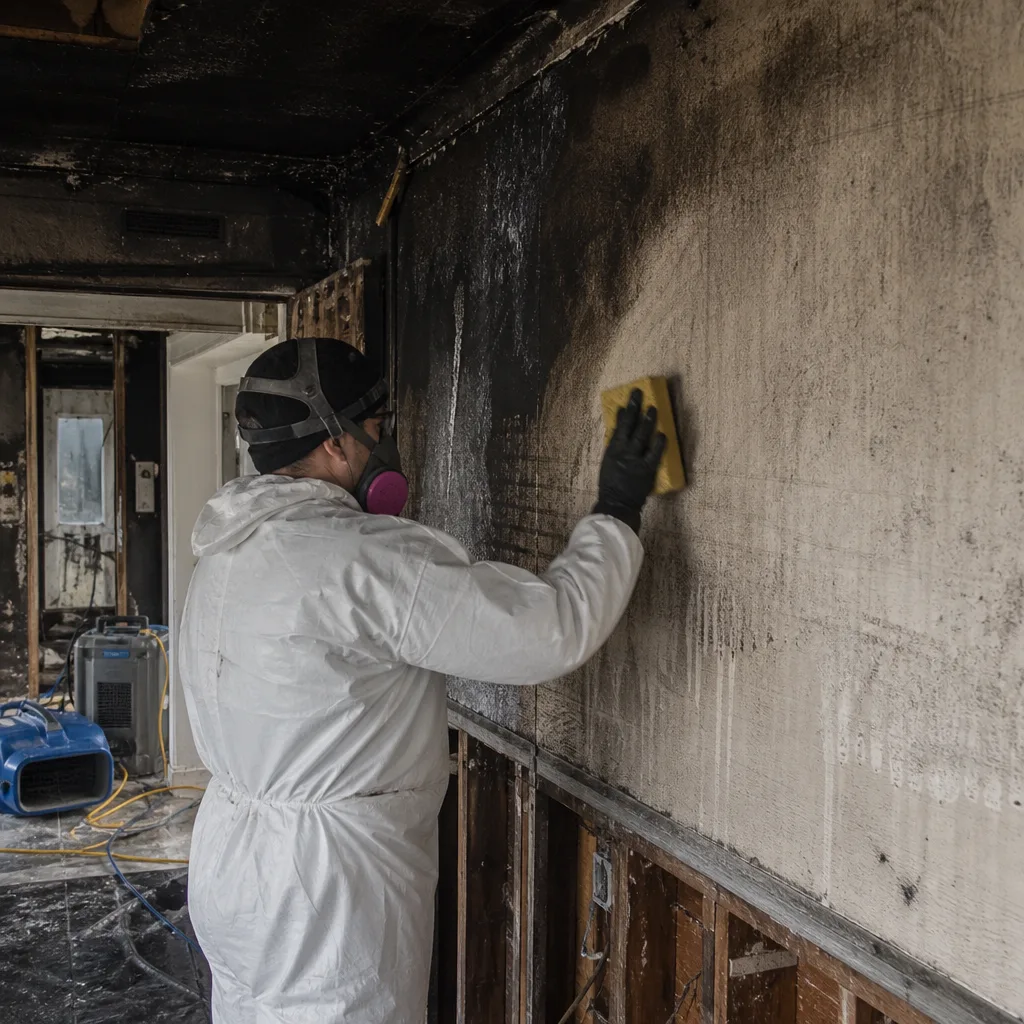
Storm Damage Cleanup
Debris, saturated carpet, wet insulation, downed branches against the house. We clear it, document what the storm did, and prepare the space for drying and repair. If the damage is from a nor’easter that also pulled shingles off, we note it for the insurance scope.
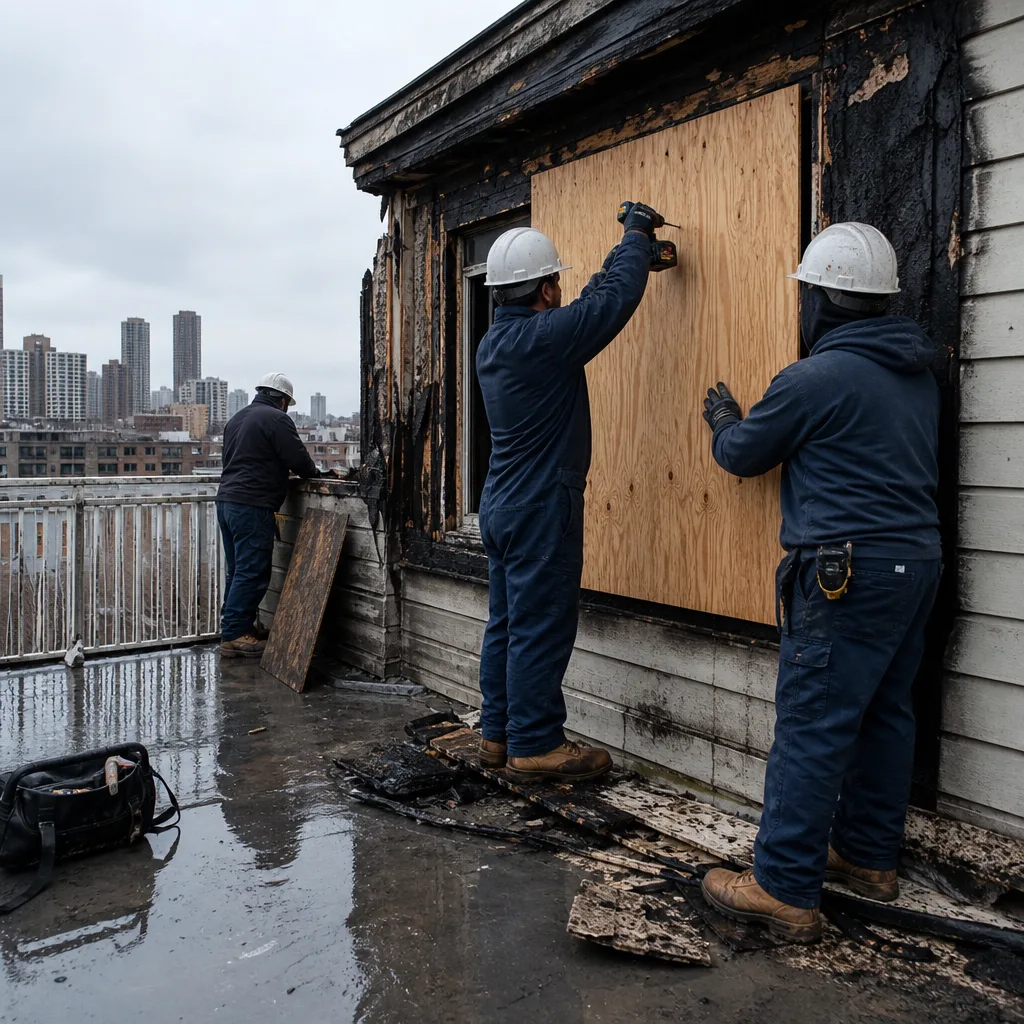
Roof Tarping
A tarp is not a roof, but it buys time. We secure tarping on storm-damaged roofs in Rochelle Park, including the older capes where the original framing has lost strength. The tarp stops active water intrusion while you file the claim and we scope the repair.
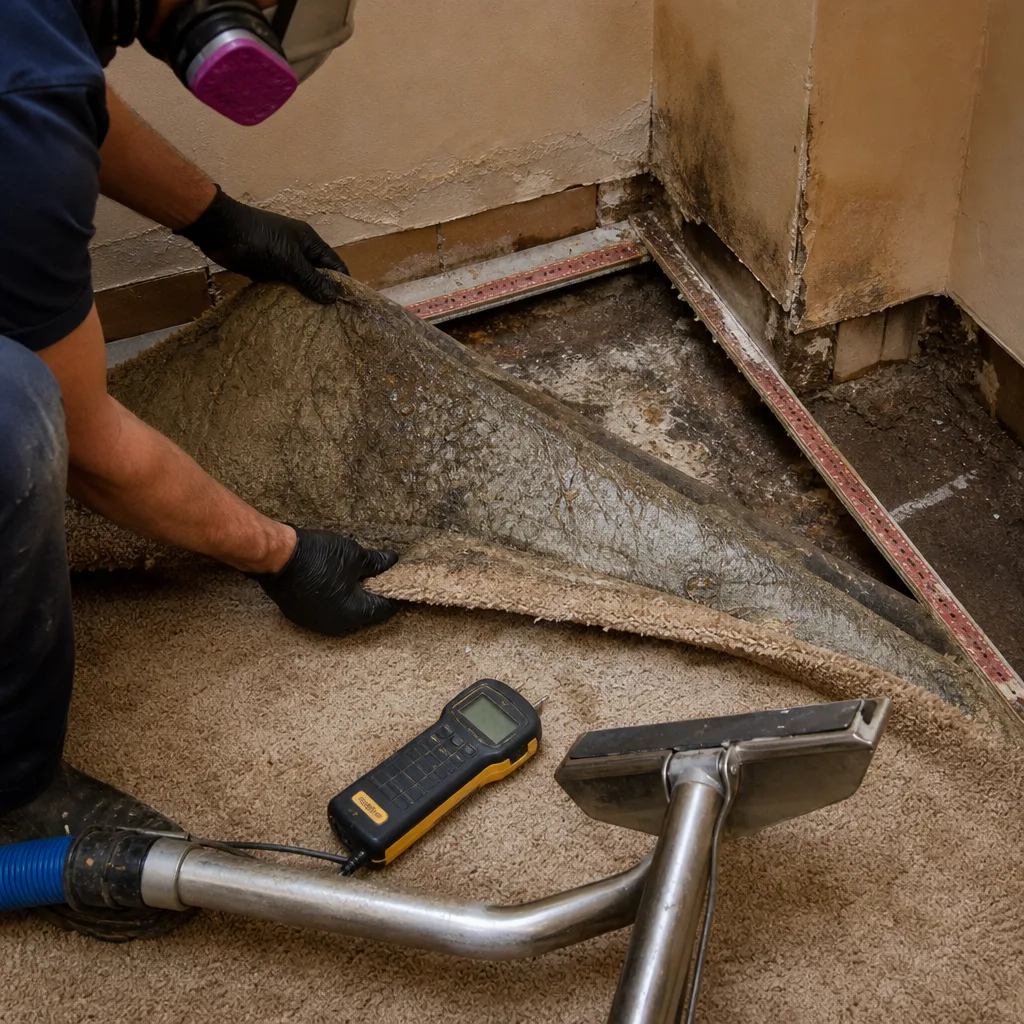
Debris Removal
Storm debris in Rochelle Park tends to be heavy: soaked drywall, ruined carpet, damaged fencing, downed tree limbs. We haul it off the property, document the volume for your insurer, and leave the site ready for the next phase.
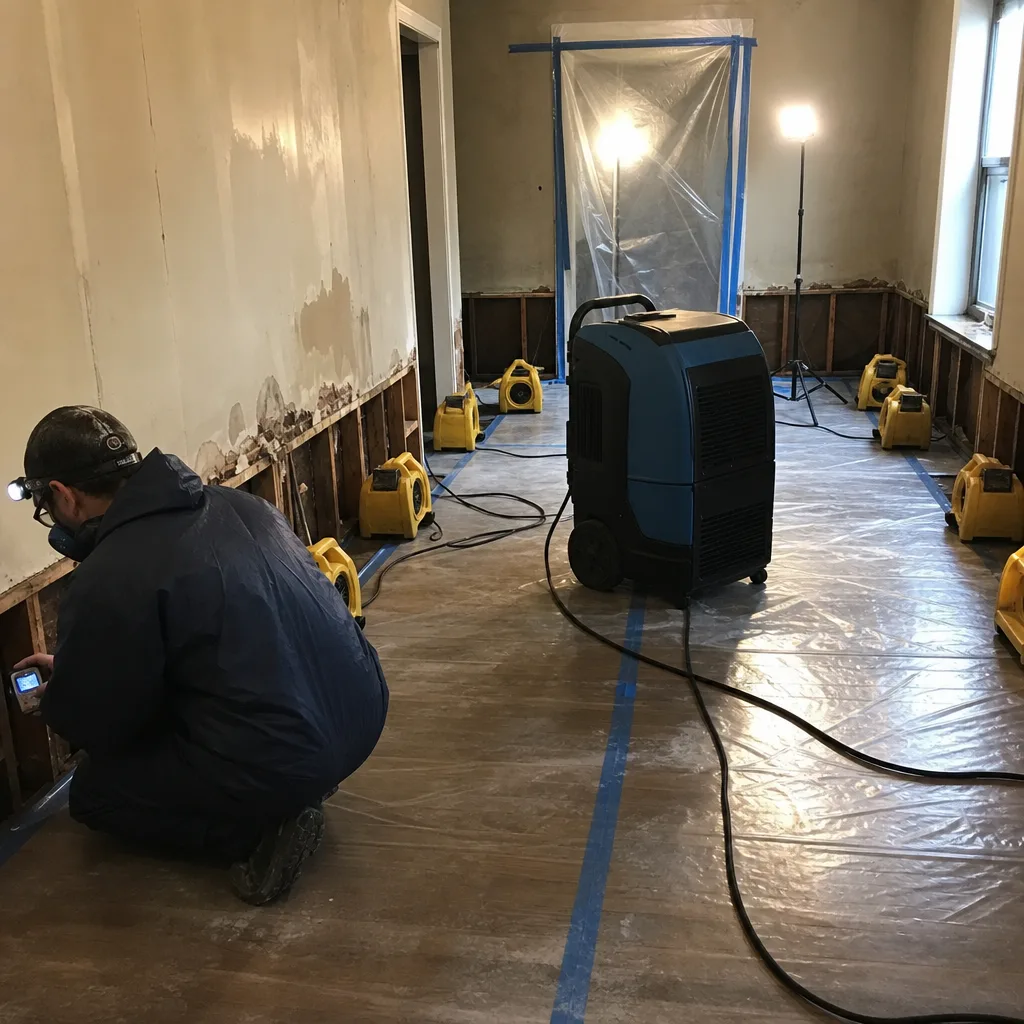
What happens when you call
- 1
A real person answersNo phone trees - you reach a local pro.
- 2
You get an upfront price rangeHonest numbers before anyone is dispatched.
- 3
A background-checked tech heads outLicensed & insured, dispatched right away.
- 4
You approve before work beginsNothing starts until you say go.
Storm & Disaster Restoration Costs in Rochelle Park, NJ
Storm damage restoration in Rochelle Park is priced by scope, not by a flat formula. A Category 1 basement cleanup with minor extraction typically runs $1,200 to $2,800. Add Category 3 flood water from Saddle River overflow and you’re looking at $4,500 to $12,000, depending on finished square footage and what got saturated. Asbestos abatement, required when original 9-inch VAT tile is confirmed, adds regulated cost and timeline, usually $2,000 to $6,000 for a typical Rochelle Park basement, before re-flooring. Roof tarping runs $400 to $900 for standard capes. Wind damage repair on siding and trim typically lands between $1,800 and $6,500. Board-up service is $350 to $800 depending on openings. Most storm-related work in Rochelle Park is insurance-covered, minus your deductible. We give you a written scope before work begins, bill your carrier directly, and don’t change the number halfway through. Call (917) 924-4221 for a free visual inspection and a firm scope.
We Also Serve Cities Near Rochelle Park
Floodline Restoration Co. of Manhattan works throughout Bergen County, including Maywood, Saddle Brook, Hackensack, and Lodi. Same crews, same 45-minute response commitment, same documentation standards.
Serving Rochelle Park, NJ - Our Local Coverage Area
We’re based in the Rochelle Park area and know this community well. Use the map below to see our service coverage - if you’re nearby, we can almost certainly help.
Rochelle Park Storm & Disaster Restoration Questions, Answered
Why does my Rochelle Park storm flood require asbestos testing before water extraction?
Rochelle Park’s post-war slab homes commonly have original 9-inch VAT asbestos tile beneath carpet or laminate. Disturbing that tile without testing violates NJ DEP rules and can trigger a stop-work order from the Bergen County Health Department. We test first, every time. If the reading is positive, we set containment and coordinate certified abatement before any further demolition. Call (917) 924-4221 and we’ll explain the sequence for your specific home.
How does the Saddle River floodplain affect drying time in Rochelle Park basements?
The clay-heavy glacial soil in Rochelle Park holds water for days after the rain stops. Slab edges and shallow crawl spaces stay saturated longer, which means our drying chambers run longer here than in sandier communities. We don’t set a timer; we set a dry standard and keep daily moisture logs until it’s met.
What is the difference between Category 1, 2, and 3 flood water in Rochelle Park?
Category 1 is clean water from a burst supply line or rainwater before it contacts building materials. Category 2 contains contaminants and can cause illness. Category 3, typical of Saddle River overflow and storm drain backup in Rochelle Park, is sewage-laced and dangerous. Category 3 water saturating drywall means removal, not drying in place. Call (917) 924-4221 if you’re not sure what you’re dealing with.
How quickly does mold begin in a Rochelle Park basement after floodwater intrusion?
Mold growth begins within 24 to 48 hours in a warm, wet Rochelle Park basement, especially during summer storm season. Tight lots and poor drainage accelerate saturation. The faster extraction begins, the less material gets removed. We respond within 45 minutes for this reason.
When should I retrofit my Rochelle Park ranch home for flood resistance instead of just repairing storm damage?
If your slab ranch has flooded more than once in a decade, repair alone isn’t working. Consider retrofits: raising mechanicals above flood level, installing backflow valves, regrading the lot, sealing slab edges, and replacing original materials with flood-resistant alternatives. We’ll give you an honest assessment. Sometimes the right call is repair. Sometimes it’s a retrofit. We’ll tell you which.
How fast can crews actually reach Rochelle Park?
We commit to 45 minutes from the moment you hang up. Live dispatch, 24/7. During major regional storms, the whole area is calling; we still answer with a person and give you a real arrival window, not a recording. Call (917) 924-4221 and ask for the nearest crew.
Who deals with my insurance adjuster?
We do. From the first photo to the final drying log, we build the documentation your carrier needs and talk directly with the adjuster. You’re not the middleman. If a dispute arises on a line item, we handle it with evidence.
What should I do in the first 30 minutes after storm flooding in Rochelle Park?
Turn off electricity if water is near outlets or the panel. Don’t walk through standing water if there’s any chance it’s Category 3. Don’t pull carpet or disturb flooring, because of the asbestos risk in older slab homes. Take photos from a safe distance. Then call (917) 924-4221 and get a crew moving.
We’ve spent more than four decades answering emergency calls in north Jersey, and we’ve seen what the Saddle River does to a 1950s basement in Rochelle Park. Our crew was called to a cape on West Passaic Street after the river overflowed into a finished basement. Before pulling waterlogged carpet, we tested the original floor tile and found 9-inch VAT asbestos. We paused demolition, set up containment and air movers for structural drying, and coordinated certified abatement before any further mitigation. The homeowner was back to pre-loss condition in days, not weeks, with full documentation for the permit chain. That’s how we work here. We’re led by Curt Bowman, and every job carries the 90-Day Done Right Promise, the Keystone Standard, in writing. No arguing. No paperwork battles. If it’s not done right, we make it right.
Call (917) 924-4221 for a free estimate. A real person answers, day or night. The line the water left is where we start.
Written by Curt Bowman, Owner at Floodline Restoration Co. of Manhattan, serving storm and disaster restoration clients across northern New Jersey.