
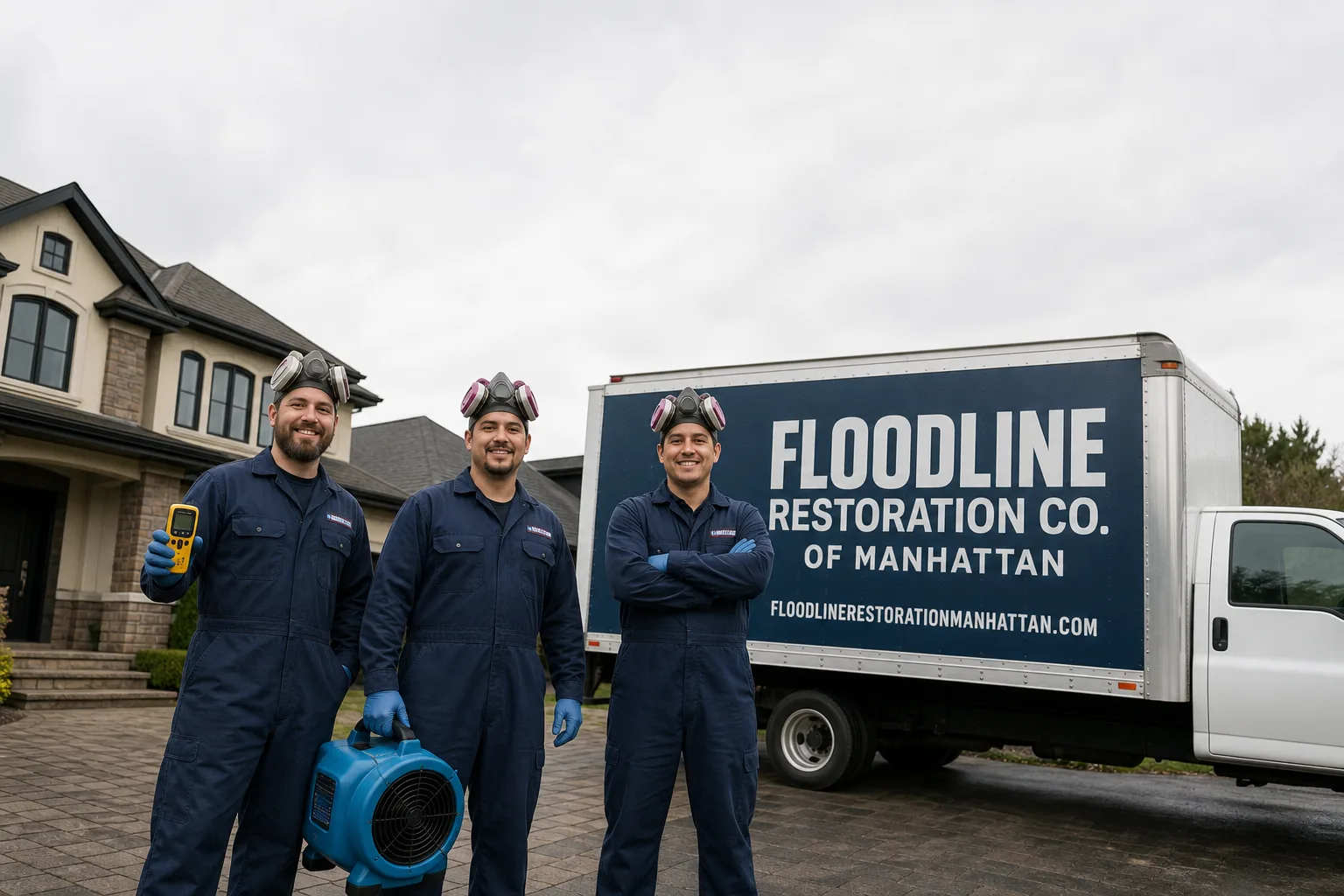
Free visual inspection and a written scope of work before any mitigation begins - photos, moisture readings, and drying logs go in your claim file
The scope we write is the scope we bill. Anything new gets shown to you, in writing, before we touch it.






 Before
 After
After Before
 After
After Before
 After
After24/7 Emergency Storm & Disaster Restoration in Secaucus
Storm damage in Secaucus doesn’t wait for business hours, and neither do we. If wind has torn a door off its frame, driven water across a slab, or left a roof open to the next squall, call (917) 924-4221 right now. A live dispatcher answers at 2 a.m. the same way they answer at 2 p.m. We send a certified Storm & Disaster Restoration crew into Secaucus immediately, because the first hour after a breach determines whether you’re dealing with a cleanup or a full gut-and-rebuild. The meadowlands ground that Secaucus sits on holds water long after the rain stops, so a slab that looks merely damp on day one can be actively wicking moisture into drywall and framing by day three. Board-up, tarping, and extraction need to start now, not tomorrow morning. We arrive, assess, document for your insurer, and begin stabilizing the property in the first visit.
Understanding Storm & Disaster Restoration Severity in Secaucus Properties
We classify water by contamination level because the response it demands is different. Category 1 water comes from a broken supply line or wind-driven rain before it touches building materials. Category 2 carries significant contamination from sump overflow or washing-machine discharge. Category 3 water is grossly unsanitary: river backflow, sewage, or standing floodwater from the Hackensack. In Secaucus, the line between these categories blurs faster than most places. Nor’easter surge pushing through the meadowlands drainage network doesn’t just wet the surface; it mixes with groundwater already sitting high under slab-on-grade foundations, turning what looked like clean rain into a contaminated, slow-draining problem. That’s why we moisture-map every affected area and set drying targets based on the actual readings, not on a visual estimate. Most Secaucus townhomes and condominiums were built between the 1980s and early 2000s on compacted fill, with vapor barriers that were undersized for the site conditions. When Category 1 water sits on that kind of slab, the fill below often keeps the concrete edge saturated for weeks, which means what started as a storm call becomes a mold-readiness situation if the drying log isn’t managed properly.
Why Secaucus Property Owners Choose Floodline Restoration Co. of Manhattan
- 45-minute response commitment. When you call with an active storm breach in Secaucus, a crew is dispatched immediately. We tell you when we’ll arrive and we’re there when we say.
- A real person answers, 24 hours a day. No phone tree, no voicemail, no “press 2 for emergencies.” A live dispatcher picks up and starts coordinating your crew.
- IICRC-certified technicians. Our water restoration crews hold WRT and FSRT certifications, and our applied microbial remediation techs hold AMRT. They’ve trained for exactly what Secaucus storm losses throw at them.
- Free visual inspection. Before any work begins, we walk the property, read the moisture, and explain what we’re seeing. No charge, no obligation.
- Direct insurance billing. We document the loss from the first hour, write a line-item scope, and communicate with your adjuster directly. You don’t play messenger between us and your carrier.
- One team from extraction to rebuild. The same uniformed, background-checked crew that sets the containment and runs the drying equipment also handles the flood cuts, the antimicrobial treatment, and the finish carpentry. No mid-job handoff to a subcontractor you’ve never met.
Our Storm & Disaster Restoration Process
Inspection & Assessment
We arrive with thermal imaging cameras and hygrometers to map moisture across the affected rooms. In Secaucus, that means reading the slab edges and baseplate cavities, not just the visible standing water. Every assessment includes photo documentation for your insurance file.
Extraction & Stabilization
Standing water is removed with truck-mounted extraction units and sub-surface wands. For a storm-damaged townhome, this often includes pulling water from under vinyl plank flooring and inside wall cavities that look dry from the face.
Drying & Dehumidification
We install Dri-Eaz air movers and Phoenix dehumidifiers in a calculated layout, then log daily moisture readings. Because Secaucus sits on meadowlands fill with a high water table, we expect slab-edge readings to fall slower than a standard inland job, and we set the drying standard accordingly rather than rushing the clock.
Cleaning & Sanitization
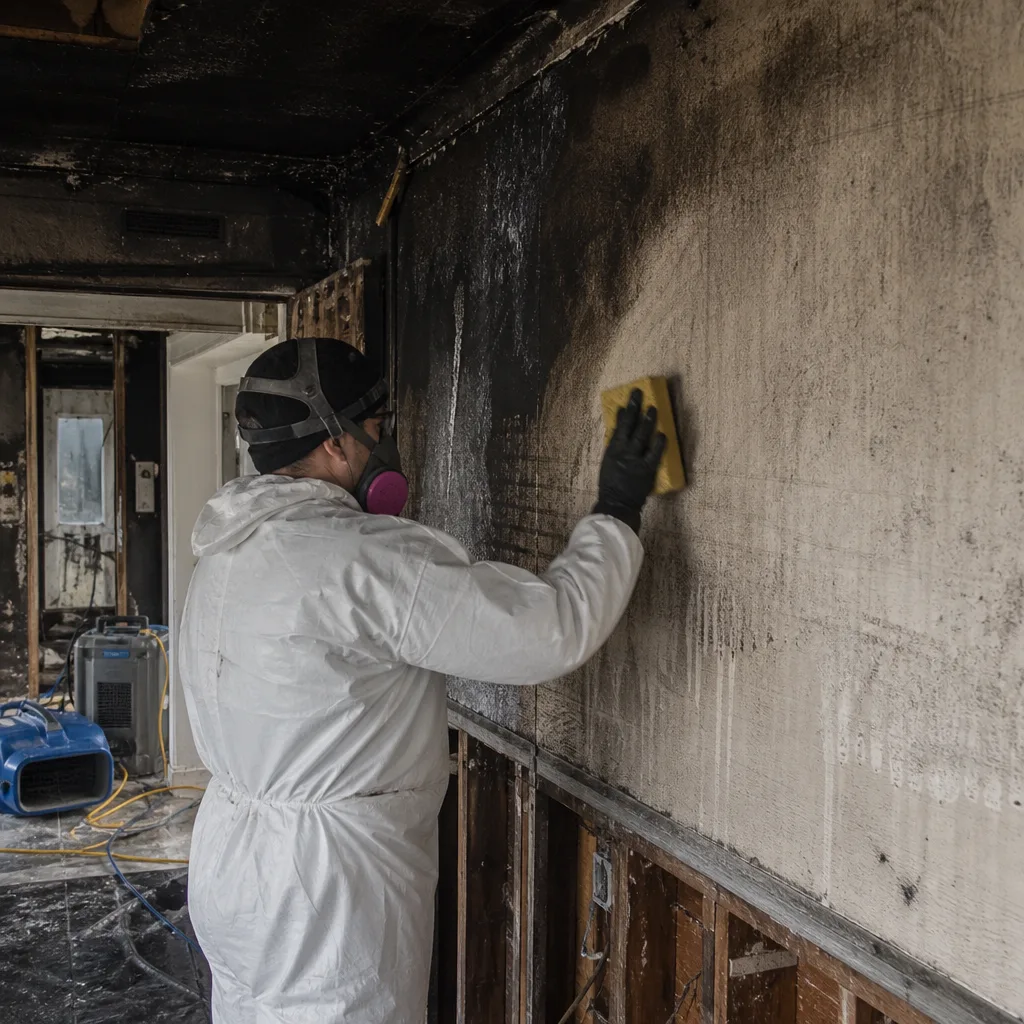
Affected surfaces are cleaned with EPA-registered antimicrobials. Where floodwater carried Category 3 contamination, we perform flood cuts to remove saturated drywall and insulation before applying antimicrobial treatments to the framing.
Wind & Structural Reinforcement
Storm-damaged doors, windows, and roof penetrations are repaired with materials rated for current coastal New Jersey wind pressures. In Secaucus, many original 1980s and 1990s townhome entry doors were never engineered for the wind loads a nor’easter brings today.
Repairs & Restoration
We rebuild what the storm took: drywall, insulation, trim, doors, flooring. The final moisture log goes to you and your carrier, showing we reached the pre-loss dry standard before any finish material was installed. Every job is backed by our 90-Day Done Right Promise, in writing.
Need Emergency Storm & Disaster Restoration in Secaucus Now?
Crews minutes away, answering live 24 hours a day. The sooner we start, the less it costs.
Working With Your Insurance Company
Storm damage claims get paid or denied based on documentation, not on force of personality. We’ve handled enough insured storm losses in Secaucus to know exactly what carriers look for when they send an adjuster out. From the first hour, we photograph every damaged surface room by room, log every moisture reading, and write a scope of work that uses the same estimating platform your adjuster reviews. If the adjuster calls with questions about why the slab edge is still reading elevated moisture eight days after the storm, our crew lead answers with the hourly data and the meadowlands context. You bought insurance for a reason. Our job is to make sure the carrier sees the full, documented extent of the loss so your claim covers the actual restoration, not a partial patch.
What We Provide Your Insurer
- Thorough documentation of the loss
- Photos of all damage, room by room
- Moisture readings and drying logs
- A detailed, line-item scope of work
- Direct coordination with your carrier
Built for Secaucus’s Loss Calendar
Secaucus doesn’t have one storm season. It has a storm calendar that runs all twelve months, and each season brings a distinct failure mode. Deep winter freezes burst supply lines in the townhome corridors near Mill Creek Road and Riverside Court, flooding slabs in buildings where the original plumbing was run in unconditioned chases. Spring snowmelt and heavy rain push the Hackensack River and its tributaries up into the stormwater system, and the meadowlands water table rises with them, so basement and crawl-space seepage becomes a chronic issue well before hurricane season starts. Summer thunderstorms drop two to three inches an hour onto filled wetlands that drain slowly by design, which overmatches the storm drains and sends water into garages and first-floor entryways. Then comes the September-to-November window: nor’easters and tropical remnants drive wind and rain horizontally at doors and windows that were never rated for those pressures. A wind-damaged door near the Hackensack River corridor one week can mean soaked slab edges and hidden mold growth by the next. The calendar here doesn’t give homeowners a break, and it doesn’t give our drying crews one either.
Storm & Disaster Restoration Across Secaucus’s Neighborhoods
Mill Creek Road isn’t just a route through town to us. It’s where we’ve seen the same wind-damaged door on a 1990s townhome let water pour across a slab-on-grade while the owner stood thirty feet away, believing the door was the only problem. The condo and townhome complexes along this corridor sit directly over the old tidal channels that the meadowlands fill never fully tamed, and the groundwater response after a nor’easter is immediate. Over in the North End, the older brick and wood-frame homes near the Hackensack River carry a different risk: wind-driven rain finds the gaps in 80-year-old window headers and runs down inside wall cavities, soaking plaster from the back. The Harmon Meadow area, built on the most heavily compacted fill in town, gives us settlement cracks that open up during stormwater surcharge events and let surface water track straight into foundation walls. And the residential streets near Paterson Plank Road and the Secaucus Junction district see the standard townhome pattern: wind looses the door, rain soaks the slab, and the water table underneath keeps the bottom plate wet for weeks. Each of these areas needs the same fundamentals, applied differently, and after years of storm calls here, our crews know which building complexes need which response before they arrive.
Specialized Storm & Disaster Restoration Services We Offer in Secaucus
Emergency Board-Up
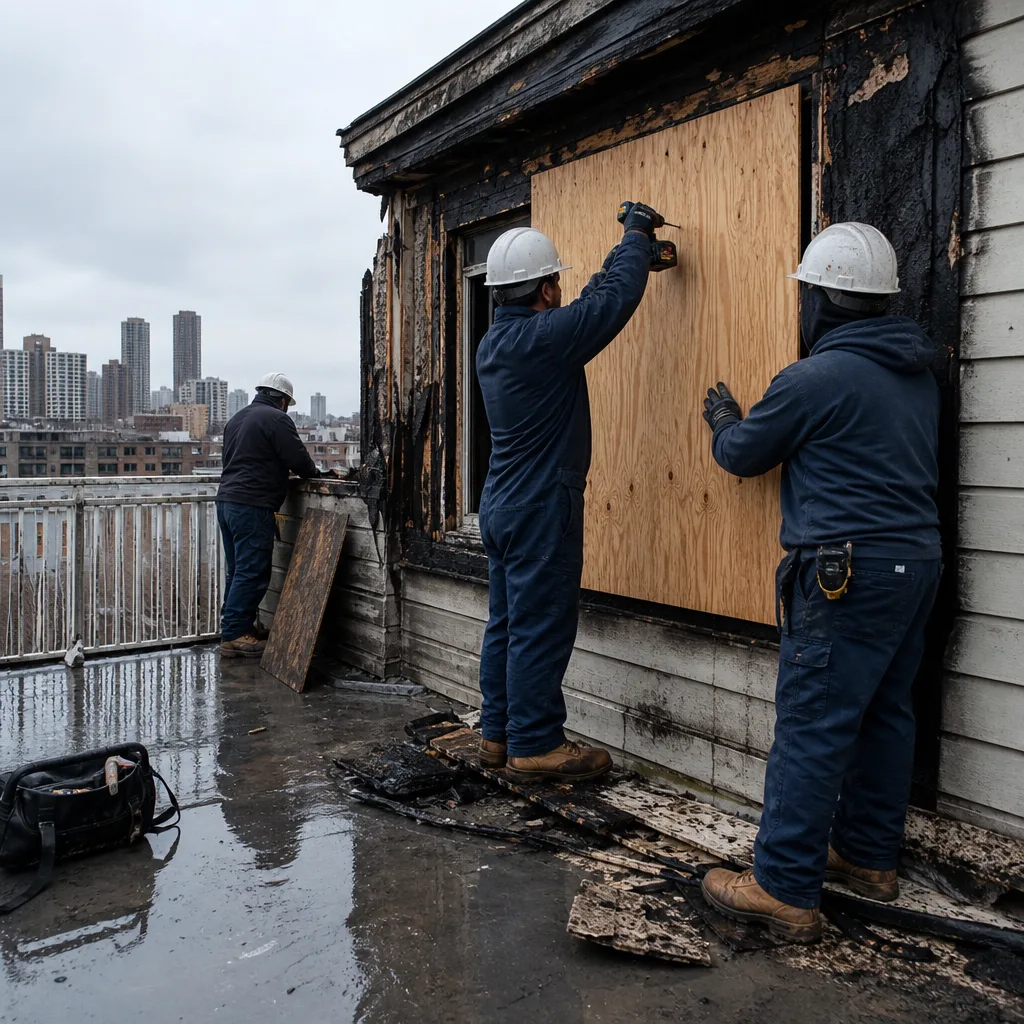
When a Secaucus storm puts a tree limb through a window or blows a patio door off its runners, the opening becomes an invitation for rain, animals, and intruders. We board and secure the opening same-day with plywood rated for temporary weather exposure, then photograph the work for your carrier. Board-up in Secaucus is never just plywood over a hole; it’s a temporary vapor barrier and a dry-line defense while the full repair scope is written.
Wind Damage Repair
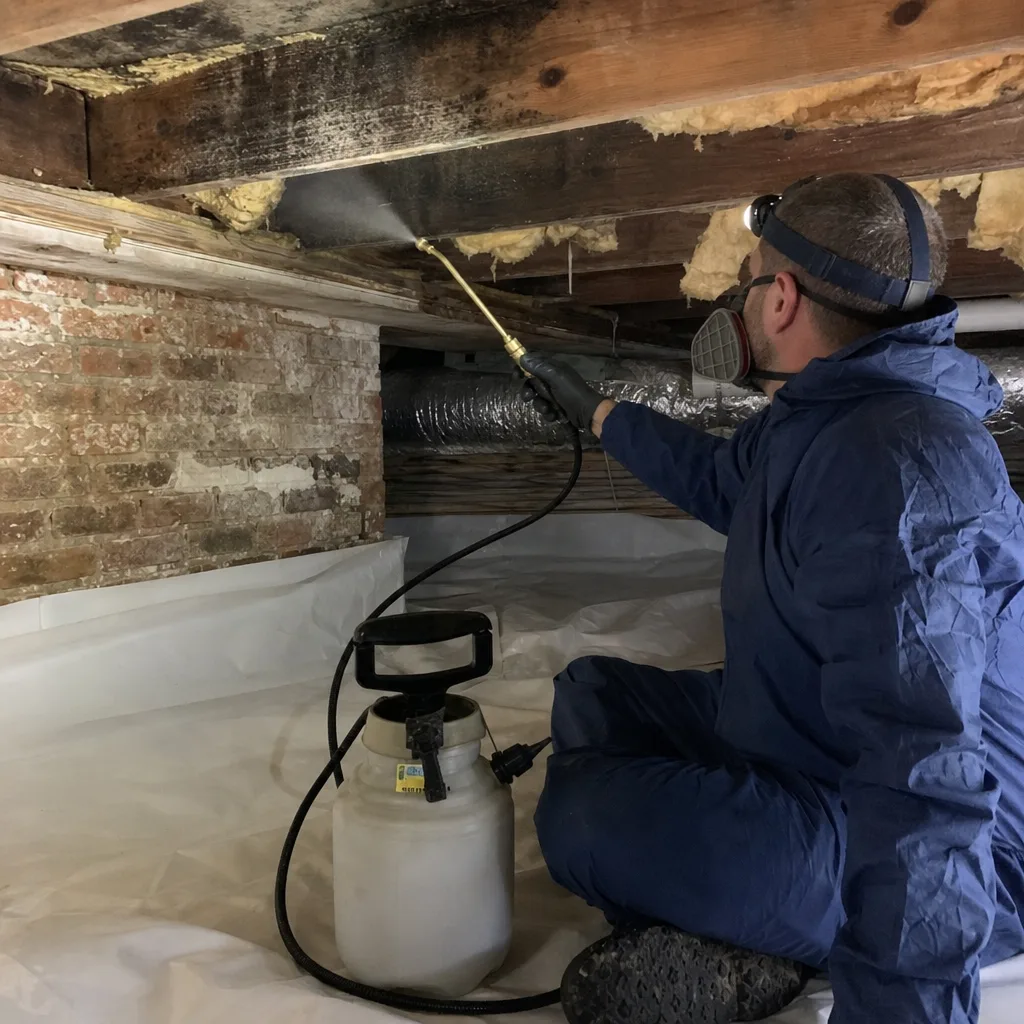
Wind doesn’t just knock things over. It flexes doors, lifts shingles, and breaks the seal between window frames and sheathing. On Secaucus townhomes, the typical wind-damage call is a door that’s been pulled past its weatherstripping limit, cracking the frame and letting driven rain soak the threshold. We repair the frame, re-hang the door, and inspect the adjacent drywall and subfloor for hidden moisture that the wind pushed in behind the trim.
Flood Damage Restoration
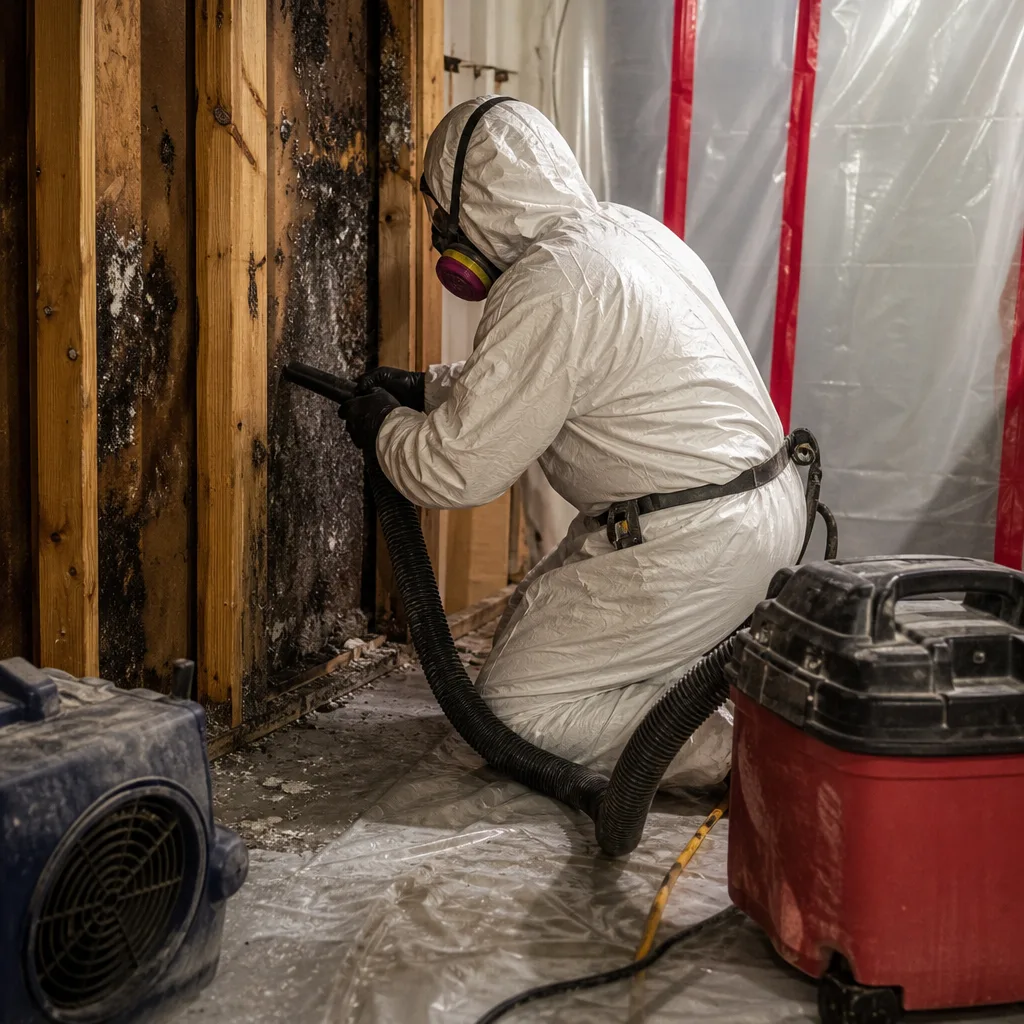
Floodwater in Secaucus usually comes from two directions at once: down from the sky and up from the meadowlands. When the Hackensack River tides push stormwater surcharge into a neighborhood’s drainage network, water enters homes from below, through slab joints and foundation walls, not just through doorways. We extract, flood-cut, and dry with the water table in mind, not against it. That’s the difference between a proper restoration here and a recurring mold problem.
Roof Tarping
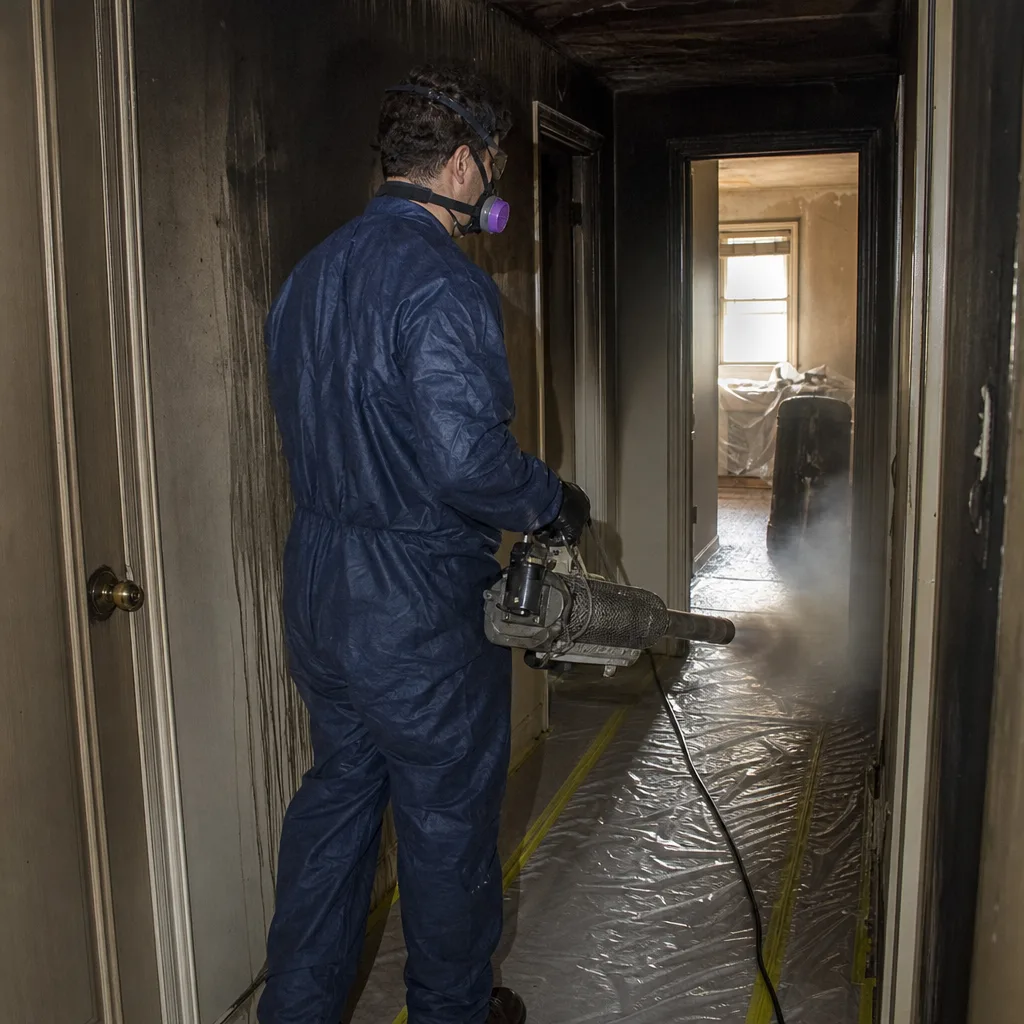
A lifted roof edge or shingle loss leaves the attic open to the next rain, which in Secaucus can arrive the same afternoon. We tarp the damaged section with reinforced polyethylene, securing it against the next wind event with the same fastening pattern we’d use on a coastal property. Tarping is a temporary measure. It buys you the time to write a proper repair scope and schedule the work without a wet attic compounding the loss.
Debris Removal
Storm debris in Secaucus is mostly wet: saturated drywall, waterlogged insulation, ruined carpet and pad, and the occasional section of fence that a neighbor’s tree took out. We haul it off, separating construction debris from contaminated materials, and document disposal for your claim. Debris left in a garage or curbside for a week in this climate starts introducing secondary problems no homeowner needs.
What happens when you call
- 1
A real person answersNo phone trees - you reach a local pro.
- 2
You get an upfront price rangeHonest numbers before anyone is dispatched.
- 3
A background-checked tech heads outLicensed & insured, dispatched right away.
- 4
You approve before work beginsNothing starts until you say go.
Storm & Disaster Restoration Costs in Secaucus, NJ
Storm restoration in Secaucus runs on a wider range than upland towns because the scope depends on how far the water traveled and what the meadowlands fill did with it. A wind-damage repair on a townhome entry door – new frame, re-hung door, threshold replacement, and drying of the adjacent slab – typically runs $1,800 to $4,600 in Secaucus. Full flood-damage restoration after a nor’easter, with Category 2 water across a slab, flood cuts to drywall at 2 feet, antimicrobial treatment, drying, and rebuild, ranges from $6,500 to $22,000 depending on square footage and how long the water sat. Emergency board-up and tarping runs $350 to $900 as a standalone stabilization measure. If your policy covers the event, your out-of-pocket is typically your deductible; we bill the carrier directly for the covered scope. If it’s a maintenance issue your carrier won’t cover, we write the same honest scope and give you the price before work starts. Call (917) 924-4221 for a free visual inspection. That’s the only way to get a real number for your specific property, not a broad range.
We Also Serve Cities Near Secaucus
Our storm crews work the full meadowlands corridor and the surrounding ridge towns. North Bergen, Union City, Weehawken, and Moonachie all get the same 45-minute response and the same live-answer dispatch. Drainage patterns differ from town to town, but the fundamentals stay the same: get the water out, prove it’s dry, rebuild it properly, and stand behind the work.
Secaucus Storm & Disaster Restoration Questions, Answered
Why does a storm-damaged door in Secaucus often lead to hidden slab moisture under townhomes near Mill Creek Road, even when the water looks clean?
It’s not the door. It’s the ground underneath the slab. Secaucus sits on filled Hackensack Meadowlands, and the water table under those townhomes near Mill Creek Road stays high year-round. When wind-driven rain blows past a damaged door and soaks the slab, the visible water is only the surface problem. The meadowlands fill underneath holds moisture against the concrete edge for weeks. The concrete acts like a wick, pulling that groundwater up into the bottom plates of your walls and under your flooring. What looks like Category 1 rainwater on the surface is being fed by a subsurface reservoir that never drains on a normal timeline. Our crews read the slab edges with hygrometers and thermal imaging, not just the top surface, because the readings we can’t see are the ones that matter. If you had a storm-damaged door near Mill Creek Road and no one checked the slab edge moisture ten days later, the restoration wasn’t finished. Call (917) 924-4221 and we’ll read the actual numbers for you.
What exactly does Secaucus require for wind-rated door reinforcement before a nor’easter or tropical storm?
Secaucus enforces the New Jersey building code’s wind design provisions, which base requirements on the mapped wind speed for the area. For the meadowlands corridor, that means doors and windows must be rated for the design pressures shown on the project documents, and the installation must include proper anchoring through the rough opening into structure. What this means in practice: many original 1980s and 1990s townhome entry doors were installed when the code was less demanding, and they’re now under-engineered for the storms Secaucus gets. A reinforced door assembly for this market includes a proper threshold pan with end dams, continuous weatherstripping, structural screws through the jambs and hinge plates into the king studs, and hardware rated for outward-opening pressures. For a door that’s already shown wind damage, we also inspect the rough opening for rot or movement before the new assembly goes in. If you’re planning to upgrade before storm season, call us for an assessment and we’ll tell you exactly what your specific door needs, no upselling.
After a storm, how do you know if the water in my Secaucus crawl space is Category 1, 2, or 3 – and why does it matter?
Category 1 is water from a clean source before it contacts building materials. Category 2 is water with significant chemical or biological contamination. Category 3 is grossly unsanitary: sewage, river backflow, or standing floodwater that has mixed with the ground outside. In Secaucus, the category matters more than in upland towns because the meadowlands water table changes the picture. If your crawl space took on water during a nor’easter, it’s rarely Category 1. The groundwater that rises through the fill has been in contact with decades of urban soil and old drainage. If stormwater surcharge from the Hackensack River drainage network was involved, Category 3 is the honest call. The category dictates the response: Category 1 can be dried with extraction and dehumidification, but Category 3 requires removal of saturated porous materials, antimicrobial treatment, and containment while the work happens. Guessing wrong on category in a Secaucus crawl space is why some homes get mold within a month of a storm. We test and classify before we set equipment, and we’ll show you the readings.
Can dehumidification alone dry out a Secaucus townhome after wind-driven rain, or does the meadowlands water table make that impossible?
Dehumidification alone rarely works in Secaucus, not because the equipment is wrong but because the water source is not just the rain. When wind-driven rain soaks the slab edge of a townhome on meadowlands fill, the slab faces a two-front water event: the rain on top and the groundwater pushing up from below. A dehumidifier can dry the surface air and the top inch of the slab, but it cannot pull water out of the fill beneath the foundation. That moisture keeps migrating up through the concrete. What’s required is a drying strategy that includes targeted air movement across the slab edge, sealed containment where needed, and monitoring that recognizes the slab will dry slower than an inland concrete floor. In some cases, extraction mats or low-grain refrigerant dehumidifiers placed directly on the slab are the right tool. In others, the bottom plates and drywall need to be opened to let the trapped moisture escape. The honest answer for Secaucus is that drying a slab-edge water event to pre-loss condition takes longer here than in North Bergen or other upland towns, and the contractor who tells you the dehumidifier is enough is probably the contractor you’ll call back for mold in six weeks.
What does a complete storm and disaster restoration scope of work look like for a Secaucus condo near the Hackensack River after a named storm?
A complete scope accounts for everything the storm touched, not just the visibly broken pieces. For a condo near the Hackensack River, that scope includes: emergency board-up or tarping at the point of entry, extraction of standing water from all affected rooms, demolition of saturated drywall and insulation (flood cuts at the height the moisture mapping shows, usually 2 to 4 feet), removal of affected flooring and base trim, antimicrobial treatment on exposed framing, installation of containment and drying equipment, daily moisture readings logged against the pre-loss dry standard, and then the rebuild: new drywall, insulation, trim, flooring, paint, and any door or window work. The scope also includes the documentation package: photos, readings, the line-item estimate. Near the Hackensack River, the scope almost always includes slab-edge drying because the groundwater response after a named storm lingers. And it includes a final clearance check that confirms the structure is dry before finish materials go in. This is what we hand you in writing before we start.
How fast can a storm restoration crew actually get to my house in Secaucus?
Our commitment is 45 minutes from your call to a crew arriving at your Secaucus property. That’s not a marketing line; it’s how dispatch is built. When you call (917) 924-4221, a live person answers, locates the nearest available crew, and gives you a real arrival window. Night or day, holiday or not. The advantage in Secaucus is our crews stage from the metro area and know the town’s access points: Route 3, Paterson Plank Road, and the Meadowlands Parkway corridor. We don’t have to figure out how to get there; we’re already running calls in town. The faster extraction and drying equipment is running, the less material needs to come out and the lower the total restoration cost.
Will my insurance cover wind damage to a door and the water that got in behind it?
Most homeowner policies in New Jersey cover wind damage to the structure, including doors, and water damage that results from a covered opening caused by wind. What matters in Secaucus is the documentation. If the wind cracked the door frame and let driven rain inside, that’s a covered event. If the door was already damaged from years of deferred maintenance and the wind simply made it worse, your carrier may apportion the claim. We document what we find honestly: the condition of the frame, the weatherstripping, the threshold, the drywall behind the trim. Our photos and our line-item scope tell the story your adjuster needs to see. We also communicate directly with your carrier, so you’re not trying to explain hydrostatic pressure to a claims specialist over the phone. Call us and we’ll walk the property with you before you file.
What should I do in the first 30 minutes after storm damage to my Secaucus home?
First, if there’s any structural danger – a sagging roof, a door that’s been blown off its hinges, live electrical lines – stay out of that area and call for help. Second, call us at (917) 924-4221. Even before your insurer picks up, we can be on the way. Third, if you can safely do so, photograph everything: the damaged door, the water on the floor, the wet drywall, the debris. These photos go into your claim file. Do not turn on electrical circuits in wet rooms. Do not use a shop vac on standing water from outside without protection, because it may be Category 3. And don’t wait to see if it “dries on its own.” In Secaucus, on meadowlands fill, it won’t. The water table will keep feeding the slab edge, and what started as a door repair becomes a mold problem and a bigger claim denial risk. The first 30 minutes decide how bad this gets. Call us now.
Serving Secaucus, NJ - Our Local Coverage Area
We’re based in the Secaucus area and know this community well. Use the map below to see our service coverage - if you’re nearby, we can almost certainly help.
Call Floodline Restoration Co. of Manhattan for Storm & Disaster Restoration in Secaucus
When a storm tears through Secaucus, the question isn’t whether there’s damage. It’s whether the damage is fully understood before it spreads. We’ve spent years reading moisture in the meadowlands, rebuilding doors that the wind pulled apart, and writing scopes of work that stand up to adjuster review. Our Secaucus customers get the same 90-Day Done Right Promise in writing as every other home we serve. That’s the Keystone Standard, and it means what it says. If it’s not done right, we make it right. No arguing, no paperwork battles. Call (917) 924-4221 now for a free visual inspection and a firm scope of work. The line the water left is where we start.
Written by Curt Bowman, Owner at Floodline Restoration Co. of Manhattan, serving Secaucus since 2010.