
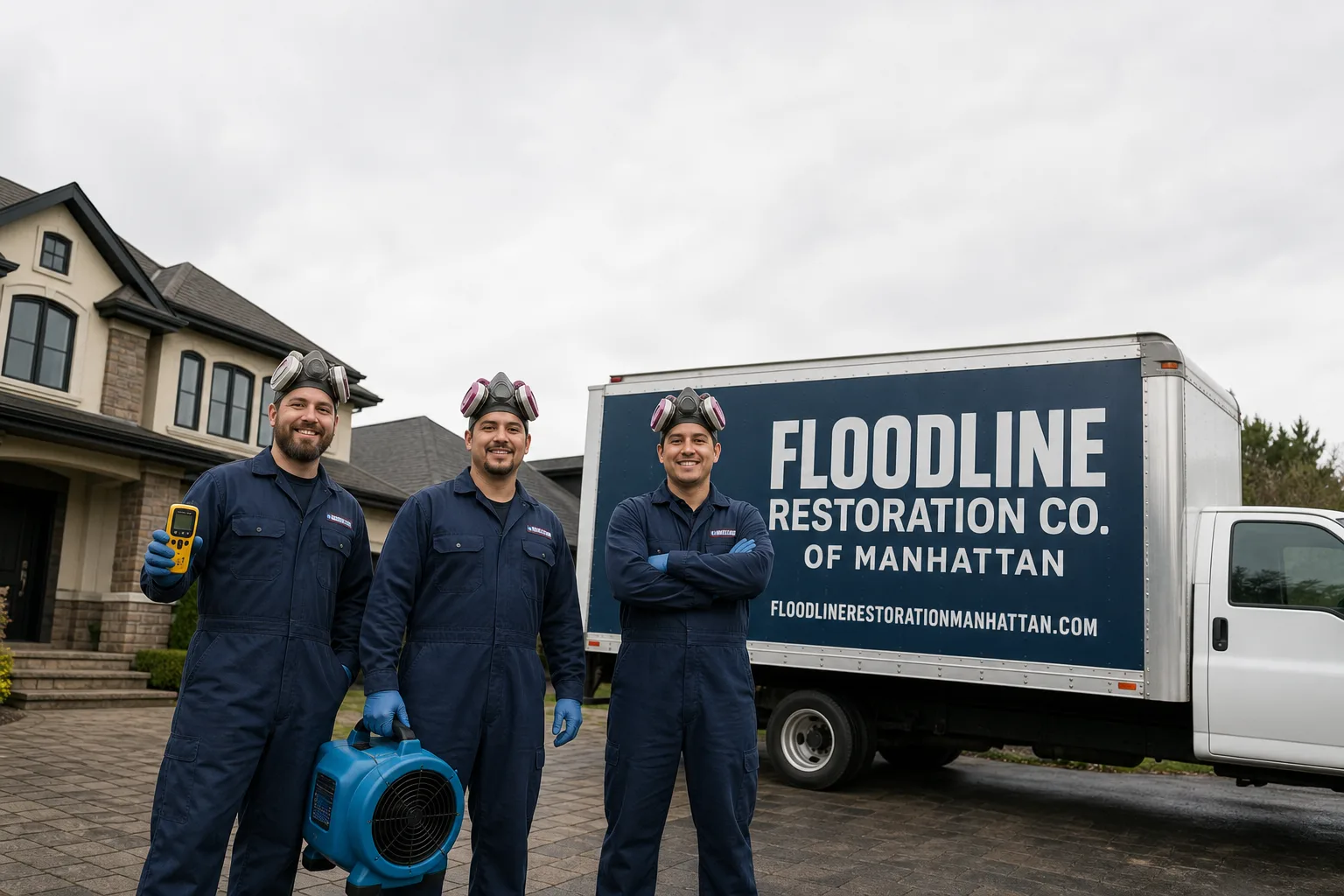
Free visual inspection and a written scope of work before any mitigation begins - photos, moisture readings, and drying logs go in your claim file
The scope we write is the scope we bill. Anything new gets shown to you, in writing, before we touch it.






 Before
 After
After Before
 After
After Before
 After
After24/7 Emergency Storm & Disaster Restoration in South Valley Stream
Storm and flood damage in South Valley Stream needs an answer now, not a callback. Our live dispatchers answer the phone around the clock, every day of the year, and our crews reach homes across the hamlet quickly because we know the streets, the drainage patterns, and the houses. Call (917) 924-4221 and you’ll get a real person, not a recording. We’ll send a certified crew for a free visual inspection, and in most cases extraction starts the same visit. The first hour after floodwater enters a postwar Cape Cod or ranch matters more than most homeowners realize: the longer category 2 or 3 water sits against original plaster and wood framing, the deeper the damage runs and the more invasive the eventual repair.
Understanding Storm & Disaster Restoration Severity in South Valley Stream Properties
South Valley Stream’s housing stock was largely built between 1945 and 1965. Those Cape Cods, ranches, and small colonials handle water very differently from modern drywall construction. Original plaster wicks moisture upward, wood-framed floors close to grade absorb it, and basements and crawl spaces sit at or near the local water table. After a nor’easter pushes water over Hook Creek’s banks, we routinely find saturation in wall cavities three or four feet above the visible waterline. We classify water by category: category 1 is clean supply water, category 2 carries contaminants, and category 3 is grossly unsanitary, the kind that arrives when tidal backflow or storm surge mixes with sewage. Moisture mapping with thermal imaging and hygrometers shows us what the eye cannot, and structural drying with Dri-Eaz air movers and Injectidry vacuum panels pulls water from materials that would otherwise stay wet for months. In this hamlet, where repeat flooding is common, hidden moisture from one storm becomes a mold problem before the next one arrives.
Why South Valley Stream Property Owners Choose Floodline Restoration Co. of Manhattan
- Fast local dispatch: Our crews are coordinated from our New York City office and respond to South Valley Stream calls within about 45 minutes, on average, for emergency cases.
- A live person, every time: Calls are answered by a real dispatcher, 24/7. No answering service menus, no voicemail at 2 a.m., no waiting for a call back while water keeps rising.
- Certified restoration crews: Our technicians are background-checked, uniformed, and trained to IICRC, RIA, and IFA standards, including WRT, FSRT, and AMRT codes for water, fire, and mold work.
- Free visual inspection: We assess the damage before you commit to anything, and you get a clear picture of what needs to happen and why.
- Direct insurance billing: We communicate with your adjuster, document the loss thoroughly, and bill the carrier directly so you’re not playing messenger.
- One crew from start to finish: The same team that extracts the water handles daily drying readings and the final rebuild. No mid-job handoff, no inherited subcontractors.
Our Storm & Disaster Restoration Process
Inspection & Assessment
We start with a room-by-room walkthrough using thermal imaging and moisture meters. In South Valley Stream homes with original plaster and wood framing, we look carefully for hidden saturation behind baseboards and under subfloors, especially where prior Sandy-era water damage was never fully opened and dried.
Extraction & Stabilization
We remove standing water with truck-mounted and portable extraction units, then stabilize the structure. If wind damage has left an opening, we perform emergency board-up or roof tarping immediately so no more water gets in.
Drying & Dehumidification
Dri-Eaz and Phoenix air movers plus commercial dehumidifiers run continuously, with daily moisture readings logged. In a flooded Cape Cod with wood floors close to grade, materials often need several days to hit the dry standard.
Cleaning & Sanitization
We clean and treat surfaces appropriate to the water category. Category 2 and 3 water require antimicrobial treatment on wall cavities and framing, not just visible surfaces, or mold returns within about 48 to 72 hours.
Specialty Treatment for Storm Damage
For South Valley Stream’s recurring nor’easter damage, this includes resetting flashing around wind-rated doors and windows installed after Sandy on original 1945-1965 framing, and inspecting garage door tracks after high winds.
Repairs & Restoration
The same crew that dried your home rebuilds it. Drywall, trim, flooring, paint, and structural repairs happen in sequence, and we hand you a moisture log and a written 90-Day Done Right Promise when we finish.
Need Emergency Storm & Disaster Restoration in South Valley Stream Now?
Crews minutes away, answering live 24 hours a day. The sooner we start, the less it costs.
Working With Your Insurance Company
Storm and flood claims in South Valley Stream often involve FEMA and private carriers, and the paperwork is thick. We handle it. From the first hour we document the loss with photos, moisture readings, and a line-item scope of work that an adjuster can evaluate without a fight. Our team communicates directly with your carrier, explains the technical rationale for exploratory demo and drying time, and pushes back where needed. Over the years we’ve learned that a well-documented claim in a FEMA Zone AE property moves faster and gets approved more fully. You shouldn’t have to translate restoration terminology to an adjuster. That’s our job.
What We Provide Your Insurer
- Thorough documentation of the loss
- Photos of all damage, room by room
- Moisture readings and drying logs
- A detailed, line-item scope of work
- Direct coordination with your carrier
Built for South Valley Stream’s Loss Calendar
South Valley Stream does not have a single storm season. It has a rhythm. Nor’easters arrive from late fall through early spring, pushing tidal water into the southern streets and testing every wind-rated door and roof edge. Hurricane season brings the potential for tropical systems like the ones that shape this hamlet’s FEMA maps. Winter deep freezes can burst supply lines in unheated crawl spaces under the same postwar homes that already sit close to the water table. Spring thaw raises groundwater and seeps into basements that never quite dried from the last event. Summer thunderstorms dump inches in an hour and overwhelm drainage toward Hook Creek and the tidal wetlands. Storm & Disaster Restoration here means understanding which failure mode is most likely each month, and home in South Valley Stream means living with that calendar. Our equipment and approach are set up for the repeat nature of this area’s losses, not for one-off catastrophic disasters alone.
Storm & Disaster Restoration Across South Valley Stream’s Neighborhoods
The southern sections of South Valley Stream, closer to the tidal wetlands and Hook Creek, take the worst of the flooding. Streets there drain slowly and back up during moderate nor’easters, not just major ones. Ranches and Cape Cods on those blocks are the homes we see most often for category 2 and 3 water extraction and aggressive exploratory demo. The Frank M. Charles Memorial Park area and roads near it sit close to the water table, and basements there need constant moisture management. Along Mill Road and the commercial corridors, older buildings with flat roofs and aging flashing take wind and rain differently, with more roof tarping calls and board-up work after high-wind events. The northern stretches of the hamlet, on higher ground, see fewer floods but more wind-driven door and window failures, especially where homeowners installed replacement units after Sandy without correcting the original framing underneath. Each area has its own pattern, and our crews know which response fits which block.
Specialized Storm & Disaster Restoration Services We Offer in South Valley Stream
Flood Damage Restoration
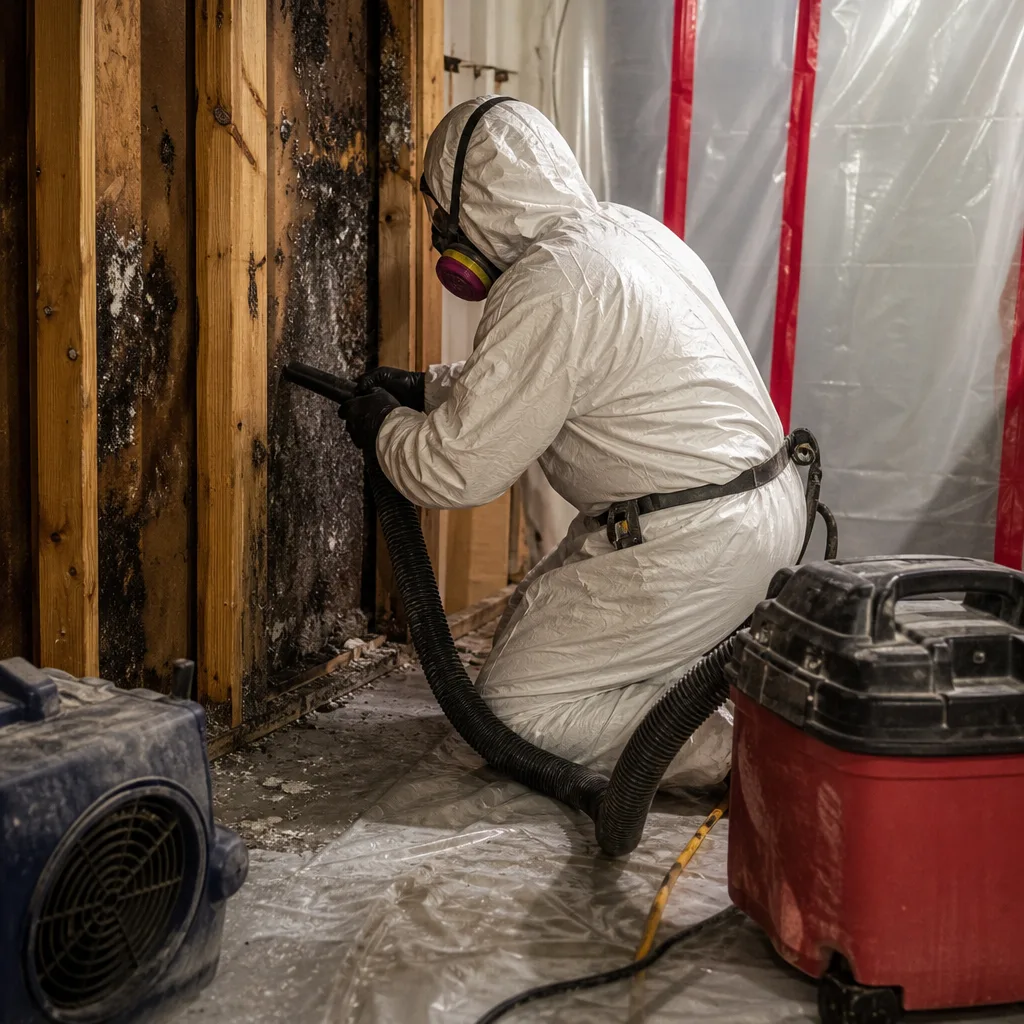
Floodwater in South Valley Stream is often category 3 by the time it enters a home because tidal backflow carries contaminants. We classify the water correctly, set containment, extract, and dry with professional-grade Dri-Eaz and Phoenix equipment. Because many homes here re-flood, we look for residual moisture from past events that a simpler job would miss. A ranch near the southern end of the hamlet, after the last nor’easter pushed category 3 water over Hook Creek’s banks, our crew set containment and ran moisture mapping through original plaster walls and wood-framed floors close to grade. The homeowner had never opened walls after Sandy, so we pulled baseboards and took moisture readings that showed hidden saturation, then ran Dri-Eaz air movers and Injectidry vacuum panels for structural drying, documenting drying logs until we hit pre-loss condition.
Emergency Board-Up
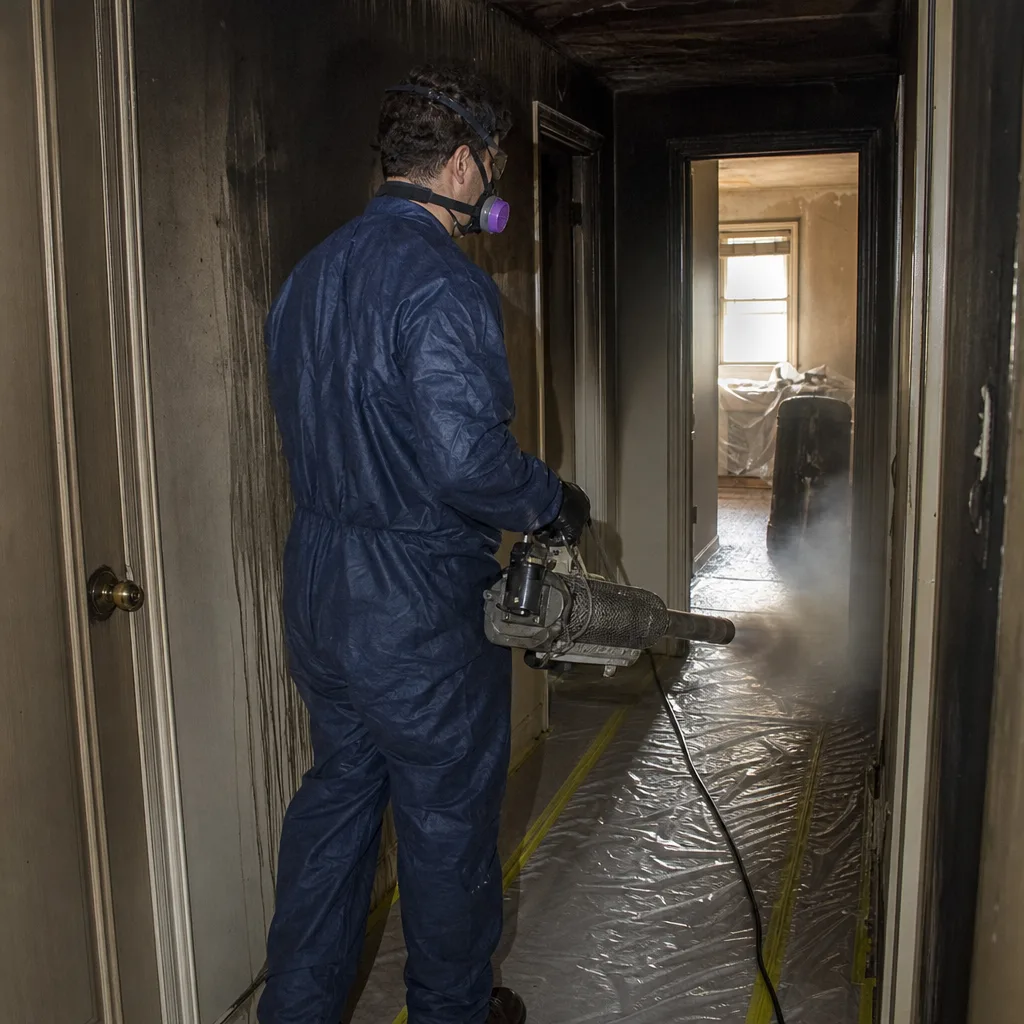
Storm-broken windows, blown-in doors, and wind-damaged garage panels leave a house open. We board up the opening with plywood and framing that holds against the next wind event. In South Valley Stream, where a second nor’easter can follow the first within weeks, we pay attention to garage door tracks, not just the opening. A bowed track left unaddressed means the door will not seal when the next storm hits.
Wind Damage Repair
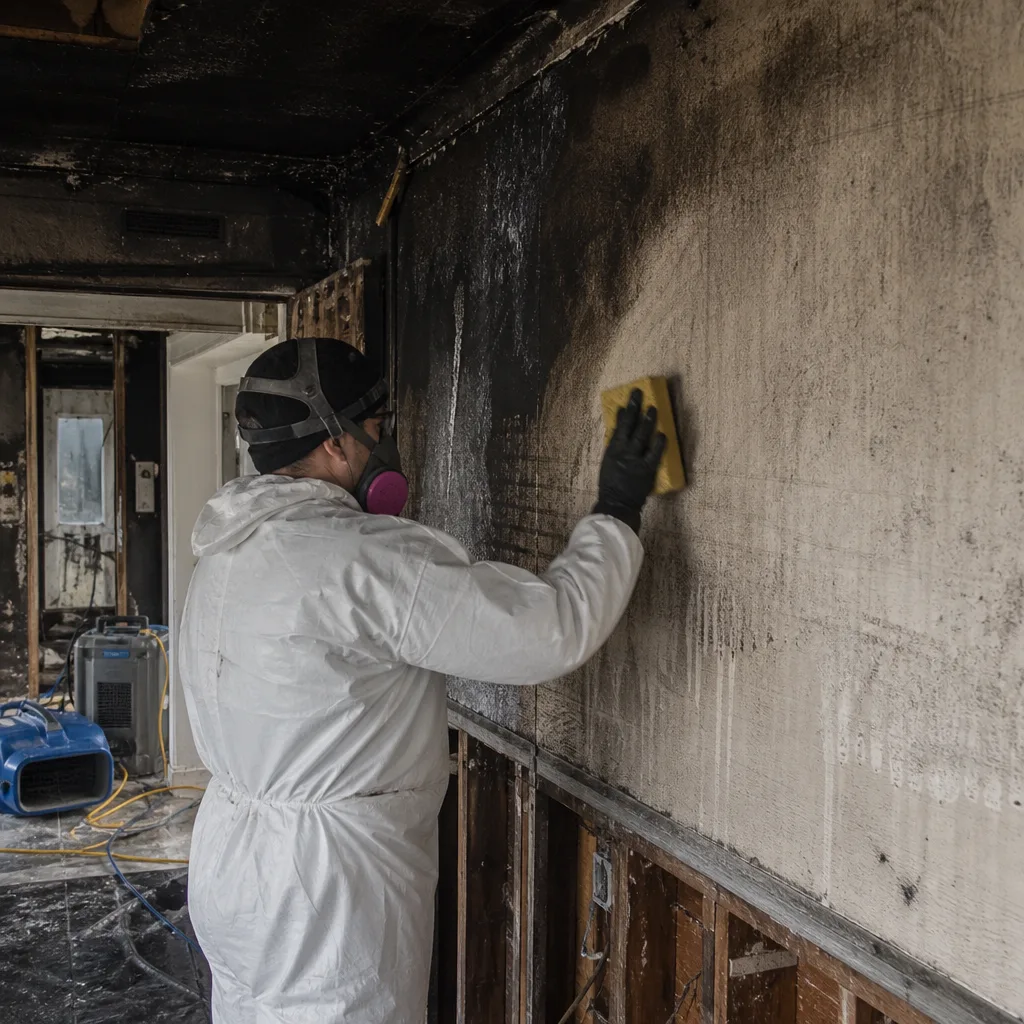
Wind-rated doors and windows installed after Sandy gave many South Valley Stream homeowners a false sense of security. The units themselves may hold, but if the flashing was not reset to account for original 1945-1965 framing, wind-driven rain still drives in around the rough opening. We repair the flashing, reset the units where needed, and check the integration with original sheathing. This is the detailed wind-load work that a generic contractor misses.
What happens when you call
- 1
A real person answersNo phone trees - you reach a local pro.
- 2
You get an upfront price rangeHonest numbers before anyone is dispatched.
- 3
A background-checked tech heads outLicensed & insured, dispatched right away.
- 4
You approve before work beginsNothing starts until you say go.
Storm & Disaster Restoration Costs in South Valley Stream, NY
Storm damage restoration in South Valley Stream runs a wide range, but here are honest numbers for this market. Flood damage restoration on a single flooded basement typically runs $2,800 to $7,500, depending on water category, square footage, and how much exploratory demo is required. Emergency board-up ranges $400 to $1,200 per opening. Roof tarping usually lands between $350 and $900, depending on roof size and access. Wind damage repair to doors, windows, and flashing commonly runs $800 to $3,500 when framing corrections are needed. The single biggest cost driver here is hidden moisture: because so many homes were never properly opened and dried after Sandy, a flood that looks minor may require aggressive exploratory demo, and the line-item scope grows as we document what’s actually wet. Insurance covers much of this when the loss is documented properly. We provide a free visual inspection and a written scope before work starts, so there are no surprises on the bill. Call (917) 924-4221 for a firm, line-item quote.
We Also Serve Cities Near South Valley Stream
Our crews regularly respond to storm and flood damage in the communities surrounding South Valley Stream, including Fairview, Harrison, East Bronx, and Hunts Point. If your home sits near the border of any of these areas, call us and we’ll dispatch the nearest available crew.
South Valley Stream Storm & Disaster Restoration Questions, Answered
If my South Valley Stream ranch flooded again after a nor’easter, how do I know if the water is category 1, 2, or 3?
In South Valley Stream, most nor’easter flooding in homes near Hook Creek or the tidal wetlands is category 3 water because tidal backflow carries contaminants. Category 1 is clean supply water, like a burst pipe. Category 2 has significant contamination, like sump pump overflow. Category 3 is grossly unsanitary, including sewage and tidal water. We test and classify before we start drying, because treating category 3 as category 1 means leaving pathogens and mold behind in your walls. Call (917) 924-4221 and we’ll assess it for free.
Why do South Valley Stream homes need more exploratory demo than inland Nassau homes after a flood?
Many South Valley Stream homeowners never opened and properly dried their walls after Hurricane Sandy in 2012. Original plaster and wood framing absorbed water then, and that moisture has been sitting behind wall cavities ever since. When a new flood hits, the water reactivates old damage and spreads through already-weakened materials. We have to pull baseboards and cut exploratory openings to find saturation that a surface inspection misses. It looks like more demo, but it costs less in the long run than rebuilding a home that never actually dried.
My Cape Cod’s garage door bowed during the last storm - can it be repaired or does South Valley Stream wind-load code require full replacement?
Most bowed garage door panels can be repaired if the track and hinges are still square, but South Valley Stream’s wind exposure means the repair has to hold against the next nor’easter, not just look straight. We inspect the panel, track, and the framing around the opening. If the track is bowed, a replacement track and panel reset is usually the right fix, not a patch. Code compliance here for wind-rated assemblies may require a replacement if the original door was not wind-rated. We’ll tell you what’s required and what’s optional before any work starts.
How quickly will mold start in my South Valley Stream basement after water extraction?
Mold starts within 48 to 72 hours of water intrusion, faster in South Valley Stream’s humid, low-lying climate where basements sit near the water table. Even after visible water is extracted, materials like wood framing, plaster, and subflooring stay wet enough to support mold growth. That’s why we set containment, run antimicrobial treatment on category 2 and 3 water, and keep drying until moisture readings hit the dry standard. Waiting a few days to assess damage is how small floods become mold remediation jobs.
Do I need a permit to repair wind damage to my storm door in South Valley Stream?
Replacing a storm door itself typically does not require a permit, but if the original framing around the rough opening is damaged and we need to repair or replace it, the Town of Hempstead may require one. When wind-rated doors were installed after Sandy without resetting flashing to match original 1945-1965 framing, the correction often touches structural elements. We’ll tell you exactly what needs a permit and handle the paperwork if you want us to. Most emergency board-up and tarping work does not require a permit because it’s temporary stabilization.
How fast can a crew actually reach my South Valley Stream home after I call?
Our average emergency response time to South Valley Stream is about 45 minutes. We answer the phone live, 24 hours a day, and dispatch a crew immediately. The sooner extraction starts, the less framing and flooring has to be removed. Call (917) 924-4221 and we’ll have someone on the way.
What certifications do your restoration crews hold?
Our technicians are background-checked, uniformed, and trained to IICRC, RIA, and IFA standards. Specific IICRC codes relevant to storm damage include WRT for water damage restoration, FSRT for fire and smoke, and AMRT for mold remediation. We use Dri-Eaz, Phoenix, XPOWER, B-Air, and Injectidry equipment on every job, with daily moisture readings logged until we hit the dry standard.
What should I do in the first 30 minutes after flood or storm water enters my South Valley Stream home?
Call us at (917) 924-4221 first, while you still have time to act. If it’s safe, shut off electricity to affected areas. Do not walk through standing water if there’s any chance it’s category 3 tidal backflow. Move valuables and electronics to higher ground if you can do so without risk. Take photos of the waterline and visible damage for your insurer. Then wait for our crew; do not start ripping out drywall yourself, because hidden electrical lines and contamination make careless demolition dangerous. The less you disturb contaminated materials, the easier the claim and the safer the job.
Serving South Valley Stream, NY - Our Local Coverage Area
We’re based in the South Valley Stream area and know this community well. Use the map below to see our service coverage - if you’re nearby, we can almost certainly help.
Get Storm & Disaster Restoration in South Valley Stream Started Today
Floodwater does not wait. The line the water left on your wall is where we start, and we do not hand the job off until extraction, drying, and rebuild are finished by the same certified crew, with a moisture log and the written 90-Day Done Right Promise in your hands. Call (917) 924-4221 for a free visual inspection and a square deal, no surprises on the bill. We answer live, day or night, and our crews are minutes away from South Valley Stream.
Written by Curt Bowman, Owner at Floodline Restoration Co. of Manhattan