
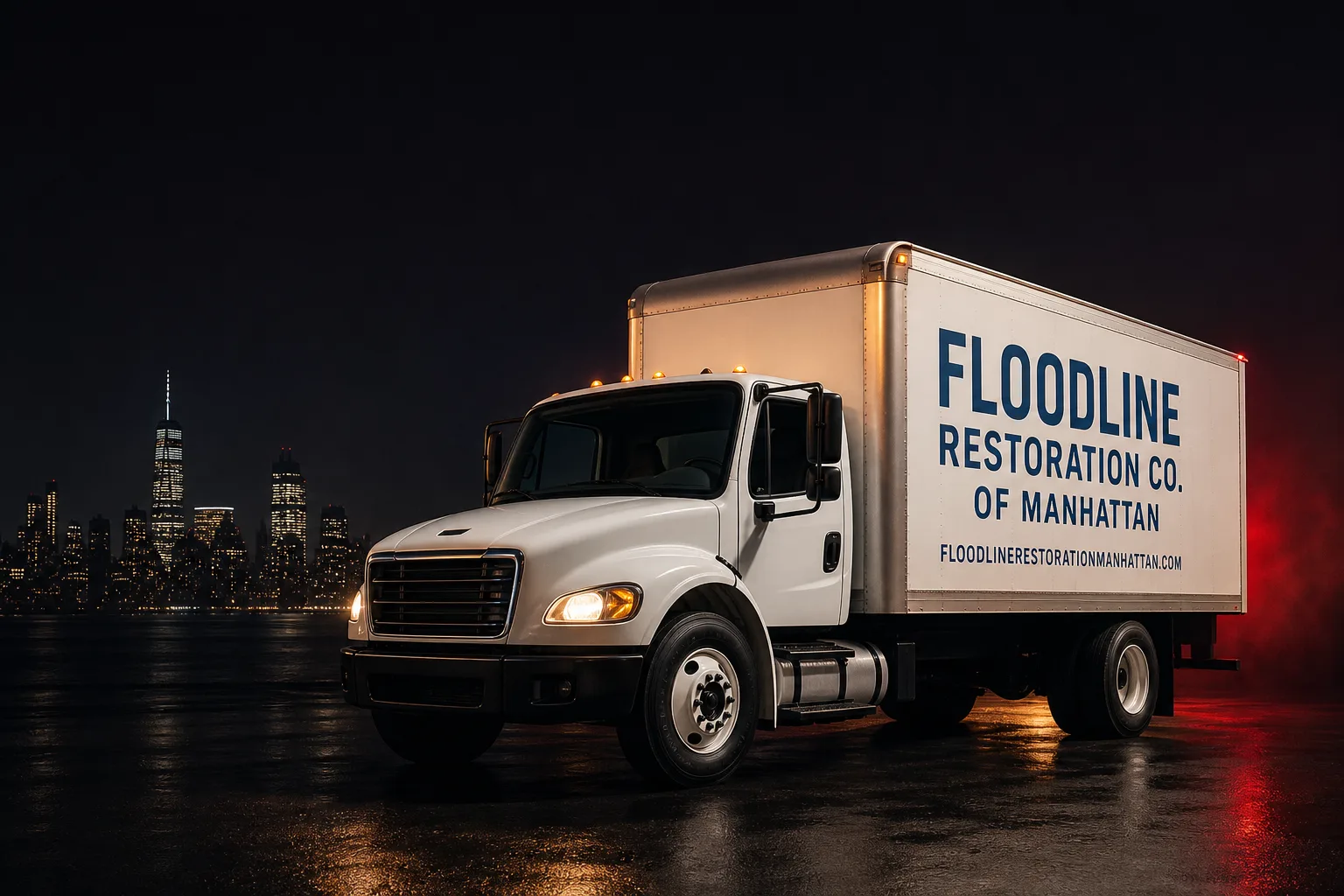
Free visual inspection and a written scope of work before any mitigation begins - photos, moisture readings, and drying logs go in your claim file
The scope we write is the scope we bill. Anything new gets shown to you, in writing, before we touch it.






 Before
 After
After Before
 After
After Before
 After
After24/7 Emergency Storm & Disaster Restoration in Southeast Yonkers
Storm damage in Southeast Yonkers moves fast, and so do we. A live dispatcher answers at (917) 924-4221 any hour, any day, and our crews are dispatched into Southeast Yonkers neighborhoods immediately. In this part of Yonkers, water from a nor’easter or summer downpour doesn’t sit politely on the street. It pours into basements and ground floors of dense brick rowhouses and pre-war apartment buildings, and every hour it sits there, it migrates further into plaster, framing, and the unit next door. We arrive fast because we know the difference between a cleanup and a full multi-unit restoration is often measured in the first ninety minutes.
Understanding Storm & Disaster Restoration Severity in Southeast Yonkers Properties
Storm water in Southeast Yonkers is rarely clean. By the time it reaches a basement on McLean Avenue or Kimball Avenue, it has picked up whatever was in the alley, the street drain, and the Bronx River watershed runoff. That’s Category 2 or Category 3 water under IICRC definitions, meaning it carries contaminants and requires more than a mop and a fan. Category 1 from a burst supply line is different from Category 3 from storm surge or a flooded street. The distinction matters because the drying protocol changes: Category 3 means controlled demolition of saturated materials, antimicrobial treatment, and air scrubbing, not just dehumidification. In Southeast Yonkers’s 1905-to-1945 housing stock, those saturated materials often include horsehair plaster, original hardwood over old-growth framing, and asbestos floor tile that Westchester County rules require testing before removal. Severity here is rarely just about how deep the water got. It’s about what the water touched, what the building is made of, and how many units share the same wall.
Why Southeast Yonkers Property Owners Choose Floodline Restoration Co. of Manhattan
- 45-minute response commitment. We log the call, dispatch a crew already staged near Southeast Yonkers, and have boots on the ground fast. Every minute matters when water is migrating through shared rowhouse walls.
- 24/7 live answer, always a person. No phone tree, no answering service, no “leave a message.” A dispatcher who knows Southeast Yonkers streets answers at 2 a.m. and starts the process.
- Certified crews on every job. Our technicians hold IICRC certifications including WRT (Water Damage Restoration) and FSRT (Fire & Smoke Restoration), and follow RIA and IFA standards. Background-checked, uniformed, and accountable to Curt Bowman, who founded this company in 2010.
- Free visual inspection. Before anything gets cut or dried, we walk the property, map the moisture, and give you a straight read on what’s actually wrong and what it will take to fix it.
- Direct insurance billing. We bill your carrier directly, we document everything from the first hour, and we coordinate with your adjuster so you don’t have to play phone tag.
- One team from extraction to reconstruction. The same crew that pulls the water out handles the drying, the rebuild, and the 90-Day Done Right Promise. No handoff, no inherited subcontractors, no one walking away mid-job.
Our Storm & Disaster Restoration Process
Inspection & Assessment
We arrive with thermal imaging cameras and moisture meters, not guesswork. Every affected room gets mapped, photographed, and documented. In Southeast Yonkers’s older brick buildings, we look for water that has traveled through common walls and floor cavities where it can’t be seen.
Extraction & Stabilization
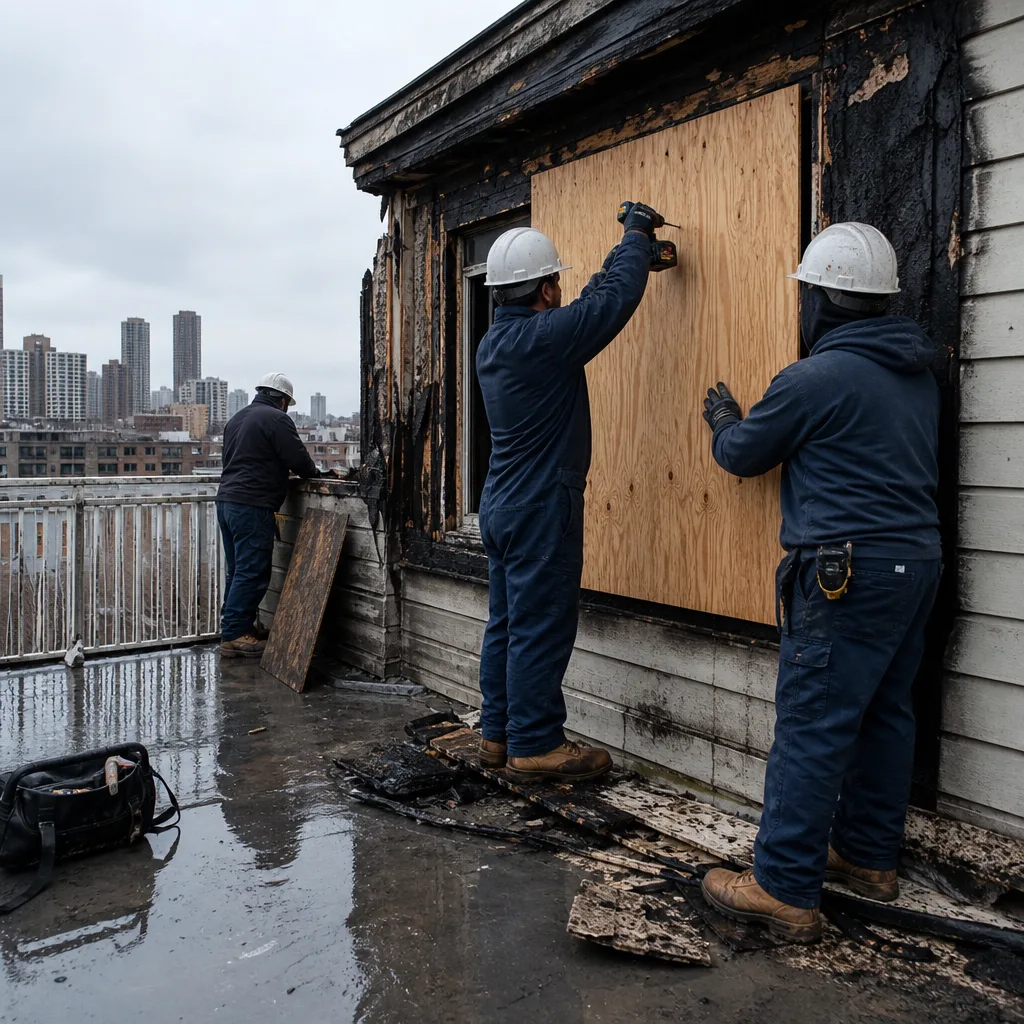
Standing water comes out first. Truck-mounted extraction units remove hundreds of gallons per hour, then we stabilize the structure with emergency board-up, roof tarping, or structural shoring. For storm damage, stabilization often includes protecting openings from further weather before drying even begins.
Drying & Dehumidification
Professional-grade Dri-Eaz dehumidifiers, Phoenix axial air movers, and XPOWER units go in, positioned for the tight clearances and narrow stairwells common in Southeast Yonkers walk-ups. Daily moisture readings are logged until every area hits the dry standard. We hand you the log, not just a claim that it’s dry.
Cleaning & Sanitization
Storm water means contaminants. We clean and sanitize all affected surfaces with antimicrobial treatments, and we run HEPA air scrubbers to remove particulates and odors from the air, including in areas that didn’t take direct water.
Specialty Storm Treatment
This is where local knowledge pays off. In Southeast Yonkers, we test for asbestos and lead before opening walls, because Westchester County hazmat protocols apply to most pre-1945 buildings. We contain, test, and abate properly so restoration doesn’t stall mid-job.
Repairs & Restoration
Once the building is dry and stable, the same crew does the rebuild. Plaster, drywall, flooring, trim, paint. We don’t hand you a phone number for a different contractor. We finish what we started, and the 90-Day Done Right Promise covers the work in writing.
Need Emergency Storm & Disaster Restoration in Southeast Yonkers Now?
Crews minutes away, answering live 24 hours a day. The sooner we start, the less it costs.
Working With Your Insurance Company
We’ve handled thousands of storm claims across the metro, and we know what carriers need to approve a claim without weeks of back-and-forth. From the first hour on site, we photograph everything, room by room, wall by wall. We log moisture readings floor by floor and we write line-item scopes that speak the insurer’s language. Our team communicates directly with your adjuster, answers their questions, and provides the documentation they ask for before they ask. You don’t play messenger. And because Curt Bowman built Floodline Restoration Co. around a dispatch board instead of a sales desk, our paperwork is honest, thorough, and built to hold up under scrutiny. If the carrier pushes back, we push forward with evidence, not excuses.
What We Provide Your Insurer
- Thorough documentation of the loss
- Photos of all damage, room by room
- Moisture readings and drying logs
- A detailed, line-item scope of work
- Direct coordination with your carrier
Built for Southeast Yonkers’s Loss Calendar
Storm and disaster restoration in Southeast Yonkers isn’t a one-season trade. January deep freezes burst galvanized and cast-iron supply lines in uninsulated rowhouse walls, flooding kitchens and basements while homeowners are at work. Spring thaw saturates the ground around foundations, and basement seepage follows. Summer thunderstorms drop an inch of rain in an hour onto near-total impervious cover, and every flat roof, alley drain, and basement stairwell becomes a funnel. Nor’easters in the fall and early winter pound those flat built-up roofs on three-to-five-story apartment buildings until membranes fail and water travels through every floor. The pattern is predictable to anyone who has worked the neighborhood for years. That’s why our Southeast Yonkers crews keep extraction equipment staged, moisture meters calibrated, and board-up materials ready through every season. The storm calendar here doesn’t pause, and neither do we.
Storm & Disaster Restoration Across Southeast Yonkers’s Neighborhoods
The blocks around McLean Avenue run dense with brick two-family rowhouses built in the 1920s, many with finished basements that flood from the street side during heavy rain. We know the alleys, the set-backs, and the parking constraints because our crews have worked every corridor. Over near Kimball Avenue, the apartment buildings are taller, the flat roofs are older, and roof failures send water down multiple floors at once. Around Central Park Avenue, commercial and mixed-use buildings need board-up and tarping fast because glass storefronts don’t survive a nor’easter flying branch. Down by the Bronx River edge, ground-level units take water during river surges and saturated soil events. The housing stock varies block by block, but the common thread is age, density, and shared walls. A flood in one unit never stays in one unit. We document each unit separately from the first visit because multi-unit claims without per-apartment files are how disputes drag on for months.
Specialized Storm & Disaster Restoration Services We Offer in Southeast Yonkers
Flood Damage Restoration
Flooding in Southeast Yonkers basements is the number one call we get after any significant storm. The near-total impervious cover means water arrives fast, sits deep, and finds its way into every crack in old concrete and stone foundations. We extract, dry, sanitize, and restore, with moisture log in hand.
Storm Damage Cleanup
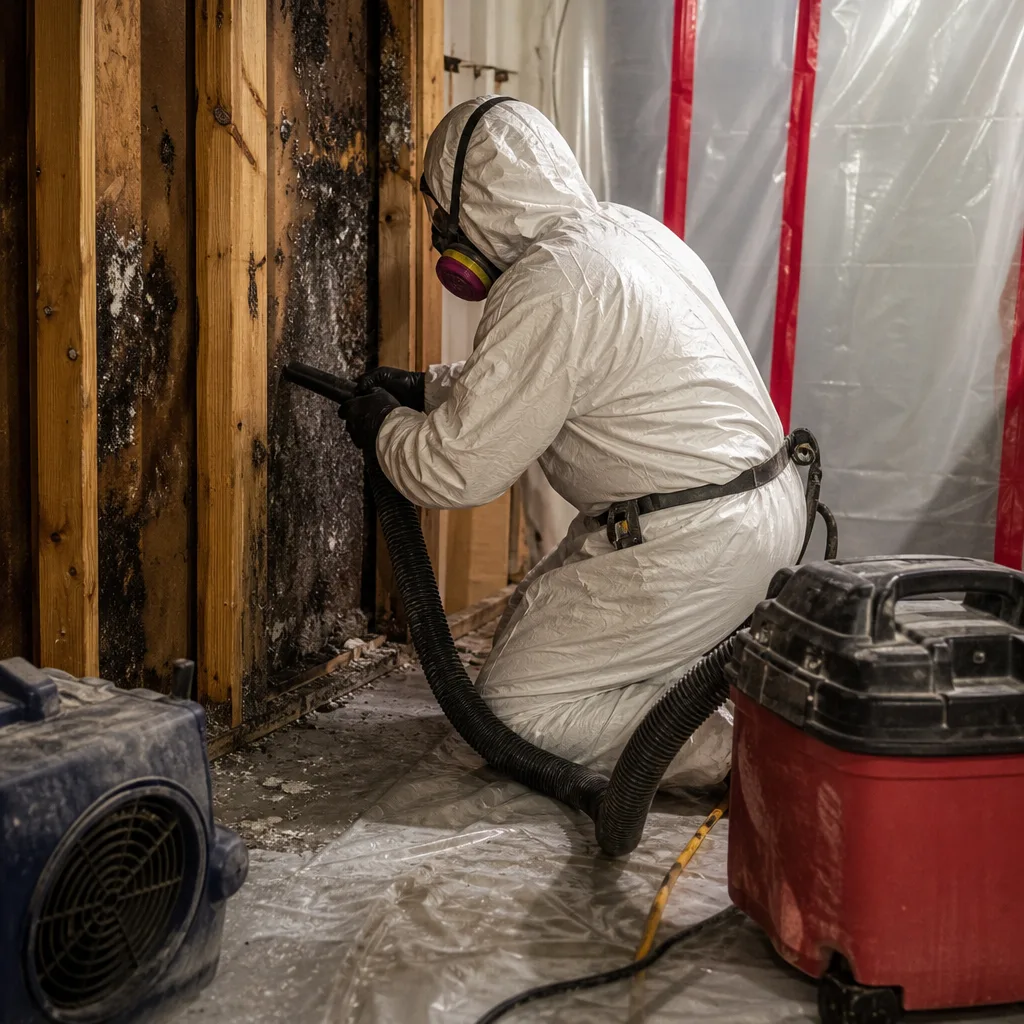
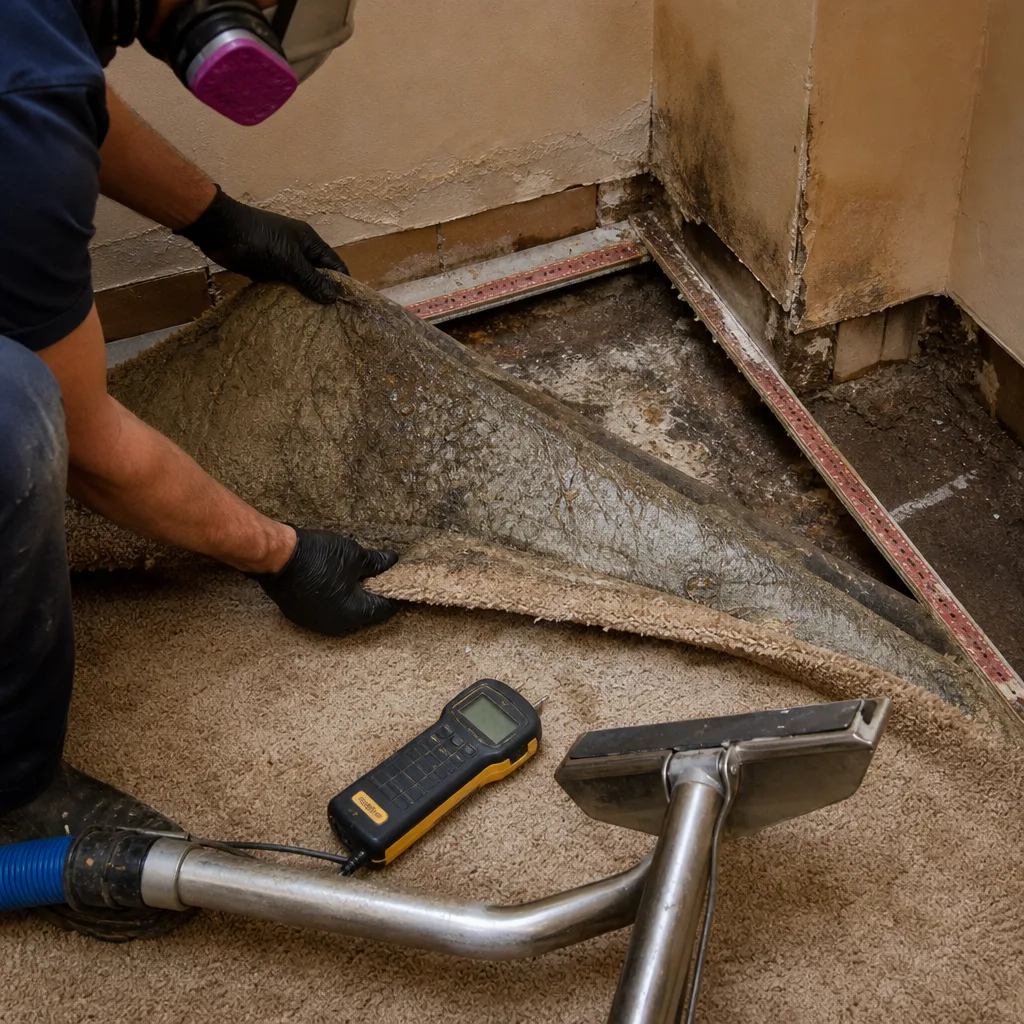
When wind and water tear through, the mess is more than debris. We remove wet insulation, saturated carpet, damaged drywall, and any material that can’t be saved, then we clean and prepare the space for drying and rebuild. We know what Westchester County requires for disposal, especially with older materials.
Emergency Board-Up
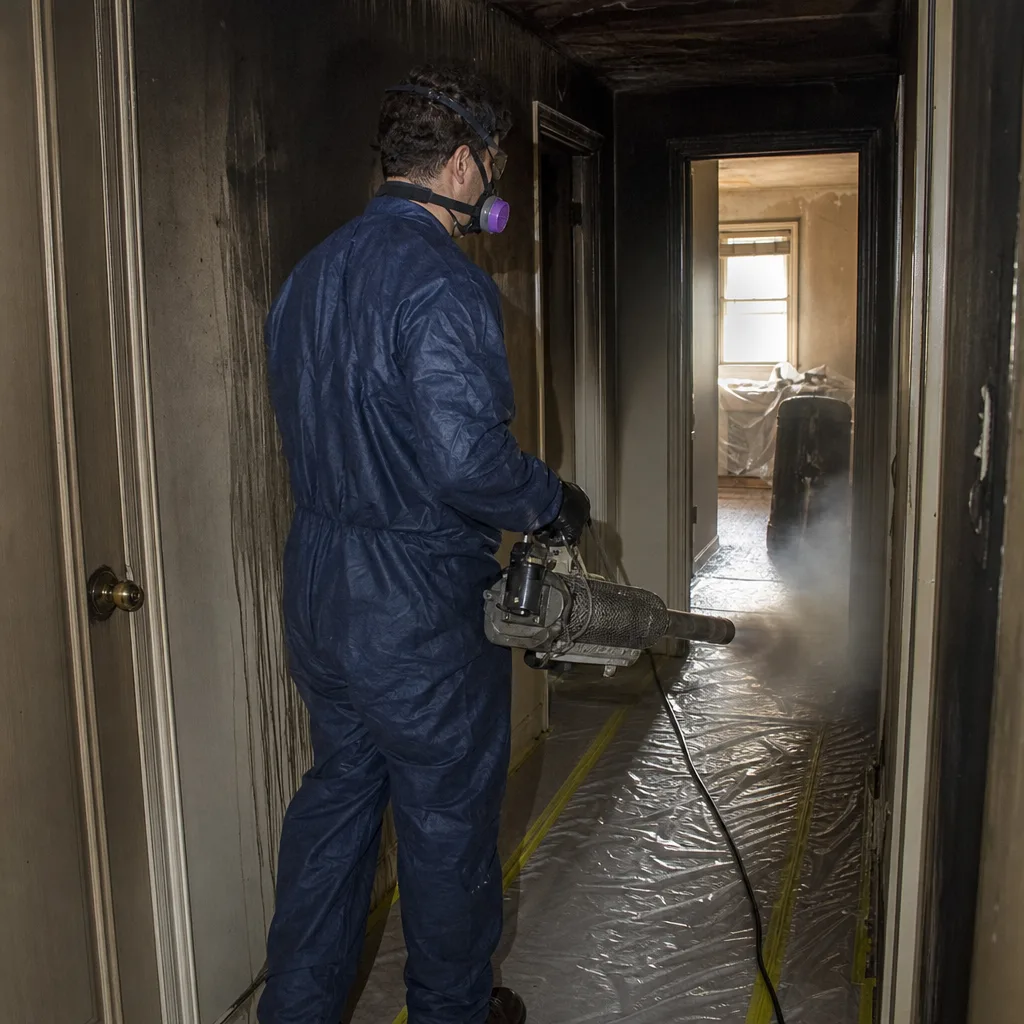
A broken window or blown-out door on a Southeast Yonkers rowhouse is an open invitation to weather and worse. We board up openings fast, working around alley-loaded access so neighbors and deliveries can still get through. Board-up is temporary; security shouldn’t be.
Roof Tarping
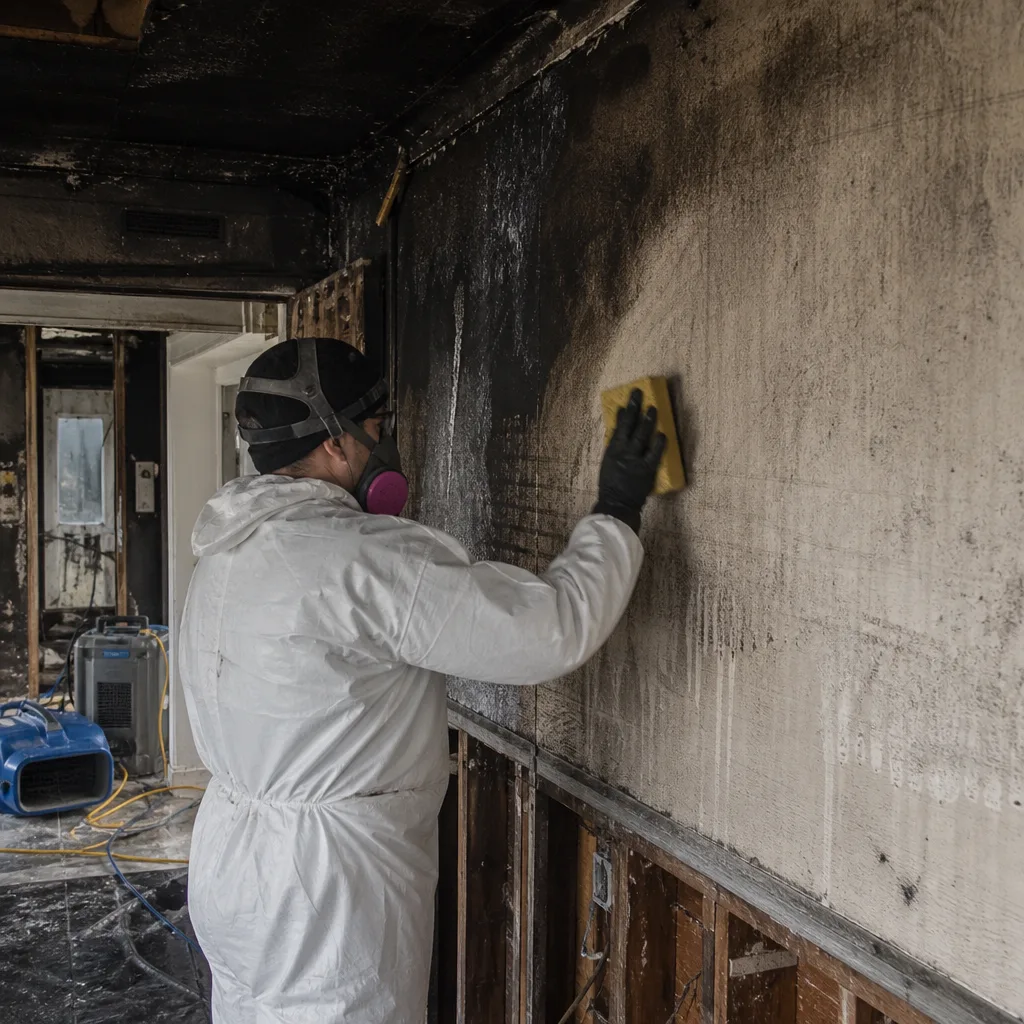
Flat and low-pitch roofs on pre-war Southeast Yonkers apartment buildings pond water and eventually fail. We tarp the damaged membrane, secure the tarp against wind, and stop the water migration until permanent roof repairs can be scheduled and scoped. Every unit below gets documented from the start.
Debris Removal
Storm debris on a narrow Southeast Yonkers block is a hazard for cars, kids, and pedestrians. We remove tree limbs, roofing material, and wind-strewn debris quickly, without blocking the alley or the sidewalk longer than necessary. Our crews know how to maneuver tight spaces.
What happens when you call
- 1
A real person answersNo phone trees - you reach a local pro.
- 2
You get an upfront price rangeHonest numbers before anyone is dispatched.
- 3
A background-checked tech heads outLicensed & insured, dispatched right away.
- 4
You approve before work beginsNothing starts until you say go.
Storm & Disaster Restoration Costs in Southeast Yonkers, NY
Honest numbers for Southeast Yonkers work: emergency water extraction in a typical rowhouse basement runs $1,200 to $3,800 depending on square footage, water category, and how long it sat. Storm damage cleanup after a nor’easter with board-up and tarping typically lands between $2,500 and $7,500 for a two-family rowhouse. Full flood damage restoration with drying, sanitization, and rebuild of a finished basement in Southeast Yonkers’s pre-1945 housing usually runs $8,000 to $25,000. What moves the price: asbestos or lead abatement requirements, multi-unit water migration, access constraints on alley-loaded properties, and the category of water. Most storm losses here are covered under the flooding or wind damage provisions of the policy, minus the deductible. The single best way to know your number is a free visual inspection. We walk the damage, explain what we see, and give you a written scope before any work starts. Call (917) 924-4221 and we’ll be there.
We Also Serve Cities Near Southeast Yonkers
Our crews respond to storm damage calls across Fairview, Harrison, East Bronx, and Hunts Point. Same live dispatch, same certified crews, same documentation and direct insurance billing. Wherever the storm hit, we’re close enough to matter.
Serving Southeast Yonkers, NY - Our Local Coverage Area
We’re based in the Southeast Yonkers area and know this community well. Use the map below to see our service coverage - if you’re nearby, we can almost certainly help.
Southeast Yonkers Storm & Disaster Restoration Questions, Answered
Why does Southeast Yonkers see more basement flooding than northern Westchester towns during the same storm?
Southeast Yonkers is built nearly to the curb with brick rowhouses, apartment buildings, and pavement, which means rainwater has nowhere to soak in. The stormwater runoff overwhelms street drains quickly and seeks the lowest point: basements and ground floors. Northern Westchester has more green space and soil absorption, so the same rain doesn’t create the same surge. In Southeast Yonkers, we see deeper standing water and more frequent basement floods, which means extraction speed and Category 3 water protocols matter more here than almost anywhere else in the county.
What’s the biggest delay in restoring a Southeast Yonkers rowhouse after a storm?
Waiting for a carrier adjuster before starting mitigation. Every hour of delay lets water migrate through the dense, shared walls of Southeast Yonkers rowhouses into adjacent units. A single-unit cleanup becomes a three-family claim, and the paperwork doubles. We start mitigation immediately, document everything, and coordinate with the adjuster in parallel. The insurance restoration industry standard is to mitigate first, then negotiate, and it exists for exactly this reason. Call (917) 924-4221 the minute water appears.
How does a roof failure on a flat-roofed Southeast Yonkers apartment building turn into a multi-unit claim?
Flat built-up roofs on pre-war Southeast Yonkers apartment buildings pond water, and when the membrane finally gives, water travels straight down through every floor, not just the top unit. Ceilings collapse, walls saturate, and units two floors down take damage with no direct exposure. We open containment on each unit before cutting, and we document each apartment separately from the first day. Carriers approve faster when every unit’s damage, moisture readings, and scope are filed independently. That’s the lesson from the 1920s walk-up off McLean Avenue we worked after a nor’easter: per-unit documentation is the difference between a clean claim and a six-month dispute.
Why do you need containment before cutting into wet walls in Southeast Yonkers?
Most Southeast Yonkers rowhouses and apartment buildings were built between 1905 and 1945, which means the walls you’re opening may contain asbestos floor tile, lead paint, or horsehair plaster. Westchester County hazmat rules require testing and, if present, controlled abatement before structural restoration can proceed. Cutting into those walls without containment spreads the material through the home and halts the job mid-stream. We set up containment first, test, then cut. Trying to skip that step is how restoration timelines double and costs spiral.
Can you do emergency board-up on a Southeast Yonkers alley-loaded townhome without blocking the alley?
Yes. We’ve boarded up hundreds of alley-loaded properties in Southeast Yonkers and we know the access constraints. Our crews stage materials where they won’t block the alley or the sidewalk, and we work fast so neighbors can still get through. Emergency board-up doesn’t have to create a new problem while solving the first one. Call (917) 924-4221 and we’ll handle it with the alley clear.
How long does storm water drying and remediation take in Southeast Yonkers housing?
For a typical Southeast Yonkers rowhouse basement flood, drying runs three to five days with professional-grade Dri-Eaz dehumidifiers and XPOWER air movers running continuously. Multi-floor roof failures or Category 3 water with wall cavity saturation can run seven to ten days. Older dense materials like horsehair plaster and old-growth framing dry slower than modern drywall, which is why we log moisture readings daily and don’t pull equipment until the dry standard is met, not an arbitrary calendar date.
Can we stay in our Southeast Yonkers home during storm damage restoration?
Usually yes, especially if the damage is contained to a basement or a single unit. We isolate affected areas with containment, run HEPA air scrubbers for air quality, and keep the work zone separated from living space. If the damage involves structural instability, Category 3 water across multiple floors, or asbestos abatement, we’ll tell you straight what’s safe and what isn’t. We won’t push you out if you don’t need to leave, and we won’t let you stay somewhere unsafe.
Are your Southeast Yonkers storm restoration crews certified?
Yes. Every technician is background-checked, uniformed, and certified to IICRC standards including WRT (Water Damage Restoration) and FSRT (Fire & Smoke Restoration), with additional training under RIA and IFA protocols. Curt Bowman founded Floodline Restoration Co. in 2010 on the principle that certified crews do honest work. We don’t send uncertified labor to handle Category 2 or Category 3 water in pre-war buildings.
Written by Curt Bowman, Owner at Floodline Restoration Co. of Manhattan, serving Southeast Yonkers with certified storm and disaster restoration crews.