
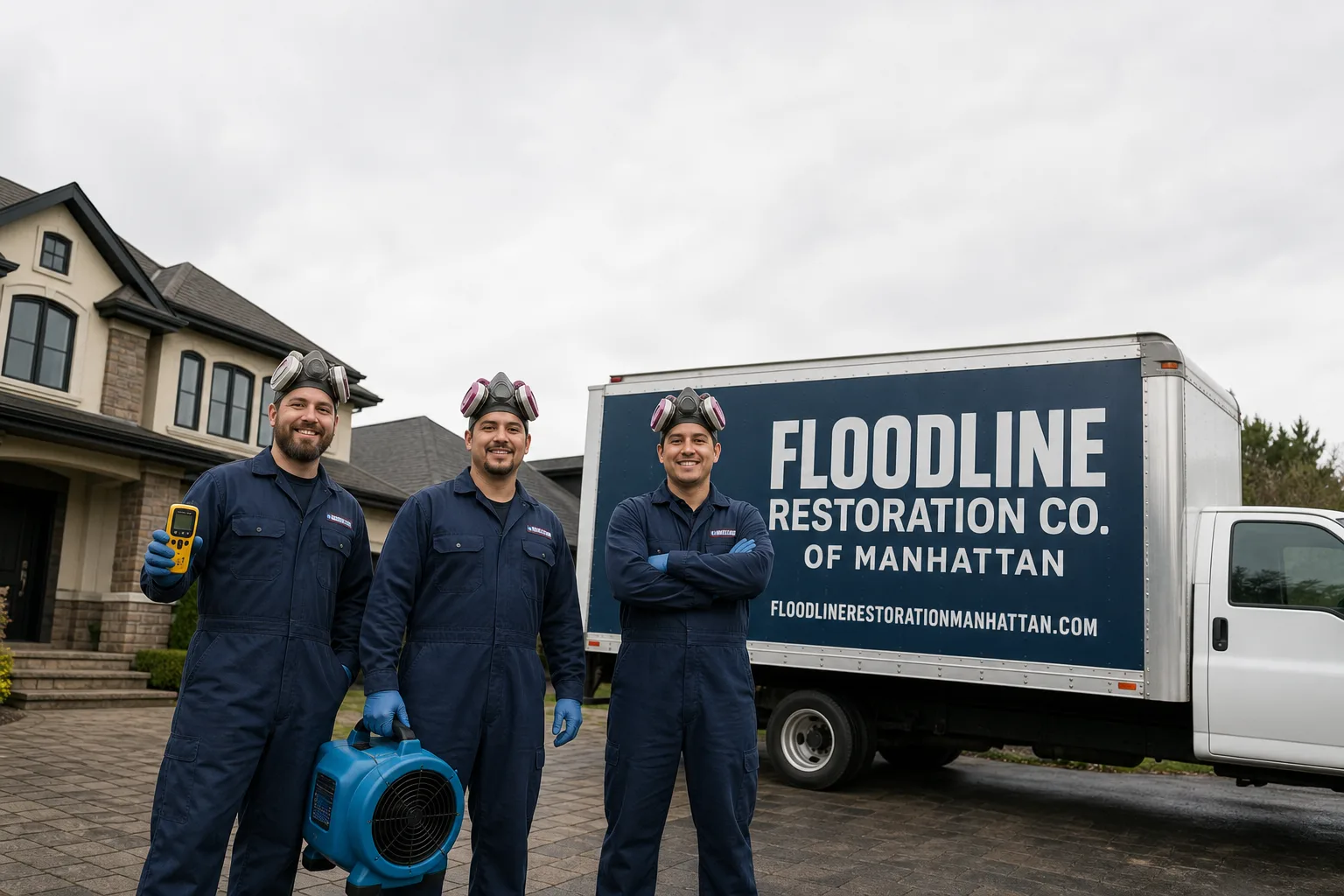
Free visual inspection and a written scope of work before any mitigation begins - photos, moisture readings, and drying logs go in your claim file
The scope we write is the scope we bill. Anything new gets shown to you, in writing, before we touch it.






 Before
 After
After Before
 After
After Before
 After
After24/7 Emergency Storm & Disaster Restoration in Tottenville
Storm damage in Tottenville doesn’t wait for business hours, and neither do we. A nor’easter can peel back roof decking along Amboy Road at 2 a.m., and the first hour after that water gets in is the hour that decides whether you’re drying wall cavities or rebuilding them. Our crews respond inside the Tottenville area around the clock, every day of the year, with a live dispatcher answering at (917) 924-4221. When wind-driven rain starts working into a wood-frame Victorian near the Raritan Bay shoreline, every minute of exposure pushes saltwater deeper into insulation, lath, and framing. We arrive, stabilize the opening, and start extraction the same visit. The free visual inspection gives you a straight read on what’s wet, what’s compromised, and what needs to happen next, with no sales script attached.
Understanding Storm & Disaster Restoration Severity in Tottenville Properties
Storm damage here rarely behaves like storm damage in inland Staten Island neighborhoods. Tottenville’s housing stock skews older: late-19th and early-20th century wood-frame Victorians and cottages along streets like Main Street and Hopping Avenue, many with balloon-frame construction and unreinforced masonry block foundations. These buildings respond to wind and water differently than mid-century bungalows or post-Sandy elevated homes, and the severity of any restoration job depends heavily on which type of structure you’re dealing with.
We classify water intrusion the same way the IICRC does: Category 1 is clean water from a broken supply line or wind-driven rain that hasn’t picked up contaminants yet. Category 2 carries significant contamination. Category 3, the one we see most often in Tottenville storm damage, is grossly contaminated water from storm surge and saltwater flooding. Saltwater intrusion accelerates steel corrosion, causes salt-crystal spalling in masonry block foundations, and produces aggressive mold colonies in wall cavities that standard freshwater drying protocols routinely underestimate. That’s why we moisture-map every affected surface, track readings daily with hygrometers, and don’t call a structure dry until the numbers prove it. In a pre-Sandy, non-elevated home on the bay side, hidden flood damage can sit in balloon-frame cavities for years before a new storm exposes it.
Why Tottenville Property Owners Choose Floodline Restoration Co. of Manhattan
- 45-minute response commitment. We dispatch crews to Tottenville with a target arrival window under an hour, and the phone gets answered by a person who can tell you exactly when we’re rolling.
- 24/7 live answer, never an automated system. A real dispatcher picks up at 2 a.m. when the storm is still moving through. You won’t get a recording or a call-back promise.
- IICRC-certified crews. Our technicians carry WRT, FSRT, and AMRT certifications, which means the drying plan is built on measured moisture levels, not guesswork.
- Free visual inspection. We look at the damage, give you a straight scope, and explain what’s urgent, what can wait, and what insurance typically covers. No charge, no obligation.
- Direct insurance billing. We bill your carrier directly and handle adjuster communication, so you’re not playing messenger between us and the claim desk.
- One team from extraction to reconstruction. The same crew that tarps the roof and pulls water the first night handles the drying, the rebuild, and the 90-Day Done Right Promise in writing at the end.
Our Storm & Disaster Restoration Process
Inspection & Assessment
We arrive, walk the property, and document everything before we move one piece of debris. Thermal imaging and moisture meters map the water’s travel path, and we identify whether the structure is pre-Sandy or elevated, because that changes everything downstream.
Extraction & Stabilization
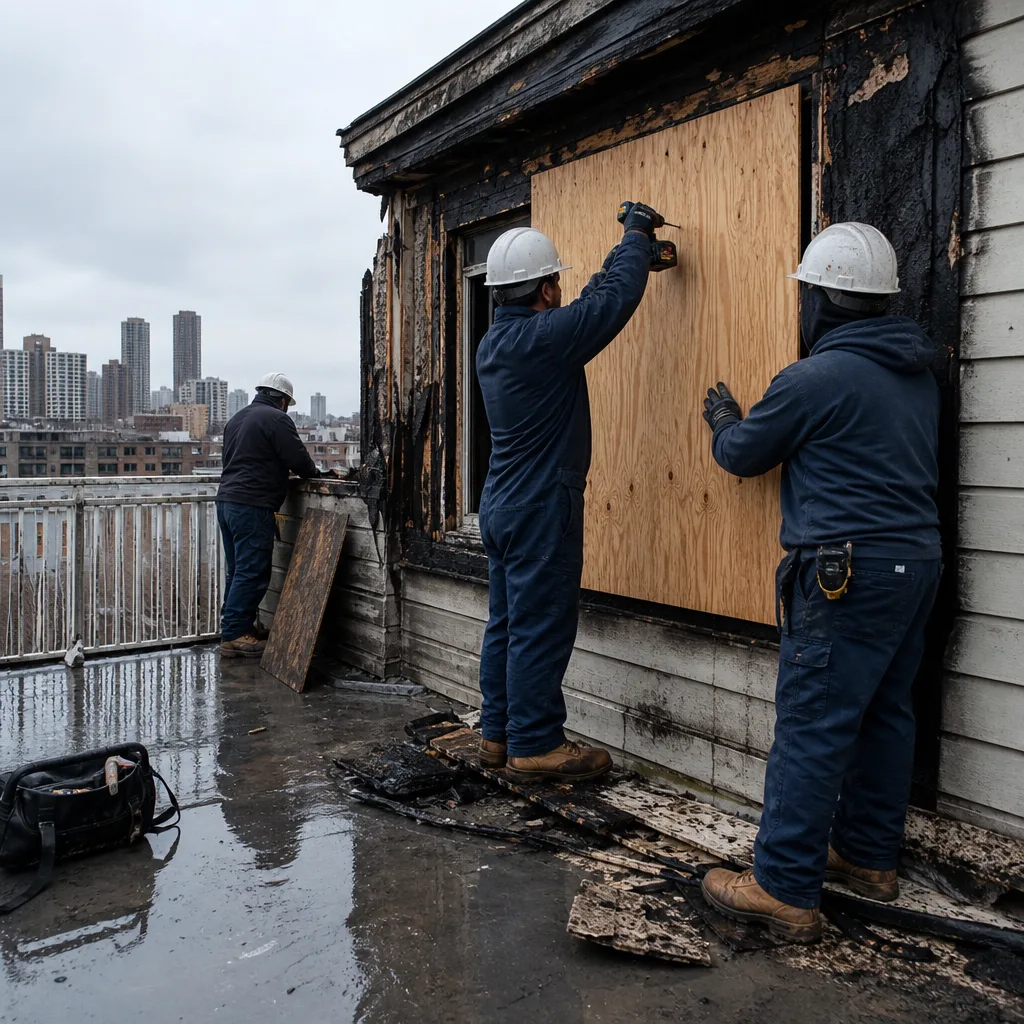
We stabilize first: tarping the roof, boarding up blown-in windows, bracing what’s compromised. Then we extract standing water with truck-mounted and portable extraction units, including XPOWER pumps for deep water.
Drying & Dehumidification
Dri-Eaz and Phoenix air movers plus commercial dehumidifiers run on a calculated layout, not a random one. Daily moisture readings track progress, and we adjust the equipment plan until the dry standard is met. In Raritan Bay-facing homes, this takes longer than inland jobs because coastal humidity keeps materials wet.
Cleaning & Sanitization
Storm water carries whatever the surge picked up. We clean and sanitize affected surfaces, and when saltwater is involved, we treat for salt residue that would otherwise keep corroding metal and eating at masonry long after the visible water is gone.
Wind & Salt Damage Treatment
Wind-damaged doors and windows get assessed for track and panel damage, and we check the structural connections that wind loads compromised. Salt-affected masonry gets treated before it spalls, and hidden wall cavities get opened where moisture mapping shows trapped water.
Repairs & Restoration
We rebuild what the storm took: roof decking, framing, drywall, doors, windows, and the finishes that make the house feel like home again. Since the same team has been on the job from the first night, nobody inherits a stranger’s mess. The 90-Day Done Right Promise backs the finish work in writing.
Need Emergency Storm & Disaster Restoration in Tottenville Now?
Crews minutes away, answering live 24 hours a day. The sooner we start, the less it costs.
Working With Your Insurance Company
Storm damage claims in Tottenville get complicated fast, especially when the property sits in an AE or VE flood zone and the damage involves both wind and storm surge. We’ve been through enough of these claims to know what adjusters need to see, and we build the file from the first hour. Photos of the pre-existing condition matter: if a post-Sandy non-elevated home had hidden damage before this storm, that’s not something to paper over. It’s something to document, because it protects you and gives the carrier an honest picture. Our team communicates directly with your adjuster, walks them through the scope, and keeps the claim moving while you focus on your house. Led by Curt Bowman, Floodline Restoration Co. of Manhattan has been running storm restoration with a dispatch board, not a sales desk, since 2010.
What We Provide Your Insurer
- Thorough documentation of the loss
- Photos of all damage, room by room
- Moisture readings and drying logs
- A detailed, line-item scope of work
- Direct coordination with your carrier
Built for Tottenville’s Loss Calendar
Tottenville takes the weather from two directions. The Atlantic storms that run up the coast hit the Raritan Bay shoreline head-on. The nor’easters that spin through the New York Bight push water across the flats on the back side of the peninsula. And the year-round coastal humidity means whatever gets wet stays wet longer, even after the storm has passed.
The busiest season runs from September through March. Tropical systems in early fall bring storm surge and wind-driven rain, and the elevated Base Flood Elevations FEMA imposed after Sandy mean more homes sit in high-hazard zones than before. Winter nor’easters combine sustained wind with heavy rain, and when temperatures drop, wind-blown snowmelt and ice damming add roof load. Spring brings the thaw and the runoff: saturated ground, rising groundwater against old masonry block foundations, and seepage into cellars that haven’t flooded in a decade. Summer thunderstorms roll in fast with flash flooding that overwhelms the older drainage, especially along the low-lying roads near the bay. No matter the season, the pattern holds: wind and water work together in Tottenville, and the damage is almost never one without the other.
Storm & Disaster Restoration Across Tottenville’s Neighborhoods
Tottenville runs the width of Staten Island’s southern tip, and the damage picture changes block by block. Along the bay-facing streets near Conference House Park, saltwater storm surge is the dominant threat, and these homes show it in corroded framing anchors, spalled masonry, and mold that came back after a freshwater-only drying job. The wood-frame Victorians along Hopping Avenue and Main Street sit further from the water but still catch the full wind load off Raritan Bay, and their balloon-frame construction means water that enters at the roof or a blown window can travel vertically through wall cavities with almost no fire-stopping to slow it. Over near Amboy Road and the western edge of the neighborhood, wind damage concentrates on roofs and siding rather than storm surge, but the older stock is still mostly pre-elevation, which matters when repairs start adding up against the 50% substantial improvement threshold. The mid-century bungalows scattered throughout, many rebuilt or elevated after Sandy, tend to handle surge better but still lose doors and windows to wind pressure when a nor’easter lines up right out of the south.
Specialized Storm & Disaster Restoration Services We Offer in Tottenville
Emergency Board-Up
When a nor’easter blows in a bay window on a Hopping Avenue Victorian, the opening has to be secured before anything else. We board up with plywood and fasteners rated for wind exposure, not just a cosmetic cover. The goal is to keep the weather out and the heat in while the rest of the restoration gets scoped. Board-up in Tottenville typically runs $300 to $850, depending on opening size and how much framing was damaged around it.
Roof Tarping
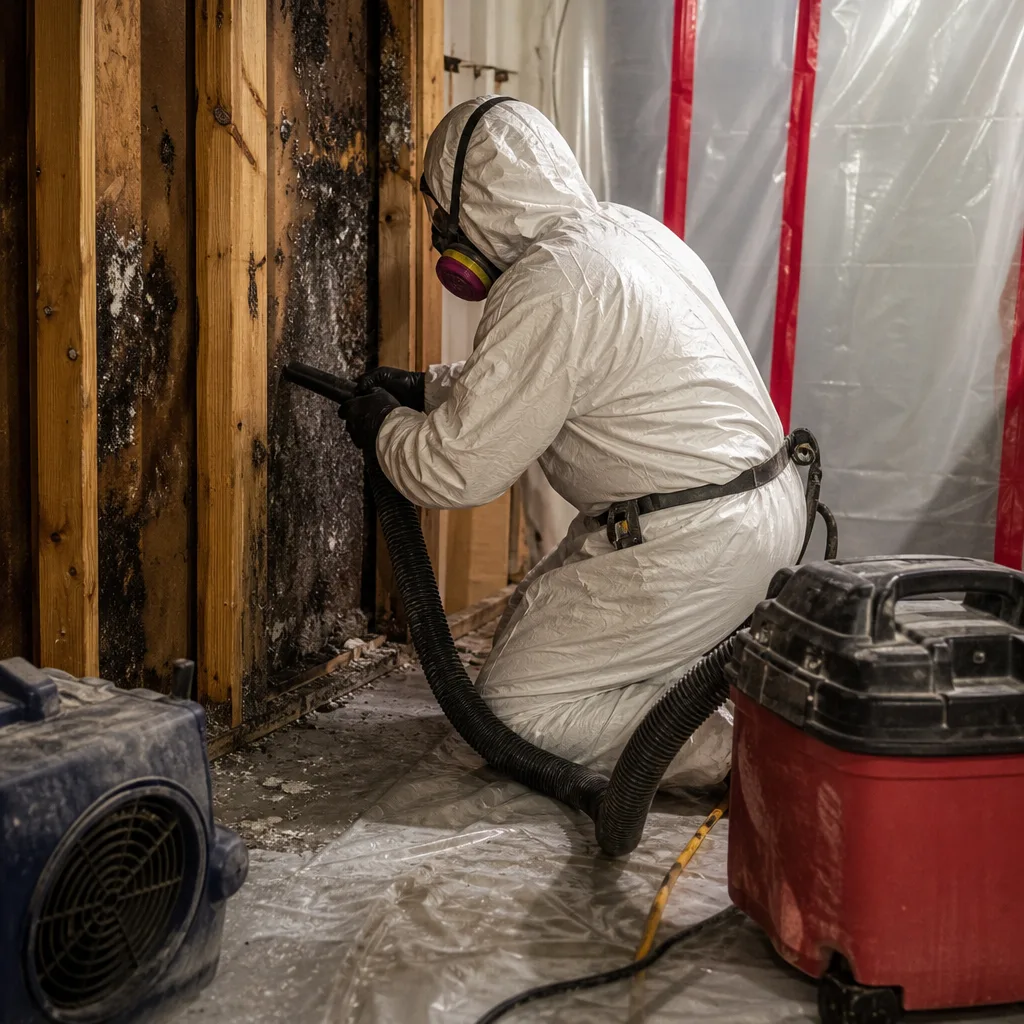
Peeled decking and missing shingles let water in by the gallon, and a tarp done wrong is almost as bad as no tarp. We anchor tarps to meet wind-load expectations for coastal exposure, not inland conditions. A proper roof tarping in Tottenville runs $400 to $1,200, and we always check the roof framing underneath before we fasten anything down, because wind damage rarely stops at the shingle layer.
Flood Damage Restoration
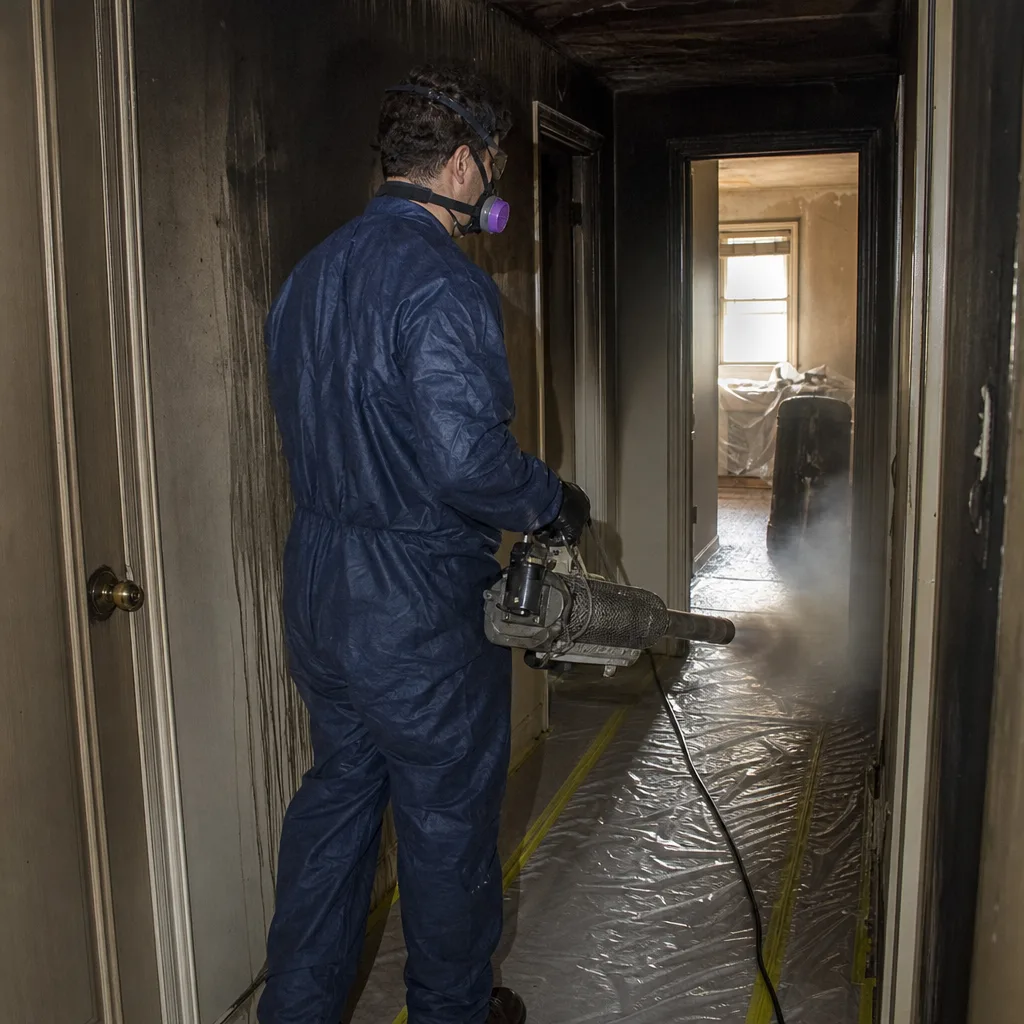
Storm surge flooding on the bay side of Tottenville carries salt, sewage, and whatever the surge picked up along the way. This is Category 3 water, and it requires more than extraction: containment, sanitization, and equipment like Dri-Eaz dehumidifiers and XPOWER air movers running until the structure actually dries. Flood restoration in Tottenville homes typically runs $3,500 to $12,000, depending on how much square footage took water and whether wall cavities have to be opened.
Wind Damage Repair
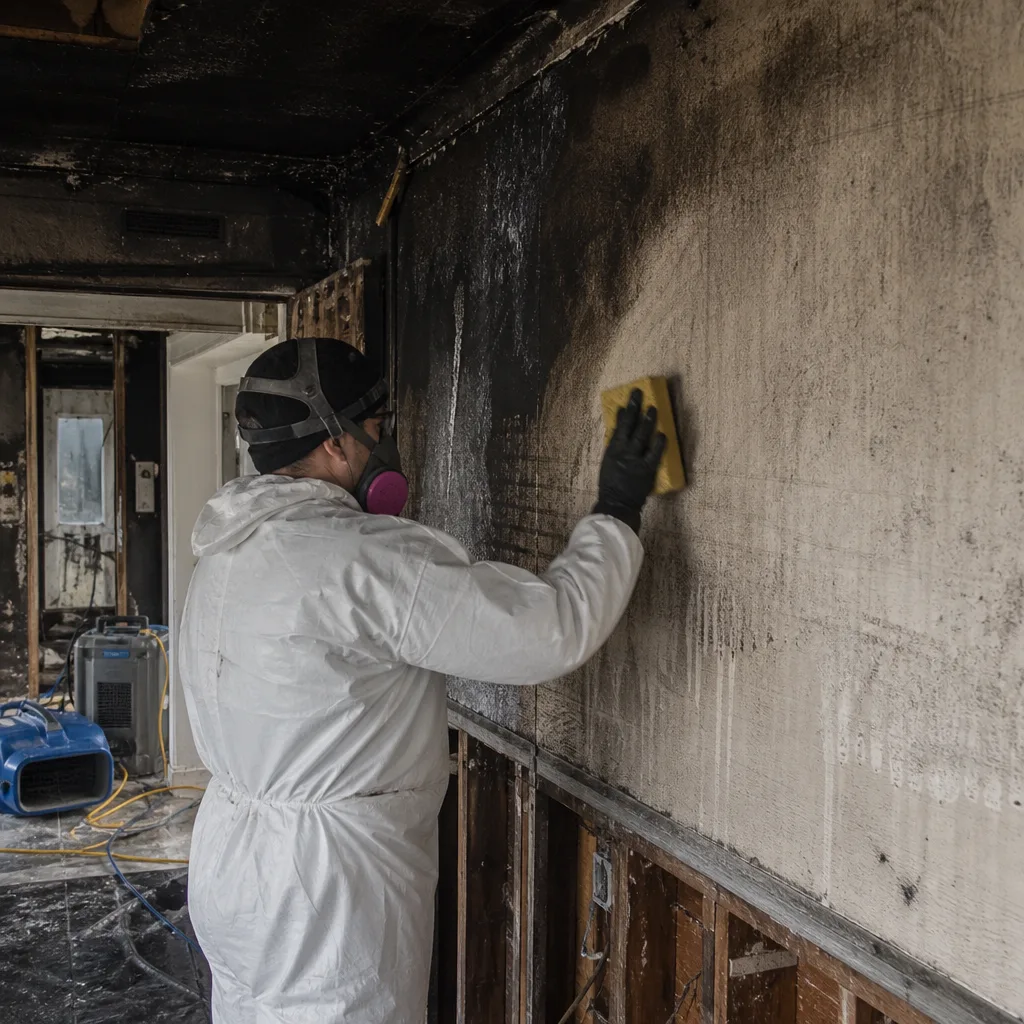
Wind here works on the weak points first: older doors that were never wind-rated, window tracks that picked up salt corrosion over years, roof edges that caught the gust. We repair or replace damaged sections, reinforce what can be saved, and match the repair to the home’s construction type. Wind damage repair on a Tottenville home runs $900 to $4,500 for typical door and window work, and higher when framing is involved.
Storm Damage Cleanup
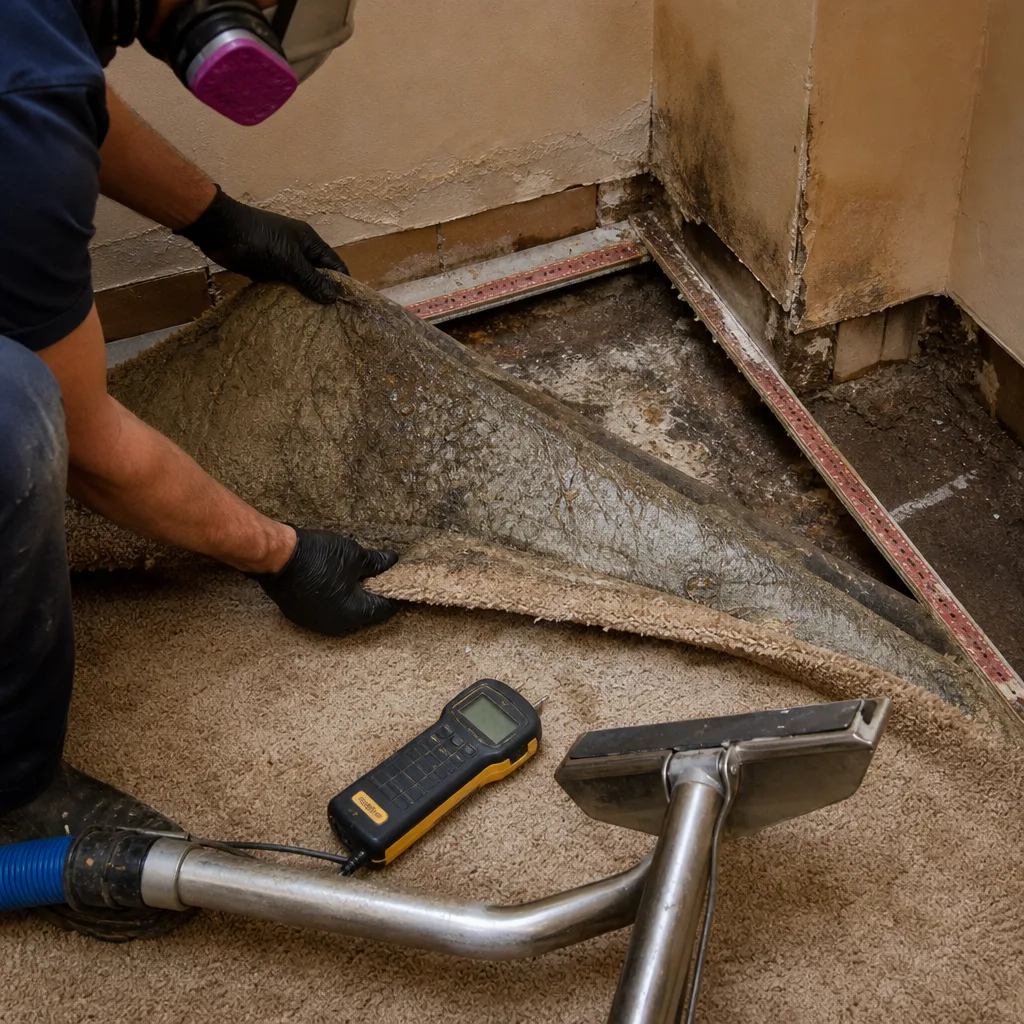
After the big stuff is stabilized, the debris remains: shingles in the yard, siding fragments, broken glass, tree limbs against the house. We clear it, assess what’s salvageable, and document the debris for the insurance file. Storm damage cleanup in Tottenville runs $400 to $1,500, and we do the documentation whether or not you end up filing a claim.
What happens when you call
- 1
A real person answersNo phone trees - you reach a local pro.
- 2
You get an upfront price rangeHonest numbers before anyone is dispatched.
- 3
A background-checked tech heads outLicensed & insured, dispatched right away.
- 4
You approve before work beginsNothing starts until you say go.
Storm & Disaster Restoration Costs in Tottenville, NY
A typical storm damage restoration job in Tottenville runs $2,500 to $18,000. The spread is wide because the housing stock is. A door blown in on a mid-century bungalow might be a $1,200 repair with some water extraction. A nor’easter that peels back roofing on a bay-facing Victorian and lets saltwater run through balloon-frame cavities for two hours starts at $8,000 and climbs as the framing and insulation get exposed. Emergency board-up runs $300 to $850. Roof tarping runs $400 to $1,200. Full flood restoration with structural drying starts around $3,500 and can exceed $15,000 when multiple rooms and wall cavities are involved. What moves the price most is whether the home is pre-Sandy and non-elevated: if cumulative repair costs approach 50% of the structure’s market value, NYC’s ordinance kicks in and the project may trigger full elevation, which is a different scope entirely. Our free inspection gives you a firm line-item scope before anything starts, and we flag the 50% threshold before it becomes a surprise. For an exact quote on your Tottenville property, call (917) 924-4221.
We Also Serve Cities Near Tottenville
Storm damage doesn’t respect city boundaries. We cover Fairview, Harrison, East Bronx, and Hunts Point with the same 24/7 dispatch and the same 90-Day Done Right Promise. Wherever the storm hits, the crew rolls.
Tottenville Storm & Disaster Restoration Questions, Answered
Does a wind-damaged door or window in Tottenville have to be replaced with an impact-rated model?
Under current NYC building code, replacement doors and windows on bay-facing elevations in Tottenville generally need to meet wind-load and impact-resistance requirements for the exposure zone. If the opening was damaged and you’re repairing rather than replacing, you may be able to repair without upgrading, but we always check the current code requirement before recommending a repair path. The free inspection includes this determination.
How soon after a nor’easter leaves Tottenville should we start storm cleanup before mold sets in?
Mold starts forming on wet drywall and insulation within 24 to 48 hours in Tottenville’s coastal humidity, and saltwater-fed mold can start even faster. We aim to have extraction running the same day you call, and daily moisture readings guide how long drying takes. If you’re not ready to call us yet, at minimum cut power to affected areas and move anything you can to dry ground.
Can you restore a Tottenville home that was not elevated after Sandy but has new storm damage?
Yes, we restore pre-Sandy, non-elevated homes every year. The key is knowing when cumulative repair costs approach the 50% substantial improvement threshold under NYC’s flood ordinance. If they do, work pauses and a licensed engineer gets involved. We watch that number on every pre-Sandy job in Tottenville, because no homeowner wants to discover mid-project that their repair just triggered a mandatory elevation. Call (917) 924-4221 and we’ll walk you through what applies to your house.
What’s different about saltwater flood damage restoration in Tottenville versus other parts of Staten Island?
Saltwater leaves behind dissolved salts that keep absorbing moisture and corroding steel long after the visible water is gone. Inland freshwater flooding doesn’t cause salt-crystal spalling in masonry or accelerated corrosion of framing anchors. Our Tottenville crews treat for salt residue as a standard part of storm surge work, and drying timelines run longer because coastal humidity keeps materials wet.
Does your storm restoration crew handle emergency board-up and roof tarping in Tottenville when roads flood?
Yes. When roads along Arthur Kill Road or Amboy Road are impassable, we route crews using alternate access and coordinate with local responders. Board-up and tarping don’t require the roads to be fully clear; our trucks carry what they need for the first stabilization, and we plan routes before the storm finishes passing.
How fast can you actually get to a Tottenville property during a storm event?
Our dispatch commitment is 45 minutes to arrival for Tottenville calls, and we answer live 24/7. During a named storm with widespread damage, that window can stretch, but we’ll tell you honestly on the phone when you’ll see the truck. Crews are staged for southern Staten Island before a forecasted event whenever possible.
Will my insurance cover storm damage restoration in Tottenville?
Wind damage is typically covered under homeowners insurance, while flood and storm surge damage require a separate flood insurance policy, usually through NFIP. Tottenville sits in FEMA AE and VE zones, which means flood coverage is often mandatory for mortgaged homes. We document everything and coordinate directly with your adjuster. For a straight answer on your policy, call us at (917) 924-4221 and we’ll walk through the claim together.
What should I do in the first 30 minutes after storm damage to my Tottenville home?
Cut power to affected areas if you can do so safely, photograph any visible damage from outside, and call us at (917) 924-4221. Move what you can to dry ground, but don’t enter rooms with standing water until power is confirmed off. Don’t attempt to open walls or remove soaked insulation; saltwater-saturated materials need proper containment and disposal. The first call is the one that matters most, and ours never goes to voicemail.
Serving Tottenville, NY - Our Local Coverage Area
We’re based in the Tottenville area and know this community well. Use the map below to see our service coverage - if you’re nearby, we can almost certainly help.
The Tottenville Wind & Surge Exposure That Changes Everything
Tottenville’s southern tip is a natural funnel where Arthur Kill meets Raritan Bay, amplifying storm surge during nor’easters and tropical systems far beyond neighboring New York Harbor areas. That means our storm restoration crews here routinely contend with wind-driven saltwater intrusion and wind-load damage that inland Staten Island rarely sees. This isn’t a market we learned from a manual; it’s the block-and-bay geography we work in every storm season.
On a wood-frame Victorian near Hopping Avenue, we arrived after a nor’easter had peeled back roof decking and blown in a bay window. Our techs first set up containment and tarped the roof, then used moisture mapping to find saltwater had wicked into the balloon-frame wall cavities. Because the structure predated Sandy and had not been elevated, we documented the pre-loss condition and flagged that repairs were approaching the 50% substantial improvement threshold, pausing work to bring in a licensed engineer before proceeding. That’s the difference between knowing Tottenville’s rules and learning them on your dime.
Restoring a pre-Sandy, non-elevated home without checking whether cumulative repair costs will trigger NYC’s 50% substantial improvement rule can force a halt mid-project and leave the home exposed. Treating wind-driven saltwater damage with standard freshwater protocols leads to accelerated steel corrosion and salt-crystal spalling in masonry block foundations within months. Relying on inland Staten Island drying timelines lets wall cavities in Raritan Bay-facing homes stay above moisture thresholds and sustain aggressive mold colonies. If you’ve had water or wind damage in Tottenville, our Storm & Disaster Restoration team will give you the straight scope on what’s needed and what it costs.
Call (917) 924-4221 for a free estimate. We answer live, we show up on time, and we stand behind the work with the 90-Day Done Right Promise in writing.
Written by Curt Bowman, Owner at Floodline Restoration Co. of Manhattan, serving Tottenville with storm & disaster restoration since 2010.