

Free visual inspection and a written scope of work before any mitigation begins - photos, moisture readings, and drying logs go in your claim file
The scope we write is the scope we bill. Anything new gets shown to you, in writing, before we touch it.






 Before
 After
After Before
 After
After Before
 After
After24/7 Emergency Storm & Disaster Restoration in Travis – Chelsea
Storm damage in Travis – Chelsea moves fast, and so do we. When a nor’easter pushes surge up through the tidal tributaries off Travis Avenue or a summer squall tears shingles off a 1960s ranch, you need a crew that answers the phone at two in the morning and gets extraction running the same visit. Call (917) 924-4221 and a live dispatcher picks up, not a recording. Our certified technicians reach Travis – Chelsea properties within 45 minutes, run a free visual inspection, and start stabilizing the damage before it spreads into walls, framing, and sub-grade soil that’s already saturated from the filled marshland this neighborhood sits on. The first hour after storm water enters a home on this low-lying western shore is the difference between drying out and tearing out.
Understanding Storm & Disaster Restoration Severity in Travis – Chelsea Properties
Storm damage here is rarely just storm damage. The homes that dominate Travis – Chelsea, modest ranch and cape-style builds from the 1950s through 1970s, sit on former wetland fill with slab-on-grade or shallow-basement foundations at or near the seasonal water table. That changes everything about how we classify and treat the water. Category 1 water from a burst supply line becomes Category 2 or 3 within hours when it mixes with tidal backflow, road runoff, and the saturated organics in fill soil. We run thermal imaging across every affected surface before we set a single air mover, because moisture migrating through original plaster walls and older batt insulation is invisible to the eye and aggressive to the structure. Hydrostatic pressure pushing up from below forces water through floor cracks, cove joints, and foundation seams that stay dry in better-graded neighborhoods. Without moisture mapping tied to the sub-grade conditions, a standard dry-out leaves the wall cavity wet, the framing wicking, and mold conditions forming inside 48 hours. Severity here isn’t measured by inches of standing water. It’s measured by what the fill soil underneath is doing the whole time.
Why Travis – Chelsea Property Owners Choose Floodline Restoration Co. of Manhattan
- 45-minute response commitment to any Travis – Chelsea address, with the first call answered by a live dispatcher who knows this neighborhood’s low-lying terrain and storm history.
- 24/7 live answer, every time – a real person picks up at 2 a.m., not an automated system, because storm surge doesn’t wait for business hours and neither do we.
- IICRC-certified crews trained to WRT, FSRT, and AMRT standards, with the same team reading the moisture map on day one and handling daily readings through the dry standard.
- Free visual inspection before any work begins, so you know the scope before a single piece of equipment enters your home.
- Direct insurance billing with adjuster coordination handled for you, including line-item scopes and photo documentation from the first hour.
- One team from extraction to reconstruction – we don’t hand your home off to a sub after the water’s out. The crew that dries it rebuilds it.
Our Storm & Disaster Restoration Process
Inspection & Assessment
We arrive, walk the property, and map every affected area with thermal imaging and moisture meters. On Travis – Chelsea fill soil, that means checking sub-grade saturation and foundation seams before touching a single wall cavity. You get a written scope and a firm price before work starts.
Extraction & Stabilization
Standing water comes out with professional-grade extraction units, then we stabilize the structure. That includes relieving hydrostatic pressure where foundation drainage has failed, because drying the interior without addressing the fill soil underneath just guarantees a callback.
Drying & Dehumidification
We set Dri-Eaz and Phoenix air movers with Injectidry drying mats in wall cavities and under original plaster, running daily hygrometer readings until the dry standard is met. Each reading is logged and shared with you and your carrier.
Cleaning & Sanitization
Category 3 water means full antimicrobial treatment on every affected surface, including inside wall cavities where older batt insulation has wicked moisture. We cut away what can’t be saved and sanitize what can.
Wind Damage & Structural Repair
Storm-tracked doors, blown-out windows, and damaged panels get replaced with wind-rated, impact-rated assemblies appropriate for the Arthur Kill corridor. Board-up is emergency only; we specify and install the permanent fix.
Repairs & Restoration
The same crew that extracted the water rebuilds the walls, replaces the insulation, and reinstalls finishes to match your home. Backed by our 90-Day Done Right Promise, in writing.
Need Emergency Storm & Disaster Restoration in Travis – Chelsea Now?
Crews minutes away, answering live 24 hours a day. The sooner we start, the less it costs.
Working With Your Insurance Company
Storm claims in Travis – Chelsea are complicated by the flood-versus-wind question, and your carrier will want proof of what happened and when. We document everything from the first hour: photos of standing water before extraction, thermal images of wall cavities, moisture readings every day until the dry standard is met. Our crews write line-item scopes in industry-standard format so your adjuster can approve them without back-and-forth. You’re never the messenger between us and your carrier. We talk to them directly, provide the documentation, and bill them for covered work. You pay your deductible and nothing more.
What We Provide Your Insurer
- Thorough documentation of the loss
- Photos of all damage, room by room
- Moisture readings and drying logs
- A detailed, line-item scope of work
- Direct coordination with your carrier
Built for Travis – Chelsea’s Loss Calendar
January deep freezes burst supply lines in the shallow-basement ranches along Victory Boulevard and the side streets off Travis Avenue, sending Category 1 water into slab foundations already sitting on wet fill. February and March bring nor’easter after nor’easter, pushing tidal surge up through the Arthur Kill tributaries and overwhelming the poorly-graded drainage that defines this western shore. April and May see the water table at its seasonal peak, which means basement seepage even in homes that stayed dry all winter. Summer thunderstorms drop two inches an hour on impermeable fill soil, flashing water through foundation cracks and cove joints. September and October bring tropical remnants, and Sandy showed what that corridor does to this neighborhood. Every season here has a storm signature, and a crew that knows the calendar knows where to look first.
Storm & Disaster Restoration Across Travis – Chelsea’s Neighborhoods
Homes along Travis Avenue sit closest to the tidal tributaries, and they take on water from below before the rain even stops falling. The ranch-style blocks south of Victory Boulevard, many built in the early 1960s on the deepest fill, run slab-on-grade foundations with no real drainage plane, which means hydrostatic pressure forces water up through floor cracks within hours of a heavy rain. The cape-style homes west of Chelsea Road tend to have slightly shallower basements but original plaster walls and 1960s batt insulation that hold moisture hard and mold fast. Up toward the higher ground near Glen Street and the edge of the neighborhood, wind damage tells the story more than water: older entry doors and single-pane windows not rated for the Arthur Kill wind corridor, and track damage on aluminum storefront-style panels. Each pocket of Travis – Chelsea has its own failure mode, and our dispatch board routes crews who know which one they’re walking into.
Specialized Storm & Disaster Restoration Services We Offer in Travis – Chelsea
Storm Damage Cleanup
After a nor’easter or summer squall, we clear the mess and secure the structure. That means cutting away water-damaged drywall and plaster down to sound material, pulling saturated insulation, and disposing of storm debris according to local code. In Travis – Chelsea, cleanup also means checking the fill soil drainage around the foundation, because what looks like a surface cleanup is often the first sign of a sub-grade problem.
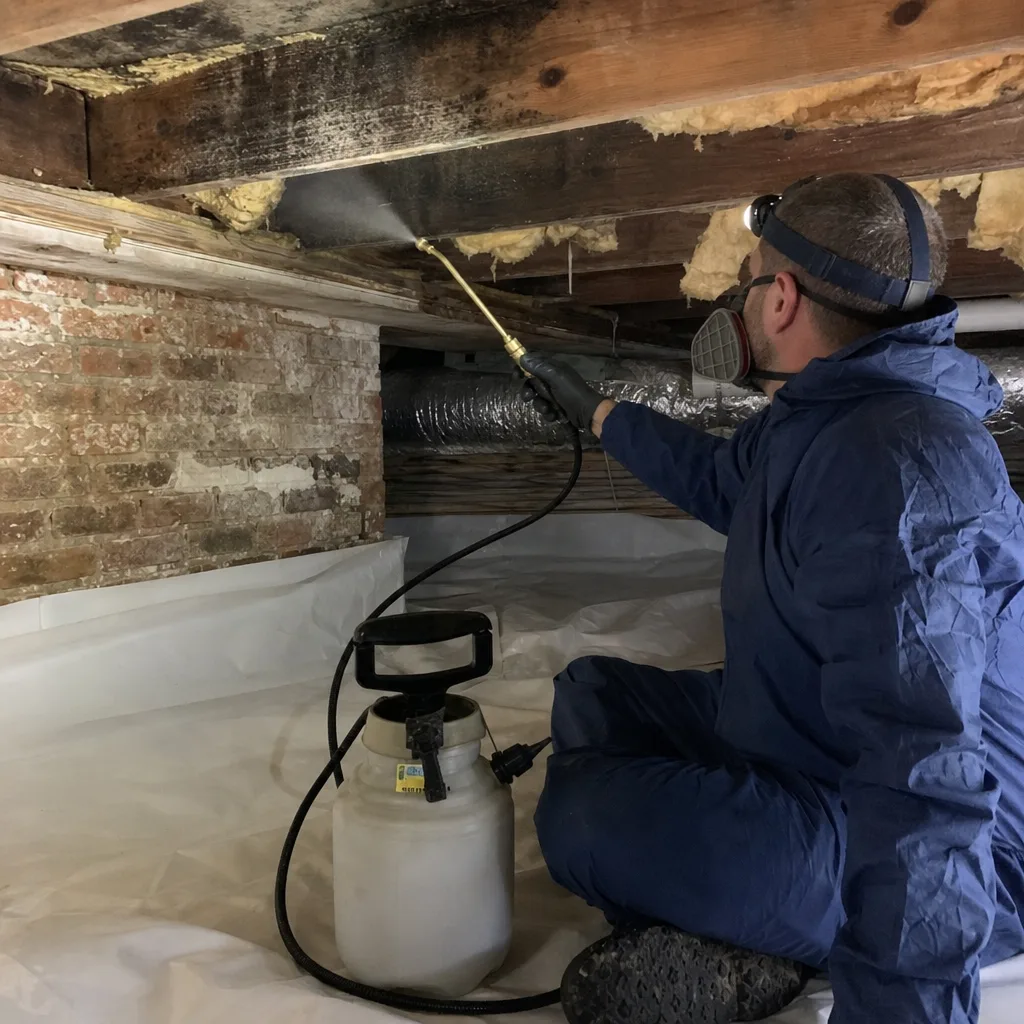
Flood Damage Restoration
The dominating condition in this neighborhood is tidal backflow and hydrostatic pressure, not standing rainwater. We use Injectidry drying mats under original plaster walls, run Dri-Eaz dehumidifiers until hygrometer readings hit the dry standard, and specify exterior waterproofing or sump systems where the fill soil is the root cause. Extraction alone on saturated fill is a promise to come back.
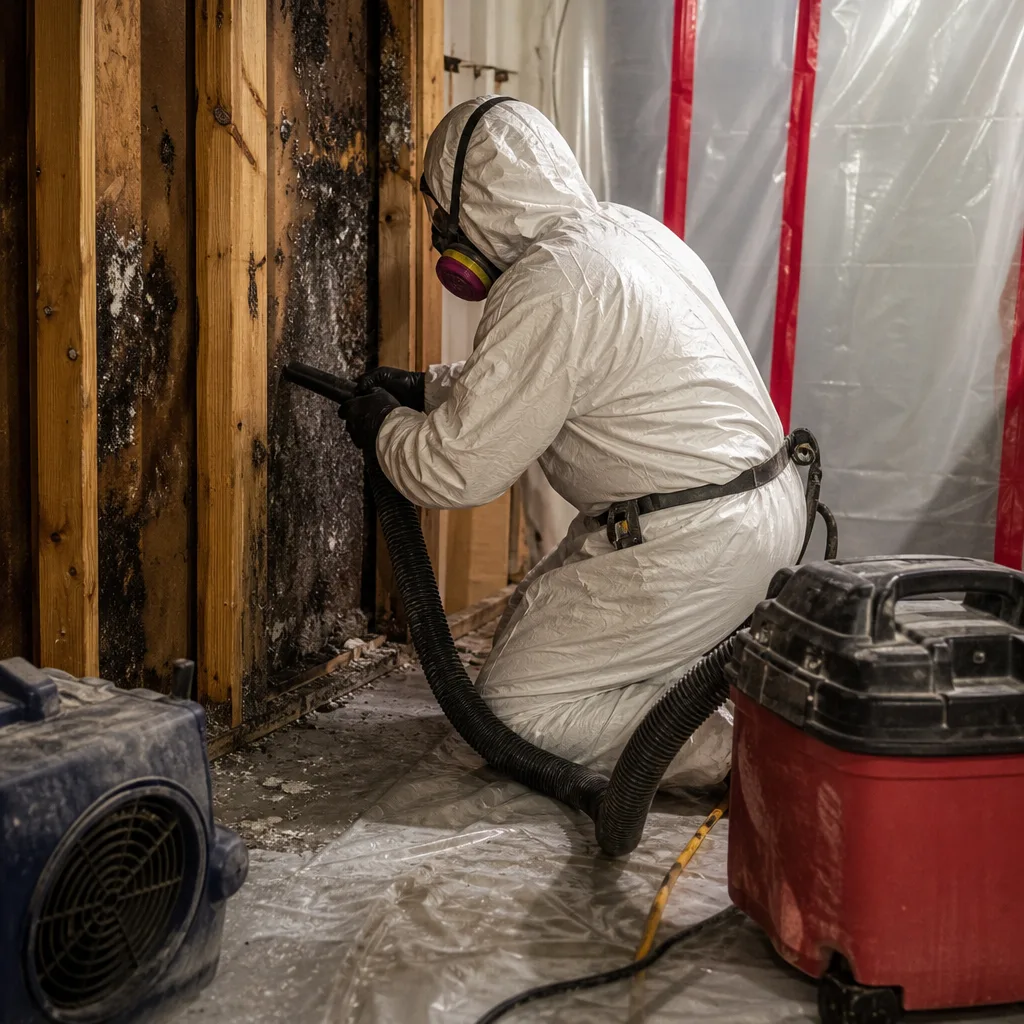
Emergency Board-Up
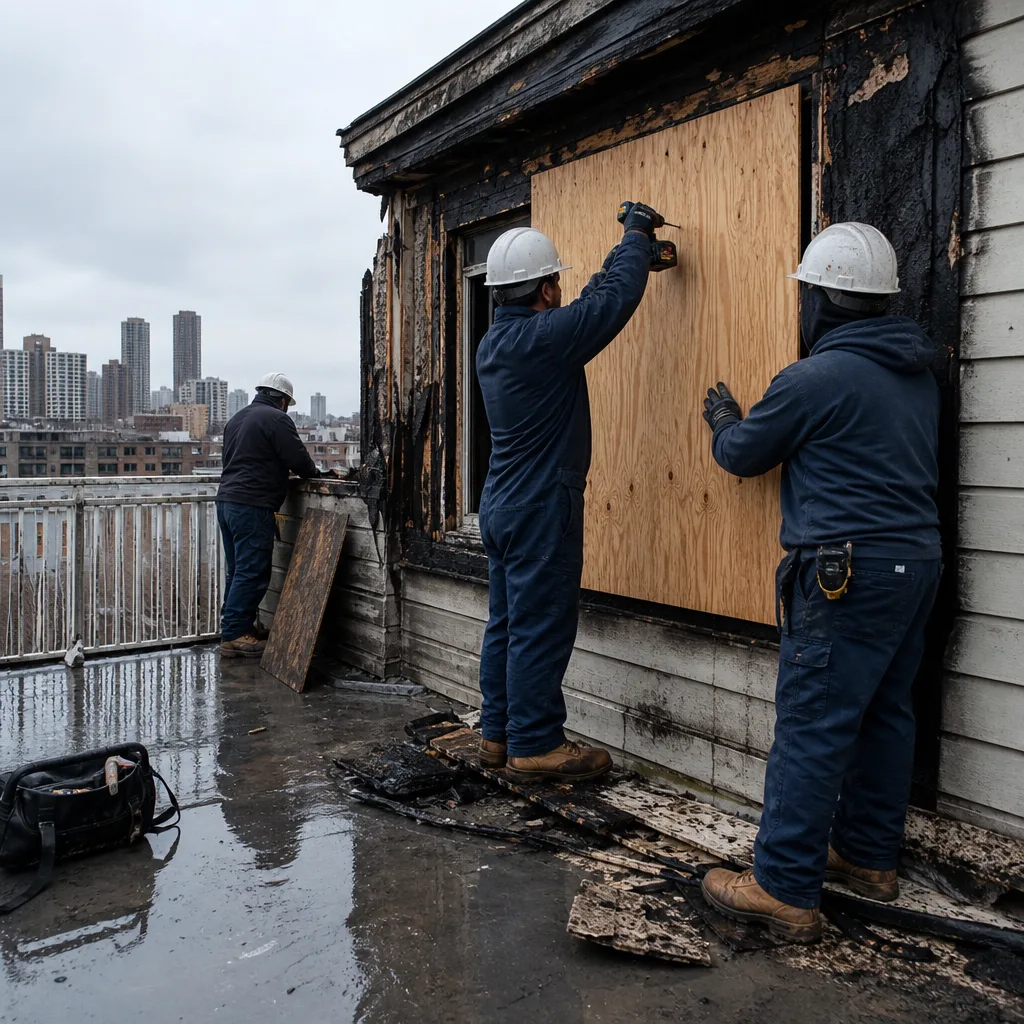
Storm-blown windows and doors get secured immediately with rated materials appropriate for what’s trying to get in. That’s a temporary fix, never a permanent one. Plywood not rated for the Arthur Kill wind corridor won’t hold through the next front, and we’ll tell you that plainly before we put a single sheet up.
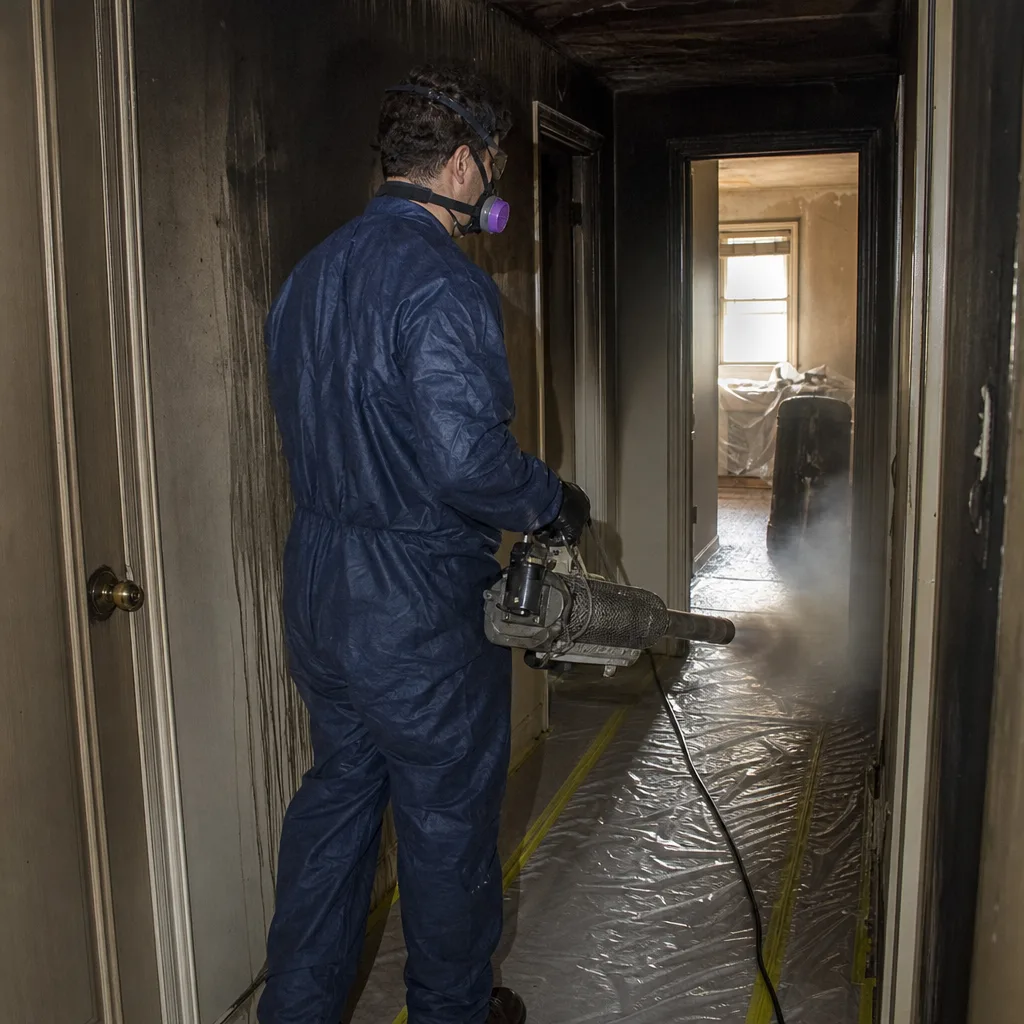
Roof Tarping
Wind-lifted shingles and torn flashing get tarped and sealed with professional-grade materials designed to shed water through the next storm cycle. We photograph every damaged section before and after tarping, which your adjuster will need if the roof has to go to full replacement.
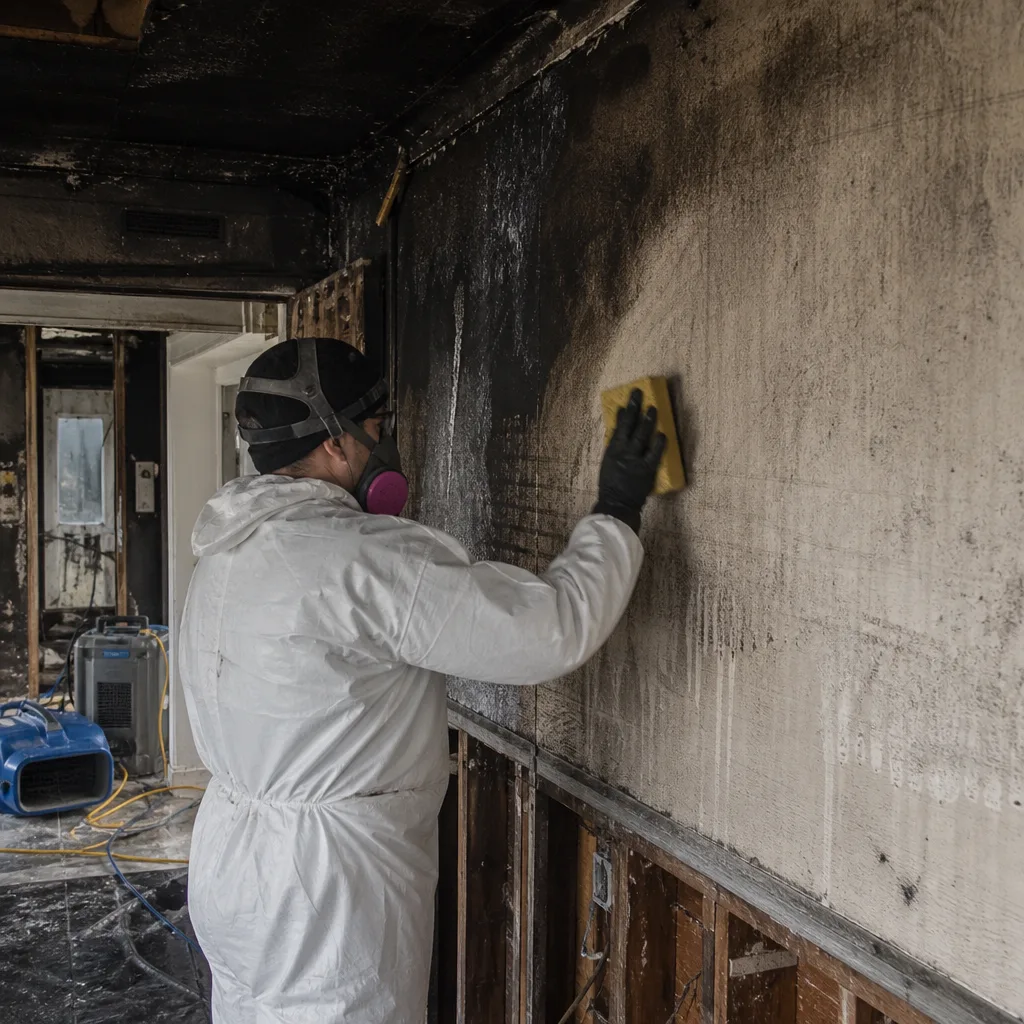
Debris Removal
Storm debris in Travis – Chelsea carries more than tree limbs. Tidal surge brings in sediment, road runoff debris, and sometimes sewage-contaminated materials. We separate, bag, and haul according to what the material actually is, not what it looks like, and document the process for your carrier.
What happens when you call
- 1
A real person answersNo phone trees - you reach a local pro.
- 2
You get an upfront price rangeHonest numbers before anyone is dispatched.
- 3
A background-checked tech heads outLicensed & insured, dispatched right away.
- 4
You approve before work beginsNothing starts until you say go.
Storm & Disaster Restoration Costs in Travis – Chelsea, NY
A typical storm cleanup with extraction and drying in Travis – Chelsea runs $2,800 to $6,500 depending on the square footage and how deep the water got into wall cavities. Flood damage restoration that includes full cavity remediation of plaster walls and batt insulation usually lands between $4,500 and $11,000. Emergency board-up and roof tarping start around $450 to $900 for the initial response, with permanent wind-rated door replacement running $1,800 to $4,200 per opening. The variables that move these numbers here are specific: how saturated the fill soil is (which affects drying time), whether the foundation needs exterior waterproofing or a sump system, and how much original plaster and insulation must come out. Insurance covers most storm-related work, and we bill your carrier directly. The free visual inspection gives you a firm scope before anything starts, so the price we quote is the price you pay. Call (917) 924-4221 for an exact quote – estimates are free.
We Also Serve Cities Near Travis – Chelsea
Our crews respond daily to storm and flood losses across the western Staten Island and Bronx corridors, including Fairview, Harrison, East Bronx, and Hunts Point. If you’re in one of these communities and water is rising, call the same live dispatcher at (917) 924-4221.
Travis – Chelsea Storm & Disaster Restoration Questions, Answered
Why does basement flooding in Travis-Chelsea keep coming back after a standard water extraction and drying?
Because the neighborhood sits on filled marshland with permanently saturated sub-grade soil, and most extraction crews dry the interior without relieving the hydrostatic pressure pushing water up through the foundation. If the fill soil outside your slab or shallow basement stays saturated, water will force its way back through floor cracks and cove joints within weeks or days. The fix that lasts includes exterior waterproofing or a sump system specified for your lot’s drainage plane, not just a surface dry-out. Call (917) 924-4221 for a free inspection that checks what’s under the slab, not just what’s on top of it.
What wind rating should a replacement entry door have on a Travis-Chelsea ranch?
Homes along the Arthur Kill wind corridor should have entry doors rated for at least 115 mph wind load, and impact-rated if the opening faces west toward the water. Many original 1950s and 1960s doors on Travis – Chelsea ranches were never designed for the wind speeds this low-lying shoreline sees during nor’easters and tropical events. We specify wind-rated assemblies appropriate for your exposure and install them after storm-track damage so the next front doesn’t put you through the same repair twice.
Can you dry out a 1950s plaster wall after a storm surge without tearing it all out?
Sometimes yes, and Injectidry drying mats make it possible by pulling moisture out from behind the plaster without opening the entire wall. But the older batt insulation in these walls almost never survives Category 3 water, and original plaster that’s wicked moisture for more than 24 hours usually has to come out in sections. We determine this wall by wall with thermal imaging and moisture readings, and we’ll show you the numbers that justify what we recommend. The goal is never more demolition than necessary – it’s full drying and clean framing.
Do you handle the FEMA flood zone paperwork for Travis-Chelsea homes?
We don’t file FEMA claims for you, but we do provide the documentation your claim needs: photos of standing water before extraction, elevation readings, moisture logs, and a line-item scope showing what the storm actually did to your home. Much of Travis – Chelsea sits in FEMA Special Flood Hazard Areas, and carriers will want proof that the damage came from tidal surge or flood water rather than a covered plumbing failure. We give you and your adjuster exactly what’s required.
What’s the difference between a nor’easter cleanup and hurricane restoration here?
Nor’easters tend to push slower, longer surge through the tidal tributaries, saturating fill soil over hours and producing Category 2 water with sediment and road runoff. Hurricanes arrive faster with more wind-driven damage on top of the flood water, meaning boarded windows, tracked doors, and roof damage get added to the water loss. The extraction and drying work is similar, but a hurricane response in Travis – Chelsea includes wind-rated structural repair and more debris removal, and it’s claim documentation is more involved. Same live dispatcher at (917) 924-4221 handles both.
How fast can you actually get to a Travis – Chelsea home during a major storm?
Our commitment is 45 minutes to most Travis – Chelsea addresses, including during active storm events. We stage crews on Staten Island’s western shore when a nor’easter or tropical system is forecast, because the tidal tributaries off Travis Avenue rise fast and every hour of standing water on saturated fill compounds the loss. A live dispatcher confirms your address and gives you a real arrival time, not a window.
Will my insurance cover a storm damage restoration in Travis – Chelsea?
Most storm-related water and wind damage is covered, but flood damage from tidal surge often requires flood insurance or rides on FEMA flood zone designations that vary property by property here. The dividing line between wind-driven rain and rising flood water is the single biggest coverage fight in this neighborhood, which is why we document everything from the first hour with photos and moisture logs. We coordinate directly with your adjuster and bill your carrier for covered work. Call (917) 924-4221 and we’ll walk you through what your policy likely covers before we set a single piece of equipment.
What should I do in the first 30 minutes after storm water enters my Travis – Chelsea home?
Shut off power to the affected area if you can reach the panel safely without standing in water. Don’t enter a flooded basement with an active electrical panel or gas line. Then call a restoration crew before you move anything; the sooner extraction starts, the less the fill soil underneath spreads moisture through the slab. If you can photograph the standing water before calling, do it – those photos matter for your carrier. Then call (917) 924-4221 and a certified crew will be moving toward you.
Serving Travis – Chelsea, NY - Our Local Coverage Area
We’re based in the Travis – Chelsea area and know this community well. Use the map below to see our service coverage - if you’re nearby, we can almost certainly help.
Storm Damage in Travis – Chelsea Is a Soil Problem as Much as a Wind Problem
Here’s the thing most restoration companies never mention when they’re standing in a flooded Travis – Chelsea basement. The water came in through the floor. The fill soil under your slab has been saturated since the neighborhood was built on marshland, and when the water table rises during a nor’easter or heavy rain event, hydrostatic pressure pushes groundwater up through every crack, seam, and cove joint in your foundation. A technician who extracts the water, sets air movers, and declares the job done has missed the actual source. The water isn’t outside trying to get in. It’s underneath, always, pushing up. That’s why our Storm & Disaster Restoration team runs moisture maps that include the sub-grade before we dry a single wall. That’s why we specify exterior waterproofing membranes and sump systems on this fill soil where other crews won’t mention them. And that’s why the same basements we’re called to after a nor’easter are often the ones that never fully dried from the last one. In this neighborhood, the water table is a permanent condition. The restoration has to account for it, or it isn’t restoration. If you live in Travis – Chelsea and your basement takes on water every storm season, the problem isn’t bad luck. It’s hydrology, and it’s fixable with the right scope.
After a nor’easter pushed surge up through the tidal tributaries off Travis Avenue, our crew responded to a 1960s ranch with two feet of Category 3 water in its slab-on-grade basement. We ran Injectidry drying mats under the original plaster walls, logged moisture readings every four hours, and cut away saturated batt insulation before specifying an exterior waterproofing membrane and sump system – because on this fill soil, extraction alone would just be the first of many callbacks. The homeowner had been through two prior extract-and-dry jobs with other companies. She called us because a neighbor told her we actually fix the part that keeps coming back. We did, and the 90-Day Done Right Promise backs that work in writing.
Boarding up storm-damaged windows with plywood not rated for the Arthur Kill wind corridor, then failing to replace with wind-rated or impact-rated doors before post-storm track repairs, is the kind of temporary fix that becomes a permanent problem. We see it every season in Travis – Chelsea: a window blew out during a nor’easter, the board-up held, and then the next front found the same opening because the permanent replacement never happened. Wind-rated assemblies are code-appropriate for this exposure, and skipping them is a false economy. The same goes for doors. A 1960s ranch door with original hardware isn’t rated for what the western shore throws at it, and storm-track damage is the proof. We replace with wind-rated, impact-rated assemblies and document the ratings for your record.
Lead by Curt Bowman, Floodline Restoration Co. of Manhattan has been answering the phone with a live person and sending certified crews to storm losses in Travis – Chelsea since the day we opened. We’re insured, bonded, and trained to IICRC, RIA, and IFA standards. Background-checked, uniformed technicians on every job, using Dri-Eaz, Phoenix, XPOWER, B-Air, and Injectidry equipment, with moisture logs handed to the homeowner and carrier until the dry standard is met. Done right, and backed in writing. Call (917) 924-4221 for a free estimate, or to get a crew moving toward your home right now.
Written by Curt Bowman, Owner at Floodline Restoration Co. of Manhattan, serving Travis – Chelsea and the surrounding communities.