
Free visual inspection and a written scope of work before any mitigation begins - photos, moisture readings, and drying logs go in your claim file
The scope we write is the scope we bill. Anything new gets shown to you, in writing, before we touch it.

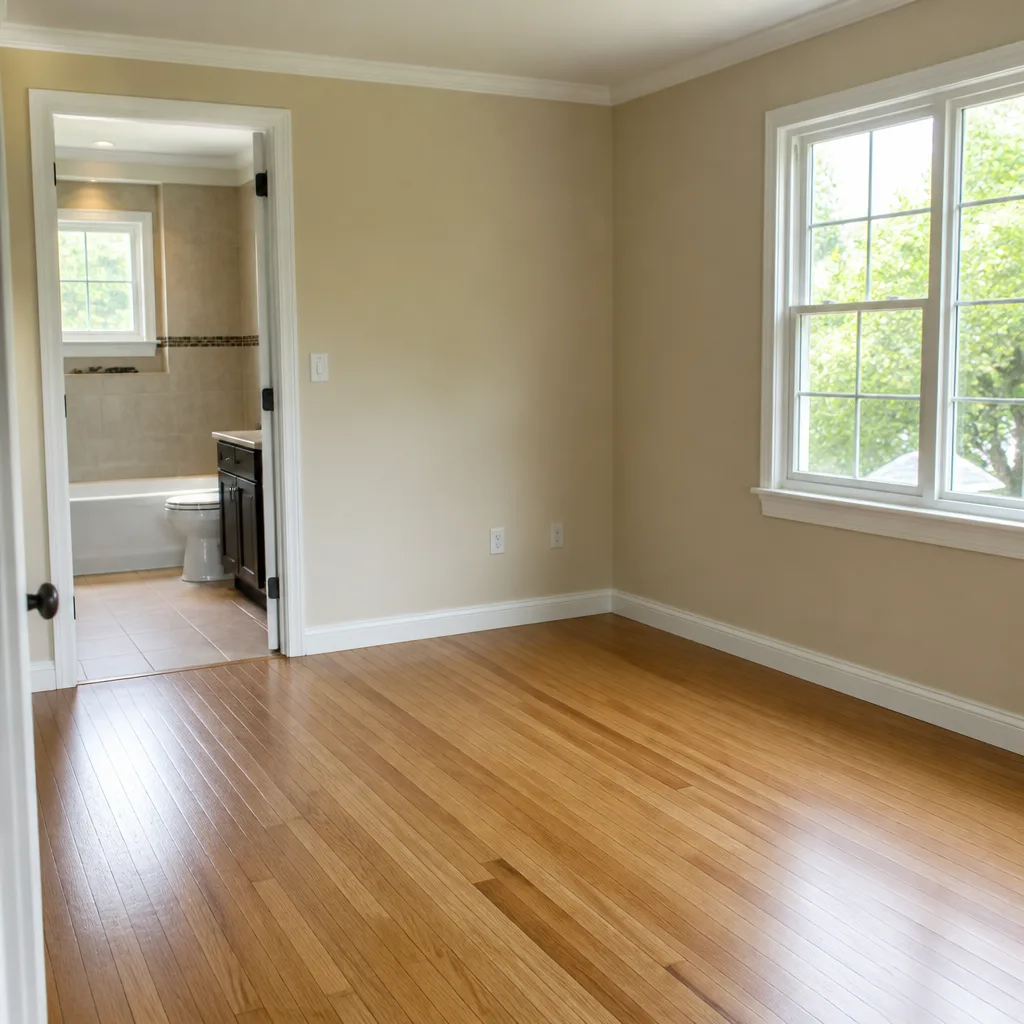
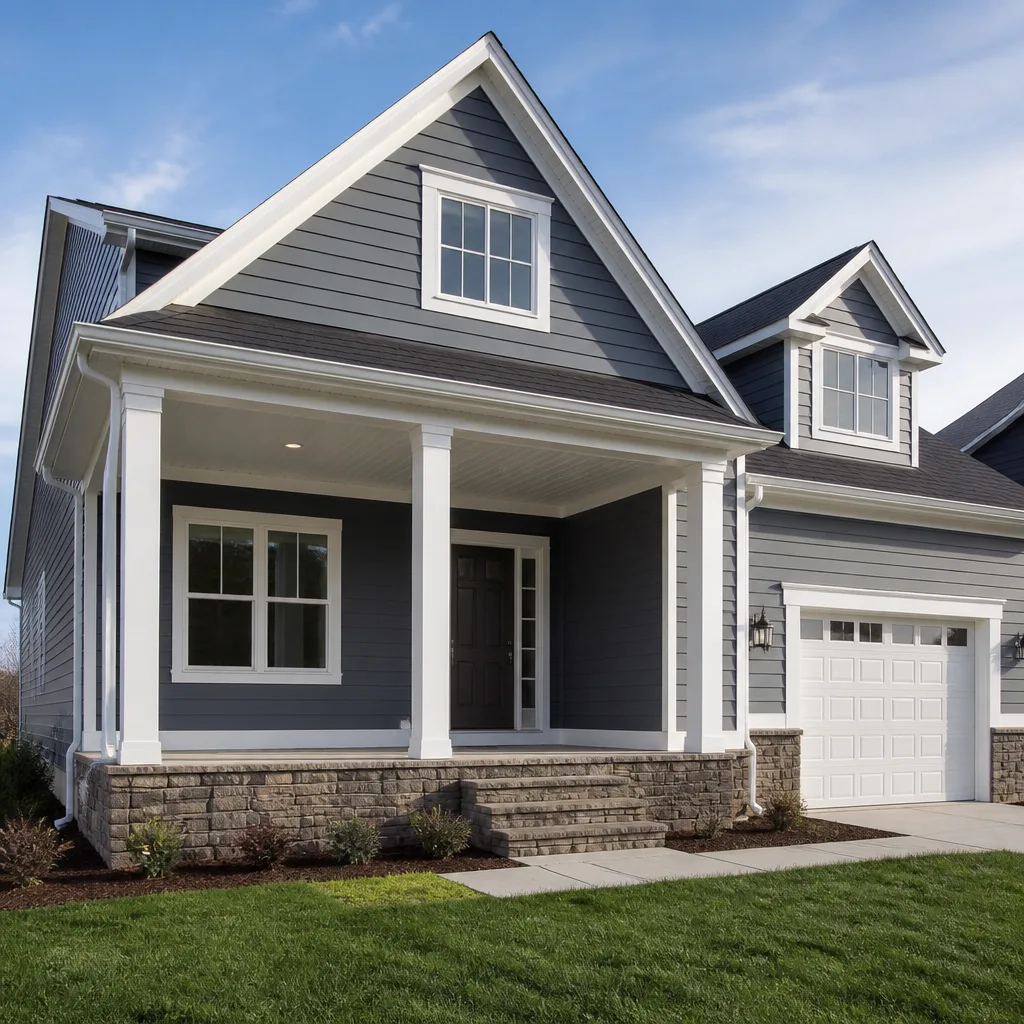
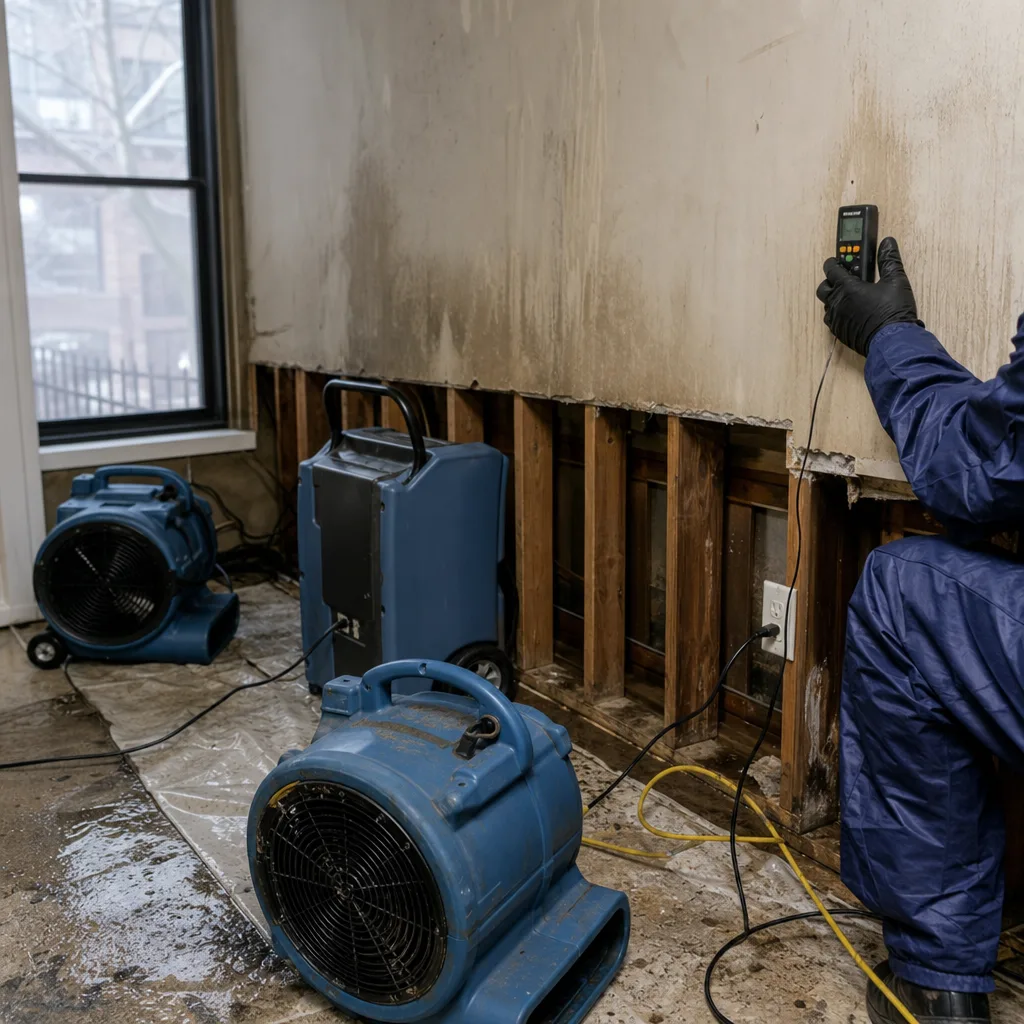 Before
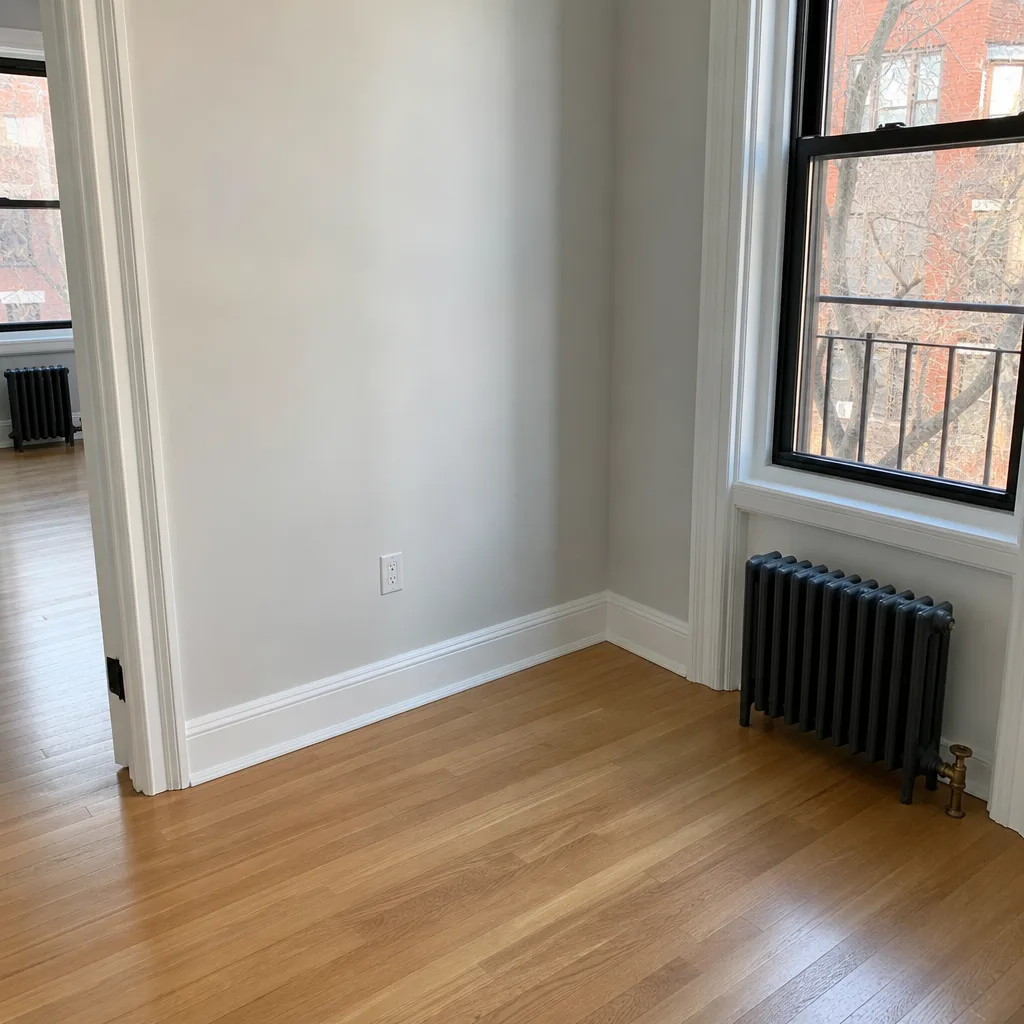 After
After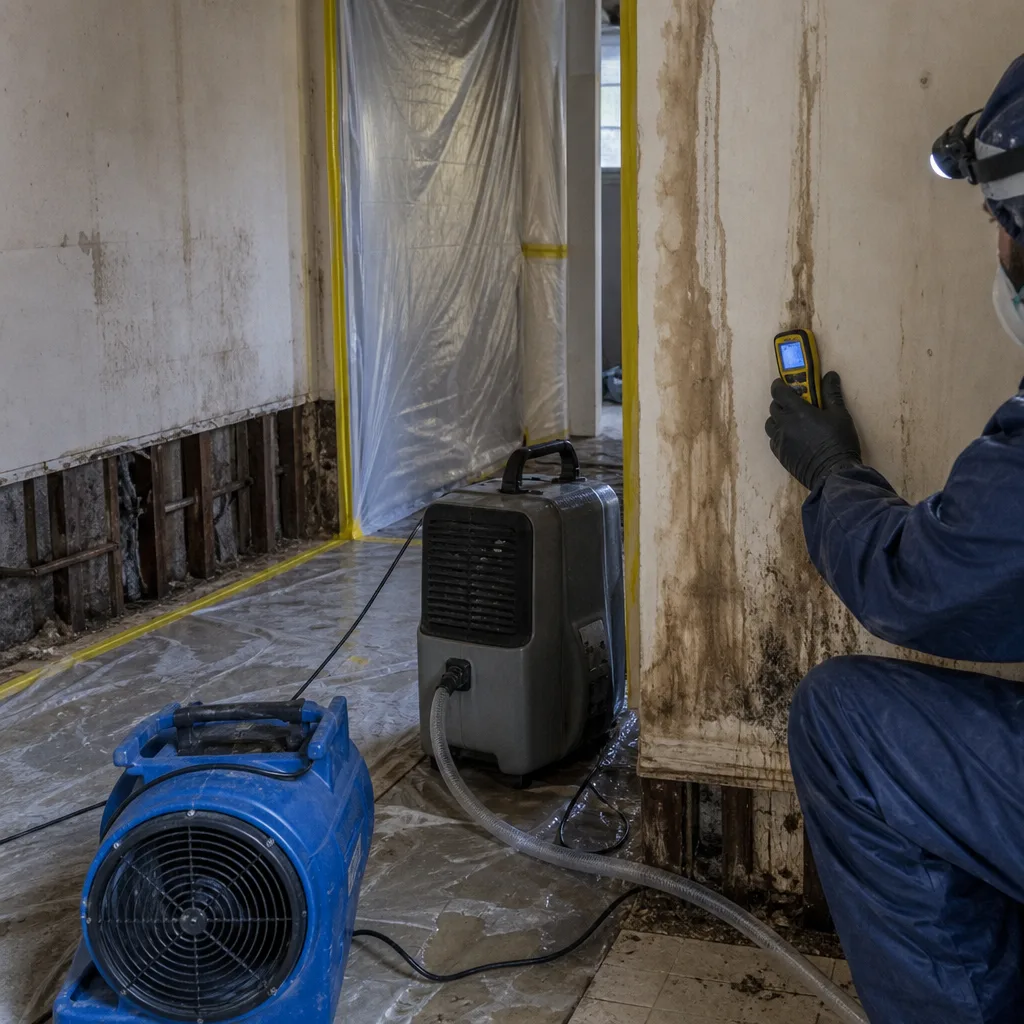 Before
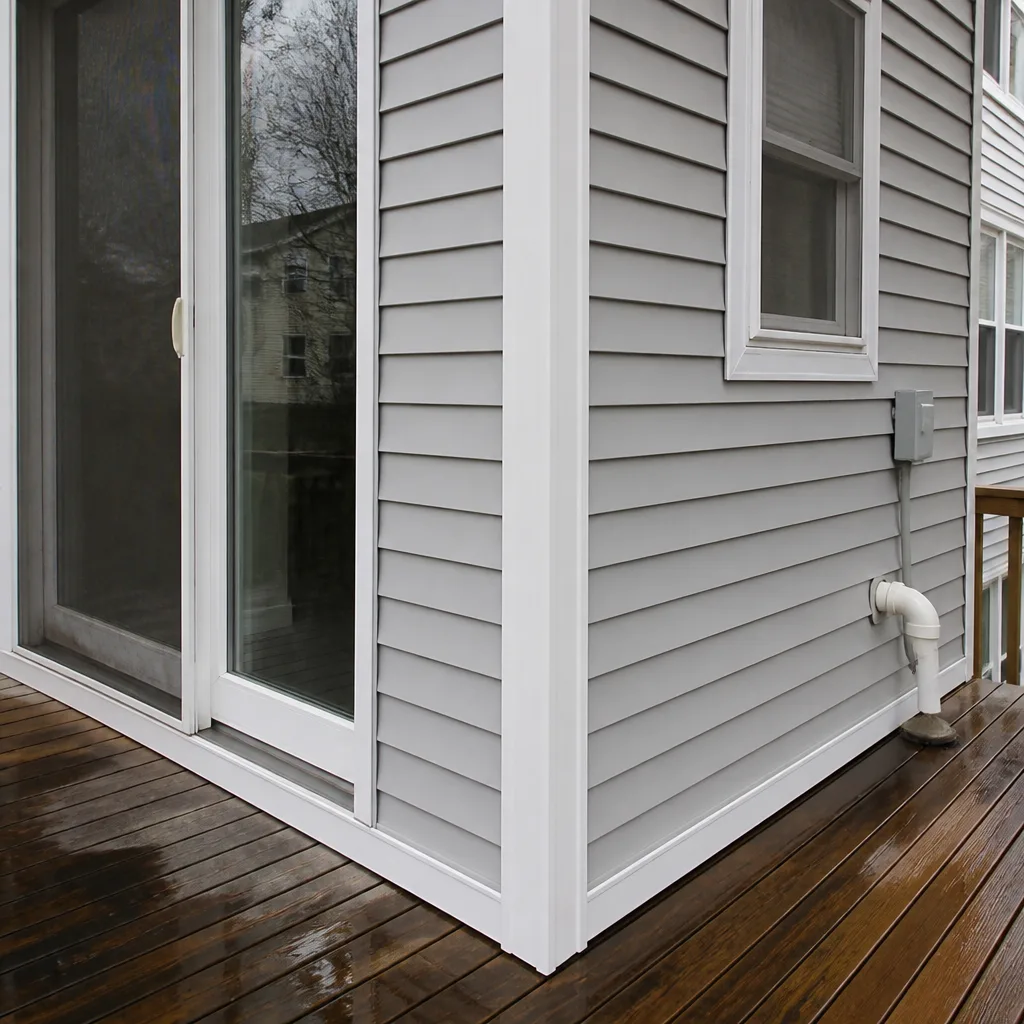 After
After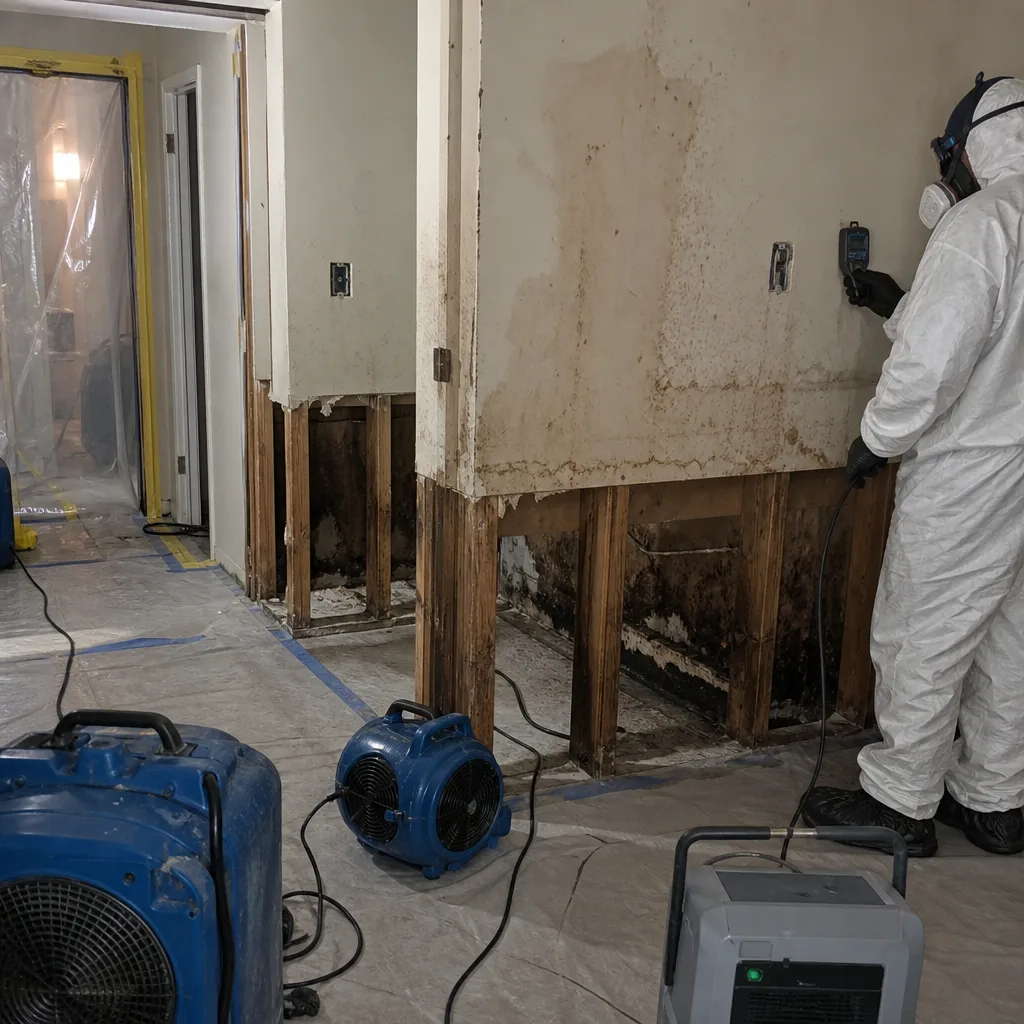 Before
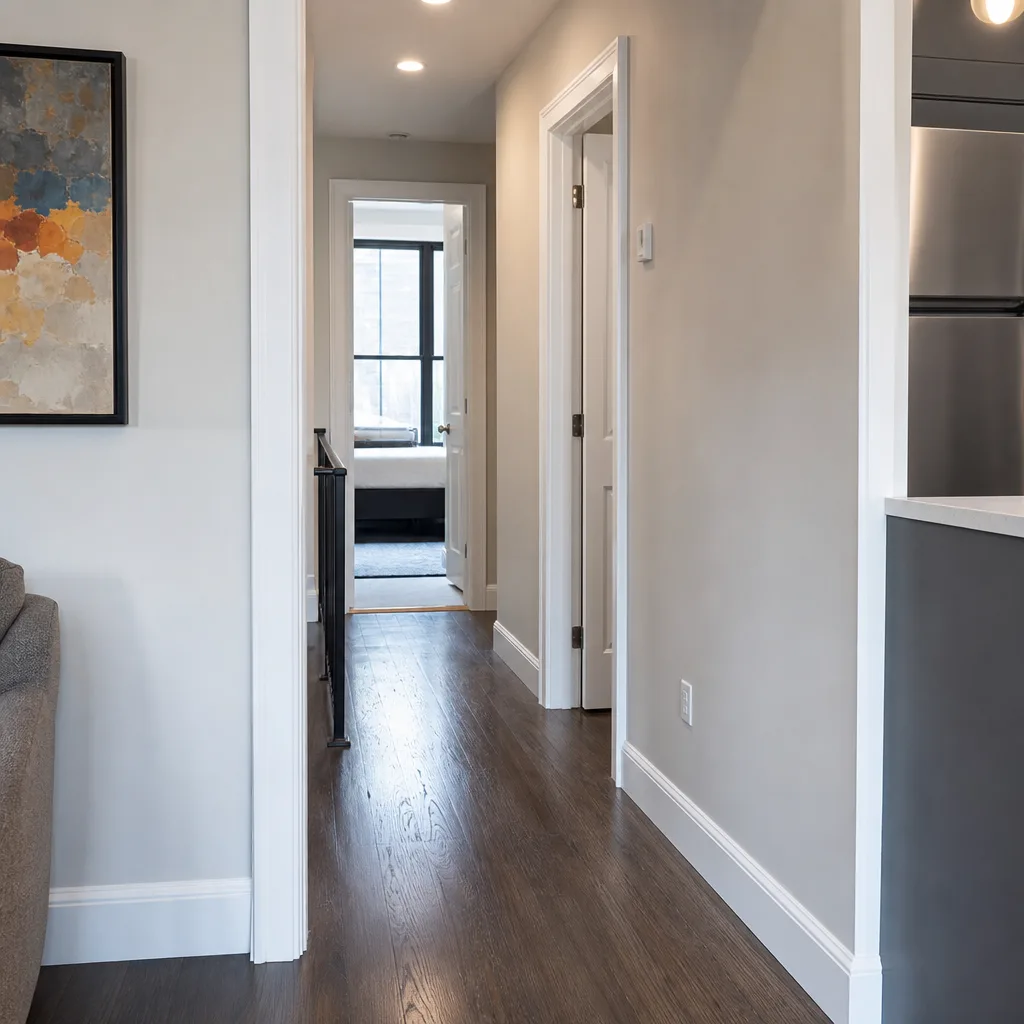 After
After24/7 Emergency Storm & Disaster Restoration in Union Square
Storm damage in Union Square doesn’t wait for business hours, and neither do we. Floodline Restoration Co. of Manhattan answers live at (917) 924-4221 around the clock, every day of the year. When a nor’easter backs the combined sewer into a 14th Street basement or wind-driven rain finds its way through a failed roof membrane on a converted loft building, our crews are dispatched to Union Square within 45 minutes. The first hour after a storm event determines whether you’re dealing with a cleanup or a full-scale reconstruction. Water moves fast through pre-war masonry and sub-grade spaces, and every hour it sits means deeper saturation into brick, timber, and plaster. A free visual inspection from our team tells you exactly what you’re facing, in plain terms, before any work is authorized. We arrive with professional-grade Dri-Eaz and Phoenix equipment, moisture meters calibrated for masonry assemblies, and a written scope that keeps the job honest from the first cut.
Understanding Storm & Disaster Restoration Severity in Union Square Properties
Storm restoration in Union Square is rarely a simple extraction job. The buildings ringing Union Square Park along Broadway, Park Avenue South, and 14th Street are predominantly pre-war masonry loft conversions. These structures hold 12-to-15-foot ceilings, thick terra cotta and brick party walls, and original cast-iron drain stacks that were never designed for modern residential water loads. When stormwater enters, it behaves differently than it would in a drywall-framed building. We classify water by contamination level: Category 1 is clean water from a burst supply line; Category 2 carries significant contamination, like grey water from a failed steam radiator or washing machine overflow; Category 3 is grossly contaminated black water from sewer surcharge or outside floodwater. In Union Square, Category 2 and 3 events are disproportionately common because the neighborhood sits atop the convergence of the 4/5/6, N/Q/R/W, and L train lines. Hydrostatic pressure from that transit network pushes groundwater and sewer effluent upward through aging industrial floor drains, turning what starts as a clean rain event into a biohazard requiring containment, air scrubbing, and antimicrobial treatment. Moisture mapping with thermal imaging is essential here because non-invasive meters give unreliable readings through thick brick assemblies.
Why Union Square Property Owners Choose Floodline Restoration Co. of Manhattan
- 45-minute response commitment. When a storm hits Union Square, our crews are dispatched from our New York City office and reach the neighborhood fast. We’ll be there when we say.
- A live person answers, 24/7. No answering machine, no call center script. A dispatcher picks up at 2 a.m., takes the details, and gets a certified crew moving.
- IICRC-certified technicians. Our crews carry WRT, FSRT, and AMRT certifications and train to IICRC, RIA, and IFA standards. They read moisture maps, run containment, and know what a pre-war brick wall does under saturation.
- Free visual inspection. Before any work starts, you get an honest assessment and a written scope. No pressure, no upsell.
- Direct insurance billing. We document everything from the first hour, work with your adjuster directly, and bill your carrier so you’re not playing messenger.
- One team from extraction to reconstruction. Floodline handles every phase of Storm & Disaster Restoration, so no mid-job handoff to a crew you’ve never met.
Our Storm & Disaster Restoration Process
Inspection & Assessment
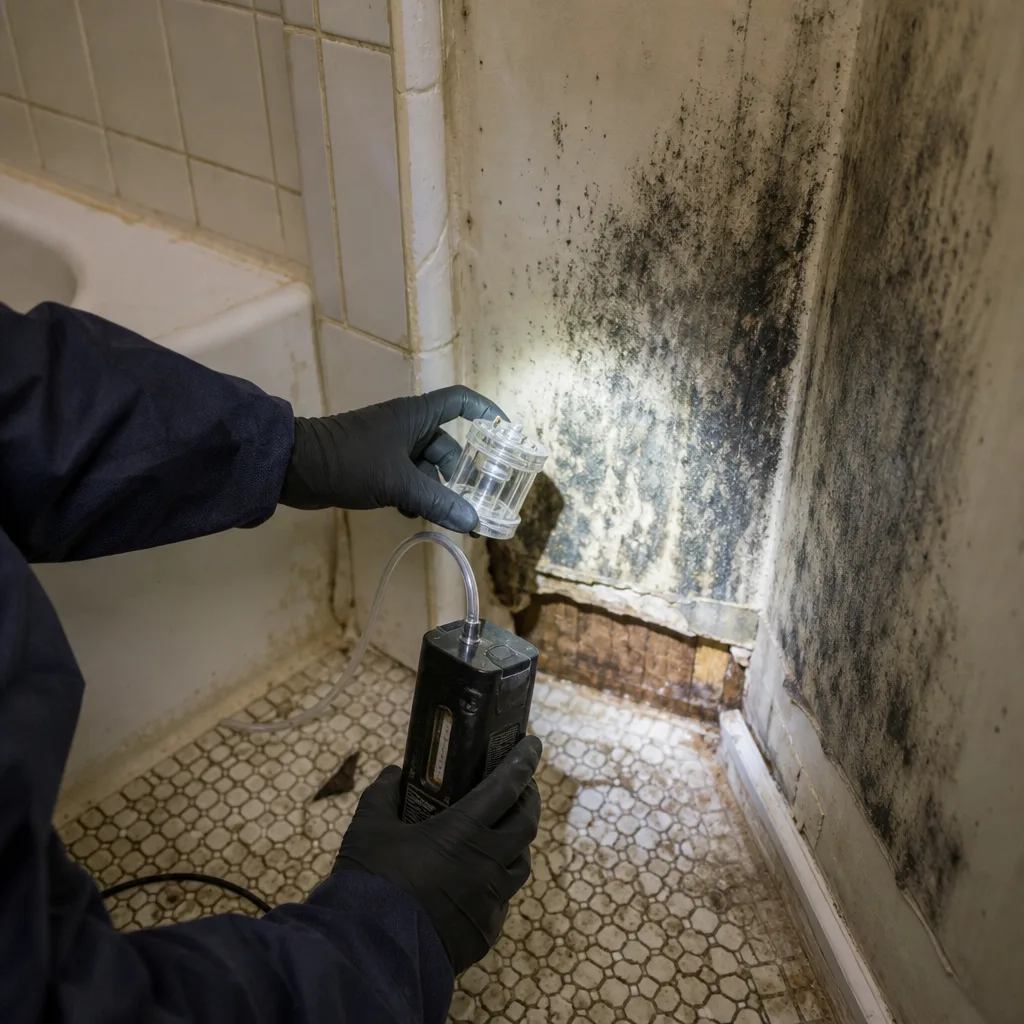
We start with thermal imaging and calibrated moisture meters, including invasive probing where masonry walls are suspected of hiding saturation. For Union Square loft buildings, this step often requires opening small probe holes behind lath or plaster to get true readings.
Extraction & Stabilization
Floodwater and sewage are extracted using truck-mounted and portable extraction units. If wind or impact damage has exposed the building, we install emergency board-up and roof tarping the same visit to stop further water entry.
Drying & Dehumidification
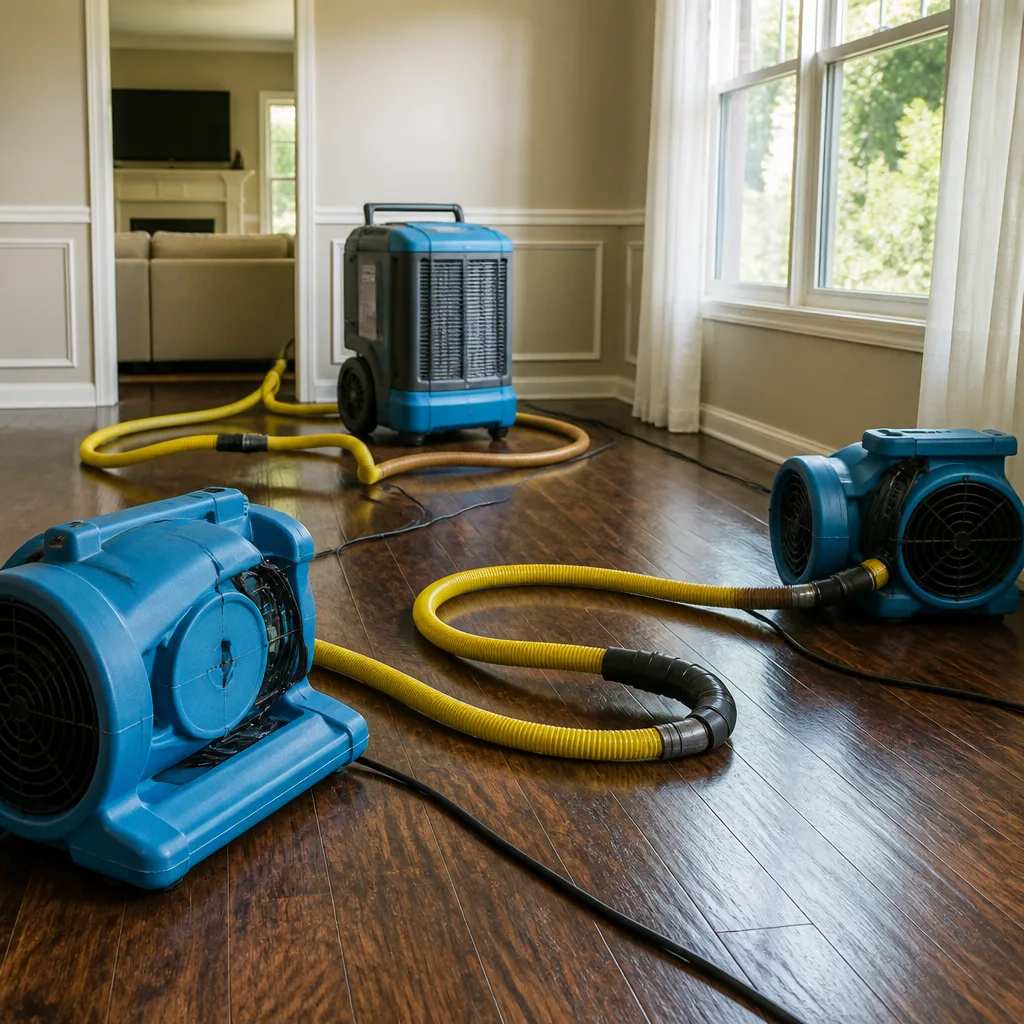
Phoenix axial air movers and 130-pint LGR dehumidifiers run staged drying cycles. In high-ceiling loft spaces, hoisted ducting and desiccant dehumidifiers reach upper wall cavities that standard equipment misses.
Cleaning & Sanitization
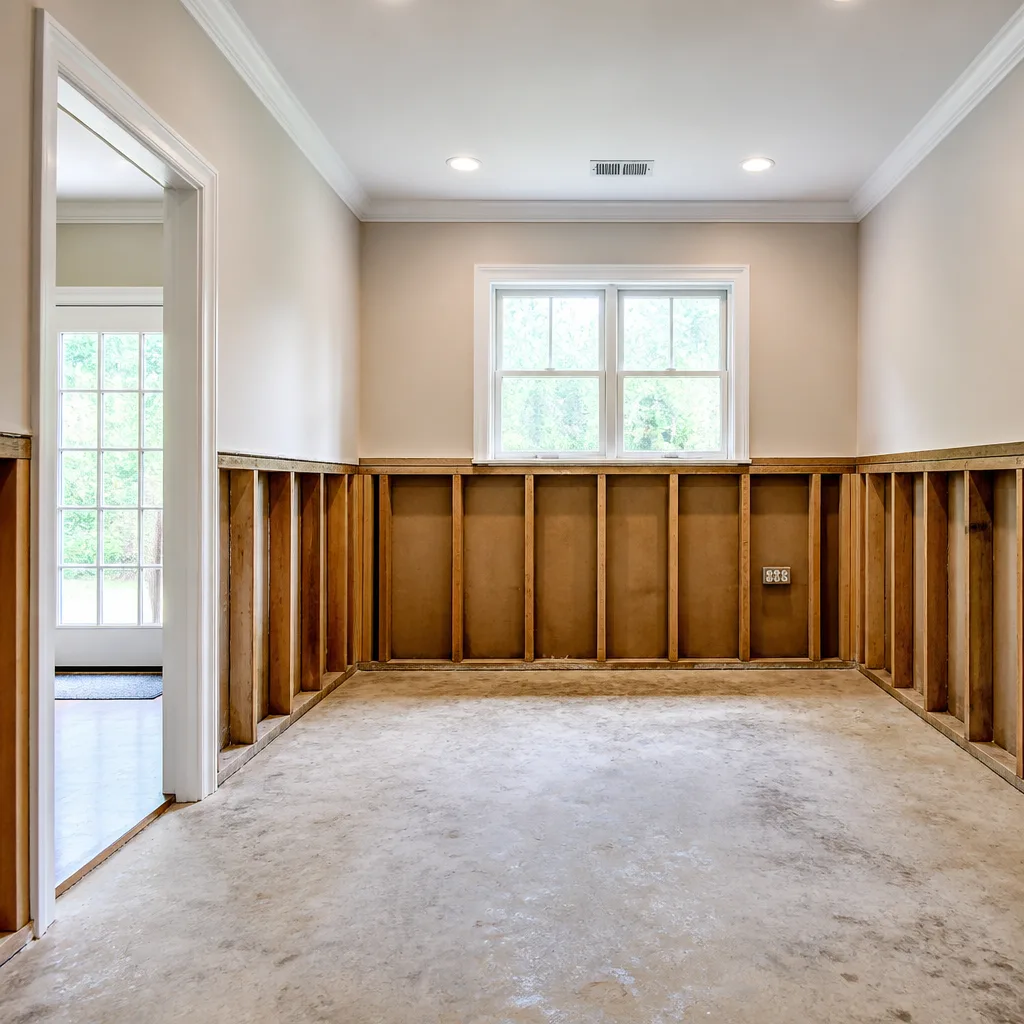
Category 2 and 3 water requires antimicrobial application, HEPA air scrubbing, and controlled demolition of saturated drywall, plaster, and flooring in containment. We follow IICRC S500 and S520 standards throughout.
Structural Drying Verification
Daily moisture readings are logged until every affected assembly reaches the dry standard. We hand that log to you and your carrier. No containment is released until the numbers prove it.
Repairs & Restoration
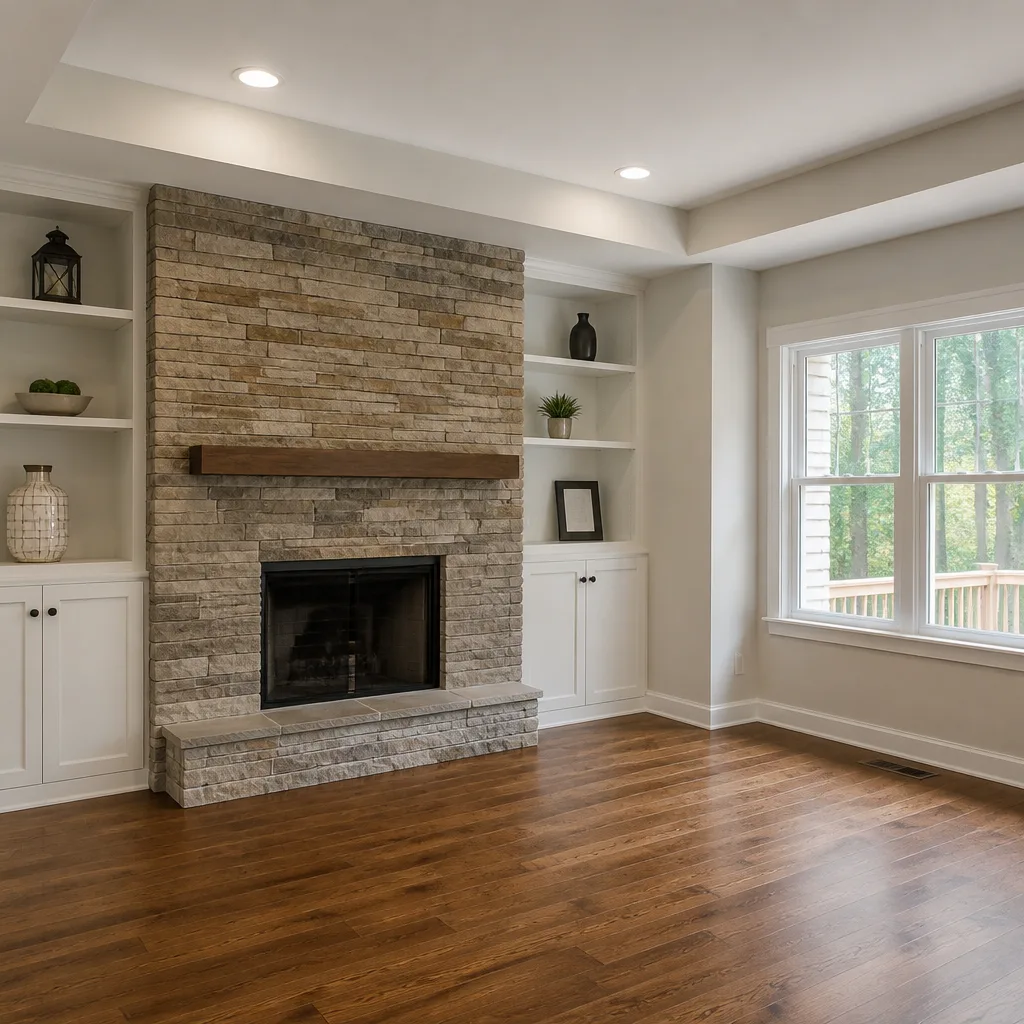
Once dry, we rebuild. Flooring, plaster, trim, paint, and any structural repairs are done by the same Floodline crew that extracted the water. The 90-Day Done Right Promise covers the entire job in writing.
Need Emergency Storm & Disaster Restoration in Union Square Now?
Crews minutes away, answering live 24 hours a day. The sooner we start, the less it costs.
Working With Your Insurance Company
Storm damage claims in Union Square move faster when the documentation is undeniable. From the first hour, we photograph every affected area room by room, log moisture readings with date and time stamps, and keep a running record of every action taken. We write line-item scopes in the format carriers expect, coordinate directly with your adjuster, and bill your insurer for covered work. You should not have to interpret policy language or haggle over line items. Our 42 years of combined restoration experience means we know what carriers require for Category 2 and Category 3 losses in pre-war masonry buildings. If your building’s original cast-iron drain stack cracked during a storm and the adjuster questions whether it’s a covered loss, we can provide the hydrostatic pressure data and field observations to support your claim. Done right, and backed in writing.
What We Provide Your Insurer
- Thorough documentation of the loss
- Photos of all damage, room by room
- Moisture readings and drying logs
- A detailed, line-item scope of work
- Direct coordination with your carrier
Built for Union Square’s Loss Calendar
Union Square takes storm damage in seasonal waves, and each one hits the neighborhood’s old buildings differently. January and February bring deep freezes that split supply lines in unheated loft stairwells and burst steam radiator pipes in exterior walls. The water saturates brick and plaster, then freezes, expanding the damage. Spring thaw saturates the ground around sub-grade foundations, and the combined sewer system under 14th Street begins running high. Summer convective storms dump inches of rain in an hour, overwhelming street drains and surcharging sewer lines into basement spaces. Autumn nor’easters drive wind and rain against aging roof membranes and parapet walls on converted factory buildings. We schedule our emergency board-up and roof tarping capacity around this calendar because Union Square’s building stock has no slack in it. A roof puncture on a 1908 loft conversion is not a simple patch job. It’s an open wound in a masonry envelope that traps moisture and conceals it for weeks.
Storm & Disaster Restoration Across Union Square’s Neighborhoods
Storm response in Union Square means moving fast through dense, narrow streets and knowing what each corridor holds. Along Broadway, we see retail storefronts on the first floor with residential units above, where a basement flood forces closure of the business while we work above. Park Avenue South’s loft buildings often have sub-grade mechanical rooms shared by multiple units, meaning a single sewer backup affects a dozen stakeholders and requires coordinated containment. The blocks east toward Third Avenue hold older tenement-style buildings where cast-iron drain stacks run through party walls, and a crack in one unit’s line becomes a neighbor’s problem within days. Around 14th Street’s commercial spine, stormwater pushes into basement utility spaces through original industrial floor drains, bringing Category 3 water into spaces holding electrical panels and boiler equipment. Our crews know the response routes from the West Side to the East Village and can stage equipment on narrow side streets without blocking fire lanes. When a building superintendent calls from a fifth-floor walk-up on 13th Street, we already know the elevator situation and the drain layout before our technician arrives.
Specialized Storm & Disaster Restoration Services We Offer in Union Square
Flood Damage Restoration
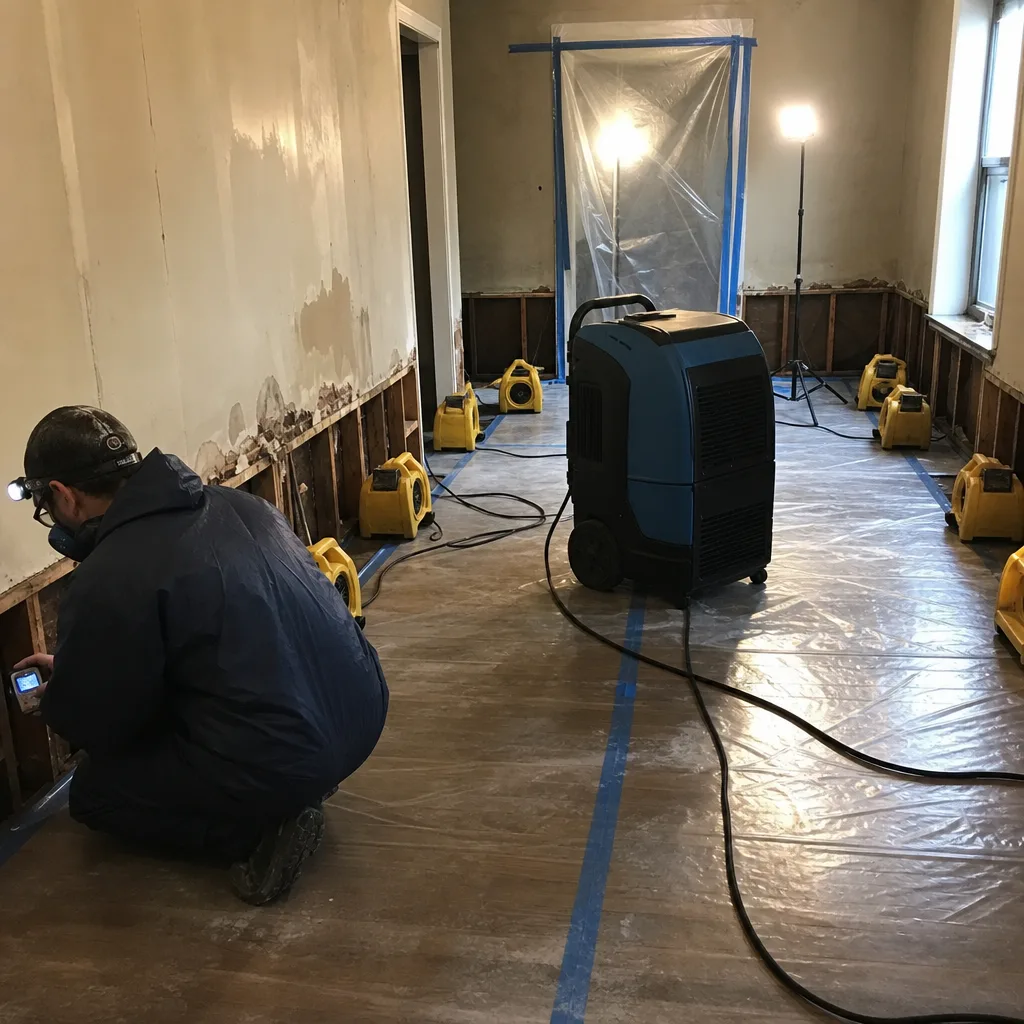
Floodwater in Union Square loft buildings follows the path of least resistance, which is almost always down through original wood flooring into the unit below. We extract, contain, dry, and rebuild with an eye on the masonry assemblies that hold moisture long after the visible water is gone. Our Phoenix LGR dehumidifiers and Dri-Eaz air movers run staged cycles until invasive probes confirm the brick and terra cotta are below the dry standard.
Storm Damage Cleanup
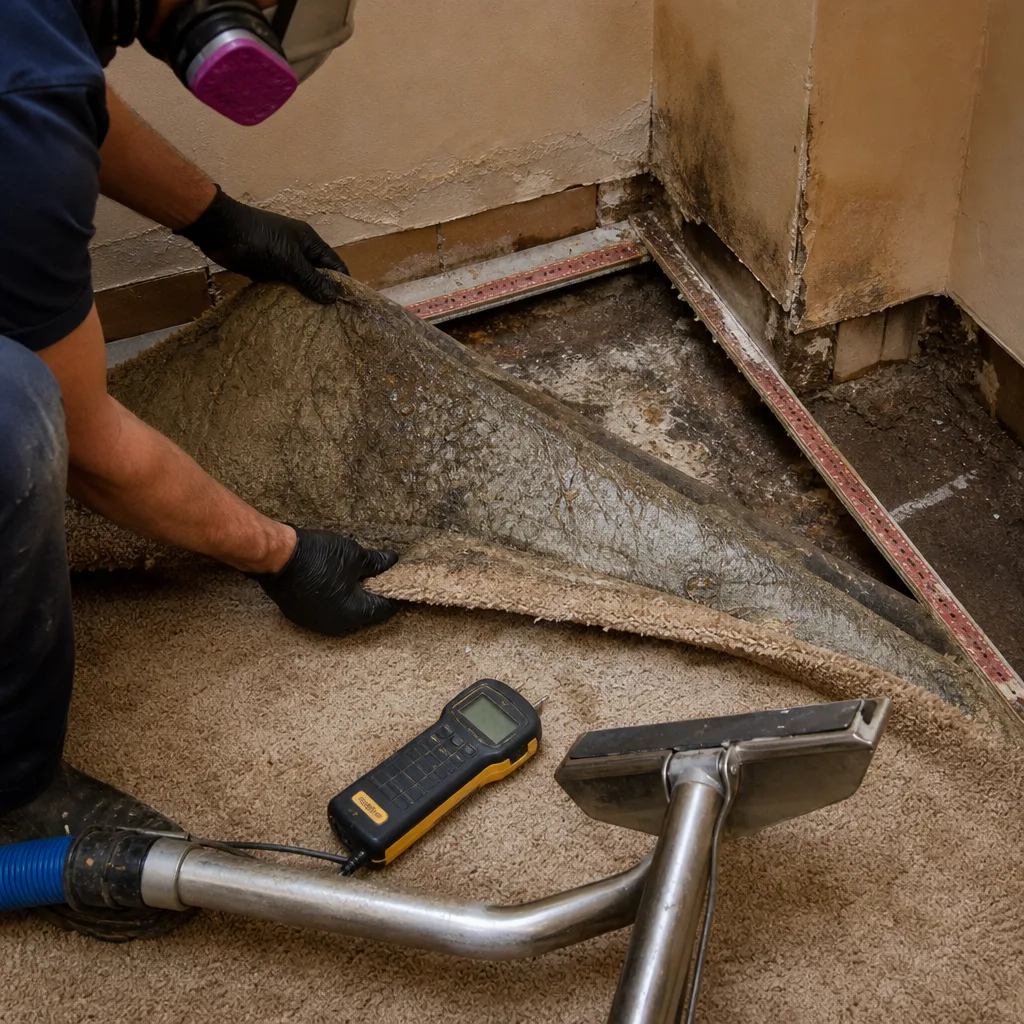
After a nor’easter or summer squall, buildings around Union Square Park take on wind-driven debris, broken glass, saturated insulation, and downed tree limbs. We clear the debris, remove unsalvageable materials under containment where needed, and stabilize the envelope so further damage stops. Cleanup includes full antimicrobial application on any Category 2 or 3 affected surfaces.
Emergency Board-Up
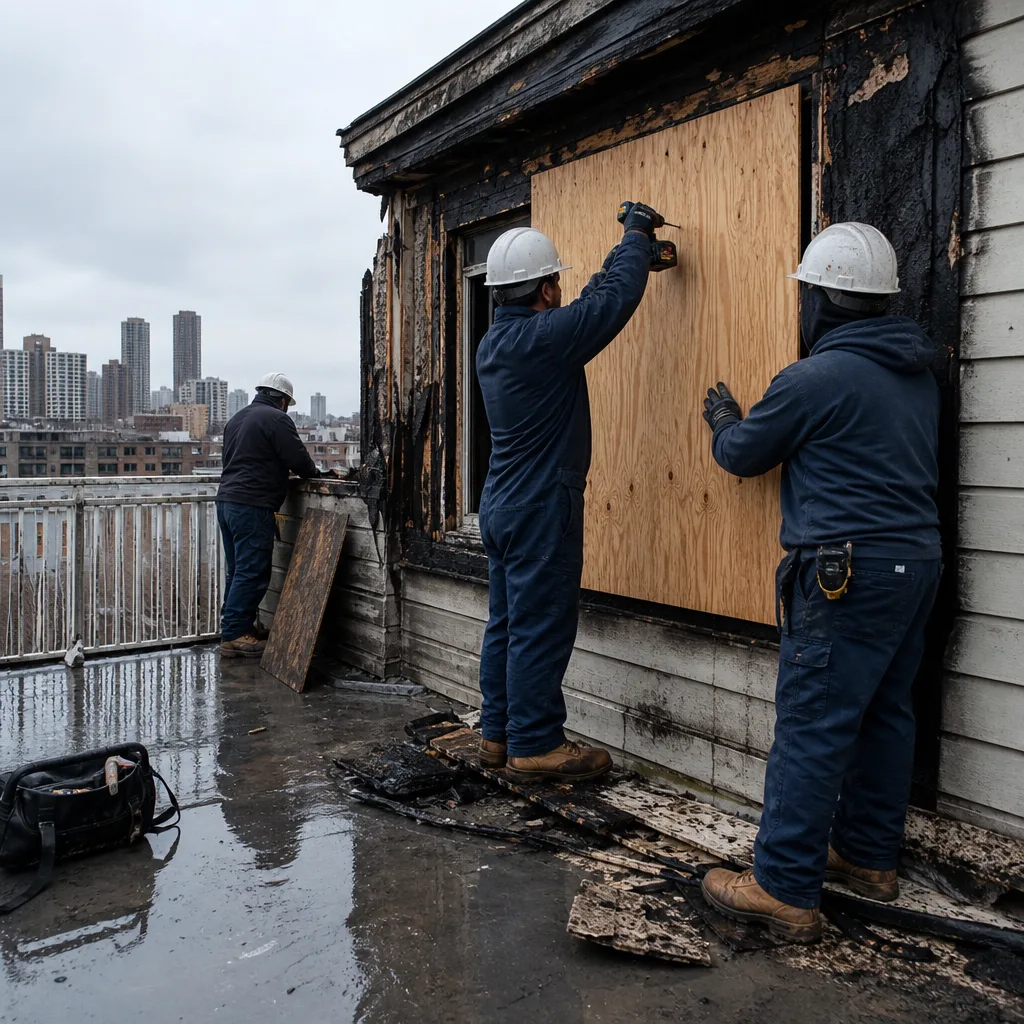
Broken windows and failed doors on Broadway and Park Avenue South are security and weather liabilities. We board up with plywood and seal entry points the same day, using fasteners that won’t destroy the original brick lintels or cast-iron window frames that make a Union Square loft what it is. The board-up holds until permanent repairs are scheduled, and we document it for your carrier.
Roof Tarping
Flat and low-slope roofs on converted factory buildings take a beating in windstorms. We deploy heavy-duty tarps over failed roof sections, sealed at the parapets and weighted to survive the next storm passing over Union Square. Tarping stops the active leak the same day so interior drying can begin. It’s temporary, but it buys you the time to do the roof right.
Debris Removal
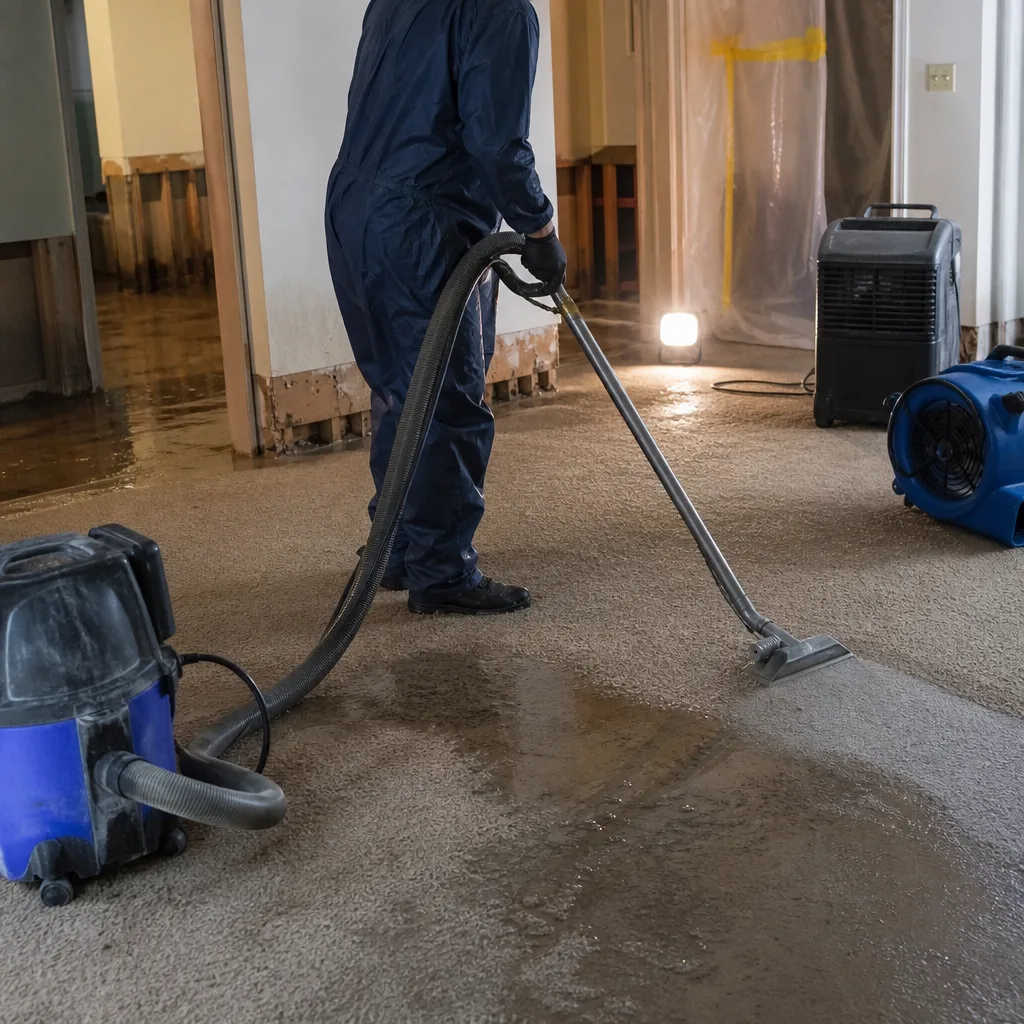
Storm debris around Union Square includes construction materials from damaged parapets, soaked drywall and insulation, and spoiled contents from flooded basements. We haul it out, separate what’s salvageable, and dispose of contaminated materials under local regulations. You get a clean, dry shell to rebuild from, and documentation of every load for the claim.
What happens when you call
- 1
A real person answersNo phone trees - you reach a local pro.
- 2
You get an upfront price rangeHonest numbers before anyone is dispatched.
- 3
A background-checked tech heads outLicensed & insured, dispatched right away.
- 4
You approve before work beginsNothing starts until you say go.
Storm & Disaster Restoration Costs in Union Square, NY
Storm restoration pricing in Union Square runs higher than in dryer, newer parts of the metro area because the buildings demand more labor and more invasive verification. A typical Category 2 water mitigation in a Park Avenue South loft with a saturated 18-inch brick party wall runs $4,500 to $9,800, including containment, daily moisture logging, and structural drying verification. Emergency board-up and roof tarping after wind damage on a Union Square low-rise runs $950 to $2,400, depending on window count and roof access. Full Category 3 sewage-backup restoration in a sub-grade commercial space on 14th Street can run $12,000 to $28,000 when it includes controlled demolition, antimicrobial treatment, and rebuild of affected finishes. Insurance covers the majority of storm-related losses when the documentation is complete, which is why we write our scopes to carrier standards and bill directly. The free visual inspection gives you a firm number before you commit. A square deal, no surprises on the bill. Call (917) 924-4221 for an exact quote on your Union Square property.
We Also Serve Cities Near Union Square
Floodline Restoration Co. of Manhattan serves storm damage calls across the metro area, including Fairview, Harrison, East Bronx, and Hunts Point. Our crews stage from our New York City office and reach these communities with the same 45-minute response commitment and the same written 90-Day Done Right Promise.
Serving Union Square, NY - Our Local Coverage Area
We’re based in the Union Square area and know this community well. Use the map below to see our service coverage - if you’re nearby, we can almost certainly help.
Union Square Storm & Disaster Restoration Questions, Answered
Does the subway directly underneath Union Square increase the risk of Category 3 water backups in my building’s sub-grade space?
Yes. The convergence of the 4/5/6, N/Q/R/W, and L lines under Union Square creates sustained hydrostatic pressure that pushes groundwater and combined sewer effluent upward through aging floor drains. We see Category 3 backups in sub-grade spaces here more than in any other Manhattan neighborhood we serve. Call (917) 924-4221 if you’re seeing water at the slab.
My pre-war loft still has original steam radiators. How do I know if a pinhole leak is hiding inside the brick wall before I see a stain?
You often won’t know without invasive probing. A failed steam trap can weep into terra cotta block for weeks before any visible staining appears. If your radiators hiss more than usual, your boiler cycles constantly, or you smell mustiness near exterior walls, get a thermal imaging inspection. We open small probe holes to confirm what non-invasive meters miss in masonry.
Is it safe to dry out a flooded basement floor in a Union Square loft building with original cast-iron drain pipes?
Not without first assessing whether the drain itself has cracked. Original cast-iron stacks in these buildings are often past their service life, and running high-volume drying equipment in a space with a compromised drain can push contaminated water into unaffected areas. We inspect the drain condition before drying begins and include repairs in the scope if needed.
Why do moisture readings on my 15-foot-high brick wall fluctuate so much even after your crew sets up drying equipment?
Thick masonry assemblies breathe slowly and release moisture in cycles. Non-invasive meters read the surface, not the core, and readings swing as the wall gives up water in layers. We use invasive probes at multiple depths and hoisted ducting with desiccant dehumidifiers to dry the full height of the wall cavity, logging readings daily until the core stabilizes below the dry standard.
If my building’s cast-iron drain stack cracks during a storm, do I need a restoration company or just a plumber?
A plumber can replace the cracked section of pipe, but the water that leaked through the wall before the crack was found is a restoration problem. We routinely coordinate with plumbing contractors on Union Square buildings: they fix the pipe, we extract saturated materials, dry the assembly, and rebuild. Trying to skip the restoration side leaves moisture behind brick and plaster, and mold follows.
How quickly can a crew actually get to my Union Square building after I call?
Our dispatch commitment is 45 minutes to the Union Square area, around the clock. A live person answers at (917) 924-4221, and a certified crew is dispatched the same call. For active water entry after a storm, we can often have extraction running within the first visit.
Will my insurance cover storm and sewer backup damage in a Union Square loft?
Most policies cover storm-related wind and rain damage, but sewer backup is often a separate rider. If you’re unsure, we can review your policy with you and document the loss in the language your carrier requires. We bill directly to insurance for covered work and coordinate with your adjuster from the first day.
What should I do in the first 30 minutes after stormwater enters my Union Square building?
Shut off electricity to any affected area if you can do so safely without stepping in water. Call (917) 924-4221. Move small valuables and documents out of the wet zone if it’s safe. Do not try to extract Category 2 or 3 water yourself, especially in basement spaces with aging floor drains. The sooner we get readings and start extraction, the less damage spreads into masonry assemblies.
Written by Curt Bowman, Owner at Floodline Restoration Co. of Manhattan, providing storm and disaster restoration across New York City.