
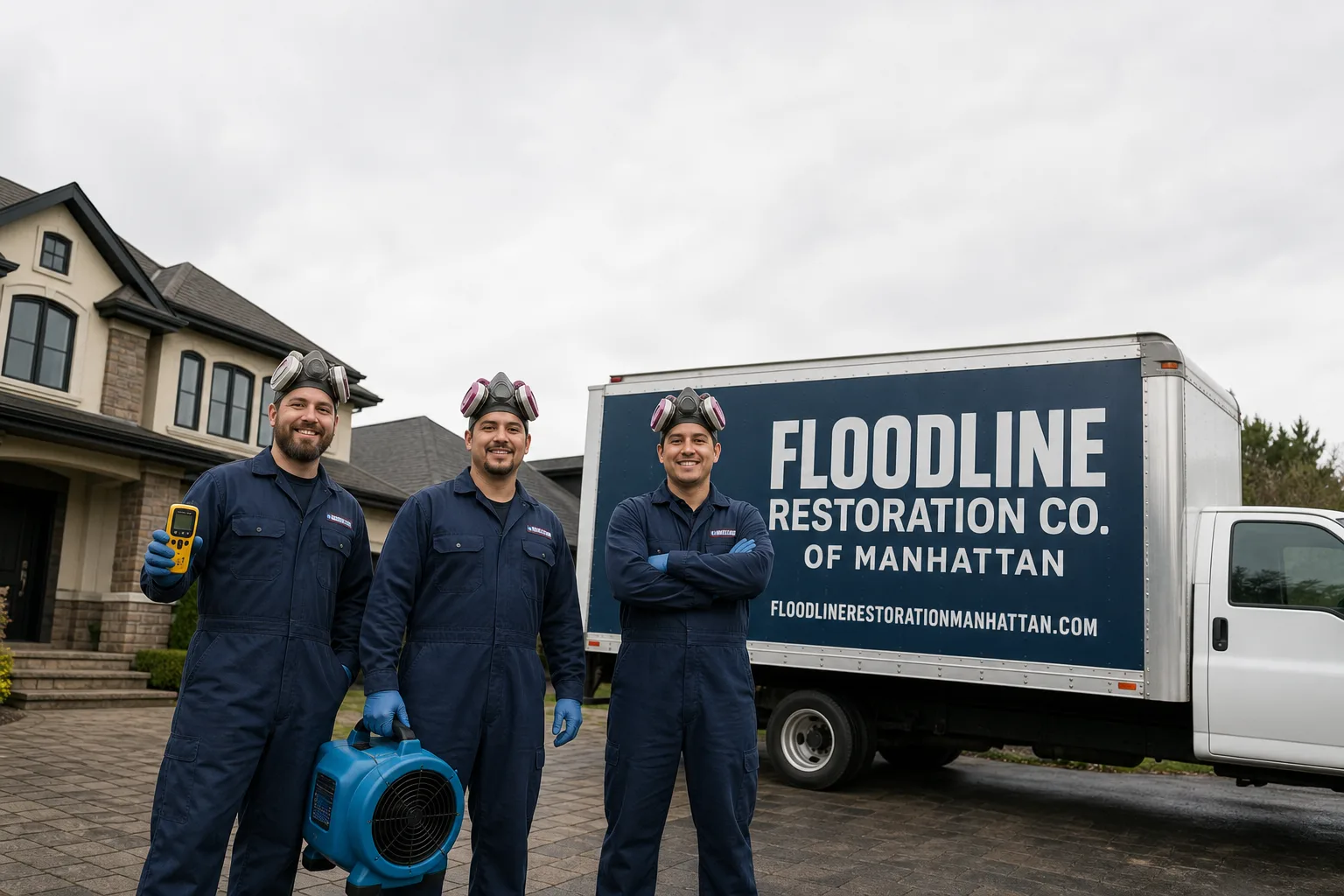
Free visual inspection and a written scope of work before any mitigation begins - photos, moisture readings, and drying logs go in your claim file
The scope we write is the scope we bill. Anything new gets shown to you, in writing, before we touch it.






 Before
 After
After Before
 After
After Before
 After
After24/7 Emergency Storm & Disaster Restoration in Upper Nyack
Storm damage in Upper Nyack moves fast, and so do we. A live dispatcher answers at (917) 924-4221 around the clock, every day of the year. When a nor’easter pushes Hudson River surge into a fieldstone basement or wind tears roof sheathing off a riverside home on Old Mountain Road, the first hour determines whether you’re facing targeted drying or a full gut-and-rebuild. Our crews reach Upper Nyack properties quickly, run a free visual inspection, and start extraction the same visit. The water mark on your wall is where we start, and we don’t hand the job off until the rebuild is finished.
Understanding Storm & Disaster Restoration Severity in Upper Nyack Properties
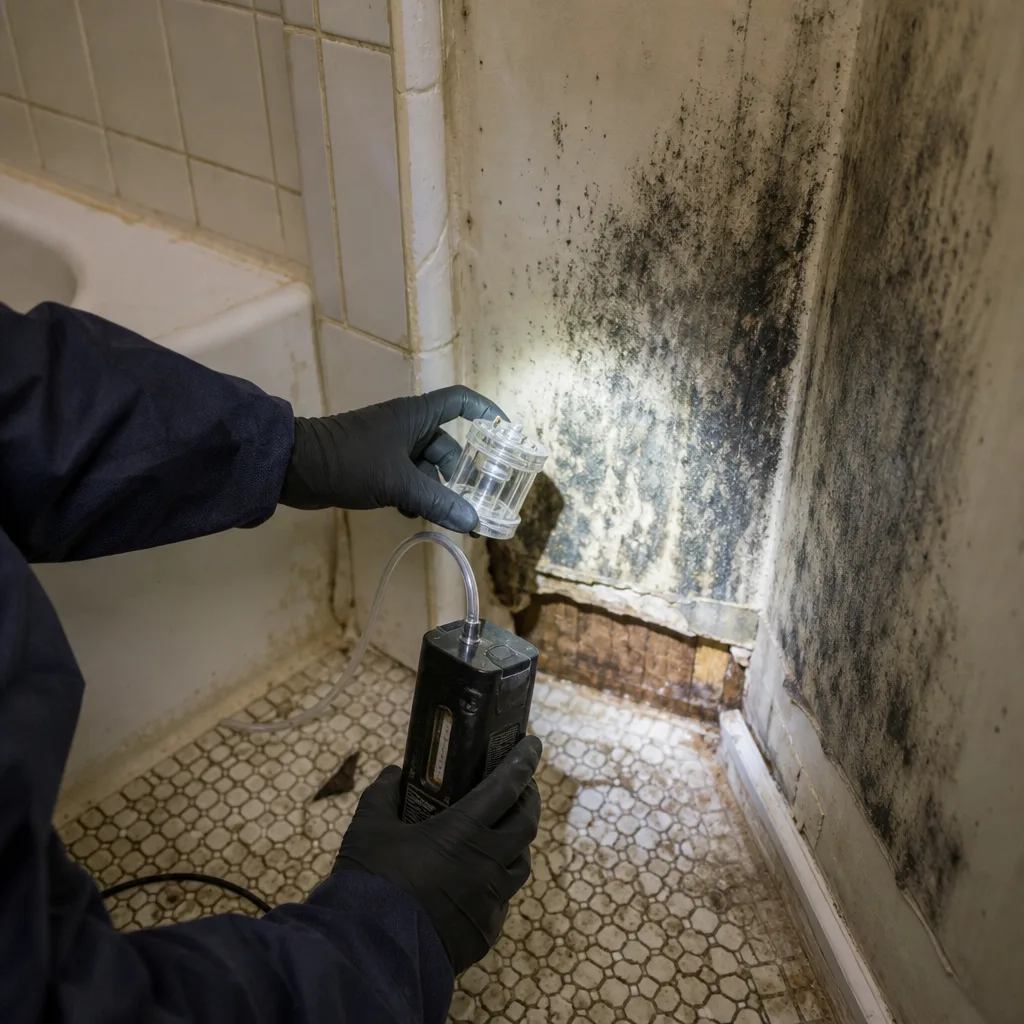
Storm damage in Upper Nyack splits into categories that dictate everything downstream. Category 1 water is clean rainwater from a roof breach. Category 2 carries contaminants from building materials. Category 3, which we see along Hudson riverfront streets after tidal surges, carries brackish river water, silt, and sometimes fuel oil from flooded basement tanks. Upper Nyack’s late-19th and early-20th century homes make this harder than it looks on paper. Plaster-and-lath walls wick moisture upward. Fieldstone foundations seep. Original wood subfloors hold water between boards and joists. Without moisture mapping with thermal imaging and hygrometers, hidden pockets survive behind baseboards and inside wall cavities for weeks. Mold follows within 48 to 72 hours. This is why we map every affected room before drying starts, and log daily readings until the structural dry standard is met and we can show you the numbers.
Why Upper Nyack Property Owners Choose Floodline Restoration Co. of Manhattan
- Fast local response. Our dispatch board sends crews toward Upper Nyack immediately, not after a callback queue. We’ll be there when we say.
- Live answer, 24/7. You call, a person answers. At 2 a.m. on a Sunday. During a nor’easter. Not a recording, not a triage service.
- Certified technicians. Our crews are trained to IICRC standards including WRT, FSRT, and AMRT, and they arrive uniformed and background-checked.
- Free visual inspection. We walk the damage with you, explain what we’re seeing, and hand you a written scope before any work starts. No pressure, no games.
- Direct insurance billing. We talk to your adjuster, provide documentation in the carrier’s preferred format, and bill directly whenever your policy allows.
- One crew from first extraction to finished rebuild. No mid-job handoff, no inherited subcontractor who wasn’t there on day one. The same team that reads the moisture map hands you the final walkthrough.
Our Storm & Disaster Restoration Process
Inspection & Assessment
We start with a room-by-room visual inspection and moisture mapping. Thermal imaging finds water trapped behind plaster-and-lath walls and under original wood floors. We document everything with photos and written notes from the first hour, because that documentation anchors your insurance claim.
Extraction & Stabilization
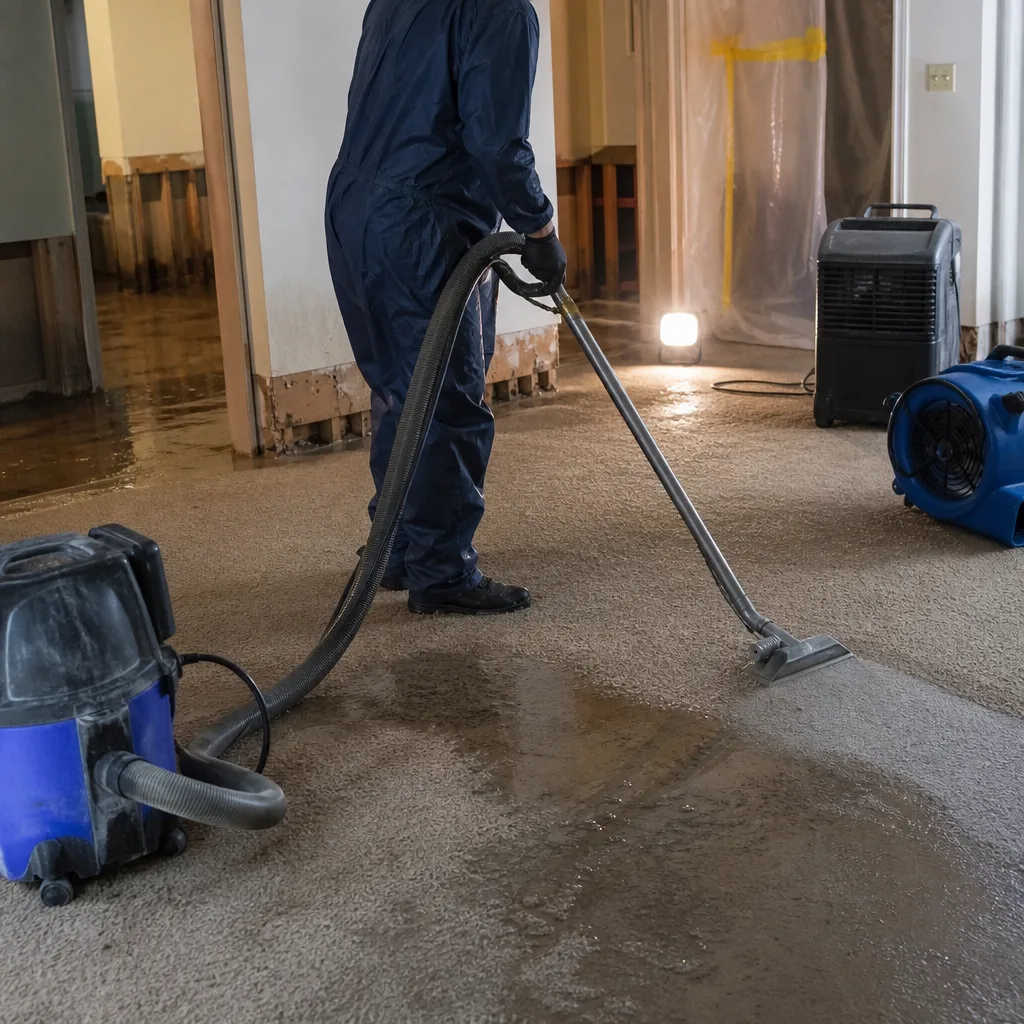
We board up broken windows, tarp damaged roofs, and run extraction pumps and extractors on standing water. On Upper Nyack riverfront homes after a tidal surge, this happens fast, before the next tide cycle repeats the flooding.
Drying & Dehumidification
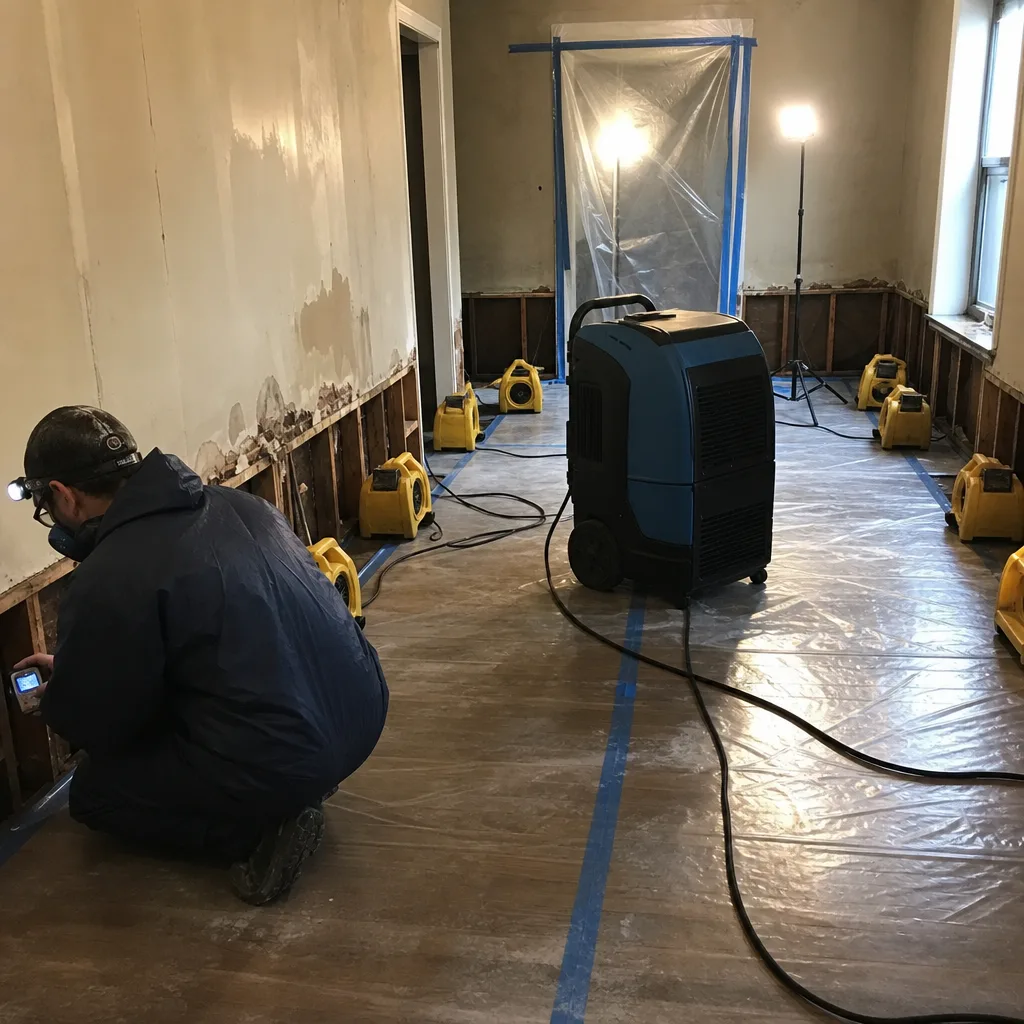
Dri-Eaz air movers, Phoenix dehumidifiers, and Injectidry systems go in on day one. Daily moisture readings log the drying curve until the structural dry standard is met. You see the log. So does your insurer.
Cleaning & Sanitization
HEPA air scrubbers filter airborne particulates. Hard surfaces get cleaned and sanitized. Soft goods that can’t be saved get documented for the claim and removed. Category 3 floodwater means antimicrobial treatment before anything else moves forward.
Storm-Specific Treatment
Wind-damaged structures need more than drying. We assess framing, sheathing, and roof decking for hidden stress. Plaster walls with salt intrusion from brackish Hudson water get specific treatment before rebuild, because salt keeps drawing moisture back long after the visible damage is gone.
Repairs & Restoration
We rebuild what needs rebuilding: drywall, flooring, trim, roof sections, exterior doors, insulation. The same crew that did the drying does the finish work. The job isn’t done until it’s done right, and done right means backed in writing.
Need Emergency Storm & Disaster Restoration in Upper Nyack Now?
Crews minutes away, answering live 24 hours a day. The sooner we start, the less it costs.
Working With Your Insurance Company
Storm and flood claims in Upper Nyack get complicated. Hudson River surge triggers FEMA National Flood Insurance Program claims. Fuel oil from a flooded basement tank triggers NYS DEC notification requirements. Wind damage triggers standard homeowner’s coverage. We handle all three tracks. Our team photographs every room, logs moisture readings daily, and writes a line-item scope of work in the format your carrier expects. We talk to your adjuster directly, so you’re not playing messenger between a drying crew and a claims office. A square deal means no surprises on the bill, and no surprises in what the carrier accepts.
What We Provide Your Insurer
- Thorough documentation of the loss
- Photos of all damage, room by room
- Moisture readings and drying logs
- A detailed, line-item scope of work
- Direct coordination with your carrier
Built for Upper Nyack’s Loss Calendar
Upper Nyack’s storm damage follows the rhythm of the Hudson. January deep freezes burst supply lines in uninsulated basements of century-old homes. March and April bring thaw cycles that push groundwater through fieldstone foundations on riverside streets. Summer thunderstorms dump flash runoff down Hook Mountain’s slopes, and the steep terrain channels it straight into lower residential blocks. Fall and winter bring nor’easters, the events we watch closest. A nor’easter’s storm surge can push brackish, contaminated Category 3 water into a late-19th-century basement within minutes of high tide. That’s the loss pattern that defines this village. We plan for it, we train for it, and we answer the phone when it happens.
Storm & Disaster Restoration Across Upper Nyack’s Neighborhoods
Upper Nyack’s geography shapes every response we run. Homes along North Broadway, which runs parallel to the river below Hook Mountain, face the highest storm surge exposure. Riverside properties on streets like Old Mountain Road see wind-driven roof damage and Category 2 rainwater intrusion through plaster-and-lath ceilings. Homes set into the hillside off Route 9W deal with runoff channeling down driveways and against foundation walls during heavy rain. The village’s historic district, with its mix of wood-frame and fieldstone construction, carries a different drying curve than anything built after 1980. When we dispatch a crew to Upper Nyack, the driver knows which streets flood first, which basements sit below the tidal line, and which homes need a structural assessment before drying equipment goes in. That’s local knowledge a template can’t fake.
Specialized Storm & Disaster Restoration Services We Offer in Upper Nyack
Emergency Board-Up
After wind breaks a window or tears open a wall, every open opening is an invitation to the next storm. We board up with plywood cut to fit, secured properly, and documented for your claim. On Upper Nyack’s riverfront streets, delaying board-up means the next tidal surge pushes more Category 3 water into the same openings. We don’t let that happen. A crew reaches you the same day you call.
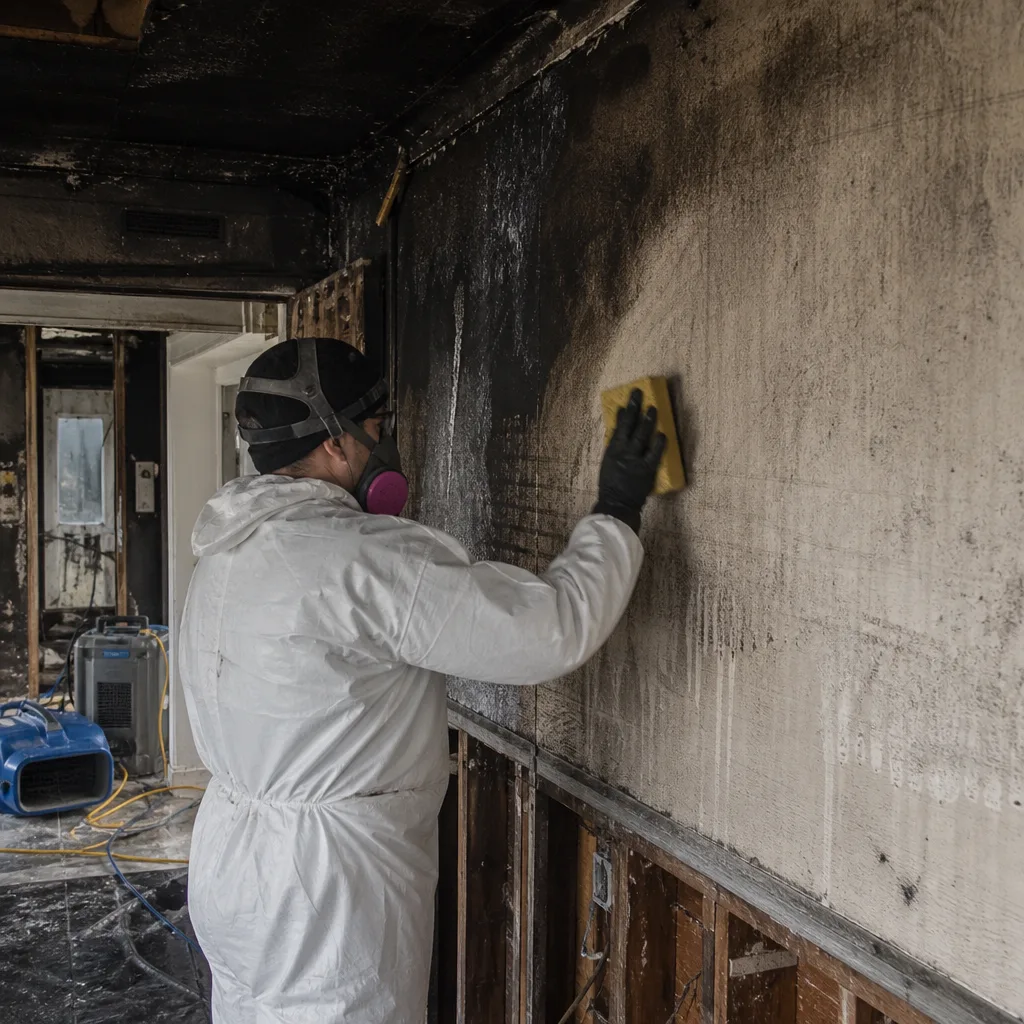
Roof Tarping
A peeled-back roof section over a plaster-and-lath ceiling is an active water intrusion. We install temporary roof tarps that hold through wind and rain until permanent repairs are scheduled. On homes along the Hudson, tarps need proper tie-downs, because river wind gusts here are stronger than inland. We’ve tarped roofs on Old Mountain Road and North Broadway, and we know what holds.
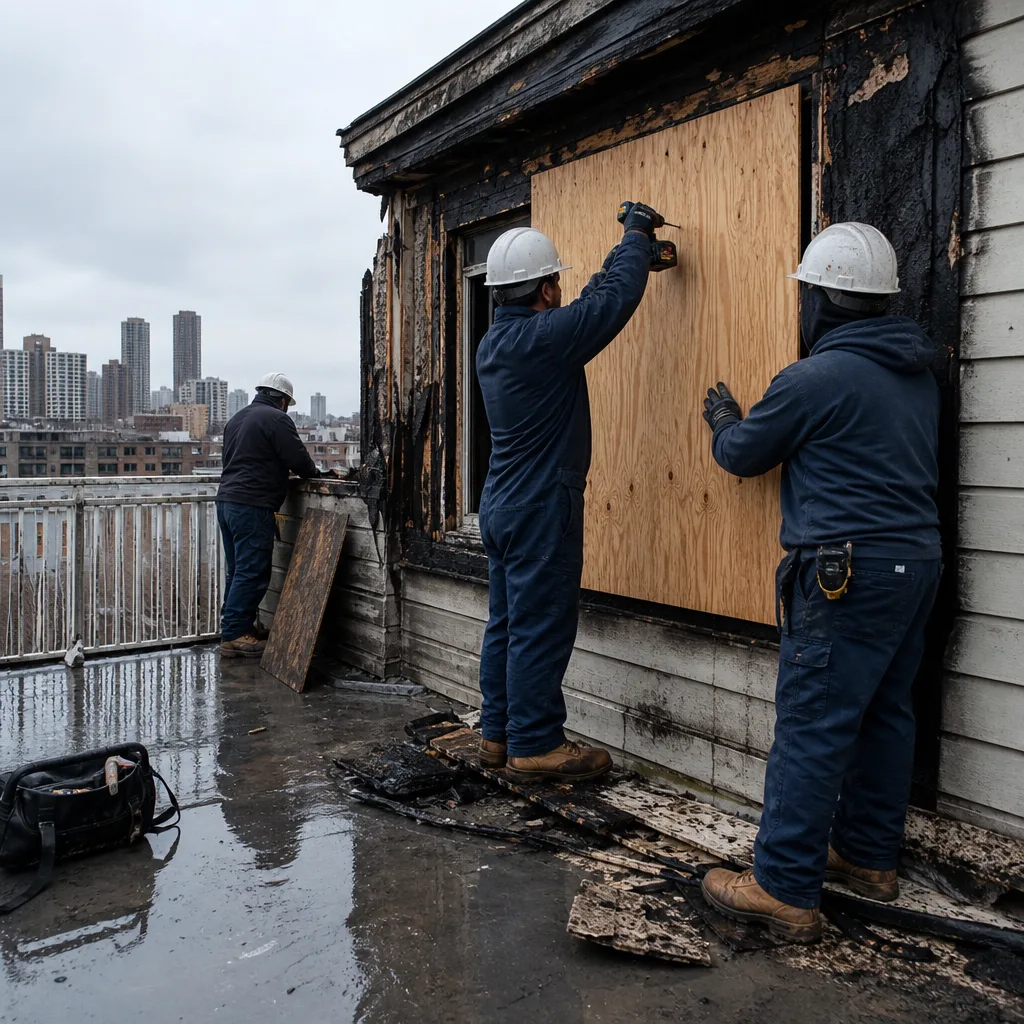
Storm Damage Cleanup
Fallen limbs, broken glass, soaked insulation, and wind-scattered debris all get removed and documented. We handle the full cleanup scope, including Category 3 river water extraction from basements and crawl spaces. Every item removed gets photographed and listed for your insurance carrier, so your claim reflects the real scope.
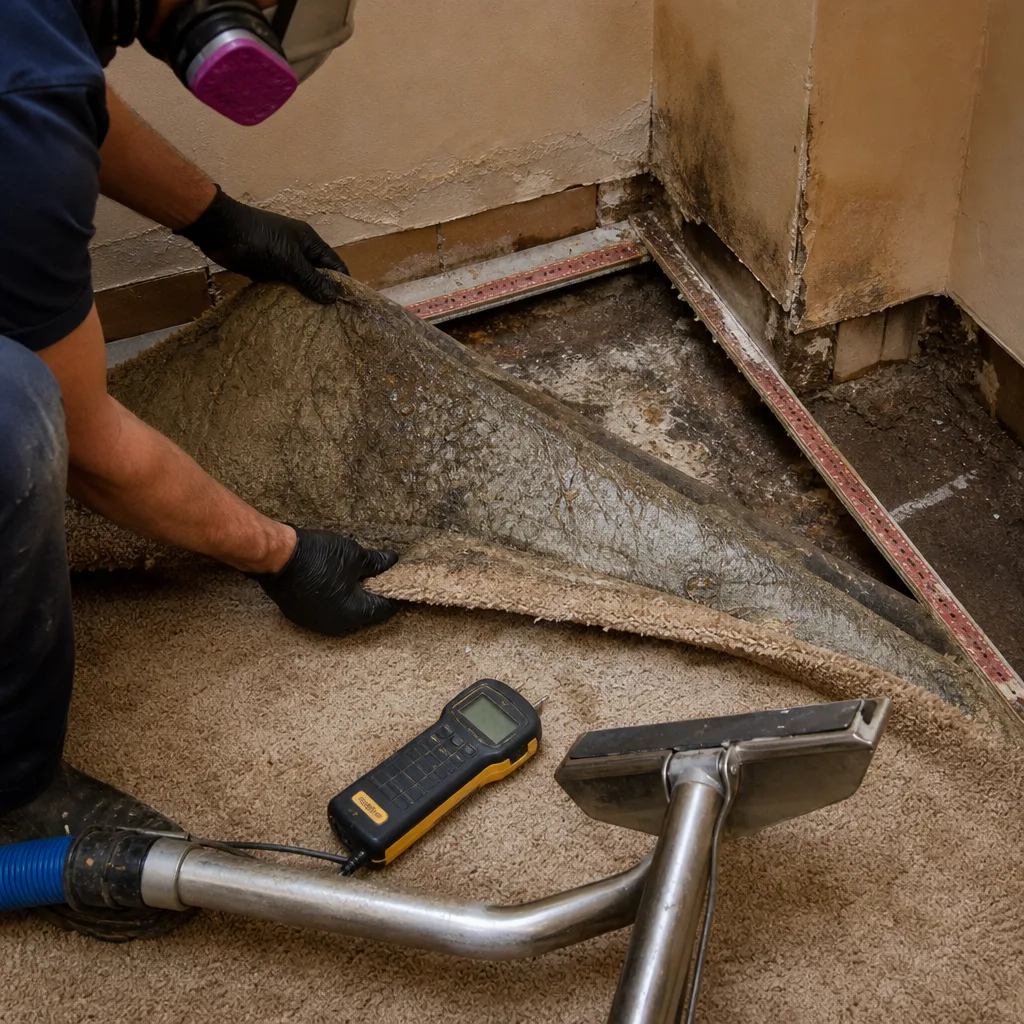
Flood Damage Restoration
Hudson River surge flooding in Upper Nyack is different from inland groundwater seepage. The water carries silt, salt, and sometimes fuel oil. Extraction is the first move, then we map moisture, run drying equipment, and treat building materials against the specific contamination present. We’ll be there when we say, and we stand behind the result in writing.
Debris Removal
Storm debris on Upper Nyack properties ranges from windblown branches to entire roof sections. We clear access paths, remove hazardous material, and dispose of waste properly. If debris is blocking your foundation vents or sitting against your siding, it’s trapping moisture against the structure. That gets addressed in the same visit whenever practical.
Wind Damage Repair
Wind load on a Hudson River village is not the same as wind load inland. Ridge vents, soffits, gutters, and roof sheathing along North Broadway and hillside streets off Route 9W take repeated stress from river gusts. We assess structural damage, document it for your claim, and rebuild to current wind-rating codes. A repaired opening that doesn’t meet code is just the next claim waiting to happen.
What happens when you call
- 1
A real person answersNo phone trees - you reach a local pro.
- 2
You get an upfront price rangeHonest numbers before anyone is dispatched.
- 3
A background-checked tech heads outLicensed & insured, dispatched right away.
- 4
You approve before work beginsNothing starts until you say go.
Storm & Disaster Restoration Costs in Upper Nyack, NY
Here’s what we see in Upper Nyack specifically. Emergency board-up runs $450 to $1,200 depending on opening count and access. Roof tarping typically runs $500 to $900 for a standard residential roofline. Storm damage cleanup with water extraction typically starts around $2,500 and runs to $7,000 for a full basement flood in an older fieldstone home. Full flood restoration including drying, sanitization, and rebuild commonly lands between $8,000 and $25,000 on century-old Upper Nyack houses, because plaster, original subflooring, and fieldstone walls extend drying time and scope. What moves the price: contamination category, square footage affected, wall construction type, and whether the tidal water reached finished living space. The free visual inspection gives you a written scope and a firm number before work starts. Estimates are free. Call (917) 924-4221 for an exact quote.
We Also Serve Cities Near Upper Nyack
Our crews regularly respond across the surrounding area. We serve Storm & Disaster Restoration calls in Fairview, Harrison, East Bronx, and Hunts Point. If you’re in one of those communities and storm damage just hit, the same live dispatcher answers, and the same certified crews respond. Our Storm & Disaster Restoration in Upper Nyack team covers the full corridor.
Serving Upper Nyack, NY - Our Local Coverage Area
We’re based in the Upper Nyack area and know this community well. Use the map below to see our service coverage - if you’re nearby, we can almost certainly help.
Upper Nyack Storm & Disaster Restoration Questions, Answered
How fast can mold start on my Upper Nyack plaster walls after a tidal surge?
Mold can start within 48 to 72 hours on wet plaster-and-lath walls, especially after Category 3 Hudson River water introduces organic material and salt into the wall cavity. The first move is rapid extraction, then moisture mapping to find hidden pockets behind the plaster surface. If drying starts before day three, targeted drying is usually possible. After that, full pack-out and wall removal becomes more likely. Call (917) 924-4221 the day you see water, and we’ll start extraction the same visit.
Do I need a permit to replace a wind-rated exterior door on my Hook Mountain hillside home?
Yes, Upper Nyack requires building permits for exterior door replacement when the door is a structural component or when changing the opening size. Wind-rated doors on hillside homes also carry specific anchoring and flashing requirements. Our team pulls the correct permits and rebuilds to current code. A door that meets wind-rating standards protects the rest of the house during the next nor’easter.
What does a failing overhead garage door mean before a nor’easter hits Upper Nyack?
A failing overhead garage door means blown-in wind, and blown-in wind means positive pressure inside your garage that pushes rain through every gap and crack. On riverfront Upper Nyack homes, a wind-loaded garage door can also pull its tracks off the framing, letting the door panel itself become airborne debris. We repair and reinforce garage doors before storms hit whenever we can, and we board up the opening afterward if the door fails. Call (917) 924-4221 for a free inspection.
Can your team handle FEMA and NYS DEC paperwork after a Hudson River fuel-oil flood?
Yes. When Hudson River surge floods a basement with a fuel-oil tank, two regulatory tracks start at once: a FEMA National Flood Insurance Program claim and a NYS DEC notification for the oil release. Our documentation supports both. We photograph the oil sheen, log contamination levels, and coordinate with the adjuster and the state. You’re never left to explain fuel-oil contamination to a claims office on your own.
How do you dry a fieldstone basement that gets Category 3 water from storm surge?
Fieldstone basements dry differently than poured concrete. The stone itself and the mortar joints hold water, and no vapor barrier exists behind them. We start with extraction, then run high-volume Dri-Eaz air movers and Phoenix dehumidifiers positioned to pull moisture out of the stone and the surrounding soil. Moisture mapping tracks the drying curve through the stone and the wooden framing above it. Salt residue from brackish Hudson water gets treated specifically, because salt keeps drawing moisture back unless it’s addressed. The drying log goes to you and your carrier daily.
Can I stay in my Upper Nyack home during storm restoration?
It depends on what happened. Category 1 roof leaks with localized drying in one room: usually yes. Category 3 river surge in a basement that shares air with the living space: we typically recommend staying elsewhere until HEPA air scrubbing and antimicrobial treatment are complete. We give you a straight answer at the free inspection, and we document the recommendation for your claim if additional living expenses apply.
What should I do in the first 30 minutes after storm damage in Upper Nyack?
Call (917) 924-4221. Then, if it’s safe, shut off power to any wet area, move valuables away from the intrusion point, and take photos of everything before anyone touches it. Do not enter standing water that may be in contact with electrical systems. Do not attempt to board up a roof or upper-story window yourself. A live dispatcher will walk you through immediate steps and a crew will be on the way.
Is storm restoration in Upper Nyack more expensive than nearby towns?
Upper Nyack’s restoration costs run slightly higher than inland Rockland County towns because the housing stock is older, the water is more often Category 3, and the drying curve is longer. Plaster walls, original subflooring, and fieldstone foundations all extend dry times. But the bigger cost driver is delay. The faster extraction starts, the less gets torn out. Call (917) 924-4221 for a free inspection and a written scope before you decide anything.
Written by Curt Bowman, Owner at Floodline Restoration Co. of Manhattan, serving Upper Nyack with storm and disaster restoration, backed by the 90-Day Done Right Promise.