
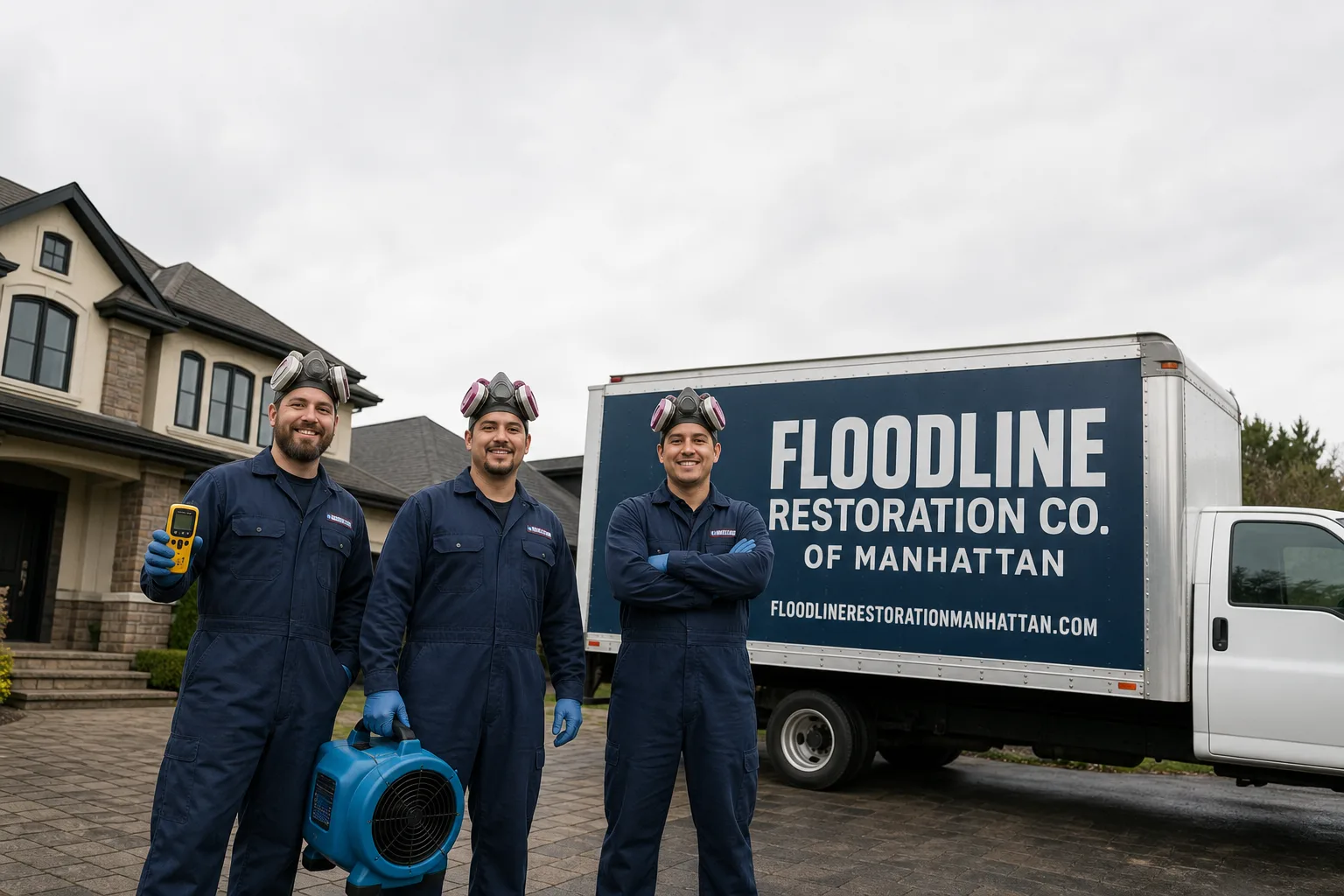
Free visual inspection and a written scope of work before any mitigation begins - photos, moisture readings, and drying logs go in your claim file
The scope we write is the scope we bill. Anything new gets shown to you, in writing, before we touch it.
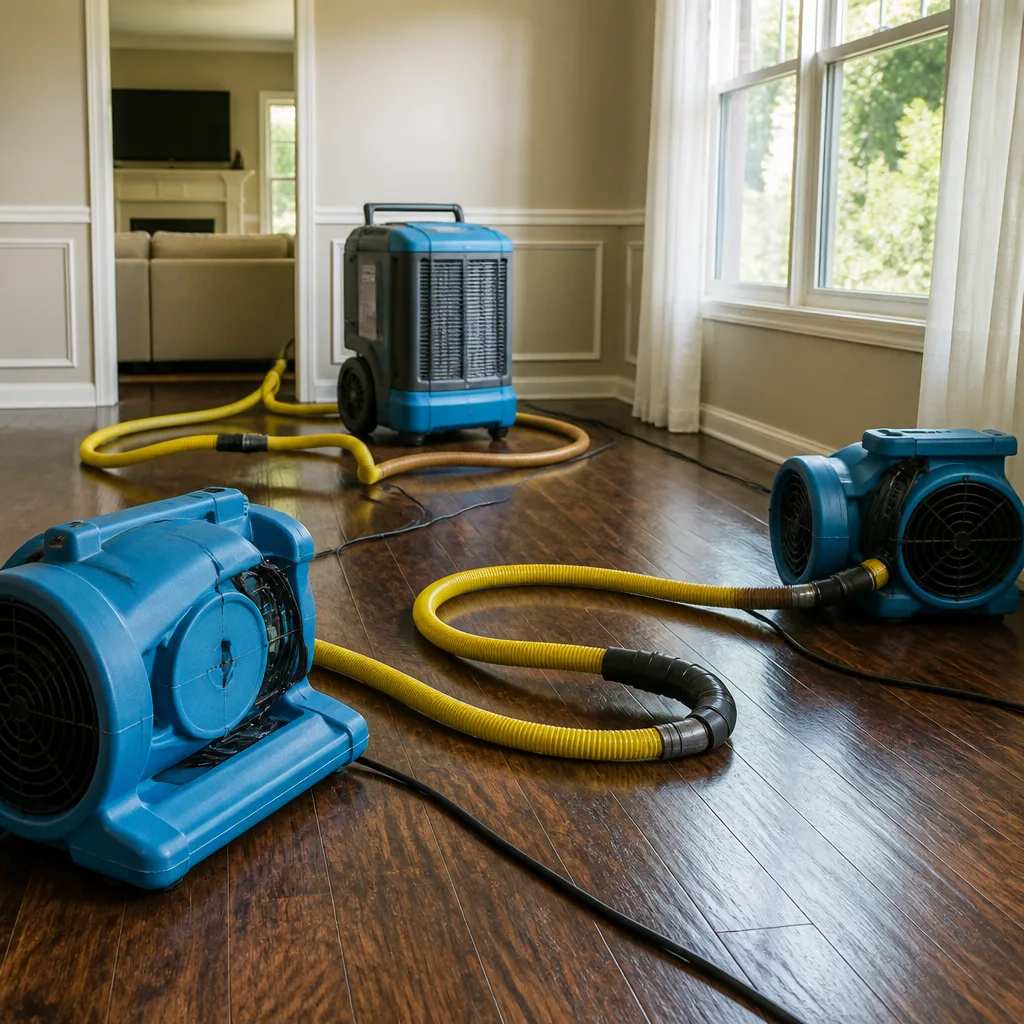

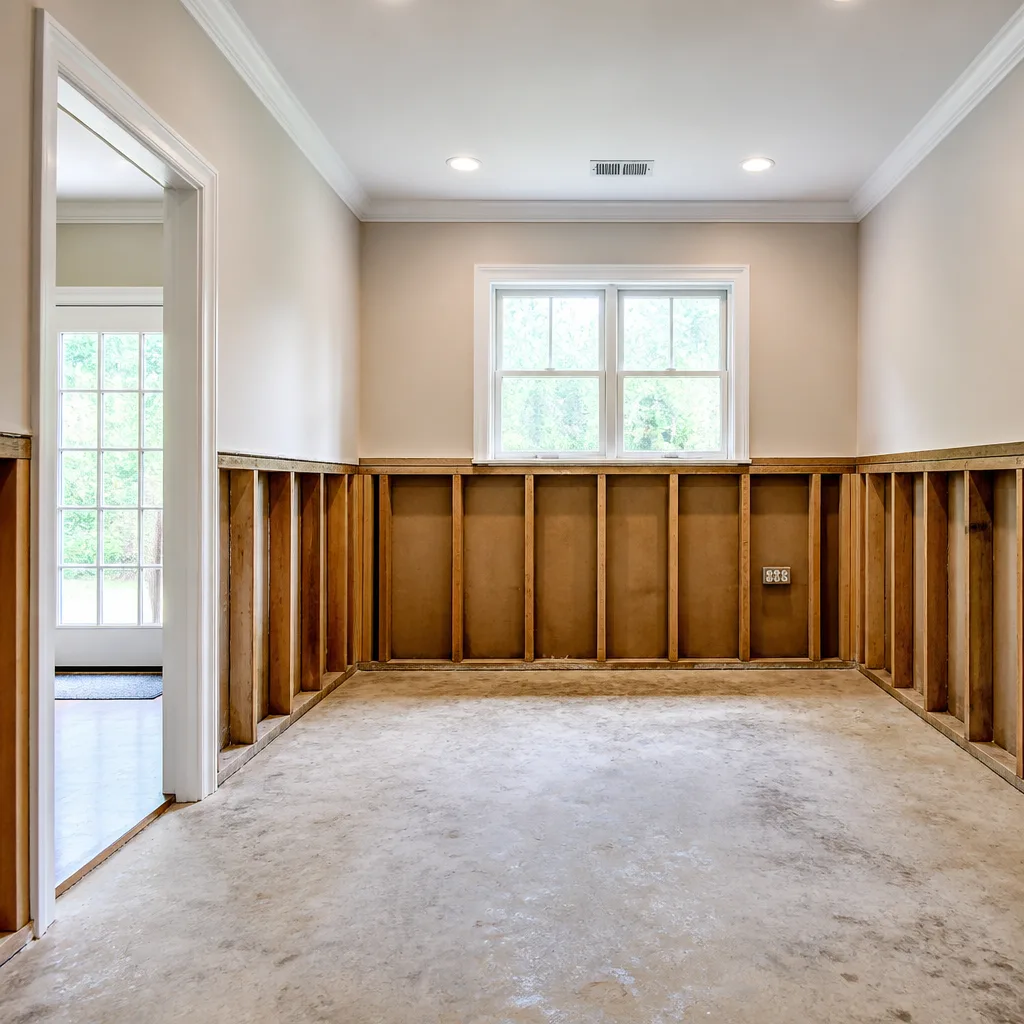


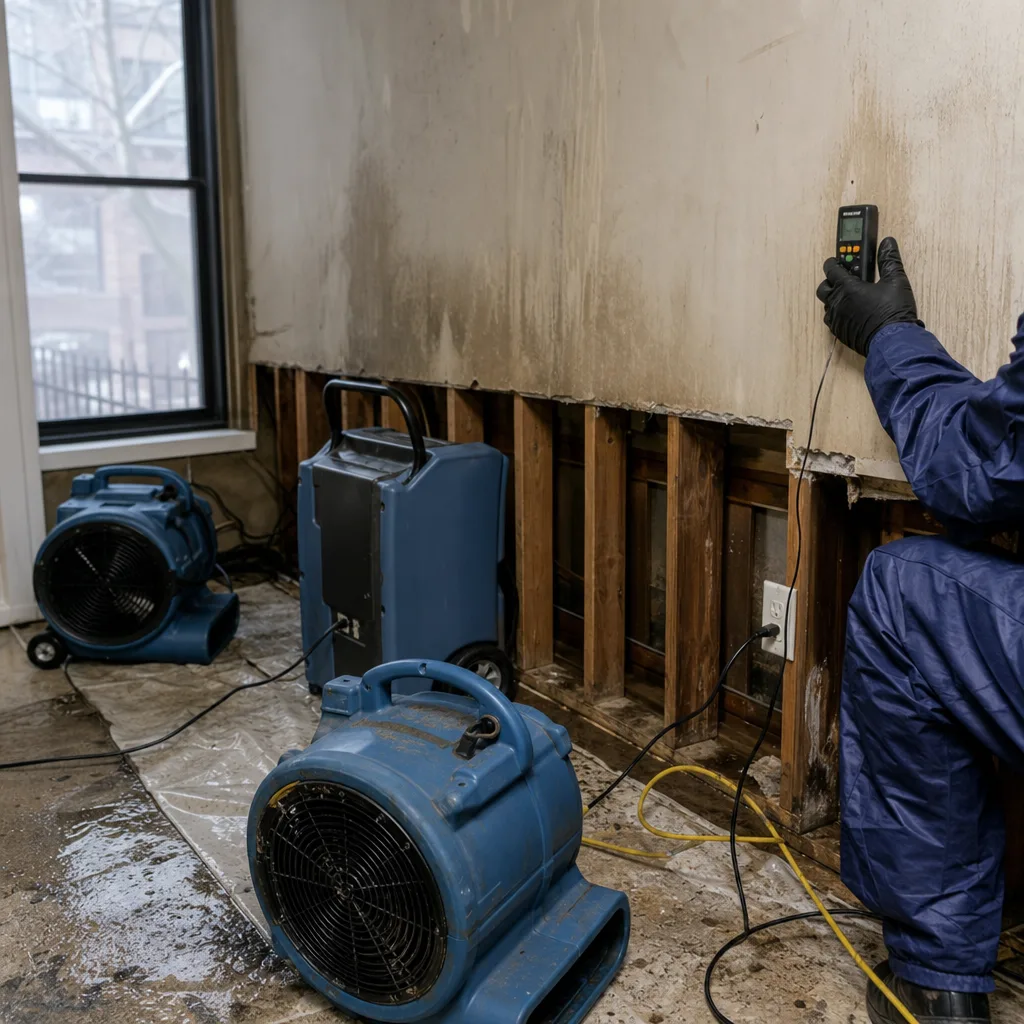 Before
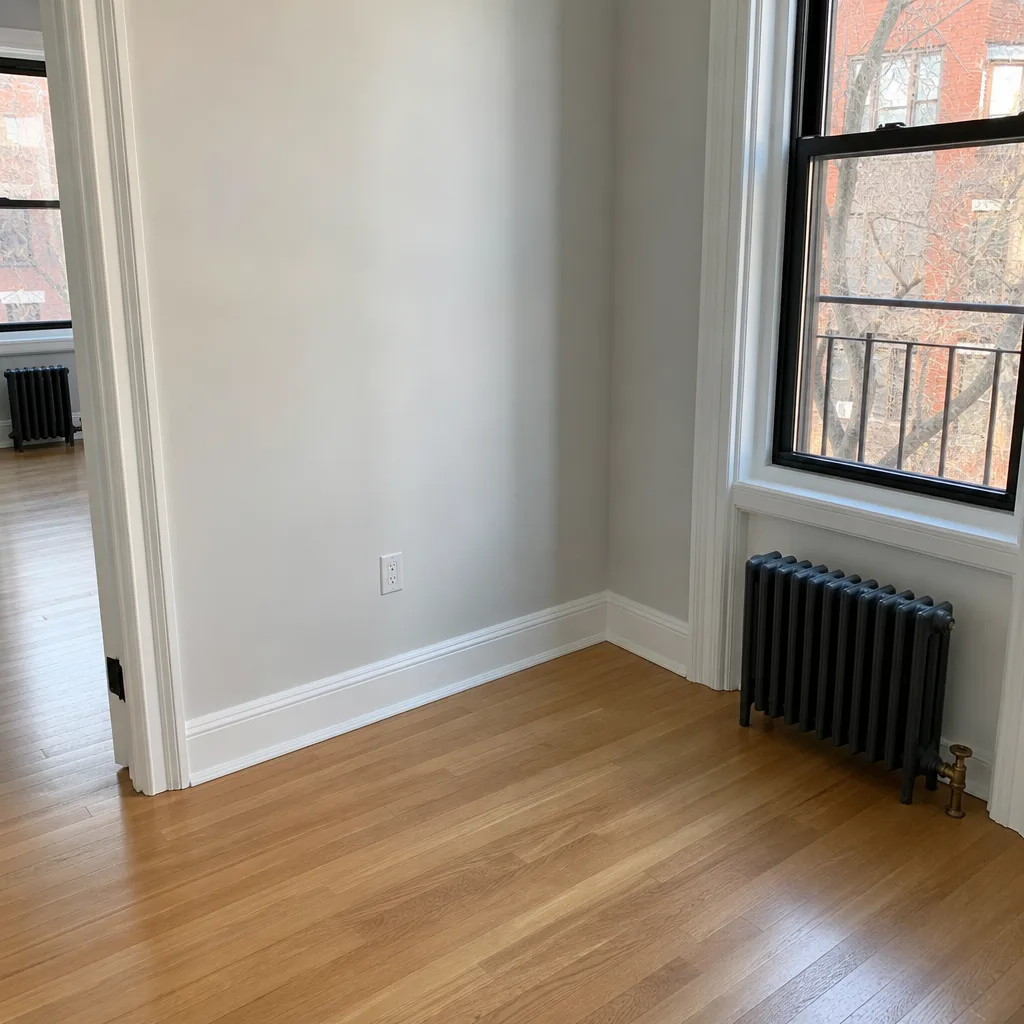 After
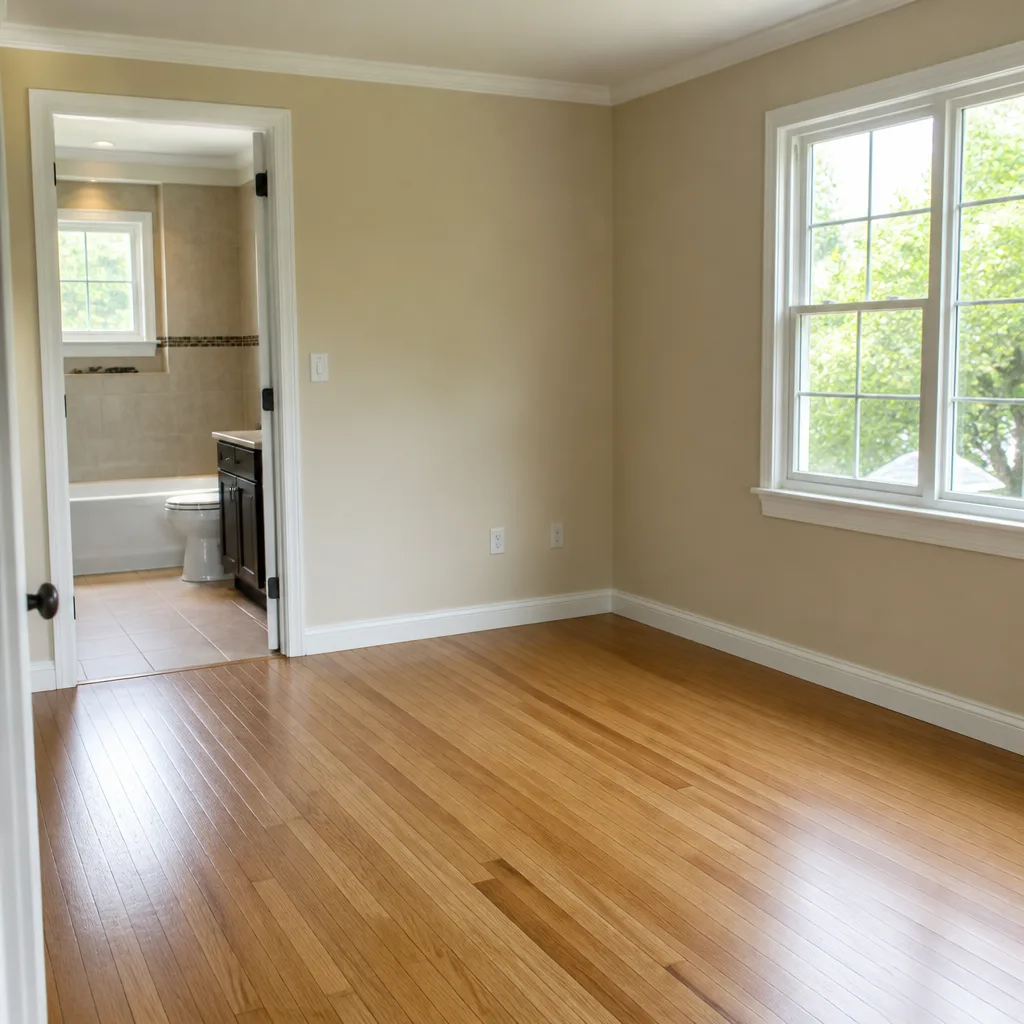
After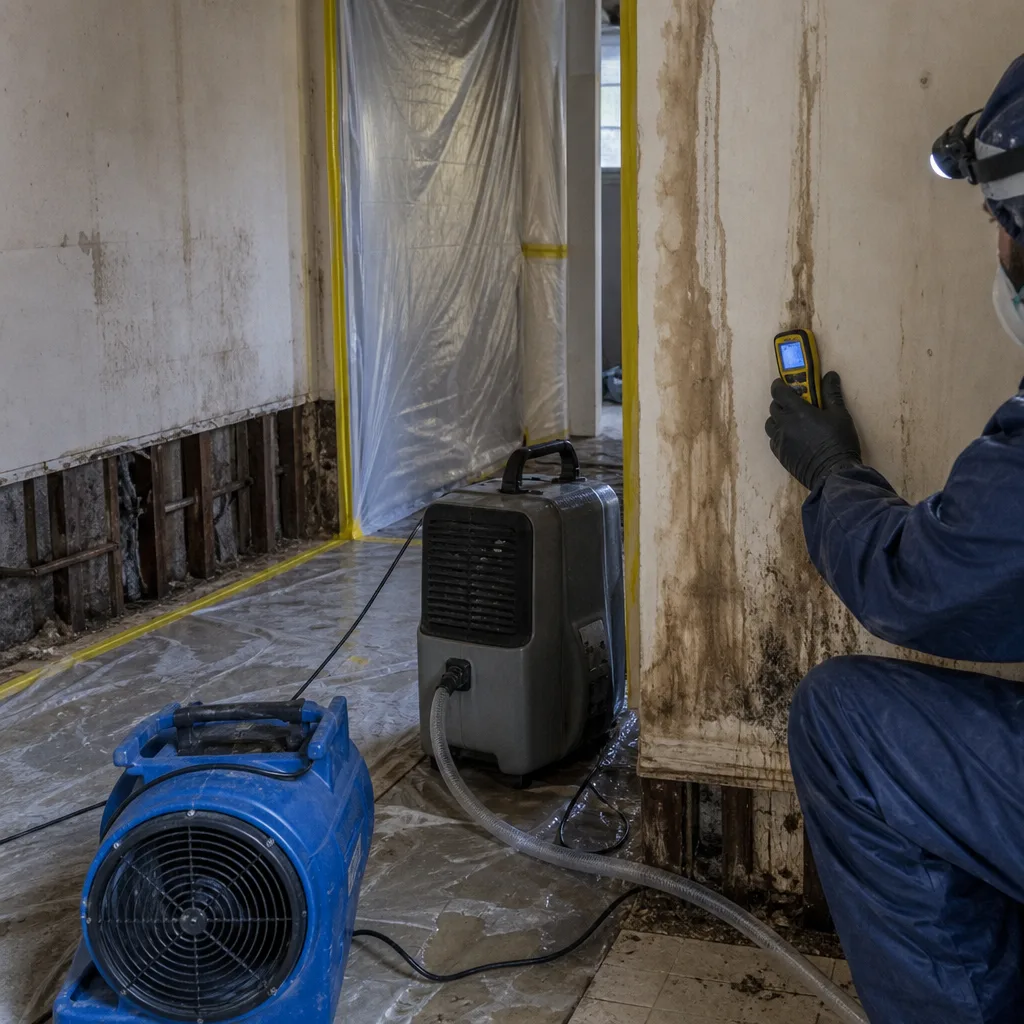 Before
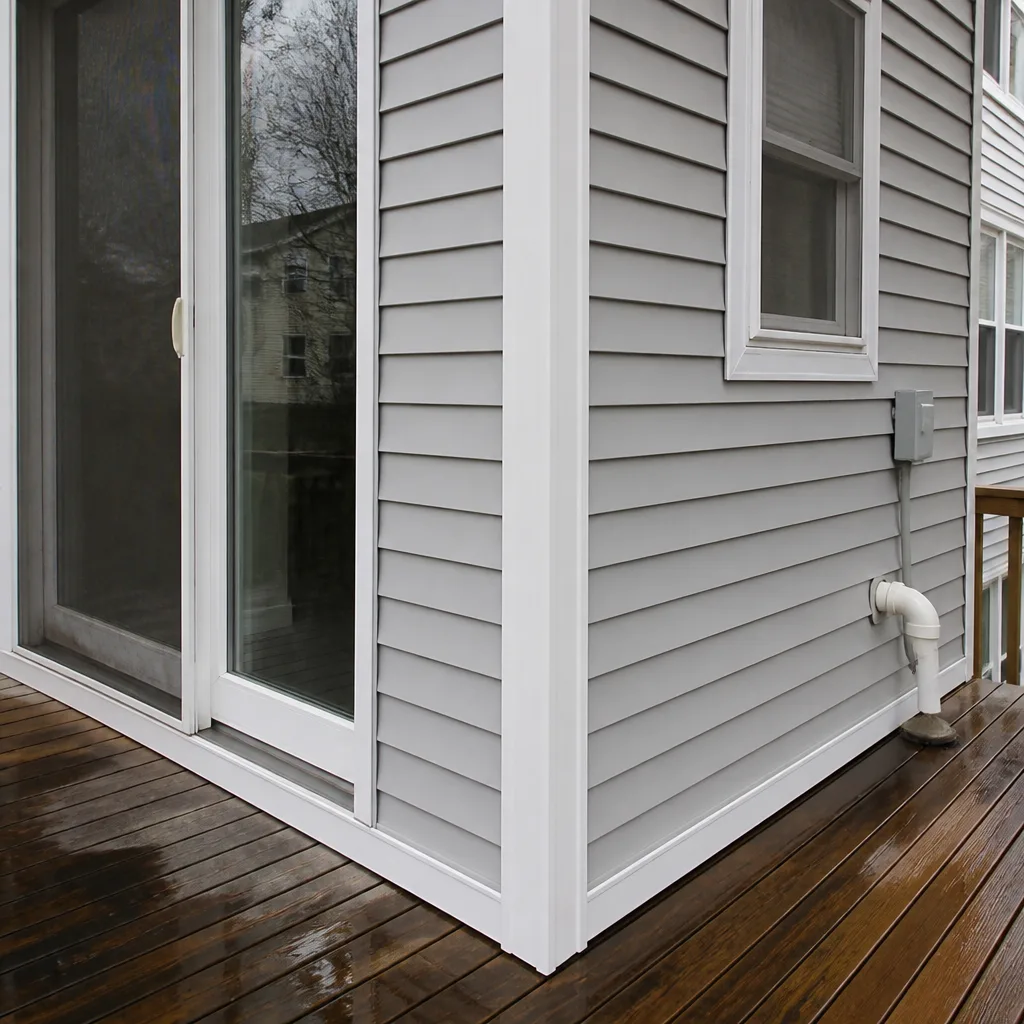 After
After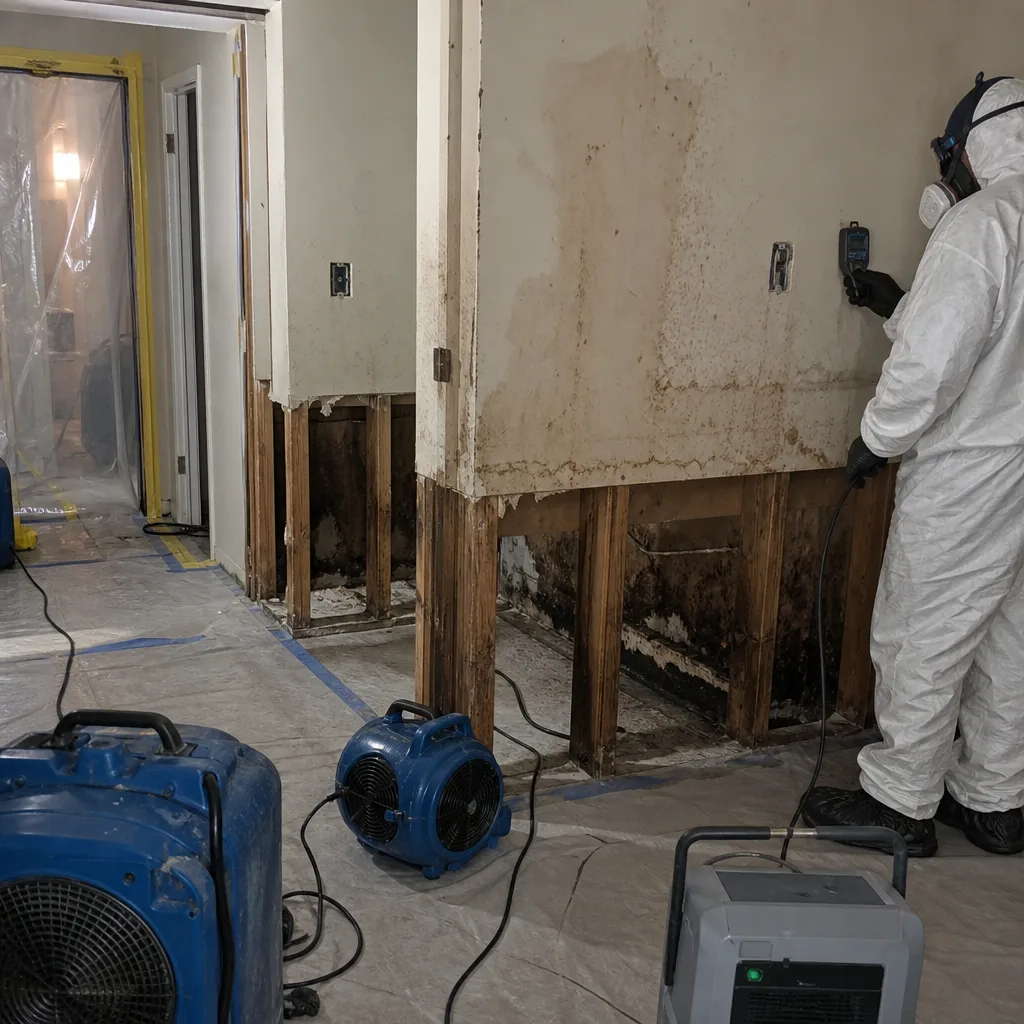 Before
 After
After24/7 Emergency Storm & Disaster Restoration in White Plains
When a nor’easter tears a door off its frame on Mamaroneck Avenue or wind-driven rain finds its way through a rooftop access panel, you need a crew that answers the phone at 2 a.m. and gets extraction running the same visit. That’s what we do. Floodline Restoration Co. of Manhattan dispatches certified storm restoration crews throughout White Plains around the clock, every day of the year. Call (917) 924-4221 and a live dispatcher picks up, not a recording. Our teams handle emergency board-up, roof tarping, storm damage cleanup, and full structural drying across the city, and we provide a free visual inspection before any work begins. The first hour after wind or water intrusion is the one that determines whether you’re looking at a dry-out or a rebuild.
Understanding Storm & Disaster Restoration Severity in White Plains Properties
Storm damage in White Plains plays out differently depending on where you live. In the downtown towers built between the 1970s and 1990s, wind-driven rain often enters through failed roof doors, balcony door seals, or aging window gaskets. Water then tracks down through drop-ceiling assemblies and chases, hiding for weeks before anyone notices the staining. By the time it shows on a ceiling tile, category 2 water (contaminated, from exterior sources) has typically saturated insulation, drywall, and possibly structural framing. In the pre-WWII single-family homes of Battle Hill and the Highlands, storm losses more often involve wind-blown rain through older window frames, ice damming at rooflines, or basement seepage when the Bronx River corridor floods after heavy rainfall. We classify every loss by water category, map moisture with penetrating and infrared meters, and set drying goals to IICRC standards. Severity drives the scope, and the scope is always in writing before we start.
Why White Plains Property Owners Choose Floodline Restoration Co. of Manhattan
- 45-minute response commitment. When a storm opens your building to the weather, speed is structural. Our White Plains-area crews are dispatched immediately from the moment you call, and we commit to having a team on site within 45 minutes of your call.
- Live answer, 24/7. A live dispatcher picks up the phone at any hour. No call trees, no answering service. You speak to a person who can dispatch a crew, not someone reading a script.
- IICRC-certified technicians. Our crews hold WRT (Water Damage Restoration Technician) and FSRT (Fire & Smoke Restoration Technician) certifications where the scope demands, plus AMRT (Applied Microbial Remediation Technician) for wind-driven water that has sat long enough to raise microbial concerns.
- Free visual inspection. We walk the loss with you and explain what we see before any money is discussed. If the damage is minor, we tell you that plainly.
- Direct insurance billing. We bill your carrier directly and handle adjuster communication. You never play messenger between Floodline and your insurer.
- One crew, start to finish. The same team that boards up your building on night one handles drying, monitoring, and the final reconstruction. No mid-job handoff to an inherited crew.
Our Storm & Disaster Restoration Process
Inspection & Assessment
We arrive, walk the damage with you or your building superintendent, and identify every pathway water or wind has taken. Thermal imaging and penetrating moisture meters let us map what’s wet behind walls and above drop ceilings before we touch a single panel.
Extraction / Stabilization
If standing water is present, we extract it with truck-mounted or portable units. If the building envelope has been breached, we board up and roof-tarp to stop further intrusion the same visit.
Drying & Dehumidification
Professional-grade Dri-Eaz and Phoenix air movers and dehumidifiers are placed according to a drying plan, not scattered randomly. Daily moisture readings are logged and shared with you and your carrier until dry standard is met.
Cleaning & Sanitization
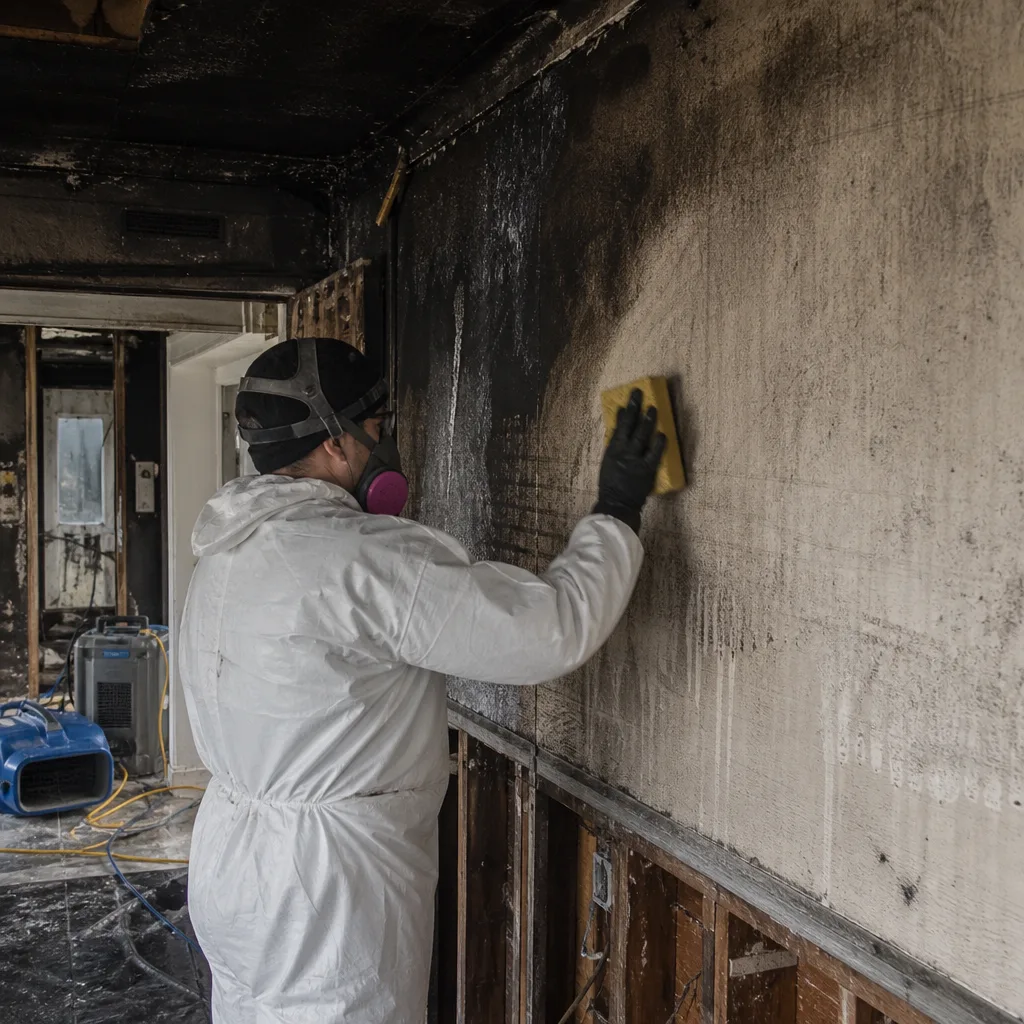
Category 2 or 3 water requires antimicrobial treatment. We clean and sanitize affected surfaces and remove unsalvageable materials. HEPA air scrubbers run where wind-driven rain has been sitting long enough to raise air quality concerns.
Containment & Specialty Treatment
In multi-floor losses, we set containment on every affected level to prevent cross-contamination through elevator shafts and stairwells. This is standard practice on tower losses, not an upsell.
Repairs & Restoration
We rebuild what the storm took: wind-rated doors, drywall, insulation, trim, flooring, and roof coverings. The written scope from day one governs the work, and it’s backed by our 90-Day Done Right Promise.
Need Emergency Storm & Disaster Restoration in White Plains Now?
Crews minutes away, answering live 24 hours a day. The sooner we start, the less it costs.
Working With Your Insurance Company
Storm and wind damage is typically covered by standard homeowners and commercial property policies, but the claim is only as strong as its documentation. We build that documentation from the first hour on site. Our teams photograph every affected area before and during mitigation, log daily moisture readings in a format your adjuster can review, and write line-item scopes that match the exact language carriers expect. When multiple unit owners in a White Plains high-rise are involved, each with a different insurer, we prepare separate documentation packets for each carrier while treating the physical loss as one continuous job. You never chase your adjuster. We handle that directly.
What We Provide Your Insurer
- Thorough documentation of the loss
- Photos of all damage, room by room
- Moisture readings and drying logs
- A detailed, line-item scope of work
- Direct coordination with your carrier
Built for White Plains’s Loss Calendar
White Plains sits in an inland valley where the Bronx River funnels storm runoff into predictable flood corridors near Mamaroneck Avenue and its southern reaches. Nor’easters and late-summer convective storms drive most of our emergency board-up and water mitigation calls. January and February bring freeze-thaw cycles that crack aging supply lines and roof membranes across the city’s 1970s-1990s tower stock. March and April are wind season, when rooftop doors and aging window gaskets fail under sustained gusts. Summer thunderstorms dump inches of rain in under an hour, overwhelming the storm drain capacity near the river’s edge and sending basement water into foundations. Fall hurricane remnants bring the full package: wind, rain, and sometimes a week of drying afterward. Storm & Disaster Restoration in White Plains isn’t a theoretical service on our board. It’s the monthly rhythm of this city’s weather.
Storm & Disaster Restoration Across White Plains’s Neighborhoods
Downtown White Plains, from the area around the Westchester County Center up Mamaroneck Avenue toward the Metro-North station, is dense with the mid- and high-rise residential towers where wind-blown door failures cascade water through five to ten floors at once. These jobs require superintendent sign-off, per-floor containment, and separate documentation for every insurer involved. Battle Hill, on the city’s western edge, is filled with pre-WWII single-family homes where wind-driven rain works behind cedar siding and plaster walls, and where skipping containment turns a one-day dry-out into a gut-and-remediate job within 48 hours. The Highlands, north of downtown, has a mix of 1920s colonials and postwar ranches with cast-iron drains and exterior chases that freeze hard come January. Along the Bronx River corridor, ground-floor and basement units take the brunt of every major storm, and our crews know which blocks flood first. Our Storm & Disaster Restoration teams run these routes weekly. We know where the traffic snarls on Mamaroneck Avenue and how to stage equipment so we’re not parked six blocks away when a building superintendent needs us in the lobby now.
Specialized Storm & Disaster Restoration Services We Offer in White Plains
Storm Damage Cleanup
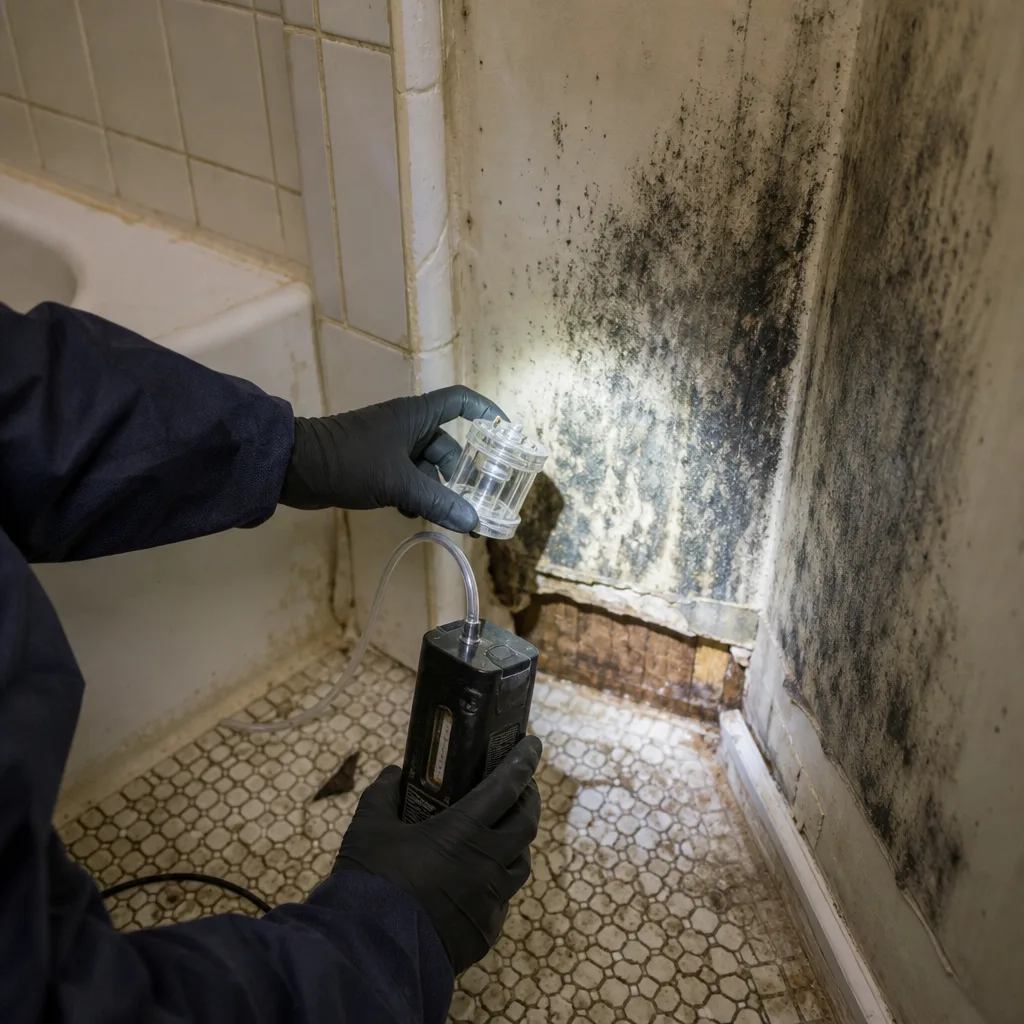
After wind and rain tear through White Plains, the damage is rarely one thing. We clear broken glass, wet insulation, damaged drywall, and storm-blown debris. Every affected surface is documented before removal, because the photos we take on day one are the photos your carrier sees on day ten. The cleanup scope is written plainly and priced before work begins.
Flood Damage Restoration
When the Bronx River overflows or storm drains back up near downtown, the water that enters your property is category 2 or 3. That means full extraction, removal of affected materials, antimicrobial treatment, and structural drying with Dri-Eaz and Phoenix equipment. We won’t dry what should be removed, and we won’t remove what can be saved. The moisture log tells the difference.
Emergency Board-Up
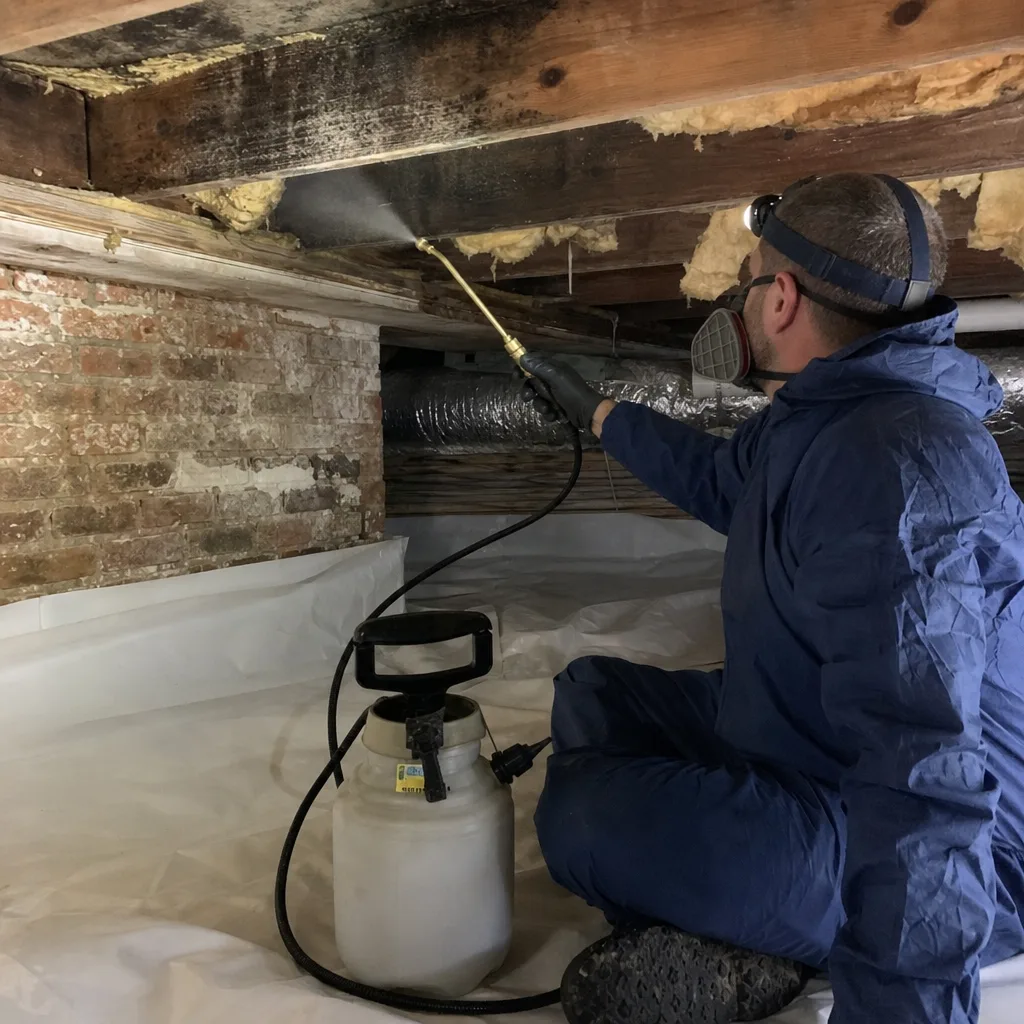
A broken door or window on a windward exposure is an open invitation to more water, more debris, and unauthorized entry. We board up and secure openings the same visit, including rooftop doors on the towers. Our board-up work in White Plains meets the wind-load expectations local building managers and code officials require until permanent replacements go in.
Roof Tarping
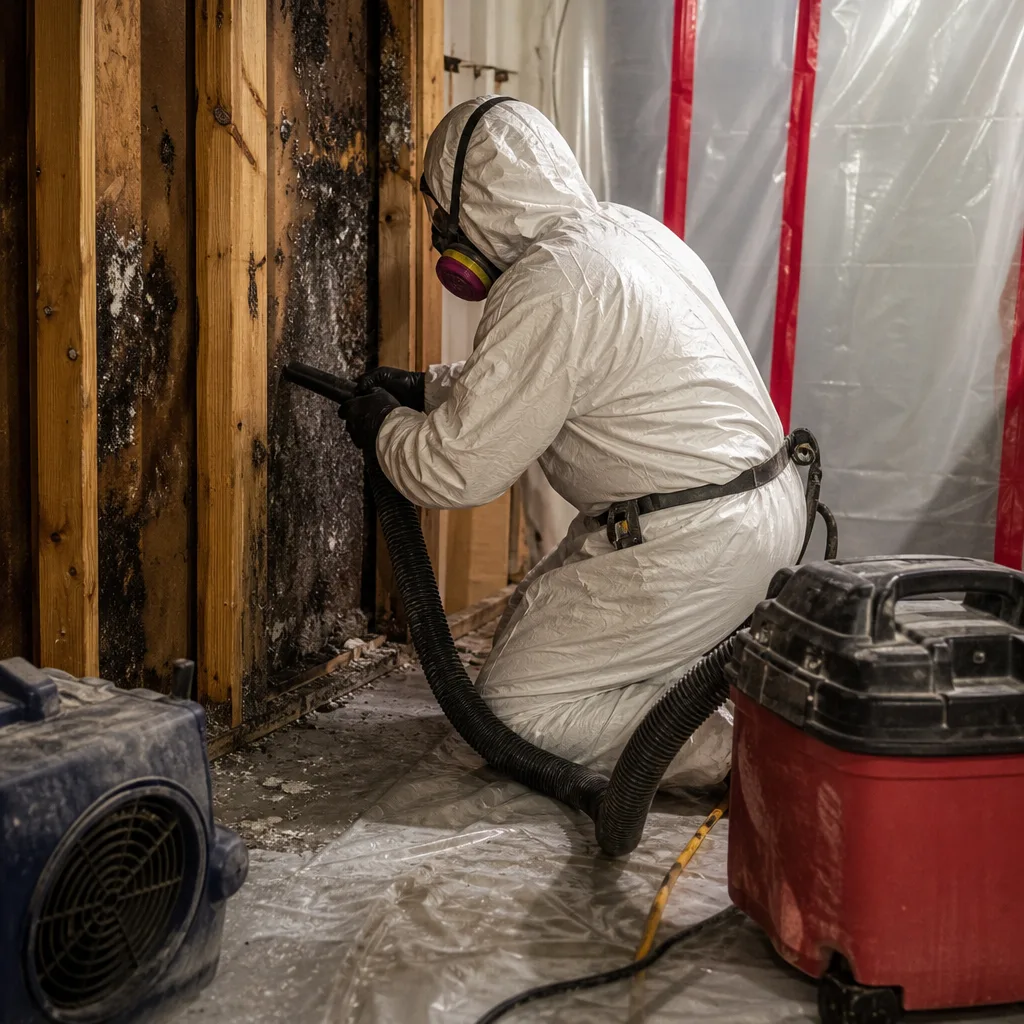
When a nor’easter lifts membrane roofing or shingles, we tarp the opening before the next rain band arrives. Tarping is a temporary measure, but done correctly it keeps a contained roof loss from becoming a five-floor water cascade. We stage tarps, sandbags, and fasteners on our response vehicles, so the material is already on the truck when the call comes in.
Debris Removal
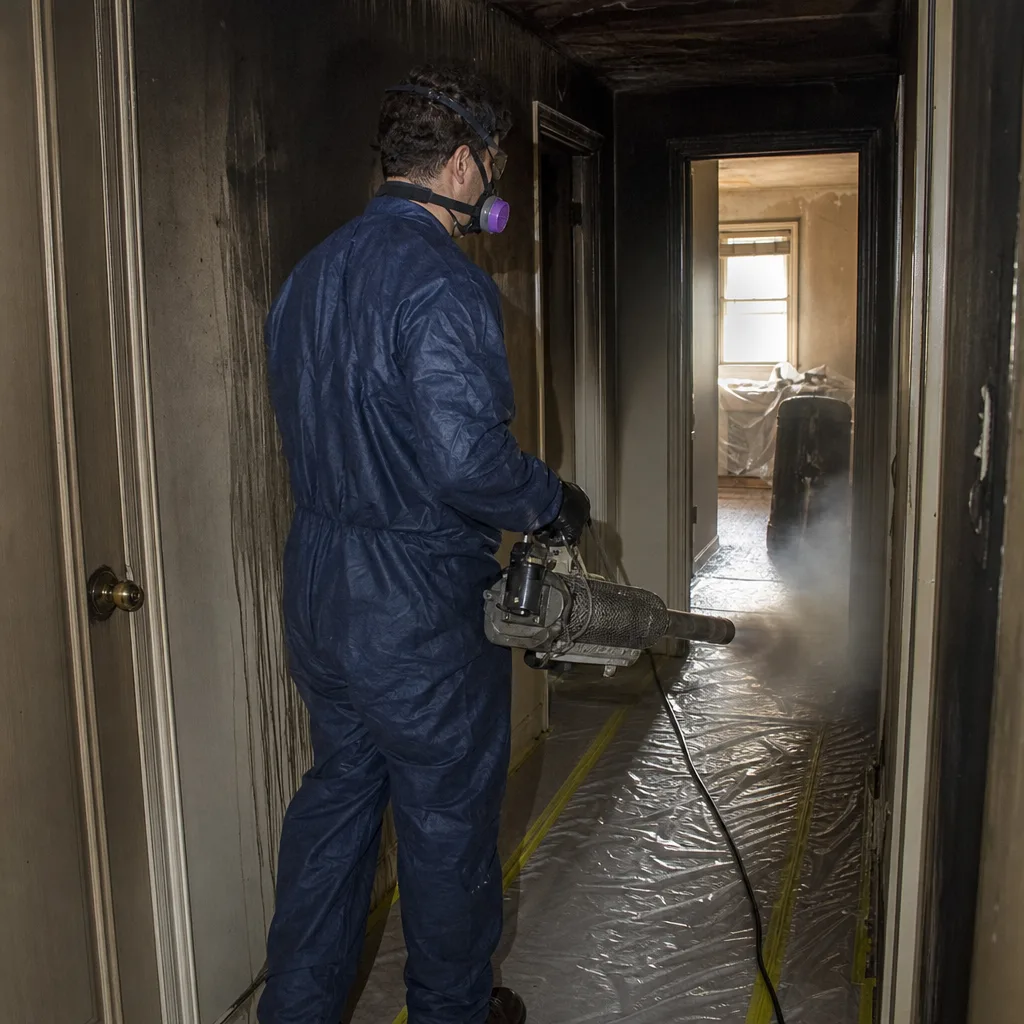
Storms leave White Plains properties littered with tree limbs, broken building materials, and wind-blown refuse. We remove storm debris as part of the restoration scope, and we separate salvageable materials from landfill bound waste so the documentation is clean for your carrier. The site is left safe, not just swept.
What happens when you call
- 1
A real person answersNo phone trees - you reach a local pro.
- 2
You get an upfront price rangeHonest numbers before anyone is dispatched.
- 3
A background-checked tech heads outLicensed & insured, dispatched right away.
- 4
You approve before work beginsNothing starts until you say go.
Storm & Disaster Restoration Costs in White Plains, NY
Storm damage restoration pricing in White Plains is driven by the extent of water intrusion, the number of floors affected, and whether the building envelope requires emergency board-up or tarping before drying begins. Emergency board-up in White Plains typically runs $350 to $900 per opening, depending on size and wind exposure. Roof tarping on a single-family home runs $500 to $1,400, while tarping a tower rooftop door or mechanical penthouse can run $800 to $2,200 due to access and wind-load fastening requirements. Storm damage cleanup and extraction on a single room runs $1,200 to $3,500, while a multi-floor tower cascade with containment and drying on five or more levels often lands between $8,000 and $30,000 before reconstruction. Wind-rated door replacement is priced by the opening, the required wind rating, and whether the frame must be reset. The cleanest way to get a firm number is a free visual inspection. We’ll scope the loss in writing, and you’ll know the price before work starts. Call (917) 924-4221 and we’ll put eyes on it today.
We Also Serve Cities Near White Plains
Our storm restoration crews work throughout central Westchester. In addition to White Plains, we regularly respond to storm and wind damage calls in White Plains and the surrounding communities of Hartsdale, Elmsford, Scarsdale, and Valhalla. If your property sits in one of these nearby cities, the same live dispatch, the same certified crews, and the same written-scope process apply.
Serving White Plains, NY - Our Local Coverage Area
We’re based in the White Plains area and know this community well. Use the map below to see our service coverage - if you’re nearby, we can almost certainly help.
White Plains Storm & Disaster Restoration Questions, Answered
In a White Plains high-rise, whose approval do I need before a storm restoration crew can start drying my unit after a wind-blown door lets water cascade down multiple floors?
You need written approval from the building owner or property manager before our crew enters your unit, but that approval usually comes quickly once we explain the alternative: water sitting in drop-ceiling cavities and wall chases while signatures are collected. We prepare scopes that property managers can circulate to unit owners and their insurers immediately.
What is different about wind-rated door replacement in White Plains compared to nearby Westchester suburbs?
White Plains enforces wind-load code requirements on multi-story buildings that don’t apply to most single-family suburban homes. A standard hollow-core door used as a stopgap on a windward exposure will likely violate the building’s wind rating and fail at the next storm. We install doors rated for the specific exposure, and we confirm the requirement with the building superintendent before ordering anything.
How quickly will your crew respond to a storm-damaged roof or broken door in White Plains after a nor’easter?
Our White Plains-area crews commit to a 45-minute on-site response after your call, around the clock. During major storm events when call volume peaks, we prioritize by severity: open building envelopes and active water intrusion go first, because every hour of exposure adds to the final scope.
Do I need a separate containment plan for a wind-driven rain loss inside a White Plains high-rise apartment with drop ceilings?
Yes. Wind-driven rain that has traveled through a tower moves behind drop ceilings and down chases, and drying one unit without containment just pushes moisture into adjacent floors. We set containment on every affected level, maintain negative air pressure where needed, and document the drying progression floor by floor.
If a storm blows my door frame out of plumb in a Battle Hill house, can I keep the existing door and just repair the frame?
Sometimes, but only if the door slab is undamaged and the frame can be reset square to the rough opening. If the frame is twisted or the slab was forced open by wind, a new wind-rated door assembly is usually the safer and more cost-effective path over the life of the house. We’ll tell you plainly which situation you have.
How long does storm damage drying take in White Plains?
Most single-unit losses dry to IICRC standard in three to five days with proper equipment placement and daily readings. Multi-floor cascades in the downtown towers routinely take seven to fourteen days because the scope includes multiple containment zones and the building’s own HVAC systems complicate the drying process. We share the drying log with you daily.
Can we stay in our home during storm damage restoration?
For a contained single-room loss, usually yes. For multi-floor water intrusion, active board-up conditions, or any loss involving category 3 water, we recommend alternative arrangements until the affected zones are dry and sanitized. We’ll give you a straight answer on day one, not after you’ve already unpacked.
What should I do in the first 30 minutes after storm damage to my White Plains property?
Call (917) 924-4221. Before we arrive, shut off power to affected areas if you can do so safely, move undamaged belongings away from wet zones, and photograph the visible damage with your phone. Don’t enter standing water or climb onto a damaged roof. The photos you take become part of the insurance record.
Written by Curt Bowman, Owner at Floodline Restoration Co. of Manhattan, serving White Plains and central Westchester.