

Free visual inspection and a written scope of work before any mitigation begins - photos, moisture readings, and drying logs go in your claim file
The scope we write is the scope we bill. Anything new gets shown to you, in writing, before we touch it.






 Before
 After
After Before
 After
After Before
 After
After24/7 Emergency Storm & Disaster Restoration in Wood-Ridge
Storm and disaster restoration in Wood-Ridge means answering the phone at 2 a.m. when the Hackensack River has climbed the banks again and the basement on Taft Street is taking water. Floodline Restoration Co. of Manhattan answers live, every call, every hour. A certified crew reaches Wood-Ridge properties fast, and extraction is running the same visit. Call (917) 924-4221 for a free visual inspection. The first hour after water enters a home sets the scope for everything that follows. What starts as a foot of water in an unfinished basement becomes structural drying, antimicrobial treatment, and a tear-out decision if Category 3 contamination sits too long.
Understanding Storm & Disaster Restoration Severity in Wood-Ridge Properties
Storm damage in Wood-Ridge rarely presents as a simple Category 1 rainwater intrusion. The borough sits inside the Hackensack River flood plain, and when a nor’easter pushes tidal surge up Moonachie Creek, the water entering basements is Category 3: contaminated with sewage, river sediment, fuel residue, and whatever the tide carried with it. Category 1 comes from a broken supply line. Category 2 carries soap, sediment, or biological material from a sump pump failure. Category 3 is what Wood-Ridge sees most often after a coastal storm, and it changes the restoration math. Loading-bearing framing in a 1950s Cape Cod absorbs contaminated water differently than modern drywall on a 2010 build. Plaster-over-lath walls hold moisture longer. Rim joists and subfloor framing that never fully dried after Superstorm Sandy read high on a thermal hygrometer even before a new event. Contractors who skip antimicrobial treatment on Category 3 water buy the homeowner a tear-out two weeks later. Moisture mapping, not visual inspection, tells the difference.
Why Wood-Ridge Property Owners Choose Floodline Restoration Co. of Manhattan
- 45-minute response commitment. When a board-up or water extraction request comes in from Wood-Ridge, we dispatch the nearest available certified crew immediately, not after a sales call.
- 24/7 live answer. A real dispatcher picks up the phone at any hour. You won’t leave a voicemail and wait for a callback while water climbs the basement stairs.
- IICRC-certified crews. Our technicians hold WRT and FSRT certifications, trained to the IICRC, RIA, and IFA standards. Background-checked, uniformed, and accountable by name.
- Free visual inspection. Before any scope of work is written, we assess the damage, take moisture readings, and show you what we found. You approve a written scope before work starts.
- Direct insurance billing. We bill your carrier directly and coordinate with adjusters from the first phone call. You don’t carry messages between us and them.
- One team from extraction to rebuild. The same crew that runs the Dri-Eaz dehumidifier on day one rebuilds the basement wall on day fifteen. No mid-job handoff, no inherited subcontractors.
Our Storm & Disaster Restoration Process
Inspection & Assessment
We walk the property with a thermal imaging camera and a hygrometer in hand. In a Wood-Ridge split-level, we check rim joists, subfloor framing, and wall cavities that a surface glance would miss. The written scope you approve reflects what the instruments show, not what the eye sees.
Extraction & Stabilization
Water extraction starts the same visit. Pumps remove standing water, and we stabilize the structure with emergency board-up or roof tarping where wind damage has opened the envelope. The goal is stopping the loss from compounding.
Drying & Dehumidification
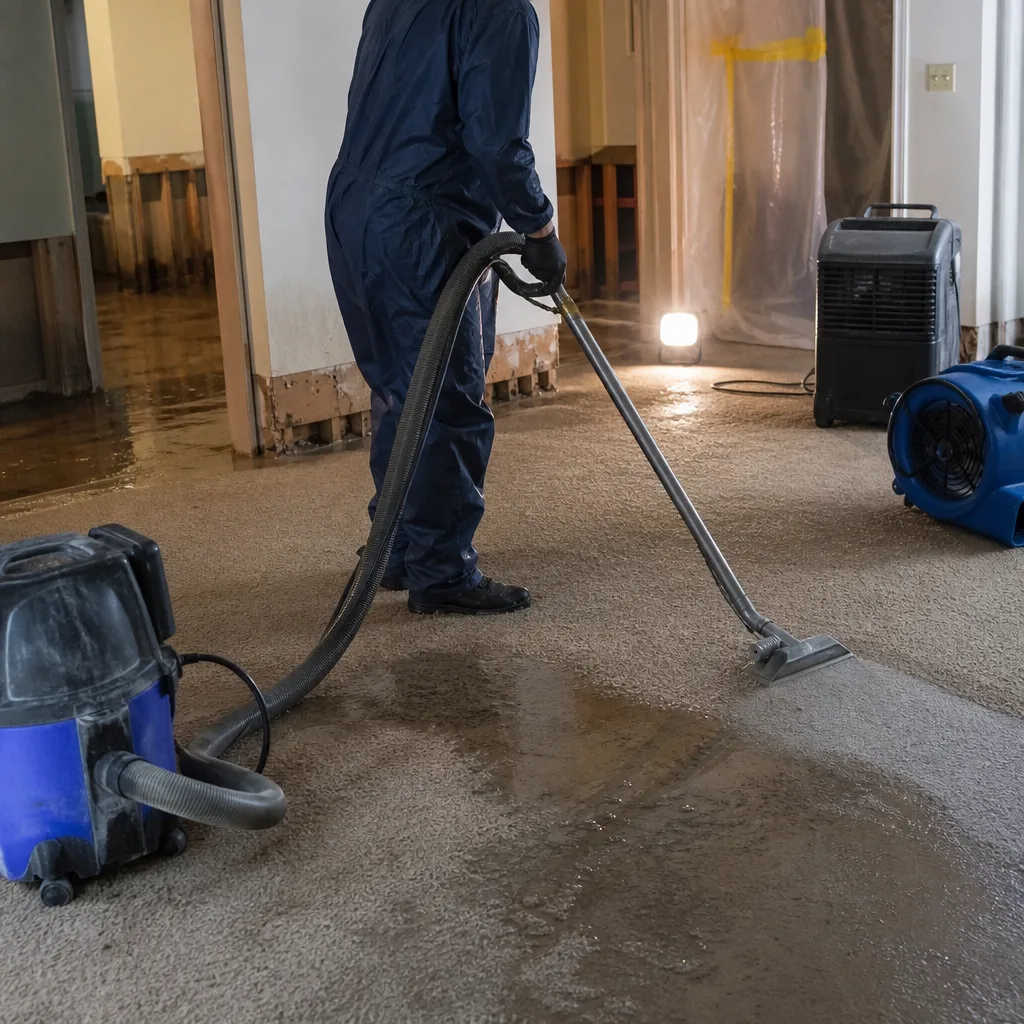
We run professional-grade equipment: Dri-Eaz dehumidifiers, Phoenix air movers, and Injectidry systems for hard-to-reach cavities. Daily moisture readings are logged until the dry standard is met. In Wood-Ridge’s post-war basements, this often means cutting additional wall cavities to expose trapped moisture behind plaster-over-lath.
Cleaning & Sanitization
Category 3 water from the Hackensack River requires antimicrobial treatment on every affected surface. We clean and sanitize framing, flooring, and mechanicals that came into contact with contaminated water. This step is non-negotiable for tidal flood damage.
Specialty Treatment for Storm Damage
Wind-rated door hardware, impact-rated panels, and tracks get inspected after a storm passes. A compromised door on a 1950s Cape Cod may hold latent damage that fails during the next squall. We check alignment, latching, and panel integrity before signing off.
Repairs & Restoration
The same certified crew that extracted the water handles the rebuild: subfloor replacement, drywall, insulation, trim, and paint. The 90-Day Done Right Promise covers the finished work in writing. If it’s not done right, we make it right.
Need Emergency Storm & Disaster Restoration in Wood-Ridge Now?
Crews minutes away, answering live 24 hours a day. The sooner we start, the less it costs.
Working With Your Insurance Company
Insurance claims after a Wood-Ridge flood event hinge on documentation from the first hour. We photograph every room, every damp wall, every piece of damaged property before we move anything. Moisture readings get logged daily and shared with your adjuster directly. Our line-item scopes follow the same estimating format carriers use, which means fewer disputes and faster approvals. We coordinate with your carrier ourselves. You don’t sit on hold with an adjuster while your basement sits wet. The 90-Day Done Right Promise stays in writing, and the claim file gets everything the carrier needs without you playing messenger.
What We Provide Your Insurer
- Thorough documentation of the loss
- Photos of all damage, room by room
- Moisture readings and drying logs
- A detailed, line-item scope of work
- Direct coordination with your carrier
Built for Wood-Ridge’s Loss Calendar
Wood-Ridge does not have random storm damage. It has a seasonal calendar, and the restoration industry here knows every date on it. January and February bring deep freezes that burst supply lines in basements at the low center of the borough, where older copper and galvanized pipe runs through unheated crawl spaces. Spring thaw pushes groundwater up through foundation cracks, saturating the same post-war basements that flooded the year before. Summer thunderstorms overwhelm the borough’s drainage along Moonachie Creek, sending Category 2 water into foundations in an hour. Late summer and fall bring nor’easters and the tidal surge events that define Wood-Ridge’s flood risk more than rain totals ever could. A moderate coastal storm can push the Hackensack over its banks and into basements on Union Avenue and Taft Street without exceptional local rainfall. The restoration calendar is predictable. The floodline the water leaves is where our Storm & Disaster Restoration team starts.
Storm & Disaster Restoration Across Wood-Ridge’s Neighborhoods
Different blocks in Wood-Ridge fail in different ways when water shows up. The low-lying center of the borough, around the Moonachie Creek catchment and the streets that drain toward the Hackensack, sees tidal Category 3 intrusion most often. These basements need aggressive structural drying and antimicrobial treatment, and they need it fast. Streets like Union Avenue hold postwar split-levels and ranches built in the 1940s and 1950s for workers from the Curtiss-Wright plant. Those homes have full unfinished basements with minimal original waterproofing. Rim joists and subfloor framing on those blocks sometimes still read elevated moisture years after Sandy. The higher-ground neighborhoods in the eastern and northern sections of the borough see fewer flood calls but more wind damage: siding torn from gable ends, shingles lifted, and exterior doors compromised. Properties near Route 17 and the NJ Transit rail corridor face different pressure again, with standing water pooling in low spots that block access for response vehicles. We route crews accordingly, knowing which streets flood first, which basements dry hardest, and which doors fail first when wind pushes against a 60-year-old frame.
Specialized Storm & Disaster Restoration Services We Offer in Wood-Ridge
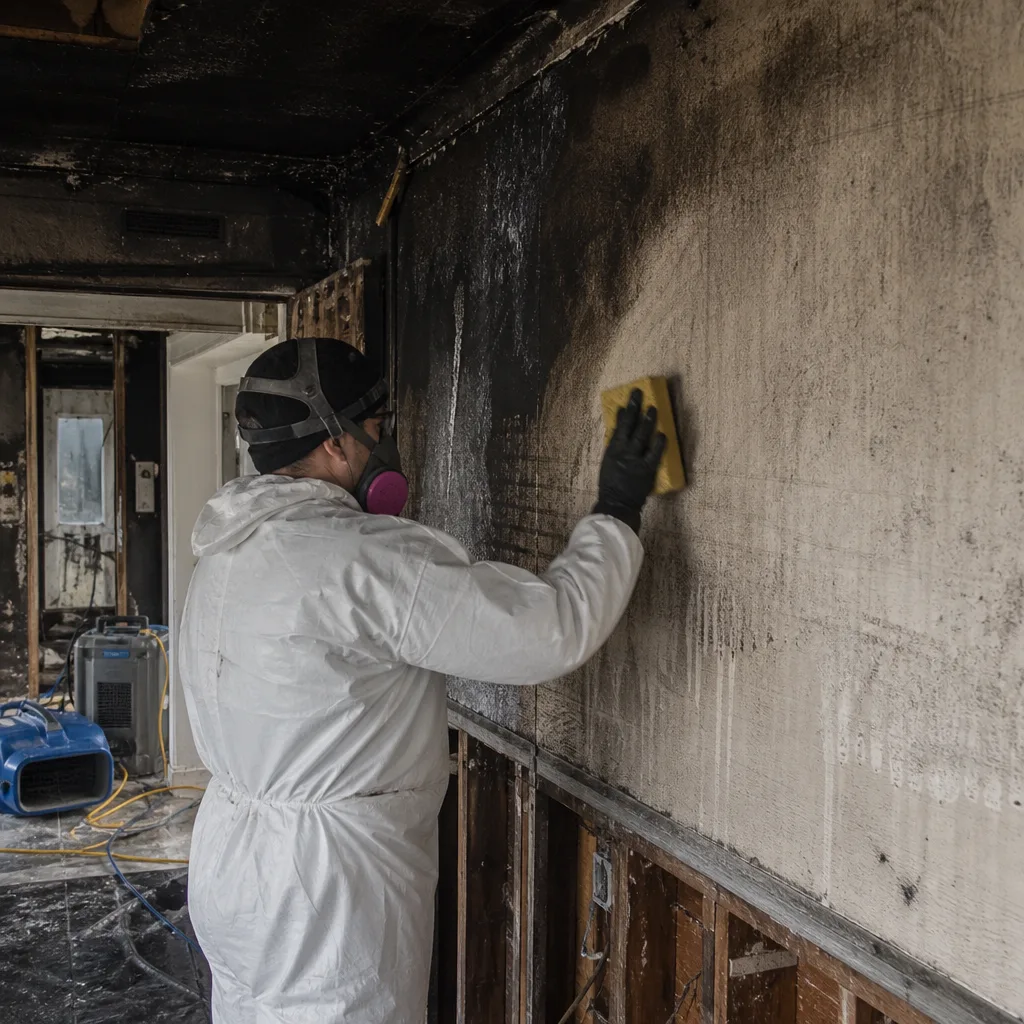
Storm Damage Cleanup
After a nor’easter or summer squall, Wood-Ridge yards and basements collect debris, mud, and whatever the Hackensack carried in. We remove storm debris, clean contaminated surfaces, and dry affected areas before mold gets a foothold. The cleanup scope includes sanitization where Category 3 water touched finished surfaces.
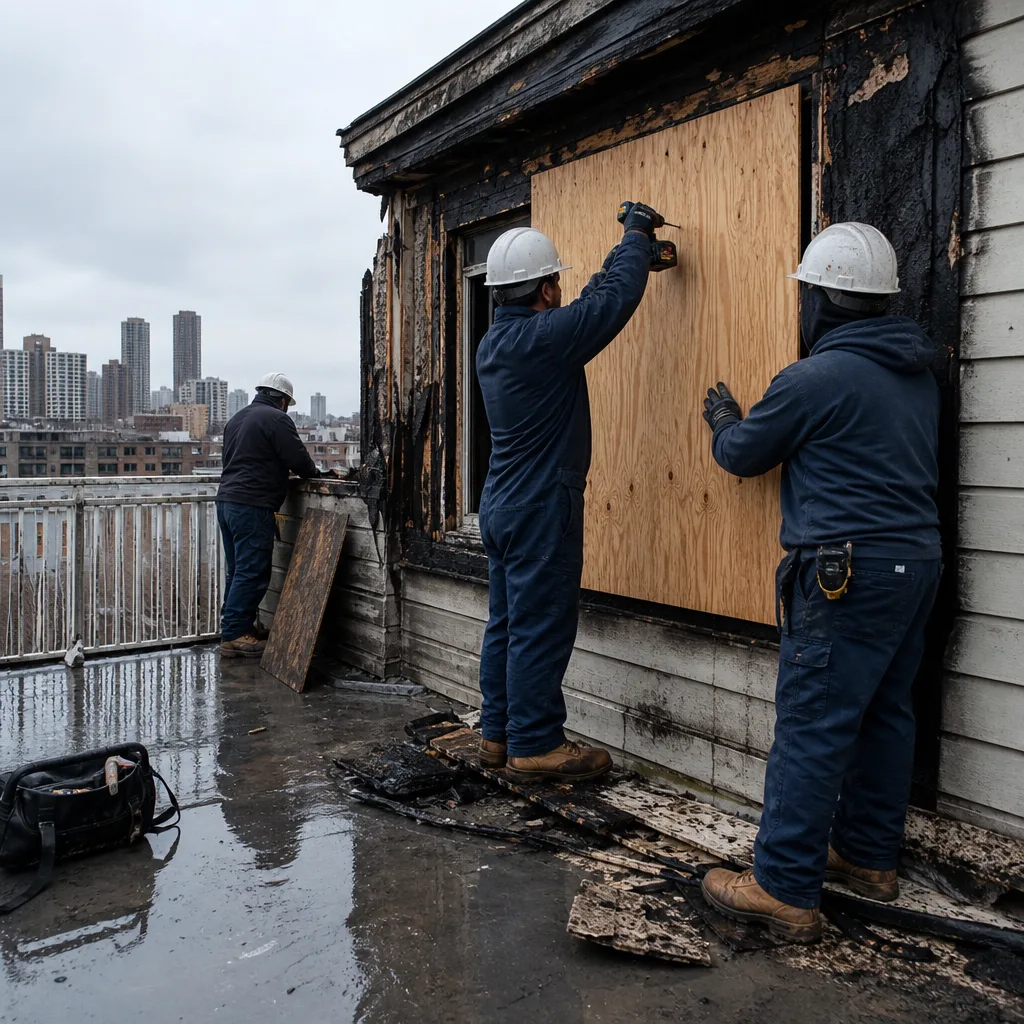
Flood Damage Restoration
Tidal flood events in Wood-Ridge demand full structural drying, not mopping. We extract standing water, remove saturated insulation and damaged drywall, run professional-grade dehumidifiers and air movers, and log moisture readings daily. Antimicrobial treatment follows every Category 3 loss. The same crew handles the rebuild when the structure meets the dry standard.
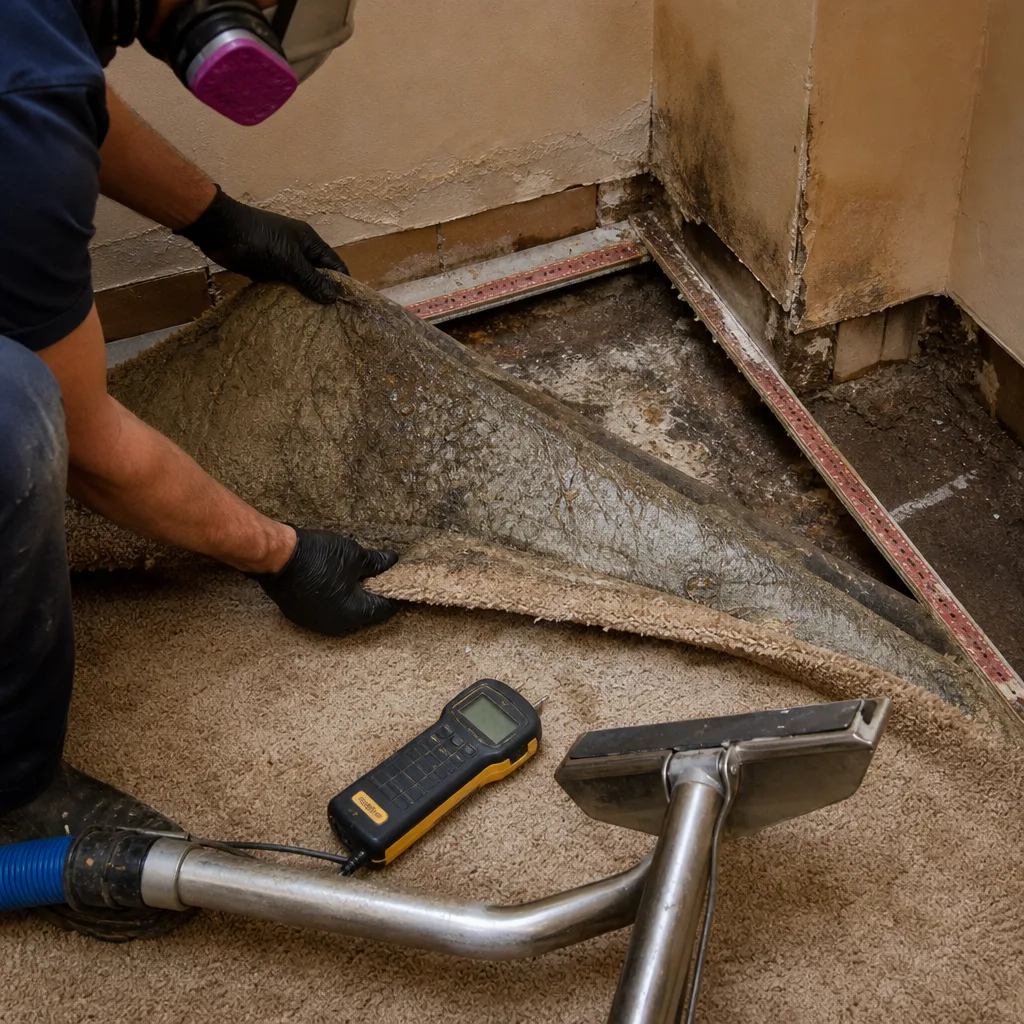
Emergency Board-Up
Wind-blown debris, fallen limbs, and failed doors leave Wood-Ridge homes open to weather, animals, and trespass. We board up openings with plywood and 2×4 bracing, tarp roofs, and secure the envelope the same day the loss happens. A compromised impact-rated door on a 1950s Cape Cod gets checked, not just covered.
Roof Tarping
Lifted shingles and punctured roof decks on Wood-Ridge ranches and Cape Cods need fast coverage before the next storm arrives. We tarp damaged sections with reinforced polyethylene, secured against the wind loads that caused the damage in the first place. Tarping is a stopgap, but it buys real time before the rebuild.
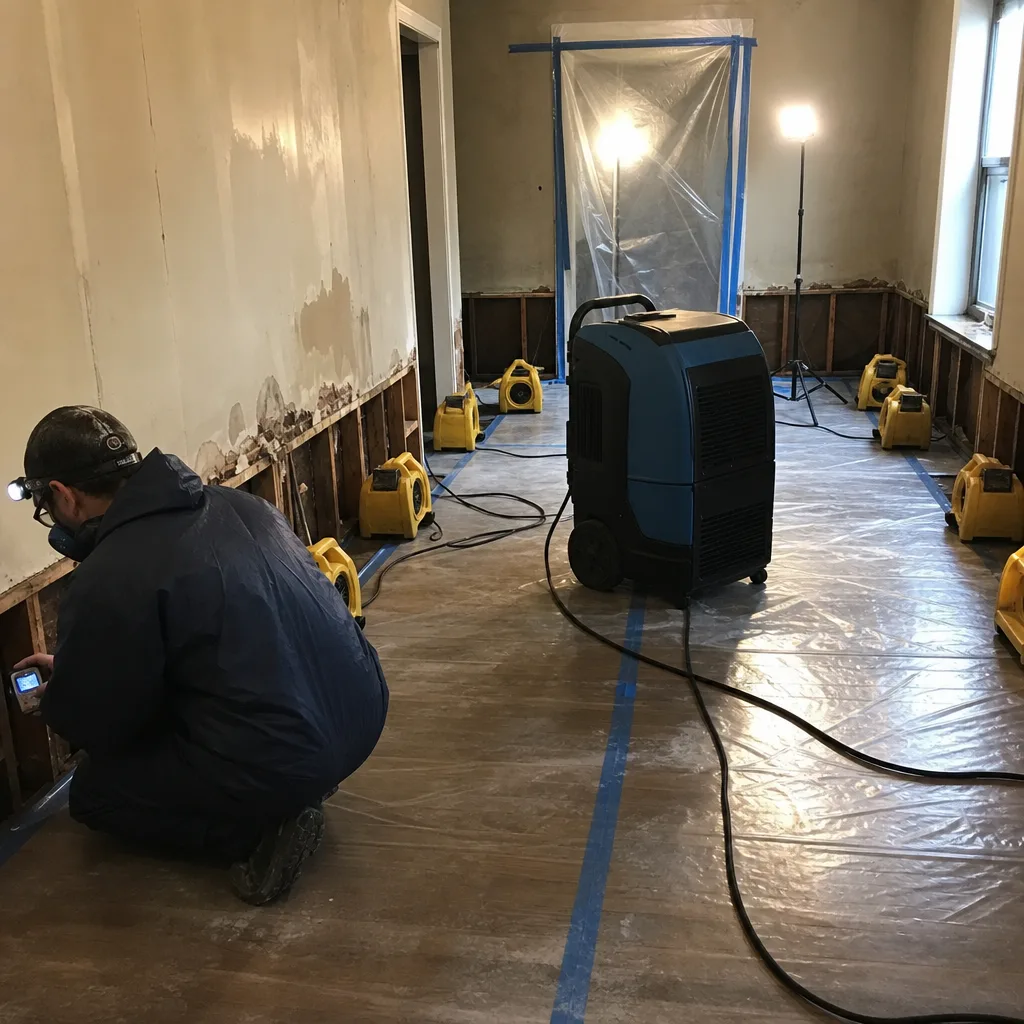
Debris Removal
Storm events leave debris in yards, driveways, and basements. We haul damaged building materials, wet insulation, drywall, furnishings, and organic debris, separating what’s restorable from what the insurance carrier will classify as a total loss. Photo documentation covers everything before it leaves the property.
What happens when you call
- 1
A real person answersNo phone trees - you reach a local pro.
- 2
You get an upfront price rangeHonest numbers before anyone is dispatched.
- 3
A background-checked tech heads outLicensed & insured, dispatched right away.
- 4
You approve before work beginsNothing starts until you say go.
Storm & Disaster Restoration Costs in Wood-Ridge, NJ
A typical emergency board-up in Wood-Ridge runs $400 to $900, depending on how many openings and what size. Roof tarping typically costs $350 to $800 for a standard residential repair. Water extraction and structural drying for a tidal basement flood in the Moonachie Creek catchment runs $2,500 to $6,500, with antimicrobial treatment adding $700 to $1,800 on top depending on square footage. Full storm damage restoration including rebuild commonly lands between $8,000 and $30,000 in Wood-Ridge, with Category 3 losses and pre-existing Sandy-era damage pushing toward the higher end. The variables that move the price: how long water sat before extraction, whether rim joists and subfloor framing were already compromised, and how much wall cavity has to be opened for drying. Insurance covered scenarios make up most storm losses here. Our free visual inspection gives you a written scope before work starts, so you know the number before you sign.
We Also Serve Cities Near Wood-Ridge
Our emergency storm response covers Alpine, Bergenfield, Bogota, and Carlstadt. The same certified crews, the same equipment, and the same 90-Day Done Right Promise apply across every neighboring service area.
Serving Wood-Ridge, NJ - Our Local Coverage Area
We’re based in the Wood-Ridge area and know this community well. Use the map below to see our service coverage - if you’re nearby, we can almost certainly help.
Wood-Ridge Storm & Disaster Restoration Questions, Answered
How fast does a tidal surge from the Hackensack River make my basement unsafe to dry without tear-out?
Category 3 tidal water begins degrading porous materials like drywall, insulation, and open wood framing within 12 to 24 hours. In a Wood-Ridge basement with plaster-over-lath walls, the timeline is even shorter because moisture migrates into wall cavities and behind the lath, hiding from surface readings. If contaminated water sat for more than a day, partial tear-out is almost always required to dry the structure properly. Call (917) 924-4221 and we’ll take moisture readings on the first visit.
Does my 1950s Wood-Ridge ranch need impact-rated door reinforcement before a nor’easter?
Most 1950s ranches in Wood-Ridge were built with exterior doors that offer little wind resistance by modern standards. If you’ve had storm damage before, or if your door faces the prevailing wind approach from the Hackensack River corridor, impact-rated hardware and reinforced frames are worth considering. We inspect existing doors for track wear, panel delamination, and latch alignment, then recommend reinforcement before the next coastal storm. The free inspection covers what’s actually failing.
What’s different about flooding on Taft Street near Moonachie Creek compared to another Bergen County basement?
Taft Street sits in the Moonachie Creek catchment, inside the borough’s FEMA-designated Special Flood Hazard Area. Flood water there arrives as tidal backflow from the Hackensack River, not as rainfall runoff. That means Category 3 contamination from river sediment, fuel residue, and sewage is the norm after any significant coastal storm. Another Bergen County basement an hour inland might see Category 1 or 2 water from a broken pipe or a sump failure. Taft Street sees Category 3 as baseline. Treatment and tear-out scopes are different, and faster.
If a storm pushed water into my unfinished basement but it receded in a few hours, is it really structural drying or just mopping?
It’s structural drying. Water that receded on its own still penetrated floor sheathing, bottom plates, and wall cavities. In a post-war Wood-Ridge home, the rim joists and subfloor framing may have never reached pre-loss moisture levels after Sandy, which means new water finds existing damage and compounds it. Mopping the floor removes surface water. It does nothing for moisture trapped behind paneling or under the sill plate. Proper structural drying requires hygrometer readings, professional equipment, and daily moisture logs.
Do I need a permit in Wood-Ridge to replace wind-damaged exterior doors or repair storm damage?
For structural rebuild work, yes. Wood-Ridge building code generally requires permits for exterior door replacement when the frame or rough opening is modified, and for any work that touches structural framing. Emergency board-up and stabilization are exempt in active disaster response. We handle the permit paperwork for the reconstruction phase. If a project requires a licensed permit, we file it. You get a copy of the permit before the inspection.
How fast can a crew actually get to my Wood-Ridge house?
Our commitment is 45 minutes from when you call (917) 924-4221 to a crew rolling toward your address. In practice, crews stationed near the Route 17 corridor reach most Wood-Ridge blocks faster. The dispatcher lives on the phone 24/7, so the clock starts the moment you call, not the next morning.
Will my insurance cover Category 3 flood damage from the Hackensack River?
Standard homeowner’s policies exclude rising floodwater. If the tidal surge entered your basement from the Hackensack, that’s a flood insurance claim under FEMA’s National Flood Insurance Program. Wind-driven rain that enters through a storm-damaged roof or door is usually covered by standard policies. We document the entry point, the water category, and the moisture readings, then bill whichever carrier applies directly. You don’t guess, and you don’t argue alone.
Can I stay in my home during storm damage restoration?
For board-up, roof tarping, and localized structural drying, yes in most cases. For Category 3 flood events where sewage and river contaminants have spread through living space, we recommend relocating until antimicrobial treatment and air scrubbing are complete. We’ll give you an honest answer on the first visit, and the drying log explains why.
Written by Curt Bowman, Owner at Floodline Restoration Co. of Manhattan, serving Wood-Ridge, NJ with storm and disaster restoration since 2010.