
Free visual inspection and a written scope of work before any mitigation begins - photos, moisture readings, and drying logs go in your claim file
The scope we write is the scope we bill. Anything new gets shown to you, in writing, before we touch it.






 Before
 After
After Before
 After
After Before
 After
After24/7 Emergency Storm & Disaster Restoration in Woodrow
Storm and disaster restoration in Woodrow works best when it starts within the hour, not the next day. Water keeps moving through framing, drywall, and insulation long after the rain stops. A basement that looks damp at midnight can have saturated wall cavities and flooring by morning. We answer the phone at (917) 924-4221 with a live dispatcher around the clock, every day of the year, and we send crews into Woodrow from our New York City dispatch office. The first visit is a free visual inspection. We bring thermal imaging, moisture meters, and the trained eyes to read them. The faster we map the moisture, the less material gets torn out, the less mold takes hold, and the smaller the final bill. In a neighborhood built on clay-heavy soil with slow drainage, speed is not a sales pitch. It is physics.
Understanding Storm & Disaster Restoration Severity in Woodrow Properties
Storm damage severity in Woodrow breaks down by water class and category, and the older housing stock here makes classification matter more. The homes that dominate Woodrow, post-WWII Cape Cods, ranches, and split-levels built from the 1950s through the 1980s, have original materials that do not dry the way modern assemblies do. Kraft-faced insulation holds moisture against studs. Plaster walls wick groundwater upward and hide it. Cast-iron and galvanized plumbing corrodes from behind. Category 1 water is clean supply-line water, the kind from a burst pipe. Category 2 carries detergents or mild contaminants, common in washing machine overflows and sump failures. Category 3 water is grossly contaminated, and in Woodrow that means stormwater that has crossed the Arthur Kill floodplain, the Fresh Kills wetlands, or a backed-up sewer. We classify the water first, then build the drying plan around it. Moisture mapping tells us where the water went that you cannot see. Structural drying means controlling vapor pressure, air movement, and temperature until framing reads dry, and in Woodrow’s humid coastal climate that takes longer than it does inland. No one gets to skip the drying log and call it done.
Why Woodrow Property Owners Choose Floodline Restoration Co. of Manhattan
- 45-minute response commitment. A live dispatcher takes the call and a certified crew starts moving toward Woodrow immediately. No answering service, no call-back list.
- 24/7 live answer. At 2 a.m. you get a person, not a recording. That person can dispatch. That is the whole difference in an emergency.
- IICRC-certified crews. Our technicians carry WRT, FSRT, and AMRT certifications. They are background-checked and uniformed, and they train to RIA and IFA standards as well.
- Free visual inspection. We assess before we scope. You know what needs doing and what does not before a single fan gets plugged in.
- Direct insurance billing. We document thoroughly, bill your carrier directly, and talk to the adjuster ourselves. You do not carry paperwork between two parties.
- One team from extraction to reconstruction. The crew that pulls the water out is the same crew that rebuilds the wall. No mid-job handoff, no inherited strangers.
Our Storm & Disaster Restoration Process
Inspection & Assessment
We start with the floodline, not the sales pitch. Thermal imaging and moisture meters map hidden water in walls, ceilings, and floors. We classify the water and write a scope you can hold us to.
Extraction & Stabilization
Standing water gets pulled with truck-mounted extraction where access allows. We stop further intrusion with emergency board-up and roof tarping. The goal in the first visit is to stop the bleeding.
Drying & Dehumidification
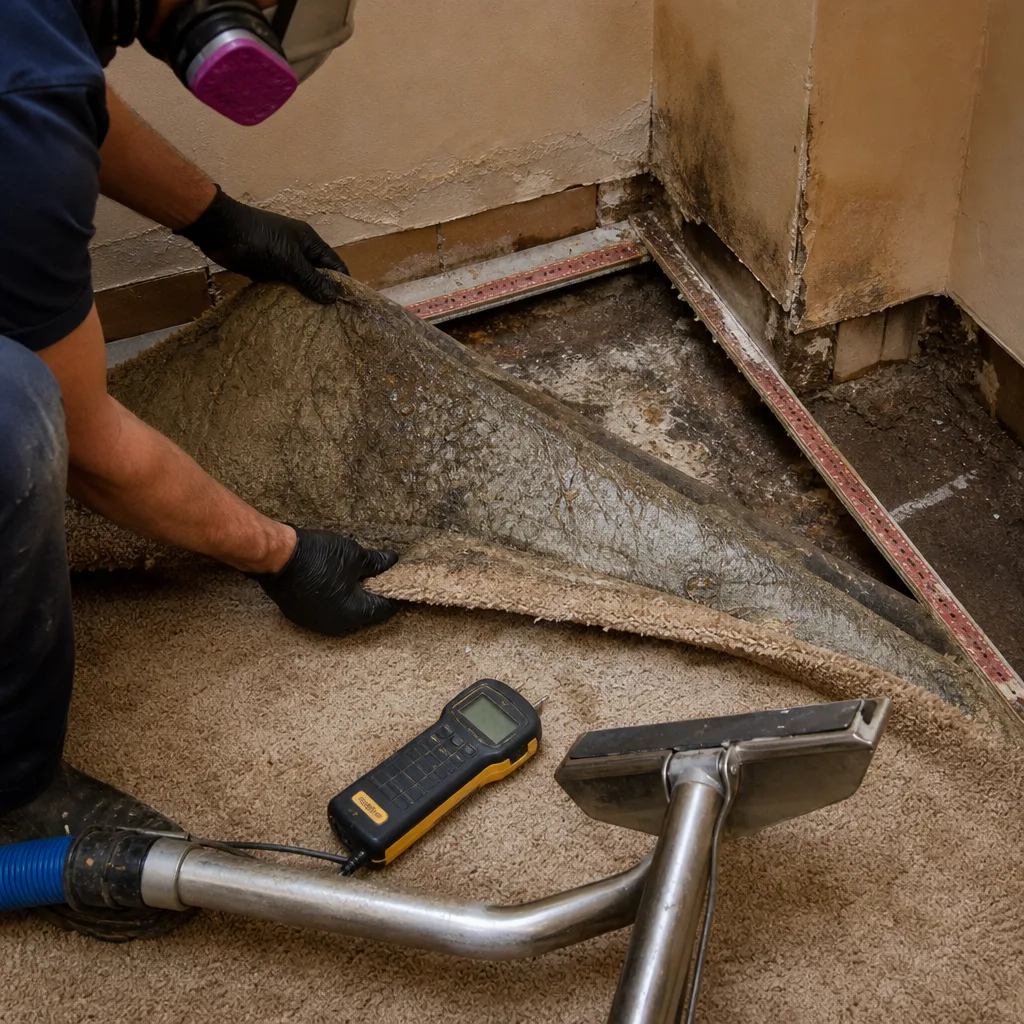
Dri-Eaz dehumidifiers and Phoenix air movers run in a calculated airflow pattern, not scattered. Daily moisture readings get logged in writing, with the dry standard set before we start. We hand that log to you and the carrier.
Cleaning & Sanitization
Category 2 and 3 water require antimicrobial treatment of studs and substrates. HEPA air scrubbers run during demolition and cleaning to keep spores from spreading.
Specialty Treatment
In Woodrow, this means checking for the slow-drainage and grade problems that send water back to the foundation. We regrade where the clay soil fails, and we replace kraft-faced insulation with closed-cell foam where repeat moisture is likely.
Repairs & Restoration
The same certified crew that extracted and dried now rebuilds. Drywall, framing, flooring, trim. The job is not done until it is done, and the 90-Day Done Right Promise says so in writing.
Need Emergency Storm & Disaster Restoration in Woodrow Now?
Crews minutes away, answering live 24 hours a day. The sooner we start, the less it costs.
Working With Your Insurance Company
Insurance adjusters see a lot of files from Staten Island. What separates a clean claim from a denied one is documentation, and documentation starts the hour water enters the house. We photograph every room, every wall, every piece of equipment we set. We record moisture readings daily and note when materials hit the dry standard. Our scope of work is line-item and industry-standard, written in the language adjusters expect. We talk to the adjuster directly. That means you are not translating between us and the carrier, and you are never sitting on a claim wondering why nothing moved. When your policy covers the loss, we bill the carrier directly. When it does not, you see the full written scope before any work begins and you know what you are paying. Either way, no surprises on the bill.
What We Provide Your Insurer
- Thorough documentation of the loss
- Photos of all damage, room by room
- Moisture readings and drying logs
- A detailed, line-item scope of work
- Direct coordination with your carrier
Built for Woodrow’s Loss Calendar
Woodrow’s storm damage calendar has a rhythm, and it is built around water. In late summer and early fall, tropical storm remnants push heavy rain up the Atlantic coast, overwhelming perimeter drains and saturating the clay soil against foundations. Nor’easters arrive from November through March, driving wind-driven rain into siding, roofing, and window frames on the older Cape Cods and split-levels that dominate the neighborhood. Winter deep freezes burst supply lines in unfinished basements and crawl spaces. Spring thaw, combined with Woodrow’s slow-draining clay-heavy soil, sends groundwater up through slab floors and block walls. Each season has a signature failure mode. We carry the equipment and the local knowledge to answer all of them, and we dispatch the same way in February as we do in September. One live call, one crew, one plan.
Storm & Disaster Restoration Across Woodrow’s Neighborhoods
Response routes through Woodrow follow the main corridors, and the building stock shifts block by block. Along Woodrow Road, the older ranches and Cape Cods sit close to the roadway with shallow front yards that catch runoff from the pavement after cloudbursts. Crews rolling through the residential streets off Drumgoole Road find more 1960s and 1970s split-levels with partially finished basements, the kind of basement that floods once and hides moisture for years. Near the Bloomingdale Road side, properties slope gently toward the Fresh Kills corridor, and we regularly see perimeter drainage that was never reworked after the landfill capped and the ground settled. Homes within a mile of the former Fresh Kills landfill boundary, now Freshkills Park, sometimes carry pre-remediation-era subsurface drainage quirks. Unusual soil settlement and grade issues redirect stormwater toward foundations in ways that baffle contractors unfamiliar with the neighborhood’s landfill-adjacent topography. Our crews know the drainage patterns because we have been called back to them year after year.
Specialized Storm & Disaster Restoration Services We Offer in Woodrow
Storm Damage Cleanup
Downed branches, wind-driven debris, water-stained drywall. Storm cleanup in Woodrow means removing the mess and securing the structure before secondary damage sets in. We bring the trucks, the labor, and the disposal, and we leave the site clean enough to rebuild.
Flood Damage Restoration
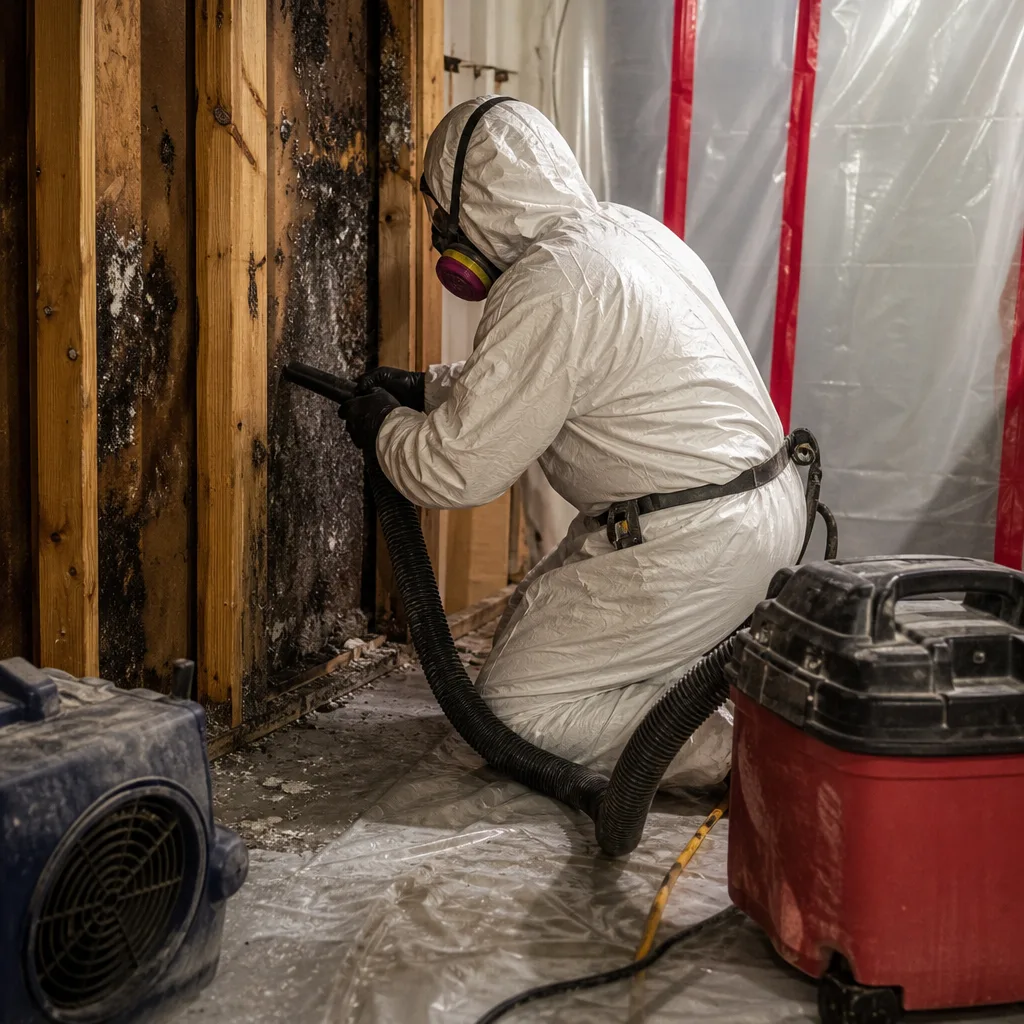
This is the core of what we do in Woodrow. Groundwater wicking through block foundations, stormwater crossing the yard and entering at grade, sump failures during nor’easters. Extraction, drying, and rebuild, handled by one crew with a moisture log that proves the framing is dry.
Emergency Board-Up
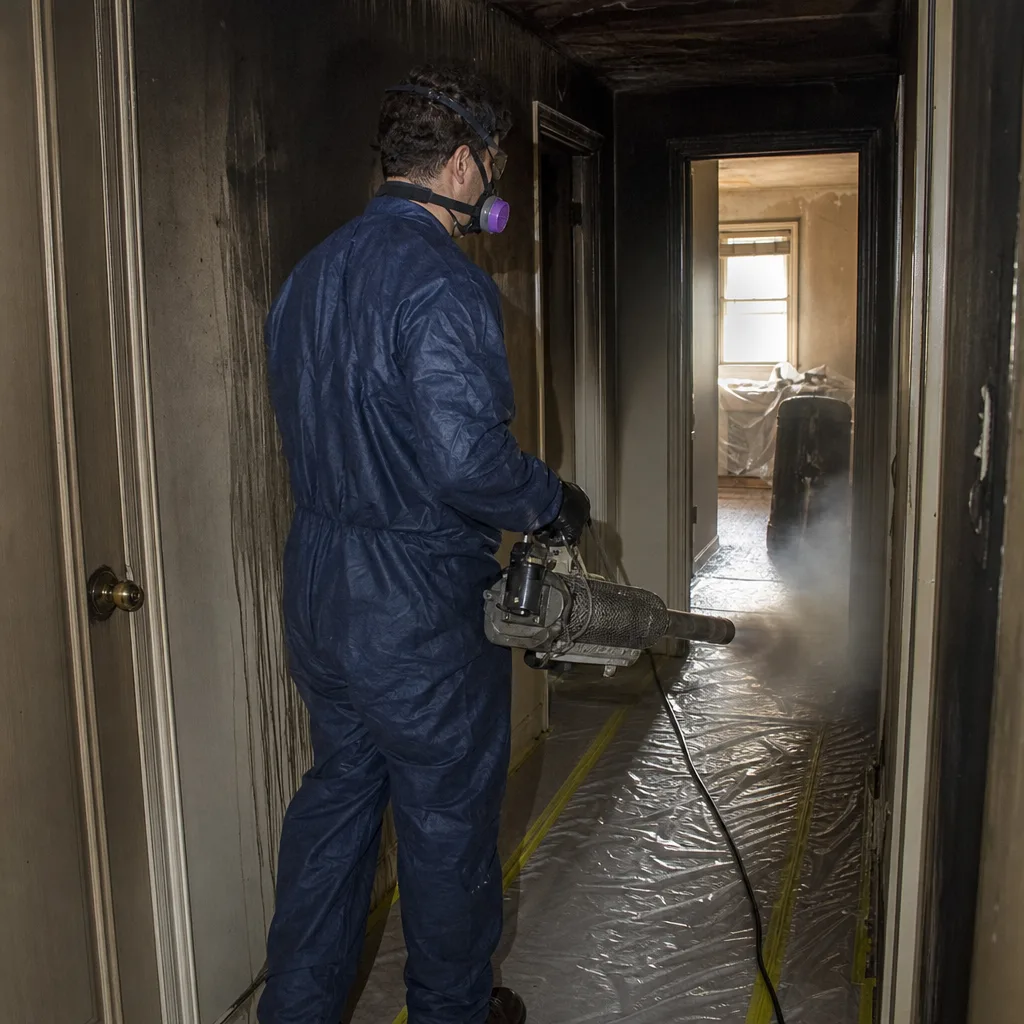
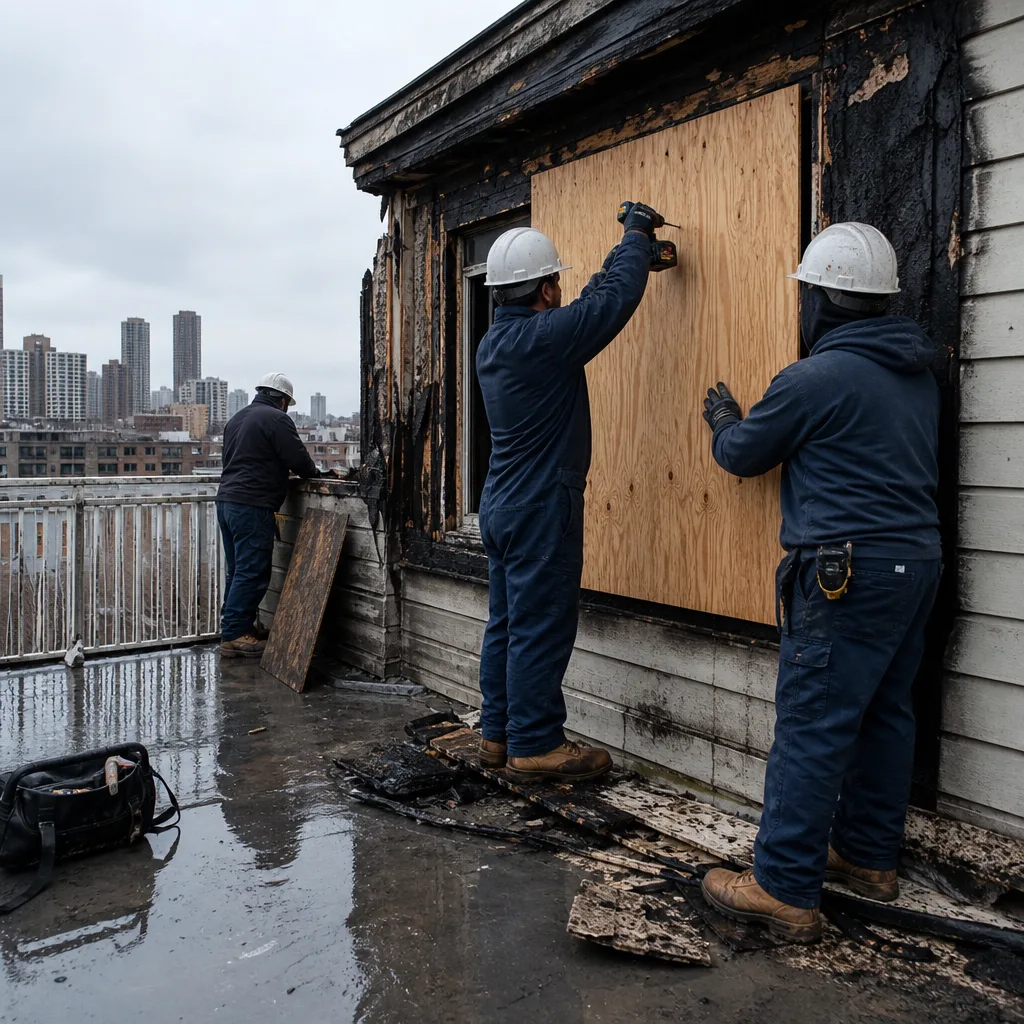
When a window goes out or a tree limb opens the roof, the house is exposed to weather and entry. We board up and tarp within the first visit, using materials that hold through the next storm until permanent repairs are scoped and scheduled.
Roof Tarping
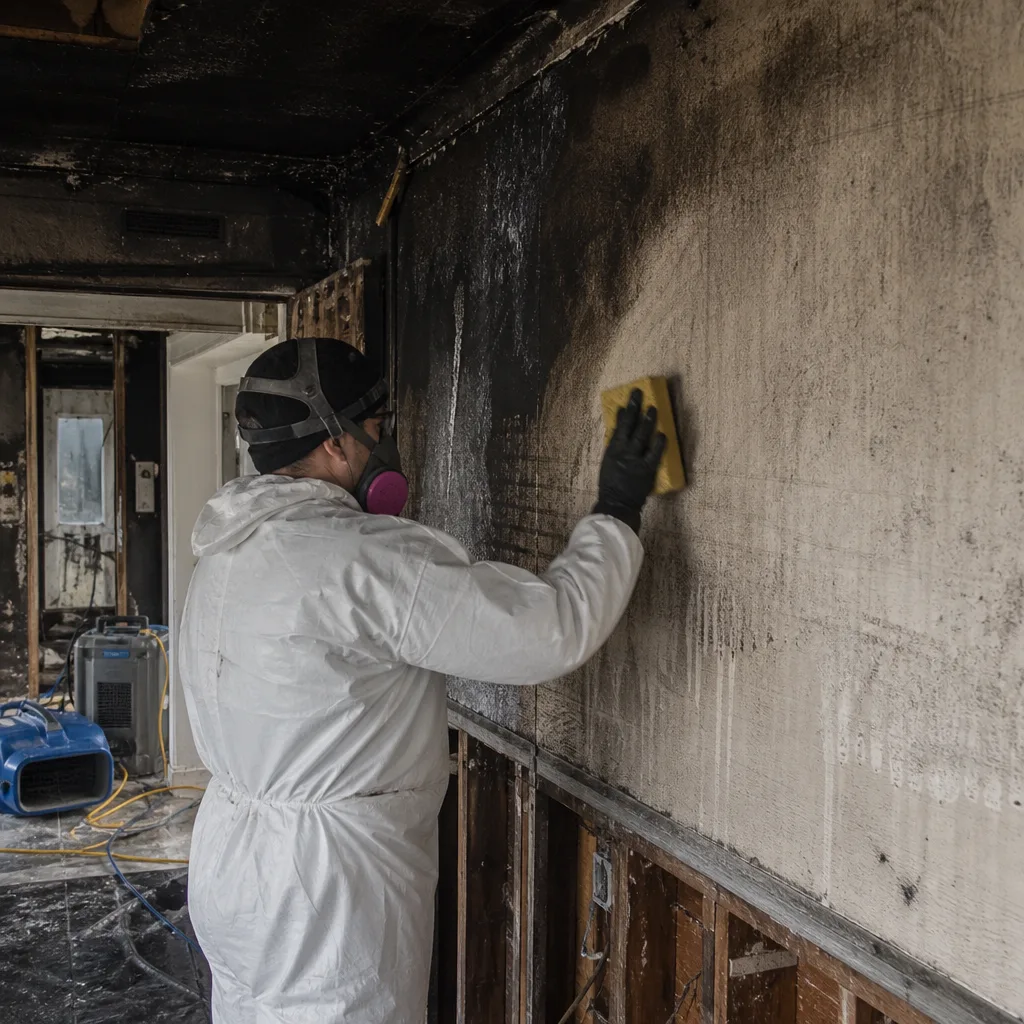
Wind damage lifts shingles and opens roofs on older homes. We tarp to stop water intrusion, then assess for full repair. In Woodrow’s humid climate, a tarped roof needs to breathe correctly or you trade one moisture problem for another. We know the difference.
Debris Removal
Storm debris on Woodrow properties ranges from yard waste to structural fragments. We haul it, dispose of it properly, and document what was removed for the insurance file.
What happens when you call
- 1
A real person answersNo phone trees - you reach a local pro.
- 2
You get an upfront price rangeHonest numbers before anyone is dispatched.
- 3
A background-checked tech heads outLicensed & insured, dispatched right away.
- 4
You approve before work beginsNothing starts until you say go.
Storm & Disaster Restoration Costs in Woodrow, NY
Flood damage restoration in Woodrow typically runs $2,800 to $7,500 for a standard basement extraction and dry-out, depending on square footage, water category, and how long the water sat. Storm damage cleanup with minor structural drying lands between $1,500 and $4,000. Emergency board-up and roof tarping usually runs $400 to $1,200 when it is done as part of a larger loss. What moves the price in Woodrow specifically is the soil. Slow-draining clay means water sits against the foundation longer, which means more demolition to expose wet framing and longer drying times. Category 3 water from the Arthur Kill or Fresh Kills wetland edges adds containment, antimicrobial treatment, and disposal costs. The free visual inspection gets you a firm, written scope before any billable work begins. Senior and Veteran customers get 5% off, always. And the $50 Off Any Repair Over $250 standing offer applies here as well.
We Also Serve Cities Near Woodrow
The same certified crews that serve Woodrow also cover Woodrow and the surrounding Staten Island and Bronx communities. We dispatch daily to Fairview, Harrison, East Bronx, and Hunts Point. Same live answer, same 45-minute response commitment, same written 90-Day Done Right Promise.
Serving Woodrow, NY - Our Local Coverage Area
We’re based in the Woodrow area and know this community well. Use the map below to see our service coverage - if you’re nearby, we can almost certainly help.
Woodrow Storm & Disaster Restoration Questions, Answered
Why does my Woodrow basement flood after every heavy rain even though the street drains fine?
Because Woodrow sits on dense, slow-draining clay, and in many spots near the former Fresh Kills landfill, subsurface grade shifts from pre-remediation-era construction redirect stormwater toward foundations instead of away from them. The street drain handles surface water. Your basement is catching the groundwater moving through the soil. We regrade the side yard and repair perimeter drainage to send that water where it belongs. Call (917) 924-4221 and we will trace the actual flow pattern on your property.
How quickly does mold start growing after a storm water event in Woodrow’s humid climate?
In Woodrow’s coastal humidity, mold colonization typically begins within 48 to 72 hours on wet organic materials like drywall paper, kraft-faced insulation, and wood studs. The warm, damp air in an enclosed basement accelerates it. That is why we run extraction and dehumidification the same visit and set HEPA air scrubbers during any demolition. The sooner the drying starts, the less mold you are fighting later.
Does NYC’s Department of Buildings permit regime affect storm damage restoration in Woodrow?
Yes. Every structural repair, rebuild, and major restoration in Woodrow operates under New York City Department of Buildings code compliance. That means permits, inspections, and code-correct materials. A restoration contractor working across the Arthur Kill in New Jersey does not face the same rules. We handle the permit work as part of the job, and the insurance documentation reflects what the DOB requires. Call (917) 924-4221 to talk through what your specific loss needs.
Why do I keep finding moisture in my basement weeks after a storm when the walls feel dry to the touch?
Because the wood framing and insulation inside the wall assembly stay wet long after the surface of the plaster or drywall feels dry. Moisture mapping shows the difference. In older Woodrow homes with plaster walls and kraft-faced insulation, trapped moisture can hold at 25% and higher in the studs while the wall face reads 8%. The water is still there, feeding mold and weakening the structure. We log readings daily until the whole assembly, not the surface, hits the dry standard.
Do I need to worry about contaminated floodwater from the Arthur Kill or Fresh Kills wetlands during a storm?
Yes. Stormwater that runs off or backs up from the Arthur Kill and the Fresh Kills wetland edges carries Category 3 contamination, including sewage, industrial runoff, and biological material. That water is not a mop-up job. It requires containment, antimicrobial treatment, proper disposal of saturated porous materials, and full decontamination before rebuilding. We handle Category 3 water restoration in Woodrow regularly and we document every step for your insurer.
How fast can you actually get to a home in Woodrow?
We commit to a 45-minute response from dispatch. Crews leave from our New York City office and route into Woodrow through the quickest available corridor, usually off Richmond Avenue or Arthur Kill Road depending on traffic. A live dispatcher answers the phone at (917) 924-4221 at any hour, and extraction starts on that same visit if water is standing.
Will my insurance cover storm and flood damage in Woodrow?
It depends on your policy. Wind damage, burst pipes, and storm-driven rain entering through a compromised opening are typically covered under standard homeowners policies. Flood water from rising groundwater, the Arthur Kill, or the Fresh Kills wetlands usually requires a separate flood policy. We document the cause and source of the water clearly for your adjuster, and we bill your carrier directly where coverage applies. The free inspection gives you a written scope you can take straight to your agent.
What should I do in the first 30 minutes after storm water enters my Woodrow home?
Call (917) 924-4221. Then shut off power to the affected area if you can do so safely without stepping in water. Move small valuables and documents to a dry area. Do not run a standard household fan, do not spray bleach on the walls, and do not tear out drywall before a professional has classified the water. Those first decisions change the insurance claim and the mold risk. We will be there within 45 minutes and we will take it from there.
Woodrow’s storm damage does not look like storm damage in other parts of New York. The clay soil holds water against foundations. The landfill-adjacent grades misdirect runoff. The older housing stock hides moisture behind plaster and kraft-faced insulation. Our Storm & Disaster Restoration team knows these patterns because we work them every season. When the water comes, you get one live answer, one certified crew, and one written guarantee. Call (917) 924-4221 for a free visual inspection and a straight answer about what you are facing.
Written by Curt Bowman, Owner at Floodline Restoration Co. of Manhattan, founded in 2010 and serving Woodrow with the 90-Day Done Right Promise.