

Free visual inspection and a written scope of work before any mitigation begins - photos, moisture readings, and drying logs go in your claim file
The scope we write is the scope we bill. Anything new gets shown to you, in writing, before we touch it.






 Before
 After
After Before
 After
After Before
 After
After24/7 Emergency Water Damage Restoration in Chestnut Ridge
Water damage restoration in Chestnut Ridge typically runs $2,800-$9,500 depending on the Category of water, the square footage affected, and whether finished living space below grade needs to be dried or opened up. We answer the phone with a live person at 2 a.m., and a background-checked, uniformed crew reaches your Chestnut Ridge street within about 45 minutes of your call. The first hour matters most: clean water becomes Category 2 within 48 hours, and mold starts colonizing damp drywall in 24-48. Call (917) 924-4221 the moment you see standing water, a ceiling stain, or water beading along a basement wall, and we’ll start with a free visual inspection.
Understanding Water Damage Restoration Severity in Chestnut Ridge Properties
Water damage in Chestnut Ridge homes doesn’t behave the way it does in flatter Rockland County neighborhoods. Most houses here are 1960s-1980s colonials, split-levels, and ranches, often expanded for larger households. Those additions changed original grading, and the village’s glacially-formed ridge pushes runoff downhill into foundation walls faster than the original 1960s perimeter drains were sized to carry. We classify the water itself first: Category 1 is clean supply-line water, Category 2 carries soaps or detergents, and Category 3 is sewage, stormwater, or floodwater with bacteria and pathogens. Then we moisture-map the structure with thermal imaging and penetrating meters. In a split-level on a slope, water that enters at the uphill wall often pools at the far end of the lower level, saturating the slab and wicking up through wall cavities. Structural drying in those conditions means calculating cubic feet per minute of air movement against grain depression in clay-bound soils. It’s not a fan-in-the-room job. It’s an engineered dry-out, and we log readings every day until the dry standard is met.
Why Chestnut Ridge Property Owners Choose Floodline Restoration Co. of Manhattan
- 45-minute response commitment: A live dispatcher takes your call and a crew already staged in the Chestnut Ridge area is moving within minutes. Extraction starts on the first visit, not after a sales pitch.
- 24/7 live answer, never a recording: You call, a person picks up. At 3 a.m. on a holiday. That’s been the rule since Curt Bowman founded the company in 2010, and it has never bent.
- IICRC-certified crews: Our technicians hold WRT, FSRT, and AMRT certifications, and every job is run to IICRC S500 water damage standards. Uniforms, background checks, and a company name on the truck.
- Free visual inspection: We’ll assess the loss, map the moisture, and walk you through what needs to happen before you spend a dollar. No pressure, no obligation.
- Direct insurance billing: We bill your carrier directly when the loss is covered, and we hand you the same documentation we hand the adjuster. You don’t play messenger.
- One team from extraction to reconstruction: The same crew that reads the moisture map on day one handles the drying, the rebuild, and the final walkthrough. No mid-job handoff to a subcontractor you’ve never met.
Our Water Damage Restoration Process
Inspection & Assessment
We start with a free visual inspection, then switch on thermal imaging and penetrating moisture meters. We identify the water Category, map the migration path, and mark the dry-out boundary. You get a written scope before any work starts.
Extraction & Stabilization
Standing water comes out the same visit. We use truck-mounted and portable extraction units rated for hundreds of gallons per hour, then stabilize the structure so nothing shifts or swells further.
Drying & Dehumidification
We set professional-grade Dri-Eaz, Phoenix, XPOWER, and B-Air equipment: LGR dehumidifiers pulling moisture down to low grains, air movers directed at wall cavities, and Injectidry systems for hard-to-reach cavities. Daily moisture readings get logged until we hit the dry standard.
Cleaning & Sanitization
Category 2 and 3 water leave contaminants behind. We clean, sanitize, and apply antimicrobial treatments where needed, and we HEPA-vacuum surfaces before any rebuild begins.
Mold Prevention & Specialty Treatment
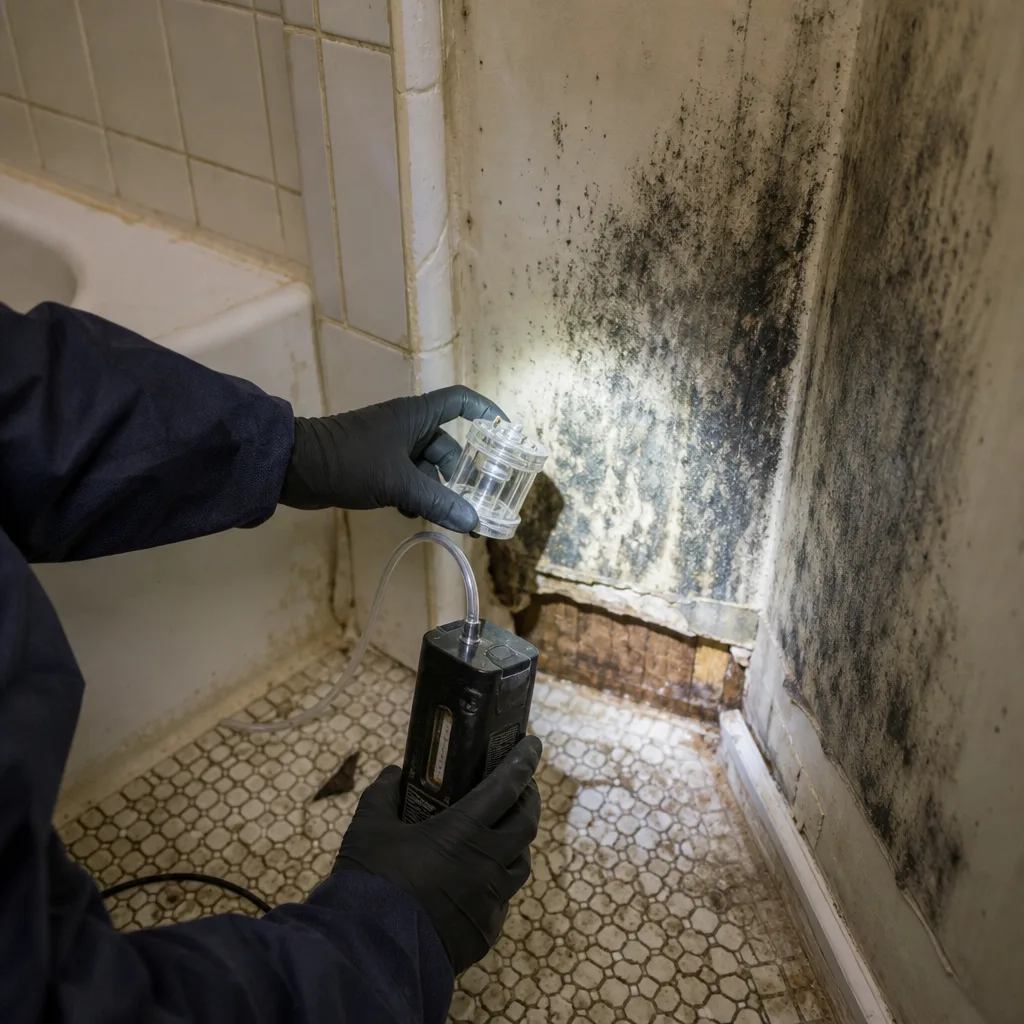
In Chestnut Ridge, where finished basements are used as sleeping and prayer rooms, we treat every water loss as a pre-mold situation. If containment or air scrubbing is called for, we set it before mold gets a foothold.
Repairs & Restoration
The same crew that dried the structure rebuilds it. Drywall, trim, flooring, paint. We don’t hand you off, and the 90-Day Done Right Promise covers the finished job in writing.
Need Emergency Water Damage Restoration in Chestnut Ridge Now?
Crews minutes away, answering live 24 hours a day. The sooner we start, the less it costs.
Working With Your Insurance Company
Most Chestnut Ridge water damage claims involve a question from the adjuster: was this sudden and accidental, or gradual? The answer depends on documentation from the first hour. We document the loss the way a carrier expects: photos of every affected room, moisture readings taken before any equipment runs, and a line-item scope that matches industry estimating software. Then we talk to your adjuster directly, so you’re not the one translating between a restoration crew and an insurance desk. If the claim is denied, we tell you plainly before recommending the cheapest path that still protects the structure. If it’s covered, we bill the carrier and you see the same numbers we see.
What We Provide Your Insurer
- Thorough documentation of the loss
- Photos of all damage, room by room
- Moisture readings and drying logs
- A detailed, line-item scope of work
- Direct coordination with your carrier
Built for Chestnut Ridge’s Loss Calendar
Chestnut Ridge has a water damage season for every month. January and February bring deep freezes that burst supply lines in uninsulated exterior walls, especially in split-level additions. March and April thaw frozen ground and saturate clay soils, pushing groundwater against foundation walls and through cove joints. Summer thunderstorms drop inches of rain in an hour, overwhelming 1960s perimeter drains and sending runoff down the ridge slope into basement doorways and window wells. Nor’easters in fall and early winter hit north-facing roof slopes hard, forming ice dams that let meltwater sit against fascia and sheathing until it finds the drywall. Hurricane Ida in 2021 was the warning shot: stalled tropical remnants now funnel runoff into Chestnut Ridge foundations at rates the original drainage systems were never designed to handle. We plan our crews around this calendar, and we keep drying equipment staged nearby so response time doesn’t stretch when the whole village calls at once.
Water Damage Restoration Across Chestnut Ridge’s Neighborhoods
Chestnut Ridge’s streets climb, and the water follows the grade. Off Hungry Hollow Road, where older split-levels sit on downhill lots, we regularly see groundwater pushing through cove joints after heavy rain. Along Red Schoolhouse Road and the neighborhoods east of it, 1970s colonials with rear additions have drainage patterns that send runoff into window wells and stairwells. The streets branching from Chestnut Ridge Road near the village center include ranches with finished basements that serve as primary living space, which means a water intrusion event almost always triggers mold remediation, not just a sump pump swap. Over by the Palisades Parkway corridor, wind exposure on the ridge accelerates ice dam formation on north-facing roof slopes. And near Kennedy-Dells County Park, where the terrain drops sharply, surface water moves fast enough to overwhelm even recently installed interior drain tile. We know the streets because we work them, and we know which houses are going to have basement water before we open the door.
On a cul-de-sac off Hungry Hollow Road, our crew responded to a nor’easter that had driven groundwater through a 1970s split-level’s weeping tile system. Because the finished basement was used as a permanent sleeping area, we set up containment and used a Dri-Eaz LGR 7000XLi with air movers and a Phoenix DryMax XL to pull moisture readings from 32% down to 8% in 72 hours-enough to prevent mold and restore the space to pre-loss condition without a full pack-out. That’s the chestnut this village throws at you: water moves faster downhill than a flatland contractor expects, and the stakes are higher because the rooms below grade are where families actually live and pray.
Specialized Water Damage Restoration Services We Offer in Chestnut Ridge
Emergency Water Extraction
Standing water in a Chestnut Ridge basement doesn’t wait for business hours. Our extraction crews arrive with truck-mounted and portable units that pull hundreds of gallons per hour. We get the water out before it saturates structural wood, and we start the drying plan the same visit. Call (917) 924-4221 and a live person answers.
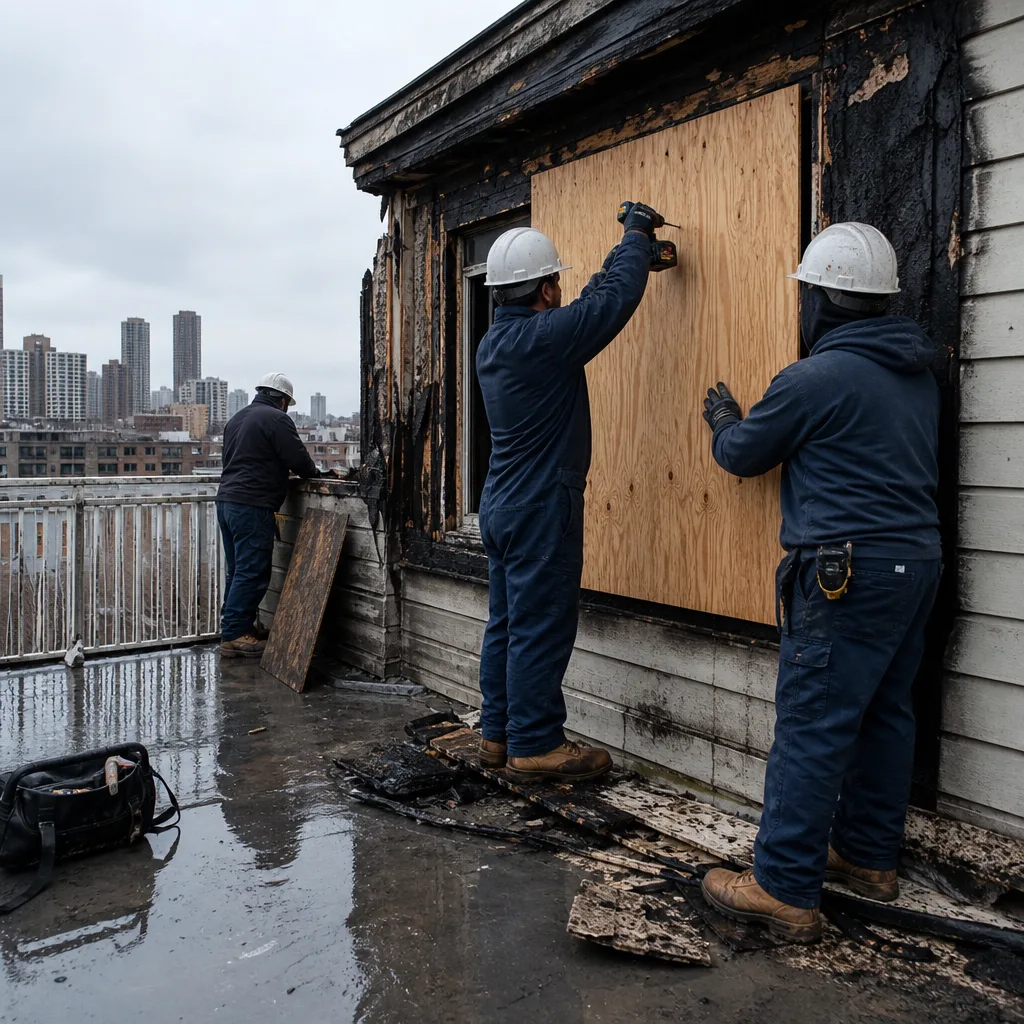
Structural Drying & Dehumidification
Drying a finished basement in Chestnut Ridge means drying the wall cavities, the subfloor, and the contents, not just the air. We run Dri-Eaz and Phoenix LGR dehumidifiers with XPOWER and B-Air air movers, and we log moisture readings daily until every surface hits the dry standard. In homes where basements are occupied as sleeping rooms, we dry aggressively and monitor constantly.
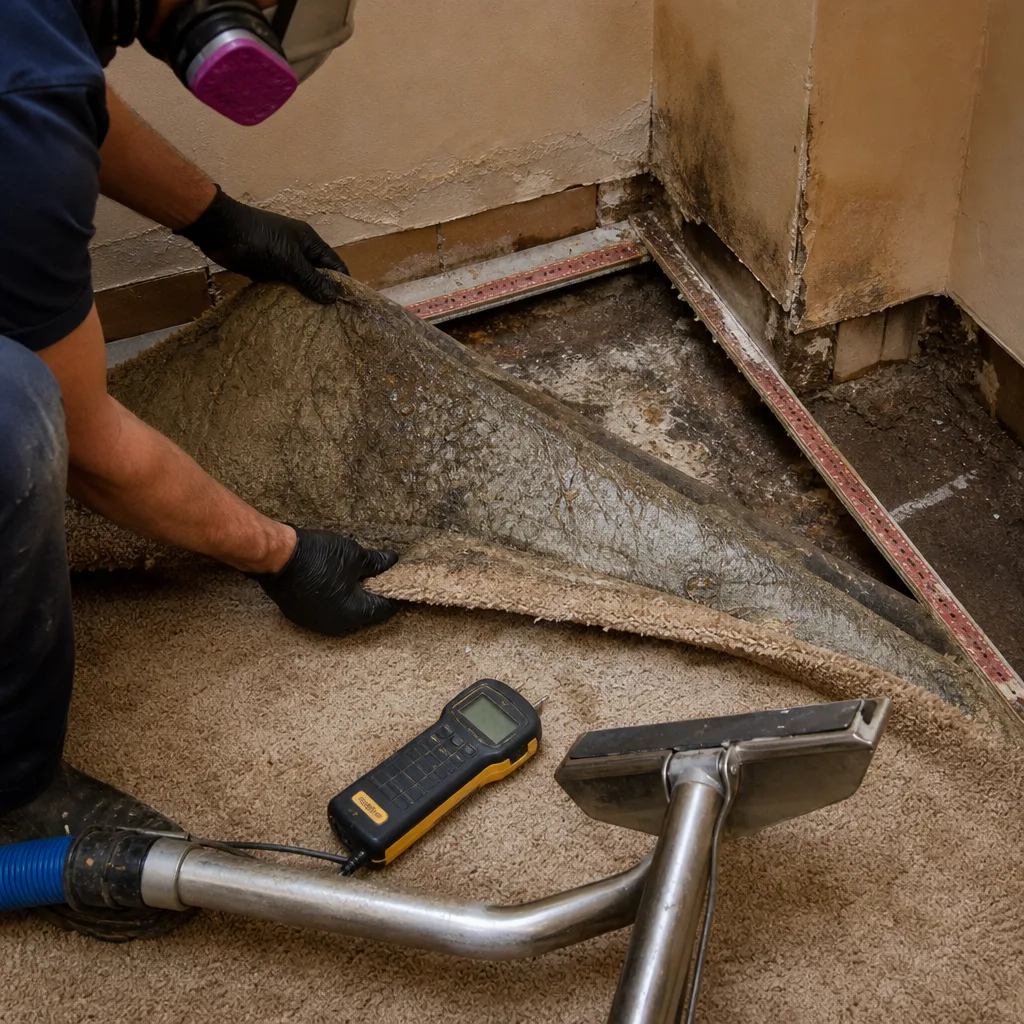
Flood Cleanup
Ridge-slope runoff after a heavy storm brings Category 3 water into Chestnut Ridge basements. That’s not just wet carpet-it’s stormwater with whatever it picked up on the way downhill. We extract, contain, sanitize, and dry, and we document it all for your carrier. Flood cleanup here isn’t a mop job. It’s an engineered response to hydrostatic pressure.
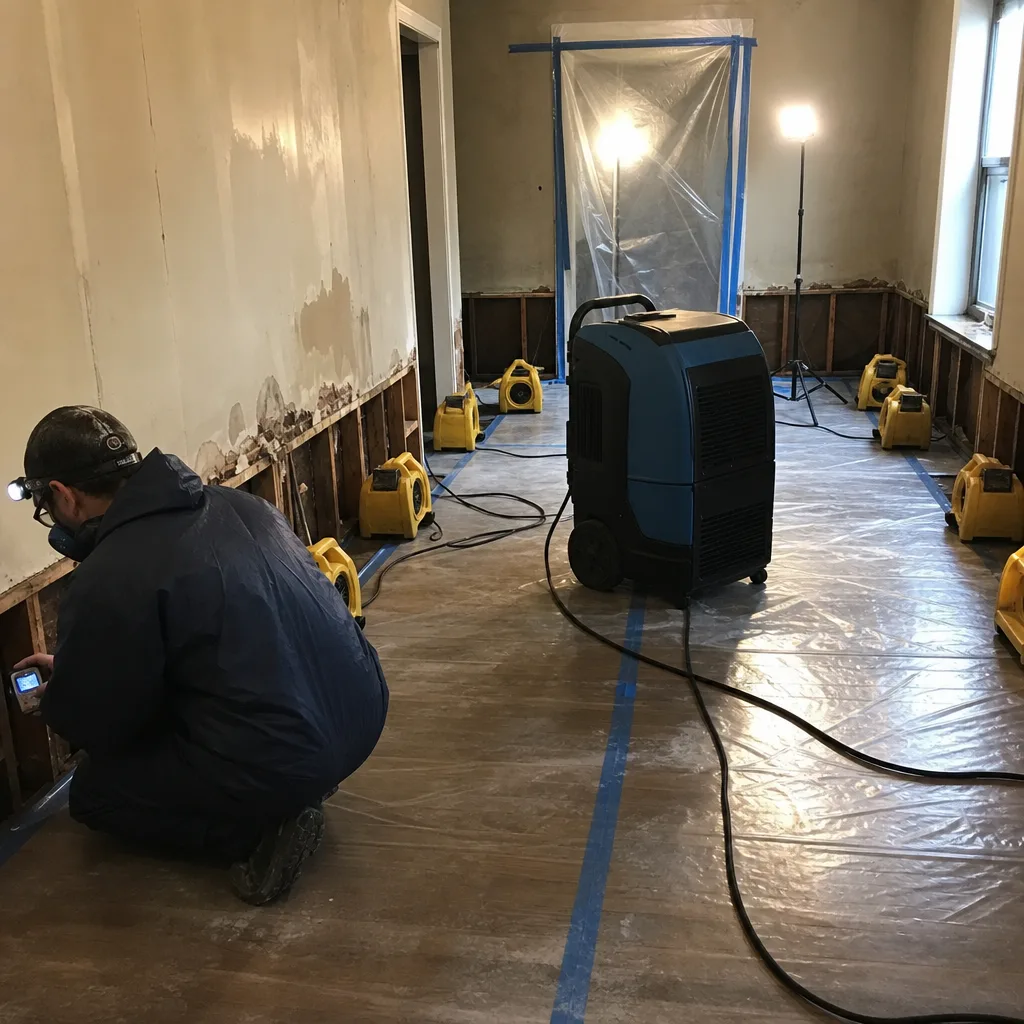
Burst Pipe Restoration
A frozen supply line in a 1970s split-level addition can dump water through two floors before you know it. We start by stopping the source, then extract, dry, and rebuild the affected areas. If the pipe froze in an exterior wall, we’ll tell you where the insulation failed so it doesn’t happen again in January.
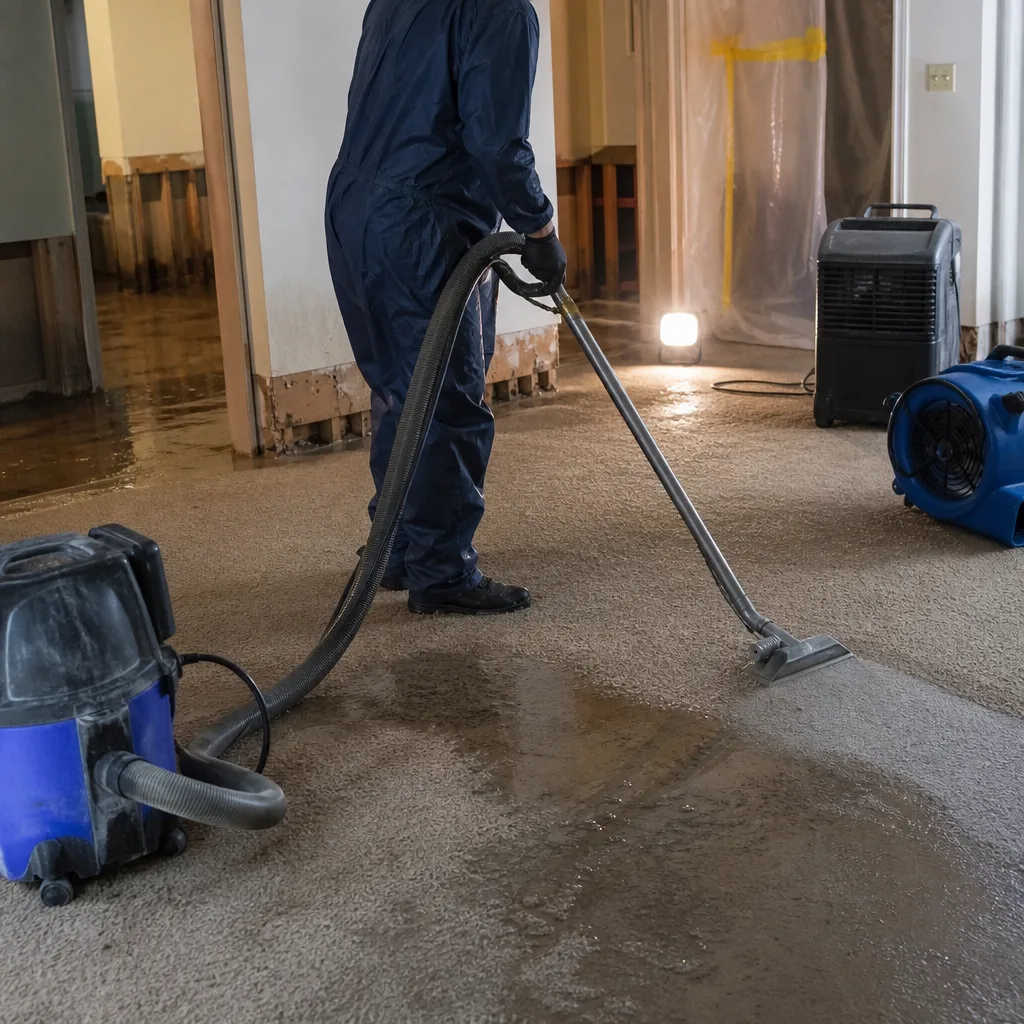
Basement Water Removal
In Chestnut Ridge, basement water is usually a drainage problem as much as a water problem. We remove the water, dry the structure, and then we tell you plainly whether the 1960s perimeter drain needs correction, whether grading around the addition is pushing water toward the foundation, and whether a wall-mounted drying system or a drainage correction is the right long-term fix. The line the water left is where we start.
What happens when you call
- 1
A real person answersNo phone trees - you reach a local pro.
- 2
You get an upfront price rangeHonest numbers before anyone is dispatched.
- 3
A background-checked tech heads outLicensed & insured, dispatched right away.
- 4
You approve before work beginsNothing starts until you say go.
Water Damage Restoration Costs in Chestnut Ridge, NY
What you’ll pay in Chestnut Ridge depends on water Category, square footage, and whether the affected space is finished living area. A simple Category 1 extraction and dry-out in an unfinished utility room typically runs $1,800-$3,500. A finished basement used as a bedroom or prayer space, with Category 2 water and containment needed, usually lands between $4,500 and $9,500. Full mold remediation on top of water damage, which is common when sleeping areas are involved, can push the total past $12,000. Sewage backups (Category 3) start around $5,000 because of sanitization and material removal requirements. If the loss is sudden and accidental, your homeowner’s policy typically covers the restoration. We offer a free visual inspection, and we hand you a written scope with firm numbers before any work begins. Senior and veteran households get 5% off, and repairs over $250 qualify for $50 off. Call (917) 924-4221 for a straight answer on your specific situation.
We Also Serve Cities Near Chestnut Ridge
Our crews respond to water damage calls throughout the surrounding area, including Fairview, Harrison, East Bronx, and Hunts Point. If you’re in Chestnut Ridge or a neighboring community and water is moving where it shouldn’t, call (917) 924-4221 and we’ll get there quickly.
Serving Chestnut Ridge, NY - Our Local Coverage Area
We’re based in the Chestnut Ridge area and know this community well. Use the map below to see our service coverage - if you’re nearby, we can almost certainly help.
Chestnut Ridge Water Damage Restoration Questions, Answered
Why does my Chestnut Ridge basement flood even when the sump pump is running?
Because the ridge’s dense clay soils hold water and push it against your foundation walls as hydrostatic pressure, and a working sump pump only removes water that reaches the pit, not the water seeping through cove joints and wall cracks above it. Many Chestnut Ridge homes also have original 1960s perimeter drains that are undersized for today’s runoff rates. The fix is usually drainage correction plus interior waterproofing, not a bigger pump. Call (917) 924-4221 and we’ll inspect what’s actually happening.
How quickly can mold start in a finished basement used as a bedroom after a Category 2 water loss?
Mold can begin colonizing damp drywall and carpet within 24-48 hours, and in a finished basement with beds, clothing, and bookshelves, the food source is abundant. Category 2 water carries detergents and soaps that feed microbial growth faster than clean water. We start drying within hours and use containment when the space is occupied. Speed is the difference between a dry-out and a mold remediation.
Do I need to remove the walls and flooring if my basement flooded from a broken pipe?
Not always. If it’s Category 1 clean water and we reach it within the first hours, we can often dry the wall cavities and salvage the flooring with Injectidry and LGR dehumidifiers. If the water sat overnight or wicked into the wall cavities, or if it’s Category 2 or 3, the drywall and padding usually need to come out. We’ll show you the moisture readings and tell you plainly what can be saved.
Will my insurance cover water damage restoration from a failed sump pump in Chestnut Ridge?
Most standard homeowner’s policies cover sudden and accidental water damage from a failed sump pump, but many have exclusions or sub-limits for water that enters through foundations over time. The distinction comes down to documentation. We photograph everything, log moisture readings, and write a scope that matches your policy language. If you have sump pump failure coverage, we bill the carrier directly. Call (917) 924-4221 and we’ll walk the claim with you.
How do you dry out a basement that has been converted into a prayer room with built-in bookshelves?
We remove the shelves’ contents to a safe staging area, then dry the wall cavities behind them with Injectidry systems that force air through small openings without demolishing the built-ins. For occupied prayer spaces, we typically set up containment with HEPA air scrubbers to protect the rest of the house while drying runs. We prioritize getting the room back to use quickly, and we treat every finished-space loss as a mold-prevention job from the first reading.
How fast can you actually get to a Chestnut Ridge home?
Our commitment is 45 minutes from when a live dispatcher takes your call. That’s not a national average. That’s local crews staged near Chestnut Ridge’s main corridors, waiting on a dispatch board that runs 24/7. On a storm night when everyone calls at once, we still answer the phone with a person and tell you exactly when the crew will arrive.
How long does drying and remediation take in Chestnut Ridge?
A typical finished basement dry-out in Chestnut Ridge runs 3-5 days. If the space is unfinished and the water is Category 1, it’s often 2-3 days. If Category 3 or mold is involved, remediation plus rebuild can stretch to one to two weeks. We monitor daily and push drying as fast as the structure will allow, because every extra day of moisture is more risk in an occupied basement.
What should I do in the first 30 minutes after I find water in my Chestnut Ridge home?
Shut off the water source if you can safely reach the valve. Kill power to the affected area if water is near outlets or the panel. Move valuables and furniture out of standing water if it’s safe. Then call (917) 924-4221. Don’t use a shop vac on anything that might be Category 2 or 3. Don’t run a household fan and hope it dries. The first hour determines whether you’re looking at a restoration or a rebuild.
Written by Curt Bowman, Owner at Floodline Restoration Co., serving Chestnut Ridge and the surrounding region since 2010.